Dynabrade, Inc. has announced the appointment of Michael Buffamonti as the company’s new president. He replaces Hardy Hamann, who retired earlier this year.
Buffamonti most recently held the role of chief financial officer (CFO) and has been a member of the executive management team for many years. Before joining Dynabrade, he held various management positions at Deloitte LLP.
Since the beginning of his career at Dynabrade 25 years ago, Buffamonti worked closely with the company’s founder, Walter Welsch.
“Buffamonti has worked tirelessly to create an environment of fiscal responsibility at Dynabrade,” the company said. “Because of his leadership, over the past decade, the company has experienced its strongest financial performance in its 52-year history. He has created an effective business structure ensuring the company will succeed for years to come.”
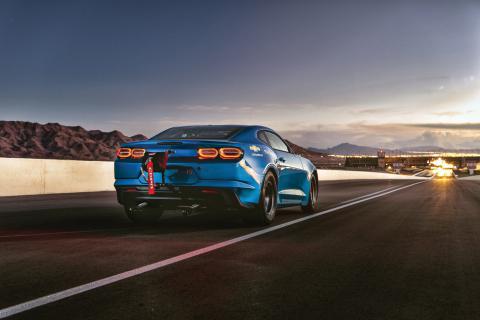
As the motoring public warms up to electric vehicles and automakers continue to invest billions in their development, the drag race sanctioning body seeks to establish an open dialogue with OEMs, parts suppliers, car builders, and safety equipment manufacturers to chart the best path forward.
Electric vehicle technology has come a long way over the past decade. If countless YouTube videos of Teslas putting the hurt on Hellcats at the drag strip weren’t enough, consider the fact that last year, veteran racer Steve Huff became the first to break the 200 mph barrier in a four-wheeled EV, posting an ET of 7.52 at 201.07 mph at Tucson Dragway in the Huff Motorsports electric dragster.
“Big Daddy” Don Garlits, who has been campaigning an electric dragster of his own in recent years, had previously posited that hitting 200 wasn’t possible with currently available technology. In the spirit of competition, Huff set out to prove Garlits wrong, and he’s already set his sights on another milestone. “We’re going out to be the first in the 6.00s,” he said in an interview with Drag Illustrated. “I have the utmost confidence that will happen.”
As electric vehicles continue their rapid evolution, and car counts increase at drag racing events in the coming years, the NHRA has created a forum for equipment suppliers, car builders, and OEMs to collaborate on various EV-related matters through a series of panel discussions, the first of which took place at the Gatornationals at Gainesville Raceway this past March. The topics at these meetings are expected to be wide-ranging, but ultimately the goal is to allow EVs to be effectively integrated into NHRA’s existing formats without encroaching on the current platform.
“Our tagline is ‘Speed for All,’ and this is very much in line with our mission of providing an accommodating environment for all competitors and a wide variety of vehicles,” said Ned Walliser of the NHRA. “We really wanted to get everyone together and gather as much information as we could to see what we can build off of. We currently have EV racing rules in our NHRA rulebook—we race them in ET bracket as well as the Junior Drag Racing League side—so electric is part of our program already, and we see the evolution of electric racing in place. There’s a big push for it now, so we really need to investigate where we have synergies with the OEMs as well as the manufacturers of safety equipment that can help expand electric racing to multiple levels of the sport.”
The NHRA is soliciting input and weighing options for how best to integrate EV technology into the organization. “Is it an OEM category or is it a purpose-built EV race class?” said our contact. “And if it’s a purpose-built race car, what can we learn from each other in order to have the best possible program here?” Photo courtesy of Ford Performance.
Walliser explained that the NHRA understands where the technology is headed on the OEM side and that they’re seeing a strong desire for EVs to have their own category within the organization, but the design of such a category has yet to be determined. “Is it an OEM category or is it a purpose-built EV race class?” he said. “And if it’s a purpose-built race car, what can we learn from each other in order to have the best possible program here?”
The symbiotic relationship between automakers and motorsports has been an intrinsic part of automotive development since the dawn of motoring, with OEMs taking to the track in order to test their designs and identify where performance and durability improvements can be made. It’s a process that not only improves the race cars, but also technologies that will eventually find their way into an automaker’s street-driven production vehicles. Yet because of the inherent nature of EV technology the script has been flipped in some ways, as research and development at the OEM level has largely focused on road car applications. So, as EVs are gradually integrated into previously established race formats, sanctioning bodies like the NHRA are focused on ensuring that aspects of this development that could potentially impact motorsports efforts don’t go unnoticed.
“We want to make sure that the direction that we’re going is the same direction that the OEMs are going,” Walliser told us. “And we expect that the OEMs will learn from some of the things that we are doing at the race track as well.”
And much of this information sharing revolves around issues of safety. He cited the discrepancies in weight between EVs and traditional ICE vehicles, and how that may affect equipment rules going forward, as a particular area of interest at this initial meeting. “We obviously have chassis specifications, and those specifications are developed by the speed and weight of the car as well as how that car is built by the OEM. From there we develop a roll cage or roll bar system inside the car to protect the driver in case of an incident based on that information. But with the added weight of the batteries in an EV, we want to review those specifications and make sure that we are providing the best safety we can for a given category.”
Walliser is adamant that this increased interest in EV development by NHRA is not designed to overtake any existing categories and noted that it may present opportunities to usher in improvements across the board. “When you’re talking about the safety, you can learn from every situation and scenario, and I don’t think that what we learn from EV racing will be any different in that regard. We will learn some things along the way, and safety among all of the NHRA series will continue to evolve,” he explained.
Two things I think while marveling at Emelia Hartford’s recent 9.41-second pass in the quarter-mile at Auto Club Famoso Raceway, making hers the fastest modded C8 on the planet:
1) I THINK IT’S OBVIOUS HOW EXCITED wewere toland an interview with Chris Karamesines for this month’s issue of PRI Magazine. I mean, it’s pretty appropriate that Karamesines is known as “The Greek,” because the more you learn about what the man has done and meant to drag racing over a remarkable seven decades, the more it seems like he belongs at the top of Mount Olympus with all the other immortals as opposed to here at sea level, in an unassuming race shop on the south side of Chicago no less. But that just makes his legend all the more exact—of course he would walk among us! From recording the first unofficial 200-mph quarter-mile run in 1960, to match races with Don Garlits over the next decade-plus, to regularly topping 300 mph in a Top Fueler deep into his 80s, Karamesines is just, well, different. And yet, when asked for the key to his incredible longevity, The Greek is quick to share credit: “Everywhere I went—California, Florida, everywhere—people were nice to us. They wanted to take us home, they wanted to be with us. It was the people, I think, that kept me going.” And while he did in fact announce he was hanging up his helmet late last year (shifting focus in support of his granddaughter, Krista Baldwin, a talented racer in her own right) one still has to wonder if we’ve truly seen the last of Karamesines in a driver’s suit. After all, he told us, “When I said I was retired, that didn’t mean I was going to quit drag racing. I’ve still got my two older cars, so I could do different things…. I’ve got stuff that I can go out and enjoy myself, give myself something to do. I’m not a guy who will just sit at home and watch TV.”
2) IF YOU HAVEN’T ALREADY, I THINK it’s a reallygood idea to start digging into 3D printing and exploring what’s possible through this emerging technology. As often happens in racing, there’s a trickle-down effect at play here, where additive manufacturing is becoming more practical for more teams as processes get more refined, more options become available, and costs come down considerably. Like, remember back in the day when only a few people you knew could afford a 75-inch flatscreen TV…and now anyone can pick one up for about eight bills? Sure, you’ll pay more for higher-end features (cough, Samsung, cough), but today a lot more people can watch their favorite sports, movies, or throwaway reality shows in almost life-size proportions. Same deal here. Take supplier Stratasys, whom you may know from its partnerships with names like Penske and Don Schumacher Racing. “Anybody who’s doing any type of vehicle development can absolutely benefit from it,” a company source told us, adding that buyers can now choose from about “30 different printer models, so there’s one for every price range and shop size.” And even if you’re not ready to splurge on the hardware, you can always send a CAD file to an additive manufacturing provider and have them print the part for you. Pretty neat, huh? For more on the capabilities of 3D printing and how your operation may be able to profit from it, see our Ask the Experts column beginning on page 18.
Moulton Speedway, the 3/8-mile dirt oval located in Danville, Alabama, has new owners for the 2021 season.
Locals Keith and Amanda Steele have taken ownership of the facility, according to published reports. The track runs classes including Super Late Models, Crate Late Models, Mini Stocks, Mod Streets, Open Wheel Modifieds, Street Stocks, and more.
Avid racers themselves, the Steele family will continue to run weekly racing on Friday nights. The pair have also made a handful of upgrades, including updated electrical wiring, fresh paint, and more.
Extreme E, the all-electric SUV racing series that aims to raise awareness about environmental issues, has expanded its scientific committee. Professor Carlos Duarte has been added to the series in advance of its opening race in Saudi Arabia for the Desert X Prix in Wadi Rum, Alula, on April 3-4.
“We are thrilled to welcome professor Carlos Duarte to the Extreme E Scientific Committee,” Extreme E CEO and Founder Alejandro Agag said. “As one of the most qualified and respected marine biologists on the planet, who has a precise understanding of Red Sea Ecology, we are thrilled he accepted our invitation to join the Extreme E family. We look forward to sharing his knowledge as we aim to deliver on our commitment to using our sport to raise awareness of these important issues.”
Duarte is based at the King Abdullah University of Science and Technology (KAUST) in Thuwal, Saudi Arabia, and holds the Tarek Ahmed Juffali Research Chair in Red Sea Ecology. He will advise Extreme E during its Saudi Arabian Desert X Prix and legacy program in the region.
Duarte has published more than 900 scientific papers and has been ranked within the top 1% of Highly-Cited Scientists by Thompson Reuters. He had also received the G. Evelyn Hutchinson Award from the American Society of Limnology and Oceanography in 2001, the National Science Award of Spain in 2007, and the BBVA Foundation Frontiers of Knowledge Award in Ecology and Conservation Biology in 2020.
Yokohama Tire Corporation (YTC) has announced several organizational changes, including Jeff Barna’s promotion to president and CEO. Barna, a managing officer of Yokohama Rubber (YRC), joined YTC as COO in 2017, and was named president of YTC in 2018.
This latest promotion will allow Barna greater oversight of YTC’s US-based operations, including the Yokohama Development Center America (YDCA) in Cornelius, North Carolina.
“I’m honored and grateful for the opportunity to continue to lead Yokohama in the US,” Barna said. “Our parent company has recognized us as a driver of global growth for our consolidated operations, and that is exactly what we intend to do. I’m very much looking forward to officially increasing my involvement with the product and innovation agenda of YDCA and confident that the team we have assembled throughout the country has us in a great position to reach our goals.”
Shinichi Takimoto, the senior managing officer of YRC and current CEO of YTC, will retain his role as chairman of YTC, as well as president and CEO of Yokohama Corporation of North America (YCNA), chairman of Yokohama Tire Canada (YTV), and chairman of Yokohama Tire Mexico (YTMX).
Additional organizational changes include the following:
Takehisa Morimoto is the new chairman and president of Yokohama Tire Manufacturing Mississippi (YTMM). Morimoto, who formerly held a role at Yokohama’s consumer tire plant in Salem, Virginia, and is currently president of Yokohama Tire Manufacturing Thailand (YTMT), replaces Hikomitsu Noji, who will return to YRC as a senior advisor.
Tom Kenny, currently the senior director of research and development at YDCA, has been promoted to vice president of YDCA. Kenny will now report directly to Barna.
Jeremy Kahrs has been promoted from the director of technical services at YDCA to senior director of technical services. Kahrs will continue to report to Kenny.
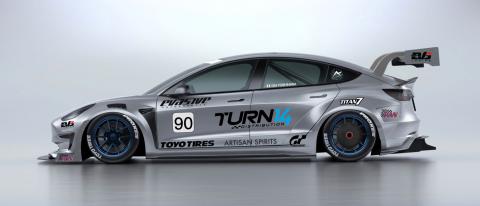
Evasive Motorsports and Turn 14 Distribution are “going electric” for the 99th running of the Broadmoor Pikes Peak International Hill Climb (PPIHC) presented by Gran Turismo, set for Colorado Springs, Colorado, on June 27. It will be the first time the team uses a fully electric platform in “The Race To The Clouds.”
Turn 14 Distribution will serve as the title sponsor for the Evasive Motorsports Tesla Model 3 Performance vehicle, driven by Turn 14-sponsored racer Dai Yoshihara.
“Turn 14 Distribution’s goal to be an industry leader is consistent with our involvement in this project. We love the sound and emotion of internal combustion engines but recognize and support the increasing growth of the EV and hybrid market by the OEs. Evasive Motorsports sees this, too, and we are happy to partner with them on this effort,” Turn 14 Distribution Director of Marketing Daryl Sampson said.
Armed with massive followings, racing and performance content creators are extending their reach from social media to the real world. So how much “influence” do they actually have?
For those of us more familiar with traditional media and marketing, social media posts by so-called “influencers” may seem like casual, even goofy, slice-of-life or behind-the-scenes photos and videos.
And compared to the more serious automotive-related content we’re used to seeing in trade and enthusiast magazines, they basically are.
But that’s exactly the point. Talk to a racing-industry influencer about their relationship with their audience and words like “authentic,” “relatable,” “organic” and “credible” come up often. Their job is not to “push product.” Instead, their influence comes from portraying a life on social media that their followers can experience vicariously online and then emulate in real life by buying the same products that the influencers use. Look more closely at an influencer’s posts and the nuts-and-bolts information is often there, though in some cases it may be presented more informally than in a technical magazine article. Then again, depending on the influencer, the post may be just as technical, if not more so, than what a magazine could execute in a few pages. If a picture is worth a thousand words, the value of video with accompanying audio, produced by a likeable, knowledgeable influencer, can be exponentially greater than that.
Measuring that value, though, can be as complex as the influencer is casual. Traditional marketing terms can apply—return on investment, cost per thousand, and so on. Yet navigating the metrics of social media can be tricky, especially for those unclear on the differences between likes, reach, engagement, and other analytics.
To get a better idea of how influencers operate, how they benefit racing, and how a company can use an influencer to promote their brand, we recently spoke with several influencers in the motorsports space, along with some of the manufacturers and marketing companies that have relationships with them, and others with a front-row view of the influencer phenomenon.
What is an Influencer?
Influencers permeate social media culture in every area of interest. In the racing industry, the role of the influencer “isn’t much different than an influencer in sneaker culture or food culture,” said Jim Liaw of Formula Drift, Long Beach, California. “It’s someone who is relevant to the audience, someone who the audience perceives as having some expertise or some connection with that particular hobby or skillset. The reason they have such influence is because they are felt by their followers as one of them. They may be famous or well off, but they still speak and relate to them more like a peer than some formal entity trying to educate them.”
The world of influencers such as Blake Wilkey may seem sharply different from traditional media, but the goals are basically the same—entertaining, educating, and inspiring.
An influencer “can be anyone who produces content on a level that people pay attention to, from 1,000 to a million or two million followers,” said Jesse Kiser of Earnest Marketing, Winston-Salem, North Carolina. “You’ll have people who produce very general, everyman content, and people who produce very hardcore, knowledge-based content. Both types are influencers.”
“What’s great about working with influencers is that they have these huge followings and are in touch with their audience,” said Jeanette DesJardins of Car Chix, Crestview, Florida, an organization that promotes women in motorsports. “If I’m selling a product, and I want my product to be taken in positively, I’d reach out to one of these influencers rather than running a Facebook ad. They know what their audience likes and how their audience will respond. They know how to put products and services in front of their audience without being so sales-y or pitch-y.”
“I don’t really like the term ‘influencer,’” said Emelia Hartford, whose most recent social media posts center around her twin-turbocharged, 1,000-horsepower C8 Corvette. “I tend to refer to myself as a ‘builder’ and ‘driver’ and sometimes ‘content creator.’ But the term defines someone who inspires and motivates a group of people toward a cause. From a company’s standpoint, it can be a voice of a brand helping connect products to consumers in a more authentic way than classical marketing. From a hobbyist standpoint, I think it’s someone who motivates people to follow their passion. At the end of the day, we all are influencers. Humans tend to look to their peers for direction or validation, and I think that’s really the root of how this whole influencer concept came to light.”
The authenticity Hartford mentioned stems from the fact that the products being featured by an influencer are often the same ones he or she would, or has already, bought for their own car.
The appeal of driver-vloggers like Chris Forsberg, at left, comes largely from the personal, behind-the-scenes view they offer their audience. And with that openness comes valuable trust, our sources said.
“An influencer understands the product and wants to represent the company in full fashion with a product that they would actually spend their money on,” said Blake Wilkey, whose Shreddy Lyfe brand and burgeoning career as an off-road racer took off with “Urban Assault,” a 2016 guerilla-style video of him blasting around San Diego, California, in a highly modified off-road buggy. “I’m not selling something I don’t stand behind 100%. If I have a question about a product, I test it first. Influencers have to know the product, trust the product, and be able to provide information to the consumer, so if someone sends them a direct message they can engage and provide that information to the audience.”
“Within the automotive industry, an influencer is somebody who can show the automotive lifestyle and how products and brands incorporate into it,” said Alex Taylor, an influencer who first got into drag racing with her father at age 16 and campaigns Badmaro, her twin-turbocharged 1968 Camaro. In Taylor’s posts and videos, “I add my personality to try to keep people entertained. It’s like a TV show, but I bring in the educational side, so the company gets the information out that it wants, and people listen to it without feeling like it’s an advertisement.”
“Everybody wants to live a certain lifestyle, and when you can’t live that lifestyle, you try to live it through other people,” said Casey Currie of Currie Enterprises, Corona, California. Taylor is one of a select few influencers Currie works with. “She’s passionate about racing, and old cars, all the time. She captures it in a way that makes it interesting for other people to watch.”
Influencer/Racer
Taylor and Wilkey were among several influencers we contacted who are also racers. Taylor started racing first and “sort of fell into the influencer space.” Wilkey has been able to parlay the driving skills on display in his videos into sanctioned off-road races, most recently at the King of the Hammers event in Johnson Valley, California, where he won the Class 11 race for stock-bodied VWs.
“In our series it can go in two directions,” Liaw said of Formula Drift. “We’ve had competitors who have grown in popularity and essentially went from a racer to assuming [their] role as influencer. And there are influencers who are enmeshed in car culture and want to dabble in drifting.”
An example of the former is drifter Ryan Litteral, who entered the influencer field “with an accredited following, working for many years to grow a fan base based off my efforts in the motorsports field,” he explained. “Competing in the top series of drifting in the world, I can showcase and present products being used at their max potential.”
The flavor and format of YouTube car shows vary greatly, attracting different audiences. Emelia Hartford said she’s “a ‘builder’ and ‘driver’ and sometimes ‘content creator.’”
Given his double-threat marketing reach as a racer and influencer, Litteral prefers to describe his relationships with manufacturers as partnerships, not sponsorships. “When you have a partnership, not only do you sponsor me with ad space on the side of the vehicle, now you’ve gained a contracted employee outside of your company to spread the gospel and the knowledge of your products through social media channels and on track.”
On the other side of the equation is an influencer like Adam LZ. “He is immensely popular as an influencer,” Liaw said. “He builds cars, travels, talks about car culture and what he does. He got interested in drifting, started with grassroots competitions, and had the talent and ability to work his way up to our tier-one category.” To Liaw, Adam LZ “has more to offer a brand partner” because “once they plug into his program, whether he’s ranked third at the end of the season or thirteenth, he will still have multimillions of viewers per week.”
“If we’re leveraging the accomplishments of a racer on our own social media, we’re not getting new eyeballs,” said Chris Law of Haltech, Lexington, Kentucky. “We’re just reaching people already following Haltech, reinforcing our vision with our existing audience. With an influencer, we’re reaching new people who didn’t understand what Haltech was before this specific influencer gave them an insight into how the customer experience is with us.”
It’s that reach beyond the track that gives an influencer an advantage over a non-socially engaged driver, according to Taylor. “A driver who’s not using a social platform has a limited window of people who might see them at the track,” she explained. “You might give out a sticker or get a mention, but it’s very structured. People have to be paying attention to notice it. An influencer would use a product within their daily life. You don’t just see it on the weekend at a race. You have access to these social platforms on a 24-hour basis.”
“Reach is definitely different between the racer and vlog-style social media influencers,” said Reggie Wynn of Turbonetics, Moorpark, California. Wynn works with several influencers, including Hartford. “Once you get started with their YouTube videos, it’s almost like watching a series. You want to binge-watch them going through the whole build process, what products they’re going to use, and how they got their car to that point. With a racer you don’t necessarily go that deep into the process.”
Recognizing that advantage is why many racers are “building a fan base” online, Hartford said. “It is a lot of work to stay active in the digital space while honing skills on the race track. But people make decisions based on trusted information, and if that information is coming from the top expert, or their role model, they are going to trust it much more than classical marketing. Brands, especially in the automotive space, are really just starting to see how valuable that is compared to other forms of marketing.”
Choosing an Influencer
“What one manufacturer is looking for in an influencer will differ from another manufacturer,” said Law. “We’re looking for someone who has an audience that we see as pre-qualified potential customers. We specifically want to reach the do-it-yourselfer who wants to tackle automotive modifications. And we want to stress our easily accessible technical support. It’s important that the type of content that they’re putting out is targeted in a way that makes sense with our target demographic and in line with the goals that we have.” Litteral is one of those influencers “who fits that mold,” Law said. “He’s a professional-level motorsports athlete who works on his car.”
Mike Hamrick at Wilwood Engineering, Camarillo, California, said his company’s approach “is not about how many parts we sell working with an influencer. It’s about whether the influencer can convey our message and help educate people in that marketplace. We don’t want it to look like an infomercial. It’s not, ‘Look at these brand-new brake pads. They’re the best thing ever!’ It’s more, ‘Wilwood gave me these sets of brake pads to help me figure out what’s the best to make our program work better, to make it safer for us to go faster.’”
Wilwood has been working with Wilkey since Hamrick met the influencer at the 2019 SEMA Show. “Five years ago, he was this kid down in San Diego, hooning around in a VW off-road car. Since all that happened and he got that social media influencing side to his persona, he has more followers on Instagram than Wilwood does. After meeting him I asked my son, who was 19 at the time, what he thought of Blake. He said, ‘He’s a cool dude, legit.’ That’s all I needed to know. I went back to Wilwood and said, ‘We need to help this guy out, and he’s going to do good things for us.’ At the end of the day, he already has, and he’s even buying products from us.”
Ryan Litteral’s YouTube channel has a relatively small subscriber base, but his tightly focused niche and technical content make his audience valuable to partners.
Wilkey’s laid-back persona makes him relatable to his followers, but his work ethic demonstrates a level of professionalism necessary to best represent his manufacturer partners.
“Through my daily story posts I’m just waking up early and grinding it out, day in and day out, showcasing the process it takes for my program to work, whether it’s video shoots, getting cars prepped and ready to go racing, or informative techniques around the shop that can make someone’s life easier,” he explained. “I try to share everything and anything I can to help better the audience, keeping it as organic and real as possible so the audience can see that it’s a valuable product for them to invest in if it’s relatable to them.”
“Businesses should look at finding influencers who are professionals, but that’s actually pretty difficult,” Kiser noted. “Part of an influencer’s appeal is the fact that their followers think they can be their friends. The influencers are personable. They’re cool. They’re casual guys in T-shirts. You may not think of them as being professional, but they have to be someone who produces good, well-thought-out content to want to sponsor them.”
Running the Numbers
The ubiquity of social media means researching influencers as potential partners is just a few clicks away.
“Go on social media and see who has the biggest following,” said DesJardins. “You’ll find them right away by paying attention to your personal news feed and seeing what people are sharing. Search the hashtags. The people considered top posters are the people with the largest engagement. Go through their pages, not just on one platform but on all of them. See how often they’re posting and see what they’re posting about.”
When interviewing a potential influencer, “ask to see a screen shot of their analytic data from their social media pages,” she added. “You can do it from Twitter, Instagram, Facebook, and YouTube. You might be surprised. Someone could have 1,000 likes on a post, but their reach is low or down. Are they paying for their posts to be boosted? In my opinion, impressions, how many times someone sees a post, have way more value than likes.”
For Currie, it’s “the interaction Alex [Taylor] has with other car enthusiasts that’s important, not how many followers she has or how many likes she has. Likes can be bought. To me it comes down to the interaction. They’re influenced to buy their own car or buy some component that she’s putting on her car.”
The fantasy factor is an important element in the appeal of influencers. Kenny Slides entertains his audience with wild drifting antics in modern V8 muscle cars.
Currie’s point about the number of followers an influencer may have was echoed by others. When a racing company is reviewing an influencer for a potential partnership, more emphasis should be placed on who their followers are than on how many they have.
“I’d like as much data as an influencer can provide me,” Kiser said. “They can give me a lot of actual data about who their audience is, not just the number of eyeballs. If you’re going to give me an audience of 10,000 who want to buy my stuff or a million, I’m going to take the 10,000 if you can prove to me that your 10,000 align with the data I have on who’s buying my product.”
That was a real-world lesson learned by Kiser. “I gave product to a guy with a million-and-a-half followers, and it did not result in one sale,” he said. On the other hand, one of his clients, Tick Performance, works with a drift racer and influencer named Kenny Slides. “What he does is very much in our wheelhouse. Any time our products are on his car, they’re talked about. We can see real comments, tags, messages, and sales. We get all kinds of engagement working with him. Don’t always think big-time. Think where your customer is, who your customer is watching, and what they’re doing.”
DesJardins had this tip about followers: “Say there are two people on one of those YouTube shows about cars. One’s a guy, one’s a girl. The girl more than likely will have a much bigger following than the guy, but a lot of people could be following her not because she’s cool and into cars, but because she may be easy on the eyes and [they] find her entertaining. Her co-star may have a fraction of the followers, but it’s likely they’re all car people following that guy.
“You have to watch the numbers,” DesJardins added. “Some of these companies or influencers may be buying followers—then you have ghost followers, fake accounts that are just bots that will never do anything for you or the influencer.”
Making the Deal
“Kind of old school” is how Wynn described his approach to making a deal between an influencer and Turbonetics. “We go on more of a handshake type of thing. With an influencer who has a heavy social media following, we just ask that when they do post, that they hashtag and tag us in the product.”
“To me it’s a casual deal,” Currie told us. “If we know we can fulfill a need, if you have more horsepower or bigger tires than a stock rearend can handle, come to us and we’ll get you squared away. It comes down to personal relationships.”
Currie admitted, though, to being “careful with who we work with. We keep the circle tight. We don’t go out there and do a lot with influencers. We work with higher-end influencers who we feel are strong for our brand, and who will do a good job for our brand.”
“It’s almost like hiring a person,” said Kiser. “Look at their character. Can I trust them? You do that by looking at their content, at how they handle their proposal, how they give you content, how they ask for things, what they’re willing to offer. The more specific an influencer can be, the more specific the conversation can be.”
Any relationship with an influencer should start with both sides agreeing on the partnership’s goals, Taylor said. “Get everybody on the same page. Is this about reach? Sales? Decide on that beforehand so you can tailor the content to fit that. Then I go back and forth with the companies to make sure we are on target.”
At Haltech, “we have a semi-formal contract procedure that outlines expectations of both parties, what we’re expecting in exchange for product or monetary sponsorship,” said Law. “For an influencer it’s a little more open-ended than for a sponsored racer. We want them to have the freedom to create the content they have been creating, but there are some limitations placed on how they present the product. We ask in contract that they don’t sugar-coat anything with the installation process. We want them to show reaching out for technical support when and if they need it.”
An influencer like Alex Taylor “can show the automotive lifestyle and how products and brands incorporate into it.”
The contract also specifies, though, that “the image of the product should always be held in highest regard,” Law added. “They should always be looking at what the end user thinks of the product before publishing content they’re creating.” That stipulation was added to the contract after a situation where an influencer “had an issue with a product, and he used a click-bait-y title that made it seem like the product had done damage to the vehicle,” Law explained. “It hadn’t, but it got them some engagement, which is what they were after.” Worse, there were “quite a few comments in the comments section that blamed the product we had supplied to the influencer, even though they had explained in the content that it was their fault. The damage was done, and they didn’t do enough to mitigate that.”
Whether it’s done with a handshake or a formal contract, compensation for an influencer often consists of parts donations or partial sponsorship of parts.
For Kiser, payment boils down to “cost versus reward. If we’re sponsoring an influencer with a $7,000 transmission, that is a very different discussion than if an influencer wants a camshaft for a couple hundred bucks. We would need a lot of content for that transmission.”
An influencer who is also a professional racer, however, will require monetary compensation. “Race programs don’t run on product, especially year in and year out,” Law said.
“If you want to work with Steph Papadakis or with Vaughn Gittin Jr., these are the top accredited teams, but they have seven-figure budgets, so you have to pay to play,” Litteral said. “A company might be able to get more for their dollar working with a privateer team that’s up-and-coming. Someone like me, in terms of justifying the spend, we’re able to provide all our impressions and engagements. Due to our CPM (cost per thousand impressions) value, I think we give a lot of return for what we are requesting on the initial investment from a company.”
“You don’t always need a lot of money to work with an influencer,” Kiser pointed out. “If you give an influencer something they can’t get on their own—time, resources, convenience—they should be able to work with you.”
Ultimate Goal
“Here’s the biggest thing companies need to understand,” Litteral said. “I can give you everything in the world. I can give you all the high-gloss shots and rad camera footage. But if you don’t take that into your own hands to use for your own brand and market it effectively between the sales team and marketing department for things outside of what we are directly doing, then you’re wasting your time.”
It’s those things “outside of what we are doing” that are key to maximizing an influencer’s reach, Litteral said. “We want to hit a new demographic. That’s the biggest thing. Look at skateboarding. Why is skateboarding successful? Because anybody can buy a $100 skateboard. They have a professional side to it, and they have a street side to it. Ball sports are the same way. It’s a very obtainable thing and a very cool thing.
“Well, everybody drives a car,” he continued. “So how do we meet new customers, get more people aware and involved? How do we correlate what we do into everyday life? How does it pertain to the layman? Say you have really cool wheels, you showcase that. Or a shift knob, or aesthetic parts, or ECUs that get better gas mileage. Show people they are cool, so they want to put them on their car. I think that’s the ultimate goal here. Sell more product and make more money. We have to think bigger, make it bigger.”
The following candidates are vying for a seat on the SEMA Board of Directors:
Chairman-elect (one open seat):
Kyle Fickler – Director, Driven Racing Oil
Les Rudd – President, Bob Cook Sales
Distributors/Retailers (two open seats):
Larry Montante – Vice President, Keystone Automotive Operations
Brian Rowland – Director, Walmart
Steve Whipple – Director, Jegs High Performance
Manufacturers (two open seats):
Ian Lehn – Founder, BOOSTane
Kim Pendergast – CEO/Owner, Magnuson Superchargers
Brian Reese – President/CEO, The Retrofit Source
Service (one open seat):
Lindsay Hubley – Managing Partner, Lodestone Events
Jim Liaw – President/Co-Founder, Formula Drift Holdings
Voting will take place online between May 11–25, and is open to current SEMA-member companies. Votes must be cast by each company’s primary contact. SEMA will send details on the upcoming election to the member company’s designated primary contact beginning April 30. Winners will be announced by May 28.
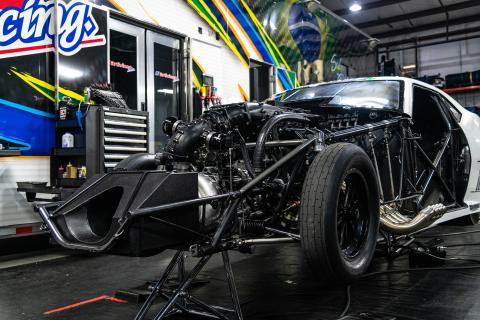
Proline Racing is all about cubic-inches, power adders, and insane horsepower. The PRI Road Tour took a look inside its unique operation based in Ball Ground, Georgia, to see where racers' dreams come true.
We also sat down with Proline Racing Co-Owner and Managing Principal Eric Dillard to hear more about the successes and the setbacks of one of the best performance aftermarket shops in drag racing and for a peek at where the company is going next. See why the company only works with 2,500+ horsepower engines.
 MEMBERSHIP LOGIN