SEMA has opened registration for the first SEMA Nordic trip set for August 25–29, 2021, in Stockholm, Sweden. Participants have the opportunity to learn about the potential for their products, plus meet with top trade buyers from Sweden and the surrounding countries of Norway, Finland, and Denmark.
Performance is among the top upgrades sought for vehicles in the region, which regularly hosts the FIA European Drag Racing Championship. Rally racing and drifting are also prominent in the area, and robust sportsman programs allow enthusiasts to use their more modestly upgraded rides in numerous types of competition. High disposable income and a love of American vehicles and products, coupled with a passion for personalization, make the Nordic area an attractive region for motorsports businesses.
The SEMA Nordic trip is the fifth region for the SEMA Business Development Programs. These overseas, low-cost, and turnkey events bring together SEMA-member manufacturers and buyers from key global markets. The price of the upcoming trip includes hotels, a tabletop display, meals, and networking events. Prices start at $4,500 per company (flights not included).
Federal and state grants may be available to help defray the cost for qualified companies.
Register now as slots are limited. For more information, visit sema.org/nordic or contact Linda Spencer at lindas@sema.org.
Irwindale Speedway has announced that fans can return to the grandstands beginning with the April 10 race.
LA’s favorite short track will kick off the spectator season with a record night of racing featuring ten main events.
Features include the SPEARS SRL Modifieds, SPEARS Pro Late Models, and the SPEARS Southwest Tour Super Late division. They will be joined by the track’s NASCAR Advance Auto Parts Weekly Series racers, including INEX Legends, LKQ Pick Your Part Pro Late Models (Twins), YouRaceLA Specs, Tucker Tire Enduros (Twins), and Street Stocks.
Following local and state guidelines, officials will reduce grandstand capacity. Face masks will also be required for all in attendance.
The track is set to host the NHRA Summit ET Series and Junior Dragsters on April 11.
The L.S. Starrett Company—a global manufacturer of precision measuring tools and gages, metrology systems, and more—has announced the appointment of Jim VandeHei as Director of Sales of Starrett Metrology Systems.
In this newly created role, VandeHei’s primary responsibility will be North American sales of the company’s vision systems, optical measuring projectors, and force measurement systems.
“I am very pleased to announce that Jim is joining Starrett,” Starrett Metrology Systems Vice President David Allen said. “His extensive sales management and sales process skills will be key to furthering the growth of our metrology equipment products in the North American marketplace.”
VandeHei has led and developed multi-channel sales teams for more than 28 years, including over 20 years of metrology sales and commercial operations management for Hexagon Manufacturing Intelligence, Carl Zeiss IMT Corp., and DW Fritz Automation. He is a graduate of the University of Wisconsin – Madison, where he received a Bachelor of Science in Industrial Engineering Degree and a Professional Development Certificate for Executive Sales Management.
Seats, harnesses, and other vehicle safety equipment are now designed as a system, giving racers their best opportunity ever to walk away from on-track incidents.
Though it’s been 20 years since the death of Dale Earnhardt, his fate still looms large whenever racing safety is discussed.
“Racing will always be dangerous,” said Randy LaJoie of The Joie of Seating, Concord, North Carolina. “But the industry has changed immensely since 2001, and NASCAR hasn’t lost anybody since then.”
To LaJoie, who knows firsthand about the dangers of racing, these changes aren’t just about one piece of equipment.
“Safety in the car is a system of things. It’s not just the head-and-neck restraint. It’s not just a better seat. It’s not just better seatbelt mounting, or the way the seat is mounted. It’s everything going forward from Earnhardt and the other guys who passed [Adam Petty, Kenny Irwin Jr., Tony Roper in 2000; Blaise Alexander Jr. in 2001] that has saved a lot of race car drivers’ lives. Enough information has come out since 2001 that, with the proper system, a racer can get out of a wrecked car, go home, and see the wife and kids.”
What follows is a look at some of the newest safety components for racing vehicles, each of which can contribute to a comprehensive safety system.
Seats
“As the industry learns more about mitigating injury in a vehicle crash, the one underlying theme is limiting driver movement,” said Patrick Utt of RaceQuip, Riverview, Florida. “Everything touching or near the driver is there to limit movement during a crash. Besides a harness, the seat is the most important safety item in the cockpit. Racing seats have evolved to the point where they severely restrict sideways body movement at the thighs, hips, ribs, and shoulders. Add head and neck to this list if you go with a full-containment seat that features a halo to limit side-to-side head movement.”
Seat design is vital to safety, as our source at The Joie of Seating noted that racers are better equipped to withstand hits if they’re held tightly and their movement is limited.
LaJoie, too, advocates for full-containment seats. “I tell race track promoters, push the guys at the tracks to go to containment seats,” he explained. “If you hold the occupant as tightly as possible and limit the movement, more than likely they’re going to be OK if they hit something.”
LaJoie’s newest seat was developed for the all-star Superstar Racing Experience (SRX). “It incorporates a lot of our NASCAR Cup features, including attaching the belts to the seats.” NASCAR mandated the all-belts-to-seat (ABTS) feature several years ago for its top series. The belts in the seats “are really short,” LaJoie explained, “which is good for the occupant.” Because any type of belt material will stretch during an impact, “limiting the length of the belts by attaching them right to the seat is good because it limits the occupant’s movement.”
Once he has supplied the cars in the SRX series, LaJoie plans to make the seat available to the general racing market by the end of this year.
Impact Racing of Indianapolis, Indiana, is utilizing what it calls “aerospace manufacturing technology” to produce its new Genesys II racing seat. Ben O’Connor explained that the new Advanced Negative Displacement (AND) technology “is a completely different way of manufacturing.” Negative Displacement means “any unnecessary resin is removed from the finished piece assembly. It’s not like an autoclave, where you vacuum it out. It’s really pressing the two molds together, squeezing the resin out. With that process we’re getting such good permeation in the mat that we don’t need as much resin. That makes the assembly a lot lighter—the seat is only about 2 1/4 to 2 1/2 pounds heavier than our full carbon-fiber seat—but it’s more cost-effective compared to carbon fiber. And it still has all the strength to meet the SFI homologation.”
Impact Racing’s Genesys II seat is made with manufacturing processes designed to reduce cost without compromising safety or increasing weight significantly.
“Modern materials and manufacturing techniques continue to evolve,” noted Utt. “Sometimes the benefit is stronger or lighter products, and sometimes it just allows us to reduce manufacturing costs.” Utt said RaceQuip’s new line of composite FIA racing seats “is an example of both. The aerospace industry has further refined composite materials to increase strength and reduce weight, so our seats can exceed the FIA 8855-1999 Certification Standard while remaining lightweight. We were also able to reduce the cost of a composite seat to the point where we sell a standard FIA seat for $399.95 and a containment-style seat for $599.95.”
Harnesses
Charlie James of Simpson Performance Products in Mooresville, North Carolina, pointed out that safety belts, too, have evolved as conventional wisdom about their purpose has changed.
“The thinking used to be that you wanted to bring the body to an immediate stop” in an incident, he explained. “Now we’re trying to slow down the acceleration of the body versus bringing it to a stop. We want to have a slower stop as the belts stretch and everything takes its hold.”
Simpson doesn’t keep a massive inventory of “off-the-shelf-type” belts, James said. “We offer multiple variations and options with our belts for whatever your situation and preference might be.” Included among those options are harnesses with widths that taper from 3 inches to 2 at the shoulder area to better fit head-and-neck restraints, a feature available from other harness manufacturers as well.
“Everything touching or near the driver is there to limit movement during a crash,” said our source at RaceQuip, who pointed to seats and safety belts as critical parts of that equation.
“We recently came out with FIA-certified harnesses with tapering shoulders,” said Jeremy Speich of G-Force Racing Gear, Acworth, Georgia. Of the four FIA-certified six-point harness systems G-Force offers, two include belts that taper from 3 inches at the buckle “to 2 inches where it starts to cross your shoulders to make it easier to fit on different head-and-neck restraint devices.”
G-Force changed ownership in January 2020, and manufacturing was put on hold during the transition to reduce inventory, Speich explained. “Now that the I’s are dotted and the T’s are crossed, we’ve gone back to square-one with all our products, and the quality of the products we’ve been getting in since the middle of last year is better than anything we’ve ever had.”
Stroud Safety of Oklahoma City, Oklahoma, makes a 2-inch wide, SFI-approved shoulder belt “that you can put on any of our belt sets,” said John Gentry. “Doing that allows the driver to be more comfortable and feel safer when he puts on the head-and-neck restraint.”
Safety belt development continues to evolve. Now belt manufacturers are focusing on slowing down the acceleration of the body versus bringing it to a stop.
Another area Stroud Safety has focused on is harness weight, Gentry said. “A lot of the PDRA guys, the Midwest Pro Mod racers, and Top Sportsman NHRA racers are looking to cut weight anywhere they can.” In response, the company developed titanium harness hardware that can “cut about 2.5 pounds off a set of belts. Titanium is as strong as steel and weighs about a third, but it costs four times as much,” he explained. As such, the hardware is priced based on the application. “You tell us what you need, and we price accordingly.”
To shave off even more weight, the titanium hardware can be used with Stroud Safety’s new Defender series of belts, which has black aluminum adjusters instead of steel rollers. “That cuts weight, and aesthetically makes it look a lot nicer,” Gentry said.
Impact Racing has new belt hardware as well, a 2-inch integrated camlock restraint with adjusters at the camlock end of the belt.
“One of the main issues with restraints, particularly lap belts, is getting them as tight as you can,” O’Connor said. “It’s safer when you’re strapped in very tight because your lower body has the highest load-carrying capacity of the human body. That’s why you want to be anchored in the seat with lap belts.”
The “big challenge,” O’Connor said, “has been getting the leverage to get them really tight.” With traditional pull-down adjusters, which are closer to the hip, a driver can wind up pushing the adjuster “down into the seat or over the seat.” Reversing the adjuster, to pull up to tighten, has its challenges, too. “If you don’t have them set up correctly with the right lengths at the mounting end, you can end up with an adjuster that’s getting into the cutouts in the seat, or you can run out of adjustment before the belt gets tight.”
By putting the new Impact adjusters “on the tangs that clip into the camlock assembly, it gives you a lot of space to tighten them, and you don’t have to worry about where the adjuster is,” O’Connor said. “It’s not floating, and it won’t run out of adjustment before you get the belts tight.”
The adjuster itself is a “unique design,” he added, “a knurled roller assembly that is pretty free-moving, and the lever assembly that releases it uses tension on the restraint to keep it tight. The harder you pull on it, the tighter it gets. It really makes it easy to get tightened in the vehicle.”
Window Nets
While there haven’t been major technical innovations in window nets—“the tried-and-true continues to hold on and is exactly what it needs to be,” said Speich—their role in a vehicle’s safety system remains important.
“Window nets are a big part of the strategy of keeping people safe,” O’Connor added. “Containment is something we learn more and more about when we review in-car footage of an event. We have learned that one of the main causes of injury in a lot of events is due to people not staying contained. Not just the main body in the seat, but arms and legs as well. We are learning new ways to prevent those types of injuries, and window nets are a big part of that.”
Window nets are a “tried-and-true” driver-containment method that remains largely unchanged. Still, they continue to play a major role in keeping competitors safe.
Car builders are also “looking at stuff in the cockpit in terms of what can cause injury during an event,” O’Connor explained. “It could be something, like a bolt sticking out, that may not be an issue when you’re driving normally, but in an event where the driver’s arms and legs are flinging around, they could hit something sticking out. Builders are tending to look around the cockpit a little more and planning a little better.”
Engine Containment Device
“NHRA mandated a rule several years ago that cars going faster than 12.99 have to have an engine containment device,” Gentry said. “If you have an oil leak or blow up the motor, that saves the driver from running over his own oil and crashing his car or hitting somebody else. It also saves track clean-up time, and makes the people going down the lane after an incident more comfortable.”
Stroud Safety offers SFI- and NHRA-approved versions of these “diapers.” (The SFI requires Kevlar and ballistic nylon in the device, while the NHRA version is without the Kevlar.) The company has recently come out with an SFI-approved, quick-release buckle that allows the diaper to be removed, without special tools, in less than a minute. “A lot of racers heard that and said, ‘Sold! Send me one,’” Gentry said.
Youth Safety
Some golf club makers allow young golfers to lease a set of clubs and trade them in for bigger clubs as they grow. Borrowing that idea, LaJoie offers a seat leasing program for young racers.
“My boys [Casey and Corey] started racing when they were seven and eight years old, and I had to build them two or three seats over the course of a year because they grew,” he said. “If the parents buy into the seat lease program, I’ll upgrade two or three times without a lot of cost to them. The seat might not be the prettiest, but then again, they’re only in it for six races and then they have to get another one.”
NHRA updated its rules for Junior Dragsters in 2020, requiring SFI-spec roll cage padding “anywhere a driver’s helmet may come in contact with the roll cage components during an accident.”
James said Simpson responded “with a complete new rollbar/roll cage padding kit that satisfies those needs.”
Priorities
“It’s always a question of choices,” James said about racing safety equipment. “We see racers spend $30,000 to $40,000 on an engine, but they really don’t want to spend that $2,000 on a helmet, a nice set of belts, or whatever it might be. It sounds self-serving when we say safety has to be taken first, but that’s at the core of who we are. The racer might not like having to spend that money on belts or the helmet, but we want them to be able to walk away from whatever they might find themselves in.”
LaJoie put it more bluntly: “They’ll spend money on other speed advantages before they’ll worry about their own ass.”
Though valvetrain parts probably break down more often than any other engine component, when subject to constant testing and improvement they are responsible for huge power gains.
A Stock Eliminator drag racer wanted answers. Though he had run a full season without any valvetrain failure, and even won the class championship, he was annoyed at the wear on all the exhaust valves. Each had a noticeable “trench” dug into the tip.
“He had been concerned about it for some time and was going to contact the manufacturer to investigate the hardness and quality control to see if they could solve the issue,” recalled Billy Godbold of COMP Cams, Memphis, Tennessee.
Instead, the racer sent block, heads, and valvetrain to Ben Strader at EFI University in Lake Havasu City, Arizona, for testing on the shop’s Spintron machine. About two minutes into the first run the first of many questions was answered.
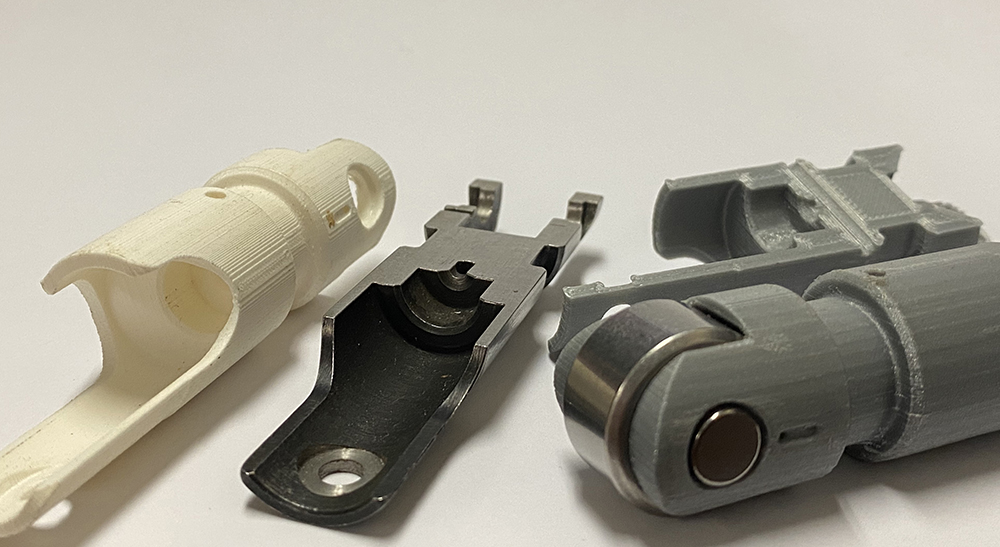
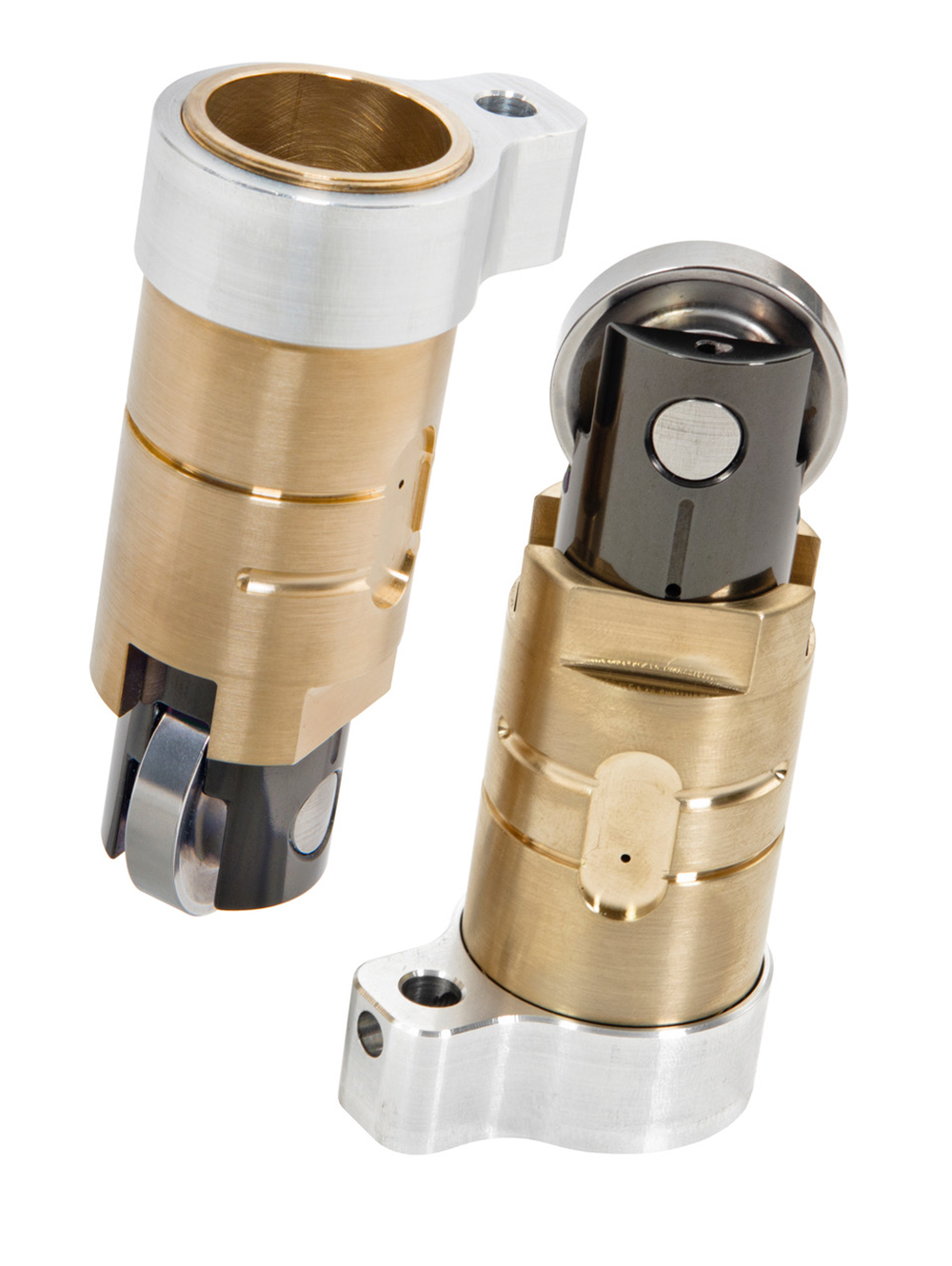
Isky Racing Cams can develop lifters for specific applications. After the part is designed via a CAD drawing, our source told us, 3D-printed prototypes using the actual wheel and axle are sent to the customer for test fitting.
“We could all visually see the issue,” said Godbold. “The valve was so severely out of control and was likely jack-hammering the rocker on the valve stem.”
“Yes, we could clearly see the loft was uncontrolled and bouncing on the nose of the camshaft lobe,” added Strader.
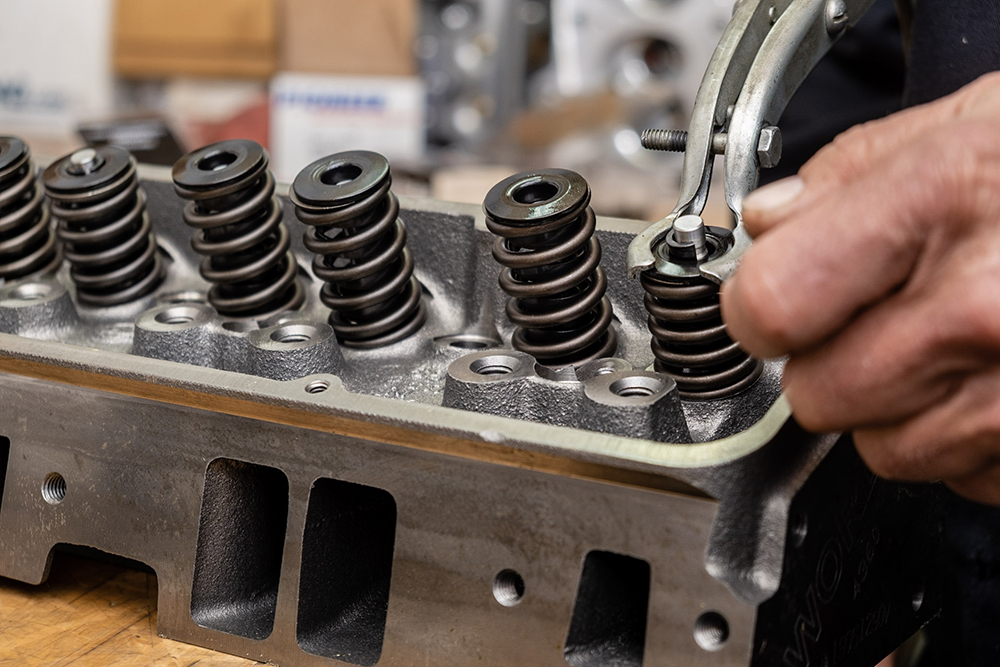
A larger, stiffer valve spring would generally be the prescription, but this was Stock Eliminator. Cylinder heads can’t be modified to accept any spring larger than stock. And the camshaft lobe design was also a possible source of the problem.
“There are strict rules to limit total valve lift, which causes racers to want as much area as possible on the nose—think ‘square lobes.’ This is incredibly challenging because the acceleration rates near peak lift—that is, when the lifter transitions from the ramp to the nose of the lobe—can get to be very high. And that makes controlling loft nearly impossible for the springs,” explained Strader.
COMP Cams and Strader have a long history that has cataloged numerous lobe profiles that, when combined with the correct valve spring or other valvetrain changes, will solve most problems.
“Occasionally, when we can’t get just what we want, we ask for Billy to take a swing at a new lobe design,” said Strader. “In this case, Billy came up with a design that gave us a gentle opening ramp with a very aggressive velocity at the .200-inch lift points. It had a lot of area under the curve, but would not have as much speed near the nose so that we could prevent it from lofting out of control.”
Jesel’s wheel-guided, cartridge roller lifter allows the wheel diameter to exceed the body diameter, which ultimately helps add to lifter longevity, a company source noted.
The next step was testing four spring combinations and pushrod setups.
“We then settled on a terrific package that had great reliability and made more power than when they arrived,” added Strader. “This total system approach works really well for us and pairs well to our relationship with Billy and COMP, as we can provide independent testing to look for new ways to solve valvetrain problems.”
Probably nowhere in a pushrod V8 engine built for racing has there been more problems and failures than with the valvetrain. From the lifter to the valve, it’s a delicate linear arrangement that can be compromised by mass, harmonics, and geometry—not to mention cylinder pressure. For a while, engine builders simply made more power than the valvetrain could withstand.
“Cam manufacturers have come to the realization that we can’t destroy the valvetrain to make horsepower,” said John Partridge of Bullet Racing Cams, Olive Branch, Mississippi. “It used to be that the more aggressive you got, the more power you’d make. But there’s a limit if the valvetrain is going to live.”
Shattered lifters, bent pushrods, and broken valve springs were often dismissed as simply the cost of racing. To their credit, sanctioning bodies implemented rules that forced engine builders and suppliers to rethink their strategies. Some have instituted rpm limits to help keep the valvetrain under control. Others are imposing reliability standards. NASCAR teams used to have practice engines and two-lap grenades called qualifying motors. Then on Sunday they would install the race engine. NASCAR now requires teams to used sealed short blocks over multiple weekends. The goal is to reduce the number of engines a team can use during a season by forcing them to improve durability.
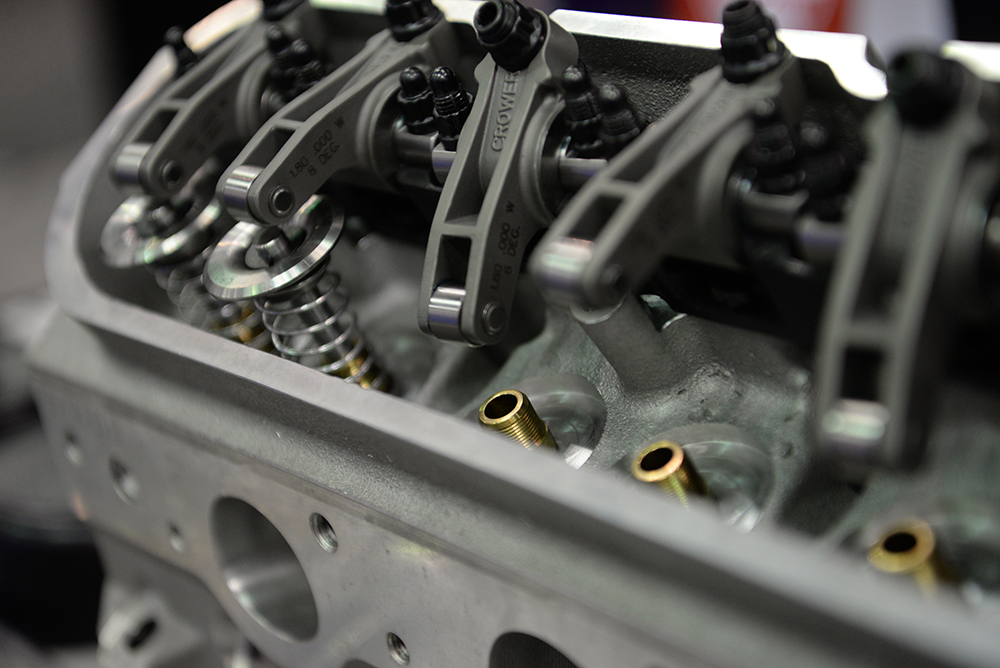
Stainless steel rocker arms are gaining in popularity, largely because they don’t fatigue like aluminum, according to our source at Crower.
Suppliers quickly learned that by understanding the total picture of valvetrain dynamics, reliability would improve, followed by horsepower increases.
“It all started with the Spintron,” recalled Nolan Jamora of Isky Racing Cams, Gardena, California. “We bought the third one off the line. We saw some of the work Richard Childress was doing in NASCAR and applied that to drag racing.”
“You always have failures as you develop products,” added Rob Remesi of Jesel, Lakewood, New Jersey. “You discover the reasons why and make them better, whether trying different materials or different heat-treats. That’s how the lifter has evolved over the years.”
FOLLOWING THE TRENDS
Some definite trends have developed over the years. The industry acknowledges that strength and stiffness is preferred over weight savings on the lifter side of the valvetrain. That has led to massive components, such as lifters more than 1 inch in diameter and pushrods that are 3/4-inch in diameter.
“We just came out with a 3/4-inch pushrod,” said Steve Rhodey of Trend Performance, Warren, Michigan. “It’s wide open to whoever can fit that big a pushrod into the head and block.”
Trend developed the big pushrod by starting with 4130 tubing for the body and machining the tips out of nitride H13 tool steel. The key to making a stronger pushrod came in determining the radius of the tube’s inside diameter where the tip feeds into the body.
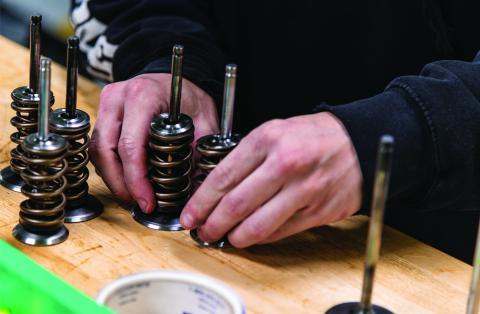
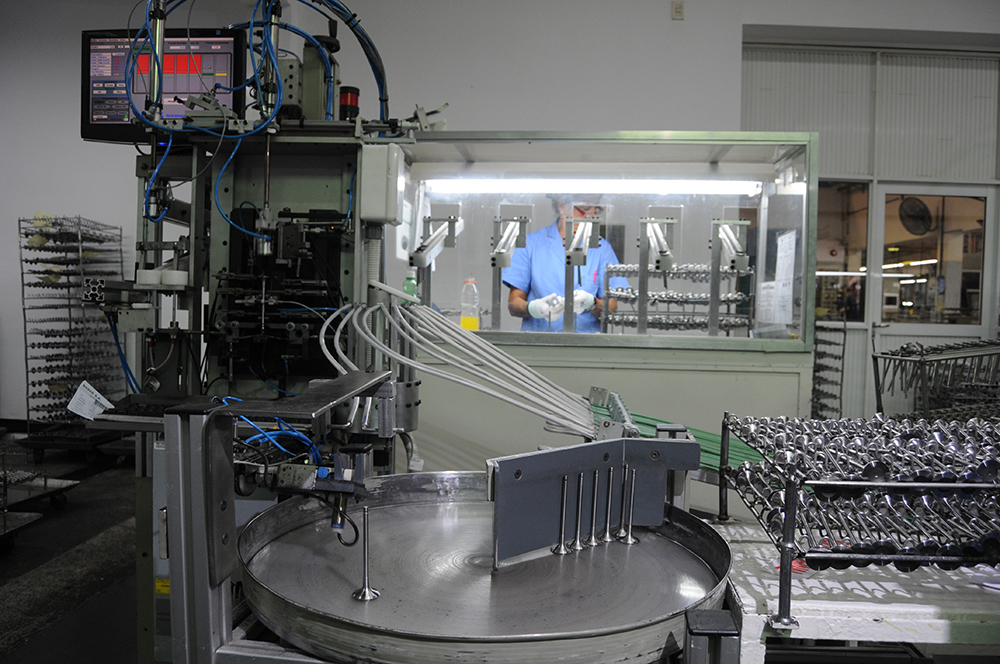
Suppliers are constantly working to improve valvetrain reliability and longevity—for Engine Pro, its proprietary manufacturing process is key to those efforts.
“There’s some technology in this radius,” noted Rhodey. “We’re looking at the mating radius, the type of fit, and also the heat-treatment. The pushrod comes in either long or standard clearance styles. The most popular seems to be the long clearance.”
Such a fat pushrod has become necessary in high-powered engines where open valve-spring pressures are in the 1,700-pound range and valve lifts are well north of 1.1-inch. And those numbers put considerable pressure on the lifter. Isky has been leading the movement toward a roller lifter design that uses a bushing to support the wheel axle, compared to more traditional designs that use needle bearings.
“We developed better springs [testing on the Spintron] but we kept failing the lifter,” explained Jamora. “So we came up with the bushed lifter, and that stopped the failures. Of course, that allows you to go even more aggressive on the camshaft and springs.”
Isky is now delivering the seventh version of its bushed lifter following changes in materials and design. Early designs couldn’t retain oil, then engineers discovered that porosity of the metal surface was key to lubrication.
“If the material is too hard, it can’t hold oil,” said Jamora.
Jesel acknowledges the trend toward bushed lifters but continues to promote its needle-bearing designs. “We do offer the customer a choice, but we still prefer needle-bearing over bushing,” said Remesi, who noted that failures from lower-quality needle-bearing versions on the market have alarmed engine builders, especially when pieces of the broken needles are scattered throughout the engine. “We have a custom-made needle; it’s not off-the-shelf. We can control the sizing and heat-treat.”
Jesel offers a full line of lifter designs, including keyway, tie-bar, and roller-guided cartridge.
Meantime, Crower is seeing the market expand for solid roller lifters. “People aren’t afraid to run solid rollers on the street,” said Louis Floquet of the San Diego, California-based company. “A thousand horsepower is average for the street car today. With new materials, CNC machining, and tighter tolerances, everything is more exact.”
Crower is working on a new lifter with select engine builders testing them. “This one is different in how we’re doing the oiling. It should be a pretty trick deal by the time it’s done,” Floquet added.
Racers can be quick to blame manufacturers for failures, but oftentimes the real cause is “inattention to detail rather than the component itself,” noted our source at Erson.
Meeting a lower price point is what motivated Bullet Racing Cams to develop a new needle-bearing lifter for sportsman racers. “It’s less pricey but still has pressure oiling to the wheel,” said Partridge. “The difference is about $200 per set. We’re also working on our bushing lifters. That’s an ongoing process with materials and design.”
Partridge acknowledged there are differences of opinion when considering bushed versus needle-bearing. “Top Fuel teams aren’t running bushed lifters. That tells me they have a purpose and not for all applications,” he said. “If it’s high quality and used in the right applications, there’s nothing wrong with a needle-bearing lifter.”
DEBATE OVER ROCKER ARMS
Overall, the industry appears to be leaning more in the direction of steel rocker arms versus aluminum models; and there’s also a movement to shaft rocker arms. “That’s where everything is being pushed these days,” said Floquet. “More cylinder heads are being designed for shaft rockers, and stainless-steel rocker arms don’t fatigue like aluminum. With aluminum, you had to adjust the rockers due to the heat cycles. With steel, you can set the rocker and forget about it.”
Crower recently introduced a new Legacy steel shaft-rocker design for the LS that’s available in 1.7:1 or 1.8:1 ratio. “It puts most of the offset into the stand and not the rocker,” said Floquet. “It basically straightens out everything. There’s less stress on the part. And we’re also doing a bushing tip, but a needle bearing is optional.”
Jesel is also addressing the demand for more steel rocker arms but has some words of caution. “Steel is stronger, and aluminum will eventually fatigue over time. Unless something catastrophic happens in the motor, you’re not going to break a steel rocker,” noted Remesi. “Our target when we first started the steel rockers was turbocharged, nitrous, and blower motors where there’s a lot of cylinder pressure that the rocker arm has to open into. There are a lot of applications where aluminum rockers will be fine. But a customer has the peace of mind knowing that a steel rocker won’t break.”
Steel is heavier than aluminum, so there are high-rpm applications where aluminum might be preferred. And there are some engines with unique offsets that pose difficult machining operations to produce steel rockers. Otherwise, the only real downside to steel rocker arms is price.
“They can cost 50% to 100% more than aluminum because the manufacturing process is longer and more involved,” added Remesi.
DIESEL GETS INTO THE ACT
Engine Pro in Wheat Ridge, Colorado, is adding some 275 new part numbers in its next catalog, including new valve springs and performance roller lifters.
“There are also definite opportunities in the midsize diesel market,” said Dave Sutton. “We have a drop-in valve spring to help increase rpm, and we see a strong market for our Nitro Black valve line.”
The exhaust valves in the Nitro Black line are made from Inconel and HNV-3 alloys, while the intakes are constructed from 21-4N steel. All valves are finished with a five-step liquid nitriding process.
“Ours is a proprietary process,” explained Sutton. “Everyone is pushing the envelope for products that will be more durable and last longer.”
QualCast in Nashville, Tennessee, is also targeting diesel customers with a new performance valve kit that includes valves, springs, seals, keepers, and retainers. “It gives the user one part number instead of spending time on the phone or computer looking for the parts individually,” explained Paul Hauglie. “The springs will increase the seat pressure, but you can still use the stock camshaft, and no machining is needed.”
The valves in the kit are from the company’s Black Lightning performance line. The exhaust valves have a higher nickel content to handle high heat, and the intake valves are constructed of 21-4N stainless steel. All the diesel valves have a hardened tip and a black nitride finish.
MAKING LIFE EASIER FOR THE VALVE
All valves are positioned in a guide and rest on a seat. CHE Precision in Newbury Park, California, are veterans in manufacturing those two components along with other valvetrain gear.
“We’ve had one of our best years ever,” Ed Doyle said of the past 12 months. “So, it’s been hard just to keep up with the normal work. However, we do have some new materials that I can’t talk about because they’re for certain teams.”
Doyle did tell us the new valve-seat material came from a trusted supplier, and both discussed the possibilities with the teams. “It offers a lot of heat dissipation,” explained Doyle. “I’m hoping to start introducing that material to more teams as we get more data on it. Right now it works very well in endurance racing.”
Doyle added that he’s also trying a new material with the 410 sprint car engine builders, but all seem to prefer the current beryllium copper alloy.
ENGINEERING AROUND THE SPRING
Howards Cams of Oshkosh, Wisconsin, supplies spec springs to the Racesaver series, which offers a cost-effective rules package to attract more sprint car drivers. There are very specific limits on the valvetrain, including cast-iron camshaft, .842-inch flat tappets, 3/8-inch rocker studs, specific size and weight valves, and valve springs with specific seat and open pressures. There’s also a maximum valve lift .510 inch on the intake and .535 inch on the exhaust. To help racers find a little power with those limitations, engineers at Howards are developing cam lobes to work with those specific springs.
A company spokesperson said Howards Racing Cams has developed a new family of lobes, noting the ramp rates were tuned to control harmonics with the Racesaver spring.
This effort truly confirms a delicate balance between all valvetrain components, yet there is a synergistic cooperation between them. Spintron testing can confirm how little changes have a huge effect on one or more other components. Sophisticated engine simulation programs are also helping engine builders find the right combinations.
“Eventually, we learn what to stay away from and what we can live with,” concluded Bullet Racing Cams’ Partridge.
Over the past few years, valvetrain failures have led to vast improvements in quality and design. However, Jack McInnis of Erson Cams in Louisville, Kentucky, believes manufacturers and suppliers shouldn’t shoulder all the blame.
“Many times, a valvetrain failure may result from inattention to detail rather than the component itself,” McInnis said. “One of the problem areas we’ve heard questions about concerns top-end oiling issues when running a solid roller cam. It’s important to check for proper clearance between the lifters and lifter bores. Also, pre-assemble to make sure the oil feed on the lifter is lining up with the oil galley in the block.
“Proper clearances are critical because the lifters’ oil feed is not in constant contact with the oil galley. Pre-assembly checking can reveal potential problems when the lifter oil feed is out of alignment with the galley,” he continued. “This can happen with reduced-base-circle cams causing the lifter to ride lower in the bore, or conversely, when larger cam journals are employed causing the lifter to ride higher in the bore. It may be necessary to use lifters designed for these applications and/or bushed lifter bores to correct the alignment and ensure adequate oiling.” —Mike Magda
Driveshaft manufacturers are taking a strategic approach to design in order to deliver lightweight components that are both reliable and cost-effective.
As four-digit horsepower becomes the norm both at the race track and on the street, driveshafts are being put to the test like never before. With racers constantly upping the ante to find a competitive edge, driveshafts are playing an increasingly critical role in teams’ success; unlike many other components in a race car, failure here is at best a DNF, and at worst, a serious safety risk.
“We’re constantly in a state of development,” said Lee Mejia of The Driveshaft Shop, Salisbury, North Carolina. “From both the custom side and the OEM-style replacement side, we are regularly faced with challenges that require good solutions—some of the stuff that worked a few years ago doesn’t work so well now.”
Whether we’re talking about a street/strip drag car or a tube chassis circle track racer, the demands from competitors are the same—high strength, low weight, and affordability. But with tire and suspension technology rapidly evolving alongside the rise in engine output, accomplishing those goals is often easier said than done. And for many, the approach comes down to the specific needs of a given application.
The Modern Arms Race
“There’s a new kind of race car out there,” said Jesse Powell of G-Force Engineering, Wichita, Kansas. “Nobody is building 1969 Camaros to go race in NHRA Super Stock today. But if you go to any NMCA race, you’ll see about 150 late-model vehicles there to run the quarter-mile. These are the new race cars—it’s not the Fox-body Mustang that was bought for five grand that had $70,000 invested in it to make it competitive. It’s the new car that was bought for $70,000 and had five grand invested in it.”
Powell cited late-model Dodge Challengers and Chargers, Ford Mustangs, and Chevrolet Camaros as the main drivers of current demand. While all are capable of producing serious horsepower with fairly minimal changes from their showroom stock spec, these vehicles are often equipped with two-piece driveshafts from the factory in order to minimize noise and vibration from the driveline—designs that meet the strength requirements of an unmodified car and not much else.
With horsepower on the rise throughout racing, driveshafts are being punished like never before, which in turn is driving rapid development of stronger products. Photo courtesy of The Driveshaft Shop.
“The demand is pretty simple to understand—we’re dealing with a lot of horsepower and a lot of weight,” he said. “The cars are heavy and their horsepower potential is almost unlimited. A Hellcat makes 700 horsepower from the factory, but for about $2,000 in modifications you can make more than a thousand. The driveshafts that the OEs are designing are fine for the power that these cars make in stock form, but that’s basically it. The minute you start adding horsepower, you start breaking parts.”
Since many of these cars serve double-duty as race cars and street machines, the priorities for these driveshaft designs differ from traditional high-horsepower motorsports applications. “I think you can quickly reach a point of diminishing returns with light weighing,” Powell said. “The guy with the 4,500-pound Demon isn’t worried about adding two pounds to the driveline—he wants to support more power. There is a threshold that you reach where you start to lose more capability than the advantages you gain from keeping the weight down. You obviously want to do the best you can to keep the part light by using materials like aluminum and carbon fiber, but if the part breaks, you need to move to hardened steel, and that might be a few pounds more. At a certain point, if you want more horsepower you need to make sacrifices elsewhere.”
Powell noted that driveshaft designs for modern performance vehicles are limited by tight production car packaging, so engineers look for specific aspects of the design to pinpoint where meaningful improvements can be made. “We’re trying to defy physics. Right now a lot of what we do is aluminum, and we’ve gotten incrementally better with it by working with our partners like Sonnax to find the shortcomings, adding material where it’s needed, going to a thicker wall tube, reworking the bonding process—those types of things.”
He said he feels like they’ve reached a pinnacle of what they can do right now from a materials standpoint, so the current strategy is mainly focused on making the parts more robust as a system rather than making the driveshafts themselves stronger. “That means putting together the right bushing package, making sure we’re not binding up the U-joints, or putting the driveshaft into some sort of undesirable angle that can excite the driveshaft or compromise its integrity. For instance, we developed a new set of dual-stage bushings that provide OE-drivability at idle and while cruising, where the bushing material has a softer durometer. But it also has a harder durometer material that comes into play as you start to load the driveline that holds it firm so the pinion can’t move so much.”
The Balancing Act
While weight might not be a big issue for street/strip applications, it takes on greater importance for those running in series with purpose-built race cars, where the application necessitates different design priorities.
“You usually don’t have as many constraints to contend with here,” said Mejia. “Obviously we work with our manufacturers to make sure the tubing of our carbon fiber and aluminum driveshafts is of the best quality, but there are also innovations that are helping to support the driveshaft, effectively making it stronger. For instance, from our axle technology we’ve developed what’s basically a stub-mount system that uses a 300M chromoly stub shaft that connects the CV to either an aluminum or a carbon fiber driveshaft.”
As racers examine every component on their race cars for a competitive edge, driveshafts are playing an increasingly critical role in teams’ success; unlike many other components in a race car, failure here is at best a DNF, and at worst a serious safety risk. Photo courtesy of Strange Engineering.
He added that it’s important to consider how the vehicle is going to be used in order to spec out an effective setup. “If a driveshaft is properly selected for the application, we tend to see very low rates of failure. They typically happen because something is being used in situations it wasn’t designed for. The criteria that we usually go by includes the weight of the car, horsepower range, the kind of racing they’re going to be doing, and the kind of tire they’re going to be running. We also verify any possible diameter restrictions—in some cases we can only do a chromoly tube or something like that because of the amount of space that we have to work with.”
While steel isn’t the lightest option available, it does provide some peace of mind in terms of outright strength. “We focus on strength,” said JC Cascio of Strange Engineering, Morton Grove, Illinois. “Accordingly, all of our driveshafts are manufactured with heat-treated seamless 4130 chromoly material with 4130 chromoly weld ends, which provides the strongest option. Both our 3-inch and 3.5-inch diameter tubes come with 0.083-inch wall thickness and are straightened to have less than .008-inch of total runout.”
For others who’re looking to get the strength they need with the minimal amount of weight penalty required to do so, other materials can provide a more targeted solution. “We do a lot with 4130 chromoly, but this is where carbon fiber really shines,” said Mike Bennett of Dynamic Drivelines, Des Moines, Iowa. “It’s super light and it’s very strong relative to its weight. Cost usually ends up being the main factor when choosing between the two.”
Racers fielding hefty late-model cars are willing to consider lighter alternative materials for driveshafts, such as this carbon fiber driveshaft from The Driveshaft Shop. But as horsepower climbs, strength becomes the ultimate criteria.
Aluminum also offers a lightweight alternative to carbon fiber that’s more budget-friendly, but it’s ultimately not as strong. To address this, engineers at Diversified Machine in Lancaster, Pennsylvania, identify where material can be added to provide meaningful improvements in overall strength, and where it can be removed without compromise.
“We can increase the OD—if we go bigger with the OD, we gain that strength, and we can still put a big hole through the center in order to provide a lighter product than the competition,” said Diversified Machine’s Dave Ely. “And maybe there’s a spot where we had a 0.030-inch radius previously—if we can get that to a 0.060 or a 0.090 radius, that will make a difference. Any time you’re able to put more radius in and make your transition points smoother, you’re going to gain longevity. At this point, it’s as much about the machining practices as it is about the materials.”
The Next Big Thing
With all signs pointing toward continued increases in horsepower, grip, and weight in the future, driveshaft manufacturers have no time to rest on their laurels. “As with all race components, driveshafts will evolve as the weight and horsepower dictate,” said Cascio. “And to that end, we’re always doing research, development, and testing to improve the capability of our driveshafts and expand our line.”
And by most accounts, that future is likely going to include an increasing shift toward carbon fiber driveshafts, despite the headwinds the material initially faced in this type of application. “I think they originally got a bad rap from the early years of sub-standard manufacturing,” Mejia said.
Steel is relatively heavy, but its strength is a proven asset. Even so, “driveshafts will evolve as the weight and horsepower dictate,” said our source at Strange Engineering.
That sentiment is backed by Ely, who noted that circle track sanctioning bodies were soured on carbon fiber early not only because of potential cost increases, but reliability issues. “Twenty years ago, some companies came out with carbon fiber stuff and it didn’t really work very well. So right away the sanctioning bodies wanted to do away with this thing they saw as an unnecessary complication—just do away with them before everybody gets them.”
But as Powell pointed out, those processes and the resulting quality of carbon fiber parts have come a long way in the past few decades. “I think that’s where the drivetrain world is going—we’re just waiting for everything else to catch up with the technology. We know that carbon is where it needs to go in order to do this right in our segment.”
Bennett also agreed that carbon fiber is the material of choice for the road ahead. “Carbon is probably going to be the focus—right now it’s about getting the costs down. The way it’s made is more labor intensive, but the industry is definitely working toward ways to improve the pricing.”
And while certain classes and series are still hesitant to bring carbon fiber driveshafts into the fold, the tide is turning. “As carbon fiber driveshafts have improved as a whole and more people understand the benefits there, they have become much more widely accepted,” said Mejia. “The times that we run into problems running carbon today are mostly in series or classes where stock-style or spec components are a requirement because of the format.”
Beyond the performance and reliability advantages that today’s carbon fiber offers, the safety benefits are indisputable. “We do a lot of these for Pro Mods and things like that—big horsepower drag cars,” he added. “And a big factor for that is how safe it is. If a carbon shaft fails, it doesn’t have the potential to come into the car. It opens up like a broom stick and basically disintegrates.”
Racers seeking a lighter alternative to steel but more affordable than carbon fiber can turn to aluminum, said our source at Diversified Machine, where engineers then strengthen the product by identifying where material can be added or removed without compromise.
And because of that behavior, it’s also less liable to really beat up the vehicle in the event of a failure. “Generally, if a carbon fiber driveshaft fails, it splinters and shreds,” Powell explained. “So you usually have a lot less damage to the vehicle than you do with aluminum or steel. And in situations where you might not have a safety loop, carbon fiber is probably the least likely to cause the car to catapult because of how it breaks up.”
Although carbon fiber is seeing wider use among OEMs these days as well, Powell noted that it’s still largely relegated to specialty vehicles. “Stuff like AMGs, the new Mustang Shelby GT500 has a carbon fiber driveshaft—there’s a few of them out there. But they’re on premium vehicles, and I think it’s going to continue that way for a while because it still brings a premium price. Until we see that come into the same price realm as steel or aluminum, I don’t think you’re going to see carbon as the everyday OE material of choice. And that’s OK because it leaves room for us in the aftermarket.”
The Sports Car Club of America (SCCA) is launching a new program at Sebring International Raceway—the first-ever SCCA Endurance Team National Championship set for March 31–April 2, 2022.
The inaugural event is built around a 20-hour invitational race, broken into segments over two days. National Champions will be crowned when the checkered flag falls under the lights Saturday night, April 2. Additional details on the format and rules package for the event will be forthcoming.
The goal is a team competition utilizing modified production-based street vehicles, with technical regulations designed to be inclusive, welcoming cars from existing SCCA classes, as well as those that race with other organizations.
“To many, there is nothing more rewarding or prestigious in amateur motorsports than to win an SCCA National Championship,” SCCA Road Racing Vice President Eric Prill said. “And while championships are earned through head-to-head competition, the foundation of SCCA is formed by friendships behind the scenes. We have a culture based on the idea of helping one another fulfill our dreams, from driving on a racetrack for the first time all the way to becoming a champion. The team concept runs deep within the Club, and this program provides our members the opportunity to actually compete with their friends, rather than simply against them.”
SCCA President and CEO Mike Cobb said that the new National Championship event would serve as the starting point for a program that can be deployed locally by SCCA regions at nearly every race track across the country.
“While the launch event will be for a prestigious SCCA National Championship,” Cobb said, “the program will be scalable, providing our members and regions opportunities across the country to continue to have fun with cars in a variety of ways with their Club. SCCA Enduro will be complementary to our existing Road Racing, Solo, Rally, and Time Trials activities, as well as our joint initiative with IMSA to develop the next generation of motorsports participants.”
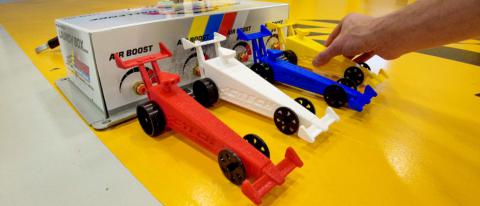
CTech Manufacturing and STEM curriculum provider STEM101 have teamed up to develop the next-generation C02 Car Challenge utilizing small 3D printed race cars propelled by basic compressed air.
Called the Air Drag Challenge, the new project challenges middle and high school students to design, 3D print, and assemble small race cars. Students then line up their cars on a string-guided raceway and are launched down the track via a special compressed air-powered “Launch Box.”
CTech manufactures the Launch Box, and everything educators need to implement this project—from hardware to curriculum and support—is distributed by STEM101.
The Air Drag Challenge combines the excitement of C02 vehicle challenges and modern manufacturing elements with STEM-oriented skills to better prepare students to pursue STEM-related fields.
Educators interested in the Air Drag Challenge should visit here. For more information, visit ctechmanufacturing.com.
Competitors and fans—from Scandinavia to the UK—are passionate about their sport, and that means a world of opportunity awaits US-based performance parts manufacturers and service providers.
This month marks the start of the European drag racing season, with May kick-off events scheduled for both the sportsman division—the Summit Racing EDRS Series—and the FIA European Drag Racing Championship.
“Racers have been waiting a very long time for the return of a normal race calendar [following the 2020 season disruption due to COVID-19], and we expect a strong 2021 season,” said Nils Lagerlof, CEO of Speedgroup, the Swedish-based administrator and promoter of both the Championship and EDRS series.
The EDRS Series is held primarily in the Nordic countries of Norway, Sweden, and Finland (with a round in nearby Estonia), and is expected to attract about 700 teams this year, similar to the number of teams it drew in 2019. But all bets are off regarding spectators.
SFI specs are utilized in Europe to ensure that drag race and safety equipment is tested and manufacturer-certified to appropriate standards, according to our source. Pictured here are US racing parts awaiting inspection at a Swedish speed shop. Photo courtesy of Jennifer Faye, SFI Foundation.
“While the sportsman grassroots series typically attracts up to 4,000 spectators at an event, it’s really hard to guess the number of spectators we will see in 2021 because it has a lot to do with how the COVID vaccination process is advancing in Europe and if there are restrictions at the various venues remaining in place,” Lagerlof said.
Likewise, the Championship series—with 80 teams that usually attract up to 8,000 spectators at each round of the six-round series—may also be affected by COVID limitations.
“Currently, there are different COVID-related restrictions in the countries hosting championship rounds,” Lagerlof said. “The first event is in the end of May at Santa Pod, England, and no one knows what the COVID situation will be by then.”
OVERSEAS CONNECTIONS
Speedgroup was founded in 2006 by a small group of race teams active in the European Drag Racing Championships. It sponsors a contingency program to connect US and other manufacturers with racers and fans in the sportsman division and through a Speedgroup subsidiary, DRE, to serve as a similar bridge for the Championship series. Speedgroup AB is currently a shareholder company registered in Sweden; the majority of shareholders are active racers in the Championship and EDRS series.
Several US-based motorsports companies work closely with Speedgroup and have developed ongoing—and strong—ties with European racers and fans and lend support to the growth of the European drag racing scene. All are eager for racing to resume.
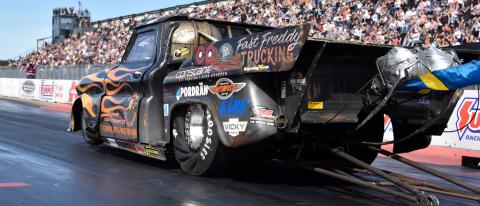
A deep appreciation of American car culture keeps drag racing strong across Europe, noted one of our sources, who pointed to nostalgia gassers as one of the many classes helping to fuel business and interest in the sport. Photo courtesy of Lena Pena, Speedgroup.
“At Tierp [the Swedish drag arena], I was struck by how closely and passionately the Swedish fans follow NHRA drag racing,” said Jim Greenleaf, motorsports and event manager at Summit Racing Equipment, Tallmadge, Ohio, who represents his company at the EDRS Series. “Everywhere you look, you see Las Vegas Motor Speedway and Charlotte Speedway hats and T-shirts, as well as other gear. You really wouldn’t know you are in Sweden if not for the accents.”
He went on to explain why the sportsman grassroots division is a good fit for Summit: “We can provide the full range of products and services for [these] racers. In addition to our company making the commitment to support the racing scene in Europe, it provides the opportunity for us to learn how to service these customers.
“We focus not only on delivering the products, but also on how to do so as efficiently and cost-effectively as possible,” he continued, “as we also work out issues such as taxes, tariffs, and shipping to get the products from the United States to our European customers.”
Another US company that’s quite active in the European drag racing scene is San Antonio, Texas-based VP Racing Fuels. Peter Coleman, who’s in charge of European business development for VP, told us his company has been working with Speedgroup/EDRS as its official fuel supplier since 2017. He also noted a long-standing deal with Santa Pod in the UK.
“The relationship…serves to bring VP Racing Fuels closer to the racers who need our fuels and expertise,” he said. “Drag racers know that VP is available at the circuits.
“Our network of dealers and distributors is strong—particularly across Scandinavia and the United Kingdom—and there should be no need for racers to carry fuel long distances across borders, potentially breaking laws on the way,” Coleman continued. “Our network, including Old Hall Performance in the United Kingdom, Ljungdahl Racing and JAMS AB in Sweden, Lindtek in Denmark, Fannrem Motorverksted in Norway, and Specialty Engineering in Finland, are supported by the contingency program and should be able to get racing fuel to any location.”
On the standards side, Poway, California-based SFI Foundation works closely with the FIA European Drag Racing Championship, the EDRS, and other race organizations and federations throughout Europe, according to President Jennifer Faye, who noted that SFI specifications are utilized across the continent “to ensure that racing and safety equipment is tested and manufacturer-certified to the minimum standards. That ensures performance quality of the certified items and helps prevent part failures while in use.
“SFI also assists with the inspection process and recertification of parts,” she added. “Many SFI specs require the parts to be inspected periodically to check for damage, undue wear, or other conditions that could harm the integrity of the part and prevent it from performing as intended or failing and causing a safety problem. Most of the hard-parts manufacturers are in the United States, and shipping heavy parts overseas for inspection can be very expensive, so we bring factory-trained inspectors to the racers in an effort to minimize cost for them. We have been conducting SFI inspections in the springtime before each race season for more than 20 years.”
Faye explained that during the pandemic, SFI’s regular inspection tour experienced interruptions, “but we have evolved our team of inspectors to be comprised of Europe-based technicians who have been able to carry on the inspections locally, with us coordinating the process from here in the United States. In addition to the annual parts inspections, we provide technical assistance with SFI specs using their regulations as well as providing a certification exam program for SFI International Technical Inspectors/Scrutineers.”
TIES RUN DEEP
The ties between European drag racing and its US counterparts—and the opportunities for stateside racing suppliers—run deep, according to Speedgroup and the firms we spoke with.
“In addition to the competitions we participate in and promote with our partners, we also work with fairs and other events,” Lagerlof said. “In 2019, Speedgroup met about 200,000 potential customers on seven trade fairs and events. Together with the audience of about 250,000 people at our competitions, our partners are seen as an attractive way toward a good target group.”
“There is a deep appreciation of American car culture there that keeps drag racing strong across European borders,” Faye explained. “In addition to the American car models you typically see, you also have the opportunity to watch cars go down the track that are unique to Europe. One example is the Ford Anglia nostalgic gassers in the United Kingdom. They are serious race cars, running in the sevens at almost 200 mph, and they are very different-looking from the types of cars we have here, but what’s under the body can be similar.”
Summit Racing’s Greenleaf agreed, telling us that “the enthusiasm in Europe for American muscle cars is incredible and evident on European race tracks.” He also noted that American cars and equipment readily find their way from the US to Europe, creating huge opportunities for US-based manufacturers.
In fact, Faye estimated that about 95% of certified hard parts used in European drag racing come from the states. “Many of the cars raced in Europe are American-based models, so there’s a market for American parts, whether it’s drivetrain or safety equipment,” she said. “Of course, there are several safety-equipment manufacturers in Europe for sourcing personal protective gear, but drag race-specific items such as supercharger restraints are solely produced in the United States, and there is a need for that equipment across the pond.
“Particularly with safety equipment, the one area we are always trying to expand in Europe is customer service and support,” she continued. “I would suggest that if there were US companies that would like to enter this market, they should connect with a local supplier or retailer in a particular country that they want to be in, whether it’s Sweden, Finland, the United Kingdom, or elsewhere. Having local knowledge is invaluable, and setting up a relationship with a supplier who can help you communicate and offer technical service and support to local racers goes a long way in gaining loyal customers.”
From sportsman racing to the professional classes, there’s a lot more drag racing taking place in Europe than outsiders may realize. Similarities are everywhere—Pro Mod classes, for example, are hugely popular on both US and European straightaways. The enthusiasm, too, is very much on par with what you’d find at a US drag strip, whether it’s Gainesville Raceway, the Texas Motorplex, Bandimere Speedway, or elsewhere.
“While we have a longer season in the United States, with more stops and more racers, there are smaller groups of drag racers and enthusiasts in Europe,” Coleman said. “But their depth of passion is no less than you’d get in the United States.”
Stan Lester has resumed his position as the head of FASTRAK International, the parent company for FASTRAK Racing and the Ultimate Super Late Model Series. Lester, the owner and founder of the series, had partially retired in 2019, followed by a full retirement in 2020, due to health issues.
The announcement follows FASTRAK Vice President DJ Irvine’s departure from the series to work with VP Racing Fuels.
Lester will now focus on the 2021 touring schedule.
“I can’t thank everyone enough for being so patient through all of this, and for all the calls and prayers. Good to know our racing family is still there and especially through these tough times of dealing with my health,” Lester stated in a release.
The series will announce the 2021 touring schedules shortly. Officials also announced plans for changes in the 2022 season, including new race formats and larger purses.
 MEMBERSHIP LOGIN