Industry Insights: Mark Maynard

Submitted by jeffreyc on Thu, 04/08/2021 - 10:17
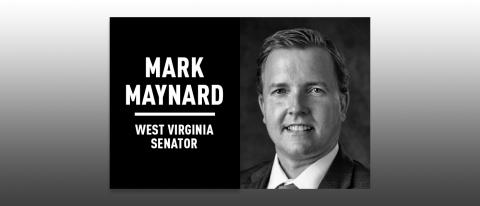
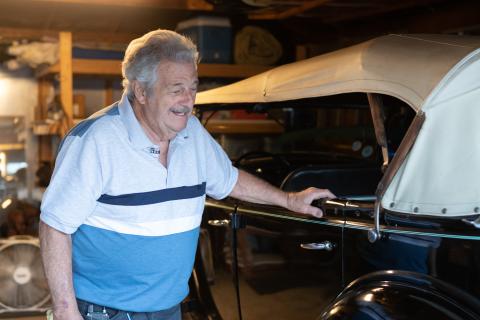
Mark Maynard


A champion for racing and performance, this state senator is making a positive impact on West Virginia’s motorsports community through business-friendly legislation and advocacy on behalf of professionals and enthusiasts like himself. 

The performance industry has long been aware of political and regulatory forces at various levels that threaten our existence: noise ordinances, environmental pressures, zoning restrictions, and so forth. Through the years the industry has been the target of people and entities seeking to limit or even abolish motorsports and performance endeavors.

Those of us who love automotive performance might have a difficult time explaining the emotional bonds that fuel our passion; we are intimately tied to automotive performance by the sights, sounds, and feel of motoring. We sometimes express frustration that government and regulatory officials don’t understand or appreciate our passion.

But some officials and regulators actually share that passion, and Mark Maynard is a great example. A lifelong and admitted “gearhead,” Maynard is currently serving his second term in the West Virginia Senate. He grew up working at his father’s Union 76 gas station, and watched as his father competed in sand drag races throughout the region. Maynard later served for several years as a professional crew member with multiple racing teams, including with Jim Head’s nitro Funny Car in NHRA competition. Today he owns a small business in his native Genoa, West Virginia, and remains an avid muscle car and off-road enthusiast.

A rising star in the West Virginia Republican party, Maynard made a stunning political debut in 2014 when, seeking his first political office, he upset Truman Chafin—the longest serving Senator in West Virginia history—in a tight race for the 6th District senate seat. Maynard won re-election in a landslide in 2018, and today is chairman of several key Senate committees including Economic Development, Natural Resources, Enrolled Bills, and Rule-Making Review.

Maynard is a tireless advocate for West Virginia in terms of motorsports and performance causes, including quick work in spring 2020 that allowed motorsports facilities in the state to remain open during the COVID-19 pandemic. He also led the way in the creation of the West Virginia Motorsports Committee, which will advance causes related to the industry.

Despite a busy schedule during this year’s Senate session, Maynard recently took time to visit with Industry Insights. He invited readers with questions or comments to contact him on his cell phone (304-360-6272) or by email at mark.maynard@wvsenate.gov.

PRI: It’s important that motorsports and performance people remain active with our elected and appointed representatives. How can we better engage with our leaders?

Maynard: For one thing, get to know your representative in your state, both Senate and House, and develop a rapport with them to let them know what’s important to you. The legislators do not have to be 100% pro-motorsports like myself, because when I was elected to this position I found out very quickly that I had to know a little bit about everything. Many times, I am educated by my constituents on different subjects. 

Here’s the greatest piece of advice I can give: Each individual has a voice here, and in any state capitol. I tell people from other states, go to your capitol and let your voice be heard. And keep track of bad legislation through organizations like SEMA and PRI; an email from an association like yours, or a newsletter that establishes what’s going on in the different states, that really helps. Matter of fact, way before I became a legislator, in my Petersen’s 4-Wheel & Off-Road Magazine I would read about a piece of bad legislation that had been introduced in a particular state. It would give the name of the legislator and their party, and that gave people the opportunity to reach out to that legislator. 

PRI: What do you see as the biggest threat to racing and the performance industry?

Maynard: I have no reason to think this other than just being pessimistic, but at this point federal regulation is probably my biggest concern. As a state legislator, many times I see federal regulations get passed down to the state, with the threat that if you don’t support the federal mandate you risk losing federal funding. So that is one threat.

What the threat would exactly look like, I don’t know. I would hate to see regulations that could prohibit the use of passenger cars in motorsports. That would really hamper our sport, financially and other ways. One other concern is public land usage. I recently became interested in desert racing in America, and if we lose our right to traverse public land in desert races it would devastate the desert racing community, plus other forms of racing that take place on public lands.

PRI: I suspect any representative at the state or federal level is inundated with information and requests. How can we cut through all the noise and help our representatives better understand our industry? 

Maynard: If there is something very important on someone’s mind, they could spend less than 15 minutes and accomplish every method of contact for their legislator: email, phone call, and a letter. Unfortunately, it’s not easy to find a contact database for all of the representatives in your state to allow you to send one email to all legislators. But with copy-and-paste you can reach many legislators with the same message. You can also save the email address of all of your legislators in a document, so that whenever you have a message you can copy-and-paste using the CC or BCC function. In West Virginia, for example, you could get your point across in less than five minutes to 134 legislators. We also have our phone system, which is not used as much anymore, but in the Senate we each have an administrative assistant that listens to every voicemail and passes that message on to us. We also still get snail mail. 

But my main recommendation is belonging to an association that can keep you updated and represent you on topics related to your industry.

maynard2
A lifelong “gearhead,” West Virginia State Senator Mark Maynard is a passionate champion for the rights and freedoms of motorsports participants throughout his home state.

PRI: This is very interesting. To be honest, I’ve often had the sense that my representatives are so overwhelmed with constituent feedback that my single message isn’t going to make any difference. But as we talk about this, my instincts are that maybe my message has more resonance than I realized.

Maynard: Absolutely! I am not overwhelmed; I have a manageable amount of messages and feedback. I share my cell phone number readily and have really tried to get it out there. I receive a manageable number of text messages every day. And Facebook Messenger, I get a lot of junk emails there and it’s hard to keep track, but that’s another way I can be reached. We try hard to keep an eye on feedback, especially when we’re in session. That’s when it’s really important for constituents to contact their legislator, when they are in session. As a matter of fact, I got behind on my communication this week, but we just had our last committee meeting for the week and I’m going to hold myself in my office this afternoon and evening to respond to all of the messages I have received. Grassroots efforts can have a big impact on a bill.

PRI: One of the areas you mentioned working on is tort reform language that would limit liability of motorsports facilities in West Virginia. How would that work? 

Maynard: It’s in the early stages right now, and the research has been much more difficult than I anticipated. I started on the project months ago. The reason this came on my mind was that there was a local drag strip in my area and a competitor had signed the release of liability waiver, but his throttle stuck and he missed the sand trap and crashed and was badly injured. The next thing you know, the track shut down. Now, I have no idea of what specifically happened in that case, but it got me thinking. My idea is that somehow through legislation we could protect the tracks from closure related to lawsuits. I’m doing this because I love motorsports and I want it to grow in West Virginia. I want to see people responsible for their own actions. A liberal legislator was kidding me recently, having fun, and he said, “You know what, when we have a roast for you, I’m going to use your quote, ‘Every time my feet hit the floor in the morning, I’m in charge of my life and the decisions that I make, good or bad.’” So that’s what I’m looking for; I want people to be responsible for their own actions. I don’t know where this will go, as I’m still in the research stage. But I’m going to continue to work on it.

PRI: As electric and hybrid vehicles gain popularity, there will inevitably be some attention from regulators looking at motorsports. How can we make sure the internal combustion engine is specifically protected in motorsports applications?

Maynard: That’s a great question, Dave. The idea of the internal combustion engine not being a part of motorsports, that actually almost brings a tear to my eye. I embrace all forms of motorsports, electric or otherwise, but my first love is the rumble of an internal combustion engine. It’s going to take a grassroots effort for constituents to say, “No, we will not allow these engines to go away.” I’d hate to see it come to this someday, but it’s one thing if we lose the cars on the street, but we’re going to have to stand firm to not allow the electric engine to ever be exclusive.

maynard3
Mark Maynard sponsored a dirt late model car during the last election. In the past, he has crewed for a late model team, and once served on Jim Head’s NHRA nitro Funny Car team.

PRI: You were the lead sponsor in 2019 on legislation that created the West Virginia Motorsports Committee. What will be the primary mission of the committee?

Maynard: Our mission was to grow motorsports in West Virginia. Recently in March, Governor Jim Justice confirmed five appointments to the committee. Last spring (2020), when our governor issued the COVID mandates, one of the mandates covered outdoor sporting events, and motorsports events fell under that mandate. However, I had to do the work the motorsports committee would have done, spending a couple of days contacting every venue in the state to let them know what was going on, and going to bat with the governor to specify that motorsports facilities could be open and practicing certain precautions. That is the kind of work the committee could really have a positive impact with.

PRI: You’ve also been an advocate of attracting more motorsports events to West Virginia. How can government officials attract new events to the state? How can a state become more hospitable for motorsports?

Maynard: There are always tax incentives and that sort of thing. We recently had a deal that was very simple; it allowed motorsports facilities that were doing infrastructure improvements to not pay sales tax on those improvements. So technically, it’s not money lost by the state but it’s a savings for the facility. There are also elements through tourism where states can make a real difference by welcoming events, even if there is no direct funding help. Just the fact of being listed on their schedule of events, brochures, things like that, it is supportive. Every state does this sort of work and they could really help motorsports by including that information in their marketing. It makes a difference. 

PRI: You touched on this a moment ago. Another important issue for segments such as off-road racing is land access. You were recently appointed as a board member of the BlueRibbon Coalition. How can we make certain we have access to the land needed for different forms of competition?

Maynard: You know, it once again comes back to your state and federal legislators. They are in control of this land, but when it comes right down to it, they share control. State and federal agencies are technically in charge, and the legislators can make the greatest arguments in the world (for land usage for motorsports) but if these agencies don’t agree then it doesn’t happen. They are considered the experts, and their opinion many times outweighs the points made by a legislator or a committee. I can have the greatest ideas in the world for land access, but when the Department of Natural Resources says it’s bad, the idea goes down in flames most of the time. 

I’ve talked about contacting your legislators, but in many cases the head of a state agency actually has much more authority than the legislature. But they are known as bureaucrats for a reason. They are often appointed and in a position to do good things, and sometimes when you think outside the box it’s not always a good thing. So this bureaucrat could risk his position if he gets a little too radical and tries to make things happen. But for an individual to try to make things happen, contacting your state and federal agency, the EPA, and either National Forest (USDA) or the Department of the Interior (DOI), those are avenues. 

The fight for land usage is becoming a pretty big job. I have scheduled meetings in (Washington) DC with the USDA (US Department of Agriculture) and the DOI stressing the importance of land access. If I lived closer to DC I would be there once a month, knocking on their doors.

And one more thing…go to the Capitol. I know it’s difficult now with the COVID situation, but go to Washington and set up an appointment with your legislators, and talk to them. Stress to them the importance of land usage for off-road sports. The squeaky wheel gets the grease…that’s still true. Ranch Pratt of the BlueRibbon Coalition has been very active on this front.

maynard4
“Each individual has a voice here,” said Mark Maynard, urging motorsports enthusiasts to express their concerns to legislators. For this, he even offers his cell phone number.

PRI: Speedway Motors announced in January plans for a new distribution center in Kearneysville, West Virginia. How can West Virginia continue to attract motorsports and performance companies to your state?

Maynard: We are making friendly changes in our state code, through tort reform and employer sanctions. I was pleasantly surprised when I learned of Speedway locating here—in fact, I need to reach out to them and congratulate them for choosing to expand with a facility in West Virginia. I think it boils down to making your state “business friendly.” And it doesn’t hurt to have motorsports-friendly language every now and then to get the industry in the news. 

PRI: The backbone of the performance industry is comprised of small businesses. What can the government do, in a broad sense, to help those businesses thrive? How can government create a business-friendly environment?

Maynard: The most important thing is to do away with over-regulation. That is one of my main goals, every day. That doesn’t mean to get rid of regulations; I’m talking specifically about over-regulation. When you get to that point, when you have the right balance of regulation, you can start working on positive things like tourism efforts, tax incentives, and employer-friendly regulations. 

I recently heard that Edelbrock is moving their facility from Torrance (California) to Mississippi. I toured the Edelbrock facility some years ago when I was working on Jim Head’s Funny Car crew, and it is a massive and impressive facility. It took up two or three blocks, an amazing facility. The fact that Edelbrock would go to the expense and work to move such a facility from California to Mississippi, that shows the dramatic situation with regards to state regulations and business climate. It’s expensive to move, but you can definitely see the motivation. 

maynard5
As an ATV enthusiast, Mark Maynard knows firsthand how critical it is to preserve outdoor spaces for motorsports. “The fight for land usage is becoming a pretty big job,” he said.

PRI: Your Senate service has surely been a unique learning experience thus far. What’s been the biggest surprise for you, in terms of what it’s like to serve as an elected official?

Maynard: One thing is just the amount of unknowns you deal with. As a business owner, whenever I felt like we were over-regulated, I would accept it and think, “Okay, those are the rules, gotta live by ’em.” But after serving, I realized that every individual and every business owner has a voice. If you don’t like something, you can come up to the capitol and tell us about it! That’s probably been the biggest epiphany I’ve had, the fact that every person has a voice. Unfortunately, people often don’t realize this. On my Facebook page I try to post things to inform my constituents on what is going on, to let them know what is happening.

PRI: You spent several years on the crew of Jim Head’s nitro Funny Car in NHRA competition. You’ve also crewed on a late model stock car. What did your crew experience teach you? Were there things you learned that serve you today?

Maynard: Absolutely! Serving on Jim Head’s crew for all those years—my Senate colleagues would be shocked to hear this—but I rank those years right up there with serving as a senator. It was hard work, it took a lot of determination, but I learned a lot of technical expertise. Seeing the cars run from behind the scenes, that was an amazing experience. Learning how things work, that was amazing. Ten of us would thrash on that car, hoping to make eight passes in a weekend, tearing it down completely between rounds. Doing the bottom end is a dirty job, and torqueing the mains to 110 ft.-lbs., torqueing the rods to 100…hot oil dripping on your face…it was tough, but it was an incredible experience.

PRI: Are you still interested in working with a team? Would it be possible given your current workload? 

Maynard: You know, I would love to. And I could do it on a limited schedule. My favorite races on the NHRA schedule are Las Vegas and Pomona, and I would probably do whatever I had to do every year to work those two events. Now, during an election year that would be difficult. And in the spring, that part of the season is off-limits for me because we’re in session during that period. But I would love to work on a trophy truck, something like that. 

When I worked on Jim Head’s team, he was number one. That’s how it is when you’re on a crew. The team comes before everything else; before family, before any extra-curricular activities. You had to be very dedicated to the team. You either make the team number one or you don’t work on the team. It wasn’t because Jim made that stipulation; it was because you have a job and if you’re not there, nobody could do my job because they all have their own work. 

But yes, there are times when I think about going racing again. If I get that opportunity again, I definitely plan on carrying my own weight.

maynard6
Mark Maynard is pictured here in 1980 with his father, who competed in sand drags. Maynard hopes to revive one of his dad’s racing trucks from the period and bring it to Gravelrama in 2021.

PRI: Your dad competed in sand drag racing when you were growing up, and you’ve talked of your passion for sand drag racing. Do you foresee getting involved in competition of some sort?

Maynard: I actually have competed in sand drags. He still has the amazing truck he ran back then. My dad is 82 now, and the event that is very popular here in the East is called Gravelrama. The 50th anniversary was in 2020, but it was rescheduled to 2021 due to COVID-19. My plan this summer is to bring the truck out of mothballs, get it serviced, go through it, get it ready to race, and race it in the 50th anniversary of Gravelrama. Hopefully I would get to take my dad with me to help me race it.

PRI: What an exciting idea! On the political front, you’re nearing the end of your second term in office. What do you see in your future? Will you want to continue to serve in the legislature? And do you have aspirations of a federal office, such as US Congress?

Maynard: You know, I do, because I see the difference I can try to make as a state senator and the way our state code is run. But my job is not done here, and I plan on running again here in 2022. After that I would definitely entertain a federal office. I would try to do the same things I’m doing right now, only doing it in Washington, DC. Dealing with USDA on land access, working with the EPA on motorsports regulation, doing tort reform to make people responsible for their own actions. But yes, that’s on my radar.

PRI: Senator, we appreciate you giving us time from your busy schedule. Thank you for your service to the people of West Virginia, and we wish you the best in the future.

Maynard: Thank you, Dave, it’s been an honor to talk to PRI. I enjoy talking about motorsports, my passion. And I invite any of your readers who can help us better represent motorsports to reach out to me with suggestions or input.
May 2021
By
Dave Argabright

PRI Publishes ‘Back to Green Flag’ Operations Protocol

Submitted by laurap on Wed, 04/07/2021 - 15:42
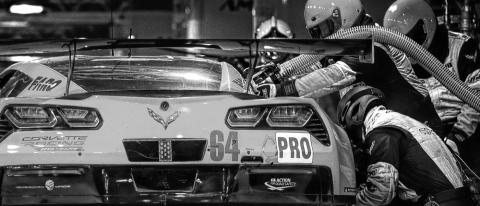
Race team refueling race car


With state and local COVID-19 restrictions easing around the country, it’s finally time to get back to racing. As the green flag drops on the 2021 racing season, participants, workers, and spectators’ health and safety are everyone’s top priority, and PRI has you covered.

In addition to maintaining an up-to-date directory of each state’s motorsports reopening status, PRI has published a step-by-step “Back to Green Flag” guidance document to help ensure you can responsibly get back on track and back in business. The updated guide, which covers everything from event ticketing to participant safety and concession procedures, can be downloaded here.

Each track’s circumstances are unique, and PRI encourages you to work with your local, regional, and state administrative officials to adapt this guide to your specific situation.

For more information on the “Back to Green Flag” protocol, please contact PRI Support at prisupport@performanceracing.com.

April 2021

Champion Oil Adds Scott Baubie

Submitted by laurap on Wed, 04/07/2021 - 14:41
Champion Brands logo, headshot of Scott Baubie in front of Chamipn Oil display of products


Champion Brands—the blender and packager of automotive, racing, and heavy-duty lubricants, chemicals, additives, and motor oils—has announced the appointment of Scott Baubie to its sales, business development, and marketing team.

As the director of sales/business development manager, Baubie will contribute to sales strategies and business development initiatives and design and implement new market penetrations within racing, fleet, and private label markets. 

“Scott is a fantastic salesperson and a passionate advocate and supporter of Champion Oil,” said Karl Dedolph of Champion. “Scott is highly respected and has an excellent track record which will play a critical role in expanding the Champion Oil footprint by establishing the vision, strategy, and approach to enable continued sales, future growth, and expansion. We are thrilled he will be a part of our dynamic sales and marketing team.”

In addition, Baubie will focus on structuring and delivering an effective communication strategy both internally and externally to ensure alignment with corporate culture and business objectives. He brings more than 20 years of lubricant experience within the commercial, industrial, automotive, heavy-duty, and racing sectors, plus business development and strategic sales/marketing to the position.

“It is a privilege to not only be able to work for but also learn from Champion’s management, marketing, and technical staff. I am humbled by their confidence in me and I am eager to work with the executive leadership team on creating and implementing a comprehensive strategic plan and growth strategy,” Baubie said.

For more information, visit championbrands.com.

April 2021

Daytona Appoints Frank Kelleher As Track President

Submitted by laurap on Wed, 04/07/2021 - 11:02
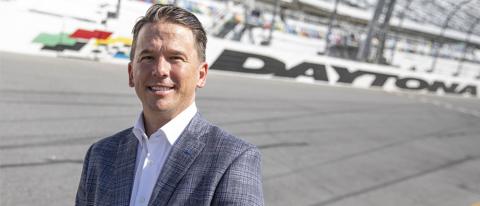
New Daytona International Speedway President Frank Kelleher standing on the race track. Photo courtesy of DIS


Daytona International Speedway has announced Frank Kelleher, an experienced industry veteran, has been appointed president of the historic racing facility. Concurrently, NASCAR has announced that Chip Wile, the former DIS president, has been promoted to a new expansive role overseeing 13 NASCAR-owned tracks as senior vice president and chief track properties officer.

In his previous role as NASCAR‘s senior vice president and chief sales officer, Kelleher oversaw a team responsible for business strategy and revenue generation, which played a critical role in driving both media and partnership sales for NASCAR and its tracks. Kelleher also helped secure the founding sponsorships to Daytona International Speedway’s highly visible injectors. 

“I am incredibly honored to take on this historic role and represent the most iconic motorsports venue in the world,” said Kelleher, the ninth track president in DIS history. “Our race fans are what makes working in motorsports so special, and I’m excited to work with the tremendous team at Daytona International Speedway to continue to deliver a best-in-class racing experience for our fans locally, nationally, and around the globe.”

“Serving the community of race fans, our industry, and the France family as president of Daytona International Speedway has been the greatest honor of my career,” said Wile. “I look forward to working with our team of talented track presidents as we continue to elevate the fan experience and deliver lifetime memories every time someone sets foot on our track properties.”

Both Kelleher and Wile will assume their new roles effective immediately.

Daytona International Speedway’s next scheduled major motorsports weekend is a NASCAR doubleheader August 27-28, featuring the Coke Zero Sugar 400 and the Wawa 250 Powered by Coca-Cola. 

For more information, visit daytonainternationalspeedway.com.

April 2021

Race Team Profile: Clauson Marshall

Submitted by jeffreyc on Wed, 04/07/2021 - 10:32
Clauson Marshall


Partnerships play an integral role for this championship-winning open wheel operation, from team members to sponsors and even a veteran engine builder.

Regularly placed among the top of its class in the open wheel ranks, Clauson Marshall Racing (CMR) is very much an evolution of Bryan Clauson Racing, an enterprise that ended tragically with Bryan’s untimely death following a racing accident in Belleville, Kansas, in August 2016.

Since then, Bryan’s father, Tim, has partnered with sprint car veteran Richard Marshall to, in the words of CMR’s website (clausonmarshallracing.com), “Race on…. That’s what we do.” Their efforts have already been rewarded with two USAC National Championships—for sprint cars in 2018 and midgets in 2019.

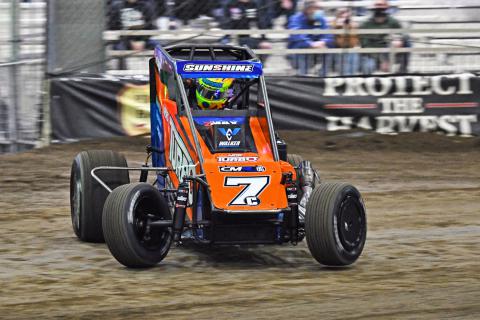
PRI spoke with both Clauson and Marshall in early February, shortly after the Chili Bowl Nationals, where CMR development driver Cole Bodine finished fourth in Tuesday’s A-Feature, after Tyler “Sunshine” Courtney scored second in the A-Feature on Monday. 

“The Chili Bowl is obviously a bucket-list race for our team,” Clauson commented, “and anything less than a win falls below our expectations. But along with Tyler and Cole’s performances,” Ricky Stenhouse Jr. made a “run on Friday night, from the back of the C to third in the A, showing the gains we made going into Saturday. And while our Saturday night performance was impacted by Sunshine’s crash in the last few laps, overall, I was pretty happy with the performance level of all the CMR cars and drivers. We were a whisker away from placing three in the top 10.”

A Culture for Success

First and foremost, Marshall attributes CMR’s ongoing success to a company culture that is “inclusive, of not only the driver and the crew, but of their family members. We try to have fun and make everybody feel like part of the team. It’s a different atmosphere than I’ve seen in a lot of pits, where it’s all business. I think we’ve created a really healthy atmosphere for everybody involved.”

Within that context, Marshall continued, “There is no substitute for chemistry—and, unfortunately, I haven’t seen a manufacturing guide for that. So it’s a matter of finding a group of people who can work well together, and whose personalities mesh. Teamwork is created by individuals with chemistry, but you have to create a culture for teamwork by being open-minded.”

Additionally, Clauson cited “effective communication,” as “paramount to being successful. We hold weekly meetings focusing on operations, marketing, branding, and performance. We focus on goals, both short-term and long-term. And we hold weekly competition meetings with our drivers and crew during the race season.”

“I’ve always thought that the more heads in the room, the better,” said Marshall. “We try to leave everybody’s ego at the door and get input from every team member. Anybody should be able to feel like they can speak up. And I’ve been surprised over the years, where some of our best ideas have come from.

Clauson2
In just five years since its inception, Clauson Marshall Racing has earned two USAC National Championships—for sprint cars in 2018 and midgets in 2019. And, driver Tyler Courtney (left), recently won his 50th race for CMR team owners Tim Clauson (right) and Richard Marshall.

“We try to cover each other’s backs, too, in duty positions,” he continued. “The tire guy is responsible for the tires, for mounting them and getting the pressure right; but there’s nothing wrong with somebody checking behind him, or with him or somebody else checking bolts and making sure everything is tight. We try to teach the engine, from top to bottom, to everybody on the team, even though that may not be their daily job. You never know when somebody may be out, for any reason.”

A strong streak of independence helps, too. “My approach to the sport has been the same since I started racing as a nine-year-old,” Clauson reported. “I stay focused on what we can control, and I don’t get caught up in what the teams we race against are doing.”

One of the best decisions to emerge from that culture, according to Marshall, was hiring Tyler Courtney. “He was a poster child for driver development, and we picked him up fairly early in his career. He wasn’t 15 years old—he’s 27 now, and he’s in his fifth year with us—but he certainly hadn’t established himself and accomplished what he has since. But he shows a true, die-hard desire to win, and to work hard. And that speaks to another aspect of the culture in our shop. We don’t have any room for prima donnas. It doesn’t matter if you’ve won a thousand races. We are all in this together, and every team member is equally valuable.”

Courtney had worked previously on Bryan Clauson’s team, Marshall noted, “where he showed that he could be a team player. So we gave him a shot, and just recently he won his 50th race for our organization. There are not many team owners who can say that about a single driver.”

Products & Partners

While Marshall called Clauson “the operational guy” in their partnership, Marshall “tries to apply what I learned in the business world, to make sure we have the best equipment that money can buy. It’s a very competitive sport, and if you don’t have the latest and the greatest, you might as well stay home.” Conversely, buying only the best “takes that issue off the table—so that if we’re not winning, that’s not an excuse.”

So, in terms of the equipment CMR buys, what does that actually mean for the team headquartered in Fishers, Indiana, about 30 minutes northeast of the Indianapolis Motor Speedway? Of course, two key suppliers have been Spike Chassis Inc., in nearby Brownsburg, Indiana, and Stanton Racing Engines of Nicholasville, Kentucky. “Our relationship with Spike goes back to when Bryan and I built our first USAC midgets and sprint cars,” Clauson recalled. “We believe they build the best product, and logistically they are perfect for us, because of their close proximity to our shop.”

Clauson3
Good equipment doesn’t guarantee success, but it “takes that issue off the table,” noted Clauson Marshall Racing co-owner Richard Marshall. For engines, the team swears by the Stanton SR-11 midget engine.

“We got involved with Stanton Engines in 2015–2016,” Clauson added, “when we were building our program for Bryan’s ‘Chasing 200 Tour,’ using their then-new SR-11 midget engine. So when we were looking for a midget engine package for CMR, they were our first call. We knew we would be competing against factory-supported teams, so it was important to work with someone we trusted, who was open to what we could learn on-track.”

Stanton Racing Engines had built Mopar, and later Toyota-based midget engines before launching its own billet-block SR-11 in 2016. “The SR-11 isn’t derived from anything,” Gary Stanton emphasized. “It’s a whole different design, a clean sheet of paper. Nothing in this motor existed before we built it. We wanted it to be lighter, and it is about 20 pounds lighter than the competition. We wanted an overhead cam, so it could turn more rpm. We took it to the limit—and it turned out great.”

Beyond that, what sets a Stanton Racing engine apart from the competition? “We don’t tell anybody that,” Stanton said, laughing. “But we’ve sold over 100 of them in the past four years. We won the national championship in 2019, and in 2020, Toyota beat us by one point—and they did it in the last race.”

Currently, Stanton supplies between 70 and 80 midget teams, but CMR is its single biggest customer, buying eight to 10 engines per year. “And we maintain them, too,” Stanton added. “We’re not with CMR at the track 100% of the time, but we’re there a good part of the time—and when we’re not, we’re in constant communication with them. And we get along real well. They do a great job for us, and we try to do a great job for them. They show good—and we sell motors.” 

“Not only is Gary Stanton a friend,” said Marshall, “he’s become a true partner in our business. And I think one example of that is how they keep us on the cutting edge of whatever technology they develop in their shop, week-in and week-out.”

“I think from Stanton’s standpoint,” Clauson added, “we are able to offer a platform to showcase their product at the national level. One of my biggest accomplishments in the sport was winning the 2019 USAC National Championship with Stanton engines, and knowing that we played a small part in helping Stanton reach that level.”

Clauson4
NASCAR driver Ryan Newman (right) teamed with Clauson Marshall Racing to compete in the 2021 Chili Bowl Nationals, a “bucket-list race” for CMR co-owner Tim Clauson.

Marshall also cited CMR’s relationship with Competition Suspension Inc. (CSI): “We’ve learned a lot with them. They are a boots-on-the-ground, roll-up-their-sleeves organization. They are at almost every race, out there problem-solving all the time. Their shocks have been a game-changer.

“And I want to give props to one of our newer sponsors, zMAX Racing Oil. We vetted their oils in our midget and sprint car engines last year, and subsequently changed to zMAX products exclusively,” he added.

“We have built great relationships with all of our partners,” Clauson noted, “and in some cases we’ve been the test dummy for their new products. As time has passed, that loyalty—not jumping from vendor to vendor for the next shiny object—has allowed us to build trust with our partners, and that has allowed us to be one of the first to try a new product and/or provide input on a new product that ultimately helped not only us, but our partners’ other customers as well.”

Delivering Value

CMR refers to all of its sponsors and suppliers as partners, and custom-tailors sponsorship programs to its partners’ individual needs. “We call them partners,” Marshall explained, “because our goal is to make them a partner in our success, and vice-versa. And in the first conversation we have with a prospective partner, we ask them what are the top three things they are looking to gain from the relationship. Some of them just want to be part of a racing organization, and to see their name on a car. Some want to entertain their customers” at racing venues, “and others are big into branding. It’s actually surprised me over the years, how many different answers we get.” 

Clauson5
CMR began racing winged 410 sprints in 2020. For 2021 they’ve intensified the effort, with driver Tyler Courtney now racing full-time in the All Star Circuit of Champions.

“It’s not a one-size-fits-all proposition,” Clauson agreed. “Some are looking for the branding opportunity. Some are looking for places to offer hospitality, or at-the-track experiences. Some want to grow their brand awareness through motorsports, and to use social media to push their message. While we are a race team first, we try to look at different ways to maximize ROI for our partners.”

“Social media is a great example,” said Marshall. “It has evolved a high expectation from multiple sponsors, and that’s why we’ve added a media person to our payroll. You need to always create content, to make people feel like they are at the track, whether they are or not—to make them feel like they are part of the team. The sponsor is spending dollars that aren’t always easy to come by. So we’re mindful that we are not only competing for those dollars against other race teams, but against other sports and other forms of advertising. But one thing that hasn’t changed since I’ve been involved with the sport—and that’s been a long time—is that our grassroots fans are fiercely loyal to the companies that support the sport and have their names on the side of the car. Making that connection is vital—making sure our fans know who is supporting us, and what they are selling. Tim and I share a passion for racing, and a passion for winning. But we can’t forget who literally puts the gas in the car.”

Taking Wing…

With that in mind, said Clauson, “In 2020 we dipped our toe into the winged sprint car world,” and in 2021, Tyler Courtney will compete full-time in the All Star Circuit of Champions.

It’s a natural progression, particularly for Marshall, who concurrently campaigns World of Outlaws sprint cars via a separate partnership with Stenhouse. Cole Bodine will continue to drive USAC sprints and midgets, “and Sunshine will participate in those events as his schedule allows,” Marshall added.

Clauson sees this expansion as “an opportunity to get our partners in front of the majority of the growing grassroots fanbase.”

Clauson6
CMR approaches its sponsors and suppliers as individual entities—all with unique goals—noted team co-owner Tim Clauson, pictured at left above. “While we are a race team first,” he said, “we try to look at different ways to maximize ROI for our partners.”

Of course, CMR—like just about everyone else—has been impacted by the COVID-19 pandemic. “One thing I’m proud of,” said Marshall, “we kept everybody employed the whole time. Everybody got paid, though obviously we weren’t racing all of the time. But we were fortunate that our form of racing was the first professional sport to re-open, and that in the winged sprint car program we were running a flex schedule rather than a for-points championship. So we were able to run the same number of races that our sponsor/partners expected, albeit at different times and different venues.” Also fortuitous was the USAC schedule, where “the majority of their races are in the summer, when more venues started opening up.”

As Clauson explained, “We were fortunate to have the flexibility to chase the races that were available. For a while it seemed we were the only sporting event going, and the way that DIRTVision and FloRacing supported the events created an opportunity to get our partners in front of a different audience. We saw it as a challenge, to change the way we approached access to our team via social media.

“And we feel we have grown from it,” Clauson concluded.

May 2021
By
John F. Katz

2021 Dates, Stops For HOT ROD Drag Week, Power Tour Announced

Submitted by laurap on Tue, 04/06/2021 - 18:05
HOT ROD Power Tour logo and HOT ROD Drag Week logo


MOTORTREND has announced two of its annual events are returning in 2021: the HOT ROD Power Tour (August 23–27) and HOT ROD Drag Week (September 12–17). The combined events are set to host upwards of 6,000 participating vehicles.
 
“This year, we are more excited than ever to host two of our signature annual events in HOT ROD Power Tour and HOT ROD Drag Week,” HOT ROD Editor-in-Chief John McGann said. “These events exemplify the core of what we do–and we wouldn’t be able to make it happen without our amazing participants. I am grateful and looking forward to a great year ahead.”

MOTORTREND has announced a return to four classic Midwest tracks for the 17th annual HOT ROD Drag Week presented by Gear Vendors Overdrive. The “Fastest Street Car in America” will be crowned during the event, which puts competitors to a grueling test over five days of action-packed drag racing, requiring racers to drive their vehicles on a specified route upward of 1,000 miles while securing the quickest possible elapsed time on the strip. 

During the competition, drivers provide photographic evidence to prove they have adhered to the prescribed route. Some of the nation’s top racers participate annually, including past champions Tom Bailey and Dave Schroeder.

Celebrating 27 years, the HOT ROD Power Tour driven by Continental Tire returns to five cities, including Norwalk, Ohio; Dayton, Ohio; Indianapolis, Indiana; St. Louis, Missouri; and Champaign, Illinois. Thousands of classic cars and hot rods will travel city to city while HOT ROD editors and photographers follow along. Participants can join for one day or all five days.

HOT ROD POWER TOUR 2021 SCHEDULE
· KICKOFF / Day 1: Monday, Aug. 23 - Summit Motorsports Park in Norwalk, Ohio
· Day 2: Tuesday, Aug. 24 - Montgomery County Fairgrounds, Dayton, Ohio
· Day 3: Wednesday, Aug. 25 - Lucas Oil Raceway, Indianapolis
· Day 4: Thursday, Aug. 26 - World Wide Technology Raceway, St. Louis
· Day 5: Friday, Aug. 27 - State Farm Center, Champaign, Ill.

HOT ROD DRAG WEEK 2021 SCHEDULE
· Registration, Tech Day, and Test ‘n’ Tune: Sunday, Sept. 12 - US 131 Motorsports Park in Martin, Mich.
· Racing Day 1: Monday, Sept. 13 - US 131 Motorsports Park in Martin, Mich.
· Racing Day 2: Tuesday, Sept. 14 - Summit Motorsports Park in Norwalk, Ohio
· Racing Day 3: Wednesday, Sept. 15 - Lucas Oil Raceway in Indianapolis
· Racing Day 4: Thursday, Sept. 16 - Byron Dragway in Byron, Ill.
· Racing Day 5: Friday, Sept. 17 - US 131 Motorsports Park in Martin, Mich.

For more information, visit hotrod.com/events.

April 2021

Commentary: After Successful NCAA Tourney, Indianapolis On Track For Momentous PRI Show

Submitted by laurap on Tue, 04/06/2021 - 17:29
Downtown Indianapolis skyline


Indiana loves two things: motorsports and basketball. Maybe three things, if you count safely hosting large, in-person events without a hitch. The last part is critical to hosting the 2021 PRI Trade Show, set for December 9-11 in downtown Indianapolis, and it is the reason we’re discussing the sport of basketball on the Performance Racing Industry website right now. 

The state recently hosted one of the grandest stages in basketball competition, the NCAA March Madness Tournament. All 67 games were played in six separate venues. Four were in Indianapolis, including Bankers Life Fieldhouse, Hinkle Fieldhouse, Indiana Farmers Coliseum, and Lucas Oil Stadium, which hosts the PRI Trade Show’s trailer exhibit and Featured Products Showcase adjacent to the Indiana Convention Center.

JW Marriot in downtown Indy with March Madness bracket

Members of the PRI team were on-hand to witness the successful event and were happy to report that “Indy is Winning” when it comes to health and safety measures. City officials combined their unique Hoosier Hospitality Promise (more on that, below) with carefully crafted protocols that allowed thousands of fans, staff, and team members to participate in the event while staying safe.

The Hoosier Hospitality Promise, an initiative designed to empower communities to stay safe during the COVID-19 pandemic, was on full display during March Madness. A joint effort among tourism industry leaders in Indiana, The Promise involves following federal, state, and local health and safety guidelines for proper reopening processes.

During the event, many restaurants were open and busy—both outdoors and indoors—with tourists and fans enjoying meals. Hotels were abuzz as folks bustled through their revolving doors for the first time in months. With the weather in the 50s, city streets were also full of pedestrians taking in the sights of Indianapolis. 

PRI team members in front of Final Four sign

Confirmed by the successful March Madness event, the PRI team is confident that Indianapolis is on track to host the return of the world’s premier event for motorsports professionals—the PRI Trade Show—which takes place in person on December 9-11. 

In the words of Visit Indy President and CEO Leonard Hoops, “Indianapolis was made for this moment.” 

For more information, visit performanceracing.com/tradeshow. To secure a booth and join the all-new PRI Business Membership, visit here.


April 2021

The Man, The Myth, The Legend. The Greek

Submitted by laurap on Tue, 04/06/2021 - 14:06
Chris "The Greek" Karamesines in his garage


There are veteran racers; there are legends; and then there is Chris Karamesines, whose career spans an absolutely unmatched period. The 89-year-old Chicago-native is a drag racing pioneer, arguably the first man to run 200 mph in a dragster, the man behind the ChiZler twin-engine dragster, and so much more.

The PRI Road Tour was treated to a rare look inside of his Chicago garage, where he recounted the early days of his racing career, what he and his team work on in his shop, how his granddaughter is carrying on his legacy, and much more. You’ve got to watch this exclusive video.

For more information, visit performanceracing.com/road-tour.


SECURITY FORCES

Submitted by ashtonr on Tue, 04/06/2021 - 13:56


Manufacturers are meeting new standards with lighter and more advanced materials, while premium features are migrating to lower-priced driver safety products.

Driver safety equipment manufacturers report that business is booming as the sport roars back for 2021. And, fortunately for those behind the wheel, personal safety equipment keeps improving, getting lighter and more comfortable while meeting increasingly higher standards. In addition, some premium features are showing up in lower-priced products, including removable pads and more ventilation options in helmets. Meanwhile, there is also an emerging trend for lower-priced Nomex driving suits.

Beyond meeting or exceeding standards set by third-party organizations including FIA (Fédération Internationale de l’Automobile), the SFI Foundation and, strictly for helmets, the Snell Foundation, manufacturers are also locked in constant competition to improve driver comfort.

“You want the equipment to be transparent,” said Ben O’Connor of Impact Racing, Indianapolis, Indiana. “If you’re thinking about your equipment when you’re driving, something’s not right. But those are the more organic elements. There are no specs for them.”

With that in mind, here’s a look at eight trends we’re tracking in driver safety for 2021.

1. SUITS: LIGHTER BUT SAFER

SFI Foundation of Poway, California, issued its latest certification updates in June 2020, with SFI Spec 3.2A for drivers suits, and SFI Spec 3.3, which covers accessories including gloves, shoes, underwear, and balaclavas. Following each spec is a heat and fire protection rating, with SFI-1 being the minimum, and SFI-5 being more common.

safe1
Today’s safety gear offers greater protection without sacrificing driver comfort. “You want the equipment to be transparent,” said our source at Impact Racing.

The number is an indicator of Thermal Protection Performance, or TPP. A suit with an SFI-5 rating has a TPP of 19, which translates into 10 seconds of protection before skin is subject to second-degree burns. A suit rated at SFI-20, as used in Top Fuel drag racing, has a TPP of 80, which equates to 40 seconds of protection.

Driver suits made from Nomex, a heat and fire-resistant fabric invented by DuPont in the 1960s, remain the popular choice across motorsports. They’re lighter and more comfortable than suits made from treated cotton materials and PROBAN but are also more expensive. An SFI-1 rated PROBAN suit can cost well under $200 but will be hotter to wear than Nomex.

“A driver who overheats can become dangerous on the track,” said Steve Russell of Pyrotect Safety Products, Redmond, Oregon. “Two years ago, we saw a racer removed from the track—he’d been suffering from heat exhaustion in the car and was taken to the hospital. He was wearing one of the heavy low-cost suits on a day that was over 100 degrees.”

The technology behind driving suits continues to evolve.

“Some of the biggest advancements in personal safety equipment have been in textiles,” O’Connor explained. “A lot of it is in the milling of the fabric, with micro air spaces to improve insulation. Suits today are lighter and more breathable than just five years ago, especially when getting into SFI-15 and SFI-20 suits.”

O’Connor points out, however, that meeting the new FIA 8856-2018 spec, which calls for an increase in protection from direct flames from 10 seconds to 12 seconds, will result in the super-lightweight suits adding back some weight.

This new FIA homologation standard is in effect for FIA’s highest classes, including Formula One, Formula Two, Formula E, WRC, WEC, World Rallycross, and European Rallycross. All other FIA-sanctioned races will require the new standard beginning January 1, 2029, and certified equipment will come with a 10-year expiration date. The new FIA spec also calls for an extra second of burn-through time for suit fabric when stretched while in the driving position.

“For racing requiring that standard, manufacturers are switching to a heavier suit while staying as light as possible,” said JR Twedt of K1 RaceGear, Carlsbad, California.

Twedt explained that K1 invested heavily in premium European Nomex a few years ago, a bet that paid off in 2020 as many factories shut down due to COVID-19. He noted that the cancelation of trade shows last year, including PRI, forced the company to offer remote fitting assistance for custom suits via Zoom calls.

“That part might not go away,” Twedt explained. “There is still a considerable number of people uncomfortable about being in crowds. You have to make it as convenient as possible for people to do business with you.”

pf1
pf2

pf3

2. NOMEX BECOMES MORE AFFORDABLE

Twedt also noted the requirement for SFI-5 two-layer suits for child drivers, as some racing classes such as micro sprints, sportsman drags, and even asphalt late models now allow drivers as young as 12.

“That was unheard of two years ago,” he said, citing it as a financial burden on some parents. “Kids outgrow suits quickly. They might need to buy two in a season,” he said.

Twedt referenced K1’s new Precision II youth suit, available down to size 5X-small, giving parents an entry-level Nomex option for their young competitors.

Other new Nomex products in K1’s pipeline include an entry-level sprint suit, a premium FIA 8856-2018 suit, and an entry-level Challenger Nomex and suede super-light go-kart shoe. Twedt anticipates a fall launch, just ahead of the PRI Trade Show.

Also reflecting an emerging trend in lower-priced Nomex suits, RaceQuip of Riverview, Florida, offers its SFI-5 rated Chevron-5 race suits. Patrick Utt of RaceQuip attributes this value proposition to the company’s large-scale manufacturing efficiency. “This allows a racer on a budget to buy a high-quality suit and not cut corners with regards to safety,” he said. “We manufacture these suits using two layers of premium Nomex fabric plus a durable Nomex knit material for all the expansion panels.”

Canadian manufacturer Red Camel offers a full line of SFI-approved suits, gloves, balaclavas, and helmets. Syed Tirmzi of the Winnipeg, Manitoba-based company touts a new SFI-5 double-layer Meta-aramid suit that he said performs on par with some triple-layer suits in the market, but is lighter weight.

“Considering the summer heat, we have come up with a combination that is lighter and cooler as compared to a triple-layer suit but with safety still staying as a top priority,” he noted.

For racers on a budget, Tirmzi touts a single-layer premium PROBAN suit that he said is more practical than regular FR cotton. “There’s no bad smell from a fabric FR coating, and you can still wash it with chemicals,” he added.

3. DON’T FORGET THE EXTREMITIES

The new FIA spec also calls for longer glove gauntlets and higher ankles on racing shoes. Weight is an important consideration for both.

“The highest level of interface with the vehicle is through the wheel,” said Impact’s O’Connor. “The tactile feel you get through the glove is critical. Thinner materials are needed for lightness but must retain grip and prevent the glove from bunching up.”

He described Impact’s Alpha glove using material cut in such a way that it is “pre-curved” to naturally wrap around the steering wheel and not bunch up under fingers.

Twedt said the Flex Gloves introduced by K1 two years ago use SFI- and FIA-rated two-layer bonded Nomex. Bonding the layers together, rather than stitching, also prevents the material from bunching up in the driver’s hands.

safe2
Cost is a crucial factor for many racers. Fortunately, improvements in materials, design, and manufacturing are making better safety gear available at lower prices.

4. HELMETS: MOVING TO SNELL SA2020

Helmets can have either an FIA or Snell certification, or both, which is referred to as “dual homologation.” However, the new FIA 8860-2018 spec by itself does not include a Snell component. “You could buy a $4,000–$5,000 helmet that’s FIA rated but won’t be allowed in a race that requires a Snell rating,” cautioned Kyle Kietzmann of Bell Racing USA, Champaign, Illinois.

Founded in 1957, the Snell Foundation in North Highlands, California, revises its standards every five years. The latest standard, SA 2020, took effect in October 2020. The SA 2015 helmets will remain available and allowed for racing, but racers should always check with series rules beforehand to ensure compliance.

safe3
Snell helmet standards are revised every five years, most recently for 2020. SA 2015 helmets are generally still allowed in racing, but drivers should verify compliance. Photo courtesy of G-FORCE Racing Gear.

“There’s not much difference between SA 2015 and SA 2020,” said Russell of Pyrotect. “Shell impact has gone up a bit, but shield impact is the same.”

Keitzmann concurred, adding, “As things progress, you want to be able to get the benefit of new materials and construction techniques. We recommend replacing a helmet every three to five years anyway as part of your safety routine.”

5. HELMETS: TAKING OFF THE WEIGHT

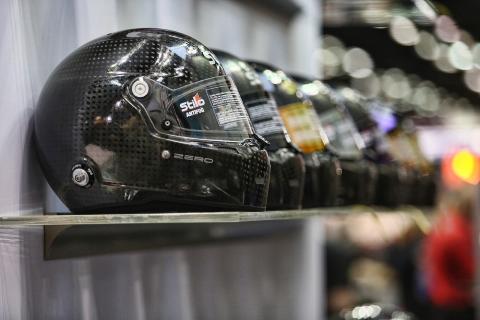
Inexpensive entry-level helmets can exceed four pounds, while the lightest carbon fiber helmets priced are under three pounds.

Bell Racing’s RS7C Lightweight was developed initially for Penske Racing’s NASCAR drivers, but is now available to anyone. Kietzmann described the RS7C as “race ready” at just under 2.8 pounds.

“We applied lessons learned from our FIA Formula One helmet,” Kietzmann said. “We use a unique compression molding system with pre-preg carbon fiber material that enables a really light shell while meeting all impact standards.”

(For reference, the Bell Formula One helmet is a bit heavier at just over three pounds, since it has different ballistic characteristics that require more material in the front for the FIA spec.)

Bell last year introduced a sprint car version, the RS7SC Lightweight, which also weighs just under 2.8 pounds but is non-ventilated to seal out dust and dirt, and also features a duckbill. Earcups can be added for noise attenuation.

safe4
The heat reduction provided by cooling garments boosts physical endurance and mental concentration. This can improve comfort, safety, and race performance. Photo courtesy of Rini Technologies.

“Weight is not a criteria for testing, but helmet makers consider it critical to prevent secondary type injuries, concussions, and neck injuries from whippage,” said O’Connor.

He cited advances in the textile mats used for weight reduction. “Before, you’d have alternating layers of fiberglass, Kevlar, and carbon fiber lay ups in different orders. Now, there is a variety of different combinations of materials in those mats that we have not seen before. We’re gaining a lot of strength that way while maintaining a light shell. We’ve seen big improvements in both impact resistance and controlling G forces, as well as being able to lighten the helmet.”

6. KEEPING YOUR COOL

Track safety depends on drivers keeping cool heads—figuratively and literally. Air circulation systems, also known as forced air, are becoming more prevalent.

“Bill Simpson, founder of Impact, developed a method years ago for getting air into the top of the helmet,” O’Connor said. “Inside the helmet, a series of channels direct the airflow. Impact owns the patent.”

Others, too, offer channeled helmets. Pyrotect has seen forced-air models becoming almost the majority of its helmet sales, according to Russell.

“We’re seeing vehicles that never ran pumped air doing so now,” he said. “Combined with an air-channeling helmet, it really helps the driver stay cool. Pumper systems have gotten better, too.”

The company’s higher-end carbon fiber helmets, the Pro Airflow and Pro Sport, offer air channeling and, in the Pro Sport, a corrugated liner. “The corrugation gaps go in 3/8-inch increments where the liner is a bit recessed from the head,” Russell explained. “The top of the pad is all channeled and then channels air around the top to the side pads. Four slots separate the two sides, forehead, and rear pad to create a larger channel.”

safe5
Weight reduction is vital for helmets, but not just for comfort—it can help prevent secondary injuries in crashes. The lightest helmets are now less than three pounds.

Pyrotect’s newest helmet, the Pro Ultra Tri-Flow, can be used as a standard or forced-air helmet, the latter with entry on the side or top. Covers on both the left and right side of the chin area enable the user to move the side air position, which is ideal for a driver and co-driver with a pumper system in between. On the comfort front, all Pyrotect helmets feature a customizable six-pad liner system with seven different thickness pads to adjust the fit.

Bell’s new BR8, due out in June, offers five different airflow options. It is designed for off-road racing and dirt racing that use external airflow. The customer can choose an air portal on top, 3/4 on either side, or side air in front—left or right.

“Unique to this model, there is an air chamber on top to distribute air evenly around the crown,” said Kietzmann. “You get consistent, even airflow no matter where the air comes in.”

Cooling systems go beyond just cooling the driver through the helmet. Although, some people may view cool suits, like Rini Technologies’ Personal Cooling System-Automotive (PCS-Auto), as more of a comfort item than a piece of safety gear. “But in truth it’s really about performance and safety more than anything,” said Dan Rini of the Oviedo, Florida, company. Racers “are tough. They don’t need comfort. But we’ve all seen drivers get out of the car and pass out on crazy-hot days. That’s not good.”

The PCS-Auto system consists of an SFI-approved cooling shirt with surgical tubing sewn into it that’s worn under the firesuit. A small tube sticking out of the shirt connects to a refrigerator device, mounted in the car, with water in it. “As long as it gets electrical power from the car, it keeps cooling that water and pumping it to the driver’s shirt,” Rini said, noting that it’s a closed-loop system. “Cold water pumped from the cooling device flows through the tubes and back to the device. There’s no water squirting around in the car.” The pump is only about the size of a thumb, and the refrigerator keeps the water at around 65 to 68 degrees, Rini said.

“The body, just sitting there, is 95 degrees,” he pointed out. “When a driver puts on a firesuit and sits in a car that could be 120 degrees in the cockpit, the skin temperature can be over 100 degrees. The body’s core temperature goes up, and all sorts of bad things can happen. But under the suit, instead of feeling sweaty and hot, the driver feels the sensation of cold water flowing through tubes.”

Currently the PCS-Auto suits are used primarily in NASCAR, but Rini said the company is “looking at developing a second product that might serve other race series as well. What’s good for NASCAR may not be right for club racing, and neither of those may work for IndyCar. We’re trying to take what we’ve learned with the first product and adjust it to be appropriate for other race series.” He expects the new “family of cooling systems” will launch later this year.

pf4

pf5

pf6

7. LOWERING THE PRICE POINTS

Under new ownership since 2020, G-FORCE Racing Gear in Acworth, Georgia, is revamping all products, upgrading materials, and bringing top-end features to lower-priced helmets. All G-FORCE Racing Gear helmets are SA 2020 certified.

The all-new Nova and top-of-the-line Super Nova share a shell design but differ in material. The Super Nova is full T800 carbon and weighs under three pounds, while the composite Nova weighs 3.3 pounds.

“The Super Nova is one of the only full T800 carbon fiber helmets on market,” said Jeremy Speich. He explained that the company focused on comfort and fit, giving both models a sizeable, customizable liner using removable pads to fit the face/head and crown. In addition to the set that comes with the helmets, two others are available.

“A poor-fitting helmet rolls off and cannot do its job when it has to,” said Speich. He added that the maker’s lower-priced REVO and Rift helmets will get the pad system “within the next year or so.”

Speich also confirmed the increase in forced-air helmet popularity and said that with the addition of a Rift Air model to the line, all of the brand’s helmets will offer the option. Both the Nova and Super Nova models have a screw-less and tool-less design for adding forced air to the top inlet.

RaceQuip offers a price breakthrough for helmets, too. “Sometimes a new safety rule or SFI specification will cause us to re-engineer a product, and sometimes we just find a better manufacturing technique or material and incorporate it into an existing product,” said Utt about RaceQuip’s new high-value SA 2020 carbon fiber helmets.

He explained how the company has been able to reduce the cost of manufacturing with aerospace carbon fiber materials on the PRO20 Carbon Fiber helmet. “These helmets offer modern styling and safety features, so there’s no compromise based on the price,” he added.

pf7

pf8

pf9

8. FURTHER PROTECTION

Whether required by specific series or a growing awareness of their protection, frontal head restraints (FHR) continue their march into motorsports fields.

Stand 21, established in 1970 in France, offers a wide array of FHR devices in its full line of driver safety gear. To determine which FHR is correct to use, Stand 21 recommends drivers measure their neck circumference and consider the recline of the driver’s seat. The full carbon fiber Featherlite weighs just 310 grams and is produced in limited quantities due to the complex manufacturing process, confirmed Clément Chaudonneret from Stand 21’s Huntington Beach, California, location. The relatively heavier—coming in at a still impressive 640 grams—Club 3 has a larger neckline to accommodate a wider variety of drivers, long grips for improved harness support, and an ultra-thin design for high-end ergonomics. Both are SFI and FIA certified.

On the road racing scene, Stand 21 is an official supplier for the new Porsche Carrera Cup North America series, a long-anticipated addition to this global series, for which the company provides exclusive-design Nomex driving suits and other equipment.

SOURCES

–

Bell Racing USA
bellracing.com

Design Engineering, Inc.
designengineering.com

G-Force Racing Gear
gforce.com

Impact Racing
impactraceproducts.com

K1 RaceGear
k1racegear.com

Pyrotect Safety Products
pyrotect.com

Racechick
racechick.com

RaceQuip
racequip.com

Red Camel Racing
redcamelracing.com

Rini Technologies
rinitech.com

Sampson Racing Communications
sampsonracing.com

Speed Seat Factory
speedseatfactory.com

Stand 21
stand21.com

Summit Racing Equipment
summitracing.com
May 2021
By
JIM KOSCS

West Virginia Reintroduces Bill To Aid Construction Of Motorsports Complexes

Submitted by laurap on Tue, 04/06/2021 - 13:18
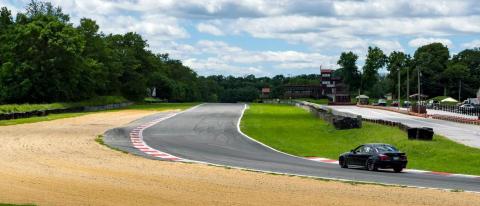
Race car rounding a corner at Summit Point Motorsports Park in West Virginia. Photo courtesy of Summit Point Motorsports Park, Facebook
Photo courtesy of Summit Point Motorsports Park, Facebook


Legislation (S.B. 554) has been introduced in West Virginia to provide tax relief that may help incentivize the construction of motorsports complexes. The bill was part of the previous legislative session but failed to pass prior to adjournment. The new bill was passed by the Senate Economic Development Committee and currently awaits consideration by the Senate Finance Committee. 

“The goal is to spur the construction of new race tracks in West Virginia, which would create jobs—both construction jobs and at the eventual facility—plus provide economic stimulus to local communities,” Vice President of Government and Legal Affairs Daniel Ingber said. “Having more tracks in West Virginia would translate to more racers and teams based in and visiting the state. This would lead to great opportunities for the industry to sell parts and services.”  

The legislation recognizes the important economic and civic value that additional motorsports competition can provide. Plus, it provides tax exemptions for certain building materials and equipment used in the construction, repair, or improvement of a racing entertainment complex. We will continue to update the industry on this bill.  

West Virginia is home to about a dozen race tracks, including Jackson County’s I-77 Speedway, a 3/8-mile clay oval that sanctions the American All-Star Series Pro Late Model Weekly Series and features Saturday night weekly racing, and Summit Point Motorsports Park, home to three road racing circuits as well as a drift program, driver’s club, and more.