Capital City Motorsports Parks Signs Agreement With NHRA

Submitted by laurap on Wed, 04/14/2021 - 18:11
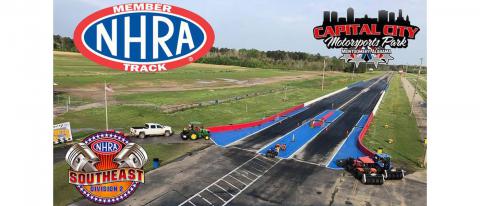
Capital City Motorsports Park drag strip with NHRA Member Track logo
                               Image courtesy of NHRA
 

Capital City Motorsports Park has signed on as the newest NHRA member track in the NHRA Southeast Division.
 
Located in Montgomery, Alabama, Capital City Motorsports Park is overseen by owner Ben Willis. Willis and his team coordinate racing and facility operations at the facility. 
 
“We are proud to put Montgomery back on the map and rebuild a solid relationship with NHRA Division 2,” said Willis.
 
Capital City Motorsports Park is gearing up for its 2021 schedule, which will include the Free Entry 10K event in August, as well as the Mike Smith Memorial Race and the Jr Dragster Halloween Spectacular in October.
 
Capital City Motorsports Park joins a group of over 120 NHRA member tracks worldwide. As an NHRA-sanctioned track, the facility will be eligible to offer racers a variety of NHRA racing opportunities, including the NHRA Summit Racing Series, the NHRA Summit Racing Jr. Drag Racing League, and NHRA Jr. Street.
 
NHRA Division 2 includes 19 tracks across the region. Racers in Alabama, Florida, Georgia, North Carolina, South Carolina, Tennessee, and Puerto Rico make up one of the country’s busiest divisions. 

For more information, visit nhra.com or nhradiv2.com.

April 2021

Tech Update: Upgrading The Fuel System

Submitted by jeffreyc on Wed, 04/14/2021 - 16:36
Dan Millen


How to determine when your engine has reached its limit and which solutions will yield the desired results for your particular high-performance application.

As today’s modern, high-powered direct-injection vehicles become more popular, support from the aftermarket is following suit. With that support, however, the OEM fuel systems have become a bottleneck that must be addressed. Certain vehicle fuel systems, such as those in the Ford EcoBoost line of engines, are often already at, or near, their limit at stock power output. This means that even a performance-enhancing calibration can push these engines past their limits. 

This, in turn, creates fuel starvation, usually in the form of pressure loss in the high-pressure fuel system. With some of these applications exceeding 3,000 psi of pressure, even the slightest loss can result in a dramatic reduction in the injectors’ ability to properly provide the necessary volume and can also result in poor atomization of the fuel. At minimum, this could reduce pre-ignition control, one of the main benefits of direct injection, causing misfires and severe engine damage.

tech2
Pictured here is a Ford 2.3-liter EcoBoost engine outfitted with direct-port methanol injection. The addition of fuel from an auxiliary source helps reduce demand on the factory fuel system.

When have I reached my fuel system limits?

Direct injection often suffers from severe misfires in cases where demand outpaces supply. However, almost all modern vehicles can be data-logged using capable diagnostic tools (i.e., performance tuner) to see how much fuel pressure is being requested and how much is actually being delivered.

Since we are talking thousands of pounds of pressure, small differences between these two values are common. Unlike PFI (port fuel injection) systems where a 40–80 psi operating pressure is the norm, and something as little as a 5-psi pressure drop can be detrimental, a direct-injection system can fluctuate wildly even when stock. That being said, we still view anything more than a 10% deviation as a solid sign of insufficient flow. So, if you are requesting 3,000 psi but only see 2,700 psi, you are likely past the limit of the pump’s flow capability.

tech3
Here, a Ford 2.3-liter EcoBoost engine has been upgraded with a direct-injection fuel pump, providing a direct-fit solution that eliminates the need to monitor and maintain a secondary system.

What solutions address fuel system limits?

There are two approaches to combat flow capability limitations, each having their advantages and shortcomings.

One solution is to use a supplemental system to provide the required additional fuel flow. Methanol injection and secondary port fuel-injection systems are the two most popular options in the marketplace for supplemental delivery. By providing additional fuel from an auxiliary source, the factory fuel-system demands can be reduced. These systems are often universal, or easily adapted, allowing them to go to market faster. However, these systems do erase some of the inherent advantages of a direct-injection system. 

Direct injection has the ability to provide a controlled combustion event, which prevents pre-ignition and improves power and efficiency over a PFI system. By introducing PFI back into the vehicle, some of these benefits are diminished. Additionally, these independent supplemental systems are separate from the vehicle’s control and monitoring, which could lead to major engine issues if the system were to fail.

A second solution is achieved by addressing the direct-injection fuel system itself through upgraded high-pressure fuel pumps and injectors. The major benefit is that these are direct-fit solutions, which retain much of the packaging and OEM-designed control and safeties. With properly designed components for this solution, you retain all of the direct-injection benefits without having to monitor and maintain a secondary, independent system. The downside is that these direct-fit solutions typically take more R&D, therefore creating an extended time to market. We assure you, however, that patience is often rewarded with reliability, increased power, and ease of install.

tech4
Certain fuel systems, such as those in the Ford EcoBoost line of engines, are often already at, or near, their limit at stock power output, and that’s where the aftermarket can help. Pictured here are two graphs of a 2016 Ford Focus RS using E85. The graph above shows the use of an OEM fuel pump that is unable to achieve the desired 2,900 psi and drops as low as 1,500 psi. The graph below shows the same engine using E85 with an upgraded direct-injection fuel pump from Livernois Motorsports & Engineering that is able to maintain the desired 2,900 psi.

tech5

Which option is right for my vehicle?

There are several factors that contribute to choosing the right solution for your vehicle. There is no singular right or wrong answer. How quickly you want to upgrade your fuel system and how comfortable you are monitoring and maintaining an independent system are questions you need to answer before making a decision. However, because safety and performance are always at the forefront with our builds, we always recommend upgrading the direct-injection fuel system with direct-fit solutions.

Dan Millen co-founded Livernois Motorsports & Engineering with his brother, Tom, in 2000. Today, their product line is focused on performance components for late-model Ford, GM, and Chrysler vehicles, as well as engine and machining services.

May 2021
By
Dan Millen

Bondurant Racing School To Relaunch At New Location

Submitted by laurap on Tue, 04/13/2021 - 18:53
Bob Bondurant School of High Performance Driving logo


Race car champion Bob Bondurant has announced the iconic Bondurant School of High Performance Driving (Bondurant Racing School) will relaunch in a new location. 

The school is working with and soliciting qualified partners to negotiate the new location for the business, which was previously headquartered at Wild Horse Pass Motorsports Park in Chandler, Arizona. The facility is now the site of Radford Racing School, which had purchased the Bondurant school assets in 2019.

“Since 2019, the Bondurants have been in litigation with the current operator at the school location, Stig Investments, LLC, (dba The Bondurant School of High Performance Driving) over Stig’s use of the Bondurant name and brand,” a company release stated. “Earlier this year, [the pair have] reached an agreement... which clarified that the Bondurants own the Bondurant name and brand, and that they are free to license [it] to a new partner and that Stig would be transitioning to a different name. “

“We genuinely wish them success in their endeavors as Bob and I believe anyone encouraging the racing industry to grow will undoubtedly assist the automotive industry as a whole, “stated Pat Bondurant, Bob’s wife. 

Bondurant, a member of 10 racing Hall of Fame classes, founded the driving school in 1968. The copyrighted Bondurant teaching method caters to professional drivers, military, law enforcement, and actors. The Bondurant Racing School has helped over 500,000 students graduate from its high-performance driving course.

April 2021

LSI Adds Thomas Robinson As Manager

Submitted by laurap on Tue, 04/13/2021 - 18:26
LSI Chemical logo, Thomas Robinson headshot


LSI Chemical—the manufacturer of high-performance oil and fuel additives for downstream oil, petrol, and diesel fuel production— has announced Thomas Robinson as its new business development and marketing manager.

LSI created the new position in response to the rapid growth of new international distributors authorized to sell LSI Chemical branded additives and the Hot Shot’s Secret product line, according to the company. 

In this position, Robinson will be responsible for the coordination of all LSI Chemical sales activity, partner and customer support, international marketing initiatives, along with managing an extensive trade show and conference event schedule. As the first point of contact for both prospects and existing customers, Robinson is responsible for developing new business and supporting existing distributors. He reports to LSI Chemical President Todd Cawley. 

A graduate of Capital University (Columbus, Ohio) with a B.A. degree in Marketing and Spanish, he studied abroad along the Southern Coast of Spain. Prior to joining LSI Chemical, he worked at The Superior Group as a senior marketing and business development associate.

“LSI Chemical has grown quickly since our inception last year. With eight new distributors signed in four months with more to onboard soon, it is apparent that LSI Chemical offers an excellent ground-floor opportunity for anyone interested in international business,” Cawley stated. “Thomas is ideal for this position. From the start, I was impressed with his ideas of how social media could be a driver of international business, his ability to manage sizable accounts, his obvious organization and communication skills, and his enthusiasm for our groundbreaking nanotechnology.”

For more information, visit lsichemical.com. 

April 2021

3rd Dimension Acquired By Addman Engineering Group

Submitted by laurap on Tue, 04/13/2021 - 17:58
​​​​​​​Addman Engineering Group logo, 3rd Dimension Industrial 3D Printing logo


Addman Engineering Group, an additive manufacturing solution provider, has announced the acquisition of 3rd Dimension Industrial 3D Printing based in Westfield, Indiana. 3rd Dimension is a provider of metal additive manufacturing and CNC-engineered solutions. 

With this acquisition, Addman adds a range of metal printing capabilities as well as traditional subtractive processes. The purchase marks Addman’s second additive manufacturing location in the US, with its headquarters and innovation center based in Bonita Springs, Florida.

Located outside of Indianapolis, 3rd Dimension was founded in 2013 by Bob Markley and has created parts for high-profile racing, aerospace, and consumer goods industries. Its facility is ISO9001, AS9100, and ITAR-certified and works with several types of materials, including nickel-based alloys, aluminum, high-strength steels, and other materials currently in development.

“The 3rd Dimension Team and I are extremely excited to join the Addman Engineering family. The combination of experiences, backing, and most importantly, the support of our amazing customer base makes this a once-in-a-lifetime opportunity,” 3rd Dimension’s Markley stated. “We look forward to many years of providing engineered solutions that our customers have come to expect from the 3rd Dimension team.” 

Pin Oak Company facilitated the acquisition. Addman Engineering Group is part of the American Industrial Partners group. 

For more information, visit addmangroup.com.

April 2021

Problem Solvers

Submitted by jeffreyc on Tue, 04/13/2021 - 14:33


Race track management does have another option for an effective barrier system that falls in between traditional tire systems or metal railing and high-end soft walls.

THE Problem: Outdated or expensive race track barriers

THE Solution: A low-cost plastic track barrier system that actually protects racers    

Race cars are safer than ever. New technologies and innovative designs have brought unprecedented protection to drivers through a wide array of developments, including stronger roll cages, better helmets, and more effective restraint devices. 

But while these innovations are a boon to driver safety, in contrast, many race tracks still rely on outmoded, inadequate barriers to protect drivers and cars from hard impacts against walls and railings.

Combined with the increased performance of race cars these days, that can be a dangerous mix. Just ask Chris Scribner of Scribner Plastics in Rancho Cordova, California. While racing an asphalt Super Late Model about five years ago he got tangled up with another car on the track. It instantly brought him up close and personal with the limitations of a tire barrier, one of the most common forms of race track wall protection. “So we got to where that tractor tire was, and he hit it first and took the tire with him,” Scribner recalled. “And I was coming in and there was nothing there for me. I hit driver side first on the blunt impact of that concrete wall.” 

Scribner was lucky—he sustained only minor injuries. But the story could have ended much worse for both drivers. Although tires are a widely accepted form of track barrier, they have significant limitations—tires can be surprisingly unyielding on impact; they can bounce cars into traffic; and they can scatter onto the track. In addition, tire barriers tend to be unwieldly to work with, consuming valuable time to assemble, repair, or reconfigure.

Soft walls are a better solution, but the expense of such systems often prevents smaller venues from using them. “On some of the big NASCAR tracks, you can see the technology they put in,” explained Scribner. “But clearly every short track in America can’t afford to put in a wall that’s designed to absorb a 200-mile-an-hour impact.”

problem2

problem3
While tires have been a popular choice as track barriers due to their plentiful supply and low cost, they are unyielding on impact and can cause race cars to bounce back into traffic. Scribner Plastics has addressed this situation by developing reasonably priced and highly effective polyethylene plastic segments that link together to form a wall of almost any length and shape. Pictured at left, top to bottom, are before (tires) and after (linkable soft walls) images of the barriers at All American Speedway in Roseville, California.

Fortunately, Scribner Plastics has developed a reasonably priced, highly effective alternative—polyethylene plastic segments that link together to form walls of almost any length and shape. The Link Barrier System works by yielding on impact, progressively slowing vehicles to reduce the chance of blunt-force trauma or vehicle damage. 

The segments of this system are relatively short, and their connections can hinge to almost any angle. This enables them to conform to a wide array of shapes, including irregular wall sections that are often left exposed. “We had a competitor one time hit the wall on our track offramp,” said Bill McAnally of All American Speedway, Roseville, California. “It was one of those things that looked impossible, but it happened. So we put some Scribner block barriers in there. Not long after that, a driver bounced off a wall and hit that plastic barrier. I guarantee it saved him some injury.”

In addition to providing greater protection for drivers, these plastic barriers are also easier and faster to set up than tire barriers. The quick setup is important when building a temporary circuit in public spaces. But it’s also a factor in the event of a crash. If a barrier replacement is ever required, it takes just minutes to do the job, resulting in faster crash clean-up and reduced race delays.

Plus, most tracks can cover their urgent hazards for a reasonable total, explained Scribner. “Every track is different, but $2,000 to $3,000 is something that can usually get you some pretty respectable protection.”

Furthermore, the Link Barrier System can be thought of as a long-term investment, making the cost even more attractive. “We have systems out there that are over 15 years old,” noted Scribner. “They’ve sat out in sunshine and then in the cold in the winter, and they’re still going strong.”

Adding it all up, plastic barriers can be a significant improvement for any track, making them a worthwhile investment for a number of reasons. But perhaps most important of all is the human element. “I’ve never had to deal with a fatality,” said McAnally. “But I couldn’t imagine how hard that would be. I don’t want to have to talk to the wives or kids of a racer that’s in a hospital getting treated for something I could have helped avoid.”

SOURCES

–

All American Speedway
allamericanspeedway.com

Scribner Plastics
linkbarriersystem.com

May 2021
By
David Bellm

See The Helmet Drop, Assembly & More American Made Motorsports Safety from Impact Racing

Submitted by laurap on Tue, 04/13/2021 - 12:32
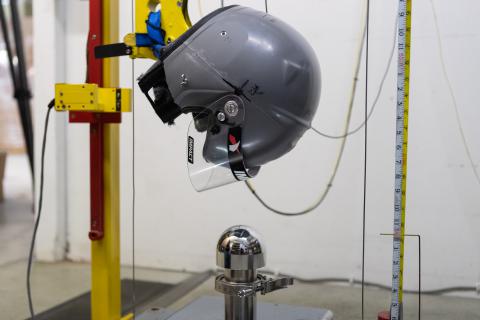
Impact Racing helmet drop

The PRI Road Tour sat down with Ben O’Connor of Impact Racing to talk about the motorsports safety manufacturer based in Indianapolis, Indiana, founded by the legendary Bill Simpson. Impact Racing has been keeping racers safe since 2002 and works with other Indy- and US-based businesses to create some of the best driver suits, helmets, restraints, and more. See the helmet drop process to adhere to necessary safety standards, how helmets are assembled, and how customized racing suits are created in this exclusive video. 

For more information, visit performanceracing.com/roadtour and impactraceproducts.com.

Greg Walter Named Promoter Of The Year For 2020

Submitted by laurap on Mon, 04/12/2021 - 15:19
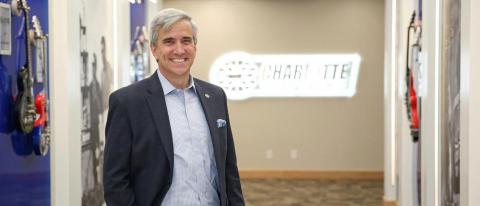
Charlotte Motor Speedway Executive Vice President and General Manager Greg Walter, 2020 Promoter of the Year. Photo courtesy of Charlotte Motor Speedway
Photo of Greg Walter courtesy of Charlotte Motor Speedway

Speedway Motorsports officials have honored Charlotte Motor Speedway Executive Vice President and General Manager Greg Walter as the Promoter of the Year and named Executive Vice President and Chief Sales Officer Kevin Camper as the O. Bruton Smith Award recipient for 2020.

“Both Kevin and Greg have exemplified what world-class leadership looks like while navigating unchartered waters with an unwavering commitment to providing maximum value to our partners, crewmembers, stakeholders, and fans during the pandemic year. Their creativity, integrity, and drive for excellence in all of their efforts are an example to all of us,” Speedway Motorsports President and CEO Marcus Smith said, who chooses the recipient of the Promoter of the Year. 

Walter, a 20-year leader within Speedway Motorsports, was recognized for Charlotte Motor Speedway’s efforts during the COVID-19 pandemic. The facility used its substantial logistical expertise to provide safe, socially distanced events ranging from drive-thru high school graduations and Halloween events to drive-in concerts and movie nights.

Walter’s team was also pivotal in planning and executing North Carolina’s first mass COVID-19 vaccination event and was just the second track on the NASCAR’s return to racing schedule with the Bank of America ROVAL 400 last fall.

“The trophy may say ‘Promoter of the Year,’ but this is a team award,” Walter said. “So many people here at Charlotte Motor Speedway have put in the extra hours and stepped up in ways we couldn’t possibly have imagined a little more than a year ago, and it is my honor to be able to share this recognition with each of them.”

Annually presented to one employee across all of Speedway Motorsports and its subsidiaries, the recipient of the O. Bruton Smit Award is someone who exhibits the traits of the Speedway Motorsports Executive Chairman and Founder, O. Bruton Smith. Those traits include character, enthusiasm, drive, a heart for helping others, respect and appreciation for team members, vision, and determination.

“Having worked closely with the Smith family for most of the last 25 years and knowing what this award represents, I am humbled to have even been considered for the O. Bruton Smith Award,” said Camper, who is responsible for corporate sales revenue across all eight of Speedway Motorsports’ facilities and its Performance Racing Network subsidiary. “I have been fortunate to spend much of my career surrounded by consummate professionals who are among the very best in the entertainment business. They are an equal part of my success and share this award with me.”

For more information, visit speedwaymotorsports.com.

April 2021

Editors’ Choice

Submitted by jeffreyc on Mon, 04/12/2021 - 15:07
editors' choice


Hundreds of new product announcements cross the desks of PRI editors each month. Following are our top picks for May.

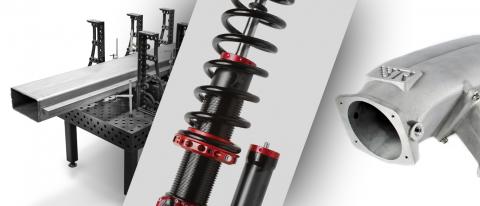
PRO28 WELDING TABLE

Strong Hand Tools
stronghandtools.com

Flexibility and precise fabricating are the benefits of this new modular-style PRO28 welding table from Strong Hand Tools.

“We needed a heavy-duty, five-faced counterpart to the BuildPro line. People were asking for it,” said Danny Ulloa of the Santa Fe Springs, California-based company. 

The table features multiple plates that can be staggered to accommodate unique-sized projects. Ulloa said the table flatness is rated at .064-mm per 600- x 600-mm square area. The 28-mm holes are spaced every 100 mm and accept a wide variety of fixturing components to help ensure accurate welding.

editors1

“By staggering the plates, you don’t have to buy an awkward-sized table that is too large for one project,” said Ulloa. “The plates slide out and you don’t lose your level surface. If you’re working with heavy-duty equipment and were to damage a plate, it can be flipped over or replaced. You don’t have to buy a new table.”

The top plates are constructed of P20 steel and nitrided for a Vickers surface hardness rating of HV 750. The side plates are constructed from Q345B steel and have a surface hardness of HV 550. Nearly 20 fixtures, clamps, and tools designed for the table are available in a variety of kits. —Mike Magda


TRINITY SERIES INTAKE MANIFOLD

Brian Tooley Racing
briantooleyracing.com

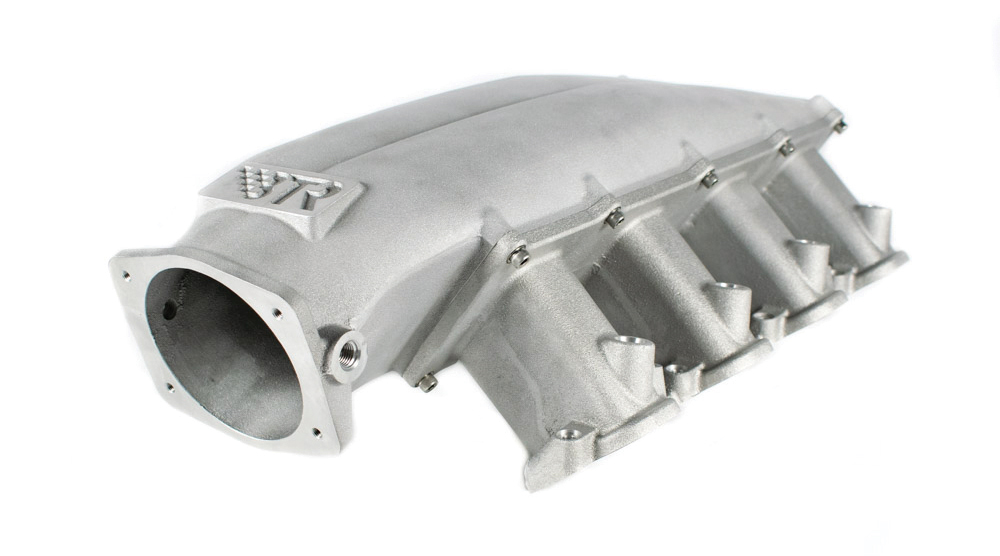
The increasing number of performance cylinder heads for select LS and LT applications prompted Brian Tooley Racing (BTR) to develop the Trinity Series modular three-piece intake manifold.

“There are lots of different cylinder heads with different port heights on the market,” explained Brian Tooley. “And we get requests to match them all. So, we decided on a three-piece design with a center plenum and bolt-on runners that we could easily make to fit those applications.”

Tooling to cast a single-piece intake could cost more than $30,000 while the tooling for a set of runners is around $3,500.

“For some high-power applications, the only choice was billet,” continued Tooley, whose shop is based in Bardstown, Kentucky. “A lot of these billet intakes are modular three-piece. If we could take that concept and make it cast three-piece, we could service more markets.”

BTR had to work out issues of machining and designing O-ring seals, and now there’s development of additional plenum sizes to accommodate larger throttle bodies. 
Editors2

“We’re also working on a dual-injector version that could be serviced with a single fuel rail on each side,” Tooley told us.

Current applications include LS3, LS7 and Gen V with or without injector bosses.

“Whether NA or boosted, it’s definitely for high-rpm applications and for those who want durability over sheet-metal and price point over billet,” Tooley added. —Mike Magda

MOD SERIES SHOCK ABSORBER

QA1
qa1.net

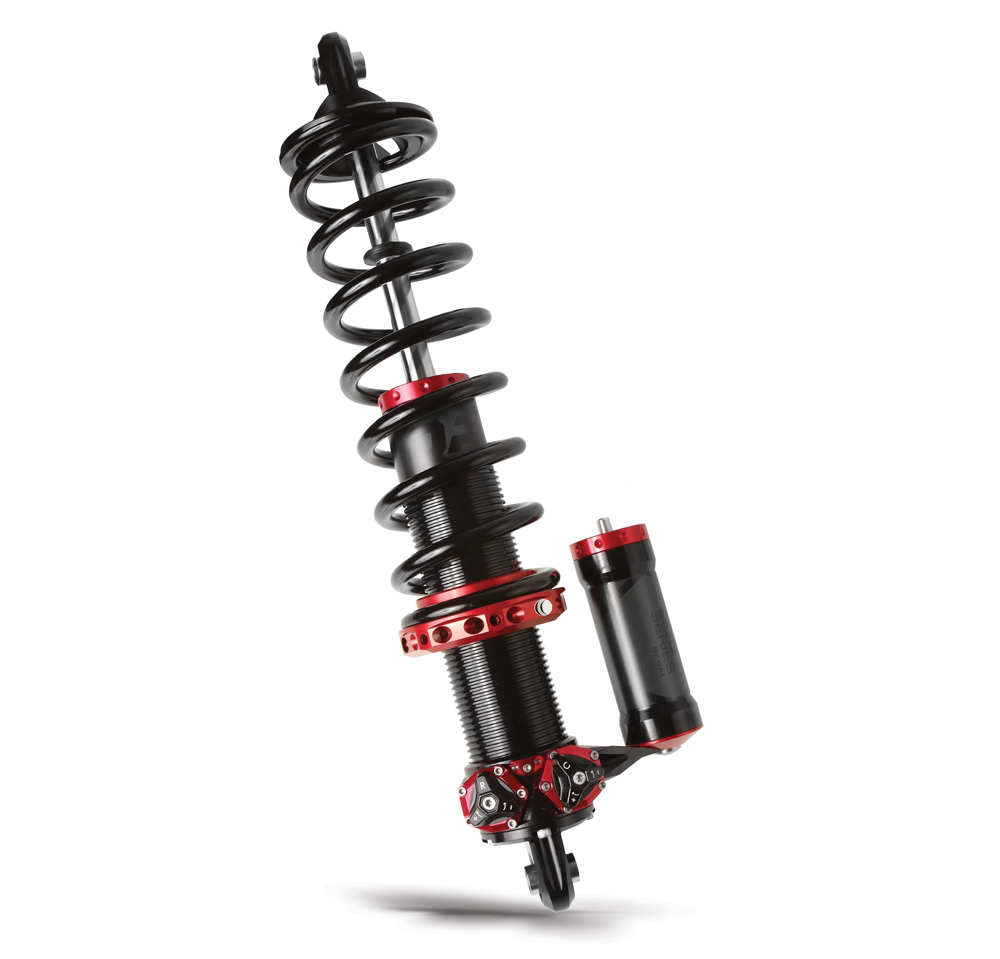
Due to limited valving options, shock absorbers are rarely flexible enough to adapt to different tracks and racing conditions. Racers can’t go autocrossing and drag racing with the same shocks and expect optimum performance. QA1 addressed this conflict by developing the MOD series with interchangeable valve packs that allow quick adjustments to achieve the desired suspension dynamics.

“Say you’re at a Pro Touring event with autocross, road race, and speed-stop challenge. Those are three very different disciplines that the suspension needs to adapt to,” explained David Kass of the Lakeville, Minnesota-based company. “We found the traditional adjustable shock was unable to suit those needs very well.”
Editors3

The MOD series features interchangeable QuickTune modular valve packs that allow adjustable compression and rebound with low-speed bleed. High-speed valving allows for tuning over impact events, like coming off a wheelie. Low-speed valving is for fine tuning weight transfer. All the shock fluids and nitrogen gas are separate from the valve pack.

“We took the valving off the piston and put it in the valve packs that you swap out in just a few minutes,” said Kass. “Now the racer has greater flexibility in valving options. He can make adjustments between events or if track conditions change. These work great on the street, but they’re really for track cars, Pro Touring, and radial tire drag racing.” —Mike Magda

May 2021

The Mint 400 Announces Official ‘Military Vehicle’ Class 

Submitted by laurap on Mon, 04/12/2021 - 14:43
Mint 400 Military Challenge, two military vehicles on track


Officials with The Mint 400 have announced an all-new military vehicle class for the 2021 event set for December 1–5, in Las Vegas, Nevada. 

The class will allow manufacturers and owners of historic and modern military vehicles to compete and showcase their vehicle platforms in front of tens of thousands of off-road race fans and enthusiasts in-person and via the Mint 400 LiveStream. 

The new class comes as Mint 400 owners Matt and Josh Martelli and the Mint 400 Event Director Kilian Hamlin plan the second annual Mint 400 Military Challenge, which raised over $100,000 in financial support for veterans and active-duty military in its first year. 

“Willys-Overland delivered the prototype Jeep (dubbed the Quad) to the U.S. Army in November of 1940. One could argue that was really the birth of the off-road movement. Within thirty years, we were racing down in Baja (1967) and at the Mint (1968), and since then, there has been remarkable growth in military vehicle technology,” Mint 400 Co-Owner and CEO Matt Martelli said. “Most of us will never get to see these amazing machines up close, let alone in action—but The Mint 400 is the perfect proving ground to showcase these vehicles, which are used by our military to defend our freedom.” 

Last year, several military vehicles took part in the Military Challenge as part of the 2020 Mint 400. This included the Green Berets with the 5th Special Forces Group (Airborne), who raced the General Dynamics Ground Mobility Vehicle 1.1s, and the Warfighter Made organization who entered its Flyer 22 Vintage Military Light Strike Vehicle (LSV) manufactured by Flyer Defense and a 1988 AM General M998 High Mobility Multi Wheeled Vehicle (HMMWV) aka Humvee. 

Companies looking to get involved in the new Mint 400 Military Class should contact Mint 400 CEO Matt Martelli. More information on the new class will be released in the coming months.

For more information, visit themint400.com.

April 2021