Road America has announced attendees can now access the paddock for the NTT IndyCar REV Group Grand Prix presented by American Medical Response set for June 17–20. Additionally, fans are welcome in the paddock for the IMSA SportsCar Weekend on August 5–8. All ticketholders can access the area free of charge.
“We are fortunate that our fans understood the situation we faced last season, and now they have the opportunity to get closer to the action at Road America,” Road America President and General Manager Mike Kertscher said. “So don’t wait, get your tickets online now, print them at home, and get ready for an action-packed summer at America’s National Park of Speed.”
The June Grand Prix event will also feature Vintage Indy and the Radical Cup series, along with Pro 2000 and USF2000, both development series of the Road to Indy presented by Cooper Tires. Additionally, all first responders, including police, fire, and EMS, will receive free tickets for the event by showing proof of active status at the gate in the form of a department-issued ID or badge.
The August event will feature the IMSA Michelin Pilot Challenge race on Saturday, with the IMSA WeatherTech SportsCar Championship race on Sunday, plus races from the IMSA Porsche Carrera Cup North America and the Mazda MX-5 Cup.
For more information and to purchase tickets, visit roadamerica.com.
Lubrication Specialties Inc. (LSI), the manufacturer of Hot Shot’s Secret performance lubricant brand, has announced the addition of Hollie Maxymillian, a veteran automotive retail marketing specialist, to serve as the company’s new Hot Shot’s Secret product manager.
The new position was filled to help ensure Hot Shot’s Secret’s branding presence is leveraged across multiple channels—direct, online, and retail—and including national and international sales, according to the company.
Reporting to LSI President Brett Tennar, Maxymillian will review all current Hot Shot’s Secret distribution to capitalize on retail advertising opportunities, co-op programs, shelf placement, in-store and eCommerce promotions. She will also help develop an omnichannel approach to broaden the reach to DIY and DIFM end customers.
“We are very excited to announce this new position at LSI. In interviewing for the role, we were especially impressed with Hollie’s expertise in branding strategies, unique distribution tactics, eCommerce analysis, and profitable campaign development for a broad range of products that are similar in scope to our product line—specialty oils, synthetic lubricants, performance brands and more,” Tennar said.
Maxymillian holds over 20 years of marketing experience, having held positions with Calumet Specialty Products in Houston, ITW Global Brands in Houston, and Katalyst Marketing Group. She is currently working on completing a second business management degree from Grantham University and will be based in Houston.
It’s the story behind the stories from those who helped develop, execute, and participate in one of the motorsports industry’s boldest—and most successful—content creation and outreach programs ever.
If ever there was a time when we needed something positive to look forward to, it was 2020.
The harsh memories of last year are still fresh for most people. Between the pandemic lockdowns, supply chain disruptions, election drama, rolling furloughs, and empty grandstands at the nation’s race tracks, last year was short on hopeful signs for the racing industry. But from such disruptions come opportunities, and great things can be launched.
And thus, the PRI Road Tour was born.
The PRI Road Tour content creators, from left: Bryant Lambert, Justin Cesler, Dr. Jamie Meyer, Ryan Walker, Wade Mathieson, and Michelle Gallegos. “They’re the heroes of the whole Tour, to be able to get that content and tell those stories so eloquently,” said PRI’s Karin Davidson.
As the embodiment of optimism, hopefulness, a sense of adventure, and service to the industry, the PRI Road Tour came into being as a response to the upended trade show landscape. As large public events of every sort were curtailed by local governments and by event organizers themselves out of an abundance of caution, adaptation was the order of the day.
“We’d been hanging tough with the racing industry. We really thought the PRI Show was going to be possible,” said Dr. Jamie Meyer, president of Aliso Viejo, California-based PRI. “The folks at Indianapolis have been great partners and continue to be great partners. But as things started to get more clear with the pandemic impacting trade shows everywhere, [and] the SEMA Show was canceled, we learned a lot from our teammates at SEMA about how this was going to happen and what were the best decisions to make. In the end, just to make sure people were safe, to make sure we weren’t hurting our industry or hurting the individuals that would go to PRI, we decided to cancel the Show.”
From that difficult decision, though, came the opportunity to try new things. “We went to the SEMA and PRI Board of Directors within a week or two after that decision was voted on and we were asked to come up with an alternative,” Meyer recalled. “SEMA had gone with SEMA 360, which was a very forward-looking online community experience. It made a lot of sense for SEMA, which is a much bigger event, a much bigger organization. But the PRI team got together, and we were discussing several alternatives. Everybody was going online, but we felt the community of racers was much more face-to-face, much more individualized. We took cues from a few other advocacy groups and social media influencers and decided the best thing to do would be to take the PRI Show on the road. So within 10 days the trade show team turned into a road tour production team. We had our creative agency already picked out. Driveline Studios works on our social media accounts and a lot of our strategies.”
The plan came together quickly. “Knowing our group, our industry, our people—we call it our tribe, a bunch of racers—we just didn’t know if the virtual route was the best route, to put something together that quick, something that they would use,” said Karin Davidson, PRI Trade Show director. “And Jamie had this idea, ‘Hey, let’s get a van, let’s get some creatives, put them in the van with an operational person.’”
“This was a 77-day straight assignment. It was 100 stops. I think in retrospect it was the chance of a lifetime for the creative people who were in that van,” Dr. Jamie Meyer said.
Besides delivering hope and raising morale, a Road Tour could deliver definite benefits to the motorsports community. “The idea was getting them additional exposure that they wouldn’t have otherwise, free, courtesy of PRI, and to have these creative guys come in and do videos, and product shots, and telling stories about how their businesses started and things like that, and just tell the world what their company is all about,” Davidson said.
Kim Pendergast sits on the SEMA Board of Directors, as well as being CEO and owner of supercharger manufacturer Magnuson Products in Ventura, California, which was one of the stops on the tour. “I first heard about it on the Board. There was a proposal that hit my mailbox,” she told us. “The minute I read it, I said, ‘This is amazing. This is a good thing for our members. I didn’t have to think about it for a minute. It was so intuitive, it was so prescient, it was so on the money for what people needed. And having said that, when they arrived it was so much more than I even understood.”
With the concept in place, the next step was to figure out just where to go. In the racing and performance world, there was no shortage of candidates. “The trade show team had these deep connections with the industry and our exhibitors because the Show’s gone on since the mid-1980s, and [they] reached out to key people in key locations and very quickly put the route together, starting in Indianapolis, working through the Midwest, Chicago and Detroit, heading toward the Carolinas, going through Atlanta, going through Texas, going through Phoenix, and then spending a week and a half in California,” Meyer said. “This was a 77-day straight assignment. It was 100 stops. I think in retrospect it was the chance of a lifetime for the creative people who were in that van.”
There was excitement in the Road Tour’s future, but the kick-off included a stark reminder of what the industry was up against. The first video was filmed in the Indiana Convention Center in Indianapolis, and posted online on October 12. The Convention Center is normally a beehive of activity, especially in early December when 65,000 racers and 1,200 exhibitors descend on the facility for the PRI Show. But here Dr. Jamie Meyer sat alone in front of the Road Tour van in an empty Convention Center. There, he quietly explained, “Because you can’t come to PRI, PRI is going to come to you.” But from such a subdued beginning, things were about to get loud.
Talent Pool
Justin Cesler’s Driveline Studios in Detroit, Michigan, had been chosen to record those stops and tell those stories. Driveline Studios specializes in turnkey content creation, marketing, and social media. For the Tour, his team would handle everything from taking photos and videos, editing that material, turning it into digestible content for any channel needed, and monitoring the response. Driveline Studios had a photographer and two or three video specialists on hand for every stop, with Cesler serving as creative director.
“They’re the heroes of the whole Tour, to be able to get that content and tell those stories so eloquently,” said PRI’s Davidson. “Everybody just loved it, and the numbers on social media just went skyrocketing. Hats off to all those guys.”
For the Road Tour, of course, content-creating talent had to work hand-in-hand with logistics talent. “The setup is the crazy part,” Cesler said. “One thing to know about the Road Tour is that it really took an amazing logistics effort, obviously. It was 70 days on the road, it was almost 100 stops, which included everything from the smallest shops to the biggest shops, race tracks, and everything in between. We had an amazing logistics team with PRI. They’re the people who put on the Trade Show, and they were able to pivot and instead of doing the Trade Show last year, they just turned to the Road Tour and set that up.”
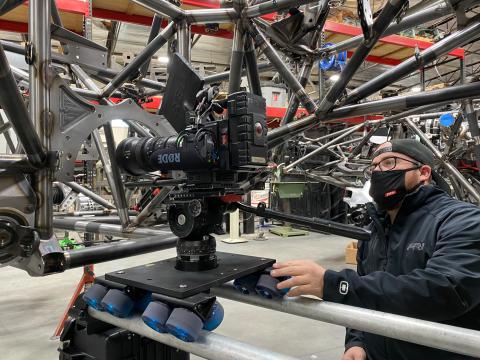
The creative crew, including Bryant Lambert, seen here shooting video, “really stepped up for this,” Justin Cesler said. The team would shoot video and photos during the day, and then edit the material overnight while preparing for the next day’s stop.
Part of that logistics talent was Michelle Gallegos, PRI housing and travel manager. She served as “van captain,” making sure water, food, and snack supplies were well-stocked, secured hotel rooms, and coordinated with the businesses where the van would be stopping, among other logistics challenges.
Complicating the planning was the need to keep masking and social distancing requirements front and center. “You know, it’s the height of the pandemic, people aren’t trusting of each other, some don’t want to wear a mask, some want to wear a mask, a face shield, and a Tyvek suit,” said Meyer. “We were very adaptive to how our team would approach each stop. And I’m incredibly proud of the team and the effort and the industry, to say that we didn’t get anybody sick, we didn’t transfer a virus. We made it through safely.”
“Michelle, of course, was amazing. She’s a very special human being,” said Magnuson’s Pendergast. “She’s very professional, she’s very wise, she’s smart, and she just has a sense of things—how to make you comfortable, and how to keep everybody moving and in the right place at the right time. It was very interesting, for me being a businessperson, to watch how the whole team was managed and the integrity behind that.”
Getting the story meant being flexible, Justin Cesler pointed out. “You’re walking into a lot of these shops blind. You don’t know if you’re going to be trying to get inside a CNC machine, or if you’re going to be outside shooting someone doing a burnout.”
The van—a Mercedes-Benz Sprinter—turned out to be a key member of the Road Tour team itself. It was secured from Bandago Van Rental, a company that specializes in vehicles for bands, businesses, and large groups. So it was fairly well equipped for hauling all the gear necessary for the Tour.
“People were kind of amazed by the van,” Cesler said. “I think at first people thought, ‘Okay, is this going to be a person and a camera, or a person and a Go Pro?’ But our crew really stepped up for this one. All of the video footage was shot on RED cameras. It’s all 6k, 8k, super hi-res. We had four RED cameras, all of the lenses, all of the batteries, all of the monitors, all of the gear that you would need for a production like that. And really for us, it wasn’t about having a lot of gear, it was just being able to switch depending on whatever situation we were in. You’re walking into a lot of these shops blind—or all of them blind. You don’t know what the lighting is, you don’t know how big they are, you don’t know if you’re going to be doing an interview with one person or two people, or three people. You don’t know if you’re going to be trying to get inside a CNC machine, or if you’re going to be outside shooting someone doing a burnout. So we had to have a huge variety of equipment, so that on the fly we could just hot-swap equipment.”
If there was a breakout star of the show, it was “Wall-E,” a radio-controlled car with a camera mounted on it. Wall-E earned its keep catching dramatic ground-level shots of burnouts, or skittering into otherwise hard-to-reach places for difficult shots.
With so much work involved in doing the shoots and editing it all into digestible formats, the team needed someone who could just focus on the van and driving safely from spot to spot. And so Wade Mathieson signed on to pilot the Sprinter on its months-long journey.
On the Road
As mentioned earlier, the first official “stop” on the tour was the empty Convention Center in downtown Indianapolis. “The very first shot we took was in the Indiana Convention Center. Normally that’s where the PRI Show is. And we were standing in it, and there was nothing in there. It was just an open convention center. And it really put the weight of it on us,” Cesler said.
“This is serious, because people look forward to coming to the PRI Show every year,” he continued. “For us, that moment was kind of like, ‘Okay, we’re doing this, we’re here, the van’s here, we’re ready to go.’ It was pretty sobering—you could definitely feel the weight of the project starting to come on. And then literally our first stop was Don Schumacher Racing. And it was just exactly what you’d imagine. It was just an unbelievable stop. We got great time with Tommy Johnson Jr. and other members of the DSR team, and just to see the scale of the facility…. We went from, ‘Okay, we’re a little bit nervous about this,’ to ‘This is going to be the most fun road trip of all time.’”
Pictured are PRI President Dr. Jamie Meyer and the Sprinter van at Don Schumacher Racing, the Road Tour’s first stop. “It was just an unbelievable stop,” Justin Cesler said. “We got great time with Tommy Johnson Jr. and other members of the DSR team.”
The stops were indeed fun, but the workload to turn those visits into interesting content was considerable. “A typical day on the road, we’d wake up early, prep all the gear, and have everyone in the van by 7. We would get to our first stop at around 8:30 or 9:00, depending, and it would be four to five hours at least at each stop,” Cesler said. “Every video that you see, every photo that you see from a tour stop, was done in about half a day.”
The routine quickly settled into a pattern of shoot all day, edit videos and photos overnight. The teams worked into the wee hours of the morning getting the day’s material ready to publish and then getting everything ready for the next day.
For the Road Tour team, meeting new people and hearing their stories was a daily occurrence, but there was also plenty of news to break at many of the stops. At Paul’s High Performance in Jackson, Michigan, Paul Svinicki had managed to get his hands on one of Ford Performance’s new 7.3-liter Godzilla crate engines, and had installed it in a 2010 Cobra Jet Mustang.
Paul’s High Performance was the first to get one of these engines into a car, the first to take one to the track for testing, and the first to put one into the 10s, Svinicki said. There was a lot of interest across the performance world around this pushrod, big-port, 446-cubic-inch engine.
The Road Tour segment at Paul’s delivered the goods, culminating in an epic burnout that left two flaming piles of rubber. “I just melted the tires until there was nothing left,” Svinicki said. Wall-E was sent in for a close-up worm’s-eye view of the two burning piles for one of the more memorable shots of the Tour. At press time, the Paul’s High Performance stop has received more than 91,000 views on YouTube.
Paul Svinicki, below, of Paul’s High Performance got one of Ford Performance’s new 7.3-liter Godzilla crate engines, had it installed in a 2010 Cobra Jet Mustang, and performed an epic burnout for the Road Tour cameras that left behind flaming piles of rubber. So far, the resulting YouTube video has received more than 91,000 views.
“I was very excited with what I thought was an absolutely great idea, to actually put a face to a name, having someone show up at your shop,” Svinicki said. “To have someone show a little love to a small shop, it just does stuff. Yes, we work with Ford, we’ve set records, we’ve got a lot of Mustangs, we’ve done a lot of things the last 25 years. So we’ve been in the industry for a bit, we know a lot of people, we’ve done a lot of stuff, but it felt really, really good after all these years.”
The PRI Road Tour team had, from the beginning, made it a point to not interfere with the day-to-day running of the shops, and to make it as easy on the shop owners as possible. “It was pretty seamless. For me, it was answering questions, getting hot tea or water or something to munch on, and then just answer some questions,” Svinicki said. “They’re enthusiasts, right? So they know stuff, and they know how to approach it from an enthusiast’s view.”
As the Tour went on, the arrival of the PRI Road Tour van came to represent more than just a nuts-and-bolts shop visit. “We spent a lot of time preparing, because I felt like this was such a generous gift, for PRI to come to our facility and have these experts give us content. So I wanted to make the best use of the time,” Pendergast said.
“I missed one big thing, which was that the preparing for it was important to our employees, because we hadn’t gone to any shows. We’d been working, we’d been getting things out the door, it had been very, very stressful, but we really hadn’t been having fun,” she continued. “And we’re all enthusiasts. And so, to have the fun of getting all these vehicles organized to be here and prepare for them to come was part of the fun that we have, it’s part of why you belong to this organization. That was a little bit of a revelation.
“Having PRI here just touched everyone, at a point in time when we’d been so isolated and working so hard,” said Kim Pendergast of Magnuson Products. “These people came to our door and just reinvigorated us. They were so kind and so caring and so welcoming. It was the most amazing thing.”
“But the biggest thing was, when they got here, how having PRI here just touched everyone. It sounds corny I guess, but that emotional touch at a point in time when we’d been so isolated and working so hard, and went from January and February when we were just blowing product out the door, to a couple of months where we had good revenues but all kinds of supply chain issues hit because of COVID, and then suddenly it just came roaring back the rest of the year, and we were working so hard but yet we were frightened because we still didn’t know what was going to happen. We still didn’t know whether things were going to continue in a positive vein. And these people came to our door and just reinvigorated us. They were so kind and so caring and so welcoming. It was the most amazing thing,” she concluded.
For everyone in the van, each day brought new surprises. “In North Carolina we met Bill Rhine,” Cesler said. “He said, ‘Yeah, I restore old NASCARs, vintage race cars, I have this old barn, if you guys think that would be cool.’ What we learned on the trip was that anytime someone says, ‘I have this old XYZ,’ we were in. It was going to be way cooler than they were giving it credit for. They would say things like, ‘Well, we’re small shop guys, I don’t know,’ and they would open the door to 50 CNC machines running at full speed just cranking out parts. They would open doors to what they would claim are ‘humble car collections’ and there were hundreds of cars in them. It was super cool to see.”
In North Carolina, the Road Tour crossed paths with Bill Rhine, whose Rhine Enterprise restores old NASCAR and other vintage race cars. “I have this old barn, if you think that would be cool,” he offered. The video of the “toys” in Rhine’s barn has generated more than 210,000 YouTube views to date.
The racing community agreed—the segment on Bill Rhine’s vintage race car collection has more than 210,000 views on YouTube as this was written.
Capturing all those surprises required plenty of camera store stops along the way. “We started the trip with one drone, I think we ended the trip with four drones,” Cesler said. “We just needed bigger ones or smaller ones, or low-light ones, that could do different things. We had a ton of photography equipment, of course. I don’t know how many cameras were in the van at one time, probably five or six still cameras at any moment, and then all of the lenses, all of the lights, that go along with that.”
The Results
Still, the PRI Road Tour was about more than exposure and pretty pictures. Behind it all was a push to showcase new product development, direct new business toward the racing industry, and reach new people across various distribution channels. “Everybody I’ve spoken to that did it, loved it,” said Tom Buzze of Buzze Racing, Mooresville, North Carolina, one of the shops visited in the Tour’s first 30 days. “The amount of people that it reached, there are so many customers that called and said, ‘Man, we saw your video,’ or they sent a message that they’d seen the video and thought it was amazing. They did a great job putting it together and showing what our shop was. There are so many people that know us, and I’ve reached a lot of new people. People reached out because of the video. Even where I was at quarter midget racing this past weekend, there were people even there who said they’d seen the video. The amount of people that it reached was unbelievable.”
“Everybody I’ve spoken to that did it, loved it,” Tom Buzze of Buzze Racing said of the Road Tour. “They did a great job showing what our shop was. People reached out because of that video. The amount of people it reached was unbelievable.”
Being able to put names with faces, and not just be a listing on a ledger, was another plus from the PRI Road Tour. “It showed that, one, someone cares, and they’re able to get out and show people different things—what does this shop do, and who are these people in the industry? One thing I noticed is that it showed everybody has a personality. There’s an actual face and a person that’s tied to these products and this business,” Svinicki said. “Who does that? Nobody. I don’t remember anybody doing something like that for a company.” Svinicki reported his email queries alone are up by at least 30% since the video was posted.
“All told, we reached over 25 million unique people over the course of the Road Tour and still, every two weeks, we’re reaching five million people,” PRI’s Meyer said.
Road Tour 2.0
The PRI Road Tour was a response to a challenging year, but the concept proved so sound for the racing community, with such positive results, that the Tour will hit the road for a sequel this summer!
“This was an entire give-back. It’s really important for people to understand, we didn’t charge anybody anything,” said Meyer. “This was a Board-approved expense. This was not a cheap project, to make sure we’re helping the racing industry in the worst of times. It’s been such a success that we want to continue it, and the Board has approved me to get these guys back in a van and back out on the road.”
Although there will be plenty more shop visits on tap, for 2021 the Tour will be focused on visiting as many race tracks as possible. “For 2020, the Road Tour came together as we were making the very tough decision to cancel the PRI Show,” Meyer said. “So it was late in the season—we did get to a few race tracks, but for the most part we went to manufacturers. For 2021, the PRI Road Tour is going racing. The team is putting together a list of some of the best races, some of the most interesting races, some races that I’ve never heard of, and we’re going to take the world’s best content creators and we’re going to turn them loose at the races this year. I can’t wait to see what they come back with.”
“For 2021, the PRI Road Tour is going racing,” Dr. Jamie Meyer said. It will document “some of the best races, some of the most interesting races, some races that I’ve never heard of. I can’t wait to see what they come back with.”
Capturing the whole gamut of the motorsports industry will be a priority for 2021. “In 2.0 that we’re starting up this month, it’s going to be more racing related, going to the race track to see how the whole racing industry comes together, whether you’re a race team, a racing manufacturer, a machine shop, everybody that races in those cars and everybody driving to the track, we want to show how the whole racing community comes together and goes racing,” PRI’s Davidson said.
“I’m really interested to see what the new eyes, the different reporters, will find at these races,” Meyer said. “We’re certainly looking for the different communities of racers to appreciate each other more—maybe seeing a circle track the way you’ve never seen that type of race before. Maybe going to a tractor pull and getting a whole new understanding about horsepower control. Going to Pikes Peak and learning what we can find at that incredible venue.”
There are few things more exciting than hot laps in a race car, and few gatherings more all-American than a weekend night at a dirt track. But the 2021 PRI Road Tour will also be aimed at people who haven’t yet experienced the thrill of racing.
“How do we get people that don’t even consider racing to look at it and be fascinated by what goes on in this industry?” Meyer said. “That 8-second news cycle that we talk about nowadays—how do I have an 8-second Instagram video or an 8-second TikTok video? Or a longer-form LinkedIn story where we relay business advice from the motorsports industry that applies to other people? Maybe they like stick-and-ball sports, maybe they’re just movie fans, maybe they never even imagined going to a dirt track race. But they see something, and it’s a spark.”
Get ready, because the sparks will fly when the PRI Road Tour van hits the road again this summer.
As the motorsports industry continues to face mounting threats to its existence, these Founding Members share the reasons why they pledge their full support to our right to race with a PRI Membership.
Flip or scroll through the sports news, and the headlines covering racing are always about the winners. The individuals. The exceptional talents.
But the stories behind the headlines reveal the accomplishments of the crews, shops, supporting teams, and organizations that enable the winners…to win.
Without a doubt, PRI is racing’s critical enabler. We are the organization that builds, promotes, and protects the racing community to ensure that race/win headlines remain a part of our industry’s future.
Given the current regulatory environment, however, that future is by no means guaranteed. (Have you tried shopping for long-tube headers lately?) And that is why we have taken our place as the chief guardian against threats to the motorsports community. What this means for the industry as a whole, and its many tributaries that extend into regional and local markets, is that we are focused squarely on you, and your business, whether your annual revenues number $100,000 or $1 billion.
This vision and inspiration to meet our industry’s call is why we started developing a membership program two years ago. The official membership drive launched in March, and the roster is growing.
We are strongest when we’re all united as an industry. Plus, our collective political voice and economic power is more influential. A decision to join PRI is a clear message that you stand with industry members and fans to protect and grow the lifestyle that we all love. Coming together to unify the racing industry is our best chance to navigate the challenges we face today and tomorrow, and to get results.
Beyond economic, legislative, and important educational initiatives, your PRI membership affords your company discounts on PRI booth space, PRI advertising, and additional benefits as the program grows.
On the following pages you’ll hear from some of the first to join PRI’s mission—the early adopters who came on board as Founding Members—in recognition of the benefits to the industry, as well as to their own companies.
These Founding Members also identified something unique that came with their level of involvement, namely an organized ability to network with other industry leaders. The first official Founding Members’ event will be held at this year’s PRI Trade Show in Indianapolis.
While this special reception will mark the return of our in-person Show, it will also include an exclusive, state-of-the-industry presentation covering the latest economic and government affairs developments. Just as important, there will be face-to-face networking as well as opportunities to interact with key representatives from governmental business development teams, the banking world, and venture capital firms.
Business leaders know the value of making connections and gaining exposure to critical insights that steer markets and decision-making. And so does the PRI team, which is why we’re making PRI Founding Member status available, for a limited time, for $25,000 (with a payment option of $2,500 per year over 10 years). In other words, for the cost of a small Facebook advertising campaign, your company could position itself at the forefront of our industry.
That’s the value Moser Engineering, CP-Carrillo, Racing Optics, and Motor State Distributing realized. These companies were among the first out of the gate and onto PRI’s Founding Member roster.
As you read more about these industry leaders, consider the practical and affordable membership options our team has for your company, or for you as an individual. With your involvement, we will continue to build, promote, and protect your livelihood, as well as the prosperity of the entire racing and aftermarket community.
If you build race cars, Moser Engineering likely needs no introduction because the company is so widely known for its American-made driveline components. And when Moser displays “made in the US,” that includes the steel and its own custom alloys used to create axle forgings and axle housings. Founded by Greg Moser in 1986, and now operating out of a 100,000-square-foot production facility in Portland, Indiana, the company is also known as a rapid-turn, low-volume manufacturer, and for being a quality distributor of aftermarket driveline and performance parts.
Marketing Director Jeff Anderson clearly articulated why his company became PRI’s first Founding Member: “We see many challenges ahead for the industry, both here in the US and abroad. The challenges range from the threat of overseas competition from an uneven playing field, to economic trade policies including managing the balance between free markets and industrial policies that can sometimes be detrimental to certain segments of our economy. We need to be thinking about these policies, as it will affect our industry in the future.”
Like so many in the industry, Moser Engineering has faced its share of business challenges over the decades, including inferior, cheap, and counterfeit parts. With its Founding Member status, the company recognized that PRI would amplify its voice to a level that policymakers couldn’t ignore.
From its inception, CP-Carrillo has dedicated its efforts to the motorsports industry, so the choice to become a PRI Founding Member was easy. Peter “Snake” Calvert, president and CEO, stated the company’s position simply: “Our valued successes are attributed to decades of hard work in racing, good employees, quality products, and great service—and the PRI platform shares that vision!”
To understand the long-term success CP-Carrillo has earned is to understand that to win races, everything in an engine needs to work together to produce reliable power. This applies doubly to reciprocating assemblies of pistons, rods, pins, rails, rings, and more. Working out of their expansive facility in Irvine, California, the CP-Carrillo team—members of Pankl Racing Systems—brings cutting-edge technology together with traditional hand craftsmanship to produce some of the industry’s highest performing rods and pistons that work together from the outset. The pairing of pistons with rods is a unique CP-Carrillo product advantage. Its approach has earned CP-Carrillo records and wins to rival (or surpass) any other piston or rod manufacturer.
The company’s foundation was laid in 1963 when Fred Carrillo took a no-compromise approach to manufacturing connecting rods. The Calvert brothers formed CP Pistons in 1998, and the two companies joined forces in 2008 to continue improving and innovating for their customers across the racing spectrum, from Formula 3 to drag racing, and from Supercross to vintage.
Beyond its products, CP-Carrillo is dedicated to the racing industry at all levels. The company works closely with local high schools and colleges via internships, employment, and sponsorships. At the legislative level, the company fully supports the RPM Act, as well as PRI’s lobbying efforts at large.
If you can’t see your goal, you’ll never reach it. Born out of practicality, Racing Optics’ multi-layer laminated tear-offs have become a fixture in professional and amateur racing. Racing Optics helps racers keep their goals in clear view, and in that, sees its role as one that’s parallel and aligned to PRI’s.
Quality optics that perform in racing require ultra-precision laminating, coating, die-cutting, and laser technologies, and Racing Optics excels at providing a broad line of products with the performance and reliability customers demand. The products are used widely in the racing industry, and by partners including the US military, 3M, GE, Oakley, Rawlings, Scott, Smith, Spy, Bell, Shoei, Schuberth, and Arai as OEM customers for diverse applications from visor shields to windshields.
As the company’s expertise has evolved, it applied the same technology to other industries, improving safety and performance wherever visibility is critical. For example, in response to the pandemic, the RealShield PPE line was introduced.
Founded in 1999 in Orange County, California, Racing Optics, Inc. is now located in Las Vegas, Nevada. The company has continued to expand into other markets, building on the legacy of the Wilson family in racing. The Wilsons have deep motorsports roots, going back to the 1940s when Dempsey Wilson began building and racing roadsters. The senior Wilson was a founding member of SEMA, and his sons Bart and Steve chose to honor their father’s vision (and ensure their business’ success) by becoming a PRI Founding Member.
If you were an exhibitor at the very first PRI Show in 1988, chances are Motor State Distributing founder George Lane walked past your booth. Back then Lane would have been shopping for his company, Lane Automotive, a part-time speed shop he ran out of his garage.
Today, Lane’s efforts are represented by Motor State Distributing, a leading worldwide warehouse distributor of racing and high-performance automotive parts. From its Southwest Michigan headquarters in Watervliet, Motor State now services thousands of customers throughout the United States, Canada, and more than 35 countries. Stocking more than 100,000 part numbers from more than 650 brands, the company serves a variety of performance and racing markets, including circle track, drag racing, engine building, open wheel, hot rod, early muscle, modern muscle, truck, and off-road. Motor State has successfully adjusted to the shifting demographics of the market as the American car culture adapts to new technologies.
Like most in the performance industry, Motor State Distributing has experienced firsthand the impact of constantly changing environmental and regulatory requirements, including EPA guidelines to Prop 65. These constraints have prompted the closure of tracks, restricted access to performance parts, and led to increased costs for many manufacturers. The company recognizes the power of PRI’s commitment to pursue reasonable exceptions for race and performance enthusiasts.
As it always has, Motor State sees a bright future for motorsports, especially if the industry bands together as distributors, manufacturers, and racers.
Tracking legal, legislative, and regulatory developments impacting the racing and performance industry.
PRI’s dedicated advocacy team based in Washington, DC, works nonstop to protect motorsports. We are currently tracking several initiatives on the federal and state levels, including an update on the critically important RPM Act, action needed to help restore the Bonneville Salt Flats, relief for race track operators, best practices for tracks to host fans, and new legislation on tax credits for California manufacturers.
Pressing Congress To Pass The RPM Act
Congress has seen an outpouring of support for the “Recognizing the Protection of Motorsports Act” (RPM Act) in 2021. The racing community and the motorsports parts industry have blanketed Congressional offices with nearly 1.1 million letters supporting the bipartisan measure to protect Americans’ right to convert street vehicles into dedicated race cars. It also enshrines into law that it is legal for motorsports-parts businesses to sell products that enable racers to compete.
PRI thanks everyone who has taken the time to submit a letter to their lawmakers, as members of Congress must be reminded that they need to act in order to protect racing from EPA overreach. The work isn’t over, however, as PRI is currently collaborating with the RPM Act’s strongest supporters in Congress to officially reintroduce the bill in a way that maximizes its chances of becoming law. PRI is also working with congressional offices that support the RPM Act to find other pathways to enact it.
Recently, six US senators requested that the US Senate Environment and Public Works Committee include the RPM Act in the upcoming highway bill, which must become law before the current authorization expires on September 30.
Passing the RPM Act is PRI’s top federal legislative priority. It would reverse the EPA’s interpretation that the Clean Air Act (CAA) does not allow a street vehicle to be converted into a dedicated race car, an American tradition that was unquestioned for nearly 50 years. In 2015, the EPA took the position that converted vehicles must remain emissions-compliant, even though they are no longer driven on public streets or highways. For more information, contact Eric Snyder at erics@sema.org.
Tell The Government: Funds Earmarked For Bonneville Salt Flats Must Be Spent
Money appropriated by the US Congress and the State of Utah to restore the Bonneville Salt Flats is in jeopardy. The US Bureau of Land Management (BLM) and Utah Department of Natural Resources (DNR) signed a Memorandum of Understanding in April 2020 to create the “Restore Bonneville” program, but no action has been taken as of late April 2021.
“We thank the federal and state lawmakers who directed the BLM and DNR to agree to allow increased salt pumping. It was a cause for celebration since it represented years of discussions between the primary stakeholders—DNR, BLM, Intrepid Potash, Inc., and the land speed racing community,” said Daniel Ingber, PRI’s Vice President of Government and Legal Affairs. “Money has been appropriated, but nothing has been spent to date to save this imperiled landmark. Until the agreement is implemented, it is only a piece of paper, and Bonneville remains endangered.”
BLM and DNR must complete a detailed project outline before more than $2 million is released. The project is modeled after a similar 1997–2002 pilot program and aims to increase salt pumping by upgrading essential infrastructure. Today, equipment is capable of pumping around 300,000 tons of salt per year, but the new program aims to increase it to over one million tons and help restore the once 13-mile race track, which today sits at under eight miles.
As previously reported (see PRI Magazine, March 2021), the PRI Government Affairs team’s main priority in 2021 is to help race tracks receive additional government relief. The initiative began as part of a $15 billion provision included in a COVID-19 relief bill enacted in late 2020, but unfortunately, it did not apply to race tracks and related outdoor venues.
As of late April, race tracks and related categories were not eligible for the relief, which began as a “Save Our Stages” campaign for theaters, concert venues, and comedy clubs, and was included in the winter stimulus package that Congress passed as the Shuttered Venues Operators Grant (SVOG) program.
“We applaud the US Small Business Administration (SBA) for its efforts to implement the SVOG program, as it will help to save live performing arts entertainment businesses. We do, however, respectfully urge the SBA to determine that other family and community-focused activities, including motorsports, horse racing events, mobile amusement such as carnivals, and a range of recreation venues including county, state, and regional fairs, are also eligible for SVOG,” Ingber said. “These live event operators have endured financial hardship through no fault of their own and play an important role in providing entertainment and a sense of community in areas across the nation.”
Because of this hurdle, the PRI legal team has recently proposed a broader definition of entertainment venues to include race tracks. The expanded proposal would provide an additional $15 billion designated solely for outdoor venues affected by the COVID-19 pandemic, including equestrian venues, fairgrounds, and circuses. PRI has also formed a coalition of businesses, including SEMA, Off-Road Business Association (ORBA), United States Motorsports Association (USMA), United Four Wheel Drive Associations, American Horse Council, and Diving Equipment & Marketing Association (DEMA) to help to get the word out on the initiative.
PRI Publishes Best Practices Guidelines For Race Tracks
With state and local COVID-19 restrictions easing around the country, many race tracks can once again host events with fans. Participants, workers, and spectators’ health and safety are everyone’s top priority, and PRI has race facilities covered.
In addition to maintaining an up-to-date directory of each state’s motorsports reopening status, PRI has published a step-by-step “Back to Green Flag” guidance document to help ensure track operators can responsibly get back to business. The guidelines, which cover everything from event ticketing to participant safety and concession procedures, can be downloaded under the Published Guidelines section at pages.message.performanceracing.com/racetrack-info-state-list/.
The document has been shared with race facilities around the nation and will help benefit the entire racing industry.
“Several states are requiring event organizers to submit COVID-19 mitigation plans in order to reopen,” Ingber said. “PRI has published the ‘Back to Green’ guidance document with the goal to get everyone back on track faster, and to do so safely. This will benefit all parties involved, from the tracks to racers, support businesses and fans.”
Each track’s circumstances are unique, and PRI encourages track owners to work with local, regional, and state administrative officials to adapt this guide to their specific situation.
California Introduces Manufacturing Tax Credit Legislation
California Assemblymember Tim Grayson (D-Concord) has introduced PRI-supported legislation (AB 904) that would create a new tax credit designed to stimulate long-term capital investments in manufacturing.
If enacted, the measure would provide Golden State manufacturers with more than 100 employees with a 5% credit against taxes imposed for the purchase of qualified tangible personal property, which includes equipment, machinery, computers, or computing software involved in the manufacturing process. Small manufacturers with fewer than 100 employees would be eligible for a 6% tax credit. The credit covers up to $1,000,000 in qualified investments and can be carried over for up to five years beginning in 2022.
“The hope is that the tax break will spur motorsports manufacturers to invest in cutting-edge tools and processes that will give them a leg up on their competition,” Ingber said. “California is notorious for being unfriendly toward businesses, and we’ve seen dozens of stories in the media about companies relocating to more welcoming environments. The goal is to make the state more competitive at the global level, with a particular focus on small businesses.”
The legislation would help generate new opportunities for California’s manufacturers and create high-paying jobs, which is critical as the state recovers from the pandemic. AB 904 would also help revitalize California’s diverse workforce and enhance technical skills that lift the entire economy.
Assemblymember Grayson is a member of the SEMA State Automotive Enthusiast Leadership Caucus and was the 2019 winner of SEMA’s Stephen B. McDonald Legislator of the Year award. He and his wife Tammy are auto enthusiasts, and included in their collection are two classic Ford Mustangs.
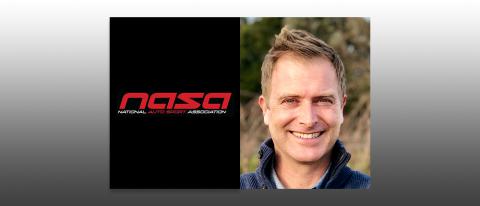
With a class win at the 25 Hours of Thunderhill to his credit, the new head of NASA’s West Coast endurance series is all-in on “car count and culture.”
Peter Hopelain, a successful real estate agent in San Carlos, California, achieved his dream to go racing two decades ago. This past March, he stepped into a leadership role when the National Auto Sport Association (NASA) named him series director for its Western Endurance Racing Challenge (WERC). Hopelain replaces Neil Daly, who will remain a series advisor.
Hopelain’s team, Technik Racing, has been a staple in the WERC, with two third-place finishes and one class win at the 25 Hours of Thunderhill. PRI recently caught up with Hopelain to discuss plans for continued growth at WERC and how he’ll apply his business expertise to the new role.
PRI: What was your first racing experience?
Hopelain: Twenty years ago, I bought a Pro7 car and got my SCCA license. It turned out I was pretty good. I was out there in old equipment taking podiums and top-five finishes every race weekend. When I won Rookie of the Year, I knew I had found my place. [Editor’s note: Pro7 is a road racing class using 1979–1985 Mazda RX-7s with an unmodified 12A rotary engine.]
PRI: How will your experience as a race team owner and veteran endurance racer serve you in this new role?
Hopelain: As a racer and team owner, I know endurance racing has the highest of highs, and it can also put you on your butt. I hope to create an environment that doesn’t let the series or the teams over-index. We are here to race each other, and we can’t make it harder than it already is.
PRI: What particular strengths do you bring to this new position?
Hopelain: I’m quite good at compartmentalizing. As series director, I’ll deal with six different classes. Add in three different regions hosting WERC, and it will take some compartmentalizing to get the correct communications to all stakeholders. We need to ensure the product is good to keep people coming back out.
PRI: How will your experience in real estate help you succeed in this role?
Hopelain: The essential part of what I do is keeping people at the negotiating table, and the job of the race series director isn’t far from that. My job is to keep both NASA and the WERC racers at the table. If we do that, the car count goes up, the racing gets better and both parties are happy.
PRI: Can WERC participants and marketing partners expect to see any changes for the 2021 season?
Hopelain: Probably not for this season, but insight leads to innovation. I want to learn from the people who held this role before, and I want to hear from the racers. With insight from this year, I hope to do the groundwork for future changes.
PRI: And beyond this season?
Hopelain: I want WERC to be the premier “middle class of racing,” a place where a new SRO team can come to warm up, learn lessons, test, and have good multi-class racing. I also want the series to attract regional racers and allow them to take their racing to the next level. As a racer, I want to schedule a challenging season. I like changing the length of the races to keep teams on their toes and make them look at their strategy in a new light. I also think we need to take a hard look at safety in the lower classes and have a crown jewel at the end of the year. But, one project at a time.
PRI: What do you see as the biggest challenge ahead of you?
Hopelain: Buy-in! When I ask drivers if they identify as a sprint or endurance racer, 85% say “endurance.” But WERC entries don’t reflect that. I’ve learned that the racer’s brand lies wherever they classed their car. So I have a racer who identifies as endurance, but their car (their brand) is in sprint racing. I need to get people out of that thinking.
PRI: Give us your top strategic goals for the next 12 months.
Hopelain: Car count and culture, full stop. We’ve got to get both. WERC was built up from a grassroots level. It’s what I love about it, and I hope to keep that spirit and culture.
PRI: What’s your most gratifying professional accomplishment?
Hopelain: When the pandemic hit, none of us in the real estate industry were sure how we could do business. It was a scary moment. I knew Hopelain Homes, with our focus on how you live, had an opportunity. We had to pivot, and we needed to time it right. We did. Last year we had our biggest growth yet.
PRI: Who inspires you, and why?
Hopelain: My wife. She reminds me that I am just a real estate agent and race car driver. Professionally, she led a team that changed the way girls play with toys. She makes a difference in the world, and she is present for every part of our family, including racing.
PRI: We understand you’re helping introduce racing to at-risk youth.
Hopelain: Technik Competition is an all-volunteer, non-profit motorsport team that provides at-risk youth and, as of 2021, amputee military with vocational training and life-skill development. We have a lot of heart and are driven by our mission.
Peter Hopelain
–
Title:
Series Director
Organization:
NASA Western Endurance Racing Challenge (WERC)
Hometown:
Santa Monica, California
Fast Fact:
In his spare time, Peter Hopelain likes to study economic theories and economic strategic problems. And his favorite food is bacon.
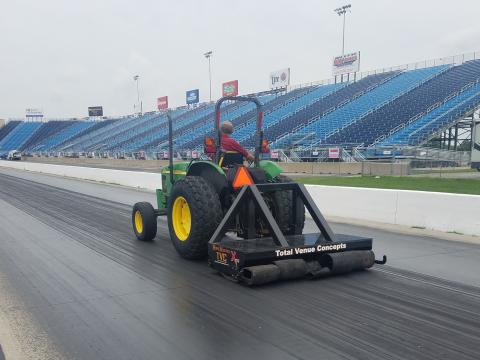
Proper track preparation often requires costly labor, but this static drag from Total Venue Concepts, which can easily lay rubber for weekly bracket events, makes the job easier and less expensive.
Managing your track’s “primary revenue generator” involves carefully choosing which equipment can effectively accomplish the task at hand.
“A good surface is the primary revenue generator of any motorsports facility,” said Kurt Johnson of Total Venue Concepts, Petersburg, Indiana. “Concessions, apparel, parking—that all relies on the piece of concrete and asphalt at the center of the facility that the race cars go down.” Keeping that in mind can give a track owner or operator some needed perspective on what can be “not inexpensive” track maintenance costs, Johnson said.
But, he noted, not every track requires the same level of maintenance.
“My company is usually called in by a track that wants to set records,” he explained. “If you want to set records, you should own a [tire drag] rotator, which my company sells for $35,000. But if you’re a week-in, week-out bracket track, a rotator is a waste of money. For weekly events, you can have just as good of a surface with a $5,000 static drag. Having the right tools for the right job is important when you’re watching cash flow. Instead of buying every cool piece in my inventory, have the key components you need to start with, then use the rest of your capital in other places.”
To Johnson, those key components start with a quality tractor “with a warranty, which can save thousands of dollars down the road. A tractor can be expensive to fix, and a warranty is money well spent.” Next is a “good quality static drag to put rubber onto the race track,” followed by “a good torch and rubber scraping device. Scraping the old rubber off the track is just as important as putting new rubber on.”
Scraping manually eliminates the up-front cost of buying a scraping machine. But “scraping is a labor-intensive process,” Johnson pointed out. “It’s hot, it’s physical, it sucks. Nobody likes to do it.” Looking to “build a better mousetrap,” Johnson put together TVC’s Zero Turn Track Scraper that can “scrape a quarter-mile race track with two guys in two days, and with almost no effort from either of the two people. It will still use about the same amount of propane, and you have some initial investment, but you don’t have the employee labor costs and employee toil.”
“Scraping the old rubber off the track is just as important as putting new rubber on,” observed our source from Total Venue Concepts, whose Skid Steer rubber scraper pictured here features twin 100 lb. cylinder mounts and adjustable blade angle for faster operation.
Johnson recommends a regular scraping interval: “The first 60 feet, from the burnout box to the 60-foot mark, needs to be scraped every week. After the first 60 feet, scrape 100 feet of the race track. Next week, after doing the first 60 feet again, start where you left down-track and do another 100 feet. In a matter of 13 weeks [for a quarter-mile], you’ve scraped the entire track. Then start the process over again.”
The final key component is a sprayer to apply traction compound. Whether it’s professionally built or a homemade rig, Johnson believes in “maximum effectiveness with the least amount of effort.” To that end, he recommends sprayers “that are really wide, so all you have to do is one or one-and-a-half laps” to cover the track. “Time is money. The less time you have employees working, the more time you can be racing.”
Plus, if the sprayer is too narrow, requiring more laps to cover the full track, “by the time you’re done with the outside the inside’s not near as good.”
In fact, Johnson’s goal is “to have consistency throughout the day, a surface that’s just as good from the moment we put the first car on it to when the last car leaves that night.” He can also deliver surface consistency from track to track, a valuable asset for racing series. In March he explained, “We just did the NMCA race in Bradenton, and I made that track exactly the same as I will in Atlanta, which is where we’re going next in the series. I want tuners to have the same surface at the tracks, so I repeat the same process for preparing the track.”
That process involves “a minimum of three hours before a race working on the track,” Johnson said, “and many times I’ll spend a half-day before, making sure the rubber is applied. Not including scraping, just dragging it and rotating it, using the static drag and the rotator together, and spraying it.”
Johnson said he’s seen “a lot of tracks that drag the track for 15 minutes, spray it and go race. If you want a good quality, consistent surface, that’s not enough. You’re going to get sporadic and inconsistent results when you do that.”
Proper track prep “takes quite a bit of labor, which is money out of the track operator’s pocket,” Johnson noted. “But if you look at any of the top-10 tracks in the country, they have a team that wants to see the track succeed. A track’s biggest asset is a good employee team that works together with a common drive to have as good and consistent a track surface as they can. That becomes their reputation, and the reputation of the track.”
MagnaFlow—the Southern California-based automotive aftermarket parts manufacturer specializing in performance and OE replacement exhaust and emission systems—has announced the hire of Cary Redman as the director of retail sales.
In his new role, Redman’s focus will be on strengthening relationships with major retailers for the MagnaFlow and BRExhaust brands. He will lead the retail sales and sales management team to define and coordinate goals, optimize regional coverage, and execute the annual sales plan.
“The key part [of my position] will be growing and expanding the brand. We are growing leaps and bounds, and I want to make sure that I continue to keep that flowing and going,” Redman said. “I still have my performance roots and I always want to go faster and harder, so I’m looking forward to getting our high-quality parts available to consumers that walk into any retail parts stores.”
Before joining MagnaFlow, Redman had served as vice president at Edelbrock, where he oversaw brand management activities along with the conceptualization and implementation of market segment strategies. Prior, he spent nearly 15 years in sales management with Prestolite Performance and Holley Performance, with a focus on product marketing, account acquisition and maintenance, and relationships with retailers at both a national and regional level.
Redman reports to MagnaFlow Senior Vice President of Sales Kevin German.
“We are looking to Cary to deliver on MagnaFlow’s mission of providing our customers with the highest quality exhaust experience from start to finish,” German said.
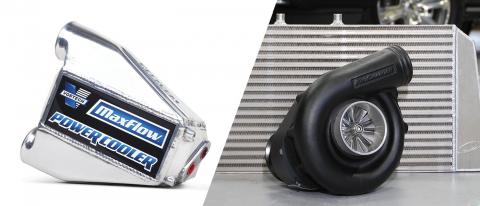
Proper charge temperature cooling plays a crucial role in today’s high-horsepower forced induction engines. As racers seek out ways to squeeze every last ounce of performance potential from their combinations, we’re taking a look at how these different intercooler designs can affect the end result, and where each one does its best work.
AIR-TO-AIR INTERCOOLER ADVOCATE:
ERIK RADZINS,
PROCHARGER SUPERCHARGERS
–
Any time you compress something, you’re making it hotter, so adding boost to an engine will increase the ambient temperature of the air coming in by, say, 10 degrees per pound of boost or 20 degrees per pound of boost—it just depends on what you’re doing. The high compression ratios of most modern engines results in air inside the cylinder that’s hot to begin with, and you don’t want a pre-ignition condition because you decided to stuff an extra 250 degrees worth of air in there. So the name of the game is to get your charge temperature back down to ambient air temperatures.
I like to keep things simple, and that’s why using an air-to-air intercooler to accomplish this makes a lot of sense. There are no moving parts, there are no relays, no wires, no pumps, and no expansion tanks. With an air-to-air intercooler it’s a bit of a balancing act between how much cooling it can provide and how much flow it allows for—if it’s too restrictive, you see too much of a pressure drop. So there has to be adequate airflow for the intercooler, and you have to have enough space to fit it. Thankfully, the engines in most modern cars make a lot of power right out of the box, so the OEMs usually provide you with both of those.
By contrast, with an air-to-water system you’ve got an intercooler mounted somewhere, an expansion tank full of water, and that water goes through that intercooler core into a heat exchanger. These systems work well if they’re sized correctly, but a very effective air-to-water setup is an expensive proposition, and the installation is far more complex. You’ve got to cut all the lines, do the wiring, bleed the system, and so on. And when it comes to the parts involved, the relays, pumps, and electrical items are all wear items. Eventually they’re going to fail, and you just have to hope your foot isn’t to the floor while you’re going down the drag strip when that day comes.
Another thing to consider is that a lot of the cars that are making big power these days are running on E85, and that’s another advantage for air-to-air systems. E85 doesn’t really care if you’ve raised the charge temperature up to 150 degrees—or even 200 degrees—because its flash point is so high compared to gas. And when those guys go really hardcore, they typically ditch the intercooler altogether and just switch to methanol. Because of that, air-to-water intercooler designs are kind of fading away outside of specific use cases like positive-displacement superchargers.
It’s also worth noting that the temperatures are very consistent with an air-to-air intercooler. For the road race guys, it means that the air temps remain at the same level on lap five and lap 10 as they were on lap one. An air-to-air intercooler doesn’t really heat soak—every time you let off the gas, it cools back down. So, at the end of the day, it really comes down to bang for the buck, ease of installation, and repeatability.
AIR-TO-WATER INTERCOOLER ADVOCATE:
BRIAN ELLIS,
VORTECH ENGINEERING
–
Air-to-water intercooler systems can be more expensive than air-to-air systems, but they’re also more effective.
Water has roughly 13 times the heat dissipating capacity of air. Look at it this way: If you had a hot frying pan that you needed to cool down quickly, would you hold it in front of a fan, or would you dunk it in a sink full of water? And because of that, a properly sized air-to-water system is always going to be more efficient and less affected by ambient air temperature.
Some sanctioning bodies mandate the use of air-to-air intercoolers for certain classes, but the racing community already knows that air-to-water is where it’s at. With an air-to-air system, the speed you’re going and the temperature outside directly affects its ability to work. That’s not the case with an air-to-water system, and you also have the ability to super-cool and things like that. You can load ice into your reservoir so the fluid is cooler to start out with, and that provides even more capability to lower charge temperatures.
Sizing is very important with an air-to-water system, though. You’re not only sizing the cooler core itself, you’re also sizing the heat exchanger and the flow capability of the fluid pump so that the fluid stays in the heat exchanger for the right amount of time—if it flows through too fast, it won’t release the temperature back out as effectively. And if it flows too slowly, it spends too much time in the cooler core and doesn’t work as efficiently. There’s definitely some science involved in getting it right, but if you do your homework it’s going to work better than an air-to-air system all of the time, no matter what.
There’s also typically less of a pressure drop through the core in air-to-water intercooler designs than there is with an air-to-air setup. For example, in testing that we did with a late-model Mustang, it showed that at 10 PSI you’d lose .25 PSI through that core with an air-to-water system. With a properly sized air-to-air intercooler, that same system loses 3 to 4 PSI because there’s a longer run of ducting and more bends, and the intercooler core itself also has to be larger because you have to fill that volume up with air.
While the amount of CFM running through the system is the same, you’re losing manifold pressure as a result, and that means less potential for power. Of course, you can add more boost to make up for that, but that generates more heat in turn, and it becomes a slippery slope very quickly.
Due to logistical challenges resulting from the ongoing pandemic, NASCAR has shifted the second race in the Camping World Truck Series playoffs. Originally scheduled to take place in Ontario, Canada, at Canadian Tire Motorsport Park, the Truck Series will now visit Darlington Raceway.
The race will be the first of a Sunday playoffs doubleheader at Darlington and will begin at its originally scheduled time (Sunday, September 5, at 1:30 p.m. ET, live on FS1). The NASCAR Cup Series playoffs will kick off its 10-week playoff run later that evening (6 p.m. ET, live on NBCSN).
The NASCAR Xfinity Series will open a trio of races at “The Lady In Black” on Labor Day Weekend when cars hit the track on Saturday, September 4 at 3:30 p.m. ET, live on NBCSN, MRN, and SiriusXM NASCAR Radio.
The Camping World Truck Series playoffs get underway at World Wide Technology Raceway on Friday, August 20, at 9 p.m. ET, live on FS1, MRN, and SiriusXM NASCAR Radio.
 MEMBERSHIP LOGIN