Ask The Experts: Roll Cages

Submitted by jeffreyc on Mon, 06/14/2021 - 16:24
Roll Cages

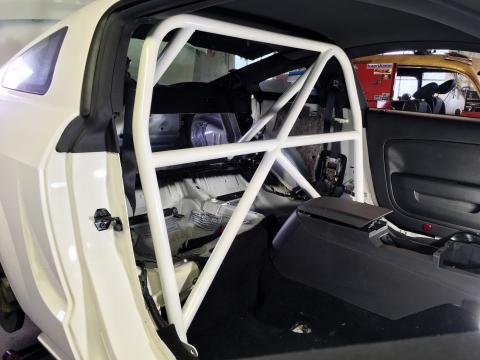
When choosing roll bars and cages, it’s important to consider type of racing, naturally, as well as sanctioning body standards. Pictured here is a 4-Point Street–Track Day Bar with optional Main Hoop Diagonal by S&W Race Cars.

Consider material, application, and whether a kit or custom solution is optimal when choosing and prepping this critical piece of safety equipment.

While the type of racing—and/or the sanctioning body and its rulebook—will dictate the configuration and construction of a roll cage, there are variables to consider when fabricating this important piece of safety equipment. 

How Cages Differ

Thor Schroeder of Competition Engineering in Guilford, Connecticut, provided an apples-to-apples comparison of how cage requirements vary depending on racing type. His examples were for a hypothetical 1984 Camaro that was being turned into a race car. 

For drag racing, the type of cage varies depending on the car’s ET. “Based on NHRA Sportsman rules, the Camaro would be required to have a roll bar if its quarter-mile ET was between 11.00 and 11.49 seconds,” he said. “If it ran 10.99 or quicker, or exceeded 135 mph, it would need a roll cage.”

For circle track racing, “the Camaro would be required to have a full roll cage that is tight to the roof, and, depending on the rules, could be tight to the door pillars on both sides or just the driver’s side,” Schroeder explained. Additional supports “could go through the firewall into the front suspension strut towers and integrate into the subframe connectors that go from the rear subframe to the front subframe.” Driver and passenger door bars “extend into the area taken up by the door glass and door panels.”

A full cage for road racing the Camaro would be similar: “Tight to the roof and door pillars on both sides, could go through the firewall into the front suspension strut towers, integrate into the subframe connectors that go from the rear subframe to the front subframe, and could require driver and passenger door bars that extend into the area taken up by the door glass and door panels. Open track or autocross events could require a road-race roll cage or just a roll bar that is mounted in four places,” he added.

experts2
A roll cage kit is sometimes seen as a simpler option, but these products aren’t always turnkey. The tubes in a kit, like this one from Speedway Motors,  are typically pre-cut and notched, but some extra notching and trimming may be needed to suit a particular car’s design.

Racers who have any questions about cage requirements should turn to their sanctioning body’s rulebook, advised Dave Wallace of Speedway Motors, Lincoln, Nebraska. “Almost any sanctioning body, whether it’s World of Outlaws, ASCS sprint car racing, any of the Late Models, even local tracks, will give guidance on how they feel cages should be built,” he said.

Wallace also recommended checking out the cages in the cars of local winners and talking to the racers or the cars’ builders. “Any time you look at the top five or 10 people in any form of racing, they’re doing things right. Or they did it wrong and have already been through the pitfalls. Doing research before you start the project might save you a lot of time, money, and headaches.”

Cage Materials

The materials used for cage construction fall into two basic types: mild steel and chromoly. Within the mild steel family are EWS (electric welded seam), HREW (hot rolled electric welded), and DOM (drawn over mandrel) tubing. All are welded tubes; DOM is sometimes referred to as seamless because the seam is almost invisible after the mandrel drawing process. The DOM process gives the tube higher yield and tensile strength than EWS or HREW tube. 

Chromoly, made from steel that contains chromium and molybdenum, is often considered lighter than mild steel. But according to information from S&W Performance in Spring City, Pennsylvania, “chromoly steel and mild steel weigh exactly the same if the tube has the same wall thickness.” Chromoly cages are generally lighter because of “the higher strength of moly tubing, which allows the use of a thinner wall thickness.” S&W makes its roll bars and cages from 0.134-inch-wall mild steel and 0.083-inch-wall chromoly. “Since the wall thickness can be 38% thinner with no sacrifice in strength, it is therefore 38% lighter. In simpler terms, a roll bar that weighs 100 pounds in mild steel will weigh 62 pounds in chromoly.”

experts3
Several factors must be considered when constructing a roll cage, including rulebook requirements, the type of metal used, whether the cage is custom or available as a kit, and the fabricating and welding skills of the person installing the cage. Pictured above is a 12-point cage from Competition Engineering.

From a price standpoint, “HREW is going to be the cheapest per foot,” said Wallace, with chromoly the most expensive of the three. “Any time your tensile and yield go up, your price goes up.”

Also, chromoly must be TIG welded, whereas mild steel can be MIG welded. That makes the mild steel materials easier to weld. Plus, “there’s greater emphasis on fit-up with chromoly,” said Wallace. “The tubes have to have the least amount of gap where they fit because you’re TIG welding. The root of the weld is smaller compared to MIG welding.”

Kit or Custom?

All three of our source companies offer roll bar kits for racers or shops wanting to build their own. S&W, for example, lists more than 2,800 roll bars and cages in its catalog. 

The kit approach is certainly more cost-effective than having a fabricator custom-build a cage, “and they’re a great option if a roll cage builder isn’t local,” said Schroeder. 

Roll cage kits aren’t always turnkey, however. The tubes in a kit are pre-cut and notched, but some extra notching and trimming may be needed to suit a particular car’s design. And the person attempting the job “needs to be honest with themselves about how good their fabrication and welding skills are,” said Wallace. “Can they do the job up to the safety level it needs to be? Hopefully, you won’t have to test the cage, and maybe you never will the whole time you race. But the one time you wreck, if the cage is sub-par, you’re going to wish it were built to a higher standard.”

SOURCES
–
Competition Engineering
moroso.com/c-e-shop-browse

S&W Performance Group
swracecars.com

Speedway Motors
speedwaymotors.com

July 2021
By
Drew Hardin

Race Team Confidential: No Money Motorsports—Jim Tramontano, Flemington, New Jersey

Submitted by jeffreyc on Mon, 06/14/2021 - 15:01
Race Team Confidential


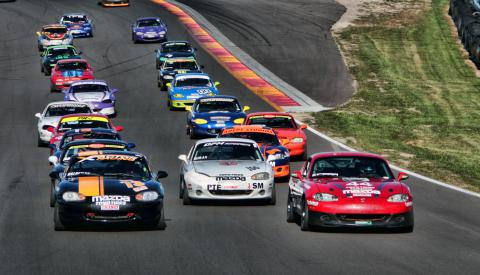
This Spec Miata competitor has discovered that it really is possible to compete on some of America’s most iconic race tracks while closely following something unheard of in motorsports—a budget.

My team is No Money Motorsports, and I compete in Spec Miata, running on tracks like Lime Rock Park, Watkins Glen, and New Jersey Motorsports Park with NASA’s Northeast region. I focus on getting out on the track and remaining competitive but doing it while sticking to a very tight budget.

My team is really just a solo effort, but the Spec Miata group is super friendly off the track and we often work together to help keep each other’s stuff together and tuned if needed. It’s no fun beating someone just because they couldn’t get their car running in time. We all work together to make sure everybody is ready to battle it out on the track.

The team is not only my hobby, but also a test bed for the techniques, strategies, parts, and gear featured on my blog (NoMoneyMotorsports.com). While Spec Miata has a reputation of requiring $50,000 cars, a trailer full of tires, and a team of engineers, I am running a regional effort by myself with a cheap car, borrowed truck, and open deck trailer.

Most of this past offseason was focused on standard preventative maintenance like repacking hubs and greasing suspension components. My home-built alignment jig got a workout during the offseason as we were shooting for a different alignment strategy with some completely new alignment specs.

Race Team Confidential 2

For the 2021 season, I am finally able to run on a fresh set of tires. Because of the many uncertainties of 2020, I ended up running the entire season on various old scrub tires. The Toyo RR is an impressive tire, capable of quick lap times well into the double-digit heat cycles, but they become slightly less forgiving and harder to drive as they age. When most of the field is separated by barely a second, every bit of confidence and consistency makes a big difference.

I usually make a set of stickers last a whole season. Two sets would really be ideal, but on a budget, one does just fine—especially with two visits to Watkins Glen this year where more scrubbed rubber actually seems to go quicker. Tire life is where Toyo RR shines. I usually stop counting past 10 or so, but some of my practice sets see upwards of 30 heat cycles before they cord or are otherwise retired.

Also for 2021, I am finally embracing using data to improve my driving. Having been convinced that the benefits of data can make a real change in my driving, I picked up an AiM Solo 2 and hope to see if it can help me pick up any time left on the table. Initial impressions from the Solo’s inaugural event are good; sector splits are a very nice feature and certainly help with some on-the-fly decision making.

Round 1 at Watkins Glen was a blast. Traditionally, our NASA region of Spec Miata would have about 10 cars in our race. But, a few of us have been putting in some serious work to try and grow the class. Between fostering fresh rookies to join and encouraging crossover from other clubs, we had the region’s biggest Spec Miata race with 23 starters. Racing was ultra-competitive as always, (mostly) impressively clean, and with the usual great battles all around that make Spec Miata such a great racing class. The extra competition in the region is really encouraging. 

I did pretty well in Round 1—a strong top-10 finish on Saturday and a mid-pack showing on Sunday. The car itself ran great. Much of the beauty of Spec Miata is that these cars are famously easy on themselves no matter how hard you drive them. Some of the top drivers in the class are certainly going over every nut and bolt between races, but I usually just crawl under the car to check if the alignment bolts moved, make sure the hubs aren’t cracked and bearings are still tight. And the car gets an oil change after every two events.

At Watkins Glen, an old alignment bolt slipped at some point in the event, so aside from replacing that and resetting my standard alignment, the car is an oil change away from being ready for the next event at New Jersey Motorsports Park (at press time).

I love racing on all of our region tracks for various reasons, but I think I enjoy racing at New Jersey Motorsports Park the most. While it lacks the iconic elevation changes and flow of Watkins Glen and Lime Rock Park, both NJMP’s Lightning and Thunderbolt tracks are designed with great racing in mind. There are a lot of places where you can really push the car with relatively minimal risk, which makes for more exciting, less stressful, and more enjoyable racing.

July 2021

PRI Membership: Forging Effective Government Relations

Submitted by jeffreyc on Mon, 06/14/2021 - 13:45
Membership


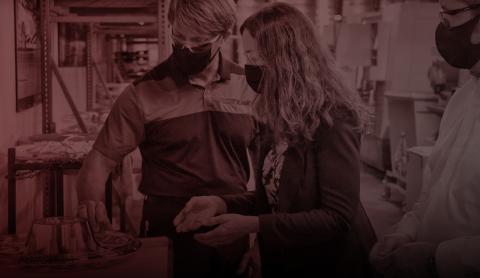
PRI Founding Member Forgeline Motorsports welcomes State Rep. Andrea White to its facility to discuss challenges, opportunities, and economic benefits to the region.

PRI’s Government Affairs officer Christian Robinson wryly noted, “For PRI members who run businesses, it’s always better to have good relationships with your lawmakers before you need them.”

This truth is especially important today. We in the racing business must often face off against overreaches in government regulation while at the same time working to partner with legislators—local, state, and federal—to foster economic growth in their districts. Good relationships help facilitate good outcomes. 

The team at Forgeline Motorsports—a PRI Founding Member—recognizes the importance of having allies in government. Company owners David and Steven Schardt recently welcomed their State House Representative Andrea White to their Dayton, Ohio, factory. 

White is a first-term rep for Ohio’s District 41 that includes the area around Forgeline’s factory in Dayton, and she saw the value in visiting the facility to better understand the company’s current challenges, as well as its economic benefits to the region. Forgeline has been in business for more than 25 years making aftermarket and OEM alloy performance racing wheels for cars and light trucks. This past year the company has seen a significant increase in national and international sales.

White’s visit deepened her understanding of the Dayton area’s offerings in the global automotive, military, and aerospace industries. These economic sectors are key for the region’s long-term success, but there are challenges that were discussed as she toured the facility. “The high level of quality, customization, and precision that goes into every wheel built by Forgeline’s workforce was evident at every turn during my visit. Ohio’s workforce development and support are key factors in helping our specialized manufacturers like Forgeline continue to meet the demands of their customers while balancing today’s business challenges. I appreciated the opportunity to hear more about industry needs during my time at Forgeline,” White told PRI. 

Mary Miller of the University of Dayton Research Institute (UDRI) accompanied Representative White to further UDRI’s long-standing relationship with Forgeline. Miller commented, “It was a great visit. It is important for our representatives to take an interest in local businesses.”

Forgeline, like many companies with complex machining and manufacturing operations, is facing an acute shortage of qualified CNC operators and applicants skilled in Computer Aided Design. Good paying jobs are unfilled due to the shortage. “Dayton, being an engineering and manufacturing hub—filling these skilled positions of CNC operators as we continue expanding has proven difficult,” noted Forgeline President David Schardt.

The group also discussed the burden of healthcare costs, and the practical issues related to out-of-pocket deductible expenses employees face even after they’re covered by Forgeline’s plan. 

The success of Representative White’s visit encouraged the Forgeline team to have Ohio Congressman Mike Turner visit their facility. If all goes as planned, they’ll work to earn Turner’s support for the RPM Act, a bill that protects Americans’ right to convert street vehicles into dedicated race cars, as well as the motorsports parts industry’s ability to sell products that allow racers to compete. 

PRI’s Robinson works in Washington, DC, to help our members like Forgeline get their voices heard. The PRI team in DC can also be your company’s starting point to access lawmakers and regulators. Robinson explained, “Our team can help your business get on legislative calendars, arrange official visits, develop talking points—these are critical, and you want them fully developed beforehand—all to help those in government understand the importance of the racing industry, and the economic impact of your business in your community.” 

Washington needs to know the positive economic impact of our racing community, and they need to know about the unreasonable burdens and unintended consequences certain regulations and laws cause for our industry. Meeting one-on-one is a great way to make this happen by building constructive relationships with those in power. 

Robinson concluded, “When legislators get to meet their constituents, a light bulb really comes on. Legislators remember these interactions, and it makes a difference when laws or regulations are being drafted. These visits are a great way for our industry to be heard.”

Front-runners: PART TWO

Following is the second installment of our PRI Founding Member Front-Runners series. PRI exists because we—together—are strongest when we’re united. The companies featured in this series illustrate the interwoven complexity of the racing industry. For example, this edition features a race track, an insurance provider, and two major performance parts makers. One can imagine a scenario where competitors and fans attend an event, and if any one of these categories of business is missing, the green flag can’t drop. 

By taking on Founding Member status, these companies are sending a clear message that they stand for our industry’s today and tomorrow. And they’re showing they stand with you, with the knowledge that our industry’s collective political voice and economic power carries more punch than any one company’s attempt to navigate today’s legislative and economic challenges.

PRI Founding Member status remains available for a limited time for $25,000 (with a payment option of $2,500 per year over 10 years). In other words, for the cost of a modest Google display ad campaign, your company could position itself at the forefront of the racing industry. And Founding Member status also comes with practical bottom-line benefits, including invitations to officially organized networking events with other industry leaders. The first official Founding Member’s event will be held at this year’s PRI Trade Show in Indianapolis in December. 

As you read more from your own industry’s leaders, consider the membership option that’s right for you or your company. Your involvement with PRI allows us to continue to build, promote, and protect your livelihood, as well as the prosperity of the entire racing and aftermarket community.

membership2a

As Ernest Hemingway famously quipped, “There are only three sports: bullfighting, motor racing, and mountaineering; all the rest are merely games.” This quote notes the inherent risk we take on, for example, as drivers, crew members, and track operators. Trusting luck is risky, and while we all roll the dice every so often, it’s best to (literally) have insurance, and that’s where Sports Insurance Specialists, LLC (SIS) of Fort Wayne, Indiana, comes in. 

Insurance is not considered a favorite subject, but the reality is that we all recognize the need for it in our personal and professional lives. In the business of motorsports, it’s important to partner with an insurance provider that understands the space. 

membership2

SIS’s heritage is rooted in motorsports, and even today that passion remains the driving force behind the team’s growth and technology-fueled innovation to help sanctioning bodies, track staff, drivers, and crews understand the significance of having the right kind and right amount of coverage. As a safety net, insurance is only as strong as its provider and policy to capably support the insured. SIS approaches this task daily to help educate and ensure every participant—every person—is covered in case the unexpected happens. Lucky streaks don’t last forever.

Together, SIS is here to help ensure that the motorsports community meets challenges head-on so that future generations have the opportunity to share in our passion for all things motorsports.

membership3a

When racing’s top teams go looking for a partner, who’s on the short list for cranks, connecting rods, camshafts, and other key engine components? For the Detroit Three, as well as numerous imports, Mullins Performance, Pat Musi Racing Engines, Kalitta Motorsports, and many others, the choice is Callies Performance Products, Inc. 

Working from their headquarters in Fostoria, Ohio, Callies pushes the envelope of technology and manufacturing with state-of-the-art design and production techniques. You’ve likely seen the cars running their products at IMSA events, at dirt tracks, and on drag strips. Their catalog includes hundreds of part numbers that suit the needs of racers around the world.

membership3b

Callies Performance Products opened in 1989 and forged a longtime presence in the PRI community. The move to become a Founding Member was the company’s way to formalize its status and provide material support to counterbalance government overreach that restricts markets and drives up prices. The company took this membership step to invest in the future of racing by making the community stronger.

membership4a

Vado Speedway Park is strategically located between Las Cruces, New Mexico, and El Paso, Texas. This state-of-the-art dirt racing facility serves both markets as well as Juarez, Mexico, to the south. It is a testament to how much track President and CEO Royal Jones loves racing and getting people into the sport.

Jones told PRI, “I thought if the wife is comfortable at the track, it’s easier for the husband and kids to get to go more often. And showing other premium sports programming on property gives fans a spectacular experience.” Vado is not your father’s dirt track, and that’s a good thing for racing.

membership4b

Jones has a rich history in dirt racing and carries many long-standing partnerships with other local racers and regional government agencies. These relationships helped Jones open the new facility that boasts 16 high-end trackside suites, pristine bathrooms, and big-screen TVs broadcasting a variety of premium sports programming in the concession areas. 

The team at PRI helped Vado Speedway Park press New Mexico’s governor to allow the track to reopen in the waning days of the pandemic. PRI also helped those in power recognize the economic impact the speedway and racers have on the economies of two important cities. As a PRI Founding Member, Jones is happy to be part of the network that supports the sport he cares so much about.

membership5a

It’s 1967, the year of the very first SEMA Show. A few dozen booths are situated in the concourse of LA’s Dodger Stadium; all forming the foundation for the racing industry. Vic Edelbrock was there. 

More than half a century later, Edelbrock Group remains a key member of the performance aftermarket, and the PRI family. Edelbrock Group was created last year with the merger of two performance aftermarket legends, Edelbrock and COMP Performance Group. The companies represent nearly 130 years of business experience that has provided some of the world’s best parts to countless racers. 

membership5b

Headquartered in Olive Branch, Mississippi, Edelbrock Group includes five power brands and several subsidiary brands with manufacturing facilities stretching across the United States. Thanks to this combination of resources and some of the world’s most dedicated and passionate people, brands like Edelbrock, COMP Cams, FAST (Fuel Air Spark Technology), TCI, and Russell Performance continue to dominate the automotive aftermarket with exceptional valvetrain, drivetrain, superchargers, electronic fuel injection, intake manifolds, carburetors, cylinder heads, and specialty tools products.

PRI Founding Member status demonstrates that Edelbrock Group is not resting on its legacy, but is in fact ready to fight for the motorsports community.

July 2021
By
PRI Staff

THE RETURN OF THE KEITH BLACK RACING ENGINES HEMI & WEDGE

Submitted by sonnyy on Mon, 06/14/2021 - 13:18


Shortly after the introduction of the KB HEMI engine block in the early ‘70s, it went on to hold every national record in Top Fuel between 1975 and 1984. It continues to set records today.


Modern Casting, an Enhanced Block, and Myths About Cast Aluminum

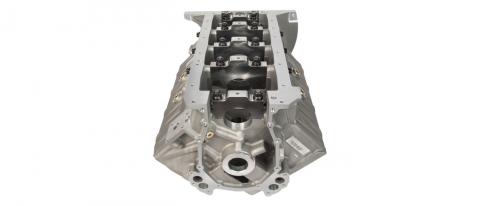
Keith Black Racing Engines has completely retooled and now manufactures the only low-pressure-cast aluminum HEMI and Wedge block available in the market.

All Keith Black HEMI and Wedge engine blocks start as the same casting, and the final configuration is decided by precision-machining to a finished HEMI or Wedge, Street, or Race block part number.

A356 T6 is the best overall performing aluminum and has the best properties for managing heat transfer and load, with 300% greater thermal conductivity than cast iron. While billet aluminum engine blocks may be de rigueur, they are expensive. They often rely on welded water jackets and have yet to prove themselves in street applications where consistent cooling system operation is essential across a great number of heat cycles.

Rob Smith from Wolverine Bronze in Roseville, Michigan explains, “low-pressure casting creates a superior microstructure leading to improved mechanical and thermodynamic properties, higher densification and superior grain structure. With modern technology, we can hold extremely tight tolerances that all but eliminates core shift,” a problem that has plagued engine block manufacturers in the HEMI and Wedge for decades.

KB Hemi blocks also feature a revised steam hole pattern. The steam holes are relocated outboard, farther away from the cylinder sleeves. This eliminates common head gasket water leaks that occur with other designs and provides for extra cooling around exhaust ports and reduces air pockets. Cometic has worked with Keith Black Racing Engines to design KB-specific head gaskets.

Overall aluminum is lighter and runs cooler.

Toughest Mains in the Business

Cap walk is often a problem on RB/HEMI blocks when pushed to the limit, leading to oil pressure loss and catastrophic engine failure.

In the HEMI world, it’s well understood and accepted that the KB block has the toughest bottom-end in the business. Keith Black Racing Engines has now taken it a level further by upgrading the cap material from ductile iron to 4340 billet steel.

  • All KB HEMI and Wedge blocks use custom-designed and manufactured main studs from ARP. KB studs are 5/8 UNC-9/16 UNF bottoming main studs with a built-in cap register, and double ½ in. ARP cross bolts on main caps 2, 3, and 4 (6 fasteners per cap) for massive clamp-load (main studs are torqued to 120 lb-ft and cross-bolts are torqued to 80 lb-ft).


  • KB mains have rolled, C3B specification internal threads for main cap studs that are blind tapped and matched to the studs so as to spread the tension across the whole thread and not just the block surface.
  • Locating of the cap also critical and this is where the KB design really excels. The most effective method of cap location is the surface-to-surface contact area between the cap and the block and the KB has a massive contact pattern, that when combined with the built-in main stud locating dowel and high clamp load, ensures the mains will handle any amount of abuse thrown at them.Keith Black renderings


Major Improvements to Oiling and Oil System Control

With major advancements in oil-system design, Keith Black Racing Engines took the opportunity to enhance and add a number of features to the block. Tim Banning reached out to Chuck Millen from Best Machine Racing Engines in Farmington Hills, Michigan. “Chuck suggested we add provisions for externally direct-fed oil supply to main oil galley—so performance oil-system scenarios like dry sump systems and oil accumulators could be easily added. No other engine blocks in the market were offering this type of provision, always requiring expensive machining and customization.


engine photos


What a lot of people don’t know is that it is not uncommon for other aftermarket HEMI blocks to be starved of oil supply. “We’ve had to shut down engines on the dyno with sudden oil pressure loss because the valve covers were full of the oil that should be in the pan,” said Tim Banning of FHO. Tim goes on to say “The KB block has massive oil drain returns from the cylinder heads, and we enlarged them in the latest design revisions. It is simply not possible to do this with the other blocks—you just can’t drill the drain hole larger in the block for obvious reasons.”

Oil return is just one part of the equation, with the improvements engine builders now have a multitude of options to fine-tune oil supply to both lifters and valvetrain. All blocks come with lifter oiling machined in. Builders can fine-tune oil supply to the rocker system through a combination of oil-restrictors in the deck-to-head oil supply, direct-feed from lifter oil-gallies, lifter bore bushings, and restrictors. “All the KB blocks we build run terrific oil pressure; way, way higher than any other block we have used,” said Tim Banning at FHO.

Keeping Extreme Cylinder Pressure In

The secret to making power is keeping cylinder pressure in and managing heat. The KB block started its life as a Top Fuel engine bock, so it’s easy to understand why the KB block well and truly has a head start in this area, but there is way more to this story.

  • KB blocks utilize head studs designed for maximum clamp load, and service life: 1.7 x thread depth and engagement in KB blocks head studs when compared to other aftermarket aluminum blocks (which generally use OEM specification hardware designed for cast-iron).


  • KB internal head stud threads are roll-formed to C3B specification and blind tapped for use with bottoming studs. Bottoming studs spread the clamping load across the full thread. Threads are also rolled deeper into the block to avoid distorting the upper cylinder. The result is a longer service life and no more pulled head-stud threads which is common with other aftermarket aluminum blocks.


  • KB Hemi and Wedge engine blocks are the only aftermarket block to use Darton Sleeves. Each Darton Sleeve has the DNA earned from decades of development resulting in proprietary chemistry and metallurgy that enabled Darton to increase the service life of sleeves in Top Fuel from one (1) set per pass to one (1) set every three to four (3–4) passes with rapidly increasing power levels approaching 11,000 hp. Today, Darton is the exclusive supplier of its sleeves to all current Top Fuel engine block manufacturers.
  • Sleeve material chemistry and design go hand-in-hand with block design. All Darton Sleeves are made from centrifugally cast ductile iron, which has vastly superior properties to cast iron, such as malleability (crack resistance), toughness, and a hard surface (wear-resistant).
  • Dave Clinton (President of Darton Sleeves) explains: “the top third of the cylinder area does all the work, it suffers the most heat. This is why we work hand-in-hand with block designers and manufacturers to accommodate and realize the full performance advantage of Darton sleeves and improve cooling in the block. One area not addressed by manufacturers is managing the cooling of the siamese area between the cylinders, where it is important to focus on proper coolant/concentrate on water flow.”


Modern Camshaft and Valvetrain Options

As camshaft technology has advanced things have fundamentally changed. With very large diameter cam cores for rigidity and improved ramp profiles, ultra-high lift, long duration roller cam profiles, and extremely high spring pressures now the norm. Keith Black Racing Engines has added significant block material around the cam journal bulkheads, now allowing its Race HEMI blocks to use 60mm roller cam bearings (65mm babbitt bearings), and its Race Wedge blocks are machined for 55mm roller cam bearings (60mm babbitt bearings). All of its Race blocks have a 0.250 in. raised cam location for improved valvetrain geometry and performance, as well as for additional rotating assembly clearance for large stroke combinations—Keith Black Racing Engines has customers who have built KB Race HEMI blocks at 650+ cubic inches (CI) in final displacement.

Keith Black engine


All Keith Black Racing Engines street blocks retain OEM cam specifications on camshaft location, journal size, lifter spacing, lifter diameter, and lifter angle. Whether a customer orders a street or race block, the lifter bores are finished to OEM specification—allowing builders to install their own lifter bushing and lifter combinations (or not), and tune the oil supply to suit.

What Blocks are Available and How Do I Get My Hands On One?

Visit the Keith Black Racing Engines website at keithblack.com to see the full lineup of its KB HEMI and Wedge engine blocks, download technical information, product brochures, and its Assembly Best-Practices guide. Search its dealer network to learn how you can get your hands on one, as well as read and watch original content on KB® All Stars customers' cars and builds.

Under new ownership since 2017, Keith Black Racing Engines® has been quietly running at full speed behind the scenes. “Honestly, I wouldn’t be surprised if we have delivered more HEMI engine blocks to the market than all other manufacturers combined over the last four years, and that includes completely replacing our foundry and other tooling with state-of-the-art technology and casting practices,” says Darren Beale, Keith Black Racing Engines CEO and co-owner. “We have a large product development pipeline and are looking forward to reconnecting with the industry at the PRI Show in December this year”.

6895 Oslo Circle Unit B
Buena Park, CA 90621
P: 1-714-266-0116
W: keithblack.com
E: sales@keithblack.com

11910 Calumett Street Unit B
Clearwater, FL 33765
P: 1-714-266-0116
W: keithblack.com
E: sales@keithblack.com

June 2021

All Roads Leading to Indianapolis for PRI 2021

Submitted by jeffreyc on Mon, 06/14/2021 - 13:03
PRI 2021


The motorsports industry's premier Trade Show, set for December 9–11, is back with a vengeance, fueled by "pent-up demand" and a host city that's leading the return of in-person events.

Dating back to the early 20th century—before there were bricks, when men like Louis Chevrolet were racing Sunbeams and Frontenacs—Indianapolis has been known as the motorsports capital of the world. So it’s no wonder the world’s premier event for racing professionals, the Performance Racing Industry (PRI) Trade Show, calls the Circle City home.

After a year of turmoil marked by a pandemic, industries shuttered, jobs lost, riots, a contentious national election, and more riots, the country, and more specifically the motorsports industry, is getting back to business in a big way. And Indy is leading the charge. 

“We’re excited to see Indianapolis keeping people safe as its convention business quickly returns to normal,” said PRI President Dr. Jamie Meyer. “Thanks to the city’s actions, PRI will be back this December offering the racing community a productive face-to-face experience that promises to help them build their business.”

It took months to develop following the initial spring 2020 lockdown, but using a pragmatic, focused approach, Indianapolis started holding in-person events again back in summer 2020. Our host city—working hand-in-glove with the Indiana Convention Center and local business leaders—launched a workable solution that has set the foundation for PRI’s annual celebration of everything racing. 

tradeshow2
The city of Indianapolis quickly developed safety plans that have paved the way for in-person events and set the stage for PRI’s return in 2021. Photo courtesy of Visit Indy. 

“It was a one-two punch (COVID-19 and civil unrest),” recalled Sherry Seiwert, president of Downtown Indy Inc. “…The turning point for us in having to figure out how we would put solutions in place. We brought a number of downtown stakeholders together, and it was a big undertaking. In July 2020, the city landed multiple large sports tournaments, many coming in from other states that wouldn’t permit large gatherings. These events helped the city get back on the racing line.”

News spread quickly that Indianapolis not only could, but was hosting events safely, and the bookings increased through 2020 and into ’21. The Indy Eleven soccer squad was the first professional team to return to the field, followed by the NFL’s Colts, the Indy Fuel minor league hockey team, and the NBA’s Pacers. 

Additional major event wins for the city include May’s running of the 105th Indianapolis 500 (135,000 fans) and myriad trade shows as diverse as the “Sweet & Snacks Expo,” “FDIC International,” and “Die Casting Congress & Exposition.” By the time the PRI Show floor opens to visitors in December, Indy will have already hosted an estimated 500,000 race fans and conventioneers. 

tradeshow3
Indianapolis officials have worked tirelessly to bring live trade and consumer events back to the American public. “We are looking forward to a very productive show in December,” said PRI President Dr. Jamie Meyer, “where the racing community will come together and plan the future of the business of racing.”

To further safeguard indoor gatherings, the Indiana Convention Center has spent some $7 million in health and safety upgrades, including improvements to the HVAC and air filtration systems; plus, it installed new touch-less features, and implemented a state-of-the-art deep cleaning system that regularly sanitizes high-touch areas.  

“We’ve hosted some major events already this year, including the entire NCAA Men’s Basketball tournament,” confirmed Nicole Perry, senior national sales manager for Visit Indy. “Pent-up demand for in-person events is clearly evident.”

Serving as PRI’s host city is no small task. After all, the Trade Show typically draws upwards of 1,100 exhibitors and tens of thousands of attendees from all 50 states and 70 countries. And this year, it’s clear that Indy is more than ready to oblige.

“Indianapolis has been a great partner to PRI, and we are thrilled to see their progress with bringing trade shows back to the American public,” Dr. Meyer added. “We are looking forward to a very productive show in December where the racing community will come together and plan the future of the business of racing.”

For more on the 2021 PRI Trade Show, visit pri2021.com.

Remember When—PRI show Edition

Anyone who’s been to a PRI Trade Show no doubt has a favorite memory or meaningful experience or two that stands out from the rest. As it’s been for 30-plus years, whether you’re a racer, distributor, engine builder, fabricator, manufacturer, track owner, or otherwise call the motorsports industry home, PRI stands alone—an event like no other. But don’t take our word for it…

Name: Carrie Enders, VP Marketing, RE Suspension

# of PRI Trade Shows Attended: 6

What The PRI Trade Show Means To Me: “The PRI Show is all of racing in one great location. All of our racers, our customers, our vendors—this is the one time of year we get to see everyone. It means ideas, innovations, goals, and successes.”

Favorite PRI Trade Show Memory: “I was 12 the first time I came to PRI with my dad, a NASCAR crew chief at the time. Twenty-five years later, to walk into that packed hall and see our booth, with our logo, and our products, and evidence of our years of hard work…it was amazing!”

Name: Bob Davis, Global Communications Manager, Sunnen Products Company

# of PRI Trade Shows Attended: 30

What The PRI Trade Show Means To Me: “The main purpose for attending PRI is business, but to me the best part is the friendships I have made, and being able to give back to the racing community. Through the annual Sunnen Engine Charity Sweepstakes, I have been part of a team that over the years has raised close to $1 million for various charities such as the Petty family’s Victory Junction camp for kids with serious medical issues. The opportunity to help others has meant a lot to me, and it would not have happened without the help and support of Sunnen and PRI!”

Favorite PRI Trade Show Memory: “PRI has always made sure the Show is a combination of business and fun, including racing-themed events such as go-kart races in the parking lot, the Twin 25 races at a local track, and even slot car races at the all-industry cocktail reception. But my all-time favorite was the year they had the Pit Stop Challenge during the cocktail reception. One minute I was standing there with a drink in my hand and the next minute I was changing the tires on a NASCAR race car trying to beat the other teams.”

July 2021
By
PRI Staff

CARS Tour SLM Set For Second Annual American Freedom 300

Submitted by laurap on Fri, 06/11/2021 - 17:45
CARS Super Late Model Tour logo


After a mid-season break, the CARS Super Late Model Tour will return to action for the second annual American Freedom 300, which will pay $20,000 to win at Jennerstown Speedway Complex in Jennerstown, Pennsylvania, on July 3.

The 200-lap event will mark the halfway point of the 2021 season and will be the first time the Super Late Model cars have been in action in two months after last racing on May 8 at Nashville Fairground Speedway.

Defending race winner Bubba Pollard, who is also the new owner of Senoia Raceway in Senoia, Georgia, has confirmed entry in the 2021 event. 

Fans will be in attendance at the race, which will also be broadcast via CARS Tour partners, Pit Row Media. More information on the live broadcast can be found at carstour.tv.

Tickets are available for purchase here. For more information, visit carsracingtour.com. 

June 2021

BMW M Motorsport To Return To Prototype Racing

Submitted by laurap on Fri, 06/11/2021 - 17:18
Image of the LMDh car courtesy of BMW M Motorsport
Image courtesy of BMW M Motorsport


BMW M Motorsport has announced its return to international prototype racing. It was confirmed that an LMDh car is being developed for use in the North American IMSA series, beginning with the 2023 season with visits to Daytona, Sebring, and Road Atlanta.

“In entering the LMDh class, BMW M Motorsport is fulfilling the prerequisites to challenge for overall victory at the most iconic endurance races in the world from 2023. We will be fully focused on tackling this challenge. There is a spirit of optimism here,” said Markus Flasch, CEO of BMW M GmbH.

“BMW has a successful history in prototype racing—the Le Mans victory in 1999 was unforgettable... The LMDh concept guarantees maximum cost control and offers a wide range of possible applications, including the IMSA series in North America, an extremely important market for BMW M. We are all eager to get stuck into the LMDh category with a compact and highly efficient team set-up.” 

Head of BMW M Motorsport Mike Krack will be responsible for the development, testing, and race outings of the new car. “We have a lot of work ahead of us, but the anticipation is immense,” he said.

The regulations for LMDh cars stipulate that they have both a combustion engine and an electric motor. While each manufacturer may develop their own combustion engine, the electric motor and battery, as well as the transmission, are standard parts. The chassis is also built by an external partner. The works team and the driver lineup for the two LMDh prototypes will be announced at a later date.

For more information, visit bmw-motorsport.com.

June 2021

Momentum Building For Reintroduced RPM Act

Submitted by jeffreyc on Fri, 06/11/2021 - 10:15
RPM Act

Photo courtesy of National Auto Sport Association (NASA)

The PRI/SEMA-backed Recognizing the Protection of Motorsports Act of 2021 is designed to safeguard the industry from government overreach and overregulation.

Fueled by a massive grassroots effort and bipartisan support among lawmakers, a bill critical to the future of racing is gaining momentum following its recent reintroduction in Congress.

The PRI/SEMA-backed Recognizing the Protection of Motorsports Act of 2021 (RPM Act), which was introduced in the House by US Representatives Patrick McHenry (R-NC) and Raul Ruiz (D-CA) on May 17, protects Americans’ right to convert street vehicles into dedicated race cars, as well as the motorsports parts industry’s ability to sell products that allow racers to compete. In doing so, it reverses the position of the US Environmental Protection Agency (EPA) that prohibits street car-to-race car conversions, along with the sale of parts that take a street vehicle out of compliance with broad-based emissions standards, even if that vehicle is track-only.

While the EPA points to the 50-year-old federal Clean Air Act (CAA) as the basis for its position, it was only in 2015 that officials began interpreting the law to include race car conversions. 

That interpretation has sent a chill through the aftermarket, and it now has manufacturers, distributors, and retail businesses that sell parts for converted race cars fearing recrimination from federal regulators. Even manufacturers that market parts for dedicated, purpose-built race cars are worried that if their products make it onto an outlaw street vehicle, they could be subject to prosecution. 

What’s more, just last year the EPA specifically said it was prioritizing “stopping aftermarket defeat devices for vehicles and engines” that override required emissions controls. Based on priorities of the current administration, enforcement actions are only expected to intensify. 

“This is no way to treat a sector of the American economy that employs hundreds of thousands of people, generates billions of dollars in economic activity, and serves the needs of countless enthusiasts throughout the nation,” said Daniel Ingber, PRI/SEMA Vice President of Government and Legal Affairs. “The RPM Act will provide the racing community with certainty and confidence in the face of an EPA interpretation of the Clean Air Act that threatens to devastate an American pastime and eliminate jobs in our communities. That is why Congress must pass the RPM Act—now!” 

RPM2
The PRI/SEMA-backed Recognizing the Protection of Motorsports Act of 2021 (RPM Act) protects Americans’ right to convert street vehicles into dedicated race cars, as well as the motorsports parts industry’s ability to sell products that allow racers to compete.

Currently, 72 members of the US House of Representatives, from both sides of the aisle, had joined as cosponsors to the RPM Act (H.R.3281). Among the first to sign on was Rep. Bill Posey (R-FL), a longtime racer/entrepreneur whose roots in motorsports date back to 1962, when he purchased his first stock car at age 15. 

Having bought and sold race tracks across 35 states over three decades, Posey has a deep understanding and passion for motorsports. And, in an exclusive interview with PRI this summer, he expressed in no uncertain terms the very real dangers facing our industry.

“We know that our government has a tendency to over-regulate, and more particularly to over-regulate the automotive field,” he said. “And we know they tend to be dishonest about it, as evidenced by the threat the RPM Act was initiated to defeat. The bottom line there is, if you don’t get interested in politics, you’re probably going to be out of business.” 

Posey went on to explain that regulations, like those cited by the EPA, are enforceable as laws, even though they’re “made by unelected, unaccountable bureaucrats. Obviously, they [the EPA] weren’t authorized by any legislation to write that rule, but they did it anyway. And had it not been for SEMA, it would have been implemented…. The only thing we can do about a bad rule is pass legislation to counteract it.”

Spurred by a growing army of motorsports professionals and enthusiasts, the RPM Act in early June had already gathered 41 Republican and 17 Democratic cosponsors. It is next scheduled to be taken up in the House Committee on Energy and Commerce. A similar Senate bill will be introduced by the time you read this. 


While this year’s version is not its first, the RPM Act of 2021 comes with unprecedented backing—some 1.25 million (and counting) letters sent to lawmakers urging its passage. The outpouring of support was made possible through coordinated efforts across the racing and performance industry to leverage all available reach and media.

PRI/SEMA will continue to keep the pressure on Congress to pass the RPM Act and encourage motorsports parts businesses and race tracks to support the effort to pass this bill into law. Individuals can help spread the word by including links on their websites, social media platforms, storefronts, and/or garages. Racing businesses can also rally their customers, employees, followers, and friends to act by using the assets found in SEMA’s digital toolkit: sema.org/rpmtools. They are also encouraged to join the conversation on social media using the hashtag #SaveOurRacecars.

In addition to turning up the volume on this critical issue, the goal has been to help educate legislators on the importance of shielding motorsports from government overreach.

“Look, there are threats to the racing industry, political threats to the racing way of life,” explained PRI President Dr. Jamie Meyer, speaking recently of the need for continued advocacy on behalf of the RPM Act. “When you talk about economic impact, of people’s lives that racing brings joy to, the American tradition of going out to the races—those simple reminders are often all it takes to get a little bit of movement in a political stance.”  

RPM3
The RPM Act of 2021 comes with unprecedented backing—some 1.25 million (and counting) letters sent to lawmakers urging its passage. “When you talk about economic impact, of people’s lives that racing brings joy to,” said PRI President Dr. Jamie Meyer, “the American tradition of going out to the races—those simple reminders are often all it takes to get a little bit of movement in a political stance.”

While the RPM Act awaits its next steps in Congress, there are measures suppliers can take now to better protect themselves from EPA enforcement. PRI, in partnership with the SEMA Action Network, has put together the following guidance for companies that manufacture or sell parts for competition vehicles:

  • Know your customer. Document as much as you can that the vehicles you are manufacturing or selling for are race vehicles and have attributes such as roll bars, belong to a race team, or don’t have license plates.
  • Ensure the number of units manufactured or sold supports sales that are for race-use-only vehicles.
  • Do not rely on “For Race Use Only” labeling alone; it will not protect you from EPA enforcement.
  • If you manufacture or sell parts for purpose-built race vehicles, the EPA probably won’t target you. Still, it is possible, if highly unlikely, that if one of your parts ends up on a street vehicle the EPA will come knocking. “Trust us” isn’t good enough from the EPA: help pass the RPM Act.
  • Be cognizant of your advertisements and social media content. A viral video of a non-Clean Air Act complaint vehicle doing burnouts on the street or a truck off-roading and belching out black smoke is an evidentiary “gift” to enforcers.


In the meantime, PRI/SEMA will continue leading the fight against the EPA’s overaggressive legal interpretations and enforcement tactics in the courts, legislatures, and regulatory agencies. 

We are determined to pass the RPM Act to correct the EPA’s misinterpretation of the Clean Air Act and allow racers to modify street cars into racing machines. PRI/SEMA also has challenged the EPA in federal court on the assertion that a motor vehicle cannot be converted into a full-time race car. While the court did not address the issue directly, it did offer positive statements regarding the government’s burden of proof in such cases. Absent passage of the RPM Act or the EPA changing its position, this first-of-its-kind legal challenge is likely not the last.

PRI/SEMA is leading the fight against overaggressive EPA enforcement, too. We are asking the Office of Management and Budget, which oversees the regulatory process, to review and reign in the EPA’s use of unannounced site visits, government agents making over-broad or threatening statements, onerous demands for information, extortionate settlement demands, and other fear tactics employed by the EPA. 

PRI/SEMA will continue to oppose EPA overreach and protect the industry. But we need your help. Visit semasan.com today to learn more about how you can join the fight to save our race cars.

June 2021
By
PRI Staff

SRX Series Appoints Three Veteran NASCAR Crew Chiefs

Submitted by laurap on Thu, 06/10/2021 - 18:40


The Camping World Superstar Racing Experience (SRX) Series has appointed three veteran NASCAR crew chiefs to serve as crew chiefs for its six-race short track series.

Mike Beam, Jeff Hammond, and Todd Parrott bring decades of stock car racing experience to their new crew chief positions, with Beam winning the 1994 Southern 500 at Darlington with Bill Elliot, Hammond winning the 1989 Daytona 500 with Darrell Waltrip, and Parrott winning the 1996 Daytona 500, Coca-Cola 600, and Brickyard 400 with Dale Jarrett.

As crew chiefs with the new “all-star” racing series, Beam, Hammond, and Parrott will be joined by a local “all-star” crew chief at each race. Each chief will be assigned three drivers per event at a random draw.

The SRX Series was founded by three-time NASCAR Cup Series Champion Tony Stewart and fellow NASCAR Hall of Famer Ray Evernham. The inaugural season opens at Stafford Motor Speedway on June 12, and concludes July 17, at Nashville Fairgrounds Speedway.

For more information, visit srxracing.com.

June 2021

Simon Roberts To Leave Williams F1 Team

Submitted by laurap on Thu, 06/10/2021 - 18:28
Formula 1 logo


Formula 1 has announced that the restructure of Team Williams, following the arrival of new owners Dorilton Capital, continues following the arrival of new owners Dorilton Capital. Simon Roberts will leave the Formula 1 team, and Team CEO Jost Capito will absorb the team principal duties.

Roberts first joined Williams last June in the newly-created role of managing director before taking over as acting team principal when the Williams family sold the team last August. That role was made permanent before the start of 2021, and Roberts was charged with managing the transition. He previously served as operations director and then chief operating officer for McLaren for nearly 17 years.

Capito, who joined the team about four months ago, will take on the role of team principal. Trackside leadership duties held by Roberts will be transferred to Technical Director Francois-Xavier Demaison, putting him in charge of technical aspects across the factory and race track.

“It has been a pleasure to take on the role of Team Principal following the departure of the Williams family from the sport. However, with the transition well underway I am looking forward to a new challenge and wish everyone in the team well for the future,” Roberts said to Formula 1.

For more information, visit formula1.com.
 

June 2021