Editors’ Choice

Submitted by jeffreyc on Wed, 05/26/2021 - 15:31
Editors’ Choice


Hundreds of new product announcements cross the desks of PRI editors each month. Following are our top picks for June.

GS1R & CF1R BEADLOCK WHEELS

Forgeline
forgeline.com

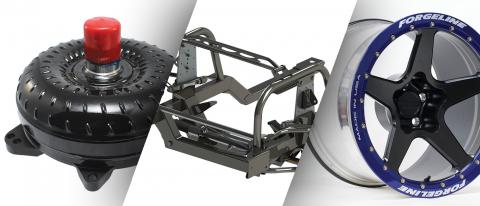
Forgeline is leveraging technology from its road-racing efforts to develop beadlock rims for exotics and late-model muscle cars that participate in drag racing and standing-mile events. The new GS1R Beadlock and CF1R Beadlock are 10- and 5-spoke, respectively, lightweight one-piece monoblock designs that are available in four different diameters.

“Many other wheels are constructed with multiple pieces or sections welded together,” explained David Schardt of the Dayton, Ohio-based company. “Our wheel is a monoblock style, like our road-racing wheel, that starts out as a 110-pound forging. We then machine it out and make the beadlock rings separately.”

editors2

The two spoke patterns are the lightest in the lineup, but Schardt said that new designs will be forthcoming. The target audience includes Lamborghini, Audi R8, McLaren, and late-model Mustangs, Corvettes, and Camaros that race weekends at the strip or compete in standing-mile and 2-mile events that require beadlocks.

“We may be the only company that offers a 19-inch beadlock,” added Schardt.

The GS1R and CF1R Beadlock rims are available in 15-, 17-, 18- and 19-inch diameters with a number of widths, lug patterns, and backspacing available. There are also finish options and different beadlock colors available. —Mike Magda


G-COMP UNSER EDITION FRONT SUSPENSION KITS

Speedway Motors
speedwaymotors.com

Tailored for high-end Pro Touring, autocross, and road racing, the G-Comp Unser Edition front suspension kits from Speedway Motors in Lincoln, Nebraska, offer increased adjustability and more performance options than the standard G-Comp lineup.

“The G-Comp was supposed to be a performance upgraded street package. Then we started working with Robbie Unser and Al Unser Jr. on a competition version,” said Tom Brown. “Mainly, we wanted more adjustability in certain areas. What we ended up with was a race version of the G-Comp.”

The Unser edition features additional caster and camber adjustment range and adjustable upper shock-mount location that allows for longer shocks and a larger OD coil-over spring. A redesigned upright also uses an inverted upper ball joint to allow deeper wheel back spacing. Numerous options for brake kits, shocks, and springs add to the flexibility of the kits.

editors3

“It’s just a beefier front end with more adjustability,” added Brown.

The G-Comp Unser Edition is available in dedicated bolt-on kits for select early Camaros, Novas, and trucks—but there is also a universal kit that can be welded to a variety of applications.

“It’s available in four different track widths, so you can put it in just about any vehicle,” Brown added. —Mike Magda

4L80E BILLET STREET RACER TORQUE CONVERTER

FTI Performance
ftiperformance.com

FTI Performance in Deland, Florida, builds 9.5- and 10-inch Street Racer lockup torque converters for all the popular modern lockup transmissions, with the 4L80E being the most popular. Available in single- and triple-clutch versions, it’s available in a range of stall speeds from 2,800 up through 4,000 rpm; and there’s also a custom stall-speed option.

“The most popular is the triple-clutch model,” said Greg Samuel. “We use the same technology in a 3,000-horsepower bolt-together torque converter as we do in the Street Racer series.”

FTI makes its own parts, and all the converters are fully CNC machined. Furnace brazing and hand TIG welding are also part of the construction process, and the converters are assembled with triple Torrington bearings and billet pistons for the lockup function. The billet front covers are designed to work with all the popular bolt patterns on GM flywheels.

editors4

“The triple-clutch is designed to lock up under full throttle, which is very popular in today’s turbo world,” said Samuel. 

FTI has about 20 different blade angle-stator combinations to accommodate every type of power combination.

“It all goes back to the stall-torque ratio,” Samuel explained. “That’s why we ask so many questions when you order one. We’ll set that converter up for your application.” —Mike Magda
June 2021

Problem Solvers

Submitted by jeffreyc on Wed, 05/26/2021 - 15:10


Understanding your company’s objectives, clearly communicating them, and tracking your partners’ progress can make all the difference for a successful sponsorship agreement.

The Problem: I can’t tell if my company is getting adequate ROI from sponsorships

The Solution: Define precise, measurable objectives and continually monitor them

“Most marketing directors say sponsorship ROI is like licking your finger and sticking it in the air to see which way the wind is blowing,” said sponsorship consultant Alex Striler, author of the book Motorsports Marketing and Sponsorships: How to Raise Money to Race and Give Sponsors What They Really Want. “Frequently, they put the cart before the horse. They haven’t thought through why they’re doing something versus other alternatives that they could do.”

We recently reached out to Striler for his expert insight on how companies can more precisely gauge the results of their sponsorships. He recommends first starting with a detailed picture of what you’re actually trying to get out of the agreement. “From my experience, most of the time sponsorship deals go wrong it’s because the company didn’t have clearly identified objectives,” Striler told us. “You have to think about the logic of the relationship, and then you define it at the beginning. 

“Start by asking, ‘What’s the purpose of this sponsorship?’” he continued. “Is it to increase awareness? Is it to open distribution channels? Is it to generate sales leads? Is it to give away samples? Is it to create a hospitality environment for brands to meet each other and perhaps get business-to-business deals going? Is it to create content that can be used to promote your company on social media? If you know the objectives, then you can determine if the sponsorship is working.”

problem2
Consider the purpose of sponsorship agreements in order to properly measure their effectiveness. Is it intended to increase brand awareness, or create promotional content for social media, or something else entirely?

Once companies have clearly defined their goals, they need to communicate them in sponsorship agreements. Ideally, they should spell out specific activities intended to bring about these outcomes, starting with broad overall objectives. “It’s not about giving people money and then letting them go try to do whatever it is that they do with the money to represent you,” said Striler. “It’s about telling them, for example, ‘We’re giving you this money for the following reasons: One, we want you to market into this new geographic area where you race and where we don’t have any presence. Two, while you’re there, we hope you can get our product into four local retail stores.’ Having clearly defined objectives like these at the beginning lets you gauge the performance of a sponsorship as it goes on.”

Next, companies should require teams to report their activities and results regularly. These reports are called proof-of-performance documents, and they need to be a central component of any sponsorship deal. “There are two types of proof of performance,” Striler explained. “After-event proof of performance is where racers give maybe a one-page outline to sponsors of how they did, both good and bad—you don’t want to hear only the good. You also want to know what went wrong, so you can learn from it and change it. And then, at the end of the year, all of those regional and local proof of performances can be compiled into one larger document that says, ‘This is what we did all year long.’ That document will determine whether or not they fulfilled the obligations agreed on in their contract.”

But Striler cautioned that racers often tend to focus more on their race performance in these reports, rather than your marketing aims. For that reason, companies need to specify exactly what they expect to see in proof-of-performance documents. “Proof of performance isn’t about the racer, it’s about the brand. The proof-of-performance report should state something like this: ‘I got third place on the podium, which was viewed by 100,000 people through social media. Those 100,000 people were primarily males age 18 to 24, according to Facebook demographics. And we got television coverage on NBC Sports. That 30 seconds of coverage is worth X dollars, according to the network’s rate card.’”

Armed with these tools, companies can continually adjust and tune a sponsorship to achieve the right objectives. Striler said the key to doing so is to monitor the relationship throughout the season and communicate often. “If the sponsorship contract says you need 20 engagements through social media, but halfway through the season the race team hasn’t done any, now you know you’ve got to make adjustments. 

“After every event, you should know whether or not you’re one step closer to achieving your objectives,” he added. “Having clearly defined goals allows you to adjust along the way and make changes. That way, when the year is over nobody is blindsided by the fact that, ‘Oh, this didn’t work.’”


SOURCES

–

Alex Striler
alexstriler.com

June 2021
By
David Bellm

Tech Update: Demystifying Shock Dynos

Submitted by jeffreyc on Wed, 05/26/2021 - 14:44
Chris Berg


A leading manufacturer breaks down exactly how these valuable tools can be used to optimize performance for better on-track results.

The technical side of motorsports can be intimidating for new participants and seasoned veterans alike. If you have ever spent any time at the race track, particularly as a competitor, you no doubt heard the term “black art” attached to some aspect of race car tuning, often in reference to highly technical components like dampers—also known as shock absorbers.

Today, the increased complexity in suspension design has forced these components to work in a smaller envelope of optimal performance. Which is why having a good shock specialist at your disposal has never been more important. Simply put, without the help of a talented shock builder, racers across all forms and levels of competition could find themselves at a big disadvantage.

But not everyone has access to a shock or damper guru, and that’s why we’re here: to provide clarity on this at-times murky topic and explain how one of the most useful tools on the market—a shock dyno—can benefit your program. 

So, what is a shock dyno? It is a mechanically or pneumatically powered piece of measurement equipment that records the exact amount of force it takes to overcome resistance to the compression and extension of a shock at a given velocity and stroke length. Compression—also called bump—refers to the force needed to push a shock together, while rebound describes the force values needed to pull a shock apart.

tech2
Carter Gerlach of Elite Shock Services uses an Intercomp 3-hp Variable Speed Dyno to test freshly rebuilt shocks (dampers) before they leave his shop. This is the final step to check seals and ensure it provides the optimal on-track performance for his customer.

Shocks control, or dampen, the speed at which the suspension of a race car extends or compresses, controlling how weight is transferred from side to side or front to back. The easiest way to understand the role of a damper is by picturing what happens as a driver approaches a turn. When slowing down for a corner, either lifting off the throttle or applying the brakes, weight will transfer to the front tires. As the driver adds steering input, weight transfers to the tires opposite the direction of the turn, with the outside front tire bearing the highest load. The compression characteristics of the front dampers and rebound behavior of the rear dampers control the speed of this transfer.

As the race car moves through the apex, the driver will usually begin to apply throttle and unwind the steering wheel. This causes the rear suspension to compress, often referred to as squat, as weight transfers to the rear tires. The rebound rate of the front shocks, and compression values of the rear shocks, control how quickly that load transfers rearward. Whether transitioning into or out of a turn, controlling the transfer of load is extremely important. Transferring the force too quickly can overload a tire, causing a complete loss of grip; or, it can transfer too slowly, and under-utilize the full amount of potential traction.

Shocks are adjusted using different shock oil viscosities and various piston valve configurations, changing the amount of oil that flows from one side of the piston to the other when moved. Technicians use these settings to change the amount of resistance throughout a compression and rebound cycle. And that’s where the shock dyno comes into play: It allows a racer, or shock builder, to understand exactly how the shock will behave in each phase of travel by several means, most commonly tables and graphs.

The “Force vs. Absolute Value” graph is one of the most recognizable outputs from a shock dyno. It shows how the shock resists movement when actuated in low- and high-speed damping situations. The other graph most often associated with a shock dyno is “Force vs. Displacement,” which shows how a shock resists movement through a given stroke length. Basically, the first graph tells how the shock reacts when a race car first begins to change directions, while the second graph shows how a shock will respond as cornering forces continue to be applied.

tech3
The Force vs. Absolute Velocity graph is one of the primary tools used by racers to get a high-level snapshot of a damper’s performance. This shows how the shock will behave during compression and rebound movements at a variety of speeds.

For a shock to be most effective, it needs to provide the same level of performance lap after lap and from one track to the next. Over time, seal wear, loss of gas pressure, and shock fluid contamination cause performance to degrade, making load transfer unpredictable when the race car is in a state of transition. Since wearable or damaged damper components are not often visible without disassembly, performance characteristics tracked over time allow racers to know when a rebuild is needed. Most dyno software provides the ability to easily compare data from past dyno runs, helping racers to anticipate changes in a race car’s performance, or providing the opportunity to make other chassis adjustments to offset the deficit.

In recent years, the advent of smaller and more powerful dynos has made it possible for these units to be installed in race trailers or other transport vehicles. This allows racers to be certain that a worn damper will not let them down in the middle of a session, and allows for more in-depth service, like a rebuild, in real time. 

Racers’ ability to leverage sophisticated tools like shock dynos—especially at the track—is proving to be a game-changer as teams learn more about their many advantages. Consider that we’ve only scratched the surface here. The possibilities now and into the future are very much wide open. 

Chris Berg is the head of marketing for Intercomp’s racing division. He has been an active member of the racing community for more than 20 years, competing at various levels from regional karts to professional motorsports at some of North America’s premier tracks and venues.

June 2021
By
Chris Berg

Ask the Experts: Mufflers

Submitted by jeffreyc on Wed, 05/26/2021 - 14:25

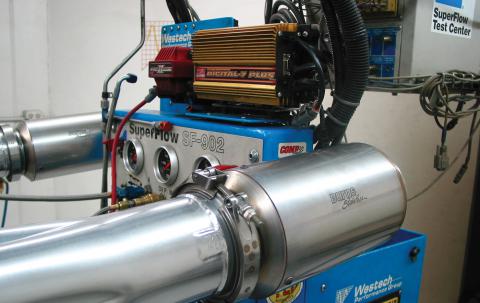
Burns Stainless offers this flow-through, open-core absorption muffler that “flows like an open pipe. As long as the system length remains the same and you use a muffler like ours, you’re not going to lose any power,” reported a company source.

Don’t believe the old racers’ tale of “mufflers hurt horsepower,” as our sources reveal how these components may actually enhance on-track performance.

Whether it’s because of sanctioning body rules, track-area noise regulations, or a combination of the two, some sort of sound attenuation equipment is a requirement on most race cars. Conventional wisdom used to be that a muffler would always hurt engine performance, yet many of today’s racing mufflers cause little or no power loss. That’s not always the case, though, so racers still need a strategy for choosing the proper muffler and then minimizing any resulting changes in power. For insight on this topic, we spoke to three experts in the muffler field: David Borla of Borla Performance Industries, Johnson City, Tennessee; Vince Roman of Burns Stainless, Costa Mesa, California; and Mark Emerson of Flowmaster, Bowling Green, Kentucky.

How do I choose a muffler with the least impact on my engine’s performance?

“You need to understand the rules and regulations that require the use of mufflers in the first place,” said Borla. “Different tracks and sanctioning bodies have different rules. Is there a specific decibel limit and test standard to meet? If so, what’s the testing procedure? Is it a stationary test? Drive by at a certain rpm? Where are the measuring devices located on the track? The more you understand about the requirements, the better decisions you can make regarding which mufflers to use.”

“Some places just require that you have a ‘muffler,’ and that’s it,” said Emerson. “That’s a lot different than having to meet a specific decibel limit using a sound meter.”

Complicating the issue is the fact that decibel limits can be a moving target, said Roman. At Laguna Seca, for example, “on weekends when there’s a big series in there like IndyCar or IMSA, it’s basically unrestricted, even for the lesser classes. Other weekends they’ll have a 95-decibel limit, but some days the limit is 92. You have to look at the schedule to see what the limit is on the days you run.”

Mufflers with the least effect on performance are the flow-through, open-core, absorption mufflers, according to Roman. “It flows like an open pipe. As long as the system length remains the same and you use a muffler like ours, you’re not going to lose any power,” he said.

ask2
Different tracks and sanctioning bodies have different muffler requirements, which means racers must keep in mind factors like whether there’s a specific decibel limit and test standard to meet, and what that testing procedure may entail. Photo courtesy of Flowmaster.

Flowmaster offers a muffler, the Outlaw, that was designed to not restrict power. “Those are great for a series that doesn’t mandate a particular decibel limit,” Emerson said. “They just take away some of the harshness of the exhaust sound.” Inside the Outlaw muffler are “angled rings in the expanded part of the muffler case that help with sound attenuation and create a scavenging effect. As the exhaust pulse goes by, it creates a little low-pressure area on the back side of the rings to help pull the next pulse through.”

Emerson said Flowmaster “always recommends” exhaust turn-downs after the muffler, “because you can point them to help meet sound requirements. Depending on the application and where the sound meters are, they can be pointed down at the ground or angled back away from the sound meters. On a dual-exhaust system, if you point the turn-downs toward each other at about a 45-degree angle, that will add additional sound control because the exhaust pulses coming out of them will be pointing toward each other in the same fashion as the sound inside the muffler is controlled when we direct those sound frequencies into each other.”

How can an engine be tuned to minimize power loss with mufflers?

“It depends on the application,” Emerson said. “They’re all going to vary depending on whether it’s a single system or dual. It might need digital tuning upstream as far as timing and jetting or mapping of the fuel system if it’s injected. The muffler is the last thing connected to the engine, but it’s still part of it. You typically can’t just throw them on and go. They need to be tuned as a package.”

“From our experience it’s not very difficult to tune around the muffler, as long as you’re keeping the length of the system—from header to tailpipe—similar or constant,” Roman said. “With the straight-through muffler it has more to do with the tuning waves occurring in the exhaust. Adding a muffler in there will affect those waves. You might have to tweak the fuel curve in a few different areas because of those frequency changes. But they’re not usually huge changes.”

With a more restrictive muffler, though, “you’re basically pushing less air and fuel through the motor,” he added, “so you’re going to have to tune by taking fuel out of it.”

Can my engine builder or local retailer be a good source of help with mufflers?

“Yes, experience matters a great deal,” said Borla. “Gather all the advice you can from the most reputable sources you can find and use that to narrow down your choices. You can’t test a thousand mufflers. You need to start somewhere.”

But, added Borla, the key to getting the most performance from mufflers is “testing, testing and more testing. You can combine all the tribal knowledge in the universe with computer modeling technology and throw a palm reader or astrologer in there for good measure, and it still won’t replace testing. There are no shortcuts.”

SOURCES
–
Borla Performance Industries
borla.com

Burns Stainless
burnsstainless.com

Flowmaster
holley.com/brands/flowmaster

June 2021
By
Drew Hardin

Race Team Confidential: Factory BMW Driver—Connor De Phillippi, Charlotte, North Carolina

Submitted by jeffreyc on Wed, 05/26/2021 - 13:59
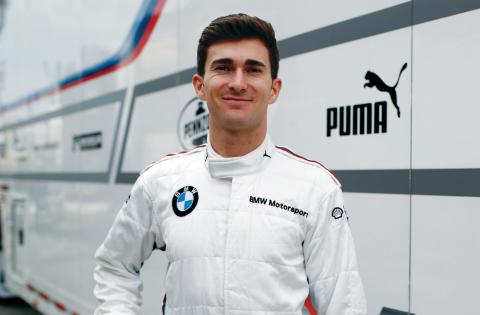
Connor De Phillippi


Adaptability is key for this American sports car racer as he improves his technical knowledge, embraces a new language, and expands his sim racing skills.

I race in the IMSA WeatherTech SportsCar Championship, and the last three seasons we’ve been doing a full program, which is 11 events. But in 2021 we have a reduced program due to the fact that our class is getting phased out this year. We’re doing just the four main endurance races in the US, which are the Rolex 24 at Daytona, Mobil 1 Twelve Hours of Sebring presented by Advance Auto Parts—both of which have already taken place—and Sahlen’s Six Hours of the Glen at the end of June and Motul Petit Le Mans at Michelin Raceway Road Atlanta, which is typically in October but was moved back to November this year.

So, BMW has restructured and is planning for the future, which includes a new class next year. We scaled back a little bit this year and moved some of those resources into developing the car for next year.

With the car, we’ve been looking to find a way to make the drivability window bigger. In previous years, the car has been pretty tricky to drive at its limit for an entire hour, so there were always mistakes that we would make over the course of the one-hour stint. It was very difficult to drive, especially as tire degradation began to kick in.

One of the biggest things that me and my engineer spoke about was how to make the car a little more forgiving and allow us to have that bigger window of drivability to reduce mistakes as tires degrade, or have the tires degrade at a slower rate. 

As far as physical work on the car, I don’t get involved. I definitely accept that the mechanics know a lot more than I do, so I let them do their job. However, I’m very involved in the engineering side, the technical understanding side, and the development side. I’m very intrigued with the technical side of motorsports, so I have quite a few calls throughout the month with my engineer to brainstorm ideas and discuss areas that we can improve on or are overlooking. We look at reports from different events and try to understand what we could’ve done better.

My main focus this season is on the four big IMSA races, but I also have a contract with BMW in Munich, Germany, to do four races for them at Nürburgring. The main show is the ADAC TOTAL 24 Hours of Nürburgring (a race I won in 2017) this month, and I had three preparation races at Nürburgring leading up to the big show.

In between races I have a simulator at my house, and BMW has us very involved with sim racing. It’s something pretty new, but something they are taking very seriously because they see value in it. They see the future in it. Racing is more and more expensive as years go by, so sim racing is a way for BMW to interact with motorsports fans at a different level and interact with their own drivers in a different style than just being at the race track. They’ve been pushing us quite heavily in the sim world. 

During April, we had several sim races that IMSA organized and live streamed. There were about 35 of us, pro IMSA drivers, racing against each other in the simulator championship. That’s something new and exciting, interesting for fans to watch, and something maybe they can relate more directly to since more people have simulators than race cars. Sim is something that takes up a lot of our time in between events, as well as fitness training like cycling and running.

Something I’m proud of, that has also proven beneficial, is that I’m fluent in German. My third year in Europe I lived in Austria for six months and drove with an Austrian team, and many of them didn’t speak a ton of English, so I started to learn some German there. And in my fourth year I drove with a fully German team, and they spoke zero English, so I had to know how to communicate with them, and that’s when I started learning at a quicker rate.

It definitely has helped me when driving for German teams and German brands. I think it goes a long way and makes me more marketable for them. I can do press events in Germany when I’m there, and I get to mingle with different groups that maybe I wouldn’t get a chance to if I wasn’t German speaking. It certainly has its benefits. 

As for my future in racing, I’m very content where I’m at now. My short-term goal is to get to the top level of sports car racing, which would be the prototype category. With the future of the rules and the way that they’re restructuring classes now, it’s going to be called the LMDh. I hope I get a chance to move up to that category.

June 2021

RPM Act Continuing To Gain Supporters In Congress

Submitted by laurap on Tue, 05/25/2021 - 14:15
race car on track


After more than 1.1 million letters to legislators, the Recognizing the Protection of Motorsports Act of 2021 (RPM Act), was reintroduced in the House with 47 original co-sponsors, including US Representative Richard Hudson (R-NC) (more on him, below).

Since the introduction, nine new legislators have signed on to the RPM Act (H.R. 3281), including Rep. Young Kim (R-CA), Rep. Troy Balderson (R-OH), Rep. John Joyce (R-PA), Rep. Ralph Norman (R-SC), Rep. Alexander X. Mooney (R-WV), Rep. Guy Reschenthaler (R-PA), Rep. Tim Ryan (D-OH), Rep. Pete Sessions (R-TX), and Rep. Chris Jacobs (R-NY). This brings the total number of RPM Act co-sponsors to 56, including 40 Republicans and 16 Democrats. View the complete list here.

PRI thanks those that have stepped up and urges the industry—including motorsports manufacturers, retailers, businesses, and racers—to keep voicing their support of the RPM Act. We must continue to make our voice heard until the bill is passed into law. Only then will the industry have certainty and clarity that it is legal to convert street vehicles into dedicated race cars.  

One of the original advocates for the RPM Act, Rep. Hudson is a leading voice on the US House Energy & Commerce Committee for the cause. He has questioned the two past EPA administrators during public hearings about their position on motor vehicle conversion for racing. To learn more about Rep. Hudson, whose district includes Charlotte Motor Speedway, watch this overview video here. To send a letter urging legislators to support the RPM Act, visit here. 

May 2021

PRI Is Critical To Face-To-Face Interaction And Sales

Submitted by laurap on Tue, 05/25/2021 - 13:38
PRI logo


Chris Dilbeck of PFC Brakes and Eric Dillard of ProLine Racing explain why the PRI Trade Show, set for December 9-11 in Indianapolis, is essential to their year-round business. Both touch on how the PRI Show helps their business launch new products, provide hands-on product demonstrations, and make connections with new and existing customers. The deadline to secure a booth and be included in the initial floorplan is Friday, May 28. For more information, visit pri2021.com.

Race Winning Brands Acquires Victory 1 Performance

Submitted by laurap on Mon, 05/24/2021 - 17:25
Race Winning Brands (RWB) logo


Race Winning Brands (RWB), a portfolio company of Kinderhook Industries, has announced the acquisition of Victory 1 Performance, the supplier of manufactured and forged high-performance titanium and alloy valves. 

Headquartered and operating out of Mooresville, North Carolina, Victory 1 has been a provider of valvetrain components for engine builders, cylinder head manufacturers, and racers for nearly three decades. The company manufactures titanium and Inconel valves, custom machined retainers, lash caps, valve locks, and stainless steel intake and exhaust valves. 

“The Victory valve is synonymous with strength, quality, and reliability,” Victory 1 CEO Derek Dahl said. “We look forward to working closely with the team at RWB to continue to serve the community of enthusiasts that have relied on and enjoyed our products for nearly three decades. We are also excited about the prospect of reaching new customers through RWB’s extended platform.”

Victory 1 represents the eighth add-on acquisition for RWB and Kinderhook’s 111th automotive transaction. The financial terms of the transaction were not disclosed.

For more information, visit racewinningbrands.com.

May 2021

Dr. Terry Trammell Wins Louis Schwitzer Award

Submitted by laurap on Mon, 05/24/2021 - 17:05
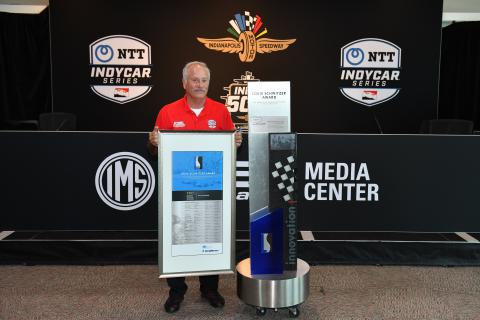
Photo of Dr. Terry Trammell by Dana Garrett
 

The 55th annual Louis Schwitzer Award was presented Friday, May 21, to Terry Trammell, M.D., for his work on biomedical engineering for IndyCar driver safety. 

Trammell’s numerous contributions have advanced motorsports safety and prevented driver injuries. Utilizing a data-driven approach, engineering principles, and medical expertise, his efforts have been recognized across multiple motorsports safety organizations throughout the world. 

In addition to Trammell’s renowned orthopedic abilities, his undergraduate degree is in chemical engineering with a specialization in biomedical engineering. From the early 1990s, he has worked to develop definitive data from racing crashes using the latest technology. From the earliest accident data recorders to later units like the new ADR4, Trammell has been integral to their development. The resulting G-force database has been used to continuously develop improved race car materials and design.

“I’m very honored to have received this,” Trammell said. “I want to express my appreciation to the Louis Schwitzer Award committee for awarding me this honor. It was unexpected, to say the least. I want to thank Borg-Warner for sponsoring. 

“The beginnings of my engineering education and what I intended to do to pursue a path in biomechanical engineering, actually was doing a senior research project for industry when my adviser suggested if I was going to pursue this, I should go to medical school.

“I took his advice; I went to medical school. The closest thing I could find to biomechanical engineering in medical school was orthopedic surgery. When you really think about it, a large number of orthopedic surgeons have an engineering background. One of the core principles throughout an orthopedic residency is regular education in biomechanics. When you’re putting hardware in people, it’s a good idea to know how heavy the hardware has to be, how many screws, how long a plate, what kind of material, so on and so forth. Without really knowing that’s we’re doing, that’s what we do every day.”

Presented by engineers to engineers, this annual award sponsored by BorgWarner memorializes the innovative spirit of Louis Schwitzer, an automotive engineer and pioneer who won the first automobile race at IMS in 1909. Each year the award is presented to innovative engineers who have developed cutting-edge concepts that improve competitive potential and focus on advancements that increase the safety, performance, or efficiency of Indy 500 race cars. Award recipients receive $10,000, and their names are added to the Louis Schwitzer Award trophy, which sits at the IMS Museum.

For more information, visit indianapolismotorspeedway.com.

May 2021

NC Governor Proposes Over $30 Million For Motorsports

Submitted by laurap on Fri, 05/21/2021 - 13:47
Photo of Rockingham Speedway courtesy of the track, Facebook

North Carolina Governor Roy Cooper has shared his recommendations on the American Rescue Plan (ARP), the $5.7 billion federal program designed to invest in the state following the global pandemic. The plan would allocate $30 million to the state’s race tracks, divided between Rockingham Speedway and Entertainment Complex, and the Speedway Motorsports-owned Charlotte Motor Speedway and North Wilkesboro Speedway.

Another $10 million would be dedicated as “event opportunity grants” for motorsports and outdoor events, as well as another $5 million for natural and cultural tourism trails.

“We’re very pleased to see Governor Cooper’s support of motorsports and statewide tourism in his new budget,” said Speedway Motorsports President and CEO Marcus Smith in a statement, per NBC Sports. “Motorsports is a significant part of not only North Carolina’s past but also its future to create jobs and grow tourism.“ Charlotte Motor Speedway and North Wilkesboro Speedway are both owned by Speedway Motors.  

The funds would undoubtedly provide a boost to race tracks in the state, including Rockingham Speedway and its adjacent drag strip. Track officials revealed ideas for the funds, including renovations, repaving, improved sewer connections, and potentially a new footbridge to connect The Rock with Rockingham Dragway, currently separated by US Route 1 highway. 

The ARP was passed by Congress and signed by President Joe Biden but must still be approved by the state legislature. 

For more information, visit governor.nc.gov, therocknc.com, or speedwaymotorsports.com.

May 2021