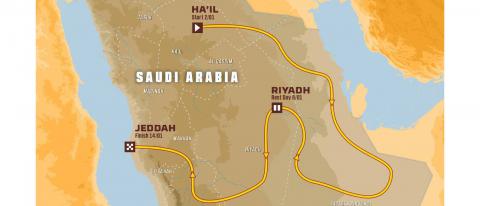
Details have been released about the 44th edition of the Dakar Rally, which will run on January 2–14, 2022, during its third visit to Saudi Arabia. The rally will start in Ha'il and finish in Jeddah, after a rest day in Riyadh.
The 2022 edition will mark the starting point for plans to host a field of cars powered by alternative energies or electric power by 2030. The new T1-E category, which launches in 2022 and will be dedicated for prototype vehicles engaged in carbon emission research, aligns with this plan.
Related, the popularity of vintage vehicles in the "Dakar Classic" regularity race has encouraged many enthusiasts of 1980' and 90's 4x4s to have a go in the adventure, and officials say the field could double in size at the start in Ha'il.
Registration opens May 17. For more information, visit here or dakar.com.
LSI Chemical has announced a new European distributor.
GreenGlove LTD is now the official UK and Ireland distributor for LSI Chemical, including the full line of Hot Shot’s Secret performance fuel and oil additives and specialty oils.
“This is our first opportunity to distribute LSI Chemical and Hot Shot’s Secret in Europe. The market potential is incredible as fuel must meet stringent emissions standards. We look forward to assisting our new distribution partner in developing fuels specific to the needs of a region or industry,” LSI Chemical President Todd Cawley said.
Based in Thame, England, GreenGlove provides oil and fuel additives that utilize innovative nanotechnology designed to provide an improved, market-ready product to end-users. The company specializes in organic technology innovation and is a provider of innovative patented environmental products across multiple industries.
GreenGlove recently appointed NanoTech Industries Ltd as its specialist reseller to assist in the marketing and technical back-up for the full range of LSI products.
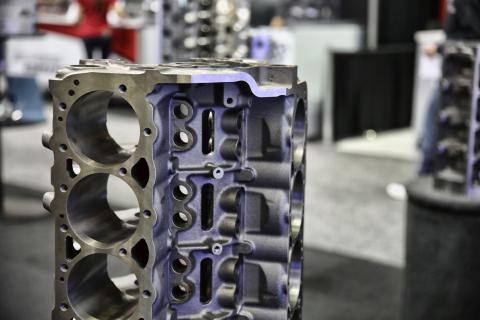
Discover how manufacturers of cylinder blocks and related components are tapping into their collective creativity by expanding applications and experimenting with never-before-tried concepts.
For as long as anyone can remember, racers have pleaded with cylinder block manufacturers to make their products stronger, lighter, and less expensive. And many of the new blocks released in the last few years have delivered on those requests. At the same time, however, some dedicated designs are also helping unleash horsepower by correcting and improving valvetrain dynamics.
Tricks like raising the camshaft location and manipulating the lifter-bore locations are alleviating some valvetrain geometry problems when combined with a complementary cylinder head. For example, Dart Machinery recently teamed with Proline Racing to develop a big block Chevy cast-aluminum cylinder block with a number of features that “straighten out the valvetrain” and eventually will be part of a complete and economical power package for sportsman racers.
“We retained the big block architecture but repositioned the valvetrain to work with Dart’s 20X asymmetrical cylinder head,” explained Mike Sanders of the Warren, Michigan-based company.
At Alan Johnson Performance Engineering (AJPE) in Santa Maria, California, the raised-cam Hemi block is making headlines in Pro Mod and select outlaw drag racing classes.
Brodix has developed a small block Chevy block with the camshaft raised to the height of a big block Chevy. This block also takes a BBC front drive.
“Raising the cam allowed us to straighten the pushrod angles and shorten the pushrod lengths,” said Rick Wilkinson. “A lot is predicated on what you’re doing with the cylinder head. You want to let the engine run at higher speed and still maintain valvetrain stability. This is a move in that direction.”
More displacement is often on a racer’s shopping list—especially when rules allow unlimited bore and store—and Mena, Arkansas-based Brodix is helping loyal small block Chevy enthusiasts build 500-plus-cubic-inch engines with a new block that can be machined with either 4.400- or 4.500-inch bore centers. This block also comes with a 5.150-inch crank-to-cam centerline distance, which is the same as a big block Chevy.
“It uses a standard big block Chevy front drive, and it comes with a 10-inch deck height,” said Mark Fretz. “It’s one of the most popular items we have right now. We offer multiple lifter locations and layouts, depending on the cylinder head used.”
Driving much of this new development in cylinder blocks is the small-tire, outlaw drag racing segment, where engine builders have freedom and there are plenty of classes to spur unconventional thinking. That’s why Brodix is offering a choice between the two bore centers for small block racers.
“It all depends on the class,” said Fretz. “Those with the 4.500-inch bore spacing may have to carry more weight. This block is for large cubic-inch classes where they require a cast engine block.”
With a maximum bore of 4.250-inch available on the 4.500-inch-bore-center block, total displacement upwards of 524 cubic inches is possible. Fretz said a 4.200-inch bore combined with a 4.500-inch-stroke crankshaft is 498 cubic inches and will allow racers to compete in classes with a 500 ci limit.
“And they get the weight break for using a small block platform,” he added.
The block’s development was spawned by a request from an engine builder who asked just how high Brodix could raise the camshaft. The first attempt raised the crankshaft-to-cam centerline distance .434-inch because there was a cam drive available at that height. A Brodix machinist then wanted to try mixing up and modifying a few patterns at the foundry and ended up matching the BBC front drive on a small block foundation. That raised the cam a total of .629-inch.
A prototype block was cast and sent to the engine builder, who assembled an engine for test runs.
“It did well at the track, and he ordered five more,” said Fretz, noting that when other racers and engine builders discovered the block, more orders followed.
An iron block undergoes quality inspection at World Products. While the small block Chevy remains the most popular of World’s offerings, Ford block sales have grown recently. “A few people have won with it, and word has gotten around,” said World’s Jack McInnis.
It’s easy to see how racer feedback, especially from the drag strip, is spurring block development and innovation these days—and how the blocks are being built to suit racers’ specific needs. The AJPE raised-cam Hemi, for example, was designed without the traditional inner head studs.
“This allows the user to take off the head without removing the intake manifold,” said Wilkinson. “That can really speed up time in the pits.”
The main selling point for the AJPE billet block is the camshaft location that’s raised .650-inch over stock. This allows longer stroke crankshafts and beefier connecting rods that won’t interfere with the camshaft. Racers also expressed concern about unwanted harmonics due to camshaft flex. Not only does the new block allow for a robust 70-mm cam core, but AJPE engineered a sixth cam bearing in the front section of the block for more camshaft stability.
The new Dart BBC block took a slightly different development approach, in that it was a direct collaboration with the engine-building shop of Proline Racing in Ball Ground, Georgia. The eventual goal is to create an affordable, high-horsepower boosted platform that can be used in a variety of sportsman drag classes. Key to the foundation is the new BBC block and the Dart 20X cylinder head.
“For this head, we created a one-piece rocker stand with the correct geometry, so you don’t have to use offset rocker arms,” said Sanders. “We also moved the lifter bores to straighten out the pushrods. It allows a 9/16-inch exhaust pushrod and a half-inch intake pushrod.
“You have to run a different cam core with the 20X, but it straightens everything out,” said Sanders, noting that changes to the block also helped design a more efficient cylinder head by moving the pushrods slightly away from the head. “We could then manipulate the turns in the intake port to get a better line of sight to the valve.”
The block is available in iron or aluminum with +.400-inch cam location, or it can be ordered in billet with a 1.000-inch raised cam. Proline Racing has already tested engines making 2,500+ horsepower at 9,200 rpm with the new combination.
Dart also revised its small block Ford lineup for 2021, eliminating the Sportsman line and updating the Iron Eagle with six-bolt cylinder-head mounting capability so it could support a SC1-style head. The oiling system was also revived. Finally, Dart changed the tooling so the lifter angles could be rolled to upwards of 47 degrees.
Small block Ford popularity is also driving sales at World Products in Louisville, Kentucky. Jack McInnis said success on the track is one motivating factor.
Energy Manufacturing is working with a leading Top Fuel team to develop a billet block for Top Fuel and Funny Car engines. The block is “still in testing” but should be available later in the year, said a company source.
“We’ve been having a hard time keeping it on the shelf,” he said, adding that all the blocks are cast and machined in the United States and come standard with ARP fasteners. “A few people have won with it in racing, and word has gotten around.”
The small block Chevy remains the sales leader at World Products, though, especially since so many dirt tracks and sanctioning bodies require iron blocks.
“The small block Chevy platform has been the staple of hot rodding for a long time. People are familiar with them, and like everything else, they are cranking more and more horsepower out of them,” said McInnis, noting that cylinder head development continues to drive block sales. “Plus, people are figuring out how to make things work with power adders.”
Then there’s the most savage racing environment for a cylinder block—Top Fuel—where Energy Manufacturing of Fremont, Ohio, is making headway. Already offering billet aluminum blocks for the Chevy big block, LS, and Ford small block platforms, Energy is working with a leading Top Fuel team to produce a new block that can also be adapted to Top Alcohol. Energy has some traditional Hemi experience by producing cast iron Hemi and Wedge blocks for sister company Callies.
“The nitro block is still in testing, but we’ll have it fully launched this year,” said Heath Norton. “It’s a complicated piece because it has to endure hell. We did some basic prototypes to try out new concepts. Some worked, some didn’t, and we learned a lot from that.”
Energy’s goals were to add strength in areas that were traditionally weak and help reduce main bearing problems. As per the rules, designers couldn’t play with certain dimensions or features, such as lifter-bore locations.
“You can get a lot more creative outside of the Top Fuel world,” said Norton. “We added rigidity to reduce movement in the main-bearing bore. It is what it is, and once you get it approved you don’t change it.”
“As far as durability, Top Fuel is the most brutal environment you can put a block into,” agreed Wilkinson, noting that AJPE has updated its Top Fuel offering, too. “We’ve made improvements over last year, going to a four-bolt main, which has improved crankshaft life.”
Energy is also offering more options with its billet line. The BBC block can be ordered with plus .400- or plus .600-inch raised camshaft location, and it’s available with deck heights from 9.800- to 10.600-inch.
“The key thing is that we don’t build to order,” Norton explained. “We build to inventory, so we can pretty much deliver a block in 30 days.”
For the small block Ford, deck heights of 9.750-, 10.000- and 10.200-inch are offered. It also comes with a GM bellhousing pattern for ease in hooking up popular transmissions.
“It has the stock bore spacing, so you can pretty much run it in X275 or Pro 275, Limited Drag Radial—it can be utilized in a lot of classes,” Norton told us.
For the foreseeable future, continued power gains will require stronger blocks, and cylinder-head designers will likely seek out more help in aligning the valvetrain geometry to their specifications.
“Everything is growing in power,” Fretz said. “What used to be a highly specialized small market is becoming a much larger market because technology, fuel systems, and tuning management is making it easier.”
Bearing Capabilities
Top Fuel and Funny Car teams can download a treasure trove of information from the data recorder on the car, but another useful indicator of the nitro engine’s performance are the main and rod bearings, simply because they last only one run down the strip.
“The measuring tool of how that engine operates is how much compression that bearing measures after it comes out of the engine,” explained Dan Begle of MAHLE Aftermarket, Farmington Hills, Michigan. “They see how much the upper bearing crushed, and that dictates how good that cylinder was or how bad that cylinder was.”
Daido Metal uses a proprietary multi-boring process to eliminate oil leaks at the main bearing. For race teams looking for “every ounce of power from an engine,” stopping those leaks and reducing parasitic power loss “is a big deal,” said Daido’s Dusty Kull.
Nitro racing, however, is in a universe of its own when selecting bearings. That’s why MAHLE offers four lines of bearings with the H and V series serving as the most popular for most avenues of competitive racing.
“The V is a lead-indium overlay and is used strictly on high-end horsepower engines. The H bearing is a copper-tin-lead overlay and is used on a variety of performance engines, high-end street cars and bracket motors,” said Begle. “If you’re looking to make a lot of horsepower, you need the V for the conformability of the bearing. The H is a harder bearing. It’s going to have more service life. So it depends on what the customer is doing.”
Basically, the V bearing would be more beneficial on a high-maintenance engine where the pan is pulled often for inspection and the bearings are replaced as needed. The H bearing was designed for NASCAR, so endurance is a priority.
“The H bearing is harder and is going to get more service life, but it is not as forgiving if you have major crank flex like you would have in power-adder engines,” added Begle.
Also helping the Top Fuel and Pro Mod teams with their bearing issues is Calico Technologies. The Denver, North Carolina-based firm developed a new CT-11 coating just for big-horsepower engines.
“Twenty-five-hundred horsepower is probably as low an application that we would put them in,” said David Adams.
Most engine builders are familiar with Calico’s CT-1 dry lubricant film coating that is a popular option on main and connecting-rod bearings for suppliers such as ACL and MAHLE. But Top Fuel and alcohol teams approached Calico two years ago seeking additional protection. Engineers traveled with and tested the new formulation with teams.
“Everything is so sensitive in those engines. You wouldn’t think so with 11,000 horsepower. CT-11 a totally new formulation with some of the same elements as CT-1 but the binder is totally different,” said Adams, noting that engineers continue to analyze feedback as more teams test the new compound. “Everyone who has used it has liked it.”
Controlling lubrication at the bearing is something Farmington Hills, Michigan-based Daido Metal addresses with its performance bearing. “We use a process called multi-boring that eliminates a huge oil leak at the main bearing,” explained Dusty Kull. “In certain applications, especially NASCAR, IndyCar, Formula One, where they’re trying to get every ounce of power and efficiency out of these engines as they can, being able to cut those oil leaks at the main bearings and reduce parasitic power loss is a big deal.”
Traditional bearing geometry has a crush relief—basically extra machining near the parting line. When the oiling hole in the crankshaft passes by the relief, oil can spill out of the bearing. Deep boring profile at the parting line and a continuous surface assure the oil film is maintained in that area.
“Our design and manufacturing method eliminates the crush relief safely without the risk of parting line contact, and [it] also reduces the leak,” said Kull. “We’ve had guys running dirt late models and sprint cars where they’ve been able to reduce oil viscosity just by reducing the leak at the main.”
The technology is also being adapted to the connecting rod bearing for select engine builders who are “really concerned about oil consumption inside the engine.” For that, Daido uses the lead-indium inlay material on the tri-metal configuration.
“A lot of guys recall the old Vandervell bearings, which are similar to lead-indium,” Kull added. “It offers superior performance to lead-tin-copper in most cases through embeddability and conformability—which are very important for performance engines.”
Reducing oil loss is also a priority at Grand Rapids, Michigan-based ACL. “Race teams are looking for every bit of horsepower they can get,” said Dennis Fox, noting that an LS bearing set offers short groove in the lower main bearing as an alternative to 3/4-groove design. “The short groove will minimize oil usage/loss and save horsepower resulting from an upgraded oil pump.”
Fox also told us that durability and precise specs across every set is now a common request from racers. The company recently worked with Pat Musi Racing of Mooresville, North Carolina, to come out with a narrowed version of the GM big block main set, and there’s also a line of Calico Technologies-coated bearings available for domestic and import applications.
Liner/Sleeve Solutions
Top Fuel and Funny Car teams go through numerous iron cylinder-block sleeves during a season, but with the cutback in drag racing during the 2020 season due to COVID-19, business was a little slow in that segment for Darton Sleeves in Carlsbad, California. The company used the lull to bulk up on inventory and service its customers, as well as seek out new opportunities.
“We make a piece of pipe, and it is hard to romance a piece of pipe,” quipped Dave Clinton. “We have engineered patented products over the years, which are very stable for us, like our MID (Modular Integrated Deck) kits and Seal Tight technology. The new products that we develop are the direct result of what goes on in the industry.”
Servicing damaged GM LS and Ford Coyote engines in 2021 has spiked by some 200% over last year, according to Clinton. OEM blocks with spray-on coatings often cannot be repaired, so sleeves are the only solution.
“For a company like us that specializes in the performance industry, that is where we see the growth. Now, from the standpoint of new products, look at the pinnacle of our product category: Top Fuel and Funny Car,” said Clinton. “For us, they set the bar with the performance standards that we have to live up to. So the rest of our customers benefit from the improvements, strength, and the reliability that we build into the Top Fuel and Funny Car sleeves.”
Steve Demirjian of Race Engine Development (RED) in Oceanside, California, works closely with Darton to install the MID system on a variety of blocks, including first-time efforts in powersports
“I just did a Polaris ATV and now I’m working on a three-cylinder Can-Am motorbike,” said Demirjian. “There seems to be a lot of people interested in powersports.”
Beyond designing the fixtures for these small engines, very little in the tooling or machining methods to facilitate MID installation has changed over the years.
During motorsports’ COVID-related slowdown, L.A.Sleeve began experimenting with a new, ferrous-based cylinder-sleeve material that is “as strong as ductile iron but lighter,” said Dave Metchkoff. The technology was initially developed for NASA and is now moving to the racing market.
“Most of the car blocks are mounted on a 2-inch bar on the machine. You cannot do that with anything smaller,” said Demirjian. “The crankshaft bores are so small on these engines, I had to make up smaller fixtures to get them on the machine table.”
The unique MID conversion basically turns a dry liner engine into a wet liner, so there is considerable machining to open up the block and position the liners. The process also converts an open deck into a closed deck design. The limiting factor for eligible MID conversions is that the head studs must anchor in the lower part of the crankcase.
“That represents about 80% of the blocks manufactured today,” said Clinton. “The MID kit makes the structure more stable and allows the engine to make more horsepower without distortion, and more importantly, without leakdown. A typical dry-sleeve block, even in the best of circumstances, has a leakdown of 6% or 7%. Most of our MID blocks are 1% or 2% or less, so it is a big factor for us.”
The COVID slowdown helped L.A.Sleeve in Santa Fe Springs, California, work with a new material that shows promise. “It’s a ferrous-based material that is as strong as a ductile iron, but is lighter,” said Dave Metchkoff. “The material’s surface, for lack of a better description, has more lubricity than ductile iron. We’re testing it now with some engine builders. It is a really cool material.”
With the new material, the sleeves are not manufactured the same way. Metchkoff said it’s extruded and was developed for NASA. Now the supplier is testing the automotive market.
“We’re talking 14,000- to 20,000-rpm type of high-performance race motor,” added Metchkoff. “It has been used in F1 motors. We have also produced some drag race sleeves for compact cars.”
As with other aftermarket companies whose sales have increased over the past 12 months, L.A.Sleeve was challenged to produce product for unusual engines that were pulled out of the garage.
“We’re talking motor builds that are just out of nowhere,” said Metchkoff. “People are pulling projects out that they were waiting to get to for years. I am doing a motor for a compressor. It is a single-engine motor that uses a compressor and then a single-cylinder gas-burning motor. They work together. It is from 1895 and called an American Kellogg. It is just the craziest thing. Mercedes Gullwing: We have not done one in 15 years. It’s so interesting the amount of different projects we’re seeing. So, it has been great because we are grateful for any business we can get, but it has been incredibly stressful because we just have thousands of single, like one-off type of projects. So, it’s high stress. It has been one heck of a year for us.”
Gen III Hemi Block Set To ‘Change The Game’
Currently there are no Gen III Hemi engine block options in the aftermarket besides the Mopar Performance offering. But Dart Machinery of Warren, Michigan, has a fresh design with poured prototypes and a dedicated machining program underway. As of early spring, the company was just waiting on additional castings to complete its validation program.
“This block will change the game,” promised Mike Sanders. “We’ve added extra cooling capacity and changed the oiling system.”
The new block will not allow MDS (cylinder deactivation) but will be available with or without provisions for variable valve timing (VVT). It also comes with steel four-bolt mains in all five locations and will be available in either a 9.250- or 9.285-inch deck. Maximum bore will be 4.250-inch.
“Now you can build nearly a 500-cubic-inch Gen III Hemi,” Sanders noted. —Mike Magda
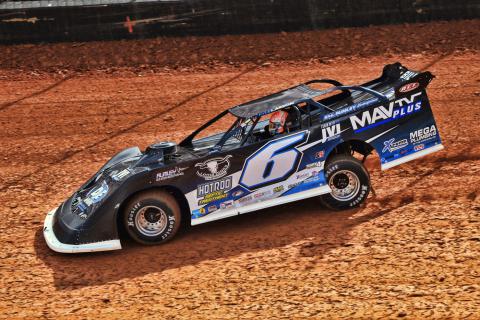
One of the preeminent families in NASCAR has shifted its heralded paved stock car operations to dirt ovals, producing dominant dirt late model chassis and propelling its drivers to frequent podium finishes.
As the latest chapter in the Labonte family racing tradition, Longhorn Chassis sprang to life in 2010 and quickly became a force in dirt late model competition.
The Trinity, North Carolina-based operation has since added modifieds to its chassis lineup, and now turns out about 100 cars a year. With multiple national championships to its credit and wins too numerous to count, the builder has solidified itself among dirt racing’s elite.
NASCAR and IROC champions and NASCAR Hall of Famers Terry and Bobby Labonte moved on from their own illustrious racing careers to start Longhorn with Terry’s son, Justin, who runs the day-to-day operation. A former NASCAR Xfinity Series and Truck Series driver, Justin credits Longhorn’s success to the engineering direction provided by Kevin Rumley, a team of dedicated employees, and, of course, its cars being placed in the hands of top drivers.
Rumley, the company’s engineer since the start, has guided Longhorn’s chassis construction to provide consistent feel, resulting in early race wins and ultimately a customer roster filled with top dirt late model drivers.
“When we started, our cars ran so well, we were able to build a customer base quickly,” Justin Labonte told us. “Jonathan Davenport and the Lance Landers team have been a big part of our success. Now we have many more great drivers and teams running our cars, getting great results and driving growth. Our core group of teams has some of the sport’s best drivers.”
“When we started, our cars ran so well we were able to build a customer base quickly,” said Justin Labonte of Longhorn Chassis. “Our core group of teams has some of the sport’s best drivers.”
Among them are Tim McCreadie, driver of the Longhorn house team car; three-time Lucas Oil Dirt Late Model Series champion Davenport; Stormy Scott; Jason Papich; Brandon Overton; and many others. Kyle Larson also has been running a Longhorn Chassis car for Rumley.
The success of its drivers—McCreadie was second in points in the 2020 Lucas Oil Dirt Late Model Series, and Davenport placed third—provides the foundation for Longhorn’s marketing: “For us, it’s winning races at the highest level,” Labonte said. “Winning drives our business.”
Getting Into the Dirt
Longhorn Chassis, which emerged out of Bobby Labonte’s foray into dirt racing, was run out of the 10,000-square-foot shop built in 1990 for Terry Labonte’s NASCAR Cup team. The shop remained the base for Bobby Labonte’s dirt racing team, which started out driving other builders’ cars.
“We’d had some cars from different builders and decided we could develop our own car and have more control over quality,” Justin recalled. “It just grew from there.”
Bobby ended his racing operation in 2004 to focus on Longhorn full-time. Though founded by NASCAR champions, Longhorn has never rested on those laurels, but rather built itself up on the merits of its product. Even not giving the business the Labonte name—one of NASCAR’s most recognizable—seems to have been an exercise in humility. The company name, Justin explained, came from the family’s Texas roots.
Writing a New Chapter
Longhorn’s 100-cars-per-year pace represents a substantial increase from its earlier rate, when that number was closer to about 25 to 30 machines annually. Labonte told PRI that the company is comfortable at the 100-car level. Longhorn currently sells through two dealers: Wells Motor Sports in Hazard, Kentucky, and Tye Twarog Racing in Coshocton, Ohio, which both handle their own finish assembly.
In fall 2020, Longhorn entered a new joint venture called Longhorn Modifieds by Loenbro Motorsports to build dirt modifieds. In the new collaboration, Loenbro Motorsports of China Grove, North Carolina, will assemble cars on Longhorn Chassis, with Steve Arpin heading the operation at Loenbro. Arpin is a successful competitor in rallycross, dirt modified, ARCA, and NASCAR.
“They ran well out of the box,” Labonte said about the Loenbro cars. “It’s worked out really well. Their backlog is pretty big right now.”
Arpin, too, was enthusiastic over the early results. “It’s been a whirlwind since we hit the ‘go’ button,” he said. “They have produced a great car, and we have been working back and forth together on growing it going forward. Now that we are more involved with them, it’s easy to see why they are consistently on top of the major late model events around the country. The future looks exciting.”
A Tight Crew
At its core, Longhorn is a family operation. Most of its 12 employees have been with the company for several years. Among the crew are five techs who build frames, as well as machinists and a parts manager. Head fabricator Scott Newton and parts manager Tommy Greco have been with Longhorn from its inception. About five years ago, Dave Dunlap joined the company to manage production, which increased with new efficiencies and equipment in place.
“We’ve got a good, tight crew,” Labonte said. “That’s been very helpful for continuity. Most have been with us from the start, including our setup guy. He goes to the track every week. That has been instrumental in development, as has having a house team.”
Being in close proximity to numerous NASCAR team operations in North Carolina has always helped Longhorn source qualified employees. But Labonte acknowledged that recruiting skilled and experienced fabricators has become more challenging in recent years. He admitted that he doesn’t know the exact reason but speculates that it could be a generational issue.
“A lot of our guys retired from Cup teams,” he said.
Having committed employees helped Longhorn Chassis weather 2020’s uncertainties. “We kept working on our cars and kept racing,” Justin Labonte said. “It did not hurt us as much as it did some other companies.”
When a fabricator is needed, the company relies on word-of-mouth and social media to convey a job opening. “We must have experienced people,” Labonte added, explaining that the company does not want to teach people their trade.
Nonetheless, a committed team has helped keep production rolling even through the uncertainty of COVID-19. “Dirt racing in general didn’t slow down much during the course of the year,” Labonte said. “We were in a strong position when it hit. We kept working on our cars and kept racing. It did not hurt us as much as it did some other companies.”
Although Longhorn, like other builders, did eventually encounter some material sourcing challenges due to COVID-19, Labonte said.
“Last year at this time we could get what we needed,” he explained. “[But] some things we didn’t think of became issues—getting some things from California in particular. Steel and aluminum prices have gone up. And it can be difficult to find a sheet of aluminum right now. I think a lot of stuff is just sitting in ports waiting to be unloaded.”
Racers Building for Racers
Longhorn Chassis maintains all operations, including parts sales, under one roof—thanks in large part to its origins in NASCAR and dirt racing. The shop is well-equipped and maintains a pipeline to top technical talent.
As noted earlier, consistency is a hallmark across Longhorn’s dirt late model and dirt modified chassis. The shop boasts some of the latest in automated machinery, including a Flow waterjet cutting machine and a Bend-Tech Dragon plasma cutter. Labonte credited both tools with increasing production while ensuring precision and quality.
“We’re always looking at what kind of machinery can help our business grow,” he added.
Stormy Scott has two Longhorn Chassis cars that “both drive identically. I can take both to the track and drive either one.” Should he have to go to a backup, “everything comes off one car and fits on the other.”
Stormy Scott, who races the No. 2s Lucas Oil Late Model Dirt Series car, has two Longhorn Chassis cars and praises their consistency and parts shareability.
“Working with Longhorn has been an awesome experience,” Scott said. “They helped me get my first Super Late Model win. I’ve scaled both out, and they’re identical. They both drive identically. I can take both to the track and drive either one. We can pull shocks from one and put them on the other car. So, if I have to go to a backup, I don’t have to worry about anything. Everything comes off one car and fits on the other. We’re on the trail to be running better than we ever have.”
(Almost) Free Marketing
Promoting its accomplishments through social media, along with the always helpful word-of-mouth are the company’s primary—and practically only—marketing outlets. Justin’s wife Miranda and Kevin’s wife Jacqueline together manage Longhorn’s social media accounts. In particular, Miranda oversees Longhorn’s Facebook page while Jacqueline handles Twitter.
“We use social media to recognize our winners every week,” said Miranda. “We keep involved with our customers’ racing. We try to keep people as up to date as possible. We attend a lot of races, and Jacqueline is really great at live updates on Twitter. If we are there, we use our own photos, but if not, we have some great photographers that are always willing to supply us with photos.”
At press time, Longhorn’s Facebook page showed 33,000 followers, while its Twitter account had 14,500. Both actively engage with fans, too.
Looking Ahead
While pleased with Longhorn cars’ wins in 2020, Labonte is working hard to collect still more victories in the current season. “For this year in dirt late model there are a lot of big-money races,” he said. “We’re excited to be there with guys in our cars capable of winning. We’re expecting a fun and successful season.” As of late April, Longhorn Chassis had already notched wins with Davenport, McCreadie, Devin Moran, Overton, and Chris Hough, among others.
Now building chassis for modifieds as well as dirt late models, Longhorn Chassis turns out about 100 cars per year. The company sells through two dealers, both of which handle finish assembly.
As for its business strategy and engineering plans moving forward, Longhorn remains focused on refining its products to keep drivers on the podium. “Cars evolve over the course of a season,” Labonte said. “Seeing how this season goes will determine our direction. The biggest thing with us is we are all racers. We just try to build the fastest, best quality cars that we can.”
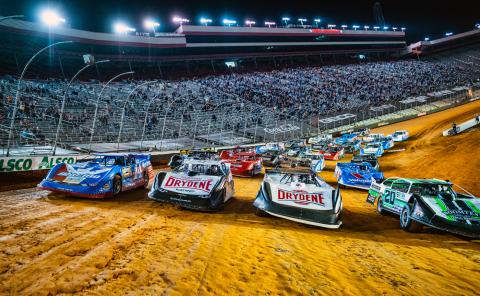
As teams look to the gray areas of the rulebook to find a competitive edge, sanctioning bodies are walking a tightrope between rising costs and overreaching mandates.
Although the popularity of super late model, crate late model, and other divisions tends to vary from one region to another, one trend is ostensibly universal: As dirt late model racing has seen continued growth in recent years on the whole, the intensity of the competition has risen in turn.
“Even in areas where there may be lower car counts, the quality is up,” said Jim Bernheisel of Bernheisel Race Cars, Jonestown, Pennsylvania. “So where there might have been six out of the 20 cars in an event who could potentially win that race in the past, now it’s 18 out of 20. They have the experience and the equipment, and they’re race winners.”
Close competition is undoubtedly great for the fans and dirt late model racing in general, but as the gaps become narrower and narrower, teams are on the hunt for every possible advantage they can find while still complying with a given rule set as it’s written. “It can actually be discouraging for some racers,” Bernheisel explained. “There are some that just aren’t going to be able to perform as well as others due to budget constraints. Racers tend to be their own worst enemy in that way—they will just spend themselves into oblivion if you let them.”
To that end, sanctioning bodies are given the difficult task of curbing the costs to prevent some teams from being pushed out of competition while also being careful not to turn dirt late model racing into a spec-style discipline with an exhaustive tech inspection process and very little room for ingenuity. While that equilibrium tends to be a moving target, officials appear to have honed in on some effective solutions.
Setting Guidelines
In years past, many teams focused much of their energy on refining their engine package, and that makes sense when considering the fact that many dirt late model racing divisions have very few restrictions on engine modifications. But more horsepower doesn’t necessarily translate to a faster race car.
“The majority of these guys are running in the 430-cubic-inch range,” said Casey Shuman of the World of Outlaws Morton Buildings Late Model Series, Concord, North Carolina. “There’s some that are bigger, and that might help a little during qualifying, but on a nightly basis, most of these racers are putting restrictors in and trying to actually take away horsepower to improve drivability.”
More horsepower doesn’t necessarily make a faster race car. Teams regularly de-tune their engines after qualifying to keep their tires hooked up during the race, said one source.
So while open engine rules might seem like an inherent advantage for well-heeled teams, outside factors tend to self-police this aspect of the racing. “There’s only so much available traction on a dirt race track,” said Steve Francis of the Lucas Oil Late Model Dirt Series, Batavia, Ohio. “Pretty much across the board, teams de-tune their engines after qualifying with restrictor plates and that type of thing in order to keep the tires hooked up to the race track. Over the course of a night, the track surface tends to change and the grip levels go down. But the teams are getting better about tuning for those changes; six or seven years ago you might have seen a track slow down by three or four seconds in a night, but that change is down to about a second now.”
Tiffany Olson of Sycamore Speedway in Maple Park, Illinois, pointed out that horsepower advantages can be addressed through other means as well. “We have a three-link super late model division, for instance, so they’re restricted to that suspension design, and these racers are required to purchase a specific tire from us. Rules like these allow us to have better control over the parity between the cars.”
And this largely hands-off attitude toward engine rules appears to be working. “We don’t get a lot of calls from people saying they need more and more power,” said Tony Clements of Clements Racing Engines, Spartanburg, South Carolina. “But we do get a lot of phone calls from teams saying that they need better drivability, and more usable power. We can definitely develop these engines to have more power, but at a certain point the cars become hard to control. If the engine blows the tires off halfway down the straight, it’s not making the car faster. It’s really more about making the power available where it needs to be.”
Instead of asking for more power, one engine builder told us his customers are looking for “better drivability and more usable power. It’s about making the power available where it needs to be.”
The Tuning Renaissance
So if power levels have already surpassed what can feasibly be put down on dirt, where does a team turn their attention to improve the car’s performance?
“There’s a lot of really smart people involved in dirt late model racing, and they’re changing things from week to week, it seems,” Shuman said. “But one area where we’ve seen things change a lot over recent years is the suspension. Teams are really stepping things up with the shock and spring packages they’re running, and how it works together with their aero.”
And Olson noted that a big part of the change comes from the realization that suspension components tend to be the most cost-effective way to refine the car’s performance. “There’s been this transformation. The focus used to be all about the engines; now it’s the chassis and the suspension setup. When it comes to bang-for-the-buck today, those components tend to play a more vital role than the horsepower levels do, and racers are doing a better job of educating themselves about it. We’ve seen teams that were struggling a bit go back and update their chassis, or shocks, or springs, and all of a sudden they’re right back in the mix.”
Sanctioning body rules promote an even playing field “and keep the costs down on the cars,” said one source. “You shouldn’t need a team of engineers to be competitive in dirt late model racing.”
And as a result, chassis, suspension, and aero have become a focus for sanctioning bodies and tracks as well. “Aerodynamics play a significant role even in short track racing,” said Bernheisel. “And as more and more people get on board with that idea, rules are being developed to try and prevent it from getting out of hand. That started with car body limits, but racers figured out how to manipulate suspension so they could improve the aerodynamic efficiency while still meeting those requirements. So in order to address that, organizers have also incorporated some chassis and suspension rules to limit those aerodynamic advantages, and it translates to a lot more hoops to jump through in order to build your race car.”
But these rules also promote an even playing field. “These kinds of regulations help to keep the costs down on the cars,” said Francis. “You shouldn’t need a team of engineers in order to be competitive in dirt late model racing. Racers are happy to see the issues being addressed, and the builders are selling more cars and engines than they can produce right now.”
At a certain point, however, regulations can become more of a burden than a benefit. “It’s just not possible to go through every single rule during tech each night,” Shuman said. “And some of the rules are a bit outdated at this point. I think we could focus 10 or 12 of the major ones—places where costs could get out of control, or safety is a concern—and otherwise simplify things a bit while providing the teams with enough room for ingenuity. Nobody wants to make this into a series where everyone is running the exact same car and setup. I love it when a team can come up with a better way to do things and win a race with it—that’s a very cool part of our sport.”
Close competition is good for racing—and for the fans—but as gaps narrow, teams are looking for every possible advantage while still complying with the rulebook.
And from Bernheisel’s perspective as a chassis builder, an overly restrictive rule set can be a source of frustration. “We wish there was enough leeway to have some innovation. If we came up with a new suspension component and it was wildly successful, it would probably get outlawed. And to me, that kind of takes some of the fun out of it. We understand why it’s done—they don’t want to see everybody rushing out to buy the latest thing and be constantly changing their cars. But everyone already does that anyway.”
Motorsports regulation has always been rife with compromise, but all parties seem to agree that maintaining fair, cost-effective competition is the main objective for dirt late model racing going forward.
“When the racing is fair, more people want to come to the races,” Olson said. “If you’re putting all of your time, effort, and money into something, you want some assurance that your hard work isn’t going to just be brushed away.”
Francis cited sprint car racing as an example. “Seven or eight years ago it was really struggling with car counts and things like that. They got on a universal tire spec across the country and standardized the rules, and now sprint car racing is doing really well. If you’ve got one guy that’s done something that is way out of bounds, you try to bring that one car back in bounds rather than forcing two thousand other cars to change to catch up with him. These guys don’t want to have to buy a new race car every year because it’s suddenly outdated.”
“Racers want consistency,” Shuman added. “I think that whatever rules we’re going to have, racers just want to know that everyone is racing under those rules.”
As executive director of the Pikes Peak International Hill Climb, this dynamic leader shares her view from 14,000 feet, including how the event became a proving ground for innovation, the operational challenges of a mountainside road course, and why “there is no other race in the world like it.”
For one day in June, drivers and teams from around the world converge each year on one of the highest peaks in North America. There, from dawn to dusk, a century-old ritual is repeated: driver against mountain, defying all odds, seeking to ascend a pitched and winding road to the peak, faster than all who have tried before.
The Broadmoor Pikes Peak International Hill Climb brought to you by Gran Turismo is a motorsports event unique in every way. The 12.42-mile race is conducted on a public roadway to the 14,115-foot peak, as it has been since the event debuted in 1916. Teams vie for supremacy in six different classes, and across 10 decades few events can boast the emotional and iconic presence of the Pikes Peak Hill Climb, located near Colorado Springs, Colorado.
Megan Leatham joined the Hill Climb in 2011 as executive director, and she has presided over a period of robust growth for the event. Leatham is quick to point out that she had—literally—no motorsports experience when she joined the company, but her dynamic leadership has prevailed. The “Race to the Clouds” is going stronger than ever while preparing for a milestone 100th running in 2022.
A standout basketball player at Whitman College in Washington, Leatham has channeled her competitiveness and leadership skills into a variety of endeavors. In addition to her role at Pikes Peak, she continues to serve as a volunteer basketball coach at Colorado College. She earned her master’s degree in public administration from the University of Colorado at Colorado Springs and previously worked with the US Golf Association.
The 99th edition of the Pikes Peak International Hill Climb takes place on Sunday, June 27, and as she and her team prepared for the event Leatham took a few minutes to visit with Industry Insights.
(Editor’s note: Our interview took place just days after the sudden passing of longtime Pikes Peak International Hill Climb CEO and Chairman of the Board Tom Osborne. PRI extends our sincere condolences to Tom’s family and the staff of the event.)
The Pikes Peak International Hill Climb attracts a diverse group of participants, from factory-backed prototypes to one-off, home-built vehicles. And that’s partly what makes the race so unique, noted Megan Leatham.
PRI: The Pikes Peak International Hill Climb is an iconic event in American motorsports, and it has endured for nearly 100 years. Why has this event thrived? What’s the key to people coming back, year after year?
Leatham: There is no other race in the world like Pikes Peak. And a lot of that has to do with the venue. The mountain isn’t going anywhere; I think that’s what makes it so exciting and has helped it endure since 1916. To one degree, we don’t own our venue, so we have many challenges. To the other degree, the venue isn’t going anywhere. Through wars and pandemics and everything the world has seen, the mountain just stays stable. So the history and legacy by far is one of the greatest draws for not only the spectators but also the competitors. To say you summited Pikes Peak on race day has to be one of the most exciting moments in the world for these champions.
PRI: I’m trying to grasp the logistics of a race course that is 12.42 miles up the side of a mountain. To begin, how is the course maintained throughout the year? Does it require a lot of upkeep?
Leatham: Great question. It’s a really interesting partnership, as I mentioned we don’t own our venue. We have a three-way agreement with the city of Colorado Springs, which is Pikes Peak - America’s Mountain, and Peak National Forest. The maintenance of the road on a day-to-day basis is up to the city of Colorado Springs and Pikes Peak - America’s Mountain. Our agreement is literally for one day per year, and that’s race day. Their job is to maintain that road for tourists for 364 days per year. We have a fantastic relationship with the city, but what makes Pikes Peak so unique is that the road is meant for tourists traveling 30 miles an hour. It’s not meant to be a race course, and that is what makes it so exciting. For one fantastic day each year, everything goes away and the road turns into a race course.
PRI: Tell us about the people logistics. How many people do you need to conduct the race?
Leatham: Throughout the calendar year we have five full-time staff members who work for Pikes Peak International Hill Climb. We also have about 10 full-time contract workers with whom we work very closely for 12 months out of the year. Come June, the game changes. We bring in a hefty load of summer workers, summer staff. Some college kids, interns, that kind of thing. And there are 150 race officials, including course workers, flagmen, and we also have people doing some backup timing. We also have our safety workers, our people who handle registration, and another 100 volunteers who handle parking and that sort of thing. It honestly takes a village, Dave, it really does.
What makes this race so unique is the support we have from the local community. We work very closely with every jurisdiction throughout the city. The race course itself actually goes through two different counties, and it weaves in and out of El Paso County and Teller County. We work with law enforcement from both of these jurisdictions. We have about eight fire trucks up there, and it’s really a community effort. That’s one of the most exciting things; it’s an international race but also involves great numbers of local people.
PRI: When you began working with the Hill Climb, were there things about the logistics or planning that surprised you?
Leatham: I’ve been with the Hill Climb for 10 years now, and when I started I was the only full-time staff member. The race has grown incredibly since then. So much has changed from a logistical standpoint. When I first saw the race that first year, there were some huge operational gaps. Everyone was doing a great job holding the race together, but there were no parking plans and no systems in place. It was kind of a free-for-all. And the race has changed so much over time, as the course turned to all pavement. The business model of the organization has also changed. About 15 years ago the organization was in some financial difficulty, having a hard time staying stable. That was one of my major goals; we are a non-profit organization and we needed to be really good stewards of the event. We needed to make sure that no matter what comes our way, we have the financial stability to continue on. A great example of that has been the pandemic, something we never thought would happen. We were able to operate at only a slight deficit last year, but because we had been taking care of the financial piece, we could continue the legacy of the race.
The mountain is not going anywhere, but the organization could go away if we are not good stewards with our funds. So we’ve worked really hard on fundraising and making sure we are stable and can endure curve balls that come our way.
Though not a hardcore motorsports enthusiast, Megan Leatham, pictured on the right, said she “grew up playing sports and coaching. I understand sports and competition. I understand what butterflies feel like. I understand game day.”
PRI: You mentioned the growth of the Hill Climb over the past few years. What’s the key to sparking that growth?
Leatham: I don’t have an exact answer for you. A lot of things have changed, and one is that the beauty of Pikes Peak can really be captured through photos. I think with our presence on social media, (more) people are seeing that beauty. How often can you say you’re above the clouds, the sun is rising, and you’re watching an auto race? Social media has opened the world’s eyes to Pikes Peak, more than it has before.
Now that the road is fully paved, the manufacturers are putting in a full-blown effort to prove their technology on Pikes Peak. That’s another thing that makes this race great—we are a proving ground. The manufacturers want to invest their money and time to be the best and break the record. That’s another major thing.
Pikes Peak has been the proving ground for automotive innovation since the beginning. The mountain and the race course itself have been the testbed for brake fluids, tires, batteries, powertrains, and more. And electric vehicles; we’re seeing a huge surge in EV from manufacturers throughout the world. People want to prove it; if you can prove it on Pikes Peak, you can prove it anywhere.
PRI: That was my next question. Innovation has always been a part of the Hill Climb, and it’s always been interesting that you never really quite knew what types of vehicles were going to show up to compete. That seems to be some of the allure there, for both competitors and spectators. It is different, and these are not cookie-cutter cars. We’re seeing the cars evolve right before our eyes.
Leatham: Absolutely, I think that’s another of the things that makes this race great. You can have the local competitor who has been racing for 20 years; think about Clint Vahsholtz last year, he won the overall and he’s been racing this event for 20-some years, building his car from his garage in Woodland Park. At the same time, you have Volkswagen come in and put in millions of dollars to prove that they can become an all-EV company. And you can have both at the same time! That makes this race unique. It’s really interesting to watch the fans, because many times they are not there to see the full-blown manufacturers; they’re there to see the unique one-off cars which they’ve been following the building process online for the last few months. We’ve got the full gamut here.
Social media posts have “opened the world’s eyes to Pikes Peak,” Megan Leatham said, and drawn a growing number of spectators to the Hill Climb. “When you mix motorsports with the beauty of nature, there is nothing else in the world like it.”
PRI: On the flip side, you and your staff have to manage the innovation through rules and safety mandates. Is it difficult to stay on top of the technical advances of the past few years? And what is the process of adjusting your rules from year to year?
Leatham: We have an 85-page rulebook, and that’s a good read. We have a lot of different committees, and a race director, Randy Ruyle, and a director of competition, Dan Skokan. We have our rules committee or race committee that is made up of board members and technical experts and they drive the rules. They meet and decide the rules and the divisions and any changes. One thing that has changed a lot over the past 10 years is that we are trying to be more consistent. Our goal is to make minor tweaks year after year without major overhauls. That allows people who build their cars to our rulebook to use those cars year after year. Obviously, we are a non-profit, so we are governed by a board of directors. Any change by a committee is approved and signed off by our board of directors.
PRI: Electric vehicles have done very well there in recent years. Why is electric power so effective in the Hill Climb?
Leatham: As you mentioned earlier, not only is the course 12.42 miles, the elevation at the start is 9,390 feet. When you finish, it’s 14,115 feet. So elevation gain is generally the answer to that question. Electric vehicles are sometimes the top choice at Pikes Peak due to the fact that elevation gain does not affect electric vehicles in the way that it affects internal combustion vehicles. And electric vehicles don’t have to worry about the thin air at 14,000 feet. Now, the challenge for an EV is that it must be charged. Pikes Peak is one day, one shot. So that’s a lot of eggs in one basket as far as red flags and potential things that can turn around competitors who have to charge their vehicles. Practice days are another thing—most competitors try to get as many runs in as they can every morning; the gas-powered vehicles get back to the bottom, get back in line and head back up the hill. But the EV machines have to re-charge. So it’s a brand new component that is really exciting to watch play out.
PRI: Do you envision electric vehicles becoming more and more prevalent there? What’s your instinct at this point?
Leatham: If you watch the change in consumer vehicles across the world for the next 10 years, I see that filtering down to the Pikes Peak Hill Climb, especially as manufacturers want to prove that EV’s work. I think they will continue to see Pikes Peak as an effective proving ground.
PRI: Will we continue to see traditional internal-combustion power continue to be a part of the event for some time to come? Is it part of the thought process there that you want to always have a presence of both?
Leatham: Absolutely. Internal combustion engines will still be prevalent here. We might see the numbers decrease slightly as the years pass, but internal combustion engines are going to hold strong in our competitor fields for many years to come.
PRI: I suspect you have heard many times from both competitors and spectators alike that Pikes Peak is a “bucket list” event. Does the unique nature of the event help in terms of promotional opportunities? Is that something you can leverage in your marketing?
Leatham: Well, yes and no. One of the great things about Pikes Peak, Dave, is that we don’t specifically have to market it as much as you would think, because it markets itself. One thing the race committee and board of directors and staff are working hard at is to obtain quality over quantity when it comes to competitors. Our goal is to have the best vehicles and best drivers at Pikes Peak. We want to look at the fastest time of the year and the slowest time of the year and over time shrink the margin between the two. So when you talk about a bucket-list event, of course. It is a bucket-list event for many people.
We have a very stringent selection process, and anyone who is interested in competing here fills out a thorough application. They must submit their racing resume, submit references, submit photos of the vehicles, specs, roll cage design. The selection committee meets and, similar to the NCAA basketball tournament, the field is decided then and there based upon all the factors submitted. Yes it is a bucket-list event, but not everyone can race at Pikes Peak. You must be a professional race driver or have the experience needed to enter the event.
PRI: Let’s talk a little bit about the psychology of those who race up the mountain. What is it about this event that so intrigues competitors?
Leatham: The competitors, honestly, are the true heroes of this event. One of my favorite things is watching them on race day and looking in their eyes and seeing how focused each of them are. It’s one run against the mountain. One shot. They work all year long for one shot. I think that alone is what keeps people coming back. You can have great practice day runs, you can have your vehicle tuned to the best of your ability, but because they never get to race the course from bottom to top there is always so much in question each time the competitor steps to the starting line. It’s a huge, internationally famous event, but it also has a small family atmosphere at the same time.
The competitors often speak about that. Since the early years, teams have really helped each other out. They know what it takes to get here, and they help each other out as needed. There have been many stories of loaning parts, and long hours spent working on someone else’s car. Last year some of the Porsche engineers worked on Daijiro Yoshihara’s Toyota on race day when he was having some issues, and Daijiro ended up winning his division. So you bring in all of that, and you bring in the camaraderie, and you bring in the fact that we have the best spectators in the world, that’s why people want to come and race Pikes Peak. But ultimately, it’s one run, man versus mountain, and that’s what it comes down to.
Part of what makes the Pikes Peak International Hill Climb unique in motorsports is its weather conditions. “We don’t know if we’ll have rain in the afternoon or an ice storm in the morning, or sunny at the starting line and snow at the finish line,” said Megan Leatham.
PRI: That is a fascinating point, the fact that everyone gets just one shot at this and it’s another year before they can try again. I would think that would lend a lot of pressure for those of you on the official or operational side as well. Is that the case?
Leatham: Yes, absolutely. From an operational standpoint, we want things to go smoothly for the competitors, for the media, and for the spectators. We only have one shot at it each year as well. And that makes the race so unique. We have a saying: “The mountain decides.” That’s 100% true about this event. The mountain decides, and the minute you think you have her figured out, she’ll toss things at you that you didn’t expect. If it hasn’t happened on Pikes Peak yet, it will. The thing you think won’t happen, always will. The mountain decides and that’s what makes us so unique. Nature is extremely humbling, and when you put on a motorsports event on a 14,000-foot mountain, the mountain decides. She owns it. Every year is completely different, and we don’t know if we’ll have rain in the afternoon or an ice storm in the morning, or sunny at the starting line and snow at the finish line. Who knows if we’ll have a perfectly clear day with no red flags? The mountain decides, not just for us but the competitors as well. We only get one shot at it every year.
PRI: Shifting gears a little bit, let’s talk about your role there. How did you get involved in the Hill Climb?
Leatham: To be candid, I do not have a motorsports background. I had never seen the event before I was hired here. I kind of fell into the position more from an operational standpoint, an organizational standpoint. It’s a funny story…Tom Osborne, the chairman of the board, took a swing and hired me 10 years ago, and I said to him, “I don’t know anything about cars and I’ve never seen this event, but I know I can do this job.” Tom hired me on the spot, and I have loved every day of this job. Tom was a friend, a mentor, a father figure, not just to me but to many people. He was a giant in our city. He’ll be missed very much, but I know that his legacy here is exactly what all of us would want to do. Over the last 10 years we’ve been able to elevate this race from an operational standpoint, and we’re going to continue to work toward that goal.
Participation by OEMs has grown in the years since the Pikes Peak Highway was fully paved, as many seek to prove their technology on the twisting, climbing course. In 2019, driver Robin Shute was first overall in an Unlimited Class Wolf TSC-Honda powered by a 2.0-liter, 650-horsepower Honda Performance Development K20 engine.
PRI: You have an extensive background in basketball, including an ongoing role as a coach. Coaching is a genuine test of leadership skills, I think. Has your coaching experience helped you in business leadership?
Leatham: I would say yes. Sports have always been in my bloodline, so even though I’m not personally a motorsports enthusiast, I understand sports and competition. I understand what butterflies feel like. I understand game day. Sports have shaped me and helped me become the person I am. I played sports throughout high school, played basketball in college. Then I went on to coach, because I know the impact sports makes on a person’s life and I wanted to help instill those same values in people I’ve coached. From a business standpoint, I also agree that coaching is about leadership. Leadership is something that can always be cultivated and done at a higher level, and there is something innate about that. I grew up playing sports and coaching, and knowing what it’s like to lose a game, knowing what it’s like to hit a buzzer-beater. All of those things, knowing how to pep up your team when they are down. I would not be an executive today without that experience as a coach.
PRI: Many of our readers are probably intrigued by the idea of witnessing the Hill Climb. What would you tell them that might tip the scales and get them to make the trip to Colorado in June?
Leatham: Once you see it, you’ll be wondering what you’ve been missing all these years. For me, one of the craziest parts is, throughout the year I’m up on Pikes Peak quite a bit for different things, and it’s very still. It’s a mountain. Even though there are tourists up there, you can walk off the beaten path and it’s quiet and still. You can hear the birds chirping, you can hear the deer tromping around. And then one day, for one magical day, all you hear is engines running. When you mix motorsports with the beauty of nature, there is nothing else in the world like it.
PRI: We’ll wrap up with this, Megan. What’s on the horizon for the Hill Climb? What’s on your wish list that would nudge the event to the next level of success and excitement?
Leatham: Next year is our 100th running, so we are very excited about that in 2022. Our long-term goal is to get this race in front of as many people as possible. We are excited to continue improving our livestreaming, and obviously there are technical difficulties in trying to livestream an event on a mountain. But we are working to improve that. My long-term goal is to have the race broadcast for all the world to see.
PRI: We appreciate you giving us some of your time, Megan. We wish you the best for this year’s running, and a special good wish for next year. The 100th running is a great milestone.
Banks Power, the manufacturer of tuners, intakes, exhausts, differential covers, and more performance products, has announced Matthew Gamble as its design, assembly, and testing manager for its DMAX engine programs.
Gamble will help design, develop, and launch the high-performance, turn-key variants of the Banks D866T engine in his new position. Engineered and developed in-house at the company’s Azusa, California campus, the engines will feature Banks components, many integrated during an initial assembly at GM’s DMAX Ltd. plant in Moraine, Ohio.
Gamble will also lead performance and durability demonstration events both in-house and remote, among other duties. He arrives at Banks from Edelbrock, where he managed the company’s cylinder head and water pump lines. Previously, the mechanical engineer managed 15 successful launch campaigns of Delta IV rockets at Rocketdyne and oversaw the health monitoring systems at Diablo Canyon Nuclear Power Plant.
“I’m thrilled to join the Banks team,” Gamble said. “I look forward to leveraging my experience in the nuclear, aerospace, and automotive industries to help the Banks team push the bar even higher.”
Parella Motorsports Holdings, in conjunction with SCCA Pro Racing, has appointed Aaron Coalwell as the new technical director for the Formula 4 United States Championship powered by Honda and the Formula Regional Americas Championship powered by Honda.
Buddy Fey, who has served in the position for the two junior formula series for three full seasons, had previously announced his retirement earlier this year.
Coalwell has supported Fey in the decision-making process for the last month and will officially assume the position full-time after the combined Brainerd International Raceway event on July 16-18.
“I am grateful to have been trusted by Parella Motorsports Holdings to direct the FR Americas and F4 U.S. Technical Department now that Buddy Fey is retiring,” said Coalwell. “Having worked with the F4 U.S. Championship for a couple of events in 2017, I look forward to working with the SCCA Pro Racing and PMH staff to continue to grow both series and make both series an integral part of the PMH organization. I want to thank Buddy Fey for his help in making sure the transition between technical directors goes smoothly.”
Coalwell has officiated in the SCCA since the late 90s, serving in several technical leadership positions, including operating as the World Challenge technical manager for six seasons (2002-2008). He has also served as a tech official for two F4 U.S. events in 2017 before taking on his full-time role as the technical series director for the Trans Am Series. He will continue his responsibilities with Trans Am.
F4 U.S. and FR Americas return to action for a tripleheader weekend at Road America on May 14-17, joining the Road America Vintage Racing Festival.
Watch the video above to hear two leading business owners explain how the PRI Trade Show is crucial to their racing operations.
The PRI team and the racing industry are excited to get back to the in-person PRI Trade Show in Indianapolis, on December 9-11, 2021.
The PRI Show is the industry’s premier business event to discover new technology and provides manufacturers and service providers with direct access to the worldwide racing marketplace. In fact, 82% of exhibitors rate PRI as a must-attend event. PRI showcases all forms of auto racing, all under one roof—stock car, drag, sports car, prototype, sprint car, midget, modified, formula, dirt late model, sport compact, karting, vintage, and more.
Successful live events are happening in Indianapolis, including the NCAA basketball tournament in March. The Racing Capital Of The World is also gearing up for 135,000 fans to attend this year’s Indianapolis 500 presented by Gainbridge in person on May 30, scoring a major victory ahead of the PRI Trade Show in December.
The exhibitor priority deadline is quickly approaching on Friday, May 28. To secure a booth, visit here.
Brent McCarthy of Edelbrock Group sat down with the PRI Road Tour to discuss its extensive lineup of intake manifolds, cylinder heads, and complete supercharger systems. Watch as he reveals the manufacturing process from raw sand and molten metal molds to the final machining processes, including port mill and its new machining cycle.
Learn about its spread port cylinder heads for big block Chevys, which is CNC machined in North Carolina, its R2650 DP3C supercharger system, and more.
 MEMBERSHIP LOGIN