PRI Membership encompasses a wide range of companies including the Spartan Group, which focuses on management services to middle-market business owners in the performance segment.
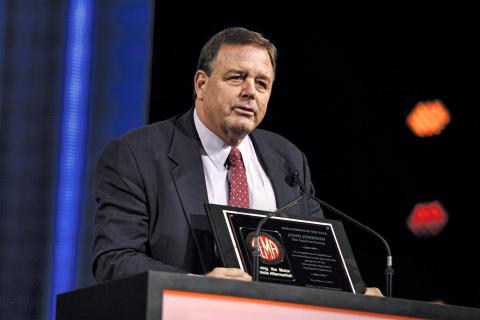
There is a wave of foreseeable changes coming in the aftermarket and racing-component industries, unfolding as longstanding entrepreneurs retire and the growth of electrification presents both challenges and opportunities for business owners and investors. Navigating these financial and organizational pathways is the specialty of John O. Johnson, co-founder of the Spartan Group in Pasadena, California, which provides advisory and management services to business owners in what the investment world calls the middle market.
What’s that? In business parlance, the middle market is made up of companies, generally privately owned or closely held, with revenues running from $5 million to $1 billion annually. They account for about a third of the US private-sector GDP and employ about a quarter of the nation’s workforce. They’re also very well represented in the automotive aftermarket and performance sectors, which account for a substantial chunk of the Spartan Group’s clients. Essentially, middle-market businesses are too big to be called family owned and too small to qualify as multinationals.
Before co-founding the Spartan Group with his partners, Johnson managed an IPO for Edelbrock and went on to form financial management relationships with K&N Filters, Dart Machinery, Aeromotive and Jesel, among others. By the early 2000s, Johnson was focusing on performance industries as clients for his investment-banking services. He worked in mergers and acquisitions on both the buy and sell sides, helped business owners secure investment capital, and counseled them on taking their firms public. He co-founded the Spartan Group in 2003, and more recently was named SEMA’s Person of the Year in 2017 for contemporizing the association’s organizational and financial discipline.
“A more apt description than middle market is family owned or entrepreneurially owned companies,” Johnson explained. “We’re an investment bank focused on them. Most of my clients are not private equity-owned companies. We sell some of them to private equity, and we buy some companies from private equity, but my clients are long-term relationships. Sometimes it’s called a boutique bank because of the client quality. Private equity companies tend to be more institutionally owned, backed by limited partners that are often pension funds, insurance companies or governmental entities. That’s typically not our client base.
“We get to know companies for multiple years, often decades, and work with them before there’s a real transaction,” he continued. “We’re talking with them about the industry, about technology, about the RPM Act, about emissions standards, about electric vehicle conversions, even mundane things like sales and use tax compliance and personal-data compliance, any kind of advice that involves business in the performance aftermarket. Effectively, we’re problem solvers, but we also bring transactional and financial advice.”
The Spartan Group’s client base ranges from OE aftermarket suppliers and full-system manufacturers to powersports and Class 8 truck builders. Johnson estimated, however, that performance is 75% of his business, with five to 15 major transactions per year.
The industry’s potential challenges in the near-term fall into two broad categories starting with demographics, as the baby boomer generation of business owners ages out. “The generational shift is from the boomers to what’s now the largest consumer segment in our society, which is millennials,” Johnson said. “Buyer appetite is toward millennials, so the boomers are transitioning either to the next generation of family ownership, or in more cases than not, to new owners. That’s an overarching issue.”
Johnson foresees the industry’s current crunch of supply and labor shortages easing within six to 12 months. A parallel issue, from an immediacy standpoint, is his view that e-commerce and direct-to-buyer engagement are industry priorities. “There’s a huge movement toward buying direct from the manufacturer,” he said. “That can increase its margin, and the manufacturer can talk directly to the consumer. On the EV side, Tesla does it. It’s like Walmart versus Amazon.”
The other key consideration for Spartan is the intertwining of technological and regulatory realties, he added. “The most important ones are adherence to the Clean Air Act of 1986, the most pivotal issue in the industry today, which is why the RPM Act that SEMA and PRI support is so important. Consumers have to have the right to choose to convert an OE vehicle and use it on the race track. We advise a lot of our companies on strategies for dealing with that.
“The related challenge is how the industry adapts to electric-vehicle conversion,” Johnson said. “We have a view at this firm that EV conversion is going to be healthy over time. There is a base of more than 290 million installed ICE vehicles in North America. Roughly 4% of vehicles sold this year are going to be full EV—not hybrid. And even though the infrastructure bill will have a lot of stimulus to transition to them, our studies show that 19% of new-car sales in 2030 are going to be EV. That means 81% are still going to be ICE. And that’s on top of the 280 or 290 million that are still in the marketplace. With the stimulus, maybe that goes to 25% instead of 19. The point is, ICE engines are going be around for a while, and the EVs are going to have a healthy market share, growing at over 21% over the next decade, even without the big juice or stimulus. So we’re going to have to coexist, and that coexistence is really the industry’s other major challenge.”
Major EV suppliers will likely experience their own consolidations before exploring future mergers with the aftermarket, Johnson predicted. What likely won’t change is that buyer enthusiasm, namely the car person or racer, will continue to power the aftermarket during the EV pivot. “We’ve seen dramatic growth in the pandemic as people have stayed home and wrenched on their vehicles, invested stimulus money in their projects. They’re enthusiasts. It’s a way of life. It’s a lifestyle, not a hobby, and that’s still the driver in the market. We’re a car culture. Really, the discussion still begins and ends there. That’s what makes this such a fun industry.”
Leading gasket manufacturers remind us that leak prevention really begins at the engine assembly stage: “The first thing to do is make sure the surface finish on the block and head is correct,” said a source from Cometic Gasket. “It has to be clean, dry, and flat.”
Steer clear of power loss or, worse still, engine damage by following manufacturers’ best practices for preventing leaks and failures.
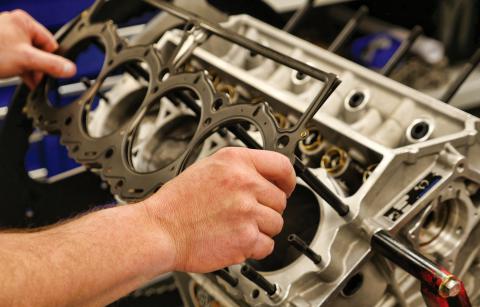
Head gaskets have to work harder than ever in these days of high-powered (and forced-induction) race engines to seal increasing amounts of cylinder pressure and also serve as a barrier to keep coolant and oil within their respective passages. Should a gasket fail, the results could vary from power loss to engine damage if the situation isn’t remedied. Even better: Prevent a leak or failure from happening in the first place.
“Once you start pushing an engine’s limits, like adding forced induction, you have to go the extra steps when building the engine to prevent leaks in the race environment,” said Sergio Duarte of Flatout Gaskets, Mundelein, Illinois.
Micky Hale of Cometic Gasket in Concord, Ohio, agreed that leak prevention begins at engine assembly. “The first thing to do is make sure the surface finish on the block and head is correct. It has to be clean, dry, and flat.”
“The roughness of the surface has to match the gasket that’s going to be used,” Duarte said. Copper gaskets can seal against a surface with an Ra (roughness average) from 40 to 80, “while an MLS (multi-layered steel) gasket has to have a roughness that’s very, very low.”
According to our source from Cometic Gasket, the Ra target for MLS gaskets is “50 or better.” He added that “[it] doesn’t necessarily have to be a mirror finish, but it has to have a smooth finish.”
Hale put the Ra target for MLS gaskets at “50 or better. That’s a smooth finish, with no mill marks or pattern in it. If a pattern that looks like a fingerprint is visible—those are lines from the cut—that’s too coarse. That gasket will tend to seep. It doesn’t necessarily have to be a mirror finish, but it has to have a smooth finish.”
Hale said “any modern machinist should be equipped for that. Over the last 10–15 years, everyone’s upped their game there. They know what to do to use MLS gaskets.”
Special machining is also needed for an engine using copper gaskets, Duarte said, “to O-ring the heads and install fire rings properly to prevent a leak.”
Is copper a better choice for a race engine? “It depends on how the engine is prepared,” Duarte said. “A lot of people are making 2,000–3,000 horsepower with MLS gaskets, and they’re perfectly okay. Most of the MLS gaskets are made with an O-ring around the combustion chambers, so they seal very well even in some race applications. The embossing in the MLS has memory, so when the head is moving up and down with heat cycles, the MLS gasket springs back and keeps the engine sealed.”
But, he added, “for an engine that’s going to push more and more, in an all-out racing application, copper gaskets with the right fire rings are the way to go.”
Whether the choice is MLS or copper, both Duarte and Hale said that proper head fastening is important to prevent gasket leaks.
“Torque specs are critical for the gasket to work,” Duarte said. “Always keep the load on the gasket steady.”
Whether copper is the preferred material over MLS for race applications “depends on how the engine is prepared,” said our contact at Flatout Gaskets. But, “for an engine that’s going to push more and more, in an all-out racing application,” he added, “copper gaskets with the right fire rings are the way to go.”
“Use a good torque wrench, something that’s been calibrated recently and is accurate,” Hale added. Good fasteners are also “a must. Having a quality fastener will improve the clamp load needed to compress the gasket.”
Because of the stainless-steel material Cometic uses in its MLS gaskets, “it takes a bit to compress it,” Hale said. “If they are seeping or leaking, typically they’re not compressed fully. If somebody calls me and has a leaky gasket, I tell them to try a retorque. If the block and heads have a good finish to start with, that will typically take it away.”
As for adding sealant to the gaskets, Hale said “no sealers whatsoever” should be put on the Cometic MLS gaskets. “Our material already has a coating on it, so any additional sealers or coating typically work against it.”
Duarte said the silicone coating applied to Flatout’s copper gaskets “has been tested by hundreds of people in different forms of racing, from dirt track, Pro Mods, you name it. It’s a very good silicone coating.” Some builders, he said, also use RTV sealant around the gasket’s coolant ports. “It’s a matter of choice. Every engine builder has their own preference as to what to use for sealing.”
Keeping head gaskets leak-free is “pretty straightforward,” said Hale. “It’s not rocket science, but it is a science to make everything work together perfectly.”
Five things from the PRI Trade Show that I think will impact the industry in 2022—and likely beyond:
1) After 24 months apart, I think it was extraordinary to see motorsports parts manufacturers and service providers finally come back together to demo and display their latest innovations on the floor of the Indiana Convention Center and Lucas Oil Stadium. Among the countless new go-fast parts turning heads were AWA Forged Composites’ prototype line of composite pushrods, rocker arms, lifters, and pistons. The company is working with fellow manufacturer CP-Carrillo on continued testing and eventual distribution. Dart Machinery’s new Iron Eagle Gen III Hemi cylinder block, a pair of low-profile LS intake manifolds from Holley Performance Products, Edelbrock’s VRS carb line, and much more from manufacturers large and small proved that new product development continues unabated.
2) I think those who still don’t recognize the influence—and potential—of content creation in motorsports are missing the boat. Savvy marketers have known for years that “content is king,” and the presence of user-generated platforms like Facebook, Instagram, YouTube, etc. provide an ideal venue for compelling storytelling. In the racing and performance space, people like Cleetus McFarland (2.8 million YouTube subscribers), Garrett Reed (2.2 million followers on Instagram), and Collete Davis (411,000 followers on Instagram, 301,000 on Facebook) are producing content that reaches hundreds of thousands, if not millions, of motorsports enthusiasts and professionals daily. And all shared their stories at PRI. Think they might be able to help amplify your brand’s message? Of note, PRI’s own digital content factory, which is guided by Sr. Editor & Social Media Manager Christen D’Alessandro and Justin Cesler of Driveline Studios, now logs comparable numbers and engagement. We invite you to follow the phenomenal work they’re putting out year-round on PRI’s social channels.
3) I think that after speaking with exhibitors in PRI’s all-new EV Performance Zone I’m fully intrigued about the future of electric and hybrid technology in motorsports. While in the Zone we visited with trailblazers like John Metric’s Lonestar EV Performance, Torque Trends, Legacy EV, and Hypercraft, which showed off its impressive unlimited EV desert race truck developed in partnership with chassis-builder Geiser Brothers, as well as visionary suppliers like AEM Performance Electronics, which in recent years has developed high-end motor and inverter controls for EV conversions and now has the capability to swap Tesla drivetrains into almost any vehicle. I genuinely enjoyed chatting with Legacy CEO and founder Rob Ward about opportunities not only to distribute parts, but also to educate the industry on EV tech and even help dispel any lingering myths about the segment.
4) I think one of the key benefits of PRI that often flies under the radar is the opportunity for new business that comes with attending and exhibiting at the Show. For example, Dave Werremeyer of exhibitor Frankenstein Engine Dynamics told us he learned of a recent rule change in dirt track racing that “we would be totally unaware of…if we weren’t here.” He went on to note that while his company’s focus in motorsports is “basically drag racing and street racing, now we’ve had diesel guys and tractor pullers who are asking us about building heads for them. Market-wise, sometimes it’s easy to become so focused and have blinders on and not see the possibilities. That’s where this Show comes into play.” In addition to EVs, PRI helped highlight entry points into emerging categories like big-wheel racing, whose National Donk Racing Association recently wrapped up its inaugural season, as well as external markets like the US military, when Thomas Vern of the US Army DEVCOM-Ground Vehicles Systems Center presented a session focusing on the connection between motorsports and DEVCOM vehicle research and development, among others.
5) I think December can’t come
soon enough, as we’re already game planning for another spectacular PRI Trade Show!
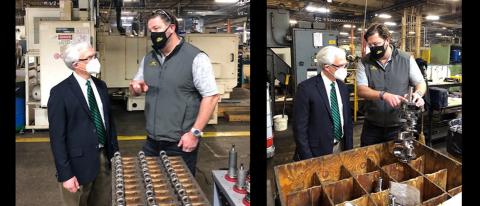
Callies Performance Products, a PRI Membership Founding Member, hosted U.S. Representative Bob Latta (R-OH) for a tour of the company’s Fostoria, Ohio headquarters. The event marked Rep. Latta’s second time visiting Callies, as the tour provided him an opportunity to interact and observe employees manufacturing and assembling crankshafts, connecting rods, and camshaft cores.
The Congressman discussed the most pressing issues facing Callies and the motorsports parts industry, including tariffs, employee retention, federal policy proposals to incentivize electric vehicles, and the Recognizing the Protection of Motorsports Act (RPM Act), of which Rep. Latta is a co-sponsor and strong supporter of the legislation, volunteering to work with House Energy & Commerce Committee leadership to pass the bill.
“We are fortunate to have PRI and SEMA represent manufacturers, engine builders, and racers to protect our source of livelihood,” said Callies Performance Products Vice President Heath Norton. “We strive to offer value-based products that support a safe, family-friendly sport. It’s important that we pass the RPM Act to preserve our industry, which is an economic driver in many communities and provides hands-on STEM education to the youth of America. Thank you, Rep. Latta, for visiting Callies and for all you are doing to fight to protect manufacturing in America.”
Rep. Latta represents Ohio’s 5th Congressional District, which includes the Northwest and West Central parts of the Buckeye State. The Congressman is passionate about advancing policies that further economic prosperity and job creation. His top priorities include balancing the budget, maintaining a strong national defense, and implementing commonsense government reforms. Rep. Latta is also a member of the Congressional Automotive Performance Caucus and the House Manufacturing Caucus.
Visits like these are one of the many advocacy efforts supported by PRI Membership, which is actively working to address challenges and needs, such as providing support for race tracks to prevent them from closing, advocacy for the racing community against current legal threats, and educational programs that help businesses and racers succeed. For more information on PRI Membership, visit performanceracing.com/membership.
For additional information about how to host a legislative representative at your facility, contact Eric Snyder at erics@sema.org.
Editor Dan Schechner and his team lay out the details in this issue (see Industry News, page 144), but I can’t help but share the news that PRI has purchased a massive building on Main Street in Speedway, which is adjacent to Indianapolis, to serve as our new PRI Membership Headquarters. Through great support from Chairman James Lawrence and the entire SEMA Board of Directors, we closed on this facility on December 30. This investment into the racing community comes with a big promise to you: PRI will continue to build, promote, and protect the racing community as no other organization has ever been equipped to do. To do this, you will see this property become the home of a PRI Content Factory, membership recruitment base of operations, membership training and education center, and a regular partner to all things racing in and around the Indianapolis Motor Speedway, including the Indy 500.
Really, the possibilities are endless for you as a key part of the racing community to take advantage of what we are building at PRI. We are even looking at a potential “racer’s café” where like-minded individuals can spend time, share ideas, and build the next great project. If you have any additional ideas for our new location, please drop me a note at president@performanceracing.com.
DC Alert
As of this writing I had just gotten off a call with our entire Washington, DC-based SEMA/PRI Government Affairs team. Great people, anchored by Daniel Ingber, Eric Snyder, Christian Robinson, and David Goch. PRI has never been more politically active because the racing industry has never been under this great a threat, and the DC team is gearing up for a big RPM Act push headed into the midterm elections. Remember that when the Congress changes over every two years, all the bills that were previously introduced get scrapped and you have to start over. We’re in year two of the 117th Congress, so 2022 will be critical to get the RPM Act passed into law. We currently have 140 co-sponsors in the House and Senate. A truly bipartisan bill, this thing has legs, but we are going to call on you at critical times to really give it a push. Letters (all 1.5 million of them) go a long way, but a phone call is exponentially more important. Now, during the offseason, think about calling your federal lawmakers to explain to them how much racing means to your community. It’s critical that we all stay active to get the RPM Act passed. Much more coming from us soon. For information, head on over to SaveOurRaceCars.com.
Kersting Retirement
It is fitting that I would write about the Government Affairs office on the heels of the announcement that Chris Kersting, the 20-year CEO of SEMA (PRI’s parent company), is retiring this month. Chris has been a huge champion for the motorsports industry throughout his 30-year career with SEMA, and he grew up in the DC office fighting for the automotive aftermarket. Once serving as counsel for NHRA, Chris has played multiple key roles in the promotion and protection of our industry. He also quarterbacked the acquisition of PRI, and, on a personal note, he has coached me through my first year and a half here with grace and incredible intelligence. Chris is retiring in order to spend more time with his family, among other pursuits, and I am sure we will see him at a race or two in the coming years.
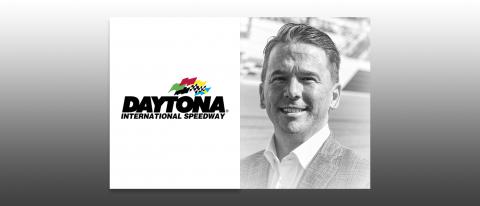
A blue-collar upbringing and promising kart racing career eventually gave way to “the business side” for the now-president of iconic Daytona International Speedway.
Frank Kelleher didn’t plan to become one of the leading executives in American motorsports. In his youth in Scranton, Pennsylvania, Kelleher grew up working in the family tire dealership, Kelleher Tire. He got involved in kart racing, winning two national titles, but didn’t have the financial backing to go pro.
It was an internship at International Speedway Corporation (ISC) that opened his eyes to the business side of racing. After coming up through the corporate structure in advertising and sponsorships, Kelleher is now the president of Daytona International Speedway. At just 41 years old, his best and most productive days are still ahead.
We sat down with Kelleher to find out what’s happening at the highest levels of ISC today and where things are headed in the future.
PRI: Your personal history reads like the opening of a great movie. What did you gain from that early experience that you’re putting to work at Daytona International Speedway these days?
Kelleher: As I reflect on childhood and growing up in a family business, I grew up in a very adult environment of understanding business and hard work and how the world actually operates. We were a Cooper Tire and Goodyear dealer and still are. My dad was up with the sun every morning and gone to the garage. Our whole family life revolved around the success or the hardship of the business. There were many years that we lived day to day, week to week.
Frank Kelleher originally sought to make a living as a pro driver, but a 2002 internship with ISC shifted his focus to the business side. From there, his career took off. “My mentality was to approach this like I did any national karting event: Give it 110%.”
Because of that, from a very young age we all understood the value of hard work, the value of a dollar, and that you have to wake up every day and go out and earn it. As a teenager in high school and then in college, I worked six days a week in that garage. I did everything from changing tires, changing oil, working on cars, plowing snow, towing cars, very much in the blue-collar part of the automotive industry. Then when I got to college and was studying business, I had a different point of view. There was what’s in the textbook and also my real-life experience.
My introduction to motorsports was on the competition side, watching my uncle race a sportsman. I was on the pit crew for my uncle and for my cousin, who raced sportsman and then a modified and a sprint car. I got behind the wheel at 16 years old, racing karts on a dirt oval and then road course racing. We started running national events with the World Karting Association, and I got to be a two-time national champion. When I was at the race track, I had to be my own PR guy, my setup guy, my marketing guy, the sponsorship guy, and then be the wheelman and go out and get the job done.
PRI: When you were racing karts and working days at your family’s tire dealership and then going to college to learn marketing, did you envision a career like the one you’ve had, or was this sort of something that happened?
Kelleher: It just happened. I did not have a master plan. My goal was to drive open-wheel race cars. Whether it was IndyCar or Formula 1, that’s what I wanted to do. In my mind, if I couldn’t make it as a professional driver, then I wanted to race locally, whether that would be SCCA road courses or in the winged sprint car world.
I did my internship here in Daytona with ISC in the summer of 2002. I wrapped up my internship and I jumped back into the World Karting Association, national circuit. I had a scout approach me, and he said, “You’re a little bit old, but you’re articulate, and you clearly know how to drive. I think there could be opportunity for you. Are you financially independent?” I asked, “What does that mean?” He said, “Can you bring a half-million dollars to a race team?” I said, “Buddy, I essentially hitchhiked here.” And he said, “Well, let’s keep in touch.”
That was when the light bulb really went on. I figured that if I really want to be in professional motorsports, I need to be flexible enough to embrace that it might not be behind the wheel. But if I can follow up on my internship and work in the sport in some capacity, man, how cool would that be?
So I just continued to pester and follow up with the folks that I interned with. They offered me a job at ISC in the corporate office or at California Speedway in Fontana, and I chose corporate. My mentality was to approach this like I did any national karting event: Give it 110%. I’m going to be the first one in and the last one to go. I’m going to network with everyone. I’m going to travel as much as I can, ask all the questions, apologize if I made a mistake, and just be the person that I was raised to be.
Fast forward to six months ago [this interview occurred in November 2021]. I was the senior vice president and chief sales officer for all of NASCAR, selling official partnerships and sponsorships at our tracks for all of our media assets. The France family came to me and said, “We want you to go and learn the operational side and everything that comes with being the face of Daytona.” I’m honored at this opportunity to lead such a talented group of people and represent the most historic and storied stock car track in the world.
As the new president of Daytona International Speedway, Frank Kelleher draws on a lifetime of motorsports experience, beginning as a champion kart driver growing up in a racing family.
PRI: How are you defining success at Daytona International Speedway? What does winning look like in 2022?
Kelleher: How do we earn the fan’s business and how do we earn their repeat business? This facility outside my window right now, we did a $400 million renovation in 2016. And it’s beautiful. It’s awesome. Just the way that I’m wired though, we have to be planning for the next refresh. If we want to maintain our status as the World Center of Racing and hallowed ground, we have to be the industry leader. We have to be the tip of the sword when it comes to leading and innovating guest experience and competition.
PRI: How are you going to do that?
Kelleher: I think that I authentically can relate with that family in the Midwest or the Northeast or wherever in the country who is going to make sacrifices to get to Daytona and be a fan in the stands. If you’re going to travel this far and spend a lot of money, you want to get your money’s worth out of it.
In 2004, our infield and garage were cutting-edge. As I mentioned, we got a very big injection of capital in 2016 to redo our grandstands and our entry points. I think it’s time that we look at our infield and our garage experience and figure out what that new cutting-edge experience is for our drivers and our fans that you can’t get at any other race track in the world. We do a really good job as well of maximizing our calendar. There’s something going on in this facility all the time.
PRI: You’ve been president of Daytona for about six months now, coming in during the pandemic. How’s it going?
Kelleher: I am so thrilled with the leadership of our company and how they have been behaving and operating the last two-and-a-half years, through not only a merger but through the pandemic and the changes and evolutions they’ve made with respect to inclusion and social justice. And also what’s on the horizon of the Next Gen race car and the focus on competition.
Specifically regarding the pandemic, one of the many things I love about working for the France family is that this is a giant family business. When we went back to racing at Daytona and then at Homestead, we were all out laying down the social distancing stickers. I was putting the sanitation wraps on urinals and on the paper dispensers. We were doing it all ourselves. Regardless of your title and your tenure, we’ve got a job to get done.
PRI: You mentioned the social justice changes that have been happening within NASCAR and ISC. How are you approaching those discussions from your position as president at Daytona?
Kelleher: Regardless of the topic or the cause, change is hard, and everyone resists change at first. I want to enable an environment where people feel welcome and people feel safe and people can come together, whether it’s at Daytona or any of our properties. I want people to be able to leave politics and stress and anything keeping you up at night out of your mind. You can come here and celebrate and be taken away by a visceral experience, whether that’s a concert or a motorsports event or a food and wine festival. Whatever we need to do to enable everyone to feel welcome and safe, I’m excited to be a part of that.
PRI: What surprised you about taking over management at Daytona?
Kelleher: Having worked in the sport for 19 years, I thought I understood race track operations. Now six months into this role, I know I didn’t know anything. The ops team at Daytona International Speedway are some of the hardest working people that I know. This speedway is a living, breathing animal that eats capital daily.
We have events from quarter midgets to karting, then to motorcycles, sports cars, stock cars and tire testing. We’ve got a four-day rock music festival coming up. There’s always something going on, and these men and women work around the clock. It is hard, labor intensive work, and they do it with such pride that it’s a different level of accountability that I feel as their president. I want to make them proud. I want them to know that I see them, and I appreciate them. We want to deliver for our sponsors and our fans, because they play such a heavy and pivotal role that we’re all grateful for.
Frank Kelleher is looking carefully at what it means for a track to offer a “cutting-edge experience” these days. He’s eyeing updates to build on Daytona’s 2004 and 2016 renovations.
PRI: What are your short-term goals for the Speedway?
Kelleher: I don’t know what I don’t know. So I go into it with a lot of vulnerability and open eyes. I’m getting into my very first Rolex 24 weekend as the track president, and it’s the 60th running of the Rolex. I’m getting into my very first Speed Week as the president, as well as my very first Bike Week. So from a short-term standpoint, there’s a lot more that I want to learn. However, specific to the Rolex, I really want to maximize the fact that it’s the 60th running, and I really want to celebrate the past six decades and honor the men and women of IMSA and the Rolex for what they have created. For Speed Week, my short-term goal is to sell the Daytona 500 out sooner than we have the last few years. I’m aggressive with my aspirations! When we’re able to announce the sellout, I really want to pivot the focus to events such as the Xfinity race and the ARCA race on Saturday, which are phenomenal. The Truck race is one of my favorite races here in Daytona. And the Duel on Thursday is a blast. That’s going to be the first time that the Next Gen cars are racing the high banks in a point series race.
PRI: What are your longer-term goals for Daytona?
Kelleher: I want to take a step back and look at it from a global footprint: What is that next big sport or conference or exhibition? I want Daytona to be in that request for proposal to be a host for the next big thing, and I don’t even know what it is that could be on the horizon.
In 2023 for Rolex, we’re going to have a brand new class where a car that could race the Rolex 24 can also race Le Mans and vice versa. So I have a vision for a bigger global footprint for all things Rolex.
Also, this community embraces Daytona, and it embraces motorsports. I want to try to take it to a new level. I want to work with our local colleges and help create internships, help create job opportunities. My son is in first grade, my daughter’s in kindergarten. I want to work with Volusia County schools and figure out a way that this community can truly understand what this facility means not only to the backyard but globally.
PRI: The Daytona facility must have a lot of jobs that don’t necessarily involve racing cars.
Kelleher: We’re hiring! We need people to do HVAC, we need people to mow the lawn and we need people to be accountants and in finance and marketing and sales.
Daytona International Speedway is “a giant family business,” observed Frank Kelleher. He fits that culture well, gladly taking on whatever task is needed to get the job done, including here, at left, with 2021 Daytona 500 winner Michael McDowell, right, who is honored on the Daytona 500 Champions Walk of Fame.
PRI: There’s a changing marketing and sponsorship landscape in motorsports right now. Where do you see that going, and how are you responding to it?
Kelleher: From a competition and sponsorship standpoint, the sport has evolved. That’s awesome because if you’re not evolving and growing, you’re dying. So our sponsorship base should continue to always evolve, and our fan base should continue to evolve.
Look at DoorDash doubling down on Bubba Wallace. This is a tech company out of Northern California with high-tech venture capitalist dollars. We developed a partnership where it is official with NASCAR and activating at tracks. What we are accomplishing in the sponsorship space specifically deserves more credit than it’s getting because we’re being very innovative. Historically, you had to talk to the track guy, the lead guy, the team guy and the media guy. But now a NASCAR sales rep can represent all of that in one conversation and bring all these people to the boardroom to help a brand say yes to the sport. That was not the case 10 years ago.
PRI: A couple years ago, Mazda had this iRacing competition going on at the Rolex 24 where the winner was going to get a test in an MX-5 Cup car. How does virtual racing play into the future of motorsports and the way that people are going to interact with Daytona International Speedway?
Kelleher: If you look back when the world shut down and the pandemic was at its height, NASCAR pivoted and flipped the switch on our iRacing product, and we stayed relevant in the sporting community. It was not just motorsports but in the sporting community, by having our top talent racing from their homes and apartments in their simulators and iRacing. We had high drama and some comedy along the way, but it kept us fresh, it kept us top of mind. To this day we still have some of the highest-rated video game competitions ever on national television.
For competitors, being behind the wheel on a simulator, you save a lot of expense when you toss a car in the fence. Look at the story of William Byron. That’s where he cut his teeth and got noticed, behind the wheel in a simulator. I see eSports, iRacing, and simulators being more of our fabric moving forward in the future from engineering and design, to training and finding talent.
PRI: You’re comparatively young in your career and you are at the top echelon of motorsports. What mountains are left for you to climb personally?
Kelleher: I always try to maintain humble roots and focus on what’s in front of me. For the next three to five years, I’ve got a lot to learn in this role. Every year, I want to continue to challenge myself and my team and this company to raise the bar to the next level. Beyond this role, I haven’t narrowed in on what would be next for me. I started my career with the France family, and I would like to end it with the France family. But I’m more focused on the excitement that I have for the short term.
A look back at some of the most memorable machines, moments, and men and women of the Performance Racing Industry Trade Show, as captured by our talented team of event photographers.
December’s PRI Trade Show marked the successful return of the industry’s premier live event for motorsports professionals. The Indianapolis, Indiana-based Show was one of the most impactful in the 35-year history of PRI, with more events, activities, educational sessions, and special features than ever before.
Tens of thousands of attendees—including media, industry influencers, enthusiasts, and professionals from nearly 1,000 exhibiting companies—gathered in the racing capital of the world for the event, which took place at the Indiana Convention Center and Lucas Oil Stadium in downtown Indianapolis.
Highlights from the December 9–11 Show included legendary driver and team owner Roger Penske and Indianapolis Motor Speedway President Doug Boles headlining the Grand Opening Breakfast; the unveiling of this year’s Indianapolis 500 ticket design with four-time race winner Helio Castroneves, a jam-packed Save Our Racecars Rally to support the all-new PRI PAC; a dedicated EV Performance Zone highlighting future trends in motorsports; and much more.
“It was great to experience the excitement and camaraderie of being back in person at the PRI Show, catch up with friends and colleagues, take advantage of opportunities to capture business, and network with other motorsports professionals,” said PRI President Dr. Jamie Meyer. “The level of industry innovation and development on display at the Show was truly outstanding and a clear demonstration of the strength and growth of motorsports.”
We couldn’t agree more, which is why we decided to take a look back at some of the most memorable machines, moments, and men and women of PRI 2021 through the lenses of our own award-winning team of photographers and content creators. Enjoy!
Vehicles
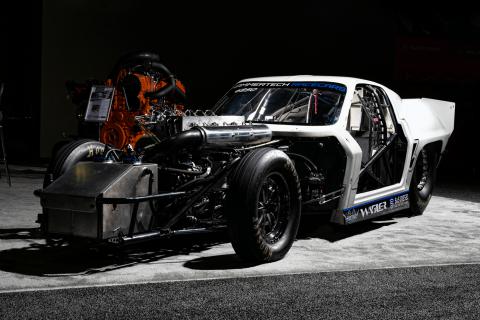
From roadsters to pullers, nostalgia drags to modifieds, PRI each year showcases an eye-popping array of competition vehicles in all shapes and sizes. Throughout a Show floor teeming with exhibits, attendees are never more than a few steps from a nitro Funny Car, or a vintage Indy car, or even a Fisher Motorsports-built 1973 Jeep with ‘79 Camaro subframe featuring a 632-cubic-inch BBC powerplant and 88-inch wheelbase that’s billed as the world’s fastest Postal truck and goes by the name “Junkmail.”
HORSEPOWER
So much hp at PRI! There’s a reason the annual Trade Show is considered an engine builder’s paradise, what with countless big and small block, LS and LT, Coyote and Godzilla, multiple generations of Hemi, and a variety of custom, vintage, and exotic platforms on full display. Beyond making big power, these creations are true works of high-performance art, illustrating what’s possible when form meets function in a package that utilizes advanced technology to push boundaries and crush expectations.
SHOW FEATURES
Traditional favorites like PRI’s world-famous Machinery Row and Featured Products Showcase provided attendees and media with a bevy of performance parts and equipment to take in, while brand-new features included the EV Performance Zone dedicated to electric race and performance vehicles, specialty EV builders, and EV component suppliers; the Content Creation Center, where industry leaders and influencers discussed all things digital content; PRI Headquarters, where visitors learned all about PRI Membership and the PRI Road Tour; and much more.
VIPs
Where else can you rub elbows with legendary driver and team owner Roger Penske, Indianapolis Motor Speedway President Doug Boles, NHRA Top Fuel driver Alexis DeJoria, three-time Cup Series champion and SRX Series co-owner Tony Stewart, motorsports icon Linda Vaughn, Indiana Governor Eric Holcomb, and…The Donkmaster??? (Real name: Sage Thomas.) As in years past, the PRI Show once again proved it’s the perfect gathering place for racing’s movers, shakers, trendsetters and groundbreakers.
PRI EDUCATION
Attendees turned out in droves for more than two-dozen seminars offered as part of the PRI Trade Show experience. Industry leaders and experts on a host of business and technical education topics delivered the Show’s most expansive—and best-received—program to date. “For us, as a fairly new business, it’s been incredibly beneficial because we’ve been able to really identify what we need to do to move forward,” said Fast Lane Garage’s Rachel Lane. “It’s been really eye opening, and it’s been a lot of fun.”
EVENTS
As if there wasn’t enough on the Show floor to keep attendees and exhibitors busy over three full days, PRI offered a slew of special events, activities, and networking opportunities for racing professionals of all stripes. The Race Track Business Conference for facility and series operators marked its 10-year anniversary, while young men and women pursuing careers in motorsports got to interact and engage up-close with industry members. And, no PRI Show would be complete without another blockbuster signature kickoff—the Grand Opening Breakfast.
Among the many highlights of PRI are major announcements by race sanctions, tracks, and teams as they make preparations and reveal new initiatives for the upcoming season.
Judging from all the announcements made at December’s PRI Trade Show in Indianapolis, racers across all facets of motorsports are anxious to put the pandemic in their rear-view mirrors, get back to pre-pandemic normality and accelerate their businesses as much as possible in 2022 to make up for lost time and opportunities.
Here’s a look at some of the key news generated at the Show, and the ramifications these announcements may have within their motorsports segment for the upcoming race season and beyond.
Circle Track Racing
World Racing Group (WRG): Brian Carter, CEO of WRG in Concord, North Carolina, dropped big news on the last day of the PRI Show when he announced that WRG will expand in 2022 to offer two new series for non-wing sprint cars and midgets. They will be called the Xtreme Outlaw Sprint Car Series and the Xtreme Outlaw Midget Series.
WRG already owns and runs the winged World of Outlaws NOS Energy Drink Sprint Car Series, the World of Outlaws Late Model Series, the Super DIRTcar Series big block modifieds and DIRTcar Racing.
Carter said both new series will have a 10–15 race schedule in 2022, a combined point fund approaching $100,000, and that all of the races will be streamed live on DIRTvision. Some of the two new series’ races will be run in conjunction with other WRG-sanctioned events.
World Racing Group has announced its new Xtreme Outlaw non-wing sprint and midget series for 2022. Each will race 10–15 events streamed on DIRTvision, and they’ll share a combined point fund of nearly $100,000.
“Working in conjunction with POWRi and USAC to the extent possible and combining World Racing Group’s already established resources will allow us to expand the sport and provide more entertainment for our fans,” Carter said.
The series’ 2022 schedules and more information will be available as it develops on XtremeOutlawSeries.com.
Automobile Racing Club of America (ARCA): ARCA team owner Max Siegel used the PRI Trade Show to announce that he’ll run two drivers, Nick Sanchez and Rajah Caruth, in all 20 ARCA Menards national races in 2022 as part of NASCAR’s Drive for Diversity program with Rev Racing.
“The second thing Max announced is that his team has a formal relationship with Chevrolet,” said Ron Drager, president of ARCA, Temperance, Michigan. “It’s huge for an ARCA team to be working with a major manufacturer like this.”
Drager said more diversity should produce more fans. “Different ethnic groups of racers open up interest in different fans, because people like to watch drivers they can identify with and relate to. This will help us appeal to more people, and we hope to gain some added fans,” he said.
“We also had five females start an ARCA Menards West race in 2021 for the first time,” Drager continued. “That was at the Bullring at Las Vegas.
“Bridget Burgess is expected to be back in the ARCA Menards West series in 2022, and perhaps JoJo Wilkinson too,” he added.
United States Auto Club (USAC): USAC of Speedway, Indiana, released the 2022 schedules for the AMSOIL National Sprint Series, the NOS Energy Drink National Midget Series, and Silver Crown.
In addition, several USAC driver announcements were made at the PRI Show:
Chase Stockon was named as the new driver of the Pink 69 Racing car for the dirt portion of the 2022 USAC Silver Crown series.
Kody Swanson, the winningest driver in USAC Silver Crown history and its six-time and reigning champion, told a Flo Racing audience he will run the pavement races in that series in 2022 with Doran Racing and the dirt-track races with Dyson Racing.
Jadon Rogers, the 2020 USAC AMSOIL National Sprint Car rookie of the year, will go full-time with the series in 2022, contesting all 51 races for his father, Kyle Rogers, and Tim Engler.
CJ Leary will contest the full USAC Silver Crown schedule in 2022 in the Klatt Enterprises No. 6.
WISSOTA Promoters Association: “We’re at PRI to make connections,” said Carson Gramm, executive director of the WISSOTA Promoters Association, Saint Cloud, Minnesota. “We have 50 tracks in the United States and Canada, and we’re anticipating the possibility of adding three new ones in 2022.
“We just signed Thunder Hill Speedway in Thunder Bay, Ontario,” he said, “and two other new ones are possibilities. We’re always looking for more tracks.”
The WISSOTA Promoters Association recently added Thunder Hill Speedway in Thunder Bay, Ontario, Canada, to its roster of tracks. At December’s PRI Trade Show, WISSOTA introduced its rebranding and new logo.
WISSOTA has eight different classes of race cars, with dirt late models being the premier class and Midwest modifieds being the most popular via car count. Its biggest event is the Speedway Motors Wissota 100, which will be held at I-94 Speedway in Fergus Falls, Minnesota, on September 13–17.
“We recently rebranded, and PRI marks the official debut of our new logo,” said Callie Sullivan, the series’ office administrator who is also in charge of points keeping and licensing.
Lucas Oil Indianapolis Raceway Park: Besides changing its name from Lucas Oil Raceway in Indianapolis to Lucas Oil Indianapolis Raceway Park, IRP’s booth was the place to learn about the new 500 Sprint Car Tour.
“We’re working on a schedule,” said series co-owner Tom Hartsell Jr. of the Auto Value Bumper to Bumper Super Sprint Series, Cassopolis, Michigan.
“Right now, we’re hoping for 11 dates, maybe 12. Of course, the Pay Less Little 500 at Anderson Speedway and Lucas Oil Indianapolis Raceway Park will be on the schedule, and several tracks in Michigan have expressed interest,” he said. “We’re very encouraged. We’re seeing some of the promoters we’ve been talking to here at the Show and trying to firm things up.”
Speedway Illustrated Kenny Schrader Real Racer of the Year Award: Karl Fredrickson, publisher of Speedway Illustrated magazine, and veteran racer Kenny Schrader presented the Real Racer of the Year award named in Schrader’s honor to Andy Jankowiak, who was this year’s unanimous choice by the panel of voters.
John Schneider, best known for his role of Bo Duke on “The Dukes of Hazzard” TV show, was this year’s special guest at the awards ceremony. The actor/singer started racing dirt-track modifieds last year.
Jankowiak drives pavement modifieds and three-quarter midgets, where he is a regular winner. He also invested every penny he had to compete in seven events in the ARCA Menards national series in 2021, recording four top-10 finishes.
Drag Racing
National Hot Rod Association (NHRA): The NHRA of Glendora, California, announced that it has made a major adjustment to its Pro Modified rules in an effort to attract competitors from other series to also compete in NHRA events as their schedules permit.
“Screw superchargers were introduced into Pro Mod, and some safety requirements were amended in an effort to entice competitors from other series to give the NHRA a try,” explained Lonnie Grim, who became the NHRA’s national tech director last May.
“We also introduced a new category in the NHRA called Factory X,” he said. “These cars have a stock dimensional body with an OEM supercharged engine and a five-speed manual transmission. They weigh 2,650 pounds.”
The official name is NHRA Factory X presented by Holley, and it bridges the gap between Factory Stock Showdown and Pro Stock. It’s for 2019 and newer cars like the Chevrolet COPO Camaro, Dodge Challenger Drag Pak, and Ford Mustang Cobra Jet.
Grim said the Factory X class will be an exhibition-only class at four events in 2022. Actual competition will begin in 2023 at eight to 10 events.
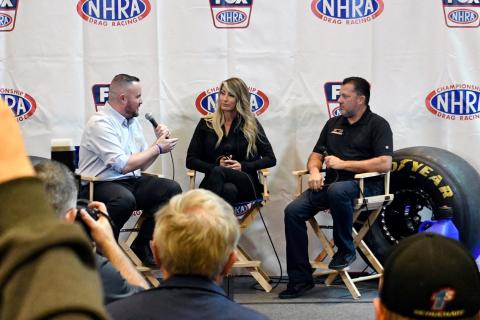
Ron Capps Motorsports: Two-time and reigning NHRA Camping World Drag Racing Series Funny Car world champion Ron Capps used a PRI Show press conference to announce the launch of Ron Capps Motorsports. He will be the team owner and also the driver of the NAPA Auto Parts entry in 2022.
“Team ownership has been a lifelong dream of mine,” he said.
In addition to primary sponsor NAPA, Capps’ crew will remain intact. Dean Antonelli and John Medlen will continue to tune the car for the new team, which will be based at Don Schumacher Racing’s headquarters in Brownsburg, Indiana.
2022 Pro Mod Summit: Various sanctioning bodies for the Pro Mod class, track promoters, teams and drivers got together in a meeting room at the PRI Show to address common concerns and opportunities, and to try to galvanize the class’s participants to work together.
The summit, the follow-up to a similar one held here four years ago, was moderated by Wes Buck of Drag Illustrated magazine.
It was noted that common rules generate bigger car counts. If teams don’t have to make numerous changes in order to compete, they’re more likely to travel.
The need to attract the younger generation was noted, as was the value of business-to-business networking.
Social media gives people the means to tell their stories and become well known rather easily. Conversely, social media is no substitute for business and personal relationships.
The group was reminded that it pays to keep abreast of the requirements of contingency award programs.
It’s critical for the different groups that sanction Pro Mod drag racing to get to know each other, and to not think of the different groups as competitors but as comrades. “It’s simple, but not easy, to keep talking,” Buck said. “Let’s start the conversation and create an atmosphere of cooperation.”
Professional Drag Racers Association (PDRA) 2022 Season Preview: The PDRA, based in Fredericksburg, Virginia, held a press conference at the Trade Show to preview its 2022 season.
Tyler Crossnoe, series director, recognized the series’ young racers who were selected for the “30 Under 30” awards by Drag Illustrated. He also thanked the series’ marketing partners and announced that Laris Motorsports Insurance will be the organization’s insurance provider in a deal that was signed at the PRI Show just hours before the press conference.
PDRA introduced its new Super Street small-tire category, which will debut at four events in 2022. The sanction also highlighted racers selected for Drag Illustrated “30 Under 30” awards.
He also announced that a new small-tire category, which will be called the Super Street class, will debut at four events in 2022.
Tech director John Sears also spoke, and Tommy and Judy Franklin, who own both the PDRA and Virginia Motorsports Park, were recognized.
Southern Drag Boat Association (SDBA): “Our big news is we’re bringing top fuel boat racing back!” said David Carroll, owner of the SDBA, Edmond, Oklahoma.
“When Lucas Oil pulled out, there wasn’t a platform for them to race,” he explained. “We kept them in the water with exhibitions only for the last three years, but they’ll be racing in at least four of our nine events in 2022, and we’re working on securing more.
“Everybody wants to see top fuel boats,” he continued. “It means more exposure for us and helps us keep our momentum going as a sanctioning body. We expect four or five top fuel boats at our events to begin with.”
National Muscle Car Association (NMCA) and National Mustang Racers Association (NMRA): “Our big news is we’re going to introduce a new class, the 8.60 street race category, at four events in 2022,” said Rollie Miller, general manager of NMCA and NMRA, Santa Ana, California. “We anticipate strong participation.
“Also new is that the 14th annual NMRA/NMCA All-Star Nationals, which used to be at Atlanta Dragway, is now going to be at Rockingham Dragway in Rockingham, North Carolina,” he said.
DIESEL Motorsports: “In 2022 we’re going back to Texas and Florida,” said Ron Knoch, president of Kansas City, Missouri’s DIESEL Motorsports, which offers diesel drag racing events with five different classes around the country.
“We haven’t been in Texas in seven years, and we just started racing in Florida last year. In 2022 we’ll have one event each in Texas and Florida,” he said.
Texas Motorplex: Andy Carter, general manager of the Texas Motorplex in Ennis, Texas, noted that the drag racing facility will be especially busy in October. Its premier event, the NHRA Texas Fall Nationals Stampede of Speed on October 7–16, is 10 days long, when most NHRA events are three days long.
“In addition to all the racing, we’ll have bull riding, concerts, a lantern festival, a beer expo, and other special attractions throughout the week,” Carter said.
He also pointed out that the Street Outlaws No Prep Kings Finals will be held at the Texas Motorplex on October 28–29.
He said the track has a new sponsor in Ticket Smarter, a ticket reseller, and that in 2022 the track will work on integrating some new technology into its timing systems in conjunction with Portatree and My Race Pass.
Road Racing
Parella Motorsports Holdings (SVRA, Trans-Am): Schedules were released by Parella Motorsports at the PRI Show for the Southlake, Texas-based Sportscar Vintage Racing Association (SVRA); both the national and West Coast divisions of Trans-Am powered by Pirelli; the F4 United States Championship powered by Honda, and the Formula Regional Americas Championship powered by Honda.
“Our big news for the SVRA is we’re back at the Indianapolis Motor Speedway in 2022,” said Pamela Shatraw, editor of SpeedTour Quarterly, the SVRA’s official magazine. “We lost that event to COVID in 2020, and the track schedule didn’t permit it to be held in 2021. But in 2022 we’ll be at IMS on Father’s Day weekend, June 16–19.
“The Shelby American Automobile Club will hold its 60th anniversary convention in conjunction with the SVRA IMS event,” she added. “We’re expecting a couple hundred Shelby race cars and show cars to be on the grounds that weekend.”
National Auto Sport Association (NASA): “Our big news here at PRI concerns our relationship with Toyota,” said Jay Andrew, regional director of NASA’s Great Lakes region. “Everybody who buys a new Toyota Supra or a Toyota GR86 in the United States will get a new NASA membership along with their car,” he said. “It used to be just with Supra, but now we’ve added the GR86, which is a new model.
“It’s a big deal to have a relationship with a car manufacturer that big,” he added. “The buyers of both cars will get a free track day, too, and we’re affiliated with almost every road course in America.”
NASA focused attention on its newly expanded partnership with Toyota, which provides a free one-year NASA membership for Supra and GR86 buyers.
Andrew said the partnership works for both entities. “For Toyota, it’s a selling point for their cars,” he explained. “And for NASA, it’s potential new members going forward if they enjoy it and renew.
“We think this new promotion will really take off because the new GR86 is about half the price of a Supra, so it will appeal to the younger set, which is good for us because that’s our primary market,” he said.
GRIDLIFE: GRIDLIFE is a motorsports event company based in Chicago, Illinois, that produces track days and festivals around the United States geared toward a young audience. The track days are for beginners to advanced drivers. The company’s festivals combine live musical acts on Fridays and Saturdays with racing throughout the weekend.
At the PRI Show the company released its 2022 schedule and announced plans for a new festival called “Circuit Legends” that will be held at Lime Rock Park in Lakeville, Connecticut, on August 19–20.
“Circuit Legends” is a new festival concept for the company. It will celebrate automotive culture of the mid-1980s through mid-2000s by featuring vehicles that represent what it calls “the golden age of touring car racing.” Legendary drivers will participate on track and at speed.
By staging an event at Lime Rock Park, GRIDLIFE enters a new region, the Northeast. Lime Rock Park is approximately 93 miles from Manhattan.
“Seven of our 10 events are livestreamed,” noted Charlie Ensslin, operations manager for GRIDLIFE.
Team Canada Scholarship: After losing two years to COVID-19, the Team Canada scholarship will be back in 2022 with a new “shootout” format at a yet-to-be-determined road course in Ontario, said Brian Graham, who founded the scholarship in 2011.
The scholarship was developed to give young Canadian formula car drivers the opportunity to showcase their talents at a world-class event, the Formula Ford Festival and the Walter Hayes Trophy race at Brands Hatch, England, in October. The Team Canada scholarship is very similar to the United States’ Team USA scholarship.
The Team Canada Scholarship returned from its two-year, pandemic-forced hiatus to announce a new “shootout” format to be held at an Ontario road course.
Young Canadian drivers from various junior formula car series in both Canada and the United States may apply. Six drivers will be selected for the Team Canada shootout, which will be a two-day event in August or September. Judges such as Canadian IndyCar driver James Hinchcliffe, who along with 2016 scholarship recipient Parker Thompson were in attendance at the press conference at the PRI Show, will weigh in with their impressions of the young drivers’ skills. They’ll be judged both on and off the race track at the shootout.
More info will be on teamcanadascholarship.com.
M1 Concourse: Representatives of first-year PRI exhibitor M1 Concourse in Pontiac, Michigan, were busy promoting their two signature events: the Woodward Dream Show on Friday, August 19, and the American Speed Festival, September 29–October 2.
“It’ll be the second year for both events,” noted Chris Pokorski, the facility’s director of marketing and communications. “The Woodward Dream Show will celebrate 90 years of the 1932 Ford ‘Deuce,’ and the American Speed Festival will celebrate 60 years of Shelby cars and honor Peter Brock.”
While familiarity and potential costs are often key factors for drag racers that need to choose between the two, there are other important elements within both types of racing that can sway a competitor’s preference toward one format or the other.
Small-Tire Advocate: Eric Bardekoff, 2021 NMCA XtremeStreet Champion
For me, I think it was about what I felt I could do with what I had. I’d built a stock-tub car for Factory Showdown, and that was more or less how it stayed because I could fit a 275 radial under there with no problem. When I built the car there wasn’t that much going on in big-tire racing that really had my attention, and the crossover classes are my biggest thing. I’m not going to back-half a car only to be stuck in one or two classes—it’s just not feasible for us.
I grew up in NHRA running Stock and Super Stock, but we wanted to get into heads-up racing and Factory Showdown really seemed to fit the bill for us. So that’s what we built the car around, and that allowed for a pretty easy transition over to Ultra Street as far as the chassis goes. After that we started paying more attention to radial racing because we felt the car and combination could do pretty well there, too. So along with Ultra Street, we can run in Xtreme Street with the NMCA and Renegade with NMRA. And if I just change the blower, I can run in MPC Real Street, too. I could even dabble in X275 if I wanted to get my face kicked in.
The thing about our team is that we work with what we’ve got—this is not a million-dollar racing program. We don’t have endless amounts of money to throw at things, so it’s more about figuring out how to maximize what we’ve got. That’s not to say I wouldn’t ever compete in big-tire racing, but to do so competitively would require building a whole new car. Being able to run in several different classes in the same car was one of my top priorities when I was building the car because I didn’t want to get pigeon-holed, and I think the crossover classes help to bolster car counts in general.
From a skill and strategy standpoint, I think small-tire and big-tire racing are both very competitive, and each has their own bag of tricks that you have to figure out. Regardless of which one you’re running in, winning comes down to the amount of effort you put in and how effectively you can utilize the data you’re gathering. You can have a car with every sensor imaginable and all of the adjustability in the world, but if you don’t know how to use the data, it’s not going to run competitively in either of them. Whether you’re running in small-tire or big-tire races, it takes a lot of work to find success.
With that said, I think that the radial stuff that’s going on at Cecil County Dragway is probably the best racing in the country, and I think a lot of people would agree with me on that. At a typical Cecil County street car shootout there’s always more than 20 cars in Ultra Street. The competition’s fierce, the track prep is consistent, and most of the teams that show up are there to run in the small-tire classes.
Big-Tire Advocate: Craig Sullivan, Three-time Top Dragster Champion, NMCA Pro Mod Driver
I drive both big- and small-tire cars, but my wallet dictates that I have to own one or the other, so I have a Pro Mod car. Radial Versus the World is just far more expensive, and if you don’t have all of the data that the guys who’re already successful there have, you basically have to have an unlimited checkbook to go test.
The other thing to consider is that on the small-tire side you’ve basically got two different categories: The guys that run Donald’s (Donald “Duck” Long and Duck X Productions) races and everybody else. You can’t take Mark Micke’s car or Nick Agostino’s car and go run at these smaller small-tire events and expect to go as fast as you’d go at Duck’s tracks. Duck pours enough glue on the track so that everyone can set records. Not every promoter can afford to do that, and it’s a factor that affects the setup you need to dial in at these events as well as the amount of data you need to have in order to run competitively.
I think big-tire and small-tire racing are pretty similar in terms of the abuse that the components are subjected to, but you see a lot more incomplete runs in small-tire racing because everyone is out there trying to rotate the Earth and go as fast as they possibly can. Things tend to break more often there as a result, and I think the big-tire cars are generally more forgiving. There’s more gray area to work in, so you’re able to go down the track more times than you would with a small-tire car. That also makes big-tire races better for spectators because they’re going to see more cars go down the track than they would at a small-tire race.
And whether you’re talking about bracket racing, heads-up, no prep, or roll racing, big-tire cars also seem to work better across a wider range of formats. The Mickey Thompson trailer is selling far more big tires than they are small tires at a given event. That’s not to say you’re going to bracket race a Pro Mod, but at the same time you don’t have to make a ton of changes in order for a big-tire car to run competitively in a bunch of different formats. If I go to NMCA, or Mid-West Pro Mod, or an ADRL race, there’s not a ton of changes required to prep the car for a given event because there’s just a lot more traction available than you have with a small-tire car.
A look at what’s new, innovative, and fueling growth in the motorsports industry.
The PRI Trade Show is known across the racing and performance sector as the key showcase for the industry’s latest developments and opportunities. After a forced hiatus due to COVID-19 in 2020, the 2021 trade event came roaring back to the Indiana Convention Center December 9–11.
Anticipation ran high. The Show drew exhibitors and attendees eager to reconnect, do business, and learn not only what the industry had been up to the past two years, but how those developments might benefit their operations moving forward.
So, what’s new in the racing and performance world? Following are several interesting trends we spotted at the Show.
Vehicle Electrification
At road courses, down drag strips, around dirt tracks, and even across the Bonneville Salt Flats, electric vehicles (EVs) have become a significant motorsports trend. In part, this trend is being driven by OEM initiatives. Out of the top 20 global automakers—which together in 2020 represented around 90% of new car registrations worldwide—18 have announced plans to rapidly scale up EV production in the coming decade.
Motorsports has always been the proving ground for emerging technologies, and that spirit of engineering was on full display in the PRI Show’s EV Performance Zone, a feature area highlighting the growing EV presence in racing. The Zone’s exhibitors included Chevrolet Performance, Ford Performance Parts, and several aftermarket brands providing new products and solutions for the electrification market. In addition, purpose-built feature vehicles demonstrated the latest EV applications being introduced into Trophy Trucks, dragsters, motorcycles, and other racing vehicles.
“Electrification is the future of the automotive industry, so we’re here to showcase the awesome power of our electric vehicles,” said Autumn Schwalbe of Ford Performance Parts, Dearborn, Michigan.
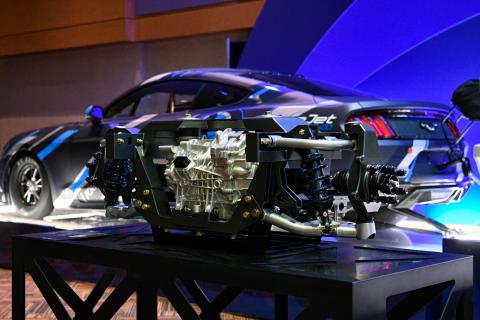
Those vehicles included a Ford Cobra Jet 1400, a Mach-E Mustang and a 1978 F-100 concept pickup equipped with Ford’s Eluminator electric crate motor, which Schwalbe said has especially caught the attention of the racing industry.
“When we revealed the Eluminator, we sold a lot right away,” she said. “Whether for drag racing, short-course racing, or small tracks, a lot of people are getting involved.”
With EVs now gaining a foothold in mainstream motorsports, the PRI Trade Show’s new EV Performance Zone was a popular place to see the latest developments for this growing market.
Opposite the Ford exhibition, Chevrolet displayed a 1972 El Camino conversion built in partnership with Lingenfelter Performance Engineering and featuring the OEM’s e-crate system.
“We’re trying to give racers—and any individual—the opportunity to move toward an electric drive system,” said Mike Celotto of General Motors, Detroit, Michigan. “We know that electric drive is in its early stages. We expect it to grow just like the overall automotive industry is growing, so we want to have a space in that for our customers.”
Allen Thomas of the National Electric Drag Racing Association (NEDRA) in Lake Jackson, Texas, has been drag racing EVs for a decade now. While he also enjoys building and racing internal-combustion cars, Thomas said that the vehicle electrification movement reminds him of his early days in racing.
“I see the technological advancements,” he said. “I grew up during the heyday of drag racing, when there were different things hitting the drag strip and incredible innovation and people building things. This is the feeling I get from building electric cars now—it’s back to the 1960s. It invigorates me because no one has a cookie-cutter approach.”
NEDRA is a coalition of electric drag racing vehicle owners, drivers, and fans. The organization promotes EV manufacturers and parts suppliers while organizing and sanctioning electric drag events. Its exhibition at the Show included two drag EVs.
“There’s going to be a lot of learning, a lot of challenges in electric drag racing, and it really draws me in. There’s exponential growth right now,” Thomas added.
Rob Ward of Legacy EV in Tempe, Arizona, said that growth potential is pulling brands of all types into the EV space. A parts distributor for the EV market, Legacy EV was among several performance aftermarket companies educating showgoers about the emerging opportunities in the EV market.
“We’re working our tails off to be the face of aftermarket EV performance,” said Ward. “We’re working with more than 60 manufacturers right now to provide a complete electrification system for pretty much anything. There are a lot of companies investing a lot of energy and money into advancing complete EV systems, so we’re excited about where it’s headed.”
Other EV Zone exhibitors included Holley-AEM, Burromax, FirstCorner, HyperCraft, MRE Racing, ReVolt, and Torque Trends. Key products in the category currently include EV control units, drive systems, gear-reduction boxes, battery packs and related components, but the field is ripe for all sorts of invention.
Diesel Motorsports
Although diesel motorsports have been around for decades, the last five to 10 years have seen an explosion of fan interest. Luke Langellier of S&S Diesel Motorsport in Seymour, Indiana, believes that technological advancements are behind the category’s surge.
“If you think about the big picture, all the emissions regulations that the OEMs have had to abide by, that’s what pushed all this technology. It would never have needed to exist if it weren’t for having to meet all those stringent requirements. So that’s why we have trucks now that are perfectly quiet, make tons of power, tow like crazy, and can do everything you want them to do,” he noted.
Diesel motorsports have picked up market share over the last decade. Accordingly, the PRI Trade Show offered a close-up look at the newest parts and solutions for the segment.
S&S Diesel’s exhibit space included a massive semi engine, a nod to the semi drag racing that’s become a major crowd pleaser.
“People love to race whatever they’re passionate about,” Langellier said. “We have a pretty strong [semi] following—in Canada, especially, and the northern United States—of guys who are really passionate about getting as much performance from a semi as they can.”
Ron Knoch of Diesel Motorsports in Kansas City, Missouri, said that his organization’s drag races, sled-pulling and show-and-shine events continued unabated during the pandemic, partly because they’ve become popular staples of county fairs and similar family-friendly events, especially in the American heartland.
“Most people don’t know that—across what we call the ‘flyover states’—there is a sled pull every night in every state from June to the end of August,” Knoch explained. His organization’s races, with five competitive classes, are always well attended, he added.
Gregg Jolly of the Outlaw Diesel Super Series in Terre Haute, Indiana, said that diesel truck events offer a unique thrill. “For me, it’s watching them go down the track as fast as they do and as heavy as they are,” he said. “It takes a lot more horsepower and torque than it does on the car side of things, and it’s a lot harder on parts.”
In other words, things break a lot, which brings numerous opportunities for the performance aftermarket to produce everything from hardcore engine parts to heavy-duty suspension components. “It’s pushing the limits and pushing the aftermarket to make better product,” he said.
Donk Racing
No show captures motorsports’ diversity like PRI, where there’s always something new and unexpected to encounter. Take, for example, Donk, or big-wheel racing, a novel form of competition gaining serious traction in mostly urban markets. At a seminar titled “Big Wheel Racing: Why It’s a Big Deal,” Sage Thomas (a.k.a., the Donkmaster) announced the formation of the National Donk Racing Association, a new sanctioning body bringing safety and organization to the rapidly growing niche.
What’s a Donk? Technically it’s a customized 1971–1976 Impala or Caprice riding on 20-inch or larger wheels (preferably larger). However, the term has become generic for similarly styled vehicles.
Many PRI Show attendees learned about Donk racing for the first time, with Sage “Donkmaster” Thomas giving a presentation on this relatively new form of drag competition.
With Donk racing racking up millions of YouTube views and legions of social media followers, Thomas believes the sport is opening new doors for sponsors, safety equipment suppliers, fabricators and parts-makers, and, of course, specialty wheel and tire makers.
“We’re showing people this is real, because a lot of big companies thought it was a fad,” said Thomas. “But it’s something new for the race tracks, for the fans, and for supporters to be a part of something big. The opportunities are endless for small companies all the way up.”
GRIDLIFE iRacing
PRI Show attendees also got a look at GRIDLIFE’s iRacer Experience, a new immersive racing concept designed to promote grassroots enthusiasm. The GRIDLIFE booth consisted of six networked competition racing simulators running the latest iRacing build, complete with a live announcer broadcasting to online enthusiasts.
According to Chris Stewart of GRIDLIFE in Chicago, Illinois, the organization’s simulator competitions open motorsports to a gaming audience while teaching valuable track skills. Ultimately, this can encourage newcomers to embrace the racing lifestyle through the organization’s live track days, time-attack events, drifting events, education programs, and festivals.
GRIDLIFE’s iRacer Experience attracted youthful participants with its six networked racing simulators, and a live announcer broadcasting to the PRI Show crowd.
“Our intention is motorsports inclusion,” Stewart said. “We try to get people closer to motorsports, particularly younger individuals. Our core demographic is 18 to 38. We’re one of the youngest driving organizations globally.”
Youth in Motorsports
With the future of the performance industry hinging on attracting next-generation talent, PRI has also made youth engagement a top priority.
On Friday, December 10, hundreds of young attendees gathered for the annual PRI Student Breakfast and Career Day, which connected students from across the US with industry leaders. The exclusive meetings exposed students to career opportunities ranging from team and shop roles to product development and administrative positions. The Breakfast also served as an introduction to the Show’s world-class trade environment, where they could further take in the industry’s size and scope.
Northwood University of Midland, Michigan, was among the many organizations participating in the event.
“Students come to Northwood to learn all about the automotive aftermarket,” said Michael Kinney. “We’re seeing a workforce in manufacturing all the way down to service technicians that is aging out and taking retirement. We need young people to come into the industry, and events like this show them how exciting it can be [with] a great future and great earning potential.”
Meanwhile, on the PRI Show floor, exhibitor Preston Lewis was promoting youth involvement through the Off-road Motorsports Youth Foundation (OMYF) in Evansville, Indiana. A survivor of childhood cancer, Lewis launched the non-profit organization at the 2019 PRI Show to give other youth affected by unfortunate life circumstances a taste of motorsports. OMYF is now building a desert racing team and Class 7100 Unlimited Trophy Truck.
“Our growth has skyrocketed in the past couple of years after our launch at PRI,” said Lewis. “Our sponsor list has increased dramatically, and the quality of our sponsors has gone up quite a bit.”
Lewis expects the truck and team to be race-ready by October 2022. He said OMYF came to the Show to highlight alternatives for young adults who aren’t necessarily college-bound.
“What we’re trying to do is give them opportunities in a format where they can really find what they love,” he said. “If we could leave here with 15 to 20 kids that are really dedicated and want to be involved with us, that would be a win in our books.”
As online content proliferates throughout the automotive world, PRI Show attendees were eager to learn new ways to harness its power from experts like Hoonigan photographer Larry Chen, at left.
Young PRI attendees also demonstrated their building skills through the Hot Rodders of Tomorrow (HROT) competition, in which high school teams tear down and reassemble engines. The timed rounds took place over three days, with the Burton Center for Arts & Technology E3 Spark Plugs squad from Virginia taking 2021 National Champion honors.
“Due to COVID, we had to shut the operation down for a year and a half, and we thought it would be a great way to reboot it here,” said Rodney Bingham of HROT. “Just to see these students get exposed to our performance racing industry…. This shows them a whole new world of jobs and great careers that they could have.”
Led by instructor Chris Overfelt, the E3 Spark Plugs team scored an average time of 20 minutes and 51 seconds. Second place went to the Forsyth Central High School team sponsored by SCAT, which clocked in at 22 minutes and 2 seconds. The Moroso team from CD Hylton High School finished third with a perfect engine build in 22 minutes and 23 seconds.
Growing Business
The PRI Trade Show was also a prime venue for performance aftermarket manufacturers to discover new ways to sustain and grow their businesses. The possibilities for military contracts were discussed at a seminar titled “Army Ground Systems: Overview & How to Do Them.” Presented by Thomas Vern of the US Army DEVCOM-Ground Vehicles Systems Center (GVSC), the workshop highlighted the synergy between motorsports and DEVCOM vehicle research and development.
“Anything on wheels, we handle it,” said Vern, who added that the GVSC is especially interested in several areas where the performance industry excels. They include EV technologies, heat dissipation, weight savings, suspension geometry, 3D printing in metals, and parts-making for legacy items no longer mass-produced.
Business growth through content creation was also front and center at the event. The PRI Show Content Creation Center featured a Content Creator Stage Presented by SPEED SPORT with Ralph Sheheen. Throughout the week, onstage content creators educated attendees with tips for engaging audiences through success stories, insider news, introductions to gear and technologies, and hands-on demonstrations.
In addition, Justin Cesler of Driveline Studios presented the “WTF Is Content?!?” workshop, where he shared simple but effective tools for creating pro-level content for both traditional and new-media channels. According to Cesler, the biggest mistake a young brand can make is to sporadically post content or give up altogether due to sluggish response. “Consistency is key,” he emphasized. “Don’t go out and make content one time, two times, and say it isn’t working.”
Protecting Motorsports
Since the recent Environmental Protection Agency (EPA) interpretation that the Clean Air Act prohibits motor vehicles designed for street use—including cars, trucks, and motorcycles—from being converted into dedicated race vehicles, the entire performance racing industry has come under threat. In response, the 2021 PRI Show included education on emissions compliance and action to pass the Recognizing the Protection of Motorsports (RPM) Act.
The RPM Act is bipartisan legislation (H.R. 3281 and S. 2736) designed to protect Americans’ right to convert street vehicles into dedicated race cars. It also protects the motorsports parts industry’s ability to make, sell, and install products that allow racers to compete. The bill clarifies the legality of emissions-related modifications to street vehicles used exclusively in competition and reverses the EPA’s recent interpretation holding otherwise.
Industry support for the bill is strong, which was on display at two well-attended PRI events related to the issue.
The first was an “Update: RPM Act & Emissions Compliance” seminar on opening day, where a panel led by SEMA General Counsel David Goch presented steps for remaining compliant with EPA and California Air Resources Board (CARB) requirements. The conference included a status update on the RPM Act and how performance and racing businesses can help push it forward. Goch said critical mass for the legislation is building, and passage is within grasp.
“What I have witnessed in my five years with the industry as general counsel is a true awakening and education,” he said after the seminar. “Five years ago, the questions were pretty rudimentary—‘What is the Clean Air Act and emissions compliance?’ Now people are asking more sophisticated questions to get a better understanding of what they need to do to comply. I think our future is bright because my experience is that most of the folks that I touch through PRI are here to learn to do it right and keep this industry strong.”
The following day, PRI held a “Save Our Racecars Rally” in the Quarterback Suite of Lucas Oil Stadium. The exclusive event offered further insights into the RPM Act, and was open only to PRI Pro, PRI Champion, and PRI Founding Members. PRI recently launched its membership program and Performance Racing PAC (Political Action Committee) to mobilize the industry and fundraise for the RPM Act and other initiatives to protect and grow the industry. Under federal law, PRI may not use its funds to contribute to federal lawmakers and candidates. However, the Performance Racing PAC allows Members to contribute personal funds to help elect lawmakers who support racing’s positions and initiatives.
Among the speakers was Garrett Mitchell, a.k.a. Cleetus McFarland, a motorsports influencer with more than 2.8 million YouTube subscribers. He said he was happy to lend his persona to the cause.
“A lot of these guys here are entrepreneurs. Many of the people who sit in this room have their own businesses that are solely invested in the motorsports industry, which I can relate to because I have all my eggs in this basket, too. So I just wanted to talk from my point of view and reiterate just how important it is for us to all stick together,” he explained.
Ultimately, the 2021 PRI Show was a testament to the industry’s innovation, grit, and endurance, even through a pandemic.
“The racing industry is resilient and continues to push forward, and PRI very much reflects that spirit,” said PRI President Dr. Jamie Meyer. “Racing businesses have demonstrated remarkable passion and perseverance over the last year, and many even reported record sales and month-over-month revenue growth in 2021.”
Judging by what we just saw in Indy, the industry is again revved and ready to race forward in 2022.
 MEMBERSHIP LOGIN