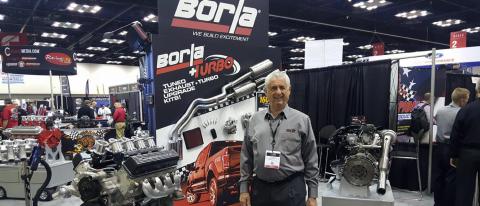
Alex Borla—the co-founder and CEO of Borla Performance Industries with facilities in Oxnard, California and Johnson City, Tennessee—has passed away.
In 1978, Borla co-founded Borla Performance and Borla Exhaust with his wife, Alyse Borla. The company, which started as a manufacturer of exhaust components for Rolls-Royce and Ferrari Concours classics, has evolved into a premier exhaust brand covering many cars and trucks.
Alex, a lifelong auto enthusiast, has participated in several racing events, including the Bonneville Salt Flats Speed Week.
Known as “Mr. Clutch,” this driveline technology authority is now helping take one of the industry’s top brands into off-road racing.
This past July, Will Baty joined Anaheim, California-based McLeod Racing as off-road and research and development specialist. McLeod, which marked its 50th year in 2021, is making a foray into the growing world of off-road racing.
People who know Baty call him “Mr. Clutch,” a name he picked up while working at Centerforce Performance Clutch. He brings more than three decades of clutch and driveline research, development, and engineering to his new role. Just as critically, Baty brings to his new job a passion for racing that began when he witnessed his first Top Fuel race as a young child.
PRI recently spoke with Baty about the challenges of taking a manufacturer into a new racing segment. One question, however, just had to be asked first.
PRI: They call you “Mr. Clutch.” When and how did you earn that nickname?
Baty: Around 2014, our agency rep gave me that name after going on sales calls and listening to me talk with customers. There is now a decal of my face out there titled “Mr. Clutch” that Ashton Robinson designed. Several racers have that decal on their vehicles. It still cracks me up to see it. There might be a certain Funny Car out there that just could have that decal on it soon.
PRI: What are you most looking forward to in this new role at McLeod Racing?
Baty: It’s hard to pick just one thing. When you are asked to be part of the largest aftermarket clutch company in our industry, that’s quite an honor. I have this passion to design and engineer, so if I can contribute and help our McLeod Racing team solidify the number-one spot and grow new product into other areas of our industry, that spells fun to me.
PRI: Describe this new role and why it’s important to the racing industry.
Baty: My role has a few layers to it. Number one is to utilize all the Wharton Automotive Group brands—McLeod Racing, FTI Performance and now Silver Sport Transmissions—to help our engineering teams refine, design and develop top-quality product for the end user.
PRI: Why the focus on off-road racing and R&D?
Baty: Off-roading is one of my passions. McLeod Racing has a perfect opportunity to make a splash in the off-road segment. I believe the collaboration with our sister brands will help us soon become the “one-stop” off-road driveline company that the end user is looking for. R&D is what I have been doing for the past 34 years in the clutch industry. Together, as a team, we become one innovative driving force in all areas of the driveline.
PRI: What do you see as the biggest challenges ahead of you?
Baty: The biggest challenge is that McLeod Racing really isn’t known in the off-road part of the industry—yet. I kind of like it that way, though. We have a semi-blank canvas to work with here. We know the challenges with certain applications, and what is needed for most applications, so this approach could result in high-quality products right out of the box.
PRI: What are your top strategic goals for the next 12 months?
Baty: Not to give up too much information at this point, but the goal is to introduce McLeod Racing to the off-road industry with quality product for the off-road and overland communities.
PRI: What is your most gratifying professional accomplishment?
Baty: There are several moments, after all these years in this industry, where I have gained some fantastic friends. I’ve had experiences and gone to places that some people only dream of. I have been on SEMA’s MPMC select committee. I have won an NHRA Wally award. Now, I am part of the McLeod Racing team. I sit here a pretty blessed individual.
PRI: Who has played an integral role in your professional development?
Baty: There are several people to thank here, but my mentor in the clutch industry was none other than the man I would call “The Clutch Professor,” Bill Hays. Bill’s mind and way of design were completely different. We had to always think outside the box and look at the entire driveline. He would quiz us all the time on his own ideas, on why they would or wouldn’t work. I have stories and stories working with Bill. The experience and knowledge I gained just can’t be taught in a classroom. I miss that guy.
Will Baty
Title:
Off-Road and Research and Development Specialist
Organization:
McLeod Racing
Hometown:
Prescott, Arizona
Fast fact:
Will Baty experienced drag racing for the first time as a seven-year-old. “My dad had taken me to my first drag race at Pomona. He told me to stand by the railing when the Top Fuel guys made a pass. I was instantly hooked—and I might have peed a little, too! After that, we never missed another race at Pomona.”
“Racers put on phenomenal stock car shows and fans love the action, so it made sense to add the Karl Kustoms Stock Cars to the XR Super Series as a support class. The combination of Super Late Models and Stock Cars will keep fans on the edge of their seats every race,” said XR Chief Operating Officer & XR Super Series Director Dan Robinson.
The series will begin at the Karl Kustoms Bristol Dirt Nationals at Bristol Motor Speedway (Tennessee) with qualifying nights March 22–24 and culminate with a $5,000-to-win feature on March 26. The season will wrap with a championship race on December 3 during the Sunshine State 50 at All-Tech Raceway (Florida). It will be a $25,000-to-win, $2,500-to-start event and carry a $100,000 purse.
The RPM Act weaving its way through Congress is essential legislation to save our sport. Here’s how industry stakeholders are giving the bill a boost.
Here’s a story that has played out countless times across America: A Camaro (or Mustang, or Supra, or…) that has served dutifully as a go-to-work car starts looking a bit ragged around the edges, and repair bills start mounting up. It’s not so valuable as daily transportation anymore, but the owner, in a flash of inspiration, realizes it would make a great race car. He dives in, tears it apart and rebuilds it with all the best race parts. That old Camaro takes on a second life as a dedicated track warrior.
Sounds like the most normal thing in the world, right?
Not if the Environmental Protection Agency (EPA) has its way.
In recent years, the EPA has adopted a radical interpretation of the Clean Air Act that states, “An EPA-certified motor vehicle cannot become a nonroad vehicle even if it is used exclusively for competition because the definition of motor vehicle hinges on the purpose of its design and not its use.”
As the US Environmental Protection Agency continues to put unwarranted pressure on motorsports, the racing community is rallying around the RPM Act to protect racers’ rights.
In other words, by bureaucratic decree the American tradition of retiring a street car and converting it strictly into a race car is now under assault, since that process requires removing emissions equipment. Nothing of the sort was ever passed into law by elected officials, but the agency has been aggressive in using this interpretation for enforcement actions against manufacturers and suppliers of high-performance parts.
For a shocking look at how such enforcements can impact an independent motorsports business, check out PRI President Dr. Jamie Meyer’s interview with Brent Leivestad, owner of PFI Speed in Fort Lupton, Colorado, posted on PRI’s YouTube channel (youtube.com/user/pritradeshow). PFI Speed was hit with a demand for records and later threatened with a $180,000 fine for allegedly selling illegal products—parts all installed on dedicated race cars—with no hearing, trial or even direct talks with EPA agents.
To raise awareness for the RPM Act, manufacturers such as Callies Performance Products are shipping orders with PRI-provided cards that explain the legislation and how to support it.
“When we’re able to sit down and talk to one of the victims of this government overreach, people in this industry see themselves in Brent,” Meyer said. “They relate to the story. They see his shop and they realize that’s their shop. They see his business decisions and they realize they make the same decisions every day. They start to realize this is real.”
If recent history is any indication, the EPA plans to keep the pressure on. “The EPA has been more aggressive over the last two years,” said Eric Snyder, Director, Congressional Affairs, for PRI. “We saw it at the end of the last administration, and the EPA has only continued to ramp up enforcement.”
Fighting Back
The EPA’s recent actions foreshadow a general trend from Washington, DC, toward “Green New Deal” type policies. It’s safe to say that everybody wants a clean environment, as racer and bureaucrat alike all breathe the same air. But the environmental impact of the motorsports industry is minuscule in the grand scheme of things, while the economic impact of government initiatives like this can be devastating to small businesses and jeopardize countless livelihoods.
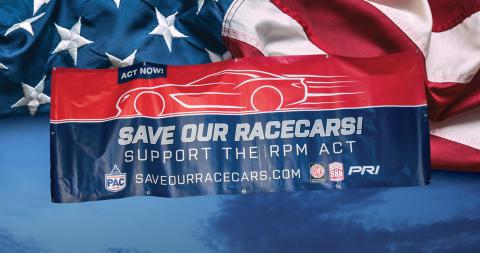
Fortunately, there’s a way for the motorsports community to push back, and it’s continuing to gain momentum. The Recognizing the Protection of Motorsports Act (RPM Act) has been introduced in both the House and the Senate, and support for its passage is growing. The time for racers and industry members to speak up is now to push the RPM Act across the finish line. “We’ve made the RPM Act a strategic initiative in all our communications and all of our different channels,” said Meyer.
Races are an important venue for rallying support. Street Car Takeover co-owner Justin Keith, pictured here, highlights the RPM Act during every event.
The RPM Act has been in front of Congress before, and let’s just say its passage has been an endurance race, not a sprint. But it is the rare bill that currently enjoys widespread bipartisan support. At this writing, the House bill (H.R.3281) has 117 cosponsors, and the Senate version (S.2736) has 22 cosponsors. Helping matters is that the RPM Act hasn’t been reduced to a polarizing left vs. right, Democrat vs. Republican split. “This issue is not political. We have members of both parties who’ve been really helpful on this issue,” said Snyder.
The RPM Act is also rare in its simplicity. H.R.3281, the House bill, reads, “Amending the Clean Air Act to add: ‘No action with respect to any device or element of design referred to in paragraph (3) shall be treated as a prohibited act under that paragraph if the action is for the purpose of modifying a motor vehicle into a vehicle that is not legal for operation on a street or highway and is to be used solely for competition.’”
“Support for the bill is really growing in Congress,” Snyder said. “That’s important because it’s something that congressional leadership and leadership on committees of jurisdiction pay attention to. They notice how many members are getting on the bill, how many Republicans, how many Democrats, and specifically they look at which members are joining. We’ve really been able to grow support on the Energy and Commerce Committee in the House, which is important because the committee has jurisdiction over the bill.”
Strength in Numbers
To give the bill the best chance of passage, it’s crucial that Congress hear from the motorsports community at large. For that to happen, people need to be informed. The reality is, most racers and shop owners have their heads down working on the next project, and political realities seem distant.
Fortunately, many people in the motorsports industry are taking the lead in raising awareness using a variety of methods. “We’ve been putting little cards that PRI provided to us in every shipment that explain it, that say ‘Support the RPM Act.’ We’ve hung banners in our shop. When we go to races, we hang a ‘Support the RPM Act’ banner on our tent,” said Heath Norton with Callies Performance Products, Fostoria, Ohio.
“A lot of these people just don’t see it, they don’t know about it,” Norton said. “If we can get the word in front of them and the message to them and get it going, we have a chance. But if they don’t know about it, we have no chance. We have to take it to where they are, where it’s meaningful to them. Have it at the track. Once it’s made real to them so they can see how it affects them, then it becomes meaningful.”
Justin Keith is founder and CEO of Killer Performance KC in Grain Valley, Missouri, as well as co-owner of the Street Car Takeover series that has a large grassroots following. “At our events we have our own announcer, and he comes to every single race with us. He has been talking about the RPM Act and things people can do to sign up with their senators in their state so they can be aware of the situation,” Keith said. “He goes over all that throughout the event several times a weekend. I feel like that has to do something. He’ll sit there and talk about it when we have an oil-down or in between classes when it’s quiet and everyone can hear it.”
Online influencers like Alex Taylor are proving highly effective in raising awareness for the RPM Act. “You can tell that people are concerned about it,” she told us.
Keith reported that the message is well received. “No one wants to see race cars go away, so if they’re there watching drag racing, obviously they’re going to continue to want to watch drag racing,” he said. “The enthusiasts that come to our events are a lot of younger people. They’re very passionate about keeping the sport alive so they can modify their cars and we’re not all driving RC cars around. I feel like it’s perceived very well.”
Alex Taylor is an Arkansas-based racer and car builder who has built a large social media following, including 158,000 followers on Instagram, 211,000 followers on Facebook and more than 91,000 subscribers to her YouTube channel. She has used these platforms to share the message about the RPM Act.
“The approach that I’ve taken toward it is not a negative, not the scare tactic. It’s been, ‘You love this industry, and I love this industry.’ I’ve taken the passion approach. ‘Here are the resources. Decide for yourself, but you have the chance now to make a difference,’” she said. “For the most part, from what I see from feedback on my side, people have had a positive response to me sharing the message. I can tell that people are concerned about it. I’ve seen a lot of the response as, ‘Why have we not talked about this previously?’ or ‘Why have I not heard about this?’”
As members of the racing community become more aware of the stakes, it’s vital they make their voices heard, from the grassroots all the way up to the corporate boardroom. “It’s a constant battle,” said Callies’ Norton. “You’re arguing for time. You’re trying to get them to pay attention to you. Honestly, I think one of the best things is for guys like me, who are owners, to use our influence on some of these guys. It’s great that the masses are doing it because then it helps echo what we say. But we need the owners and the people who can explain to the congressmen, ‘If you want my support, you better support this, because there are a lot of people who work for me in your district. You want them to support you, too.’ Just be forceful about it. We’ve had some luck. We’ve been reaching out and working with congressmen and their aides and trying to get them to understand the jobs side of it. Because it’s easy to say, ‘Oh it’s just racing, it’s just a dumb sport.’ But when we talk about the jobs, it really matters. The jobs are the key thing.”
The SaveOurRaceCars.com Championship Night race at Madison International Speedway was held in 2021 to bring attention to the RPM Act. “We’re grateful that PRI is fighting for our rights to race,” said track owner Gregg McKarns (not pictured).
Street Car Takeover’s Keith reiterated the importance of Congress understanding how many jobs are at stake. “If we weren’t putting on those races, that affects restaurants, that affects hotels, plane tickets, all this little stuff people don’t think the motorsports industry affects, it affects in a big way,” he said. “For instance, when we have our event in Charlotte, we sell out every single hotel room in a 10-mile radius around the track. That’s a big deal. People have to eat, people have to go to the gas stations, people have to go to Walmart and get stuff for the track.”
The Washington clamp-down, if it were to intensify, could have ripple effects that quickly inundate the industry. “It’s not just tuning, it’s not just some of these smaller segments of the industry, it’s everything,” Norton said. “If you can’t race a race car, you don’t need a lot of the hard parts that a lot of us make. That’s a lot of jobs. I don’t think people understand how many jobs will be lost because of this. The industry is large, it is wide, and it is deep. There are a lot of people that make money off of this sport, more than people think.”
Getting There
More people have spoken out recently than ever before on this issue, and the effort is making a difference. “What sticks out more than anything is companies that have stepped up over the past year,” PRI’s Snyder explained. “A few companies that have been the target of EPA visits or enforcement have been telling their stories, not just hiding in the shadows. When you have a business owner who is willing to share their experience, that resonates with others in the industry. These are good, hard-working people who are just trying to run their businesses. It’s pretty jarring getting a visit from EPA or receiving a letter in the mail saying you’re going to be fined for simply operating a race parts business.
“People in the industry understand that working with Congress isn’t an easy thing and that legislative victories don’t come quickly,” Snyder continued. “Enthusiasts and the men and women who work in the industry have done an incredible job of continuing to write letters to keep this issue in front of lawmakers. That’s important. Our strength is in numbers. We have a huge community of more than eight million people who are race enthusiasts or are into modding vehicles, restoring classic cars and going off-road. We’re focused on getting those eight million people speaking with one voice to protect racing.”
There is more than one path to success for the RPM Act. Passage of a stand-alone bill that is subsequently signed into law would be ideal, but often such legislation is folded into larger bills, such as funding for transportation or infrastructure projects. For either to happen, Congress has to hear from the motorsports community.
“The challenge is that every Congress sees thousands of bills from groups of people who are just as dedicated to their cause as racers are to their lifestyle,” Meyer said. “We have seen an increased interest by lawmakers given the number of letters that have been sent to representatives.”
“We’ve had more than a million and a half people write Congress in the last year, and lawmakers have noticed the uptick in pressure,” Snyder said. “There’s even more excitement for getting this done within the racing community than any session before. Members of Congress understand the importance of the RPM Act, which is reflected in the bill’s growing support on Capitol Hill, but we must continue to remind them that the job isn’t done until the RPM Act is signed into law.”
PAC Pick
One way to join the fight is to contribute to the Performance Racing Political Action Committee (PAC). One hundred percent of the contributions received by the PAC go toward supporting the candidates and lawmakers that support racing. “If you think about the PRI Show and how we have come together every year for 33 years at a trade show, it’s a natural extension of the brand, it’s a natural extension of the services our team has offered,” said PRI President Dr. Jamie Meyer. “Having a strong PRI membership is certainly how we’re going to get the RPM Act passed, but also protect the racing industry well into the future.” For information and quick links on how to contact representatives and senators, along with ready-to-send messages, go to saveourracecars.com. —Steve Statham
Whether it was adding new shop equipment or establishing personal connections, attendees at the 2021 PRI Trade Show had varying reasons for taking part, but all left with practical tools and information for the race season ahead.
Attendees from around the world flock to Indianapolis in December for the PRI Trade Show, where they discover the latest motorsports parts and equipment, conduct business, network with fellow industry members, pick up information, discover education and training sessions and keep up with the latest industry developments. The 2021 event was no exception, as thousands of dedicated buyers—including engine builders, speed shop owners, fabricators, tuners, race teams, machinists and more—covered more than 750,000 square feet of exhibit space and Show features in search of solutions for their racing businesses.
“I start at Row 100 and walk the PRI Show aisle-by-aisle every year, so I don’t miss anything,” said PRI Champion Member and engine builder Jim Mikel of Performance Technology, Wakarusa, Indiana.
“It takes all three days because there’s so much to see. Plus, I’ll wind up running into people I know, like this guy here,” the longtime attendee continued, pointing to fellow engine builder Patrick Ross of PRR in Avon Lake, Ohio.
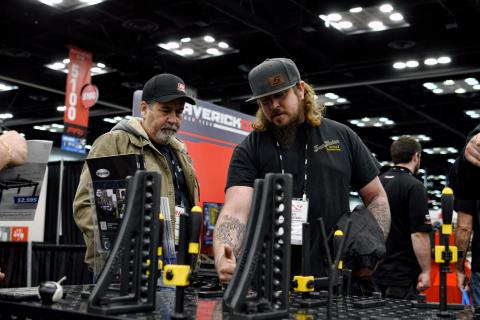
As Mikel indicated, rows of booths were filled with new racing technology, performance parts and track equipment designed to help boost business productivity and profitability. These innovations included the shop machinery found in Machinery Row, like the Centroid A560 XL 5-Axis Cylinder Head Porting Machine, purchased by JR Smith of JR’s Machine and Performance. The equipment was hooked up on the Show floor for live demonstrations before being shipped to Smith’s shop in West Liberty, Iowa.
“This machine is absolutely the most valuable thing here at the PRI Show for us. It’s overwhelming to see it in person,” Smith said about the shop’s first-ever CNC machine purchase. “This will speed up production and accuracy. It can machine a cylinder head in four hours, where now we do it by hand, and it takes two to three days.”
The PRI Show gives attendees opportunities to demo and shop precision machinery firsthand. Here, JR Smith, at right, of JR’s Machine & Performance witnesses the capabilities of a Centroid head porting machine. “It’s overwhelming to see it in person,” said Smith.
Another racing professional keen on finding new equipment at the PRI Show was PRI Pro Member and fabricator Tim Sill of S&S Motorworks in Savannah, Missouri. He and Joe McMillian, also of S&S Motorworks, were found at the HE&M Saw booth eyeing the 782XLH utility saw.
“We do bumper-to-bumper fabrication, so we need good tools to modify parts,” Sill said. “We weren’t in the market for a new saw until we walked by and saw this really quality piece here. We could use it to make brackets for chassis or engine mounts, or even make sheetmetal for modifications to car bodies.”
“It would make our job a lot easier,” McMillian echoed. “Outside of this booth, I was looking also for organizational accessories from Hepfner Racing Products for my trailer that we use for traveling.”
“And we’re also working with Scoggin Dickey for engine parts—camshafts, water pumps, flywheels, brackets—for a drag race car we’re working on right now. It’s a bracket 2013 COPO CRC Camaro,” Sill said.
Still, many visited the PRI Trade Show solely to keep up with the latest advances in motorsports, including Dougie Kaempfer of R&D Automotive Restyling in East Troy, Wisconsin, who browsed the Featured Products Showcase in Lucas Oil Stadium to see the standout parts and equipment from this year’s exhibitors. He was joined by media member and longtime friend Richie Jaeschke of Wisconsin Hot Rod Radio based in Milwaukee, Wisconsin.
“It’s always nice to keep up with the technology,” Kaempfer said. “I have six PRI Show badges at home, and this will be number seven.”
A tuner and fabricator, Kaempfer also kept his eyes open for components for the Nostalgia Junior Fueler he works on as a pit crew member. A Lincoln Electric TIG welder was of particular interest in the Featured Products Showcase. “There’s just so much to see in terms of performance parts fabrication,” he said.
Outside of the Featured Products Showcase, Kaempfer tabbed the brand-new EV Performance Zone as the most valuable feature of the 2021 PRI Show. “It’s interesting to see all the EVs in one room. It was new this year and very well displayed,” he said. “There are a lot of manufacturers making new electric-powered cars. Ford has an electric crate motor that can be swapped out—it’s a great motor. Even though some old-school guys don’t want anything to do with it, you gotta admit it all works pretty well.”
Personal Connections
The PRI Show is about much more than products, though, as attendees were also eager to participate in the lineup of premier PRI Education seminars and complimentary networking programs. For example, Mike Arrigo, the North East Regional Owner of Hooked on Driving HPDE school in Brodheadsville, Pennsylvania, attended the PRI Student Program Industry Networking Breakfast to connect with interested students.
“One of my goals is to network. I’m here to help other people; this isn’t just for my own business. I want to elevate the whole team of people I work with,” Arrigo said. His wife, Mona, was also at the Show attending the 5th annual Women in Motorsports panel.
“Going along with that, another goal was to connect the companies I work with together,” Arrigo said. “We have a tire partner, and we have a rim partner, and before the Show, I said maybe it’s time to put these two companies together. We could have them make four-piece tire and rim sets, and have our competitors try them out on the track before buying. We have a high number of racers come, about 80 to 200 at our Watkins Glen International and VIRginia International Raceway events, so I thought it’d be cool to give back to both the racers and those two companies at the same time.”
Many attendees, such as Dougie Kaempfer, at right, and Richie Jaeschke depend on the PRI Show as a means of learning about the latest advances in motorsports. “It’s always nice to keep up with the technology,” said Kaempfer.
Along the education theme, university students were again welcomed back to the PRI Show to see products first-hand that they learn about year-round. That was one of the reasons Eduardo Hernandez and Marcus Jarrett, both second-year automotive technician students of Madison Area Technical College in Madison, Wisconsin, attended the event.
“The school offered us to come,” said Hernandez, who works on lubrication technology at a Toyota dealership. “They told us it was a free event over a couple of days with the latest in performance parts, so we were curious and decided to check it out.”
“We actually have a performance class coming up, so we thought it’d be good to come here to see the performance parts,” said Jarrett, who also works on lube tech but at a Subaru dealership. “A lot of the students will be bringing in their own cars to work on them in that class, so it’ll be really cool.”
The PRI Show proved to be the perfect backdrop for this goal, as the pair were seen checking out the differential displays at the PowerTrax booth.
“We already took a differential class at school, so we were looking to figure out how these different designs would perform and what each one does,” Jarrett continued.
The most surprising part of the PRI Show for these first-timers, though, was the event’s sheer size. “We heard it was big, but we had no idea. We thought we were getting close to seeing everything, but we turned a corner, and there’s another whole hall of booths,” Hernandez said.
For race teams, the PRI Show again provided a hotbed of opportunity from current and potential sponsors. Driver Gavin Graham of Gavin Graham Racing in Lakeland, Florida, visited his first PRI Show after securing first place in the Proxy Equipment Pro Trucks 50-lap feature as part of the Snowball Derby at Five Flags Speedway in Pensacola, Florida. At 13 years old, he is the youngest winner of a Derby feature in the event’s 54-year history.
The PRI Trade Show is an opportunity to engage future motorsports professionals, such as Eduardo Hernandez, at right, and Marcus Jarrett. They used their time at the Show to learn more about performance parts like these PowerTrax differentials.
“The best thing about the PRI Show is talking to more people in person,” Graham said. “I don’t have to worry about the Internet failing. I can have nice conversations with companies and really get to know the people that work there and start a good relationship with them.” He visited with companies including Serck Motorsports, Five Star Race Car Bodies, Eibach, and Allstar Performance and Motor State Distributing.
The significance of the in-person event was repeated by Graham’s team marketing manager Luis Murillo. “It’s impossible to make [quality] connections over email and with sponsor request forms. Honestly, there’s just so much value in having a personal moment with someone. It’s one of those things where the message can get lost in an email or a link, but whenever we do really connect with someone, our brand stays in their head.”
Along with sponsorship efforts, the PRI Show also helped Graham connect with Chris Dilbeck of Serck Motorsports to discuss cleaning services for his components during the off-season. “Serck is a European company that specializes in cleaning services from the grille screen to the radiator fan. They make sure there are no contaminants, and we’re going to try to get our radiators down to them soon,” Graham said.
Along with the Snowball Derby feature win, another team accomplishment: Gavin Graham Racing connected with scores of new fans with a booth at the Show.
“We were originally planning on registering as attendees, but we had the opportunity to exhibit, so we did,” Murillo said. “We were [one of a few race teams this year to have] a booth and give out swag. We gave out all 1,000 merch bags we brought. We also had 1,092 physical QR code scans, and we jumped from 14,700 to 15,400 followers on Instagram.
“[As a hybrid attendee and exhibitor,] our goal was to connect with people, and we did that this year,” Murillo said.
Indeed, the PRI Trade Show proved to be the hub for all things to improve motorsports operations, from new tuning components, race car parts cleaning services, hardcore engine parts, and shop machinery and equipment, to quality networking connections, innovative new ideas and world-class education. Just like the aisles at the PRI Show, the options were seemingly endless.
Beyond measuring horsepower, dynamometers can help race shops generate big profits. Our experts explain how.
The dyno doesn’t lie. It’s a common axiom in all types of competition. Whether that often-repeated saying is absolutely true or not, it speaks to the power that these machines have over racers’ psyches. The motorsports community worships at the altar of horsepower, and in that pursuit the dynamometer is the ultimate arbiter of truth.
With such a lofty stature, it’s not surprising that there’s a lot of money to be made with a dyno. Racers and car enthusiasts crave numbers, especially when it comes to power output. That desire naturally converts to a strong, steady market for those with the necessary equipment.
Money Makers
To learn more about the profit potential of dynamometers, we reached out to leading experts in the field. They shared with us six powerful ways dynos can increase a shop’s bottom line, along with the all-important financial considerations it takes to get in on the action.
1. New Customers
Dyno testing is almost a spectator sport these days, with much of the noise, intensity, and anticipation of actual motorsports. Add to that the powerful element of bragging rights, and a dyno becomes a true magnet for car enthusiasts. That makes it a powerful means of bringing new customers to a shop.
To create a buzz around a dyno and get attention, many shops hold frequent dyno days, in which groups of people gather and have their cars tested. “Dyno days generate a large local fan base,” said Johnny Johnson of Dynojet Research, North Las Vegas, Nevada. “Interest grows on social media when people have a cool car on a dyno and see how much power it laid down. You’re letting everybody around know that your shop is there and open for business. That gets people in the front door.”
2. Tuning Work
One of the biggest opportunities for making money with a dyno is in tuning customers’ cars, according to our sources. With today’s competition engines usually sporting fuel injection, forced induction and other complex systems, race-winning power is often a matter of tuning as much as hardware. This makes tuning a staple revenue source for dyno owners, which can generate considerable income month after month, year after year.
“The vast majority of the revenue coming into a shop that has a dynamometer comes in because they’re fixing the general tune on a vehicle,” explained Michael Caldwell of Mustang Dynamometer, Twinsburg, Ohio. “And people don’t tune on chassis dynos for a couple hundred bucks. It’s $1,000 and up to get a car on the dyno and get it tuned.”
3. Upselling Opportunities
Dyno runs are an ideal setting for selling customers more potent equipment to satisfy their need for greater power. This can be done by suggesting individual pieces, but the most effective way has proven to be by putting together pre-tested packages that offer proven power increases.
“Being able to put together packages and have the numbers to back them up is really huge,” said Johnson. “Just do the R&D on the dyno to make sure that the claim is true.”
Successful shops aren’t upselling just the performance aspects of the cars they get on their dynos. All of a car’s systems can mean potential work. “Dyno owners can make a lot of money with around-the-vehicle inspections,” added Johnson. “Are there any frayed or broken belts? How are the tires? Is everything tightened up? It’s no different than a service advisor would do at your local car dealership when you bring it in for an oil change.”
4. Renting Dyno Time
With dynos becoming more common and race engines getting costlier than ever, dyno testing is becoming the norm. Customers expect it. Even so, many shops still haven’t made the leap into purchasing a dyno. That’s another terrific opportunity for those that have.
“Renting dyno time is very lucrative,” said Caldwell. “It can be thousands of dollars to get some cars where they need to be.”
Many tuners roam throughout the country. These itinerant experts can be prime candidates for renting dyno time, according to our sources. “Some of the best tuners don’t have a dedicated shop,” observed Johnson. “They travel from shop to shop and schedule four or five cars to do in a couple of days. And then they’re off to the next shop. So renting dyno time to them can pay very, very well.”
Dynamometers can be a big revenue source for shops of all sizes. Setups like this Dynocom portable unit are well suited for tight spaces and temporary locations.
5. Cost Savings
Besides bringing in revenue for a shop, having a dyno can also boost the bottom line by cutting costs. For one thing, just having the ability to test vehicles inside the shop eliminates significant expenses. “With a dyno, there’s no need to take vehicles on drivability tests on the streets,” said Allison Blackstein of Dynocom Industries in Fort Worth, Texas. “So it’s a big insurance saving.”
Shops that don’t have a dyno in-house are probably renting time from one that does. That may not seem important if it’s a couple blocks away and easy to schedule. But for many shops, it’s not that easy. Often the nearest dyno is an hour or more away, and it gets booked well in advance. “It’s a waste of time driving hours just to get some dyno runs in,” noted Caldwell. “That time can’t be billed to the customer. No one’s going to pay for that.”
Along with these savings, having a dyno allows a shop to pinpoint problems faster and more accurately. The precise data provided by a dyno can eliminate guesswork and speed up diagnostic tasks. “These days, a lot of mechanics just throw parts at things versus actually diagnosing the problem,” said Johnson. “They’re basically chasing a ghost. So having a dyno saves a ton of time and money.”
Dynamometers can unlock many profit opportunities, oftentimes with a relatively short ROI. “Dynos are really cheap compared to what they bring in,” explained our source at Mustang Dynamometer.
6. Increased Credibility
Perhaps most important of all, a dyno can make a shop far more credible to potential customers. They know the shop will be able to back up performance claims, verify its work and tune for optimum results.
That assurance can set a shop far above its competitors, said Scott Lampkin of Dynapack, Clovis, California. “When there’s a dynamometer at a facility, it’s automatically going to be considered a more professional outfit in the eyes of the consumer who’s shopping for someone to work on his car.”
Profit Killers
As noted, a dynamometer can be a powerful money-making tool. But like any tool, there’s a right way to use it and a wrong way. In contrast to the above, following are some of the biggest business mistakes dyno owners make, according to our sources.
1. Not choosing the right dyno
Dynamometers come in many different types, with a vast range of prices. Businesses that end up with the wrong type of dyno for their needs could be limiting the kind of work they can pursue or have to turn away potential customers.
“Start by taking a hard look into the future of the business,” explained Johnson. “What kind of cars do you hope to work on? Then base the buying decisions around that. For example, if Subaru tuning is in the plan for the future, then look at an all-wheel-drive dyno. Or at least think about a system that can be upgraded later.”
2. Not considering the facility
The type of dyno a shop invests in is often largely dictated by the kind of building it’s going in. This can lead to high-priced mistakes for shop owners who don’t look at their facilities before choosing a dyno. “Is the building rented or owned?” asked Johnson. “If rented, the landlord probably isn’t going to be happy with a giant pit dug in it to put the dyno in the ground.”
“Power is another consideration,” added Blackstein. “Some shops don’t have high enough voltage, or they only have single phase instead of three phase.”
3. Not considering additional costs
Different types of dynos have different installation needs. These costs can be substantial and need to be factored into the overall budget for getting a dyno. “An above-ground dyno requires either a four-post lift or ramps,” said Blackstein. “If it’s going in-ground, it needs a pit. That can range from $3,000 to $7,000 depending on where the shop is located.”
4. Not financing
Many shop owners are scared off by the relatively high prices of dynos. For that reason, they miss out on a potent flow of revenue that can last decades. “A lot of people think a dyno is going to cost them tons of money that they’ll never be able to repay,” said Johnson. “But there are financing options. And if a shop runs a couple of cars a month, it really pays for itself.”
5. Not knowing how to use the equipment
A big part of the revenue from a dyno comes from tuning and component installation. So it’s crucial for shops to know what they’re doing when it comes to running the dyno and working on the cars they specialize in. “A dynamometer is useless without a person who knows what they’re doing,” observed Caldwell. “It ends up being just a very expensive paperweight.”
6. Not specializing
Most of the benefits a dyno offers a shop are built on the foundation of credibility. Building that crucial reputation starts with understanding what kind of cars the shop will specialize in. “It can’t be the jack of all trades,” said Lampkin. “It’s very rare for a dyno shop to be successful tuning everybody’s product.”
Frequent dyno days can dramatically increase a shop’s visibility. “You’re letting everybody around know that your shop is there and open for business,” said our source at Dynojet Research.
7. Not networking
Being successful with a dyno is largely a matter of being visible to the local community of racers and car enthusiasts. For this, it’s absolutely crucial to network within the area’s car culture. “The best way to get business is word of mouth,” Lampkin said. “Be involved in your segment.”
8. Not knowing the business
Although dynos can be a powerful revenue source for shops, they’re still just one component in the overall mix. Without the essential foundation of a strong business, a dyno won’t add much. “Years ago, a guy bought a dyno from us, and I showed up to train him,” recounted Lampkin. “There wasn’t even a toolbox in his shop. I asked him, ‘Are you a mechanic?’ He said, ‘No, I worked at my dad’s pizza parlor. I want to be a tuner, and he financed this for me.’ His dad dropped $120,000 on this dyno. I ended up selling it for him six months later.”
9. Not being creative
To profit from a dyno, be creative and look for opportunities wherever they present themselves, note our sources. “It’s kind of like selling hamburgers,” explained Johnson. “McDonald’s has the Big Mac, the Quarter Pounder, the cheeseburger, and others. They’re all hamburgers. It’s just a different bun, different sauce. Like that, figure out how the shop can generate money off of this same piece of equipment in the same spot.”
10. Not getting a dyno
Perhaps the biggest mistake of all is passing completely on the opportunities that a dyno offers. Sure, getting one requires thought, planning and plenty of number crunching. But the rewards can be well worth the effort.
“Without your own dyno, you have to wait in line at somebody else’s shop,” noted Caldwell. “You’ve lost control over your process, and you’re just subsidizing somebody else’s dynamometer investment.”
To that Johnson added, “One of the biggest things I hear from people is, ‘If I would have known it was that easy to get a dyno, I would have done it years ago.’”
When purchasing a dyno, shops need to consider their future needs. These Dynapack modular units can start as a two-wheel-drive setup and expand to all-wheel-drive later.
Making the Leap
According to our sources, the profit potential with a dyno can be immediate and powerful. “Dynos are really cheap compared to what they bring in,” said Caldwell. “A shop might have $45,000 to $55,000 into it, but each vehicle that runs across it will bring in $1,000 to $3,000, depending on how much time is spent on the vehicle.”
Nonetheless, that initial investment certainly isn’t pocket change. Even low-price dyno setups cost more than $10,000. That’s a significant purchase for well-to-do shops, and a huge expenditure for ones that aren’t so well endowed.
This is where financing plays a crucial role. The ability to buy or lease a dyno over time is vital to making the numbers work. “With interest rates where they are, it’s kind of foolish to pay cash for a dyno,” explained Caldwell. “Just lease-to-own and spread the payments out over 60 months. There’s very little down required. They might ask for first and last payment, which might be a couple grand up front. But then the cash out of pocket is pretty much removed from the table. It’s bringing in more than that per month. So from a cash-flow standpoint, it can be completely invisible to the shop.”
Even so, many shop owners wonder how quickly a dyno can generate positive cash flow and pay for itself. According to our sources, that can vary widely, depending on the shop and what it does with its dyno. For example, some shops use their dyno mostly for their own internal development work. For them, the return on investment can be four or five years compared to renting time on someone else’s dyno.
Racing engines nowadays are increasingly dependent on tuning to achieve maximum power output, making dynos a vital profit-making tool for engine builders.
On the other hand, a dyno can pay for itself almost immediately for shops selling dyno services, if they have a good location, a solid market and a strong grasp of the kind of vehicles their customers bring in. “I’ve seen some shops that do enough work where it literally pays for itself in a matter of months,” observed Johnson.
With the many business advantages dynos offer, it’s not surprising that more and more shops are getting them. It’s not just the “in” thing to do. Dyno work is more than ever a big percentage of the revenue that successful shops bring in.
“A dyno is a money-printing machine,” said Caldwell. “The longer you put off getting one, the more money you’re losing.”
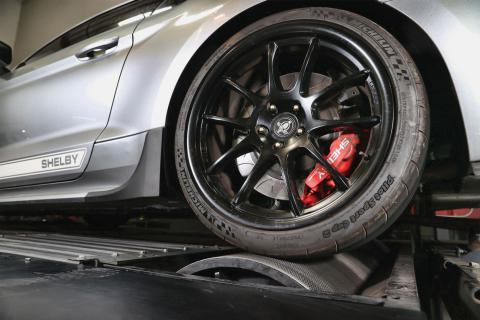
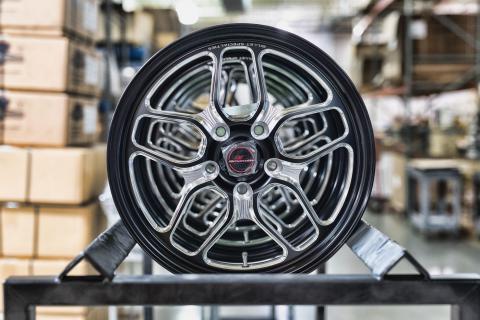
While the basic purpose of the wheel has not changed in more than 5,500 years, more recent advances in engineering, materials, and manufacturing have yielded the lightest, strongest, and stiffest wheels in motorsports history. These benefits carry over to the performance street market, where oftentimes the cars are more powerful and faster (and certainly heavier) than their competition counterparts. For a snapshot of the current performance wheel market, PRI talked to six manufacturers of all sizes. We found a landscape that seems ripe for small niche operations to carve out profitable slices of the market, even as the big players continue to innovate and prosper.
3030 Autosport
Keith Kern and Philip Watson launched 3030 Autosport in Terre Haute, Indiana, in 2020, seeing a need for high-quality forged drag racing and street wheels with direct factory sales. The company name comes from the pair’s 30-plus years of wheel industry experience.
Kern explained that each of the company’s four street and track wheel series is made with a specific manufacturing process to meet the needs of its particular market. Production and material sourcing are all in the US.
“Everything we do is forged 6061-T6,” Kern explained. “All of our stuff is ring-rolled—it comes from a log of billet. That retains the grain structure you get with a forging. After ring rolling comes precision spinning over a mandrel, which always produces the same shape. And we get to move the material, for example, making it thick only where we need to.”
The company’s Drag Ops two-piece 15-inch rear wheels are SFI 15.1 certified, and the monoblock FrontRunners are 15.2 certified. Kern said Autosport 3030 also subjects its FrontRunners to a rotary fatigue test that can account for the abuse that these wheels endure on the drag strip.
“Wheels don’t always come down straight on a launch,” he said. “And there’s a lot of correcting on the strip.”
Drag Ops wheels are certified for street and strip, and available in non-, single- and double-beadlock. “They’re street rated but light enough for drag racing,” said Kern. Beadlocks are also forged parts, which Kern said do not deform when in use like a machined-plate beadlock might. Heli-coil inserts are used for securing bolts.
The modern muscle car market presented different opportunities for street-and-strip applications.
Advanced materials and improved manufacturing methods are yielding lighter and stronger wheels from both established big-name brands and relative newcomers such as 3030 Autosport.
“A lot of these drivers just want to take off the OE 20s and put on drag wheels for some track fun,” said Kern. He explained that the company’s 17x4.5 and 18x5 monoblock FrontRunners and Drag Ops Modern Muscle 17x10-inch wheels are designed so customers don’t have to change the big OE brakes.
Kern described the company’s Series G wheels as an outgrowth of Drag Ops for street/strip drivers who want the OE wheel sizes, up to 20 inches. The Mod3 is a three-piece modular wheel line for street and track, including road racing and autocross. Kern said these wheels, which use a spun outer rim, forged centers and ARP assembly bolts, are tested to an equivalent of pulling 1.2G in a 4,600-pound car for 250 miles.
BBS of America
BBS Wheels, which became famous for its iconic cross-spoke aftermarket and OE wheels in the 1970s, has won more than 250 series championships in Le Mans, IndyCar, Formula 1, IMSA, World Rally Championship and more. For 2022, the company will supply new wheels for F1 and the NASCAR Next Gen (Gen-7) car. Each of these wheels is made with different materials and processes, reflecting the specific needs of its mission.
NASCAR and Formula 1 are introducing radical changes in wheels for 2022. BBS and other manufacturers are responding with new designs tailored to the unique needs of each series.
After decades using 13-inch wheels, F1 has switched to 18-inch wheels with lower-profile tires. The new F1 wheel is forged magnesium. “We brought forged magnesium wheels to F1 in 1991,” said Craig Donnelly of BBS of America, Braselton, Georgia, explaining that the material’s light weight and ultimate stiffness were critical in the new, larger wheels.
NASCAR’s radically new Next Gen race car will use 18x12-inch forged aluminum wheels replacing 15x9.5-inch steel wheels used before. They are made with the company’s die-forged manufacturing process. The NASCAR Next Gen chassis is the first in the sanctioning body’s history to use independent rear suspension and center-lock wheels. It will also have more braking power than in the past.
“NASCAR needed a wheel that was lighter and stiffer, yet durable and would withstand the abuse and forces these big, heavy cars generate,” Donnelly said. “It’s a much larger contact patch for the tire, and more mechanical grip. BBS worked closely with Dallara in the area of clamping loads.”
Even while going to an 18x12-inch center-lock configuration, NASCAR wanted the new wheel to be lighter than the previous 15x9.5 five-lug steel wheel. Donnelly said the new BBS wheel came in a pound and a quarter under that. As for durability, BBS is offering a five-year service life on the wheel.
The company’s net-shaped die-forging process, which is used for OE and high-end aftermarket products, was key to achieving NASCAR’s objectives, including its cost target and production volume for all teams. The multi-stage process uses up to 18 million pounds of pressure, according to BBS.
“Most of the shape is created in the forging process, with minimal processing, machining, and heat-treatment,” said Donnelly. “Die forging forces the material to take the shape of a spoke, so the grain structure in the material is more in alignment with where the stress is. It’s just slightly better than with a solid-milled fully forged 6000-series aluminum wheel.”
Critically for cost, the die-forged wheel requires less than 30 minutes of machining time versus several hours per wheel with traditional forging and four- or five-axis machining, according to Donnelly. “We would not have considered any other technology or process for this.”
Donnelly described the project as a unique international team effort, with BBS engineering expertise in Germany and strength in die-forge manufacturing in Japan. Finally, he added that testing for the new NASCAR wheel went “above and beyond the SFI spec.”
BelaK Industries
Marking its 10th year, BelaK Industries in Miami, Florida, emerged from founder Damian Borroto’s experience in drag racing, which began in his teen years. As a racer, he knew the frustration of waiting for wheels to arrive before a race. With 10 employees in three buildings in South Florida, the company specializes in building customizable forged three-piece drag wheels and forged front runners with quick turnaround, Borroto said.
“When we got into the business, we saw a weakness in the market for an ability to meet exact customer needs,” he said. “We’re a smaller company, which allows us to be nimble and flexible. All of our wheels are made to order.” Customers can specify the backspacing and bolt pattern they need and can also choose custom powder coating for a unique look.
All of the company’s wheels are SFI certified and for track use only. Critically, Borroto said the company’s nimbleness has allowed it to identify and move into niches before larger manufacturers do.
“We want to provide wheel packages for customers with brand new cars,” he said.
As examples, he cited the market for drag racing and roll racing the V10-powered Lamborghini Huracán and its corporate and mechanical cousin, the Audi R8. BelaK Industries has an exclusive contract supplying T1 Race Development of Royse City, Texas, with drag wheel packages for these cars.
“We are the only manufacturer that offers an 18-inch wheel with single beadlock that will work on a Huracán or R8,” Borroto said.
In another example of catering to a specific car, Borroto said his company was the first to make a drag wheel package for the new Toyota GR Supra. A brake change is not required to install the drag wheels on this car.
“We listen to the racers and do everything we can to meet their needs,” he said. “We get a car into the shop and tailor the fit. If there’s a clearance issue, we can machine the wheel to fit.”
In addition, Borroto understands his customers’ desire for style and customization. “We want them to look at their car in a new light and love the way it performs with our wheels,” he said.
Forgeline
The supercar and modern muscle car markets have created a strong demand for even more choices in track-only wheels as well as street wheels with true dual-purpose capability. Forgeline Motorsports of Dayton, Ohio, caters to both with a line of forged monoblock wheels.
Modern racing-wheel design is a delicate balancing act between x and weight. “Teams would accept more weight for increased stiffness,” according to our source at Forgeline.
Race wheels are available from Forgeline for the Ford Mustang and Chevrolet Camaro GT4. At the extremes of “street” cars, Forgeline supplies wheels for the Hennessey Venom F5, which has a claimed top speed of 310 mph, and the SSC Tuatara, which set a record of 282.9 mph in January 2021.
“Most of our high-end wheels are tailored for a specific car or chassis—built for specific car weight and downforce,” explained Dave Schardt of Forgeline. He highlighted the new SS1R GT wheel developed for IMSA and WEC GT3 racing as the lightest, stiffest, and strongest wheel the company has ever made. A street-certified SS1R version is engineered for road and track. Both are forged monoblock wheels. The key differences lie in machining, according to Schardt, who said, “The milling process for the true race wheel takes about five hours, and the SS1R takes about two.”
While touting the light weight of both wheels, Schardt addressed a critical trend in road-racing wheel development that may surprise some, especially in the street camp that does track day driving: It’s not always about ultimate light weight.
“Teams would accept more weight for increased stiffness,” he said. “That trend started about seven to eight years ago. With aero producing so much downforce, the stiffer wheels can yield faster lap times. There’s less flexing, better reaction. Suspensions are so good, and tires are getting stickier all the time. Drivers can actually tell stiffness in the wheel.”
Material choice and the manufacturing method are key to getting that stiffness with very low weight. Schardt explained that all Forgeline race wheels are 6061-T6 forged, using a proprietary mixture that he said is 20–25% stiffer and stronger than regular 6061-T6. “We pay a higher premium for that,” he said. “It is all sourced in the US.”
Schardt added that achieving maximum stiffness with low weight also depends on cutting-edge finite element analysis (FEA). “We have so much data from 20 years, including our wheels and others, along with wheels that broke,” he said. “Using FEA, once we have the wheel stiffness we need, we’re able to take out material where it’s not needed. For example, we’re not the first to do I-beams in spokes, but it’s a great way to increase strength with less weight.”
Real Racing Wheels
Frustrated with the way somebody else makes something? Do it yourself. Troy Boubin said Independence, Iowa-based Real Racing Wheels began in 1992 when his grandfather, a tire distributor for American Racer, became dissatisfied with delivery times from a large wheel manufacturer.
“His goal was to provide racers with a quality race wheel and a minimal delivery time,” Boubin told PRI. The business organically grew into a niche to provide wheels exactly to racers’ individual specs.
“We can make pretty much any off-road type of wheel, including for dirt track, tractor and truck pulls,” explained Boubin. “We have the tooling to make large and small orders. We do not mass-produce. We have no minimum quantity.”
The “Real” in the company name stands for “Racer Engineered Aluminum.” While most of the wheels are indeed aluminum, the company also makes 15x8-inch steel wheels for modifieds. Street wheels are not offered.
Product development is driven by what customers ask for, according to Boubin. He said racers come to Real Racing Wheels seeking specific backspacing and bolt patterns they cannot get elsewhere. Other needs are driven by changes in brakes, suspension, and tires required by racing series. “For example, when a new tire comes out in pulling, everybody calls needing a wheel for it,” he said. “We also keep our ears to the ground on trends in the market.”
Most the company’s wheels are spun by hand, except for some of the larger-diameter wheels that are CNC-spun. Boubin cited advantages to hand spinning, including quick changeover for making different wheels.
“It really is a disappearing art,” he explained. “It is very labor intensive, but our guys can see if there’s a defect in material, or if something is not right in the heat-treating. Quite a few have been with us for more than 15 or 20 years.”
Likewise, the polishing is laborious. “It’s a tough, dirty job but is so critical,” said Boubin.
Expertise in short runs of specialty wheels has attracted customers to Real Racing Wheels from around the world. Boubin said the company has made wheels for sand-drag racers in Dubai and the United Arab Emirates, ice racers in Iceland, and for military all-terrain vehicles in Alaska.
He revealed that the most unusual request came from NASA, which needed development wheels for the Mars Rover early in the program. “None of our wheels went to Mars, though,” he said. “They were used for the mock-ups.”
Vahlco Wheels
A relatively new name in the racing wheel market, Vahlco Wheels of New Egypt, New Jersey, emerged from race team owner’s Fred Vahlsing’s purchase of Valken Wheel company in 2014. The company has focused on oval track racing—dirt sprint, dirt late model, Northeast modified, and asphalt sprint—and recently expanded into drag racing.
Some wheel manufacturers serve a wide range of race series, while others
specialize. Vahlco Wheels focuses primarily on oval track, but has recently launched
a drag-racing line.
Dave VanHorn, who runs operations at Vahlco, is a third-generation dirt racer who currently drives a Northeast dirt modified, including at the local 7/16-mile dirt track, New Egypt Speedway.
VanHorn said that, while always seeking light weight and high strength for its wheels, the company makes durability a top priority, no easy feat for such brutal race conditions.
“Most dirt oval racers are racing 100 times a year, and the wheel has to hold up for that,” he said. “The Saturday night guy needs a wheel to last three to four years with no issues.”
Vahlco’s wheels use CNC-spun 6061-T6 rims and forged centers. “They are within 20 thousandths true,” said VanHorn. Emphasizing the company’s attention to heat-treatment, he added, “The temper part is the secret to all wheels for getting the correct stiffness.”
VanHorn said the company is always seeking to give racers the best product possible, with good value and durability. For example, the sprint car wheel centers were recently upgraded to 2024 alloy, known for its high strength-to-weight ratio. For its 10-inch midget racer wheels, Vahlco now uses a magnesium center. “We have a lot of teams in Australia and New Zealand using those, and they have been very successful,” said VanHorn.
Vahlco engineers wheels in the US and sources forged centers from California. The CNC-spun rims are produced by a manufacturing partner in South Korea that VanHorn said has 30 years of experience. “We work closely with them on the processes,” he said.
Beadlock rings are made in Vahlco’s New Jersey home base, where wheels are assembled, packaged and warehoused. VanHorn said the company is doing more in-house manufacturing than before, which helps to get orders out more quickly.
For drag racing, VanHorn said Vahlco saw a need for a certified wheel in amateur divisions, and now the company is also seeking SFI 15.1 certification for faster classes.
He explained that the key for the drag wheels is getting the weld-on beadlocks correct, depending on the weight and horsepower of the class. In oval racing, he said the company has become renowned for its fully machined billet beadlock system, using its own bead grip technology.
Want to go fast without flattening the wallet? These cylinder heads are designed for power with price point in mind.
There’s no shortage of attention-grabbing slogans that bait and lure budget-minded racers to a great deal on performance parts: “Bang for the buck!” “Cost effective!!” “Price/performance ratio!!!” “Horsepower per dollar!!!!”
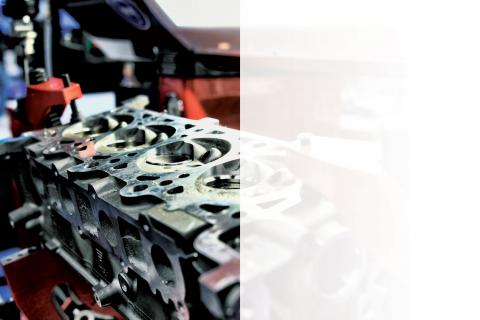
Arguably, that grandiose jargon is less prevalent in the cylinder head market. That’s because cylinder heads are a major investment, and winning engine builders aren’t often swayed by cute jingles. A cylinder head is unique in that it’s the single component the rest of the engine is often built around. Breathing is key to horsepower gains, and the cylinder head can’t be the choke point.
Yet, costs shouldn’t be ignored, even in Tier-1 racing classes. The obvious problem is that “budget” is a relative term in racing. A budget head for a claimer motor is certainly not the same budget head for Comp Eliminator or a Trophy Truck.
“Absolutely, it depends on what the budget really is,” said Gavin Simcoe of Frankenstein Engine Dynamics in Weatherford, Texas.
Chris Grace of 1 Way Technologies in Washington, Indiana, has a general strategy when discussing cylinder heads with a team for the first time. The first question is always about the engine brand, simply because 1 Way may not have an applicable product, but it will often recommend the competition to be as helpful as possible.
“They’ll remember that,” noted Grace. “Then we’re going to look at the cost and turnaround time. The lead time on cylinder heads right now is 12–16 weeks. Then we’ll look at the rules and at the product that we have to see if we can provide them with the competitive advantage, legally.”
That discussion then involves all the engine parameters and durability requirements. Cylinder head changes often require adjustments in other areas of the engine. A different combustion chamber may need different pistons. More power may require offset steel rocker arms along with a different induction system. Raised-port heads may require a different intake manifold and exhaust headers.
Fortunately, cylinder head suppliers usually have different lines of products for the most popular engine families so that the engine builder can meet the power requirements while staying within a budget. We sampled a cross-section of the industry to learn about their budget options and strategies for working with cost-conscious customers.
1 Way Technologies
Sanctioning bodies are always shaping rules to help hold down racer costs and may work with manufacturers to establish a spec head, thereby reducing the costs of extensive porting. 1 Way offers a legal cylinder head for the ASCS 360 sprint car series, and the company wants to keep it legal even when customers ask for something extra on the QT.
“Every cylinder head porter will interpret those rules to what they want to read. We as a company are very strict and stringent on our rules reading,” said Grace, noting that having a close dialogue with the tech officials can clear up misunderstandings and make adjustments as needed. “These rules now have allowed us to go in there and improve our product. We were able to work with them, and it’s fair across the board.”
1 Way recently developed a small block Chevy hybrid casting that is versatile enough to be machined for either a R0X head on a 4.500-inch bore spacing or a SB2.2 on a 4.400-inch bore space, thereby lowering the manufacturing costs handed down to the customer. Most of its work, though, comes in developing a variety of CNC-ported race packages using Brodix, All-Pro, Edelbrock, Pro-Filer and OEM castings.
1 Way Technologies works with a number of casting suppliers to provide cylinder head packages for all types of racing, including a legal ASCS head for sprint car racing.
“When we work with those companies, we have them make cylinder heads to our specifications, and then we CNC them to meet the customer needs,” said Grace.
So, in effect, each order is custom, and costs will be reflected in the total package of valves, springs, rocker arms and other equipment in addition to being competitive in a variety of racing disciplines.
“We run the gamut,” added Grace. “From hill climb, time attack, drag, circle track, asphalt and dirt, truck pull, water sports. Anything with an internal combustion engine and an aluminum cylinder head, we’re working on it.”
Air Flow Research (AFR)
CNC machining takes time, which costs money, so if a cylinder head is designed to run with only minimal machining in critical sealing areas after casting, then the cost of the head will be lower. The Enforcer line from AFR in Valencia, California, is driven by this “as-cast” strategy.
“They’re very comparable to some of our entry-level CNC heads but just don’t have that next level of performance,” explained Chris Sperling. “For guys who want that extra five to 10 horsepower, we recommend our CNC heads. However, our as-cast product line has just blown us away both in performance and integrity of the casting.”
The AFR BBC Enforcer head is a big hit with Rat-motor fans. This as-cast head features 325cc intake runners and is suggested for engines over 500 cubic inches.
The company’s most popular Enforcer head is the 185cc small block Ford, which has a street price under $600 each, fully assembled. There are also 165cc, 205cc and 220cc versions
“We do a quick little bowl blend on both the intake and the exhaust to make sure that we have smooth transitions from the valve job. That’s one of the more critical areas for flow,” added Sperling, noting that racers are going to get what they pay for. “It’s all in the quality of the components. Using poor quality components may save a little bit. But in the long run, it’s going to cost more with rebuilds or not having the needed tolerances.”
For an engine like the GM LS family, there are plenty of options. The Gen III Hemi, however, is just now starting to gain popularity, so performance options from the aftermarket are limited.
“We’re targeting the Hemi for Q2 release in 2022,” said Sperling. “We have two versions, a CNC-ported job and an as-cast Enforcer. The Enforcer will be a great stock replacement.”
Dyno testing isn’t complete, but Sperling expects the CNC version to flow about 60 cfm better than the as-cast model.
“The potential market for that is across the board because of the product levels that we’re offering,” said Sperling. “This product can go on anything from a naturally aspirated street/strip car all the way up to somebody who’s got a twin-turbo application with 30-plus pounds of boost.”
All-Out Performance
Based in Lindsay, Oklahoma, All-Out Performance is working on a total engine package for racers, and then the shop will release a cylinder head package that leverages that development experience.
At the 2021 PRI Trade Show, the company introduced an EFI LS engine designed for dirt track racing where the rules allow. “A lot of tracks are opening up their engine rules,” said Bryce Koone. “We showed it off in a sprint car chassis, but it could very well be adapted into Late Models or modifieds. Right now, it’s a plenum-style intake manifold, but we’re testing individual runner intakes.”
All-Out Performance is currently using factory GM cylinder head castings to hold down costs. “Again, I can’t say much about our dedicated cylinder head package,” added Koone. “We also want to offer an economy motor package that can bolt onto an existing LS engine for dirt track applications. And we’re testing both cathedral and oval port versions.”
The motor shown at PRI offered about 800 horsepower. “But I left a bunch on the dyno, so we’re hoping to be closer to a thousand,” said Koone, noting that durability is a key goal for the project. “Especially in the economy motor where I want to run them for a season without having to touch it. We’ve got to catch a break in the racing world. Everything is so expensive.”
Brodix
Brodix of Mena, Arkansas, has one of the largest cylinder head catalogs covering different price points and power levels. The company also offers a wide variety of options and upgrades, so a budget head can get pricey with a little extra port work, better valves and upgraded springs.
The Brodix IK 200 is a 23-degree small block Chevy cylinder head with an easy price point, yet the intake runners are CNC ported to 200cc and it flows 261 cfm at .600-inch lift.
For example, the IK series is Brodix’s budget-priced cylinder head. It comes with either 180cc or 200cc intake ports and either 64cc or 70cc combustion chambers. The same casting can be CNC machined to open up the intake ports to 210cc. This head also receives slightly larger valves and stiffer valve springs.
For the big block Chevy, Brodix has an as-cast version of its popular CNC-ported head called the BB3 Xtra.
“It would be competitive in Super Comp, Super Gas or other index racing,” said Mark Fretz. “We offer it as a copy of our ported head but in an as-cast version. They usually flow within a few CFM of the ported head.”
Brodix is another company that works closely with sanctioning bodies to provide spec heads, which are meant to hold down racing costs by keeping teams from experimenting and testing port and valve-angle designs. One example is its ASCS sprint car head.
“We will give advice about cylinder head technology,” explained Fretz, “but we don’t try to influence rules in any way. Once a rule is in place, then yes, we will develop a head that will utilize all the advantages allowed in the rule. Also, we offer a full line of cylinder heads, and racing organizations may adopt our head as their spec cylinder head. But we do not go out and promote or try to bring in spec-head business.”
Dart Machinery
Dart, which is based in Warren, Michigan, recently gave its budget-minded SHP (short for Special High Performance) series of heads a makeover in celebration of the company’s 40th anniversary. The SHP line includes heads for the small block Chevy and Ford engine families.
Dart’s budget-minded series is the SHP line. As expected, the small block Chevy and small block Ford, seen here, are the most popular offerings.
The Ford Windsor-based head features the popular 20-degree valve-angle configuration and touts a revised port design for improved power at an economical cost. The Chevy head is the standard 23-degree configuration, again revising the ports for improved performance.
Both heads can be ordered in bare form or fully assembled, which includes Manley stainless-steel valves and a choice of 7- or 10-degree retainers. There’s also a choice of 1.250-, 1.437- or 1.550-inch-diameter valve springs. Other features include Viton seals, hardened spring cups, guide plates and ARP rocker studs.
The heads are manufactured using a proprietary process with permanent molds and dense aluminum alloy.
Edelbrock
Edelbrock, which recently relocated to Olive Branch, Mississippi, has an easy-to-understand pecking order of its cylinder head lineups. The E-Street group is the least expensive with Ford and Chevy small block, Chevy big block and Chrysler big block kits. Depending on the kit, there are choices of valve size and springs for either a hydraulic roller or flat-tappet camshaft.
The latest offering in E-Street is for the LS cathedral-port engines. They come with either dual or beehive springs, 2.000/1.550 stainless-steel valves and chromoly retainers.
Here’s the Edelbrock E-street cylinder head for GM LS cathedral-port engines. It’s available bare or fully assembled with COMP Cams valvetrain components.
From there, Edelbrock has the Performer, Performer RPM, E-series, E-CNC, Victor Jr and Victor cylinder heads that target different price points and performance levels. As mentioned earlier, the term “budget” is relative to the racing series.
Edelbrock’s new Victor raised-runner, CNC-ported LS7 head may be the budget choice for engine builders seeking very big horsepower. The need for a bigger intake valve drove that head’s development.
“Traditional LS7 has been 12-degree with 2.200-inch intake valve max,” explained Mike Sanders. “We were able to move the guides a little bit to put in a 2.250-inch valve. Now we have more cross-sectional area under the bowl, which moves more air to make more power. It’s no different than raising the port on a big block. There is a better line of sight to the valve. But it should be noted that this head will still work with a stock intake manifold.”
As with many other cylinder head suppliers, Edelbrock is looking at the Gen III Hemi for high-performance potential but won’t disclose any specific details.
“There’s a lot of hype about that market,” added Sanders. “There aren’t really a lot of high-performance cylinder heads available. Edelbrock has a Performer RPM version, but it’s a market that’s starting to develop and will be moving quite quickly.”
Frankenstein Engine Dynamics
The budget-minded Monster cylinder head line at Frankenstein Engine Dynamics is not a basic street upgrade or designed for some forms of restricted racing. These are mid-level cylinder heads for a major leap in power levels over stock, so the base prices start at nearly $1,800 and go up past $2,500 for an assembled set of two.
Frankenstein Engine Dynamics’ budget cylinder head is called the Monster series, and it’s quite potent. Shown is the M23 for small block Chevy.
“It really comes down to, how much power can they give for the least amount of money?” said Simcoe. “If we can give them a quality product that lasts, that gives them better than stock at a good price, I think that’s really what we’re aiming for.”
The starting point for the Monster line was the M311 head for LS3-based engines. It features an 11-degree valve angle and 2.165/1.600 valve sizes. It flows almost 400 cfm at .800-inch lift. The head is fully CNC machined, then hand blended and deburred. Options are available.
“We can upgrade to titanium intake valves. We actually have another head that’s the same exact head as this, but we upgraded to a CHE bronze guide and Inconel exhaust valve,” said Simcoe. “We call those the Boost Monsters. What’s nice about this: It’s an entry-level aftermarket cylinder head with a .750 deck, six-bolt head. We don’t recommend pushing these things much over 1,200 horsepower, but we’ve got guys chasing 2,000 and higher and it still hasn’t cracked. They are strong. Racers get all these benefits; plus, the factory intake manifold will fit.”
World Products
There’s still a market for iron heads, driven mostly by restoration shops and racing classes that don’t allow aluminum. While iron heads are heavier, they do offer a much lower price point than aluminum without sacrificing performance, according to Jack McInnis of World Products in Louisville, Kentucky.
A specialist at World Products conducts a thorough quality control check on the company’s small block head before it’s shipped out to a customer.
“There’s no difference in power potential between an aluminum and iron head, all things being equal,” said McInnis. “An American-made cast-iron head will offer very good performance for years, for quite a bit less money than an aluminum head. But because an iron head doesn’t dissipate heat as fast, an aluminum head can actually tolerate a bit more compression.
“A lot of the iron-head market is complying with the rules in different types of racing,” he continued. “It can be small block stuff in circle track. For big blocks, it gets into truck pulling. Also, marine applications are growing, especially offshore where salt water wreaks havoc on aluminum.”
Recently, World Products started offering CNC-ported versions of its iron cylinder heads, giving racers and performance enthusiasts an option for more power at a budget price. High Velocity Heads handles the machine work.
“We have a few ported-iron versions for small and big block,” said McInnis. A ported Motown 230 small block head can flow up to 318 cfm at .700-inch lift, while a Merlin 365 that’s been CNC machined will flow nearly 430 cfm at .900-inch lift.
“And again,” McInnis added, “aside from the rules or the corrosion, racers are still saving a good deal of money over ported aluminum heads.”
TWO-WHEEL Performance
Harley-Davidson cylinder heads need love, too, and T-Man Performance in Kernersville, North Carolina, offers different power and price points for all the popular V-twin configurations. For twin-cam, two-valve engines there is a good-better-best choice between the Street Performer, Pro Touring and Thumper series, respectively. The top two heads are designed to work with larger displacements.
“We take existing Harley castings and modify them,” said TR Reiser. “We have a five-axis CNC machine in-house. The Pro Touring is the most popular.”
T-Man even offers a high-output version of the Pro Touring that’s good for 140-plus horsepower on a 124-cubic-inch engine with pump gas.
“On the Thumper, we weld the ports, raise them a little and change the valve angle,” said Reiser, adding that larger valves are also installed. The Thumper program is available only on air-cooled heads because the machine work could invade water jackets on liquid-cooled engines.
T-Man Performance deals in Harley-Davidson engines and offers a wide range of cylinder head packages for the different generations, including this budget-minded Street Fighter package.
For the four-valve Milwaukee 8 engines, T-Man offers the base Street Fighter, and the Pro Street Touring is the top of the line.
“The Pro Street Touring is the more aggressive head with oversize valves, and it’s fully CNC ported,” said Reiser. “This head is used on 150-plus horsepower engines.” —Mike Magda
International motorsports governing body the Fédération Internationale de l'Automobile (FIA) has announced Alan Gow has been reappointed as president of the FIA Touring Car Commission and the World Endurance Commission.
With his role extended through 2023, Gow enters his 13th year as president of the FIA Touring Car Commission, the body that oversees the FIA-sanctioned touring car competitions. He also retains his position as a member of the World Endurance Commission, which he has held since 2018. This role will also extend through 2023.
Arizona’s legislature has introduced a PRI and SAN-supported memorial (H.C.M. 2001) urging the U.S. Congress to pass the Recognizing the Protection of Motorsports (RPM) Act (H.R. 3281 and S. 2736). A memorial is a document presented to a legislative body and contains a petition or a representation of facts.
In short, Arizona lawmakers are urging Congress to pass the RPM Act, which guarantees the right to modify street cars, trucks, and motorcycles into dedicated race vehicles and safeguard the industry’s right to offer parts that enable racers to compete.
“A broad spectrum of individuals are involved in converting and racing street vehicles, ranging from novice hobbyists to professionals,” the memorial stated. “Vehicle modification and racing, and the community and industry that surround them, play an important cultural and economic role across the country and in this state.”
Lawmakers must continue to be reminded of the importance of passing the RPM Act into law this year. PRI encourages the industry to voice support from lawmakers on this pro-hobby proposal.
 MEMBERSHIP LOGIN