Support for the Recognizing the Protection of Motorsports Act (RPM Act), H.R. 3281 and S. 2736, continues to strengthen as members of Congress receive an outpouring of support for the bill from racers and the motorsports parts industry. In 2021, over 1.5 million letters were sent to lawmakers to help generate strong bipartisan support for the RPM Act, which currently has 145 co-sponsors in Congress.
However, we need your help now more than ever, as Congress just passed the halfway point in the 2021–2022 session. The racing community must ramp up the pressure on lawmakers in Washington to pass the RPM Act in 2022 and protect the future of racing!
Below is a list of things you can do right now to help to pass the RPM Act:
Send a letter to your lawmakers at: saveourracecars.com. A letter has already been drafted. It takes less than a minute.
Sign a letter to your lawmakers on company letterhead. Email erics@sema.orgfor a template and more information.
Make a quick call to your lawmakers to voice your support for the bill. PRI has made it easy to call by clicking here.
Post about the RPM Act on your company’s social media accounts using the toolkit of digital assets or pass out a flyer at your business of events.
Learn more about PRI’s Political Action Committee (Performance Racing PAC) at performanceracing.com/pac. Performance Racing PAC allows PRI members to support the lawmakers that stand up for racing in Washington.
Share this video with your friends to educate them about how a bill, like the RPM Act, actually becomes law.
If you have a connection to a member of Congress or their staff, contact erics@sema.org to see how we can leverage this relationship to stand up for the industry.
You might be wondering “how does a bill become a law?” That question is like asking how to build a winning race car; there are several ways to get it done, and it’s certainly harder than one would hope.
A bill, just like a race car, starts with an idea. The RPM Act is stated as a simple idea: to protect Americans’ right to convert street vehicles into dedicated race cars and the motorsports industry’s ability to sell products that enable racers to compete.
The below video explains the paths a bill can take to become a law and the possible obstacles along the way. If you support the RPM Act and want to see this critical bill become a law, PRI urges you to share this video with several of your friends.
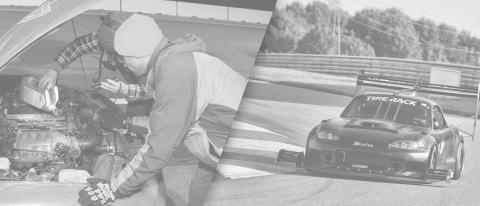
Endurance racing has long been considered the ultimate crucible for vehicle components, but time trial events can put parts through an incredible amount of stress in a very short amount of time, and the flat-out nature of the format leaves little room for mechanical sympathy. While our advocates represent sanctioning bodies that play host to both styles of racing, they do offer different perspectives regarding which discipline is the most demanding test of durability.
Endurance Racing—Tougher on Parts—Brett Becker, National Auto Sport Association (NASA)
There’s no doubt in my mind that endurance racing demands more of race cars and their components than time trials do just by virtue of the duration of the stints. Most endurance races are at least three hours long. Any event longer than that is usually going to involve more than one driver, which means there is the possibility at least two different driving styles will have an effect on durability as well.
It’s just hours and hours at a time of driving at race pace, and the shorter the enduro event is, the more intense the driving tends to be. From what we’ve seen in our Western Endurance Racing Challenge series, the three-hour races run at nearly the same pace as a 30-minute sprint race.
With endurance racing, there are essentially two main considerations when it comes to parts and overall durability. There are consumables—brakes, tires, and other components like that. Those parts are seeing a lot of wear over the course of one race. The tires are basically being subjected to one heat cycle that’s three hours or more, and the brakes are just heated and cooled again and again with very few pauses along the way. It’s a situation that has required manufacturers to respond in turn. Companies like Hawk Performance, for instance, have developed new and more robust pad compounds for endurance racing as a result. That demonstrates that there was a need for a better, more durable part specifically for this type of motorsport.
The other big consideration is the hard parts—transmission gears, shafts, axles—all of the things that have a longer shelf life, but still incur fatigue over time. I’ve talked to a lot of people about what it takes to prepare for an event like the 25 Hours of Thunderhill, and they all say that they basically have to have a brand new car at the beginning of the race because they’re essentially putting an entire season’s worth of racing on the car over the course of two calendar days. Axles that would normally last a couple of years in other racing disciplines might only be good for that one race.
The intensity that those parts are subjected to in endurance racing is immense. BMW E36 and E46 chassis are very popular in grassroots endurance racing, but there are elements of those chassis that will actually crack under the stress of this type of application. The tabs where the sway bars mount, the floorpan where the differential mounts, and the strut towers weren’t originally designed for the loads they’re subjected to in endurance racing, and that’s why reinforcement kits for those cars now exist.
Although the format of this type of racing allows the drivers to conserve the car a bit over the course of an event, there will be numerous teams at a race like the 25 Hours of Thunderhill finishing with one working forward gear. There might not be enough time left in the race to replace a transmission, or replace a bad CV shaft, so they just stay out there and do their best to keep the car together just long enough to get over the finish line. Given that, the parts that earn a reputation for being unbreakable tend to be the components of choice for most endurance teams, as opposed to the lightest or otherwise higher-performing options out there.
Time Trials—Tougher on Parts—Jon Krolewicz, Sports Car Club of America (SCCA)
Colin Chapman once said that the perfect race car turns to dust as soon as it crosses the finish line. Whether it’s a flying lap in a time-attack event, 24 hours in an endurance race, or a quarter-mile in a Top Fuel dragster, reliability is critical, but each discipline defines it a bit differently.
Time trials put an incredible amount of stress on everything in the car for the time it’s out on track. The engine is on boil, the tires and the brakes are being pushed to their limits—everything is being asked to perform at its absolute maximum. That ultimately equates to more abuse on the parts involved. Although endurance racing is absolutely going to test the durability of components, drivers are factoring that into their larger overall strategy. They’re not going 11/10ths all of the time because longevity is one of the highest priorities in an endurance format, whereas the fastest time-attack cars in the world do a slow out lap, absolutely burn it down for lap, and then basically coast into the pits. Those cars don’t have anything left at the end of one of those sessions because they’re being pushed right to their breaking point. It’s not about making it last, it’s about making it fast.
With that in mind, the durability concerns are different. At the pointy end of time attack is usually an engine combination with forced induction, so there’s a lot of stress on engine components. Splitting a header is something that might happen in an endurance car after four or five seasons of racing, but we were pressure-testing our headers after each weekend on our time-attack car. Because we’re running at the edge of the car’s performance envelope, we’re dealing with dramatic spikes in heat and pressure rather than levels that are sustained for extended periods of time.
Durability is an important factor for any race car, and weight is also a really big consideration when it comes to time trials, but the core goal is to build a combination that’s going to yield maximum performance right away. In an endurance race it’s okay if it takes a little while for components to get up to temperature, but time trials require components that can take the abuse immediately and perform at peak levels. A world-class time-trials car is more akin to a Top Fuel dragster than an endurance racer in terms of parts longevity. It just has to last for the next 90 seconds without blowing up.
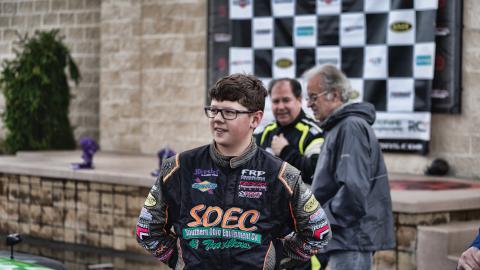
The most common mistakes parents make are spending money unwisely, not getting their child adequate seat time, and becoming “enamored with the glitter and glitz,” said our source at Formula Race Promotions (FRP). “They’re not focusing on the core competencies. These kids need to get their training where nobody is watching, like in Formula 1600.” Pictured here is 14-year-old Austin Hill, 2021 FRP Formula Atlantic champion and FX Hoosier Super Tour champion.
An urgency to compete in the top echelons of motorsports often prevents young racers from gaining the experience needed to reach their full potential.
Auto racing is all about going faster than everyone else. And most realize that the best habits are learned young. Any effective driver-development program imparts skills from car control to self-marketing. However, it’s the pure, going-fast part that can pose a problem.
It happens when a student is trying—or urged to try—to go fast too soon. The pace, and level, of development is crucial in determining whether a young driver ascends. Push too hard, and the results can be wadded-up equipment, impatient backers, and a terminally crestfallen prospective prodigy.
“A lot of the mistakes that the kids make really have more to do with the parents,” said Michael Faulk of Lee Faulk Racing and Development, Denver, North Carolina, which has counted Tanner Gray, Anthony Alfredo, and Kyle Larson among recent NASCAR aspirants. “At 13 years old, they don’t really know what they need to be doing yet. The decision makers behind them—parents, sponsors, whatever—try to rush them through the ranks too quickly, figuring they’ve got to get them into the Truck series by the time they’re 16. If they just stay in a Late Model or developmental program for two or three years, get a lot of good experience, they’ll do better when they move up to the next level.”
Alfredo enjoyed measurable success, even at the NASCAR Cup level, after spending three years in regional Late Models with Faulk. Those laps, more than simulator time, create a driver who can communicate effectively with a crew chief. “It’s all about laps,” Faulk said. “That and being at the shop. Those are the ones who get there.”
Robert Wright, partner in Salem, New Hampshire-based Formula Race Promotions, sees the most fruitful path leading from karting through formula cars. He echoed Faulk’s homily about being too upwardly mobile. “The really spectacular drivers, you see them coming at a very early age,” he said. “They’ll be noticed wherever they race. By definition, they almost have to come up through karting. One of the biggest mistakes happens when kids come out of karting and the parents, who aren’t racers themselves, let them come out and they’re not ready for it. They blow their money and then disappear.”
Wright sees three commonly made mistakes: “Spending the money in the wrong place early, not getting enough seat time by not spending the money properly and getting enamored with the glitter and glitz. They’re not focusing on the core competencies. These kids need to get their training where nobody is watching, like in Formula 1600.”
At BMR Drivers Academy in Roseville, California, principal Bill McAnally has been doing NASCAR-centric training for decades involving drivers ranging from a young Clint Bowyer to Cole Custer, Chase Briscoe, and Hailie Deegan. A highly experienced mentor, McAnally emphasizes professionalism and patience with his charges.
“Drivers need to accomplish one step at a time, winning races at that level, before they move on,” he explained. “Young drivers in a hurry move too quick, and then they’re not successful. NASCAR has a great ladder system if they just follow the steps. Some win a race in a Late Model and then want to go to Trucks or ARCA. They have to earn their accomplishments at the first level first.”
Assuming a young driver has IndyCar dreams, the accepted career path has been the Road to Indy program conducted by Andersen Promotions in Palmetto, Florida. The traditional ascent encompasses USF2000, the Indy Pro 2000 Championship and then Indy Lights presented by Cooper Tire. Development director Rob Howden said USF2000 is now so competitive that a new layer of training outside the official Road to Indy ladder, the USF Juniors, will use HPD-powered Ligier F4 chassis. Howden echoed the moving-too-fast caution, adding, “With each level of competition, drivers are faced with more, and more difficult, challenges. Going from karts to cars is much different because the car is dimensionally larger, so they struggle with close-contact racing, plus now they’re dealing with aero, too.
“Do a significant amount of car testing and have the budget before attempting any wheel-to-wheel racing,” Howden advised.
Bill McAnally, pictured at right with, from left, Hailie Deegan, Derek Kraus, and Cole Rouse, stresses professionalism and patience, noting that young drivers must “accomplish one step at a time, winning races at that level, before they move on.”
Road to Indy instructor Jeff Braun, a longtime race engineer and the father of NASCAR and IMSA veteran Colin Braun, takes Howden’s logic considerably further: “Find a series where they do decently well, then drop back a couple of levels, and use the resources to test, test, test. The resulting wins, not consistent mid-pack finishes, will get a driver noticed.
“Nobody goes, ‘Oh look, that guy ran 10th.’ They have to win,” he added. “Scrape the money together, drop back two series, and then go kick everybody’s butt. That gets attention. If they can afford two or three Indy Lights races, my suggestion would be, do one race. Pick the race and the track. Then spend the money for the other two races to test there instead. Test like crazy. Dial it in. Know it perfectly. People will notice a podium out of that race because they exceeded everyone’s expectations.”
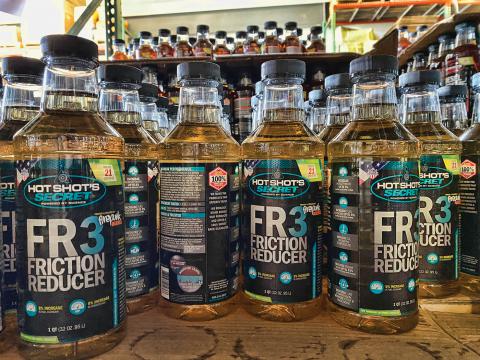
At Hot Shot’s Secret, “Our goal is to slow the rate at which the engines eat themselves,” said a company contact, who explained that “horsepower gains are just a byproduct of an effective racing oil freeing up horsepower by reducing wear.” Pictured here is Hot Shot’s Secret’s FR3 Friction Reducer, which has been formulated using carbon nanotechnology.
Learn how to reduce friction under the hood, along with the factors that’ll help racers arrive at a solution that’s optimal for their particular application.
With unpronounceable ingredients like molybdenum, zinc dialkyldithiophosphate, and polyalphaolefin, is it any wonder that engine oil and its additives can be mysterious and confusing? To explain these and other tribological terms and shed light on how to best use them, we spoke with representatives from some of today’s top lubricant companies specializing in racing oils.
“A race engine generally operates under tight tolerances and extreme horsepower loads, and under those conditions wear takes place,” said Kyle Fischer of Hot Shot’s Secret, Mt. Gilead, Ohio. “Our goal is to slow the rate at which the engines eat themselves. We want our customers to stay on track all year and not worry about refreshing their motors multiple times a season.”
While much attention is paid to oil additives, high-quality base oil is critical for race engine protection, said Danny Vaca of LAT Racing Oils, Orange, California. Base oils are categorized into five groups. The traditional synthetic oils are Groups IV and V, the polyalphaolefins (PAOs) and esters that LAT Racing Oils uses as its base oil, he said. “The man-made synthetics have film strength, molecule-size consistency, and lubricity that are far superior and unmatched by mineral oils.”
Of the anti-wear and friction-reducing additives used in race oil, one of the most common anti-wear agents is zinc. In a race application, “we beef up the zinc package far more than in a standard passenger car oil because of all the extra anti-wear that’s needed,” Fischer said. “Probably 98% of the industry uses ZDDP,” a phosphorous-based zinc. Hot Shot’s Secret formulates its oil with a sulfur-based zinc which, Fischer admitted, is expensive but is also “a better zinc agent. We can use less zinc when it’s sulfur-based, which leaves room for more good stuff for our tribologists to add to the package.”
While a certain zinc threshold is good, too much zinc “will break down the oil,” Fischer said. One of ZDDP’s beneficial properties is as an anti-oxidant, “but too much ZDDP does the opposite and oxidizes the oil. Once oxidation starts, the oil will shear, come out of grade, and lose all its protective qualities.” For that reason, he advised racers against “making their own racing oil by really jacking up the ZDDP package. Leave the lubricant blending to the experts.”
Molybdenum, a metal better known as moly, is a popular friction reducer. LAT Racing Oils’ liquid friction reducer additive—the “LFR” on the bottle label—is “a mixture of moly, boron, and other friction modifiers,” Vaca said. The amounts are carefully controlled because, as with ZDDP, too much of a friction reducer can be harmful to power production. “Some people will over-treat an oil, thinking more is always better, but it’s not. Not carefully balancing formula components and instead adding too much friction modifier is going to negatively affect ring seal and not be able to hold compression.”
Hot Shot’s Secret formulated its FR3 Friction Reducer using carbon nanotechnology, Fischer said. The nanoparticles in FR3 are “microscopic carbon balls” that will “find a machining mark in a new engine or a wear mark in an engine with some run time on it and fill them in, making a flat film layer. That allows us to build nano lubricant on top of that film layer to protect both surfaces from touching.”
Racers who produce an extreme amount of horsepower are encouraged to communicate directly with their oil suppliers, gain a clear understanding “about what the oil contains, and get good technical support for their products,” said our source at LAT Racing Oils. “Do the research,” he added, “[and] ask questions.”
The choice of oil additives can vary by racing discipline, Vaca said. “A road race engine can use synthetic or conventional oil, which will work very well. A drag race engine requires a much higher-end oil for maximum performance, like a Group IV or V, because of the high rpm. The road race engine is also going to need more of a detergent pack to keep that oil healthy over a longer period of time than a drag car. The drag racer changes oil every three to four passes, while the road racer changes their oil every three to four races.”
To Jeff Green of Blud Lubricants in Medina, Ohio, it’s not the racing but the “fuel type that’s going to drive the product put into that engine. If someone is running an alcohol dragster and uses a conventional oil, the detergents in that oil will hold water in there and cause all kinds of issues. Whereas an alcohol oil has very few detergents in it for that reason.” Conversely, a diesel engine “needs more detergents because of the particles it’s producing during the combustion process.” And nitro? “Nitro’s tough on any oil,” Green admitted. “It needs an alcohol oil, but it has to be changed much more often. Nitro destroys the oil.”
Ultimately, all of our sources agreed that communication with your oil supplier is the best way to arrive at an oil additive package that’s right for a particular race vehicle.
“High-end racers who produce an extreme amount of horsepower need to ask questions of the oil companies about what the oil contains and get good technical support for their products,” advised Vaca. “Do the research. Ask questions. I’d love to sell you my most expensive oil, but that may not be what you need.”
“We at Blud have a very extensive support program for racers to make sure they’re getting the right oil,” said Green. “Talk to the oil company. I love hearing from racers. My favorite part is talking to the guys.”
The research should begin with an oil analysis, Fischer said. “Get a baseline. Let’s see how the oil is performing and if we can improve on that. By improvement, I’m talking about particle count. These guys love to see horsepower gains, and we show them all the time. But horsepower gains are just a byproduct of an effective racing oil freeing up horsepower by reducing wear. I want to see that particle count in an oil analysis drop. I want to see the engine eating itself less by the changes we’re making.”
As the 2022 season gets underway, road racing is experiencing a growth spurt, especially at the amateur levels. So how are these racers and teams improving their programs while still grappling with pandemic-related supply-chain obstacles?
It looks like 2022 will be a boom year for road racing. As this report was being compiled in January, the SCCA’s first Majors event at Homestead-Miami Speedway in Florida was run with an entry list that was not only larger than last year, it also eclipsed the number of entries in pre-pandemic 2019. Likewise, the field for the Rolex 24 at Daytona, season opener for the IMSA WeatherTech SportsCar Championship, will be the largest in years if the entries for the Roar Before the Rolex 24 are any indication. Some 61 cars, the most since 2014, were signed up for the two days of testing that make up the Roar.
At the other end of the road race spectrum, “there’s this huge boom of participation in entry-level endurance racing,” said Eddie Nakato of AR Motorsports, Tigard, Oregon. “This boom in demand is honestly pretty insane.”
Bruce Griggs of Griggs Racing in Sonoma, California, agreed. “Endurance racing is growing like crazy at the amateur level,” he confirmed.
Both Nakato and Griggs have customers who participate in the Lucky Dog Racing League, a series that “grew out of the $500 car Lemons deal, but it’s growing and becoming more sophisticated,” said Griggs. “There are all kinds of cars in it. We have a couple of older Mustangs, Fox-body and SN95s, under construction here. We’re putting Lexan in them, composite body panels. And I’m doing a chassis development project on a mid-engine, LS-powered 1967 Corvair with a tube frame.”
Road racing is enjoying renewed popularity, spanning the gamut of classes and cars. “The demand from drivers to go racing is really, really high right now,” noted our source at Alliance Autosport.
“The demand from drivers to go racing is really, really high right now. We’re seeing record car counts,” said Scott Rettich of Alliance Autosport, Columbus, Ohio. That is despite the fact that many of his customers are having trouble “making the time to get away to go racing. Given that we are in club racing [Alliance Autosport is a customer service representative for SCCA Enterprises], all of our customers are essentially gentleman drivers. Some of them have businesses that are now booming, and they’re having a hard time getting employees. Or they’re getting double-scheduled because of all their family activities.” Yet his business is growing, aided by the fact that “there’s a huge number of new drivers coming in.”
Fred Lux of the Lux Performance Group in Portland, Oregon, is experiencing this growth surge in a different way. He said it’s getting more challenging to find the experienced crew members that he hires to support his team of Trans-Am Vipers on race weekends. “The market is pushing less experienced crew members to come forward, and they’re asking for bigger compensation, too. We are focusing on a mentality of retaining people on the team. We want to be ‘that’ company to work for in terms of professionalism, but also in taking good care of our team members.”
Nakato, too, said one of his biggest challenges is “making sure we have the drivers available to transport the vehicles, the mechanics available to work on the vehicles, and the crew available to support the vehicles while at the race track.”
AR Motorsports is “a bit unusual,” Nakato said, in that it builds, maintains, and supports customer-owned race cars as well as renting race cars for arrive-and-drive customers. “Typically, those are two different types of businesses.” During the height of racing season, “the demand [for personnel] is outstripping our supply and availability of labor to be able to turn the cars around fast enough to hit another race.”
Personnel shortages are just one of the many challenges racers face in this pandemic-affected season. How are they coping, and what are they doing to improve their chances of winning?
Addressing Challenges
Like many other forms of competition, road racing is experiencing parts shortages, with tire supply among the most problematic.
“Parts supply is a nightmare, and where it hit us the hardest was with tires,” Nakato said. “Racers can drive without the upgraded turbo or this extra control arm, but not without tires.”
At the 25 Hours of Thunderhill in December, “our first, second, third, and fourth tire choices were all unavailable in the quantity we needed,” he continued. “And that was 120 days out from the race. We ended up going with a tire that was not ideal, and it caused a lot of problems for us, but that was all that was available.”
Although the recent boom in road racing is good for the sport, “it’s getting more challenging to find experienced crew members,” observed our source at Lux Performance.
Nakato admitted the problem was exacerbated by the quantity of tires he needed, “something like 14 sets of tires. That’s where we got hit. Everybody could provide us with two or three, but nobody could provide us with 14.”
To mitigate the supply problem, Nakato is considering “ordering tires a year in advance, just to make sure we have them. Honestly, that’s unheard of. Tires don’t really keep for that long, particularly race tires. But we don’t have a choice, because the alternative is having to call somebody and say, ‘Hey, I know you spent a large amount of time and money to prep the car, but now we can’t get to the race because we don’t have tires to run it.’”
Lux, too, had trouble getting tires. “Michelin shipped me two sets of tires that landed in a warehouse that caught COVID and got locked up,” he explained. “Once Jackson Motorsports found that out, they air-freighted me two sets directly, so they went above and beyond to get me what I wanted. They’re working hard, doing more work than they used to and staying on top of things. But if a team wasn’t shopping at the right places, stuff just wouldn’t come. No one would know when it’s coming, or even if it’s coming.”
Chris Taylor of Chris Taylor Racing Services in Del Valle, Texas, has his own work-around to get the tires he needs for the SCCA B-Spec cars he manages. “The spec tire for B-Spec is Hankook, and Hankook Motorsports is about 10 minutes from my shop,” he said. “Thankfully for us they have a couple hundred tires in their warehouse. They’re still getting stuff delivered, but maybe not as often as they want.”
Supply-chain woes are making many parts difficult to get. Chris Taylor Racing Services is addressing the problem through its one-stop parts shop for SCCA B-Spec racers.
Also in short supply are brake pads. “We’ve had supplier problems with the brake pads for our FE2 [Formula Enterprises 2] cars,” Rettich said, “so we’re having to implement some necessary changes to deal with the supply chain issues that the whole world is having to contend with.”
“There’s been a shortage of Raybestos, the ST-45 brake pad compounds we use a lot,” said Griggs. To a “really good driver, a brake pad is a critical thing. They drive the car a lot with the brake pedal: trail brake, finesse and modulate the brakes to make the car do what they want. When a driver has the car all dialed in with a certain type of brake pad, and their brake rotors are living and doing everything well, they don’t want to change. If they have to, then they have to go through a whole process of testing, learning, re-adjusting, and dealing with it, and that can be expensive.”
Joe Aquilante of Phoenix Performance in Phoenixville, Pennsylvania, said he’s getting an adequate supply of parts for his team (which won all four Touring Class championships at the SCCA Runoffs in Indianapolis last season), “but we have had to order extra things. We’re probably carrying $100,000 more in parts inventory than we normally would. Normally we do a just-in-time philosophy because it saves cash flow, but now we have to buy two of everything. Now those parts are sitting in inventory, and that sucks up cash, so we have to be careful about that.”
Aquilante said he buys parts from “whoever has them. From there it’s who has them that’s close by so we can eliminate shipping. Then it’s whoever gives the best discounts for volume buying.” He uses “three or four major vendors: Turn 14 Distribution, Atech Motorsports, and Hoerr Racing Products are probably the major ones that we check for everything.” And while availability is important, “we can’t completely sacrifice pricing. There is a limit to what the customers will pay. We have to be really careful from the customer’s viewpoint to make sure we are paying the best prices we can get.”
To ease supply woes, some race teams have branched out into the parts business. Taylor, for example, retails suspension parts, brakes, and other pieces for the compact cars that race in the B-Spec class. “One of the things I spotted early on was our rulebook said we can run this, this, and this part, but nobody sold all those parts. Racers would have to find the guy to buy the sway bar from, find the guy to buy the shocks from. So I tried to put everything in one place.”
Road racing’s popularity is yielding strong demand for car fabrication, maintenance, and rentals, but it’s also stretching the labor force thin, noted our source at AR Motorsports.
The ubiquity of B-Spec donor cars means parts are widely available from major manufacturers and retailers, including Bilstein, Eibach, Hyperco, and Swift. “The Mini guys get a lot of their stuff from Bimmer World,” Taylor said, and major online retailers like Summit and Jegs are good sources for “seats, harnesses, and safety gear. But the nice thing about our group is that they’re big on supporting guys like me, so there are a lot of small-time shops and wholesalers that people buy their parts from.”
AR Motorsports specializes in German makes—primarily BMW and Porsche—and sources parts from Ground Control, SPL Parts, Hyperco, and Eibach. Also, Nakato recently acquired Cobalt Racing Brakes, what he described as a “boutique company that catered primarily to professional race teams.” Nakato was one of its first distributors some 15 years ago, and he is now “bringing this pro-motorsport-level product to the more mainstream track day market. We mix and manufacture the brake pads all in-house; and because we’re such a small company, we’re fairly nimble and can change the way we operate in response to the rapidly changing market. That can keep us from running out of materials, which I see all across the brake industry.”
Going Faster
For Aquilante, coming off of a very successful 2021 season means “making evolutionary, not revolutionary changes. Racing is a game of blocking and tackling. It’s three yards and a cloud of dust. Seldom does one thing come along and revolutionize the whole thing, especially in touring cars, which are street-based automobiles. We’re not expecting major changes in how to qualify for the Runoffs.” The action plan for Phoenix Performance, Aquilante said, is “Eat, sleep, race, win, repeat. It’s been that way for the past four to five years.”
Rettich, on the other hand, is looking forward to a change that will revolutionize the SCCA’s Spec Racer Ford 3 cars.
“These cars started with a street gearbox, a standard manual transmission, and it was a bit of a weak link,” he explained. “Plus, with fewer and fewer people driving stick shift on the street, it became time to switch to sequential transmissions. This year we’re switching over to Sadev sequential transmissions. While the gearbox is a big investment, it will make the class more popular. Now, instead of having to use the clutch when shifting and learning how to heel-toe, we’re switching to clutchless, no-lift shifting. It’s a big upgrade in technology, and the operating costs should go down. They shouldn’t have to change clutches and transmissions as often.”
Rettich noted that “a few purists want to continue with the stick shift, but most people are excited about the sequential.” He said about half of the active cars have ordered the new transmission, and Sadev is shipping “about 25–50 a month, so it’s a transition period. It will take until the end of year for most people who want a Sadev to get one.”
Some teams are ordering parts far in advance and stockpiling extras when they can get them. “Now we have to buy two of everything,” explained our source at Phoenix Performance.
For Taylor and his B-Spec fleet, “there’s not as much we can do mechanically. We don’t have a hot new part frenzy, but there’s definitely always room for improvement on understanding setup, alignment changes, things like that. One of the big factors in our team’s speed increase over the last two years has been getting an understanding of what the perfect alignment is—how to tune the chassis for better handling, faster lap times, and increased driver confidence.”
To gain that understanding, Taylor has his drivers do what he calls “sweeps,” making laps after a chassis change “as far as possible in one direction, then as far as possible in the other direction, then recording the actual data from an onboard computer or the good old butt dyno.” That way the driver “can make informed and educated changes to make the car better.”
For many of these teams, especially those, like Taylor’s, in spec series with limited opportunities to make mechanical changes, the new breed of data acquisition systems has helped make critical refinements.
Taylor uses AiM data acquisition equipment, and has favorable experiences with the new Garmin Catalyst, which can provide feedback in real time, even through the driver’s comm system.
“It’s kind of like AI learning,” Taylor said. “A guy runs 10 laps, and it records the car pulling 1.5 Gs in the middle of a corner, so it knows the capability of the car is 1.5 Gs. It will then tell the driver to brake later, brake harder, if the driver is only pulling .9 G under braking because it learned the vehicle is capable of 1.5. The beauty of the AiM and Garmin data is we can compare the entire [B-Spec] fleet and driver pool, both in testing and during race weekends. A bunch of us will be huddled around a Garmin Catalyst five minutes after a session, or a laptop comparing data traces and onboard video before we go out for the next run.”
Data acquisition “is getting easier and more user-friendly,” said Lux. Last year was the first time he put the VBOX system on his team’s Vipers. “There’s a camera in front, a camera on the driver, and the feeds go straight to a memory card. It has Bluetooth to set up the cameras, and it plugs into the OBD, or the AiM or MoTeC systems. All the data on the cars—the gas, brake, gear, steering input—is overlaid with videos.” There’s “a lot of data for coaching” on those cards, and he can turn them into the sanctioning body at the end of a run “if something happens on-track. They can use that for answering all the driving and performance questions.”
According to Griggs, racers “can’t compete well” without data acquisition, especially in road racing’s higher tiers—“SCCA at the national level, Major series, the Runoffs, Trans-Am, Trans-Am 2, they all run data acquisition. In IMSA everybody runs it.”
The system Griggs uses “integrates with the AiM systems,” he said. “It’s GPS, but it’s absolutely every sensor in the engine management system plus front and rear brake pressure, wheel speeds, all positions of the shocks, the whole attitude of the car. All the math tracks that come from that are calculating all the G loads, pitch rate, roll rate, and everything about the car so we can govern aerodynamics of the car, control the splitter angle on corner entry and things like that. We can really tune things.
“But that’s the pro level, and the pro level is only so many people,” he continued. “In road racing, the money is being spent at amateur and club levels, everything from open track days to time trials, autocross, and now this endurance racing. It’s real race cars and real racing. They’re running wheel-to-wheel, driving hard, trying to stay on the track, stay together and not run into each other.”
Driver’s Ed: How Can Road Racers Step Up Their Game?
Among the team owners, car builders, and driving instructors we interviewed about the state of road racing today, several mentioned one tip to help drivers improve their performance: Don’t make mistakes. How does a driver achieve that easier-said-than-done goal? A few of our sources elaborated.
“Almost all drivers, from hobby drivers to professional racing drivers, have room to improve how they maximize tire performance, manage weight transfer, and use the entire track, from edge to edge,” said Mark Hicks of Chin Track Days, Orlando, Florida. “That is the secret to making great road course laps. Not horsepower. Often the drivers misplace their priorities, giving emphasis to adding power over improving grip. Tire performance is where it’s at.”
Chris Taylor of Chris Taylor Racing Services highly recommends making any sort of changes or trying different setups on the race cars in what he calls a “low-pressure environment,” rather than on race day. “I can’t say enough about renting a track for a day to focus on trying stuff and not be worried about the fact that there’s just one practice session before qualifying.” Taylor’s Del Valle, Texas, shop is “across the street” from the Circuit of The Americas and about 20 miles away from Harris Hill Raceway in San Marcos. “If I have enough fuel, tires, and drivers, we can go to Harris Hill and run from 9 a.m. to 5 p.m. nonstop. It’s nice to be able to make all those changes and write them down.” That way, he said, a team doesn’t find itself at the track on race day “with a car that’s not fast, wondering, ‘Where do we even start?’”
Instruction and coaching can improve driver performance, but oftentimes a racer’s success comes down to the “off-track element” of funding a team, observed our source at Allen Berg Racing Schools.
Hicks has seen “lots of well-developed professional teams” out of World Challenge, IMSA, Porsche Cup, and others at Chin Track Days “to get quality test time that’s outside the boundaries of test requirements of their sanctioning bodies.” A track day is also a good opportunity “for work on experimental or prototype stuff, because they’re not getting scrutinized by other teams in the series.”
While tracking the results of setup changes and keeping tabs on driver performance is often done via data acquisition, Hicks and Taylor agreed that even the most sophisticated of those systems can’t replace the feedback from a competent human coach. That is especially true with the “hobby enthusiast” drivers that populate many Chin Track Days events, Hicks said.
“There is a learning curve initially to help drivers understand the fundamental vehicle dynamics that occur on a race track,” Hicks explained. “In-car coaching is helpful for drivers in real time, to have an expert instruct where to position the car, how to use the wheel and pedals for best effect, manage traffic, all of those things.”
“People communicate and learn differently,” Taylor added. For example, “brake pressure data may show a driver is using 1,600 psi in one corner, but in another they’re using only 800 psi, and the Garmin is saying, ‘Brake harder.’” In that same situation, Taylor may tell his driver, “Instead of easing on the brakes, wait just a second, or just a beat longer, and then stomp on the pedal for all it’s worth.”
The best part of doing that kind of coaching, Taylor said, is “seeing the ‘a-ha’ moment, when people get it.”
Allen Berg of Allen Berg Racing Schools in San Diego, California, offered a different kind of advice, to improve what he called “the off-track element” of driver funding.
“The cost of actual track racing has gone up significantly, while the age of participation has dropped,” he noted. “Drivers are now coming into Formula 1 in their late teens, which means they’re starting racing when they’re very young, 7–8 years of age, and moving up through the ladders. Because these drivers are younger, they’re kids in school, and they don’t have the skillset to put together financial support packages for themselves to go racing in Formula 4 or Formula 3. That makes them reliant on family money to pay for the racing.
“It’s a real weakness in the sport, and an area that drivers can explore and improve on,” Berg continued, while acknowledging, “it’s also the hardest part of the whole business.” —Drew Hardin
The WISSOTA Promoters Association has announced Rod Lindquist as the interim executive director during its search for a permanent position. He will officially start on March 1.
Lindquist brings years of motorsports and business experience. He was a former WISSOTA Late Model sponsor, car owner in several racing series, primary sponsor in the former ASA Midwest Tour, and sponsor in NASCAR for former NASCAR driver and car owner Stanton Barrett.
“I am excited to work with the current team to build the WISSOTA Brand to its highest level and the WISSOTA team will focus on our member tracks and all WISSOTA competitors to create a fan experience like no other association of its kind in the Midwest.”
The Trans Am Series presented by Pirelli has announced new leadership for its Driver Orientation Program.
Following the upcoming retirement of Terry Earwood, who has managed the program since its inception, Ernie Becker will be at the helm of the curriculum, which aims to assist SVRA crossover drivers and series newcomers both on and off the race track.
“The Trans Am Driver Orientation Program is our way of acclimating drivers who are new to the series or returning after a long hiatus,” said Earwood. “If someone wants to race in Trans Am, they need to know how we do things. They need to learn the cars, the tracks, the rules, and the flagging system. We are also a no-contact sport, so drivers who come from a series where on-track contact is allowed need to understand that we race clean here.”
Becker has previously participated in the series with Class Auto Motorsports as team manager, driver development coach, and test driver from 2016 to 2018.
“I am very proud to be working with the Trans Am Series,” said Becker.
The 2022 Trans Am Series season kicks off at Sebring International Raceway on February 24–27.
Officials with Ultra4 Racing and King of the Hammers have announced the EV Spec Racing Program, an electric vehicle (EV) series that will compete with EV crate packages from Hypercraft and Dana Inc., along with supporting components from Yukon Gear and Axle and Holley/AEM.
Eleven Ultra4 Racing teams have committed to the program to help develop and build EV-powered vehicles.
The first race will take place in July 2022 in Attica, Indiana.
For more information, visit ultra4racing.com.
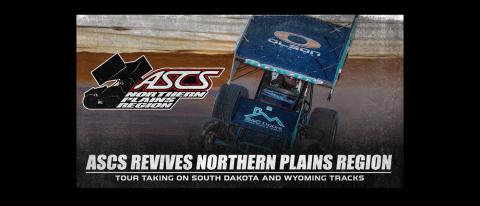
Officials with the Lucas Oil American Sprint Car Series (ASCS) presented by the MAVTV Motorsports Network have announced plans to revive the ASCS Northern Plains Region sprint car series.
With 13 events set for Black Hills Speedway in Rapid City, South Dakota, the regional tour will also visit Casper Speedway in Casper, Wyoming, for four events and Gillette Thunder Speedway in Gillette, Wyoming.
The ASCS Northern Plains Region is under the direction of Eddie Kirchoff, and except for a few dates that overlap, teams can compete with the Brodix ASCS Frontier Region regularly.
The North Carolina Motorsports Association (NCMA) has announced the NC Motorsports Industry Ceremony will take place Tuesday, April 19 at Embassy Suites Ballroom in Concord, North Carolina. The ceremony will honor NASCAR Hall of Fame championship team owner and Pro Football Hall of Fame football coach Joe Gibbs with the Achievement in Motorsports Tribute Award.
“We are so glad to be back and host this prestigious event for our industry in 2022,” said NCMA Chairman Greg Fornelli.
A native North Carolinian, Gibbs will join motorsports notables such as Richard Petty, Richard Childress, Junior Johnson, O. Bruton Smith, H.A. “Humpy” Wheeler, Ned Jarrett family, Dale Earnhardt, Benny Parsons, Mike Helton, Jeff Gordon, Roger Penske, Jack Roush, Dale Earnhardt, Jr. and Robert Yates as NCMA Achievement in Motorsports Tribute honorees.
Gibbs is the only person to be elected to both the Pro Football Hall of Fame (1996) and the NASCAR Hall of Fame (2020). Since its inception in 1992, Joe Gibbs Racing has accumulated more than 375 NASCAR victories across the three premier series, including four Daytona 500, five NASCAR Cup Series championships, and six NASCAR Xfinity Series titles. In addition, the team has two National Hot Rod Association Pro Stock championships and 33 national event victories during its six-year stint in NHRA competition. The team has also competed in AMA motocross and supercross, closing the JGRMX team at the end of 2020 season.
Tickets are available for the dinner and awards ceremony and include single and table options.
 MEMBERSHIP LOGIN