Patriot Sprint Tour Sets 14-Race Schedule

Submitted by laurap on Tue, 02/15/2022 - 16:48
Patriot Sprint Tour


Officials with the A-Verdi Storage Containers Patriot Sprint Tour have announced its schedule for 2022.

The point fund will pay out a guaranteed $20,000 cash to the top five finishers in points in honor of the series’ 20th anniversary season. 

After a two-year hiatus, the season will kick off at the New York State Fairgrounds in Syracuse, New York, for the 34th annual Syracuse Motorsports Expo on March 11–13. Next will be the annual Outlaw Spring Nationals at Outlaw Speedway. The event will pay $4,000 to the winner on Friday, April 15, and marks the first of five trips to the Dundee, New York-based oval. For the complete schedule, see below.

For more information, visit patriotsprinttour.com.

2022 Patriot Sprint Tour Schedule

March 11–13, New York State Fairgrounds, 34th annual Syracuse Motorsports Expo

April 15, Outlaw Speedway (Dundee, New York), $4,000 to win Outlaw Spring Nationals

May 5, Woodhull Raceway (Woodhull, New York), $2,000 to win

May 17, Outlaw Speedway (Dundee, New York), $3,000 to Win w/ Short Track Super Series

June 11, Selinsgrove Speedway (Selinsgrove, Pennsylvania), $2,571 to win Joe Whitcomb Memorial

June 17, Utica Rome Speedway (Vernon, New York), $3,000 to win

June 25, Fonda Speedway (Fonda, New York), $3,000 to win

July 1, Ohsweken Speedway (Ontario, Canada), $10,000 to win 2020 Canadian Sprint Car Nationals

July 29, Outlaw Speedway (Dundee, New York), $3,500 to win Outlaw Summer Nationals

August 13, Woodhull Raceway (Woodhull, New York), $2,000 to win

August 15, Ohsweken Speedway (Ontario, Canada), $10,000 to win 2021 Canadian Sprint Car Nationals

Sept. 17, Ohsweken Speedway (Ontario, Canada), $10,000 to win 2022 Canadian Sprint Car Nationals

Sept. 23, Outlaw Speedway (Dundee, New York), $4,000 to win Outlaw Fall Nationals

Oct. 4, Utica Rome Speedway (Vernon, New York), $5,000 to win Cole Cup

Oct. 21, Outlaw Speedway (Dundee, New York), $3,500 to win Dutch Hoag Memorial

February 2022

Live Fast Motorsports Names Jessica McLeod As CEO

Submitted by laurap on Tue, 02/15/2022 - 16:38
Live Fast Motorsports logo

Live Fast Motorsports has announced that former general manager Jessica McLeod has been appointed as the company’s new CEO. McLeod will be working directly with the company’s team owners, Matt Tifft, and her husband, co-owner and driver, B.J. McLeod. 

“Jessica has been a crucial asset to LFM since the start,” Tifft said. “Her direction, hard work, and dedication to the team have served as foundational assets leading us to successes in our team’s first year, 2021. Today as LFM starts our second year racing in the Cup Series, it feels right to give credit where credit is due, by naming Jessica with the well-deserved title and promotion of CEO.”

The McLeods have had many business ventures within NASCAR’s K&N, Trucks, Xfinity, and Cup Series. Jessica and B.J. co-own the Xfinity Series B.J. McLeod Motorsports (BJMMS), which fields three full-time stock cars (Nos. 5, 78, and 99). 

For more information, visit teamlivefast.com.

February 2022

Busch Light Announces ‘Accelerate Her’ Program For NASCAR Drivers

Submitted by laurap on Tue, 02/15/2022 - 16:25
Busch Light Announces ‘Accelerate Her’ Program For NASCAR Drivers
Image courtesy of Busch Light, NASCAR


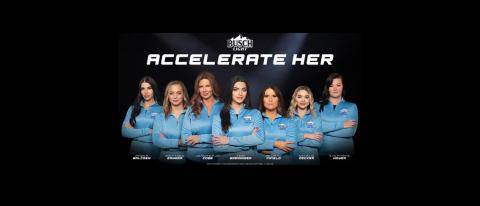
Longtime NASCAR supporter Busch Light has announced a new program called “Accelerate Her” in an effort to bring more women into the sport.

Busch Light has pledged to sponsor all eligible women NASCAR drivers—including Natalie Decker, Toni Breidinger, Jennifer Jo Cobb, Amber Balcaen, Brittney Zamora, Stephanie Moyer, and Melissa Fifield—through the program.

“Why hasn’t a female won in one of the top levels of NASCAR? I feel like it’s a fairly simple answer,” Breidinger said. “We don’t get the same (support), equipment, or seat time as male drivers.”

An Accelerate Her partnership with Busch Light includes direct sponsorship fees, brand social-media support, media value, and awareness through owned assets and additional media training and earned public relations.

For more information, visit nascar.com.

February 2022

FROM THE EDITOR

Submitted by johnc on Tue, 02/15/2022 - 16:02


Three things I think as winter turns to spring and a new racing season gets underway across much of the country:

1) I think words like “leader” and “inspiration” get thrown around a lot these days, but I just can’t come up with a better way to describe Force Indy Team Principal Rod Reid. The subject of our Industry Insights profile this month, Reid studied engineering at Purdue University, then forged a successful career in business before overseeing teams in Formula Ford and Super Vee in the late 1970s. But it would be another few decades before his vision for an inclusive, multi-faceted motorsports program for underserved youth was realized. In operation since 2006, the Nexgeneracers (NXG) Youth Motorsports Academy now offers kids from the Indianapolis area a well-rounded curriculum of mechanics, racing skills, finance, and STEM education. It’s made possible through support from corporate partners like Lucas Oil, Honda, and others. And over the last 15 years it has served more than 2,400 youngsters. Reid’s future outlook for NXG is ambitious—a national program with chapters in Detroit, St. Louis, Dallas, Portland, LA, “or any place that has an urban environment,” he told us, stressing the importance of education in those efforts, albeit with a twist: “When I say education, I’m not necessarily talking about formal,” he noted. “I’m just talking about being informed. If a young person doesn’t know that this industry exists as an opportunity, whether it’s an opportunity to be a fan, or an opportunity to work in the pit crew, there’s no way they will engage.” For more on how Reid is developing the next generation of motorsports enthusiasts and professionals, see our coverage here.     

2) I think that whenever race parts manufacturers are willing to pull back the curtains on their R&D processes, we’re more than willing to share those stories. In this month’s report on suspension titled Up to the Test, contributor Alex Nishimoto does just that, providing a behind-the-scenes look at how suppliers develop shocks, springs, bump stops, etc. from ideation to design, prototype, and then eventually finished product. Certainly there are similarities. For example, each manufacturer we spoke with puts their parts through rigorous in-house testing, fine-tuning, and real-world verification before they’re ever given the green light for production. But we also discovered distinct differences, like QA1’s use of a six-step “phase gate process” to determine whether a project should be terminated or move on to the next stage. For much more on the technology and engineering that goes into each high-performance part, see our coverage here.

3) I think the industry will miss Alex Borla, 75, who we were saddened to learn passed away in early February, just as this issue was going to print. The co-founder and CEO of Borla Performance Industries is credited with developing groundbreaking exhaust systems and muffler designs over his decades in motorsports and the performance aftermarket. Our condolences to his family, friends, and all those whose lives he touched.  

March 2022
By
DAN SCHECHNER

FROM THE PRESIDENT

Submitted by johnc on Tue, 02/15/2022 - 15:59
image 1


The Fight Ahead

Just like that, it is already mid-season…both for the racing industry as well as the mid-term elections. In my last editorial, I detailed how your PRI/SEMA Government Affairs office is working hard for you, trying to position the critical RPM Act in Congress for consideration and eventually to be voted into law. This is hard work. It’s not easy to “move the ball down the field,” and it is even harder to measure how much progress has been made. Changes in attitude and public focus can move the attention of your lawmakers enough to provide us momentum. And, with thousands of bills being introduced (backed by thousands of well-funded advocacy groups), it is critical that we stay focused on ensuring the future of our industry.

In 2021, the racing industry and performance car enthusiasts did more to advance your RPM Act than ever before. You sent over 1.5 million letters to Congress, and that has resulted in over 140 cosponsorsof the RPM Act, giving us momentumand influence. If you are new to thisprogram, please head over to www.SaveOurRaceCars.com to get information, get motivated, and get involved.

We have several big additions to the RPM Act team in 2022. First, we have never had so many racing industry companies getting involved in politics. More than ever, freedom is on the line, and we all know that freedom isn’t free. Thankfully, your fellow industry members are answering the call. My friend Heath Norton and his business, Callies Performance Products, has been one of those companies that’s stepped up big time, hosting their U.S. Representative, calling elected officials, and making sure that the racing industry has a presence.

Second, our movement is more public than ever. Thanks to the PRI Ambassador program and the PRI Road Tour, the RPM Act is out there. We’ve partnered with tracks and sanctioning bodies to produce events as the presenting sponsor. Look for many more events this summer that bring you, the politicians, and PRI together.

Without question, we are also getting attention from big donors, and this may be the key to tipping the RPM Act over to the win column. Private donors who have been politically active for years are taking on the RPM Act as something they want to get involved with. These folks have been making donations to key policymakers for years, working to advance their businesses or other interests. They already have a relationship with their local, state, and federal reps. We have enjoyed interest from a handful of these influential members of our community, but we need more. If you are talking to your state or federally elected officials, we’d love to hear from you, or at least get you the talking points on why the RPM Act is so critical for this industry.

Finally, you have the PRI Membership. Started in 2021, we are already reaching those racing industry members closest to us. In 2022, we will expand those efforts to regional and national activation. Having members that are active and involved in our industry will show DC just how serious you are. More members mean we will have more voters. More voters aligned to the goals of the racing industry will help us succeed as a community, and help you succeed as an individual. So, please, if you haven’t already, join the PRI Membership as a business or individual member.

The reality of any membership is being able to answer for the individual the very simple question of “What’s in it for me?” PRI is rapidly assembling racer-specific benefits that will mean an improved racing experience for individual racers and significant competitive advantage to our PRI business members. Reach out to a PRI Membership representative to get more information on how we can help you while you help the racing industry.

The future of PRI is larger, much larger, than a monthly magazine and a trade show in December. PRI, working through the PRI Membership program and our Performance Racing PAC corporate structure, is the voice for the racing industry—at the federal level, at the state level, and at your favorite race track. The time is now for you to make the personal decision to get involved. Join the PRI Membership, as more than 40,000 individuals have already done, and get involved in the fight to protect the future of racing. Find your PRI Membership options at www.PerformanceRacing.com/membership.

March 2022
By
DR. JAMIE MEYER

AP Racing Announces New Charlotte, NC Office

Submitted by laurap on Tue, 02/15/2022 - 15:49
AP Racing logo

AP Racing—the manufacturer of race brakes and clutches based in Coventry, UK—will open an office in Charlotte, North Carolina. The new AP Racing North America Corporation (APRNA) will support the company’s US- and Canada-based customers.

“Investment in this new office, and a skilled local team, will greatly enhance support and customer liaison for new and existing customers using AP Racing’s high-performance brake and clutch components,” the company release stated. 

The Charlotte location will also support a contract with an original equipment manufacturer (OEM). The APRNA office staff will work alongside the company’s US distributor Essex Parts Services, which will remain the exclusive North American Distributor. 

“Formation of our first US office, AP Racing North America Corp, is a major milestone in the history of AP Racing and further development of the organization within the strategic North American automotive market. APRNA will support business for both road and race applications in the US,” AP Racing Managing Director David Hamblin said.

The office is expected to open in April. 

For more information, visit apracing.com.

February 2022

Cary Redman Joins Race Winning Brands 

Submitted by laurap on Tue, 02/15/2022 - 15:39
Cary Redman Joins Race Winning Brands 


Race Winning Brands (RWB), the manufacturer of high-performance engine components, has appointed Cary Redman as vice president of Sales–Automotive.

Redman has over 25-years’ experience in the performance manufacturing and retail sectors and has worked with Holley Performance, Mr. Gasket Co., and Edelbrock in sales leadership roles.

“As Race Winning Brands continues its growth through innovative products and strategic acquisitions of powerful brands, the addition of Cary Redman to our business comes at the perfect time,” said RWB CEO Bob Bruegging.

Redman is based out of RWB’s Mentor, Ohio headquarters. 

For more information, visit racewinningbrands.com.

February 2022

MAKING INROADS

Submitted by johnc on Tue, 02/15/2022 - 13:22
image 1

Photo courtesy of Brett Becker/NASA


Road racing can appear like a secret fraternity to the uninitiated, but opportunities abound for those who want to establish a focused career path, move from another racing discipline, or simply climb the ladder from the ground up.


The Topeka, Kansas-based Sports Car Club of America has had its finger on the pulse of wheel-to-wheel racing in the US ever since the organization was founded back in 1944. The SCCA’s Jon Krolewicz told us that steady growth has been the name of the game over the past few seasons, but as with any long-running motorsports discipline, there’s been something of an ebb and flow to road racing interest over the years. Rising car counts in a fairly cost-intensive form of racing typically don’t happen by accident.

“Something that’s been really beneficial for us is how we’ve been operating the Runoffs, our national championship,” he explained. “Over the past five years, we’ve held these championship races at the Indianapolis Motor Speedway twice, and it’s no secret that offering that as a carrot at the end of the season has been really good for entries. We’ve seen it help drive up participation elsewhere, too—we go to VIRginia International Raceway, and we go to Road America as well. Having these marquee tracks on the schedule helps build participation for folks who normally might not have the chance to race at these historic road courses.”

There’s more to it than just the opportunity to race door-to-door with the nation’s best at the Brickyard, though. Although many see the current generation of performance vehicles as the second coming of the golden age, the reality is that automakers have been producing pretty formidable machines for some time now. Many of these vehicles are becoming affordable enough to be prime candidates for race car conversions.

“Spec E46 is one of the classes that’s seen a ton of interest over the past few years,” said Brett Becker of the National Auto Sport Association, Las Vegas, Nevada. “Those are the 1996–2006 BMW 3-Series chassis. There’s enough of them out there with a manual transmission to make them easy to source, and that has been growing very well in almost all regions nationwide. Part of it is that this is a natural progression for racers who’re running in Spec E30 and are ready to move up. But while the parts are spec, the combination has really been designed to produce a very good race car.”

These are certainly encouraging trends, but for the folks who aren’t already ensconced in the road racing ecosystem, finding inroads into the sport can be a somewhat daunting proposition. Here we’ll take a closer look at the various routes that would-be competitors can take to get in the mix.

image 2
The SCCA has long been a launchpad for new road racers. The organization’s vast array of classes and cars can accommodate anyone from novices to pro-caliber drivers.


Building the Foundation

Starting out with the basics not only provides a low-cost entry point for those who are new to this type of racing, it also allows competitors to figure out what their goals are and plot the trajectory to get them there.

“A big part of what drives participation is keeping the cost of entry low, and track day programs like Track Night in America are so incredibly popular because they’re very accessible,” said SCCA’s Krolewicz. “These events expose people to the availability of road racing. HPDEs, solo autocross, and time trials are events that someone can step right into with a regular driver’s license and a safe car.”

Starting at the ground level not only allows fledgling road racers to get more experience and seat time in this type of competition, it also can provide some insight into what classes might suit them best, thereby enabling these competitors to make informed decisions when it comes time to invest in a fully prepped race car. “It also helps them determine what kind of commitment they want to make,” Krolewicz told us. “They’re going to need a competition license to move into wheel-to-wheel formats, and they can get that through a school over a weekend. But it really helps to have some track day or time trial experience when doing that because these schools will mainly focus on safety and procedural elements rather than racecraft or technique.”

Once a driver is ready to take that step, there is a variety of different classes within major sanctioning bodies like the SCCA and NASA that can accommodate new racers. “The interesting thing about time trials in NASA is that it uses all of the same horsepower-to-weight rules as our Super Touring wheel-to-wheel classes,” Becker noted. “So if someone wanted to get their feet wet before going racing, they could build a TT4-class car, spend time in time trials, and really hone their skills and their car’s setup, and then move right into Super Touring 4.”

image 3
NASA’s Spec E30 class features the plentiful and relatively inexpensive 1984–1991 BMW E30, making it a cost-effective way to get into wheel-to-wheel road racing.

B-Spec, Spec Miata, Formula F, and Super Touring Lite would all be considered entry-level wheel-to-wheel race classes within the SCCA, while NASA’s Super Touring 6, Spec E30, Spec Miata, and 944 Spec classes are also considered suitable options for new racers within that sanctioning body. Race car rentals are often available for more popular classes like Spec Miata, and that can be especially helpful for racers who are still trying to determine what class they want to pursue, as these prepped vehicles can often cost upwards of $20,000.

Meanwhile, the Stuart, Florida-based ChampCar Endurance Series offers a more informal way to get involved in wheel-to-wheel racing with significantly less investment. “We founded this sanctioning body as an alternative to the established road racing series,” said ChampCar’s Bill Strong. “The idea is loosely based on the low-budget endurance format of something like 24 Hours of Lemons, but without all of the pageantry. There’s more of an emphasis on the seriousness of the racing, but it’s still about low cost and accessibility. All they need is a driver’s license and a few friends, and they can go racing.” ChampCar racers can also join arrive-and-drive teams, which essentially allows a competitor to buy stints at the wheel.

Held at local tracks as well as iconic road courses like WeatherTech Raceway Laguna Seca and Daytona International Speedway, ChampCar races are between 7 and 24 hours long, depending on the specific event, and drivers are allotted two-hour stints at the wheel before a driver change is required. The series is not only a cost-effective way to get into wheel-to-wheel racing, it also provides drivers with far more seat time to gain experience and hone their racecraft than the sprint format of the SCCA and NASA’s more popular classes, where the duration of most races is less than 45 minutes.

“All of the cars entered in a race are assessed on our Vehicle Performance Index,” said Strong. “It’s basically a balance-of-power measure to even out the field. Each car is given a value of up to 500 points based on potential lap times. If car A is given a 250-point value, they can add up to 250 points worth of performance parts to reach that number. If a car is entered that exceeds 500 points, then penalty laps are assessed, and every 10 points is an additional lap. This approach tends to even out the field if a team decides to bring something that’s disproportionately quicker than what the rest of the field is running.”


Moving Up the Ranks

For younger, career-minded drivers, organizations like Andersen Promotions in Palmetto, Florida, offer a ladder system that can provide a defined path into semi-pro and professional open wheel racing. “We run three series as part of the Road to Indy,” said Rob Howden. “The ladder system starts with the Lucas Oil Formula Car Race Series, then racers move to the USF2000 championship. From there they go to the Indy Pro 2000 Championship, then to Indy Lights, and the last step would be IndyCar.”

The Road to Indy ladder system not only provides clear targets for these younger drivers as their talents develop, it also helps them reach the next rung on the ladder. “I think the scholarship program is one of the things that sets this apart from any other series,” Howden said.

image 4
The ChampCar Endurance Series aims for a middle ground between formal road racing, such as this event held at Indianapolis Motor Speedway, and wacky, ultra-casual events.

“When a driver is trying to go up through the FIA, they’re relying on manufacturer support from the Ferrari Driver Academy or the Red Bull Junior Team—that kind of thing. But in the Road to Indy, those who win, move up. The winner of the Lucas Oil Formula Car Race Series championship in 2022 gets a $75,000 scholarship to move into USF Juniors Presented by Cooper Tires. If they win USF Juniors, they get a scholarship worth a little over $200,000 to move up to USF 2000, and the scholarship amounts increase progressively all the way up to Indy Lights. If a driver wins there, they receive a scholarship worth about $1.4 million to help them step up to IndyCar. Each year’s champion gets the majority of the budget that they need in order to move to the next level, and it’s been an incredible success story for us and the drivers who are winning. Many of these kids wouldn’t have the financial backing required to take that next step otherwise.”

Howden said that the ladder system was designed to provide a path for national-level kart racers to make their way into auto racing. While many have continued to pursue open wheel racing as their careers have progressed, he said that a number of drivers who’ve been through the program have also gone on to compete in production-based sports car racing in IMSA, SRO, and other series. “The level of competition in these open wheel series is just incredible,” he said. “A driver who’s kind of mid-pack in Indy Lights can transition to sports cars and suddenly be incredibly competitive.”


Making The Switch

There are inroads for those with experience in other motorsports disciplines as well, but Krolewicz still recommends starting out with the basics. “Moving from something like karting is an easy transition,” said Krolewicz. “They’re going to have the same flags and a lot of the same operational rules. But if they’re coming from oval track, off-roading, or something like that, it’s important to remember that these licenses and schools are less about technique and more about understanding the procedures involved. The flags are different, the grid procedures are different—there’s just a tremendous amount of stuff like that which will be pretty new to someone no matter how much experience they have in other racing disciplines.”

image 5
The SCCA’s Spec Miata class has attracted fresh talent to road courses for more than 20 years, with tight, fiercely competitive racing that quickly sharpens driving skills.

It is also worth noting that someone coming in to road racing can learn most of these procedures over the course of a weekend at a driver’s school and be ready to compete the following week. “If a racer has a USAC license, or the NASCAR K&N Pro Series or something along those lines, they can come to NASA with that experience, list it on their application, and can most likely get a competition license within one weekend,” explained Becker. “There isn’t really a class that we try to funnel folks into when they are coming from other racing disciplines, but if someone has a racing license from somewhere else, it is likely we can get them into competition within NASA in pretty short order.”

Series like ChampCar are virtually barrier-free in that regard. “We’ve had folks come in with zero previous experience all the way to drivers who have competed in Formula 1 and NASCAR,” said Strong. “Then we also have a bunch of folks who’ve come over from spec racing—Spec Miata, Spec E30, and so on, because they want the seat time. A team of three or four drivers can get four to six hours of seat time each over a weekend.”

For teams with cars that exceed the expected performance level of ChampCar entries, the series has teamed up with World Racing League (WRL) to provide something of a ladder program for those racers as well. “These are race-prepped Caymans, Mustangs, M3s—the faster stuff,” Strong added. “We don’t allow those cars in our series, but there are a lot of people who want to run them, so we work with WRL to provide a path for those teams that are ready to go faster. WRL requires previous racing experience in order to compete, and ChampCar experience qualifies for that.”

All of these sanctioning bodies strive to ensure that every driver and every race car has a home within their organizations (or a closely associated one) because the fundamental goal is to foster continued growth. But it’s a continually evolving process, and exactly what shape that will take over the coming years ultimately depends on a number of outside factors.

“What will drive the formation of new classes is the pricing of used cars that lend themselves to this pursuit,” said Becker. “Maybe sometime in the future we’ll have something for the early Subaru BRZ and Toyota FR-S. I’m not saying there will be a spec class for them, but it is possible, and more of them are making their way into our Super Touring 5 and 6 classes. As with any sports car, it’s a matter of the price coming down to a point where people are comfortable with the idea of ripping out the interior and putting a cage in it.”

SOURCES

ChampCar Endurance Series
champcar.org

NASA
drivenasa.com

Road To Indy
roadtoindy.info

SCCA
scca.com

March 2022
By
Bradley Iger

California Introduces Manufacturing Equipment Sales Tax Exemption Legislation

Submitted by laurap on Tue, 02/15/2022 - 12:42
Photo of CP-Carrillo in Irvine, California from the 2020 PRI Road Tour


California Assembly Member Tim Grayson (D-Concord) has introduced PRI and SEMA-supported legislation (AB 1951), which would create the California Manufacturing Attraction and Development Exemption (CA MADE). The CA MADE exemption would eliminate the sales tax on most manufacturing equipment purchases if passed.

PRI members and the racing industry are encouraged to register their support for the bill by clicking here.

If enacted, California would join 38 other states with full exemptions on manufacturing equipment from sales and use tax. The CA MADE exemption would change the current, narrowly applied exemption, and focus on improving cost competitiveness to spur investment in California. Accounting for both local and state taxes, California ranks among the highest tax rates in the country.

Assembly Member Grayson is a member of the SEMA State Automotive Enthusiast Leadership Caucus and was the 2019 winner of SEMA’s Stephen B. McDonald Legislator of the Year award. Assembly Member Grayson and his wife Tammy are auto enthusiasts, and included in the Grayson’s collection are two classic Ford Mustangs.

For more information, contact Christian Robinson at christianr@sema.org. 

February 2022

Editors’ Choice

Submitted by johnc on Tue, 02/15/2022 - 11:48
image 1


Hundreds of new product announcements cross the desks of PRI editors each month. Following are our top picks for March.


OEM Replacement Head Gaskets for LS & LT Engines

Engine Pro
enginepro.com

image 2

Engine Pro of Wheat Ridge, Colorado, has introduced a new line of OEM replacement multi-layer steel (MLS) gaskets for GM’s LS and LT engine families that are available in three, five, or seven layers to accommodate different power levels.

“There’s nothing hotter than the LS market,” noted Jessie Jones. “With all the different things people are doing with this engine, we felt it was important to offer a choice.”

In the Engine Pro catalog, customers can reference the OEM gasket number as well as engine codes and engine dimensions to find the correct replacement, or they can check the performance chart where they find the five- and seven-layer applications. The catalog is available as a free download from the website or as a printed catalog available at any Engine Pro warehouse.

“We try to make it as easy as possible during the selection. The charts in the catalog should answer everyone’s questions,” said Jones.

These cylinder head gaskets are constructed from beaded, elastomer-coated spring-steel layers and are designed to provide high thermal stability in extreme conditions, including nitrous, supercharged, and turbocharged applications. Engine Pro also offers other LS gaskets, including oil pan, timing cover, valve cover, and exhaust. —Mike Magda


Air-Cooled Driver’s Seat System

Speed Seat Factory
speedseatfactory.com

image 3

This new driver cooling system from Speed Seat Factory in Delafield, Wisconsin, is easy to install and designed to provide an unlimited supply of air during a race.

“It took us two years to develop the blower motor alone,” said Gayle Gaborsky.

The permanent-magnet, 12-volt motor forces air through a splitter, which is connected to the Speed Seat system by two flexible hoses. The Speed Seat cooling component is constructed of a honeycomb mesh that allows air to be dispersed through the entire seat. As the driver sweats, the cool air stimulates evaporation, which helps keep the occupant cool.

“The mesh is also treated with a fire retardant,” said Gaborsky. “It’s easily attached to the seat with hook-and-loop.”

A three-outlet splitter can also be utilized to supply air to a helmet designed for air cooling. This splitter features two 1.5-inch outlets and a
1.25-inch outlet for the helmet.

“All the air blows straight through to the driver,” noted Gaborsky. “There’s no return.”

The motor has a built-in mounting flange, and the system comes with a pair of 4-foot hoses. An air filter is also available. The system is easily adaptable to endurance vehicles that use seat padding to compensate for different driver sizes. —Mike Magda


Competition Series Intake Manifold for Cummins 5.9L

BD Diesel
us.bddiesel.com

image 4

Savvy owners of 2003–2007 Ram trucks with the 5.9-liter common-rail Cummins diesel know that the grid heater plate imposes a significant air restriction and impedes performance modifications. BD Diesel of Blaine, Washington, now offers a competition intake manifold that solves that problem.

“It’s a two-piece design and it’s designed for race applications,” explained Jim Pace. “The big benefit is the considerable savings in machine work. Racers don’t have to shave off the heater grid that’s integrated into the cylinder head.”

BD Diesel’s new design allows the intake manifold to be attached directly to the cylinder head plenum, which then improves flow distribution to all cylinders and reduces system pressure drops.

“There is significantly more airflow and even air distribution,” added Pace.

The intake is designed to support larger high-performance turbochargers and dual CP3 kits. It comes with auxiliary ports for sensors, and the kit includes a charge pipe, CCV relocation hose, required extension harness, and new fuel pipes.

“The fuel rail is not included,” noted Pace, who added that racers will need one “from the 6.7-liter Cummins. But the new fuel pipes take care of all the rerouting needed for the intake.”
—Mike Magda


Mopar Drag Racing Front Coil-Over Conversion

QA1
qa1.net


image 5

QA1 in Lakeville, Minnesota, offers a drag-racing version of its frontcoil-over conversion kits for Mopar A-, B-, and E-body applications.

“This kit enables Mopar owners to take their cars to the next level,” explained Dave Kass. “With our clean-sheet design, everything is optimized from the start.”

The QA1 kit replaces the factory front torsion-bar setup that limits pickup-point locations and potential performance improvements. It’s constructed from steel tubing that reduces weight over the factory K-member and allows for big-tube headers. The modular motor mounts support a wide range of engines, including the Gen III Hemi.

The kit features tubular control arms, Mustang II-style spindles, power rack-and-pinion steering, and a choice of single or double coil-overs.

“It’s a complete bolt-on kit, there’s no cutting or welding,” noted Kass. “We can custom tailor spring rates for any purpose.”

The drag racing version has a lighter spring rate for the front to improve weight transfer by reducing deflection, and the drag kit can offer up to a 2-inch drop.

For Pro Touring or autocross racers, there’s a handling configuration that uses poly bushings on the lower control arm to improve cornering. Those kits can be ordered with up to a 4-inch drop. The QA1 kits offer other options in brake and sway bar choices. —Mike Magda


Triple-Disc, Bolt-Together 8HP70 Torque Converter

TCI Automotive
tciauto.com


image 8

Racers can adjust the stall speed on their Gen III Hemi vehicle at home with TCI Automotive’s newest triple-disc, bolt-together torque converters for 8HP70 transmissions.

“Higher stall speeds will complement a bigger cam and other engine modifications,” reported Rusty Samsell of the Ashland, Mississippi-based company. “This triple disc will hold a lot of torque.”

The billet, self-serviceable design also features a lockup function. Removing the billet front provides access to the entire lockup assembly, turbine, stator, and bearings for servicing. There’s no need to ship it back to the factory since cutting and welding are not required.

The lockup clutch features the latest-generation carbon friction materials with a high torque capacity. The team at TCI reported the torque converter can handle more than 1,000 horsepower and is designed to withstand the punishment of continuous slip lock-up control.

With CNC-machined billet construction, this converter offers increased strength over traditional stamped-steel designs. Other features include a furnaced-brazed impeller and TIG-brazed turbine fins. As with all TCI converters, this model has the HDT thermal coating to dissipate heat more quickly.

“It’s a drop-in for Dodge Chargers and Challengers,” noted Samsell. When paired with a Comp Cams Stage 3 HRT cam, tests have shown 0–60 times will drop as much as a full second. —Mike Magda


Drag Race Aluminum Third-Member Case

Speedmaster
speedmaster79.com

image 6


Constructed from 201-T6 aluminum, this new third-member case from Speedmaster in Rialto, California, supports all Ford 9-inch differentials. Even though the nose is extended by .750 inches, it will work with all 9-inch ring and pinions.

“It can also handle oversized ring and pinions,” noted Jason Kencevski. “Trophy truck racers pushed for the development of this product, along with drag racers and street outlaws.”

A key feature is the CNC-machined 7075-T6 billet bearing cap and the 9/16-inch through-bolt design to secure the caps and increase overall strength. The carrier bearing diameter is 4 inches.

Also, the case can be used with standard or aftermarket pinion supports of either 5- or 10-bolt design.

“We added extra webbing in the areas of the case that were known for failure,” explained Kencevski. “Racers want strength and light weight.”

This new case also works well with Speedmaster’s 40-spline limited-slip differential in addition to other popular LSDs, lockers, and spools. —Mike Magda


LSXHR 103-mm Intake Manifold for LS Cathedral-Port

FAST
fuelairspark.com

image 7

Leveraging the popularity of its first LS polymer intake manifold, FAST in Memphis, Tennessee, has designed a newer version with boosted engines in mind. Designated as the LSXHR, it comes with a 103-mm throttle-body opening that can be port matched up to 105 mm. Its revised polymer construction has been rated for up to 45 psi of continuous boost pressure.

“Even though owners were putting boost to the original, there was a real need to build an intake designed for boost,” said Mark Campbell. “This one is designed for boost. It’s taking the original to the next level.”

The manifold can support dual fuel injectors on each intake runner. It also offers the flexibility of changing the velocity stacks inside the plenum. Tall stacks are standard in the intake, but medium and short stacks are available and can easily be swapped in place, giving racers the ability to tune the intake for their particular application.

“Racers sometimes like the long runner to help build torque needed to bring up the engine on boost,” added Campbell.

The manifold has been optimized to make power from 5,000–7,500 rpm. Tests reveal a 20-plus horsepower gain over competitive tunnel-ram intakes.

Included in the manifold kit are custom fuel rails and all necessary hardware. —Mike Magda

 

March 2022