Regional Claims

Submitted by johnc on Tue, 01/18/2022 - 15:39

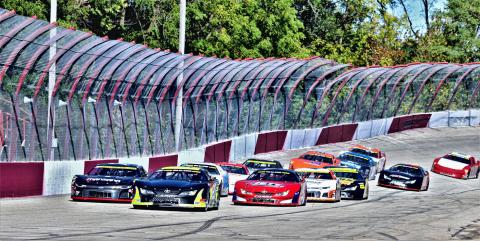
Photo courtesy of John Lund/CRA

What distinguishes stock car competition from one area to the next? We explore the similarities and differences aMONG tracks and sanctions across the US.

Racers are nothing if not resilient. While much of the country spent 2020 locked down or shut in, racers found a way to get back on the track, even if it was to mostly empty grandstands. When venues finally reopened in 2021, pent-up demand drove fans through the gates like it was 2019 again. Everyone wanted to put COVID-19 in the rearview and get back to the normal rhythms of a racing season.

“Normal,” though, turned out to be elusive in 2021, due to the stubborn virus and the pandemic’s collateral damage of continuing economic uncertainty and supply chain disruptions. If an area or a race division had been off the pace pre-pandemic, fallout from 2020 seemed to exacerbate the weakness.

Meeting a challenge, though, is what racers do best. We checked in with stock car sanctioning bodies and tracks around the country to learn what’s working, what’s not, and what’s changing on the eve of the 2022 race season.

Out West

“We are probably busier than almost any race track in America,” said Doug Hobbs of Evergreen Speedway, Monroe, Washington. “We do so many different things—drift, autocross, specialty events, concerts, rodeos, Latino festivals—we are promoting year-round. We do well over 160 events a year with all these different platforms.”

Evergreen’s stock car program has “10 home track classes, and we’ve been fortunate to grow through really good car counts,” Hobbs said. “Several of our classes, like the intermediate Figure 8 Stingers, Hornets, Legends, Mini Stock, and Street Stock classes, all pretty much averaged more than 20–30 cars last year. Those are really good signs for the support classes for the Super Late Models, Pro Late Models, and our Super Sprint classes.”

By working with the State of Washington, Evergreen was able to open for racing “with no fans” in May 2020, Hobbs said. “We opened to fans in limited capacity last March, and by July we were at 100%. We had one of our best years ever because of the demand to see live entertainment. Our car counts were good, and our marketing partners hung with us.

“I’ve always looked at running a race track like a three-legged stool,” he continued. “We need our racers; we need our fans; and we need our marketing partners. If all three are good, we can look forward to a great season.”

Stock car racing on the West Coast is different from other parts of the country “because there are just a couple of Super Late Model series out here,” said Larry Collins of the SPEARS SRL Southwest Tour Series, Bakersfield, California. “There is a lot of racing out here,” he said, but it’s a “different dynamic” than in the rest of the country. “The average number of teams that chase our championship seems to be higher than what they get, but the number of cars that show up for each of their events stays pretty strong. Teams have more choices to go from one series to the next. But here, especially in California, we’re the only Super Late Model series.”

With that in mind, “we have worked hard to set up the rule book to make our Super Late Models the same as the Super Late Models that race in the Midwest and the East Coast,” Collins said. “Some of our guys go that direction and race the big events out there, and some of the teams based out there come to race ours. It’s been a real positive step in a lot of ways.”

2
Regional stock car racing is going strong, even as it grapples with the pandemic’s ongoing effects. In fact, IMCA events were “setting records in all aspects of 2021,” noted our source at the sanctioning body.

Collins said his series “didn’t miss a beat” during the pandemic. “We felt that if we did nothing and there was no racing for months, our sport might go away and never rebound. So we made it our mission to keep our events going. With help through sponsorships and cooperation with the race tracks, we were able to keep racing through 2020. Once we got to 2021, things kind of went back to normal.”

One sanctioning body that’s moving westward is IMCA, which is based in Vinton, Iowa. “We sanctioned nine divisions of races in 37 states and Canada in 2021,” said Brett Root. “With 9,100-plus licensed members, IMCA racing is strong and as big as ever.” The move west—the Wild West Tour visits tracks in Arizona, Nevada, New Mexico, Utah, Wyoming, and Idaho—was facilitated by the fact that “most of those tracks sanctioned IMCA modifieds already. They are adding divisions, like stock cars, to their weekly racing schedules.”

Root said the pandemic “slowed IMCA racing down some in 2020, and we experienced a 20% decline in events. However, in 2021 that recovered, and we have been setting records in all aspects of 2021.”

He admitted, though, that “some tracks struggle. Divisions struggle. Regions struggle. I’m unaware of any business where everything is either perfect 100% or dismal 100%. Everything ebbs and flows in every aspect of racing.”

Economic factors “play a huge role in this,” Root added. “In North Dakota, when the oil boom was on, racing experienced solid car counts and successful events. When the money dried up, the opposite started to take place.”

In a similar vein, “the ARCA Menards Series goes to so many different areas of the country that we get to see it all,” said Charles Krall. “There are places that are very healthy, and there are places that are struggling a little bit. Some of that has to do with track promoters who are very aggressive in selling tickets and paying purses. Some of it’s going to be because the fan base at some tracks has gotten older. But the economy is still the driver. Economic conditions across the country are different, region to region. It’s all about discretionary income.”

The Midwest

ARCA, headquartered in Temperance, Michigan, has “struggled with car count the last four to five years,” said Krall. “But we had a 17% increase in car count throughout our platform in 2021. That includes the ARCA Menards Series, plus ARCA Menards East and ARCA Menards West. The number of drivers who participated is also up a similar number and may be even a little stronger than that. That’s key for us. The racers and race teams are our customers, as are our ticket buyers. To see a dramatic increase in both numbers is very, very good.”

Another Midwest sanctioning body, Champion Racing Association (CRA) in Salem, Indiana, “just finished our 25th year as a sanctioning body for Late Models, plus the other divisions we have,” said RJ Scott. “We’ve seen a lot of transitions in the industry over those 25 years.”

3
The successful 2021 season is giving sanctions leverage for building their 2022 schedules. “Our No. 1 metric is how promoters view the event,” explained our source at CRA. Photo courtesy of John Lund/CRA.

CRA is “seeing some stability” these days, said Scott, who was working on his 2022 schedule when we spoke to him in late 2021. “The number of events we’re able to book is based on those events that were successful the previous year.” That success is judged by whether the promoters “want them back because their crowds, the sponsorship, the car count and the show were good. Our No. 1 metric is how the promoters view the event. We have to bring a quality show, with decent car counts, so we can make that sale to those race tracks.”

CRA had five different traveling series last year, including the ARCA/CRA Super Series for Super Late Models and the JEGS/CRA All-Star Tour for Pro Late Models. “It looks like the numbers for those two series will be similar for next year, or maybe increase on the Pro Late Model side,” Scott said. “I think we’ll be seeing more of the Pro Late Models across the country. Jack McNelly [with the CARS Tour] is starting up a new Pro series, and I think that will be good for everyone.” (See more about the new CARS Tour series below.)

The Northeast

In the Northeast, stock car racing “is definitely going strong,” said Cris Michaud of the American-Canadian Tour (ACT), Waterbury, Vermont. “With ACT and the other people I work with, Tom Mayberry and the PASS Tour, our car counts have been gaining ground. At the two tracks that I own, Thunder Road International Speedbowl [Barre, Vermont] and White Mountain Motorsports Park [North Woodstock, New Hampshire], every division was up. And the fans are coming through. Compared to 2019, everything seems to be up.”

A big reason for ACT’s strength “is the great commitment we have from the drivers and fans,” Michaud said. As an example, he cited the support from the Road Warriors, a division that races at Thunder Road. “We used to run them every other week, but when they knew we had limited fans [in 2020], they stepped up and wanted to run every week. It’s a low-buck division we started to introduce people to racing. There’s no purse, no championship, basically all they get is a trophy. But this division stood up and wanted to come every week so they could support the race track and make sure we could survive the pandemic.”

Bridging the geographic gap between the Northeast and the South is the Super Cup Stock Car Series. Based in North Carolina, it will run nine events in 2022, primarily in Pennsylvania and Virginia. Joe Schmaling set up the races that way to deliver “the best for the most. When I look at where most of my people are from, Virginia and Pennsylvania are the best places for me to put races. I have people who race out of Long Island, South Carolina, and everywhere in between. It’s not rocket science, it’s logistics. Every driver wants a race in their backyard, but as a traveling series, we can’t do that. On the other hand, we can’t break our people by sending them too far. This year will be even worse with the cost of gas and hotels. We do the best we can by putting races where they need to be.”

Schmaling sees his series as different from most. He started it in 2008, “when the Hooters Pro Cup Series changed hands and moved in a different direction.” His aim was to give racers an affordable alternative to compete with cars that had become otherwise obsolete. Since then, the makeup of the series has evolved, as it opened up to cars that formerly raced in and were phased out of ARCA, K&N, and NASCAR.

When Schmaling looks beyond 2022, he is more bullish about opportunities in the Midwest than his home base in the Southeast. The Midwest is the “only place I’ve seen in any part of the Eastern United States that shows growing interest.” Plans to hold events in Indiana, Kentucky, and other areas stalled because of COVID, “but we’re continuing to look at it.”

4
ACT reported having a great 2021 season, due largely to the commitment of fans and teams. One ACT division’s drivers pushed to have races weekly instead of bi-weekly, to help support the series.

Schmaling is also working with other sanctioning bodies for the 2022 season to put on a bigger event than he could with just his own cars when reaching outside his normal territory. “We’re joining with the FASS big-rig truck series for our last race at Hickory [North Carolina] in October, and we’ve been invited to go to Ohio in conjunction with the CRA series. I’m up for it. I think it’s the way to go.”

Down South

Co-sanctioning has been implemented to varying degrees by almost all of our sources. Jack McNelly said it was a real boost for the Super Late Models running in Mooresville, North Carolina’s CARS Tour. “The only success we’ve had with our Super Late Models is combining the Southern Super Series or the CRA series out in the Midwest with our people to have an event.”

McNelly noted that “I’m not talking about marquee shows, your Snowball Derbies, Winchester 400s, or Redbud 300s. Those still draw a somewhat significant number. But for series such as ours, to stand alone and have an event became a real struggle. The last event of ours that was a standalone CARS Super race had seven cars.”

As a new way forward, the CARS Tour announced it was replacing its Super Late Model division with a Pro Late Model division for 2022. The Pros will run a 12-event season in conjunction with the 15 races run by CARS’ Late Model Stock division.

“The Supers are just very expensive pieces of equipment,” McNelly said. “Unless you’re having a marquee event, the promoters, ourselves included, can’t pay the purse that they should be paid for the investment that they’ve made.”

Pro Late Models run crate engines “that cost about 50% of the engine in a Super,” McNelly explained. “A rebuild is probably even more than 50% cheaper than a rebuild on a Super. And since they’re choked down or restricted, those motors are not going to wear out as quickly as a Super motor.”

McNelly said the reaction to his announcement “has been good. I’m forever grateful for our Super drivers, the fellows who stood by us. Several of them have already told me, all they have to do is take that Super motor out of the car, put a Pro crate motor in, and they can run with us because the chassis and body are exactly the same.”

He also sees the Pro Late Models as potentially more attractive “to the younger folks moving up from the Bandoleros, Legends, karts, what have you, because it’s a much easier car to drive than a Super. It has maybe 425 horsepower, where a Super is way up over 500, so the Pro doesn’t have to be finessed like a Super. It will be a natural steppingstone into a full-size stock car.”

Common Challenges

McNelly wasn’t alone in putting more emphasis on the Pro Late Models to help cut racer expenses and potentially grow car counts. Hobbs at Evergreen Speedway spotted that trend “about three years ago, and we started transitioning into weekly Pro Lates and only specialty races for the Super Lates. Pro Lates is a growing class. We’re seeing more cars coming into that class and more being built than were staying in the Super Late Model class or were going to be built for future years.”

By no means was this the only situation that crossed regions.

“2021 started out like a house on fire, then in April, we found out we didn’t have any tires,” McNelly said, describing a shortage faced across the country. “For me, that actually became a larger problem than COVID. At least with COVID we were able to find some states that were a little more relaxed and be able to race. But if you only get X number of tires, it’s very difficult to have a race.”

Many tracks had to ration tires or implement new plans to stretch inventory through the season. CRA “was more fortunate than most,” said Scott. “We didn’t have to limit tire purchases until the end of the year. In some respects, it might even work for the better. It showed some racers that they may not need as many tires to put on a show as they thought.”

Tires weren’t the only problem, Scott added. “There were shortages of a lot of parts that go into these race cars. We had problems getting ignition boxes for a long time because the processing chips were sitting on boats coming from overseas. Engines have been delayed because the parts they need are in a shipping container somewhere. The supply chain is all messed up carrying over from COVID effects.”

“We’ll be fighting lingering effects of the pandemic for the foreseeable short-term future,” said ARCA’s Krall. “As much as I’d like to think we’re past it, anybody who watches the news knows we’re not. There are companies out there that will be conservative getting back to full pre-pandemic operations. Whether that is hospitality or full-blown sponsorship, it will take a while to get back to where we were prior to 2020.”

Root said he’s “far more concerned about the impact of runaway inflation on IMCA racers than I am the pandemic at this point. IMCA racers are very budget-minded. We see it across all divisions and at every track in every state and region. Large price increases will not help IMCA racing, IMCA racers or IMCA event promoters in any capacity.”

“The price of gas, the price of this and the price of that just seem to be going through the roof,” added ACT’s Michaud. “What is it going to bring? Will people have to watch their pennies more? That’s what I’m worried about over the next couple of years.”

5
Even though COVID stalled initial plans for events in Kentucky and Indiana, among other areas, organizers of the traveling Super Cup Stock Car Series are bullish about opportunities in the Midwest this year.

Two specific topics were more long-term concerns. One had to do with keeping the racing ranks filled given the disinterest many young people have in cars in general.

“When I was 15, I bought my first car, worked on it and put it together piece by piece until I could get a driver’s license,” Schmaling recalled. “Kids aren’t car people today. A whole generation doesn’t care about cars. They have other things to do.”

Those that do get involved often see short-track racing only as a steppingstone to NASCAR’s top tiers, Schmaling added. “Thirty years ago, if they tried to move up to that level and didn’t make it, they’d come back and race at their local race track because they were racers. Kids today, if they don’t make it, they don’t come back.”

6
Co-sanctioning continues to gain traction in regional stock car racing. “For series such as ours, to stand alone and have an event became a real struggle,” explained our source at CARS Tour.

Race tracks, too, are disappearing, Scott said. “There’s a decreasing number of facilities pretty much anywhere you go. There are pockets of strength, properties that are well managed, have been around for years and will continue to be around for years. But there are race tracks that have gone by the wayside because of the encroachment of community. Columbus Motor Speedway, Illiana Motor Speedway, a number of different race tracks were just consumed by the city, because the city got so big, and a track wasn’t what they wanted near their population. Between that and ineffective management, we’re going to lose race tracks. There aren’t many pavement tracks being built anymore, and few dirt ones as well. It’s a tough business. Track owners have to be really passionate about it.”

Ultimately, though, the successful stock car venues will “be here for a long time,” Scott said. “There are really good people behind the scenes. They get the past, and they get the future. The ones who can tie it together do a great job and put on a great show. They’ll be around for years.”

Sources

American-Canadian Tour (ACT)
acttour.com

ARCA Menards Series
arcaracing.com

CARS Tour
carsracingtour.com

Champion Racing Association (CRA)
cra-racing.com

Evergreen Speedway
evergreenspeedway.com

IMCA
imca.com

SPEARS Southwest Tour Series
srlsouthwesttour.com

Super Cup Stock Car Series
supercupstockcarseries.com
 

February 2022
By
Drew Hardin

PRI Show Report: Back To Business

Submitted by jeffreyc on Tue, 01/18/2022 - 15:26


The Indiana Convention Center and Lucas Oil Stadium in Indianapolis were once again jammed with new performance parts and technology covering all types and levels of motorsports competition.

Yes, new products returned to the 2021 PRI Trade Show.

Following a COVID-19-driven cancellation of the 2020 Show—which may have tabled many development projects—the Indiana Convention Center and Lucas Oil Stadium in Indianapolis were once again jammed with new performance products covering a wide spectrum of racer needs.

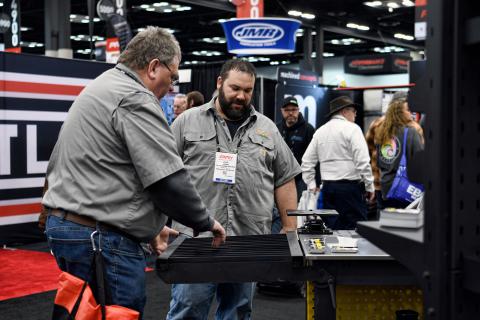
From large, multi-brand corporations to budding upstarts, these companies showcased new products for tens of thousands of attendees looking for ways to go fast, reduce costs and improve shop efficiency. 

“The Show is going awesome,” reported Reggie Wynn of Precision Turbo & Engine and Turbonetics in Hebron, Indiana, who was on-site during the Show. “I didn’t think it would be this well attended. It has definitely surpassed my expectations, by far.”

“We learned about PRI while doing SEMA for the first time in 2021,” said Amanda Meeks of HC Pacific, which is based in Ontario, California. “I told my boss I’m going to Indy. We’ve got to exhibit at PRI. This has been an even more amazing show for us. We’ll be back next year. We’re hooked.”

HC Pacific has been manufacturing Cleco temporary fasteners for more than 20 years, mostly for aerospace. “But there’s a lot of crossover between aerospace and automotive,” said Meeks. “We haven’t really sold directly to the automotive market. In the past we’ve sold to distributors who sell to automotive. But we want to know this market. We want to know who’s using them in their shops in the race car industry. We’re here to support the industry.”

2
In addition to promoting products at the PRI Trade Show, exhibitors such as Frankenstein Engine Dynamics also learned of emerging trends and potential new markets, too. 

In past PRI Shows, there often was a prevailing theme that generated character and spirit into the aisleway conversations. One year it was all the billet products; another Show was dominated by large turbos and products built to withstand ample boost. For 2021, there were widespread discussions of the strong, if not record, sales and companies recovering from the COVID-19 hangover of slow supply chains and hard-to-find skilled labor. Other lively discussions focused on the growing EV presence, the RPM Act and, of course, racing rules.

“So by coming to this Show we learned a few things,” noted Dave Werremeyer of Frankenstein Engine Dynamics, Weatherford, Texas. “Like, we have a new small block Chevy product displayed, and we learned from the Show that there’s been a major rule change in dirt track racing. We would be totally unaware of it if we weren’t here. We would have probably never known about it.

“Also, our focus in the trade is basically drag racing and street racing. Now, we’ve had diesel guys and tractor pullers who are asking us about building heads for them,” added Werremeyer. “Market-wise, sometimes it’s easy to become so focused and have blinders on and not see the possibilities. That’s where this Show comes into play.”

New Materials

The COVID break certainly gave one company a chance to expand and fine-tune its disruptive yet relatively unsold product line. Almost three years ago, the industry first learned of AWA Forged Composites’ research into composite connecting rods. Since then, the company has added composite pushrods, rocker arms, lifters and pistons to its prototype lineup, in addition to continued development on the rods.

“We’ve refined the techniques and technology in our connecting rods,” said Bryan Gill of the Rolling Hills Estates, California-based company. “The biggest thing is the revised tooling. With composites, it’s all about the tooling and fiber placement. We’ve been able to do even more computer modeling, more load simulations, more thermal imaging to displace all the loads to the appropriate areas.”

Gill said the rod is stronger and lighter than any other material with higher life expectancy, even for Top Fuel or Pro Mod teams. He has been working discretely with sanctioning body officials on the approval process, emphasizing that even though the up-front costs would be very high to a team, the rods have the potential to last an entire season instead of one or two weekends of racing.

“We actually calculated the current cost is $250 a run, while our product would be about $150 a run if we cut it off at a year,” added Gill.

One of the company’s most pressing issues is sales and marketing. Gill freely admitted that he’s a scientist, not a business person. So he has entered into talks with CP-Carrillo in Irvine, California, to distribute the product. CP-Carrillo officials confirmed the distribution deal but also say extensive prototype testing is underway to ensure product viability in the racing market. 

Gill said CP-Carrillo is best suited to determine market possibilities for not only the connecting rods but also the rocker arms, pushrods and other products. Then he would develop the tooling and production schedule to meet sales demands.

AWA’s newest innovation is a composite piston. It features a crown constructed from thermal-conductive material that can withstand 2,000 degrees F. It’s adhered to a titanium ring land that supports the top two rings. The oil ring groove is actually cut into the lower composite skirt section.

“We separate the rings because it can handle the heat better,” explained Gill, who pointed to a prototype composite wrist pin that will lower the reciprocating weight even more. “The rings are cut directly into the composite.”

3
CP-Carrillo was on hand with its line of engine components. To help meet strong demand, a company source said hiring-policy revisions were implemented to attract fresh people to the industry.  

No doubt, high-end racers are eager to hear more about this technology and when product will be available for popular engines. On the flip side, CP-Carrillo already has new pistons for a number of applications, including the hot, new Toyota Supra with a BMW-sourced straight-6.

“That’s really taken off. It’s hard to keep those on the shelf,” said Tony Calvert. “We have a couple different compression ratios. Those blocks are pretty good from the factory, so a lot of people just want the standard bore setup. We also have an oversized bore available. Keeping up the inventory has been the biggest hurdle this year.”

Calvert said the company has brought in new machinery, but hiring skilled labor has been difficult, so adjustments in hiring strategy have to be made.

“In years past, we’ve always looked for experts in the industry, people with CNC experience who love the racing industry,” said Calvert. “Now we’re opening it up to people who really want to learn. If they have the right attitude, that’s primarily what we’re looking for. We can train people, but we can’t train attitude and coming to work every day with a smile and willing to help each other out.”

Hemi Nation

New products for high-demand applications drew some of the biggest crowds. There was a swarm around Dart Machinery’s new Gen III Hemi cylinder block. The industry has been eager for an upgraded block to develop more power parts for the Hemi platform. The block is available with or without VVT, deck height from 9.250- up to 9.285-inch and cylinder-bore options up to 4.250-inch diameter. With a 4.000-inch-stroke crank, that’s a displacement of around 454 cubic inches.

“We fixed a lot of the oiling issues,” reported Nick DiBlasi. “It will be priority main, like all of our race-series blocks. We’ve added material behind the lifter bores because of the shortcomings there on the factory block.”

The block still has the side skirts, but the center three main caps are a splayed four-bolt design—no cross bolts. It will be cast from high-nickel iron with a 220,000-psi tensile strength.

4
AWA Forged Composites used the PRI Show as a chance to display its prototype composite pushrods, rocker arms, lifters, and pistons, which the company developed during the COVID-19 break.

Dart Machinery is part of the Race Winning Brands portfolio, which showed its performance diversity by introducing new diesel connecting rods from BoostLine and powersports pistons from JE Pistons. The connecting rods required purpose-built 12-mm bolts from ARP, which are similar to those used in Top Fuel engines.

“These engines make so much power,” said DiBlasi. “They need more clamping force than a traditional 7/16-inch bolt. The rods are made from 4340 chromoly and have our patented three-pocket design.”

Test engines rated up to 2,200 horsepower were used to validate the rods in 50-hour dyno runs. On the piston side, JE now has Ultra Series pistons for Hayabusa, Kawasaki, Honda and Polaris powersports applications.

“We’re using the horizontal grain flow forgings, which provides about 20% more strength,” added DiBlasi. “People were already making 700 horsepower on a [Kawasaki] ZX14 as soon as we came out with these.”

Big power these days often starts with boost, and Precision Turbo showed off its new Gen II 8080 T4 with an 80-mm turbine and 80-mm compressor. It’s available in multiple housing options and rated at 1,375 horsepower.

“That’s very conservative,” added Wynn. “I wouldn’t be surprised if we could hit 2,000. Most guys need something larger than a 75 mm on the turbine side. We’ve also done the same combination in a mirrored housing setup.”

Twin 8080 turbos with mirrored housings can help with packaging issues and are also more aesthetically pleasing. This package will support up to 2,750 horsepower—also conservative.

Wynn said that even though turbos are getting larger every year, improved compressor aerodynamics allow racers to actually select a smaller turbo. “That is, compared to the wheels available 10 years ago,” he explained. “The smaller wheels today can make more power than a wheel we were selling 10 or 15 years ago because they’re more efficient. A smaller turbo gives the racers better response.”

More Spec Engines

Over at the Chevrolet Performance exhibit, the 572 COPO Camaro had Super Stock racers drooling as there is growing interest in factory racing. The good news is that the 2022 COPO Camaro won’t be sold out as in previous years, when only 69 units were built and there was a lottery system to purchase one. GM will build as many COPOs as are ordered. In fact, Chevrolet won’t offer the 572 as a crate engine in 2022 so that there will be enough for the COPO cars. But in the following year, watch for an announcement.

“When we introduced the 572 COPO, we had a tremendous surge of interest,” explained Bill Martens of the Detroit, Michigan, manufacturer, adding that the initial 35 cars built in the new year will have the 572, and then production of the other engine options will resume.

On the circle track side, Chevrolet Performance is a leading supplier of spec and sealed engines to a variety of dirt track organizations. COVID-19 related challenges had disrupted supply chains and engine assembly in 2021.

5
Dart Machinery showed off its popular line of blocks and heads. Among them was its groundbreaking new Dart Iron Eagle Gen III Hemi cylinder block, which attracted a steady crowd.

“Now we’re back in production,” said Martens. “We resumed production on the CT350s two weeks ago [in late November], and the CT525 is starting up next week. As far as internal content, we’ve stayed the course and purposely have not changed anything. We want to keep the playing field level.

“There are going to be more opportunities for the 525,” promised Martens. “We’ve got a couple of pending announcements right after the first of the year that some series will be taking the 525 on as their spec engine. That’s exciting, but there’s nothing I can say until the ink is dry.”

New Engine Components

The union of Edelbrock with the COMP Performance Group certainly offers the potential for new racing products over the upcoming years.

“It’s taken two engineering teams and put them together. It’s amazing the ideas that are starting to come up,” said Mike Campbell of Edelbrock Group, Olive Branch, Mississippi. “The Edelbrock Group was really focused on cylinder heads and manifolds. COMP was really focused on engine components, camshafts, valvetrain, fuel injection and transmission. The only real overlap that we have is in some fuel injection, but two totally different systems.”

Edelbrock’s new VRS-4150 carburetor stands out as it’s loaded with many features such as billet four-circuit metering blocks, mechanical secondaries and easily accessible adjustments. 

“We looked at all the carburetors on the market and found that none had all of the features in them,” explained Campbell. “So we put in bigger capacity fuel bowls. We have more air bleeds. We got a built-in TPS on the carburetor, and we have a very unique design that allows a smoother transition of air into the carburetor. Just a lot of really unique features that we made better and put them all into one package for a very affordable price.”

6
BoostLine introduced new connecting rods for diesel engines, which feature purpose-built 12-mm ARP bolts similar to those of Top Fuel engines.

The new VRS line, with four models ranging in size from 650 to 950 cfm, expands Edelbrock’s presence in the carburetor market. The company’s longtime AVS line will not be phased out, as it’s designed for street use.

“The VRS takes it to the next level and fills a market we want service in,” said Campbell. 

Holley Performance Products in Bowling Green, Kentucky, released two new low-profile LS intake manifolds, one for cathedral port heads and the other for rectangular port.

“We have engineers that are racers who designed these parts,” noted Mark Gearhart. “So these intakes are available in a single- or dual-injector setup. No welding or drilling or fabricating custom fuel rails. They’re also available with a burst panel.”

Holley also showed off a CAN I/O module that allows users to add multiple sensor inputs to a budget-minded Terminator X or HP ECU, instead of stepping up to the more expensive Dominator ECU. This means that if a racer wants to add shock sensors or before and after air-temp sensors on a boosted engine, they can use the module to expand the I/O capability of the existing ECU.

EVs are Coming

Another market that many of the leading companies are watching closely is electric vehicles. 

“We’ve got some ideas, but I can’t say much. We’re certainly looking at it,” said Edelbrock’s Campbell, adding that gas engines are not dying out anytime soon. “We sold more carburetors last year than we did in 2019. Carb sales continue to climb. But, yes, we’re certainly looking at EVs.”

Holley is already aggressively addressing the EV potential by acquiring AEM Electronics, which has developed high-end motor and inverter controls for EV conversions. The company also sponsored the Holley High Voltage Experience in November, which drew as many, if not more, cars than the first LS festival a number of years ago.

7
Edelbrock’s merger with COMP Performance Group is generating new products, like Edelbrock’s VRS-4150 carburetor line, which ranges from 650 to 950 cfm.

“We want to be here to support whatever people do in the industry,” said Gearhart. “We want to help support people who want to go faster. We just want to be there to support enthusiasts. We feel like we accept everyone from truck people to gas, EV whatever, with open arms.”

AEM already has the electronics to swap Tesla drivetrains into just about any vehicle, and the company has been working with the development of newer EVs to stay on top of the technology. Elsewhere in the company, Holley subsidiaries are making wheels and suspension components for the Tesla. 

For the first time at PRI, a special section of the Show was dedicated to EV racing. There were electric dragsters, EV conversions and some of the factory EVs from Ford. Lonestar EV Performance has been a pioneer in EV racing and displayed a motor-inverter-rear axle combination that was quite compact and ready for installation into a dragster chassis.

“It’s about two feet long and 1,500 horsepower,” said John Metric. “It can blow off 33-inch drag tires with 6,000 foot pounds of torque. I would say we could get someone into 1,500 horsepower for about $50,000. That would include everything: battery, motor, controller. We also have a 2,000-horsepower model.”

Racers have talked to Metric about the possibility of a 4,000-horsepower package. He’s heard from owners of drag boats and even monster trucks.

“They want to put them in all kinds of vehicles, like a sand rail,” said Metric, noting that exposure to EVs will convince an even larger crowd to consider the potential. “When somebody actually sits in an electric vehicle and drives it, then they get it immediately. It’s a big hit when they’re crushed into their seat from the acceleration. It’s like an out-of-control roller coaster ride. Next, they’re looking at a potential conversion or potential new EV car.”

8
For the first time ever, PRI devoted a special section of the Trade Show to EV racing, featuring components such as Lonestar EV Performance’s 1,500 horsepower motor-inverter-rear axle combination.

EVs weren’t the only technology representing the green movement. VP Racing Fuels of San Antonio, Texas, announced that advanced bio-renewable components are available for adaptation with its current race fuel portfolio. That means that renewable components may be used in spec fuels for certain sanctioning bodies. The company said there are 70 proprietary fuel blends in VP’s portfolio, and 23 already use some renewable components.

“There are a lot of series that are heading more and more in that direction,” explained Bruce Hendel. “We’re working on developing some of those fuels.”

Hendel said the technology is already available to use more sustainable components but shipping those components from global sources creates more CO2 in the atmosphere.

“We have to be smart, right? Does it make sense to buy them where they’re being produced and ship them over here? By the time the fuel gets to the track it may have created more greenhouse gasses than it will save in the race. So I try to focus on the whole chain of greenhouse gases and CO2,” he explained.

VP did have a new Trigger fluid control system to help racers transfer fuel from jugs to the racing cells. And it was heavily promoting recent products like the Stay Frosty coolant and water-methanol injection solutions.

Machinery Row

In some ways, Machinery Row is not only where the latest in CNC equipment, abrasive supplies, welders, cleaning systems and other race-related shop gear can be seen. It’s also a section of the PRI Show where exceptional fabrication and machine work created by those who use those tools is on display.

John Cowher of Centroid, based in Howard, Pennsylvania, was showing off the company’s upgraded A560 XL 5-axis CNC machine that handles both cylinder blocks and cylinder heads. It was whirling away on an Edelbrock big block Chevy casting as Cowher talked about the more rigid frame design.

“It weighs 23,000 pounds, which is a thousand more than the first version,” he said. “It’s got beefy sheetmetal all around. It’s a tank!”

Cowher said the machine is designed to work at a major manufacturer like Brodix or a trending mom-and-pop race shop because of its versatility in switching between heads and blocks. Then he was quick to introduce Centroid customer Jeff Smith of Late Model Throttle in Waukesha, Wisconsin, who had a well-rounded portfolio of billet items.

9
Centroid showed an extensive array of machinery in action at the PRI Show. Among them was the company’s new A560 XL cylinder head porting machine.

“It helps tremendously with the rigidity of that machine, so we can run it faster. And obviously, time is money,” said Smith, who favors billet parts over casting. “For me it’s the fit and finish of a billet part. I can control every aspect of the process. And it’s going to be stronger.”

One of Smith’s billet parts was an air-inlet housing for a Mopar application that achieved a 25% gain in airflow over a ported stock casting. It also boasted a unique honeycomb pattern that appears as if it were a mesh laid over all the curves of the piece. Another part on display was a supercharger lid for a Ford GT500 that helped give the car a 35-horsepower increase at the wheels.

“The problem with the factory one is that it’s very shallow, and the air doesn’t have the room to grow,” explained Smith. “By just adding the curve in there, it allows the air to move more efficiently.”

Over at the JD Squared exhibit, owner Bob Hughes brought only half of his new product from his Johnson City, Tennessee, headquarters. The XR6 Extreme Rotary tube cutter is adept at plasma cutting intricate details in square or round pipe. In addition to the main section on display, there is also another table that allows work on much longer pieces of pipe. Racers and fabricators are drawn to this equipment because an entire roll cage can be designed and cut in short order.

“A fabricator can wedge-cut the frame and never have to do any manual cutting,” said Hughes. “It’s fully automatic. Our machines will mark the pipe, show how much tube to use and where to bend it. It’s all about how fast we can accomplish each job.”

JD Squared has a goal of supporting its products for a minimum of 30 years, so the company handles all the software development and even makes its own computers. Ironically, the company has many racers as customers, but those customers often buy the machines to use in their businesses that support their racing activities.

“Out of the 12 machines we talked to customers about yesterday, three were race car builders and the others were drivers and owners with construction or similar operations,” said Hughes, adding that during one part of the pandemic he was selling more than 200 entry-level tube benders a month. “Everybody was building stuff at home.”

Machinery Row wasn’t all high-dollar, computer-controlled manufacturing gear. There were pneumatic tools, hand tools, power tools, welders and other assorted shop solutions and supplies. Giant Finishing of Addison, Illinois, provides a large assortment of blast systems, vibratory deburring equipment, tumbling bowls, industrial cleaners and other finishing gear. Racers have been turning to these types of products to achieve a clean finish on the metal.

“They want their parts cleaner and smoother,” said Mark Oryszczak. “Smoother is faster.”

Key to these velvety smooth surface finishes is a line of improved media and abrasives for the different types of equipment. “We have our BHD plastic to lower Ra surfaces in a shorter time,” said Oryszczak, noting that racers like to smooth out connecting rods, valves and other internal engine components. “Smoother will eliminate the stress risers that can lead to cracks or failure, but let’s be honest: Some racing guys just love the bling of a polished surface.”

February 2022
By
Mike Magda

2022 SEMA Scholarship Application Period Now Open 

Submitted by laurap on Mon, 01/17/2022 - 13:19
SEMA logo

The 2022 SEMA Scholarship application period for students preparing for careers in the automotive or performance parts industries is now open and will run through March 1, 2022. Interested applicants can review and complete the scholarship application at sema.org/scholarships.

The SEMA Memorial Scholarship Fund offers financial assistance of up to $5,000 to foster the next generation of automotive aftermarket industry leaders and innovators. A loan forgiveness component is also available to employees of SEMA-member companies who have completed and are currently paying off a loan for a program of study at an accredited university, college, or vocational/technical school within the United States.

“College is expensive, and for current students and recent graduates who have outstanding student debt, receiving a SEMA scholarship or loan forgiveness can help ease financial concerns,” said Chris Standifer, Project Manager, Recognition Programs for SEMA. “Reducing costs also means students have more time to focus their studies toward a career in our industry. This gives them a competitive advantage empowering them to reach their academic and career goals.”

The annual scholarship program is a cornerstone of SEMA’s efforts to support career development and access in the automotive industry. In addition to the scholarship and loan forgiveness program, aspiring industry professionals have access to SEMA’s career center, resources, job posting center, and more. Scholarship winners will also have the opportunity to attend the 2022 SEMA Show, providing unparalleled education and networking opportunities.

Applicants must be U.S. citizens 18 years or older and demonstrate a passion for automotive hobbies and careers. Scholarships are available in a variety of categories, including but not limited to accounting, sales, marketing, and engineering. Eligible students and SEMA-member company employees can apply until March 1, 2022, at sema.org/scholarships.

January 2022

Supercars Announces Shane Howard CEO

Submitted by laurap on Mon, 01/17/2022 - 12:58
Supercars Championship logo

Supercars has appointed long-serving Chief Operating Officer Shane Howard to replace Sean Seamer as the head of the Australia-based racing organization.

“This is an amazing opportunity and I’m very proud to be moving into the chief executive role,” Howard said. 

Howard brings more than two decades of experience at a time of change under new owners, Racing Australia Consolidated Enterprises Ltd (RACE).

For more information, visit supercars.com.

January 2022

BorgWarner Invests In Battery Management Software Company

Submitted by laurap on Mon, 01/17/2022 - 11:32
BorgWarner logo

BorgWarner has announced its investment in Qnovo, a privately held, Silicon Valley-based software and controls company. 

“With Qnovo’s focus on battery health measurement and fast charging, the investment deepens BorgWarner’s capacity to further its battery solutions portfolio,” a company release said. 

“BorgWarner sees a great opportunity with our strategic investment to collaborate with Qnovo, allowing us to leverage its advanced battery management software in our electrification portfolio,” said Harry Husted, Chief Technology Officer of BorgWarner. “We look forward to partnering with Qnovo as they enter the automotive industry to provide battery solutions to the electric vehicle market.”

BorgWarner is the lead investor for Qnovo’s multi-million-dollar, Series-C capital raise.

For more information, visit borgwarner.com.

January 2022

W Series Expands Driver Search, Testing Program

Submitted by laurap on Fri, 01/14/2022 - 14:58
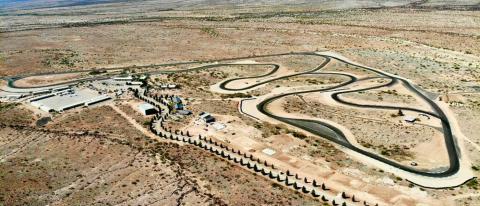
Image of Inde Motorsports Ranch courtesy of W Series 

Image of Inde Motorsports Ranch courtesy of W Series 

W Series, the all-female, single-seater racing championship, has announced that it will stage a test for prospective drivers at the 2.75-mile Inde Motorsports Ranch road circuit in Willcox, Arizona, on January 31 through February 4. 

A group of drivers will showcase their talent in US-specification F4 cars. The five-day test, overseen by W Series Racing Director Dave Ryan and his team, will mark the start of the W Series’ 2022 on-track program. 

The 14 drivers attending the test include Madison Aust (USA), Julia Ayoub (Brazil), Tereza Babickova (Czech Republic), Lindsay Brewer (USA), Léna Bühler (Switzerland), Bianca Bustamante (Philippines), Maite Cáceres (Uruguay), Chloe Chambers (USA), Jorden Dolischka (Austria), Emely De Heus (The Netherlands), Nicole Havrda (Canada), Jem Hepworth (UK), Corinna Kamper (Austria), and Lola Lovinfosse (France). 

“The purpose of this test is to get to know a new group of drivers and understand what they are capable of as we finalize our 2022 driver line-up and look to the future,” Ryan said. 

For more information, visit wseries.com. 

January 2022

LVMS Announces Key Hires, Promotions  

Submitted by laurap on Fri, 01/14/2022 - 14:45
Las Vegas Motor Speedway logo


Las Vegas Motor Speedway (LVMS) has announced key promotions and two additional positions. 

Aaron Crowley has been promoted to vice president of sales, and Patrick Lang has been named business development executive. The speedway also announced the hiring of Jill Frischmann as director of corporate events and business development and Jose Guerrero as communications manager. 

“These staff enhancements have made us better,” said LVMS President Chris Powell. “Aaron and Patrick have been here for many years and have excelled in their roles, so it’s exciting to be able to promote from within to these two key positions. Jill brings a wealth of motorsports and sales knowledge to our group and will strengthen our sales team. Jose is a Las Vegas native who possesses both strong communication skills as well as an intimate knowledge of our local media landscape.” 

For more information, visit lvms.com. 

January 2022

2022 Dates, Stops For HOT ROD Drag Week, Power Tour Announced 

Submitted by laurap on Thu, 01/13/2022 - 15:39
Image of OT ROD Drag Week courtesy of MotorTrend

Image courtesy of MotorTrend

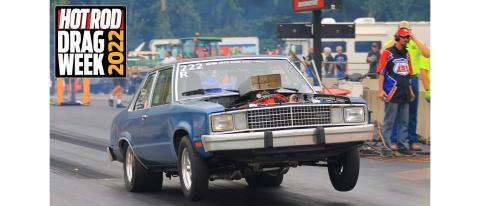
MotorTrend has announced two of its annual events are returning in 2022: the HOT ROD Power Tour (June 13–17) and HOT ROD Drag Week (September 18–23). 

The 28th Annual HOT ROD Power Tour Driven by Continental Tire is “going South” for 2022. The 1,000-mile traveling car show is set to take place Monday, June 13, through Friday, June 17, and will visit motorsports venues in Tennessee, Alabama, Florida, and Georgia. 

Meanwhile, the “Fastest Street Car in America” will be crowned during the 18th annual HOT ROD Drag Week presented by Gear Vendors Overdrive, on Sunday, September 18, through Friday, September 23. The endurance drag racing event will visit four classic drag strips: Memphis International Raceway (Millington, Tennessee), World Wide Technology Raceway (Madison, Illinois), Beech Bend Raceway (Bowling Green, Kentucky), and Alabama International Dragway (Steele, Alabama). 

For registration details and more information, visit motortrend.com/hotrod or motortrend.com/events. 
 
HOT ROD Power Tour 2022 Dates And Locations 
Day 1: Monday, June 13—Memphis International Raceway, Millington, Tennessee. 
Day 2: Tuesday, June 14—Nashville Superspeedway, Lebanon, Tennessee. 
Day 3: Wednesday, June 15—Hoover Met Complex, Hoover, Alabama. 
Day 4: Thursday, June 16—Pensacola Fairgrounds, Pensacola, Florida. 
Day 5: Friday, June 17—Atlanta Motor Speedway, Hampton, Georgia. 
 
HOT ROD Drag Week 2022 Dates And Locations 
Registration, Tech Day, and Test’ n’ Tune: Sunday, September 18 - Memphis International Raceway, Millington, Tennessee. 
Day 1: Monday, September 19 - Memphis International Raceway, Millington, Tennessee. 
Day 2: Tuesday, September 20 - World Wide Technology Raceway, Madison, Illinois. 
Day 3: Wednesday, September 21 - Beech Bend Raceway, Bowling Green, Kentucky. 
Day 4: Thursday, September 22 - Alabama International Dragway, Steele, Alabama. 
Day 5: Friday, September 23 - Memphis International Raceway, Millington, Tennessee. 

January 2022

National Sprint Car HoF Announces 12 Inductees For 2022

Submitted by laurap on Wed, 01/12/2022 - 16:19
National Sprint Car Hall of Fame & Museum (NSCHoF) logo

The National Sprint Car Hall of Fame & Museum has announced the twelve inductees for the Class of 2022. 

“This year’s inductee group is another testament to the hard work put in by our 72-member National Induction Committee,” said Bob Baker, the executive director for the National Sprint Car Hall of Fame & Museum.

In the Drivers category, Tony Stewart leads a list that includes Bob Frey, Eric Gordon, Terry Grey, and Tim Green.

Ralph Heintzelman Sr., Walter T. Ross, and Dennis Roth were selected for the Owners, Mechanics, Builders, Manufacturers, and Car Builders category.

John Gibson, Jack Kromer, and Robin Miller will be honored for the Promoters, Officials, Media Members, and Event/Series Sponsors category. 

Walter “Slim” Rutherford was selected for the Pre 1945 category. 

The inductees will be honored during the 32nd annual National Sprint Car Hall of Fame ceremony at the Marion County Fairgrounds in Knoxville, Iowa, on Saturday, June 4. 

For more information, visit sprintcarhof.com.

January 2022

Team Penske To Field LMP2 Entry In WEC

Submitted by laurap on Wed, 01/12/2022 - 16:05
Team Penske logo


Team Penske has announced that it will field an entry in the 2022 World Endurance Championship (WEC), racing an ORECA 07-Gibson in the LMP2 class. 

Former IMSA WeatherTech SportsCar Championship drivers Dane Cameron and Felipe Nasr will be joined by veteran sports car racer Emmanuel Collard for the upcoming season. 

The 2022 WEC season, which begins in March at Sebring International Raceway with the 1000 Miles of Sebring, offers the first opportunity for Team Penske to race at the 24 Hours of Le Mans in more than 50 years. The WEC effort also represents Team Penske’s first experience in the FIA Sportscar World Endurance Championship.

“Much like the approach we took by running Road Atlanta in 2017 when we returned to sports car racing after an eight-year hiatus, we think the LMP2 class provides us a means of gaining valuable experience as we continue to build our program to compete full-time in the IMSA and WEC LMDh class,” said Team Penske President Tim Cindric.

For more information, visit teampenske.com.

January 2022