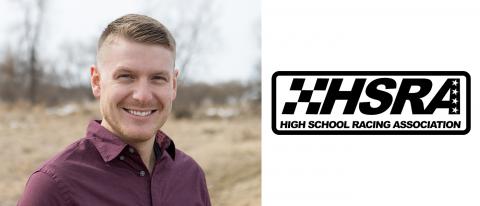
The newly-created High School Racing Association (HSRA) has named Jonathan Eckelberg as its first director. In his new position, Eckelberg will help grow the association to other tracks, increase driver participation, and manage race schedules and point rankings.
“I’m wasting no time in communicating with new tracks and engaging with the existing member tracks to discuss what successes and challenges they’ve seen so far so we can better the experience for these young racers,” Eckelberg said.
HSRA features high school-aged drivers in competition throughout the summer race season. The group’s goal is to provide young adults with an economical way to enter stock car racing and keep younger generations interested in the sport.
HSRA was co-founded by Chuck Deery and Gregg McKarns in 2020 as a combined effort between La Crosse Fairgrounds Speedway in West Salem, Wisconsin and Madison International Speedway in Oregon, Wisconsin. In addition to La Crosse and Madison, Tomah-Sparta Speedway and Rockford Speedway also hosted HSRA events in 2021.
New ownership has taken over the Rocket Raceway Park. The Petty, Texas, dirt oval formerly known as 82 Speedway will see new branding and an exciting mix of events for the 2022 season.
The management team of Kevin Sustaire and Kevin Rogers will take the reins after spending the last three seasons at the RPM Speedway in Texas.
For 2022, the track will feature four Summit USRA Weekly Racing Series divisions including USRA Modifieds, Medieval USRA Stock Cars, USRA Limited Mods, and Sunoco USRA Factory Stocks, with Eco-Mods and Trooper Cruisers also on the Saturday night card.
The USRA Modified division will join the card on a bi-weekly basis. They will compete for the Rocket Challenge in 2022 and alternate weekends with the Superbowl Speedway in Greenville, Texas.
The Medieval USRA Stock Cars are a new division and the first time the class will be sanctioned at a race track in the Lone Star State.
The United States and the European Union have agreed to end a three-year dispute over steel and aluminum tariffs. As a result, effective January 1, 2022, the U.S. will no longer impose 25% tariffs on steel (sheets, bars, tubes, etc.) and 10% on aluminum, and will instead use a quota system. The agreement will also apply to derivative products made in the E.U. and subject to tariffs such as steel bumper stampings (HTSUS 8708.10.30).
“For motorsports manufacturers who have been subject to tariffs—those who import raw steel or aluminum, or certain finished products like steel bumper stampings from the E.U.—it means they are no longer subject to the 25% tariffs on steel or 10% tariffs on aluminum unless the value of the U.S. imports exceeds the E.U.’s allotted quota. This should save these companies money and will take effect this year,” said Stuart Gosswein, PRI’s Senior Director, Federal Government Affairs.
Related, the U.S. and Japan are now pursuing a new commercial and industrial partnership to bolster economic ties, including strengthening supply chains, export controls, and innovations such as digital technologies. As part of the discussions, the two countries have agreed to pursue a quota approach to remove the metal tariffs.
“If the discussions between the U.S. and Japan are successful, it would mean that motorsports manufacturers who import steel or aluminum from Japan would no longer have to pay the 25% and 10% tariffs and instead would be able to take advantage of a quota system for metal imports,” Gosswein said.
The Trump administration first imposed the metal tariffs in 2018 under Section 232 of U.S. trade law, citing that dependence on foreign sources posed a national security threat. Based on quotas, Argentina, Australia, Brazil, and South Korea were excluded, and Canada and Mexico were eventually excluded based on the USMCA trade agreement. Although the tariffs have been imposed worldwide, a primary issue to be addressed is the global overproduction of metals, especially by China.
For more information, contact Stuart Gosswein at stuartg@sema.org.
Salem Speedway (Salem, Indiana) and Dirt2Media.com have announced Will Greenwell as the new track announcer for 2022.
Greenwell has previously served as a track official for Fayetteville Motor Speedway (Fayetteville, North Carolina) and first as co-announcer with Mike Benson, then later permanent announcer, for Sportsdrome Speedway (Clarksville, Indiana).
Greenwell has also worked with All Star Monster Truck and called many different forms of motorsports in several states, including in Utah, Wisconsin, North Carolina, Tennessee, Indiana, Ohio, Florida, and Kentucky.
“One thing I can surely say about this business is the friendships I have made along the way. That is one thing I can truly say,” Greenwell stated.
NASCAR officials have announced the baseline rules configuration for the Next Gen vehicle set for its NASCAR Cup Series debut in 2022. A 670-horsepower target engine output and a lower-downforce four-inch rear spoiler will be used at short tracks, road courses, and intermediate-sized tracks.
The announcement follows two days of organizational tests at Charlotte Motor Speedway.
“So the bottom line of all this, and you’ll hear this from the drivers, is that this package with the Next Gen car puts it back in the drivers’ hands and we’re excited about what that will do in 2022, for sure,” NASCAR Executive Vice President and Chief Racing Development Officer Steve O’Donnell said.
Tests are scheduled for January 5–6, at the newly repaved and rebuilt Atlanta Motor Speedway and January 11–12, at Daytona International Speedway, for the rules configuration on superspeedways.
Race tracks, sanctioning bodies, and promoters have long sought to convert street racers into legitimate track competitors. Here’s a look at some of their efforts and programs, the impact they’re having, and the challenges that remain.
After witnessing far too many tragedies as a result of street races, Sheriff Marcos Lopez of Florida’s Osceola County is determined to raise public awareness of street racing and its dangers.
He teamed with a drag strip to host a racing event that would attract attention to the cause, while offering street racers an introduction to the safer, legal world of organized racing at purpose-built tracks.
Lopez isn’t the first to organize such an event. For more than a decade, tracks, sanctioning bodies and promoters have created events and programs carefully aimed at attracting street racers and steering them toward competing on race tracks. But are these programs actually working? Can they convert street racers into dedicated track competitors over the long term? Are they making a dent in the problem of street racing?
These are tough questions that need to be asked.
To find the answers, we reached out to a variety of industry sources, including sanctioning bodies, tracks and promoters. Their insight shows not only the scope of the problem, but the multi-faceted approach it demands.
The Other Pandemic
Street racing has been steadily growing for more than a decade and has reached alarming levels. According to online insurance website Insurify, the national average of drivers who have received a street racing violation is about 6 per 100,000 drivers. Several states have even higher rates; North Dakota leads the way with 41 per 100,000 drivers.
Yet that statistic represents just the relative few who got caught. The actual number of active street racers is certainly far higher than that at any given time, making street racing a massive challenge for tracks, sanctioning bodies and promoters to attack by themselves.
Organizations and race tracks that focus on production-based cars are in a strong position to attract street racers. Doing so, however, often requires educating them to alleviate any apprehension.
Furthermore, evidence shows that street racing activity has jumped even higher during the pandemic. With many people working from home, roads were emptier than usual, making them appealing settings for impromptu races. At the same time, social activities of all kinds were cancelled due to COVID-19, leaving many car enthusiasts with few other outlets for entertainment.
The difference is striking. According to a May 2021 Associated Press article, Dallas, Texas, police received almost twice as many calls in 2020 for street racing as they did the year before: 8,441 in 2020, up from 4,867 in 2019. The article also reported that New York City received more than 1,000 street racing complaints in six months during 2020, nearly five times as many as the same period the year before.
Besides the far-reaching effects of the pandemic, the reasons for street racing’s leap in popularity come from a variety of other factors. “To some extent, the closing of a lot of race tracks is part of the cause,” observed Lonnie Grim of NHRA, Glendora, California. “But probably a bigger factor is the general interest in hot rods. Nowadays, more than ever before, you can take a fairly late model car, and with some hand tools and a little bit of money, you can roll a 1,000-horsepower car out of your garage.”
While those factors may contribute to the problem, our sources say those effects are dwarfed by the influence of popular media, namely “The Fast and the Furious” movie franchise and the “Street Outlaws” cable TV show. “It’s all because of the TV shows,” said Chuck Sundstrom of Go Fast Entertainment, Gilbert, Arizona. “We saw that with drifting years ago with ‘Fast and Furious.’ That’s when drifting really took off and people were building those cars and drifting them on the streets. Now we’ve seen that with drag racing in the last five, six, seven years with ‘Street Outlaws.’”
Of course, it can be argued that shows like “Street Outlaws” merely depict a reality that’s already there. That may be true to some extent. But consider this: “Street Outlaws” attracts more than a million viewers per episode.
The Thing About Street Racers Is…
For years now, race tracks, sanctioning bodies and promoters have worked tirelessly to provide appealing venues for street racers, in the hopes that they’ll leave behind the dangers of street racing and convert to responsible track competitors. The trend of staging these types of organized track events for street racers actually began decades ago, before street racing reached the mammoth proportions of today.
“In 2000, our executive vice president and general manager, Chris Blair, was working as a drag strip manager at Las Vegas Motor Speedway,” recounted John Bisci of World Wide Technology Raceway, Madison, Illinois. “Las Vegas had a terrible illegal street racing problem. Chris looked at some ways to make it an event, but not feel like your aunt and uncle were watching over your shoulder. That became what we called Midnight Mayhem. We had a tremendous turnout.”
Since then, race tracks throughout the nation have jumped in with similar events. These programs vary in their specifics, but they typically feature a range of entertainment options for young street racers. Often included are drifting, DJs, light shows, and other energetic youth-oriented elements.
The common denominator between all these events is the cool factor. “If it’s too organized, it becomes a Chuck E. Cheese birthday party,” said Bisci. “It should be as underground and hip as possible.”
Along with the vital cultural and entertainment aspects of track-based street-racing events, there are some other key elements that these programs address. For one thing, street racers often avoid race tracks because they don’t know anything about the techniques, terminology and expectations of competing on a race track. It can be intimidating for the inexperienced, which can be a barrier to participation.
In response, street-racing programs at tracks usually take on an educational function, reaching out to participants in a friendly, non-intimidating manner and teaching what it takes to race successfully at an actual drag strip. “We found that a lot of these guys have never been to a drag strip,” said Rollie Miller of NMCA, Santa Ana, California. “So we need to spend extra time with them. We’ll even walk them up on the starting line and show them the stage beams, the water box and other things they need to know.”
By taking street racers under their wing and easing them into the culture of organized track competition, these events are making believers out of street racers across the country. The payoff is evident in the crowds that flock to these events, with car counts often numbering in the hundreds.
Where the Dream Ends
So with all these things going for track-based street-racing events, why is street racing thriving? Given the focus of the events, the young demographic that participates in and attends them, and the strong car counts they typically get, it’s almost beyond question that these events are introducing a significant number of street racers to organized competition. It would be almost impossible for them not to.
Yet all evidence points to the fact that street racing is more popular than ever.
The difficulty in getting to the reasons why is, in part, a problem of accurately gauging the real impact that track-based street-racing programs are having on street activity. Street racers are, after all, “outlaws.” There isn’t any official census of them. And having engaged in illegal driving activities, they’re usually somewhat wary about even showing up at an organized event that typically has security, track officials and police roaming the pits.
Many race tracks host events aimed at converting street racers into legitimate track competitors. While the overall impact may be hard to measure, there is optimism in the industry to transfer these speed activities to designated facilities.
Track officials and promoters understand street racers’ intense desire for privacy, which they acknowledge and respect as one of the conditions it takes to attract this crowd. “They just show up,” said Bisci. “And then when they’re done or when they’re tired, they leave. We don’t bother them.”
Street racers’ need for anonymity essentially obliterates any chance for a headcount. And just going off of the overall car count or ticket-gate numbers wouldn’t necessarily be accurate either. There’s no way to tell which participants do or don’t actually race on the street.
Because street racers intentionally fly under the radar in that way, the only group that might be able to quantify the number and overall effect of street racing are law-enforcement agencies. But even they struggle to make an accurate count. Complaints police receive about street racing often get tagged as “miscellaneous” reports in record-keeping systems, and crashes that result from racing tend to be filed under general causes like “speeding” or “reckless driving.”
It’s safe to assume, then, that most statistics regarding street racing err significantly on the low side.
Regardless of the actual numbers, track-based street-racing programs should only be seen as one tool in the fight against street racing. They have to be part of a combined effort that includes law enforcement, media and local government, as well as the street racing community itself. “It’s all about people putting forth the effort on both sides,” said Grim. “Everybody has to invest in the idea with an open mind and find concessionary value in the fact that if we can move that activity off the street and onto the race track, it’s a win-win for everyone.”
Sadly, tracks and the street-racing events they host are often the voice in the wilderness. While some of our sources have gained solid cooperation from local law enforcement, many report that police don’t seem to care about the programs. The ones that do want to be involved are often hampered by lack of resources.
The NHRA’s YES Program is designed to familiarize young people with all aspects of drag racing. The Junior Street component of it enables even non-licensed drivers to make drag strip passes.
“We haven’t had much luck with local law enforcement agencies,” said Sundstrom. “I’ve tried. The Phoenix Police Department actually has a street racing enforcement group now. We talked about our different programs, but they told me right up front, ‘We’d love to do something with you, but we don’t have the time or the ability.’”
Ozzy Moya of South Georgia Motorsports Park in Adel, Georgia, echoed that sentiment. “Honestly, it’s hard getting Sheriff’s departments to cooperate. Some of them just don’t want to be any part of it.”
Instead, municipalities and law-enforcement agencies tend to place their hopes for combatting street racing on increased legislation and more aggressive enforcement. To that end, a significant number of major US cities have recently passed tougher street racing laws, while police departments are stepping up patrols aimed at potential street racing activity.
Such measures could be effective components in the effort to control street racing. However, there seems to be little if any thought given to where those street racers should go when their clandestine activities are shut down.
Some of our sources report a similar apathy from local news media. News outlets often express little or no interest in these events, except occasionally as a brief tag at the end of a tragic street racing incident they report on. “Although street racing is a big deal in Phoenix, l think there are just too many other things to cover at the same time,” observed Sundstrom. “So it gets put on a back burner until somebody gets hurt, unfortunately.”
Without this combined effort, tracks, sanctioning bodies and promoters face an impossible task. They don’t patrol the streets, they aren’t the parents of these racers and they don’t enforce the law.
All they can really do is offer a safer, legal venue for street racers.
The Sunny Side of the Track
Despite these challenges and setbacks, the sources we spoke to are optimistic about their efforts and believe strongly in their potential to make a difference. “In the last four weeks, we’ve probably seen 300 to 400 new street racers at our events,” Moya reported in October. “I believe that once these guys do it, they’ll get hooked on it. They realize they can do it at a race track without getting a ticket and going to jail or causing harm to somebody else. It’s been very positive.”
Sundstrom has also seen solid evidence of success with his programs, including the NHRA licensing program he runs in conjunction with his track-based street-racing events. “We’ve gotten 43 drivers their NHRA licenses. Out of those 43 there were only three or four that were actual drag racers. These are people that go and goof around and have fast cars and stuff, and they just come to the program because it looks cool.”
Even though many of these programs struggle to get mainstream-media attention, like so many other aspects of youth culture nowadays, word of mouth amplified by social media is ultimately as powerful, if not more. “If we get 20 people in the first race, they go tell all their friends at the next race and more people come out,” said Sundstrom.
Car counts are generally strong at track-based street-racing events, bringing greater awareness to the problem and fostering a word-of-mouth cool factor.
As for Sheriff Lopez’s efforts in Florida, he’s demonstrating that law enforcement can be part of the solution, and that doing so can have profound effects. He helped organize the Take it to the Track program, which centered around four weeks of drag racing at Orlando Speed World in October 2021. The program attracted 200 racers from the area, bringing widespread exposure to the dangers that street racing poses.
Equally important, the event sent a message to other law-enforcement agencies that this is a cause that needs attention. “I love the buy-in from the other agencies, it feels like we got what we wanted out of it,” Lopez told the Osceola News Gazette. “We’ve highlighted the awareness of illegal racing.”
Moya, who helped organize the Take it to the Track program, offered a similar take on the event, and noted the media interest that the prominent sheriff was able to attract as well. “Once you get one sheriff on board, it seems like all the other ones jump on, too. And Sheriff Lopez got every news station out there, including the Spanish-language ones.”
Granted, translating this kind of energy into something compelling enough to lure racers off streets and onto tracks is still a tall order. The carefully contrived fantasy of street racing that “Street Outlaws” and “The Fast and the Furious” movie franchise portray have all the potent drama and scintillating thrills that the best TV and movie producers can pack into them.
It’s tough to compete with that, especially with a reality full of “uncool” things like ambulances, guard rails, officials and police officers all in plain sight.
No matter what, there will always be a significant number of street racers that even the best track programs can’t convert. “Some street racers are in it for the thrill of doing something illegal,” said Bisci. “When you’re a young person, that’s a big draw, like leaving your parents’ house and lighting up a smoke, or going behind the garage and drinking beer, or something like that. It’s just the thrill of doing something illegal.
“We’ll never completely erase the problem,” he admitted. “But we offer a safe alternative.”
Helping Turn a Corner in the Fight Against Street Racing
An Idaho-based organization has formed one of the first-ever mobile drag racing venues in the state. M.M.A.S.V. Racing (pronounced Massive Racing) was founded by Hayden Horne and Tom Tillotson following the closure of Snake River Dragway in Gooding, Idaho, in 2019.
“That track had been there for decades, so there was a huge group of people that didn’t have anywhere to race. These are the out-of-their-back-pocket weekend warriors, so they couldn’t travel,” Horne said.
Another goal of the organization was to help cut down on illegal street racing in the area. “We also have a huge street racing problem here, so we figured we could kill two birds with one stone,” he continued. “Law enforcement are all for it. They back us 100% since they don’t want to see drag racing accidents. They’ve said they notice a decline in street racing on the nights we meet.”
With support from county officials and local law enforcement, the group builds and tears down a 1/8-mile circuit near the Hub Butte Landfill in Twin Falls County. They use basic drag strip equipment, including a tree, staging beams, MPH radar systems, a finish line, and a computer and printer. “We also have a volunteer EMT-trained firefighter with a truck and first responder equipment on-hand, with ATVs for quick response,” Horne said. “We’re fully insured; it’s legally sanctioned racing.”
“We set up a school bus with music. The atmosphere is just having fun. There are serious drivers with a competitive nature, of course, but it’s like a huge family,” Horne added.
Required car and driver safety equipment include an approved helmet, a race jacket (or long shirt), long pants, closed-toed shoes, safety harness (or seat belt), mounted batteries, and two throttle return springs.
Events feature bracket, grudge, or heads-up categories—depending on what racers demand that day. “You can’t go to a track and ask what class to run, but we get to pick and choose,” Horne said, adding they’ve seen up to 80 cars and 200 spectators in a day. “I have a 1969 Nova that I race for fun, and everyone wants to grudge match it.”
Looking ahead, the group is planning to purchase a scoreboard and is working with county officials to secure another road “with a better track surface,” Horne said. “That’s the thing with a mobile strip: we can go anywhere as long as we have permission.”
The efforts mirror a similar initiative in San Antonio, Texas, where local police have teamed up with Alamo City Motorplex to combat dangerous street racing. With the idea of working from the inside, police officers had conversations with illegal racers, convincing them to compete in a controlled environment, i.e., Alamo City Motorplex.
Those that mention the San Antonio Police Department (SAPD) collaboration at the gate receive a discounted ticket and entry fee. The required driver safety gear is a helmet, pants, and closed-toed shoes.
“PRI applauds the efforts of the SAPD and Alamo City Motorplex. Collaborations like these make a serious impact on the local communities’ safety,” said PRI Vice President of Government and Legal Affairs Daniel Ingber.
The campaign comes after Texas passed laws to help cut back on illegal street racing, including raising the offense to a Class A misdemeanor. Authorities will also now be able to impound vehicles and punish donuts and burnouts made on public spaces.
“It’s vital racers follow local laws not only to protect themselves but also those around them,” Ingber said. —Laura Pitts
Helpful tips to prevent contamination, oxidation, and other potential setbacks.
1. Contamination Due to Poor Gas Coverage
Welds can be contaminated by lack of shielding gas. To troubleshoot, be sure to use the proper type of gas. For TIG welding, this is typically 100% argon. For thick aluminum, use an argon/helium blend. Attempting to TIG weld with an incorrect blend, such as argon/carbon dioxide commonly used for MIG welding, will cause contamination.
Also check recommended gas flow rates, which should generally be 15–20 cubic feet per hour (cfh). Welders commonly—and incorrectly—assume that a higher gas flow pressure provides greater protection. Instead, it may cause turbulence and pull in airborne contaminants, leading to arc wandering. Generally, err on the lower side of recommended shielding gas rates as the project begins.
A breach in the fittings and hoses can cause gas leaks, which are big money wasters. Rub soapy water over the hose and fittings. Replace the defective components if bubbles form.
If none of the solutions solve poor gas coverage, consider that the tank may be contaminated with moisture. Check with your gas supplier to resolve this issue.
2. Contaminated Beads or Discoloration in Weld Puddle
TIG welds created with the machine’s polarity set on direct current electrode negative (DCEN) may not break down the aluminum oxide layer. This can result in filler metal mixed in with the partially melted oxide to create a contaminated bead. To defeat this, always TIG weld aluminum with the polarity set to alternating current (AC).
If there is brownish oxidation or black flakes in the weld puddle, decrease the balance setting. This will increase the time in EP, or the time spent in the “cleaning action.” Excessive EP, meanwhile, may cause the tungsten to ball excessively.
3. Weld Graininess
Filler metal problems typically cause a grainy appearance. Before welding, always check the proper filler metal type and remove all grease, oil and moisture from the surface to prevent contamination.
4. Lack of Fusion at the Root
Lack of fusion at the root of a T-joint or a fillet weld is more often seen with a transformer-based machine, as the arc tends to wander between the two sides of the joint. In this case, obtain better directional control and increase penetration by reducing arc length. Also, be sure not to weld too quickly or underfill the joint.
Inverter-based machines (especially those with advanced output controls such as adjustable frequency and pulsing controls) offer more control over the arc.
5. Craters
Typically occurring at the end of the weld, craters often lead to cracking. They can be caused by reducing power too quickly, which makes the puddle cool too soon. Removing the filler rod too quickly can also cause craters.
To prevent craters, continue to feed the filler rod while gradually reducing the current at the end of the weld. Some TIG welders have a crater control function, which automatically reduces the current.
6. Dirty Base or Filler Metal
Base and filler metals—susceptible to contaminants like mill scale, oxide on aluminum, and dirt or grease—must be cleaned. Be sure to remove pollutants by grinding, brushing and wiping.
To properly clean aluminum surfaces, dedicate a stainless steel brush for the task to prevent cross-contamination.
7. Poor Color on Stainless Steel
Stainless steel welds may experience discoloration due to overheating, which degrades their corrosion resistance and mechanical properties. Unfortunately, once this error is made, there is nothing that can be done.
To prevent overheating, try to reduce amperage, marginally increase travel speed or shorten the arc length, which is the distance between the electrode and the base metal. In addition, if the welding equipment features pulsed welding capabilities, use them. Pulsing, which reduces heat input, allows for better control of the weld puddle.
8. Sugaring/Oxidation
Sugaring, or oxidation, may occur in stainless steel welds exposed to oxygen. To prevent sugaring, back purge the weld with argon shielding gas or reduce welding amperage.
9. Wide BEAD Profiles
When the amperage is set too high on aluminum, it may create a wider profile or an ill-defined bead. This can potentially lead to burn-through. To solve this, reduce amperage or increase travel speed, or both.
10. Improper Arc Length Control
The color change in the middle of an aluminum weld bead can result from an increase in arc length. Arc length determines TIG welding voltage. Holding too long of an arc increases overall heat input and the potential for distortion. It also widens the weld bead while decreasing penetration and affecting weld bead appearance. Practice holding a consistent arc length to improve heat input control and improve weld bead quality.
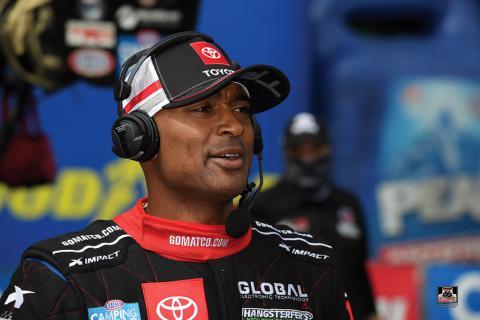
Transitioning from hired gun at NHRA powerhouse Don Schumacher Racing (DSR) to owner-driver of his own eponymous team, PRI Member Antron Brown reveals the crew members set to join him in his new venture, the alliances he’ll retain, the nature of his new relationship with DSR, and the long-term goals that remain for one of drag racing’s busiest and most successful competitors.
When he first started seriously contemplating what it would take to establish and run his own Top Fuel operation, Antron Brown wasn’t yet running nitro cars in pro-level drag racing. In fact, he wasn’t running cars at all. Brown was earning his chops in Pro Stock Motorcycle, first riding for former NFL cornerback Troy Vincent, when he started actively thinking about not just driving four nitro-fueled wheels but also paying the bills to turn them.
It took Brown the better part of 15 years before his ideas gradually became reality. The culmination will happen during 2022, when Brown transitions from hired gun at the NHRA’s megateam, Don Schumacher Racing (DSR), to become owner-driver at Antron Brown Motorsports, which will field a Top Fuel car in search of Brown’s fourth NHRA Top Fuel championship. Antron Brown Motorsports (ABM) is most decidedly an independently owned and freestanding entity, but its alliances and resource-sharing with DSR will be both comprehensive and deep. Brown’s move comes as DSR disclosed that eight-time champion Tony Schumacher, the winningest Top Fuel driver in NHRA history, has returned to competition to chase the 2022 title.
“We’re having our race car chassis built at DSR’s in-house fabrication shop,” Brown explained. “We’re going to lease space from them, and we will be buying parts and pieces from them, so we will be a customer of DSR. We’re still on our own, but we’re going to do whatever we need to do to make us successful on the race track. We’ll be buying parts that DSR manufactures, such as blocks, cylinder heads, rods and different components that they make at the DSR shop in Brownsburg, Indiana.”
This year, Antron Brown charts a new path as owner-driver at Antron Brown Motorsports, which will field a Top Fuel car in search of Brown’s fourth NHRA Top Fuel championship.
Brown is a dual-category NHRA star, owning 52 national-event victories in Top Fuel, plus another 16 in Pro Stock Motorcycle. His lone 2021 win for DSR came at Atlanta Dragway. A third-generation drag racer, Brown spent a decade on two wheels before transitioning to Top Fuel in 2008 and winning No. 1 qualifier at his very first race. Brown won his first Top Fuel trophy in his fourth start, becoming the first to win national events in both that category and Pro Stock Motorcycle. Signing with DSR, Brown became the first African-American to win a major motorsports championship when he took the Top Fuel crown for DSR in 2012. He was honored that year by the African-American Chamber of Commerce in his native New Jersey with the Circle of Achievement award and was on NBC’s 2013 edition of “The Grio’s 100” list that features Black industry, sports and community leaders.
Brown’s Top Fuel titles have all been managed by crew chief Mark Oswald, who completed a remarkable feat in his own right as a driver by earning NHRA, IHRA and AHRA Funny Car championship titles in the 1984 season. He has been with Brown since DSR bought the team from Mike Ashley in 2009. Oswald now shares Brown’s tuning and co-chief duties with Brian Corradi. Both will make the jump from DSR to ABM, along with Brad Mason, who’s helping Brown with much of the new team’s groundwork. Brown expects to have 12 team members when 2022 starts.
“I have a couple of business manager options that I’m working on, but I don’t have anything to announce yet,” he said. “You also have to do your due diligence with things like insurance, payroll, all that stuff on the administration side, getting all that stuff in line, so that when we actually make the changeover, we’re ready, we’re prepared for it, and it can become as seamless or as effortless as possible.”
Matco Tools and Toyota will be back as sponsors, along with Hangsterfer’s, a producer of specialty cutting oils and lubricants for machine tools that, like Brown, hails from southern New Jersey. More backers are expected, and Brown says his long-term goals are to help them, and other teams’ sponsors, maximize their investment.
“My dream, my next goal, is to have another team, so one Top Fuel and one Funny Car,” he said. “It would be enough to handle, it would be the right number of people, and we could then have a marketing program at ABM that would allow us to cater to other teams, too. We’d find sponsorship deals for other teams, and more importantly, show them the skills that they’re going to need to keep those sponsors.”
Part of the new equation of race team management involves coping with COVID-related issues. “It’s across the board with everything,” Brown explained. “I was lucky enough to have started out early this year [2021] in terms of ordering our new vehicles. Our trailers would have normally been done a lot sooner, but instead we’re getting them in October. Ordinarily, we probably would have had them in early August. They were having issues with the A/C units, or with the cabinets, because they couldn’t get the extruded trim that they needed. Waiting times now are four times longer than they usually are.
“But I’ve been planning for most of the last 10 years for this,” Brown continued. “I ran my own Pro Stock Motorcycle team for three years, and then when I went to drive for Don Schumacher, I was really running the race team. I did all the budgeting, all the parts ordering, figured how much it cost to travel and fly, everything. I’d advise anyone that if this is something you really want to do, you need to do your homework.”
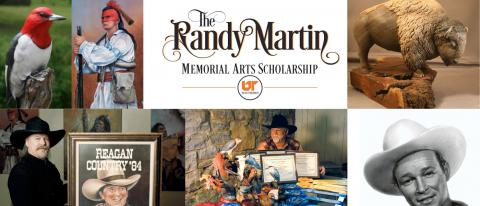
Martin & Company (M&C), a full-service marketing solutions firm specializing in both traditional and digital branding for the performance automotive aftermarket, has announced that the Randy Martin Memorial Arts Scholarship Fund is halfway toward its goal of $25,000 for 2021.
The scholarship was developed in honor of agency co-founder Randy Martin to benefit UT Southern, formerly Martin Methodist College in Pulaski, TN. Randy Martin, a graduate of Harris School of Art held numerous positions with Nashville-based advertising agencies as well as art director for CBS Records. He helped form Martin & Company in 1993 with his spouse Zan Martin and served as creative director and CFO until he passed away in May of this year from COVID-19.
“Randy was the most creative person I have ever known. He had a natural talent for sculpture, painting, drawing, and graphics. In addition to being the love of my life, he encouraged young artists and would have loved the idea that this fund was established to help others achieve their dreams with art. I hope that as corporations and individuals look at their year-end giving that they will keep in mind the importance of supporting education and the arts and will consider a donation to help us reach our goal of $25,000 for the year,” Zan Martin said.
To make a donation to the Randy Martin Memorial Arts Scholarship Endowment, visit here. For more information, visit martincoadvertising.com.
The last 12 months brought a resurgence in drag racing following a dismal 2020. What’s next? We asked industry power players to share their goals—and challenges—for 2022.
Drag racing roared back to life in 2021 after a dismal 2020 season that was dragged down by pandemic restrictions. Recovery released pent-up demand for parts, professional builds and opportunities to race, however, and those factors drove a business boom for many in the industry.
At the same time, ripple effects from the pandemic, severe weather events and a backlog of container ships waiting to unload their wares disrupted the global supply chain. Availability of some parts and materials tightened just as demand was rising, driving inflationary pricing.
With this confluence of market forces in view, PRI spoke with several players in the drag racing world to check in on their realistic goals for 2022. Forget New Year’s resolutions; these sanctioning bodies and businesses want to keep the pedal to the metal, and here are their strategies.
Firebird Raceway
Founded in 1968 by Bill New and his wife Ellanor, Firebird Raceway in Eagle, Idaho, remains a family operation managed by their sons, Scott, Brad and John. The NHRA member track packs plenty of history. Scott New said 2021 was a “comeback year that exceeded all expectations” after the challenging 2020 season. “We were making changes on the fly through the pandemic.”
Following an extensive repainting and facility freshening in the fall, New said the top goal for 2022 is to take a more proactive approach to sustain the track’s youth programs. “We have Junior Dragster and the more recent Junior Street,” he said. “A lot of today’s Top Fuel and Pro Stock drivers started in Junior Dragster.” (Scott New participated in the track’s youth program when it launched in 1976.)
Increased engagement on social media will be key for both growing track business and supporting the youth program. The track had been a bit behind the curve in that realm, New admitted, but now, social media has allowed the track to greatly extend its reach.
While fondly recalling the days of high-energy radio announcers and the sport’s famous “screamer” radio spots, New said he is realistic about today’s more targeted opportunities via social media. He indicated that the media newcomer has in large part replaced mailing flyers and schedules to racers and households. “That’s how we did it for the first 40 years, and it was very expensive,” he said. “We are also doing more with our e-mail list, sending e-blasts and schedules.”
New believes that having three generations of the family involved in the track operation is not only a point of pride, but also a business advantage to marketing as it continues to tilt more toward social media. Even with increased social media efforts, however, New acknowledged that a key challenge for the youth program is finding an enthusiastic teacher who loves the sport to act as a liaison. He is addressing that issue with personal outreach to high schools in western Idaho’s Treasure Valley.
NHRA
Brad Gerber of the NHRA in Glendora, California, is optimistic for 2022. “We are aiming to get back to where we were in 2019 and surpass it in some areas,” he said. The sanctioning body has numerous projects scheduled for 2022, including its first video game in 15 years, adding a betting platform, and developing secondary programming with “an award-winning media company.”
While Gerber said trusted partners are handling those ventures, the NHRA is internally focused on boosting its Youth and Education Services (YES) Program as a key vehicle to help grow the sport and the automotive performance market. Following the US Army ending its sponsorship in 2017, and the NHRA reconfiguring the program to be more career-focused, it grew by nearly 35% through 2019. Gerber explained that adding a virtual component, with online learning featuring videos that students could follow at home, was a necessary response to pandemic restrictions, yet resulted in continued growth.
For 2022, the NHRA plans to step up its Youth and Education Services (YES) Program, which has been reconfigured to focus largely on careers in drag racing.
“Students who completed the modules could earn complimentary tickets for NHRA Friday night events,” Gerber said.
The reconfiguration not only helped maintain program momentum but also boosted interest from parents and teachers. The online aspect also enabled the program to continue beyond the school year. As a result, the NHRA engaged with 30,000 students in 2020, a record according to Gerber.
Even with the return to in-person events, the NHRA’s YES Program will retain the online element. Gerber projected that this combination, plus member tracks providing youth programs on the local level, will further boost teen engagement. Representatives from the program’s main partners, Mopar CAP (Career Automotive Program), Western Technical College and Ford Performance, attend in-person events to talk to students about careers in the NHRA and the automotive performance marketplace.
“We see this going to potentially 40,000 students in 2022. That is a realistic goal for the year,” Gerber said.
ProMedia
ProMedia in Santa Ana, California, runs the National Mustang Racers Association (NMRA) and National Muscle Car Association (NMCA), each conducting several drag racing events throughout the year. ProMedia’s Rollie Miller III conveyed his optimism for a strong 2022 season, citing goals of expanding race classes and reaching more people via social media. The company will also continue its support for the RPM Act.
Miller said the company will continue to evolve the NMRA’s event production, following trends in the street car market while promoting safety for competitors. On the NMCA side, he said the organization is adding more opportunities for both modern and vintage muscle cars, including new dedicated Stock Eliminator and Super Stock Eliminator classes.
“We also have an explosion in the street market with the program that we host for Dodge/Mopar and its HEMI Shootout, as well as the TorqStorm True Street class,” Miller explained.
ProMedia-owned NMRA and NMCA are launching into the new year with plans to expand race classes and add more opportunities for new and vintage muscle cars.
Miller expressed confidence that “great planning, organizing and execution” will help deliver those goals. “For us, the 2022 season began in early spring 2021, and it is a constant effort to keep on target.”
Miller also cited a newly expanded staff as instrumental to achieving 2022 goals. “Like many small businesses, we had been running lean since the Great Recession,” he said. “It has taken great effort to keep our expenses in check so we can put those resources into hiring the right people for the jobs.”
He credited his staff’s market savvy in continually developing new goals. “We have a dedicated staff immersed in this hobby and sport, and we meet regularly to discuss pre- and post-event issues and create solutions,” he explained. “We also work extensively with aftermarket manufacturers and racers to make sure that both of our racing series are the best they can be. There is a lot of feedback, notes taken from analyzing the market on a regular basis, and we have a great connection with our customers.”
Miller said he enters 2022 optimistically but with eyes wide open facing the challenges of inflation and a competitive job market, along with the race promoter’s constant foil—unpredictable weather.
“After doing this for 23 years, we continue to prove our stability and show our skills in navigating rough waters,” he said.
To grow the NMCA/NMRA audience, Miller said ProMedia plans to expand social media efforts. “We are working with more influencers to help bridge the social media world with the drag racing segment and promote an anti-street racing message,” he said.
International Roll Racing Association
Chris Harris launched a new sanctioning body to get racers off public roads and onto professionally run tracks, turning a public nuisance into a bona fide motorsport. Sound like a familiar story? Harris’s International Roll Racing Association (IRRA), based in West Palm Beach, Florida, is sanctioned under the IHRA and is the first sanction for the sport. It zoomed from 25 members in 2019 to about 300 going into 2022.
Harris’s main goal for 2022 is a smooth expansion of the IRRA from its original Florida base and its Northeast Division into more regions. The IRRA is adding a new Southwest Division at Tucson Dragway and a Texas track to be named, and Harris expects membership to grow significantly as a result.
Roll racing, as it is run at IRRA races, is heads-up competition with two cars side-by-side starting from a 40-mph roll. A spotter triggers the green light to race, and the first car across the finish line wins. The IRRA currently has four classes, all based on mph capability. The race field is diverse, from 300-hp Honda Civics to 2,000-hp Dodge Hellcats and even a few Lamborghinis. Many of the cars are street-driven, though some are trailered. No wheelie bars are allowed.
The International Roll Racing Association has enjoyed explosive growth in the last several years. For 2022, the organization is looking to expand its geographic reach.
IRRA members get licensed to race and obtain $100,000 of excess medical coverage. Fueling the sport’s growth in large measure, according to Harris, is that it attracts young racers and young spectators. Yet, he said it appeals to a wide range of drivers and ages because the rolling start is both easier to master quickly and less stressful on a car’s drivetrain.
Each IRRA event includes a “Fun Run” where anyone can give roll racing a try, which Harris said helps draw new members. “We’ll get a 75-car field for competition. Add in the Fun Run, and it’s about 300 cars per event.” After running seven races last year, the IRRA held its National Championship at zMAX Dragway in Concord, North Carolina.
The IRRA is the first sanction for roll racing. As such, one of its challenges for the new year will be to continue building awareness and earning credibility for the sport.
Harris said his current challenges are twofold: explaining what roll racing is and then defending it as “real racing” to skeptics. “To some people, roll racing looks drastically different from drag racing, but it’s really not that different.”
He addresses both challenges by personally meeting track owners and selling them on the benefits of adding roll racing events. So far, his personal approach has been working, and as this recently sanctioned series grows, he finds that part of his job is getting a little bit easier.
Mullis Race Cars
Founded by Bill Mullis and Ed Richardson and then built to a higher level by Brian Forrester, Mullis Race Cars in Wells Fargo, North Dakota, had been defunct for five years until Glenn Gordon purchased and relaunched the renowned dragster maker in early 2021. “The name recognition absolutely helped get it going,” Gordon said. “After some initial market hesitation, our schedule is filling up quickly. Right now, the drag racing industry is strong and driving hard.”
Gordon, also a principal in G&J Performance Fabrication, is confident that the current demand is an opportunity for success while acknowledging some challenges ahead. Having upgraded the Mullis dragster design to add strength, Gordon has turned his attention to 2022 goals. These include launching a side-steer roadster in the spring, with G&J “hitting the market hard” with Top Sportsman-type door cars.
Gordon explained that having G&J as a partner company helps make the new Mullis operation far more self-sufficient than before. G&J, which also does fabrication outside the racing business, adds machining, laser cutting and powder coating capabilities. “We’re now making the chassis and fiberglass and carbon fiber bodies in-house,” Gordon said.
Another key to achieving 2022 goals is having a combined workforce of seven employees at Mullis and eight at G&J. “We pulled in some very talented people, including one of Forrester’s former chassis builders,” said Gordon. “And there are a lot of ‘tuner kids’ in this area. They’re very talented.” Additional workforce growth is possible in 2022.
Beyond building improved and new race cars—but certainly related to that—Gordon said streamlining the operation to achieve tighter production scheduling is a top goal. Central to that effort will be a new 6,000-square-foot addition to the work space. Mullis currently leases another shop, and the new space will bring everything under one roof.
While supply of parts and raw material is an ongoing challenge for the industry, Gordon said some early planning helped the revived Mullis brand deal with those issues. “When we started, we stocked enough for 40 cars—a year and a half of chromoly and laser parts,” he said. “Now, when we order chromoly, some sizes are 45 weeks out.”
Finally, Gordon wants to complete the new Mullis branding in 2022, including a new website and building up the Facebook presence. He sees both as critical to marketing and believes the streamlining steps he is implementing will provide the time to focus on those efforts.
BES Racing Engines
Beginning as Bischoff Engine Service in 1985, BES Racing Engines in Guilford, Indiana, is now a top drag racing engine builder. Currently, owner Tony Bischoff has 18 employees plus himself; his wife, Jeanie, is the bookkeeper. Bischoff feels he has had one of his best years ever, and he is now focusing on goals to streamline the business and “reduce stress” for 2022.
“We’ve been busier than ever,” Bischoff told PRI. “A lot of people want to go racing.” He acknowledged the same issues that other builders are facing, including higher prices and longer wait times for parts.
Since most of his business comes by word-of-mouth, Bischoff said marketing is not a challenge for BES, and that he does very little advertising. He outlined three goals for 2022.
With a focus on drag racing, BES Racing Engines owner Tony Bischoff is “busier than ever.” For 2022, he’s adding a new building and streamlining his team’s operations.
First, as one means of aligning supply with demand, Bischoff said he raised the labor prices in his quotes by 10% this past fall. For parts pricing, however, he is only passing along his increased costs. For 2022, his goal is to hold to that structure. While acknowledging that he has not seen many others do this, he feels confident that it will not become an obstacle for his customer base, nor a challenge for him.
“The idea is not to turn away customers,” he said.
Second, he is delegating more of his work. “All we do are custom engines, and it takes a lot of my time,” Bischoff said. “I am grooming some long-term employees to take on some of my management duties.”
Third, to efficiently handle the heavy but welcome workload, Bischoff is adding a new storage building in 2022, freeing up more of the 15,000-square-foot shop for building engines. Regarding parts supply, Bischoff said he has adjusted, as best as possible, by planning ordering further ahead. He believes the challenge of aligning parts availability with the build schedule could become easier with the other new measures he is implementing.
McLeod Racing
Racing’s resurgence in 2021 put McLeod Racing in Anaheim, California, in a “very good place” for 2022, reported Krista Baldwin, who directs marketing and social media efforts while also ramping up her own Top Fuel dragster racing program. With guidance from her grandfather, legendary drag racer Chris Karamesines, a.k.a. “The Greek,” Baldwin expects to compete in 10 races for 2022, double what she did in 2021.
Back at the office—or home office, as it had been for quite a while—Baldwin gave an optimistic business outlook for 2022, citing goals that she said the company is well positioned to achieve. McLeod Racing is part of the Wharton Automotive Group, owned by Nitro Funny Car racer Paul Lee, with other companies including FTI Performance and Silver Sport Transmissions, the latter acquired in summer 2021.
“We are not finished with acquisitions,” Baldwin said. “Paul has a five-year plan. Our main goal for 2022 is to continue to provide quality engineering and products for what people are asking for.”
What many customers want, she explained, are parts suitable for 2,000-horsepower street/track cars. “Customers are pushing OEM vehicles to the limits, and we have to be there to help them go to the next stage, developing drivetrain components for those applications,” she said.
Pandemic-related shutdowns actually helped bolster business, according to Baldwin. “More people were working on their cars, and that increased demand for parts. It seems there are more cars, there’s more horsepower and more racing.”
Baldwin shared a goal to expand McLeod’s footprint in off-roading with the addition of the company’s new off-road and R&D specialist, Will Baty.
“This market is just jamming right now,” Baldwin said. “We also came out with the Silver Sport 4050 transmission and are working on more applications for that.”
Critically, Baldwin said the “normal challenges” of finding new markets and pinpointing the right products to create are all “handled pretty well” right now. She acknowledged that the biggest challenge—one that can be both fun and frustrating—is keeping up with social media. She has taken on that task for all the Wharton companies, as well as Lee’s racing page.
“It all seems to change weekly,” she said, adding that guesswork is not sufficient to tackle the challenge. “A precise media plan makes it all work, but we also have to be versatile and respond to whatever the algorithm might be that week. It is absolutely critical.”
 MEMBERSHIP LOGIN