SCAT Enterprises has announced that it has been acquired by Taglich Private Equity, which recently acquired Air Flow Research Heads, the manufacturer of cylinder heads and intake manifolds for the high-performance automotive aftermarket.
The transaction includes the Procar by SCAT seating division. SCAT’s management team will remain in place along with SCAT’s production facility and employees, located at its headquarters in Redondo Beach, California.
SCAT founder Tom Lieb will remain involved in the business going forward and SCAT’s current COO, Craig Schenasi, will become CFO of the combined companies and an owner in the business.
“Completing this sale doesn’t represent the end, but merely another step in SCAT’s long and successful history,” said Lieb. “We are excited about partnering with AFR and continuing to build on the foundation that we have built over the years.”
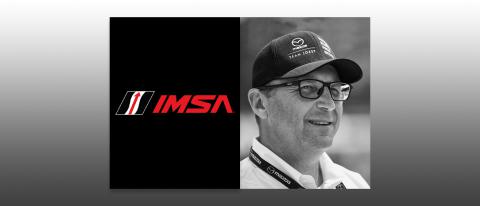
IMSA’s president addresses various factors influencing the sports car sanction today, including how it effectively coordinates with 18 auto manufacturer partners, a new global set of regulations for one specific class, and a true ladder system that offers opportunities for drivers and team members alike.
John Doonan always wanted to work in sports car racing. From his teen years helping out with his father’s fledgling race team through a college and graduate school education in business administration, his goal was always clear.
After college, Doonan rose through the ranks to lead Mazda Motorsports in its glory days of both amateur and professional competition. Now he’s working the same energy and vision for professional sports car racing as president of IMSA. From adopting hybrid prototype racing cars to integrating the latest sports cars into an existing framework, Doonan keeps his focus on productive partnerships to make sure there’s room for automakers, parts suppliers, teams, and drivers around the IMSA table.
Doonan took over as president of IMSA in 2019, just in time to see much of racing shut down in the wake of the pandemic. But rather than sit idle, Doonan and IMSA used the time to make plans for the continued growth of professional sports car racing with new, relevant machinery and a global plan of attack to allow teams and automakers to race the same cars in Europe, America, and around the world. Doonan recently sat down with PRI to discuss his current job and everything he’s learned in almost two decades devoted to the business of sports car racing.
PRI: You have devoted almost your entire career to sports car racing. Was that always your dream, or did you discover it along the way?
Doonan: I always wanted to be in the sport some way or another. I thought I wanted to be a driver initially, just watching my dad and all of his buddies race starting in the early 1970s and throughout the 1980s. But really, I got passionate about the business side of the sport in the mid-80s. At that time several of the guys that my dad raced with started to “go pro.” They went into things like the Star Mazda series or IMSA RS series, or ultimately some went into World Challenge. So in my spare time in high school and then college, I was building out these very rudimentary sponsorship proposals, but that was where my passion started for partnership.
Among John Doonan’s first major challenges as IMSA president was steering the organization through the difficult onset of the pandemic. He is seen here, at left, with 2020 LMP2 Champion Patrick Kelly. All photos courtesy of IMSA.
PRI: Did you find that working in the business side of motorsports, where the sausage is made, was different from what you expected it would be?
Doonan: Growing up around the grassroots side of the sport, I knew that that’s what drove the business because I had studied Mazda so much that I knew that customer racing really drove the ability for several manufacturers. Toyota did it that way, Nissan did it that way. So when I got there, it was a validation of that business model. When I got that opportunity at Mazda, it was time to execute and continue to model what we did there based off of what I had seen those other OEMs do so successfully.
PRI: Did anything surprise you when you started working in racing?
Doonan: I always knew taking a program to the top level of the sport was no small task, and it was going to take a lot of resources on the financial side. You have to realize how hard it is to build a proper value equation for corporate partners. That was a big learning curve, and I was honored to have a lot of folks who coached me on what it was really going to take to make sure that the programs were sustainable by true value, whether that was television broadcast value or on-site fan activations and things like that. The biggest surprise was the reality of what it took to be at the top.
PRI: Your time at Mazda coincided with the best days so far for that brand in American racing. Spec Miata became an SCCA national class in 2006, right after you took over as director. Then, there was the entire ladder program with Road to Indy, Road to 24, the MX-5 Cup series, and the iRacing program. Are there any of those that you can point to and say, “That was my baby. That was my project and I did those things?”
Doonan: It was all a team effort, to be candid. I’m proud of what we did, but it was never in any way just about me. Robert Davis was a great visionary. I was honored to learn from him. We had a really good, small group of passionate racers running a car company. Most companies say, “We go racing, we sell cars.” And in our case it was, “We sell cars to afford to go racing.”
Before becoming IMSA president, John Doonan was head of Mazda Motorsports, giving him valuable insight on race-team management and the OEM side of professional racing.
PRI: When I look at IMSA today, I see that it now has a pathway to Le Mans. That has a very familiar ring to it. So, I assume that’s something you brought to IMSA when you came over?
Doonan: There was a lot of work by a lot of people before I got here. I think there was always this vision that you could start out in an IMSA single-make championship, like Porsche Carrera Cup, or Ferrari Challenge or Lamborghini Super Trofeo; fortunately we were able to add MX-5 Cup into that mix, and get your feet wet in a single-make series. Then you can step into a downforce car and go into Pilot Challenge where there is multi-class racing, and then ultimately move up to the WeatherTech series.
So there is natural driver development and, frankly, engineer development and team and mechanic development. We’re seeing more and more teams that have a Porsche Cup program, then go up into Pilot Challenge and into WeatherTech, like John Wright of Wright Motorsports. Team Hardpoint, one of our newer teams, is doing that. Compass Racing has done that. A lot of teams use this pathway. Now that we have global convergence on the rules, these teams, these drivers, and the engineering talent can start out at the early steps of the pyramid and achieve a bunch of dreams for young men and women to see motorsports on a global scale.
One of John Doonan’s, at right, biggest accomplishments at IMSA has been the consolidation of international rules. Now he’s looking at where EVs like this Hyundai ETCR will fit.
PRI: People tend to think of these ladder programs as being for drivers, but you’re saying it’s also for those people who are running a business, or anyone who wants to make a living in racing?
Doonan: You’re 1,000% correct. I think what’s so rewarding to see here at IMSA now is whether you’re a driver, on-the-box engineer or strategist, a mechanic, a PR person, or a team owner—if you have a racing dream, it can become reality by starting out at the grassroots level, and then finding the right pathway to the top. It’s way more than just driver development. Today you’re seeing team owners in some of our single-make championships finding a way to grow their business at the higher levels.
PRI: At IMSA you’re working with a lot of different automakers. Do you think your time at Mazda gives you better insight into what they need?
Doonan: One of the values I wanted to bring to the table was the fact that I had walked in the shoes of a participating OEM for 17 years, and [I had] the perspective of operating a race team. Even though the OEM program I represented was a “factory” team, it was small enough that I had to operate it like it was my own personal team. You get to understand budgets and things like that right out of the box in terms of lodging and travel and salaries and spares and all those types of things.
PRI: Diving in a little more deeply into what’s going on in IMSA these days, there’s some exciting stuff. The Le Mans Daytona Hybrid class, for example. You have announced Cadillac, Acura, Audi, BMW, and Porsche participation. That’s a good list of heavy hitters. What does this class mean for the WeatherTech series?
Doonan: We have 18 OEMs that are partnered with IMSA overall. Then you have five of them participating in the top category. It’s an opportunity for those OEMs to bring their brand and their styling to the table and tell more of a brand story. Obviously, an additional part of that brand is the powertrain. So they get to choose their engine. For us and for the OEMs, it’s that first step toward alternative power when we add in the hybrid system.
We’ve done it in what we like to consider a cost-effective manner. In order to run at the top, you choose one of four chassis constructors. You style your body to tell your brand story, you choose your engine, and then we have a single source or, I don’t like the word, but a spec hybrid system. For us it’s essentially Daytona Prototype International 2.0.
The extra icing on the cake is the partnership with the ACO and the FIA. We’ve now found a way for LMDh to be a global set of regulations, such that the OEM can choose to compete with the same equipment in IMSA competition and in places like Le Mans and in the World Endurance Championship. Once again, it’s about cost efficiencies and the ability to design and develop one car that’s eligible for any of those series around the world.
PRI: Was it tough to hammer out that agreement to get FIA and ACO and IMSA all on the same page and working with the same cars?
Doonan: Any time you do something that’s global, any time you do something that has that much at stake, it definitely takes a lot of work. Frankly, it started with a vision of DPI, and that starts with our chairman Jim France and his vision, but then it became a homework assignment for the technical team. That’s both the IMSA technical team, the ACO, and the FIA technical teams to find a way for this platform to be able to compete globally and compete on the same level playing field with the Hypercar platform.
In the end it’s best for everyone to have the rules be aligned. If you look at a company like Michelin developing a tire that is eligible for competition all over the world, that’s pretty impressive. When it comes to the WeatherTech SportsCar Championship, we can welcome manufacturers from around the world that know that maybe outside of changing number plates and required series details, they can compete with the same equipment.
PRI: Are you looking forward toward all-electric competition?
Doonan: We are definitely studying it. We all believe we’re still in the entertainment business, so whatever we do, we want to have it be exciting for our audience. We also want to be relevant with all of our platforms, and that is really driven by our 18-plus auto manufacturer partners. We want to make sure that when we’re putting on a racing championship, it’s cost-effective, it can be used as a marketing tool or a laboratory to showcase their technologies. Those are really the three components, and we are looking at ways that we can do that, perhaps in a consumer-identifiable demonstration race. So it’ll be driven by the market, but we are studying a bunch of options there and we’ll see what the next two, three, five years holds in that regard.
John Doonan grew up in a racing family, fueling his lifelong passion for motorsports. He feels IMSA should be a platform for career development in all disciplines.
PRI: What do you think are the biggest challenges facing IMSA today? What keeps you awake at night? And do you have a plan to meet those challenges?
Doonan: More than just facing IMSA, I think across the auto industry, one thing that is a challenge but it’s also a major opportunity, is identifying the next generation of our audience. You and I are passionate about cars, we’re passionate about the motorsports industry, and I think it’s incumbent on us, all of us, to try to continue to tell stories, put on unique events, and introduce our passion for the sport and for automobiles in general to the next generation. That’s obviously getting our product in their hands, whether that’s through social media, digital advertising, the television broadcast that we have on NBC. It’s also getting them to come to one of our race events or taking our cars to pre-event promotions.
We did an awesome event called Thursday Thunder at Long Beach in September of 2021, where a bunch of IMSA cars were on display, I think 10 or 12 of them total. It was the night before we were on track. We were seeing families and young people there taking in that content. It gives me energy. Then I think we need to continue to simplify our message in the sport in general. The multi-class racing that we have in IMSA is something that we are passionate about, with GT cars and prototypes. We have to continue to educate that new audience on how exciting it is, and also have them fully understand what is happening in the show that they’re seeing.
PRI: To turn that last question around, what do you think are the most exciting opportunities in sports car racing? What should we be looking for on the horizon?
Doonan: There are two stages for us. It starts in 2022 with GT racing. We have taken a leadership position around the world by having FIA GT3 specifications drive our GT category in 2022 and beyond. So we’ll have GTD or GT Daytona PRO, which allows pro driver lineups, and then GTD as we know it today, which is a combination of a pro driver with an amateur driver, or driver rating of a bronze or silver. That really drives both the customer side of GT racing and a team that wants to run a pro lineup, that might have a little bit more corporate support from an OEM.
Then in 2023, with stability in the GT category, we welcome in the new prototype category at the top. We’re excited about that future and I think we’re going to continue to gain momentum with all the storytelling around the different brands that are competing. All of us are really hyped and have a lot of energy about 2022 and 2023. Then, I think 2024 is where we hit our full stride. When we see all the manufacturers that have committed to run in the top category will be on-site. So the future is very bright.
PRI: Is there anything we haven’t covered that you’d like to tell our readers about?
Doonan: I think within the audience of PRI Magazine, there’s a variety of folks that play different roles in the industry. It’s certainly our hope to be a platform for people who want a career in this business. I would say a sustainable career. Regardless if they’re working at a supplier to the industry or whether they themselves are a participant, whether that’s on a race team or in another manner, IMSA wants to be a place for people to pursue a long-term career in motorsports, and we’re excited about playing that role.
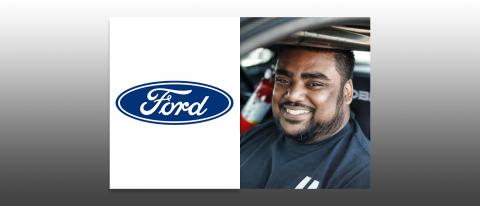
This veteran Pikes Peak racer has upshifted to the role of Global Ford Performance Enthusiast Marketing Manager, where he will tie together “our past, present and future with our customers.”
How does one go about stepping into a new position at a global automaker just as the world’s economy grinds to a halt? That was Kash Singh’s challenge in 2020. He had barely assumed the reigns as Global Ford Performance Enthusiast Marketing Manager before the pandemic put a halt to travel, motorsports events, and car shows of every kind.
Although it has been more than a year since he assumed the role, in many ways 2021 was his debut. The job entails plenty of in-person outreach to die-hard Ford loyalists, the kind of fans who flock to the car shows and track events that were in short supply last year. Among other job duties, he oversees the Ford Performance Racing School program.
Born in Fiji and raised in Southern California during the great sport-compact boom, Singh is a USC graduate. He joined Ford Motor Company in 2004, making several stops along the corporate path to his current position. He is a hands-on enthusiast and has raced at the Pikes Peak International Hill Climb every year since 2011. He’s currently running a turbocharged 2017 Mustang GT in the annual mountain classic. We caught up with Singh at Barrett-Jackson Auction Company’s auction in Houston, Texas, late last year.
PRI: You were barely on the job before the COVID shutdowns took place. How did you adapt?
Singh: We started off fresh in January when we did the big show at Barrett-Jackson in Scottsdale. I decided to do Autorama in Detroit, and March 12 the rug was pulled out from under us. That’s when we went to work-from-home because of what was going on. Obviously, this is a great job with some of the events I get to do now, but then I was sitting there wondering, “What are we going to do now?” There were no group events.
At Ford we had to get creative about how to continue to communicate with our enthusiast customers, but also be cognizant of what was going on with COVID. In the heart of the pandemic, a lot of events did cancel. Other events continued; we had maybe two or three events we participated in. But we were extremely cognizant of COVID, with a lot of procedures in place. We followed the guidance of the local county. We tried to push through. We went a little more digital. We held our first digital car show. Instead of us being at car shows, we held one on our Ford Performance website.
For me personally, I still had an opportunity to meet people at some of the smaller events. I actually spent more time on the road. Since last April, I put close to 45,000 miles on the road, driving. No one else was on the road. I was able to drive to a lot of events for safety reasons. Instead of getting on an airplane, I decided, hey, I’ll drive. “Boss, it’d be much safer if I drove a new GT500 to an event.” (Laughing)
PRI: How will your past experiences serve you in this new role?
Singh: I think the most important part of it is, I’m an enthusiast. Enthusiasts get influenced so many ways. How did you fall in love with cars? Was it a TV show that got you hooked? Was it a family member? Was it a car you saw on the road? In my case it was a family member. I can thank my cousin. While I was in junior high, he took me to a car show, and there was a candy apple red Lamborghini. Fell in love with the car, had to get the Countach poster on the wall. And then one thing after another. In high school I saved all my money from odd jobs to get my first car. Growing up in LA in the late 1990s and early 2000s, we were more centered around the sport-compact market.
I started building that car and did a lot of car shows. I also made a lot of friends in the industry. So I might be unique in the sense of coming into Ford with that experience in compacts. I know what enthusiasm is. I am an enthusiast. When I show up and speak, it is from the heart. I’m very passionate about this space.
PRI: What are you most looking forward to as things ramp back up?
Singh: More events! Especially with everything that went on in 2020, it’s nice that as we get out safely, we get back to what I consider normal life. I know the term “the new normal” has been thrown out there, but we loved cars before, we love cars now, we will get together in the manner that best suits for that, whether it’s racing, at an auction or Mustang gatherings. I’d like to get back out and talk to folks. My job position is, how do I tie together our past, present and future with our enthusiast customers?
PRI: What do you see as the biggest challenges in this job?
Singh: Initially it’s to get vehicles back on dealer lots the way we’re used to. Then also getting folks back out to events, where they feel safe to get out to events. Once the borders open—we’ve done a lot of events in the US where a lot of folks from Canada come down, or up from Mexico, or even Europe. Pebble Beach is one of those. We were at Pebble Beach Monterey Car Week. I understand the crowd was great, but still we didn’t have a lot of folks from foreign countries coming to visit because they couldn’t.
PRI: How do you plan to engage the younger generation?
Singh: It’s the younger generation, but also the generation that’s adopting electric vehicles. Hopefully, we build the vehicles that younger people want to buy and have the features they want. That’s basically cellphone based. That’s what the younger generation is used to.
We should also expand the electric side of it. I’m an enthusiast guy—Shelby GT500, Ford Performance Vehicles, Raptor, there’s a huge demand for them. But then you look at the Mustang Mach-E. That customer base has demands of that vehicle as well. It might be a little different from the consumer who wants big V8 power, but they’re just as enthusiastic, and they love their vehicles. So it’s attracting younger, but also this newer demographic that’s popping up.
PRI: What have been your most gratifying professional accomplishments?
Singh: I go back as an enthusiast. Take the company, the job aspect out of it. As an enthusiast, planting the seed in someone who wasn’t into our lifestyle or sport, whether it’s in motorsports, car shows or just car meets. It’s seeing the light in their eyes. “Oh my gosh, I’m really interested in what you do now.” And then at some point, “It’s your fault that I went and bought this fast car.” Or, “I bought tickets to this race because you got me into racing.”
PRI: Is there anyone in the motorsports industry who inspires you?
Singh: Everybody wants to leave their mark on the world. And I say this without any plug for anybody: Carroll Shelby. At the end of the day, he was a man who was a racer, a team owner. For all the laurels that everyone has talked about, everybody tries to emulate him at some point. You’ve got folks in the industry now who I think look up to Carroll and see what he did, how he was able to create a car company in his own right. All of us want our name across a car, but to have that kind of impact, Carroll would be one of those folks.
PRI: How did you get started racing at Pikes Peak, and what are the special challenges of building a race car for that venue?
Singh: My progression was the import world, a little drag racing, a little bit of road course, not much. Then I bought a 350Z. In Southern California, a lot of folks were into spirited canyon driving. I got into that aspect of it and liked that. I got hired by Ford after that. I loved the way the ’05 Mustang looked and in 2006 purchased an ’06 Mustang. Then the GT500 came out, and I saw a white one with blue stripes—America’s racing colors. I really fell in love with it and was fortunate to purchase one in ’08.
So I’m sitting in San Antonio watching a TV talk show about the Pikes Peak Highway, and I thought, “Oh, it’d be kind of interesting to go race that.” On a whim, just thought that. Three years later I’m racing my GT500 at my first race at Pikes Peak.
The challenge of Pikes Peak is the mountain itself. You’ve got competitors, but the competitors are a brotherhood, a sisterhood. It’s all family. Everybody wants to help each other make it to the top of the mountain on race day. Your challenge to yourself is, make it to the top, hopefully with a good time, and get a donut. It’s all about that donut at the top. You really have to manage cooling—that is probably the number-one concern for racers up there at high altitude. The density of air is low, and you want to make power, too. And then braking. One-hundred-and-fifty-six turns, twelve-and-a-half miles, you’re going to use the brakes quite a bit.
Kash Singh
TITLE:
Global Ford Performance Enthusiast Marketing Manager
ORGANIZATION:
Ford Motor Company
HOMETOWN:
Seattle, Washington
FAST FACT:
Kash Singh was an extra in the original The Fast and the Furious movie. Producers found him and his custom wide-body 1995 Honda Accord while recruiting at local car shows. The pay? A whopping $12 per hour plus free gas.
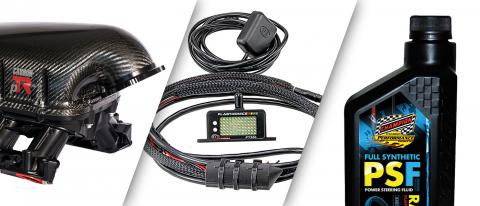
The new Carbon pTR intake manifold from Performance Design in Auburn Hills, Michigan, not only dresses up the engine bay with its high-strength carbon-fiber construction, but it also offers tunable velocity stacks.
The intake is available for LS3, LS7 and select cathedral-port applications in the LS family. Performance features include 16 nitrous-nozzle bosses, two MAP sensor locations and NPT ports for accessories such as a purge solenoid or brake booster. It’s designed to run a choice of three different injector lengths, and the manifold can be installed with the throttle body facing forward or rearward.
For optimum tuning flexibility, the intake runner length can be changed. The manifold comes with 9.0-inch runners, which are close to stock. But 8.0- and 6.5-inch runners can easily be swapped in.
“If someone is looking to increase the peak power rpm, such as drag racing applications, the short runner will tune well with an engine that is designed to turn and tune at higher rpm,” said Caleb Newman. “The long runner gives a great balance of torque and power for most applications.”
The intake base is constructed of glass-reinforced nylon, making for a 10-pound weight savings with the carbon-fiber plenum. The composite materials also reduce heat soak to the fresh-air charge. —Mike Magda
The FT200 is the in-car component of a dedicated race track safety system from Flagtronics of Mechanicsville, Virginia. This receiver gathers messages and race track conditions sent out by race officials for instant response by the driver.
“It’s part of a whole system that also incorporates the race track, corner workers and directors,” explained Aleric Sanders. “The in-car unit will change from green to yellow when they enter that zone. There’s also a sign board in that area that will change from green to yellow.”
The FT200 will be required in all cars racing the Champ Car Endurance Series in 2022, and other sanctioning bodies are looking at the system.
“It’s certainly most effective when all the drivers have it,” noted Sanders. “Crew chiefs could be yelling ‘green, green, green’ in their headsets when in reality there’s still a yellow out. This brings the same communication to all the drivers at the same time.”
The system could also be used to send messages directly to a single driver. “We can individually message cars from race control,” said Sanders. This would be effective if, for example, race officials want to black flag a car, but the driver misses notices on the track.
Other parts of the system include remotes for the corner workers and electronic sign boards. The system can be custom tailored to suit any size or configuration of track. —Mike Magda
A full synthetic power-steering fluid (PSF) designed for racing competition is now available from Champion Oil of Clinton, Missouri.
“This fluid reduces temperatures and delivers consistent steering response in competition applications,” said Karl Dedolph. “It has exceptional low-temperature flow to reduce initial drag on the power steering pump.”
With a 230 viscosity index, which is higher than conventional power-steering fluids, the Champion PSF offers anti-wear properties that can help protect critical components of a racing system.
“It keeps performance vehicles in circle track, road racing, off-road, asphalt, drifting and autocross working optimally,” said Dedolph.
The formula features anti-foam agents to prevent pump cavitation and anti-oxidant properties to help stop sludge buildup.
“It’s a full synthetic fluid that provides improved thermal stability for less pressure drop as the temperature rises,” said Dedolph. “It also offers high-temperature foam resistance for better cooling and improved steering precision.”
In addition to using its full synthetic PSF, Champion Oil recommends frequent inspections of the fluid in the system for color changes. A dark fluid signals time for a change. Also look for dirt, debris or sludge in the system, a sign the system may need to be flushed. —Mike Magda
Ford’s 7.3-liter Godzilla engine is a definite candidate for a performance swap, so it won’t be long before racers are modifying the engine for competition purposes. K1 Technologies in Mentor, Ohio, has developed an H-beam connecting rod constructed from 4340 chromoly steel to handle those higher stress loads.
“The stock rods in most V8s are able to handle upwards of 450 horsepower and 6,000 rpm,” noted Matt Polena. “Past that, reliability begins to decline. As we see more builds hit the drag strip, the need to replace the factory connecting rods will become apparent.”
The K1 forging offers improved strength through better-aligned grain flow. The forging is shot-peened following machining to reduce potential stress risers. Rod length is 6.319 inches center to center. The H-beam design is also a critical factor in improving strength.
“From the factory, the Godzilla comes with powdered-metal, cracked-cap connecting rods that will hold up to a mild increase in power,” explained Polena. “The K1 rod uses a 4340 material that’s higher quality than OEM. Plus, these rods also feature ARP 2000-series bolts, which is a large benefit over the factory bolts.”
The ARP bolts are nominally rated at 220,000 psi tensile strength. —Mike Magda
“It’s one of those tools that people ask for only after they realize they need it,” said Nick Prohl, referring to the Shaviv countersink deburring tool (PN 90072).
The tool features the Mango II ratcheting handle and the F20-style blade.
“Sometimes a shop needs a tool that can do multiple holes very quickly,” noted Prohl. “Traditionally, countersinks used for deburring are turned with just hand power. With this tool, we use a ratcheting mechanism to take the torque out of the hand. It’s a lot easier with less chatter when it comes to deburring the edges of a hole.”
The tool is used for heavy-duty chamfering and countersinking rough hole edges that can be found on engine blocks or other critical components on a race vehicle. It weighs 6.2 ounces and features an ergonomic handle, FR ratcheting blade holder, and a blade that is constructed from high-speed steel. It can be used on ferrous and nonferrous materials, including aluminum, brass, cast iron, copper, hardened steel, stainless steel, and even plastic.
It is one of many Bolingbrook, Illinois-based Shaviv products designed for hand deburring chores.
“These tools can do just about anything as long as there’s access to the workspace,” said Prohl. —Mike Magda
Designed to meet the needs of a busy race promoter serving many tracks, the Travel Case Charging System from American Electronics of Greenwood, Indiana, supports up to 12 radios that can be charged from a single AC outlet.
“This is a product that’s important to the facilities that put on the races, especially the modern-day promoter who travels from track to track,” said John Stiles.
The heavy-duty case is constructed from diamond-plate aluminum and features individual chargers compatible with the Freedom 16-channel, two-way radios produced by American Electronics.
“More than 200 of these cases and radio systems are used by different types of tracks and facilities,” noted Stiles. “They can put all their radios in one case, plug it in at the hotel and be ready for a race the next night. It’s a piece that’s very important for the facilities that put on the races.”
Stiles said the system is valuable for even grassroots-style events where a landowner may open his property for an occasional off-road event; however, it is targeted to meet the communication needs of active sanctioning bodies, track promoters and track staffs. —Mike Magda
Metal body fabrication is indeed both an art form and a craftsman’s skill that few truly master. Working with curves is one of those talents that will separate the experts from the novices.
Helping bridge that gap is the handheld Edge Roller from Hubbco Metal Fabrication in Grandville, Michigan. This tool allows users to create unique 3D profiles on the edge of 18- to 22-gauge sheetmetal, which basically eliminates the need for a sheetmetal brake. It will bend edges from 0 to 90 degrees and features a throat depth from .25-inch to 3 inches. The extended throat length allows users to create multiple profiles on top of existing hems.
“The more profiles there are, the more strength there is in the metal. There’s no other tool that will do all this alone without a brake,” said Lucas Hubbell, noting that a fold or crease can occur while shaping an arc with traditional methods. “The roller bearings in the tool enable the formation of lines and folds on a curve.”
The Edge Roller construction features alloyed steel finished in durable black oxide. Sealed ball bearings provide smooth operation and keep debris out. Finally, the body is machined from 6061 aluminum, and the rollers are anodized to prevent galling and gouging. —Mike Magda
Establishing an online presence is practically obligatory for small businesses today, but where are those efforts—and investment—best utilized for companies in the racing industry? Websites and social media pages fundamentally serve two different functions, and while having both is probably the best solution, some may find that the benefits of focusing on one or the other ultimately suits their needs.
Websites Advocate:
Jason Dodge, Black Truck Media
With a brand website, you have the ability to completely control the content and the messaging. You get to decide how your brand is presented to the world.
Social media is more of a two-way street. It’s a vehicle to engage with your audience members, whereas your website is more about generating awareness for your products and services. It’s where you explain why I should do business with you. That’s not really the type of platform that social media should be.
There is also a number of things that a website can provide that social media cannot. Your company’s presence in Google searches, for example, can be incredibly valuable. And then there’s e-commerce. Having a catalog of products and all the information in one place means your customers don’t have to sift through social media posts to find what they’re looking for. You can also integrate e-commerce software like Shopify or Magenta into it, which can in turn be synced up to social platforms like Facebook and Instagram. That presents an opportunity for potential customers to discover your brand through those channels as well.
As we saw in early October, social media platforms can be susceptible to outages. If that’s the only place where your company has a presence, you might be dead in the water until those services are restored. So from a brand perspective, you have to ask yourself if it’s a good idea to put all of your eggs in one basket. It’s also important to be aware of the fact that there’s been a push in the tech world to do away with third-party cookies. If and when that happens, what’s really going to be important regardless of platform is your customer data, and the most effective way to collect that data is through your website.
Some brands might look at how much revenue they’re generating from social media platforms like Facebook and wonder if it’s worth putting the effort into their website. It’s like that old adage, “The grass isn’t greener on the other side—it’s greener where you water it.” What if you started to focus some attention on search engine optimization, or your email marketing and customer data capture? Maybe the grass will start to grow there a bit more, too. What you tend to find is that those customers are even more engaged with your brand and will potentially buy more, so the lifetime value of that customer becomes much greater.
Lastly, there’s perception to consider. If you are, for instance, a local chassis manufacturer that services sprint and circle track racing, you’re able to own your voice. Websites have become the new business card. They legitimize the business in the eyes of potential customers. Even a small, low-cost site can make a big difference in that respect.
Social Media Advocate:
Corey Perlman, Impact Social Media
Facebook and Instagram are two of the most popular websites in the world in part because they’re addictive. So if you’re thinking about ways to stay top-of-mind with customers and prospects, you have to consider whether they want to go to your website, or if they want to see what your company is doing through social media. The whole idea here is to meet them where they want to be, and many people are already checking these platforms a dozen times a day or more.
Not only do you have a feed aggregator automatically delivering content that’s relevant to them, you also have mobile apps and other built-in services that allow them to have constant access to these platforms in a variety of different ways. What are the chances that I’m just going to pull out my phone and bring up your website unless I’m specifically looking for something? Just based on common habits, it’s far more likely that I’m going to connect with your company through social media than through your website.
But it’s also something that you need to take seriously if you want to do it right. You should be as proud of your social media profiles as you are of your products. How your business presents itself though social media should impress me.
In some ways social media platforms like Instagram have become even more visually appealing than websites are. Between posts, videos, images, stories and reels, I can see a full narrative story about a business. A website tends to be more one-way communication, and that doesn’t provide a customer with a lot of incentive to keep coming back to have a look around, whereas a constant flow of new content is the name of the game with social media. That provides a lot of different opportunities to expand on that narrative to humanize the brand by showing us things behind the scenes or illustrating what your business’s culture is all about.
I also think that there’s now more opportunity for a small business to have an effective social media ad campaign than ever before. Targeting customers based on things like interests, geography and demographics is very difficult to do with traditional advertising, but that can be done in a really effective and economical way on these social media platforms. We have seen really good results for small businesses that have sponsored ad budgets of $200 to $500 a month.
It’s something I highly encourage companies to start doing if they’re not already using sponsored ads. It’s very hard to use Facebook, Instagram, and other social media platforms as marketing tools without an ad budget. Organically building an audience is a lot tougher today than it used to be.
I’m also a big believer in prioritizing specific platforms rather than trying to maintain a bunch of different profiles. For this industry, I definitely think Facebook and Instagram are the best bets. Instagram is dominated by 25- to 35-year-olds, and Facebook caters to the 35-and-above crowd. Platforms like TikTok might also make sense for this industry, but I would be very careful about going into that arena without a clear strategy. It’s a very young demographic, and you need to have someone who understands the etiquette doing the marketing if you want it to be effective.
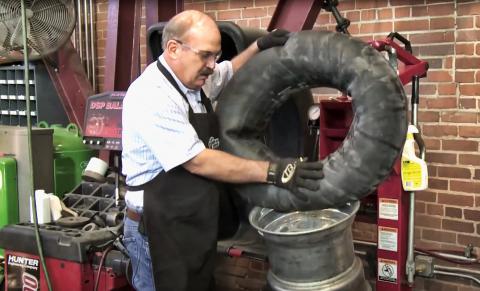
Racing tires require a gentle hand when mounting, because they’re generally softer and gummier than street rubber, according to our sources.
This essential yet often overlooked component to race preparation is easy enough to master when following the correct procedures.
It’s hot. It’s late. And the hauler isn’t even fully loaded yet to head for the track. Part of the hurry-up, to-do list may involve racking some fresh rubber for the night. Like everything else, it has to be done quick.
Right there, stop, because that kind of thinking is asking for trouble. A lack of proper focus, or the right procedures, when mounting race tires can damage the tires, the wheels and, potentially, a lot more than that. This essential, but sometimes overlooked, element of race preparation is quite easy to get right when following the correct practices. Ideally, they need to start before reaching for a tire.
The wheel is no less critical than the tire when it comes to proper mounting practices. First, make sure that the wheel is fit for competition in the first place. Any racing wheel is subject to loading and impacts that can lead to damage. Damage can also result from incorrect mounting practices. John Harris, trackside service manager at Appalachian Race Tire in Maryville, Tennessee, said his crews see bead damage and scarring on wheels, especially those sent to non-trackside shops without the right experience. He stressed that wheels should always be inspected for cracks and other damage, with wheel weights removed and rubber marbles scraped away, making sure no debris is stuck in the barrel. Any such excess can inhibit the mounting equipment from properly gripping the rim, and possibly damage the tire’s bead or sidewall.
Harris advised that tire mounting should become a regularly practiced team discipline. It can take time for the manufacturer’s crew to handle mounting at the track on a race night. To compensate, Harris recommends racers invest in second and even third sets of wheels, to create a “Race, Spare, In-Service” cadence. Tires should be dismounted on a regular schedule so the wheel’s bead surfaces can be cleaned—using Scotch-Brite pads and brake cleaner, Harris suggested—of dried mounting lube and corrosion. A less-than-clean wheel can also be difficult to balance properly because weights may shift.
Experts stress the importance of following manufacturer guidelines for mounting, even in seemingly obvious cases like directional tires.
Racing tires require a gentle hand when mounting, because they’re generally softer and gummier than street rubber. Mike Crutchfield of Phoenix Race Tires in Chattanooga, Tennessee, said demounting any race tires requires care, and plenty of soapy water, to prevent damage. That’s because the wheels usually have a deep drop center and safety lock or hump to negotiate. “The difference in the physical size compared to street tire/wheel combos makes for a more challenging process when trying to use a standard tire machine.”
Too much lubrication, like most things done to excess, can pose its own problems when tires are being mounted. Toyo Tire USA Corp. of Cypress, California, completed a performance test of four tire brands, including its own, after mounting and balancing them using a Hunter GSP9700 machine. The tires were mounted on OEM steel or aftermarket chrome wheels using a paste lubricant on the bead and seating area. By indexing the valve stems to the rims, Toyo confirmed that excess lube caused the tire to slip on the wheel, by 3 inches in one case.
Harris said that Appalachian Race Tire uses a very limited amount of lubricant, either Magnum Super Lube or Tip Top Paste, and mounts tires dry if it’s within manufacturer specification.
Crutchfield said the lubricant should be applied only to the wheel’s bead sole, using a sponge, while keeping the bead lock area and outer rim dry.
Both Crutchfield and Harris repeatedly stressed the importance of following manufacturer guidelines for mounting, even in seemingly obvious cases like directional tires. Crutchfield said he’s seen drag racing competitors neglect to install tubes, against factory guidance to use the tire with drag-approved tubes only. Another problem is installing the tube upside down by putting the valve stem in the wrong location. That can cause the tire to appear deformed, with lumps and soft spots across both the sidewall and tread.
Proper inflation practices are crucial. Harris said Appalachian recommends that tires be inflated only with compressed air that has been passed through a desiccant-based drying system or, better yet, compressed nitrogen, to best reduce humidity inside the tire. That moisture can lead to inconsistent or spiking pressure levels inside the tires, where internal temperatures can surpass that of boiling water under race conditions. A source at Toyo Tires said low-profile tires intended for alloy wheels may require higher mounting pressures because of tighter bead-seat tolerances. If more than 40 PSI is required, Toyo recommends dismounting the tire, re-lubricating and repeating the process.
In Harris’s view, standard balancing and indexing procedures are sufficient for racing vehicles on purpose-built circuits. Eccentricity associated with radial force variation (RFV) generally isn’t sufficiently pronounced to justify specific measurement or corrective adjustments.
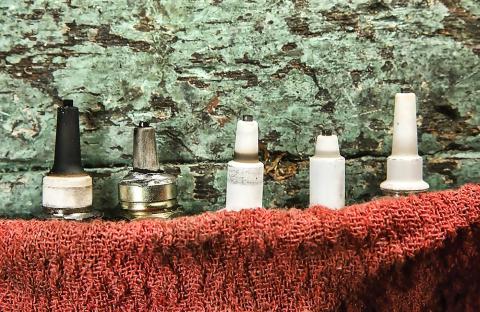
Spark plugs provide clues to various engine conditions, noted our source from E3 Spark Plugs. Shown, from left, are cases where a plug has been idled on for an extended period of time; oil is present in the cylinder; the fuel mixture is a little fat; the plug is too cold for the engine; and the engine is lean.
Conditions particular to high-performance engines, and how to spot them on a spark plug, often aren’t included on manufacturers’ websites. Fortunately, our sources have the answers on how to read and when to pull your plugs.
Anyone who has learned automotive fundamentals knows what a spark plug does. A savvy racer or engine builder also understands what a spark plug can do as an effective, if low-tech, diagnostic tool.
“Looking at a spark plug indicates what’s going on in the engine,” explained Don Ward of E3 Spark Plugs, Ponte Vedra, Florida. “It will tell if the engine is burning oil, if the plug is too hot, or if the plug is too cold.”
Problems with the air/fuel ratio, ignition timing, detonation and “other various ways to get into trouble” can also be seen on the spark plug, said Jeff Boehler of Autolite, Rochester Hills, Michigan. Diagnosing those conditions means knowing what to look for when reading the plugs. It also requires proper prep before pulling them.
“Racers are trying to achieve the most horsepower, so they should read the plugs with the engine at full power,” Boehler said. “Start with a fresh set of plugs and go out and do a wide-open-throttle run, not a run with different driving cycles.”
“People try to read a set of spark plugs after they’ve been idled on, and that makes the spark plugs look smoky. It’s hard to tell what’s wrong,” Ward said. His advice: Shut off the engine while it’s at the top of the rpm range—just after the finish at a drag strip or going into turn 3 on an oval track—coast back to the pits without starting the engine again, and then pull the plugs and read them.
Reading for Racers
Tech tips about reading spark plugs are a staple on plug manufacturers’ websites, but most of those are directed at street-driven vehicles, Boehler said. They show problems “related to long-term, over-the-road applications. They’re not geared for racers.” Both he and Ward discussed conditions particular to high-performance engines and how to spot them on a spark plug.
“Look at the insulator part of the plug for fuel, and look at the ground wire part for timing,” Ward said. “Where the insulator tip—the white part sticking out of the shell—goes down and starts to get fatter, there’s a radius where a light gray ring will be visible. That’s the fuel ring. The lighter it is, the less fuel there is. It should be about a pencil thick. The bigger that line is, the fatter the motor is. If it goes down into the bottom where it seats around the shell, then it’s way too fat.” If the fuel ring “looks oily and grimy, there’s oil in the cylinder.”
The spark plug’s ceramic or porcelain tip “will be white or very slightly off-white if the fuel is right and the heat range is right,” Boehler said. “If there are black specs on it, there may be detonation or pinging going on that’s knocking some carbon loose off the pistons.”
Here you can see the light color ash burn profile coming down the leg of the ground electrode, i.e., discoloration on the ground strap electrode indicating it has been driven on. “It’s not a clean cut,” said our source at E3 Spark Plugs. “I could not read this plug.”
The tip of the side electrode is the spark plug’s hottest point, Boehler said. That heat will discolor the side strap. “See how much discoloration there is from the free end and how far the discoloration travels along the side wire. Most racers want to have that discoloration line stop about half-way back. That way they know the side wire is getting hot enough, but not too hot, meaning the engine’s making good power.”
The shade of the discoloration isn’t important, Ward said, unless it’s red. “Heat dulls the plating, so it will be a bluish green color most of the time. When it starts turning red, that means there’s a lot of heat in the ground strap.” Taking timing out of the engine will reduce that heat. If it isn’t remedied, “it’s going to burn up a piston.”
Changing Plugs
When asked about how often spark plugs should be changed, Boehler noted that “spark plugs are relatively cheap compared to the rest of the engine. Probably the best approach is to put fresh ones in at every big race event.”
“For an oval track racer, after a couple hundred miles on a set of plugs the sharp edges of the electrodes will start to round off,” Ward said. When that happens “the required voltage is going to increase, and the spark starts to degrade.”
Drag racing is different, he noted, due to the on/off nature of the engine’s cycles. “When the motor heats up and cools off repeatedly it anneals the ground electrode, which makes the metal brittle, especially where it’s stressed in the bend. That makes it easier for the ground strap to break off. For that kind of racing, they should inspect the plugs every four to five races at least, and replace the plugs as needed.”
Unless it’s a Top Fuel car, Boehler said. “With nitromethane, they usually never run a plug more than one run. The spark plugs are being pounded so hard, with all the detonation and crazy combustion going on with that fuel, that a fair number of them fall apart in the run.”
Three things I think as we breakin a new year (following proper break-in procedures, of course):
1) I think the momentum from
last month’s PRI Trade Show is going to propel this industry into a period like no other. Since early 2020, every racing business and operation—no matter how large or small—spanning all form and level of motorsports, has dealt with unique challenges and unanticipated speed bumps along the way. And while we’re not out of the woods yet (i.e., stubborn labor shortages, supply chain backups, etc.), there’s still good reason for optimism throughout the performance marketplace. As noted above, nearly 1,000 premier manufacturers and service providers recently showcased their latest go-fast parts before tens of thousands of buyers and media in a way that shouted, “We’re back!” while transforming the Indiana Convention Center and Lucas Oil Stadium once again into the mecca of motorsports. It was an astonishing display, and if I were a wagering man I’d put my last Andrew Jackson on the prospect that PRI 2022 will be yet another Show for the ages.
2) I think your motorsports
business stands to benefit tremendously from the industry-focused coverage we’ve got planned throughout PRI Magazine and across our digital properties in 2022. Popular columns like Ask the Experts, Stop Doing That…Do This Instead, and Make the Case are back with leading subject-matter specialists on hand to answer questions, offer guidance, and present compelling arguments on both sides of a hot-button topic to help business owners advance their operations and make well-informed decisions on how to best serve customers and grow their market share. Returning, too, are our award-winning feature articles on the racing segments, parts, equipment, and issues that matter most to motorsports professionals…. What you’ve come to expect in these pages. But we’ll also be rolling out a slew of fresh-for-’22 content in the coming months as well, including exclusive data and in-depth reporting from PRI’s market research team, expanded top product and service picks, troubleshooting and technical articles from the deepest bench of expert sources in the game, behind-the-scenes dispatches from this year’s edition of the iconic PRI Road Tour, previews of new PRI Trade Show features and exhibitor specials, and much more.
3) Speaking of what’s new, I think you’re really going to enjoy reviewing each month’s Membership section of PRI Magazine, where we’ll share the important work of our dedicated advocacy teams based in Washington, DC, and across the nation; provide useful tech tips and education from our industry-leading partners; and check in with PRI Members on the projects and initiatives they’re hard at work on, including exclusive updates from their factories, shops, and showrooms, how they’re embracing new opportunities, their outlook for the near- and long-term, and much more. To set the stage, our January Membership coverage begins on page 122 with a visit to newly minted Antron Brown Motorsports and its do-everything namesake, who this year looks to add a fourth NHRA Top Fuel crown to an already overcrowded trophy case. Hmmm, if I were a wagering man I’d say…. Anyway, be sure to keep an eye on this space for the latest on all things PRI Membership.
Here’s to a prolific and prosperous 2022 racing season!
Thank you. Thank you for making the 2021 PRI Trade Show the most memorable of our 33-year run. We are still adding up the numbers, but by all measures this year’s PRI Show will go down as a smashing success. Racing experts from around the world converged on Indianapolis this past December to do what we have been doing for four decades. We are the business of racing!
Thanks to a resilient PRI Show team and the pure momentum of the racing industry, the 2021 PRI Show wasn’t only a success…it was the largest in-person racing trade show in the past two years. That sounds obvious, but nothing can be taken for granted in the age of COVID. Pandemics be damned, as the racing community doesn’t have time for it. We’ve got cars to build and races to win!
As you can imagine, my schedule was packed for the Show this year, but I tried to sample some of everything at PRI. Congratulations to our exhibitors. The Show was packed with innovation as usual, but this year seemed special. Being able to look at parts in person and ask a human being detailed questions about a part was so refreshing. Our TOPS lounge (a gathering place for track owners and operators, as well as sanctioning bodies) was a huge success. Throughout the pandemic, PRI Ambassadors built 20 state coalitions to help get racing facilities back up and operational. For many of these folks, this PRI Show offered them the first chance to meet in person and plan future endeavors. How exciting! The PRI Educational series was, again, bigger than ever. And PRI Editor
Dan Schechner brought the industry’s brightest minds to stages all around the Indiana Convention Center to share their knowledge.
Perhaps the most daring element of the 2021 PRI Show was our EV Racing area, which was combined with a Content Creator area. The PRI team evolved the media opportunities at the Show this year and merged this effort with the most compelling innovations in racing—alternative powertrains. Without question, EV racing is here, and we wanted our attendees to have exposure to the biggest/boldest/brightest teams out there. As you know, technological innovations in racing so often make their way into production vehicles and other industries. With PRI on the forefront of sharing this technology, I hope you took advantage of the opportunity to learn from your peers who are doing some amazing things with EV. As for our media guests, they included some of the most diverse news channels we have ever seen. Several independent outlets are able to reach millions of race fanatics with a single post on any given social platform. And I must give credit to our PRI Road Tour team, who wrapped up their second year on the road visiting you and your customers. With thousands of miles traveled and hundreds of stops, the Road Tour team racked up over 100 MILLION impressions in 2021—more than two Super Bowls commercials!
Our connection with the city of Indianapolis was on full display this year. Thank you to Roger Penske, Doug Boles, Helio Castroneves, the Indianapolis Motor Speedway (IMS) team, the entire Visit Indy team, Mayor Joe Hogsett, Governor Eric Holcomb, and all the residents who opened their doors (most notably hotels and restaurants) to our community. In case you missed it, at the PRI Show we announced a new Indianapolis headquarters for the PRI organization. This location is at the very heart of the racing industry and within easy walking distance to IMS. I will be back with more on this purchase and how PRI in Indy will be the centerpiece of a completely new direction for PRI.
As you have certainly read in these pages and saw at the December Show, PRI is expanding our reach from trade show and media company to a strong industry membership and advocacy organization. Throughout the Show, PRI Membership opportunities were everywhere. And our first-ever “Save Our Race Cars Rally” was a huge success in driving involvement with the PRI Membership, as well as driving donations to the new PRI PAC (a 501C4 organization incorporated in Indiana).
The challenges of 2020–21 have made all of us stronger, and we are now stronger as an industry. I want to wish you and your family the very best for the 2022 racing season, and I will see you at a race track nearby. Thank you.
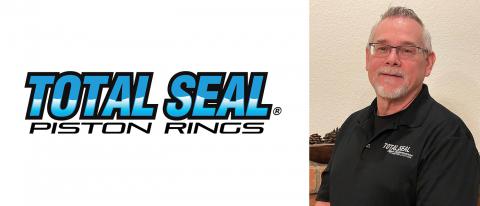
Total Seal Piston Rings, the provider of high-performance piston rings, has announced Victor Wise as its new director of quality. He will focus on day-to-day operations, working with management and manufacturing to ensure the highest quality product ships to the customer on time, with the tightest tolerances possible.
With over 15 years of management involvement, Wise’s experience includes aerospace, automotive, semiconductor, and commercial. Positions include management, quality engineer, consultant, auditor, inspection, and more roles. In addition, he holds a certificate as a Lead Auditor and an Internal Auditor for quality standards.
“We are excited to welcome Victor to the Total Seal team. His vast experience in quality with tight tolerance aerospace and automotive components will create another facet for our organization,” said Total Seal CEO and President Matt Hartford.
 MEMBERSHIP LOGIN