Industry Insights: Brad Sweet

Submitted by johnc on Mon, 08/22/2022 - 09:55


This Grass Valley, California, competitor’s passion for dirt racing prompted him to add the title ‘promoter’ to a sterling resume that includes back-to-back-to-back World of Outlaws championships. His agenda now includes big plans for Silver Dollar Speedway, its signature Gold Cup event, and the high-powered 410 sprint class.

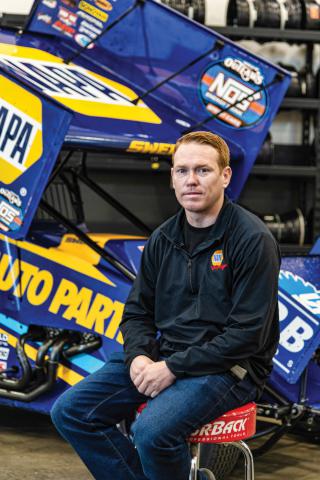
Brad Sweet is among the most successful race car drivers in the World of Outlaws series. Behind the wheel of the Kasey Kahne Racing No. 49 sprint car, Sweet has won three consecutive championships in 2019, 2020, and 2021, and he is leading the points for 2022.

Born in Grass Valley, California, Sweet got his start in the USAC National Midget Series and World of Outlaws, then moved over to ARCA and the NASCAR Camping World Truck Series to learn pavement racing. He did a stint with the NASCAR Xfinity Series as well, further refining his craft before coming back to World of Outlaws as a competition home. His record in Outlaws has been stellar, with 75 wins in 751 starts at press time.

At 36 years old, Sweet is still going strong as a driver, but together with partners Kyle Larson and Colby Copeland, he has taken an interest in race promotion. The trio invested in Silver Dollar Speedway in Chico, California, taking over promotional and management duties. The track was the home course for all three drivers before they launched to the national scene, and Sweet is now responsible for regular operations at the facility in addition to his driving duties.

In July, Sweet and Larson announced a new midweek sprint car series. The High Limit Sprint Car Series will include 12 races in 2023 and will take place on Tuesday, Wednesday, and Thursday evenings to avoid conflicting with other 410 sprint car series. Both Sweet and Larson are expected to compete in the series with other 410 sprint car racers.

Making the jump from the driver’s seat to the promoter’s office is not easy and requires an entirely different skill set. We asked Sweet to tell us about his reasons, his vision, and his plan for success.

PRI: What made you want to decide to become the promoter at Silver Dollar? That’s really crossing over to a very different job.

Sweet: I’m very passionate about Northern California racing, just because it’s where I grew up. Some of my best memories are at Silver Dollar Speedway at the Gold Cup Race of Champions. That’s something I remember very vividly as a child. That event made me who I am, giving me the desire to race with the World of Outlaws. It’s been pretty obvious that the Gold Cup and Chico in general haven’t been the best event lately, or what the event used to be. I’m not going to blame anybody for it personally, but I felt like I could do a better job.

PRI: What’s behind that? Being a promoter is a very different skill set from driving.

Sweet: My whole life is racing and driving. But part of me started to shift in a different direction and look at business and maybe life after racing. You never know when you’re going to be done racing a car. It could be at 40 years old, or some guys race much past that. But I didn’t want to get done racing a car and not have anything to fall back on. So I think that’s some of why I’m making these moves like I am right now.

I feel like I’m young enough, and I have a good vision of what I would like the event to grow back into. I think the West Coast deserves to have one of the crown jewels in sprint car racing. My goal is to get it back to that point. The opportunity to get these tracks are very few and far between, so I was patient. The timing was right, so here we are. We’ve learned a lot, and we still have a long way to go.

image 2
Brad Sweet is in the hunt for his fourth consecutive World of Outlaws championship in Kasey Kahne’s No. 49 sprint car. Meantime, he has also invested in Silver Dollar Speedway in Northern California—his home track before launching onto the national scene—with the goal of returning it to prominence.

PRI: With your driving schedule, you have some help running the track, right?

Sweet: I couldn’t do this without my wife, Rachel. She’s definitely a huge part of running the office side of things. Also, Colby Copeland is our general manager, so he’s really the boots on the ground. He gets my ideas and then he has to try to execute them, and they’re not always easy. So between him and my wife, they’re the ones who are at the track. I’m out racing, so I don’t even get to be there. They report back to me, but that’s how we have to do it right now.

image 3
“The West Coast deserves to have one of the crown jewels in sprint car racing,” said Brad Sweet. “I truly believe the Gold Cup needs to be that event for us at Chico.” Sweet is seen here celebrating at the famed Williams Grove Speedway in Pennsylvania after earning his first win at the half-mile oval in July. Photo courtesy of World of Outlaws.

PRI: Was there something specific that got you interested in being a promoter?

Sweet: Honestly, I never really gave much thought to the business side of sprint car racing. I always just looked at it from a driver’s standpoint, until I promoted a World of Outlaws race at Placerville, California. I live in Placerville. It was enticing to me to get the Outlaws, but when I went to the promoter there, he said, “Hey, I’ll rent you the facility, you can do it.”

I thought, “This is a no-brainer. We’ll make a ton of money. Everyone will come see this.” That’s when it hit me that there’s a lot more to it all. There’s a lot of risk that a promoter takes, but we did the event, and we were profitable, and it was neat to see, to be a part of entertaining so many people.

We did that event for three or four years in a row, and I enjoyed it. I learned a lot about promoting, and then I tried to do some other events. It led me to search around, trying to figure out, what is this race promotion thing all about? Is it really profitable? Is it always profitable? Then I lost money on a few races. So I started looking at the big picture, looking at the events like the Knoxville Nationals and the Kings Royal, and just how well they run their facilities and the things that they do that make it an event, not just a race.

PRI: What do you think is needed for open wheel racing to thrive in the future?

Sweet: I think you have to have the big events. Knoxville Raceway isn’t on the map without the Knoxville Nationals. Eldora’s not on the map without the Kings Royal. It’s kind of a pyramid. It starts with the big, big events. That’s what draws the most fans. It builds excitement. Racers dream of winning those big, big races. It puts your race track on the map. One event a year that the whole country’s watching. I truly believe the Gold Cup needs to be that event for us at Chico. It needs to be very prestigious, World of Outlaws 410 racing, where the highest level of racing comes to our track.

We want to grow the prestige of the event back to what it was. That’s what draws more people in. There are plenty of kids coming up through the ranks right now in go-karts, and we want to entice them to get a sprint car and come race at our tracks here in Northern California. In return, we can put on better events that draw in the fans, and if they come to Gold Cup and they have a great time, they’re going to come out to our other events. They’re going to start recognizing the local stars that actually were able to battle against the Outlaws. We’ve been missing that.

PRI: What happened to it?

Sweet: We don’t have a lot of promoted star power out here. We’ve lost our car count for a number of reasons. California has really shifted toward 360 racing. The biggest event in Northern California is the Trophy Cup, which is a 360 race. That’s what persuades the younger generation. They want to win Trophy Cup, and I want them to want to win the Gold Cup. I want them to want to build up through 360s and then make it to 410 racing.

image 4
Brad Sweet’s World of Outlaws record has been stellar, with championships in 2019–2021, and 75 wins in 751 starts. As of press time in early August, he was leading all drivers in points for 2022.

If you go to healthier parts of the country, you’re not going to see Lance Dewease running a 360 in Pennsylvania. You’re not going to see Donny Schatz or myself running 360s. But out here, you’re going to see Dominic Scelzi, Shane Golobic, Justin Sanders, all the main guys running 360, because they’re trying to make a living doing it. They’re racing 360s because they have to, and we need to change that.

PRI: What specific things are you going to do to build interest in the 410 class and the Gold Cup at Silver Dollar Speedway?

Sweet: Having the King of the West Series run some events at our race track will help. We will also get some of the other track owners to build up some King of the West events. Then we will also make the Gold Cup a very elite event. Guys aren’t going to want to miss out, and I think it’s already starting to happen. You have the Dirt Cup up in Skagit, Washington, paying $50,000 to win. We’re going to pay $25,000 to win at Gold Cup. We’ve aligned the rules to the rest of the country. So we’re on flat top wings and the same tires, which helps teams afford to race these bigger events. You’re not always having to buy different tires and different wings and your cars are under the same rules.

We’re also going to build our purses. We’re going to invest back into the facility. We’re going to try different market strategies that haven’t been tried before. We’re just going to put more of an effort into every aspect of it. We’re looking at this as more of a five-to-seven-year plan, not a one-to-three-year plan.

We need to be entertaining, and we need to be affordable. We need to make sure that we’re thinking about children and how to entertain them, so we need the shows to be over by 9:30. People don’t want to sit in the stands for five or six hours. We’re just trying to take a different approach than some of the other promoters and some of the old school ways of thinking.

PRI: What are the old school ways of thinking that you think should change?

Sweet: The alternate entertainment needs to change. I call it alternate entertainment and that can mean your support classes. I think you need to stay focused on the main show, which is why you’re selling tickets. If you’re going to spend a couple thousand bucks on something else, I think you need to be 100% in control of the time it takes. And ask yourself, does it add value to the show or does it not? It should take 10 minutes, like a halftime show, rather than adding another support class that adds more back gate money. That way of thinking is what drives the show time too long.

Also, I think when there’s a bunch of classes that people didn’t pay to see, there’s actually a point in the night when they’re wondering why they’re there. But if you could do a T-shirt toss or a guy jumping some cars in the infield, that’s exciting. But I think the product is your A Main race.

If fans have a good time at a premier Gold Cup race at Silver Dollar, “they’re going to come out to our other events,” Brad Sweet said. “They’re going to start recognizing the local stars that actually were able to battle against the Outlaws. We’ve been missing that.”

image 5
If fans have a good time at a premier Gold Cup race at Silver Dollar, “they’re going to come out to our other events,” Brad Sweet said. “They’re going to start recognizing the local stars that actually were able to battle against the Outlaws. We’ve been missing that.”

PRI: Are there specific things that we can do as the racing industry to reach out and attract more fans to this kind of open wheel racing?

Sweet: I think you have to have quality entertainment, and not every track does the best job. Back gate promotion takes over in a lot of places because that’s the easiest route to go once you start to lose the crowd. So they run four, five, six, seven, eight classes, just building the back gate to make it by. Once that happens, then you lose the fans. No one wants to go to watch six or eight classes of cars. So I think we have to be really focused on front gate promoting, creating alternate entertainment that’s not six or seven support classes. You have to give away stuff in the grandstands.

Then there is positivity. There is so much negativity from people. Everything is wrong and nothing is ever right. It is the negativity that drives people away, the negative thoughts on social media, that the track wasn’t perfect, or the officiating wasn’t perfect.

PRI: You’re talking about what drivers say on social media?

Sweet: Drivers, fans, everybody. They just don’t understand how damaging those comments are. There are influencers in the racing community who just don’t understand how devastating a negative comment and negative comments over and over are to the people they are influencing. You just have to be careful because you can really drive people away with negative comments. If they had ever tried to promote a race, I think a lot of these racers would probably not make the comments that they make. One thing I would suggest is every driver should have to promote one event. So they take the risk one night and understand how hard it is and how stressful it can be.

PRI: How do you manage social media for Silver Dollar Speedway?

Sweet: I have a lot of people who help support me because I just don’t have time to sit and think about every post, but I also keep pressure on everybody that social media is very important. We pay a company that does all our ads on social media, and they’re better at zooming in on the audience that we’re looking for. Those ads are aimed at a 200-mile radius of Chico for anybody who has ever typed in race car, or said race car, or looked up race car, those ads will hit those people. It’s much cheaper than TV or billboards to reach the right people.

Then at the race track we have my wife and a couple of girls who are always very creative in trying to get stuff out. Our announcer, Troy Hennig, is always getting press releases out. So it’s a joint effort. We have lots of conversations about what we’re going to do each and every event.

PRI: How’s the relationship between Silver Dollar and the community of Chico?

Sweet: That’s a great question because that’s one of the first things that I realized. There’s a huge disconnect with the people, just from the lack of entertainment value for so long. The community hasn’t been out there in years and used to go out there all the time. So that’s why when I say organic growth, it’s really “boots on the ground” promoting, because it’s going to be a slow process of people coming out, having a good time with their kids, being affordable, and then telling their friends. It’s a slow process of doing a great job and getting the community back to supporting us. We’re doing everything we can as far as outreach, but it still comes down to performance. They still have to come out and enjoy themselves.

PRI: Is there anybody that you try to emulate who you consider a role model, either as a racer or a promoter?

Sweet: There are so many great people that I love having conversations with. I admire what they’ve done at Eldora. I admire the Knoxville Nationals. I admire John Padjen for what he built at Silver Dollar Speedway, but I want to be innovative. I want to be the leader of the pack. I put a lot of hard work and effort into becoming a champion on the racing side. I’m not going to be any different making Silver Dollar Speedway the best race track on the West Coast.
September 2022
By
Jeff Zurschmeide

Editors’ Choice

Submitted by johnc on Mon, 08/22/2022 - 08:51
image 1


Hundreds of new product announcements cross the desks of PRI editors each month. Following are our top picks for September.

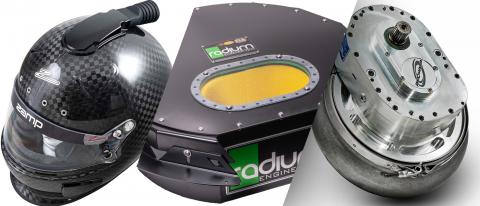
RZ-88O & RZ-88C Helmets

Zamp Helmets
zamp-racing.com

image 2

Two new models from Zamp Helmets in Boise, Idaho, are now certified to the advanced FIA 8860-2018 safety standards. The RZ-88O, which is designed for open wheel situations, and the RZ-88C, which is for closed-cockpit applications, were just released with a retail price of $1,799.95.

“Only two manufacturers offer this certification in the full size range up all the way to 64 cm,” said Dave Zamp, noting that the larger sizes are more difficult to pass the certification standards. “Typically, competitive helmets with this certification are $2,000 up to $3,000.”

Constructed of carbon fiber using high-pressure bag molding, available sizes include X-small (54 cm), small (56 cm), medium (58 cm), large (60 cm), X-large (62 cm), XX-large (63 cm), and XXX-large (64 cm).

The open wheel is more aerodynamic with extra venting. The closed-cockpit version is forced-air compatible and designed with more airflow throughout the helmet. Also, the front spoiler is smaller.

“The Z on the sides of the helmet is one large air channel,” noted Zamp. “It allows 360 degrees circulation through the helmet.”

Other features include easy installation for communication equipment, and users have options for cheek pads to ensure a comfortable fit. —Mike Magda

‘Spare Tire’ 10.5-gallon Fuel Cell

Radium Engineering
radiumauto.com

image 3

Installing a fuel cell in select vehicles with a deep, circular spare-tire cavity can be very simple using this circular shaped unit from Radium Engineering in Clackamas, Oregon.

“Installation can be a simple, bolt-in process,” noted Aaron Suchy. “The 10.5-gallon circular shape is approximately the same diameter as a common spare tire.”

Part of Radium’s RA series, this 40-liter fuel cell is designed and manufactured to meet safety requirements set forth by FIA and SFI. It’s suitable for all types of motorsports, including road racing, time attack, drifting, rally, and off-road.

Radium Engineering RA series internal bladders are made from a special polymer that is resistant to all fuel types, including gasoline, diesel, E85, and methanol. The bladder is housed in a lightweight, powder-coated aluminum enclosure to protect it from damage and debris. Pre-cut explosion-suppressing anti-slosh foam is included along with a threaded aluminum nut ring that helps make the installation even easier.

“We offer this new fuel cell variant with a unique mounting bracket that can be adjusted for different installation depths,” added Suchy. “The tank is perfect when paired with our fuel-pump and surge-tank system that is mounted inside the cell.”

Radium’s other RA series fuel cells come in traditional shapes with 6-, 10- and 14-gallon capacities. —Mike Magda

Big Block Chevy Head-stud Kits

ARP
arp-bolts.com

image 4

As new cylinder-head and cylinder-block configurations evolve from the venerable big block Chevy platform, ARP in Ventura, California, keeps up by offering more than 80 head-stud kits to cover the different combinations.

“Oddly enough, there have been several aftermarket heads sold without any stud availability. These new heads may require special length fasteners,” said Chris Raschke. “Then the customer has to order special parts at a high cost and wait up to 20 weeks. With ARP making these off-the-shelf kits, we make it more economical.”

Some of the recently introduced cylinder heads that are covered include Dart Pro 20-degree, Edelbrock Big Victor 12-degree and Big Victor 24-degree models. The fasteners are manufactured from premium grade 8740 steel and heat-treated to 190,000 psi tensile strength.

The threads are rolled, not cut, following heat-treatment to help give the studs up to 10 times improved fatigue life over conventional hardware. All ARP fasteners are manufactured in the company’s California facility and are designed to provide additional clamping force with an extra margin of safety. Kits include assembly lubricant, nuts, washers, and instructions with torque specifications. —Mike Magda

SHP Small Block Ford 20-degree Cylinder Head

Dart Machinery
dartheads.com

image 6

Available with either 205cc or 175cc intake runners, these new SHP 20-degree cylinder heads for small block Fords from Dart Machinery in Warren, Michigan, are designed for street, strip, oval track, or marine use.

“Cost to performance is the greatest benefit to the racer,” said Mike Panetta. “This product line provides great out-of-the-box performance at a fraction of the cost compared to our PRO1 product lines. Both the 175cc and 205cc are readily available off the shelf.”

These heads are designed for optimum torque and throttle response up to 6,000 rpm and are best suited for 302-cubic-inch to 427-cubic-inch applications.

The 205cc head is available with either 62cc or 58cc combustion chambers. Valve sizes are 2.050/1.600, and peak flow numbers are 306 cfm at .700-inch lift for the intake and 207 cfm at .700-inch for the exhaust. The head can be ordered bare or assembled with 1.437-inch dual springs good for hydraulic roller or solid-flat-tappet cams up to .650 valve lift.

The 175cc head has the same combustion chamber options but comes with 2.020-inch intake valves and 1.600-inch exhaust. Flow-bench tests reveal 267 cfm at .600-inch valve lift for the intake and 183 cfm at .600-inch valve lift for the exhaust.

Some of the features for both heads include manganese bronze valve guides and either 3/8-inch or 7/16-inch screw-in rocker studs. —Mike Magda

F-4X-140 Centrifugal Supercharger

ProCharger
procharger.com

image 7

Answering the call for more horsepower in Outlaw drag racing, ProCharger in Lenexa, Kansas, developed the F-4X supercharger in 2021, and now it’s been mated with the 140-size compressor wheel to create the F-4X-140 model.

“The F-4X was several years in the making. The clean-slate design and exhaustive testing on the track and dynos allowed us to optimize our race product offering for these higher horsepower classes,” said Cliff Hall. “Plus, our engineering team really loved collaborating with the racers and race dealers on this project.”

The F-4X-140 supports the 3,500- to 4,000-horsepower engine levels. Compared to the previous 3X model, the entire gearbox was designed with new, larger helical gears, and different gear ratios were offered. Both front and rear cases are machined out of billet, and new bearings were developed.

“Racers are super happy with how the F-4X power level and durability performs,” added ProCharger’s Sergio Shifman.

The F-4X-140 is suitable for No Prep, NHRA Pro Mod, Radial vs. The World, and other door slammer classes. —Mike Magda

Super Manifold for B58 Engine Platform

CSF
csfrace.com

image 8

Racers and track-day enthusiasts running BMW’s B58 engine architecture, including those driving the A90/91 Toyota Supra, can get a big boost of performance with the new Super Manifold from CSF in Rancho Cucamonga, California.

“Even without modifications, the B58 suffers from heat soak in almost any type of performance driving situation,” said Mark Dorman, noting that the engine management system will then start pulling timing and fuel. “In testing, the CSF manifold showed far superior resistance to heat soak, improved recovery time, and reduced stress on the turbos. Countless amateur and professional race teams have been using our manifold for more than a year on the track and have given nothing but positive feedback about the system.”

At the heart of the manifold is a F1-grade air-to-water intercooler. There’s also a divider in the air inlet to help even the air distribution to all six cylinders. Another feature is the modular design that allows OEM direct injection or a dual-injection system.

The manifold is already a proven winner and track record setter with victories on road courses and the drag strip. The kit includes brackets, hardware, and installation instructions. CSF also recommends additional cooling products such as a transmission cooler and auxiliary radiators for maximum performance. —Mike Magda

MPVI3 OBDII Interface

HP Tuners
hptuners.com

image 9

The new MPVI3 from HP Tuners in Buffalo Grove, Illinois, is an interface tool that can be quite helpful on any late-model vehicle with an OBDII port. With the dedicated software and apps, it will serve as a data recorder at the drag strip, a lap timer on a road course, and a diagnostic tool when there’s a problem. When used with supported vehicles, it will also allow tuning adjustments for increased performance.

“MPVI3 is the communication device between your vehicle (control module) and the VCM Suite software on your laptop,” said Chris Holt. “It’s not only for tuning—there are features that work with data acquisition, telemetry, and diagnostics, too.”

One of the features is stand-alone data logging. While making a run at the drag strip or a lap at the track, the MPVI3 will record the data without a laptop on the passenger seat.

“Most race tracks won’t allow a loose laptop,” added Holt.

On a road course, the MPVI3 can be paired with a cell phone and GoPro to use TrackAddict for on-track data collection like real-time speed, predicted lap time, and other data, and RaceRender for post race.

Finally, the MPVI3 is also useful for tow vehicles to scan trouble codes if there’s an engine problem that interrupts a trip, or the tuning features can be used to increase fuel economy. —Mike Magda

September 2022

Evan Smith Joins NMRA/NMCA Editorial Team

Submitted by laurap on Fri, 08/19/2022 - 15:48
Evan Smith NMRA NMCA


ProMedia Events and Publishing, home of the Holley NMRA Ford Nationals and Red Line Oil NMCA Muscle Car Nationals, has hired veteran automotive journalist and content creator Evan Smith to join its editorial team. 

Smith will be responsible for editorial content across ProMedia’s web-based brands, including NMRAdigital.com, NMCAdigital.com, and Race Pages Digital.

Smith holds content creation experience as the owner of Raven Media and as the former editor of Muscle Mustangs & Fast Fords and Mustang-360.com. He also runs the REVan Evan YouTube channel and @official_ford_guy Instagram page.

Smith has worked intimately with Ford Motor Company, Holley Performance, NHRA, and Shelby American and has won races as a driver in NMRA, NMCA and NHRA. He also served as a factory test driver for Ford Motor Company on special projects, including the Shelby GT350, GT500 and Cobra Jet Mustangs.

For more information, visit racepagesdigital.com, nmradigital.com, and nmcadigital.com.


August 2022

SEMA Garage Opens In Detroit

Submitted by laurap on Fri, 08/19/2022 - 15:35
SEMA Garage in Detroit


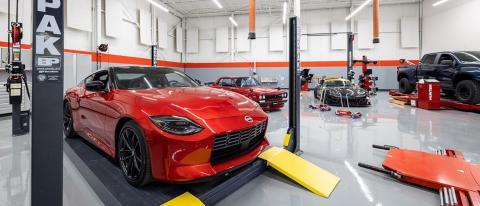
The SEMA Garage in Detroit, Michigan, is now open for business. The new 45,000-square-foot facility represents a significant milestone for the automotive aftermarket industry and is the first-ever research facility dedicated to testing and understanding how the aftermarket is impacted and can successfully work with Advanced Driver Assistance Systems (ADAS).

Located in Plymouth, Michigan—just 30 miles from Detroit—the SEMA Garage Detroit features a large ADAS technology center, an installation center, and will expand to include a four-wheel chassis dyno lab, and another dyno lab capable of testing diesel and gasoline tailpipe emissions. Like the high-tech SEMA Garage in Diamond Bar, Calif., the Detroit facility will give aftermarket parts manufacturers access to sophisticated resources that are typically accessible only to large-scale manufacturers.

“The SEMA Garage Detroit is a game changer in helping aftermarket manufacturers develop products for today’s sophisticated automobiles,” said Ben Kaminsky, SEMA Garage Detroit General Manager. “We will be collaborating with automakers, suppliers, and key players in the industry to conduct some groundbreaking research. We are really going to be able to take product development and testing capabilities to a whole new level.”

Similar to the facility in Diamond Bar, the SEMA Garage in Detroit will feature exclusive OEM measuring sessions, scanning services, advanced tools and equipment, a CARB-recognized emissions lab, and a modern training center for members to use. Since opening in 2014, the SEMA Garage in Diamond Bar has helped manufacturers to secure more than 600 Executive Orders (EOs) from the California Air Resources Board (CARB)—more than any other testing facility.

The SEMA Garage in Detroit will offer all SEMA members complimentary access to automotive garage tools and equipment for aftermarket product development, R&D, prototyping, and measuring sessions. Additionally, the facility is available for trainings, how-to/installation videos, product reveals, and production video and photography.

Moreover, 5,000 of the 45,000-sq.-ft. building will be devoted exclusively to research on ADAS. The ADAS Center represents a new venture for SEMA, where manufacturers will be able to obtain static calibration of on-board vehicle ADAS systems (radars and cameras). With access to OEM-quality equipment and procedures, manufacturers will be able to easily troubleshoot software/hardware obstacles, as well as work on dynamic testing in conjunction with local facilities.

“The SEMA Garage Detroit facility opens up new doors and opportunities for our member companies and SEMA,” said Kaminsky. “We will be able to elevate our current offerings by making the services accessible to new members, incorporating new technology, and collaborating with key partners in the area.”

The Detroit facility is three times larger than the SEMA Garage in Diamond Bar. SEMA Garage Detroit features new equipment, such as emissions and horsepower testing for all-wheel-drive and diesel vehicles, vehicle lifts, full sets of tools, fabrication equipment, an alignment rack, 3D scanning tools, and engineering software. The lab accommodates a 48-inch all-wheel-drive chassis dynamometer and includes a new emissions test bench. With equipment that meets CARB’s new 1066 testing requirement standards, SEMA Garage Detroit will be able to perform all required CARB and EPA test procedures.

“SEMA Garage provides manufacturers access to tools and equipment without the exorbitant individual costs,” said Kaminsky. “Manufacturers no longer need to rely on trial and error for their product development, reducing costs and increasing efficiency. SEMA Garage Detroit will enable more manufacturers access to our resources.” 

Through the SEMA Garage’s resources, manufacturers are often able to develop fully functional prototypes in as little as two weeks and obtain CARB EOs in as little as 12 weeks. For more information, visit semagarage.com. 

SEMA Detroit Garage

August 2022

Ground Gains

Submitted by jeffreyc on Fri, 08/19/2022 - 14:02


Interest in off-road motorsports was already on the rise prior to the COVID-19 lockdowns, but it boomed after folks around the country who were stuck at home began looking for ways to get outside and compete. While the industry is currently facing headwinds on several fronts, series organizers have been hard at work ensuring that the growth created during the pandemic is lasting.

By the time warmer weather started to arrive in the spring of 2020, enthusiasts and competitors across the country were ready to get out of the house. Months of federally mandated isolation had created a collective cabin fever of sorts, and many were in search of safe ways to enjoy the great outdoors with their families. Those circumstances led to a boom in sales across the off-road industry, and off-road racing saw a significant increase in interest in turn.

“Things were already on the upswing prior to COVID-19,” said Greg Adler of Off Road Warehouse, San Diego, California. “After a brief initial dip during lockdown, that interest not only came back, it increased. People wanted to get out, whether that required outfitting their vehicles for overlanding adventures, or going out to the desert to race, or going out just to play. The enthusiasm just skyrocketed.”

Jim Ryan of SCORE International in Reno, Nevada, noted that the timing also coincided with major announcements from OEMs that brought more visibility to the segment as well. “First, we saw dirt bike sales spike after being on the decline for many years, and UTV sales also continued to impact all aspects of off-roading, from weekend recreational usage to the full-factory support team now competing in the SCORE World Desert Championship series. But at the OEM level, we also had the introduction of new Ford F-150 Raptor models as well as the new Bronco, which provided a great increase in the visibility of off-road and its motorsports heritage. That brought with it another potential motorsports enthusiast base.”

1
From a participant standpoint, off-road competition benefited from the aftereffects of the COVID-19 lockdowns of 2020. Support at the OEM level also has helped boost the category and attract “another potential motorsports enthusiast base,” noted one of our sources.

Two years later we’re still dealing with residual fallout from the pandemic, but some sense of normalcy has returned to everyday life. Shuttered manufacturing businesses have re-opened, travel bans have been lifted, and spectators can fill the stands at events once again. While the removal of these restrictions has certainly made it easier for racing businesses to operate, like other segments throughout motorsports, the off-road industry now faces new challenges that threaten to walk back those gains. 

“I think one of the big concerns right now is the price of fuel,” said Pete DeLorey of PDank Performance & Off Road Parts, New Franken, Wisconsin. “Turnout is still strong at these events, but it feels like it may be starting to have an effect in some areas.” 

As the industry continues to navigate the tumult, sustaining the growth that the sport has enjoyed over recent years is a top priority for series organizers. That’s led many to employ new strategies involving class structures, race calendars, and marketing tactics to not only keep fans engaged, but also ensure that racer feedback is being heard loud and clear.

Leading the Charge

Thanks to their impressive out-of-the-box capability and accessibility, UTVs have received a lot of attention in short course and desert off-road racing events. That trend continues today, but other off-road platforms are also seeing rising numbers. 

“UTVs probably benefited the most from the elevated interest in off-road during the pandemic, and that market is still just growing and growing,” said Lee Perfect of Great American Shortcourse (GAS), Temecula, California. “We do especially well with a lot of the youth classes in general. We start racing them at six years old in a Polaris RZR 170, and we have three classes of trophy kart that are also doing very well. I think it really comes back to people wanting to get out of the house. We got new entries in each one of our classes from folks who were either new to short course or switching classes, but the UTV and youth classes are definitely leading the way for us.”

2
Enthusiasm for off-road motorsports should remain high, particularly in the UTV segment, said Pete DeLorey of PDank Performance & Off Road Parts. “As long as the factory and aftermarket support stays in the UTV side of things, that segment will continue to grow. I don’t think it has plateaued just yet.”

Affordability was already a strong driver of interest in the UTV segment, but the youth-focused options have taken that to another level. “The RZR 170 has made it easy for families who might not have been previously involved in motorsports to make that leap,” said DeLorey. “Before COVID pricing hit, used models could be had for as little as $1,500 before you added in the cost of safety equipment. That level of cost made it accessible for a much wider range of people.”

Adler said that short-course formats tend to be particularly appealing for families. “Parents seem to prefer it. Since it’s a smaller track, it’s easier for them to keep an eye on what’s going on, and it’s generally a good way to introduce kids to off-road racing. Series like WORCS [World Off Road Championship Series] also have courses that can be as long as five miles, and we tend to see the older kids and teenagers racing on those types of courses. It allows them to grow into the idea of doing those bigger desert races later on.” 

Adler also pointed out that once newcomers are introduced to off-road motorsports, they tend to stick around. In the case of short-course racing, that’s led many who may have been new to the sport a few years ago to now consider stepping up to a more sophisticated machine. 

3
Interest in off-road racing of all kinds has surged in the wake of the pandemic, as racers—and their families—look for safe, fun ways to enjoy the outdoors. 

“Some of it comes down to age,” said Perfect. “You have a bunch of young racers who’re ready to move up to the next age group or make the switch to a different vehicle—we’ve definitely seen a few move into our UTV ranks. There are also some who have moved out of our Mod Karts into either the Pro Lite or Pro Buggy classes as well.”

In that same spirit, DeLorey pointed to the Championship Off Road Series’ new Pro Am class, which offers a middle ground between the sportsman and Pro Stock side-by-side classes. “They’ve had very high counts in both of those classes, so Pro Am was created as a way to put the sportsman racers who have a little more experience into a class that wouldn’t require as much money to run in as Pro Stock does,” he said. “The series doesn’t have limits on how many entries they can have in a race, and it can get a little chaotic when you have 40 or more vehicles on track simultaneously. That tends to lead to a lot of yellow flags, so creating this new class helped reduce that.”

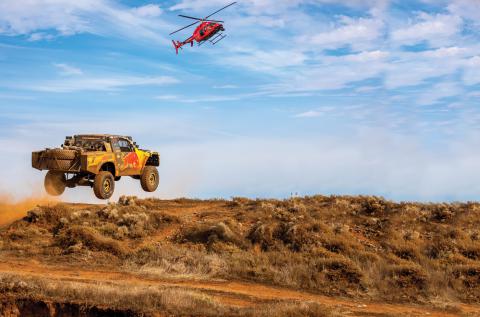
Meanwhile, new platforms have also brought more excitement to top-tier classes. “The next generation all-wheel drive Trophy Trucks have now arrived and are dominating the premier SCORE Trophy Truck class with consistent overall race wins at the 2021 SCORE San Felipe 250, SCORE Baja 400, SCORE Baja 1000, along with this year’s 2022 season opener, SCORE San Felipe 250,” said Ryan. But beyond the introduction of these new AWD machines, SCORE has also expanded the Trophy Truck class structure to include more options for racers who’re looking to keep costs in check. 

4
Trophy Truck entries continue to grow with the addition of new classes, including an LS-powered Spec class and the Legends class for drivers over 50. Here, Off Road Warehouse’s Greg Adler pilots his Trophy Truck at the King of the Hammers.

“The Trophy Truck Spec class is a good example of that,” said Adler. “The trucks are similar to those in the main Trophy Truck class, but they use a spec LS engine, so you don’t have to dig as deep into your pocketbook to compete at a very high level. That class continues to grow, and now we’re seeing more entries in that class than in the top Trophy Truck class. Some series have introduced a Trophy Truck Legends class that’s seen strong numbers, too.” 

The Legends class is offered to drivers who are 50 years old or older, but the rules remain virtually identical to the main Trophy Truck class. That means that drivers who are eligible to compete in the Legends class could race in both classes without making any significant changes to their trucks. “At the most recent Baja 500, there were about 10 of the new all-wheel-drive Mason Motorsports trucks competing, which are generally considered to be the latest-and-greatest of the segment, and a couple of them were running in the Legends class,” said Adler. “The vehicle platforms are evolving, and the series are evolving alongside them.” 

Meeting the Challenge

With most of the biggest pandemic-related obstacles in the rearview mirror, series organizers are now focused on sustaining the growth seen over the past two years, but external factors still threaten to stall that progress. 

“We have 17 different classes now, and we’re still seeing solid entries across the board,” said Perfect. “People are getting back into their normal lives. A lot of them looked at 2022 and said to themselves, ‘OK, let’s run all the races and go for points.’ A few will naturally drop off as the season progresses, and now there are concerns about fuel prices and the health of the economy that we have to contend with. People are feeling the crunch. So I’ve been looking to perhaps offset some of that with an extra ticket or two per entry. These are the types of incentives that we can provide without it costing us a lot of money, and hopefully they will help bridge some of those gaps.”

DeLorey said that Championship Off Road has also implemented new methods of getting the word out and connecting with fans. “They’re now doing podcasts with sportsman and pro-level drivers as well as ‘meet the driver’ interviews. This season they also partnered with FloRacing to provide live streams of the races, but social media still seems to be the primary driver for series awareness.” 

5
Short-course racing, as seen here in Crandon, Wisconsin, is popular for families, said Greg Adler of Off Road Warehouse, as it’s easier for parents to keep track of their kids on the course. It’s also a steppingstone to longer races and more sophisticated machinery.

Adler said that social media content not only keeps fans engaged, it also provides value to sponsors. “The posts on Instagram, Facebook, and YouTube really help with visibility, and that’s what the sponsors want to see. In some ways, the views have become more important than the race wins. People are seeing off-road racing in a whole new way. Now anyone with a smartphone is able to capture high-quality video and share it instantly. In the past, desert racing was about coming back from the event and telling some stories. Now if a Trophy Truck goes flying by a fan at 100 mph, it can be accessible to the world in a matter of seconds. Series’ live-stream broadcasts have improved significantly, too. Events like King of the Hammers and the Mint 400 are setting the bar for live off-road racing coverage right now. They’re using helicopters and drones to stay right on top of the action, and they’re also capturing really high-quality video at the ground level. It’s the next best thing to being there.”

Adler also noted it tends to be more difficult to create and share content like this at events held in Mexico due to the differences in the country’s cell phone and Internet infrastructure versus the United States’, but Ryan told us that SCORE has been actively working to address that issue at its events. “Operating in remote areas in another country has always been a development process for us as we continue to zero in on what the technology and terrain will allow for.” With that in mind, SCORE introduced new Starlink satellite systems in 2022 that were designed to provide uninterrupted communication and video feed from the course.


pf1

pf2

pf3

pf4

pf5

pf6

pf7

pf8

pf9

pf10

An Evolving Landscape

Perfect said that GAS added an extra weekend of competition to the 2022 race calendar above and beyond the four weekends and eight rounds of racing that the series offered last year, but he plans to take a measured approach to any changes in the roster of events going forward and decide how the series will expand based on feedback from his racers. 

“We wanted to take small steps coming out of the pandemic and get a really solid sense of things from our racers in terms of how much they wanted to do. Some want to go to a track in Utah, others are fine with sticking to our Southern California courses. We’re also trying to co-exist with the Championship Off Road Series back east and not step on their race dates, and that can be tough to do in the summer. It’s kind of a balancing act, but ultimately, I want the racers to have a say in it.”

Perfect added that a larger regional reach is a long-term goal for Great American Shortcourse, and collaboration with Championship Off Road is on the table as well. “There’s long been talk of doing a combined race with them. There are a lot of hurdles involved in it, but I’m down to do it, and I think they are, too. I think it just comes down to the costs involved for the racers and how we’d go about making it all work. But that’s still a possibility down the road.” 

DeLorey said that he expects interest in off-road motorsports to remain high over the coming years, especially within the UTV segment. “As long as the factory and aftermarket support stays in the UTV side of things, that segment will continue to grow. I don’t think it has plateaued just yet.”

SCORE is already taking the necessary steps to bring the next generation of vehicle technology on board. “We’re seeing continued interest from many new vehicle manufacturers—along with the traditional big OEM manufacturers—in our electric class,” said Ryan. “And there’s interest coming from technology companies that are developing electric battery systems as well. They want to learn more about how to make them survive in the most grueling endurance conditions, so just completing the course would be a landmark occasion.”

Sources

Great American Shortcourse
greatamericanshortcourse.com

Off Road Warehouse
offroadwarehouse.com

PDank Performance & Off Road Parts
pdankoffroad.com

SCORE International
score-international.com

September 2022
By
Bradley Iger

Acura Unveils All-New Electrified ARX-06 Race Car

Submitted by laurap on Thu, 08/18/2022 - 17:11
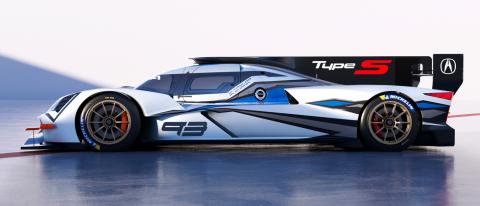
Acura ARX-06


Acura Motorsports has revealed its all-new, electrified Acura ARX-06 prototype sports car, which will make its competition debut next January at the Rolex 24 at Daytona.

The ARX-06 features aerodynamics based around an all-new ORECA LMDh chassis, which utilizes an electrified hybrid power unit featuring an equally new, bespoke twin-turbocharged 2.4 liter V6 internal combustion engine designed, developed and manufactured by Honda Performance Development (HPD), the racing arm for Acura Motorsports in North America.

“If you’re a performance brand, you have to go racing. It’s that simple. Both the existing ARX-05 prototype and our production-based NSX GT3 have proven to be race- and championship-winning designs on tracks all across North America. Now, with the introduction of the new, electrified Acura ARX-06, we look forward to facing off against other premium automotive brands from around the world—and continuing our winning ways,” said Jon Ikeda, vice president and Acura brand officer.

For the complete specs, visit the announcement here. For more information, visit acura.com/motorsports.

August 2022

IMSA Announces Finalists For Diverse Driver Development Scholarship

Submitted by laurap on Thu, 08/18/2022 - 17:11
IMSA Diverse Driver Development logo

The International Motor Sports Association (IMSA) has announced the seven finalists for the second annual IMSA Diverse Driver Development Scholarship.

Two women and five men were selected from dozens of applicants to contend for one scholarship worth upwards of a quarter million dollars in value toward an entire season of competition in the IMSA WeatherTech SportsCar Championship, IMSA Michelin Pilot Challenge, or IMSA VP Racing SportsCar Challenge next year. Four finalists from last year return for a second chance at the scholarship.

“Once again, we were blessed with a wealth of talented applicants. Whoever the recipient of the 2023 scholarship is will be a fine representative of IMSA,” IMSA President John Doonan said.

To be eligible for the scholarship, drivers must possess:

  • a “fervent desire” to compete in IMSA
  • have outstanding previous race results or proven on-track potential in junior racing categories
  • the ability to build an effective business plan for securing the remaining funds needed to compete


The IMSA Diverse Driver Development Scholarship recipient will receive substantial support from IMSA and partners, including Michelin, VP Racing Fuels, OMP, RECARO, and LAT Photo USA in 2023.

Jaden Conwright, a 23-year-old from Newark, California, won the inaugural IMSA Diverse Driver Development Scholarship last year. He is currently competing in the WeatherTech Championship with NTE/SSR in the GT Daytona (GTD) class.

2023 IMSA Diverse Driver Development Scholarship Finalists (in alphabetical order)
*returns from last year 


Sebastian Carazo*, 24, Guaynabo, Puerto Rico
Sabré Cook*, 27, Grand Junction, Colorado
Courtney Crone*, 21, Corona, California
Bryson Lew, 19, Salt Lake City, Utah
Kyle Loh*, 23, San Jose, California
Cameron Parsons, 34, Hanford, California
Brad Perez, 25, Hollywood, Florida

For more information, visit imsa.com.

August 2022

Hennessey Appoints Michael Harley As VP Of Marketing And Communications

Submitted by laurap on Wed, 08/17/2022 - 17:34
Hennessey logo


Hennessey, based in Sealy, Texas, has appointed Michael Harley as the new vice president of Marketing and Communications. He will oversee global marketing and communications at Hennessey Special Vehicles, Hennessey Performance (HPE), and Tuner School.  

Harley is a noted automotive expert who has held key roles at J.D. Power and Associates, Autoblog, AutoWeb, Autotrader, and Autobytel. He was most recently executive editor at Kelley Blue Book. 

Before his move to the automotive industry in 2006, Harley held the director of Creative Resources position at Cameo Guild, where he managed development and marketing for the global gift and collectible manufacturer and importer. 

“I’ve been a bona fide car guy since birth, so this is the proverbial automotive ‘dream job,’” Harley said.

For more information, visit the announcement here or visit hennesseyperformance.com.

August 2022

Dodge To Discontinue Challenger, Charger Production

Submitted by laurap on Wed, 08/17/2022 - 17:07
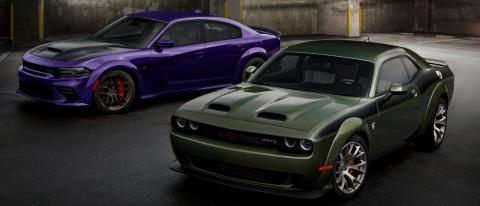
Dodge Charger, Dodge Challenger


Dodge has announced that it will end production of the Dodge Charger and Dodge Challenger after 2023.

“We are celebrating the end of an era—and the start of a bright new electrified future—by staying true to our brand,” said Tim Kuniskis, Dodge brand chief executive officer of Stellantis, the global automaker and mobility provider with a portfolio of brands including Dodge. 

As part of this announcement, the Dodge 2023 lineup will pay homage to the muscle car pair with seven special models, the return of a rainbow of heritage colors, an expansion of SRT Jailbreak models, a commemorative “Last Call” underhood plaque for all 2023 Charger and Challenger vehicles and a new, customer-focused vehicle allocation process.

The new 2023 models were teased and displayed under full vehicle covers at M1 Concourse in Pontiac, Michigan, during the first day of the three-day Dodge Speed Week event. 

Details and specific information on six of the vehicles will be released later this year. The new models will be offered on a first-come, first-served basis at top-selling Dodge dealerships, with a list of dealerships to be shared on dodgegarage.com.

The seventh and final 2023 Dodge model will be the “very last of its kind” and will be revealed at the 2022 Specialty Equipment Market Association (SEMA) Show in Las Vegas, Nov. 1–4.

For more information, visit the announcement here or visit dodgegarage.com. 

August 2022

Business Profile: Oddball Motorsports

Submitted by jeffreyc on Wed, 08/17/2022 - 16:11


When they switched Oddball Motorsports’ focus from drag racing to off-road racing, Garrett and Monica Stanley learned all they could about the sport by building trucks themselves and racing them all over Texas.

Garrett Stanley and his company, Oddball Motorsports, were not always major players in the off-road racing scene. Stanley started out more than 20 years ago building trucks for drag racing from his home garage shop in the Houston, Texas, metropolitan area. The business was called Oddball Turbo and Fabrication. 

As a pioneer in turbo technology in the Houston area, he built a large number of drag trucks for customers, some holding world records. He achieved local fame for having the fastest street-driven truck in Houston. That fame, however, came with a cost. Being at the top, he found some people didn’t want to race him anymore, and some tracks even changed the rules to “level the playing field,” allowing competitors to catch up to him. This eventually led him to believe it was time for a change and shift his energy into another of his passions: off-road racing.

Just as he did in drag racing, Stanley threw all his energy into off-road racing and began to learn all he could about building and racing the trucks. His passion for the sport was soon shared by his wife, Monica. She learned to co-drive and navigate in their race truck, which was built in their shop on evenings and weekends. The duo raced all over Texas in the Texas Desert Racing Association (TDRA) circuit as well as the Southwest Texas Off Road Racing (STORR) circuit in El Paso, allowing them to learn what desert racing was all about. As their experience grew, Stanley stopped working on his own truck to build a Jeep for Monica, starting with a $400 auction vehicle and ending up with a competitive desert racer with the only I-beam front suspension out there they know of.

2
When they switched Oddball Motorsports’ focus from drag racing to off-road racing, Garrett and Monica Stanley learned all they could about the sport by building trucks themselves and racing them all over Texas. 

Stanley explained that when he switched to off-road racing, most of the market was based along the West Coast. However, he admitted, “the thing’s getting bigger and bigger in Texas. We’ve raced in Texas for a long time, and there was nobody in the middle of the US who was dealing with any of the parts or doing any of the service. There wasn’t anybody who was making a statement or who was trying to supply people everywhere else with parts and knowledge. We chose to kind of shut down the business as it was—we were doing turbo stuff and fabrication and all that for the race car industry—and switched over to the off-road industry and started manufacturing our own parts and doing our own stuff. When we switched businesses, it was like you closed a business and opened another one. It was that drastic. We survived it, made things happen, and did what we needed to do.”

The demand for his skills and parts meant growth in the business, which required a purpose-built racing/fabrication shop. “My shop’s about 3,500 square feet, in two different sections,” he described. “We have a build side and a manufacturing side, and we have a CNC table and all that stuff. That is basically how it’s laid out. I have a 4- x 8-foot Arclight Dynamics CNC Plasma table and Miller and Lincoln welders.”

Monica offered additional details about the CNC table. “We made the decision, even though we were in the hard times, to purchase the CNC table, and that was the best thing that could have ever happened,” she said. “He taught himself CAD and how to use the machine and never looked back. He can look at something, eyeball it, take a guess, and get it right in CAD on the first or second try. And he is still using the free software that came with the table.”

This equipment allows Oddball Motorsports to design, build, and supply the off-road racing community with plenty of competitive parts. Some of the components built by Stanley and his team include rear trailing arm upper shock mounts, universal equal-length beam frame brackets, universal radius arms with tabs, double-shear axle tabs with box plate, headers, plus various DIY kits as well as components specifically for Ford Ranger LS swaps.

“The good thing about what we do is, we sell a lot of weld-it-yourself stuff and parts that customers can assemble and build,” Stanley said. “When COVID-19 first hit, we were covered up with shipping parts everywhere just because somebody wanted something to do. It worked out to our benefit. I sell a lot of the LS block mounts for the Ford Rangers and the header kits for it. The LS block Ford Ranger has become my specialty. It was something I thought was cool. Since we were racing a Ranger with an LS in it, I saw a market that nobody was a part of, really, and I put it out there. It’s been a really good thing.”

Building the volume of well-engineered and well-made parts along with the diverse services the company offers requires more than just Stanley’s efforts. Part of the success of Oddball Motorsports comes from having a dedicated staff of four employees, including Monica, “who does the office stuff. We don’t just manufacture parts, we do a lot of Holley EFI tuning, a lot of wiring of cars, we do a little bit of everything. If I’m not selling parts, I’m building cars, and if I’m not building cars, I’m selling parts. I really need to hire two more guys just to work off some of these big builds. That’s what the struggle is right now. The economy’s just not at a point where I’m able to afford a couple other guys to be able to take it to the next step to allow me to move products and more stuff.”

3
Refitting Ford Rangers with LS engines “has become my specialty,” said Garrett Stanley, after racing an LS-swapped Ranger and recognizing no one was serving that market. Among the products he offers for the swap are engine block mounts and header kits. 

Manufacturing and fabricating custom parts and working on custom cars is not a common skill that can be found just anywhere. When Stanley hires an employee, he makes sure to train that person to be the quality worker he expects and then follows that up to keep the employee happy and with the company. “The guys who are with me have been with me for a little while,” he said. “I really prefer younger guys so I can train and mold them and show them the quality of work we try to produce. I like to get them in young and teach them the way it needs to be done. It’s worked out pretty good. The track days, the test days, I put them in there, kind of put them through the experience, teach them the ins and outs of what we do and how we do it. A big thing at the shop is just a respect deal. Give me the respect, and I’ll go the extra mile for you. We have cookouts at the shop and different things like that.” 

“We try to foster a family environment here,” Monica added. “We like to have BBQ and crawfish boils and take trips out on the boat to celebrate working hard and accomplishments.”

Addressing Challenges

Many businesses find there are challenges to keeping a steady flow of work going in the current economic climate. Oddball Motorsports is no different. “We’ve had struggles here and there just being able to keep material,” Stanley admitted. “If I don’t have the steel and I don’t have the material, I can’t sell parts. That’s been a little bit of a chore itself, keeping supplies to be able to do that. We’ve had to invest in different things at different points to make sure we still were able to keep our products out there and make money at it.” 

To stay aware of industry trends and potential customer needs, Stanley routinely has conversations with customers throughout the country and closely watches social media. “My wife’s really good at social media,” he said. “Facebook has been good for us as far as marketing goes and being able to post pictures and interact with the customers. If you look up the analytics for all of our sales and all our products, Facebook has been better than Instagram as far as marketing. We are number one on Google for our LS Swap Ranger mounts, headers, and those things.”

Perhaps the most impressive component of Oddball Motorsports is Stanley’s commitment to maintaining a relationship with the customer before, during, and after the sale. Where some other companies will only sell parts without providing instructions on what to do with them, Stanley makes sure his customers know how to install and properly use the parts as they were intended. He explained, “I deal with people all over the world—Canada, Norway, and all kinds of different places—and we are able to supply people with the parts, and have, I think, customer service that is a million times better than what you can get elsewhere.”

4
Garrett Stanley puts a premium on customer service at Oddball Motorsports. His commitment to his customers goes above and beyond just selling parts and fosters a loyalty among his clientele that is more like a friendship than a typical customer/vendor relationship.

His focus on customer service begins with being personable and following up as a knowledgeable resource with customers and potential customers. “Half of this stuff we do is for the garage-built guy, and the guys do have questions,” he said. 

“My whole goal is to be able to help educate these people and say, ‘Hey, my parts will work if you do it this way.’ Most of the time the other guys aren’t going to tell them any of those tips or tricks. I don’t mind spending 10 minutes or 20 minutes or whatever it is with the customers to educate them and tell them they can make this work if they do this and that. It’s really paid off to be a good thing,” Stanley added.

Beyond the Customer Relationship

Building this kind of bridge of trust between a company and the customer is not the norm for many businesses, but Oddball Motorsports is not your average business. Its commitment to the customer definitely goes above and beyond just selling parts and more often than not creates loyal customers who view the relationship more as a friendship than a vendor/customer situation. 

Evan Graham, a longtime customer, is quick to testify to this. “He’s given me a lot of very good insight,” Graham explained. “He knows a lot more than I can imagine. He basically can build anything he can possibly imagine; you ask him to do something, he’s going to find a way to do it. He always wants to work with you. 

“I trust him with everything,” Graham continued. “If I’m set on a certain way I want to build it, and he says, ‘Dude, I know another way to do it,’ I trust him completely with everything. I don’t question it at all. We’ll talk and he’ll tell me why it’s a better way. 

“There was a time I went with him to El Paso for an off-road race to do some testing for him. He let me drive the truck. We had only met five months beforehand, and he let me get into his race truck that he had just finished building. He trusted me to hop in there so he could video it. I wasn’t taking it easy on it. I ended up bending one of the I-beams on the truck before the race. 

5
When Garrett Stanley hires an employee, he trains that person to execute the high quality of work he expects; he also strives to keep his employees happy so they’ll stay at the company. “The guys who are with me have been with me for a little while,” Stanley told us.

“He’d always been humble and super-cool to me, and to do something like that to him really got to me,” Graham admitted. “To get respect you’ve got to earn it. He had earned every bit of my respect, 100%. So when I did that, I had to find every sort of way to fix it so that I could get him back in the seat to race. And I did. We got him back in the seat and raced the entire race, and he was humble enough to let me get into the last lap of the race. After I had already broken his truck, he’s letting me finish the race in his race truck,” Graham concluded.

Longtime customer Brian Pajor agreed, and he shared how Stanley’s personalized service was why he became a loyal customer. “I’d been looking into building a Ford Ranger and was looking into a long-travel suspension with an LS block,” Pajor said. “I was looking over the Internet for the engine swap and motor mounts and Oddball Motorsports popped up. It was between him and another company. I called the other company, and they didn’t give me the time of day. 

“I was starting from scratch, square-one for long-travel, four-link suspension and all that stuff not really knowing a whole lot,” Pajor continued. “So I thought, ‘Okay, let me try this company,’ and off the bat I was on the phone with him for about two hours just going in-depth. He just talked me through everything, and from that first interaction on the phone, I knew this was someone I wanted to do business with. I could tell he wasn’t BS’ing me, he wasn’t trying to sell me stuff just to sell me stuff. He was selling me the stuff that I would actually need. 

6
“We do a little bit of everything,” Garrett Stanley said. “If I’m not selling parts, I’m building cars, and if I’m not building cars, I’m selling parts. I really need to hire two more guys just to work off some of these big builds.”

“Any question I had, I could call him any time and he would give me answers. When I bought the kit, he flew down from Texas to Florida to custom fit everything to my truck. He came down and made sure it all fit, just to make sure it was done right. The customer service, to me, goes a long way. He’ll go above and beyond, finding me the best deal and not selling me something I don’t need. Just slowly, piece by piece, building my project and him taking the time to talk to me. He explains the purpose of it and why I need to do it this way and not that way. Making sure whatever product he sells me is the right product for what I need. 

“I can’t say enough about how much I appreciate him taking the time and not taking advantage of anybody,” continued Pajor. “His work speaks volumes, too. The welds, the fabrication parts, are just amazing. I never got the vibe from him that he was just trying to make a buck. It’s a dream come true doing what I’m doing, and without his help I’d be completely lost. There’s no way I’d be where I’m at without Garrett. He’s awesome! I can’t do more than a five-star review.”

September 2022
By
Dana Ford