Ready To Rumble

Submitted by jeffreyc on Wed, 08/17/2022 - 11:39


Thanks to their impressive capability and surprising affordability, UTVs have taken the off-road world by storm in recent years. Still, racers are discovering weak points in factory setups that must be addressed.

Once dismissed as a novelty by seasoned competitors, UTVs have seen unprecedented growth in off-road racing over the past decade. That trend shows no signs of slowing down. 

“The entire segment has just exploded,” explained Matt Martelli of UTV World Championship, Vista, California. “At this point it’s the biggest segment in off-road racing, and for us the entry-level classes are the biggest area of growth right now. What we tend to see is that people come in, race in that class, and they start finding the areas of the platform that could be improved. And they want to move up.” 

The out-of-the-box capability of UTVs has played a major role in the vehicles’ ongoing popularity, but there’s another factor that has also played a crucial role in this segment’s rise to prominence. “Prior to UTVs coming onto the scene, you would have needed to go to a race car builder, or buy an existing race car, in order to get involved,” Martelli noted. “Those would all have been up-front hard costs. But UTVs can be financed, and now we’re also seeing participants financing upgrades and modifications as well. So you could literally go racing without being a dime out of pocket before you get on the track.”

2
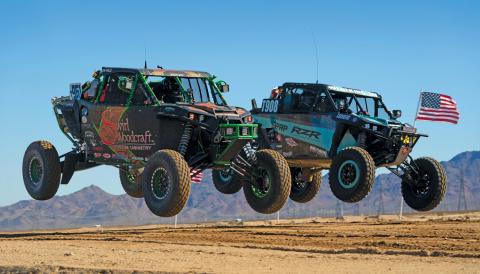
While out-of-the-box capability is a big reason for the growth in UTV racing, so is its affordability, said Matt Martelli of UTV World Championship. “UTVs can be financed, and we’re seeing participants financing upgrades and modifications as well.” Photo courtesy of Mad Media.

With strong aftermarket support, the segment is changing the landscape of off-road racing at all levels. “It’s become an incredibly competitive platform,” said Ricky Berry of RCV Performance Products, Rockford, Illinois. “We’re seeing UTVs with finishing times in desert races that are on par with Trophy Trucks. It’s ridiculous, especially when you consider the cost differences. There was an event earlier this year where a racer in a Polaris Pro R finished in the top three overall in a field that included Class 1 cars.”

Whether a competitor is just getting started in UTV racing or is looking to climb the ranks to the upper levels of the sport, these vehicles require preparation and modification in order to be eligible to compete, run competitively, and last for the duration of an event. Here we’ll take a closer look at what’s being done to get these machines race-ready. 

Up and Running

“It’s interesting, we often sell the same products to the guy who’s going out to race for his first time ever as we do to the guys who have factory sponsorship,” said Berry. “But safety is always going to be the first step regardless of what level someone is competing.” 

That typically includes the usual suspects—roll cage, racing harnesses, and driver safety gear like fire suits and helmets—but the requirements are largely dependent on the sanctioning body and the class that the vehicle is campaigned in. 

“Some classes don’t even require changing out the factory cage,” he pointed out. “But you’re still going to need harnesses, maybe different seats, and you’ll likely need a HANS device for your helmet. Head-and-neck restraints are required pretty much everywhere.” 

Dialing In Durability

Larry Heidler, SXS/UTV technical inspector for WORCS UTV in Lake Havasu City, Arizona, pointed out that while factory UTVs are more capable than ever, they are typically outfitted for enthusiasts who hit the trails on the weekends rather than those who’re looking to go racing. “A bone-stock UTV typically isn’t ready for the racing environment,” he said. “You might have something that’s factory-equipped with Fox shocks and stuff like that, but it’s not going to be designed to handle this level of abuse.”

With that in mind, wheels and tires are generally the first things to go. “Beadlock wheels are a common upgrade here,” said Martelli. “There’s some debate about whether that’s necessary on such a light vehicle, but we like that technology because of the forces that the wheels are being subjected to in off-road racing while cornering. UTVs typically weigh between 2,500 and 3,000 pounds, but when you’re throwing one of these vehicles into a corner at speed, all of the weight is going to one wheel, and you want to be sure that you’re not going to peel the tire off.” 

Martelli also pointed to strength as another important attribute of a race-ready wheel. “Most of the stock UTV wheels you come across are cast aluminum,” he said. “I wouldn’t say they’re fragile, but they’re not something that you’d want to rely on for a race, so forged wheels are a popular upgrade. And one-piece designs are generally preferable.”

3
“A bone-stock UTV typically isn’t ready for the racing environment,” said Larry Heidler, a technical inspector for WORCS UTV. Wheels and tires are often among the first upgrades made, as are changes to the chassis and suspension components. Photo courtesy of Jason Ashton/Mad Moose Media.

Berry told us that tire choice often comes down to personal preference, but the general consensus is to go big. “Some classes limit tire size to around 32 or 33 inches, but in situations where size isn’t restricted, UTV tire sizes are getting pretty wild. Thirty-five-inch tires are the new normal, and we’re seeing 37-inch tires on UTVs becoming more and more commonplace.”

Chassis and suspension components are usually the next area of focus when it comes to modification. “Factory suspension tunes are usually general purpose,” said Martelli. “But that’s normally going to be a bit soft for racing use. While they might have progressive spring rates, they aren’t using rates that are set up for this kind of application. And the shock tune is hugely important as well. Just like in pavement racing, car setup is key. But here we have a lot more variables to deal with.” 

Heidler said that an increasing number of entry-level racers are swapping out the factory A-arms and trailing arms for stronger aftermarket pieces as well. “Those have been found to be weak points, so that’s becoming a more popular upgrade even in the youth classes. A lot of it comes down to the material—the factory component might be made of some sort of mild steel, while the aftermarket options are usually chromoly.” 

Berry quipped that you can almost bend some of these factory components over your knee. “It’s designed to be ‘good enough.’ Fortunately, there are now loads of options out there for racers who’re looking for increased strength, whether it be different materials, thicker materials, or just a completely different design versus the stock part. HCR Racing, for instance, offers an arm design that doesn’t use tubes. Instead, it’s a plate design with internal structure, they use chromoly steel, and it’s all TIG-welded. Then you have options like what Lone Star Racing offers, which looks aesthetically like the factory piece but offers far greater strength.” 

He told us that axles have also been identified as another common failure point, and that’s largely by design. “Axles are one of the biggest weak links in UTVs. There’s a sense that the factory would prefer these to fail rather than the transmission or differential because the latter are much more expensive warranty items. That failure point is so low that these racers are reaching it pretty quickly.” 

5
The general-purpose nature of factory UTV suspension tuning is “a bit soft for racing use,” said Matt Martelli of UTV World Championship. “Just like in pavement racing, car setup is key. But here we have a lot more variables to deal with.” Photo courtesy of Mad Media.

Competitors are responding by moving to more robust axle designs that can handle the abuse, along with associated parts that can further bolster longevity. “For us, it’s both the material quality and the engineering behind it,” continued Berry. “There are design limitations because you’re working within the constraints of the factory packaging, but we’re using chromoly housings and 300M steel for the shaft and internals. 300M is just about the best material you can find in terms of memory and fatigue resistance.” 

Berry also cited CV boots as another common problem area. “A torn boot is the Achilles heel of a UTV,” he said. “Once you tear that rubber boot, it has the potential to take out the CV and eventually the axle, and now you’re down a corner. So we’ve learned that the grease used is really important. We had guys finish 500-mile races without CV boots because of the grease we developed. As it gets hot, low-end grease will liquefy and follow the path of least resistance, and that means your lubrication is going away from where you need it. A high-end grease is going to be more resistant to liquefaction, and that helps keep it where it needs to be to prevent those failures.” 

Turning to the powertrain, Steve Demirjian of Race Engine Development in Oceanside, California, said that there are some very simple upgrades that can have a substantial impact on engine durability. “More power means more heat, so the cooling system needs to run as efficiently as possible. If you’re running a lot of boost on a wet liner the water can cavitate, and you can actually end up eroding the outer surface of the sleeve. So running something like Evans Coolant, which is cavitation resistant, is a good idea.”

The belts on UTV continuously variable transmissions are also a notorious failure point, but solutions have been developed to address that as well. “Clutching is really important here because you’re trying to squeeze as much as you can out of the top end without sacrificing belt life,” said Berry. “But it’s also about airflow to that belt, so bigger air intakes and ducting are important, too. And a belt box fan can also make a big difference. You need to keep the belt as cool as possible in order to extend its life, so that system is pulling in cool air and pushing out hot air to help manage the heat.”

Proper Performance

While durability tends to be the top priority for endurance-style UTV racing formats, short-course and hill-climb events allow racers to prioritize things differently. “In desert racing, most racers leave the motors pretty close to stock,” Heidler said. “But on the short course, those engines are being rung out. Those racers are trying to get every last ounce of horsepower that they can from them because everyone else in the field is doing the same.” 

That kind of approach probably isn’t going to last in a 300- or 400-mile race, but the short-course racing tends to be less abusive just by virtue of the format. “A track car is going to be lighter because you don’t need to bring spares with you, and you’re on a groomed track rather than the really varied terrain that you see in desert racing,” said Martelli. “So you can push the setup a bit harder here because durability is less of a concern. If the engine only needs to last half an hour, you can build a high-strung time bomb if you want to.”

Demirjian said that many racers opt to go that route. “People are getting ridiculous power out of these motors. They’re not long-distance combinations. We’re seeing people get 500 or 600 horsepower out of two-cylinder engines. It’s crazy.”

Turbocharging has become an integral part of these high-horsepower engine combinations, and that typically necessitates upgraded rotating assembly components. “So a set of pistons, and the crankshafts that are used in these engines, tend to be a weak point as well,” he added. “Some people are running upwards of 90 pounds of boost on these engines. It’s incredible.”

In order to make a UTV engine live at those boost levels, Demirjian offered a few recommendations. “The cheapest upgrade for these blocks is a dry liner. That will beef them up substantially,” he explained. “If you’re going to run a lot of boost, the Darton MID sleeve is the way to go. It’s far stronger than the factory cylinder wall, so you’re not going to break it. And ARP head studs are basically a requirement in order to get the clamping force needed to keep the head down.”

6
Steve Demirjian of Race Engine Development noted the engine block in the popular Polaris RZR “was originally of open-deck design. The later blocks went to a closed-deck design for added strength, but neither will hold up for long with the power these engines are making. The Darton MID sleeves solve the problem of the cylinder walls breaking.”

Heidler also said that tuning plays a critical role in these turbocharged setups. “We spent a lot of time just dyno testing the car and making sure that we can get every last bit of power out of it while still making sure that it’s not detonating, and the fuel mixture is right where it needs to be all the time. In the class I compete in, the races are 55 minutes long, and we’re basically running the engine flat out the entire time. Back in the day you could sit back a little and wait for other competitors’ cars to fail, but now we’re going nonstop from green flag to checkered because the field is getting much more reliable in general.” 

On the suspension side, Martelli noted that electronically controlled shocks are becoming an increasingly common sight in UTV racing. “Fox Live Valve shocks have been a game-changer here because they allow for so much greater control over the vehicle’s dynamic behavior. This technology is only a few years old in this market, so we’ve just scratched the surface of what it’s capable of in this type of application.” 

Looking ahead, all seem to agree that UTV racing is headed for increasingly sophisticated setups. “We’re at a point now where 600 horsepower is the ceiling,” Demirjian said. “Two hundred horsepower per cylinder on a 900cc engine is a lot. Eventually we’re going to need billet engine blocks, and I think it’s just a matter of time before someone steps up to offer that.”

As the performance bar continues to rise, Berry expects UTVs to push further into the forefront of off-road racing in coming years. “The future of UTV racing is going to be at 100 mph and beyond. I think that’s going to be the norm sooner rather than later.” 

With bigger players getting involved in aftermarket development, that prediction seems likely. “Over the past eight years or so, this has become a fairly robust industry,” Martelli said. “The popularity of the segment has started to attract the attention of larger manufacturers. This is just the tip of the iceberg, though. The biggest challenge for everyone right now is just keeping up with the demand.”

Sources

Race Engine Development
raceenginedevelopment.com

RCV Performance Products
rcvperformance.com

UTV World Championship
utvworldchampionship.com

WORCS
worcsracing.com

September 2022
By
Bradley Iger

From the Editor

Submitted by jeffreyc on Wed, 08/17/2022 - 10:31


Two things I think while working out the fastest route up the coast for this month’s Firestone Grand Prix of Monterey at WeatherTech Raceway Laguna Seca:

1) I think that if Brad Sweet attacks his promotional duties with the same intensity he brings as driver of the Kasey Kahne Racing, NAPA Auto Parts No. 49 sprint car, then competitors, sponsors, and fans at Silver Dollar Speedway are in for one hell of a ride. Sweet, along with partners Kyle Larson and Colby Copeland, recently took over operations for the Northern California clay oval that’s become synonymous with its signature event, the Gold Cup Race of Champions. This newish endeavor—the trio officially put pen to paper on Silver Dollar in late November—was a natural extension for Sweet, who got his feet wet promoting a few years’ worth of World of Outlaws races at his backyard track in Placerville (CA). That experience, he told us, “led me to search around, trying to figure out, what is this race promotion thing all about? Is it really profitable? Is it always profitable?” The answers can be found in this month’s Industry Insights column beginning on page 28, where you’ll also discover what outdated mindsets about racing Sweet believes need to change, and how “The Big Cat” plans to rebuild interest in 410 sprints on the Left Coast.

2) I think “diversify” isn’t just a
good investment strategy—it may also be one of the keys to keeping drag strips operating across the US. Sadly, track closures have hit the drag racing community like a sledgehammer in recent years. We’ve all watched as iconic venues like Englishtown, Fontana, Palm Beach, and others have heartbreakingly fallen off the map. And while there isn’t one single factor to blame for these tracks’ demise, a recurring theme is one of dollars and, well, more dollars. In short, the economics at this time just aren’t in racing’s corner. “Land is up so much,” summarized Keith Haney, who co-owns Osage Casino Tulsa Raceway Park in Oklahoma along with partner Todd Martin. “You get these big corporate groups who come in and say, ‘Okay, we’re going to give you three or four times earnings on your land.’ Or maybe it’s 10 times earnings.” Haney, who also owns the Summit Racing Equipment Mid-West Drag Racing Series, is in a unique position, with interest on both sides of the equation. Which is why we sought his perspective for this month’s Special Report “Course Correct?” on the troubling trend of drag strip closures. But the piece by writer Steve Statham, which begins on page 40, takes a multidimensional look at the issue, which is to say it’s not all doom and gloom. There are, we found, strategies for owner/operators to help stem the tide. As we alluded to earlier, a proven and replicable one involves branching out into new uses, whether it’s leasing space for storage or commercial businesses, hosting events like outdoor concerts or drive-in movie screenings, or filling open days with driving/training courses. As source Steve Williams, chief business development officer at K&N, explained: “The race tracks that are going to survive are the ones that realize there’s a whole list of ways to create income that then allow the race track to still put on these events, but they’re not solely reliant upon the income of the actual race to keep the race track operating.” Complex problems often require creative solutions. And drag racers are nothing if not resourceful. Due to necessity, there may be no better time to put that ingenuity to work.

September 2022
By
Dan Schechner, Editor

From the President

Submitted by jeffreyc on Wed, 08/17/2022 - 09:51


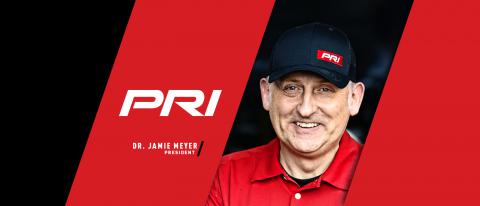
More than ever, PRI is fighting for you. We have always been about helping you build your racing business, but today there’s more urgency than at any other point in recent history.

This month, I want to review the three big components of the modern PRI organization and share with you how your business and your lifestyle is being protected by PRI.

PRI Show

We are well on our way to being fully recovered from the pandemic, and, from a trade show perspective, you are going to be standing tall in Indianapolis on December 8–10. When the doors open, you will be able to enjoy the latest technology being offered by more than 1,000 leading racing industry manufacturers, service providers, sanctioning bodies, and more. We will continue to advance our EV Performance area and our Content Creation Zone. Our PRI Education programming will keep you on the cutting edge of this fast-changing industry. 

As the second largest trade show in the world in 2021 (SEMA Show was the largest), we have a new program designed to welcome first-time exhibitors to our Show. Contact us for more details on how you can display your racing products at PRI 2022 by calling 949-499-5413. 

We have more surprises coming for you at the PRI Show, and I hope to start breaking that news next month. Remember, the true benefit of PRI is bringing us all together—at the Trade Show, during our programs for promoters and race track officials, and after-hours while you enjoy the finest that Indianapolis has to offer. 

PRI Media

When the 2020 PRI Show was canceled, we literally sent the PRI Show to you. In the past two-and-a-half years, our PRI Road Tour program has made over 150 stops at our exhibitors’ headquarters, race shops, and races. That dedication to you completely changed the racing industry. By the end of 2022, we will have accumulated over 300 million media impressions for the racing industry—helping you launch product, showcase your vehicle builds, and promote your racing events. The content that PRI has assembled can be found on multiple social platforms, on our website, and in the pages of PRI Magazine. Even if you have never been on TikTok, know that the PRI Media machine has been reaching people who are, for the first time ever, very interested in racing and your products specifically. 

PRI Advocacy

Perhaps no other department is as busy as our Washington, DC-based Government Affairs team. We are encouraged by Congress planning to take up the Recognizing the Protection of Motorsports (RPM) Act this month. As we go to print, we have learned that the Senate Environment & Public Works Committee is planning to hold a hearing on the RPM Act in mid-September. PRI will play an integral role in shaping this hearing, and we are hopeful that our collective efforts to turn up the heat on lawkmakers in Washington will be the X factor that gets the RPM Act passed into law in 2022. Together, we can get this done!

2
From left, legendary racer Richard “The King” Petty and SEMA/PRI CEO Mike Spagnola recently met with over a dozen key lawmakers in Washington, DC, to lobby for passage of the RPM Act.

Most recently, we enlisted the help of Richard “The King” Petty to help us lobby Congressional leaders on the RPM Act. He was accompanied by SEMA & PRI CEO Mike Spagnola, our DC lobbyists, and our PRI media team. Petty, the greatest stock car driver of all time, delivered a strong message to over a dozen key lawmakers in DC. He explained the absurdity of fines levied recently by the Environmental Protection Agency against manufacturers of race parts for race cars. His biggest concern: The EPA’s interpretation that a person can’t convert a street vehicle into a race car could destroy the dreams of aspiring racers. Had this been the agency’s position many decades ago, what would have been the impact on the careers of some of our most hallowed racers? Would NASCAR as an organization have struggled to exist under the most recent interpretation of the Clean Air Act? 

Our efforts to protect the racing industry continue, and we often ask for your help. Together, we can continue to enjoy the greatest American pastime of them all: motorsports. If we can ever help you, or if you have feedback on any of these programs, please send me a note at president@performanceracing.com. 

September 2022
By
Dr. Jamie Meyer

IMSA Announces New IMSA Esports Global Championship Sim Racing Series

Submitted by laurap on Tue, 08/16/2022 - 17:24
IMSA eSports

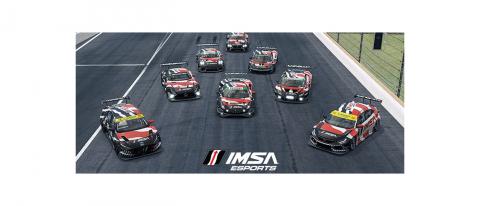
The International Motor Sports Association (IMSA) has announced the new IMSA Esports Global Championship.

The virtual championship is the first IMSA-backed iRacing series dedicated to professional sim racers and sim racing teams.

The IMSA Esports Global Championship kicks off in October and will feature some of the world’s top professional sim racers and sim racing teams competing for cash purses in each event of the four-race series and for the overall series championship. Races will be broadcast on iRacing and RACESPOT YouTube, Facebook and Twitch social media channels.

The series will consist of multi-driver, multi-class racing and will feature iRacing’s modeled GT3 and TCR cars. It will also enable participants to develop working relationships with eight of the manufacturers competing in the IMSA WeatherTech SportsCar Championship and IMSA Michelin Pilot Challenge: BMW, Ferrari, Honda, Hyundai, Lamborghini, McLaren, Mercedes-AMG, and Porsche.

Further details surrounding the 2022 IMSA Esports Global Championship will be announced at a later date.

For more information, visit the announcement here or visit imsa.com.

August 2022

PRI Founding Member Antron Brown Scores First Win As Team Owner

Submitted by laurap on Tue, 08/16/2022 - 14:16


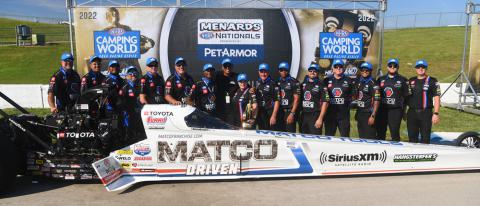
PRI Founding Member Antron Brown has scored his first win as an NHRA team owner on Sunday at the Menards NHRA Nationals presented by PetArmor. He defeated Steve Torrence in the final round to capture his 53rd Top Fuel triumph and 69th overall.

As a PRI Founding Member, Brown pledged his support to build, promote, and protect the racing community. The PRI Founding Membership was created exclusively for a special group of supporters whose unparalleled commitment to racing is critical to the success of the industry.

Brown’s AB Motorsports team, owned and operated by the three-time Top Fuel world champ, made its debut at the start of the 2022 NHRA Camping World Drag Racing Series season. 

Sunday’s Topeka triumph moved Brown and the AB Motorsports team back into the Top Fuel top 10, with the Matco Tools pilot advancing two spots up to 10th with two races remaining before the NHRA Countdown to the Championship playoffs begin.
 
“From here on out, we’re only going forward,” said Brown. “We put that one on the map today for AB Motorsports. It’s our first, but it’s not going to be our last. We’re right where we want to be, and we’re just going to keep getting better.”

For more on Brown, read PRI’s exclusive sit-down interview in our Member Check-In story here. And, read the race recap story on the NHRA website here. For more information, visit antronbrown.com.

August 2022

Federal Appeals Court Rules Racing Coalition Lacks Standing to Challenge EPA

Submitted by laurap on Tue, 08/16/2022 - 14:05
US Court of Appeals logo and court house facade


The United States Court of Appeals for the District of Columbia has dismissed a lawsuit brought by the Racing Enthusiasts and Suppliers Coalition (RESC) against the U.S. Environmental Protection Agency (EPA) for lack of standing. The suit, brought by a coalition of racing enthusiasts and aftermarket parts business owners, challenged the 2015 EPA interpretation of the Clean Air Act that motor vehicles designated for street use cannot be converted into dedicated race vehicles. Although the EPA abandoned efforts to make this policy a formal regulation in 2016, the agency still maintains the practice of modifying the emission system of a motor vehicle for the purpose of converting it for racing is illegal. 

The Court found that EPA’s 2016 rule did not create a challengeable rule and that RESC had not shown they were injured by the EPA’s rule. The Court did not discuss in any detail nor decide the merits of the case concerning the EPA’s authority under the Clean Air Act to regulate dedicated race vehicles that are converted from street vehicles.

For more information, contact Daniel Ingber at danieli@sema.org.

August 2022

Wade Kawasaki Named Executive Director of SEMA and PRI Political Action Committees

Submitted by laurap on Tue, 08/16/2022 - 13:49


The SEMA Board of Directors has appointed industry veteran Wade Kawasaki to serve as the first executive director of SEMA’s and PRI’s respective political action committees (PAC). In this new volunteer role, Kawasaki will oversee each PAC’s Board of Directors and fundraising efforts, reporting to the SEMA Board of Directors.

By law, SEMA and PRI may not use their funds to contribute to federal political candidates. However, each organization’s PAC allows its members to contribute personal funds, which are used to help elect lawmakers who support its positions and initiatives.

“The specialty automotive aftermarket and racing industries are facing an uncertain future due to unparalleled government threats,” said SEMA Board Chairman James Lawrence. “SEMA and PRI believe clean air can co-exist with the automotive performance hobby and racing. Unfortunately, government bureaucrats want to restrict grassroots racing, make it burdensome to comply with emissions laws, and ban internal combustion engines. We need to be prepared to defend the millions of automotive enthusiasts out there, and the best way to do that is through PACs that help elect lawmakers that value our hobby and the $50+ billion dollar industry.”

Before he was appointed Executive Director of SEMA’s and PRI’s PACs, Kawasaki served as the President and CEO of Legendary Companies, overseeing 12 brands and operating six companies, including Coker Tire. He previously served multiple terms on SEMA’s Board of Directors, including as its Chairman from 2017-2019, and was inducted into the SEMA Hall of Fame in 2013.

“Advocating on behalf of the aftermarket industry is at the very core of what SEMA does,” said SEMA CEO Mike Spagnola. “I’ve known Wade for over 20 years. I’m thrilled to have somebody of his caliber helping to take SEMA’s PAC to the next level.”

“A strong PRI PAC is the best way to ensure racing’s future is free from government overreach. We have to have the means to fight back,” said PRI President Dr. Jamie Meyer. “I look forward to working with Wade to grow PRI’s influence in Washington.”

For more information, contact Samantha Large at samanthal@sema.org.

August 2022

Make The Case: LS vs. LT Engines

Submitted by johnc on Tue, 08/16/2022 - 13:47
image 1


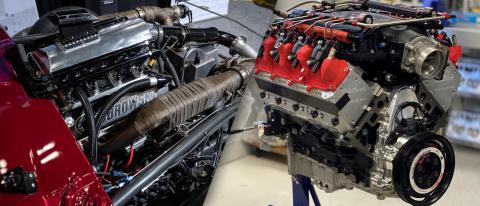
Thanks to its strength, compact dimensions, low cost and strong aftermarket support, the LS has been the engine of choice for countless high-performance builds over the past two decades. But with more and more LT-powered production vehicles rolling out of General Motors’ factories every day, is the tide beginning to turn in favor of this newer and more sophisticated platform?

LS Engine Advocate:

Ken McCaul,
Borowski Race Engines

image 2

Several different factors have contributed to the LS platform’s popularity. One of the biggest benefits is that the market for LS parts has matured. We don’t have to worry about whether or not we can find a block to do what we want to do with it. At our shop we have a philosophy of using parts that are rated for the horsepower that we make. Right now, folks who’re building LT engines have to deal with the fact that it’s a segment of the aftermarket that is still in its infancy. To each their own, but making two or two-and-a-half times the factory horsepower using beefed-up OE parts that were never designed to support that much power doesn’t seem like something we can build a business around. The situation is bound to change over the next few years, but the LT parts that are available right now aren’t really designed for the things that people are doing with them.

LS engines, on the other hand, are being used everywhere to make all kinds of power, everything from retrofits in older cars to drift cars, drag racing and even off-roading. Lately we’ve been doing a lot of LS builds for sand rails, buggies and other high-speed off-road racing vehicles. Road racing is another big one, too. These engines can be very light weight, high revving and powerful without needing a power adder like a turbo or a supercharger. It’s the parts that are available now that make that possible.

There’s the tuning aspect to consider as well. There are a lot of people who know how to tune LS engines now, but I keep hearing horror stories about people who’ve tried to tune LTs who have failed at it. Ten years ago, it was about trying to get people to switch from carburetors to fuel injection, but I’d argue that the learning curve between an LS and an LT is steeper. When switching to fuel injection on a car that was carbureted previously, parameters like the air/fuel ratio, boost reference and so on are already known, but now a computer controls that. With an LT, there are totally different and very specific tuning methods to use because of the direct-injection (DI) system, and you have to learn what the goal is before even starting to understand how to dial it in.

The other big advantage the LS currently has is in the amount of reliable horsepower it can make. The bar has gone up significantly over the last few years. Grudge racers a few years ago might have been competitive at 700 or 800 horsepower, but now our pump-gas LS engines make that much naturally aspirated. We’re at a point now where the parts that are available for LTs aren’t rated for the kind of power it takes to win even at the amateur level.

When more parts are available and people start developing the same types of parts for the LT that are currently available for the LS, the story will start to change. Five years from now the situation will probably be very different, but at this moment LTs are still at the point where only bolt-ons and minor alterations can be reliably done. Meanwhile, our Whipple LS engines can make 3,200 horsepower to the tire with heads that have the same exterior dimensions as the factory LS7 head. It’s just a different ball game.

LT Engine Advocate:

Howard Tanner,
Redline Motorsports

image 3

Right now, it’s not so much about folks who’re buying LT engines and putting them in their vintage muscle cars to go racing. It’s about the guys who’re racing their late model Camaros and Corvettes with LT engines in them.

It’s the new small block, and a lot of people want to stay on top of what’s current. If I have two 376-cubic-inch engines and one of them is 85% efficient while the other is 91% efficient, it makes a compelling case for the LT platform from a performance standpoint. There’s no question that the last 6.2-liter LS engine, the LS3, gets its butt kicked by the LT1 even though they have identical displacement. The technology behind the LT1 is the reason.

Understanding the tuning strategies is important, though, and as additional layers of technology come into play, a racer has to start with strong foundational knowledge to get the most out of a platform like this. Go beyond, say, 850 horsepower to the wheels, and the fueling gets a bit more complex because it needs a supplemental port-injection system to support that power. Integrating that with a factory direct-injection system is an art in and of itself.

But we’re at that six- to seven-year maturity point for the LT1, and things are starting to change. More and more we’re seeing these engines used in drag cars and road course racing, and the LT family of engines is right on par with its LS counterparts from a reliability standpoint. They’re not dramatically different platforms. It’s mainly about the strategy in which they control fuel and timing, and direct injection has some clear advantages in that regard. A direct-injected engine can run a lot more compression because of the cooling effect that direct-injection system provides. That means it can make a lot more torque, and that’s a benefit in just about every motorsport discipline out there.

There are still a lot of people who are scared of direct injection, though, and that is what’s causing a bit of a delay in the wider adoption of the LT platform. I mean, the motor’s not “new” at this point—it was released at the end of 2013. There’s a phobia out there, and that reluctance to embrace this platform comes from this fear that it’s going to be complicated to work with. But as LS parts become less readily available and the DI engines become more prevalent, racers will inevitably have to adapt.

September 2022
By
Bradley Iger

PRI Members Invited To Register For The 2022 Washington Rally 

Submitted by laurap on Tue, 08/16/2022 - 13:41
Washington Rally logo


Mad as heck with Washington politics? The Washington Rally is your chance to do something about it.

PRI and SEMA will host the Washington Rally on Thursday, September 22. If you’ve never been, it is a unique opportunity to connect with your elected officials in our nation’s capital to discuss the issues that matter most to you, your company, and our industry. The Rally is exclusively for PRI and SEMA members, and there are no registration fees. Click here to register.

Whether standing up for the RPM Act, emissions compliance, or vehicle technology, the industry faces many issues in the nation’s capital. That’s what makes participation in the Washington Rally so important.

PRI and SEMA will arrange for meetings with your elected officials, and staff will provide you with briefing materials in advance. A member of the PRI/SEMA Government Affairs team will even join you in your meetings to ensure everything goes smoothly. Lastly, special guest speakers will join PRI and SEMA members at a Capitol Hill luncheon and for an evening reception and dinner.

Registration closes on September 1. Questions? Please contact Christian Robinson at (202) 794-8279 or christianr@sema.org. 

August 2022

RPM Act Co-Sponsors on Ballot in Florida Primary 

Submitted by laurap on Tue, 08/16/2022 - 13:35
Save Our Race Cars logo


Florida will hold its 2022 primary election on Tuesday, August 23, and it’s important to know which candidates support racing when going to the polls or voting early. Visit PRI’s Vote Racing page for information on voting in the primary, including absentee and early voting, registering to vote, and identifying your lawmakers and the candidates running in 2022.  

The Recognizing the Protection of Motorsports Act (RPM Act), H.R. 3281 and S. 2736, enjoys strong support from Florida’s members of Congress. The bipartisan RPM Act guarantees the right to modify street cars, trucks, and motorcycles into dedicated race vehicles and safeguards the industry’s right to offer parts that enable racers to compete. For more information on the RPM Act, visit saveourracecars.com.    

Below is a list of federal lawmakers who have co-sponsored the RPM Act in the 2021–2022 session of Congress and are running for re-election in 2022. 

FLORIDA: 
Sen. Marco Rubio [R-FL]  
Rep. Gus M. Bilirakis [R-FL-12]  
Rep. Matt Gaetz [R-FL-1]  
Rep. Carlos A. Gimenez [R-FL-26]  
Rep. Bill Posey [R-FL-8]* 
Rep. Maria Elvira Salazar [R-FL-27]  
Rep. Darren Soto [D-FL-9]  
Rep. Daniel Webster [R-FL-11]*  
*Original RPM Act co-sponsor 

For more information, contact erics@sema.org.  


August 2022