Newly Appointed: RJ de Vera

Submitted by johnc on Tue, 08/16/2022 - 12:46
image 1


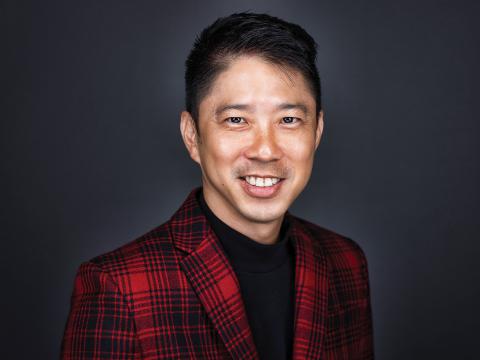
For this industry leader, becoming SEMA’s new vice president of marketing is the culmination of three decades of personal and professional commitment to the performance-car culture and automotive aftermarket.

RJ de Vera knows that a key part of his mission at the Specialty Equipment Market Association (SEMA) is developing and implementing a digital-first, multi-channel marketing strategy to expand brand awareness and build customer affinity for SEMA and its members. He has the experience, having spent 12 years at 3M, with the last seven as global leader of digital marketing and public relations for the Meguiar’s Car Care brand. Before that, de Vera helped build corporate image vehicles with OEMs including Honda, Lexus, Mitsubishi, Mazda, and Toyota.

De Vera also helped American Racing, VeilSide Japan, and Vorsteiner design and market aftermarket parts and accessories. When PepsiCo., Valvoline, Boost Mobile, Michelin/BFGoodrich, and Microsoft/XBOX needed consulting on automotive-related marketing projects, they called de Vera.

Just over two decades ago, de Vera consulted for “The Fast and The Furious,” the movie that helped launch many young enthusiasts into the car hobby. He even rented his customized Honda S2000 to the production company for use in the film. Now, he combines that life and professional experience for a prominent job in the automotive aftermarket. Recently, he shared his plans with PRI.

PRI: What pivotal moments in your life launched you into the car hobby?

de Vera: I fell in love with customized and modified vehicles before I had my license, so much so that I stopped playing high school sports. I got a full-time summer job and then went part time during school to buy parts for a car I didn’t even have yet. In senior year, I started a business selling performance parts out of my mom’s condo. Then, during college, becoming a magazine editor at Petersen Publishing opened my eyes to the car culture well beyond Southern California.

PRI: What are you most looking forward to in this job?

de Vera: At Meguiar’s, I contributed to a culture but that was just one brand. At SEMA and PRI, I have the opportunity to help other brands and organizations to build better versions of themselves.

PRI: What aspect of your career would you say best helped prepare you for this job?

de Vera: I understand global marketing and strategic thinking from a Fortune-100 perspective. I’ve been a business owner, I’ve been in big corporate, and I’ve consulted for automotive aftermarket companies. I’ve seen all sides of what it means to be a member or enthusiast in the car culture. I think all of that will be beneficial in terms of perspective. It’s prepared me to promote and market for the success and prosperity of our members.

PRI: How do you think you can make the biggest impact at SEMA?

de Vera: My mindset and style are about stimulating progress within the association. Many people know PRI or SEMA for their shows. I want to bring some light to all the things that we do as an association and all the member services we offer. We’re still protecting everyone’s freedoms to be able to modify and customize their vehicles and to turn street cars into race cars. I’ve done that myself several times.

PRI: How important is it to address the youth car culture for SEMA growth?

de Vera: It’s very important to bring new people in. Millennials and Gen Z are big populations, 80 or 90 million just in the US and close to 200 million globally. There may be a smaller percentage of young people getting involved with cars than 30 years ago when I got started, but because the population size is so big, the number is still large. We can be more welcoming and inclusive with our events and programs, especially now that we’ve opened membership to individuals.

PRI: How is opening membership to individuals going?

de Vera: It’s just starting. We’re still honing in on what individual members are going to value. This is an opportunity to bring in enthusiasts as another voice in the association and as another base that we can serve.

PRI: What are your key near-term and long-term goals?

de Vera: We want to evolve some of our marketing to be digitally minded or digital-first. More than just digital, though, it’s about blending the offline and online efforts. Whether its social media, paid digital, our websites or influencer programs, we want to take the next steps to be an even better resource to our members.

PRI: What is one trait you admire in others and why?

de Vera: First is curiosity, which opens people’s minds. Probably the trait I admire even more is having a growth mindset. It’s about being open to the idea that nothing’s perfect and that you can be better each day.

PRI: What professional or personal accomplishment are you most proud of?

de Vera: To have had a career in the automotive aftermarket for close to 30 years. I feel proud and fortunate that I’ve been able to continue to work in this industry that I love.

PRI: Is there a recent mistake that you’ve learned from?

de Vera: Lots of times, as professionals, we’re go-go-go and very focused, but sometimes that focus leads us down a narrow path. There were times when I was going too fast, and I didn’t pause to audit and have a “review, renew, recommit” mentality to make sure I was still going down the right road.

PRI: What’s one thing you can’t live without, aside from your devices?

de Vera: It’s two things, closely tied together—good music and a manual transmission. I love driving down a great road, whether it’s the PCH or somewhere in the canyon, with some Nineties hip-hop playing, because that’s what I grew up with. I also own a dual-clutch car. I love technology, but I also love things that are classic.

PRI: What is a current build you’re excited about?

de Vera: A few months ago, I came across a black S2000 with red interior, which was like my original one 20 years ago. It was serendipitous that I had an opportunity to purchase this car close to the anniversary of the first Fast and Furious movie, so it just felt right to buy it and create a tribute build. I want to build it with modern parts from member companies.

RJ de Vera

Title: Vice President of Marketing

Organization: SEMA

Hometown: Irvine, California

Fast fact: Beyond his love of cars, RJ de Vera said, “I’m a big sneakerhead, foodie, traveler, hiker, yogi, and cardio boxer. I feel that inspiration can come from many different places.”
September 2022
By
Jim Koscs

Stop Doing That…Do This Instead: Competing With Nearby Tracks

Submitted by johnc on Tue, 08/16/2022 - 11:55
image 1

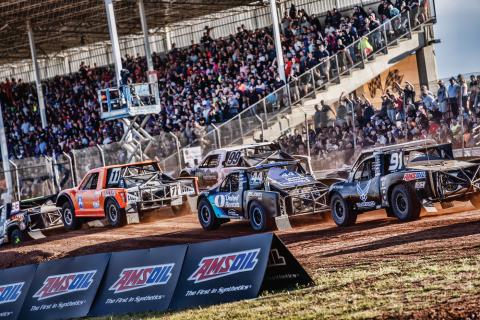
The AMSOIL Championship Off-Road Series fosters a partnership among its tracks in a number of ways, including monthly calls with track representatives. “To be successful we all had to be on the same page,” said Frank DeAngelo. “We work very hard and very closely with those groups to make sure everybody’s sharing in success.”

An improved experience can be had by all when race promoters work together to unify rulebooks and stagger events and programs.

We have written plenty about the negative effects that the pandemic and its aftermath have had on racing in America. Those very effects, though, may be doing something positive when it comes to the relationships between local race tracks.

“Because of our current situation, with gas shortages, tire shortages, supply chain shortages, you name it, we’re starting to see tracks working together,” said Larry Boos, whose promotional efforts encompass the Montpelier Motor Speedway in Montpelier, Indiana, and the Gas City I-69 Speedway in Gas City, Indiana. “Short tracks in America are beginning to suffer, and this is probably one of most challenging years that a short-track operator is going to face. Now it’s really a matter of finding the way to survive.”

Boos made it clear that he had “no answers” to this situation, “but I do have suggestions” as to how tracks could be successful by cooperating, he added.

Scheduling: The practice of booking against another race track’s major event is disappearing, according to Boos. “More tracks are saying, ‘You stay off my special event and I’ll stay off yours,’ so everybody can get that payday they need to remain in business.”

Tracks that limit racing to a special event, or racing just once a month, “are doing much better, because they’ve induced a supply-and-demand thing,” he added. “There’s a demand for racing, but racing every week can diminish that demand.” Ideally, he said, “if there are three or four tracks within a 100- to 150-mile radius that all run on a Saturday night, they could agree that one takes the first Saturday of the month, another takes the second Saturday, and so on. That way race fans know if it’s the third Saturday of the month, they’re going to XYZ Speedway.”

Class specifications: “Promoters want to make rules specific to themselves, so their superstars stay at their track,” said Boos. Making the rules more common so racers can race at multiple tracks helps to keep car counts up, “so we’re trying to do away with the 14-page spec sheet that would require cars to race only at our facilities. We’ve taken the best of the rules from tracks within a 75- to 100-mile radius and tried to come up with a common set that would allow drivers to go from track to track.”

Cross-promotion: “The old-school way of thinking was you ignored the track down the road because it was your enemy,” Boos said. “Now it’s your ally. Saturday night at Montpelier we’re announcing all the Friday night races coming up at Gas City, Limaland over in Ohio, Shady Hill down the road, or Kokomo. Race fans are going to find out, so why hide it from them?”

Cross-promoting will also “amp up your game,” Boos contended. “You’ll notice pretty quickly if you’re promoting the track down the road and you see your car count or attendance going down. You’d better see what they’re doing that you’re not, so you can keep race fans at both places.”

Implementing these or other ideas would take a roundtable discussion, Boos said, with interested parties in one room and a “reputable moderator” there to make sure the “little track operators don’t feel like it won’t do them any good because all that’s going to be there are the big dogs, and they won’t listen to the little dogs.

“It’s going to take us all working together,” he added. “Some are going to have to give, some are going to have to take. But hopefully at the end of the year the bottom line is rosier for all.”

image 2
Larry Boos, who promotes races at several Indiana speedways, believes in aligning division names to make it easier for media to cover the races and support local tracks. “We have many division names—Street Stock, Bombers, Super Streets, Thunder Cars, Factory Stock—all for basically the same car.”

Where It’s Working

“Two and a half years ago, off-road closed-course racing was dying,” admitted Frank DeAngelo of the AMSOIL Championship Off-Road series, based in Albertville, Minnesota. The track owners in the upper Midwest came together in search of a sanctioning body and contacted the International Series of Champions (ISOC). “They do snowmobile racing,” DeAngelo explained, “and about 10 years ago turned that series around when it was ready to go under as well.”

In creating the AMSOIL Championship Off-Road series, ISOC built a business model that’s “kind of unique,” DeAngelo said. For each race on the tour, “we’re responsible for everything that involves running the races and the coverage of them. The tracks are responsible for promoting their event and maintaining the track while we’re there. They pay a sanctioning fee to us, and they keep all the funds from the gate, concessions, food, and the vendor area.

“We taught them how to work together and have been up front with roles and responsibilities and how we can help one another,” he added.

DeAngelo pointed to two key practices that help make this work for all concerned. One is what he called the “sacred date.”

“In most cases, the event they have with us is probably one of the larger, if not the largest, in their area. This year, instead of signing a one-year deal, we signed a three-year deal with the tracks. This was good for the stability of the series, but it also enabled the tracks to say, ‘On this date, every year for the next three years, this race is coming here.’ That has helped them and allowed other tracks close to them to plan around their schedule.”

ISOC also instituted monthly track calls, where “a representative from each track gets on the phone with us, and we talk about anything that’s new with us or on their end,” DeAngelo said. “I felt in order to be successful we all had to be on the same page, and the only way to be on the same page was to treat everyone the same, treat them fairly. The best way to demonstrate that was having these monthly track calls.

“We’re partners with the tracks, the racers, and the sponsors,” De Angelo added. “We work very hard and very closely with those groups to make sure everybody’s sharing in success. That seems to have worked extremely well.”

SOURCES

AMSOIL Championship Off-Road
champoffroad.com

Gas City I-69 Speedway
gascityi69speedway.com

Montpelier Motor Speedway
racemontpelier.com

September 2022
By
Drew Hardin

Ask the Experts: Fuel Pump Performance

Submitted by johnc on Tue, 08/16/2022 - 11:34
image 1

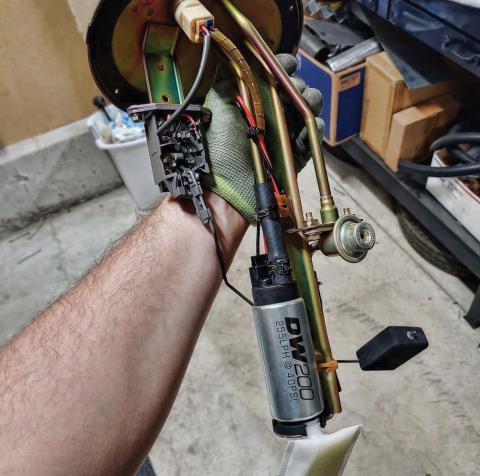
Voltage drop can be a problem if factory wiring is used in the installation of an aftermarket fuel pump, said Brandon McDaniel of DeatschWerks. With OE wiring, the pump could be “down on flow because the pump is not getting the voltage it needs to provide its full capability.”

Improper installation and setup can rob performance potential and even lead to catastrophic failures. While it’s easy to assume that higher numbers are better when it comes to flow rates and system pressure, there are situations where the opposite can be true, so we’re separating fact from fiction.

A fuel pump might not have the sex appeal of a cylinder head or a turbocharger, but it plays a pivotal role in an engine’s performance and durability. That’s especially true in motorsports, where fractions of a second often determine the finishing order and reliability can be the difference between a podium and a DNF. Inefficiencies in any system tend to be amplified out on track, and when it comes to fuel pumps, the consequences can be severe.

“It can go as far as taking out an engine,” said Sam Chaysavang of AEM Performance Electronics, Hawthorne, California. “These problems can be really frustrating if you’ve spent all this time, energy, and money getting the car ready only to end up fighting performance issues and rushing to fix failures once you get to the track.”

To avoid those potential headaches and extract all of the capability from the fuel system, the pump needs to be dialed-in for the application. This is a situation where overkill can actually be counterproductive.

Work Smarter, Not Harder

“One common mistake we see with external fuel pumps is people installing the pump too high relative to where the pickup is,” Chaysavang explained. “These pumps are typically designed to be gravity fed; to push the fuel rather than pull it. If the pump has to work harder to lift fuel to feed itself, it’s not going to be able to deliver as much on the output side. That can also lead to fuel cavitation, which can lead to pump failure. As the pressure drops, the vaporization point drops as well, so it’s critical to maintain good pressure.”

Brandon McDaniel of DeatschWerks in Oklahoma City, Oklahoma, pointed out that problems also often arise when builders purchase a pump without planning ahead.

“We generally focus on application-specific install kits, but sometimes people will just go buy a pump off eBay or something like that and try to figure out how they’re going to install it once it arrives. If that pump is a different design than what they were using previously, they might try to make room for it by deleting components that they assume are redundant or unnecessary, but are actually very crucial to the fuel system’s operation. So they might remove a factory filter to make some space, but there are instances where the pressure regulation is attached to that filter. So you have this pump in there now, and suddenly you have 80 or 90 psi instead of the 58 psi you’re supposed to have.”

DeatschWerks’ Dakota Bowman said that incorrect pressure has a tendency to throw the engine tune off. “And you’re going to be dumping the majority of the flow back into the tank because now you’re relying on the pump to regulate the pressure. That additional pressure is also creating more heat, so the end result is actually less flow.”

Bigger Doesn’t Necessarily Mean Better

Bowman also told us that people have a tendency to buy fuel pumps for the setup that they want rather than the one they have, and that leads to mismatched components that can negatively affect efficiency.

image 2
As the fuel pressure increases in a performance engine, “the amperage will need to increase as well,” said Sam Chaysavang of AEM Performance Electronics, “so make sure the amperage rating of the wiring and the connectors matches the expected amperage draw based on your engine combination and setup.”

“A lot of people like to go too big—they’ll oversize the pump for the application because they want to size the pump for what they’re eventually planning to do rather than what they’re doing right now,” he said. “Maybe the car is making 500 hp now, but they’re hoping to get it over a thousand later on, so they select a pump that’s totally inappropriate for the application. In those instances, you also end up returning too much fuel, which compresses the fuel over and over, which in turn generates more heat and eventually ends up boiling the fuel.”

But Chaysavang noted that additional headroom can be beneficial to fuel pump performance when it comes to filter selection. “A filter’s maximum flow rate is typically based on what the filter flows when it’s brand new and clean, but that’s going to go down once it’s put into use and starts to get dirty. If you spec out a filter that’s right on the edge of what you need, it might not flow the fuel that’s required for that power level once the filter has captured any debris that has been going through the fuel system. So if you’re not planning to change that filter out regularly, it’s a good idea to spec out a filter that can handle maybe 20% or 30% more flow than you need.”

Wired For Success

McDaniel also explained that while the existing wiring can be convenient to use in order to make the necessary connections when swapping out a factory fuel pump for an aftermarket unit, it often will not stand up to the voltage demands of a larger aftermarket pump.

image 3
Amperage requirements for a fuel pump’s wiring and connectors will vary based on the engine combination, said Sam Chaysavang of AEM Performance Electronics. In naturally aspirated engines, the fuel pump will typically run at a fixed pressure, while fuel pressure will vary with boost pressure in a forced-induction application.

“Ideally you want to run brand new, large-gauge wire with a relay to the pump,” he said. “The big issue is voltage drop—you might be at 14 volts at the fuse box, but by the time it reaches the pump it could be down to 11 or 10 volts if you’re not using the proper wiring. Now you’re down on flow because the pump is not getting the voltage it needs to provide its full capability.”

Chaysavang added that amperage requirements for both the wiring and the associated connectors can vary based on the engine combination. “In a naturally aspirated application, the fuel pump will typically run at roughly a fixed pressure based on what the mechanical regulator is set to. But with a boosted application, the fuel pump pressure will vary with the boost pressure if you’re running a fuel pressure regulator that is referenced to manifold pressure. As the fuel pressure increases the amperage is going to increase as well, so you want to make sure the amperage rating of the wiring and the connectors matches the expected amperage draw based on your engine combination and setup.”

SOURCES

AEM Performance Electronics
aemelectronics.com

DeatschWerks
deatschwerks.com

September 2022
By
Bradley Iger

Lincoln Electric Announces New Role For Peter M. Pletcher

Submitted by laurap on Mon, 08/15/2022 - 18:40

Lincoln Electric Holdings—based in Cleveland, Ohio—has announced that Senior Vice President, President International Peter M. Pletcher will oversee the company’s businesses in the Middle East, Africa, and the Asia Pacific regions. This is in addition to his current responsibility for operations in Europe, Turkey, and the Commonwealth of Independent States (CIS) region.

Pletcher succeeds Steve Hedlund, who was recently promoted to executive vice president, chief operating officer. 

Pletcher will lead the International Welding segment’s “Higher Standard 2025 Strategy” initiatives in an effort to accelerate growth and improve margin and return performance. He will report to Steve Hedlund and will continue to serve as a member of Lincoln Electric’s Management Committee.

Pletcher joined Lincoln Electric in 1995 and has held leadership positions in sales, applications engineering, marketing, product development, and operations.

For more information, visit lincolnelectric.com.

August 2022

Nostalgia Drag Racing League (NDRL) Announces Modified Production Class

Submitted by laurap on Mon, 08/15/2022 - 18:27
NDRL logo


Officials from the Nostalgia Drag Racing League (NDRL) have announced the addition of a modified production class after Midwest Modified Production President Danny Kellams and the NDRL have agreed to merge Midwest Modified Production into NDRL. 

“This addition of these vintage, high-winding, wheel standing, gear slamming race cars is sure to please the fans [as] they did years ago,” said NDRL Vice President Bob Eaker.  

Modified Production will now be part of the NDRL Hot Rod Nationals at Indianapolis, Indiana, September 10–11, and the Fall Finals event in Bowling Green, Kentucky, October 15–16. 

The class will then run a full schedule in 2023, with details to be announced in the coming weeks. 

The Nostalgia Drag Racing League (NDRL) is a 501(c)(3) mid-west organization formed in 2010 by a group of dedicated volunteer racers. NDRL has developed one of the industry’s largest, most successful nostalgia drag racing championship points series. 

For more information, visit nostalgiadragleague.com.

August 2022

Advocacy Corner

Submitted by jeffreyc on Mon, 08/15/2022 - 13:07


Tracking legal, legislative, and regulatory developments impacting the racing and performance industry.

PRI’s Washington, DC-based advocacy team, along with race track ambassador Tom Deery, work continuously to protect and assist tracks, sanctioning bodies, and motorsports businesses around the nation. This month, we are tracking several initiatives, including racing legend Richard Petty’s support for important motorsports legislation, PRI/SEMA leadership meeting with lawmakers in DC, and HP Tuners teaming up with PRI staff to help facilitate a tour with a congressman, whose subsequent backing of the RPM Act marks a big win for the industry.

Richard Petty Joins PRI/SEMA CEO On Capitol Hill

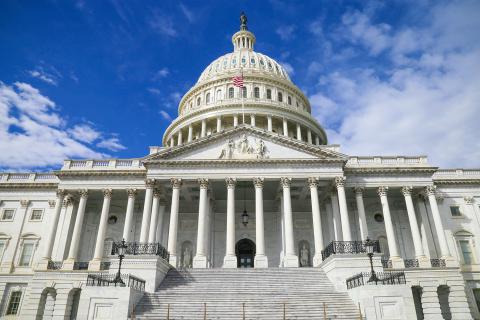
In July, “The King” Richard Petty joined PRI/SEMA CEO Mike Spagnola in the nation’s capital to advocate for Congress to pass the Recognizing the Protection of Motorsports Act (RPM Act). The bipartisan bill (H.R.3281/
S.2736) protects Americans’ right to convert street vehicles into dedicated race cars and the motorsports-parts industry’s ability to sell products that enable racers to compete.

Like most NASCAR drivers who competed in the 1960s, 1970s, and 1980s, Petty raced cars that started as street-legal vehicles. However, the EPA maintains that such modified race vehicles are not legal under the Clean Air Act, threatening many classes of racing along with an industry that employs tens of thousands of Americans and contributes more than $2 billion to the US economy each year.

2
From left to right, SEMA Board Member Ted Wentz, Richard Petty, Rep. Richard Hudson (R-NC), and PRI/SEMA CEO Mike Spagnola.

Petty and Spagnola sat down with key members of the US Senate and House of Representatives to advocate for the interests of racers, enthusiasts, builders, tracks, sanctioning organizations, and businesses, while also looking to gain stronger congressional support to protect one of America’s oldest pastimes and hobbies. In an effort to curtail the EPA’s overreaching and extreme enforcement of the Clean Air Act, Petty and Spagnola appeared in Washington, DC, to push for passage of the RPM Act, which awaits committee action in the House of Representatives and Senate.

“The EPA is overstepping its jurisdiction and penalizing small motorsports parts businesses,” Petty said. “The RPM Act is essential to the racing industry and protecting the careers of young racers all over the country. During most of my racing career, my fellow NASCAR drivers and I competed in race cars that started out as street-legal vehicles.”

“There’s no bigger name in motorsports than ‘The King,’” said Eric Snyder, PRI’s Director of Congressional Affairs. “Richard Petty won 200 NASCAR races. Most of his wins came while he was competing in race cars that were converted from street-legal vehicles. Some of the most important lawmakers in DC were excited to meet The King and learn why he is so passionate about protecting racing and the ability to modify street vehicles for the track.”

Petty’s visit “produced immediate results,” Snyder added. “It led to House Republican Whip Steve Scalise (R-LA) co-sponsoring the RPM Act. Meetings with Mr. Petty were integral to firing up key lawmakers, motivating them to lobby their colleagues in support of the RPM Act.”

Petty and SEMA met with several key congressional members to discuss the importance of the bipartisan RPM Act. They included Sen. Richard Burr (R-NC), RPM Act lead sponsor; Sen. Thom Tillis (R-NC), RPM Act original co-sponsor; Sen. John Barrasso (R-WY), Senate Republican Conference Chairman and RPM Act co-sponsor; Indiana Sens. Todd Young (R-IN) and Mike Braun (R-IN), RPM Act co-sponsors; Sen. Joe Manchin (D-WV), RPM Act original co-sponsor; House Minority Leader Kevin McCarthy (R-CA); House Minority Whip Scalise (R-LA); Rep. Patrick McHenry (R-NC), RPM Act lead sponsor; Rep. Richard Hudson (R-NC), RPM Act lead Republican co-sponsor; and RPM Act original co-sponsors Rep. Markwayne Mullin (R-OK), Rep. Ted Budd (R-NC), Rep. Doug LaMalfa (R-CA), and Rep. Bill Posey (R-FL). 

The RPM Act reverses the EPA’s interpretation that the Clean Air Act does not allow a motor vehicle designed for street use—including a car, truck, or motorcycle—to be converted into a dedicated race vehicle. This American tradition was unquestioned until 2015, when the EPA took the position that converted vehicles must remain emissions-compliant, even though they are no longer driven on public streets or highways.

“Now is the time for other racers and racing personalities to get your network engaged in the fight to pass the RPM Act,” said Snyder. “Tell them to go to saveourracecars.com, which makes it easy to sign a letter to lawmakers in support of the bill, call members of Congress with the click of a button, and access talking points to prepare for a call with congressional staff. And, if you want to go further, invite your lawmakers to the track or to visit your business. Email me at erics@sema.org. I’m ready to help.”

Lawmakers Back RPM Act Following PRI/SEMA Leadership Visits

Prior to his visit with Richard Petty, PRI/SEMA CEO Mike Spagnola visited Washington, DC, in June to lobby for the passage of the RPM Act. There, he met with key members of Congress who are integral to the legislative process on the bill and urged them to act.

With strong legislative support from more than 160 members of Congress, thanks in part to unprecedented grassroots advocacy from industry members and enthusiasts, the RPM Act is well-positioned to be passed. Still, it must be voted on to become law this year.

In an effort to help get the bill over the finish line, Spagnola met with key elected officials, including strong bill supporters and members who are best positioned to shape automotive policy. Specifically, Spagnola met with the following lawmakers about the RPM Act: Sen. Shelley Moore Capito (R-WV), an RPM Act co-sponsor and Ranking Member on the Senate Environment and Public Works Committee; Sen. Mark Kelly (D-AZ), RPM Act co-sponsor and member of the Senate Environment and Public Works Committee; Sen. Maggie Hassan (D-NH), an RPM Act co-sponsor; Rep. Cathy McMorris Rogers (R-WA), the senior Republican on the Energy & Commerce Committee; Rep. Debbie Dingell (D-MI), a strong voice on automotive issues on the E&C Committee (Rep. Dingell’s new district will include Plymouth, Michigan, which is home to SEMA’s Detroit Garage); and Rep. Mike Thompson (D-CA), an RPM Act co-sponsor and the Chairman of the Congressional Motorsports Caucus. 

“We had very productive meetings with some of the most important lawmakers in the automotive policy space,” said Spagnola. “The momentum for passing the RPM Act is building, and the progress we are making is in no small part thanks to the phone calls and letters members, the racing community, and automotive enthusiasts have made to Congress. Now is the time to keep our foot on the gas and continue to remind lawmakers that they must pass the RPM Act before the November election. It is time that Congress delivers for the men and women in our community and protects the right to convert and sell parts for race vehicles.”

The RPM Act (H.R.3281/S.2736) is a bill that would protect the future of racing by clarifying in federal law that it is not illegal to modify and convert a street vehicle into a dedicated race vehicle. The House and Senate must pass the RPM Act by Jan. 3, 2023, for it to become law during the 117th session of Congress. Businesses and enthusiasts are urged to continue to reach out and contact their legislators at saveourracecars.com and push for passage of the RPM Act this year.

“The motorsports industry positively impacts the lives of millions of Americans. From the racers, race crews and teams, to the businesses that manufacture and market parts, and even the fans who support the sport, the industry is far-reaching,” said Eric Snyder, PRI’s Director of Congressional Affairs. “The best way to educate lawmakers and congressional staff on why they need to support the RPM Act is to provide them with information about the role of motorsports parts businesses and the race tracks in the state or district they represent.”

Rep. Schneider Voices Support For RPM Act During HP Tuners Visit

PRI thanks Congressman Brad Schneider (D-IL), who announced his support for the RPM Act during a recent visit to diagnostic, logging, calibration, and data acquisition solutions provider HP Tuners. 

Rep. Schneider toured the Buffalo Grove, Illinois-based facility and met with company employees to learn more about how software and hardware tools are designed and manufactured. These components are used in racing applications as well as to help bring vehicles into and maintain emissions compliance. He also saw firsthand how important the RPM Act is to the specialty automotive aftermarket and to HP Tuners in particular, including its leadership and workforce. 

“We were happy to welcome Congressman Brad Schneider to come take a tour of HP Tuners and share some insights with our employees,” said co-owner and CEO Keith Prociuk, who founded HP Tuners more than 20 years ago to help offset the costs associated with his passion for racing. “Thank you to the Congressman for visiting and engaging in a thoughtful dialogue about some of the most important issues facing the industry, including the RPM Act, the right to repair and modify vehicles, tax policy, and data protection/cyber security. We appreciate Rep. Schneider voicing his support for the RPM Act, which is so critically important to our company and racers like myself.” 

This recent visit was coordinated by PRI’s team based in Washington, DC, as part of an effort to pass bills that protect motorsports and enable the racing parts industry to thrive. Whether in Washington, DC, or state capitals around the country, public policy battles are won by organized interests that have relationships with lawmakers. In short, the organizations that shape public policy are the businesses and individuals who know their lawmakers and, more importantly, their lawmakers know them.

Hosting members of the US House of Representatives and Senators at your businesses is integral to developing meaningful relationships with lawmakers and helping them to understand the industry so they can advocate for policies that defend and expand it.

“Rep. Schneider was impressed by HP Tuners, as his tour of the company helped him to understand the importance of the RPM Act,” said Eric Snyder, PRI’s Director of Congressional Affairs. “HP Tuners’ Founder and CEO Keith Prociuk and HP Tuners Chief Operating Officer Andrew Mernone are passionate about racing. Their advocacy for the RPM Act and the importance of the legislation to the company is very compelling. Hosting a member of Congress at your business or taking them to the race track is the best way to develop a relationship and get your lawmakers to join our campaign to pass the RPM Act.”

The first step in developing these relationships is to introduce yourself and invite them to your business. PRI’s government affairs staff will draft an invitation, send it to your lawmakers, coordinate the visit by providing a briefing prior to the event, and manage day-of logistics in coordination with you and your company. To host a lawmaker at your motorsports business, contact Eric Snyder at erics@sema.org.

September 2022
By
Laura Pitts

PRI Education: How To Stay On Track With An Oil Analysis

Submitted by jeffreyc on Mon, 08/15/2022 - 10:41

It’s important to collect a clean oil sample in order to accurately perform an oil analysis. A source at Hot Shot’s Secret recommends first making sure the oil is warm, then letting the initial oil drain while avoiding any sediment from the oil pan.

Keep that race engine pumping at full power by incorporating this process into your regular maintenance schedule.

An oil analysis is similar to visiting your doctor for an annual blood test. The doctor can determine your overall health from a very small sample of your blood. It shouldn’t come as a surprise that the same can be done with lubricants in engines, gearboxes, transmissions, and more. An oil analysis can help determine if you are using the correct lubricant to protect your investment, and also helps monitor wear rates, viscosity, and lubricant breakdown, which can help ensure you stay on track on race weekend. 

It is important to note unless you are part of an IndyCar or NASCAR series, the average racer will not have access to the equipment and technical professionals to have an oil analysis done at the track. Still, valuable data can be mined from samples sent out for analysis. The focus of this article will be on engine oil, though the same methodology could also be applied to other parts of a race vehicle.

The most important information an oil analysis can provide is in the overall comments made by the oil analysis technician. The technician will take past results and the existing results and formulate a course of action and recommendations. When sending off your sample, provide as much information as you can, including equipment type, mileage or hours used, and if any oil has been added to the base oil since the last sample. You also want to collect the sample the same way each time for repetitive results. It is recommended to use a pump method and clean tube or allow some oil to drain before retrieving the specimen.

Most motorsports involve extreme conditions that challenge the ability of lubricants to perform for long periods of time without failure. As a result, racers change their fluids often—sometimes more than needed. But with an analysis, racers can actually decrease maintenance costs by determining the proper drain interval. Plus, they can monitor and replace failing parts before a more complex and expensive repair is required.

Results from an oil analysis are broken into three parts: elemental analysis, contamination analysis, and oil condition analysis. Lubricants need to stay in balance to perform at their maximum efficiency, so if any one part is too far out of specification, the lubricant has failed.

Elemental Analysis

The elemental analysis detects the amount and type of elements in the oil from component wear, contamination, and typical ingredients found in oil. When an oil-lubricated component begins to wear, small amounts of metal become suspended in the oil. These trace amounts of metal, if left unattended, can lead to part failure. 

Since components in a race car are made of several different metals, an oil analysis technician can usually determine which component is showing signs of wear by analyzing the type of metal and the concentration found in the test sample. For example, if the technician finds iron, the source would likely be the engine block, cylinder liners, or piston rings, depending on the engine construction.

A wear metal analysis is performed by emission spectroscopy, which provides the concentration of metals for wear, additive concentration, and contamination. Often, components have different levels of acceptable concentrations of wear metals. For example, a transmission or gearbox can withstand higher levels of wear metals compared to an engine, so be sure to find a trained oil analysis technician who can determine critical levels and provide the appropriate recommendations. Keep in mind, all systems are different. Some systems by their design will produce high levels of wear metals. It is essential that periodic test results are compared in order to establish if any trends are emerging.

The following is a “rule-of-thumb” for metal concentration limits in parts per million (ppm) for an engine: 


Diesel Engine

Gasoline Engine

Iron

80

300

Chromium

25

40

Lead

50

n/a

Copper

50

75

Tin

25

40

Aluminum

30

40

Nickel

10

15

Silver

5

5

Silicon

5

20

Contamination Analysis

Contamination analysis detects the physical presence of unwanted fluids or contaminants including water, fuel, and antifreeze; particles such as dirt and metal; and oil byproducts such as soot, nitration, and sulfur. These contaminants can be internal or external. Many oils use various additives to obtain certain levels of performance, however, so provide a reference sample to your oil technician to determine the expected life available for the lubricant.

When lubricants oxidize, they form reactive materials that can re-constitute into different deposits. Oil analysis can help to identify the degree of oxidation that has occurred. More sophisticated analysis may have to be performed to identify the exact contaminant. Oxidation, sulfur, soot, fuel, antifreeze, and nitration are measured by an instrument called a Fourier Transform Infrared Spectrometer (FTIR). Values are compared to a baseline reference of the oil.

Oil Condition Analysis

Finally, an oil condition analysis tests viscosity and the oil’s ability to neutralize acids (Total Base Number for engines or Total Acid Number for non-engines). Oil viscosity breaks down due to the extreme heat and pressure during the combustion process. Once the oil is broken, excessive wear and part failure is shortly behind. When this happens, changing the fluid sooner or finding a better lubricant should be considered.

2
An oil analysis can be performed using different methods and equipment, according to our source at Hot Shot’s Secret, who pointed to the machine pictured here as one the company uses to lab test during the formulation stage of product development and research.

As an oil begins to break down, various types of acids form, which can lead to further oil degradation, metal wear, and additive depletion. The Total Base Number (TBN) measures the amount of basic (alkaline) materials in engine oil that will neutralize acids. The TBN decreases as oil approaches the end of its useful life, so the lower the value, the less effective the oil will be at neutralizing acids.

Work with your lubricant supplier to review your current program and determine what can be improved. If everything is running smoothly, use the opportunity to dial in your drain intervals to keep maintenance costs in check. Using the proper lubricants and changing at the correct intervals will not only save you money, it can also maximize the performance of your vehicle and help lead to more victories.

Hot Shot’s Secret Digital Marketing Manager Josh Steinmetz is a true gearhead and motorsports enthusiast. He grew up on a farm before earning a degree in Agricultural Engineering from Ohio State University. He is responsible for managing the company’s ecommerce sales and digital strategy. He also assists with the National Tractor Pullers Association involvement and the Steve Sommers Overnight Drive radio show.

September 2022
By
Josh Steinmetz

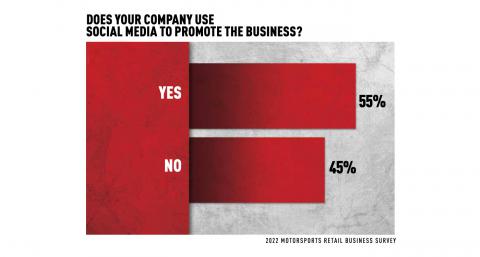
PRI Motorsports Retail Business Survey: Social Media

Submitted by jeffreyc on Mon, 08/15/2022 - 09:47


Planning for business success through digital marketing and content creation requires the use of various platforms that offer different solutions to deliver an effective message.

In the beginning, and for a long time thereafter, the marketing of performance equipment was pretty straightforward. Manufacturers either relied on word of mouth in pit areas to make people aware of their advances, or else they took out an ad in one of the numerous performance-car magazines that then existed, or perhaps put up a jazzy display in a brick-and-mortar speed shop. The practice of marketing goods, whether aimed at motorsports or not, has been walloped by seismic upheaval since then.

For instance, many of those car magazines and local speed retailers no longer exist. We live in an age when producers make contact directly with their prospective customers on a highly individualized basis through the use of social media. The new frontier of specialty automotive marketing winds its way today among various platforms that can be used effectively to get a manufacturer’s or marketer’s message out. Facebook, TikTok, Instagram, and YouTube are all being used to put the word about new products or services in the lap of a prospective customer with precision-guided accuracy. The challenge lies in picking the platform that’s the best fit for the message, the product, or the customer. 

One excellent case study on how to do it exists in the form of DFW Speed Shop in Dallas, Texas, a full-service retail and conversion firm that specializes in building and outfitting both street rods and off-road vehicles. DFW is one of several clients of Let’s Glow Media, which develops social media strategies aimed at the motorsports industry. Let’s Glow founder Katherine Brunner is a contractor who developed DFW’s social media presence.

1

“The speed shop is on Instagram, TikTok, and Facebook,” she explained. “The biggest message that we’re trying to get across is not so much trying to get people to buy into the service, but instead the lifestyle. People want to think they know the guys in the speed shop, even though they don’t live in Dallas. That’s the community we’re trying to create with this. Personally, I think TikTok is the biggest platform out there that’s up and coming for these businesses. It’s all about creating an informal, ad hoc demand for that content.”

Brunner said that DFW Speed Shop repurposes its content message across all three platforms. “For the most part, it’s the same kind of content since we already know that we have different communities for each platform, so it’s important that those messages be showcased across all three.”

Empirically, using social media has clearly boosted DFW Speed Shop’s visibility in the wider world. Brunner has compiled statistics demonstrating that DFW has had about 409,000 video views in the last 90 days on TikTok, all organic growth, which means the speed shop didn’t pay for any of those additional views. DFW has also reached about 40,000 Instagram accounts over the same time period. Brunner said that DFW started using TikTok less than a year ago and has already built a community of followers. Each one of DFW’s Instagram posts yields thousands of views, she said. 

2
The social media strategy for DFW Speed Shop is to post content across TikTok, Instagram, and Facebook, said Katherine Brunner, who developed the company’s plan. Because each platform appeals to a different community, the same content message can be repurposed across all three.

“Facebook is more oriented toward our older customer,” Brunner said. “It’s hard to tell exactly what TikTok is right now because it’s so new, and it seems to be mostly younger or Gen-Z people, but there are some older people on there.”

Regardless of platform, Brunner recommended some basic procedures for companies new to social media. First, she said, advertisers should make the time to post consistently across any platforms they use, to keep the message fresh and viewers engaged. Devote time each working week toward planning what to say on social media that particular week. If you’re too busy, hire a consultant to do it for you. Brunner strongly advised engaging on TikTok, because of its newness and largely informal content. And realize that if the advertiser’s content lacks visual appeal, it’s probably going to be a bust.

Another firm that has a favorite platform is DRT Racing—it stands for Drag Racing Technologies—of South Amboy, New Jersey, which besides catering to import racers in quarter-mile combat also provides fabrication and dyno-tuning services to competitors in road racing, autocross, and drifting. Company co-founder Ralphy Estevez said DRT Racing has achieved its best social-media results since arriving on Instagram.

“It’s the easiest to use. I started with Facebook, but I’m an old guy and now you need a degree to work on it,” Estevez explained. “You go into the Instagram platform right from your smartphone and go from there.”

3
Ralphy Estevez of DRT Racing said Instagram has delivered the best results for his social media investment. Plus he finds it easy to use. “Once I post, I can link my Facebook, and it pulls from both at the same time. It’s much more user-friendly,” he explained.

DRT Racing started out on Twitter, but Estevez shied away because of its politics-heavy content. “I find Facebook and Instagram to be the best for advertising,” he said. “Another thing with Instagram is that once I post, I can link my Facebook, and it pulls from both at the same time. It’s much more user-friendly. I have a YouTube, but I’m working now on a separate one that will show people how to do things, how to unbox the product and such. I’ve already spoken to some of the companies, and they’re willing to do it. I think YouTube will end up being the bigger platform than all the rest because people like videos.”

Estevez said using social media allows DRT Racing to avoid the “out of sight, out of mind” reality, building buyer interest. “I try to help people keep up with the projects that I’m working on, and now people can follow along and may give me a call. It’s easier than the magazines I used to use, which used to be the way. Magazines were our social media.”

Balancing multiple social media platforms has also been a winning strategy for Vengeance Racing of Cumming, Georgia, a leading firm in performance parts, installations, and tuning across multiple generations of late-model American muscle cars, including the Chevy Corvette and Dodge Viper. Company owner Ron Mowen believes a wide-angle approach is intelligent. “I do not feel there is a platform that works best,” he said. “Each one attracts different viewers, so all of them are important to me. We do focus the majority of our attention on Facebook and Instagram, but also utilize YouTube, TikTok, LinkedIn, and others.”

4
Vengeance Racing owner Ron Mowen doesn’t believe one social media platform outperforms the others. “Each one attracts different viewers, so all of them are important to me,” he said. “We do focus the majority of our attention on Facebook and Instagram, but also utilize YouTube, TikTok, LinkedIn, and others.”

Getting the news out about what actually goes on inside Vengeance Racing’s shop is critical, Mowen explained. “Our focus is on promoting the results from our in-house performance builds, whether it be dyno results or track results,” he said. “We do this by sharing all relevant build information and modifications including before and after dyno comparisons, as well as pictures of the vehicle highlighting the build quality and attention to detail.”

Like Brunner and her clients at DFW Speed Shop, Mowen strives for message consistency, regardless of platform. “The content may change based on the platform being used,” he explained. “As an example, posting an Instagram story would be much different than posting a featured build on Facebook with text, pictures, and so forth. The message would be similar, but the content used to deliver the message would have to change.”

The methodology of getting customers’ eyes on your business is also fairly consistent regardless of which platform is being used, in Mowen’s estimation. “Each platform seems to attract its own unique audience and users, so having multiple platforms allows us to engage a broader range of potential clients with minimal changes to the content itself,” Mowen continued. “As an example, we use Meta Business Suite, which will post our content to Facebook and Instagram simultaneously, and also allow us to manage the content from one location.”

Sources

DFW Speed Shop
dfwspeedshop.com

DRT Racing
drtracing.com

Let’s Glow Media
letsglowmedia.com

Vengeance Racing
vengeanceracing.net

September 2022
By
Jim Donnelly

Team Canada Scholarship Announces Drivers For Inaugural 2022 TCS Shootout 

Submitted by laurap on Fri, 08/12/2022 - 17:39
Team Canada Scholarship logo


Team Canada Scholarship has announced the six young drivers that will compete for the chance to represent Canada in the Formula Ford Festival and the Walter Hayes Trophy race in the UK. The finalists have been chosen from a selection of top amateur Canadian drivers aged 16-20, from series including F1200, F1600, F4 America, and Canadian karting champions.

Team Canada Scholarship was formed in 2011 by Brian Graham of Brian Graham Racing to grow amateur motorsports in Canada by raising the sport's profile and providing opportunities for aspiring youth racers.

Two days of competition will be judged by a panel of renowned motorsports professionals, including IndyCar drivers James Hinchcliffe and Robert Wickens, Team Canada Scholarship's Graham, IMSA driver Kyle Marcelli, and renowned IMSA engineer Ian Willis. 

The shootout will be held at the CTMP Driver Development Track at Canadian Tire Motorsports Park in Ontario, Canada. 

The drivers selected for the Inaugural 2022 TCS Shootout: 
Robert Soroka, 
20, from Toronto, ON. Multi championship karting driver.
Louka St. Jean, 16, from Lorraine, QC. Competing in the F4 United States Championship.
Kevin Foster, 19, from Calgary, AB. Current Rotax Canadian kart champion and FEED Racing F4 finalist. 
Jake Cowden, 18, from Aurora, ON. Currently 2nd in Toyo Tires F1600 championship.
Emily Ryan, 19, from Barrie, ON. Competing in F1200.
Connor Clubine, 18, from Brantford, ON. Currently leading the Quebec F1600 series and is 4th in the Toyo Tires F1600 championship.

For more information, visit teamcanadascholarship.com. 

August 2022

Speedway Motorsports Promotes Ramage, Hires Faber To Executive Leadership Positions

Submitted by laurap on Fri, 08/12/2022 - 17:07
Speedway Motorsports logo

Speedway Motorsports—the marketer, promoter, and sponsor of motorsports entertainment—has announced Texas Motor Speedway General Manager Rob Ramage has been promoted to Speedway Motorsports’ senior vice president of government relations and deputy counsel. 

Replacing Ramage will be veteran AEG executive Mark Faber, who joins TMS after serving as senior vice president of Global Partnerships at T-Mobile Arena in Las Vegas.

Ramage’s promotion takes place immediately, and he will continue to serve as general manager at TMS until Faber assumes the position on August 22.

Ramage has worked for Speedway Motorsports since 2013,  serving first as general counsel & director of Governmental Affairs and senior vice president of Finance & Compliance at TMS. Prior, he practiced law in Dallas, Texas, focusing on complex litigation, intellectual property, and business transactions.

Faber joins Speedway Motorsports after spending the last 17 years with AEG, the sports and live entertainment company. During his tenure, he consulted on sponsorships and premium seating renovations for Daytona International Speedway and Phoenix International Raceway. 

Speedway Motorsports owns and operates 11 racing facilities across the US, including Atlanta Motor Speedway, Bristol Motor Speedway, Charlotte Motor Speedway, Las Vegas Motor Speedway, New Hampshire Motor Speedway, Sonoma Raceway, Texas Motor Speedway, Dover Motor Speedway, Nashville Superspeedway, Kentucky Speedway, and North Wilkesboro Speedway.

For more information, visit the Speedway Motorsports announcement here or visit speedwaymotorsports.com.

August 2022