Bridgestone Americas has announced plans to establish commercial operations for planting and harvesting a woody desert shrub called guayule as a domestic source of natural rubber in America’s desert southwest. Nashville, Tennessee-based Bridgestone Americas is the North American branch of the Bridgestone tire manufacturer based in Tokyo, Japan.
To date, Bridgestone has invested more than $100 million in guayule research as part of its effort to achieve carbon neutrality and 100% renewable tires by 2050.
As part of the new announcement, Bridgestone plans to invest an additional $42 million to establish commercial operations, with additional investment and expansion intended toward 2030. The company will also collaborate and partner with local farmers and Native American tribes to increase the capacity of up to 25,000 additional acres of farmland for planting and harvesting guayule at scale.
Across the US, drag strips are closing at an alarming rate, and with far-reaching consequences. Here, industry insiders weigh in on what can be done to stem the tide and get these venues back on solid ground.
For a sport that competes in a straight line, drag racing has certainly had to negotiate some swift curves and treacherous setbacks in recent years.
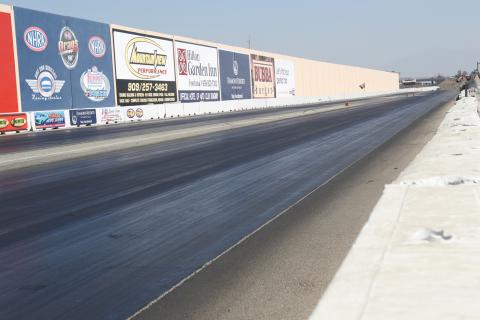
The most visible problem for drag racing today is the wave of track closings across the nation. Many of these were large, established tracks that served major metropolitan areas. Auto Club Dragway in Fontana, California—the last public quarter-mile drag strip in So Cal—never reopened following pandemic shutdowns. Houston Raceway Park in Baytown, Texas, closed for good after 35 years following the NHRA Spring Nationals in April. Palm Beach International Raceway in Florida likewise held its final drag race in April. Atlanta, Phoenix, and Memphis have all lost drag strips in the last year or have reported deals in place that will close them soon. The Northeast racing community is still smarting from the Englishtown drag strip in New Jersey closing in 2018.
And there is no new wave of drag strip openings to pick up the slack.
The implications of these closings are ominous. Drag racing has long been the most accessible, grassroots-oriented form of motorsports. Anyone can take their daily driver to a test-and-tune night and get their car on the track without any expensive equipment or special racing license. It’s one of the few sports where someone in their 60s can compete against 20-somethings and still have an expectation to win.
“You go to all these races and there’s something for everybody. No matter what kind of car you have, they’ve got sportsman, they’ve got pro, they’ve got super pro, bracket racing,” said Steve Williams, former chief engineering officer and current chief business development officer at K&N, Riverside, California, and a longtime NHRA competitor himself.
“If we lose this local-hero, small, grassroots track, where kids go out with their parents and siblings, what happens is we’re losing that next generation that might be interested in getting into racing. Drag racing indexes female higher than any other motorsport. Why? Because it’s easily accessible,” Williams said.
“Drag racing is like midget and sprint car racing—it’s such the cornerstone and the foundation of all motorsports in the United States,” observed Chris Bovis of Hart Marx Advisors, San Rafael, California, specialists in mergers and acquisitions in the automotive industry. “To have it under threat or have it in a declining situation is not good for any enthusiast in the US. It is a problem that needs to be addressed with creative solutions.”
Losing a local track can have effects that reach far beyond the immediate community. “It’s devastating,” Williams said. “It would be a little bit like, for people who are into fishing, boating, and jet skiing, what if all of a sudden, they just drained the lake and you had no place to go anymore? And the next lake is four hours away. Would you still just grab the kids and go out to the lake? Would you get in the car and drive four hours? No. What would you do? You’d go, ‘Well, I’ve got to do something else.’ And you’d sell your boat and be disappointed. Or you’d pack up the kids and move. I’m telling you, we have lost racers in Southern California because they have no place to race. With some of them, the car just sits in the garage, or they sell their cars.”
The loss of legitimate, legal places to race could also lead to a rise in street racing, which endangers lives and damages the reputation of the performance industry even further.
Broken Pavement
There’s no one reason why drag strips are closing around the country after decades in business. “In the cases we have looked at, each race track owner has dealt with particular issues,” said Daniel Ingber, vice president, Government & Legal Affairs for SEMA, Diamond Bar, California. “In many cases, the economics of motorsports just don’t work out anymore. This can be a result of dropping attendance, especially during COVID-19, combined with rising land values that create incentives to sell to developers, as often once rural or exurban race tracks are finding themselves in what is now a suburb. Suburban sprawl also can bring with it more noise complaints.”
Jim Hughes owns Tucson Dragway in Tucson, Arizona, and sees the factors that challenge drag strips from the ground level. “We believe there are a few factors that could close drag strips,” he said. “Lack of participation and support, for one. We have seen rising cost of goods cause push-back from racers. Race fuel, diesel, repair cost on trucks and trailers—everything seems to be on the rise in our economy. Racers seem to be struggling to get replacement parts in a reasonable amount of time as well. Another issue is that property values are just so high and in demand for other venues like malls, massive warehousing, etc. Investors and owners seeing that business opportunity must find it hard to turn down.”
While each case is indeed different, according to our sources, land value is the factor with an outsize influence on tracks closing. “I think most of it is inflated real estate. I don’t know the cause of it, but we’re seeing just absolutely ridiculous land values,” said Kurt Johnson of Total Venue Concepts, Petersburg, Indiana, a company that specializes in track prep and specialized track maintenance equipment.
Southern California—the birthplace of organized drag racing—lost its last public quarter-mile drag strip when Auto Club Dragway in Fontana didn’t reopen following pandemic shutdowns. Public racing in the area is now limited to a small number of eighth-mile tracks.
“If you are a track owner and thinking of another year of possibly being at risk, and maybe not making that much money, or you could sell the land you bought for $200,000 for $8.5 million, that’s an attractive deal,” Bovis said. “As much as you love drag racing, it’s hard to ignore those economics. It’s hard to make a lot of money, hard to make a good, consistent growing business out of a drag racing venue, combined with maybe now for the first time having some other options to cash out.”
In a time of high inflation, broken supply chains, and economic uncertainty, money around the world is chasing hard assets like real estate. There is more going on behind the scenes than the raw land value, however. Drag strips are an appealing target for acquisition for another reason: grandfathered infrastructure.
Keith Haney owns the Summit Racing Equipment Mid-West Drag Racing Series and, along with his business partner Todd Martin, Osage Casino Tulsa Raceway Park in Tulsa, Oklahoma. As co-owner of a track and owner of a series, he sees the challenges drag strips face from all angles.
“When you start looking at the profit margins in race tracks, the economy obviously hits the people who go to the race track first. With the rising prices of necessities that everybody needs every day, it limits their free cash to go to race tracks,” Haney said.
“And land is up so much,” he added. “You get these big corporate groups who come in and say, ‘Okay, we’re going to give you three or four times earnings on your land.’ Or maybe it’s 10 times earnings.
“Look at it from the perspective of a person who owns the dirt, owns the utility,” Haney continued. “Say a piece of property is worth $2 million. These corporate groups may give you $8 million because the infrastructure that’s on the race track bypasses a lot of corporate tape, or city tape, whatever you may call it. The builders won’t have to have certain permits to put a building up because the infrastructure’s already there and has been there. They can pay outrageous prices because they’re not going to spend the money on red tape and having to go through all these guidelines, inserting sewer lines, etc., because they are grandfathered in. They just convert the buildings that are on the property to manufacturing or whatever it is they are doing. And then they add on. Well, when they add on, they don’t have the red tape that they would have when building from new.”
Keep Racing
The number of drag strips may be contracting, but the motorsports industry is nothing if not innovative and resourceful. It is entirely possible to stop the bleeding, so to speak, and part of the solution involves finding additional uses for the property that bring in steady revenue that is not reliant on the up-and-down nature of the racing calendar. A track owner with a more profitable business is less tempted by buyout offers. Our sources had plenty of ideas on how to utilize track infrastructure for additional income.
“Thinking about the property in a total sense—you have not just the assets of the drag strip, but you have a huge parking lot, you have lots of space, you have established ingress and egress plans that you can use for a lot of different things—is really smart,” Bovis said.
“Track operators have been having to look at events with more of an open-mind thought process. Start taking events that are much less traditional than your normal Friday night drags or local bracket program,” Hughes said. “Tucson Dragway has tried to take this approach since day one. We value our racers and community equally. We want to be a venue, not just a drag strip. By opening our doors to car shows, drive-in movies, 5K fun runs [foot races] and even a circus has helped us tremendously. Having this open and non-traditional mindset has also helped us while booking in weekday rentals that help keep our venue active. Insurance accident re-creations, the testing of self-driving vehicles, or motorcycle training classes have also been a huge help to cover operating expenses.”
Keith Haney is in a unique position as the co-owner of Osage Casino Tulsa Raceway Park in Tulsa, Oklahoma, (seen here) and owner of the Mid-West Drag Racing Series. He sees the challenges drag strips face from all angles, but he has also leveraged his circumstances to help his and other race tracks in the region. Photo courtesy of E3xtreme.
Keith Haney is in a unique position as the co-owner of Osage Casino Tulsa Raceway Park in Tulsa, Oklahoma, (seen here) and owner of the Mid-West Drag Racing Series. He sees the challenges drag strips face from all angles, but he has also leveraged his circumstances to help his and other race tracks in the region. Photo courtesy of E3xtreme.
Many race tracks have found such non-traditional uses as Christmas light shows to be good money-makers, but the key is to generate income that is not just seasonal.
“There are some race tracks that have realized that they have to create daily, weekly, monthly income independent of just whenever they put races on,” Williams said. “There are a couple of race tracks that have realized that they can lease space on the property for storage spaces. There are tracks that have working shops. When you go to the race track, on some portion of the facility they lease out commercial buildings. And some small businesses work in that shop fabricating, building. So the income is not just related to the race track and putting on a race. There are some race tracks that put on events like outdoor concerts. The race tracks that are going to survive are the ones that realize there’s a whole list of ways to create income that then allow the race track to still put on these events, but they’re not solely reliant upon the income of the actual race to keep the race track operating.”
As a racer, Williams also has ideas for track revenue that would help him on race weekend. “Do you realize what a pain it is to get your race truck and trailer washed? It is a nightmare,” Williams said with a laugh. “Do you know how much they charge? We’re talking about a couple hundred dollars to do a nice job at the bare minimum. What if the race track had a commercial butler building, and washed and cleaned rigs at the race track? Would every racer use it? No. But I guarantee you a couple hundred would at times. Now you have this additional income. It could even be a coin-operated deal where they do it themselves in four bays.”
Bovis of Hart Marx Advisors sees opportunities to expand the customer base by targeting the modern muscle car crowd that doesn’t normally venture to the track. “The quality of cars and the capability of cars available today are like nothing else that has been produced,” Bovis said. “Right now, people are able to go out and buy a 500-horsepower car, or a 700-horsepower car, with a factory warranty. At no time in history has that been possible. And they brake really good and they turn really good, too, and they’re comfortable and have air conditioning.
“The accessibility of the cars and the speed and the enjoyment of the sport is so much better than it ever was before,” he continued. “You don’t need a truck and a trailer and all this infrastructure, and two guys to make sure the car doesn’t fall apart because it’s so on the edge. All that’s changed. You can drive to a drag strip, run the car all night, and drive home. That has to have an impact on traditional race entries, traditional race viability. But at the same time, it has to be giving you a bigger audience. Anybody with a Challenger or a Charger within a reasonable driving distance of a drag strip is a potential customer. That’s a big difference over 20 years ago.
“I think that you’re seeing an increase in accessibility, an increase in the total number of potential customers if they knew about it,” Bovis added, “while you’re seeing a little bit of an erosion from the traditional ways of hosting events and trying to get people to fit into a system rather than getting a system to fit around the people.”
Johnson also sees potential for growth in the muscle car market. “I think that the street racer, and the guy with the quick Challenger, that market is growing. The guy with just bolt-on performance parts, could be his everyday driver, not your hardcore street racer or your hardcore racer, we’ll call it the Wednesday night crowd, I think that’s growing. I do think there is a movement with younger people and the performance cars that are out—the Camaro, Mustang, Challenger, and fast imports.”
Road racing tracks in particular have invested in amenities that attract an upper-income crowd, and there may be similar untapped opportunities in that approach for drag strips. “I’ve seen this rise of the ‘country club’ race track, which is a very business-model-changing thing,” Bovis observed. “It takes it from a pure competition venue to a social organization and a status thing. It has all these other components to it that were never around when I was growing up around race tracks.
To help a drag strip survive, track operators have to look at non-racing events “with more of an open mind,” said Jim Hughes, owner of Tucson Dragway in Arizona. Hughes has opened his facility to events like car shows, drive-in movies, 5K races, and mud runs to support his community and earn revenue not tied to the ups and downs of the racing calendar.
“It’s become a very powerful development,” he said. “People are making a lot of money at it, and people are spending a lot of money on it. It’s become quite a phenomenon. I wonder whether there isn’t an opportunity to do something similar in drag racing. It would have to be very uniquely tuned to the drag racing market, so I’m not sure that building condos at the side of a drag strip is necessarily the right thing. But focus more on a social environment, a membership-type situation where it is more ‘run what ya brung.’ It can be a lot more focused on casting a wide net for, say, everyone who has a Shelby GT500 within an hour-and-a-half drive, and trying to drive membership dues and giving a lot of accessibility to the track, rather than focused on trying to fit into an NHRA and IHRA or similar type of program.”
Besides creating additional ways to monetize the track’s real estate, some drag strips are already upending old business models. Not all of these actions are replicable, as many are specific to certain areas or represent unique opportunities. But viewing the success of these tracks may help generate new ways of thinking.
For example, Haney at Tulsa Raceway Park leverages his unique track ownership situation with the drag racing series he started to help other tracks in the region. “We own a track. We don’t own the property, but the property owner has given us a long-term lease at Tulsa Raceway Park, and it’s very inexpensive,” Haney said. He and his business partner signed the long-term lease in 2011 with the rock quarry that owns the land. The quarry bought the land in case they needed it for future expansion, Haney said, and that use is likely far off in the future.
There are opportunities to bring new racers to drag strips by targeting owners of late-model muscle cars, said Chris Bovis of Hart Marx Advisors. They can “drive to a drag strip, run the car all night, and drive home. That has to have an impact on traditional race entries, traditional race viability.”
Haney owns the racing series himself and designed it to be a win-win for everyone involved. “With the model the Mid-West Drag Racing Series is built on, we get nothing, the track gets 100%. The tracks are making money off our series because I don’t need the money. I’m making it where the race tracks make the money to try to keep the sport alive. That’s the only reason I did it.”
The series started off focused solely on Pro Mods but added new drag race classes as it expanded. “We’re constantly looking at what we can do for the race track. They get everything—back gate, front gate, tickets, merchandise, concession. We absolutely get nothing. We actually pay them to come. But they also guarantee our purses, and we bring enough cars to cover it.”
Haney’s business model for the series reflects his marketing experience acquired as the owner of several car dealerships. “You take a look at a lot of the sponsors, and they would love to sponsor a race track. The problem is, the race tracks don’t have the staff to deliver on what they say they can do. And then they don’t have the information to report back to keep the sponsors onboard. So the dealerships leave because they didn’t feel like they got anything for their dollar.
“With the Mid-West Drag Racing Series, we are basically a marketing company for marketing partners,” Haney continued. “We make sure their commercials are on live feed, their banners are all over the track, all our websites have all of them on it, we have links back and forth, we do all our social posts, we tag all of our marketing partners when we go to a race track, we do it all. We’ve become a marketing company for, let’s just say, Summit Racing Equipment, which has the naming rights of the series. We basically are promoting for them, and we become their face to the racers. Now, those people go track to track to track with us. At the end, they see the reports. They see what they’re getting for their dollar.”
The Mid-West Drag Racing Series has a show on MAVTV, further extending the series’ marketing reach. “It’s a difference in model concept,” Haney added. “Most people who do this, live out of it. They own the series and they’re getting paid out of the series. Me, I don’t take a paycheck.”
When it comes to making drag strips more economically viable, there may also be ways to attract support from local or state governments, although that is usually a lengthy and tricky minefield to negotiate. But governments are also motivated to eliminate street racing, which could give track owners a foot in the door. “Government assistance, state and county funding, public partnerships are all very realistic options,” Hughes said. “Why not take a drag strip on state or county land and operate it more like a municipal park? Open more often during the week to avoid long lines during testing or run-what-you-brung events. Give kids these days a safe place to race and off the streets. Implement a plan instead of giving out speeding and exhibition-of-speed tickets. Have them take a driving school at your local race track.”
The Mid-West Drag Racing Series started with Pro Mods but has added new classes as the series expanded. “We’re constantly looking at what we can do for the race track,” said series owner Keith Haney. Photo courtesy of E3xtreme.
The racing industry may have to prepare itself for things to get worse before they get better, given the realities of the current economy. “You can’t blame the race tracks for doing what they do,” Haney said. “They’re only protecting their families and looking out for the future of their families. Some race tracks have been in business for 50 years. They finally sell because nobody wants to pay them to buy the race track and start a new chapter. The other part is, people can’t afford to buy them when you have these equity groups that come in and buy the property. You have a piece of property that’s worth $2 million, and you’re getting $8 million for it. If you had a business that was making a half-million dollars a year, that business might bring three-and-a-half times earnings. Now you’re getting $6 million for the property. I don’t think there’s a way out of that math. As long as these equity groups and corporate companies have the money they have, it’s just a smart decision for the people who own the track.”
Even so, the motorsports industry is known for its resourcefulness and adaptability. Many of these issues will be examined at this year’s PRI Trade Show in December. “This is one area where I think we as an industry could do a better job,” Williams said. “How do we create access to some think tanks and some brainstorming and some things that are actually working? For instance, here’s something that happens between racers: Racers are this community that has this unbelievable ability to do whatever it takes to still get to the race track and go racing. But along the way you discover all these clever things, whether it’s how to make more power, how the car works better, or how to save money on towing, trailer set-ups, you name it. And they like to share—there’s always these phone calls going back and forth. So there’s this ‘group tank’ to share info. Race cars today are so much more sophisticated than they were even 10 years ago, and so much better because of that sharing of information. Where’s that for the race track owners?”
As long as there are cars there will be drag racing, but the time for thoughtful, coordinated effort to keep the sport viable has definitely arrived.
The California Air Resources Board (CARB) has voted to finalize a PRI- and SEMA-opposed rule to implement California Governor Gavin Newsom’s 2020 executive order to phase out the sale of new diesel- or gas-powered cars in the state by 2035. The rule requires 35% of new cars, SUVs and small trucks sold to be zero-emissions starting in 2026, increasing to 68% in 2030 and 100% in 2035. In 2022, zero-emissions vehicles have made up about 16% of new cars sold in California. The rule also sets durability, warranty and other provisions for zero-emissions vehicles.
“[We] believe that Californians should not be directed toward a specific technology, but rather be allowed to choose the type of vehicle technology that best serves them,” said PRI and SEMA CEO Mike Spagnola. “While electric vehicle technology expands clean transportation options, [we] will continue to advocate on behalf of the industry that has helped make the internal-combustion engine (ICE) a reliable, affordable and clean option for millions of consumers.”
Between 1980 and 2020, the combined emissions from the six most common air pollutants dropped 78%, thanks in large part to advancements in cleaner ICE technology, which continues to improve.
“[We] support marketplace solutions that guarantee affordable consumer choice, preserve jobs and enjoy widespread consensus within industry, government and the general public,” added Spagnola.
The newly adopted regulations could lead to 17 other states that have often followed all or part of California’s previous clean-car rules adopting similar proposals. The sale of used cars would not be affected under the proposal and would not force the current fleet of diesel- or gas-powered vehicles off the road.
For more information, read SEMA’s comments in opposition to California’s internal-combustion engine ban here, or contact Caroline Fletcher at carolinef@sema.org.
Theresa Rogers, the owner of Grandview Speedway in Bechtelsville, Pennsylvania, has announced the sale of the 1/3-mile dirt track to the Copart company, an online automotive auction company based in Dallas, Texas.
The sale is not finalized, and Copart will work with Washington Township officials for final approval, said Rogers, whose late husband Bruce also owned and operated the track.
“My late husband Bruce and I had discussions prior to his passing about this situation, and I thought long and hard about what Bruce had told me. ‘He said you can do what you want after I go. It is totally up to you.’ I want everyone to know that this decision was solely and entirely mine,” Rogers said. “We do appreciate all of the love and passion that everyone has been showing since this news broke, and we hope everyone will respect the decisions that I have to make for myself and my family.”
The track celebrated its 60th anniversary during the 2022 season, which will continue with Saturday night racing through its Championship Night on Saturday, September 10. The event will feature the T.P. Trailer NASCAR Modifieds and T.P. Truck Equipment NASCAR Sportsman classes. The schedule continues with the ninth annual Freedom 38 Sportsman Championship on Friday, September 16, and the 52nd annual Freedom 76 Modified Classic on Saturday, September 17. The schedule ends following two visits from the Outlaw Racing Series on Saturday, September 24, and Sunday, October 16.
The track also regularly hosted the Thunder on the Hill Racing Series, the sanctioning organization run by the Rogers Family and Bob Miller Promotions.
Performance Racing Industry (PRI) will host its Members at the Dodge Power Brokers NHRA US Nationals at Lucas Oil Indianapolis Raceway Park in Indianapolis, Indiana. The event over Labor Day weekend is generally considered the world’s biggest, longest, and most historic drag race.
PRI Pro, PRI Champion, PRI Founding and PRI Business Members were invited to join PRI during the famous multi-day event where NHRA drivers will compete for their chance to win a prestigious NHRA US Nationals Wally. From Super Gas to Top Fuel, a win at the “The Big Go” means just a little bit more to any driver.
The action begins with qualifying on Wednesday, August 31 and Thursday, September 1. The Dodge HEMI Challenge and more rounds of qualifying will take place on Friday, September 2. Saturday, September 3, will feature Jegs Allstars and additional qualifying rounds. Sunday, September 4, will be highlighted by Pro Stock, Funny Car and Top Fuel qualifying, while Monday, September 5, will feature finals for sportsman, Top Alcohol, Mountain Motor Pro Stock, Factory Stock Showdown, Pro Mod, Pro Stock and Nitro.
The Pep Boys NHRA All-Star Top Fuel Callout will take place on Friday, Saturday and Sunday, alongside the Hot Rod Junction Cacklefest, which will also take place and culminate on Monday.
Seminars, autograph sessions, Q&As and more fan events are also on the event schedule.
For more information on PRI Membership, visit performanceracing.com/membership. PRI Members receive an expanding list of benefits, including complimentary entrance into the PRI Trade Show (for qualified attendees). To register for the 2022 PRI Trade Show, visit here.
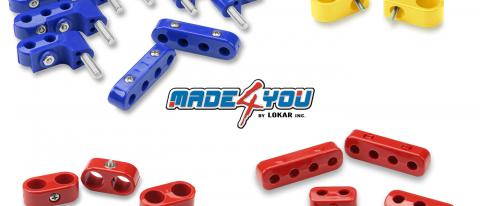
Lokar Performance Products—the performance products manufacturer based in Knoxville, Tennessee—has announced the acquisition of the assets of Made-4-You Products (M4YP), an automotive aftermarket industry provider with worldwide sales and distribution that opened in 1985.
M4YP’s product line consists of injection molded line clamps, plug wire separators and related wire and tube management products. Molded from nylon, these clamps and parts are designed not to fade, stain or discolor and be impervious to automotive fluids.
M4YP’s inventory, tooling and assets have been relocated to Lokar’s location in Knoxville and the products will be manufactured, assembled and shipped from Lokar’s facility.
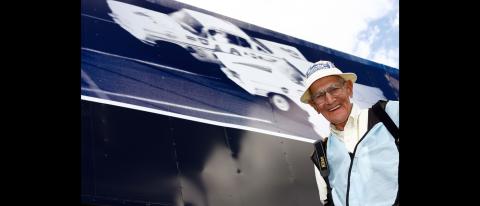
Before the 50th running of the Daytona 500 in 2008, T. Taylor Warren poses next to his famous photo of the three-wide finish at the first Daytona 500 in 1959. Photo courtesy of NASCAR.
T. Taylor Warren, whose famous photograph of the 1959 Daytona 500 finish helped determine the winner of the race, has been named the recipient of the 2023 Squier-Hall Award for NASCAR Media Excellence. He is the first photojournalist to win the prestigious award named after Ken Squier and Barney Hall, the first two recipients.
Warren began photographing race cars at the Milwaukee Fairgrounds in Wisconsin in 1948 and was hired by Bill France Sr. to photograph Florida’s Daytona Beach Road Course in 1952. He went on to become the track photographer at Daytona International Speedway, where he worked every Daytona 500 until his death in 2008.
“While T. Taylor Warren was best known for his photo of the 1959 Daytona 500 finish, his photographs brought NASCAR to our fans for nearly six decades,” said NASCAR Chairman and CEO Jim France. “Through his work for NASCAR, race tracks and countless motorsports outlets, his images were often the only way for fans to see the action from the race track. They say a picture is worth a thousand words, and when it comes to NASCAR photography, no one was more prolific than T. Taylor.”
In addition to his work for NASCAR and tracks, Warren shot photos for several racing magazines, most notably Southern MotoRacing.
In 2006, Warren became the first photographer to win the International Motorsports Hall of Fame's Henry T. McLemore Award for achievement in journalism. He posthumously won the National Motorsports Press Association (NMPA) Myers Brothers Award in 2008 for outstanding contributions to the sport of stock car racing. He was also inducted into the NMPA Hall of Fame in January 2009.
Warren will be honored during NASCAR Hall of Fame Induction Ceremony festivities on January 20, 2023, and featured in an exhibit in the NASCAR Hall of Fame.
For more information or tickets to the Induction Weekend, visit nascarhall.com.
The Sportscar Vintage Racing Association (SVRA) has announced its biggest season yet for its 2023 schedule, which features 22 events at premier venues across the country.
With a tentative date at Auto Club Speedway in Fontana, California, in early February, the 2023 SVRA season will be in full swing when it visits Sebring International Raceway in Sebring, Florida, on February 23–26.
After visits to Louisiana, Georgia, Wisconsin, Connecticut, Washington, Indiana, Ohio, Oregon, New Jersey, Illinois, Virginia, Tennessee and Utah, SVRA will close its season with the traditional U.S. Vintage Racing National Championship at Circuit of The Americas on November 2–5, when drivers will compete for the coveted, limited-edition Bell Racing commemorative gold helmets.
Skip Barber Racing School, the premier race car driving school, has announced Gerardo Bonilla as the racing school and race series president. He previously served as a master instructor for the Skip Barber from 1998–2012.
Bonilla’s most recent experience includes time as the director of operations for Lucas Oil School of Racing, and before that, as a series driver coach and race steward for the USF2000 National Championship.
“I am thankful to [Skip Barber CEO] Anthony DeMonte and the entire Skip Barber family for welcoming me back,” Bonilla said in a LinkedIn post. “[I am] looking forward to helping the drivers, crew, operations and admin succeed in the sport we all love.”
Skip Barber Racing School operates at various tracks around the nation, including Lime Rock Park in Lakeville, Connecticut; New Jersey Motorsports Park in Millville, New Jersey; Road Atlanta in Braselton, Georgia; and Laguna Seca in Salinas, California.
DirtFish and the Fédération Internationale de l’Automobile (FIA), who have joined to help find promising talent from around the world, have announced a special event for North American racers.
Racers between the ages of 17 and 26 from the US or Canada are eligible for the FIA’s groundbreaking Rally Star program, which will award a multi-year journey through a 2023 training season followed by the potential for two years in the Junior WRC and a full WRC2.
Challengers will go through four rounds of Digital Challenges to compete with the WRC 9 game for five timed runs on any platform: PC; PS4, PS5; Xbox One, XBox X/S.
At the same time, DirtFish will run its own Digital Challenge on the simulator rig—complete with official FIA Rally Star partner Thrustmaster hardware—at the Rally School in Snoqualmie, Washington.
Winners of the FIA Rally Star Digital Challenges, along with potential wild card entries, will progress further in the competition to reach the All-American FIA Rally Star Finals in Peru in December.
Success at that event ensures a seat in the seven-strong FIA Rally Star team for 2023, with six training rallies in a Ford Fiesta Rally3. Then it’s time for the Junior WRC competition, with the top three drivers from 2024 advancing to a repeat program in 2025. If a racer scores the Junior title that season, they move to the WRC2 title in a Rally2 car for 2026.
 MEMBERSHIP LOGIN