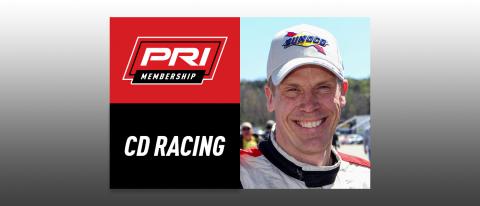
Citing new investment, new teams, and strong car counts, Chris Dyson is bullish on the current state of racing. That said, “we can’t take for granted that the sport will thrive, and survive, in the long term without continuous efforts to engage not only those involved in the industry, but also potentially looking at the industry from a business standpoint or as participants,” he added. “PRI has really taken center stage in these efforts.”
Despite challenges on the supply side, Chris Dyson sees “huge opportunity in this industry right now” as he continues winning races and championships.
Confronting shortages of both components and talented people are daily challenges for teams competing at all levels of motorsports. Creative planning has come to be essential in the current process of race-team prep. Chris Dyson is facing these same kinds of challenges, only he’s doing it in two wildly different racing disciplines, with marked success in both. His status as a scion of an American racing dynasty leaves him positioned to turn potential obstacles into wins and, more recently, championships.
“Like anyone else, we’ve been affected by supply chain issues with all of our programs over the years,” Dyson explained. “So it’s important to work very carefully with vendors, and to be realistic with planning, because lead times have changed considerably. There’s a lot of interdependence as you put together a program, and if you have a couple of vendors who are short or behind, that can hold up an entire project.
“I think that just carefully managing the supply chain landscape right now is one of the biggest pieces on the operational side,” Dyson continued. “It’s also about attracting and cultivating talent. It’s a challenge, not just for us but for everybody. This is a sport that’s had a lot of interest and longevity for a long time, but we have to make sure we’re recruiting and building up the next generation of talent and leadership.”
In Dyson’s case, that occurs in two seemingly non-intersecting orbits. The first is his own brand, CD Racing, which was created from patriarchal Dyson Racing in 2018. Winning rookie of the year in the SCCA Trans-Am’s TA division from the outset, Dyson captured the series championship in 2021 and is on a roll for a repeat, having won half the 2022 TA rounds at the time of this writing. Beyond that, CD Racing has partnered with erstwhile Dyson Racing rival Doran Racing to field open wheel cars, primarily in the USAC Silver Crown series.
Despite the headaches currently faced by most motorsports executives, CD Racing’s successes leave its chief with obvious and vocal optimism. A big part of the reason why is CD Racing’s status as a PRI Founding Member, which he said allows the team to stand on the foundation of policymaking for the sport’s continuing health.
“PRI membership benefits me by being more engaged with the industry as a whole, and by creating advocacy for the sport itself, and also for the players who depend on the sport’s success,” he said. “You have central leadership coming out of PRI, really working hard on getting the awareness out on the need to save our race cars, to protect the sport long term. As someone who’s been in racing and has had racing-associated businesses, we can’t take for granted that the sport will thrive, and survive, in the long term without continuous efforts to engage not only those involved in the industry, but also potentially looking at the industry from a business standpoint or as participants. PRI has really taken center stage in these efforts.”
Through CD Racing, Chris Dyson is involved in very different forms of motorsports. While defending his 2021 SCCA Trans-Am TA division championship, Dyson also is fielding open wheel cars in the USAC Silver Crown series. “We’re racers to the core, and in an era of specialists, it’s important to underscore your commitment to the sport by not being specialized,” he explained.
For the Trans-Am effort, CD Racing prepares Ford Mustangs out of the Dyson Racing shop in Poughkeepsie, New York, which run the TA division with sponsorship from Altwell CBD and Gym Weed, a hemp-infused energy drink. On the oval side, Dyson is partnered with Kevin Doran to field a USAC Silver Crown effort for Kody Swanson, the series’ winningest driver with six championships, including the recent one. Doran Racing preps Silver Crown cars for pavement competition at its facility in Lebanon, Ohio. The dirt cars are prepped for CD Racing in the Dillsburg, Pennsylvania, shop of longtime Keystone 410 sprint car standout Sean Michael.
“We’re racers to the core, and in an era of specialists, it’s important to underscore your commitment to the sport by not being specialized,” Dyson explained. “Kevin and I started in WKA karts. I raced Silver Crown in 2018 and 2019 and absolutely loved racing on the big miles, so during a period of time when I wasn’t road racing, we pursued running ovals with a lot of enthusiasm. Then my road racing career has been resurrected in recent years, so I’ve been less able to compete, but Sean maintains the program. It’s been a good fit all around.”
Winning races and titles means getting the cars to the track in fighting trim, which also means flexibility and a redoubled commitment to planning, he said. “From a supply chain standpoint, it’s maintaining virtually constant contact with vendors and supplier partners. You try to have as much transparency as possible. We’ve found that our planning has had to become more refined, with more flexibility to our timetables. We try to give ourselves alternative paths that in past times, we might not have done. It’s also pushed us to seek out new vendors who can perhaps fill needs.”
It’s immediately obvious from a conversation with Dyson that his belief in everything about racing that’s good has never dimmed.
“There’s definitely huge opportunity in this industry right now. The sport is at a very strong moment with new investment, new teams, and really good car counts in any realm of the sport, and we touch a lot of them with our programs,” Dyson said. “Enthusiasm and passion aren’t the problem. It’s about making sure you have all the parts and components in place. The team has been fortunate to have some tremendous successes over the past few years, but you just can’t take that for granted.”
Rising power levels and a growing diversity in engine components make gasket development more important than ever. Here’s how top suppliers are keeping pace with racer demands.
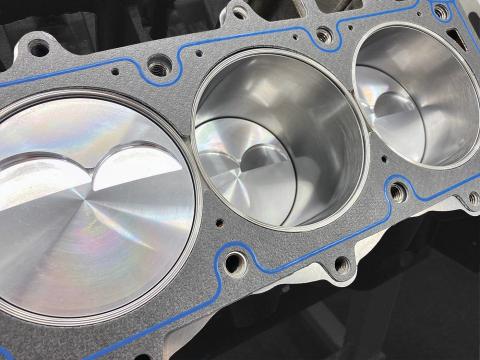
While they have always been a key component in making an engine work properly, never before have gaskets—especially those tasked with sealing the business end of a high-powered, boosted powerplant—been asked to do so much.
Today’s four-cylinder engines, like the Ford EcoBoost, can make 250 or more horsepower from the factory, “which is pretty good for a four-cylinder,” said Ryan Hunter of SCE Gaskets, Mount Pleasant, Tennessee. “Then our customers in the aftermarket ask, ‘How can I make it produce 1,200 horsepower?’ At 1,200 horsepower we’re moving that block, deck, crankshaft, and cylinder head all over the place under load, and problems begin to occur with an OEM head gasket.”
“We run into problems with applications that have been power added,” noted Tim Golema of MAHLE Aftermarket, Farmington Hills, Michigan. “Now that the intake charge is at such a high volume, we have to be concerned with maintaining the seal. It’s no longer the motor alone sucking it down the cylinder head. Now you’re blowing it down the hole with 30, 40, 50, 60 pounds of boost. Now the act has become more complicated.”
How do gasket makers keep up with this ever-moving horsepower target? We spoke with several leading manufacturers in the performance automotive space to find out.
Seeing a Need
The first step in staying abreast of racers and their engine development is recognizing that a need for new gaskets exists.
Flatout Gaskets of Mundelein, Illinois, recognizes those opportunities “partly through industry need and partly through customer calls,” said Tony Gillig. “Often when a company produces something new like a cylinder head, it doesn’t make the gasket. We hear through the industry that, say, Brodix or Dart is making a new head, and we get with them to find out what the head looks like so we can create a gasket for it. Or we’ll get a customer calling and asking, ‘Do you have a gasket for this?’ If we don’t, we do some digging and go to the manufacturers for a way to generate a gasket for that product.”
Cometic Gasket of Concord, Ohio, takes a similar approach. “We may get requests for a certain part, or we’ll see what’s being developed in the market,” said Micky Hale. “When we see more of something being developed, we’ll talk to the engine builders and the piston manufacturers. That’s usually where it starts, when they start modifying something.”
“The ideation process can come from anywhere,” said Nick DiBlasi, Race Winning Brands’ director of product management in regard to Pro Seal of Cypress, California, a brand born from the performance experience of JE Pistons. “Our staff is just like our customers and engine builders. Every one of our sales guys is a racer. So we’ll often hear about opportunities internally first. And we talk on a regular basis with our customers and engine builders.
“For what we do, in most cases it’s an OEM engine that someone built that is now exceeding the factory gasket capabilities,” DiBlasi added. “We need to understand the application to understand what is failing. We’ll speak with the people blowing out the factory gaskets and ask what they’re doing. We’ll look at the gasket, drill out the rivets to find out what is it about this factory gasket that’s failing. Is it the design, is it an OEM flaw, or are they actually pushing it way past its limits?”
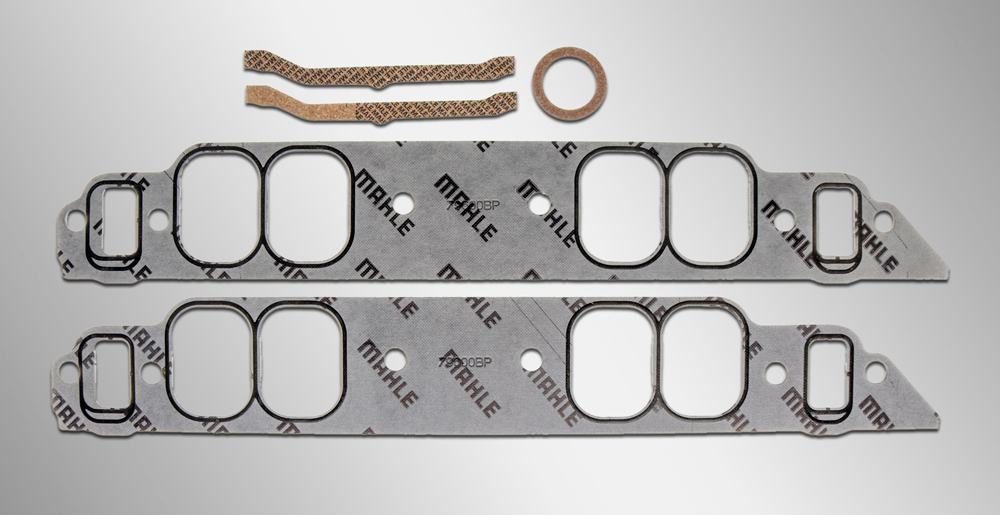
“Every gasket is designed for a specific application,” said Tim Golema of MAHLE Aftermarket. Just because a gasket is considered a performance gasket, he noted, doesn’t mean it will work in every application. There’s a “litany of materials” MAHLE chooses from to form a gasket, he said, and those materials can vary in thickness and density as well.
A relative newcomer to the gasket market, at least in the US, is ElringKlinger in Plymouth, Michigan. Over more than 140 years of business in Europe it has become a major OEM supplier, but it launched its US aftermarket efforts just within the last five years, offering performance gaskets through a select distribution network that includes Engine Parts Group (EPG) and Brian Tooley Racing. “Our vision is to bring this brand awareness in the US with the right distribution partners, best-in-class products, and supported with effective marketing,” Jeff Guenther said.
While ElringKlinger manufactures gaskets for Formula 1 through its OEM channels, here in the US “we like to operate through our distribution team,” said Harald Reinhardt. “They know better their customer range and what they want to serve.” EPG, for example, gets its LS gaskets through Elring.
“We have a full-range engineering department,” said Reinhardt. “Whenever we put a gasket out, we collect the requirements from the customer, so we make sure we know about what kind of sizes they need, what kind of horsepower they’re running. Then we do our full R&D with all the OE knowledge in the background.” When the gaskets get to the customers, “either they do some dyno tests or test runs or they use it immediately. Whatever feedback we get, we use to improve and get better.”
At MAHLE, “we need to determine if there truly is a need” before developing product, Golema said. “There are many applications that are very, very limited. It would be difficult to justify putting all the effort into making a new gasket if only six guys in the country would be using it.”
He said the PRI Trade Show is among the “first places we look” to gauge the need for new gaskets. “We get to see new blocks, new cylinder heads, new intake manifolds. If someone has created hardware, chances are someone will want a gasket to fill that gap.”
The situation is different at Clark Copper Head Gaskets of Blaine, Minnesota. “Right now, most of the stuff we’re doing is custom,” said JR Clark. “Most new motors are using MLS gaskets. They’ve become so good they don’t need a copper gasket.” Most of the gaskets he makes, then, are for older engines, including race motors based on “small and big block Chevys, 351 Fords, 440 Chryslers, some 429/460 Fords, motors that haven’t been updated to where people use enough of them to keep gaskets on the shelf.” He’s also doing a brisk business with tractor pulling engines. “We’re making a lot of gaskets for Internationals, Farmalls, Olivers. They’re making so much horsepower now, they can’t use the old gaskets, and a lot of the tractor pulling motors are so old, nobody’s made anything for them in years.”
Custom Gaskets
While it may not be their mainstay, several of these companies offer custom gaskets for low-volume engines or specialized projects.
Custom gaskets “are a big part of our program,” said Cometic’s Hale. “Almost every major engine builder across the country comes to us and says, ‘We’re doing this to this cylinder head or we’re CNC’ing this cylinder head and we need intake gaskets to match.’ We get their DXF [drawing exchange format] file in here, then we have a gasket to match what they need. We can change the gasket thickness or the port sizes, or anything that they’re doing. And we’re good at keeping secrets. If it’s their spec part, it won’t be going out the door to a million people.”
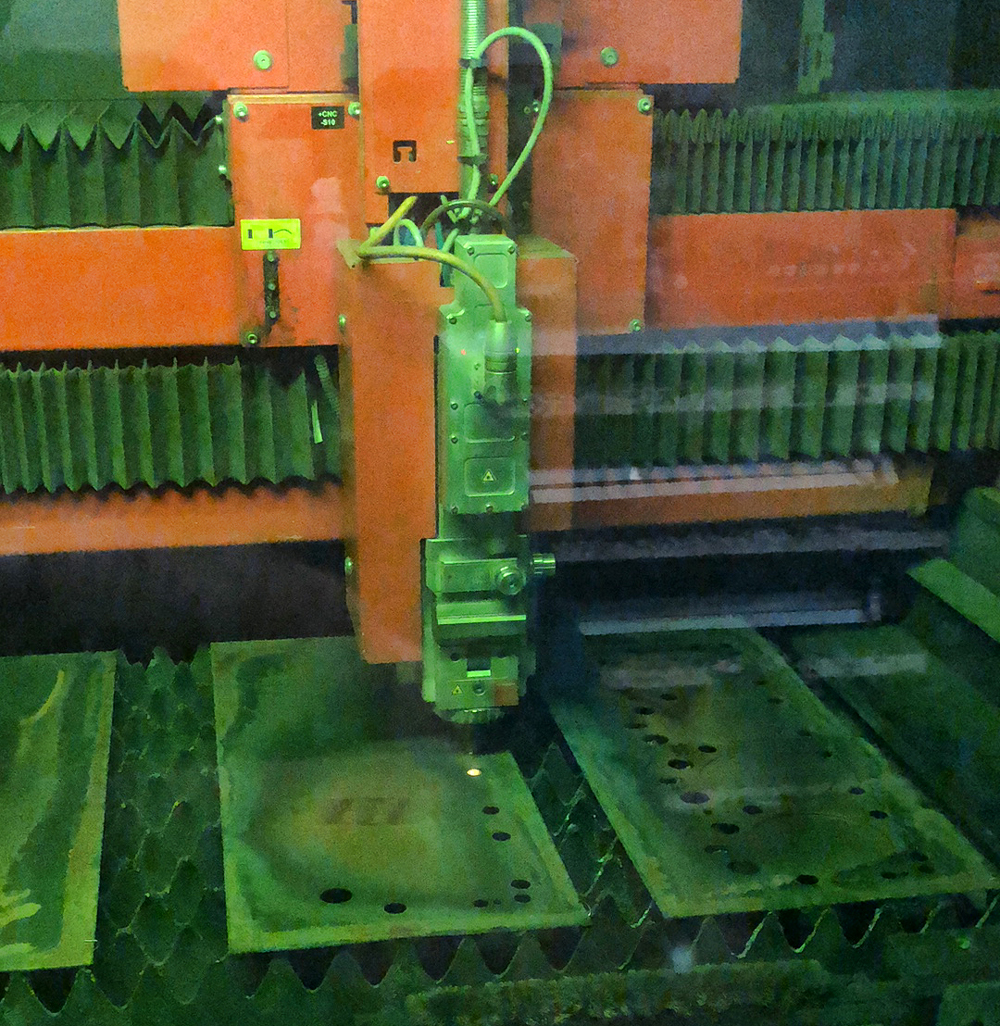
The laser that Flatout Gaskets uses to cut copper gasket material can also etch or engrave the surface as needed, said Tony Gillig. “It starts with one piece of flat material, cuts it all out and laser etches it, start-to-finish.”
Elring, too, has a prototype shop that can produce custom gaskets “for any kind of car, any kind of specs,” Reinhardt said. “As long as we can get the old gasket or some specs, we are able to rebuild those gaskets.” Prototype shop requests can be submitted via Elring’s website (elring.com).
“We offer all the basics, but we can make a custom gasket for any application,” said Flatout’s Gillig. “We cater to our customer’s needs, whether it’s an individual racer or an engine builder. One guy might want to order a hundred, one guy might want 20 sets, or a guy calls and needs one for his motor. No problem, we’ll get them out today. We can fill that empty hole and get it to somebody in a hurry. You can make or break some guy’s season that way.”
Manufacturing
Few of the companies we spoke to were willing to provide details of their manufacturing processes due to their proprietary nature. Those who did share had some interesting details to discuss.
“Back in the day—and this is a terrible thing to hear—but gaskets were literally made out of centers laying around because the material was cheap,” said MAHLE’s Golema. “That’s not how we operate. We use a virgin sheet of material per application, and every gasket is designed per application. That makes it sound like there’s one choice of material to use, but there’s a litany of materials we may use depending on that specific application.”
He cited a case where a potential customer at last year’s SEMA Show “saw a gasket made for a big block Chevy. But this particular engine was made for a Brodix head, which has a machined surface and a machined valve cover, so the gasket was relatively thin and dense. That gasket would not work on a stamped cover with an as-cast head. It was designed for perfectly flat surfaces with the best bolt load you could get. Just because it’s performance doesn’t mean it fits.”
When Clark is manufacturing a custom copper head gasket, “we request that they send us the old gasket if they have one in decent shape,” he said. “That makes it easier to make a print from, and we can go right to copper and send it to them. If the gasket is bent up or not in great shape, we’ll make them an aluminum template and send it to them to make sure it fits the motor the way they want. When they verify it’s what they want, then we’ll make a copper one. Especially nowadays with the price of copper, we don’t want to be ruining it. If we can even get it.”
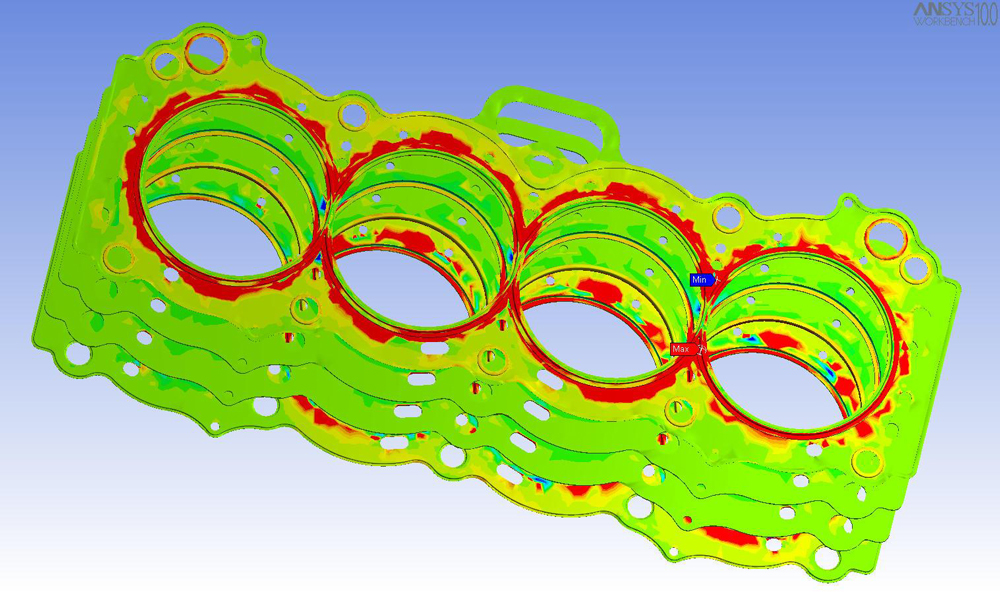
Pro Seal shared with us Finite Element Method (FEM) photos of its gaskets “to show the high sealing pressure areas that we focus all of the embossment on,” said Nick DiBlasi. “That way we know that the higher load areas are where we want the most sealing and clamping forces to be applied.”
At Pro Seal, “one consistent design aspect we follow with our MLS gaskets is that you want all the layers of the material to be the same,” said DiBlasi. “All the layers in the gasket are of the same exact grade of stainless steel. Then instead of a one-hit process that embosses it, we form it over multiple hits and presses. What that does is build a nice, smooth radius for all the bends and embossment. You don’t want to stamp it too hard, because that makes a lot of ridges and stress risers. You want to slowly stretch the metal, and then stress-relieve and heat-treat it after that process, which normalizes it in an embossed state.
“That’s really critical,” he added. “Probably the most important thing in creating any sealing type of gasket is the process by which you emboss it and then treat it after that. It creates the memory in the metal by processing it after. A lot of companies take a gasket that’s pre-coated, then emboss it or laser cut or water cut it. The problem is, because it has a coating on it, you can’t heat-treat it. That will melt the coating. But when you heat the gasket back up, and it’s not heat-treated, it wants to normalize back into its original state. Any time you can heat-treat it, that’s the new normal, its new living state for the rest of its life.”
Hunter said SCE has “engineering capabilities here, drafting and drawing, fitting up to the component whatever it may be. We’ll plot it, make sure that it’s properly dimensioned, and then we produce a tool. There are various types of tools—some are as simple as a steel rule die, which is very much like a glorified cookie cutter. There are limitations to those tools, so they’re used in certain areas and not in others. They can’t cut steel core material very well, for example, as they tend to leave kind of a pucker. There are tools that are well suited for an intake gasket that wouldn’t be well suited for a head gasket, for example.
“Then it comes down to, if we have the fitment right, how does it perform in the field?” Hunter continued. “We can get very close to knowing how the gasket will perform based on the gasket design and our knowledge of the raw materials selected for it, and then we put it out to the customer base. Because we cannot, even on a dyno, duplicate what takes place in motorsports.”
Research, Development & Testing
While many of these companies get new product ideas from their engine builder customers, it’s also common for them to work with their customers to get real-world research, development work and testing on those new products.
“We have what we call select development partners all over the country,” said Hunter. “There’s Dale Meers Racing Engines in Kentucky, David Butler at Butler Performance near us in Tennessee, and Kenny Duttweiler out in California. We’ll go to them and say, ‘Here’s a new product. Try it, flog the thing, tell me what breaks.’ They’re happy to do that because they know that we’re pushing the envelope trying to get them a product that seals more than what’s available now.
“I don’t want it to sound like we’re just taking our best guess and letting the customers do our testing,” he added, “but in some respects that’s actually true. Customer input has often helped us with the final degrees of refinement.”
“We have customers who will let us use their engines for some testing,” said Kristen Damberger of Cometic Gasket. “They’ll come in and want to see what power they can get out of their engine. We’ll ask if we can use some of this data for ourselves, or can we run this test a little bit differently so we can get what we need out of it?”
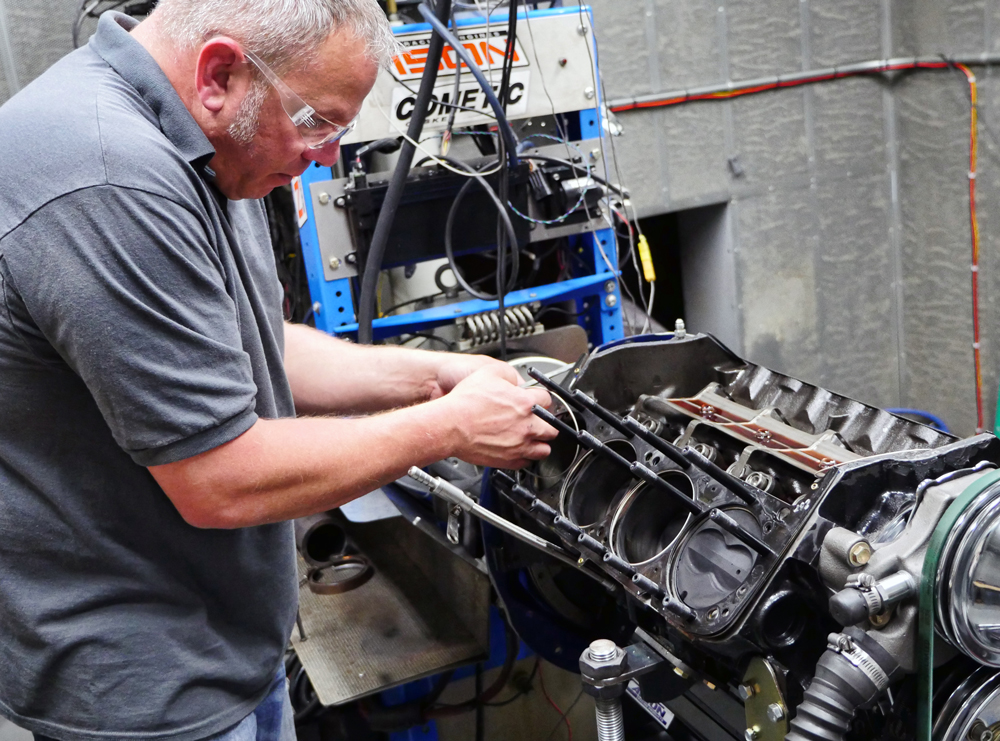
While Cometic Gasket leverages its engine-builder partners to help with development and testing of new gasket products, it also has a “full-service engine shop and dyno,” said Micky Hale. “It’s a great controlled environment” to help the company learn “what will work and what’s not going to work.”
At the same time, Cometic Gasket also has “a full-service engine shop and dyno in our facility,” Hale added, with LS and small block Chevy mule engines in-house. “It is a great supervised, controlled environment, where we know the consistency and how things are put together. We’ll know what will work and what’s not going to work.”
Pro Seal, DiBlasi said, has “multiple companies, with decades of experience, that specifically manufacture to our requirements. Utilizing their OEM experience, we lean heavily on their in-house development and testing. We work in collaboration with our suppliers on requirements for the engine and operating conditions to mutually understand the specifications needed for success. They also do a lot of physical testing, including follow up with FEA [finite element analysis] and validate with real-world engine dyno testing. We perform surgical inspection post dyno testing, or work with a customer we’ve partnered with to ensure sealing is optimized and performance targets are achieved.”
Chemical Gaskets
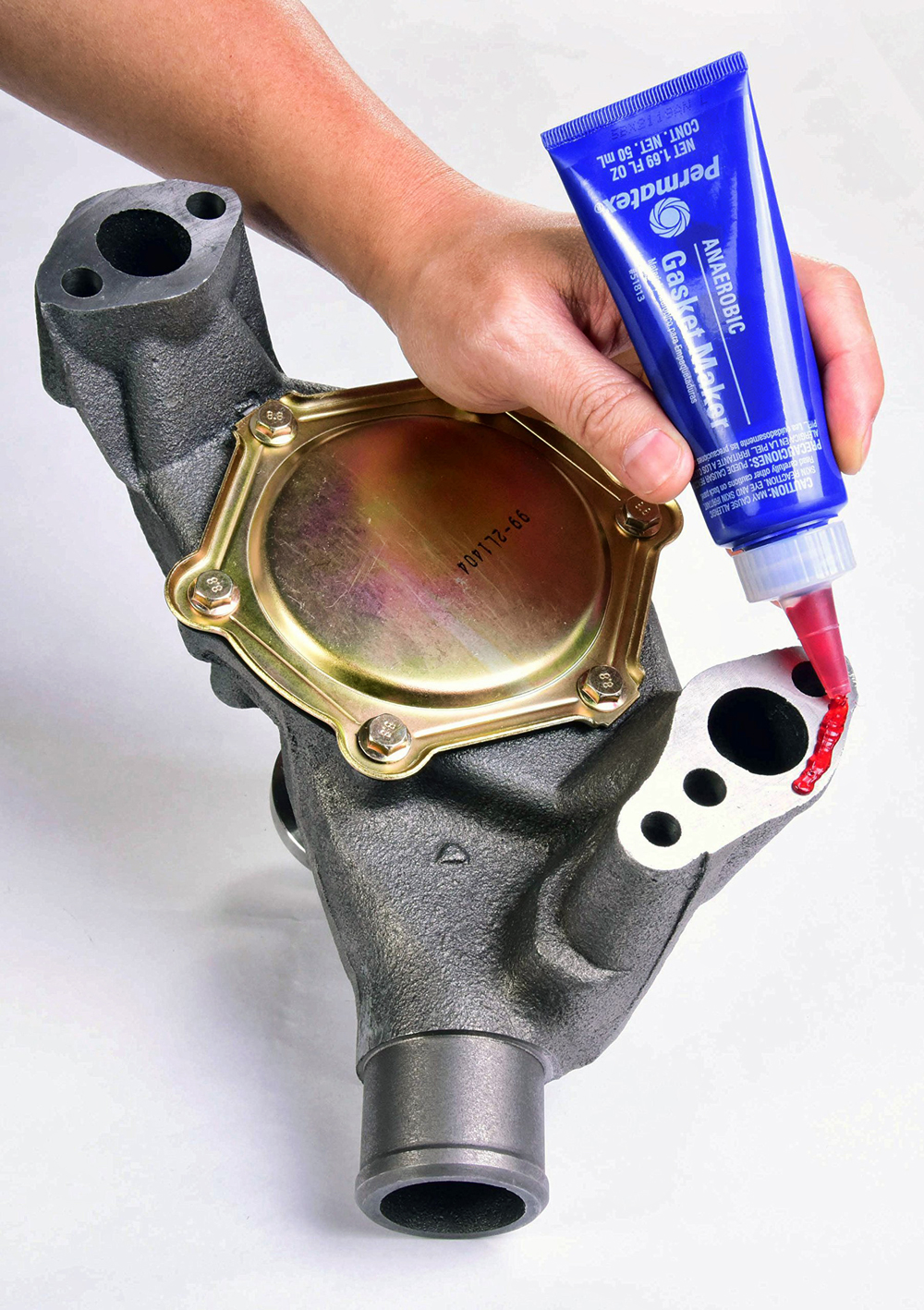
Beyond the world of MLS, cork, rubber, and copper gaskets are the silicones and other chemical gasket makers. Eric Seibold of Permatex in Solon, Ohio, said these gasket types are becoming more prevalent due to evolution in engine manufacturing.
“The biggest change we’ve seen over the years has been in the quality of the machined surfaces in domestic automobiles. With computers and laser cutting, the surfaces are so fine that they need less gasketing material to form a seal. That has led to an increase in the use of chemical gaskets like ours, and the ability for us to use thinner formulas. You don’t need to cake in a bunch of silicone to create a physical barrier; you’re looking to glue or adhere two surfaces together.”
The precision of today’s engine manufacturing techniques has allowed Permatex to use thinner formulas in its chemical gaskets, said Eric Seibold. “You don’t need to cake in a bunch of silicone to create a physical barrier; you’re just looking to adhere two surfaces together.”
Permatex is a fixture at chain auto-parts stores and DIY centers, but Seibold said racing is “our testing and proving ground. We have relationships with a lot of different race teams. We will send them product that is either new to market or in development, ask them to use it on test-and-tune days, and if they have a lot of success, then use it on race tracks. If it functions for them, in extreme conditions that they’re under as far as pressures and temperatures go, we know it’s going to work on a street vehicle.”
Though he couldn’t share specifics about products in development, Seibold said a Southern California professional drift team is currently testing “a new experimental gasket maker.” That same product will “replace all the gaskets” in a Mini Cooper that is entered in a 24 Hours of LeMons race in October.
“We can do all the lab testing in the world to get our quantitative numbers and confirm a product is within spec for a silicone, meets a certain ASTM test, or meets a certain OEM specification. But the real-world, qualitative use by mechanics or race teams is arguably more important,” Seibold said. “We can be fairly confident in the lab, but that doesn’t necessarily mean it’s going to perform in the harsh conditions that race teams put them through.”
Carburetor Gaskets
The carburetor gasket niche is wholly different than gaskets in the rest of the engine, noted Dave Braswell of Braswell Carburetion in Tucson, Arizona. “It’s not an application like a head gasket where motors are making significantly more power every year, and the loads on the gaskets are quite a bit more severe.” That doesn’t mean, though, that the carb gasket landscape isn’t changing.
“Carburetors originally were an OE application, and the lowest bidder was the one who sold the carburetor,” he explained. “That meant the quality of the product and castings weren’t normally the best because there wasn’t the profit margin to keep the tooling fresh, so gaskets were really important. Now, with CNC machining, the overall quality of products is much better, so the sealing of the products is much less of an issue than it used to be.”
Braswell uses “premium materials in our gaskets,” with applications available for all race cars that use carburetors.
Braswell has gone beyond traditional gaskets for sealing applications. “Whenever we can put an O-ring in a product, we do. Probably 10 years ago we put an O-ring where the power valve goes into the metering block instead of using a gasket. That’s been really successful. The power valve seats on aluminum on the metering block instead of on a gasket, so you don’t have to worry about the gasket drying out and the power valve coming loose.”
Braswell also machines sealing beads “in all our castings. If there’s not a sealing bead in the casting on a machined surface, like on float bowl screw washers, we’ll machine a sealing bead into it to ensure that they seal. A lot of the sealing issues can be eliminated with proper design work of the component part that you’re trying to seal.”
Manufacturers continue to report strong demand for one-off crankshafts across various applications, even as the lines between custom and off-the-shelf grow blurrier by the day.
Crankshaft manufacturers offer a wide variety of counterweight designs, strokes, weight options and journal sizes for popular racing platforms. So many, in fact, that it begs the question: What is a custom crankshaft these days?
“Generally speaking, it’s because a racer is trying to build something special or something different,” said Tom Molnar of Molnar Technologies, Kentwood, Michigan.
“A custom crankshaft, technically, could be any crankshaft that’s different from stock,” added Kirk Peters of Howards Cams, Oshkosh, Wisconsin. “More and more crankshaft companies have made the custom add-ons part of their product line.”
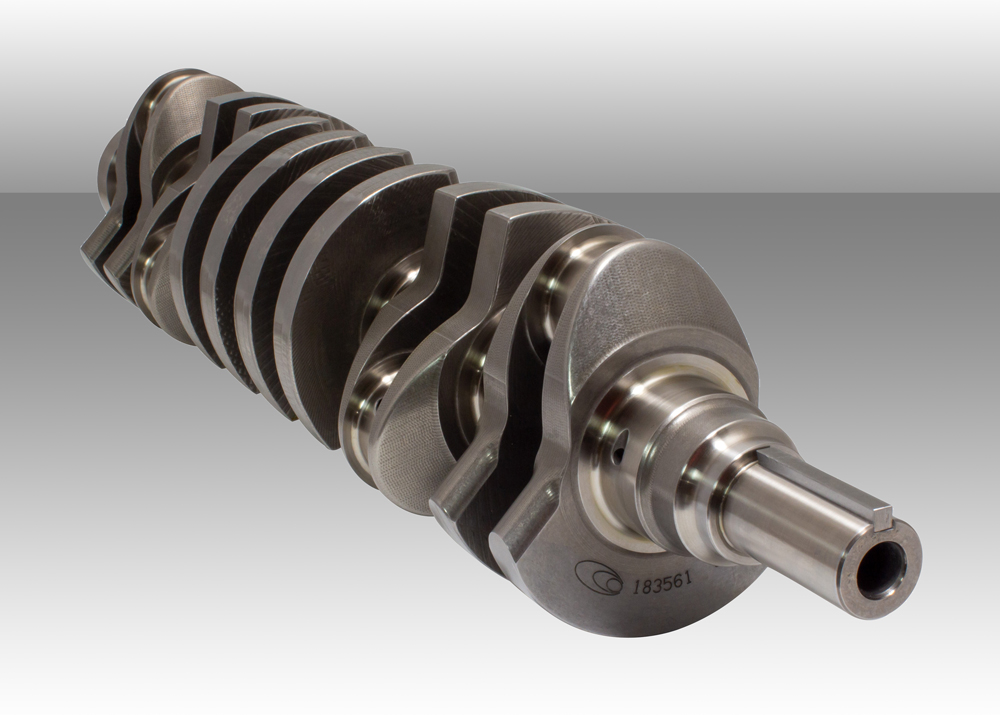
Despite having a wide variety of off-the-shelf crankshafts available in inventory, most manufacturers also do a robust business in custom cranks. Callies Performance Products made this custom crankshaft for a Nissan RB30 engine developed in Australia by Bullet Racing Engines.
“If you’re looking for something that isn’t in the catalog, then it automatically becomes a custom crankshaft,” noted Tom Lieb of Scat Crankshafts, Redondo Beach, California.
“Our crank offerings haven’t changed much over the last three to five years with the exception of adding a couple of LS billet offerings,” said Michael Tokarchik of Manley Performance Products, Lakewood, New Jersey. “Throughout our crank program, our designs don’t typically evolve beyond what we launch.”
But an off-the-shelf billet crankshaft?
Who would have predicted that for the shopping scenario entering the 21st century when ‘billet’ was synonymous with ‘exotic custom,’ and high-quality forgings were still hard to come by outside of factory performance vehicles.
“In the ‘old days’ when nothing aftermarket was common, the only option was billet,” explained Alan Davis of Eagle Specialty Products, Southaven, Mississippi. “Nobody could justify the initial cost of a forging. You saw it first with pistons and cams. Everything high-performance was billet, hence the reputation.”
Led by a racing community that quickly accepted new OEM engine platforms, and then overcame its aversion to EFI and boost, the aftermarket industry grew as fast as horsepower levels at the track. Companies selling rotating assembly parts started investing in forge tooling and offering extra crankshaft features such as unique counterweight designs and extra machining to reduce weight.
Strong Demand
Even though racers have so many options off the shelf or out of the catalog today, there continues to be a strong demand for custom crankshafts. Callies Performance Products has no fewer than six different lines of forged and billet crankshafts in its catalog, and yet the custom orders come in at the rate of two per business day—and that’s just for an aging 67-year-old engine platform.
“You’ll probably fall over, but last year alone for the old-school small block Chevy, we produced 546 different custom cranks,” said Brook Piper of the Fostoria, Ohio-based company. “And I would say 99% were mainly for a custom stroke.”
Rules drive much of the demand for a custom-stroke crankshaft. There may be a cubic-inch limit, and the engine builder finds a way to expand the bore on a cylinder block—thereby requiring a unique stroke to fit within the displacement rules.
Sometimes the need arises from a completely new engine. Callies recently worked with a major racing outfit that was building a new engine platform to compete in a high-profile series.
“They had a general architecture in mind, and then we put our scent on it,” said Piper. “The race shop did an FEA analysis on the model that we proposed. When it came back to us, we did some more tweaking. It went back and forth at least twice.
“You can tweak the pin arms, the width of the counterweights, elements like that,” continued Piper. “Cranks fail in the pin arms from torsional loads. I’m sure they had the cylinder pressures and loads it will see at rpm, and they can simulate the entire crankshaft operation.”
Truly Staggering
The research behind some of today’s custom crankshafts can be truly staggering. Austria-based Pankl manufactures racing and OEM performance-engine components and is a sister company to CP-Carrillo in the US. Pankl has worked with NASCAR, Pro Stock, and Formula 1 teams in designing and manufacturing crankshafts, and the development process always starts on a desktop.
“We first provide basic data sheets that need to be filled out,” explained Christoph Wachmann, adding physical space constraints are needed along with cylinder pressure, operating rpm, maximum torque, piston and rod weights and, most important, the type of racing.
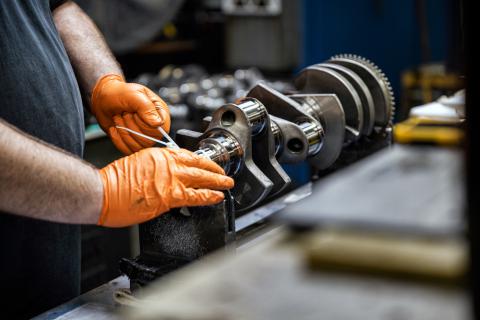
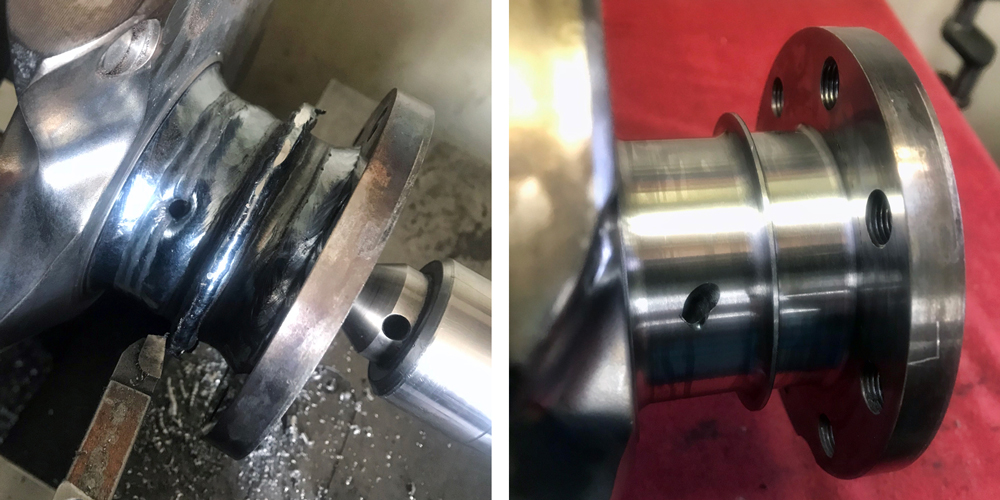
From left to right, these before-and-after photos illustrate the types of repairs done at Mile High Crankshafts. In this case, journals that had seen better days were made like-new again.
“The next step is to define the development targets. Is the focus on friction or being as light as possible?” continued Wachmann. “If you make it very light, it could flex more and end up being a higher friction crankshaft.”
A basic computational model analysis with FEA and balancing schemes is performed followed by a 3D model. From there, the customer could order a crank, or the computer could start working overtime.
“There are a lot of budget-dependent options on simulation. This could include choice of materials, dynamic calculations where we would need a model of the crankcase. We can take into account the full interaction between the rotating crank with rods and pistons,” added Wachmann.
The basic development calculation runs around $10,000, and just the simulation and modeling can easily top $100,000 when oil-film analysis and other computations are required.
“An important point for crankshafts is oil flow and lubrication,” said Wachmann (see sidebar on page 98). “You have all kinds of possibilities in passage angles, bore diameter, chamfers. Combine this with inertia analysis, oil pressures and rotation of the system. We’re trying to design the oil system to avoid things like cavitation.”
Exotic Alloys
Most custom crankshafts are machined from billet bar stock because the cost of producing forging dies for a single application is prohibitive. For one customer, however, Pankl was able to use the automaker’s forging dies from a similar engine to manufacture a custom crank that was part of that factory’s supercar production program.
“We forged the cranks with our own material, then applied our process for induction hardening and filet rolling,” said Wachmann.
An advantage noted by some competitors is that Pankl has access to exotic steel alloys made in Europe. Wachmann said it’s a steel that will accept extremely deep nitride hardening.
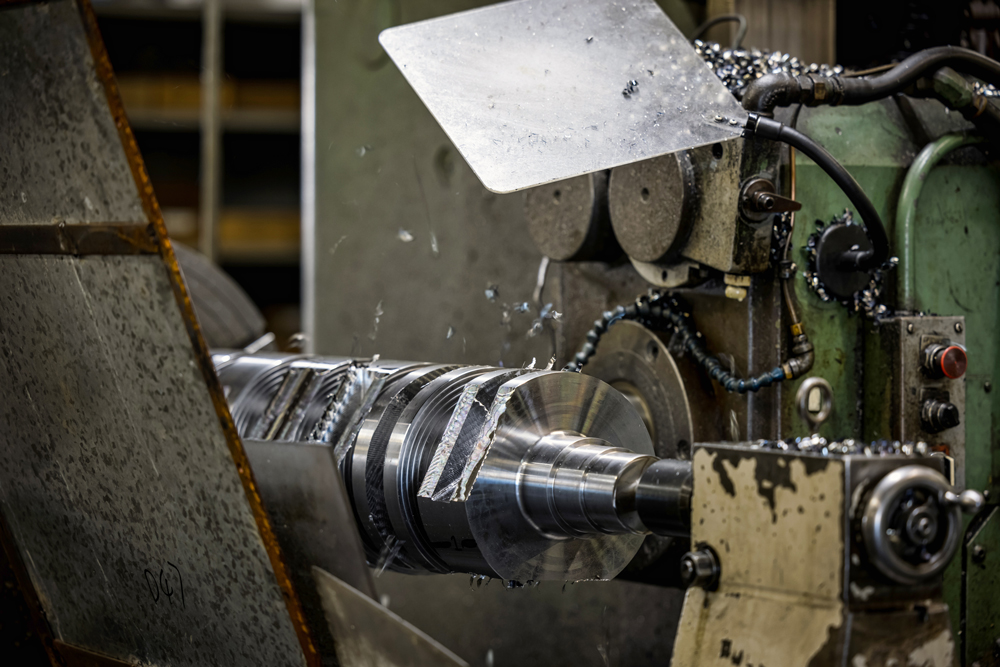
Molnar Technologies offers custom forged and billet crankshafts, like this eight-counterweight LS crank. For some engine platforms, like vintage AMC V8 blocks, it’s actually cheaper to make a limited run of billet crankshafts than to design and produce dies that would require over 200 forgings before getting a return on the initial investment of the dies and design work, said Tom Molnar.
“Deep nitride for us is up to a millimeter or 1,000 micrometers,” said Wachmann. “Usual nitride depths can be 100 to 300 micrometers. A NASCAR crankshaft may go up to 500 micrometers. These steels have a different chemical composition that allows a deeper nitride. To get a one-millimeter depth, the crank stays in the nitriding furnace for 200 hours.”
Steel quality is one of the most confusing, if not mysterious, metal properties that weigh on engine builders’ minds. Most performance forgings are made from 4340 steel. To some, that alloy can mean different formulas are in play.
“I don’t believe all 4340 steels are the same,” said Dave Olsen of Mile High Crankshafts, Denver, Colorado.
Olsen doesn’t manufacture crankshafts, but he sees a wide range of models that are in for repair or customizing.
“You can call it 4340 because it has whatever window of ingredients in it, but that window might be pretty big,” he said. “I’m not a metallurgist, but it just seems that the domestic cranks are a better grade of steel.”
Popular Request
Echoing what Piper mentioned earlier about stroke length being the driving force in custom cranks, Olsen said modifying the stroke on a crankshaft is one of his most popular requests. For example, NHRA Stock and Super Stock classes allow a plus or minus .015-inch variation on the published stroke for a particular engine.
“So, we’ll add around .013-inch to be safe. It’s not really for bigger displacement. It gives the guys a little more compression because they’re limited on combustion chamber size and the pistons they can run,” said Olsen. “And then there are the Pro Stock guys. They’re always changing their combination. A little less stroke because their bore is getting big enough and they can’t make the 500-cubic-inch limit.”
Mile High Crankshafts can also change the journal size. “We do that because basically the crank manufacturers are so buried with orders that they don’t have time to do some of these jobs,” added Olsen.
Fluctuating workforce numbers have prompted some crank companies to limit custom orders because of the extra manhours, and experienced specialists who grind crankshafts are retiring with no replacements in sight.
“It’s a labor issue,” said Peter Harris of Crower Cams & Equipment Co., San Diego, California. “To tell you the truth, we do still make custom stuff, but I’m shying away from it. The amount of time that’s involved and what I can get for them kind of make it cost prohibitive.”
Lunati, which is based in Olive Branch, Mississippi, does not accept custom orders but has a mild customizing program for high-performance cranks in its catalog.
“Our forgings and heat-treat process ensure we have a crank that will handle about all you want to throw at it,” said Will Vance. “As far as custom work, we do offer undercutting the throws for rod length accommodation, as well as offer a ‘blower series’ where we enlarge the flexplate holes as well as the crank-snout bolt. We also add an additional keyway.”
“The only secondary service we offer is balancing, which is surprisingly popular with our engine builder customers as of late,” said Manley’s Tokarchik, echoing that recurring theme of tight labor, especially for skilled machinists. “This is likely due to staffing issues on their end. They can still enjoy a nice profit while their employees can focus on other things.”
“We offer some additional machining on finished products, like undercutting the counterweights,” added Davis. “Also, a round sprint-car rear flange and a second keyway for blower applications.”
Billet More Common
As demonstrated, off-the-shelf billet crankshafts are becoming more common because it’s still cheaper than making forging dies to produce just a dozen or so for a rare application. Molnar recently designed a billet eight-counterweight crankshaft for a vintage AMC block because the forging dies are no longer available. Just tooling up a typical forging die would cost upwards of $100,000 to $120,000. A crank manufacturer would need to sell 200-plus crankshafts just to recover the initial investment.
Molnar designs his billet crankshafts in the US but has them machined offshore, however, that factory requires a minimum order. “I got enough guys together to make a run of it,” said Molnar, adding that once there were commitments for the minimum order, word spread and he was able to double the number. He also added a couple extra to the order in case there was a quality issue with one to have an example in stock. “I wouldn’t necessarily call these custom cranks, they’re more of a limited run.”
The average turnaround time for a custom crank when raw materials and labor conditions are favorable is 10 to 12 weeks. That’s after all the data review and consultations, which don’t always end in a custom order. Some engine builders have radical ideas that prompt the manufacturer to shy away when there’s conflict over the predicted structural integrity.
How to define a “custom” crank? For Tom Lieb of Scat Enterprises, it’s simple: “If you’re looking for something that isn’t in the catalog, then it automatically becomes a custom crankshaft.”
“The strength of the crankshaft is between the top of the radius on the main to the bottom of the radius on the throw,” explained Lieb. “That cross-section is what holds the crank together. As you increase stroke and/or decrease the rod journal or main journal diameter, that cross-section changes. If the guy has a 4-inch-stroke crank for a small block Chevy and wants to run a Honda rod journal and an early 283 main size, I mean, there’s less than my pinky finger worth of material holding it together.
“We’d talk and say, ‘Hey, I’m flattered that you want to keep our employees working by making a crankshaft for you, but you’re going to be really pissed when it breaks. So we’d rather not,” added Lieb.
When to Choose
Now that the lines between custom and off-the-shelf are blurrier than ever, just when should an engine builder choose to order a custom crankshaft?
“Most stock crankshafts have enough safety margin built into them to handle a mild increase in power and torque. The time to upgrade to a performance or custom crankshaft will vary depending on your application. However, if you’re building an engine that will be boosted, blown, or use nitrous, you should always upgrade to a billet,” said Matt Polena of K1 Technologies, Mentor, Ohio.
“Horsepower really isn’t a factor in custom ordering a crankshaft,” noted Peters. “For example, a hobby stock dirt track racer with an unlimited budget wants to build a killer engine and custom-orders a super light crankshaft with Honda journals for his two-barrel 450-horsepower engine.”
“Horsepower doesn’t break cranks,” agreed Molnar. “Look at a Top Fuel car. They make 11,000 horsepower first time down the track on a new crank. But they also know they can get only so many passes before that crank does break due to the fatigue of bending and twisting from the high loads.”
The best advice, as always, is to talk to the manufacturer’s tech reps. They can provide critical advice along with useful do’s and don’ts when it comes to ordering crankshafts.
“We’ve had requests for crankshafts before that we could not fulfill, so we recommended the customer to a billet manufacturer,” said Davis. “Such things as unique stroke, unique application, something that had a design aspect that was necessary, and we couldn’t accommodate. It rarely has anything to do with power-handling capabilities. It is most often due to unique design aspects that were required.
“Finally,” he added, “race what you can afford to replace.”
The Straight and Narrow
It’s an oil strategy that’s been around for decades, and it still works.
“When Chevy designed the original 265-cubic-inch engine, they used the straight-shot oil system,” said Tom Lieb of Scat Crankshafts, Redondo Beach, California. “All of us crank guys over the years have tried to improve on that. Guess what? We haven’t been able to in the last, what, 70 years?”
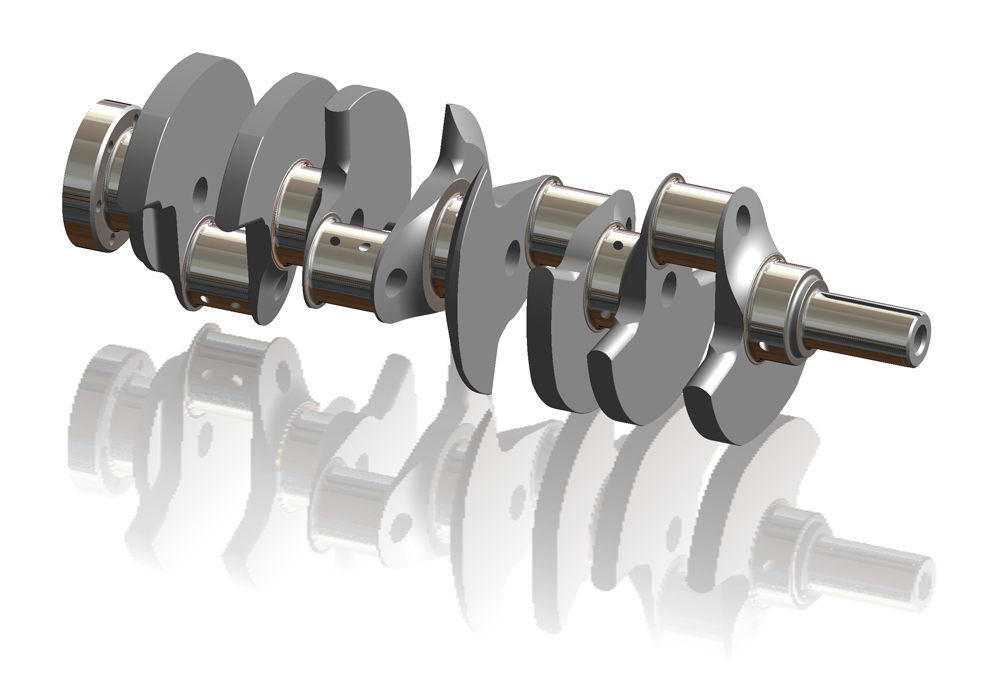
Straight-shot oiling means there is a straight passage for the oil to flow without interruption from the crankshaft mains to the rod bearings. Over the years, refinements have been made to the angles and positions of the feed holes to better serve high-rpm applications.
“With some engine builders, placement of the oiling holes is highly important, and with others it’s no big deal,” said Kirk Peters of Howards Cams, Oshkosh, Wisconsin.
For a time in the 1980s, though, racers had a love affair with cross-drilled crankshafts. It was a high-tech-sounding term that stirred fantasies of much-improved lubrication. The original concept added supplementary oil passages through the mains in the belief that oil flow would be equalized to the bearings. Basically, users thought the bearings would get two shots of oil with each crank rotation. At high rpm, however, centrifugal forces come into play and would actually draw oil away from the rod journal oil holes.
“There isn’t enough oil pressure in the world to push that oil in at high rpm,” said Tom Molnar of Molnar Technologies, Kentwood, Michigan. “You can’t get oil to the rod bearing and then you fry them.”
“You could do an entire article on crankshaft oiling,” added Alan Davis of Eagle Specialty Products, Southaven, Mississippi. “The highly debated topic of standard vs. cross-drilled oiling is ripe with speculation, and inaccurate information is floating around. Much of which is the opinion of ‘old school’ racers and has very little, if any, engineering analysis behind it.”
Any discussion of crankshafts will almost always touch on weight. As engine builders demand lighter and lighter cranks, they also don’t want to give up strength. Cross-drilled cranks were out of the question when manufacturers offered to gun-drill the mains. But there’s also a way to lighten the crankshaft using the oil system.
“Almost all dirt late models have gone to a wide-bore or 4.500-inch bore-space cylinder block,” explained Peter Harris of Crower Cams & Equipment Co., San Diego, California. “Some are running into durability issues with how light a crankshaft they want. We combat this by putting in smaller oil holes. We used to have quarter-inch oil passages. Then 7/32nds. Now it’s eighth-inch. It doesn’t seem to be an issue for oiling, but it definitely makes the crankshaft stronger.” —Mike Magda
World championship car builder Larry Jeffers has taken over ownership of the International Hot Rod Association (IHRA) from IRG Sports + Entertainment. Jeffers is the owner of the House Springs, Missouri-based Larry Jeffers Race Cars.
Jeffers, who will serve as IHRA President and CEO, wants to grow the sanctioning body’s bracket and grassroots racing efforts with a “commitment to the IHRA Summit SuperSeries Team and World Finals.”
“We value those relationships as we do with our IHRA-member tracks. Our No. 1 goal under our ownership is to grow grassroots, Sportsman drag racing. This is a new chapter for the sanctioning body, but our top priorities remain to recognize and support the racers who are the backbone of our incredible sport,” Jeffers said.
The IHRA is the second-largest drag racing organization in North America and home to the IHRA Summit SuperSeries, the largest national championship program in bracket drag racing.
In addition, the IHRA has over 75 member tracks and thousands of member racers throughout North America. Other programs include the IHRA Sportsman Spectacular presented by Hagerty and Moser Engineering with events across the US.
NASCAR has announced that construction will begin on a state-of-the-art production facility later this summer. The 58,000-square-foot space will adjacent to the NASCAR R&D Center in Concord, North Carolina.
The new facility will house approximately 125 NASCAR Productions and Motor Racing Network (MRN) employees, with additional room to expand operations. The facility will be outfitted with the latest broadcast equipment and software through a partnership with NEP Group.
“In this evolving sports media landscape, live event production and investing in technology that enhances the fan viewing experience has never been more important—it’s essential that our new workspace can facilitate that strategic growth,” said NASCAR Senior Vice President, Media, and Productions Brian Herbst.
NASCAR Productions will produce more than 500 live events in 2022, up from 200 live events in 2018. In addition, NASCAR Studios, the sanctioning body’s hub for content strategy, creation, and distribution, will also have employees based at the new facility in Concord.
Though still in the early stages of development, the new facility is expected to be fully operational by the start of the 2024 season.
A ceremonially ground-breaking event will take place on Wednesday, August 31.
NASCAR will continue to have a presence in the Uptown Charlotte area, with “a large contingent of employees” remaining in Five Fifty South (formerly NASCAR Plaza).
Officials with the Pikes Peak International Hill Climb (PPIHC) have revealed the 101st Running of the Race to the Clouds will take place on Sunday, June 25, 2023. Drivers, teams, and fans will converge on “America’s Mountain” for the 12.42-mile course with 156 turns on the 14,115’ summit.
“This race is an event like no other,” said PPIHC Board Chairman Fred Veitch. “Many drivers list the Pikes Peak International Hill Climb at the top of their bucket list and are eager to accept the challenge. Others have competed for more than 20 years and keep coming back. We are really excited to see what the next century of hill climb racing on Pikes Peak will look like as we prepare for the 101st Running next summer.”
The current course record is 7 minutes, 57.148 seconds, and was set in 2018 by French racer Romain Dumas in a purpose-built, all-electric 2018 Volkswagen I.D. R.
Photo courtesy of Keller Williams Realty, Facebook
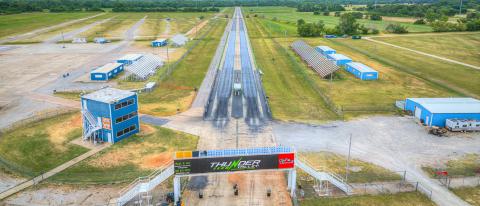
Thunder Valley Raceway Park—the 1/4-mile drag strip in Noble, Oklahoma—is for sale for $2.85 million, as announced online.
First opened in 1992, the NHRA-sanctioned drag strip regularly hosts Lucas Oil Series divisions, no-prep racing, and Discovery’s Street Outlaws events.
The 193-acre facility sits near the Canadian River, I-35, and the BNSF Railway.
According to published reports, the current co-owner, Chad Stephens, wants the buyer to continue running the facility as a drag racing destination but also sees potential for a multi-use property, including hay production.
The track will continue to run events, with the next race set for Friday, August 12, for the Fun ‘n Grudge match.
To inquire about the sale, contact Chad Stephens at 903-903-1640. For more information, visit okthunder.com.
Vista Outdoor—the Anoka, Minnesota-based parent company of 40 brands that design, manufacture, and market sporting and outdoor products—has announced the acquisition of Irvine, California-based Fox Racing.
Fox Racing offers helmets, protective gear, and apparel for dirt bikes, motocross, and more categories.
“Fox Racing is synergistic to our existing action sports business unit, which includes Bell Helmets,” a company release stated. “Fox Racing’s deep history of producing innovative gear that enables racers and explorers to reach new heights aligns perfectly with Vista Outdoor’s existing portfolio of leading outdoor brands.”
Join PRI at MotorTrend Presents Roadkill Nights powered by Dodge on Saturday, August 13, from 10 a.m. to 9 p.m. at M1 Concourse in Pontiac, Michigan.
Experience a one-day automotive experience like no other, packed with street legal drag racing on Woodward Avenue, an all-star lineup of automotive influencers competing in the Dodge Direct Connection Grudge Race, car displays, Dodge Hot Lap and Drift Thrill rides, exhibition runs, cruise-ins, live entertainment, sponsor vendor midway, and more.
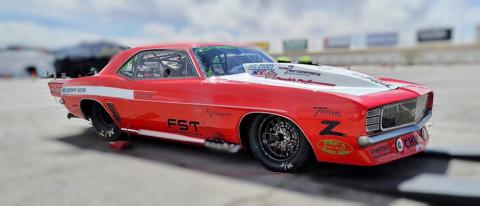
Be sure to stop by the PRI Pavilion, which will proudly feature Detroit legend Brian “Chucky” Davis and his 2.0 1969 Camaro. A veteran of the grudge racing scene, Davis has built a reputation as one of the country’s fastest street racers, recently winning $100,000 at the Dallas Fort Worth Big Tire Cash Days with the Bad Company Racing Crew. He can also be seen on Discovery’s “Street Outlaws: America’s List” on Mondays at 8 p.m. and streaming on Discovery +.
The PRI Pavilion will also feature information on PRI’s efforts to protect racing, including advocating for the passing of the Recognizing the Protection of Motorsports Act (RPM Act), H.R. 3281 and S. 2736. You can also ask the PRI Membership team for information on voting, including identifying lawmakers that support motorsports.
Rain or shine, one day only! Don’t miss this event!
Alaska and Wyoming will hold their 2022 primary elections on Tuesday, August 16, and it’s important to know which candidates support racing when going to the polls or voting early. Visit PRI’s Vote Racing page for information on voting in the primary, including absentee and early voting, registering to vote, and identifying your lawmakers and the candidates running in 2022.
The Recognizing the Protection of Motorsports Act (RPM Act), H.R. 3281 and S. 2736, enjoys strong support from Alaska and Wyoming members of Congress. The bipartisan RPM Act guarantees the right to modify street cars, trucks, and motorcycles into dedicated race vehicles and safeguards the industry’s right to offer parts that enable racers to compete. For more information on the RPM Act, visit saveourracecars.com.
Below is a list of federal lawmakers who have co-sponsored the RPM Act in the 2021–2022 session of Congress and are running for re-election in 2022.
 MEMBERSHIP LOGIN