PRI's Featured Vehicles

Submitted by jeffreyc on Wed, 10/26/2022 - 09:04


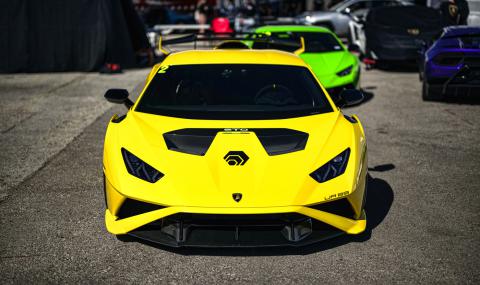
Ask any proud racer for photos of their race car and they’ll eagerly pull out a smartphone and scroll through the hundreds of images stored in their gallery. Such is the pride of ownership in 21st century motorsports. Acknowledging the thousands of hours that have gone into building these cars and sourcing just the right parts, we recently asked PRI Magazine readers to send us photos of their race cars to feature in this year’s Trade Show issue. The response was overwhelming—far more submissions came in than we had room for in these pages. And it wasn’t easy narrowing down our selections, given that we only have so much space at our disposal. All that said, the 20 exceptional vehicles that follow, in our opinion, reflect some of the best our industry has to offer.

1

1981 Buick Regal

Kyle Roberts
Bay City, Michigan

Race Series/Class: SCCA Solo, C-Prepared car

Engine: 408-cubic-inch small block Chevrolet with a Saginaw three-speed transmission built by Kyle Roberts, custom tuned by Mad-Science Motorsports

Car: Fabrication work by Chris Vance of V-Fab in Midland, Michigan

Features: Holley Sniper EFI fuel system, Quick Performance, Wild Rides 12-point cage, five-point harness from TeamTech

Fact: Not only is the car built for summer autocross season, but Roberts also actively ice races the car in the winter months with a studded set of tires.

2

1987 Oldsmobile Cutlass 442

Phil Veldheer
Holland, Michigan

Race Series/Class: NHRA and IHRA, Top Eliminator

Engine: Hard Blok filled Oldsmobile 455 bored to 468 cubic inches, built by Dan Gorby Racing Engines

Features: Mickey Thompson tires, VP C12 race fuel and VP 10w40 full synthetic race oil, ARP fasteners, Moroso plug wires, PROFORM Parts water pump and fan, Cometic Gasket gaskets, Hedman Hedders, Optima Batteries battery, Fragola hoses and fittings

Fact: This is a genuine GM factory race car with nine original miles on the odometer. Veldheer has owned it for more than 23 years, and he’s been behind the wheel of the car for the last eight years.

3

2018 Ford Mustang GT

David Van Voris
Amarillo, Texas

Race Series/Class: TX2K, FL2K, Street Car Takeover, Flashlight Shootout

Engine: Built by David Van Voris at Coyote Direct

Car: Fabricated by Joe Young of Street Car Joe Fabrication

Features: RPG 5.2, sleeved, Top Fuel hoops, aluminum rods, Manley pistons, Frankenstein heads, COMP Cams camshaft

4

2020 Black Diamond

Mark & Jenny Watson
Loganville, Georgia

Race Series/Class: Late Model Series, 602 Thunder

Engine: GM crate small block built by Darrell Gabriel of Gabriel’s Engines

Car: Built by Ronnie Stuckey of Stuckey Enterprises

Features: Safecraft safety equipment, Fast Shafts driveshaft, K&N filters, FSR Radiators radiator, Fox Shocks, VP Lubricants, Fuel Safe, Ultra Shield, PPM Racing Products, MSD

Fact: Watson Racing started 29 years ago for Mark and Jenny’s son AJ (“Sideways”) Watson when he was five years old.

5

2013 Mac Sherrill Rear-Engine Dragster

Tom & Ryan Martino
Youngstown, Ohio

Race Series/Class: NHRA and PDRA, Top Dragster

Engine: Nitrous-assisted 665-cubic-inch big block Chevrolet built by PAR Racing

Engines Car: Built by Mac Sherrill Race Cars

Features: Lucas Oil Products, K&N Filters (dragster scoop, air filters, oil filters), NGK Spark Plugs, XS Power Batteries, Strange Engineering steering and rearend components, Fel-Pro gaskets, Brodix aluminum cylinder heads and blocks

Fact: Martino Motorsports is composed of a father-son tandem who have been featured on national television—from PBS to the Discovery Channel—with their race car.

7

2002 Undercover Dragster

Gary Don Free
Katy, Texas

Driver: Austin Free

Race Series/Class: Bracket racing

Engine: 584 big block Chevrolet built by Steve Schmidt Racing Engines

Car: Built by Undercover Motorsports

Features: Hughes Performance torque converter, Exner Racing Transmissions transmission, APD Dominator carburetor, Altronics Red-Alert O2 monitor

Fact: Gary’s 16-year-old son Austin is driving this dragster after two years of racing Juniors. He is a third-generation drag racer and has quickly adjusted to driving a 4.70 ET dragster at 145 mph.

7

2005 Chevy Colorado Custom Mega Truck

Lindsey & Bennie Goodin
Emmett, Michigan

Race Series/Class: Racing, freestyle, bounty hole

Engine: 383 Stroker Motor

Features: 2.5 GM axles, Profab transfer case, 20-inch Big Shocks, NGK spark plugs

Facts: Recently, Lil Red Nightmare was completely made over after being dormant for three years. What’s more, Lindsey has competed all over the country with several wins in freestyle and head-to-head competition. “Nothing beats the feeling when you go launching off a big jump and all you see is the beautiful sky,” she said.

8

1995 Eagle Talon

Albert Raczynski
Algonquin, Illinois

Race Series/Class: Radial vs. Modified

Engine: Mitsubishi 4G63 built by Albert Raczynski

Car: Built by Albert Raczynski

Fact: Raczynski built this entire car from the ground up. He fabricated the entire chassis, wired the entire car, built the engine, and tuned the car all by himself.

9

1930s TMD DieselX Special

Thomas McGriff
Indianapolis, Indiana

Race Series/Class: Vintage open wheel, oval and road course

Engine: Cummins 2.8L SOHC turbodiesel

Car: Built by Thomas McGriff

Features: Wilwood brakes, Bassett wheels, Goodrich Radial T/A tires, Hughes Performance transmission, Speedway Engineering rear axle, MPI steering wheel, Speedway Motors spindles and front hubs, Power Cool radiator, AFCO springs and shocks

Fact: This is a 1930s Euro Grand Prix concept race car.

10

1969 Chevrolet Camaro ZL1

Jordan Pennington
Mishawaka, Indiana

Race Series/Class: FAST (Factory Appearing Stock Tire) racing series

Engine: 560-cubic-inch all-aluminum big block Chevrolet built by Tony Bischoff of BES Racing Engines

Car: Built and fabricated by Jordan Pennington

Features: Chevrolet Performance, TBM Brakes brake components, Holley EFI, Jesel valvetrain, Braille Battery, Aeromotive, RaceQuip, Dynomax

Facts: In the FAST racing series, all cars have to look 100% original like the day they rolled off of the showroom floor. This car makes 903 horsepower naturally aspirated through factory exhaust manifolds, and it has been 9.50 at 143 mph in the quarter-mile on stock bias ply Firestone Wide Oval tires.

11

1968 Pontiac LeMans

Kevin & Mook
Ames, Iowa

Race Series/Class: Burnout exhibitions

Engine: 455 Buick built by Kevin and Mook

Car: Built and fabricated by Kevin and Mook

Features: QA1 suspension, Quick Performance rear axle, lots of rust

Fact: This car was T boned in the 1970s and parked by the river where it was flooded numerous times. It was saved by YouTubers Junkyard Digs and Junkyard Mook in 2018.

12

1978 Chevrolet C10

Paul Treadwell
Driftwood, Texas

Driver: Jesse Vaughn from Marion, Illinois

Race Series/Class: Optima Street Car Challenge (GTT Class), UMI King of the Mountain, C10 Nationals Autocross, LS Fest Grand Champion, Pro Touring Truck Shootout

Engine: LS engine built by Don Hardy

Car: Built by Level 7 Motorsports

Features: No Limit Engineering Pro Tech chassis, Winters Performance rearend, Forgeline wheels, Quarter Master clutch, Wilwood products, MoTeC ECU

Fact: This C10 is one of the most advanced trucks on the planet, according to Vaughn, as it’s powered by a 730-horsepower 446-cubic-inch LS engine.

13

2016 Belly Tank Style Lakester

Mike & Diane Brown
Morrow, Ohio

Race Series/Class: Mile land speed racing

Engine: GM Performance LSA crate engine with a few modifications

Car: Designed and built by Mike and Diane Brown

Features: Winters Performance rearend, Jerico transmission, Hoosier tires, Stroud Safety equipment, Wilwood brakes, AEM data logger, FireFox suppression system

Fact: The car’s namesake, “itisforfreedom.com,” is a school in the Dominican Republic that the Browns support.

14

1956 Chevrolet Bel Air

Andrew Starr
Horsham, Pennsylvania

Race Series/Class: Drag Week

Engine: Hilborn EFI 582-cid big block Chevrolet built by Starr Performance and Consulting

Car: Built and fabricated by Starr Performance and Consulting

Features: Hilborn EFI, Holley EFI, G-Force Transmissions, Moser M9, Viking Shocks, Weldon, Crower, Bullet Cams, Injector Dynamics, Mark Williams driveshaft

Facts: Designed 13:1 compression to run on pump gas on the street; 935 RWHP on race gas, dual fuel systems. Runs 9.35 at 148 mph at 3,885 lbs.

15

1995 BMW 325i

Carl Balzer
Toledo, Ohio

Race Series/Class: Cleetus and Cars, drift events, drag racing events

Engine: Twin-turbo 1,200-horsepower LS swap built by Accelerated Performance using Texas Speed internals

Car: Built by Andrew Starr with help from his team at Hidden Motorsports and NEXXGEN Fab

Features: Holley and Motion Raceworks parts throughout; suspension from Fortune Auto, BimmerWorld and FDF; drift components from Seems Legit Garage

Fact: This car can do it all, from drifting to drag racing to burnout contests to off-roading and is 100% street legal so it can be daily driven.

16

2020 Ultra 4

Chuck Crossland
Los Molinos, California

Race Series/Class: Ultra 4 4800 class, NorCal Rock Racing 4800 class, King of the Hammers Everyman Challenge

Engine: 6.2L twin-turbo LS built by Mike Nelson of Northstate Machine

Car: Chassis by Liberty Mountain Fabrication, car built by Chuck Crossland with help from Matt’s Fab Shop

Features: Precision Turbo, Brian Tooley Racing, Hughes Performance transmission, Holley EFI, Tubeworks, King Shocks, Yukon Gear and Axle, Renegade Race Fuel

Fact: This is the only air-to-water intercooled twin-turbo car in the series, making it one of the most powerful cars at 1,150-plus horsepower on a low-boost tune up.

17

2010 Mini Cooper

Frank Schwartz
Davisburg, Michigan

Race Series/Class: SCCA B-Spec

Engine: Stock Prince N12 1,598cc (BMW/Peugeot)

Car: Built by Frank Schwartz and Babyface Fabrication (cage)

Features: G-LOC Brakes, Hankook tires, Summit Racing Equipment, AACS, Garmin Catalyst

Facts: The livery has half a mile of hand-applied pinstriping as an homage to the Frank Stella Art Car that ran at Le Mans in 1976. It finished fourth out of 61 cars at the 2021 National Championship SCCA Runoffs at Indianapolis Motor Speedway.

18

1994 Chevrolet Camaro SS

908 Motorsports Magazine

Race Series/Class: No Prep Outlaw

Engine: 572 Merlin

Car: Built by JT’s Custom Shop

Features: Aeromotive, MSD, AutoMeter, Moroso, SCAT Enterprises, JE Pistons, COMP Cams, Strange Engineering, Billet Specialties, AFCO, Kirkey

Fact: CO2 chilled air and fuel via DEI and Spectre Performance.

19

1955 Chevrolet 3100

Eric Broadbent
Williamsburg, Iowa

Race Series/Class: NHRA Super Street, Super Gas, Bracket Series Super Pro

Engine: Chevrolet big block Mark IV 496 cid built by Eric Broadbent

Car: Built by Tom Farnlof

Features: ATI transmission, converter and balancer; SCAT rotating assembly; Wilwood brakes; AFR heads and intake; MSD ignition; Goodyear slicks; Strange Engineering aluminum third member and axles

Facts: Broadbent has owned this vehicle since high school and has been racing it for more than 30 years. It runs 9.70s at 140 mph. It features full-scale original steel body and fiberglass front and rear fenders.

20

2019 Harris Auto Racing Terminator Stock Car

Andrea McCain
South Haven, Minnesota

Race Series/Class: IMCA and USRA Stock Car

Engine: Small block Chevrolet 350 built by Shaun Bruns at Bruns Racing Products

Car: Built and fabricated by Harris Auto Racing

Features: Dynamic Drivelines driveshaft, Holley carburetor, Wilwood disc brakes rotor and pedal assembly, Penske Racing Shocks, Jones Racing Products pulley system, QuickCar gauges, Bassett Racing Wheel, Speedway Motors three-piece spindles

Fact: McCain is the owner and driver of the race car, and she travels all around Minnesota and Iowa trying to run with the big boys in the class that is “Too Tough to Tame.”
November 2022
By
PRI Staff

Essential Education

Submitted by jeffreyc on Wed, 10/26/2022 - 08:56


From preventing parts failures to gaining financial control to understanding EV conversion opportunities, this year’s slate of educational seminars at the PRI Trade Show offers invaluable information and training for every motorsports entrepreneur.

Where else can you hear firsthand advice from the likes of a NASCAR Xfinity Series driver, a drag strip owner/president, a clutch specialist for an NHRA Top Fuel team, and numerous respected experts in the field of motorsports innovation, solutions, and technology? None other than at the PRI Trade Show, of course. In fact, the 2022 PRI Education lineup offers some of the biggest names and deep-dive topics ever featured.

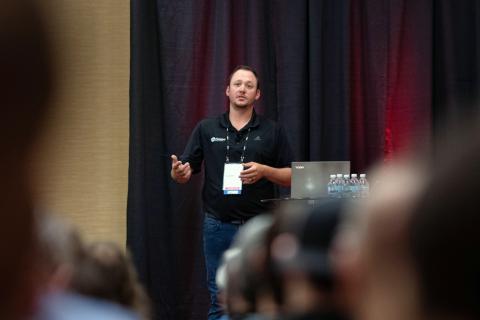
“PRI is the one venue that draws racers together in one place, a place perfect for disseminating new information and fielding any questions you may have afterward,” said presenter Danny White, manager of motorsports, mechanical engineering at Purdue University. “While virtual has served us well, there’s nothing like in-person. I prefer live events because I can be more personal and expressive.” 

Here, we will preview the seminars and tracks attendees will find in this year’s PRI Education program—taking place every day of the PRI Show, Thursday through Saturday, December 8–10, in Indianapolis, Indiana. Know, too, that your education schedule is customizable and entirely up to you. Optimize your time and add your favorites to your PRI Show Planner, available at pri2022.mapyourshow.com and on the PRI Trade Show app available later this month.

Parts Selection, Unlocking HP & More

The technical slate of PRI Education seminars will not disappoint race teams, engine and car builders, installation shops, service providers, and more interested in elevating their or their customers’ race vehicles. This track includes an in-depth look at how focusing on a system’s synergies, rather than just swapping and trying new parts, can unlock hidden horsepower. The session will be led by Olive Branch, Mississippi-based Edelbrock Group’s Billy Godbold; Lake Speed Jr. of Total Seal in Phoenix, Arizona; and Lake Havasu City, Arizona-based EFI University’s Ben Strader. 

Surely, your customers have broken an engine part at some point, but have you ever investigated with a detailed parts failure analysis? Five experts will share where to find relevant assessments, the “how and why” behind them, and actionable steps to fix a failure in this session by Chuck Lynch and Fernando Curello of Cary, Illinois-based AERA Engine Builders Association; Russ Hayes of Jasper, Indiana-based Jasper Engines & Transmissions; Dan Begle of Farmington Hills, Michigan-based MAHLE; and Randy Neal of Peachtree Corners, Georgia-based CWT Industries. (For more on this topic, see Lynch’s “PRI Education” column on page 306.) 

Geoff Raicer
Geoff Raicer

The technical seminars continue with an all-star panel of professional designers headed by Guilford, Indiana-based BES Racing Engines’ Darin Morgan and Preston Mosher, who will cover the latest developments in high-performance cylinder head and induction systems.

Another technical session will examine the wear characteristics of engine main bearings and how crankshaft balancing, torsional frequencies, and harmonics can affect these vital components in an hour-and-a-half seminar led by MAHLE’s Begle and CWT Industries’ Neal. 

Shop owners know that the right turbocharger can make or break a project—and your reputation. Phoenix, Arizona-based Full Race Motorsports’ Geoff Raicer and Mat Velders will share how to custom-match turbos for race applications with simple calculations.

“It’s a repeatable process for accurate turbocharger matching,” Raicer explained. “When I first started, it blew me away how rare it is for people to crunch numbers in this industry. Word of mouth is so prevalent. Sure, it worked for a friend, but if they’re at altitude, have a different engine displacement, or are running any other variable, you will get B-plus or A-minus results at best. We will show you how to get A-plus results.”

Dirt late model racers and chassis builders will want to join the discussion led by Mike Nuchols of Seymour, Tennessee’s Warrior Race Cars. Nuchols will show attendees how to solve common challenges often plaguing weekly competitors and best approach “the ultimate” dirt late model setup.

Meanwhile, Bob Morreale from The Tuning School in Odessa, Florida, will offer firsthand advice on how tuners can reduce safety risks, followed by new tuning processes for improving emissions and on-track performance.

Winning Business Strategies

PRI Education’s business track is designed for racing business owners, operators, professionals, content creators, and more looking for ways to improve their operations and revenue. For example, one session will see Tom Shay of Profits Plus Solutions in Dardanelle, Arkansas, share an exercise to help businesses gain better control over their finances, plus a list of helpful tips to bring a fresh perspective to an operation.

Another session will update sponsors on how to meet the demands of today’s brands and marketing agencies, emphasizing new sales strategies and social media optimization with a look at how the current business climate can affect a sponsorship’s success.

Sasha Dierker
Sasha Dierker

For professionals working on a business’ social media page, do you ever feel like it is a burden to post? Are you sure your efforts are even working? Catch social media marketing veteran Jennifer Cario’s discussion, showing how slight adjustments (and less posting) can help you reach more potential customers on Facebook and Instagram. 

Dive a little deeper into the social media discussion with Sasha Dierker, director of marketing at SRI Performance in Mooresville, North Carolina, who will “share the secrets of success” to business social media, including how to “boost” posts to generate leads for potential sales and how to increase shares, likes, and comments. 

“Social media is constantly changing, so it helps to have someone with experience (like me!) to provide insight and knowledge,” Dierker said. “Come to this seminar to help improve your content and drastically increase customer traffic to your online eCommerce, website, and related platforms.” 

You won’t want to miss the panel of impressive women motorsports professionals as they discuss their achievements, aspirations, challenges, triumphs, and efforts to engage and raise awareness among young women interested in pursuing motorsports as a career. This year’s installment, again moderated by Jeanette DesJardins of Car Chix in Crestview, Florida, will feature NASCAR Xfinity Series and Trans Am Series racer Natalie Decker; Michelle Lackey Maynor, the majority owner and president of Alaska Raceway Park in Palmer, Alaska; Kaylynn Simmons, the clutch specialist for Clay Millican’s Parts Plus Top Fuel dragster team; and Dr. Rebecca Starkey, owner of VMP Performance. In addition, an audience Q&A will take place, so get your questions ready!

EV Opportunities, Conversions & New Technologies

“IndyCar is converting to hybrid. NHRA already has EV classes. The World Karting Association has an electric series. Our sport is staring ahead into a disruptive technological shift that we need to be ready for and look for opportunities for our sport to sustain and grow. I mean, it’s racing: The grid waits for no one,” said White of Purdue University.

Electric racing is here, and with more major race sanctioning bodies expanding with opportunities for electric vehicles (EVs), manufacturers, parts and service providers can profit from this growing field now more than ever before. That’s why PRI Education’s new-for-2022 EV track will feature a candid conversation with expert panelists on how to capitalize on this trending category. See NHRA and FOX Sports commentator Alan Reinhart talk all things EV with Jake Hawksworth of Hypercraft in Provo, Utah; Mavrick Knoles and Rob Ward of Legacy EV in Tempe, Arizona; and John Romero of AEM EV in Hawthorne, California. 

Danny White
Danny White

The transition doesn’t have to be daunting for those wary about going EV. Join Knoles, Ward, and Tim Cachelin of Legacy EV as they reveal a simple installation process to get the wheels spinning on electric builds—with a special discussion on powertrains.

O’Fallon, Illinois-based EngSim Corporation’s Dan Agnew and Varun Negandhi, meanwhile, will share how to use readily available simulation models to optimize battery, motor, and driveline components to extract maximum performance from any EV race car. 

Anyone from builders and integrators to safety crew members will benefit from a cutting-edge discussion on electric race car testing focusing on the science behind advanced chemistries and near-field technologies. Ben Wrightsman and Rodney Kidd, both from Battery Innovation Center in Newberry, Indiana, will also go over EV safety certifications available today. 

For those looking to go fast and break records, NHRA and FOX Sports’ Reinhart returns for a unique sit-down showcasing eye-catching advances in EV engineering. Steve Huff of SeaTac, Washington-based Huff Motorsports; John Metric of Lonestar EV Performance in Lake Jackson, Texas; and Allen Thomas of the National Electric Drag Racing Association (NEDRA), also based in Lake Jackson, will join Reinhart for a look at how today’s trailblazers are pushing the envelope. 

Rounding out PRI Education’s EV track is a thought-provoking look at keeping performance jobs in the US led by Purdue’s White. Race teams, manufacturers, builders, and more businesses will learn how to tap into the education system to help train emerging professionals with the skills needed to, eventually, become excellent employees.

“We will look at how to include motorsports in the education system as a platform for experiential learning. It’s important to know that, today, [motorsports students and professionals] not only need to understand how to work on the engines and powertrains of today’s race cars, but also need to understand tomorrow’s technology: hybrid, electric, what have you,” said White.

Yes, this year’s PRI Education lineup is slated to be better than ever. So make the most of your time in Indy with one (or a few) of these world-class, complimentary educational sessions. As SRI Performance’s Dierker said, “now is the time to get ahead and get informed.”

November 2022
By
Laura Pitts

Special Report: 2022 PRI Trade Show Guide

Submitted by jeffreyc on Wed, 10/26/2022 - 08:47


The PRI Trade Show will deliver a concentrated dose of racing passion for three solid days in Indianapolis. We spoke to Show exhibitors—veterans and newcomers alike—to find out why this event, scheduled for December 8–10 in downtown Indianapolis, is the place to do business if you want to go faster, or help racers go faster, in the coming year.

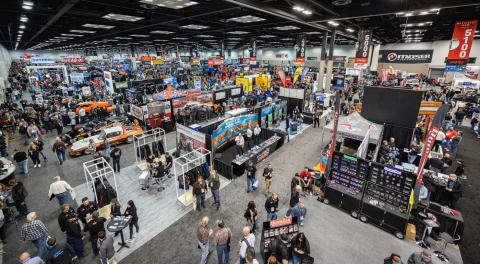
Variety. Efficiency. Camaraderie. While that sounds like an inscription etched into a medieval coat of arms, those were cited in a number of interviews as some of the most popular reasons why anyone involved in the racing and performance industry should attend the PRI Trade Show, which will once again fill the Indiana Convention Center (ICC) and adjacent Lucas Oil Stadium on December 8–10 with more than a thousand exhibiting companies and tens of thousands of attendees. 

“If I were a buyer or end user, the number-one word that comes to mind about the PRI Show is variety, followed closely by scope and breadth,” said Dan Roche of Briggs & Stratton Racing Engines, Wauwatosa, Wisconsin. “There’s just so much to see at the Show. The breadth of all the different types of motorsports represented there is just jaw-dropping.”

“In one trip, I can see 10–15 different companies I need to speak with in a couple of days, and in person,” said Filip Trojanek of CorteX Racing, Loveland, Ohio. “I don’t think there’s anything as efficient as that for getting it done.”

The PRI Show “is just pure racing,” said JR Clark of Clark Copper Head Gaskets, Blaine, Minnesota. “It doesn’t matter what form of racing it is, it’s all automotive talk when you get there.”

Keith Cookson of TW Metals, headquartered in Exton, Pennsylvania, agreed. “One of the biggest things about the PRI Show is that everybody who is there has the same passion. We’re there for a reason. Whatever we race, whatever we do, it’s the same passion.” 

We recently spoke with a dozen exhibiting companies about why the Trade Show is such an effective place to do business, no matter the racing discipline. Here’s what they had to say.

‘No Better Place’

One of the PRI Show’s main draws is its role as a launch pad for new racing-oriented products and services. Racers, fabricators, engine builders, distributors, retailers, and others know the Show aisles will be packed with the latest technological achievements. As Cookson said, “With any new product that any company is showcasing, at the PRI Show the buyers can feel it, touch it, look at it, and get a much better understanding of the product in person than they could online or by brochure.”

“I can think of no better place than the PRI Show to showcase your product and create those important relationships,” said Deena Salenbien of ApexTurbo, Maybee, Michigan. Deena and Ryan Salenbien chose the 2019 PRI Show to introduce their innovative turbocharger, which features reshaped wheel geometry (forming the apex in the company’s name) for “more air grab and more power potential,” she explained. Response to the product was “overwhelming. We clearly had something to offer to the market that was very different, and that created a natural attraction. We were flooded the whole time, and we could really feel the excitement.” 

2
One of the biggest benefits of being at the PRI Trade Show is “to see our customers,” said an exhibitor. “For many of these people, that’s the only place we’ll see them during the year. A lot of big engine builders are so busy they never get a chance to go anywhere other than the Show.”

That first year they connected with race shops and also inked an exclusive distribution deal. “Those relationships were founded on the PRI Show floor, and they just blossomed and grew from there. To this day, we are working really closely with suppliers, vendors, and partners we met at our very first PRI Show.”

Evolve Lubricants was a first-time exhibitor in 2021, and the timing was fortuitous, said CEO and President Rick Lee of the Reno, Nevada-based company. Grand Opening Breakfast keynote speaker Roger Penske’s comments about the need for sustainability in racing “set the stage for our disruptive technology.” Evolve has developed a number of non-fossil-fuel sustainable lubricants, including its Ecorsa non-petroleum racing motor oil. Lee said attending the PRI Show last year “was pretty fun, coming into the high-performance area and showing customers and enthusiasts that we can make high-performance, carbon-negative products that outperform existing products. We have a fairly young company, with a new type of technology, and it was a great place for us to launch.”

Lee was pleased with “the quality of attendees walking the aisles, the engineers working for each of the companies, and their receptiveness to new technology.” Among the booth’s visitors was Indiana Governor Eric Holcomb. “Indiana is near and dear to our heart, as our product’s origination comes from soy, and Indiana is in the heart of soy country,” Lee said. Since then, he has “opened up discussions about bringing a refinery to Indiana, based on the access and quality of people we met at the Show. That’s what made the difference—the quality of the people at the Show.”

Another first-time exhibitor in 2021 was Hypercraft of Provo, Utah, which offers electric crate motor systems for a variety of vehicular applications. “We spoke with everybody” during the Show, said Logan Tanner, “and that was surprising to us. We talked to a lot of good old boys who wanted nothing to do with EVs, and a lot of good old boys who wanted everything to do with EVs because they saw it as the future. We talked to mechanics who were eager to understand EVs and start working on electric vehicles. We talked to other mechanics who did not understand the technology but wanted to start embracing it so they wouldn’t go out of business. We talked to racers—drivers, teams, and organizations—who were very interested in the potential for EVs in their sphere of racing. We were very impressed by the variety of people, from low-level mechanics all the way up to race organizers.”

Todd Flis of Flis Performance in Daytona Beach, Florida, has been attending the PRI Show for 15–20 years. Yet 2022 will mark only the second year that the company, which is the exclusive builder of cars for IMSA’s Mazda MX-5 Cup, is an exhibitor. Why make the switch? “We wanted to open up new avenues of exposure for our customer base, for the series and for the cars,” Flis said. He also uses the booth to display “the production side of what we build and sell.”

The PRI Show is “the standard of anything racing related,” Flis said. “It does a much better job dialing in on racing than any of the other shows.” The Show “brings everybody to one central location, so it’s a good place to meet and mingle. Most of our partners we use for the production side are at the Show exhibiting, so it’s a good place to meet with them.”

‘Planting Seeds’

Not every company at the Show has a new product to offer. “We look at the Show more as planting seeds for customers than anything,” said Drew Pumphrey of D&J Precision Machine, Cambridge, Ohio, which specializes in diesel performance. “Customers aren’t going to need our engines tomorrow; they’re going to need them when they need them. We try to have that seed planted, so when they do need it, they call us.” 

In a similar fashion, GingerMan Raceway of South Haven, Michigan, has exhibited at the past two PRI Trade Shows “to let people from different race groups and race teams know that we’re available if they need testing,” said Maribeth Jordan. “That was our whole reason behind coming—to get us out there. And it’s worked.”

3
“The number-one word that comes to mind about the PRI Show is variety,” said a longtime exhibitor. “The breadth of all the different types of motorsports represented there is just jaw-dropping.”

M1 Concourse in Pontiac, Michigan, is also exhibiting at the PRI Show to get the word out about the availability of its track, garages, and event spaces, said Tim McGrane. “I started visiting the PRI Show a few years ago when I was running Laguna Seca. It’s an important Show in the racing space, and the day before the Show they were doing the Race Track Business Conference, which gave us two reasons to go to Indianapolis from California. We’d always see people we knew in the racing world, and we’d also meet new people.”

Once the M1 Concourse facility was completed, it was important for McGrane and his team to be at the Show “to let people know the track was available for rent, and also that we do events here. It’s the event awareness, from a participant point of view, a spectator point of view, and a potential vendor or sponsor point of view, that we started connecting with people at the Show. Our experience has been that the Show presents a lot of opportunities.” 

‘Face to Face’

“Without a doubt, it’s the face-to-face interaction that makes the PRI Show so important,” said TW Metals’ Dan Schaeffel. “There’s only so much you can accomplish online or over the phone. The Show is the one time of year you know everybody more or less is going to be in the same spot. It provides that open marketplace feel, where you can get things accomplished. A lot of the people we deal with like that face-to-face interaction. They’re able to get good information and get things done at this Show.”

Clark spoke for many when he said one of the biggest benefits of being at the PRI Show is “to see our customers, keep the customer relations up. We take very few orders there. It’s more a matter of seeing our customers, getting to know them face to face. For many of these people, that’s the only place we’ll see them during the year. A lot of big engine builders are so busy at their shops they never get a chance to go anywhere other than the Show.”

4
“Without a doubt, it’s the face-to-face interaction that makes the PRI Show so important,” said an exhibitor we spoke with. “A lot of the people we deal with like that face-to-face interaction. They’re able to get good information and get things done at this Show.”

Tim Suddard of Grassroots Motorsports Magazine in Holly Hill, Florida, attends the PRI Show “primarily to see past customers and existing customers. It’s a logical time of the year. We’re working on renewals for advertising, marketing partnerships for our events, social media, and so on. A lot of people, when you try to talk to them earlier, they say, ‘Let’s just meet up at PRI.’ 

“It’s a very convenient place to visit our regular partners,” he added. “To travel around the country to visit 30–40 customers in three days is pretty damn expensive and inefficient. When we schedule meetings in our booth, we can catch up with everybody, see what they want to do, and tell them what we’re doing for next year.”

‘The Gamut of All Motorsports’

One area we wanted to address with our exhibitors was the perception by some in the industry that the PRI Show is “an oval track show” or “just for drag racers.” Those racing disciplines are well represented at the Show, but as ApexTurbo’s Salenbien said, “PRI provides the gamut of all motorsports. Here we come from the truck and tractor pulling world, and it’s still motorsports, even if it’s very different from oval track and drag racing.”

From the perspective of the TW Metals team, the PRI Show “is a Show for everything,” said Terry Hanneman. “Indy is racing. Anything you can race is there.” 

Added Keith Cookson: “We get buyers and customers from all aspects, whether it’s drag racing, circle track, road course, off-road trucks, monster trucks, even motorcycle stuff.”

“The Show reflects the reality of the marketplace,” said Suddard, who has been attending the PRI Show for longer than he could remember. “Do you remember Nashville? I do,” he said. “When we started, there wasn’t much road racing other than pro racing. There wasn’t a NASA—just the SCCA and maybe two or three independent clubs. That was the whole world. Now there are so many sanctioning bodies—ChampCar, Lemons, Lucky Dog—and now so many schools, track-day events; there’s so much going on, and that’s reflected at the Show. There are more and more booths that talk sports cars, road racing, and so forth.”

5
When it comes to launching new products, there’s no better place than the PRI Show, said a source. “Buyers can feel it, touch it, look at it, and get a much better understanding of the product in person than they could online or by brochure.”

For Trojanek, “there’s a bunch of companies at the Show with the kinds of products we need to buy” for CorteX Racing’s road race customers, “things like rod ends, plumbing, different engine components. Those are generic and not specific to one industry or another. Sure, there’s a lot of specialty products that are geared toward circle track or drag racing. If all the major companies are there, you’re just going to get a lot more in those areas because that’s what’s most popular in the US right now. But they also offer things that are more road-race oriented as well, for the more generic consumables.” 

Pumphrey has noticed “an up-and-coming push in the diesel market to be at the Show.” What’s helped is the fact that “we’ve made leaps and bounds on getting faster and faster with diesel drag racing, to where people are actually paying attention and not looking at us like we’re a bunch of guys out there just blowing smoke and not going very fast.” Some of that attention is coming from drag race and circle track customers who aren’t familiar with diesel racing. 

That kind of crossover presents a number of opportunities, Salenbien said. “There are things that people who mainly provide to the car world can provide to the diesel and truck and tractor world, and there’s knowledge gained in the truck and tractor world that they can provide to the car world. We are a perfect example of that. What ApexTurbo has done for the truck and tractor world we are now bringing to the car world, allowing these people to upgrade their turbochargers and reach their goals and dreams of improving their vehicle on the drag strip. That crossover is key. The PRI Show is a great place to share knowledge. It just benefits all.”

‘Success Stories’

“We have a ton of success stories from the Show,” Salenbien said. “By launching at PRI, which has a large attendance of car enthusiasts, we were able to build that crossover from truck and tractor pulling to the drag car world. Back in 2019, we didn’t have a single car with our turbos on them. Now we have world record owners with Apex turbochargers.” Arnaldo Rodriguez of the Venenum Racing Team “made the switch to ApexTurbo on his Pro Mod drag car after learning about us at PRI and went on to set the Pro Import world record of 5.557 seconds in the quarter-mile. We also have an ApexTurbo on the world’s most powerful Honda four-cylinder,” a 1,600-hp powerplant built by Nicolas Feliciano of Nicolas Auto Repair in Griffin, Georgia. “Now he won’t purchase anything but Apex turbos.”

A “main takeaway” for Hypercraft was inking a deal at the PRI Show “to be the electric drivetrain provider for a customer of ours that’s building an all-electric track car,” said Tanner. “The car will race in a series against other electric vehicles of the same make and model. It’s a sanctioned race series with a major race organization here in America. It’s going to be high performance, fast, fun, and exciting.” Tanner said more details about the race series and the car will be announced at the SEMA Show, and Hypercraft will have the car in its PRI Show booth. 

6
A diesel engine builder we spoke with has noticed “an up-and-coming push in the diesel market to be at the Show. We’ve made leaps and bounds on getting faster and faster with diesel drag racing, to where people are paying attention.”

“We had a win-win-win-win when we were able to pay back one of our competitors by inviting them to display a Formula car in our booth,” said Briggs & Stratton’s Roche. “We need to have some cool stuff in our booth, because people who show up at our booth year after year need to see something different to be excited about us again. That was the second win. For the third win, we always try to show that Briggs & Stratton Racing is comfortable with people stepping beyond our program. We were able to prove you can go from karts to cars. And the fourth win was we were able to get some publicity for this racer, allow him to tell his story in our booth in a relevant way for both of us.”

For McGrane at M1 Concourse, his Show success stories had to do with the connections he made. “It started this past year, at the Race Track Business Conference the day before, and then during Show days, they had a panel discussion with track operators. We connected with the person who runs the track at the National Corvette Museum at Bowling Green. They have a very active karting track, and we’re in the process of developing something that would include a kart track, so we were able to connect there.” A recent transplant to the Midwest, McGrane was also able to talk to other track owners about “what we can do during the winter months with a track to keep it operating, keep it generating revenue.”

CorteX Racing is involved in the build of a TA2 car to run at Pikes Peak, “and because they’re not limited by TA2 rules, they wanted to use some of our more exotic products—bigger brakes, better suspension,” Trojanek said. “They came to our booth to look at all the products. And we worked with guys from the chassis manufacturer, Howe Racing Enterprises, who were also in our booth. We could discuss some of the details as to how best to implement the products on the car. Normally, being able to get two or three manufacturers and the customer together in one place is pretty rare. That meeting was kind of a big deal, and usually can’t happen without a lot of effort.”

7
The PRI Trade Show is “the standard of anything racing related,” said a longtime buyer who recently started exhibiting. “It does a much better job dialing in on racing than any of the other shows.”

TW Metals has enjoyed a number of success stories over the years. “They come to us asking questions,” Cookson said, “and we have been able to do more of the net-shape product, versus a standard off-the-shelf, which would save them a lot of machining time.” 

“For many years, we had a great relationship with a particular customer,” Hanneman added. “By talking with them, we were able to set things up so we could cut to length for them so they wouldn’t have to do the first operation. That just came up in conversation: ‘Hey, we have this saw, we can certainly cut to length for you.’ Stuff like that comes up when you’re sharing information back and forth.”

“It almost never fails,” said Schaeffel. “Every year, certain buyers that deal with you pigeonhole you into certain products. When they come by the booth, they’ll look at everything you have to offer and say, ‘I didn’t know you did that. Can you tell me a little more about this?’ That opens up new channels for that buying marketplace.”

November 2022
By
Drew Hardin

Tony Stewart To Make Top Alcohol Dragster Debut In Las Vegas

Submitted by laurap on Tue, 10/25/2022 - 16:30
McPhillips Racing Top Fuel Dragster, Tony Stewart
Photos courtesy of NHRA


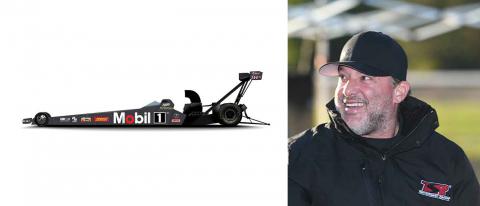
The National Hot Rod Association (NHRA) has announced that Tony Stewart will make his Top Alcohol dragster debut during the NHRA Nevada Nationals on October 28–30, at The Strip at Las Vegas Motor Speedway. The versatile racer owns driving championships across NASCAR, INDYCAR, and USAC, and has secured hundreds of victories on oval tracks, dirt tracks, and road courses.

“I’m excited and nervous at the same time,” Stewart said to NHRA. “It’s definitely going to be a big learning curve, and to do it at a national event right out of the gate adds to the challenge. But it’s something I’ve really been wanting to do, and I’ve been working toward this moment. I’m not taking it lightly. It’s a serious business, and I’m going to be as prepared as possible when I get to Las Vegas.”

Stewart will make his debut driving for McPhillips Racing in the NHRA Lucas Oil Drag Racing Series.

“The team I’m driving for, McPhillips Racing, has been awesome to work with,” Stewart said. “They felt like I was ready to compete. With their confidence, that’s given me the confidence and courage to try something new and take the leap.”

Stewart has also been recently announced as the headliner of the PRI Grand Opening Breakfast, taking place the morning of the first day of the PRI Trade Show, December 8–10, in downtown Indianapolis, Indiana. For more information or to register, visit performanceracing.com/attend. 

For more information on Stewart’s Top Fuel debut, visit the NHRA announcement here. 

October 2022

Wharton Automotive Group Acquires PowerTrain Technology (PTT)

Submitted by laurap on Tue, 10/25/2022 - 16:25
Wharton Automotive Group


Wharton Automotive Group President Paul Lee has announced the acquisition of the small-diameter racing clutch and drivetrain component line of PowerTrain Technology (PTT) of Algonquin, Illinois. Wharton Automotive Group now consists of McLeod Racing, FTI Competition Converters & Transmissions, Silver Sport Transmissions, and PPT. 

PTT has provided cutting-edge racing clutch and drivetrain products for the past two decades. The company will relocate to McLeod Racing’s facility in Anaheim, California. The products will also be available through McLeod Racing and its worldwide distribution network.

“PTT is a perfect addition to the McLeod clutch product line,” Lee said. “We’re all excited about acquiring the technology for the small diameter clutches and driveline components, including their world-class 7.25-inch assembly. I was very impressed with the quality and high technology built into every PTT product. We plan to continue to grow PTT from what founder Steve Fox and his crew have built.”

Fox will join McLeod as a consultant while continuing to service his hydraulic street release bearing customers under the new company name PTB-USA, Inc.

For more information, visit mcleodracing.com.

October 2022

From the Editor

Submitted by johnc on Tue, 10/25/2022 - 15:59
image 1


Four key reasons why this year’s PRI Trade Show will deliver unbeatable opportunities and value for motorsports professionals:


1) THE EXHIBITORS. Any ink we devote to the PRI Trade Show really begins with the more than 1,000 exhibiting companies that fill the floor of the Indiana Convention Center and Lucas Oil Stadium each year with countless new parts, equipment, and solutions for all forms of competition. This is where the top names in motorsports unveil their latest innovations—cars, engines, suspension, chassis, batteries, safety, tools, machinery, trailers, etc.—with product and systems experts on hand to provide additional information, answer questions, and develop relationships with buyers and media. There’s simply no bigger or better venue for racing professionals to conduct business than PRI.


2) THE NETWORKING. Year after year we hear variations of the following from PRI attendees and exhibitors: “I never would have known about [important discovery] if it weren’t for the PRI Show,” or “I never would have met [future business partner] if I hadn’t attended the PRI Show.” Whether it’s a chance encounter with drinks and appetizers in hand at the PRI Happy Hour, or a casual conversation over eggs and bacon at the Grand Opening Breakfast, Show guests are bound to discover and establish common bonds while sharing space with like-minded industry members.


3) THE EDUCATION. PRI’s seminar program is designed to provide racing and performance industry members with world-class management and technical training and information in order to help them enhance their operations and better serve their customers. In the last few years that program has been expanded to incorporate a wide array of topics across multiple learning tracks. This year’s tracks—Business, Tech, and EV—include presentations on hot-button topics like sponsorship, social media, performance tuning, cylinder head/induction system design, and electric vehicle conversions, and feature industry leaders and subject matter experts live and in-person throughout all three days of the Show.


4) THE ACTIVATIONS. There’s a reason we strongly advise all attendees to plan ahead before arriving in Indianapolis for the PRI Trade Show. In addition to helping you navigate the Convention Center’s formidable footprint, an agenda will ensure you don’t miss out on any of the Show’s unique activations. Our Featured Products Showcase, for example, contains exhibitors’ newest and hottest parts and gear in a dedicated display just inside Lucas Oil Stadium. Our Content Creation Zone, located this year in the Wabash Ballroom, highlights a number of the industry’s leading content generators and social influencers. Also set for Wabash and expanded for 2022, PRI’s EV Performance Zone will feature up-close the tech, hardware, suppliers, and applications for today’s high-performance electric-powered vehicles. And the list goes on.


So, what does this all mean? Whether you’re a racer, sponsor, manufacturer, distributor, service provider, track promoter, or member of the press, there’s no better, or more important, place to be on December 8–10, 2022, than the PRI Show in downtown Indianapolis. We’ll see you there!

November 2022
By
DAN SCHECHNER

From the President

Submitted by johnc on Tue, 10/25/2022 - 15:50
image 1


TIME FOR US TO VOTE RACING

As this issue of PRI Magazine drops, the United States is about to hold a national midterm election that could largely dictate the future of the racing industry. Repeatedly, our editors and I have informed you of the mission at hand as well as what your PRI team is doing to better represent the racing industry. But now is the time for all of us to do our part and “Vote Racing!”

For over five years, SEMA and PRI leadership as well as our Washington, DC-based government affairs staff have pushed, lobbied, and positioned the industry to get the Recognizing the Protection of Motorsports (RPM) Act passed. Without support for the RPM Act, we are concerned that the Environmental Protection Agency (EPA) will continue with their blatant overreach, levying more and more fines on companies that manufacture racing parts. This simply cannot continue.

Accompanying this column is a list of the state-by-state RPM Act co-sponsors. These lawmakers have publicly announced their support for the racing industry—their support for you. Since these candidates support our industry, you should take them into consideration as you head to the polls in November.

You will notice this list is very bipartisan, as the RPM Act and the future of racing is an issue that holds no political party boundary. We need Republicans and Democrats to work with us, to pass common-sense legislation, and do their part to protect you from an unchecked bureaucratic agency. I am operating this office in a truly “party-blind” manner as we continue to evolve our alliances in Washington.
 

States1


For politicians who read this, we have a very simple way of looking at the political landscape: If you are a friend of the racing industry, PRI will be a friend to you. In the past 12 months, we have invested in race track banner ads for racing-friendly politicians, as well as multiple digital and social campaigns that are designed to highlight the RPM Act’s strongest supporters in Congress.

We continue to expand our reach, our Performance Racing Political Action Committee (PAC) funding, and our ability for the racing industry to be a true impact industry in politics. Your support of the PRI PAC and voting the “PRI line” is the best way to show our strength.
 

States2


To be clear, PRI is choosing to highlight those candidates who support our industry and are on the ballot in the midterm election because it matters. Elections have consequences, and you need to really investigate who will best represent your racing industry (as well as all the other issues on the ballot).

Stay tuned to PRI, and make sure you check out our latest political activities at SaveOurRaceCars.com. And, you are always welcome to send me a note with your thoughts (President@PerformanceRacing.com).

November 2022
By
DR. JAMIE MEYER

Advocacy Corner

Submitted by johnc on Tue, 10/25/2022 - 15:45
image 1


Tracking legal, legislative, and regulatory developments impacting the racing and performance industry.


PRI’s advocacy team work continuously to protect and boost tracks, sanctioning bodies, and motorsports businesses around the nation. This month, we are tracking several initiatives, including NHRA’s Antron Brown support for the Recognizing the Protection of Motorsports (RPM) Act, a “win” for race teams in Pennsylvania, the REPAIR Act, and more.


NHRA Champion Antron Brown Warns Congress That Motorsports Is At Risk

Just days after winning the prestigious NHRA US Nationals in Indianapolis, Indiana, Antron Brown was in Washington, DC, to urge Congress to pass the PRI-supported RPM Act. The three-time Top Fuel world champion, who began his racing career building cars with his family nearly 40 years ago, shared stories about the need to protect grassroots racing and tens of thousands of jobs in the industry.

“Racing is much more than just a pastime for me,” said Brown. “I have countless fond childhood memories and have learned many life lessons at the race track. I have built a life on the track and am building a business through AB Motorsports. I feel strongly that we must keep the path to entry into motorsports accessible to future racers.”

Brown explained that for amateur racers, modifying production vehicles is the only cost-effective way to get into racing. He testified that the converted motorcycle that he began racing cost about $5,000; a purpose-built vehicle would have been 10 times that amount.

image 1

“Americans all over the country enjoy the hobby of modifying vehicles into race cars,” said US Senator Shelley Moore Capito (R-WV), Ranking Member of the Senate Committee on Environment and Public Works. “The bipartisan RPM Act would clarify that vehicles to be used solely for competition are not to be treated like the cars that drive on our nation’s roads. This legislation would ensure small businesses that help hobbyists who transition vehicles into race cars, which are not driven on the roads, are not unfairly punished or targeted through EPA enforcement.”

Ranking Member Capito is among the 31 bipartisan co-sponsors of the RPM Act. First introduced in 2016, the bill would enshrine in Federal law that it is legal to modify street vehicles into dedicated race cars.

This practice had gone unquestioned until 2015 when the Environmental Protection Agency (EPA) issued a draft ruling stating that it is not legal to convert production vehicles into dedicated race vehicles. Although the ruling was never finalized, the EPA maintains its position that such conversions are not legal and continues to enforce against the production and sale of high-performance parts.

Brown emphasized that the RPM Act is focused solely on dedicated race vehicles trailered to and from the race track. Opponents to the RPM Act acknowledged during the Senate hearing that such vehicles do not have a meaningful impact on the environment.

SaveOurRacecars.com has resources to help identify and contact the appropriate policymakers about the RPM Act.


Pennsylvania Signs Into Law Bill To Create Exemption For Motorsports Trailers

Pennsylvania Governor Tom Wolf has signed into law PRI-supported legislation (S.B. 1171) to create an exemption for motor vehicles (or a motor vehicle combination) from perceived “commercial” activity provided that it is being used to transport another vehicle to or from an amateur competitive or racing event, whether or not the owner displays sponsorship markings.

Additional provisions include ensuring the vehicle must not exceed 26,001 pounds, cannot be carrying hazardous materials, and must not be designed to transport 16 or more people.

Congratulations and thank you to those who supported this effort!


Ask Your US Rep. To Support The REPAIR Act, Protect Your Right To Modify

PRI needs your help to pass the Right to Equitable and Professional Auto Industry Repair (REPAIR) Act, H.R. 6570, a bipartisan bill in the US House of Representatives that would ensure automotive and motorsports professionals have access to vital information, such as tools, equipment, schematics, software, and more needed to repair and maintain vehicles.

The REPAIR Act is designed to:

• Protect consumer access to independent repair and maintenance by allowing vehicle owners to securely share their vehicle’s repair and maintenance data.

• Enshrine into law enthusiasts’ ability to modify their vehicles by prohibiting manufacturers from imposing technological or legal barriers that block aftermarket parts manufacturers from accessing critical information and tools necessary to develop products that are interoperable with emerging vehicle technology.

• Establish the right for aftermarket businesses and independent repair shops to access critical information, tools, and equipment needed to maintain and improve the performance of vehicles.

• Require companies producing vehicles equipped with telematics (wireless transmission of data) to make available to aftermarket manufacturers and repair facilities any critical repair information and tools at a fair and reasonable cost.

Don’t wait—contact lawmakers in just a few clicks by visiting p2a.co/GVF2GbH.


California Governor Vetoes Manufacturing Equipment Sales Tax Exemption Bill

California Governor Gavin Newsom has vetoed a PRI- and SEMA-supported bill (AB 1951) that would have provided a full sales and use tax exemption for the purchase of manufacturing and research and development (R&D) equipment not exceeding $200 million.

The vetoed exemption would have changed the current, narrowly applied exemption, and would have helped on improving cost competitiveness to spur investment in California. Accounting for both local and state taxes, California’s ranks among the highest tax rates in the country.

California manufacturers are encouraged to reach out to state lawmakers to reintroduce the bill in 2023. Visit p2a.co/lz0l1ki to look up your local reps or contact Christian Robinson at christianr@sema.org.

November 2022
By
Laura Pitts

PRI Education: Reading The Unspoken Language Of Broken Parts

Submitted by johnc on Tue, 10/25/2022 - 15:39
image 1

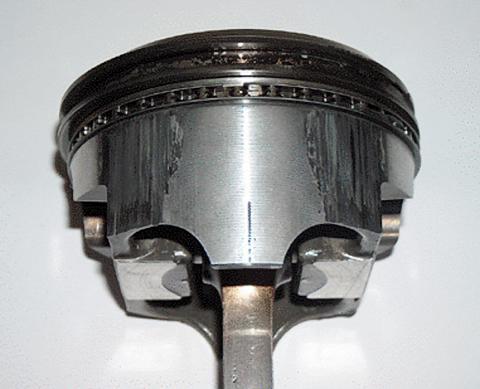
The most common piston failure in a newly installed engine is typically defined as four corner scuffing, which is seen here.


Engine builders often need to hone their “detective” skills to properly determine the cause of failures.


I  was a group leader of teams doing engine failure analysis at a time when forensic criminology shows were very popular. I used to tell members that the difference between an engine builder and the police force is that police usually have a crime scene. We, as engine builders, usually get a broken engine that has been trucked back to us. Because of that, we typically have no opportunity to investigate the crime scene to evaluate the cooling system, the ignition system, the tune, the chassis, what have you.

That means being successful at failure analysis requires an exercise of prudence and wisdom. The qualities of having experience, knowledge, and sound judgment are paramount. The skills learned in failure analysis will impact how you look at everything in an engine from beginning to end. Although, we often perform failure analysis without realizing that we are practicing analytics. For example, engine builders know to observe the environment and hazards before pulling that wrench to loosen a bolt, probably because we have smashed a finger by doing that in the past. This is a learned behavior because we had a failure that taught us that environmental hazards plus pulling a wrench resulted in a smashed finger, so we adjust our process going forward.

We at the AERA Engine Builders Association (AERA), are often asked to evaluate failures of engines, parts, and pieces during a phone call. Today, we can get images thanks to cell phones, but that is a pretty recent change. Before, it was often deducing what someone was trying to convey by drawing a mental image based on failures that we had been exposed to at some point. For that reason, and because you can’t always get “the whole picture” in photos alone, AERA created the Engine Component Failure Analysis Manual for association members. The manual is a combined effort of many expert engine machinists, engine parts manufacturers, and technical advisors in the engine repair industry.


Let’s Talk About Pistons

The most common part that AERA receives questions about is pistons. It’s no secret that the piston shares a great deal of information about the engine’s health. However, the ability to read its signs is key to resolving problems and protecting your shop and the end user from future failures. Sometimes the changes are out of your control, but if you can educate the end user, you might influence changes that alleviate the failure.

image 2
Another common piston failure is skirt seizure due to overheating, as shown here. Engine rebuilders usually receive complaints that there wasn’t enough piston-to-wall clearance in these instances, but that might not always be accurate.

The two most common piston failures in a newly installed engine are four corner scuffing or skirt seizure due to overheating. In either case, the engine rebuilder usually gets a complaint that they did not provide enough piston-to-wall clearance, but that’s not always correct, as shown by the following points.


Reasons Behind Four Corner Scuffing

Indications of very high operating temperatures can include:

• Heavy loading of the engine before reaching normal operating temperatures

• Coolant system defects cause a stuck thermostat

• Adding coolant to a hot engine, mainly upon initial start-up

• Non-lubricated wrist pin upon initial assembly

• Engine overheating from abnormal combustion

• Insufficient wrist pin clearance

• Improper air bleeding of the cooling system—use vacuum coolant fill methods


Evidence of Skirt Seizure Due to Overheating

• Severe scuffing on the piston skirt

• Deep gouges on the skirts where the material is pulled out and transferred to the cylinder walls

• As damage progresses, scuffing can be transferred up into the ring lands

• Contact may be heaviest over the skirt struts due to uneven expansion of the piston


Some root causes of skirt seizure due to overheating include an excessively high engine operating temperature for an extended period of time; a cooling system failure because the system was not completely filled; or there was a thermostat malfunction, faulty water pump, cooling fan malfunction, belt slip or break, or related failures; or an oil film breakdown due to high engine cooling temperatures.


What Is Low Speed Pre-Ignition?

A more recent phenomenon in the world of engine failures is the return of pre-ignition failures. Pre-ignition failures were not completely gone, but the engine management systems have drastically reduced the frequency and breadth of failures. Now that we have many manufacturers building Gas Direct Injected (GDI) engines, there has been an uptick in the failures defined as pre-ignition.

Low Speed Pre-Ignition (LSPI) will take place when the temperature triggers an ignition of volatile chemicals within the combustion chamber. The most likely cause for an LSPI failure is using an incorrect additive blend for the engine type. In these instances, it is advised that the builder reviews the certification label on the bottle of oil or consults the dealer service.

image 3
Low Speed Pre-Ignition (LSPI) is a relatively new phenomenon in gasoline/petrol piston failures. Seen here are the results of an LSPI failure in a 3.5 liter Ecoboost.

As stated earlier, AERA has a Failure Analysis Manual with 240 pages of engine component failure examples focused on the cause-and-effect relationships. In addition, there are pictures, definitions, technical data, the nomenclature of components, and a list of contributors.

If you keep having engine components fail, or if you find the topic interesting and want to ensure your shop’s reputation, take advantage of the Failure Analysis seminar at the 2022 Performance Racing Industry (PRI) Trade Show. There will be a panel of experts representing piston design, bearing design, valvetrain, balancing, and more. You can even bring some parts that you have in question, and we can all learn and share together. See you there!


Chuck Lynch is the Director of Technical Services for the AERA Engine Builders Association based in Cary, Illinois. Lynch is well known in the engine rebuilding community and holds vast knowledge of the industry and the rebuilding process, having prior experience with Jasper Engines & Transmissions, Rottler Manufacturing, MAHLE, and the US Marine Corps.

November 2022
By
Chuck Lynch

Member Business Survey

Submitted by johnc on Tue, 10/25/2022 - 15:26
image 1

Clear and concise dialogue between suppliers and customers keeps business flowing smoothly and avoids misunderstandings or disagreements that could spoil relationships.


As many motorsports business owners have expressed, there is nothing better than face-to-face communication and building personal relationships with clients. A discussion, answering questions personally, and a handshake are often the foundation of successful business deals, or getting additional exposure for a product.

But sometimes key customers and clients are in a different state or even another country. The racing entrepreneur has to use other forms of communication to help answer questions for existing and potential customers.

Those supplemental methods include telephone, email, text, social media, and video chat.

In a survey conducted by PRI, 90% of the respondents prefer the telephone, 72% believe email is helpful, 69% text on the phone, 48% use social media, 7% use video chat platforms such as Zoom and Skype, while 2% chose “other.”

“In my case, I prefer phone calls,” said Keith Dorton of Automotive Specialists, Concord, North Carolina. “I guess that’s because I’m not as technology advanced as the younger generation. I use emails and texts primarily because I want documentation of what I’m talking about. I will confirm the phone call with text or email.”

Dorton’s company has been in business since 1965 and built the 1990 Daytona 500 winning engine for driver Derrike Cope at Whitcomb Racing. The company continues to build engines for racers around the world, but mostly focuses on vintage cars, hot rods, muscle cars, and hobbyists.

Dorton believes the telephone is the most accurate way to communicate because he can provide live-time answers to his clients and customers. “It’s hard now, the way things are going with the supply chain, I almost refuse to give a cost or delivery date,” Dorton said. “We’ll give them a rough estimate, but things are changing daily. At least for us as far as supply and cost, it’s going in the wrong direction.

image 6

“Our procedure is, we’ll try to get an idea of what the customer wants by phone call or an idea of cost and delivery,” Dorton continued. “We’ll go on the long side of that and confirm it by phone call and email.”

Blake Robertson of BR Motorsports in Visalia, California, is another strong believer in using the telephone. “It’s fast,” Robertson said. “You can get to the point. If a person is calling about a product, there could be multiple questions to ask. If you are doing it by email or text message, it could take days to communicate back and forth.”

BR Motorsports has been in business for more than 30 years and continues to have a very brisk business. “We do business with mostly sprint cars and midgets,” Robertson said. “In our world, the Friday and Saturday night racers are mostly professionals anymore. There is so much maintenance and detail to be competitive.

“We have a good following with the professionals and all three sprint car classes and midgets. We don’t cater to one or the other, we treat everybody the same.”

With BR Motorsports’ open wheel focus, Robertson said, “it really helps if they have one of our catalogs. They can look at the picture, read the description, look at the price, and go on the website. While they are looking at that, we can be on the phone, and both be navigating the catalog or the website. That helps cross a lot a T’s and dot a lot of I’s.”

Since he’s running a business with so many parts, Robertson tries to keep it simple when it comes to communication. “There are only three forms of communication we use, and those are face to face, phones, and email,” he said. “I believe the social media platforms with direct messaging is probably my least favorite. You have to go onto the page and navigate through it. It’s a little bit of a daunting task. Sometimes, things get lost in cyberspace.

“It’s very easy to make that one-character mistake on email or messenger and it goes to someone else, and they don’t know it and you don’t know it, and something falls through the cracks.

image 2
BR Motorsports’ Blake Robertson prefers to communicate via telephone. “If a person is calling about a product, there could be multiple questions to ask. If you are doing it by email or text message, it could take days to communicate back and forth.”

“I use those methods to enhance communication, but not to replace the phone call,” he added. “It’s a tool to help drive them to your direction via the phone or email to get the ball going to become a new customer.”

Although Robertson does not use Zoom, he will use FaceTime on his iPhone when talking to a customer to help show them the right parts for their project. “If I am on the phone with them, I will get their cell phone number and FaceTime them,” Robertson explained. “If they are working on their car, I can have them show me the part they are looking for.”

Frank Beck of Beck Racing Engines in Phoenix, Arizona, is another entrepreneur who believes in conducting business the old-fashioned way. “The phone,” Beck emphasized, “I’m old school.

“I just can’t stand the back and forth and the delays between waiting for them to respond by text or messenger. Do I sit around and wait or move on to the 5 million other projects that I have? That drives me absolutely crazy. Plus, one question leads to three more questions.

“I also get a feel for them, they get a feel for me,” Beck continued. “You build a rapport. Old school is good for me. That’s how I do business. Face to face, shake hands, I’ll give them a tour. You can be out of state. I get it. We’ll get on the phone.

“Emails, texts, Facebook Messenger are awesome after we cover the phone conversation first. I do Facebook Messenger videos to where I can walk you through the shop here. You can be 1,000 miles away, no problem. Show them the engine, the engine shop, make them warm and fuzzy. If they are going to spend $30,000 or $50,000, make sure they are making the right decision.

Beck emphasized, “No. 1 is face to face, No. 2 is phone, and No. 3 would be some type of Internet video.”

Face-to-face and phone communication are Beck’s favored methods because answers must be precise, depending on the project. The last thing he wants to do is sell the customer the wrong product.

“Face to face or phone, when you are selling a complete engine, to get them the right product I need to know their application, their wants, their needs, and budget,” Beck explained. “Some people think they need this and want that, and that is cool, but it might not be what they are trying to do.

“I’ll explain why, and here is a better choice,” he continued. “After that, I’ll email documentation, shoot them over the information, then they can do the click here and buy it now.

“In my line of work, they need to talk first and get the right product,” Beck emphasized. “Somebody said, ‘Put them on the Internet and let them buy now.’ They might purchase the wrong stuff. I prefer to make the right sale the first time. I just wouldn’t let it happen. I would call them and make sure it’s right for them.”

Beck is a strong believer that the phone keeps everything accurate. “That is the whole thing, volleying back and forth,” Beck said. “One question turns into three. Asking the right question and getting the right answer. Sometimes, getting the correct answer is like pulling teeth.

“Help me help you. I’m here to help you.”

Beck’s company has been in business for 36 years, and the majority of his customers are involved with marine engines, drag racing, Pro Street, and Pro Touring. He reported that 90% of his business is with big block Chevrolets.

“We are honing in a little tighter on everything,” Beck said. “I don’t like to do the shotgun approach and be ‘Jack of all trades and master of none.’ We really R&D all kinds of different packages and fine-tune them to make sure all of the parts work together.

“We went out and bought all the wrong parts to find the right parts for you,” he added.

image 3
“Old school is good for me,” said Frank Beck (right) of Beck Racing Engines. “That’s how I do business. Face to face, shake hands.” However, for his customers who aren’t local, he added, “we’ll get on the phone.”

Austin Brown of Boss Chassis in Belleville, Illinois, confirmed his preference of voice-to-voice communication. “I really dislike texting because it takes longer trying to decipher what they are trying to say, and you can’t get emotions through texts. It’s the same with email, whether they can explain it or are having a problem.

“It’s easier to hear someone’s voice over the phone and explain it. It’s quicker than email or text.

“Even getting jobs—we do a lot of full fabrication jobs—if I bid them out, different industries like to email, and that takes a lot longer to nail down whether they want it or not. A phone call would get everything done a lot quicker.

“At that point, you need multiple forms of communication,” Brown continued. “It is easier to get a direct answer and a clarification. A direct call to someone helps, but a lot of times I will go back to email and look up what they said. If it’s not pressing, they will send an email so they don’t take up a bunch of time, and I can answer it when both parties have time.”

Then there is Tader Masters of MasterSbilt Chassis in Crothersville, Indiana, a race car builder that was founded in 1980. Of the respondents PRI contacted, he chose another method of communication as his favorite.

“Messenger, text, and Facebook are definitely the easiest,” Masters said. “When you have guys text you, they get to the point, and it doesn’t turn into an overgrown phone call. When a customer is at a race track and texting you, they will get right to the point, and you can tell them what you think in a sentence or two instead of giving your logic and theory behind it, but it’s way easier.”

He believes texting can keep things accurate, because it creates a history of the conversation. “When you send them a text, that’s a one-on-one deal. That stays in the phone, so you know exactly what direction you went to make him better or worse, so you have some kind of feel of what he’s got or what they are looking for.”

Since all customers don’t race the car the same, Masters said, “you can put the same setup on 10 of them, and eight of them are going to be better with a different combination. When you text them, you know what you told them. If you price a car over text, that price stays with you.

“Don’t get me wrong, nothing is wrong with the phone, but it’s not my favorite,” he added.


Communication Downfalls

As for the least favorite forms of communication and the challenges they present, contrary to Masters, several of the respondents believe texting creates too much lag time.

Beck does not like texting or messenger services because he finds the process cumbersome. “They can ask a question and I cannot answer the question without asking follow-up questions,” he said. “I’m sitting here twiddling my thumbs waiting for the reply. I don’t like it for that reason. The lag time between makes it very difficult.”

“My least favorite is text,” Brown said. “I like texting between friends and family, but dealing with customers it’s hard to get emotions across. If I say something truthful or blunt, it may come across as being disrespectful. People can read into it and either read it the wrong way or the right way. It’s very difficult.

“I find myself taking too much time re-reading a text before I send it. It’s quicker to call someone and find out the answer right away than texting back and forth. A texting conversation can go on throughout the whole day, where if I call someone, I’m done in five minutes instead of taking up 45 minutes of my day.

“Email is the least reliable,” Brown added. “I have three or five different emails on different platforms, and they all have different spam setups. Email is a good way for businesses to get ads out or a contact, but it’s also hard to filter out all the junk and get the right emails from people who are trying to get ahold of you. Unless it’s an existing client, a lot of new customers don’t get through. You can email someone, and you never know if it gets there.”

image 5
Austin Brown of Boss Chassis said he dislikes texting “because it takes longer trying to decipher what they are trying to say, and you can’t get emotions through texts. It’s the same with email. It’s easier to hear someone’s voice over the phone.”

“What’s bad about email,” confirmed Masters, “is all of the different accounts and spam.”

Dorton agreed that email is his least favorite form of communication. “That goes back to my age or my generation,” he said. “It’s so informal, but we have to use it to protect ourselves and the customer, too.

“It used to be you would mail or fax a written quote. That was very time consuming,” but a formal and standard way of communicating at the time.

“We do use Facebook and Instagram to try to promote the business,” he added. “Also, one of the biggest things that has helped us the past two or three years has been YouTube. There are a lot of videos out there, and it promotes a ton of interest. A small percentage of it earns you income, but it’s income you wouldn’t have without that.”


Tips of the Trade

Creating loyalty among customers is built on trust and providing a great product. But communication helps to spread the word about that product.

Here is some key advice when it comes to improving customer communication.

image 4
Keith Dorton of Automotive Specialists is another fan of the phone as the most accurate way to communicate, as he can provide real-time answers to customers. “We’ll try to get an idea of what the customer wants by phone call and confirm it by phone call and email.”

“Be up front with them, especially dealing with racing,” Brown said. “It’s tough because depending on what type of racing you are doing or the industry, they are looking for technical support 24/7, but from an owner’s aspect, they can also wear you out and wear you down.

“I would be upfront with them. The owners do have a life outside of business, so let them know the hours you will answer. The late-night calls and texts you can eliminate by not giving your phone number out, but be upfront with the customers.

“You need to be upfront because during COVID-19 and after COVID-19, the parts and materials are harder to get,” Brown clarified. “It takes longer, so relay the message and be up front. Don’t give them a false date.”

Robertson encourages customers to ask questions to determine a solution. “Don’t be shy about asking questions because there are no stupid questions,” he said. “No. 1, try to be as verbal and have as much knowledge when you do call, so whoever you are talking to understands what you are talking about. We do get a lot of customers who call, and they don’t know what they are looking for, and you are trying to find a needle in a haystack.”

Beck believes an answer should always be a phone call away. “Be available,” he said. “I’ve been in business 36 years, been doing it for 41. When I call up a supplier, I’m moving product. I have a lot going on here. I need answers. I understand if they are tied up, fine, just call me back. I have a business to run here.”

Dorton cited honesty and integrity as key attributes to any successful relationship. “My best advice is to be truthful and honest about it,” Dorton said. “Don’t make promises that you have any doubt you can honor, like cost, delivery, horsepower. Don’t make claims you can’t back up. The customer won’t appreciate it if you do.

“I’ve always judged our success by repeat customers, not one-time,” Dorton added. “If you piss somebody off one time, they are going to go somewhere else.”

SOURCES

Automotive Specialists
automotivespecialists.com

Beck Racing Engines
facebook.com/Beckracingengines/

Boss Chassis
bosschassis.com

BR Motorsports
brmotorsports.com

MasterSbilt Chassis
mastersbilt.com

November 2022
By
Bruce Martin