Force Indy Announces Expansion For 2023 

Submitted by laurap on Mon, 10/24/2022 - 17:57
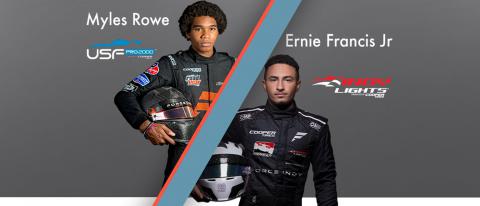
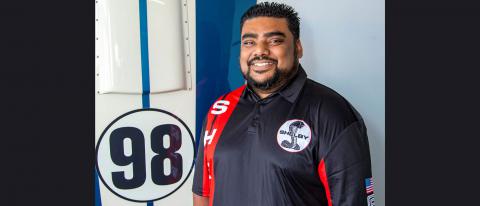
Force Indy competitors. Image courtesy of Force Indy
Image courtesy of Force Indy
 

Force Indy—the race team created to develop talent with a diverse group of individuals—has announced an expansion for the 2023 season, with two drivers running under Force Indy’s banner as part of established teams competing in series within the NTT IndyCar Series ladder system. 

Ernie Francis Jr. will drive the No. 99 Force Indy entry as part of HMD Motorsports in Indy Lights presented by Cooper Tires. In addition, Myles Rowe will compete in the full USF Pro 2000 Championship presented by Cooper Tires season in the No. 99 for Pabst Racing. Both will compete under the Force Indy banner. 

Force Indy was originally established by business leader and industry veteran Rod Reid in 2020 following a partnership with Penske Entertainment’s Race for Equality & Change. The team focuses on hiring and sponsoring men and women of color, including mechanics, engineers, staffers, and drivers.

“Force Indy already has a lot to celebrate,” Force Indy Team Owner Rod Reid said. “In 2021, we made history as the first African American-owned team and driver to win an IndyCar-sanctioned race. Now we are aligning ourselves with two championship caliber teams as we seek growth and continued success both on and off the track.”

For more information, visit forceindy.com.

October 2022

Focus Groups

Submitted by johnc on Mon, 10/24/2022 - 15:56
image 1


Niche motorsports markets may be tiny, but enterprising businesses are discovering there is money to be made in catering to specialty racers and series.

Even veterans of the motorsports industry can sometimes find themselves surprised at just how many forms of motorsports exist out in the wild. The motorsports market is not just deep but wide as well, with numerous niche racing categories that operate in their own arenas, flying under the radar of the wider world.

Some racing niches are products of the local environment, some are born out of the economics of necessity, some from riding the leading edge of a new opportunity, and others are products of sheer stubborn ingenuity.

To get a feel for how these businesses navigate such narrow channels, we spoke to a half-dozen businesses that cater to niche motorsports markets. We wanted to see why they selected the more obscure corners of racing, how they attract customers, how they stand apart from their competitors, and other aspects of making a living in a niche motorsports market. Here’s what we found.


Drift American

Drift racing has grown in size and stature these past few years, to the point where there are now specialists that focus on a particular slice of the drifting scene. Drift American in Fort Collins, Colorado, caters not merely to drifters in general, but to the Mustang drift market specifically.

“I’ve always been a Mustang fan growing up, and I’d gone through a bunch of different motorsports, and drifting was always one of those things that was really appealing to me,” said Drift American’s Scott Umbreit. “I’m just not big into Japanese cars, so I was really hoping there was something we could do with domestic cars, specifically Mustangs. At the time, everyone told me I was crazy, they don’t work, there are no parts, and this, that, and the other.” Umbreit believes there was a stigma surrounding American cars in drifting in general, being a sport that originated around Japanese car culture.

“I figured I’d just start a business where I could make it easily accessible for people to find Mustang drift parts,” he said. “We’ve just grown from there. Every year we’ve almost been doubling our sales for the last three or four years.”

One reason there’s a business opportunity for Umbreit is that Mustangs don’t come from the factory optimized for drift competition, especially in the area of suspension geometry. “We have all sorts of different stuff that is drift-specific, such as the angle kits, the bump-steer kits, even the lower rear control arms, stuff like that that just wasn’t really on the market,” Umbreit said. “We’ve also developed dual caliper brackets so you can run two sets of calipers in the rear and run a separate handbrake with that. We have a whole kit now where the handbrake, the line kit, goes all the way back to the dual caliper brackets. And we found out you can run 1997 Taurus calipers on the rear. It’s a big, cheap upgrade, essentially.”

Drift American’s focus may seem narrow, but it is actually larger than it appears at first glance. The company services all Mustang generations from 1979 to 2022, and that is a lot of Mustangs. Another factor that helps is that many popular Japanese cars used in drifting have escalated in price, while Mustangs are cheap and plentiful in comparison.

image 2
Drift American caters to drivers who race Mustangs in drift competition. “Everyone told me I was crazy,” said founder Scott Umbreit, but year-over-year sales increases have proved otherwise. “We’ve gained a lot of market share, and we offer parts from pretty much every supplier in the drift community.”

“Initially it was hard to reach potential customers. But now that it’s such a specific, targeted thing, it’s gotten a lot easier,” he continued, “also because we’ve gained a lot of market share and we offer parts from pretty much every supplier in the drift community. We’ve been able to establish a name, and most of our marketing is pretty targeted, like email campaigns, some advertising, Instagram. Actually, Instagram stores are surprisingly very effective. You make a post, people see the car, they click on the car, and it shows what parts are on it and links them right to the store page. They can just add the parts to their cart and go from there.

“It’s grown even a lot more than I imagined,” Umbreit said. “It’s one of those things where the whole drifting market is growing, and Mustangs are becoming a lot more popular as well in the drift community. I timed it right, I guess.”


3rd Turn Performance

For 3rd Turn Performance of Indianapolis, Indiana, serving the Junior Faskart and Figure 8 market wasn’t simply a matter of earning a living, but keeping a local racing ecosystem alive. The company is closely aligned with the Indianapolis Speedrome and has a vested interest in a healthy Figure 8 field.

Jonathan Byrd is the general manager at the Speedrome, and he plays a role in 3rd Turn Performance. “When Kevin Garrigus bought the Speedrome, we decided that we really needed to make sure, more than anything, that there were cars out there. Figure 8 cars, Figure 8 chassis. You just have very few guys who can do anything. In any event, we had to take care of ourselves. We started building cars,” Byrd said.

The symbiotic relationship between the Speedrome and 3rd Turn Performance has helped both enterprises grow. “When we took over the Speedrome, the Junior Faskart division had single-digit numbers,” he continued. “We decided as a race track that we had to do something to encourage participation and level the playing field. We put out rules that any new chassis had to be bought through 3rd Turn Performance and the Speedrome. We also took over the motor program, and all motors utilized in the division had to come from 3rd Turn Performance and the Indianapolis Speedrome. And we put out a new set of rules that said, ‘Don’t touch the motors.’ We tech the motors, we do all the things we can to keep the motors legal because the smaller the motor, the more people want to do everything they can to cheat with the motor.

“We probably have a couple hundred motors out there now,” Byrd added. “It’s a box-stock motor program. We have a regulator on it, a restrictor on it we utilize. We’ve gone from single digits to nights where we have between 40 and 50 of our Junior Faskart division.”

In such a tightly focused racing environment, street level marketing makes a big difference. “It’s a very word-of-mouth thing. With the Figure 8 cars it’s such a niche market,” Byrd said. “There’s 50 to 60 Late Model Figure 8 cars in the world. You’ve got to really want to race these cars.

“It was out of necessity in a lot of respects that we had to do these things to ensure participation and make sure the racers feel like they are competing on a level playing field,” he added.


In & Out Customs (Big Wheel Racing)

Sage “Donkmaster” Thomas started In & Out Customs of Charleston, South Carolina, and founded the National Donk Racing Association (NDRA) to service the big wheel performance market. The big wheel cars, with raised bodies and rolling on 24- to 32-inch wheels, stand out in any show field, but many of the cars pack even more “go” than “show.” Donk is the nickname given to the 1971–1976 Chevy Impala and Caprice that are favorites in the big wheel community.

“Big wheel racing started with street racing,” Thomas said. “We would do car shows, and then once we started putting racing motors in the cars and putting them in car shows, they wanted to figure out how to race them without getting dirty. So instead of taking the cars, changing the wheels, and putting slicks on them, we started looking at ways to keep them all together. We called it Fast and Flashy Racing. That way we didn’t have to get dirty, we could stay clean, stay together, and just race on the big wheels.”

image 3
Setting up cars for big wheel racing is In & Out Customs’ specialty. The components used in these cars must be able to withstand not just large amounts of power but the heft of the cars themselves, which can weigh 5,000 pounds, said Sage “Donkmaster” Thomas.

Setting up cars for big wheel racing, especially Donk racing, requires engineering components for large, heavy cars, and In & Out Customs works directly with manufacturers to secure the necessary parts. “We’ve been working closely with FTI Transmission out of Deland, Florida,” Thomas said, “as far as cars making 1,000 to 1,500 horsepower. We’ve been working closely with Moser Engineering, with Precision Turbo, and COMP Cams on developing camshafts for running cars weighing about 5,000 pounds. And then the axles, for how to keep the axles in the car with a wheel that weighs about 110 pounds.”

Both entrepreneur and entertainer, Donkmaster’s large and dynamic social media presence gives In & Out Customs an edge. “As far as our marketing, we market a lot on social media—YouTube, Instagram, Facebook. We do market at some of the bigger trade shows, and we do a lot of car shows and concerts. We also use our celebrity influence. I have a lot of people in the music business, like rappers and singers, and also professional athletes who we market through,” he said. “We normally gain about 500 to 600 new followers every day on each individual Instagram, Facebook, and YouTube page.”


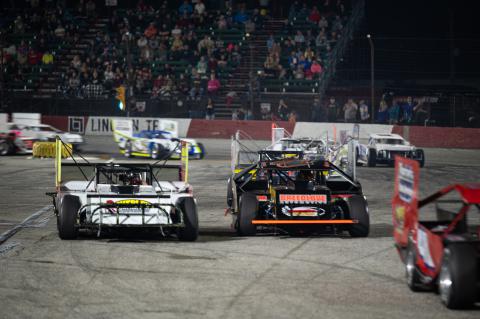
350 SMAC Tour (Super Modifieds)

The super-modified class of race car is hardly an exotic niche, but even within that universe, there are several targeted approaches to running a viable series.

John Burke started the 350 SMAC (Super Modified Atlantic Charter) Tour in 2017. He was a race-winning driver in his own right and started the new series because he wanted to start a traveling tour, and explore ways to give back to the racers, according to James Rusaw, PR director for the Tour. Based in Derry, New Hampshire, the 350 SMAC Tour operates in New York, Maine, New Hampshire, Connecticut, and Massachusetts. “We’ve got a great footprint in the Northeast, and I think we can just get better and better,” Rusaw said.

image 4
The 350 SMAC Tour is a traveling super-modified series with races in New York, Maine, New Hampshire, Connecticut, and Massachusetts. “We’ve got a great footprint in the Northeast, and I think we can just get better and better,” said James Rusaw of the Tour.

One innovation the 350 SMAC Tour has introduced is to start a tour within the Tour—the Supermodified Legends Series—where retired greats can come back once more to compete. “Why do we have memorial races instead of having legends races while they’re alive?” Rusaw said. “It’s been huge.”

For Rusaw, one way to expand their super-modified niche is to take a personal approach. “The racers will have some choices. Do I run the local short track every Saturday night, or do I go on the road? I think to garner their attention, I like to do a thing I call ‘shop talk.’ If I don’t know a racer, I schedule a time and just stop by the shop and have a beer with them and get to know them. I think that’s important. Establishing a relationship with a driver is more than just, ‘Hey, can you come to our race this weekend?’ It’s getting to know them and their families. It’s a family sport. One guy owns a restaurant, well I go to the restaurant and spend time with them. I think the bonding there has been very powerful.”


Filthy Motorsports

Filthy Motorsports in Boulder, Colorado, deals in the good kind of filthy—the filthy that results from rock crawling and other hardcore off-road endeavors. Owner Ben Brazda founded the shop following a stalled career in financing that convinced him to follow his true passion: off-roading.

When scouting the local off-road parts terrain, Brazda found a real opening for a customer service-oriented 4x4 business. “Every store I went into, there was a grumpy guy sitting behind the counter who didn’t really want to help,” he explained. “I asked for some technical information, and they really didn’t have a lot of technical information. There was no energy, no excitement.”

Brazda believes that business-as-usual parts retailing has no place in today’s market. “Now we’re dealing with CNC-machined, custom-built shocks. There is a learning curve for people to realize that shocks and coilovers and bypasses, they’re not just something you buy off a shelf and put on a vehicle,” he said. “The one thing we’re really good at is suspension tuning. That’s how we’ve become one of King Shocks’ top dealers. That’s kind of our biggest product line right now.”

image 5
Filthy Motorsports aims to improve customer service for hardcore off-roaders, said Ben Brazda, especially in the area of suspension tuning. Parts are now so sophisticated, “they’re not just something you buy off a shelf and put on a vehicle. I really spend time with customers to do things right.”

Brazda said off-road racers tend to rely on word-of-mouth when making purchase decisions, and he works hard to make Filthy Motorsports customer-centric. “If someone calls me and tells me, ‘This is what I want,’ my first question is, ‘Why? Let’s back up a little bit. What’s your end goal?’ I really spend time with customers to do things right. We’re either going to do it right or we’re not going to do it at all, and I turn away business all the time. If someone has unrealistic expectations, I will explain why those are unrealistic expectations, and if it’s not a good fit, I will tell them to go somewhere else. It’s a lot of really taking care of the customers. That’s what works. People don’t come to me to buy shocks. They come to me to make their vehicle perform a certain way.”


AutoGas Services

AutoGas Services in Florida is carving out territory in the alternative fuels space, which has been a surprisingly uphill battle. “It’s been a struggle to get the mainstream’s attention with the alternative fuels,” said AutoGas Services’ John Omundson. “We have technology that the world needs to see, especially at $5 a gallon gasoline prices.”

Although much of its business is aimed at fleet conversions, AutoGas Services has been steadily raising its profile in the performance world. “We’ve been doing liquid propane since 2005,” Omundson explained. “We built a few cars back then that were test beds. We built a Chevelle for Mother’s Polishes that made 1,000 horsepower and set a bunch of performance records with propane.”

AutoGas Services’ current performance offerings include direct-injection liquid propane systems. “Along with the direct injection, we do direct-port fuel injection for the high-performance stuff like the new Corvettes,” he added.

image 6
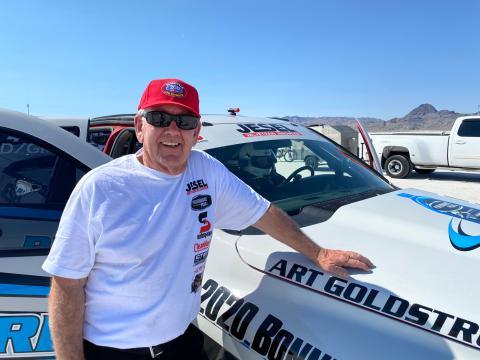
While electric vehicles continue to gain attention, there’s potential in racing with alternative fuels, said AutoGas Services’ John Omundson, who builds direct-injection liquid propane induction systems. “We have technology that the world needs to see, especially at $5 a gallon gasoline prices.”

Omundson is very hands-on in proving the performance of the company’s offerings. Earlier this year he set land speed records in the alternative fuel classes with the East Coast Timing Association (ECTA) with both his 2017 Chevrolet SS race car and his custom Silverado.

The EV racing market may be getting more notice these days, but the potential for alternative fuel classes is wide open, Omundson believes. “East Coast Timing Association created a class for alternative fuels. We want to push other sanctioning bodies to have an alternative fuel class,” he said.

He sees some of the likeliest targets as “the rock crawler guys, the desert racer guys, the guys running wide open throttle
for long distances. We’re on the ground floor of introducing technology into different classes. I could see the dirt guys just loving this. They’re running alcohol in sprint cars.
I could set up a sprint car that would just go crazy,” he concluded.

SOURCES

350 SMAC Tour
350smac.com

3rd Turn Performance
facebook.com/3rdTurnPerformance/

AutoGas Services (AGS)
autogasservicesags.com

Drift American
driftamerican.com

Filthy Motorsports
filthymotorsports.com

In & Out Customs
inandoutcustoms.com


November 2022
By
Steve Statham

Industry Insights: Wayne Jesel

Submitted by johnc on Mon, 10/24/2022 - 15:17
image 1


Relentless research, development, testing, and commitment to quality has created a unique competitive advantage for Jesel Valvetrain Innovation since its inception in 1980. So, we couldn’t help asking: Which creations are brothers Wayne and Dan most proud of? Which moments stand out among the rest? And what’s the key to their remarkable longevity?


When it comes to innovation in racing, it’s hard to find a better example than brothers Dan and Wayne Jesel. They even put the word right there in their business name: Jesel Valvetrain Innovation. The Jesel brothers are the creative force behind a number of critical developments including shaft rockers, cam timing belts for pushrod V8 engines, cartridge roller lifters, billet tool steel cam cores, dual-plug front-drive distributors, and now their own engines. Jesel valvetrain components have been tested and proven in effectiveness and longevity so completely that it’s just about impossible to find a serious team that doesn’t use the company’s products.

Jesel develops its products using Finite Element Analysis. Simply put, FEA is the use of computer modeling and stress simulation to figure out how any part is likely to operate or fail under a variety of scenarios. The process is designed to find weak points in a design before it blows up on track. When the modeling suggests a design improvement, the company uses rapid prototyping and CNC machining to make its test parts. Jesel maintain an in-house metallurgy lab to check all incoming raw materials.

But mostly the company is known for its valvetrain products. Jesel produces more than 550 different shaft rocker kits, ships more than 20,000 roller lifters annually, and makes belt drives and distributor drives for more than 30 popular engines. It also produces oversize billet camshaft cores, cam bearings, motorcycle valvetrains, and other related parts.

We found time in Wayne Jesel’s busy schedule to talk about his company’s history and future plans.


PRI: Not many people get to work with their brother for decades and stay friends. What’s the Jesel story?

Jesel: Well, here’s what I tell everybody: I was very fortunate. Danny started racing in the early 1960s. I was just a teenager then, and I started racing with him in the mid-1960s. He had a gas station, and when I was 12 or 13, I’d go there to help out, sweep the floors, pump gas, and what have you. Danny always, no matter where he went or what he did, going racing or whatever, he took me with him.

When I was still in high school, I started building a 1956 Sedan Delivery with a partner. I was 16 when we started running the car, and we were successful with it. Danny had a machine shop, and I helped him with that and did whatever I could for him. What happened later on, that people don’t know, is that the engine shop got broken into, and absolutely everything was stolen. That pretty much wiped him out because we had to pay for customers’ engines that were there, and we lost our own stuff. That almost put us out of business.

image 2
Wayne and Dan Jesel’s valvetrain business has its roots in Dan Jesel’s drag racing in the 1960s. As a teenager, younger brother Wayne would help Dan at the track and at Dan’s gas station.

But I had a partner in my race car, and his father had a food distributing business. So I went to work for him while Danny was starting the valvetrain business, and we wound up buying a food service company ourselves. As I was working in that business, I was trying to help out Danny with a little bit of funding. I wound up selling the food service company and invested money into machines and things to help Danny’s business grow.

A lot of people know that I did the food service thing, because they still kid me about it: going from engines to making cocktail and tartar sauce, to getting back into the valvetrain business. But I just always say that the fortunate thing for me is that I had an older brother who took me under his wing, took me everywhere with him, and taught me as much as he could about the business.

PRI: How did the Jesel business focus on valvetrains come about?

Jesel: Back in the mid-1970s, nobody had a shaft rocker. Then several people came out with products around that time. We tried them all, and they didn’t work. At the time, we just ran a stud rocker with a girdle. When you started running higher rpm’s, you started having valvetrain problems. A lot of that was the geometry in the rocker arm.

Then what happened was by mistake. Cylinder Heads America had been doing our heads for us, and they actually made the heads for a bigger cubic-inch motor than what we were running. That meant we had to run the motor at a much higher rpm, and we started having a lot of valvetrain problems. That’s when Danny started looking into how to improve the valvetrain.

image 3
“I was very fortunate” growing up, said Wayne Jesel. “Danny [seen here working on a carburetor at the drags] always, no matter where he went or what he did, going racing or whatever, he took me with him.”

Because he was working on that valvetrain problem, he decided to focus on creating a new business producing a shaft rocker arm. What he learned with our engine and valvetrain, he incorporated into a shaft rocker arm system, and it worked very well!

But the real hard part to get started, was that you had all the top guys like Jenkins and Reher-Morrison who ran either small block or big block Chevys. They had tried the other shaft rocker arm systems that were out there, and they weren’t very good. They wanted to know, why is yours going to be better? We had to prove that our product was better. Fortunately, we were able to get it on a couple of good cars, and they were successful with it. By word of mouth, it started growing.

PRI: You’ve been in the valvetrain business since 1980, so that’s 42 years. Why have you guys stuck around when so many come and go?

Jesel: We never tried to spare any expense on anything. If it took a better material to make the part live longer or just be a better part, we would do that. We cut absolutely no corners. We felt that if we had the best part out there, that it would be worth the money, that customers would pay extra for the longevity that they would get out of the part.

For instance, several years ago the Top Fuel teams were having a terrible time with lifters. They couldn’t make two or three runs without breaking lifters, and then that would cause engine explosions. The Kalitta team asked us to start doing a lifter development program with them.

We had already been in the lifter business doing NHRA Pro Stock, NASCAR lifters, and so on. We tackled the bigger lifter, and we put all of our best materials in it. What we would do is give them some lifters to use for a test run or two and send them back. Then put another set in and maybe make three or four runs, and then send them back. That was so we could see the time cycle as to what part of the lifter would be taking the most load, or wearing out, or showing wear on the roller wheel or the axle shaft. We would try to address that and improve
the lifter.

As time went on, we felt we had a comfortable product and we started selling them to all the Top Fuel teams. These lifters are probably three times what it would cost them for what they had been buying, so it was a lot of extra money to them. But instead of three or four races, they run ours for 25 runs and then they send them back for a rebuild. Some teams even go for 40 or 50 runs before they send the lifters back. So the price difference is well worth the longevity and the fact that they’re not blowing their engines up.

We like to say, if you make the investment now, you probably won’t have to buy something else and then get ours. I’m not saying we’re crazy overpriced, but it was higher priced than most of the other companies that were out there. And once the top guys start running it, if the little guy can afford it, he’ll buy it.

image 4
Jesel’s involvement in racing is so deep, and the company’s many products so effective, it’s almost impossible to find a serious race team that doesn’t use Jesel parts. Wayne Jesel is seen here at the 2019 NHRA Winternationals with PRI’s Andrea Brake.

PRI: Are there any examples of that you can recall?

Jesel: A few years back the John Force team made a wholesale change. They were having trouble with lifters, one after another. On a gamble, they put our stuff in every one of their cars, and everything went fine. I had personally never met John Force, but I saw him on his mini-bike at a race and I flagged him over and introduced myself. I wanted to thank him for his business. John said, “No, thank you! Because we weren’t able to make two consecutive runs without blowing up.” Then he said, “You know, I asked our guys, who the heck is Jesel and why are we giving him such a big check?” That’s typical John Force!

But that’s what we’ve done over the years. We’ve just spared no expense on material and machining and quality and fit and finish. And we’ve been very, very fortunate.

PRI: Let’s look at the other side of that. How do you address the situation when you have a manufacturing or materials defect?

Jesel: I’ll tell you the only time I can think of that we had a problem with anything. In the late 1990s, every Ford in NASCAR had our shaft rocker arm on it. Each rocker arm has an individual shaft. What happened was one of the teams called us and said the shaft was wearing out at the bearing. They sent it back and we tested it and found the heat-treat was wrong. Well, it was a batch of hundreds and hundreds of them. The best thing was that we could tell by the color of the end of the shaft if it was the bad heat-treat. We figured that out!

I went down to North Carolina with hundreds of shafts and went around to every Ford NASCAR engine to check every rocker arm with every shaft and change them out. They already had motors ready to go for a race in Martinsville, Virginia. So I went to Martinsville and went into every hauler, looked at every spare engine, and we changed out every shaft that we had to, and there were no failures because we did that.

image 5
Dan Jesel (in foreground) shows off the Equal 8 engine at the 2018 PRI Trade Show. “It’s a pushrod V8 engine,” explained Wayne Jesel (at far right), “but Danny tried to make it so all the valvetrain was straight instead of all these crazy compound angles with the pushrods. It makes it a lot easier on the valvetrain.” Dan won the Masters of Motors award that year for his efforts.

PRI: Out of all the innovations that your company has developed, which are you most proud of? Is there anything that really stands out for you?

Jesel: Right now, it’s what Danny just built. He’d been working on it over the last 10 years, but it’s his own complete motor, which we call the “Equal 8.” It’s a pushrod V8 engine, but it’s a different layout. Danny tried to make it so all the valvetrain was straight instead of all these crazy compound angles with the pushrods. It just makes it a lot easier on the valvetrain. Everyone who sees it says it’s the nicest pushrod V8 they’ve ever seen. It’s been a few years now, but when he first introduced it in 2018, we brought it to the PRI Show, and he won the Masters of Motors award with it for having the best-designed engine.

PRI: Thinking about the business environment today, especially the last couple of years, what challenges are you facing right now?

Jesel: We lack human capital. We absolutely need operators to run the machines. We have plenty of machines, plenty of machine time. Material is not so much of an issue right now. We’re still fine with getting everything we need, but we need people. Other than that, we’d be okay.

PRI: How have you worked around the supply-chain difficulties over the last couple of years?

Jesel: We’ve always kept a fair amount of inventory on hand, but we’ve really kept up with it. It has slowed up a little bit. What’s happened is, for instance, if we need 1-inch bar stock, we would normally get it on a moment’s notice. Now all of a sudden, we can’t get 1-inch bar stock, but we can get inch-and-a-quarter bar stock. Now we have to take that and get it turned down to an inch. Because we don’t have enough operators to do yet another process, what we’ll do is get the material and send it out to get it turned for us.

There’s one particular material that’s a little hard to get that’s called S7 Tool Steel. We use that in an awful lot of parts, but we do have material that’s a step better than that. So we’ve been using that for those applications. It’s a little more costly from time to time, but sometimes we just have to bite the bullet and eat the expense. But it’s not catastrophic where it’s going to be that much of a cost factor.

image 6
In 2017, Wayne (at left) and Dan Jesel received NHRA Lifetime Achievement Awards at the 15th Annual Holley National Hot Rod Reunion in Bowling Green, Kentucky.

PRI: When you look back over your whole career, what are the moments that really stick with you?

Jesel: I think the best thing is when you see who runs your product. Almost every NASCAR Cup car and Xfinity car runs our roller lifters, every Top Fuel Funny Car runs our lifters and rocker arms. Just things like that.

NASCAR used to run a timing chain and gear set on their engines. When they go to a short track like Martinsville where you’re in and out of the throttle constantly in every turn, they were breaking timing chains pretty regularly. So Richard Childress Racing tested a belt drive, and they had good luck with it. It wasn’t legal for NASCAR at the time, but they tested it. Then they took it to NASCAR and eventually, they got it approved. Then pretty much every NASCAR team had to go with a belt drive. It was just things like that, where you took different types of racing to the next level, to help them out. Things like that really give you the satisfaction of what you’ve done for the industry and how you’ve helped different types of racing.

PRI: What advice would you give someone who wants to start their own company like you did?

Jesel: Make sure you have plenty of time and money for development, because that’s what it took. Working on that roller lifter, it was seven years before we ever sold a lifter. It took many, many, many bars of different stock and materials for testing and for trying things.

The worst thing you can do is come out with something new and then all of a sudden there are failures. That’s exactly what happened with the shaft rocker arm business in the beginning. Because a couple of companies came out with it and there wasn’t very good success, that turned everybody off on the idea. We had to prove to them that we had done our homework and made it better. Make sure that when you come out with your product, you’re ready.

PRI: One last question: If we were to time travel back to the late 1970s, is there anything happening today that would have surprised you?

Jesel: I don’t think so. Because everything evolved, it just keeps getting better and better.

November 2022
By
Jeff Zurschmeide

Newly Appointed: Cathi & Joe Maynard

Submitted by johnc on Mon, 10/24/2022 - 15:07
image 1


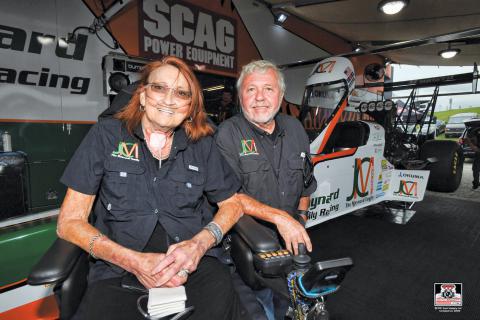
Drawing on their expertise in building successful businesses, the new co-owners of Don Schumacher Racing’s Top Fuel team are now living their dream with “The Sarge” in the driver’s seat.


Last year, entrepreneurs Cathi and Joe Maynard joined forces with Don Schumacher Racing (DSR) as associate partners. In July, they expanded their position with the DSR Top Fuel team by becoming race team owners along with Eric and Kim Lehman. The decision, Joe explained, came when eight-time Top Fuel champion Tony Schumacher returned to DSR to drive the Maynard Family/Scag Power Equipment Top Fuel dragster in the NHRA Camping World Drag Racing Series.

It wasn’t just Tony’s race record the Maynards admired. They cited an intriguing and emotional connection stretching back years.

“I’ve been a drag racing fan since I was a teenager,” Joe told PRI in a recent interview. “About 15 years ago, I talked Cathi into going to a race at Bristol. She’s in a motorized wheelchair, and the handicapped parking at Bristol was at the finish line. I heard Top Fuelers staging. She’d never seen one in person, so I tell her to go to the fence, and as she gets there, Tony Schumacher flies by at about 330 mph. She came back wearing a huge grin and said, ‘I want one.’ But she wanted that one, that driver. That’s what got the inspiration going, and it took this long to make it happen.”


PRI: Why go from team sponsorship to ownership, and why now?

Joe Maynard: We had already talked with Don about going to a bigger sponsorship position with DSR last year. He asked if I really wanted to bring Tony back if we could find a sponsor, and I said, ‘yes.’ We discussed a proposal, and I asked Don if he would ever consider selling the team. We started talking, and it became a deal. It was good for both of us, I think.

PRI: It sounds like a dream come true that’s also a good business.

Joe Maynard: We feel that if there’s any chance to break even or make any money in the NHRA, it would be with a name like Tony Schumacher. (Tony’s US Army sponsorship had ended in 2018.) I’m retired Army, my son is retired Army, Cathi was Army, my daughter-in-law was Army, my grandson is on active duty. We thought “The Sarge” coming back to drive Top Fuel might be a strong business proposition.

PRI: Prior to DSR, did you have any business involvement in racing?

Joe Maynard: We sponsored a local dirt track car that won the championship two years ago, that’s about it. We’ve got an 18,000-square-foot restaurant just coming online. We’d never done that before, either. Business is our passion. We’ve brought on some expertise with a minority partner who had an extensive experience with NASCAR.

PRI: The prize in racing is winning, but do you have other near- and long-term goals for the team?

Joe Maynard: We have a couple of different philosophies. Constant improvement is one of the tenets of everything we’ve done in every business. Going top-to-bottom building successful programs makes us happy. We are also very big on helping families—to have younger kids and everybody we do business with have their lives be a little bit better. The good Lord smiled on us, so we feel like it’s unfair if we don’t extend a hand and reflect the light on other people.

PRI: Is there anything in your or Cathi’s business background that matches up with an NHRA team, or does it matter?

Joe Maynard: I don’t think it matters. I’ve started one or two divisions for companies and then started my own company years ago, and probably didn’t know a whole lot about what I was doing anytime we started. The excitement of the race business is great, but we really enjoy building a business and creating a long-term, satisfying life for these guys and gals who join. A leader in the Army or general manager in a company must be someone who can do a little bit of everyone’s job but not all of anyone’s. I think that helps us as business owners and more importantly, team owners.

PRI: So, you’ve received some on-the-job training?

Joe Maynard: When we started this a year ago, Don and [DSR Senior VP] Mike Lewis mentored me. If I asked Don a direct question about anything, he would tell me the business and professional aspects of it, and sometimes even the drag racing family part if he felt I needed to know. Mike showed us what the family of racing was all about.

PRI: Is there anything about this endeavor that surprised you?

Joe Maynard: I guess the biggest surprise for me was how almost every team owner has embraced us and said, “We’re glad to see you out here. Good luck. I hope we beat you, but it’s OK if you beat us.”

The passion of the owners and drivers is incredible. Tony Stewart is a prime example. There’s nothing this guy needs to prove in racing, but the passion is palpable on his face when he’s out there and when I’m talking to him. We think we match the passion.

PRI: Is there anything else you’re looking forward to with this race team?

Joe Maynard: As I said, we like to mentor young folks. We intend to bring some young drivers that we’re already sponsoring as amateurs. One is number three in Super Stock right now. If there’s a chance for another car in the future, we would embrace that.

PRI: What’s the one thing you can’t live without and why?

Cathi Maynard: My husband.

Joe Maynard: Cathi. Everything we’ve done for nearly 40 years, we’ve done together.

Her passion becomes my passion, and we can’t do this without our relationship in each other and with God. It’s been important to us, and now it’s important to our race team. Money has never been our driver. It’s the passion to succeed.

Cathi & Joe Maynard

TITLE:

Majority Owners

ORGANIZATION:

Maynard Family Racing/Don Schumacher Racing team (JCM/DSR)

HOMETOWN:

Clarksville, Tennessee

FAST FACT:

Cathi Maynard has never forgotten the day she first saw Tony Schumacher’s Top Fueler fly by.

“I would love to be in one of these cars going 300 mph,” she said. “That would be the ultimate rush for me.”

November 2022
By
Jim Koscs

Editors' Choice

Submitted by johnc on Mon, 10/24/2022 - 12:32
image 1


This month’s special edition highlights new motorsports-related products that will be on display in the PRI Trade Show’s Featured Products Showcase inside Lucas Oil Stadium.


MC-1

QMP Racing Engines
qmpracing.com

image 1

Brad Lagman at QMP Racing Engines in Chatsworth, California, needed a better way to measure pistons, so he developed the MC-1 tool that also accurately measures ring-groove depth, compression height, lifter-bore bushing dimensions, lifter diameter, and cam bearings.

“Basically, any component that is round and up to 6 inches,” said Lagman.

The MC-1 takes a “holistic approach” to eliminate human error in measuring critical engine components. The accuracy of a traditional micrometer when measuring piston diameter to set piston-to-cylinder wall clearance is dependent on the skill and technique of the engine builder. With modern, high-boost engines or high-compression, naturally aspirated engines, this clearance is extremely critical to sealing the cylinder.

“Everyone has a different feel of the torque on the spindle of the micrometer,” explained Lagman. “With the MC-1, there’s a dial indicator, so it doesn’t matter how tight the feel of a micrometer. Everyone will come up with the same number.”

In today’s work environment, more experienced and proficient engine builders are retiring. Lagman said products like the MC-1 can help reduce the need for the “touch-and-feel” expertise associated with traditional measuring.

“Anyone who assembles an engine should have an MC-1,” he said.

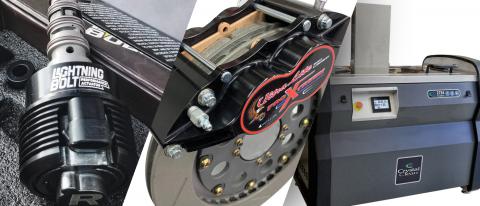
Lightning Bolt Solenoid

Turbo Time USA
turbotimeusa.com

image 2

Designed not only to improve a diesel truck’s performance at the drag strip, the Lightning Bolt solenoid will also help increase fuel economy and acceleration when the truck is working as a tow vehicle.

“If you’re using a solenoid VGT-based platform, it’s going to increase the efficiency, boost response, the spool-up time, and torque development for the low- to mid-range,” said Mike Carr of Turbo Time USA, Totowa, New Jersey. “You can see anywhere from 2–8 psi increase, depending on the setup.”

The Lightning Bolt solenoid is engineered specifically for VGT applications, including the 2003–2007 6.0-liter Powerstroke, 2015–2019 6.7-liter Powerstroke, and 2004.5–2016 6.6-liter Duramax. Company sources suggest that the Lightning Bolt not be used in tandem with aftermarket tuning that restricts VGT vane percentages.

Installation time can be as short as 10 minutes for some applications. All necessary brackets and hardware are included. Basically, the Lightning Bolt manipulates the variable-vane function to enhance spool-up operation as well as improve the exhaust-brake function.

“You don’t leave any performance on the table with this product,” added Carr, noting that larger turbo wheels that suffer from slow acceleration and boost will benefit significantly.

Custom Intake Manifold

Weinle Motorsports
weinlemotorsports.com

image 3

Custom intake manifolds are a specialty at Weinle Motorsports in Cleves, Ohio, and this polished billet beauty is for a 632-cubic-inch big block Chevy that will power a car in Top Sportsman and Quick 8 competition.

“For this one, it has special billet round-to-oval tapered runners,” explained Mike Weinle.

This intake will sit atop a set of 12-degree Pro-Filer cylinder heads, and the engine is expected to make 1,300-plus horsepower naturally aspirated with a pair of 4500 carburetors.

Weinle has designed and built intake manifolds for a variety of applications using sheetmetal and billet aluminum components. He’s worked on Pro Stock cars, marine engines, and even a unique tri-carb Super Stock design that fit European rules.

“All manifolds are custom built to the customer’s horsepower and rpm range,” said Weinle. “The plenum volume, runner length and shape all come into play.”

This BBC intake manifold features coolant provisions and a thick base plate for added durability.

MPVI3

HP Tuners
hptuners.com

image 4

HP Tuners in Buffalo Grove, Illinois, has released a VCM Suite 5.0 software update with new and improved features along with an Advanced Parameter Trainer in support of the new MPVI3 OBDII interface.

The software provides tuners and enthusiasts with a comprehensive dive into the vehicle diagnostics and calibration changes, and now the update offers improved histograms and Vehicle Profile Editor. It also has multi-language support and data-logging monitors.

Also, HP Tuners added the training program, which requires users to complete the course to access specific advanced parameters in VCM Editor.

“This prerequisite ensures all VCM Suite users know and understand the legal requirements and emission regulations that impact their profession or hobby when tuning and diagnosing vehicles using this software,” said Chris Holt. “The MPVI3 continues to build on the foundation set by the MPVI2+ while bringing the latest features and functions that we know our customers love. This latest generation product was completed on an accelerated timeline to meet market demands and confront the supply chain challenges that the entire industry is facing.”

Multi-purpose Towels

Surge Industrial
surgeindustrial.com

image 5

A clean race shop is the first step in building a winning car at the track. Experienced racers know that a dirt-free environment promotes safety and productivity. Having a handy towel to wipe down work surfaces and gear in the shop will reduce the need for a day-long thorough scrubbing, and that’s one way that the multi-purpose towels from Surge Industrial in Aurora, Ohio, can be an asset to a motorsports operation.

“The dual-sided, multi-purpose towels are a quick and easy method of cleaning hard surfaces,” explained Josephine Brencic. “Our industrial-strength cleaning formula was designed to clean the toughest dirt, grease, and grime in environments such as a race shop.”

The towels are NSF certified A1 and are rated with a neutral pH. They come in stackable canisters with 85 11x9-inch towels in each canister. The towels are designed to be non-smearing, and because the dirt adheres to the towel, there is no transfer to other surfaces. The cleaning agent is diluted with a 5:1 ratio of water.

“They can be used in myriad applications from cleaning tools, work tables, parts, and shop equipment to spot cleaning floors and walls,” added Brencic.

The blue abrasive side is used for scrubbing, while the smooth side is for light cleaning. There are no dyes or scents in the product.

Mud Slinger Brake Kit

Ultra Lite Brakes & Components
ulbrakes.com

image 6

Sprint car racers often bemoan that brake fittings on the calipers were damaged from rocks or debris during the race. In the past, brake manufacturers have tried attaching a shield with bolts to the caliper.

“The problem is, all those bolts work against the caliper structure,” said Chris Boucher of Ultra Lite Brakes & Components, Mount Pleasant, Pennsylvania. “We decided to machine a rock or mud shield right into the caliper.”

The floating caliper holds a single 1.5-inch piston and is designed for the left front wheel on a sprint car. The Mud Slinger caliper can be matched with one of three 10-inch rotors: drilled titanium, chromoly scalloped, and titanium scalloped.

“We showed it in our hand at PRI last year but never really featured it,” said Boucher. “Then we got a handful of guys using it, and they all loved it. We haven’t had any failure rates come back.”

Ultra Lite recently changed from engraving its logo into the red anodized caliper and is using a decal now. The kits come with the caliper, rotor, sprint car spindle, metallic brake pads, and hardware.

MAL3 Ultra-high-performance End Mills

Melin Tool Company
melintool.com

image 7

The MAL3 series of 39-degree end mills from Melin Tool Supply in Cleveland, Ohio, is a top-to-bottom line of three-flute aluminum cutters that falls under the company’s Ultra High Performance grouping. They are designed for roughing, finishing, and high-velocity machining.

“The MAL3 leaves a superior polish and finish while providing tight tolerance options,” said Matt Sippel. “The MAL3 have advanced edge-prep technology and engineering that goes into the design of this tool, setting us apart from a standard high-performance end mill. These tools leave a showroom quality polish on your finished piece.”

There are hundreds of part numbers under the MAL3 line, offering different sizes and end geometry to provide aggressive cutting and ramping. Some are designed to provide polish grinds on both the walls and floor. Designs also optimize chip evacuation and avoid chip nesting. Other styles have a unique geometry to reduce cutting pressures and vibration at high feed rates.

The MAL3 line will be on display at the 2022 PRI Trade Show. Melin will also bring end mills designed for other materials, such as a seven-flute for Inconel and five-flute for titanium, that fall under the Ultra High Performance banner.

Foggit Fogging Oil

Foggit
foggit.com

image 8

Foggit is a new fogging oil designed to prevent surface rust from forming on critical internal engine parts between races. It is easily applied by spraying the formula into an open throttle when the engine is turned over for a few seconds with the ignition off.

It can also be applied directly on the cylinder walls through the spark-plug hole.

“It’s amazing how quickly surface rust can begin to form on a race engine’s cylinder walls. Even freshly machined after cleaning, you can see the surface rust starting to form in a matter of minutes,” said engine builder Gary Stinnett.

A multiple champion in the Lucas Oil series, Stinnett also said that rust on cylinders is directly related to trace amounts of sulfur in race fuels.

“We developed Foggit specifically to solve the problem before it starts by clinging to the cylinder walls for protection,” said Steve Williams of Henderson, Nevada-based Foggit.

Also of note: The company plans to expand its contingency program next year.

“Foggit is posting contingency at NHRA Lucas Oil events, and because it protects engines in all forms of racing, we will be expanding our program in 2023,” Williams added. “Racers spend a lot of money on their engines, and we believe it’s the best insurance to keep them protected.”

Mango II FR Ratcheting Countersink Deburring Set

Shaviv USA
shavivusa.com

image 9

One of the most popular deburring sets offered by Shaviv USA in Bolingbrook, Illinois, is part number 90072, the Mango II FR Ratcheting Countersink Set for cleaning in the inside diameter of holes.

“For any fabrication involving metal, this is the quickest way to knock off burrs that remain on the edges after cutting,” said Nicholas Prohl. “This ratcheting set is great for cleaning holes. It gets the work done quick instead of having to dig out different files to smooth out the edges.”

The kit includes the popular and ergonomically designed Mango II handle, the FR ratchet holder, and F20 20-mm countersink blades.

“This countersinking tool usually cleans out a hole in one turn,” added Prohl. “The nice thing about this tool, it’s just a quick turn—unlike a standard deburring tool. There’s a lot less fatigue on the hand, and the user can do multiple holes very fast.”

Key to the comfort factor is the Mango II handle. “The company has always tried to design the handle to fit the palm of the hand, and they’ve improved over the years,” said Prohl. “Some of the younger generation machinists seem to like more ergonomic and more sleek designs, and that’s what this handle offers.”

“The handle is also compatible with the F26X chamfering cone, which is used for deburring outside edges on pipes and tubing,” he added.

Model 2734 Parts Cleaner

Crystal Clean
crystal-clean.com

image 10

Using ultrasonic vibrations to deep clean parts, the Model 2734 from Crystal Clean in Hoffman Estates, Illinois, is an automated 70-gallon high-efficiency cleaner that makes quick work of what used to be a long, labor-intensive process.

“For racing applications, cleanliness is vital to ensure all parts are operating at maximum capacity. Ultrasonic waves clean all the nooks and crannies and crevices within intricate engines, while traditional cleaning methods struggle to clean difficult-to-reach places on parts,” said Danielle Nielsen. “One of the primary advantages of using an ultrasonic parts cleaner for racing applications is the speed and efficiency of cleaning parts compared to traditional cleaning methods.”

The tank has a footprint of 52x36x57 inches and weighs 330 pounds. It requires a 230-volt connection.

“Cleaning carbon deposits off pistons, valves, and cylinder blocks becomes as easy as placing the parts in a machine. Removing grease, oil, and grime from crankshafts, harmonic lifters, cylinder brackets, and timing sets is easy because of the simple automated process,” added Nielsen. “Even engine, transmission, and differential components can easily be cleaned by an ultrasonic parts cleaner.”

Overall, the parts are cleaner, and the shop doesn’t have to take personnel off other tasks just for cleaning.

Pro Drag Front Brake Kit

Ultra Lite Brakes & Components
ulbrakes.com

image 11

Building big horsepower with massive twin turbos and large air ducting can present quite the challenge to a chassis builder when dedicating room for front brakes. The new Pro Drag front brake kit from Ultra Lite Brakes & Components in Mount Pleasant, Pennsylvania, is available in two styles: one with a four-piston caliper (two on each side), or a two-piston configuration (two on one side with a heat shield on the other side) to provide additional room in tight quarters. The kit also comes with a titanium rotor, which may weigh slightly more than carbon fiber but is less expensive. Also, titanium is less likely to be damaged if the car has an unexpected run off the end of the track into the safety pit.

Mango II Set L

Shaviv USA
shavivusa.com

image 12

Designed as an outer edge deburring tool kit, the Mango II L (part number 90101) from Shaviv USA in Bolingbrook, Illinois, features the popular Mango II handle, the ‘L’ holder, and L10 blades. The L holder features a rolling guide, and the blade has four cutting edges to remove burrs from external edges. The ‘A’ side of the blade deburrs materials with spiral chips, and the ‘B’ side is for powdery chips. The kit is also available with the classic holder.

Model 1684/2784 Paint Gun Cleaner

Crystal Clean
crystal-clean.com

image 13

Here’s a speedy and automatic way to clean paint guns. The Model 1684/2784 from Crystal Clean in Hoffman Estates, Illinois, actually offers both automatic and manual modes for cleaning. The automatic mode can clean two spray guns in under 60 seconds, or the manual mode can be used for precision cleaning. The product is designed to use aqueous cleaning chemistries. Overall dimensions are 50x28 inches, and the unit requires 2 cfm of air at 85 psi.

PRX Pro-Extreme Inboard Brake Kit

Ultra Lite Brakes & Components
ulbrakes.com

image 14

Designed as a rear inboard brake kit for sprint cars, the PRX Pro-Extreme brake kit from Ultra Lite Brakes & Components in Mount Pleasant, Pennsylvania, features a new floating 12-inch ceramic-coated titanium rotor. The larger, vented rotor provides greater torque on starts and restarts and improves trail braking. The kit can be ordered with a titanium or chromoly steel rotor. The kit comes with an aluminum four-piston caliper (two pistons on each side), heat shield, brackets, and mounting hardware.

Mango II Set M

Shaviv USA
shavivusa.com

image 15

Here’s a two-in-one set from Shaviv USA in Bolingbrook, Illinois, that deburrs holes, slots, and edges. It features the popular Mango II handle and versatile ‘M’ holder that supports both B and E blades (part number 90094). Multiple blades are included in the kit: B10, B20, B30, E100, E111 and E200. This kit is also available with the classic handle.

Model 2725 20-gallon Combination Cleaner

Crystal Clean
crystal-clean.com

image 16

Combining the options of automation and manual cleaning, the Model 2725 aqueous parts cleaner from Crystal Clean in Hoffman Estates, Illinois, is a useful tool around the race shop. It has a 100-pound capacity and features a 22-inch turntable and 36 spray jets. The unit runs on 115 volts and has GFCI protection, and it’s optimized for performance with an automatic 15-minute cycle timer, low-water shutoff, and preset thermostat at 130 degrees F. There’s also a manual cleaning sink above the unit for precise cleaning.

November 2022
By
Mike Magda

Make The Case: Planning For The PRI Trade Show

Submitted by johnc on Mon, 10/24/2022 - 11:23
image1

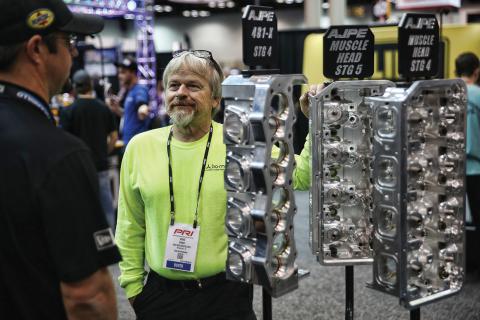
PRI Trade Show veterans recommend making a plan for time at the Show rather than just walking the aisles and discovering things by chance. The sheer size and scope of the Show can be overwhelming for the uninitiated.


The Show brings together industry leaders, motorsports icons, and the latest racing technology all in one place. So there’s really no debate: With such a broad range of things to do and people to meet, a little preparation will help ensure your time in Indianapolis is well-spent.


No annual event incorporates the various aspects of the racing industry quite like the PRI Trade Show does. Encompassing all forms of motorsports and open to qualified PRI Members, the Show provides competitors, engine builders, fabricators, retailers, and other members of the racing community with nearly limitless networking opportunities, insight from industry experts, and a hands-on look at the latest go-fast hardware.

More than a thousand businesses will showcase their latest products and services at this year’s Show; and with a broad range of seminars, live demonstrations, and special exhibits like Machinery Row and the EV Performance Zone, there’s certainly no shortage of interesting things to check out. While it can be tempting to simply dive in and just see what you discover while cruising around, the sheer size and scope of the Show can also be a bit overwhelming for the uninitiated. With that in mind, we asked previous attendees about the tactics they use to ensure that they get exactly what they want out of this incredible event.


Feet On the Ground

“Bring a backpack with you,” advised Eric White of 815 LSx Swaps, Machesney Park, Illinois. “Whether you’re there for media coverage and you’ve got equipment with you or you’re just there to check everything out, you’re going to end up carrying a lot of stuff over the course of the day. Swag is being given away all over the convention, and you don’t want to have your hands full all of the time. And I can’t emphasize this enough: Wear comfortable shoes. You’re going to be doing a lot of walking.”

White also advised allowing extra time at the Trade Show. “I thought I could get through it in a day, and that’s definitely not doable,” he confirmed. “There’s so much more than just the exhibitor booths. There are things like the Content Creation Zone and the Featured Products Showcase, and get-togethers like the PRI Happy Hour that give you a chance to network with colleagues in the racing industry. The PRI Education seminars are incredibly informative as well. You really need to give yourself at least a couple of days in order to see everything. If you can stay for the whole Trade Show, that’s even better.”

image 2
“One of the most useful tools you can have for the Show is the PRI mobile app,” said one veteran attendee. Its version of the My Show Planner “provides an overview of the floorplan and where the different vendors are going to be located, so you can check out where everything will be well ahead of time.”

While at the PRI Trade Show, definitely take in the numerous scheduled events. “It’s always been a tradition of mine to attend the Grand Opening Breakfast,” said veteran Show attendee Caven Risk. “The new products are definitely a focal point for me, but over the years I have also developed a lot of friendships in the industry, and the PRI Show is the one time of the year that I get to see a lot of them in person.

“Once that’s over,” he continued, “I’ll go into the exhibitor area and walk down each and every aisle while also prioritizing the brands that are relevant to the racing that I do. Since I really don’t want to miss the seminars, I’ll try to coordinate it so that I’m in the hall where a seminar is taking place around the time it starts. That way I’m not running around all over the convention trying to get from one point of interest to another.”


Digital Scheduling

Veteran attendees offer their tips, but exhibitor Lou Lobsinger of Torqued Distribution’s national sales office in Troy, Michigan, shared some insights for those at this year’s Show, too.

“As an exhibitor, we want to have as much quality one-on-one time with folks at the event as we can, so we try to stay focused on a few key products, or product categories, at the booth,” he explained. “That helps us see more people throughout the day and doesn’t leave other people waiting around to talk to us. We also keep a time schedule at the booth so that everyone coming by knows which staffers will be at the booth at what time. That allows us to get out and see new products at the Trade Show while still being accessible and available to our customers.

image 3
“Go through the Show Planner so you have an idea of which exhibitors you want to spend time with and what you want to talk about when you get there,” said one longtime exhibitor.  “There’s just so much going on that it’s really easy to get distracted.”

“For those who haven’t been before, my advice would be to go through the Show Planner so you have an idea of which exhibitors you want to spend time with and what you want to talk about when you get there,” Lobsinger continued. “Once you walk into that exhibit hall, there’s just so much going on that it’s really easy to get distracted. The more disciplined you can be about following a game plan, the more successful the Show will be for you.”

Access the My Show Planner feature on the PRI website at pri2022.mapyourshow.com and click on “Show Planner” in the upper right corner. It’s quick and easy to create an account, and then you can schedule events, find information about exhibitors including their booth number and contact information, and even send the company an email in advance of the Show. In addition, users can save photos, product information, and special offers, which can be accessed before, during, and after the Show.

“One of the most useful tools you can have for the Show is the PRI mobile app,” confirmed Stephen Glover, who attended the PRI Trade Show as a crew member for the Wild Thing Pro Outlaw Drag Boat team, about the mobile version of the My Show Planner. “The app provides an overview of the floorplan and where the different
vendors are going to be located, so you can check out where everything will be well ahead of time. That allows me to make a checklist for the people I must see and the products that I’m interested in, and also note the booths that I can probably skip because they’re not going to be relevant to me specifically. There’s just so much going on at the Show that, even with three days to walk through there, you’re probably not going to be able to see it all.

“There are also a lot of racers and celebrities at the PRI Trade Show,” Glover continued, “and they’ll be scheduled to be at certain booths and certain times. So I also make a sort of ‘wish list’ of the folks I want to see and then follow them on social media to get updates on where they will be at a given
time during the PRI Trade Show. Plotting it out like that really allows me to maximize the use of my time at the event. The days fly by really quickly when you’re walking through all of it.”

November 2022
By
Bradley Iger

Stop Doing That…Do This Instead: PRI Trade Show

Submitted by johnc on Mon, 10/24/2022 - 10:50
image 1

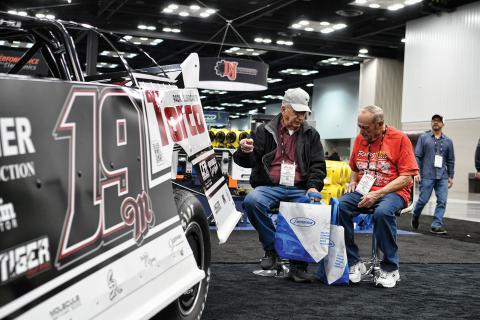
Considering the miles of aisles you’ll walk at the PRI Show, wearing comfortable shoes is a must. PRI’s Industry Sales Director Scott Hartwick (not pictured) takes it a step further by changing into fresh socks at least twice a day. “Definitely a nice booster after a long day on the Show floor,” he added.


The annual PRI Trade Show provides unmatched opportunities for motorsports professionals to discover new products, services, and solutions, as well as network and learn from some of the top minds in racing today. For most, it’s this once-a-year chance to connect with vendors and customers that sets the tone for the racing season ahead. But even seasoned Showgoers have been known to overlook certain details when planning or taking part in PRI’s big event. And for those attendees—as well as first-timers—we’ve put together a dedicated Show edition that identifies what not to do before and during the three biggest business days in racing. Compliments of the PRI team, as well as experienced industry members, we present the following tips on how you can make the most of your time in Indianapolis.


Stop Doing That: Disregarding important emails from PRI

“Read your emails from PRI. These emails often contain important details such as deadlines to register, when PRI housing opens and closes, how to cancel a hotel room and the deadline, and helpful tips to consider when at the PRI Show.”
—Nicole Harless, Senior Trade Show Specialist, PRI


Stop Doing That: Arriving to the PRI Trade Show without a plan

“I would emphasize the importance of creating and using the My Show Planner, which can be found at pri2022.mapyourshow.com, where attendees can build a list of exhibitors they want to see in advance by adding them to their Show Planner. Maximize your time by setting meetings in advance.” —Celina Ingargiola, Industry Sales Director, PRI


“Determine why you are attending the Show and what you want to accomplish. What are your goals and objectives? Buy merchandise? See new products? Cement relationships with vendors and explore new business opportunities? Attend seminars and network with other retailers? Most likely it is a combination of all of them. Rank them by order of importance.

“Appointments at trade shows are like appointments with your doctor, and there is a trickle-down effect. If a doctor’s first patient arrives 20 minutes late, then the appointment schedule changes for everyone. Plan ahead and try to ‘cluster’ exhibitors, both the ‘must see’ and ‘like to see,’ in sectors of the Show floor.” —Bill Kendy, business consultant and PRI contributor


Stop Doing That: Talking only to your industry friends

“Talk to strangers. PRI is a great place to come and reconnect with friends in the industry, but it is critical to challenge yourself to meet new people—it could be your next big business deal.” —Celina Ingargiola


“Network! Begin by attending the Grand Opening Breakfast. Find an open seat at a table with people you don’t know. Introduce yourself and ask about the other people at the table, their types of businesses, and their goals for attending the PRI Trade Show. Attend the PRI Happy Hour Thursday evening and various seminars.” —Meredith Kaplan Burns, Managing Editor, PRI


Stop Doing That: Dressing too casual, or too formal

“Dress to impress, but comfortably. There’s a lot of
walking! Wear comfortable shoes, but business or business casual
is recommended, especially if
you’re having meetings.”
—Celina Ingargiola


“Wear comfortable walking shoes or presentable athletic footwear, and dress with an eye toward classy comfort. Nobody at a trade show will judge you by your shoes—they are in them, too.” —Bill Kendy


“I too am a big fan of not only comfortable shoes; but also have a secret trick of changing out my socks at least twice and sometimes three times a day. Definitely a nice booster after a long day on the Show floor. Fresh and clean feeling for your feet. Less moisture to build up and cause potential blisters.” —Scott Hartwick, Industry Sales Director, PRI


Stop Doing That: Not having contact information available

“Bring business cards. After an important meeting it’s great to swap business cards so you’re top-of-mind when that person returns to the office after the Show.”
—Celina Ingargiola


Stop Doing That: Buying dinner Thursday night of the PRI Show

“Attend the Thursday night PRI Happy Hour on December 8, from 5–7 p.m. in Lucas Oil Stadium. This is a great opportunity to network and enjoy food and drinks on PRI.” —Celina Ingargiola


Stop Doing That: Taking over a seminar during Q&A

“This is pretty specific, but when you’re attending a seminar and the presenter or panel moderator invites questions from the audience, please don’t use this opportunity to take over the session. State your question clearly and concisely, then retake your seat and await the answer. Just because you have the microphone and an audience, doesn’t mean you have complete freedom to speak on whatever topic you want. It is not the time for shoutouts, or to give a long-form description of your newly established nonprofit—or for-profit enterprise—along with a brief history of why you created it, who it’s meant to serve, and where people can find it online. Be respectful of the presenter(s) and your fellow audience members, and keep your seminar question brief, on-topic, and to-the-point.” —Dan Schechner, Editor, PRI


Stop Doing That: Using the Show for sponsorship requests

“Exhibitors are there to promote their products and write up orders. If you are attending the Show and you’re only looking for sponsorship, it’s best to grab a business card and set up a meeting for another time, or feel them out for when it’d be best to have that conversation. Their time is very valuable and ensuring they get their ROI from exhibiting is key. You never want to get in the way of what could be an important business conversation.” —Andrea Brake, Industry Sales Director, PRI

image 2
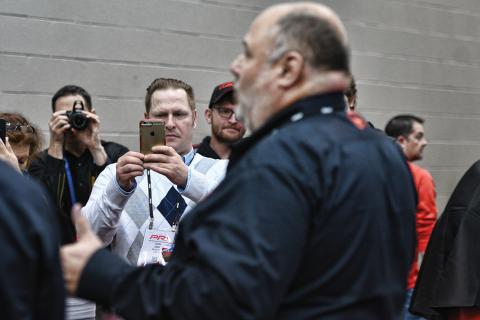
When attending a seminar at the PRI Trade Show, “be respectful of the presenter(s) and your fellow audience members, and keep your seminar question brief, on-topic, and to-the-point,” recommended PRI Magazine Editor Dan Schechner (not pictured). “Please don’t use this opportunity to take over the session.”


Stop Doing That: Limiting yourself to certain parts of the PRI Show

“Don’t miss out on ALL parts of the Show. It’s more than just the two main halls. Lucas Oil Stadium houses product displays, trailer exhibits, PRI Happy Hour, and special attractions. The TOPS Lounge is a great networking spot, too. Anyone can stop in there, and there should be workspaces, snacks, and lots of literature from track operators and promoters offering services.

“This year, we have a sponsor for it: MyRacePass.com, who will give a talk there and is even working on getting a happy hour put together.” —Jeff Dahlin, Industry Sales Director, PRI


Stop Doing That: Being the last one to close down the bar

“This is a business event that provides valuable opportunities to succeed, so use your time wisely and act responsibly.” —Alan Josse, Senior Sales Director, PRI


Stop Doing That: Not making dinner reservations in advance

“Book your restaurant reservations before leaving for Indianapolis. In fact, book your reservation now to any popular restaurants in downtown Indianapolis. Don’t roll into St. Elmo Steak House or Harry and Izzy’s on Thursday or Friday evening and expect to get a table. For those restaurants, plan to book a table when you make your PRI housing arrangements, which should be no later than July.” —Meredith Kaplan Burns


Stop Doing That: Not using the resources available from exhibitors

“Smile and ask questions. We are here for you. Technical and application questions are always great to ask. Take advantage of the face-to-face time. Our product is very technical. We’ve had customers bring our product to the Show to ask if something looks right or why something looks the way it does, and every customer who has done that leaves our booth more confident and satisfied with our product.” —Kristen Damberger, Cometic Gasket


Stop Doing That: Not using the PRI My Show Planner

“My Show Planner helps me manage my time, and it doesn’t get me lost in translation. There is so much to see.” —Frank Siharath, Racetune Engineering


“The first thing we do is use the PRI floor plan app and exhibitor app, and we literally create a plan of which booths to go to. That’s invaluable on the PRI website. We use it every year.” —Kevin Shaw, Raceday Safety


Stop Doing That: Overlooking exhibitor-sponsored seminars

“They explain their products, the benefits, and the proper use of the product, and they kind of help you with selling points like questions your customer may ask you about. It gives you an educated comment when customers ask that question.” —Vic Brown, Trader Vic’s Speed Shop

November 2022
By
Meredith Kaplan Burns

Ask the Experts: Media Goals At The PRI Show

Submitted by johnc on Mon, 10/24/2022 - 10:23
image 1

Bobby Bennett of CompetitionPlus.com (not pictured) spoke for many in the media when he called his role at the PRI Trade Show “a conduit for those who can’t come to the Show. We basically walk the Show, get the news, and report back to those who can’t make it.”


Like many attendees, members of the motorsports press are looking for new racing-related products and trends in Indianapolis. But there are other items on their agenda, too—some of which may surprise you.


Exhibitors, buyers, distributors, and racers tell us they like doing business at the annual PRI Trade Show (this year taking place December 8–10) because so much of the racing industry gathers under one roof for those three days. It’s a target-rich environment for face-to-face meetings about new products, problem-solving, and ways to improve business—or lap times—for the coming year.

Members of the racing media come to the Show for many of the same reasons. “We cover the PRI Show because it represents an authentic and genuine marketplace for the latest motorsport products,” said Tim Rutledge of PASMAG’s Tuning365, Toronto, Ontario, Canada. “We’re always searching for, not just products, but for stories behind those products.”

Bobby Bennett of CompetitionPlus.com in Spartanburg, South Carolina, said, “We are a conduit for those who can’t come to the Show. We basically walk the Show, get the news, and report back to those who can’t make it. Along the way, we learn the trends of the manufacturers and what their new products are. It’s a two-fold thing: It educates us on what we need to prepare to report on, and it also serves the person out in a remote part of country that can’t get to the Show. We are their eyes and ears.”

For Andreanna Ditton of RacingJunk.com in North Adams, Massachusetts, new racing products are just part of what draws her team to the PRI Show. “Over the last five to six years, the PRI Show has really become a place where racing performance news is announced. So it isn’t just what is coming out in the industry, it’s what kind of news is coming out for race teams, vehicle builds, individual racers, owners, crew people. What is happening in that part of the world?”

RacingJunk’s mission at the PRI Trade Show is different from many media outlets, she added. “RacingJunk is part of a community of classified sites that’s focused on racing performance.” So for years, RacingJunk used its PRI Show booth for T-shirt giveaways, poster and calendar signings, and other activities to promote its classified business. About 10 years ago, the site launched a content platform to further support the race community by providing a forum of sorts for them to stay up-to-date on the race industry. “There are many different components as to why we go that are slightly different from other members of the press,” Ditton added. “When I’m there, I’m supporting our marketing and business development initiatives, as well as representing the media for our sites. But all of it is in support of the grassroots racer and their interests.”

image 3
Media members at the PRI Show are looking for things that will excite their audience, whether that’s the latest in technology, breaking news about a series or driver, or a specific new part that will help them go faster or spend more wisely on their race car.

Karl Fredrickson of Speedway Illustrated in Epping, New Hampshire, is a PRI Show veteran, having attended since the early 1990s. His takeaway over all those years is that “it’s vital to show up, vital to have a booth, vital to walk the halls, be there a little early, stay a little late, and attend gatherings and social visits. You never know when you’re going to stumble across something. You never know when you’ll meet someone who turns into a story for the magazine or reveals a product that can help someone go faster, be safer, or spend smarter, which is what Speedway Illustrated is all about.”

What catches the attention of these reporters as they walk the Show? “There are two things,” Fredrickson said. “Familiar faces and strangers. The single most important thing I can do for my job at Speedway Illustrated, whether I’m at a race track or at the PRI Show, is walk up to someone I don’t know and say, ‘Hey, how’s it going?’ That’s where the conversation starts. I can ask people I know at the Show how their season was, what’s been going on. Or if I see somebody who I don’t know, I can discover a new product.”

image 2
RacingJunk.com is part of a community of classified websites, so its mission at the PRI Show isn’t just as a member of the media, explained our company source. “When I’m there, I’m supporting our marketing and business development initiatives, as well as representing the media for our sites. But all of it is in support of the grassroots racer and their interests.”

For Bennett, “the first thing that draws my attention is the established brands. I always go to them to see their newest thing, so they can educate me on why this is the greatest, newest thing. Then I’ll see some new companies that really appeal to me, or I’ll see something that intrigues me, or something from a company that’s famous in drag racing.”

“I look for things that are going to excite the audience,” said Ditton. “If there’s a cool build there, or a cool car, we focus on it. What resonates with my audience is anything that’s going to affect the team, so I’m looking for news about somebody joining a new team, leaving a team, driving a different kind of vehicle, going into a different series, a new series being announced, or new technology being announced.”

“I love to stand in a booth and listen to product specialists discuss something with Racer XYZ about what their concern is, what challenges they have experienced at the track,” Rutledge said. “Then you see these conversations taking place where they’re actually solving problems in real time combining their technical expertise and the new products on display.”

“I’ve been coming to the PRI Show for 23 years, and in that time you build up a lot of relationships,” Bennett said. “One of the biggest assets of the PRI Show is the number of relationships that Show allows someone to build. If you’re in this business, I don’t know how you could skip this Show. When we come to PRI, it’s game on. Most of the time we are running from the moment the door opens.” 

SOURCES

CompetitionPlus.com
competitionplus.com

PASMAG
ppmghq.com

RacingJunk.com
racingjunk.com

Speedway Illustrated
speedwayillustrated.com

November 2022
By
Drew Hardin

Shelby American Adds Kash Singh To Management Team 

Submitted by laurap on Fri, 10/21/2022 - 17:46
Kash Singh


Shelby American, a wholly owned subsidiary of Carroll Shelby International Inc., has announced that industry veteran Kash Singh has joined the company’s management team as the Sales and Marketing manager. Singh was most recently with Ford Motor Company, where he last served as Global Ford Performance Enthusiast Marketing Manager and in other key roles since 2004.

“Our tremendous success this year led us to enhance our production and distribution teams to keep pace with demand for world-class Shelby cars and trucks. Moving into 2023, we’re working closely with Ford Motor Company to expand US and international operations with our current lineup and planned new vehicles. We believe Kash Singh’s experience will be of tremendous value as we develop those programs,” said Gary Patterson, president of Shelby American.

In his new role, Singh will lead Shelby American’s sales efforts and help implement strategic objectives for the company. He will also be part of the product development team, working closely with the Shelby American R&D department and Ford Motor Company to create new vehicles for worldwide distribution. In addition, he will support dealers and provide input on marketing programs.

“Working for Shelby American is a dream for any enthusiast,” said Kash Singh, Shelby American Sales and Marketing Manager. 

Singh is based at the Shelby American headquarters in Las Vegas. 

For more information, visit the press announcement here or visit shelby.com.

Track Enterprises’ Bob Sargent Forms National Series for Pavement Super Late Models

Submitted by laurap on Fri, 10/21/2022 - 17:29
STARS National Series

Track Enterprises President Bob Sargent has announced the formation of a national series of pavement short track races for Super Late Model cars in 2023. It will be called the STARS National Series. 

The news follows Track Enterprises’ acquisition of the Champion Racing Association (CRA) in January and the purchase of the ARCA Midwest Tour in July. Sargent also announced a new partnership with the Southern Super Series.

“We’ve been working on this for more than a year. The opportunity to partner with the three most prominent regional tours this year has put us in a great place to launch a national tour,” Sargent said. 

“We are planning a ten-race national series of special events,” Sargent continued. “In order for that to succeed, the regional tours need to be successful, and it is our intention to strengthen and support those tours to the best of our ability.”

Each regional tour will host National Series events—likely three from each region—with the tenth and final championship event scheduled as part of the All American 400 weekend at Nashville Fairgrounds Speedway (TN) on Sunday, November 5, 2023.

For more information, visit starsnationalseries.com.

October 2022