Rods of Destiny

Submitted by johnc on Tue, 07/18/2023 - 12:20
image 1


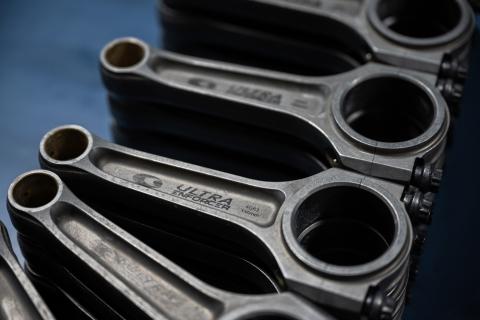
With the exception of unexpected raw material price hikes and occasional supply glitches, the domestic connecting rod market is quite stable in terms of product innovation and design—but there may be a quiet revolution looming in the shadows.


Compare a sampling of today’s performance-driven connecting rods with a similar cross-section of rods from 10 years ago and there may not be much difference to the untrained eye. Machining will be more precise, critical dimensions more accurate, finishes more impeccable, and certainly the fasteners will be much more robust.

However, to paraphrase Gertrude Stein, “a rod is a rod is a rod.” Not much has really changed in design or materials for the majority of popular motorsports applications. Sanctioning body rules often limit innovation by mandating a specific design or imposing minimum weights to reduce the temptation to try uber-expensive materials. So it’s safe to say that there’s a slow news cycle around the connecting rod industry right now.

“There really hasn’t been much that has changed in the rod biz,” admitted Tom Molnar of Molnar Technologies, Kentwood, Michigan, who has been involved in designing and manufacturing connecting rods for more than 40 years. “Costs are going up, cost of materials, labor, overhead. Our customer base has grown. People are finding us through word of mouth.”

“I really wish I had something to tell you on that particular avenue, but I don’t,” concurred Danny Cerny of Scat Crankshafts, Redondo Beach, California.

“At this point, Howards has no new rods in the pipeline. We continue to stay committed to grassroots racing and entry-level racers,” added Kirk Peters of Howards Cams & Racing Components, Oshkosh, Wisconsin, who added a stunning bit of gossip to the conversation. “As for 3D printing of parts, I’ve heard rumors that high-end engine builders have played with the idea, but there are no pictures to substantiate the rumors.”

Well, we have some pictures, but the innovative rods are not meant for IMSA or NASCAR or even Pro Stock. Instead, those “anadiaplasi” titanium rods (see sidebar on page 100) are designed for an exotic hypercar V10 engine expected to produce more than 3,000 horsepower for the street.

Such a design trend is unlikely to spread to mainstream racing markets. The technology is still in its relative infancy and quite expensive. Instead, connecting rod manufacturers are focused on improving production efficiency, keeping orders filled, and helping customers select and install the correct rod. New or upgraded products will be introduced as power levels continue to increase or new applications are introduced to the market.


Future Planning

“There has been a tremendous increase in ‘typical’ power output, and with that comes increased power-handling capabilities for connecting rods,” explained Alan Davis of Eagle Specialty Products, Southaven, Mississippi, noting that the company has been using its current third-generation design for some 20 years. “Eagle’s much anticipated 4th Generation design (4D) will become available this fall in time for the 2024 racing season.”

image 2
“There has been a tremendous increase in ‘typical’ power output, and with that comes increased power-handling capabilities for connecting rods,” explained Eagle Specialty Products’ Alan Davis. “Eagle’s much anticipated 4th Generation design will become available this fall in time for the 2024 racing season.”

This redesign will feature thicker webbing in the beam to improve tensile and compressive strength.

“But the big improvement is realized around the big end of the rod,” Davis continued. “Several improvements have been made to strengthen the big end and make the bore more rigid to further prevent distortion under high load.”

The rods will be fully CNC machined from Eagle’s exclusive two-piece forging of a proprietary steel alloy. ARP 2000 bolts will be standard, and ARP’s Custom Age 625+ bolts may be an option. Initial applications will be Chevy small block, LS, Chevy big block, Ford 302 and 351W, along with popular Honda, Subaru, and Toyota engines.

Racers’ need for more rod strength is also driving Callies of Fostoria, Ohio, to expand a popular line to include more applications. “We’ve had a line for small block Chevy and LS called the Compstar Xtreme,” explained Brook Piper. “We’re now expanding that into big block Chevy and Gen III Mopar. It’s for the guys running up to 1,800 hp, so it’s going to be a good rod for probably 60% of the market like the average bracket guy and street/strip. They’ll retail for around $1,250 per set.”

Callies basically put its Compstar H-beam rod on steroids to create the Compstar Xtreme. Engineers added some weight by thickening the web and added an H11 tool-steel fastener. Overall, Callies calls the rod an “H-I” design.

“It’s kind of a hybrid between an H- and I-beam,” said Piper. “It’s made from 4340 steel, and we’ll start with 6.385, 6.535, and 6.700 lengths for the big block Chevy. For the Gen III Hemi we’ll have a 6.125, which is popular for strokers. We’ll also expand the LS with a 6.350 rod for the tall-deck guys.”

Over at Crower Cams & Equipment in San Diego, California, material costs make for challenging times, but there are bright spots. “We’re holding our own right now. Our titanium rods are big movers, but it’s really hard to compete with material costs,” said Peter Harris, noting that titanium has doubled in price in recent years and costs for heat-treating have also increased significantly. “People can’t always justify spending $800, $900, or $1,000 per rod. But everyone wants a light rod that doesn’t break at high horsepower.”

A new material and new applications are making headlines at CP-Carrillo in Irvine, California. The company is now offering rods for the Nissan VR30DDTT, and expanding into powersports is also a priority as rods are now available for the Aprilia RS 660 twin, Arctic Cat Z1 Turbo, Can Am X3, and Suzuki GSXR1300 Hayabusa (extreme duty).

“We’re also working on a Ford Godzilla rod for high-horsepower applications,” said Richard Batchelor. “We have been offering our new high-strength steel called C107. This material is approximately 22% stronger than our standard material, and we can make rods 10–15% lighter while maintaining the same strength. With this material we have been making some Porsche rods for a few of our high-end customers that are actually lighter than the factory titanium rods.”

With such a wide variety of connecting-rod styles, weights, and materials available to racers, it’s more important than ever to make the right decision when building a competitive engine—especially if more horsepower is in the plans.

“The biggest thing with selection is to buy a rod that you can build off of for years to come,” stressed Piper. “If a big block Chevy guy calls in and says he’s going to do a little bit of nitrous, we all know that eventually leads to a whole lot of nitrous. So choose your rod that will fit your need but allow for growth, because we all have this addiction to go faster. We all know how quick and easy it is to put on a turbo or a ProCharger. I always impress upon our guys here to ask about plans for the future so we can get the customer the best bang for the buck.”


Avoiding Distractions

Most experienced engine builders have already narrowed down their preferences for every type of engine and will order accordingly. However, there remain some misconceptions that can sidetrack even the best builders. One such distraction is the question of rod balance; that is, every rod in a set must be balanced equally and perfectly. That precision isn’t always possible because of wear on machine tools during a single run.

image 3
“Not much has changed in the rod biz,” said Tom Molnar. Although he acknowledged increasing costs of materials, labor, and overhead, he added, “our customer base has grown. People are finding us through word of mouth.”

“Say there’s a run of 96 rods. The first rod will be the lightest and the last will be heaviest,” said Roger Friedman of Dyer’s Top Rods, Forrest, Illinois. “You’re always going to have a little variation, maybe one or two or three grams. But some engine builders are so critical that they want perfect. Well, how do you measure the oil on the rod when it’s spinning around?”

The real problem isn’t a difference of a couple of grams in a rod or two, it’s when the engine builder tries to correct the problem. “They take metal off the wrong places, usually with a belt sander, and they weaken the rod,” explained Friedman. “Every engine builder is different, but we see some hack jobs, especially with stroker crankshafts and the rods are cut for the camshaft. We actually put the rods in a fixture with the bolts properly torqued, and we’ll mill it with a CNC machine. Then we deburr all the edges and polish it. We’re trying to give this rod every chance to survive.”

image 4
To help the DIY engine builder, Scat machines its connecting rods with different-sized chamfers on each side. “We’ve taken the guesswork out of it,” said Danny Cerny.

“The most frequently asked question we get is about cam clearance,” agreed Cerny. “A lot of people don’t know about the different base circles of the camshafts. They try to use a standard cam and throw an H-beam in there with a stroker crankshaft. We recommend they run with our stroker clearance rods. That way you don’t worry about getting out a die grinder or spending another $700 on a small base-circle camshaft.”


Installation Tips

Although connecting rods appear quite simple, there is a correct way to install them. To help the DIY engine builder, Scat machines the rod with different-sized chamfers on each side.

“We’ve taken the guesswork out of it,” said Cerny. “On the big end of our rod, one side of it has a very large chamfer where the bearing would sit. The other side has a very small chamfer. Obviously, for us, the large chamfer is what’s going to go toward the counterweight or the throw where the radius is on the rod journal. The small chamfer is where the two rods will face each other.”

image 5
Callies has expanded its line of Compstar Xtreme rods to now include big block Chevy and Gen III Mopar engines. Callies calls the rod an “H-I” design. “It’s kind of a hybrid between an H- and I-beam,” said Brook Piper.

The correct installation also addresses rod offset. Some engines are designed so that the cylinder-bore centerline is slightly offset from the rod-bearing radial centerline. That difference is corrected by offsetting the rod slightly so that the little end is centered on the wrist pin.

“Many times customers will use rods that are not correct for their engine, such as running an SBC rod in a small block Ford, which have different offsets,” explained Batchelor. “That moves the pin end of the rod 0.025-inch toward the pin boss instead of being centered in the piston. This is a common practice due to availability of SBC rods, and in most cases if the rod is built strong enough it will work, as long as they have additional clearance for the small end of the rod in the pin boss.”

Batchelor also had a customer experiencing unusual wear on the pin end of the face and on the opposing big-end face. He asked the engine builder to mock up all the blocks he was using and take some measurements.

“We were able to figure out that making the big-end offset to what it needed to be would have resulted in a weaker design,” said Batchelor. “Instead, we corrected the problem with non-standard offsets of both ends and changing the pin-end width slightly so that both ends of the rod could never contact the piston pin boss and the crank at the same time.”

One design element of connecting rods that often baffles customers is an oil squirter built into the rod. Users often have the misconception that pistons and cylinder walls won’t receive any oil if a squirter isn’t designed into the rod.

“First of all, a hole in the big end of the rod is a fantastic starting point for a fatigue failure crack. You don’t want that,” explained Davis. “Have you ever imagined what even 20 psi of oil pressure flowing past the rods and crank journal surfaces might look like in the bottom of an engine? Not to mention what 40, 50, or 60 psi would look like! Oil is spraying everywhere. The only way everything is not completely soaked in oil in the crankcase is if you don’t have oil in it at all. Nothing will escape this violent oil spray.”

As long as the oil system is working properly, cylinder walls, piston skirts, rings, pins, and other components will receive plenty of oil. The reason many OEM engines, especially imports, have oil squirters and other oil manipulating features is that auto manufacturers have to plan for the worst possible owner when it comes to ignoring routine maintenance, harsh driving conditions and overall misuse of the vehicle.

“It has to be idiot-proof,” concluded Davis. “In the racing and performance enthusiast industry, I guess we expect a bit more out of our customers!”

What is Anadiaplasi?

The unique connecting rod that appears to have been modeled after a twisted jungle vine was actually developed by Spyros Panopoulos Automotive (SPA) using its proprietary method of Design for Additive Manufacturing (DfAM) called “anadiaplasi.”

A native of Athens, Greece, Panopoulos has been designing his own connecting rods since 1999. He soon started manufacturing other performance engine parts like billet heads, turbo compressor wheels and titanium camshafts. About five years ago, he built a 1,788 cc Mitsubishi Evo engine that pulled 2,880 horsepower at 14,100 rpm and pushed the car to a quarter-mile time of 7.704 seconds in Abu Dhabi. Additional innovations include brake and piston designs for Formula 1 and working with “super alloys” for various racing parts.

sidebar image
The unusual shapes of these connecting rods was developed by Spyros Panopoulos Automotive using “anadiaplasi,” which is its proprietary method of Design for Additive Manufacturing.
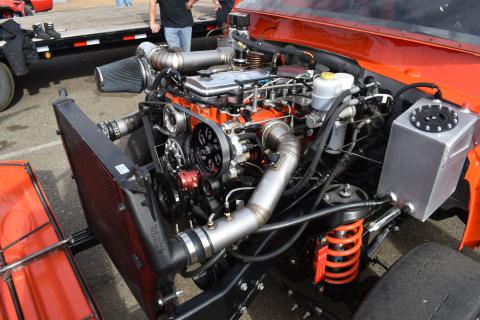
Around 2019, Panopoulos developed anadiaplasi to take advantage of advancements in high-tech 3D metal printing. In theory, the component’s shape is dictated solely by the forces acting on it. Effective designs multiply and evolve while inefficient designs die off in this AI-driven development. The end result is that material is minimized if performance isn’t supported and added where needed to improve performance.

“It’s an algorithm created in-house,” explained Panopoulos, “and based exclusively on 3D printers. The method is based on the strength and properties of materials in relation to the forces exerted on the forms.”

SPA has developed designs for different materials, including carbon, alumina, titanium, and ceramic. Different additive manufacturing methods—including XJet nanoparticle, selective laser melting (SLM), or binder jetting—are used to print the parts. Then any number of surface treatment technologies may follow, including CVD or ALD coatings, ultrasonic nanocrystal surface modification (UNSM), and shot peening.

Panopoulos has created connecting rod designs that may be used in future Formula 1 engines, but current efforts are focused on a 4.0-liter 90-degree DOHC V10 developed for the Chaos hypercar, which is made from more than 44,000 3D-printed parts. SPA will use its 3D technology to manufacture the crankshaft, camshaft, intake valves, exhaust system, and even the magnesium engine block. Twin turbos made from carbon and titanium, and fitted with ceramic compound turbine wheels, will boost the engine to a projected 3,000 hp at 12,200 rpm.

“The engine is on the test phase on the chassis dyno,” confirmed Panopoulos. “We’re testing different materials and designs. But similar parts with the same technology have been tested on the dyno and track since 2018.” —Mike Magda

SOURCES

Callies

callies.com

CP-Carrillo

cp-carrillo.com

Crower Cams & Equipment Co.

crower.com

Dyer’s Top Rods

dyersrods.com

Eagle Specialty Products

eaglerod.com

Howards Cams & Racing Components

howardscams.com

Molnar Technologies

molnartechnologies.com

Scat Crankshafts

scatcrankshafts.com

Spyros Panopoulos Automotive

spyrospanopoulos.com

August 2023
By
Mike Magda

Fueling Sustainability

Submitted by johnc on Tue, 07/18/2023 - 12:05
image 1


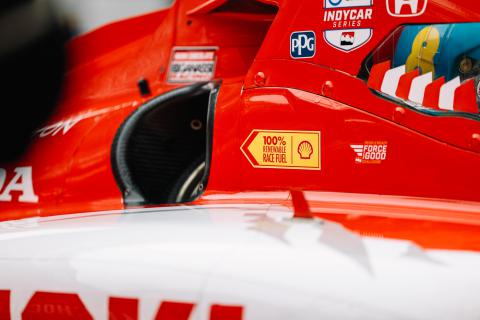
A wide array of newly developed racing fuels is helping reduce the overall environmental impacts of motorsports, while also bringing potent benefits to racers. But creating these fuels comes with a complex set of unique challenges.


Being an imitation usually isn’t a badge of honor. Knockoffs of original items often carry the connotation of sacrifice, of making do with less and just getting by—like being forced to eat a patty made from vegetables while craving a giant, juicy cheeseburger.

When it comes to racing fuels, imitations can sometimes be better than the original. In farms, laboratories, and production facilities around the world, forward-thinking individuals are reinventing the precious liquids that fuel our race cars. In the process, they’re creating fuels that burn cleaner and make more power, with less impact on the environment.

Race sanctions are noticing. Along with electric vehicles (EVs) and other sustainability programs, renewable fuels have become a vital element in the pursuit of greater environmental responsibility throughout the sport. Many of the world’s largest sanctions have introduced fuel blends with significant amounts of renewable content:

• Formula 1 cars currently use hybrid internal combustion/electric powerplants that run a fuel blend consisting of 10% ethanol. In 2026, F1 will switch to a new hybrid engine that will use 100% renewable fuels.

• All FIA Endurance Championship and World Rally Championship cars now run 100% renewable fuel.

• IndyCar introduced ethanol blends to the series in 2006 and ran E85 from 2012 through 2022. Beginning in 2023, the sanction switched to 100% renewable fuel, consisting largely of ethanol.

• NASCAR has run 15% ethanol fuel since the 2011 season, and in late 2022 reached the milestone of 20 million miles driven on-track with the fuel. The series is likely to move to a 100% renewable fuel at some point.

• Starting with the 2023 season, IMSA GTP cars are running exclusively on an R80 fuel blend, which consists of 64% biofuel.

The future of renewable fuels in racing is promising. But like so many other aspects of technical progress in motorsports, getting to the ultimate goal can be difficult. Breakthroughs in renewable fuels are typically won through hard work, determination, and unwavering commitment.


The Devil in the Details

Renewable fuels are nothing new. In the early 19th century, some of the first internal-combustion engines ran on biofuels such as ethanol. Synthetic fuels were developed extensively during World War II to combat fuel shortages among Axis nations in Europe. Now, more than 80 years later, these two technologies make up the primary categories of renewable fuels in use today.

Although many people refer to all renewable fuels as “biofuel,” that term refers specifically to methanol or ethanol fuels made from fermentation of plants or plant-based oils. The different types of these raw materials, called biomass, determine what subcategory a biofuel is considered to be.

image 2
P1 Racing Fuels makes renewable fuels by converting alcohols into synthetic hydrocarbons. “The biggest hurdle we are facing is cost,” said Martin Popilka. “We are working on decreasing that by building up our production facilities and introducing less-energy-intense technologies to produce fuels on a large scale.”

First-generation biofuels are made from crops, such as corn, barley, or sorghum. Second-generation biofuels are made from agricultural residues such as grasses or sugarcane stalks. Third-generation biofuels are made from algae or other microorganisms. All of these biomasses can be fermented into ethanol or methanol, which can be used straight as fuel, blended with gasoline, or converted into biogasoline, which is functionally equivalent to gasoline.

In contrast, synthetic fuels begin as hydrogen and carbon, the raw ingredients of gasoline. These elements are then fused into the desired molecular structure, typically by using the Fischer-Tropsch process in which heat, pressure, and a catalyst are applied to combine the elements. The resulting reaction yields a hydrocarbon fuel that’s functionally the same as gasoline. This too can be used straight or blended with other fuels.

Determining the environmental impact of biofuel and synthetic fuels can be complicated. On one hand, biofuels might appear more environmentally sound. But many biofuels are currently first-generation, made from corn. This is a more efficient and therefore more economical method of producing ethanol or methanol, but it has the disadvantage of diverting food stocks from their primary role as human sustenance, which largely offsets any environmental benefits.

On the flipside, synthetic fuels don’t use any kinds of crops, and the necessary carbon can be pulled from the air in the form of carbon dioxide—a “win-win” for sustainability, in which raw materials are gathered by reducing carbon in the atmosphere. However, the process of fusing hydrogen and carbon into a liquid fuel consumes massive amounts of electricity. In fact, the amount of power needed is so great that the only way it’s considered at all environmentally responsible is if the electricity is generated by renewable sources, such as wind or solar power.

Then there’s the cost. Prices of renewable fuels vary wildly. First-generation biofuels, such as ethanol made from corn, can be less expensive per gallon than gasoline. Perhaps counter-intuitively, second-generation biofuels are actually about twice the price of first-generation biofuels, despite using agricultural waste products. This is because first-generation biomasses can more readily be broken down into simple sugars, making the process much more efficient and therefore cheaper.

Synthetic fuels are generally more expensive yet, largely because of the energy required to manufacture them. Also affecting the costs of all renewable fuels are basic factors of supply and demand. Ethanol has been around for quite some time, and there are plenty of suppliers that can provide it, which keeps prices relatively low. On the other extreme, there are relatively few synthetic fuel manufacturers at this point, which limits quantities and drives up prices.

Because of the generally high prices and limited availability of many renewable fuels, they’re often mixed with gasoline in various proportions to help offset the cost while still improving their sustainability. This is an everyday reality for Mark Walls, director of research development at VP Racing Fuels, in San Antonio, Texas. The company’s R80 renewable fuel now powers the IMSA GTP class, and roughly a third of VP’s 70 fuel blends use renewable components in them.

Determining what those blends will be is a complicated jigsaw puzzle in which cost, availability, and overall environmental footprint have to be balanced carefully with the performance these fuels offer racers. “It’s only as green as you’re willing to pay,” explained Walls. “Everybody wants 100%, until they find out it costs 50 bucks a gallon. Then everything’s not so green at that point. The biggest hurdle for us is the sourcing and availability of the renewable components that are out there. There just aren’t very many options. And if you do find them, they might not be available at the scale you need, or at the price point you need.”

Walls’ take on the process underscores the vast complexity of developing a market-ready renewable fuel for motorsports. That’s besides the fundamental technical questions being answered in development labs. With this array of factors and the interplay between them, it can be difficult to find clear-cut answers on what’s best for the environment, motorsports, and racers when it comes to renewable fuels.

Regardless, many in the industry see renewable fuels as the most promising direction for motorsports to survive in today’s increasingly environmentally aware era. Although EVs are certainly still on the table as far as “green” directions for the sport, renewable fuels have some definite advantages in real-world applications.

Renewable fuels can be introduced with minimal disruption to racing series and the rules that regulate them. They’re generally formulated to be a “drop-in” replacement as much as possible. This means they can be poured into fuel tanks with little or no changes to the rest of the car and its existing setup. At the same time, renewable fuels in many cases make more power, keep engine components cleaner, and emit fewer harmful emissions than gasoline.

The icing on the cake for many in the sport is that renewable fuels allow the cherished visceral elements of racing to continue unfettered. Race cars can go on singing their ground-shaking roar, in contrast to the near silence of EVs.


The Tiger in the Tank

Jay Berry, founder of Ignite Racing Fuel in Marion, Indiana, remembers a time when nobody cared much about renewable fuels. Sanctions didn’t require them, racers weren’t requesting them, and relatively few suppliers were developing them.

image 3
Porsche has joined forces with other international companies to develop synthetic fuels. The first major result of the consortium is a pilot plant in Punta Arenas, Chile, which was chosen in part for its strong prevailing winds, allowing an on-site wind turbine to provide sustainable electricity for the self-contained operation.

“When I started in 2002, you went to events and nobody knew what ethanol was,” recounted Berry. “This was before there was even pump E85. The reason I created Ignite was because there was nobody out promoting and showing people how great ethanol fuel is on its own merits. We’ve come a long way in educating not just the racer, but engine builders, and along with that, helping consumers understand that ethanol is not a bad fuel. It’s a premium fuel that’s actually better.”

Now his company is finding healthy demand for its biofuels, all of which have very high concentrations of ethanol. The company’s Yellow E98 blend is essentially straight, uncut ethanol. Alongside that are Ignite’s Orange E85 and Red 114 (E90), blends. Berry makes these fuels using first-generation ethanol from corn he grows and processes entirely on his own farm, exactly the same as when he started his company more than two decades ago.

While Berry’s methods and blends haven’t changed much over the years, now racers are warming to the idea of renewable fuels in general, as they’re faced with the possibility of environmentalists shutting down their sport or altering it beyond recognition. That said, Wall has observed that younger racers tend to accept renewable fuels more readily, because they’re less set in their ways and more willing to adapt to new methods.

image 4
“When I started in 2002, you went to events and nobody knew what ethanol was,” said Ignite Racing Fuel’s Jay Berry. “The reason I created Ignite was because there was nobody out promoting and showing people how great ethanol fuel is on its own merits.” Now his company sees a healthy demand for its biofuels.

Nonetheless, some old attitudes and perceptions linger. This is particularly true regarding the use of ethanol. Fears about ethanol’s corrosive effects on engines persist, despite the fact that it’s been used in all different ratios and blends for years. It is, however, generally accepted that running ethanol in higher concentrations—most experts say above 10% to 15%—requires changing fuel-system components to avoid risk of damage. Included among these modifications is switching fittings and hoses to PTFE materials, which resist the widest range of fuels.

Synthetic fuels, on the other hand, typically have fewer variables regarding how they run in race engines. Although synthetic gas may not always smell like actual gasoline, it’s generally formulated to be a direct drop-in replacement, and therefore it requires no change to fuel systems. This also applies to ethanol that’s been converted to biogas.

Berry, however, contends that any damage to fuel system components by ethanol is entirely a result of harmful additives and low-quality gasolines often found in pump E85 blends, rather than by ethanol itself. That said, he conceded that it’s much easier to use high ethanol blends with electronic fuel injection than with carburetors.

“It’s hard to run an ethanol fuel with a traditional carburetor,” he said. “Very few guys have really figured out how to make it work. Part of that is because of the variance in pump E85. Ignite’s fuel blends have never changed. Nothing varies. But pump E85 can be anything from 51% to 83% ethanol. So that’s the frustration for the carb guys. They could build the perfect carb and send it out to 10 different people, and it’ll have 10 different fuels running in it.”


Complex Challenges Foster Innovation

For all the advantages renewable fuels offer, significant challenges still need to be solved before they can achieve universal adoption. Cost is the biggest hurdle right now. Many of these fuels are expensive to make and will probably remain so, at least for the near future.

This may change as more suppliers enter the market and the requisite technologies evolve. At the same time, there’s a debate going on between proponents of EVs and those who favor internal-combustion vehicles that run on renewable fuels: Does it make sense to channel massive amounts of electricity into making liquid fuel to be burned at relatively low internal-combustion efficiencies, instead of just putting that electricity into a battery and powering the car directly?

It’s a tough question that defies simple answers; both sides of the argument have their own unique liabilities. “EVs look great if you draw the box around just the car and you don’t look at how the batteries were made, or where the electricity is coming from,” noted Walls. “But as long as you’re efficient in the way you make your renewable fuels, then it’ll make sense all day long. You have to make sure you’re not wasting electricity to make a renewable fuel, where you would have been better off putting electricity back into the grid.”

Martin Popilka surely understands the debate well. He’s the CEO of P1 Racing Fuels in Berlin, Germany. The company makes renewable fuels by converting alcohols into synthetic hydrocarbons. P1 asserts on its website that, even with EVs, there will still be too many internal-combustion cars operating in the decades ahead to meet global environmental targets. Therefore, he believes that eco-friendly renewable fuels will have to play a large part in the overall effort to clean up the planet. This is especially true, Popilka stated in a P1 whitepaper, when the electricity for EVs is generated by fossil-fuel sources such as coal.

Nonetheless, Popilka told PRI that the expense of processing synthetic fuels is a significant challenge that needs to be overcome. “The biggest hurdle we are facing is cost. However, we are working on decreasing that by building up our production facilities and introducing less-energy-intense technologies to produce fuels on a large scale. As production scales and market conditions become more favorable, costs are expected to drop significantly in the coming years.”

In the meantime, P1 fuels are gaining ground in motorsports, having been chosen for the FIA World Rally Championship and Karting World Championship. It’s worth noting, too, that among users of the company’s products are several successful vintage Bentley race cars. “We’re proving that P1 fuels can be used as a sustainable drop-in fuel from prewar racing up to modern car racing such as the WRC, where the fuel is tested to its maximum in all kinds of harsh conditions, from the heat in Mexico to freezing Swedish temperatures.”

Many in the industry echo Popilka’s belief that when the infrastructure for synthetic fuel is more mature, the cost disparity will narrow enough to make it a more viable alternative to fossil fuels and EVs. One company that’s betting on it is Porsche, which has joined forces with Siemens Energy, ExxonMobil, and other international companies to develop synthetic fuels in conjunction with Highly Innovative Fuels Global (HIF Global), in Houston, Texas.

Rather than choosing one side of the electric versus renewable-fuel debate, Porsche is banking on both approaches to some degree. “Electromobility is a top priority at Porsche,” said Porsche CEO Oliver Blume in a press release. “eFuels for cars are a worthwhile complement to that—if they’re produced in parts of the world where a surplus of sustainable energy is available.”

The first major result of the Porsche renewable-fuel consortium is a pilot plant in Punta Arenas, Chile, which became operational in late 2022. The site was chosen in part for its copious wind, which typically blows 270 days a year, allowing an on-site wind turbine to provide eco-friendly, sustainable electricity for the self-contained operation. This power is used to split water into hydrogen and oxygen and combine it with carbon dioxide pulled from the atmosphere to make methanol, and then convert that to gasoline.

Although output from this plant will be relatively meager at around 34,000 gallons per year, it’s just an initial step. The consortium plans to apply the experience and insight it gains from the project to a much larger HIF Global plant to be built in Texas. Construction on this facility is planned to begin in 2024. When fully operational, it’s expected to produce approximately 200 million gallons of fuel per year.

Porsche plans to use the fuel produced at the Chile pilot plant in large part to conduct real-world research in motorsports. The whole annual output of the facility is slated for use in the Porsche Mobil 1 Supercup racing series and in other special projects, such as Porsche Experience Centers.


The Big Picture

The emergence of viable renewable fuel technologies and their widespread adoption by major sanctions throughout the world is an encouraging step for racers. It could be the key to preserving their right to compete in the cars they want indefinitely, no matter how draconian environmental regulations may eventually become.

At the same time, organizations throughout motorsports are scrutinizing the much bigger question of overall sustainability. When all factors are taken into account, race cars aren’t actually the biggest source of carbon emissions in motorsports. Although there may be as many as 60 cars on the track at a major event, that pales in comparison to the thousands of spectators in the stands, many of whom drove more than an hour to get there. Then, behind the scenes are dozens of semi-trucks, racking up thousands of miles hauling equipment from track to track. And blazing through the skies above all that traffic are hundreds of airline flights shuttling team members about.

image 5
P1 fuels are gaining ground in motorsports, having been chosen for the FIA World Rally Championship as well as being used in vintage race cars. “We’re proving that P1 fuels can be used as a sustainable drop-in fuel from prewar racing up to modern car racing such as the WRC, where the fuel is tested to its maximum in all kinds of harsh conditions,” said Martin Popilka.

Ultimately, it all comes down to carbon footprint—how much carbon is being put into the atmosphere versus how much is being removed. The goal is to be “net zero,” meaning carbon is taken out of the atmosphere at the same rate that it’s emitted. Carbon footprint takes into account every aspect of how business is conducted. For example, Formula 1’s introduction of renewable fuel is part of the sanction’s much larger goal of becoming net zero by 2030. Also included in that effort are steps such as phasing out single-use plastics, optimizing logistics, using renewable energy when possible, and even converting to remote broadcast operations.

NASCAR has launched a similar program, with the goal of becoming net zero by 2035. At the same time, other major race sanctions also have comprehensive sustainability initiatives in the works, albeit with somewhat less ambitious goals than the NASCAR and F1 net zero efforts.

Alongside sanctions in these sweeping sustainability initiatives are fuel suppliers as well, many of which are looking at the entire process they’re using for developing fuels, manufacturing them, and bringing them to market. “It’s not just the fuel we’re making,” Walls explained about VP’s broader sustainability efforts. “From production, to the electricity in the building, to me driving into work every day, we’re aiming toward a more carbon-neutral footprint.

“This is where we all have to live. Every little bit helps.”

SOURCES

Ignite Racing Fuel
igniteracingfuel.com

P1 Performance Fuels
p1fuels.com

Porsche
porsche.com

VP Racing Fuels
vpracingfuels.com

August 2023
By
David Bellm

Business Profile: D&J Precision Machine

Submitted by johnc on Tue, 07/18/2023 - 11:34
image 1


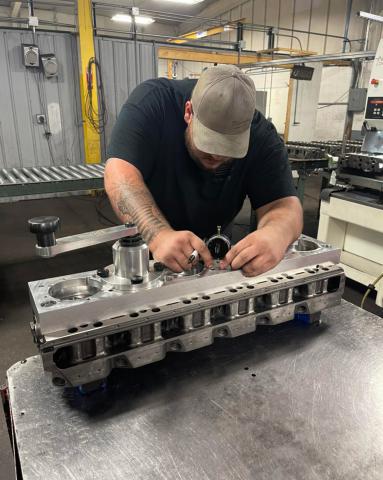
What began as a side project in a corner of a friend’s shop has evolved into a fixture of the high-performance Cummins diesel segment with 20 employees and a 24,000-square-foot facility.


Over the past decade, D&J Precision Machine has gone from a one-off build for a friend to a high-performance Cummins diesel outfit that ships out one engine and three cylinder heads per day. But as CEO Drew Pumphrey explained, the company almost stalled out at the conceptual phase.

“At that time, the plan was to move to Utah and run Wendy’s stores for my dad. I had worked for a company called Enterprise Engine Performance for a few years and had eventually gotten to the point where I was running day-to-day operations there. In 2012, during the transitional phase between Enterprise and the expected move to Utah, I went to work for a directional boring company, and the owner was also a truck pulling customer. He asked me to build an engine for him, but since I’d left Enterprise Engines, I didn’t have a place to do that.”

The owner offered a corner of the company’s shop for the build so that Pumphrey could work on what he assumed would be a one-off project. But soon after its completion, others began asking Pumphrey if he could build engines for them as well.

“I didn’t have any money at the time, and basically no equipment,” he said. “The owner of that directional boring company actually loaned me $10,000 so I could build the next engine after his. I paid him back out of the proceeds from that engine build, and D&J Precision Machine basically grew out of that.”

For about a year, Pumphrey worked for the directional boring company and fit in engine builds when he could. Then, in 2013, he moved his operation into a 2,400-square-foot facility in Zanesville, Ohio. “That was the first time we were truly off on our own,” he said. “And that’s when I hired my first employee.”

D&J Precision Machine moved into a new 5,000-square-foot shop the following year, but thanks to the company’s rapid development, it quickly outgrew that facility as well. By 2016, the company had moved into its current 26,000-square-foot Cambridge, Ohio-based facility.


Finding A Niche

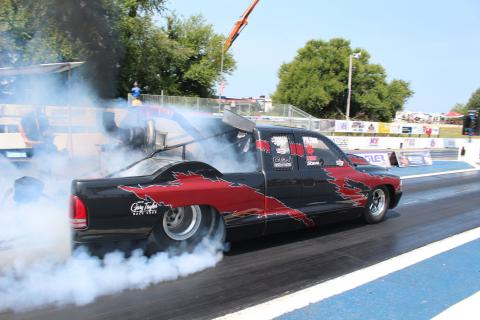
D&J Precision Machine works specifically on high-performance Cummins diesel engine builds, many of which are used in diesel drag racing series as well as pulling competitions. Pumphrey said that his company’s focus on this family of engines can ultimately be traced back to his teenage years.

“In high school I got a diesel Dodge pickup truck and started doing some sled pulling. Working on that truck is what led me to the job at Enterprise Engines. D&J’s niche has always been the B-Series platform—the Dodge Cummins stuff. We haven’t really branched out of that because it has always kept us busy.”

He said that by early 2020 the company was rarely working on anything under 1,000 horsepower, but the pandemic lockdowns convinced him to re-evaluate things.

“Up to that point, we just didn’t have the time to get into anything below that. But things slowed down when COVID-19 hit. While that dip ended up really only lasting about a month or so, it made us look at branching out a bit, so we added more of the lower horsepower stuff and stock-style remanufacturing to the mix as well. Going forward, we’d like to turn that kind of work into about 50% of what we do because it’s more sustainable, and more recession-proof. We didn’t want to slow the performance stuff down, though. We wanted to build the company by adding more people and increasing our capacity so we could also take care of the everyday guy.”


Setting A Standard

One of the characteristics that sets D&J Precision Machine apart from most other diesel engine outfits is that almost everything that goes into its high-performance engine builds is manufactured in-house.

“We’re a machine shop as much as we’re an engine builder,” Pumphrey said. “We do all of our own block and cylinder head work, and we manufacture our own pistons, connecting rods, intake manifolds, valve covers, and everything that ties into that stuff. We also sell out the door to other engine builders as well as customers who’re doing their own engine builds.”

image 2
D&J Precision Machine “is a machine shop as much as we’re an engine builder,” said Drew Pumphrey. “We couldn’t get what we wanted. Even with connecting rods and pistons we kept having failures and other issues. We knew we could solve these problems ourselves if we brought it in-house.”

Pumphrey explained that he decided to bring a significant amount of the manufacturing in-house because he wanted more control over the quality of the components used in the engine builds. “We couldn’t get what we wanted. Even with connecting rods and pistons we kept having failures and other issues with the high-end stuff. We also had other people doing block work for us early on, and they were just unreliable. We knew we could solve these problems ourselves if we brought it in-house.”

D&J Precision Machine’s full-billet Cummins powerplants are capable of more than 3,500 hp and 4,000 lbs.-ft. of torque, a level of power that factory blocks simply can’t handle. “These engines are going into trucks in the Outlaw Diesel Super Series, along with some of the No Prep Kings events. And some are starting to play with Pro Mods. There’s going to be a couple of really, really good cars coming out in the next year. What we’ve always lacked in the diesel community is really good chassis. Some of our best customers have been running S10 Pro Mod chassis from the 1990s. But we’ve got a couple of guys who’ve built some stuff for this year that have the potential to run at the top of the Radial vs. the World classes.”


In For The Long Haul

The company currently has 20 employees working at the shop, which boasts specialized equipment that includes several vertical CNC machines for parts manufacturing and block work, a Rottler CNC cylinder hone for high-quality bore surface finishes, and an advanced seat-and-guide machine that allows them to do whatever profile they want for valve jobs. Cylinder head porting is done with a Centroid five-axis CNC machine, while a DMG Mori horizontal handles what Pumphrey describes as the grunt work. “It does a lot of billet valve covers and a lot of our billet connecting rods.” A SuperFlow Black Widow engine dynamometer is installed onsite as well.

While D&J Precision Machine is always looking for good people, Pumphrey said that it has put together a strong team in part by adopting a policy of internal promotion. “We’ve brought a lot of young folks in, and that’s worked really well for us. The guy running our cylinder head department is 20 years old, and he was originally hired as a part-time employee right out of high school. For us it’s about training these folks on the job. The guy assembling engines for us now started off cleaning parts in the core department. We try to work people upward by teaching them along the way and putting them in the best places where they fit. That’s been the most successful method for us.”

image 3
Though D&J concentrated on high-powered (1,000 horsepower and up) builds until 2020, a slight business slowdown during the pandemic caused Drew Pumphrey to re-evaluate. “We added more of the lower horsepower stuff and stock-style remanufacturing to the mix. Going forward, we’d like to turn that kind of work into about 50% of what we do because it’s more sustainable, and more recession-proof.”

Considering the company’s current output, that tactic seems to be working. “Aside from engine builds, we do full long blocks, full fuel systems, and dyno-proven turbocharger setups,” he said. “And we do a lot of cylinder heads. We’re shipping out three cylinder heads and one engine every day when we’re on schedule.”

Pumphrey said that campaigning a D&J race truck isn’t a priority for the company right now, not only due to time constraints, but also because of some concerns he has about the dynamic it creates between shops and their customers.

image 4
D&J’s customers, like Austin Doidge, seen here, “keep us at the forefront of what’s going on,” said Drew Pumphrey. “We have several customers who’re always pushing the envelope. And every time we identify a failure point, we solve the problem by making improvements.”

“I’ve seen a lot of shops who compete with their customers, and it seems like their customers are always in second place and the shop is in first,” he observed. “I never wanted to be that guy. I want to make sure whoever wants to chase it can do that. Our customers keep us at the forefront of what’s going on. When someone has a failure, we can identify it right away and address those problems. We have several customers who’re always pushing the envelope. And every time we identify a failure point, we solve the problem by making improvements. That’s really how the development of all of our products began.”

From an organization standpoint, Pumphrey said a properly built-out management system is crucial to the long-term success of a company like D&J Precision Machine.

“For a while, we didn’t have enough management,” he explained. “We just didn’t realize how much management we needed in order to keep things moving well. Before we figured that out, we would constantly get engines to the clean room and discover that they were missing parts, or things weren’t lined up for them. It’s a bigger challenge than it seems; when you’re shipping out one engine a day, you have to have everything in order when it hits the clean room so it doesn’t get stalled in there because something’s missing.”

Last year the company incorporated enterprise resource planning software to help with inventory management and workflow optimization, a move Pumphrey said has been a tremendous help with inter-office communication. “Now everyone knows what they need to do and how to stay on schedule. Scheduling is huge. For a long time, we didn’t operate on a schedule, and sticking to a schedule is the hardest part. We had to learn how to tell customers ‘No’ because you can’t just jump on their stuff when they have to have it. They have to get in line.”

image 5
D&J currently has 20 employees working in the shop, including Josh Wengerd, seen here. Drew Pumphrey has put together a strong team in part by adopting a policy of internal promotion. “We’ve brought a lot of young folks in, and that’s worked really well. For us it’s about training these folks on the job.”

Focusing on inventory management also put D&J Precision Machine in a strong position once demand came roaring back in the second half of 2020. “We invested heavily in inventory right as COVID hit. We basically looked ahead six months with our top four vendors and purchased as much as we possibly could,” Pumphrey noted. “We actually had to finance that effort, but it gave us an advantage because we had parts on the shelf when a lot of other people didn’t. That allowed us to move forward when others were completely stuck. What was six months’ worth of product back then is about two months’ worth today.”

That kind of forward thinking is what brings racers like Patrick Puskarich to D&J Precision Machine. Puskarich currently campaigns a 1997 Dodge 3/4-ton pickup with a D&J 6.4-liter Predator long block in 2.6 Smooth Bore-class truck pulling competitions. Puskarich originally got his start in the discipline with gas-powered trucks, so when he decided to make the switch to the diesel side about six years ago, he knew he was going to need an engine builder who really understood how to put together a bulletproof Cummins combination.

“We’re also located in eastern Ohio, and a friend had suggested that we track Drew down,” Puskarich explained. “I really liked that he was doing his own thing—designing his own parts and coming up with his own solutions. Working with him has definitely improved our durability. If Drew doesn’t like the way something is made, he makes a better one.”

August 2023
By
Bradley Iger

Diesel Power

Submitted by johnc on Tue, 07/18/2023 - 11:09
image 1


Diesel racers seeking performance upgrades should look beyond the ordinary.


Diesel racing is growing on all fronts, and the flood of parts to service the market is growing right along with it. To get the best performance from a diesel engine, though, it helps to look beyond the obvious intake/exhaust parts and investigate the possibilities from every angle. There are plenty of parts that can make a big difference when replacing OEM parts and systems, even if these aren’t the first components that spring to mind.

The products highlighted in this article are designed to improve on-track performance, but some are also primarily aimed at improving durability and are equally effective whether used in a race truck or a diesel tow vehicle. Large numbers of racers bring their daily-driver trucks to the track to compete, so ensuring durability is as important as gaining that last little bit of power.

It’s a great time to be fielding a diesel engine in racing, and this sample of recent products may very well include that final piece of the puzzle a diesel racer needs to smoke the competition.


Cummins Hydraulic Lifter Conversion Kit

Factory diesel engines have a reputation for toughness, but in a constantly changing marketplace, even that can’t be taken for granted.

Regarding the latest Ram truck model, “In 2019, they came out with a hydraulic roller,” said Austin Myers of Wagler Competition Products, Odon, Indiana. “In the past years, from 1989–2019, the Cummins used a flat-tappet style. Now they’ve updated it to this hydraulic, and the hydraulic portion starts to fail, and you’ll get a tapping sound. It lets the lifter bounce on the cam, and if it’s not fixed soon, it will beat the roller down out of the lifter. Then all chaos breaks loose, and you’ve ruined everything.

“If you catch it soon enough, our kit allows you to use your own lifter bodies and roller, and simply dump out the hydraulic portion of the lifter,” he continued. “We have a spacer that takes up the slack, basically, and then we have our own custom-length pushrods that come to the top. And we use an OEM 2018-style rocker that has the adjustment back up top, because the newer style rockers, being hydraulic, don’t have adjustment. So we have to put adjustable rockers back on top.”

Although straightforward, the hydraulic lifter conversion kit does require a specialized tool for installation and some skill. “It’s a simple kit, although it’s kind of difficult to install. Mopar actually made a tool to do it in the truck. It’s like a little slide tool that goes through the cam tunnel to get the lifters in and out. Without that tool, you’re looking at taking the engine out and flipping it upside down. So the install is quite in-depth,” Myers concluded.


Everyday Diesel Treatment

Racers at the early stages of building a diesel truck for competition can sometimes get distracted by the countless speed parts choices available in the aftermarket. But before installing those power-making bolt-ons, it’s smart to address the basics—like what goes into the fuel tank. Hot Shot’s Secret’s Everyday Diesel Treatment can be thought of as “step 1” for anyone interested in elevated diesel performance.

image 2
Wagler’s hydraulic lifter conversion kit for 2019 and newer Cummins engines includes the lifter conversions, custom-length pushrods, and OEM 2018-style rocker arms.

“It’s designed to solve the issues with low-quality diesel fuel that we find at the pump, typically,” said Josh Steinmetz of Lubrication Specialties, maker of Hot Shot’s Secret products in Mount Gilead, Ohio. “Diesel is less refined than gasoline and some of the other fuels that we use in racing, so we need to treat it to bring it to more of a premium-style spec. Everyday Diesel adds cetane to the fuel, which helps it burn more completely. It’s kind of like octane for gas, except because of the way it works in a diesel we measure it as a cetane rating. Also, we add lubricity to the fuel as well. Ultra-low sulfur diesel that’s now available everywhere is really low in lubricity. That can lead to fuel pump failures and injector failures.”

image 3
Hot Shot’s Secret’s Everyday Diesel Treatment treats pump diesel fuel with cetane and lubricity to improve engine performance and durability.

Besides improving diesel engine durability, there are definite performance gains to be had from the Everyday Diesel Treatment. “They’ll notice faster start-up times, faster turbo spooling, and they’ll also notice a horsepower gain. We can actually see some horsepower gains because of the cetane and the lubricity in the Everyday Diesel Treatment,” Steinmetz said. “Even if you’re not trying to get performance gains, the protection you add with the lubricity is really peace of mind to make sure you’re not going to grenade that couple-thousand-dollar injector pump.”


Cast Ford Power Stroke PowerPak Piston Sets
for 6.0L and 6.4L

Diving into the engine to replace the factory pistons is no casual upgrade, but eventually the serious racer will reach that decision point. High-level racers will select forged pistons, but for the intermediate Ford Power Stroke 6.0L and 6.4L racers, MAHLE’s new PowerPak piston sets allow them to step up to the next level of performance and durability.

“We take the base replacement piston that’s manufactured by MAHLE Aftermarket, and we de-lip the bowls, we add the pockets, we can do crown coatings, just to increase the strength. It’s really for a hot street truck or a mild sled-puller, or mild drag truck,” said Justin Dossett of MAHLE Motorsport, Fletcher, North Carolina. “By de-lipping the bowls, anytime you can increase the radius dimensions in the bowls it adds strength to the crown. So it makes the piston stronger. Also, we do fly-cut for valve reliefs for guys who are running larger cams. It’s going to allow the person to make more power with our part than the stock piston would.”

image 4
MAHLE’s new PowerPak piston set for Ford Power Stroke engines features modifications to the pistons to make them stronger and increase their power potential.

MAHLE offers its PowerPak cast performance piston sets for Cummins and Duramax applications as well, but the Ford applications are its newest offering, having been introduced at the 2022 PRI Show.


Ford 6.7L CP4 to DCR Pump Conversion Kit

Reliability is crucial for anyone competing regularly on track, and especially for those whose truck is doing double duty as a race vehicle and go-to-work truck. For Ford drivers, one OEM weak spot has been the 6.7L Power Stroke CP4 high-pressure fuel pump, which is prone to sudden failure, often followed by catastrophic collateral damage.

S&S Diesel Motorsport in Seymour, Indiana, teamed with PurePower, a Stanadyne company, to produce a drop-in DCR pump conversion. “It is a more robust pump design,” said S&S Diesel’s Justin Norris. “We’ve been validating it for more than a year in 20-plus different trucks, trying to rack up as many miles as we can to make sure it’s spot-on.” Unveiled in February, the DCR Conversion was scheduled for release in summer 2023.

image 5
S&S Diesel Motorsport’s drop-in DCR fuel pump conversion kit for 6.7L Power Stroke engines solves the reliability issues inherent with OEM CP4 pumps.

“Where I see the DCR being a benefit to racers is improved reliability out of their tow rigs,” Norris said. “There are a lot of 6.7 Power Stroke-powered trucks out there pulling trailers with race cars on them. The whole intention of the DCR was to be a reliability improvement product. There are some performance advantages to be had, but you’re not going to get any extra performance out of the DCR without tuning.”

Those racers who do take the time for proper tuning can take advantage of significant potential. “We have a DCR in one of our sponsored trucks, purely a race truck that doesn’t see any street use,” Norris said. “The DCR pump conversion has roughly 25% more displacement than the CP4, so it has the potential for 25% more output if the calibration would call for it. In a race vehicle that’s not seeing any street use, you can tell the pump to make whatever output you want it to.”


Boost Cooler Water-Methanol Injection Kit

Excessive heat is an enemy of just about any competition vehicle. Snow Performance in Wichita Falls, Texas, attacks that problem with its Boost Cooler Water-Methanol Injection Kit.

“Snow Performance Water Methanol Systems were designed to greatly reduce exhaust gas temperatures (EGT) and intake air temperatures (IAT), increase air charge density, improve fuel economy, and add low-cost horsepower with gains commonly above 100 hp,” said Cody Sprague of Nitrous Express and Snow Performance.

image 6
Snow Performance water methanol systems are designed to reduce exhaust gas and intake air temperatures, which will improve fuel economy and performance.

Cooler temperatures translate to greater air density and greater power output. “Diesel drag racers should expect to see an EGT drop of 200–300 degrees and an IAT drop of 100-plus degrees, resulting in more power safely and efficiently,” Sprague said.

The Snow Performance boost coolers are available in four different stages for different levels of competition. “The stages differ by complexity and tunability of the system,” Sprague explained. “Stage 1 is an on/off system based on boost. Stage 2 is a progressive system based on boost (1–30 psi). Stage 2.5 is progressive based on boost (1–50 psi) and can activate a second stage of water-methanol injection. Stage 3 is a 2D progressive based on boost (1–100 psi) and EGT and is also capable of activating a second stage.”


FASS Competition Series

As diesel racers move up the ladder into faster and more competitive series, reliable fuel delivery and protection from fuel contamination are crucial. FASS Diesel Fuel Systems of Marthasville, Missouri, took aim at racers’ needs with the release of its Competition Series Fuel Air Separation System late in 2022.

Racing diesels can require extremely high flow rates, and eliminating air bubbles and water that can harm the injection system is key for longevity. “The FASS system ensures the continuous flow of fuel from the tank to the engine,” said Mike Fischer. “While maintaining the high horsepower, the Competition Series will clean and polish the fuel, which is what you really want when you’re dealing with diesel in those high-horsepower applications.”

image 7
The Competition Series Fuel Air Separation System from FASS Diesel Fuel Systems ensures continuous fuel flow from the tank to the engine by eliminating air bubbles and water from the fuel system.

Racers have always had the option of installing two or more FASS signature series kits for high-powered applications, which works fine, but the Competition Series delivers those benefits while increasing simplicity, with a single filter base, one set of filters, and the plumbing required for only a single set. The Competition Series comes with a new high-flow fuel pressure regulator, adjustable up to 100 psi, and a competition filter base that accommodates AN braided lines.

FASS Diesel Fuel Systems offers the Competition Series in three different stages to accommodate a wide range of horsepower outputs.

SOURCES

FASS Diesel Fuel Systems
fassride.com

Hot Shot’s Secret
hotshotsecret.com

MAHLE Motorsport
us.mahle.com/en/motorsports/

Nitrous Express Snow Performance
nitrousexpress.com

S&S Diesel Motorsport
ssdiesel.com

Wagler Competition Products
waglercompetition.com

August 2023
By
Steve Statham

Separating Fact from Fiction

Submitted by johnc on Tue, 07/18/2023 - 10:45
image 1


Thanks to advances in areas like engine management controllers and fuel delivery, today’s diesel setups don’t need to operate like smoke stacks on wheels in order to make big power.


Diesel technology has been fighting a long, uphill battle to establish its place in the realm of high performance. While diesel’s inherent benefits in commercial and heavy-duty applications have been well understood for some time, these oil-burning powerplants have largely been overshadowed by their gasoline counterparts in hot rodding and racing circles due to their narrower operating range, comparatively limited aftermarket support, and, to a tangible degree, public perception.

“Outside of diesel’s competition origins in sled pulling and tractor pulling, there’s been a handful of teams over the years who were brazen enough to put one in a drag car, and for a long time these were kind of rat rod-style builds that were basically put together because they told us we couldn’t do it,” explained Jared Alderson of Kill Devil Diesel in Poplar Branch, North Carolina. “That essentially relegated these builds to sort of ‘side show’ status—a novelty kind of thing. It was like, ‘Hey guys, watch the smokey truck go down the track and then we’ll get back to real racing.’”

That perception wasn’t aided by the popularization of diesel street trucks being tuned to “roll coal” so that their exhaust systems would belch out massive plumes of thick, dark smoke. “Rolling coal produces incredible amounts of smoke and soot that blocks out the sun,” explained Gale Banks of Banks Power, Azusa, California. “That’s horsepower that you can see, but not feel or use. It’s wasted fuel. That never really struck me as a manly thing to do. I’d rather be out there setting records.”

Nick Priegnitz of Calibrated Power in Woodstock, Illinois, said that while emissions-compliant vehicles currently comprise a niche of the diesel motorsports segment, there’s been a larger shift toward a cleaner approach. “There are a growing number of events in the country that currently have a clean diesel category—classes that mandate factory-style emissions controls. But in general, the attitude in the industry now is to use as little smoke as possible to make the power you need to make. It’s kind of the unspoken tuner’s rule now. It used to be a ‘more smoke is better’ mentality, but that has changed.”

Combatting Misconceptions

It’s no secret that efficiency is key to extracting all the performance potential of a given setup. As diesel tuning has become more sophisticated over recent years, improved efficiency has helped to push diesel performance to new heights.

“Look at what the Firepunk guys and people like Ryan Milliken are doing today,” Alderson said. “Some of these guys are now nipping at the heels of the fastest gas cars in the world. It has reached a point where diesel is a viable option for folks who are serious about being competitive.”

Thanks to these strides in diesel technology, segment-leading diesel setups are operating virtually smoke-free.

“I think there’s this general misunderstanding that if it’s not smoking a lot, the power isn’t there,” observed Brian Jelich of JeliBuilt Performance, Moyock, North Carolina. “But it’s actually the other way around. When it’s clean, you know that thing is making power. You look at Derek Rose or Ryan Milliken—their setups are making more than 3,000 hp and they’re running clean. There’s not even a haze coming out of the exhaust.”

image 2

Alderson said that those who roll coal at the track these days typically do so for the sake of the visual spectacle, but there are drawbacks that go beyond any environmental concerns. “At the track there’s a showmanship element to it, but ultimately, we’d rather just burn all that fuel. One thing we see a lot from gas guys who are coming into the diesel world is this concern about running too lean and blowing the motor up. But in the diesel world, it’s really quite the opposite: Lean is actually what we want. The smoke might look cool, but it’s not efficient, and it’s not good for the engine.”

He also told us that recent efficiency improvements have come in part due to teams and builders looking for ways to improve durability. “We obviously want to go as fast as we can while keeping parts alive,” Alderson continued. “Running cleaner is better for the engine. You’re not sooting the oil, and you’re not dealing with fuel wash on the rings as much. So, to some degree, running cleaner is really a byproduct of trying to get these combinations to live.”

Priegnitz said that modern rich-running setups also quickly run into the law of diminishing returns from a performance standpoint. “A diesel typically makes its best power around an air/fuel ratio of 15:1, and the line for ‘clean’ is somewhere around 16.5:1 or so, if you’re using a well-designed piston and injector. In the past, folks would run down to in the 12:1 or 13:1 range mainly just because they could, and engine controls weren’t great at keeping the engine out of that space during transient operation, like during turbo spool-up, for instance. But the engine controls we’re using today are light years ahead of what folks were using not so long ago, and there’s really no reason to leave the engine with an excess of fuel like that anymore. A sooty truck is just performing under its potential.”


Changing The Game

Banks said that OE-backed development of technologies like Bosch’s common-rail injection system have also played an important role in improving diesel engine efficiency across the board, but maintaining that efficiency when launching off the line is perhaps the biggest challenge facing tuners.

“Say you’re at sustained wide-open throttle, like at Bonneville,” Banks explained. “In that situation the turbocharger is at full song, so all you’ve really got to have is a good match of parts. But coming out of the hole is a different story. Because the turbocharging usually lags behind the fuel—you’ve got to have exhaust energy to spool it up and get the air to come to the party—people put a huge shot of fuel in to minimize that lag. But it isn’t always turbo lag that’s the problem. It can sometimes be air system lag. And that comes down to understanding the volume of air that you’re compressing, and how long it takes to get to the intake valves.

image 3
Gale Banks described a “wonderful sweet spot” in turbine response when a tuner does “the most you can with camshafts, turbine housing, and turbine wheel specifications. That’s also where variable valve timing comes in.”

“You also have to consider where you open the intake valves and where you close them,” he continued. “On the exhaust side, you want to blow down the cylinder and get all the pressure out of there by bottom dead center, if possible. You don’t want to open the exhaust valves too early, but you want it to be early enough to let the energy out and kick the turbine in the ass. So you do the most you can with camshafts, turbine housing, and turbine wheel specifications, and that’s also where variable valve timing comes in. There’s a wonderful sweet spot to be found that really helps the turbine response.”

Jelich pointed out that advancements in tuning have made finding that sweet spot a much easier task. “The tuning methods have evolved quite a bit over the past five to 10 years, and now we have standalone systems available that take it to the next level. You can tune directly to an air/fuel ratio. That’s a big deal because the goal is to keep your EGTs low, and the more you lean it out, the lower the EGTs are. We try to shoot for about 30:1, and at that point there’s no visible exhaust coming out of the pipe. It’s actually cleaner than a lot of the gas vehicles that are going down the drag strip. And it’s making really good power without creating a lot of heat in the engine, so it’s putting the heads, pistons, and other components through less abuse.”

image 4
“There’s this general misunderstanding that if it’s not smoking a lot, the power isn’t there,” said Brian Jelich of JeliBuilt Performance. “But it’s actually the other way around. When it’s clean, you know that thing is making power.”

Tuning to an air/fuel ratio is possible without a standalone, but the capabilities of these systems can yield better, more consistent results. “For example, there isn’t a standalone system available for my 7.3-liter Power Stroke because the injectors use very high voltage and there’s nothing that supports it,” Jelich pointed out. “With that it’s just about adjusting the fuel quantity and pairing it up with a nitrous system to balance everything out and keep the AFR where we want it. Monitoring EGTs can be helpful with that, too. When you’re at 18:1, for instance, you’re making a lot of heat, and EGTs are probably at more than 2,000 degrees. When you start to lean it out with a lot of nitrous, you can bring that down to 1,400 or 1,500 degrees. But with a MoTeC system, or some of the Bosch stuff, those adjustments are basically automated because the systems can self-adjust.”

The situation is aided by stronger aftermarket support in other areas as well, Priegnitz said. “We have a broad spectrum of available turbochargers now, and that’s made a big difference. Ten or 15 years ago, it was common to see a turbo thrown on a truck that was just grossly oversized for the application simply because the options were limited. Now we’re able to match parts much more precisely to the desired output and use-case of the vehicle, and that has helped improve that transient engine response, which inherently makes them run cleaner.”

This more dialed-in approach also offers the added benefit of improved parts longevity. “When the engine is running more efficiently, you’re not washing the cylinder walls, burning piston rings as badly, you’re not killing turbos, and you’re not putting valves and seats through as much abuse,” explained Alderson. “That’s another huge advantage.”


Building Momentum

Regardless of the trajectory that the emissions-compliant diesel racing takes down the road, ongoing development in the high-performance diesel realm is expected to continue to improve efficiency in the coming years.

image 5
Nick Priegnitz of Calibrated Power said diesel engine builders now have “a broad spectrum of available turbochargers. We’re able to match parts much more precisely to the desired output and use-case of the vehicle. That has helped improve that transient engine response, which inherently makes them run cleaner.”

“The real key here is having enough oxygen in-cylinder to burn all of the fuel in-cylinder,” Banks said. “We’re still at a point where a lot of folks still haven’t maximized the efficiency of their charge-air cooling systems. They don’t flow enough coolant, or they might have insufficient airflow; there’s still a lot of mistakes being made in this area, especially when it comes to sizing. That’s an important consideration because, in a really serious race engine, the charge-air cooling system has a huge impact on horsepower. What you need is an instrument across the charge-air cooler that measures pressure in, pressure out, temperature in, and temperature out to ensure that you’re getting the lowest pressure drop, and the highest temperature that you can get. We’re in the process of developing that type of an instrument right now.”

Meanwhile, Priegnitz looks to the expanded range of turbocharger options in the aftermarket as a means of improving both competitiveness and efficiency. But he also noted that, in the diesel realm, some of the biggest innovations being made today are occurring at the OEM level.

image 6
Tuning methods “have evolved quite a bit over the past five to 10 years,” Brian Jelich of JeliBuilt Performance said. “You can tune directly to an air/fuel ratio. The goal is to keep EGTs low, and the more you lean it out, the lower the EGTs are.” Done right, diesel trucks can be “cleaner than a lot of the gas vehicles going down the drag strip.”

“I think the variable geometry stuff could be a neat addition to class racing. But what’s interesting is that we’re used to motorsports existing as a way to help drive innovation that will trickle down to street-driven vehicles. Right now, in the diesel racing world, I feel like the development is kind of flowing the other way: The innovations are coming from the street to the track. We keep seeing higher and higher fuel pressures from the OEMs with better pumps, better injectors, and better atomization. I think that racers will definitely benefit from that through things like more precise cylinder pressure control.”

As this segment continues to mature, Alderson expects high-performance diesel setups to become less of an anomaly in the racing world. “It’s continuing to get more and more competitive with the mainstream options. We’re breaking records every year, and not by small amounts. I think that’s going to continue to bring increased interest and support, which in turn will draw more people into the diesel industry.”

SOURCES

Banks Power
bankspower.com

Calibrated Power
duramaxtuner.com

JeliBuilt Performance
jelibuiltperformance.com

Kill Devil Diesel
killdevildiesel.com

August 2023
By
Bradley Iger

Changing The Game

Submitted by johnc on Tue, 07/18/2023 - 10:10
image 1


Innovation and increased levels of aftermarket support have been key to making diesel drag racers not only quicker and faster but also competitive in classes typically dominated by traditionally fueled vehicles.


Diesel drag racing has come a long way in a short period of time.

Consider these benchmarks: In 2004, Scott Bentz made the first 7-second pass in a diesel dragster he built himself when the torque from his Cummins engine twisted the frame he had purchased.

Not quite 20 years later, at Duck X Productions’ Lights Out 14 in February, Ryan Milliken’s Cummins-powered 1969 Nova ran a best of 4.17 seconds at 181 mph and made it to the semi-finals of the highly competitive X275 class. His speed through the traps was faster in the eighth-mile than Bentz’s dragster went in the quarter. How did that rapid evolution happen?

One of the first vehicles to go seriously fast was the Scheid Diesel dragster. As owner Dan Scheid of Scheid Diesel Service Company in Effingham, Illinois, was working on dominating the world of sled pulling, he was concurrently developing a drag racing effort using a Spitzer chassis dragster. After more than two years of development, Scheid took the dragster record away from Bentz in 2006 with a 7.55-second pass at 183 mph. This was accomplished with a traditional hardtail chassis setup and Lenco transmission, much like the other gas- and alcohol-powered dragsters it would run against in the Top Dragster class.

Another person familiar to the diesel scene in the “old days” was John Robinson, who started his diesel drag racing career with a Cummins-powered Altered, its engine backed by a Dodge-based four-speed transmission. After a few seasons, Robinson whittled his elapsed times down into the 8-second range, which was respectable considering the dragster’s massive weight.

For several years, the National Hot Rod Diesel Association (NHRDA) in Arlington, Washington, had some of the most rapid development of any diesel drag racing in its Pro Street and Super Street classes. Pro Street trucks had to weigh 4,500 pounds and had a basically open rulebook, while Super Street trucks were more street-based and had to weigh 6,000 pounds. Still, some of the speeds these trucks were seeing were impressive. Pro Street trucks started running 10s, then 9s, then finally 8s, while Super Street trucks were breaking into the 9s even with the class’s high weight minimum. All around the country, diesels were making an impression at local bracket races, their high levels of boost making them less sensitive to weather conditions and, therefore, more consistent.

The quickest diesel at press time is the featherweight Hollyrock Customs dragster powered by a nitrous-assisted twin-turbo Duramax and driven by Mattie Graves, who has run an astounding 3.96 at 187 mph in the eighth-mile, and is one of only two diesel-powered vehicles to run a 3-second pass in the eighth. She set the record during a test session at Maryland International Raceway in November 2022.


The Common-Rail and Nitrous Revolution

The joining of common-rail technology and nitrous injection has made huge strides in turning diesels into competitive drag racers. The first company to prove this was Banks Power in Azusa, California, which debuted a high-rpm, parallel-turbo, nitrous-injected Duramax-powered S10 tube-chassis drag truck, which was built to set records in the (diesel) Pro Mod category. The Banks drag truck was one of the first that proved that gas-style technology would work on diesels, and that 2,000 lbs.-ft. of torque wasn’t necessary to get moving when the truck was light. The Banks truck was the first non-dragster in the 7s, eventually running a best of 7.72 seconds in the quarter-mile in 2008. For the rest of the diesel drag racing community, this would be a harbinger of things to come.

Eventually some other serious common-rail Duramaxes would surface and become hard runners, with Wade Moody campaigning a Pro Mod truck, and then later a dragster, and even Nitrous Express’ Mike Wood getting onboard and running his own Duramax dragster. Racers started spraying 400, 500, or even 600 hp worth of nitrous on top of boost to go even quicker and faster. It was clear it wasn’t just a Cummins world anymore.


The 2,000-Horsepower Plateau

It’s important to remember that racers were pushing diesel engines that were originally rated at 160–300 hp past the 2,000-hp mark. But not much further. For a few years, whether in sled pulling or drag racing, Cummins or Duramax (or the rare Power Stroke) injection technology, cylinder heads (or lack thereof), and reliability issues kept diesel engines around the 2,000-hp level. Drivetrain components were a limiting factor too, as 2,000 hp also meant more than 3,000 lbs-ft. of torque, often around a parts-shattering 3,000–4,000 rpm. To push past this plateau, a whole new industry would emerge.

Transmission technology struggled to keep up as well. In most pickups, the Dodge-based 47RH and 48RE four-speed transmissions were faced with the herculean task of propelling diesel drag racers down the quarter- and eighth-mile, all while dealing with nearly 10 times the torque they were designed for. Allisons weren’t considered by serious drag racers because they were too heavy and didn’t shift quick enough, and traditional TH350 and TH400 automatics weren’t strong enough and lacked lock-up torque converters.


A New Age of Competition Diesels

As diesel drag racing grew in popularity, the engines started to receive aftermarket support more in line with what was available for gas engines.

“We’ve always been into V8s, so we started with a Duramax block,” noted diesel engine builder Jeremy Wagler of Wagler Competition Products, Odon, Indiana. “Strength-wise, it could be compared to a Top Fuel engine; we just have to deal with a lot of torque. The heads were also a major development. We started out with heavily ported stock versions, but eventually made our way to completely custom solid [no water] heads.”

image 2
Dan Scheid (far lane) has been a pioneer in diesel drag racing, as his Top Dragster was one of the first in the 7s. He was a long-time proponent of making power with a lot of boost and no nitrous until just last year, when he added a modest (200–300 hp) nitrous system.

Wagler also noted that long blocks (depending on options) come in at around $50,000, about the same as a comparable 3,000-hp gas engine, with less maintenance.

On the inline-six side, at around 2,000 hp, and especially with a lot of timing, Cummins engine blocks would split right down the middle. Now a number of companies, including Wagler, LSM Systems Engineering, and Scheid Diesel, offer Cummins aluminum blocks, which allow diesel drag vehicles to make more reliable power.

“Not only will an aluminum block shave nearly 140 pounds from the engine, it will be a lot stronger,” noted Scheid. “This, combined with the fact that performance aluminum cylinder heads came into the picture around the same time, meant huge power increases.”

Progress was made with injection systems as well. “When it comes to what we know now versus five to seven years ago, it’s been leaps and bounds,” explained Justin Norris of S&S Diesel Motorsport, Seymour, Indiana. “We initially just tried big nozzles and multiple pumps. Sled pullers were running three, even four CP3 pumps at one point. Where we ended up [now] is a greater understanding of how the entire injection system works. Just throwing the biggest parts out there on your vehicle won’t always work.

“With injectors and pumps it’s about flow and refinement,” he continued. “We can run two CP3 pumps and injectors that flow 400% more than stock and make a controlled 3,000-plus hp and spin the engines past 5,000 rpm.”

Norris also noted that MoTeC and Bosch controllers are an immense help in tuning the engines. “With the factory ECU, there are some things you just can’t do, but with these race ECUs, the tuning tables are wide open.”

Milliken, who runs Hardway Performance in Mary Esther, Florida, agreed. “The MoTeC is going to be big, and I think you’ll see a lot of people turning to it.”

More and more diesel racers are switching to radial classes, as the rise of factory-appearing bullet cars combined with highly prepped tracks has led to high-torque, high-horsepower radial cars that have practically infinite grip. These levels of torque and traction have led to a revolution in transmissions as well, and now one can buy a Turbo 400 with lockup that has virtually no original parts left.

“Our Supermax TH400-based diesel transmission has even more options than our regular max-effort gas transmission,” said Carl Rossler of Rossler Transmissions, Girard, Ohio. “Spooling and applying lock-up is always a challenge with diesels, so we’ve incorporated a multi-stage soft lockup as well as an adjustable dump valve, so spooling isn’t an issue. These transmissions have been tested in two-wheel drives, four-wheel drives, Cummins, Duramax, and Power Strokes.”


Today’s Diesel Drag Racers

Following is a brief look at some of today’s top diesel racers and the classes they compete in.


Class: NHRA Top Dragster

John Robinson is one of the racers who has been around since the beginning. “I remember they used to have us park way out in the weeds,” he said, laughing.

His diesel dragster always gets a lot of cheers from the crowd and interest in the pits, Robinson said. “Everyone loves an underdog, and even with all the shiny parts it’s still just a sub-400-inch truck engine to a lot of people. So far in this incredibly competitive category we’ve gone two or three rounds, but never made it to the finals. But we’ve definitely faced our share of issues to have success with a diesel.”

image 3
A number of companies offer aluminum Cummins blocks to improve reliability. “Not only will an aluminum block shave nearly 140 pounds from the engine, it will be a lot stronger,” said Dan Scheid.

Scheid is another diesel heavy hitter in the Top Dragster class and is responsible for the injection pump, cylinder head, and a lot of the other hard parts that make these 2,500-hp mechanically injected monsters go down track. “We started to see hairline cracks in spots in the crankshaft, so we built a crank support for the engine,” said Scheid. “That helped, but in the end, it just moved the cracks to a different spot. Oddly enough, we don’t have this issue in pulling engines.”

Scheid is also one of the few racers who stuck with a big boost, no nitrous combination for years. “We were within a tenth of the eighth-mile record, and that was at 160 psi of boost and without any nitrous.” Begrudgingly though, he put a small (200–300 hp) shot on just this last year. “I decided that I was about the only one who still cared, and if nobody else did, I suppose I shouldn’t either,” he added.

The Lenco transmissions both Scheid and Robinson run have been in and out of both dragsters dozens of times, as weak points are found. “We run more than twice the amount of shift pressure than even the alcohol dragsters do,” noted Robinson. “We ended up actually having to make our own internal parts to get the trans to live with 4,000 lbs.-ft. at 4,000 rpm.”

Scheid agreed. “We ended up having to make our own 2.73-ratio gears to run the quarter-mile, as no one else made a set that was that tall, and that’s what we needed.”

The Scheid dragster, driven by Jared Jones, just set a new quarter-mile record with a 6.17-second pass at 229 mph, while Robinson has run 6.30s in the quarter-mile and holds the eighth-mile speed record at 4.10 seconds at 192 mph.


Class: X275 Drag Radial

“It may sound strange to say, but running a diesel engine doesn’t make you all that special,” said Milliken, who has been making waves in the X275 class. “There’s a lot more to racing than just the engine. You have to stage right, drive right, and have your mind right. There’s suspension tuning, power management, and a host of other factors.”

He also is quick to admit that for a long time, diesel racers were doing things completely backward. “You’d have a racer spool like crap, leave the line anyways, and run something like a 10-second ET at 150 mph,” he said. “If we can’t spool within 2–3 seconds and cut a 1.1–1.2 60-foot, we’re not even testing past that. You have to spool, and you have to leave the line.”

image 4
While Cummins and Duramax engines tend to dominate diesel drag racing, Rudy’s Performance Parts fields two seriously competitive pickups with Ford Power Strokes, a Pro Mod and a 4x4. The 4x4 has gone as quick as 4.62 in the eighth-mile.

Milliken may not feel “special,” but running 180-plus mph in the eighth-mile in a door car still takes some doing. “Right now, we’re the heaviest car in the class at 3,350 pounds. Since we use two power adders to keep things clean, we’ve been saddled with a bunch of weight. That makes everything else a lot harder. The math said we’re more than 3,000 hp, but what I’d really like is for them to take some power away and make us lighter so it’s easier on parts.

“One of the advantages of racing a diesel is the lack of maintenance,” he added. “There are no spark plugs to check or pistons to swap because of a nitrous mishap. Sometimes all we do is change out a nitrous bottle and put more fuel in it.”

As much success as he’s had in the X275 class, Milliken admitted that it’s also been quite the effort. “Going this quick in a diesel, especially a big door car, is interesting for everybody, but we’ve been able to show that it can work.” Looking at it from a spectator standpoint, it’s also good for the sport. “Nowadays everyone loves different, and running heads-up with these all-out [gas] race cars is about as different as you can get,” he added.


Class: RWYB (Run What Ya Brung) No Prep

No prep racing has made a significant impact on the industry. Cars are being built specifically for it; it has helped the LS market skyrocket; and it’s good for tracks, airports, and spectators when done right. This type of tire-limited racing has attracted a large number of street-type cars, but there’s also been some controversy about where to put AWD vehicles, namely Skylines. Diesel trucks have entered too but have been put out fairly quickly, as it usually takes 5-second eighth-miles to keep up with the crowd, even on an unprepped surface.

image 5
Getting diesel pickups down track has always been a challenge, but the performance aftermarket is responding to racers’ needs. For example, aftermarket GM-based transmissions from companies like Rossler Transmissions can stand up to a diesel’s immense power and torque from spooling to lock-up.

That changed when Ethan Patterson from Wilson Patterson Diesel in West Lafayette, Indiana, brought out his 4,400-pound 2006 Dodge Ram to the 2021 Thaw Out No Prep race at Darlington Dragway. The truck was light enough and had enough power (1,500 hp) to run with even the big-tire Pro Mods, as the surface was particularly rough, and he had the advantage of four 29.5-inch tires hooking. In the end he walked away with the $8,000 class purse, the first diesel to win such a race.

“You have to always keep improving though, because everyone else is doing the same,” said Patterson. “The truck has gone through a ton of upgrades, including a 6.7-liter deck plate engine built by WP Developments and machined by Scheid Diesel, a Freedom Racing Engines head, and 88-mm Garrett GTX55 turbo. We also have three stages of nitrous through a Hammertech Racecars Nitrous Cannon.”

In a bit of a separation from the norm, Patterson chose to stay with the 48RE-based Dodge transmission, but it’s been highly modified. “The trans has a custom valve body specifically for this truck, all three shafts are aftermarket, and it was built by us with top-of-the-line Raybestos GPZ clutches,” he noted. It seems to be getting the job done so far, and that’s with the truck making nearly 1,000 hp more now. “Our diesel will definitely be a threat in no prep,” he said.

image 6
The Banks Power Sidewinder S10 demonstrated the power-making potential of mating nitrous oxide injection with a diesel’s common-rail technology. The Banks truck was the first non-dragster in the 7s, eventually running 7.72 seconds in the quarter-mile.

“It seems like we say this every year, but we’re still nowhere near the limit of diesel performance,” said Scheid.

Milliken agreed. “Right now we’re partnering with PPEI and building a Corvette Pro Mod that will have even more nitrous, and weigh 1,000 pounds less than the Nova,” he said. “That is going to be fun.”

Firepunk Diesel, whose Cummins-powered S10 was the first diesel of any type to break into the 3s, will also debut a new Pro Mod Duster that is lighter and will make more power than its old ride, proving diesel drag racing is a force to be reckoned with.

SOURCES

Banks Power
bankspower.com

Hardway Performance
hardwayperformance.com

Rossler Transmissions
rosslertrans.com

S&S Diesel Motorsport
ssdiesel.com

Scheid Diesel Service Co.
scheiddiesel.com

Wagler Competition Products
waglercompetition.com

Wilson Patterson Diesel
wp-diesel.com

August 2023
By
Jason Sands

Industry Insights: Michael Rigsby

Submitted by jeffreyc on Tue, 07/18/2023 - 08:33


With the goal to be the “essential destination for motorsports in North America,” Michael Rigsby has transformed his upstart DirtOnDirt.com live-streaming service to cover more than 2,000 live motorsports events annually. Now with FloRacing, he explains why he believes live-streaming actually benefits the sport overall.

The ability to see potential in the early stages of something is a gift given to very few people. Michael Rigsby is one of those lucky few. Rigsby got his start in media as a local TV station sports anchorman in Madison, Wisconsin, but his passion for dirt track racing started much earlier, in his youth growing up in central Illinois. 

When Rigsby saw the potential of the Internet for racing fans in the early 2000s, he was still working in broadcast TV, while his future wife Amber was working as an on-air DJ and marketing director in radio. Together, the two hatched a plan to create a website that would cover everything to do with dirt track racing. Both of them quit their jobs and devoted themselves full-time to DirtOnDirt.com. The rest, as they say, is history. DirtOnDirt became part of FloRacing in 2019, which is itself part of FloSports, a major online broadcaster of racing and sporting events. Rigsby serves as vice president of motorsports. We caught up with Rigsby to see how it started, how it’s going, and where he thinks it’s headed in the future. 

PRI: So, how did you end up where you are? 

Rigsby: I was born and raised in central Illinois, so I’ve been a motorsports fan all my life. Central Illinois is one of the great short-track hotbeds of North America. Fairbury Speedway is my home race track. My grandfather was a racer at Fairbury way back in the day, so I’ve always had a motorsports background. At the same time, I’ve known since I was five or six years old that I wanted to be a sports broadcaster. I graduated from Illinois State with a journalism degree. I got a job up in Wisconsin, but I was still attending a ton of races. We would go to races with anywhere from 5,000 to 20,000 people at them, but with no media coverage. So I had the idea that there needs to be an all-encompassing news outlet for my particular passion. We called it DirtOnDirt, and we wanted to be the site for dirt late model racing. My wife would do all the marketing and on-site activation, and I would be the one handling all the editing, the shooting, the on-air stuff. We both quit our jobs in 2007 and started this company.

PRI: DirtOnDirt.com became successful, but how did you end up at FloRacing? 

Rigsby: FloSports acquired the company in 2019. We had started DirtOnDirt from virtually nothing and built it up to more than 30 employees. I became the vice president of motorsports at FloSports. We cover everything. It’s sprint cars, it’s pavement late models, it’s drag racing, it’s snowcross. Our goal for FloRacing was, is, and always will be to be the essential destination for motorsports in North America. All of the NASCAR grassroots stuff belongs to us. We cover more than 2,000 live motorsports events a year.

2
FloRacing’s Michael Rigsby, right, interviewing Tony Stewart. FloRacing’s extensive motorsports coverage “elevates all our partners,” Rigsby said, including Stewart’s All Star Sprint Car series. “And it’s not just an exposure thing. I think short-track racing and grassroots motorsports have always been the next big sport in America.”

PRI: What is your relationship to the series that you cover?

Rigsby: It is absolutely a benefit to the partners that we have, whether that be the Lucas Oil Late Model Dirt Series, or Tony Stewart’s All Star Sprint Car series, or the Duck X Productions that we do at drag racing or NASCAR grassroots. It is elevating our partners. We have multi-year partnerships with all these people, and it’s not just an exposure thing. I think short-track racing and grassroots motorsports have always been the next big sport in America, just bubbling under the surface. 

Listen, it’s never going to be the NFL or college football, but collectively, the number of short-track racing fans in America is enormous. But it’s always been sort of a cultish niche following because the distribution was never easy. It was always hard to find, it was always splintered. So that’s the really beautiful thing that FloSports has done. My mission is to house it all in one place where sprint car fans are watching Late Model racing, and Late Model fans are watching drag racing, and drag fans are watching snowcross, maybe for the first time. For example, we had this incredible 500-mile snowcross race earlier this year. We had all these sprint car and late model and drag racing fans tweeting about it, because for the first time it’s all being distributed from one location.

Bringing that bigger audience allows all these different disciplines of motorsports to lean on each other and be a collective for the first time ever. That has absolutely elevated not only short-track racing, but particularly our partners. The exposure that Lucas Oil now gets as a sponsor of a tour is bigger because the audience is so much bigger. It’s crazy, this general awareness that has exploded in the last two or three years because of everybody having access to all of this through one affordable subscription.

PRI: What are some of the logistical challenges that you face trying to cover all these different events? 

Rigsby: Scale is the hardest thing. No one has ever attempted to broadcast motorsports at a grassroots level at this scale. It’s a challenge to be able to put 2,000 events on the air from facilities that are not “built for television” or for broadcasting. So being able to scale this to the level we’re doing comes with an enormous number of challenges from crewing to logistics, to shipping to equipment to the talent. We are constantly cultivating new talent, new camera people, new producers, new everything. So that is the hardest thing. 

3
Michael Rigsby became a part of FloRacing when it purchased DirtOnDirt.com in 2019, which Rigsby started with his wife, Amber, in 2007.

PRI: How do you negotiate with tracks and series and promoters to cover a racing event? 

Rigsby: You asked if we’re talking to the track or the series, and the answer is yes to both. We have partnerships that exist with both. For example, somebody like USAC—the United States Auto Club—comes to us and says, “We want you to broadcast all of our sprint car races.” So we do a deal, and that is the only entity we deal with. However, there will be tracks that say, “Hey, we would like to have you broadcast all of our events.” Or there are tracks out there that won’t have a series and they just run an independent big event. In those cases, we deal with the race track. Now, obviously we can’t support every track that calls, but if a track is interested in broadcasting their season schedule, they should reach out.

PRI: What does a successful relationship with a series or track look like? Do they pay you to broadcast their events? 

Rigsby: It’s typically the other way around. We would offer them a rights fee to broadcast their event or series. We have an awesome data team and an awesome rights acquisition and advertising team that figures out what we think it could be worth, working in our model. Then we offer them a rights fee. That’s how it would go.

Now, there are some tracks out there that just want to be on Flo so much that they do offer to pay us. Those deals are rare because every time we do a production, it’s not just flipping a camera on. It’s a logistics team that has to have the equipment there. The scheduling team has to get the crew there, so it has a certain amount of work. So we have to limit the number of events we can do. They’re not all going to be the same in value, but the principle of the deal would remain the same.

PRI: What goals do you have for FloRacing in the next few years, and then over a longer term?

Rigsby: My mission right now is to make FloRacing the essential destination for motorsports in North America. We have work to do on that. That goes from schedules to breaking news to a little bit more of an editorial presence. I built DirtOnDirt.com on that model of being able to find a team schedule, find the results, and find data integration. Those are all ingredients that go into the soup to make us the essential destination for the events we’re broadcasting.

Data is very important to us. We recently acquired Race Monitor, which streams live timing to mobile devices. Then I want to have a driver profile on every driver in North America and every race they run. I want you to be able to click on a driver’s name and see every result of every race he’s run in his career. All of those things go into making us the essential destination. We have an awesome films team, starting to put short films together. We did a short film with Jonathan Davenport called “Dirty Dollars.” I’d very much recommend watching it. I want our fans to know the stories of who these guys are, not just the number on the car. 

4
For Michael Rigsby, seen here on right at the Lucas Oil Late Model Dirt Series opener at Golden Isles Speedway, “scale is the hardest thing” about FloRacing’s ambitious broadcast schedule. “It’s a challenge to be able to put 2,000 events on the air from facilities that are not ‘built for television’ or for broadcasting.”

PRI: Are there people or organizations that you try to emulate? 

Rigsby: This will probably sound the wrong way, but truly the thing is, you can’t point to another company in North America or the world that is attempting to tackle motorsports like we are. 

I would give a nod to some of our competitors in the space like DIRTVision and Speed Sport Network. I have a tremendous amount of respect for both Brian Dunlap at DIRTVision and Chris Graner at Speed Sport Network. They are competitors, but I have so much respect for them because of the way they do business and how they carry themselves. The only difference is the scale at which we’re doing it. Those guys do 400 to 500 races a year, and we’re doing 2,000. I think we’re in a new frontier that we’re blazing on our own. 

PRI: Do you think that live streaming discourages people from going out and buying a ticket, or does it just create new fans? I know this argument occurred decades ago around baseball and football, but do you think the principle holds true? 

Rigsby: I think it’s important to note that I’m part of the ownership group of Fairbury Speedway. So I exist on both sides of this. We broadcast most of our races, so I work in the broadcasting side and in the promotional side. By and large, the promoters and race tracks we work with have never cited live broadcasting as a hindrance to at-track attendance for them. Most of them have said the exact opposite. They felt like our presence at the event has made it bigger, has offered more legitimacy to it, and has exposed it to a wider audience. 

I had a race track promoter tell me one time, let’s say you cost me 10 tickets. I know that there were 10,000 people watching that who are future ticket buyers. So our philosophy is no, it does not in any way harm live attendance. For anyone who may fall into that category, it’s absolutely worth it from the perspective of exposing it to such a larger audience. We know people walk through gates, and they do it at my race track, and say, “I saw you on Flo. I saw you on DIRTVision, and I came because of that.” We believe it certainly is way more positive than negative.

5
Michael Rigsby with Tim McCreadie talking about the Lucas Oil Late Model championship format. Awareness of short-track racing has “exploded” in the last two or three years “because of everybody having access to all of this through one affordable subscription,” Rigsby said. “The exposure that Lucas Oil now gets as a sponsor of a tour is bigger because the audience is so much bigger.” 

PRI: What are you going to do to keep things fresh and provide the “wow factor” at FloRacing? 

Rigsby: Most of our high-level shows use drones now. But it’s most important to me, when you’re broadcasting as many events as we can, to make sure the delivery is right. That each event has solid camera work, solid live timing and scoring, and that there are no disruptions in service. When I tune into a basketball game and I see them trying some bizarre angles on the Final Four, I think no, this is not how we watched basketball for 60 years. We will continue to evolve with tech, and we will continue to provide new and cool features and user experiences, particularly around data with our customers. But it is important to me that we offer steady streaming, live timing and scoring, and solid camera work. If you told me that I accomplished that over the next three years, I would be happy.

PRI: Let’s talk about the future. What do you think we can do as an industry to promote motorsports and sustain its popularity through a period of profound change? 

Rigsby: I think we all have to reevaluate what it means to be a promoter. The world is changing, and short-track promoters have got to change with it. Flo can be a part of that solution, to work with them to understand the different ways that the world is evolving. We work with a lot of promoters whose methods and formulas have been successful for a long time. But if you ask anybody, whether it’s Major League Baseball, the NFL, anybody, they’ll say the audience and audience habits are changing so much that just because methods were successful for many years, that doesn’t mean they’re going to work anymore.

Collectively, our industry has got to take a look in the mirror to understand that and not be scared of it. We have great products. We just have to tweak, evolve, and change a little bit with it. I want FloSports to be part of that solution. I want a race track promoter to come to me and say, “We’re struggling. What do you think?” I want them to come to us and ask us questions. We’ve got a great set of minds inside our building and inside our office, and we can help them with that. You can no longer just do what you’ve always done and expect the same results, because the world is a totally different place now than it was even 10 years ago. Our mission when we got involved in racing was to grow motorsports. I think we’re doing that, and we are just getting started.

August 2023
By
Jeff Zurschmeide

Advocacy Corner

Submitted by jeffreyc on Mon, 07/17/2023 - 10:58


Tracking legal, legislative, and regulatory developments impacting the racing and performance industry.

PRI’s Washington, DC-based legal and advocacy teams work continuously to protect and support motorsports venues, sanctioning bodies, and businesses around the nation. We are tracking several initiatives this month, including a successful and productive gathering of automotive professionals and state lawmakers in California, increased support for internal combustion engine (ICE) technology and sales, and a new tax incentive package that would support aftermarket businesses. 

PRI, SEMA Host Successful California Rally

Industry members gathered in Sacramento, California, in early June for the SEMA California Rally, allowing them to network with key lawmakers and advocate for the motorsports and automotive aftermarket industry. 

Topics covered during the full-day event included new vehicle technologies, manufacturing tax incentives, and the California Air Resources Board (CARB) executive order process. Attendees also discussed Proposition 65 compliance and the upcoming closure of the Oceano Dunes State Vehicular Recreation Area. 

2
California Senator Josh Newman (center) visits with attendees of the California Rally.
3
Assemblywoman Marie Waldron addresses the California Rally.
4
California Senator Bob Archuleta speaks at the California Rally.

“The motorsports and automotive aftermarket industries face significant challenges, and our voices must be heard. The SEMA California Rally was the perfect place to make your concerns known and advocate for policies supporting our industry’s growth and innovation,” said Christian Robinson, Senior Director of State Government Affairs and Grassroots for SEMA and PRI.

House Committee Passes Tax Incentive Package to Benefit Aftermarket Businesses

The U.S. House of Representatives Ways and Means Committee has passed the PRI-supported American Families and Jobs Act, a legislative package comprised of three bills from Committee Chairman Jason Smith (R-MO): the Tax Cuts for Working Families Act (H.R. 3936), the Small Business Jobs Act (H.R. 3937), and the Build It in America Act (H.R. 3938). The bill includes key provisions that will benefit automotive aftermarket businesses, including a 100% bonus depreciation for qualified property, expanded small business expensing to $2.5 million, and the restoration of immediate expensing for Research and Development (R&D) for tax years 2021 through 2025. The bill would also create full expensing for machines and equipment.

“These policies will provide relief for working families, strengthen small businesses, grow jobs, and protect American innovation and competitiveness,” said Committee Chairman Smith.

The American Families and Jobs Act now awaits consideration on the floor of the U.S. House of Representatives. 

For more information, including key provisions of the American Families and Jobs Act, contact Tiffany Cipoletti at tiffanyc@sema.org.

More Than 175 Members of Congress Oppose EPA’s Proposed Emissions Standards 

A total of 177 U.S. Senators and U.S. Representatives signed letters directed to U.S. Environmental Protection Agency (EPA) Administrator Michael Regan urging him to rescind the agency’s proposed emissions standards for light- and medium-duty vehicles and heavy-duty trucks. U.S. House Energy and Commerce Committee Chairwoman Cathy McMorris Rodgers (R-WA) and U.S. Senate Environment and Public Works Committee Ranking Member Shelley Moore Capito (R-WV) sent letters pushing back on the EPA’s tailpipe emissions rule that would essentially put an end to the internal combustion engine (ICE) through this proposal. PRI and SEMA thank Chairwoman McMorris Rodgers and Ranking Member Capito for their leadership in opposing the EPA’s draft multipollutant rulemaking for model years 2027–2032 vehicles. If finalized, the EPA estimates the rule would lead to electric vehicles (EVs) making up two-thirds of new passenger vehicles sold in the United States by 2032. 

Congressional Republican members have come out in strong opposition to the EPA’s proposed rulemaking, as a supermajority of both the House and Senate Republican Caucus signed on Rep. McMorris Rodgers’ and Senator Capito’s letters opposing the EPA’s effort to transition the U.S. motor vehicle fleet away from ICE technology.

“There are many options on the road to zero emissions; it is crucial for government policy to remain technology neutral. The motorsports industry has been built around the internal combustion engine (ICE), although the industry is leading the way in fuel innovations and conversions of old vehicles into new and cleaner technologies,” said Eric Snyder, Senior Director of Federal Government Affairs for SEMA and PRI. “Hydrogen and other renewable fuels, including synthetic eFuels, will allow legacy vehicles to operate in a carbon-neutral manner and should have an equal seat at the table.” 

For more information, visit sema.org/EPA-Proposed-Greenhouse-Gas-Rules or contact Tiffany Cipoletti at tiffanyc@sema.org.

August 2023
By
Laura Pitts

PRI Tech: Fuel System Strategies

Submitted by jeffreyc on Mon, 07/17/2023 - 10:19

Engine builders have few restrictions in drag-and-drive events as well as no-prep and small-tire classes. This blurring of the lines between street and strip performance translates to increased power levels, which requires greater attention to the fuel system.

The determining factors that are most important when putting together a fuel system.

The racing and street-performance landscapes are starting to look quite similar these days, especially when considering engine power and fuel-system setups. The same fuel pump or turbo may be used on a restomod Chevelle or an X275 doorslammer. There is a definite blurring of the lines between street and strip performance.

Among the reasons for this is the increased popularity of drag-and-drive events along with the tremendous amounts of horsepower we’re seeing in no-prep and small-tire classes at the drag strip. Few rules are holding back engine builders in these events, which means as the power levels increase, more attention must be focused on the fuel system. However, it is becoming more challenging to design a system that works both on the track and the street.

From the calls I get, at least 30–40% have a race car they want to drive on the street. Or they have a street car that they want to race at the track, and they want to run fast, real fast! 

When I started with Aeromotive 22 years ago, the A1000 was the creme de la creme for an electric EFI fuel pump. There was nothing else out there that could compare. It was a 1,000-hp fuel pump. At that time, that was the dream: to own and drive a 1,000-hp street car.

Today, we’re getting to the point where if a person calls in and they’re not claiming to make 1,000 hp in a street car, it’s almost a surprise. It just seems like everyone is either making 1,000 hp now or planning to in the near future. That has changed everything when it comes to setting up fuel systems in “street cars.”

Besides gasoline as a fuel, ethanol/E85 and now even methanol have come into the picture in a big way. That’s thrown a big curve at fuel delivery for a multitude of reasons, the least of which is the solvent nature of alcohol fuels (ethanol and methanol). E85 will, in minutes, strip all the shellac from inside of a tank that’s held gasoline for years, potentially clogging the first few fuel filters on a new system. Also, the fuel lines and filters become management issues as they must be E85 compatible, and given the strong solvent nature of E85, filters require more frequent service. This is particularly important with big pumps. 

Also, E85 requires more volume to make the same power. It’s going to take 30% more fuel using E85 to make the same power with gasoline. Methanol requires double the fuel volume of E85 for the same power if that’s an option for a particular customer.

New Technological Developments

Given the challenge of chemical compatibility, and the additional volume requirements to change to alcohol-based fuels, compounded with the rapid increase in the raw horsepower potential of modern-day engines, we’ve had to aggressively develop new motor and pumping mechanism technologies, along with special fuel lines and filter media to keep up. 

Today, some street/strip or drag-and-drive racers want flex-fuel capability; that is, the option to run any mixture of gasoline and ethanol in the fuel tank. A couple of important points must be acknowledged. First, you need a flex-fuel sensor, and Aeromotive offers a high-flow flex-fuel sensor adapter with a built-in bypass so an OEM-style sensor can be used that would otherwise be too restrictive for the higher flow fuel pumps required to do the job.


2
Brushless fuel pumps are becoming more popular for racers who sometimes drive on the street, as the pump speed can be adjusted by the throttle-position sensor on the EFI system. This Aeromotive in-tank brushless pump can deliver up to 7 gallons of fuel per minute.
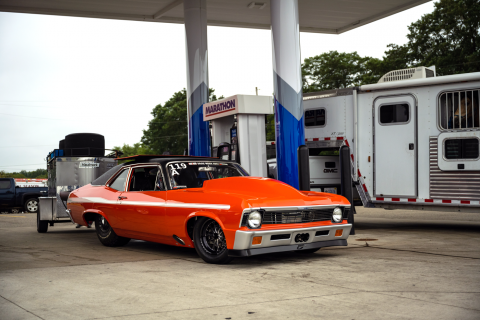
Talking about big pumps on street/strip cars, for those who decide to make a significant upgrade in power, and then change to E85 for example, Aeromotive offers inline and in-tank brushless gear pumps rated for crazy flow numbers from 3.5 and 10 GPM (1,250–3,400 flywheel hp). Further, these brushless pumps can include our TVS (True Variable Speed) Brushless Motor Controller technology for continuous duty with reduced recycling and fuel heating in the tank. 

We also have mechanical fuel pumps that can deliver from 2–120 GPM, used in almost all forms of motorsports from nitro-burning drag cars to offshore marine, from Indy cars to NASCAR, and everything in between. 

But there’s more to setting up a complete fuel system than just stepping up to a more powerful pump. The biggest mistake we see people make when upgrading a fuel system for a big increase in power is that they’ll change the pump but fail to upgrade the rest of the fuel system to match. That is, they don’t understand they’ll need bigger fuel lines, bigger filters with more surface area (higher flow capacity and appropriate service life), and a fuel pressure regulator that can handle the big jump in flow volume while keeping pressure under control. 

Aeromotive is an engineering company, with a “pump-centric” approach to fuel system design. This means we seek a flow problem to solve, then engineer, design, and test a fuel pump to do the job. That done, we then engineer the ancillary components needed to support that pump, everything from port fittings to fuel filters, fuel lines and hose ends, pressure regulators, and fuel rails or fuel logs. From that we generate the appropriate system diagrams for each pump, showing the correct fuel line sizes, supporting components, and plumbing diagrams, depending on the application. This is a tremendous resource available to anyone on our website, aeromotiveinc.com.

Now, there is a risk of building a fuel system that’s too big for an application, so some caution is advised. For example, someone making 1,500 hp on methanol today requires a little more than 7 GPM into the engine. Say sometime in the future the plan is for a new engine combination making 3,000 hp, which would take double that, or 14 GPM. Can you put a 20-gallon-per-minute pump on it now, knowing it will be a year or two before going to a bigger engine? Unfortunately, the answer is no, because it will just run the regulator over trying to bypass the extra 13 GPM the engine isn’t able to use today at the lower power level. As a rule, we try to limit the bypass fuel to 7–8 GPM max to install the biggest possible pump for the future but avoid false high fuel pressure under load down-track today.

Excess fuel bypass is also a problem for those who are spending time on the street with a big engine that needs a lot of fuel at WOT, which can easily overheat the fuel in the tank when the engine is at low load on a longer drive. You really have to deal with just how much extra fuel will be recycled and how hot the fuel is going to get in the tank over time. 

Here’s an example: If there’s a 15-gallon tank in a car with a 5.0-GPM pump at full speed, every three minutes all the fuel in the tank goes through the chassis and the engine bay if the tank is full. If the tank is down to half full, every minute-and-a-half all that fuel goes through the chassis and the engine bay. The less fuel in the tank, the higher the frequency of recycle, and the faster the fuel in the tank gains temperature.

3
For maximum fuel-delivery needs, Aeromotive builds mechanical fuel pumps rated at more than 30 GPM. They are used in alcohol and nitro applications, such as Pro Mod, Top Fuel, and Nostalgia Funny Car.

Depending on altitude and time of year, the maximum fuel temperature in the tank varies before cavitation and vapor-lock can start. This generally falls between 130 and 145 degrees F. When you cross that threshold, you can easily see hot fuel handling problems occur, including poor drivability and vapor-lock.

The key to avoiding such problems when using large, high-flow pumps is to vary pump speed with engine demand in order to minimize excessive recycling. Aeromotive offers a fuel pump speed controller suitable for use with all of our standard, brush-style fuel pumps, and we offer all of our brushless fuel pumps with an optional TVS, or True Variable Speed controller. This gives the user the flexibility to run a bigger pump for higher horsepower combinations and avoid creating a hot fuel problem. 

Our standard pump speed controller uses engine RPM as a reference, whereas our brushless TVS controllers use an analog voltage reference between 0- and 5-volt DC. Typically, a reference off the TPS (throttle-position sensor) is a simple, intuitive way to control pump speed. The input range is technically from .5 to 3.8 volts, so as you move the throttle, the pump speeds up or slows down automatically. Full speed is typically achieved by roughly three-quarter throttle opening.

Some engine builders and tuners prefer to control the pump on a load-based strategy. Here we can take a 2- or 3-bar MAP sensor and dedicate that to the fuel pump, and then the pump speed is controlled by manifold pressure.

Another big benefit of using an Aeromotive brushless fuel pump with TVS control is less amperage draw on the electrical system at lower pump speed. As an example, a 10-GPM pump at full speed and 60 psi is drawing 48 to 50 amps. Using a TVS controller, at full slow the current draw drops to 13 amps, while the regulator adapts to the reduced flow, and fuel pressure is unaffected, remaining at 60 psi.

If you’re in the pits warming the engine up, or you’re driving it in the pits to warm up the driveline, you don’t need that pump running at 10 gallons a minute and drawing 50 amps. You’re just draining the battery or heating the tank up.

Using our True Variable Speed brushless pumps provides all the flow needed at WOT while being able to reduce the recycle rate and reduce the current draw at idle and low load. 

A lifelong hot rodder, Brett Clow has been the Director of Technology at Aeromotive for more than 20 years. He’s been tuning fuel injection systems for more than 27 years, and he heads up all of Aeromotive’s technical training programs and workshops.

August 2023
By
Brett Clow

Podium Club Track at Attesa Approved for SCCA Racing

Submitted by laurap on Fri, 07/14/2023 - 17:50


The Podium Club, a 2.32-mile road racing circuit in Casa Grande, Arizona, has been sanctioned by the Sports Car Club of America (SCCA) to host local, regional and national racing events and high-performance driving events (HPDE).

"This was an easy approval," said Jim Cantrell, Regional Executive for SCCA's Arizona Region. "The track has nine different configurations, plenty of runoff room, a smooth surface. Curbing is right. It's got a huge paddock, big enough for us to run autocross, and an ideal location halfway between Phoenix and Tucson. Southern California and Las Vegas are close, too. We plan to visit the Podium Club a lot."

Arizona's newest road course, open since December 2021, will host the first annual Copperstate 10 enduro event on October 14.

In SCCA news, registration has opened for the 2023 SCCA National Championship Runoffs contingency programs from brands like Hawk Performance, Sunoco and more. Additional details can be found in the SCCA announcement.

For more information, visit podiumclub.com and scca.com.

July 2023