Joe Gibbs Racing (JGR)--the NASCAR organization with four Cup Series teams, three Xfinity Series teams and an ARCA Series team-- has announced a new minority owner. JGR has received a significant investment from Harris Blitzer Sports & Entertainment (HBSE) and Arctos Partners.
"Josh Harris, David Blitzer and their entire team have a vision that has delivered winning franchises in basketball, hockey, soccer and youth sports. Their teams are among the most successful in their leagues in growing audience and sponsorship and their commitment to the communities they work in is unparalleled," said Joe Gibbs, team owner.
Through the investment, Joe Gibbs will also become a limited partner in Harris Blitzer Sports & Entertainment, pending approval by the NBA and the NHL.
The U.S. House of Representatives Ways and Means Committee has passed the PRI-supported American Families and Jobs Act, a legislative package comprised of three bills from Committee Chairman Jason Smith (R-MO): the Tax Cuts for Working Families Act (H.R. 3936), the Small Business Jobs Act (H.R. 3937), and the Build It in America Act (H.R. 3938). The bill includes key provisions that will benefit automotive aftermarket businesses, including a 100% bonus depreciation for qualified property, expanded small business expensing to $2.5 million and the restoration of immediate expensing for Research and Development (R&D) for tax years 2021 through 2025. The bill would also create full expensing for machines and equipment. The American Families and Jobs Act now awaits consideration on the floor of the U.S. House of Representatives.
The Tax Cuts for Working Families Act(H.R. 3936) provides a $4,000 standard deduction bonus in tax years 2024 and 2025 for joint returns and $3,000 for those filing as head of household. The committee estimates that nine out of 10 American households use the standard deduction, which provides tax relief and fewer tax filing headaches.
The Small Business Jobs Act (H.R. 3937) includes multiple provisions designed to help small businesses navigate price increases, worker shortages, and supply-chain failures by cutting IRS red tape, expanding jobs and investment and supporting rural communities. Below are key provisions:
Expands Sec. 179 small business expensing to $2.5 million.
The provision builds on the current $1 million cap under Sec. 179 of the tax code and increases the maximum amount a taxpayer may expense to $2.5 million, reduced by the amount by which the cost of qualifying property exceeds $4 million. The proposal applies to property placed in service in taxable years beginning after December 31, 2023.
Sec. 179 allows a taxpayer to expense the cost of qualifying property rather than to recover such costs through tax depreciation deductions, subject to limitation. Qualifying property is defined as tangible personal property, off-the-shelf computer software and qualified real property that is purchased for use in the active conduct of a trade or business.
Increases the general 1099 reporting threshold to $5,000.
Currently, business owners must send tax forms to contractors that provide more than $600 of work to their business.
This provision offers relief for small businesses by increasing the reporting threshold for subcontract labor from $600 to $5,000.
Expands tax incentives to investors in startups organized as "S Corporations."
Currently, IRC 1202 tax benefits are available only to investors in startups organized as "C Corporations," leaving out "S Corporations," which represent nearly half of all U.S. business entities. The bill includes "S Corporations" in this incentive program.
The provision expands the exclusion from qualified small business stock under IRC 1202 by modifying the holding period by providing a new 50% exclusion for stock held at least three years and a 75% exclusion for stock held at least four years. Stock held for at least five years would continue to be eligible for a 100% exclusion. It also expands qualification to "S Corporations" and allows investors to add their holding period for qualified convertible debt to the holding period required to qualify for the exclusion.
Establishes rural opportunity zones.
Provides for temporary deferral of inclusion in gross income for capital gains reinvested in a qualified rural opportunity fund and the permanent exclusion of capital gains from the sale or exchange of an investment in the qualified rural opportunity fund, following the structure of opportunity zones created in the Tax Cuts and Jobs Act (P.L. 115-97).
It defines a qualified rural opportunity fund as an investment vehicle organized as a corporation or a partnership for the purpose of investing in qualified rural opportunity zone property that holds at least 90% of its assets in qualified rural opportunity zone property.
The Build It in America Act (H.R. 3938) would revive a set of tax breaks for companies' research spending, interest expenses and equipment purchases while also reinstituting a cap on the number of clean vehicle tax credits. All three policies help lower corporate tax bills but lapsed last year as part of a larger, planned wind-down from the 2017 tax overhaul. Below are key provisions:
Restores immediate expensing for R&D for tax years 2021 through 2025.
Currently, businesses must deduct R&D expenses over five years for research done in the United States and over 15 years for research outside the United States.
The provision delays the date when taxpayers must begin deducting their research or experimental costs over five- and 15-year periods until taxable year 2026.
Allows mid-sized businesses to fully deduct interest expenses.
Starting in 2022, employers have faced a more restrictive limit on the amount of business interest that they can deduct each year. Instead of using "earnings before interest, taxes, depreciation, and amortization," companies can only deduct interest expenses only up to 30% of their "earnings before interest and taxes" currently.
Creates 100% expensing for machines and equipment to help U.S. businesses hire workers and expand manufacturing.
Currently, businesses can only deduct 80% of the cost of equipment, machinery and vehicles, with the rest of the deduction claimed over the life of each asset.
Extends 100% bonus depreciation for qualified property placed in service after December 31, 2022, and before January 1, 2026.
The provision also retains 20% bonus depreciation for property placed in service after December 31, 2025, and before January 1, 2027.
"The legislation introduced today pulls together critical ideas introduced by Ways and Means Committee members in response to needs and concerns voiced by the American people," said Committee Chairman Smith. "It builds on successful tax policies enacted by Republicans that spurred higher economic growth--far more than projected--and sparked the fastest growth in real wages in 20 years. These policies will provide relief for working families, strengthen small businesses, grow jobs and protect American innovation and competitiveness."
For more information, contact Tiffany Cipoletti at tiffanyc@sema.org.
Officials with NASCAR and Darlington Raceway--the NASCAR "Track Too Tough to Tame" in Darlington, South Carolina--have announced track president Kerry Tharp will retire at the end of the 2023 season following the Cook Out Southern 500 during Labor Day weekend.
"It's been the honor of a lifetime to serve as president of this beloved South Carolina institution," said Tharp, who has led the track since 2016. "I've poured my heart and soul into serving our fans, and they've in turn embraced my wife Debbie and our family as one of their own."
Tharp's tenure as track president followed a 11-year run leading NASCAR's communications efforts across all three national series, which came on the heels of a 26-year career in intercollegiate athletics.
The Newport Nightmare is 280 pages of events and places that led Jimmy Owens to become a beloved racer in dirt late model competition. Owens pulls back the curtain to share the highs and lows of his eventful career, providing readers with a rare behind-the-scenes look at a racing life and beyond.
DEI’s AN-sized Heat Shroud Sleeves for 20, 16, and 12 AN sizes are an ideal way to reduce heat strain and abrasions on lines, hoses, and wires, damage that could result in failure of all three of these components. They are constructed from a high-temperature rated, glass-fiber fabric with an insulting inner layer and a heat-reflective outer surface.
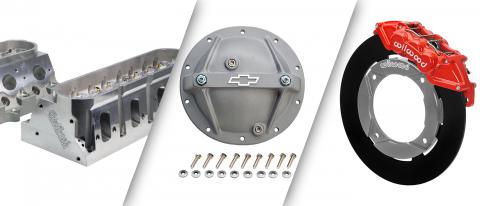
The Victor CNC 11-degree six-bolt cylinder heads for GM LS3 applications are designed for high-horsepower, naturally aspirated and boosted applications. These heads are compatible with the GM LSX block and all aftermarket iron or aluminum six-bolt per cylinder LS race blocks. The six-bolt design offers increased clamping capacity over the standard four-bolt configuration and improves head gasket sealing.
Holley EFI 220 lb/hr fuel injectors feature a precision lapped disc valve, high-quality brass windings, and high-temperature O-rings. These injectors are made to provide linearity with no discernible “bounce” at low pulse widths. Features include minitimer connectors (EV1/Bosch Style), low impedance for use with peak and hold drivers, supports over 3,000 horsepower, four-hole orifice – pencil cone spray pattern, and more.
MAHLE Motorsport offers four new performance cast PowerPak piston sets for the 6.0L and 6.4L Ford Powerstroke. Developed for diesel motorsports competition, the 6.0L pistons are based off the 2004 and newer design, and the 6.4L pistons are based off of the MaxxForce design that provides strength and durability. The 6.0L PowerPak set is cast from MAHLE’s proprietary M124 alloy and the 6.4L Powerstroke set is cast from M142 alloy. Both are designed for a 4.134 stroke and 6.929 rod.
The 48560T-9 Timing Set features a 250-inch seamless single roller chain, three-bolt billet steel cam sprocket, one-piece Torrington thrust bearing, billet steel crankshaft sprocket, heat-treated nine keyway adjustable, center distance 4.890 inches, and more.
This valve cover fits big block Chevrolet Reher-Morrison Raptor 12-degree and Profiler Hitman 12-degree spread port cylinder heads. It’s fabricated aluminum construction with billet rail, 2-7/8 inches tall, is designed with a broad, flat surface for logo engraving, and can be polished, chromed, or powder coated.
All three sizes of the Aluminum Cast Gray Bowtie Differential Covers include two bearing main cap stabilizing bolts, fluid capacity plug, magnetic drain plug, main cap adjusters, and mounting hardware. Features include increased gear life, decreased ring deflection, and CNC-milled Chevrolet Bowtie emblem.
The Gen 5 universal Stiletto small boxes offer more ratio choices to meet steering response needs. For ease of changeover, the pinion location relative to the mounting bolt holes has been standardized on all new Gen 5 small boxes. All aluminum components are anodized for corrosion resistance. Additional features include increased rigidity, decreased weight, secure boots, and optimized performance.
The Pro Hemi non-MDS camshafts delete the MDS feature but retain variable valve timing (VVT). The cam cards include the degrees of cam advance or retard that are designed into the camshafts so users can install the cam dot-to-dot and know valve events are correct. The cards also have the OEM cam part numbers to help users choose the correct cam for the vehicle.
Supertech’s Toyota-BMW B58B30 I-beam connecting rod is made with 4030 alloy, 22-mm full float pin, and utilizes ARP +625 bolts rated for 1,800 horsepower. Part number CR-BMB58-I-143.3.
The 2021 Ford F150 5.0L Tuner Kit features include billet aluminum and steel supercharger mounting bracket assembly with idlers, drive belt and all high-grade hardware, V-3 Si-Trim supercharger (self-lubricated) with 3.40-inch drive pulley, air inlet assembly includes mandrel bent 3.5-inch aluminum tubing, high-flow roto molded duct, and more.
This Weddle S4/S5 throw out bearing adapter is made from an existing late VW T/O bearing shell that’s machined and welded in a custom sleeve. The adapter can use a flat face or a convex face T/O bearing depending on the clutch being used. The new design is a direct replacement assembly, using the standard clutch release mechanism, and has been tested against Stage 4 Kennedy pressure plates.
Wilwood offers a new caliper and rotor design for the Polaris RZR UTV platform from 2014–2023. Matched UTV6 six-piston calipers in front and rear with dynamically mounted steel floating rotors reduce piston knockback, improve thermal capacity, and fit most 15-inch or larger wheels.
Tracking legal, legislative, and regulatory developments impacting the racing and performance industry.
PRI’s Washington, DC-based legal and advocacy teams work continuously to protect and support motorsports venues, sanctioning bodies, and businesses around the nation. We are tracking several initiatives this month, including growing support for internal combustion engine (ICE) technology and sales (plus how readers can get involved), a new bill that would bolster motorsports venues across the nation, and special events to support the industry.
Support Grows For Bill Designed To Prevent ICE Bans Nationwide
Support continues to expand in the U.S. House of Representatives for H.R. 1435, the “Preserving Choice in Vehicle Purchases Act,” which was introduced in early March by U.S. Representative John Joyce (R-PA), Gus Bilirakis (R-FL), Bob Latta (R-OH), and Jay Obernolte (R-CA). At press time in early May, the bill had already secured 72 co-sponsors who agree that Americans should have the right to choose the technology that powers their motor vehicles.
H.R. 1435 is a direct response to the California Air Resources Board (CARB), which plans to ban the sale of new ICE-powered vehicles by 2035. If enacted into law, the Preserving Choice in Vehicle Purchases Act would directly prevent this by restricting the U.S. Environmental Protection Agency’s (EPA) ability to issue a waiver, which is required since states are currently not allowed to enact emissions standards for new vehicles.
“CARB can only implement its zero emissions vehicles (ZEV) mandate—which outlaws new ICE-powered cars in the state by 2035—if the EPA allows them to. Remember, 17 other states around the country have followed all or part of the CARB’s proposals and policies to date, so preventing California’s ban now would protect millions of Americans’ rights to choose their vehicle technology across the nation,” said Eric Snyder, PRI Senior Director, Federal Government Affairs.
As a reminder, if the EPA issues its waiver, CARB would require 35% of new cars, SUVs, and small trucks sold in California to be zero-emissions starting in 2026; 68% in 2030; and 100% in 2035.
Motorsports—from the upper echelon of the sport to the grassroots—create jobs for skilled workers, boosts local and national economies, spurs new innovation, helps test and develop new technologies, fosters a community spirit, educates fans and the next generation, and offers “something for everyone” with its huge variety of racing vehicles, styles, classes and personalities. Also, most classes of racing rely on ICE power as their foundation.
This is why your voice must be heard. It’s not too late to preserve Americans’ right to ICE and alternate vehicle technology. Keep an eye on how you can support the Preserving Choice in Vehicle Purchases Act by subscribing to the weekly PRI eNewsletter at performanceracing.com and getting involved at semasan.com/join.
U.S. Rep Claudia Tenney Reintroduces Motorsports Fairness Act
U.S. Representative Claudia Tenney (R-NY) has reintroduced the Motorsports Fairness and Permanency Act (H.R. 2696). This PRI-supported bill, which at press time had eight co-sponsors, would make permanent the seven-year cost recovery period for investments in motorsports entertainment complexes. Currently, this tax incentive expires in 2025. The bipartisan bill would also provide certainty to businesses that invest long-term in racing facilities.
The bill is essential to race tracks around the country, and Rep. Tenney’s support for Oswego Speedway in Oswego, New York, was a motivating force behind the decision to introduce the bill. “The family-owned Oswego Speedway has been operating for more than 50 years, creating jobs and promoting economic investment in our community,” said Congresswoman Tenney. “The Motorsports Fairness and Permanency Act incentivizes more investments in motorsports facilities like this in New York and around the country by…allowing the industry the certainty it needs to thrive, grow, and continue creating prosperity.”
Texas Governor Signs New Law To Prevent ICE Ban
Texas Governor Greg Abbott has signed into law PRI-supported legislation (S.B. 1017) to ensure consumer choice of vehicle powerplants and fuel. The new law will prevent a county or other local government in the state from limiting access to certain types of power sources, including the internal combustion engine (ICE). This action will go into effect on September 1, 2023.
“Texas’ commitment to preserving the freedom of choice in transportation is a clear victory for the motorsports businesses. With the recent law banning bans on gas- or diesel-powered cars, Texas paves the way for continued growth and innovation in the motorsports industry,” said Christian Robinson, PRI Senior Director, State Government Affairs & Grassroots. “By upholding the right to embrace traditional fuel technologies, the state ensures that motorsports businesses can thrive, attracting enthusiasts, supporting local economies, and fostering a vibrant ecosystem for automotive enthusiasts. This legislation reinforces Texas’ position as a hub for automotive excellence, where the exhilarating roar of engines and the competitive spirit of motorsports can continue to captivate audiences for generations to come.”
Remember, the fight to protect ICE technology across the country is far from over. Get involved at semasan.com/join. For more information, contact Christian Robinson at christianr@sema.org.
North Carolina Advances Bill To Prohibit ICE Ban
North Carolina has included PRI-supported amendments in its annual budget (H.B. 259) that would prohibit the state from adopting and enforcing a ban on the sale of new ICE vehicles. H.B. 259 has passed the House of Representatives and awaits consideration in the Senate Appropriations/Base Budget Committee.
“Preserving the freedom of choice in transportation fuels unleashes the power of competition and innovation, driving economic growth and creating opportunities for businesses in the motorsports industry,” said Robinson.
The mid-May IndyCar race at the iconic Indianapolis Motor Speedway (IMS) not only showcased thrilling high-speed action but also brought together industry leaders and supporters of the Performance Racing Political Action Committee (PAC) for a memorable event. PRI PAC donors were granted exclusive access to a suite with breathtaking views of the track and pit passes, providing them with an up-close and personal experience of the adrenaline-fueled world of IndyCar racing.
PRI Political Action Committee (PAC) donors at the IndyCar Grand Prix.
As PAC supporters cheered on their favorite drivers, they reaffirmed their commitment to the industry’s growth and advancement by raising over $30,000 for the PRI PAC. The PRI PAC plays a crucial role in advocating for the motorsports industry’s interests in the political landscape. Through voluntary contributions from individuals, PRI PAC provides financial support to candidates who champion policies and legislation that promote the growth, innovation, and success of the motorsports industry.
“The only way we can fight back is together. PAC events such as this are essential to fostering the relationships and connections needed for industry leaders to ensure a strong, unified voice,” said Alicia Steger, PRI PAC Manager, Government Affairs.
For more information on how to support these efforts or attend similar events, contact PAC Manager Alicia Steger at alicias@sema.org.
PRI Hosts Members for Special Indy Event in May
PRI hosted its valued members during an event in Speedway, Indiana, on May 25, ahead of the legendary Indy 500 later that weekend. Along with prizes and giveaways, attendees were treated to an open house of the 42,500-square-foot facility that houses the PRI Membership team alongside the working Bryan Herta Autosport race shop and a Bell Helmets facility.
Members, keep an eye on your Member Monday newsletter for upcoming events and gatherings. Meeting space is also available for current members. For more information, contact PRI Membership Sales Manager Julie Freier at julief@performanceracing.com.
PRI Membership is available to both businesses and individuals. For more information, including how to join, visit performanceracing.com/membership.
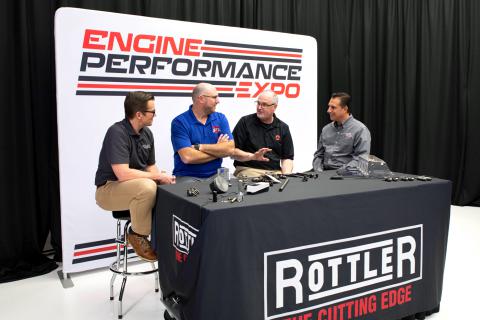
On the set of the Engine Performance Expo. Photo courtesy of Total Seal.
Motorsports companies are making big gains by adopting education-focused marketing strategies.
In many ways, reaching customers has never been easier for motorsports companies thanks to global online networks and social media platforms that have been nearly universally adopted. Yet, in other ways, reaching potential customers remains a huge challenge. It’s hard to cut through the clutter. Plus, there is plenty of marketing research available showing younger generations tend to filter out traditional advertising pitches. They place a high value on authenticity and social virtues that may seem slippery to grasp for marketing purposes.
One way savvy companies have navigated these waters is by incorporating more education, instruction, and training content into their marketing plans. These usually take the form of how-to videos, podcasts featuring industry experts, DIY articles posted on websites, and hands-on demonstrations at trade shows, but there are other creative ways businesses are meeting the challenge.
The upside for this type of approach can be huge. Showing the potential customer how to install a part the correct way, or sharing insider tips for better performance, can not only lead to a sale, but cut down on dissatisfaction and returns by customers who may otherwise have gotten in over their heads. It’s a great opportunity for building customer loyalty: “They showed me how to do this, I’m sticking with them.”
“The truth is, an educated customer is the best customer,” said Randy Neal of CWT Industries, a manufacturer of balancing machines and equipment in Norcross, Georgia. “Education is the only way to sell. If you have that car salesman mentality, jumping up and down around the parking lot, ‘This is great!’ blah, blah, blah, no one wants to see that crap. People want to see product, they want to know they’re making a good investment, and what they’re really looking for is, ‘Are you going to be here? Can you support me?’”
Motorsports-oriented companies have been dabbling in educational and instructive content for some time. It’s not a new concept. But in recent years, more companies are taking advantage of technological advances and investing greater time and resources into creating their own informative content to reach customers.
Educating its customers is a long-standing practice at Burns Stainless, said Vince Roman, seen here making an instructional video. “We’re not promoters. We’re not flashy salespeople. We’re technical people, and we’ve always wanted to help others enjoy their hobby or their sport,” he said.
“Three years ago, we started a podcast,” said Lake Speed Jr. of Total Seal, Phoenix, Arizona. “We sit and interview a respected engine builder. The idea was, let’s let these guys tell their story, how they got to be where they are in their career, their thoughts on engine technology, and they can tell other people about what their experience and perspective is about ring seal. Because ring seal is about way more than just piston rings—it’s honing, it’s the oil you use, it’s the design of the piston. A lot of different things come in. So we began that as a way of being able to make the top minds in the industry more accessible to everyone else. It went really good right from the beginning. People really liked it; we got great feedback about it.”
Holley is one of the industry giants that has raised its investment in how-to content across its many brands. “Holley has been content marketing for over a decade.” said Mark Gearhart of Holley, Bowling Green, Kentucky. “We have a dedicated video studio, social media team, and our in-house digital publication called Motor Life.”
A rich library of educational content is also a great vehicle for driving customers to a company’s website. “We launched our blog TheToolbox.com as an educational tool for our customers to answer common customer questions, provide in-depth details about products and explain common issues they encounter when working on their projects,” said Kelsey Bugjo of Speedway Motors, Lincoln, Nebraska. “Today, our blog is packed with how-to videos, automotive tech articles, and expert advice to help you with your project or race car setup. We’ve leveraged our 70-plus years of performance parts expertise to compile hundreds of technical articles in one easy-to-reference place.”
Show and Tell
Our sources for this article listed a wide spectrum of motivations for why they’ve adopted a stronger educational/instructional approach to their marketing operations.
“It’s been our approach even before we went digital. Our catalogs used to have technical articles in them. It’s kind of always what we’ve done as a company,” said Vince Roman of Burns Stainless, Costa Mesa, California. “We’re not promoters. We’re not flashy salespeople. We’re technical people, and we’ve always wanted to help others enjoy their hobby or their sport. It’s a natural outgrowth of who we are as a company.
“With our product line in particular, what we like to tell people about is the theory of how exhaust affects engine performance,” he continued. “Number two, in terms of tubing, we want to educate them on the different types of tube that are available, what tubing is appropriate for what application. And lastly, fabrication techniques and how you actually work with it.”
“Determining what content to produce is a collaboration across the entire company,” said Speedway Motors’ Kelsey Bugjo. “Our marketing team works closely with our merchandising, customer experience, e-commerce teams, and many others to identify the need for content.”
Racers are by nature a competitive bunch, and any company that can help them find an edge is going to earn fans. “I would rather see someone buy the right product, not just a product. To me, that’s the main mission behind it,” Speed explained. “People will work hard to come up with the money to be able to go racing, and they put all the time and effort into building the engine. If you’ve done 85–90% of it already, man, if you knew you could get way better results if you changed how you did that last 10–15%, just by simply choosing something different—choosing a different ring, choosing a different honing method, maybe choosing a different break-in procedure or lubricant for that process, and it would yield upward from a 2–5% increase in output? Yeah, give me some of that.”
The technical side of motorsports rarely sits still for long, so there are constant opportunities to report on the latest techniques. “We’re just trying to put out the most current information,” Speed continued. “It’s easy to go, ‘Oh, this is how we did it 20 years ago.’ It doesn’t take any effort to do that. You’re not going to create any kind of controversy doing it that way. But the reality is, if you only follow the recipe from 20 years ago, then you’re going to have to use those same ingredients from 20 years ago. Which means you’re going to get the same result from 20 years ago. What we’re saying is, ‘Hey, we actually know what the recipe is for what’s winning today. We’ll show you how to do it, we’ll tell you where to go buy those parts so that you can make what’s now, not what was 20 years ago.’ That’s one of the big advantages of Total Seal working with so many of the professional teams at the highest level.”
An educational focus can also be an effective tool for customer retention. “We, along with most other brands in the space, sell highly technical products,” Holley’s Gearhart said. “It’s our job to inform, educate, and help drive buying decisions through all forms of digital communication. It’s a delicate balance of surface to advance level education that allows customers to gain confidence and make the best decision for them. Depending on the delivery method, content can vary in length. For example, YouTube long form video views have been growing over the last decade as virtually all new TVs come with the app preinstalled. When sitting down to eat dinner, people don’t want to jump through a series of three- to five-minute videos and this allows us to really get granular. But if you’re browsing Instagram, TikTok or YouTube shorts, the content has to be quick and to the point, but normally has a call to action back to a longer video, article, product page, etc. Content is also a great way to reduce calls into your customer service team.”
“We, along with most other brands in the space, sell highly technical products,” said Holley’s Mark Gearhart. “It’s our job to inform, educate, and help drive buying decisions through all forms of digital communication,” as seen through this video produced by the Holley team.
CWT Industries employs videos and other content to educate the customer, but its go-to strategy is a lot more hands-on. “You can talk until you’re blue in the face or you can visualize it through videos. Or, we actually do something a little different,” Neal said. “A lot of times our clients will call up and they have an initial inquiry, and they’ll have a few basic questions, and we’ll certainly try to answer those. But what we’re always willing to do, if they are bonafide in their interest, is send them a flight ticket and fly them to our facility. We have the only dedicated curriculum set up for balancing. The mission statement is to bring them in and let them know just what they are getting into and understand that it is not as hard as they think. They also get to see how our machines are manufactured. It’s a totally different approach. We started that in the last three years. We do it to the extent that if the customer comes down and we’ve made the presentation, and he says, ‘Well, it’s a little more than I want to bite into,’ we say, ‘Thank you very much. We appreciate the opportunity.’ And we send him back home and pre-pay everything.”
Tracking Sales
Sharing knowledge is beneficial to the racing community in general, but ideally all those clicks, likes, and views should lead to sales. Our sources report considerable success in educational content moving the sales needle.
“You can look at the number of podcast and YouTube views each month,” Speed said. “That correlates directly to the number of email inquiries we receive about products. And the number of email inquiries about products directly correlates to sales.”
For CWT Industries, the time and resources devoted to flying the customer in so they can personally observe the in-house manufacturing of the company’s balancing equipment from raw materials to finished product has paid big dividends. “Of all the people we’ve ever flown in, and this is over a period of three years, I’ve only had 4% who’ve delayed—not cancelled—the sale,” Neal said. “Most of the time the people who do go through this, they’ll commit while they’re here, or they’ll go home and give it a little thought and then call back in a week and pull the trigger. The success rate is well worth the cost of marketing.”
Total Seal’s podcasts, videos, and other educational efforts are aimed at “putting out the most current information,” said Lake Speed Jr. “We know what the recipe is for what’s winning today. We’ll show you how to do it and where to buy those parts. That’s one of the big advantages of Total Seal working with so many professional teams at the highest level.”
“We’ve seen a great benefit from creating educational content,” Bugjo said. “A customer browsing our website can find content that outlines the product details more in-depth, answer additional questions about a product, or explain common issues. Installation or how-to content is a wonderful resource for customers who are ready to install a product. All of this leads to reduced customer issues and improved experiences with our company.”
The customer loyalty benefit that can result from sharing educational content is no small thing. “When you’re helping someone—not just trying to sell them something—now their affection for the brand is much greater,” Speed said. “We have fans. Literally last night I ran into a guy who is a fan of the podcast. There’s nothing he’s going to have built that won’t have Total Seal piston rings in it because he is a fan of the podcast.”
“It’s kind of amazing,” Roman said. “All the time, people will just make mention of a YouTube video that I thought was a little trivial or not that exciting, but it provided a lot of information to somebody. I’ve never really gotten any negative feedback. It’s always been positive.”
No Half-Measures
Although our sources were enthusiastic about the videos, podcasts, how-to articles, and hands-on demonstrations they produce, a common thread we heard was the amount of effort and sheer work required to produce such content on a regular basis.
“There is an employee dedicated to it—me. I spend a lot of time,” Speed said. “This isn’t for the faint of heart. It’s not something you can dabble with. It’s something you have to be strategic and make a decision and say, ‘We’re committing to this. We’re going to do it.’ It’s easy for a week to turn into two weeks, three weeks, a month. We have a new podcast episode every two weeks and have been doing that for two years. We have a short format and a longer format YouTube video every week. We’ve been doing that for almost a year. It’s a commitment to do that. You have to really work hard, build up content strategy, plan, have the resources in place to be able to have that level of production. It takes a while to get the pipeline filled with content so you’re not having to scramble each week. Once you have that, it goes pretty good, but it takes a lot of effort to get to that point.”
At CWT Industries, flying the customer in for a deep dive into the product requires cutting no corners. “This is full-blown first-cabin stuff that we intend the customer to get a feel for the depth of our company,” Neal said. “It’s one thing to have a mechanical device, it’s another thing to have application support.”
At Speedway Motors, producing the how-to content is a company-wide effort. “Determining what content to produce is a collaboration across the entire company,” Bugjo said. “Our marketing team works closely with our merchandising, customer experience, e-commerce teams, and many others to identify the need for content. Content ideas come from common customer requests or issues, projects our employees are working on, and many other sources.
“Speedway Motors is fortunate to have many in-house experts with technical knowledge in a variety of areas. Our employees are in their own garages working on their projects or racing on the weekends. We lean on all of our experts to provide their insight and expertise to help our customers. We have a team dedicated to content creation that works alongside these experts to produce content from videos to how-to articles.
“We use a variety of equipment to produce content, from lighting equipment to cameras and video equipment for producing video,” Bugjo continued. “We also have our own in-house shop/studio space that we use for creating content and building our own projects.”
Roman at Burns Stainless acknowledged the work that goes into educational content, but also believed that sometimes it’s counter-productive to overthink the process. “One thing I’ve found when looking at other podcasters and other people who put up videos, a lot of times the impromptu stuff is more valuable. You have to think about it, obviously, but I’ve kind of found that too much preparation makes for a poor video. There’s a balance there that I try to strike.”
“The advice I would give a company is, if the DNA of your company goes along the lines of what we’re talking about, and it feels right to you, and you’ve got the right people, then go for it,” Speed said. “I wouldn’t ever tell someone to just ‘give this a try’ if it’s not something they believe in, because it’s too hard. It’s way easier to buy ads. My life would be way easier if we just had an ad budget, and I could just go buy ads and pay a creative person to come up with stuff, and just say, ‘We like that, we don’t like that.’”
Fortunately for racers, Total Seal and other companies are choosing the harder path and creating rich educational resources that will be useful for years to come.
The World of Outlaws NOS Energy Drink Sprint Cars and PA Posse, for the first time in 31 years, will duel again at BAPS Motor Speedway in York Haven, Pennsylvania, on Wednesday, July 19.
Series stars and Pennsylvania locals will battle for a $10,000 payday at the 4/10-mile track during the World of Outlaws Bricker's Bash.
The World of Outlaws has made two previous visits to BAPS Motor Speedway, once in 1991 and once in 1992. Twenty-time Series champion Steve Kinser won the first event and Pennsylvania's Stevie Smith won in 1992. No current full-time World of Outlaws driver has run a Series race at the track.
Tickets are available for purchase online here. The race will be live streamed on DIRTvision.com.
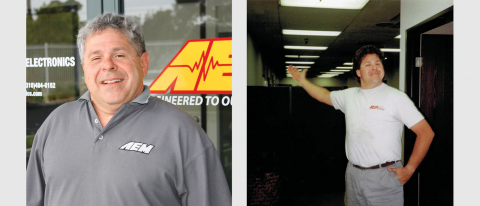
John "JC" Peter Concialdi has passed away at his home in Murrieta, California. He was 67 years old. JC founded Advanced Engine Management (AEM) in 1987.
JC was a juggernaut in the automotive industry and was an innovator whose product designs set standards for their performance and engineering.
JC founded AEM after his time working at Weber, where he received the first-ever California Air Resources Board (CARB) Executive Order for a performance carburetor. In his early days at AEM, JC tuned high-performance carburetors for all types of vehicles, including off-road racers Carl Wells, Mickey Thompson, Spencer Lowe and Rick and Roger Mears. His talent has brought some of the biggest names in the industry through AEM's doors, including Carroll Shelby, Phil Hill, Mickey Thompson, Stephan Papadakis, Bisi Ezeroiha and many others.
As AEM grew and transitioned into manufacturing, its cold air intakes set the standard for performance and design, making AEM the go-to brand in the import performance market. JC created the air bypass valve, which received a patent, to solve the potential danger of hydrolock from the increased intake length common with cold air induction piping.
JC was instrumental in the co-development of the first plug & play engine management system for racecars, the Series 1 EMS. He designed and developed the first oil-free high-flow air filtration media for the automotive aftermarket (DryFlow). Before AEM sold its hard parts division, JC co-developed AEM's OEM engineering and development division, which supplied performance products for several OEM vehicle manufacturers. JC also created and directed the fuel delivery arm of AEM, designing an affordable high-flow fuel pump line that is alcohol-compatible before they were common in the market.
Lesser known was JC's passion for philanthropy and helping others. John performed career guidance work for the Wounded Warrior Project, where he regularly met with wounded service members to expose them to opportunities in the automotive industry. He also lectured at high schools, colleges, and universities about working in the automotive technology sector. JC was a champion for the industry.
A Celebration of Life will be held in JC's honor. Memorial contributions can be made in JC's honor to the Wounded Warrior Project here.
World of Outlaws Late Model Series Director Steve Francis has seen the sport from both sides of the pit wall, and that’s his strength. An adjusted purse structure, a more racer-friendly travel schedule, and the recent implementation of a national tire rule to control costs are just some of the ways he’s looking to benefit fellow racers as well as the sanctioning body.
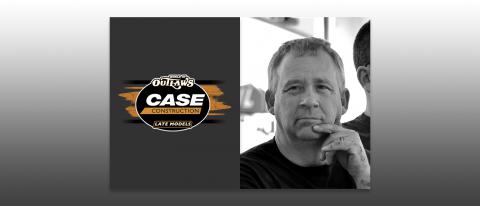
Dirt late model racing has been the focus of Steve Francis’ working life. When the World of Outlaws Case Construction Equipment Late Model Series was rebooted in 2004 after a 15-year hiatus, Francis was at the height of his game. Coming from Ashland, Kentucky, and driving the Moring Motorsports, Valvoline/Mopar No. 15, Francis won the very first race of the new series. He was part of the “Dirty Dozen” pack of drivers who brought the series back to prominence. Francis went on to win the series championship in 2007 and claimed 28 career wins in the Outlaws series, plus many more in other venues. In recognition of his skills, the “Kentucky Colonel” was inducted into the National Dirt Late Model Hall of Fame in 2014.
After starting his driving career at age 15 in 1982, Francis retired from driving in 2017 at age 50 and took a position as the Lucas Oil Late Model Dirt Series technical director. Then in mid-2022, he came back to the World of Outlaws Late Model Series as director of competition. This year, he’s been promoted to series director. We caught up with Francis as he was on the road to a race, to ask him how he plans to develop the series in its 20th year.
Steve Francis brings a racer’s perspective to his new role as series director for the World of Outlaws Late Model Series. “I was a racer for 35 years. I understand everything that they’re going through, everything that they tell me. I can say, ‘Been there, done that, seen that.’”
PRI: You’ve been the director of the World of Outlaws Late Model Series for about six months now. How’s it going?
Francis: It’s been busy. We’ve had a lot of really positive things. We started off at Sunshine Nationals with 23 drivers signed up to run the whole tour, which really caught me off guard. We pay 15 positions, and we wanted 15 teams healthy enough to run up and down the road with us.
PRI: That’s going to lead to some tough competition for the money.
Francis: We’re doing our best to shy away from the “Dolly Parton” purses, for lack of a better term. We did add some money to first place, but that’s not what we want to be promoting. It seems like the racers have really got in behind us on that. Because you’re only going to have one winner each night, so we adjusted all of our purse structures to pay more for 3rd to 15th position to keep more race teams healthy. That was goal one.
PRI: What else have you changed?
Francis: Goal two is to make sure that we keep our schedule where it makes the most travel sense. We can’t be zig-zagging from Iowa to Georgia to Texas to Tennessee, back and forth. So we’re doing our best to cut those travel expenses down. Now, we’re not going to be perfect on that. But our goal is just to make as much sense as we possibly can.
You talk to any racer, and if he’s gone from home, he does not want to be sitting at the hotel, or the Walmart parking lot, or something like that. He wants to race and be able to go back home. So we’re trying to build a few little mini tours. You know, we have a Pennsylvania deal where we go out there and to northeastern Ohio. I think we raced seven times in 10 days. Then we do the drive out to Kansas and wind up all the way in Minnesota, but that’s seven races in nine days.
PRI: Did anything surprise you when you became series director?
Francis: The thing that did catch me off guard is there is a lot more, I don’t want to say paperwork, but a lot more meeting and planning than I really gave credit for. I knew there was a lot of that, but there’s a lot more behind-the-scenes things that happen than I expected. It’s all the other things that go with being series director. You know, it’s the meetings that you have to be involved in, making sure that you’ve got your staffing and your travel plans laid out for everybody. I knew it. I just didn’t really, I guess, give it the credit that it deserved.
“Having been a racer, I want the racers to feel like we’re in this together,” Steve Francis said. “It’s not the series controlling the racers, and not the racers controlling the series. We’re in this together, and united we stand, divided we fall. That’s how we bring a better product to the table.”
PRI: Are there things that you do differently from other series directors because of your experience as a racer?
Francis: I’m very, very fortunate in this aspect because I was a racer for 35 years, but my wife and her parents were promoters for that same timeframe. Sometimes I get maybe a little bit too much of a racer hat on, and sometimes I get too much of the series director hat on now. But even though series director is my job, I still look out for the racer because I was one of those guys. I understand everything that they’re going through, everything that they tell me. I can say, “Been there, done that, seen that.”
PRI: Every series has been experiencing weather problems this spring. Are you getting what you wanted out of the early part of the season?
Francis: Well, no, and this is where we’ve learned a few things in scheduling. We’ve already moved our Illini 100 date at Farmer City, Illinois, for 2024. We announced that so everybody in that area of the country knows what our plans are in the future. You know, just a week to two weeks in Illinois generally makes a lot of difference in weather. We’re consulting with a meteorologist, and we’re learning more about areas of the country that you don’t want to be in during certain times of the year. We had two early March events in Tennessee, and neither event got in. So that tells us that maybe those need to be late March events now, or early April. It’s just learning things like that and still trying to balance the travel schedule and keeping it where it needs to be.
PRI: Let’s talk about the fans. What does the World of Outlaws Late Model Series offer that competing dirt late model series might not?
Francis: We have probably the deepest roster that’s been built in recent years, probably all the way back to the “Dirty Dozen” group of the 2004 series. There are some strong rosters out there right now with other organizations, but I feel like we’re stronger, deeper than anybody else. Having been a racer, I want the racers to feel like we’re in this together. It’s not the series controlling the racers, and not the racers controlling the series. We’re in this together, and united we stand, divided we fall. That’s how we bring a better product to the table.
PRI: Are you doing anything new or innovative to get the word out to fans about the series?
Francis: World Racing Group has developed a fan engagement team. Our motto is “Butts in the Seats.” We’re trying to do everything we can to get word out that the World of Outlaws are coming. Then we have Jumbotron video boards that we can set up at different locations. If you come to the race, part of the fan experience is you can now watch the Jumbotron and see the same replay the guy at home is watching.
We also provide the tracks with a lot of collateral. They get a ready-made commercial, posters, and whatever else they ask for. We try to make sure they have every tool available, and that generally gets to them 30 to 45 days in advance, so the race tracks have a chance to promote the events. Every promoter knows his market better than we do, so they know if TV or radio is going to be great, or the newspaper, or putting posters at the auto parts store. They know those things that we don’t, so we try to provide them with the tools and let them make the best use of the tools.
Steve Francis was one of the “Dirty Dozen” who helped bring the World of Outlaws Case Construction Equipment Late Model Series back to prominence in the early 2000s. He won the first race of the new series and captured the championship in 2007, when this photo was taken.
PRI: How do you use social media or any new media? Do you encourage your drivers to be interactive with fans?
Francis: We’re racing at 411 Motor Speedway this week. (Editor’s note: This interview took place in April 2023.) A lot of our drivers are making posts about being at 411 yesterday and today on social media. Then we have a full-time PR person for every series of World Racing Group. His job is to make sure that social media is covered and our races are advertised. We have huge followings on some of those social media platforms.
PRI: What are you doing to bring the next generation of dirt late model drivers into the series?
Francis: Under our dirt car banner, we have the Comp Cams Super Dirt Series, which is a regional series in the Mid-South. We have the Hunt the Front series that’s in the Southeast. We have the Iron-Man series that’s in the Kentucky, Ohio, and Tennessee area. And we have the MARS series in Illinois. We have the summer nationals that are all their own entities, but they all fall under the dirt car banner. Those are the regional series that we look to be the feeder.
For a driver, those are your stepping stones. You go from racing on Saturday night at your local race track to following one of those four series. They’re generally 30 to 35 races a season, and then from there you branch out into the World of Outlaws full-blown tour. We had seven guys sign up for Rookie of the Year this year, and that’s good for our sport. The purses in dirt late models are the best that they’ve ever been right now across the board. There’s more opportunity to make money than there’s ever been.
PRI: What are you doing to keep the cost of competition down?
Francis: One thing is the national tire rule. That’s just come up, and this is a very touchy subject in the dirt late model world. But the goal was to be able to run the same tire in only three compounds from Florida to California in a late model. That allows guys to travel more out of their area without having to spend $2,000 on tires to do it.
World Racing Group “is a business that has to make money and survive,” Steve Francis said. “But at the same time, we are a racing organization. Our main objective is our show. That is our business. We are a motorsports business; we have no other entities. To me, that makes us the best.”
PRI: World of Outlaws has great sponsorship. What does it take to land those big series sponsors?
Francis: It’s value for dollar spent. We’re all competing for the same dollars, and you have to prove that you are the best value for their dollar. That comes from what you can offer them. That’s the biggest thing, just making sure that you can provide what you do and keep them long term. I don’t know that it’s getting harder to keep a sponsor, because now there are so many other avenues to prove yourself with social media and YouTube channels and things like that. The direction is, if I’m going to spend major dollars on motorsports, what kind of following do you have versus what you’re asking me for? I think everybody wants to see those numbers before they go spend dollars.
PRI: If you could offer one piece of advice to any racing business owner, and it could be any type of racing business, about how to get involved with your series, what would that be?
Francis: I think the very first thing they have to do is decide what market they are looking to get into. If it’s the dirt late model world, then what we need to know from them is what they want to sell. Then we need to get with the marketing department and make sure that they can provide you with what you want. The one thing we don’t want is “in and out” people. We want long-term relationships. We’re not a company that’s about taking your dollar today and not producing. We want those relationships to be long-term.
PRI: Is there anything I haven’t asked that you would want to talk about?
Francis: World Racing Group is a business that has to make money and survive. But at the same time, we are a racing organization. Our main objective is racing. We’re here to help Case sell tractors and so on, but our main objective is our show. That is our business. We are a motorsports business; we have no other entities. To me, that makes us the best. We have more people, more ability to do more things from hospitality to race track, from big events to small events. We’re kind of the one-stop shop, from our regional series all the way through our national series. We’re all tied in, we all work together, we all talk to each other. So if you’re a driver looking to come in, we can help you pick the series that’s going to work best for you, to help you develop your goals and what you want to become.
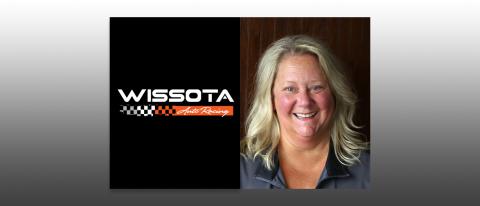
Recognizing the many roles she has been filling since starting with WISSOTA in 2001, this upper Midwest track promoter’s association named her director of operations this year.
Callie Sullivan should be a familiar face (and voice) to upper Midwest dirt late model and modified racers. She’s served numerous roles for the WISSOTA Promoters Association since 2001, beginning as the WISSOTA Midwest modified point director in 2001, and later assuming the role of sprint car and late model point director.
She oversees several office staff handling all licensing, points, the WISSOTA 100, the Expo, the annual promoter meetings, national awards banquet, and many other needs within the organization. Recognizing all her roles, the organization named Sullivan director of operations in January 2023.
“I am doing the same crazy amount of work that I have been doing for the last 22 years, just with a more accurate title,” she recently told PRI when sharing her story.
PRI: When did you realize there was a future in the racing industry for you, or did it always feel like you were a part of that environment and culture?
Sullivan: When I was growing up, my dad was a pit man for a sprint car team, so I was introduced to racing at a very young age. I didn’t have first-hand experience until about 1990 when my husband at the time bought a race car, which was an IMCA stock car. After winning an IMCA National Championship in 1992, an accident in June of 1993 left him a quadriplegic. In late 1994, we became track promoters at Fiesta City Speedway in Montevideo, Minnesota.
PRI: How would you say circle track racing has changed since you first got involved?
Sullivan: The biggest change I have seen is the cost on all ends. I came from a team where we had money, but we were in the shop building everything ourselves four nights a week to race two nights a week. Now, with the technology and advanced mechanics of these cars, people don’t have access to the DIY methods much anymore. From a promoter’s perspective, the cost of just putting on an event is much higher. We are competing against other hobbies and kinds of entertainment, and to do that we have to keep spectator and driver costs as low as possible.
PRI: What is the biggest value you bring to your upgraded role?
Sullivan: I would say honesty. I have the experience and the knowledge to give people the kind and honest answers they need. I also know when I don’t know the answer, and who would be a better resource.
PRI: How do you deal with disgruntled teams or racers?
Sullivan: My role in these scenarios is to listen and be consistent. I always look at situations from as many perspectives as possible before drawing a conclusion. Sometimes people have a good reason to be disgruntled, and some good ideas and solutions can come out of it.
PRI: How would you say membership has changed for WISSOTA within the last 20 years?
Sullivan: The biggest change in our membership that I have seen is the turnover in promoters and the interest in being involved. We are at a point where the track promoters are businesspeople, where they used to be hobbyists with more knowledge and passion for the technical aspects. That’s great for the racing economics, but not as good for our rulebooks.
PRI: What would you say is the most difficult part of managing association operations that members might not understand?
Sullivan: Everyone in the sport is passionate about what they do at their respective levels, and that can make it hard to make changes or modernize some practices. In the last few years, I feel like we have made great strides in the perception of our organization, and we are starting to see those changes impacting our promoters and drivers.
PRI: Who inspires you?
Sullivan: I am inspired by people who bring knowledge, drive, and creativity to their profession. Attending the PRI Show, walking around and listening to people with so much passion for their company or position inspires me to be the best version of myself for this organization and the industry.
PRI: If you could give a word of inspiration for future leaders in race operations, what would you say?
Sullivan: Work with people you like. This is an incredibly demanding and draining industry, so it makes life easier when you have the right people around you. To female leaders in the industry, I would say that the road is rocky and difficult, but worth it. We have compassion and kindness, but we’re not rugs. You are not incapable. You are not inferior. You are not powerless.
PRI: What cars would be in your dream garage?
Sullivan: I still have the 1968 Chevy Camaro convertible with a 327 and four-speed that I drove in high school. Next, I would want a 1967–1971 Plymouth Barracuda and a 2023 Dodge Challenger SRT Hellcat Redeye.
PRI: Excluding your cellphone/tablet/computer, what’s one thing you can’t live without?
Sullivan: Family comes first, but my pets are a photo-finish second place. I was a veterinary tech for almost 30 years. I currently have a Great Dane, a rescue pit bull, and two cats.
CALLIE SULLIVAN
TITLE:
Director of Operations
ORGANIZATION:
WISSOTA
HOMETOWN:
Dassel, Minnesota
FAST FACT:
“As much as I love racing, softball is where my competitive spirit began,” said Callie Sullivan. “My dad was the pitching coach for the Buena Vista University softball team in Storm Lake, Iowa, where I grew up. Before that, he coached me. I pitched from fourth through eighth grades and played for the University of Minnesota Waseca. I later coached my daughter’s teams, from 8u to 16u.”
 MEMBERSHIP LOGIN