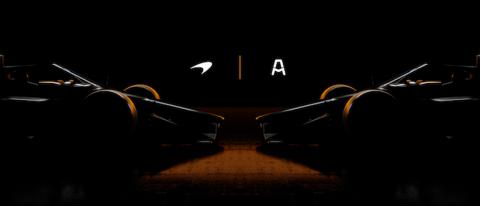
McLaren Racing has agreed to acquire a majority share in the Arrow McLaren SP IndyCar team. The transaction will close by the end of the year and see McLaren Racing take a 75% share of the team. The financial terms of the deal are not being disclosed.
“McLaren Racing believes IndyCar will continue to build our brand in North America, serve our expanding US fan and partner base across our racing portfolio, and drive long-term value. The racing is second-to-none, with world-class competitors in both drivers and teams and a passionate, highly engaged fanbase,” McLaren Racing CEO Zak Brown said.
The team will be governed by a new five-person board, comprising three McLaren Racing appointees together with Sam Schmidt and Ric Peterson, chaired by Brown. Taylor Kiel, President of Arrow McLaren SP, will continue to lead and oversee the team’s operations, reporting directly to the board.
McLaren returned to full-time IndyCar competition in 2020 after a 40-year absence to create Arrow McLaren SP, forming a strategic partnership with title sponsor Arrow Electronics and SPM.
The team was initially founded by Sam Schmidt in 2001, with Ric Peterson joining in 2013 to form Schmidt Peterson Motorsports (SPM). The team ran one of the most successful Indy Lights programs in recent times, securing seven drivers’ championships, while in the IndyCar Series it has claimed 13 pole positions and 27 podiums, including nine race victories, two as Arrow McLaren SP.
The McLaren Racing organization has four fully-fledged motorsports teams headed by McLaren F1 and complemented by the McLaren IndyCar, McLaren Extreme E, and McLaren Shadow esports and gaming teams.
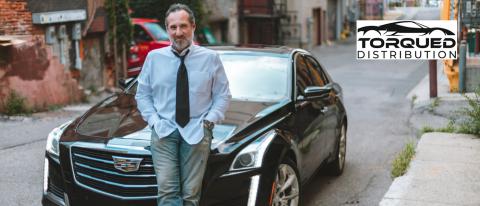
Torqued Distribution—the warehouse distributor of performance brands based in the UK and Europe—has announced Lou Lobsinger as its new Head of Sales & Marketing. Lobsinger joins Torqued with more than 20 years of automotive marketing, sales, and product development experience. He previously served as the National Sales Manager at Specialty Auto Parts USA/PROFORM and as the Co-Founder of Detroit Muscle Apparel.
In his new position, Lobsinger will be responsible for the global sales and marketing teams, driving revenue across all channels, contributing to product and vendor selection, and general management responsibilities.
“I’m thrilled to welcome Lou to the Torqued team,” Torqued Distribution CEO Tim Trampedach said. “Not only will he bring a tighter focus on customer relationship quality to our global sales and marketing teams, but his entrepreneurial experience will help us as we continue to expand into new markets and service offerings.”
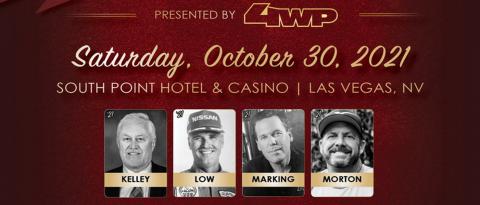
The Off-Road Motorsports Hall of Fame (ORMHOF) has announced its Class of 2021 as Steve Kelley, Spencer Low, John Marking, and Tim Morton.
A committee of off-road professionals convened to evaluate and review over 40 submissions. The inductees that received at least two-thirds of votes were submitted for ratification by ORMHOF.
ORMHOF inductees represent excellence and achievement in many areas of off-road, including advocacy, journalism, industry, rock sports, desert racing, short course, and rally.
The Class of 2021 will be celebrated at the 2021 ORMHOF Induction & Awards Gala along with the Class of 2020, including Bob Bower, Dean Bulloch, Danny Foddrill, Jack Johnson, Roger Mears, Cal Wells, and Tom White. These inductees bring the total number in the Hall of Fame to 110.
“Off-Road’s Biggest Night of the Year is going to be even bigger this year,” said ORMHOF Chairman Mark McMillin. “We’ve got two great classes to induct, and it’s going to be quite a party.”
For more information on the inductees, visit here. For more information, visit ormhof.org.
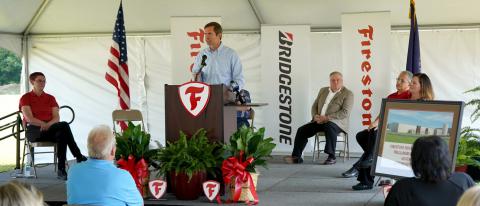
Bridgestone Americas has broken ground on a $51 million expansion of its Firestone Industrial Products’ (FSIP) air springs production facility in Williamsburg, Kentucky. According to Bridgestone, the 68,000-square-foot expansion aims to meet the growing demand for the company’s air springs products driven by the growing electric vehicle (EV) sector.
The expansion, expected to be completed by December 2022, will add 250 new jobs, a nearly 50% increase from the more than 500 employees working today at the facility.
“Our company and our Kentucky team have a vital role to play in the transformation of mobility brought forth by advanced electric vehicle systems and by key supporting technologies like our Firestone air springs and air suspensions,” said Emily Poladian, president of Firestone Industrial Products.
Firestone air suspensions are designed to increase EV range and help protect batteries from road impact and overheating.
Williamsburg Plant employees and Bridgestone leadership were joined in the celebration by Kentucky Governor Andy Beshear, US Congressman Hal Rogers, State Senator Robert Stivers, State Representative Regina Huff, Whitley County Judge-Executive Pat White, Jr., and Williamsburg Mayor Roddy Harrison.
FSIP designs, tests, and manufactures components for air suspensions in Williamsburg, Kentucky. FSIP operates a second plant in Dyersburg, Tennessee, where air springs are assembled. The company also operates plants in Fishers, Indiana, along with Brazil, China, Costa Rica, and Poland.
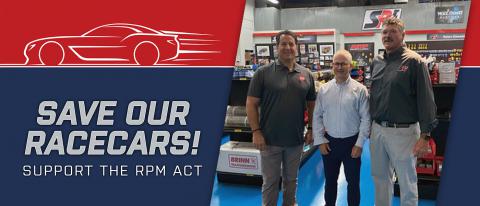
(From left to right) SPEED SPORT's Ralph Sheheen, US Congressman Patrick McHenry (R-NC), and Greg Fornelli of NCMA, SRI Performance, and Stock Car Steel & Aluminum
Greg Fornelli is well-known in the racing industry as the president and owner of SRI Performance and Stock Car Steel & Aluminum. Mr. Fornelli is also the Chairman of the North Carolina Motorsports Association (NCMA), where he promotes and serves the motorsports community as part of the program’s mission to provide legislative and regulatory representation at the state and local levels.
Fornelli and the NCMA—and PRI—are working to move the vital RPM Act through Congress. The bipartisan Recognizing the Protection of Motorsports Act of 2021 (RPM Act), H.R. 3281, is designed to guarantee the right to modify street cars, trucks, and motorcycles into dedicated race vehicles and ensure that the industry can offer parts that enable racers to compete.
Recently, Fornelli invited US Congressman Patrick McHenry (R-NC) and Ralph Sheheen from SPEED SPORT to visit the SRI facility in Mooresville, North Carolina, to discuss the importance of the RPM Act for the racing industry. PRI caught up with Fornelli to get his perspective on what the RPM Act means to him, his business, and the state of North Carolina as a whole.
PRI: Why is it important that federal law ensures that it is legal to convert a street vehicle into a race car?
Fornelli: This is what motorsports was built on, and to this day, it is the foundation for how millions of people make their living. This legislation will help ensure these people remain employed throughout the country.
PRI: Stock car racing has a rich history in North Carolina. How does the RPM Act impact racing at tracks in the Tar Heel State?
Fornelli: If the RPM Act isn’t passed, it would most likely devastate the vibrant local and national track businesses that are thriving today. Again, affecting millions of good jobs and effectively ruining a thriving industry.
PRI: What does the RPM Act mean to your business?
Fornelli: Absolutely everything! Without legislation like the RPM Act to protect our industry, there will simply be no industry to protect. This Act will help keep people employed, enthusiasts engaged in motorsports and manufacturing thriving.
PRI: The RPM Act protects grassroots racers and motorsports parts businesses that produce and sell the products that racers need to compete. How does the racing that takes place at local tracks impact the highest levels of racing?
Fornelli: Grassroots racing is the stepping stone into a livelihood of motorsports and the foundation of all racing, professional and amateur alike. SRI does robust business with all the professional series (NASCAR, NHRA, IndyCar, etc.), but it is the grassroots racers we strive to serve and nurture. Without these guys, there is no future in the professional fields.
PRI: How can people get involved in helping to pass the RPM Act?
Fornelli: Introduce this bill to all levels of motorsports. The RPM Act is not well known throughout our country, and it is imperative to get racers from all levels involved. Start at the grassroots levels and progress from there with a strategic marketing program. And, write to lawmakers. Share this info on social media and visit and support the websites and organizations that are working for these rights. You can go to www.saveourracecars.com right now and write to your representatives.
PRI: Is there anything else you’d like to add?
Fornelli: A big thank you to all the folks fighting for this Act!
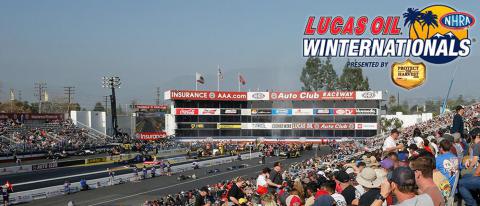
NHRA and Auto Club Raceway at Pomona have announced the dates of the 2022 NHRA Camping World Drag Racing Series season opener of the Lucas Oil NHRA Winternationals Presented By ProtectTheHarvest.com as February 17–20.
As is tradition at Auto Club Raceway at Pomona, the NHRA Winternationals will kick off the year at the famed track in Southern California.
“We are thrilled to start our 2022 season at Pomona with the NHRA Winternationals,” NHRA Vice President of Track Management and Operations Kasey Coler said. “The Pomona facility holds so much history and we’re excited to return to our traditional NHRA Winternationals dates for 2022.”
The historic Pomona track sees two of NHRA's most significant events on tour: the NHRA Winternationals and the Auto Club NHRA Finals, slated for November 11–14.
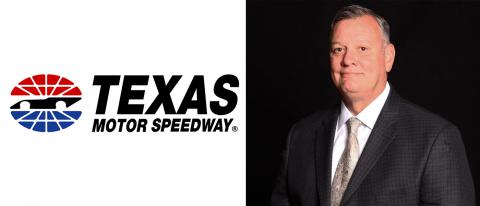
Veteran Texas Motor Speedway executive and general counsel Rob Ramage has been promoted to Senior Vice President and General Manager of Texas Motor Speedway, as announced by Speedway Motorsports President and Chief Executive Officer Marcus Smith.
“I grew up with racing and have been a NASCAR and INDYCAR fan for as long as I can remember, so every day at Texas Motor Speedway is exciting to me,” said Ramage. “I can remember when Bruton Smith announced he was bringing NASCAR to Texas and then being here on day one as a fan with my dad and brother.”
Ramage succeeds esteemed promoter Eddie Gossage, who stepped down in June after 25 years at the helm of Texas Motor Speedway and more than three decades with Speedway Motorsports.
Ramage has worked for Speedway Motorsports since 2013, serving as General Counsel & Director of Governmental Affairs and Senior Vice President of Finance & Compliance at Texas Motor Speedway. His efforts have spanned a variety of capacities, including risk management and working with government entities, business leaders, and community advocates.
Before joining Speedway Motorsports, Ramage practiced law in Dallas, Texas, focusing on complex litigation, intellectual property, and business transactions.
Ramage currently serves on numerous boards of directors that focus on supporting veterans, law enforcement-related causes, and transportation matters. In addition, he was recognized for his charitable work for veterans by being named an honorary Commander of the United States Air Force. His philanthropic activities include Speedway Children’s Charities, the State Fair of Texas, Folds of Honor, Catholic Charities, Texas Parks and Wildlife, among many others.
Texas Motor Speedway will host its grand finale for the 25th Season of Speed with the October 17 Autotrader EchoPark Automotive 500 NASCAR Cup Series playoff race.
From grassroots circle track racing to top-tier open wheel competition, sponsorships remain a key component in the overall health of motorsports. Businesses that are looking to enter the fray have some different ways to approach sponsorships, and in this month’s column, our advocates discuss the benefits and best practices, as well as the potential pitfalls that may be encountered when entering into different types of agreements.
TRACK SPONSORSHIP ADVOCATE:
KASEY COLER,
NATIONAL HOT ROD ASSOCIATION (NHRA)
–
With a facility like Lucas Oil Raceway, we have a number of different ways that we can work with sponsors to help market their businesses. For instance, they can sponsor specific classes of cars. Being able to put their name on that category provides reinforcement through association.
There’s signage—everything from billboards to painted walls—and sometimes there’s the footprint in vending if they want to be able to reach the customers on that level. And then you’ve got the hospitality side of it; being able to carve off areas of the facility where they can host their events in a nice location is a big benefit.
Another element is data sharing. We provide data to key partners as it relates to our customers and our participants. That data helps those businesses to better their relationships and connectivity with other potential partners out there. We like to think of it as a warm introduction, and it provides these businesses with some insight about where there might be common interests.
When we’re looking to partner with certain companies, we know that there are key categories where we can show a true return on investment. So that’s something where we might say something like, “These customers are consuming these products day in and day out—either on-site, or in their everyday lives.”
And that could be anything from motorhomes and race trailers to pizza. On the drag racing side of things, the folks that come out here are often here for a weekend rather than a day. This becomes their campground. So, as those racers and their families are making their meal decisions, we know that there’s a likelihood that they’re going to be consuming certain foods. A lot of pizza delivery comes through here, so we know we want to align ourselves in that category.
But when it comes to expectations, what we find is that brand visibility is often secondary for these companies. There are occasionally new companies that need to get their name out there to the fans and the racers, but with so many different media available these days, it’s more about reinforcement than recognition. For most of these businesses, it’s not the first time that people are seeing the brands. So what we provide is a welcoming environment of potential customers to them, which they can then connect with to help build their business.
Going into an agreement, I think it’s important for track promoters to first do an audit of their own business to see what they’re consuming and where their biggest expenses are. Those are probably the first conversations to have because you have a business interest there to start with. And from there, your paddock or your pit area is probably your best friend when it comes to figuring out how to make sure that people want to keep your facility, and the sports that they’re participating in, thriving. Going to the general community after that in order to tell your story is often more effective.
But in order to have a successful agreement, the sponsors also need to have a clear vision of what their key objectives are—be it brand awareness, general return on investment in dollars, or something else. That not only helps the sponsor set defined goals, it helps that race track understand how to put together a program that incorporates various assets and events that hone in on those objectives. If someone can provide that vision of what success looks like and can say, “If we hit these metrics, we feel like we’ll be in a good spot,” then you can develop your game plan from there.
TEAM SPONSORSHIP ADVOCATE:
JOHN ALLEN,
CAPSTONE MOTORSPORTS
–
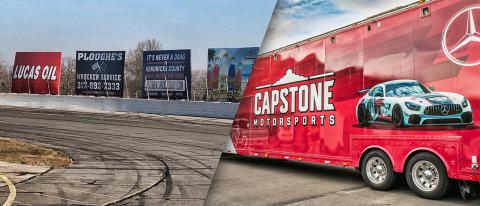
When a company sponsors a driver or a team, they inherit the story, the personality, and the mission statement behind them. Capstone Motorsports is about a lot more than just burning fossils and going fast. For instance, because I am a distinguished engineering fellow from the University of Alabama, when someone sponsors me, they get access to [University of Alabama’s head football coach] Nick Saban and the greater University of Alabama sports empire that comes with that, which has a massive worldwide following.
There are also the benefits that come with the racing series that the team competes in. With the Pirelli GT4 America Series, our races are broadcast on television and streamed live, and they’re available for replay via YouTube and other online media at any time later on. Once a race happens and our sponsors get promoted during the race and in interviews, all of that dialogue is recorded forever—it never goes away. Someone who watches those races five years from now will see those promotions.
There’s also the promotion that’s provided on the fire suits, the race car, and the car hauler as well. Fans see that promotion on the highway, at the track, on television, and when streaming the events on the Internet, so there’s a lot of opportunity for these businesses to get exposure.
Sponsors also get to come to the races, and that provides other important benefits. Beyond getting to hang out in the paddock and finding out what the crew is doing to make the car fast, there’s a massive amount of business-to-business opportunity to be had there; and of course they have access to the hospitality areas at the race tracks.
Images courtesy of Wrapmate
When approaching a business for a sponsorship, I think it’s crucial for racers and teams to do their homework ahead of time and make sure that the prospects they’re approaching are appropriate for their racing program. Winning races is obviously important to the value of the agreement for any sponsor, but the team or driver should also have an audience that connects with the sponsor’s audience on some level. Scale is important as well. If you’re racing in a grassroots series, you probably shouldn’t go after Coca-Cola. Teams should be looking for brands that are operating at the same level that they are, and they should have some understanding of how those brands are marketing themselves.
And on the other side of the table, businesses that are looking to establish successful sponsorship agreements with racers need to do their research as well. Teams that are flying under the radar a bit may offer a story to tell, and the unique characteristics of a team or driver can provide new marketing opportunities that these businesses might not be able to engage with otherwise.
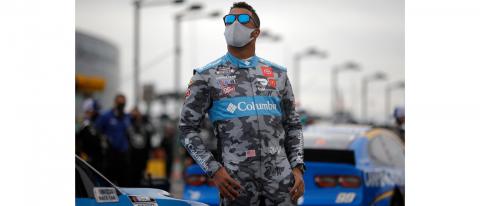
Toyota Racing has announced the establishment of the Dream Experiential Endowment in partnership with Bubba Wallace’s Live to be Different Foundation.
The initiative will see Toyota team up with Wallace’s foundation to assist the students who dream of working within the world of motorsports. It is a continuation of the Toyota Racing ‘Dream’ commercial that took to the airwaves around the 2021 Daytona 500.
“To have the chance to partner with Toyota on this experiential endowment and give people with a dream to work in motorsports the chance to live that experience is really something special,” said Bubba Wallace, driver of the No. 23 Camry for 23XI Racing. “It’s really cool to be a part of things like ‘The Dream’ and now this initiative that aligns with my own beliefs and how I want to influence the next generation. ‘The Dream’ showed others, no matter the circumstances or who you are, to keep fighting and follow your dreams. It may not always be easy, but it will be worth it. To now have my foundation partnering with Toyota to bring ‘The Dream’ to life is pretty incredible.”
By working with various organizations around the country, Toyota Racing will identify a minimum of four participants per year and arrange for them to spend a finite amount of time with a Toyota race team or TRD-related organization to experience the dream they have to pursue a career in the world of motorsports.
The initial group of recipients will be chosen in the coming weeks and begin their experience during the late summer of the 2021 racing season.
Applicants looking to be considered can submit a resume along with a 500-word maximum essay explaining their dream to work in motorsports to ToyotaRacing@golin.com.
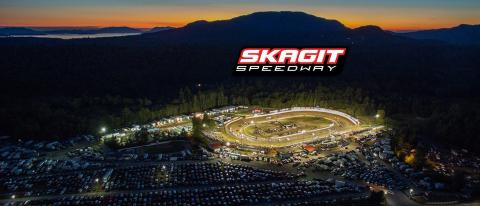
Fifty Five Promotions will take over ownership of Skagit Speedway, the dirt track based in Burlington, Washington. Fifty Five Promotions is the new promotional group comprised of Washington car owners Kevin Rudeen and Mike Anderson and the California-based promoter Peter Murphy.
“We have some exciting surprises planned for the fans and the racers,” Rudeen said. “Stay tuned for more details in the coming weeks and a special announcement [regarding] the 2022 season and beyond.”
The group takes over ownership from longtime track owner Steve Beitler, who was inducted into the National Sprint Car Hall of Fame in 2018. Also the owner of Funtime Promotions, Beitler manages the Grays Harbor Raceway in Elma, Washington, and the Summer Thunder Sprint Car Series and the Washington Modified Tour.
“I am quite pleased with the group that will take over Skagit Speedway. They have incredible business knowledge, a passion for racing, and extensive resources to grow Skagit Speedway to a level comparable to Eldora and Knoxville Raceways,” Beitler said. “It has been an honor to have served as owner for the past 20 years.”
The acquisition and transition will be completed at the end of the track’s season following the Sage Fruit Skagit Nationals featuring the World of Outlaws 410 sprint cars and NW Focus midgets on September 3–5, followed by the season championship presented by Scrap-It-Stow-It on September 18.
 MEMBERSHIP LOGIN