Lincoln Electric Holdings, based in Cleveland, Ohio, has announced Steven B. Hedlund has been promoted to chief operating officer (COO). He has served on the Lincoln Electric executive management team since 2008 and most recently was executive vice president/president of domestic and international welding segments.
Hedlund will continue to lead the welding segments’ “Higher Standard 2025” sustainability initiative, designed to advance growth and enhance margin and return performance. He will also be responsible for Lincoln Electric’s Harris Products Group (HPG) segment.
In addition, Lisa A. Dietrich has been named as executive vice president/chief information officer (CIO). She will oversee the company’s information technology (IT) systems, cybersecurity, and global IT initiatives. She most recently held an executive role at American Greetings Corporation, where she led initiatives to leverage new digital platforms and re-design processes and IT systems.
Michelle N. Butler, meantime, has been appointed vice president of Environmental, Health and Safety (EHS) & Sustainability.
In this new role, Butler will oversee EHS & Sustainability in an effort to advance safety, health, incident and accident prevention, regulatory compliance, and environmental management performance. She will also serve as a key member of Lincoln Electric’s Executive Sustainability Leadership Committee, which will oversee environmental, social, and governance initiatives.
Butler most recently served as the director of Sustainability at Wabtec Corporation, where she led its EHS efforts in the US.
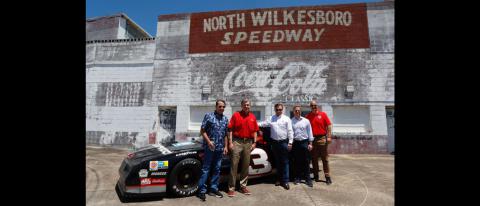
North Carolina Governor Roy Cooper has visited and toured the historic North Wilkesboro Speedway, in Wilkes County, North Carolina, ahead of grassroots racing’s return to the iconic short track later this summer.
The governor was joined by Speedway Motorsports President and CEO Marcus Smith, NASCAR Hall of Fame team owner Richard Childress, legendary NASCAR driver Harry Gant, and state and local officials. Following a tour of the facility and three ceremonial pace laps with Childress behind the wheel of a Chevrolet Camaro, Gov. Cooper addressed the vital importance of motorsports to the state’s economy.
“North Carolina’s speedways are strong economic drivers for communities across the state that bring friends, families, and neighbors together for a rip-roaring good time,” Gov. Cooper said.
After more than a decade without racing, the 0.625-mile facility will host the “Racetrack Revival” with nearly a month of grassroots racing on the paved track in August. Then, following the removal of the old asphalt, racing will return on dirt in October. The facility will also have upgraded water, sewer, and Wi-Fi capabilities. Smith likened his vision of North Wilkesboro Speedway to that of a resto-mod, maintaining the speedway’s nostalgic appeal while upgrading to modern conveniences.
A total of $18 million in funding was secured as part of the American Rescue Plan allocations in the North Carolina state budget, which allocated a total of $45.8 million to help revitalize motorsports venues across the state.
“North Wilkesboro Speedway is just one of many race tracks that will be able to cross the finish line on much-needed repairs with these state funds—racing in North Carolina is back and here to stay,” Gov. Cooper said.
In addition, the North Carolina Department of Natural and Cultural took the opportunity to announce the new “Moonshine and Motorsports Trail,” a program to highlight the state’s history and cultural impact.
“In addition to being an economic engine, motorsports are an important part of North Carolina history and culture,” North Carolina Department of Natural and Cultural Resources Secretary Reid Wilson said. “The Moonshine and Motorsports Trail will launch in 2023 to help celebrate the rich and diverse history of distilling and racing in our state. The trail aims to drive tourism and benefit local economies across the state, particularly in smaller communities.”
Tracking legal, legislative, and regulatory developments impacting the racing and performance industry.
PRI race track ambassador Tom Deery and the Washington, D.C.-based advocacy team work continuously to protect tracks, sanctioning bodies, and motorsports businesses around the nation. This month we are tracking several initiatives, including opportunities for motorsports manufacturers to connect with their lawmakers, an update on California Gov. Gavin Newsom’s executive order seeking to phase out new diesel- and gas-powered cars, a win for youth motorsports in Wisconsin, and more.
Motorsports Businesses: Time To Host Your Lawmakers
Do you want members of Congress to pass bills that protect motorsports and enable the racing parts industry to thrive? If the answer is yes, now is the time to get involved with PRI’s efforts to connect industry businesses with their members of Congress.
Whether in Washington, D.C. or state capitals around the country, public policy battles are won by organized interests that have relationships with lawmakers. The organizations that shape public policy are comprised of businesses and individuals who know their lawmakers. More importantly, their lawmakers know them.
U.S. Rep. Jake Ellzey (R-TX) is seen here during a recent visit to Summit Racing Equipment in Arlington, Texas.
Hosting members of the U.S. House of Representatives and Senators at your businesses is integral to developing meaningful relationships with lawmakers that help them understand the industry so they can advocate for policies that defend and grow it. If you would like to get to know your members of Congress, PRI is ready to help!
The first step in developing these relationships is to introduce yourself and invite them to your business. PRI staff will draft up an invitation, send it to your lawmakers, coordinate the visit by providing a briefing prior to the event, and manage day-of logistics in coordination with you and your company. The PRI government relations team is ready to do the heavy lifting! If you’d like to host your elected officials, please email Eric Snyder, PRI’s Director of Congressional Affairs, at erics@sema.org.
PRI Helps Honor Industry Leaders At NCMA Ceremony
The North Carolina Motorsports Association (NCMA) recently hosted its NC Motorsports Industry Ceremony presented by Fifth Third Bank. The event, held in Concord, North Carolina, honored NASCAR Hall of Fame championship team owner Joe Gibbs for his outstanding contributions to the sport with the Achievement in Motorsports Tribute Award.
Additional honorees included longtime Rockingham Dragway owner Steve Earwood; the Town of Mooresville, North Carolina; Speedway Children’s Charities; and Toyota Racing Development. Larry McReynolds was also honored with the Jim Hunter Memorial Media Award.
PRI Track Ambassador Tom Deery was on hand to support the event, which took place at the Embassy Suites Charlotte-Concord Resort. PRI was joined by District Director Brett Keeter and Regional Director Will Bowen from the office of U.S. Representative Patrick McHenry (R-NC), who is the lead sponsor of the Recognizing the Protection of Motorsports (RPM) Act. Also attending the ceremony was former Governor Pat McCrory, who is running for the U.S. Senate.
“With NCMA focused on racing and high-performance applications in the state of North Carolina—which I put on par with Indiana in that we’re highly dedicated to the industry—it’s great to see PRI, which is on a national scale, take an active role in supporting our state. It gives significant weight to what we do,” said NCMA Executive Director David Miller.
The ceremony also provided the opportunity to update the industry on the latest advocacy efforts affecting motorsports, including PRI Membership and the vital RPM Act. The RPM Act (H.R. 3281 and S. 2736) is common-sense, bipartisan legislation to protect Americans’ right to convert street vehicles into dedicated race cars and the motorsports-parts industry’s ability to sell products that enable racers to compete.
“There are several things we’re working on with PRI, but the biggest might be the RPM Act. We are raising awareness of this bill throughout the state, and as a result of these efforts, several congressmen in the state of North Carolina are co-sponsors of the RPM Act,” Miller said.
SRI and Stock Car Steel & Aluminum President and owner Greg Fornelli—who is also a PRI Founding Member and NCMA Chairman—echoed Miller’s sentiments and, during the ceremony, stressed the importance of passing the RPM Act to those in attendance.
CA Proposes Banning Sale Of New ICE-Powered Cars By 2035
The California Air Resources Board (CARB) has issued a proposal to implement Governor Gavin Newsom’s 2020 executive order to phase out the sale of new diesel- or gas-powered cars in the state by 2035. The proposal, summarized in the “initial statement of reasons” (ISOR), would require 35% of new cars, SUVs, and small trucks sold to be zero-emissions starting in 2026, increasing to 68% in 2030 and 100% in 2035. The proposal also sets first-time durability, warranty, and other provisions on zero-emissions vehicles.
If adopted, the regulations could pave the way for other states that have pledged to follow California’s standard for previous clean-car rules to adopt similar proposals, including Colorado, Connecticut, Delaware, Maine, Maryland, Massachusetts, New Jersey, New York, Oregon, Pennsylvania, Rhode Island, Vermont, Virginia, Washington, and Washington D.C.
“So far, Massachusetts, New Jersey, and Washington state have announced they will follow California’s lead to ban gas-powered cars. Washington set a goal of 2030, while the others are consistent with 2035. However, these other states have not issued implementing and enforceable regulations to require this, as CARB has just done. So, for now, this doesn’t impact enthusiasts out-of-state, although we will be closely monitoring this issue,” said PRI/SEMA Legislative Analyst Caroline Fletcher.
The sale of used cars would not be affected under the proposal, and it would not force the current fleet of diesel- or gas-powered vehicles off the road. California manufacturers will still be able to make and sell components for internal combustion engines (ICE), as there is no prohibition on selling parts for these vehicles, and no move to force the fleet of used-ICE vehicles off the road.
A public hearing will be held on June 9. CARB is expected to vote on the proposal in August.
PRI will continue to provide updates on this proposal. For more information, contact Caroline Fletcher at carolinef@sema.org.
WI School District Recognizes Auto Racing As High School Sport
The Melrose-Mindoro School Board has announced Melrose-Mindoro High School is the first school in Wisconsin to offer auto racing as a “letter-able” sport for students.
The announcement follows the formation of the High School Racing Association (HSRA), a combined effort between La Crosse Fairgrounds Speedway (West Salem, Wisconsin), Madison International Speedway (Oregon, Wisconsin), and Tomah-Sparta Speedway (Tomah, Wisconsin). The group’s goal is to provide young adults with an economical way to enter stock car racing and keep younger generations interested in the sport.
In order to have the opportunity to receive a letter from the school district, students must be in good academic standing, race in a minimum of four HSRA events at an HSRA-sanctioned race track, and show good sportsmanship.
“This is a huge step forward for the High School Racing Association series,” said HSRA Director Jonathan Eckelberg. “The race tracks currently participating in HSRA are eager to grow the sport by getting young talent interested and involved. I am having many conversations with local high schools and hope other districts will see the value in allowing their student race car drivers to letter as well.”
The HSRA features American production six-cylinder sedans with various safety enhancements. Students entering their freshman year of high school (minimum age of 14), current high school students, as well as those just graduating from high school (maximum age of 19), are eligible to compete. Athletic Director Heather Young will serve as the HSRA advisor at Melrose-Mindoro.
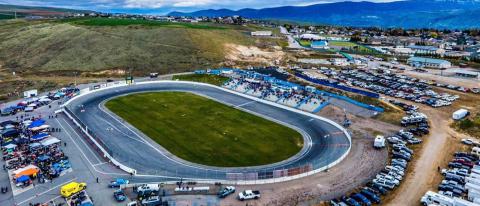
Wenatchee Valley’s Super Oval (WVSO) in East Wenatchee, Washington, will host the “Save Our Racecars Night,” a PRI-supported race, on Saturday, June 4.
Known as “the fastest quarter-mile in the Northwest,” WVSO will host four classes of racing—Rockstar Energy B-Mods, Plumb Perfect Roadrunners, WMRA Midgets, and Northwest Vintage Modifieds—along with fireworks and a special appearance by the stunt man, Mr. Dizzy. The event is presented by PRI, Jerrod Sessler for Congress, and Z Country 94.7.
Former NASCAR Whelen All-American Series driver Jerrod Sessler—who is running for Congress in Washington’s 4th District and is an avid advocate for motorsports—will serve as master of ceremonies.
“It’s a night full of carnage, explosions, and great racing,” WVSO stated in a release.
The Save Our Racecars Night will help build grassroots support for the Recognizing the Protection of Motorsports (RPM) Act of 2021 (H.R.3281/S.2736), a bipartisan bill in the U.S. Congress that protects Americans’ right to convert street vehicles into dedicated race cars. The bill clarifies that it is legal to make emissions-related changes to a street vehicle to convert it into a dedicated race car and protects the racing industry’s ability to produce, market, and install parts and equipment that enable racers to compete.
The track also announced a car show and hot rod party set for Friday, June 3. More details will be announced on the WVSO website.
Tickets are available for purchase on MyRacePass.comand will also be available at the gate on race night.
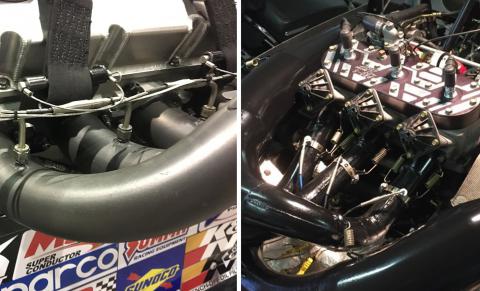
Proper sensor installation is critical to produce accurate readings. The sensors shown at far left are incorrectly installed with the exhaust flow, which results in hotter temperature readings than what is actually occurring. By contrast, the sensors at left are installed correctly. Note the sensor wire leads exiting the front or rear of the engine. This positions the sensor’s tip so it streamlines the exhaust flow (sensors should only be installed 1/4-inch into the exhaust stream).
A data system is only as good as the sensor connected to it, so choose wisely.
Choosing the proper sensor for a data system is as critical as selecting the proper camshaft for an engine. There are several considerations, beginning with the type of engine: two-stroke or four-stroke? Is a power adder, such as nitrous oxide, supercharger, or turbocharger used? Which fuel is being used, and at what rate is it being consumed? In this article, we will touch on all aspects for the race application and ensure that the crew chief or dyno shop can depend on smooth, accurate, and reliable information, because the data system is only as good as the sensor connected to it.
Sensor Sizing
In the thermocouple world, the larger the diameter of the sensor, the longer it lives. The lifespan of a 1/4-inch sensor is about four times the life of a 1/8-inch sensor. So in the harshest environments, the larger sensor is recommended for the longest lifespan. But first note that there are three sizes common in most motorsports: the 1/8-inch sensors, recommended for naturally aspirated engines that need extremely fast data like dynamometers or testing facilities; the 3/16-inch diameter sensors used in most powersports applications, such as snowmobiles, ATVs, and automobiles with lesser amounts of nitrous oxide; and the 1/4-inch sensors, which are suggested in anything that is supercharged or turbocharged, and for rotary engines since these are the harshest of environments.
Closed or Exposed Tip
Closed-tip, ungrounded sensors can be used in street vehicles and diesel engines. Racers can also run open tips in these applications, but it is advised to only use them for short timeframes, as the sensor life will be greatly reduced in engines that use diesel or oils with sulfur, which can attack the exposed sensor tip and cause the wire to become brittle.
Grounded, Ungrounded, or Exposed Tip?
Never use a grounded sensor in motorsports applications, as the sensor could pick up ignition noise and feed it to the data system. If you need an enclosed-tip sensor, make sure it’s ungrounded, meaning the sensor wires internally do not touch the outer sheath. Exposed tips can work with all fuels and have an extremely fast reaction to temperature change found in a majority of motorsports applications.
Sensor Placement
Recommended sensor placement on a four-stroke engine is four inches from the center of the exhaust valve, or two inches off the side of the head. For two-stroke engines, it’s recommended to place the sensor 100 mm from the piston skirt, or what’s recommended by the pipe manufacturer. Sensor inertion depth is standard at 1/4 inch to 3/8 inch into the exhaust stream.
This detailed close-up of a sensor tip helps show proper exhaust flow direction: The correct flow would run down the tip vertically, from top to bottom, while an incorrect flow runs horizonally, or right to left.
Sensor Orientation
On exposed-junction sensors, it is critical that the sensor points in the correct direction to streamline the sensor tip. Check the end of the sensors to make sure the exhaust is not flowing through the center of the sensor tip, as this will show a hotter temperature than what is really occurring.
Sensor Care
Enclosed sensors are able to avoid moisture, but exposed-tip sensors will tend to wick moisture over time. If this occurs, the moisture will start to measure the temperature that is inside the sensor sheath instead of at the sensor’s tip, called a secondary junction. While rare, this issue can be found in engines that use water injection, have excessive raw fuel down the pipe, or even get condensation from sitting in storage.
If you are unsure if there is moisture in a sensor, check the data. If that cylinder is colder by a few hundred degrees, or if there is an erratic reading, this could be the issue. Be sure to check with your engine builder first, but typically, the issue can be remedied by removing the affected sensors and putting the entire probe assembly in an oven for 24 to 48 hours at 275 degrees Fahrenheit to dry the sensor and return to like-new readings.
Tuning Tips
Tuning with exhaust temperatures is like climbing a mountain: The temperature will climb until you reach the peak, then will start to drop, like going down the other side of a mountain. When the engine starts to detonate, exhaust gas temperature will drop, while water or cylinder head temperatures will climb. So pay close attention to your data! The goal should be to tune just below peak temperatures, and to balance all cylinders within 50 degrees Fahrenheit of each other, from idle to wide open throttle. Trust us, your engine will thank you!
Rick Lawler has been the sales manager for Exhaust Gas Technologies (EGT) since 2006. Based in Chino, California, EGT specializes in high-performance thermocouples for motorsports and industrial applications. The company is world-renowned for developing the “Super X” EGT Sensor, which EGT calls the fastest and toughest sensor on the planet. In addition, Lawler is an avid drag racer and currently campaigns a 1964 Dodge Polara in Nostalgia Super Stock.
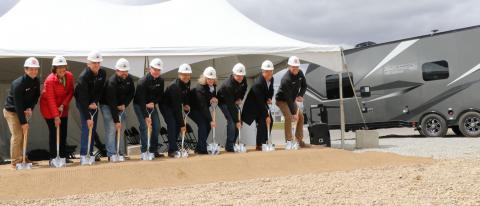
Aluminum Trailer Company (ATC), the trailer and RV manufacturer based in Nappanee, Indiana, has broken ground on its new 221,000 square-foot facility. The building, still located in Nappanee, will serve as the company’s new headquarters and RV division.
A ceremony for the new facility was attended by ATC CEO Robert Paden, Congresswoman Jackie Walorski, Nappanee Mayor Phil Jenkins, and representatives from Yoder Construction, which will oversee construction.
With about 440 current employees, the new facility will create the need for 150 to 200 employees.
The announcement aligns with the company’s plans to shift from all-custom to ready-made and configurable trailers and RVs. “There was no leverage to be had in customizing every trailer at the volumes that were demanded of us, so... at the end of 2019, we decided to shift our business model to be a pure OEM,” Paden said.
Holley, the platform for performance automotive enthusiasts, has announced that Anita Sehgal has been elected to the Holley Board of Directors at the company’s annual meeting of shareholders.
Sehgal currently serves as the senior vice president of Marketing & Communications for the Houston Astros, a Major League Baseball franchise. She also serves on the Boards of Escalade, a sporting goods, fitness, and recreation equipment manufacturer based in Evansville, Indiana, and Reitman’s Canada, a publicly-traded Canadian retailing company specializing in women’s clothing.
“Anita brings a wealth of experience in consumer engagement, branding, and digital marketing to Holley,” said Holley Chief Executive Officer Tom Tomlinson.
Sehgal replaces Gina Bianchini, who did not seek re-election to the Board this year.
“We thank Gina for her service and wish her the best in all her endeavors,” said Matt Rubel, Chairman of the Board of Holley.
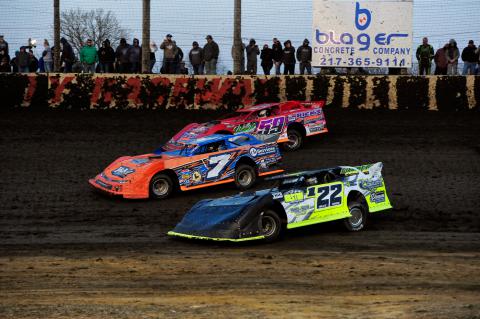
Dirt late model racing is increasingly a high-dollar gambit, one that is forcing teams and stakeholders to recalibrate their programs for sustained success.
Racing has always been expensive. There have been few times in recent history when the racer hasn’t had to dig a little bit deeper into the wallet than expected. Even so, the spike in prices for racing parts this year has been eye-popping. And there’s plenty of reason to believe we’re at the early part of the upswing, not the peak.
There are several reasons for that, covered extensively here and elsewhere. Supply chain disruptions and shortages brought on by COVID-19 restrictions get most of the attention, but inflation pressure was another factor, as is a reduction in competition as large companies merge and gobble up smaller parts companies. Recent geopolitical conflicts are definitely not helping on the materials front.
Some racing series were already drifting higher before the shortages hit. Dirt late model racing, for instance, has been an increasingly expensive enterprise. It’s a great show, of course, and getting a 900-horsepower engine to hook up on a dirt surface requires much more technical sophistication than many fans appreciate. Numerous racers strive to reach the World of Outlaws Late Model Series or the Lucas Oil Late Model Dirt Series, but it takes increasingly big bucks to tour in the big leagues.
Supply-chain issues, inflation, and reduced competition among suppliers are forcing dirt late model competitors to seek new, creative ways to control costs and continue racing.
What can be done at the rulebook level to rein in dirt late model costs is a subject for another time, but how rising costs are impacting dirt late model racers and how they are adapting is a story that is playing out in the here-and-now.
“The sad part about all this stuff is the 40-hour-a-week working man is not in dirt late model racing anymore,” observed Joel Smith of Close Racing Supply, Eldred, Pennsylvania. “They’re really not, especially super late model racing. I feel like they got chased out years ago with the price of stuff. Even the crate racing deal is kind of pricey—a little bit of a savings over super late model but kind of pricey. And I feel like we’ve lost the working man in the sport, or they’ve gone to lower divisions.
“That’s one thing that I’ve seen in the last handful of years,” Smith said. “There are a lot of ex-late model racers that are now into the lower divisions—modifieds, that IMCA stock car deal is pretty popular across the country. So the racers are finding alternatives that they can afford. That’s a good thing for me because we don’t want to lose these customers, these racers, we want them to still be in the sport, but maybe back down to a division they can afford a little bit more.”
The spike in prices this year for everything has only accelerated the trend. “Unfortunately, I don’t think there’s a lot you can do anymore,” said Cory Hedgecock of Eagle Racing Engines, Knoxville, Tennessee. Besides the engine-building business he and his father own, Hedgecock races in super late model and crate late model classes. “I just bought a timing cover for a motor. A year and a half ago I paid $70 for one, and this year, today, I paid $130 for it. Blocks have gone up almost 10%. Valves, two years ago they cost me about $95 or $96 apiece. They literally cost me $127 apiece now for a titanium valve. It’s getting out of hand. A lot of it, I think, is materials—I’d say almost half of it.”
Tires have always been a significant cost for teams, forcing some racers to conserve them by putting on new tires for gentle tracks and saving the old ones for venues with harsh surfaces.
Rusty Schlenk is a McClure, Ohio-based dirt late model racer who competes in the Allstar Performance Challenge Series at Michigan tracks and other regional events, as well as running his Domination Race Cars car building business. He’s been feeling the pinch of rising costs in all aspects of his operation.
“Everywhere. It’s literally everything,” Schlenk said. “Thankfully, we build a lot of our parts. As far as labor costs go, saving on that is what helps us stay going because we do it all ourselves. Material costs, everything is through the roof. Most of my steel has all doubled, the aluminum has doubled. Everything is 30–50% more, at least, than what it was this time last year, or a year and a half ago.
“Honestly, what’s going to hurt me the most is just the diesel fuel costs going up and down the road,” he said. “That’s really going to hurt the pocketbook.”
External factors like the cost of fuel has become one more log on the budget bonfire. “I think that’s why we’ve seen a lot of people this year fall off the tour,” Hedgecock said. “They just can’t justify the money as far as traveling up and down the road only to go to a rainout. It’s one thing if you get to race, but everybody is so desperate to race, and these series [want] to get you to the race track whether it looks like rain or not, and diesel being over $5 a gallon, it’s just expensive. It’s hell to fill up these rigs anymore. You’ve just got to pick and choose.”
Savings Solutions
Dirt late model racers are adapting as best they can to spiraling costs, with solutions ranging from creative to traditional. “It makes you really think about what you’re going to do,” Hedgecock said. “There’s a race track around here that’s a little rocky. It doesn’t rubber, but it just chews on tires. I’m going to make sure to plan three weeks ahead that maybe I’ll bolt a new set of tires on at, say, one race track that never hurts the tires, and then I’ll rotate those tires to the race track that chews on tires. That way I won’t have to bolt new ones on for that race.”
For some racers, travel expenses are the low-hanging fruit when it comes to saving money. “We drove out to Tyler County Speedway with our camper and an open trailer trying to save on fuel and hotel money,” Schlenk said. “We’ve got an open trailer designed up, and I’m going to build an open trailer for us this year if we need to go on any long road trips, where we can save a little bit of fuel money and pull it with the camper. I can’t pull my big trailer with the camper, but we can pull that little open trailer, get better fuel mileage, and have a place to stay.”
Racers can often reduce costs by taking a hard look at what equipment is really essential, and what’s more of a luxury. “There are many places they could cut corners,” said our source at Close Racing Supply.
For others, one solution might be re-evaluating assumptions about what’s truly necessary. “What I’ve caught myself saying to some of my customers, kind of jokingly but kind of serious as well, is there are many places they could cut corners,” Smith said. “I’ve been in this industry 30 years, so I know what it was like 30 years ago, and I know what it’s like today. Everybody seems to want to own a pit lift. Well, we didn’t have them 10, 12, 15 years ago, and we didn’t need them. There are racers who always spend a lot of money on T-shirts, which can be a good thing, advertising their sponsors, things like that. Most of the time they’re not making money on the T-shirts, they’re giving them to sponsors and friends and crew. Well, maybe that’s something to cut back on.”
Smith also encourages racers to take a harder look when evaluating which tracks to race at. “What race tracks are easy on equipment? Maybe the speeds are lower, maybe it’s a race track that’s always been known to be smooth and slick and slower. You’re tearing up less stuff, you have less abuse on your equipment when you’re racing on some race tracks versus others,” he said.
Car builders such as Barry Wright Race Cars in Cowpens, South Carolina, are also doing what they can to help soften the blow of rising costs. “What we’re trying to do to help, to pass it along to our customers and other racers, is when we get a notification from a vendor of an increase coming—and I just got one yesterday saying starting in June prices were going up 18%—that gives me a good two months to buy up at the current pricing so I can pass that along for an extended period of time,” said Ashley Wright. “In the fall we bought up a bunch of material so we could hold costs and not have to increase for our chassis. We’re still using tubing we bought back in November.”
Wright has also seen more of a willingness from racers to not see so many damaged components as disposable. “We have had several come by and want repairs instead of buying new, and not just on the car itself, but even parts,” she said. “My dad’s been doing this for 50 years, and he’s fixed everything in some capacity.”
To limit the effects of rising prices, some shops are buying all the parts and materials they can before prices go up. “We’re still using tubing we bought back in November,” explained our source at Barry Wright Race Cars.
Many racers who get priced out of super late model series are lured by the potential savings of crate engine classes, but the economics of that are not so cut-and-dried. North Carolina-based Ray Cook races in crate series, and also owns and promotes the Schaeffer’s Oil Southern Nationals Series and Spring Nationals Series. He’s not convinced crate racing is necessarily less expensive anymore.
“There are a lot of savings in the motor itself, obviously. I’ve got one and that’s why I’m running it because I can’t afford a super motor,” Cook told us. “So just the motor itself is a good deal. I bought this motor and there was nothing wrong with it, it was perfectly fine and ran fine. But it didn’t have the right seals on it, so we had to spend $3,200 to get the right seals put on it. And when he took it apart, he said the motor had never been into, hadn’t ever been apart, there was nothing wrong with it. So we basically took it apart just to make the seals be right. That’s the kind of thing that I think has gotten out of hand.”
Planning Ahead
One way for racers to avoid paying more than necessary is to plan ahead as much as possible and secure a place in line. For one thing, dirt late model racers in the United States aren’t just competing against their countrymen for parts and repairs. “Regardless of whatever has been going on, we seem to be doing more international business. We have cars going to Canada, New Zealand, and Australia, like it’s nothing,” Wright said. “I have a customer in Australia who is racing right now, but he’s going ahead and buying stuff for next race season. He knows it’s going to take time to get the parts to him because it’s going into a container.
“The definite increase in what we’re selling overseas and sending overseas, and them planning ahead, they’re cognizant of what’s going on over here, too,” she said. “It’s not just affecting us in the United States in racing, they’re making sure in New Zealand that whatever they’re going to need for even next racing season they’re going ahead and ordering it now.”
Shops are trying to pull forward orders both to have parts available for customers and to lock in today’s prices, but that comes with costs, too. “What we have in inventory now compared to what we had two years ago, I’d say we’re up seven or eight times, in money. We’ve got $300,000 in inventory now because we’re just trying to stay that far ahead,” Eagle Racing Engines’ Hedgecock said.
Many racers feel that purses need to be much higher to offset today’s escalating costs of competition. But as tracks struggle with their own unique challenges, doing so would require significantly more money from sponsors.
“I was able to keep two distributors in stock. And looking right now, I’ve got 14 distributors in stock. That’s stupid. I don’t need to have that many. But I went through a patch at the beginning of last year where I couldn’t get distributors for three months. I was having to pay retail for them. Well, I’m not doing that either. So I’m having to keep 14 distributors on the shelf, 10 pulley sets, six carburetors. It’s stuff that I just shouldn’t have to do that has tied up a bunch of money for our engine company to make sure we have the inventory,” he added.
There is only so much belt-tightening the racer can do. For the continued health of the sport, additional revenue is going to have to materialize. “Sponsors are really going to have to step up for the guys like me who do it out of their own pocket, who don’t drive for the big teams,” Schlenk said. “I’m definitely already relying more on sponsorship this year than I have in the past.
“Honestly, if the race tracks don’t do something different, that’s what’s going to kill us,” he continued. “You notice there are race tracks that do a good job with it and some that do a terrible job. You’re going to see a split where there are race tracks that thrive and there are race tracks that drop off the face of the earth because of marketing. Some race tracks are still paying the same thing they were back in the late 1990s, early 2000s, for local races, and it’s because they don’t go out and get the sponsorship. You don’t see billboards all over these race tracks like there should be. There’s no reason that every race track shouldn’t have plenty of billboards around the property that are helping pay these purses. If we don’t get the purses up at the race tracks, it’s going to kill the local guy. We can’t afford to race for $1,000 anymore.”
To view the full results of PRI’s annual Motorsports Retail Business Survey, which tracks the latest market trends in sales, marketing, online operations, employee relations, product sourcing, communications, and more, visit performanceracing.com/2022survey.
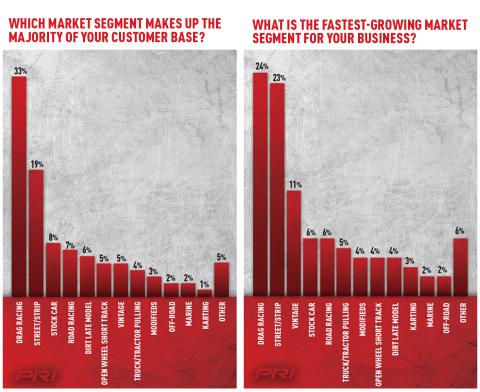
Our annual report on racing and performance retail companies identified many whose fastest-growing segments fall outside of their core market. Here’s how several of those businesses are incorporating these additional profit-makers into their operations.
Specialization can be the key to success for a racing business. When the opportunity arises to branch into other segments, some may view it as a welcome growth opportunity, while others, especially those with just a few employees or a work backlog, may be less interested.
But what happens when demand from a new segment basically walks through the door? Do they turn it away, or adapt and handle it? Stemming from our annual Motorsports Retail Business Survey, PRI talked to the owners and/or operators of six racing and performance shops who faced that question and took on the new work. Here’s how they rose to the challenge.
Different, but Similar
For some businesses, branching into a new racing segment is made easier by the fact that it’s not that different from what they are already doing. Steve LeSueur’s Fast Fuels in New Canton, Virginia, has traditionally focused on providing fuel for drag racers, yet the growing popularity of truck and tractor pulling in his area is shifting his customer mix.
“There’s a smaller number of truck and tractor competitors, but these guys spend a lot of money on their trucks,” LeSueur said. “We see more modified trucks using motors very similar to drag racers.” The engines may be similar, but the usage isn’t. “They don’t go through as much fuel as drag racers.”
Modifieds are one of the fastest-growing segments in motorsports, opening new opportunities for shops that cater to it. “I’m now two months behind with work, in part because I’m working more with modifieds,” said our source at Roxbury Racing Transmissions.
Paul Gavenda’s “one-man shop,” Gavenda Engines in Batavia, New York, used to specialize in stock car engines. But with the reopening of local drag strips, and the popularity of Street Outlaw type of racing, he’s shifted to doing more drag race engines. What do they have in common? “When racers see another car going faster, they find out who did the motor, and you get a ton of work out of it,” he explained.
He and his son helped that along by building a drag car—a 1979 Malibu—of their own. “When customers saw it, they’d say, ‘I didn’t know you did drag racing stuff.’ The next thing you know, we were swamped with work.”
Gavenda still works alone and chooses the work he wants to do. He figures he has about 20 racers he builds engines for. “I’m always booked out about three months.”
Gavenda does see a difference between the stock car and drag racers: “Drag racers spend more. When they do their first engine with us and see how well it runs, the next time they come in, they’re not afraid to spend even more to go faster.”
Like Gavenda, James Roxbury of Roxbury Racing Transmissions in Princeton, Minnesota, is a one-man shop that, for most of 20 years, specialized in stock car customers. Lately, though, modifieds have become the fastest growing part of his business, which has changed the rhythm of his work.
“A few years ago, it would get slow during the wintertime in Minnesota because people weren’t racing,” he explained. “These days, there are many races throughout the country, year-round. I’m now two months behind with work, in part because I’m working more with modifieds.”
Dirt late model is RaceDay Safety’s main market, but Kevin Shaw said the Dallas, Georgia, company saw a need to equip young racers who were entering the sport through karting. “Karting has been growing, so we’ve increased our kart gear stock.” Oval racing is more popular than road-course racing in his area, “but we do sell gear across the country, and that typically is for road-course karting.”
Shaw welcomes a trend on both sides of the business. “Today, customers aren’t looking for the cheapest helmet. They’re willing to spend more for the graphic helmets now, because they want a little more pizzaz.”
Karting remains a highly attractive—and still relatively affordable—entry point for young racers seeking to ascend the competition ladder. Its growth across certain parts of the country has prompted some retailers that specialize in full-size race cars to increase their kart gear inventory that includes helmets, gloves, suits, and shoes.
Making the Most of the Machinery
HPH Machine in Annandale, Virginia, builds engines and sells parts primarily for dirt track racers. “But street modifieds are my fastest growing business,” said Frank Harris, and he has become a specialist in setting up distributors.
“Not many shops do distributors or have the machine for it, so I’m almost exclusive in the area,” Harris said. “People send me distributors from all over.” A popular job is converting a traditional points distributor to a PerTronix unit. “It’s a very good business for me. The street and muscle car guys love it, because it keeps the stock look but runs a lot better.”
Like many motorsports businesses, Mike & Sons Machine Shop uses social media as a primary tool for bringing work into the shop. In fact, the shop has benefited by posting LS engine upgrades on its Facebook page.
Street modifieds are also a growing business for Mike & Sons Machine Shop, which machines parts and rebuilds engines in El Paso, Texas.
“I think the reason is because we’ve been investing in upgrading our machines,” said Allyson Palombo. “We’ve been getting a lot of LS engines that people are upgrading and modifying.”
Marketing Via Facebook—or Not
Mike & Sons, like many of these small businesses, uses social media, in this case Facebook, to get the word out about its services. “We don’t invest in traditional advertising or marketing,” Palombo noted, other than allocating a small amount of money for T-shirts given away with every engine rebuild.
Instead, the shop has received a lot of attention—and work—by posting LS engine upgrades on Facebook. “These customers are spending more on the machine work and parts,” Palombo said. “Thankfully, our customers spread the word so that we haven’t had to invest in marketing. Our customers and Facebook have been good to us.”
LeSueur also uses Facebook and Facebook Marketplace to post about new stock available at Fast Fuels, though he has noticed that his drag race customers, not the pullers, “are more receptive” to the effort. More powerful than social media for him is word-of-mouth. “Racers know I have inventories readily available from the larger race fuel manufacturers.”
Kevin Shaw of RaceDay Safety has noticed a significant rise in the popularity of karting. In addition, he said customers from all segments are spending more on graphic helmets. “They want a little more pizzaz.”
Word-of-mouth also works for RaceDay Safety, Shaw said, though he also maintains a robust website and keeps tabs on Internet search results. “We concentrate on key words for Internet searches, and our website navigation is simple and user-friendly. We only use social media occasionally. Word has spread that we have product in stock and available. Typically, we list our inventory on our website, which has helped business. We’ve also added additional shelf space to accommodate our karting customers.”
Roxbury said he “does some advertising” for his transmission business “but not much marketing because I’m so busy already.” He does use Facebook, “but I don’t post often because I’m swamped.” His posts may be infrequent, but “Facebook brings me a lot of work,” he said. “Recently, I posted a new manual that I compiled that I plan to send to all my customers. It got 1,100 views in one day.”
For Gavenda, marketing his engine building business is “all word-of-mouth. I have never advertised in a magazine, or at a track, and I don’t use social media.”
Harris said he’s busy enough at HPH. “I’m 81. I don’t do any advertising, and no social media.”
The expansion of VP-branded gas stations across the US, as well as continued development of renewable fuels, including blends distilled from food waste, are among top priorities for this San Antonio, Texas-based producer of performance fuels, lubricants, coolants, and additives.
Its stylized product logos and brightly colored pails of racing fuel are nearly as common to find at racing facilities as stacks of mounted tires.
That’s part of VP Racing Fuels’ deep footprint in the motorsports fuels market in North America and around the world. The San Antonio, Texas-based firm provides, through a network of 2,000-plus dealers, a line of more than 80 premium fuels that can feed everything from R/C models to an array of global racing series, plus diesel.
The general public now expects fuels for all vehicles, racing and otherwise, to be environmentally responsible. That’s a global trend in the technology of racing fuel. Through its research and broad product base, VP pledges to occupy the tip of the spear when it comes to keeping racing fuels, and engines, acceptably clean.
VP Racing Fuels has a rich history in motorsports, offering more than 80 premium fuels that can feed everything from R/C models to a variety of global racing series, plus diesel. With a focus on environmental responsibility, VP has developed more than 20 fuels containing a certain percentage of renewables.
“What we’re seeing is a shift by some major series to incorporate more renewables in their fuel,” VP Racing Fuels’ Vice President of North American Sales Bruce Hendel explained. “A lot of people don’t realize that VP has 20 or 23 fuels with a certain percentage of renewables already in them. With European series, especially those that run under FIA sanction, there’s a bigger push for a higher percentage of renewables, and those fuels are more readily available now outside the United States.”
In Hendel’s estimation, the public demand for cleaner vehicles in the European Union has meant a quicker pace developing clean fuels than North America has experienced to date. No worries, Hendel said: VP already has an extensive presence in Europe, the Americas, and Asia, and is prepared to formulate fuels for North American racers as environmental and regulatory challenges continue to evolve.
“As things develop here stateside, we will incorporate more renewables into the fuels,” Hendel said. “It just has to be economical. We could go out and buy up fuels overseas, import them, spend all that money on transportation, but that kind of defeats the purpose of using renewables to begin with, because creating more greenhouse gases shipping it over here to blend with other fuels is ridiculous. We’re also looking at possibly blending fuels outside of the US.”
For many people, “renewable” and “ethanol” are used interchangeably, which, in Hendel’s view, can be misleading. For example, VP sells a version of E85, but it’s a long way from the fuel at the neighborhood pump. For the US mass market, renewable fuels can be called E85 even if their ethanol percentage is around 50%. As Hendel explained, “We’re not selling a pump E85, but rather a performance E85. Those formulations from the gas pump can be anywhere from 50–85%, so it’s not consistent. Our 15% is a high-quality, high-octane race fuel, as opposed to pump gas, so we’re always consistent.”
Designed to improve visibility, VP Racing Fuels has embarked on opening VP-branded gas stations across the United States, with approximately 370 so far, which will also sell competition-related fuels at the retail level. VP’s goal is to reach 1,000 such outlets within five years.
The number of fuel blends VP offers is dizzying, including versions of racing E85 blended with unleaded gasoline. Renewable formulation will be evolving in the future, possibly in line with the EU. Europe is increasingly relying on second-generation renewable fuel, which is distilled from food waste, as opposed to first-generation ethanol, primarily used in North America, which is refined from plant matter directly. “You’re using byproducts instead of the plant with second-generation renewables,” Hendel continued. “There’s not too much of that here in the States just yet. It’s the political environment (in Europe) that pushes that.”
Product evolution at VP will continue as market conditions dictate, Hendel said. “The trend is slightly moving toward unleaded fuels, as opposed to leaded fuels, and we have a number of unleaded fuels that we already produce. But for those applications that do need a higher octane, it’s very, very difficult to get to it without the use of tetraethyl lead. Drag racing would have to migrate to a totally different engine setup.”
From its earliest days in drag racing, with Pro Stock immortals Bob Glidden and Warren Johnson as early customers, VP Racing Fuels now has a presence in a constellation of motorsports disciplines, series, and sanctions. And yet, as Hendel expressed it, people outside racing know little or nothing about the company. In recent years, the firm has embraced an ongoing strategy to make sure its visibility improves, permanently. VP has embarked on opening VP-branded gas stations across the United States, about 370 so far, which will also sell competition-related fuels at the retail level. VP hopes to have 1,000 such outlets within five years.
 MEMBERSHIP LOGIN