Business Profile: Van Doorn Racing Development
Submitted by johnc on Wed, 01/18/2023 - 12:04
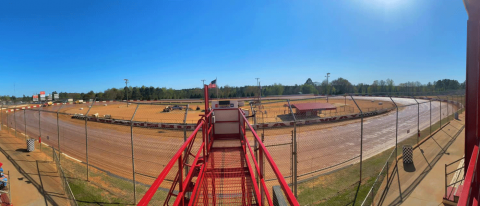
image 1


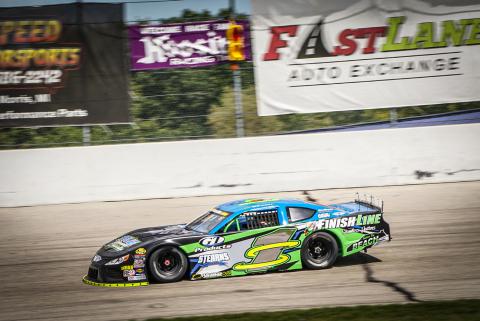
Founded on the independent spirit of brothers John and Butch VanDoorn, this late-model specialist has run the short track to success with race-winning engineering, quick turnaround times, and outstanding customer service—and by nurturing that same creative independence in its employees.

In just nine years since John and Butch VanDoorn opened their chassis fabrication business in Muskegon, Michigan, the brothers have built nearly 200 race cars, expanded into setup and consulting, and established themselves as national players in the asphalt Late Model field. In the past year alone, VanDoorn Late Models have scored victories at nearly a dozen tracks in Michigan, Illinois, Indiana, Ohio, and Pennsylvania; plus farther-flung first-place finishes at Tucson Speedway in Arizona; Kern County Raceway Park, Irwindale Speedway, and Madera Speedway in California; South Sound Speedway in Washington; and Petty International Raceway in New Brunswick, Canada. October was a particularly good month: On the 8th, Cody Dempster nailed down the Super Late Model track championship at Colorado National Speedway; a week later Eddie Van Meter claimed the CRA Super Series Championship. And on the 29th, VanDoorn’s new Diamond chassis debuted with a third-place finish at Nashville Fairgrounds Speedway in Tennessee.

No one seems more surprised at the success of VanDoorn Racing Development than John VanDoorn. “We’re building chassis number 185,” he noted when we spoke in November. “So we’re almost 200 race cars into this thing. If you’d asked me in 2013 if we’d ever reach this point, I’d have said, ‘not in a million years.’ We never imagined it would take off the way it has.”

While asphalt Late Models remain VanDoorn’s signature product—from rollers to race-ready vehicles—they actually account for about 40% of the company’s total business. The remaining 60% comprises body repair; building, rebuilding, and dyno-testing shock absorbers; a parts department stocked with components from more than 30 top-name performance brands; consulting services, including driver development; and fabrication jobs outside of the racing industry. (TIG-welding damaged fuel tanks for 18-wheel trucks has become a minor specialty.)

“You always want to stay diversified,” VanDoorn explained, “to set yourself up for a rainy day. But chassis building is still the face of our business. It’s the foundation, and everything else is built on it.” Furthermore, VanDoorn sees a synergy in the company’s various activities. “One feeds the other, absolutely. If they are running our chassis, then they are buying our parts. We’re rebuilding shocks that we sold them. And they are hiring us to come out and work on their cars.”


Appointment with Asphalt

VanDoorn referred to race-car building as his “destiny…. My Dad owned a towing business, so I grew up around trucks and cars. The tow shop had welders and torches, and I started welding when I was about five years old.

“Building things,” and particularly fabrication, has interested him for as long as he can remember. “I guess it was my calling in life,” he continued. “We were NASCAR fans, and we always cheered for Earnhardt. So when I was eight years old, I started go-kart racing. It was fun for about a week, and then it turned into serious business as we got competitive. In sixth grade, when all my friends were into video games and sports, I started drawing late-model chassis. It was like the Earth was trying to tell me what my life was going to be.”

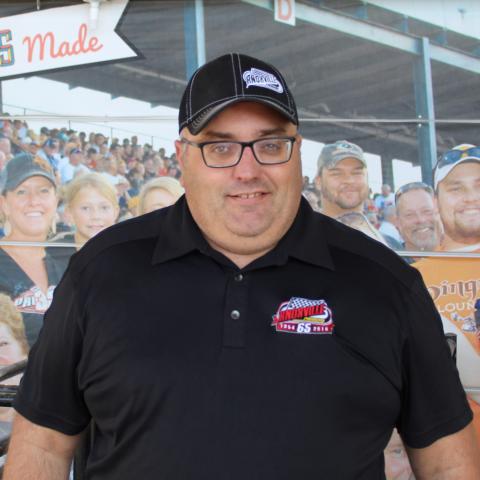
image 2
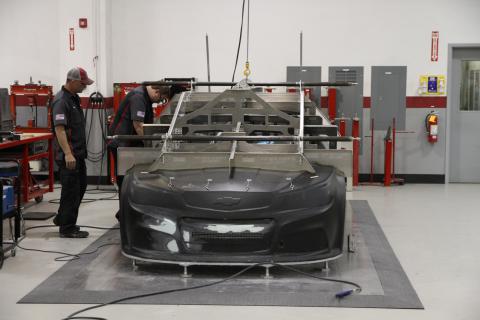
“We’re almost 200 race cars into this thing,” said John VanDoorn of the magnitude of VanDoorn Racing Development. “We never imagined it would take off the way it has.”

Around the same time—in the year 2000—VanDoorn graduated from go-karts to dirt-track street stocks and sportsman. At 16 he began running Late Models on pavement and went to work for Port City Racecars in Muskegon. “I would go there after school to sweep the floors and clean the shop, and I worked my way up from the bottom. By 2010 I was driving the house car while also building cars and setting them up. That’s how I began my career as a race-car manufacturer.”

By then John’s younger brother Butch worked at Port City as well. According to John, Butch “didn’t do the driving, but he always went racing with me. He would hang out and work on the cars. Then when he was about 14—about the time my driving career was taking off—he really took an interest in shock building. He was 16 when he built his first-ever Penske shocks, and I won the very first race I ran with them. That’s how we got to where we are. I was inside the race car looking out; he was outside the race car looking in. We have been fortunate to have both perspectives.”

Butch and John both “had a really good career going at Port City.” Yet that wasn’t enough. John drew a familiar metaphor from popular music: “If you’re a musician in a band, and it may even be a successful band at that, but it’s somebody else’s band. You still want to express your own art, to make your own impact. We wanted to do our own thing, start our own journey, have our own brand.”

The Brothers VanDoorn left Port City in November 2013 to launch VanDoorn Racing Development. “We rented a 6,000-square-foot shop, but in just three-and-a-half years we outgrew it,” John said. “Then the building we are in now came up for sale. It was already a fabrication shop, so it was set up perfectly for what we do.” Today the main facility covers 9,600 square feet. A second building adds another 5,000, and the company employs nine people full time.


Speedy Delivery

As much as he values his experience as a driver, John rates his 2020 retirement from racing as one of the best decisions of his career. “That really expanded our business—it really opened things up for us—because it allowed me to be at the race track helping our customers.” Another key decision was the move to larger quarters, “which allowed us to bring in more machinery and equipment, to do more manufacturing in-house.”

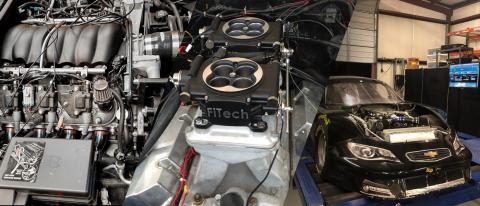
image 3
Though the company has diversified into body repair, consulting, and other services, “chassis building is still the face of our business,” said John VanDoorn, seen here. “It’s the foundation, and everything else is built on it.”

In fact, when asked what sets VanDoorn Racing Development apart from its competitors, “two big things,” John answered. “Our customer service, and our speed turning out products—how fast we can build new things, and how fast we can repair things. Those are our biggest strengths.”

Such prompt manufacturing and repair is enabled not only by “being set up in the shop with the right tools and equipment,” but also by experience—“knowing what to do”—and by “the work ethic of doing whatever it takes to keep the customer happy. If someone needs a part right away, we designate people to build that part and ship it out the same day. If it has to go to the West Coast, it may take a couple of days to get out there, so you have to be flexible enough to make sure that every customer gets to the race track on the weekend.”

Additionally, VanDoorn emphasized “follow-through with every customer. When you ship a customer a new product, you also follow up with them, and do whatever it takes to make sure they get the part bolted on their car correctly and working in the proper fashion.”


Crew Chief For Hire

Asked how his role in the company differs from his brother’s, John told us that he manages “more of what goes on in the shop, while my brother handles consulting and sales. He’s the one who’s on the phone with customers 24/7.” That said, both brothers consult with customers and even crew chief for a few select teams. “Because I drove for 25 years,” John added, “when a team hires me to crew chief, I can offer not only chassis tuning but also driver coaching—all the little things that help a driver gain an edge and do well.

“That’s a big part of what we do. I’m gone 20–25 weekends out of the year as a crew chief, and there are probably half a dozen teams that I help. My brother does the same thing, for a half-dozen to maybe 10 teams.”

John lamented that “there are so many races out there, and we can’t be at them all.” But having a brother as a business partner sure helps. “Butch can fly off to an SRL race in California, while I go to Indiana or Pennsylvania the same weekend.”

“Butch comes to the track, sets up the chassis, and crew chiefs,” confirmed Buddy Shepherd, who drives a family-owned Super Late Model in the Spears SRL Southwest Tour. “It’s a big help.”

Now 23, Shepherd started racing karts when he was four, moved up to dirt-track stockers at six, and graduated to Super Late Models on asphalt as soon as he turned 16. He’d been driving an SLM for about a year when the late Nick Sivesind asked him to sub for his regular driver at Madera. “It was my first time in a VanDoorn car,” Shepherd recalled, “and I won the race.” Shepherd continued to drive for Sivesind, and in early 2018 finished second to Kyle Busch in the 4th Annual Winter Showdown at Kern County Raceway. The team purchased a new VanDoorn car in 2020, and Shepherd acquired another after Sivesind’s untimely passing in late 2021. We spoke just a few weeks after he’d won the Southwest Tour race at Irwindale in September 2022.

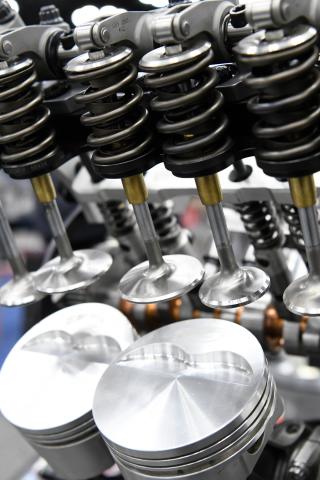
image 4
There’s synergy in VanDoorn Racing Development’s various activities, John VanDoorn said. “One feeds the other. If they are running our chassis, then they are buying our parts. We’re rebuilding shocks that we sold them. And they are hiring us to come out and work on their cars.”

“Any time I have a question, I call Butch,” Shepherd continued. “Or I send him a picture, or whatever we have to do to resolve it. If I have any questions or concerns, he always answers them.”

“When I do business with VanDoorn,” added Bob Wheeler, a team owner from Kalamazoo, Michigan, “I don’t feel like a number. They are easy to deal with, and they make you feel really comfortable. They are not there to sell you something. They care about what we are doing, and they have helped tremendously, pointing us in the right direction and keeping us rolling.”

Wheeler grew up in a racing family; his grandfather and uncle are in the Michigan Motorsports Hall of Fame. “I traveled to races with them for years,” Wheeler recalled. “Then about six years ago, we decided to go out on our own and do our own thing with an Outlaw Late Model. I met Butch and Johnny when they were working at Port City. Butch helped us with our shocks and setup; he saved us time and money, and improved our performance right off the bat. So when they started building their own chassis, we bought a new car from them—it was chassis number 13. In our first year with that car, we set a couple of fast times and won a couple of races.”

image 5
John VanDoorn, above, and his brother, Butch, are available as crew chiefs for hire. “Because I drove for 25 years, I can offer not only chassis tuning but also driver coaching—all the little things that help a driver gain an edge and do well,” said John VanDoorn.

Wheeler later traded number 13 for the improved model VanDoorn released in 2016. When he switched to CRA last summer, he bought two new cars from VanDoorn and was “in the process of building two more” when we spoke in November. “They help us keep up with the times,” Wheeler concluded, “and with the big teams that travel all over the country.”


Steering the Ship

“We have some really good customers,” John VanDoorn noted, “who have been with us through the years, and who have won a lot of races. If you win on Saturday, you sell on Monday. Being competitive and providing customer support are the two things that keep you relevant in this industry.”

The company maintains a Facebook page, featuring its products, services, and the winning exploits of VanDoorn drivers. But John readily admitted the limitations of the medium. “Social media is certainly prevalent in our industry, but it isn’t everything like it is in some other industries.” Racing still relies on “a lot of word-of-mouth”—and on satisfied customers who win races.

The VanDoorns refer to their vendors as “partners” and, accordingly, they choose them carefully. “First and foremost,” said John, “you want to align yourself with a company that produces a great part, has a great reputation, and whose service is A1. In racing, everything has to be done yesterday, so you have to line up with manufacturers who can get parts out to you right away.”

image 6
For all of his shop’s success, John VanDoorn cited his employees as the ultimate source of pride, including Isaiah Prins, seen here. “They are all extremely talented go-getters,” he said. “And each one has a strength that they contribute to our product.”

Still, for everything that has contributed to VanDoorn’s success, John said that he was “most proud of our employees. In any business, right now especially, probably the biggest challenge is finding qualified help. Our society and our culture have gone down the wrong road and aren’t grooming people very well for the industrial trades. We’ve gone through some employees, but the ones who are working for us right now are all doing a great job. They are all extremely talented go-getters. And each one has a strength that they contribute to our product.”

Leadership matters, too. “The big thing is that you set the standard; you set the example of what a good employee should be,” VanDoorn said. “Set the ground rules but give them enough freedom to put their passion into their work. We’ve all got to arrive at the same destination, but let them steer their own ship, in a way that suits them.
That keeps them coming back, wanting to make the mouse trap better—just as my brother and I did.”

He switches metaphors again to muse about the future of the VanDoorn enterprise. “At this point the train is really humming along. I don’t know where the train is headed, but it’s really humming along.”  
February 2023
By
John F. Katz

Balancing Act

Submitted by johnc on Wed, 01/18/2023 - 11:12
image 1


As rule sets continue to tighten the playing field, chassis setup is becoming a core focus in the hunt for a competitive edge in stock car racing.

Circle track sanctioning bodies across the country have put much effort into containing costs in recent years. In the interest of preventing teams from simply out-spending one another to snag a podium, organizers are playing a game of whack-a-mole in order to manage the exploits that are being found in the gray areas. But innovation has always been an intrinsic part of motorsports, and if those advantages can’t be had in new designs or unconventional components, racers will inevitably look for other ways to outsmart the rest of the field.

“Setup is incredibly important, especially out here in IMCA country,” said Ryan Rosenow of Jerovetz Motorsports Shock Service, Suamico, Wisconsin. “Everybody’s on a crate motor and everybody’s on the same tire, so you need every little bit that you can get because the racing is so close. In today’s world, setup is everything.”

That’s driving teams toward increasingly sophisticated equipment and setup techniques, much of which is making its way down from NASCAR. “Not too long ago, all you really needed was four scales and a caster/camber gauge. That’s what you did for setup,” said Dave Schneider of Right Foot Performance Products, Appleton, Wisconsin. “Now the guys running up front are testing in wind tunnels. That’s a drastic change.”

It’s a trend that has ushered in more data with greater accuracy, but that alone doesn’t guarantee success.


Laying The Groundwork

While advanced equipment has become a part of many race programs, Carter Gerlach of Elite Shock Services in Ramsey, Minnesota, pointed out that effective stock car setup still starts with the fundamentals. “First and foremost, I think a team needs to have proper scaling equipment. A good, accurate set of scales goes a long way.”

Although there’s been a bigger emphasis on the ability to capture dynamic data in recent years, the majority of teams are still setting their cars up off of static settings, or they’re using static data as the starting point before venturing into dynamic elements of car setup. “It still starts with things like caster/camber gauges, scales, and toe plates,” said Bob Harris of Bob Harris Enterprises, Ames, Iowa.

“Some of the equipment that’s out there now has gotten to the point where it’s overly technical for a significant portion of the end users, and very expensive as well,” he continued. “While it might be neat to have some piece of equipment in your garage, you have to ask yourself how much you’re actually going to use it versus the cost involved. Racers need to be smart about purchasing things that they’re confident they will be able to use throughout the year, rather than something that might end up being a one- or two-use type of deal.”

image 2
Advanced setup equipment has become a part of many race programs, but Carter Gerlach of Elite Shock Services said effective stock car setup still starts with the fundamentals. “First and foremost, I think a team needs to have proper scaling equipment. A good, accurate set of scales goes a long way.”

That means equipment and techniques that some might consider antiquated are still very relevant in contemporary stock car setups. “When we roll out a brand-new race car, I still scale it out the old school way before we move on to dynamic numbers,” Rosenow said. “That way our customer—who may or may not be up-to-date on technology—has both sets of information to make adjustments accordingly. The static data is the foundation that you need to have before you can move on to the more advanced elements.”

Yet even though static data is an essential piece of the setup equation, it ultimately can only take you so far. In order to really dial the car in for a track and driving technique, the setup also has to account for how the car will behave at speed out on the course. That’s where equipment that can simulate the chassis’ dynamic behavior comes in.

“That has been the biggest game-changer across the board in stock car racing,” said Gerlach. “Being able to find out what the car is actually doing out there has revolutionized car setup—it has really forced these teams to create a new notebook. The trick is understanding what to do with that data. Being able to capture this dynamic data doesn’t invalidate the static data that they’ve collected over the years. A lot of the time we’re tying the two together.”

Load sticks are a particularly popular piece of equipment on the dynamic end of stock car setup, a tool that allows the user to check the load on a corner of the car as the suspension is subjected to the forces it would experience during a race, rather than those observed at a standstill.

image 3
Static data is essential in car setup, but to really dial the car in, the setup also has to account for how the car will behave at speed out on the course. That’s where the new breed of equipment that can simulate the chassis’ dynamic behavior becomes more important.

“Before this we couldn’t know things like what the actual spring rate was on the right-front spring at three inches of compression,” said Harris. “We used to do all of the adjustments with the car sitting on the ground motionless. The problem is that it never races in that situation, so you’re ultimately guessing what the loads will be out on track to some degree. For example, if we’ve determined that 1,200 pounds of load on the right-front corner of the car at three inches of compression is ideal, but we need to change springs, we still want the right-front to be at 1,200 pounds of load at three inches of compression when the car is rocked over on the right-front. We want to change the spring rate, not the load of the car, and a load stick allows you to do that.”

Understanding dynamic load is a particularly critical aspect of a stock car setup, according to Schneider. “Anyone running bump stops or bump springs needs to be able to understand how that’s affecting the load on that corner of the car,” he said. “We make bump stops now that are a 32nd of an inch thick, and that 32nd of an inch can be the difference between winning and running mid-pack. That’s how precise things have become.”

Spring smashers serve a similar purpose with coilover setups, but since many race cars have different suspension configurations in the front versus the rear, both pieces of equipment are often needed in order to gather load data from every corner of the car.


Honing In

Gerlach said good setups generally start with reliable contact patch data. “The tires are one of the most important aspects of the car. It’s a big thing that’s often overlooked. It’s important to have accurate, repeatable data in terms of temperatures and pressures, and that has become an even bigger concern over the past few years.”

The tire availability challenges that have cropped up over the past few seasons have caused some series to change their spec tire, so this is something that should definitely be on teams’ radars. Switching the tire that the car is running on will have an effect on its setup, so it’s important to start with baseline data that accurately represents the car’s current combination.

As is the case in most motorsports disciplines, the key to a good setup is achieving balance. For Rosenow, that means not neglecting one aspect of the car to focus on another.

image 4
The key to a good setup is achieving balance, said a source. While front-end settings are critical, the rear suspension is just as important to get the power to the ground.

“Front-end settings are huge, but the rear suspension is just as important if you want to put the power to the ground. Ultimately you have to remember that you only have four points on the car that should be making contact with the race track, so you need to make sure that those points are attaching to the race track properly and tracking around it the way you want them to. There are no magic numbers—the numbers are just a baseline for you to know where you’re at so you can repeat it and make adjustments based on the performance. Once you have that balance figured out, repeatability becomes the priority.”


Avoiding Pitfalls

Setup is a tricky and somewhat subjective business, but enterprising racers can potentially make meaningful improvements if they have the data they need and they know what to do with it. The latter, Harris said, comes from doing the research.

“Educating yourself on what changes you need to do, and how to do them, is very important,” he explained. “There’s a lot of stuff that you can actually learn by just running the suspension through its travel and things like that. We’ll clamp the right-front down and simulate it as if it’s all loaded up, then we’ll jack up underneath the seat, and on a dirt car we have a left-rear chain that limits how much the suspension can hike up. That can simulate where our bars are, where our angles are, and that sort of thing. This is something you can do at home in your garage over the winter. You can find out so much about your car doing things like that—it all just depends on how much effort you want to put into it.”

image 5
A race car only has four points of contact with the race track, so racers need to make sure those points are attaching to the track properly and tracking around it the way they want them to, said a source. Once that balance is figured out, repeatability becomes the priority.

At the same time, he also offered a word of warning about how changes made to one aspect of the setup can affect other areas. “You have to keep in mind that there’s always an equal and opposite effect when you make a change. A single change will often do what you need it to do, but a lot of times if you make a change in one area, you’ll also have to make a change in another area in order to account for that original adjustment. If you don’t do the consecutive changes, you may not see the full effect of that first adjustment.”

There’s a pervasive issue that frequently causes frustration when racers are in the midst of chasing down that ideal setup combination.

“We see a lot of teams who start trying to make changes on cars that have existing mechanical issues,” said Gerlach. “It’s not uncommon for racers to make a ton of changes to their setup without realizing that they’re trying to work around a mechanical problem. Something’s bent or broken and it gets overlooked, or there’s an assumption that it’s just not important. If a car isn’t responding to any of the changes you’re making, it’s a big sign that there’s a mechanical issue somewhere.”

Some of those mechanical challenges can be tough to pinpoint at first, but Rosenow said that good habits can preemptively address many of them. “Effective setup starts with a good maintenance program,” he explained. “You can have that car sit on scales seven days a week and make all sorts of changes, but it’s not going to matter if the A-frame is bound up. Any bent part will change your numbers, both static and dynamic, so it all starts with having a well-maintained race car.”

image 6
New and more sophisticated setup equipment is going to add another layer of strategy and complexity as racers continue to hunt for a competitive advantage.

Meanwhile, Schneider cautioned would-be tuners to consider how accurate they can be with the equipment they have before they start turning wrenches. “Today’s setups are a lot more precise than most people realize. The guy who can only read down to a quarter-inch on his tape measure is going to be left behind by the person who can read a 32nd of an inch.”

Schneider also advised to be wary of how changes can cascade into one another. “If you make a change in one area, that’s going to cause something else to change in the car that you need to compensate for, and sometimes people aren’t aware that they may need to take a third or fourth step in order to compensate for what they did initially,” he said.

As teams continue to devote more of their budgets toward setup, it appears that the strategies are only going to get more advanced from here. “I think you’re going to see more teams doing wind tunnel testing,” predicted Rosenow. “Air is so important these days, especially with motor combinations being so close now, and the body rules we’re seeing in a lot of series. Air is everything now.”

Aero isn’t the only aspect of the car that’s getting increased scrutiny in the latest stock car setups. “Now we’re starting to see tire smashers coming to market,” said Schneider. “That’s a piece of equipment that allows you to load the tires and determine the spring rate at the tire itself.”

Since tires absorb and deflect forces in much the same way that components like springs and shocks do, it makes sense to consider them a part of the suspension system. In the realm of car setup, new equipment like this could add another layer of strategy and complexity down the road in the ongoing hunt for a competitive advantage.

“It seems likely that teams will have to reevaluate their setups at that point, or at least incorporate that number into how they approach it, because that number has an effect on everything,” Schneider added. “I don’t know if tire smashers are going to be the next big thing, but it’s an interesting development.”

SOURCES

Bob Harris Enterprises
racetechinfo.com

Elite Shock Services
esssuspension.com

Jerovetz Motorsports Shock Service
jmshocks.com

Right Foot Performance Products
rightfootperformance.com

February 2023
By
Bradley Iger

Unified Front

Submitted by johnc on Wed, 01/18/2023 - 10:38
image 1

Photo courtesy of Track Enterprises


With the newly formed STARS National Series kicking off its inaugural season, and the expansion of A SouthwestERN Tour ACROSS THE COUNTRY into Florida, Super Late Model competitors now have more options about where to compete as rules parity comes into focus.

Fans of short-track racing in North America have a smorgasbord of regionally popular genres of their sport to watch, with one of the premier classes being the snarling, full-bodied Super Late Model. It’s one of the quickest cars on any paved oval in North America. It’s also about to undergo a very significant boost in exposure and competitive intensity. A national tour for these lightning-quick stock cars, the STARS National Series, was revealed at December’s PRI Trade Show in Indianapolis.

With highly aerodynamic bodywork, slightly asymmetrical chassis and big-displacement small-block horsepower in most cases, Super Late Models essentially now exist in widely scattered pockets of prominence ranging from New England and eastern Canada to the southeastern United States, the upper Midwest, and the desert Southwest. In some areas, the Super Lates, as they’re commonly called, compete in regional touring series, and in Wisconsin on a hugely vibrant weekly circuit that spawned more than one future NASCAR star. The central part of Florida is another heady hotbed for Super Late Models.


National Tour

The STARS Series’ organizers say it will hearken back to the glory days of Super Late Model racing as it was presented by the American Speed Association, a tour that ended in the early 2000s. STARS has announced a broadly diverse 10-race national schedule with a planned point fund of $100,000. The first race is set for March 11, 2023, at historic Five Flags Speedway in Pensacola, Florida, famed as the home of the annual Snowball Derby for Super Lates. A Winner’s Circle program for teams with perfect attendance is also planned.

“The meeting, which turned into a series of announcements, had an unbelievable reception by competitors, teams, and fans,” said Bob Sargent, president of Track Enterprises in Macon, Illinois, which owns and operates the STARS National Series. “We still have a lot of work ahead of us, but we are facing all of it with a lot of enthusiasm, especially after PRI.”

Sargent already presents one of the Super Late world’s premier events, the All American 400, held each fall at Nashville Fairgrounds Raceway in Tennessee. Sargent announced his intentions following months of speculation that the Super Lates would become the next class of short-track car, like 410 sprint cars, to benefit from a true coast-to-coast presence, potential major sponsorship, and enhanced media exposure. The national tour will be made up of three races from each of the regional Super Late Model series now under the Track Enterprises banner: the ASA CRA Super Series, the ASA Midwest Tour, and the ASA Southern Super Series. Track Enterprises acquired both the CRA sanctioning body and the Midwest Tour before announcing a partnership with the operators of the Southern Super Series.

“We listened to the fans and the teams and the promoters, and we had our own promoter hat on, and we listened to a desire for a national series,” Sargent said. “So we began a long research and learning curve, and in the process acquired the CRA series, the ARCA Midwest Tour, and the Southern Super Series, so we have three regional series to give us a good foundation and beginning for a national series. We listened to the drivers and the teams, and they were asking for this. Our goal is to present them with opportunities to race in a larger footprint as far as television, exposure for their sponsors, and their winnings.”

Track Enterprises started in 1985 as a dirt-centric promotion, operating two dirt tracks in Illinois and also promoting races on the historic mile dirt tracks in Springfield and DuQuoin, Illinois, and on pavement at the Milwaukee Mile. Earlier this year, Champion Racing Association co-owner Glenn Luckett announced the sale of CRA to Track Enterprises, giving it a marquee event in the Winchester 400. With Track Enterprises already running the All American 400 at Nashville, the acquisition was a benchmark on the way to creating a national tour.

image 2
Announced at the 2022 PRI Trade Show, the 2023 STARS National Series will bring a nationwide boost in exposure to the highly competitive—and very regional—Super Late Model racing scene.

Next, Track Enterprises announced its intention to buy the ARCA Midwest Tour for Super Late Models from longtime promoter Gregg McKarns, with the acquisition effective January 1. More recently, Sargent disclosed a partnership with the Southern Super Series, owned by Tim Bryant, who also operates Five Flags Speedway in Pensacola. As Sargent explained, “The opportunity to partner with the three most prominent regional tours this year has put us in a great place to launch a national tour.

“For the 2023 season, we’re going with established premier events with high purses, raising the purses in a few instances. What we’re offering teams is consistency in touring, STARS money to show up at our events, discounts for parts, a major point fund at the end of the year, plus we’re looking at attracting the kind of quality drivers that fans are looking to see at these events,” Sargent said. “The schedule for 2023 goes from ARCA to CRA to the Southern Super Series, to Wisconsin, possibly to Minnesota, all the way to the Carolinas and the Florida area. We anticipate that the majority of our schedule will be at major facilities, including a majority of established, high-profile events. Sponsorship talk is ongoing. We have several broadcast partners interested.”

Bringing racers together from different parts of the country inevitably leads to discussions, at the least, about rules commonality. Bryant, of Five Flags Speedway and the Southern Super Series, said one significant goal of STARS is minimizing the hassle that touring racers will face in making their cars legal for the national series.

“We’re cognizant of the fact that racers are not real keen on rule changes,” Bryant said. “They’ll accept a rule change if it’s fair and cost-effective. We battle that here to some degree because there’s always a new gadget coming out and it costs a lot. With the series, we’re looking at some tweaks for internal engine components, taking a look at a new body by Five Star and trying to tweak its specifications, but that’s kind of a work in progress for 2023. As far as major overhauls of the rules, we just don’t see it. Most of the stuff is not going to be of interest to casual readers. There’s been talk about rearend rules, brake blowers, and so forth. We try to reach out to the teams to find out what their ideas are. We want fairness and parity among cars, also with an eye on cost containment.”

Sargent concurred, adding, “There’s no significant major rules changes coming down the pike. We are aggressively addressing some cost-containment and safety issues. Nothing else is even on the table at this point. In some tweaking of the rules for 2023, we’ll be taking a harder look at cost containment from engines to tires to rearends to bodies for the 2024 season. A spec engine has not been discussed. Cost containment is a big issue, but I think it’s more a case of fine-tuning the rules we have now. Nobody is lobbying for major changes.”


Joining Forces

Bryant contrasted the environment for Super Late Models in Wisconsin, where they race weekly on a variety of name tracks, to central Florida, where the Super Late is a fan favorite but where conventional weekly racing really doesn’t exist. One very prominent Florida locale is New Smyrna Speedway near Daytona Beach, which is a frequent Super Late host and also presents the class during its annual World Series during Speedweeks in February. New Smyrna has aligned itself with the rules package used by the SPEARS Southwest Tour for Super Late Models, creating a new SRL National tour independent of the STARS group.

image 4
“I would obviously like to see a rules package that supports one another,” said Berlin Raceway’s Jeff Striegle of the new national series. “I am a strong believer in looking after the race teams and making sure the rules align and are cost effective, that the rules make sense.” Photo courtesy of Ally Ross/Berlin Raceway.

“New Smyrna will stay New Smyrna. We started leasing the track to Tim Bryant to run the Southern Super Series,” New Smyrna official Rusty Marcus said. “He wants to race at this facility, and we look forward to him coming back. We will be marching in the direction of CRA.

“My hope would be that [any change to rules] doesn’t affect a lot of stuff,” Marcus continued. “One of the big problems in racing, which we’re trying to get straightened out in the Super Late Model division, is that tracks tend to become like an island. And when you’re on an island, you can only pull from so many cars. Some tracks do this with their rules so that cars can’t go to other race tracks. You’re stuck at that race track. And that’s the absolute wrong thing to do.

“I worked with US Legends cars for many years, and I’m a big proponent of that type of racing where it’s a level playing field. If all the rules are the same, and you’ve got to put new tires on anyway, you can pull from hundreds of cars, not just dozens, without having to rebuild your car to be a New Smyrna car or a Pensacola car or a Mobile car,” Marcus said. “If Tim [Bryant] had some kind of wacky rule at Pensacola, the Snowball Derby wouldn’t get the kind of cars that it does now. He’s got the right idea in being able to pull cars from everywhere, where everyone can come and play. That’s the future of Super Late Model racing.”
Rules parity and simplicity are viewed as keys to unlocking big fields at the national STARS races, piggybacking off what are already strong counts of Super Late Models at today’s big-dollar, prestige events. Bryant counted 43 Super Late Models in the pits at Nashville’s most recent All American 400. The corresponding number for the December Snowball Derby tends to be in the upper 40s at Pensacola, he said.

image 3
Berlin Raceway General Manager Jeff Striegle supports the ongoing effort to win national exposure, and more money, for Super Late Model racers. He also believes any rules differences between STARS and other groups will be minor enough to not create obstacles for racers. Photo courtesy of Ally Ross/Berlin Raceway.

As Bryant noted, “Central Florida today is almost a fair comparison to what’s going on in Wisconsin. They give those guys enough racing without them having to travel around a lot.”

Another track that has been aligned with the SRL tour is Berlin Raceway near Grand Rapids, Michigan, which runs Super Lates on a bimonthly basis. General Manager Jeff Striegle said that while Berlin is allied with SRL, the speedway supports the ongoing effort to win national exposure, and more money, for Super Late Model racers. Striegle predicted that any rules differences between STARS and other groups, including SRL, will be minor enough that they don’t constitute an obstacle or cost headache for racers.

image 5
“For the 2023 season, we’re going with established premier events with high purses, raising the purses in a few instances,” said Bob Sargent of his new STARS National Series. “We’re looking at attracting the kind of quality drivers that fans are looking to see at these events.” Photo courtesy of Track Enterprises.

“We are happy to work with Hoosier to come up with the best tire, whether for Berlin Raceway or one of the national tours. From an engine standpoint, I’m very positive with what the SRL tour is doing, and I’m very positive with what Bob Sargent is doing,” he said. “I do strongly support what Bob Sargent is doing. I also support what [SRL organizers] are doing with their tour. I would obviously like to see a rules package that supports one another. I am a strong believer in looking after the race teams and making sure the rules align and are cost effective, that the rules make sense. I support them both, because if we work hard together, we will support Super Late Model racing across the country, and that should be everybody’s goal.”

image 6
Matt Panure of the TUNDRA Super Late Model series said he likes the idea of the STARS national tour but is concerned about rules parity with his upper Midwest series. “We’ve entrenched ourselves very heavily with working with local race tracks, to make sure we’re all within very close proximity on rules.” Photo courtesy of TUNDRA Super Late Models.

Another consideration affects the TUNDRA series for Super Lates, which runs a regional series of six to eight races annually at tracks in Wisconsin and neighboring Michigan. Now in its 13th season, TUNDRA originally branched out from Dells Raceway Park in Wisconsin, and series official Matt Panure said there are differences between the STARS’ rules and TUNDRA’s because “they’re aligned more with the rules in the South. I think the biggest thing is going to be their engine-setback rule and the four-barrel carburetor.”

TUNDRA mandates a two-barrel Holley 4412 carburetor, with a four-barrel allowable on the Wegner sealed engine that TUNDRA also permits. “We’re a very locally based series for Super Lates, maybe for guys who ordinarily don’t have the pocketbooks to compete at different tracks, can’t do a ton of traveling, or maybe don’t have a ton of sponsorship,” Panure said. “I like the [STARS] idea, but I think it’s going to take quite a bit of work in order to hold people like myself because we’ve entrenched ourselves very heavily with working with local race tracks, to make sure we’re all within very close proximity on rules. A TUNDRA car can also race at Dells or Golden Sands or Norway. We try to align with those rules packages as closely as we can.”

A similar localized circuit for Super Lates exists in the Upper Midwest with the Reveal The Hammer Outlaw Super Late Model Tour, based in Elkhart, Indiana. This regional tour has expanded to eight dates in 2023, visiting Michigan’s Birch Run Speedway, Owosso Speedway, and Corrigan Oil Speedway. Racers will now compete for $280,000 in guaranteed prize money.

SOURCES

Berlin Raceway
berlinraceway.com

Five Flags Speedway
5flagsspeedway.com

New Smyrna Speedway
newsmyrnaspeedway.org

Outlaw Super Late Models
facebook.com/SMOLMS/

Southern Super Series
southernsuperseries.com

STARS National Series
starsnationalseries.com

TUNDRA Super Late Models
tundrasuperlates.com

February 2023
By
Jim Donnelly

Industry Insights: Tom Bailey

Submitted by johnc on Tue, 01/17/2023 - 16:01
image 1

Photos courtesy of Sick The Mag

Bringing people together over a love of racing is the secret sauce for the publisher of Sick the Magazine and his relatively new yet wildly popular drag-and-drive event Sick Week. And somehow, he also finds time to pilot the nation’s fastest street-legal car.

Tom Bailey knows a thing or two about speed, and about the value of promotion. Not only does he own and drive the fastest street-legal car in America, he also manages Sick Week, a drag-and-drive event with a long waiting list, and publishes Sick the Magazine and a series of successful videos on YouTube.

Each part of Bailey’s program promotes and reinforces the others. His credibility starts with his car, grows through the integrity and popularity of his event, and his business grows with the magazine and videos. As his website says, “When the ambers drop, the BS stops. You can run your mouth about how quick your car is, but until you put it up in lights, it doesn’t count. Street legal speed is what we are all about.”

It goes on, stating, “Running a time is the easy part. Will your horsepower hero end up a road trip zero? Drag-and-drive events test the endurance of competitors and their equipment to the ultimate level.”

Like Hot Rod Magazine’s Drag Week, Bailey’s events involve driving a street-legal race car from place to place over the course of a week, surviving on the road and then racing with everything you’ve got. If your build can survive the road and then win on track, you can claim glory. We found some time to chat with him and find out how it’s going.

PRI: You organized your first Sick Week in February of 2022. How did it go?

Bailey: It went great. It sold out in less than three minutes. Then everybody had a good time. I mean, the routes were cool. The checkpoints were cool. It had the fastest racing that’s occurred on any drag-and-drive.

PRI: You didn’t just gin up Sick Week from nothing and sell it out in three minutes. What is it that makes Sick Week and what you do so popular? What is the appeal?

Bailey: I think the appeal to our racers is the same appeal it had for me. It’s that we don’t have time to go racing every weekend or do the bracket stuff, but we can take one week a year and we can go race. But we also want to use our car for other stuff. With the drag-and-drive events, you use your car to go out to dinner, or to take your wife out. You can do any of those things, and then you also take your car out and you go race it for a week or two weeks a year in the summertime when you have time. But when you get kids in sports and kids in extracurricular activities and school, you don’t have a lot of that racing time. So here’s a way that you don’t have that single-use vehicle sitting in your garage collecting dust. You get a lot more purpose out of it.

image 2
Tom Bailey, a veteran competitor (and champion) of several drag-and-drive events, launched his own, Sick Week, in early 2022. “With our event, you have to be able to make [the race car] survive hours and hours and hundreds of miles of driving,” in addition to racing all week long.

PRI: Conventional wisdom says you can have a street car or you can have a race car, but if you try to make a car that’s going to do both things, it won’t be good for either purpose. How do you create that notion that you can have one car that does both things?

Bailey: You’re going to have to make a few sacrifices. You might sacrifice air conditioning or different things like that, creature comforts. You have to think about a lot more with a drag-and-drive-style car than you do just a race car. I mean a race car, you go down the track, bring it back to the pits, even if it’s getting hot, no problem. It’ll be cooled off by the next round. With our event, you have to be able to make it survive hours and hours and hundreds of miles of driving.

PRI: What’s next? Do you think you can replicate Sick Week around the country or make Sick Week bigger? What do you think the next couple of years will look like?

Bailey: Well, we can only accommodate 350 cars going down the track. But we incorporated Sick Ward, which has all the benefits of Sick Week, so you get VIP parking and some other things. We had food trucks available for them, different stuff for them, but they don’t go down the track. I call it the Power Tour because basically they have a car show every day. They hang out, follow the routes with us, and stay in the hotels. They enjoy all the camaraderie; they just don’t go down the track.

Last year we only let 125 cars in the Sick Ward just to feel it out and see how it would work. We sold that out, so this year we’re expanding to 250 cars. The good thing is we’re bringing fans with us from track to track. So now we have 350 race cars that are going track to track, and we also have 250 show cars that are going with us and more people hanging out in the stands. We’re just trying to make it a big fun fest.

image 3
The demand for drag-and-drive events is so strong that Tom Bailey’s first Sick Week sold out “in less than three minutes. The routes were cool. The checkpoints were cool. It had the fastest racing that’s occurred on any drag-and-drive.”

PRI: What are you doing to make that more attractive?

Bailey: We’re expanding the food vendors this year. We’ll see if I can pull it off, but my goal is to have a tattoo artist who will give Sick Week tattoos. Just trying to make it a real fun deal so everybody has a good experience. There’s a ton of like-minded people that are into cars, into the racing side of things.

That’s probably the biggest thing I see, is that spectator counts are down. Racer counts are up, but spectator counts are down. So how do we get more spectators there? What do we do to help people bring their family out and enjoy it? That’s what we’re trying to do with the VIP experience of Sick Week.

PRI: Where do you see drag-and-drive racing in five to 10 years?

Bailey: Drag Week is the OG, but then you got Rocky Mountain Race Week, you got us, you got the North Carolina Drags. It’s worldwide now because there’s events in Australia, there’s events in Sweden, there’s events in Canada that are all similar. I really think that this is the Radial Racing of five years ago, where it’s just on the cusp and everybody really wants to do it and everybody’s excited about it. I think we’re going to have a big influx of cars because if I look at Radial Racing and Ultra-Street, all the big money stuff has gone to Radial Racing.

Those guys keep going down to smaller and smaller tires, so we’re doing a Rowdy Radial blast, which is for 235 tires. The idea is to get some of those guys whose cars had to weigh 3,000 pounds in Radial Racing. A lot of those cars are street legal, so we’re hoping to get a lot of those people over to Sick Week. We’re doing track prep before our races. We’ve got Total Venue Concepts at every track doing prep the day before. So we’re doing a lot to bring top level prep so that everybody can go out and enjoy it. That’s how we can get the small tire guys involved in the drag-and-drive, because they’ve kind of been alienated until now.

image 4
Tom Bailey added the Sick Ward to Sick Week to accommodate show cars that wanted to travel with the racers. “We’re just trying to make it a big fun fest,” he said.

PRI: Let’s look at the larger world. California and 18 other states have said that no new internal combustion engines are going to be sold after 2035. Do you think that’s going to be a problem for the racing industry?

Bailey: I think that there’s always going to be room for technology. I think that EV cars will develop into race cars. They’ve already started to a little bit. And there’ll be a mix, just add it to whether you’re a nitrous or turbo or supercharger guy. Well, an EV guy is just another one of those, call it classes, that are going to be intermixed in there. I think internal combustion’s going to be around for a long time as just one of the technologies.

PRI: What do you think is the most divisive issue going on in motorsports right now?

Bailey: The EPA. That’s the biggest thing going on right now. The EPA doesn’t want people to be able to modify cars from whatever the factory spec was. I think everybody should be free to choose what they want to do and do it how they want to do it. Obviously, there should be rules in anything, but you shouldn’t be told, “No, you can’t do that.” We’re probably talking less than 1% of the cars in the country that are used as race cars. Let us have our hobby, and you have your hobby.

PRI: What’s the best piece of advice you’ve received about how to approach the business of motorsports, and how has that proved out in your business?

Bailey: Be a leader, don’t be a follower. Figure out what you want to do and go after it. Just prove the naysayers wrong. You’d have to be a complete idiot to start a print magazine in this day and age, and here we did it and we’re successful at it.

We came up with the magazine because the people that are doing this type of stuff deserve recognition. They’re out there working hard and they’re doing it. We thought it’d be just a small following, like maybe we’d get 500 or 1,000 people to buy this. Well, we were vastly wrong. Before the first issue ever went to print, we had more than 3,000 subscribers, and that’s at $33 an issue for 200 pages.

Now we have more than 5,000 subscribers, and it just keeps growing. That just proves that if you provide a quality product, people are going to buy it. Another thing is, we don’t offer it online. People ask if there’s a digital version. Nope, there won’t be a digital. Literally you get the magazine. That’s it.

image 5
Tom Bailey, shown here working on his Camaro, admitted that “you’re going to have to make a few sacrifices” to build a car that hits the sweet spot between drag strip performance and over-the-road durability. Don’t expect to have air conditioning or other creature comforts.

PRI: Well, that brings us to young people, who tend to look at all this stuff very differently. Many young people don’t want to have a race car, a tow rig, a trailer, and a street car. They don’t live in the kind of places where they can have all those things, so they want to compete in their street cars. Do you see a younger crowd showing up, or is it more older people?

Bailey: We’ve got both, but we have a lot more young people than any other kind of racing. They’re taking their street-legal car, their daily driver, and they’re running next to my street-legal Pro Mod. They’re not isolated to the back, or anywhere else. They’re in it the same as all the rest of us. With what we’re doing, it doesn’t matter whether you got a 16-second car or you got a 5-second car, we’re all following the same routes. We’re all going to the same hotels, we’re all hanging out at the same places. So it gives the younger crowd the motivation to keep going faster or to be comfortable where they’re at. But they’re around people who are just like them. Whether your budget’s different or not different, doesn’t matter. You’re still on the same page as far as doing cool stuff with your friends.

image 6
The appeal of Sick Week to racers “is the same appeal it had for me,” Tom Bailey said. “We don’t have time to go racing every weekend or do the bracket stuff, but we can take one week a year and we can go race.”

PRI: Let’s flip that around and ask if over the next 10 to 15 years, as older folks age out of the hobby, will those people be replaced by new people coming in?

Bailey: We do have a big crowd of people who are older, which unfortunately I’m getting to be one of them! I’m over 50, but there’s a lot of young kids who are coming in, and they are very interested in taking up the reins. That’s where we push a lot, with radial cars, front-wheel-drive cars, and imports. A lot of race people say, “Oh, it’s the imports, keep them away.” I say, “No, the import guys are racing just like us.” Seeing a rotary engine that’s got a turbo bigger than the engine putting out a thousand horsepower, that’s pretty cool to me. I don’t know what gearhead isn’t into something like that. Literally the turbo’s bigger than the engine, and the guy’s out there running eights. I mean, that’s cool. Then a lot of younger guys are just getting into old school V8s and small block Chevys. That’s just what’s cool about the community—everybody is in it together.

PRI: What would you say to other people who are trying to promote racing, whether that’s circle track, drag racing, road racing, or off-road?

Bailey: I think that the biggest thing is to be inclusive. Bring everybody in! An event can be successful with just the racers and promoter, but you want fans there. The racers want people watching them, and whatever you can do to bring fans and bring young kids into it, that’s the future. Everybody’s going to age out at some point in time. Unless you keep young blood coming into it and watching it and being part of it, then you’re going to have a hard time.

Then, so many people who did Sick Ward last year are signing up for Sick Week because that was their first toe in the water. They follow along in the car and then the natural progression is, “Okay, next year I want to race.” 

February 2023
By
Jeff Zurschmeide

Editors’ Choice

Submitted by johnc on Tue, 01/17/2023 - 13:19


Hundreds of new product announcements cross the desks of PRI editors each month. Following are our top picks for February.

Black hawk Gen III 5.7L, 6.1L & 6.4L Mopar Hemi Cylinder Head
Air Flow Research
airflowresearch.com

image 1

Air Flow Research (AFR) of Chatsworth, California, introduces its Black Hawk Mopar Gen III Hemi cylinder heads that are manufactured from A356 aluminum using permanent-mold technology, and with the company’s trademarked .750-inch thick head deck to handle the increasing boost and power demands of today’s aftermarket and race engines. AFR has improved the water jacketing for enhanced cooling while keeping a minimum of .200-inch port-to-water jacket thickness. Machine option available to add bolt hole and dowel provisioning for Hellcat superchargers. These heads were designed for use with hydraulic roller camshafts up to .650 inches of lift. —PRI Staff


Evolution Small Block Chevrolet Cast Iron Block
1SPEC
1spec.net

image 2


This Evolution small block Chevy cast iron block from 1SPEC (for 1 Stop Performance Engine Castings) in Franklin, Indiana, offers standard features such as deck heights of 9.025–9.325 inches, a 350 or 400 main journal, bore spacing of 4.400 or 4.500 inches, a rear main seal, offered in one piece or two, standard or reverse cooling, wide oil pan rail with oil filter provision, and extended main and head stud bosses. Core plugs are machined to accept -16 AN O-ring style plugs, while oil galley plugs are machined to accept -6 O-ring style plugs, and the lifter valley was designed to accommodate most lifter locations. —PRI Staff


5W-40 Synthetic ATV/UTV Motor Oil
Amsoil
amsoil.com

image 3

Amsoil’s new line of synthetic motor oils for ATV and UTV powersports is formulated for racers as well as recreational users.

“There’s no need for a separate line of racing oil,” said Len Groom of the Superior, Wisconsin-based company. “This is the same product we send to all our race teams.”

The new line currently offers 5W-40 and 10W-30 viscosities. They are wet-clutch compatible and designed for all-weather performance.

“The way these machines are operating now, people are using them in every season,” added Groom. “So, for the 5W-40, a five will flow nicely in cold weather if you’re using the machine to plow or run on a lake for ice fishing. Then the 40 gives you protection in the summer for desert racing or such.”

Groom said premium base oils are used in the formula to build up the shear stability required for powersports.

“These machines tend to chop up the oil. They’ll turn a 40 into a 30 into a 20 fairly quickly, due to the action of the engines,” said Groom. “You want to make sure you build a shear-stable product, and you do that with high-end base oils. We can use less additives and still end up with a higher performing product.” —Mike Magda


Rod Bolt Stretch Gauge
CCA Racing Products
ccaracing.com

image 4

The debate over the proper way to install connecting-rod bolts is pretty much leaning toward measuring the stretch of the tightened bolt. Given the very narrow margin of error, it’s important to have an accurate gauge and robust support tool.

“My dial indicators are custom made in the USA for this application,” said Mike Gallo of CCA Racing Products, Cedarburg, Wisconsin. “They’re very easy to read.”

The base tool is machined from billet aluminum and anodized in purple or black. The design features a “finger hole” that allows for stable use in tight-fitting areas.

“You can get the tool in place without having to hold the actual beam itself,” said Gallo. “It’s impossible to gain access into some of the small blocks.”

The full kit includes the body, dial indicator, reversible tool-steel anvil (1-mm and 3-mm ball ends), slotted thumbscrews and 1-mm and 3-mm ball tips for the indicator.

“Basically, you can switch the anvil end-over-end and switch the tips out to fit pretty much any combination out there,” added Gallo, noting that some diesel applications may not fit within the range of the tool. “Yeah, there are some pretty big diesel applications, and I don’t know if the throat of my gauge will fit those.” —Mike Magda


Push-to-Connect Quick-Release Steering System
Ididit
ididit.com

image 5

A new push-to-connect system from Ididit in Tecumseh, Michigan, will convert an OEM steering column to quick-release, which is quite handy for some factory racing classes and a new trend hitting the drag strips.

“There are racers in drag-and-drive events that like to use it,” noted Trever Cornwell. “We see a lot of people installing lightweight factory style steering with the turn-signals in place. We also sell a steering column with the push-to-connect in place.”

The design employs a new style center and spline pattern that offers smooth engagement without pulling on the pull ring, and there are close tolerances for a tight fit.

“It’s spring-loaded, and once it connects there’s an audible click,” said Cornwell. “Then, it’s a solid engagement, it doesn’t move. We came up with a proprietary spline pattern that is very smooth to engage, but then there’s no lash. SFI allows two degrees of movement. Ours is way less than that.”

The system is available for 3/4-inch shafts to mount two-, five- and six-bolt steering wheels. There are also kits to mount on GM columns that come with or without a horn button.

The product is constructed from aircraft-grade aluminum, and the pull ring is black anodized. It is SFI certified and made in the USA. —Mike Magda


Micro/Mini Sprint Shock Absorber
Slade Shock Technology
sladeshocktechnology.com

image 6

Designed and built in-house, a new shock absorber for the growing micro- and mini-sprint car market is available from Slade Shock Technology in Fostoria, Ohio.

“My experience as a sprint car driver and winning shock specialist in NASCAR gives me a unique perspective from all sides of the equation when working with teams,” said Eric Slade. “I find this is a distinct advantage.”

Slade utilizes sophisticated software to design and evaluate the parts before prototypes are machined, assembled, and tested. Ninety percent of the finished product is constructed from different grades of aircraft-quality aluminum in addition to a few parts that are constructed from stainless steel and hard chrome-plated steel. All parts are CNC machined to precise tolerances.

“I design products that I would want if I was still racing—high quality shocks that perform as well as they look—then I back them with unmatched customer support,” added Slade. “These are the most accurately valved shocks available at any price and combined with our modular design. This design allows for cost-effective repairs.”

The shocks are available in lengths of 6, 7, 8, and 9 inches. They’re offered in non-adjustable, single-adjustable, or double-adjustable versions. —Mike Magda


PAOLI Typhoon 1 Inch Electric Impact GUN
United Race Parts
unitedraceparts.com

image 7

A peek into the future of pit stops in the US is being offered by United Race Parts in Troutman, North Carolina, which is the US distributor for Paoli wheel guns. Currently in use by Formula 2 and Formula 3 teams in the pits, the Typhoon electric impact with LED indicator lights is the first electric wheel gun to be officially used in sanctioned motorsports.

“The main reason behind that is they worked with the FIA to develop a sensing system so that the tire changers can determine when the wheel nut was safely tightened and it was safe to release the car,” explained Thomas Decker. “There are proprietary sensors and software that determine the torque applied to the wheel nut.”

Available in both left- and right-hand models, the cordless Typhoon 1 is powered by a 20-volt lithium battery and carries a max torque rating of 1,180 ft.-lb. Free speed rpm is 1,650, and it weighs just under 10 pounds.

“Right now, we have the standard version in the US and that’s on our website,” said Decker. “We’ve got those with teams in a garage setting. But in the near future as the world goes electric, so will pit stops.” —Mike Magda


HPR Series Alternator
Powermaster
powermasterperformance.com

image 8

Designed to meet the demands of a race car’s specific battery and electric components, the new Hairpin Replacement (HPR) Series alternators from Powermaster in West Chicago, Illinois, have a preset voltage output to precisely charge 12-, 14-, and 16-volt conventional batteries along with 16-volt lithium batteries.

“We can build them for drag-and-drive cars that have high-amperage needs,” explained Ed Law. “They’re for anybody looking for more amperage in a compact unit.”

Powermaster offers a small-frame unit rated at 145 amps at idle and 175 amps at the top end. The large-frame model offers 190 amps at idle and 245 on the top end.

“We can fit these alternators into street rods, late-model Hemis, and Coyotes,” added Law. “The market is all over the place.”

The alternators are a direct bolt-on to factory brackets with either a one-wire or factory connection. They’re supplied with an OEM-style pulley, decoupler or clutch-style, for a factory fit that doesn’t require a change in belts.

Each HPR unit is assembled and tested in West Chicago and is shipped with a proof-of-performance tag that details the output. It’s available in natural, polished, or black finishes.
—Mike Magda

February 2023

Swainsboro Raceway (GA) Reopens With New Owner

Submitted by laurap on Tue, 01/17/2023 - 12:54
Swainsboro Raceway (GA)
Photo courtesy of Swainsboro Raceway, Facebook


Swainsboro Raceway—the 3/10-mile dirt oval in Emanuel County, Georgia—has been purchased by J.J. Williams and his wife, Dana. They take over operations from Paul Purvis, who has owned the track with his wife, Debra, for 22 years. 

Purvis plans to remain involved with the track, which was intermittently closed since 2019 but still hosting special events. 

Williams, a former racer and owner of a logging company, announced plans to run a full schedule along with the traditional events, including the Pine Tree 100 and the Turkey 100. The 2023 season officially opens on March 3 with a $10,053-to-win Schaeffer's Spring Nationals. 

The facility also features a kart track, which is going through upgrades. More details are expected to be announced at a later date.

For more information, visit swainsbororaceway.com or the track Facebook page.

January 2023

Newly Appointed: Jason Reed

Submitted by johnc on Tue, 01/17/2023 - 12:49
image 1


One could say this Iowa native’s life has centered around Knoxville Raceway, first as a child showing livestock at the county fair, then working at the races, and now as the recently named general manager of the “Sprint Car Capital of the World.”

Jason Reed literally grew up around and into his new position as general manager of Knoxville Raceway in Knoxville, Iowa, on the Marion County Fairgrounds.

“I would say that I have been preparing for this position my entire life,” he told PRI Magazine when discussing his new role. “I spent my childhood here showing livestock at the county fair, working during the races, and also being a race fan.”

After graduating high school, Reed continued to volunteer both at the fair and the track. The 48-year-old father of three has been a fair board member for the last 14 years, including four years as president and four as secretary.

For most of that time, he worked full time for 3M, with the last 12 years as a manufacturing supervisor. That experience, he said, helped prepare him for this role. Reed also feels a familial bond to the fairgrounds and track. His grandfather, Jim Goff, was a fair board member and the facility’s well-known manager of concessions.


PRI: What are you most looking forward to in this new role?

Reed: I am excited to be a part of making sure the Knoxville Nationals continues to be the best sprint car race in the world. I want to continue the traditions that we have and add more to offer the best experience possible for fans, drivers, and our partners.

PRI: Can you share your plans for the next season, and for the long-term future of the track?

Reed: We are always trying to create ways to get more fans to come experience Knoxville Raceway. We’ve added a two-day World of Outlaws show in April, and we’re also adding a two-day non-wing USAC race in June to go along with the June Outlaw date. Long-term goals would be to continue growing the 360 Nationals and the Late Model Nationals.

PRI: What do you see as the most pressing concerns for short tracks today?

Reed: The biggest concern that I see is the weekly racing program. We think that having a strong weekly program drives having great car counts for our national events. We will focus on improving the track experience to attract new fans and to get some old fans to come back.

Another concern that I have for all tracks is the ability to find help. It takes a lot of people to run these shows every week, and finding people who are willing to give up their weekends to work here is becoming harder. We have had and still have some great employees who have been here for a long time, but when they leave, who replaces them?

PRI: Is there anything in your 3M background that you will draw on in this new role?

Reed: In my supervisory role at 3M, I dealt not only with operators but also upper management. I learned to handle issues that were affecting the employees and still be able to deliver results for the company. I think this has prepared me to be able to interact with fans, drivers, owners, and our partners to ensure all are getting treated fairly. Also, working through the pandemic has prepared me to be able to make changes quickly, sometimes daily.

PRI: What is one professional or personal accomplishment that you’re most proud of?

Reed: Being offered the general manager position here in Knoxville. I am glad that I was able to make such an impact while serving on the fair board that they had the confidence in me to offer this position to me.

PRI: What is one recent mistake you’ve learned from (could be yours or someone else’s)?

Reed: I have seen many times problems caused by a lack of communication. I plan to make sure that everyone is getting updates on what we are working on and any issues that might be holding us back. I also believe in getting employees together routinely to discuss issues and what I can do to help them accomplish their goals.

PRI: Who do you look up to and why? (This could be professionally and/or personally.)

Reed: The person that made the biggest impact on me when I joined the board was Ralph Capitani. In the few years that I was able to spend with him, ‘Cappy’ was always willing to share his wisdom for what made him successful. He had a way with people, and it started first by just listening to them and then working on a solution.

PRI: What lasting impact would you like to leave on Knoxville Raceway and the Marion County Fair Board?

Reed: I want to make sure that Knoxville Raceway continues to grow in all aspects of racing and see the fairgrounds continue to succeed. I would also like to see what other events we could host at the fairgrounds, including some that are not racing-related. We have an awesome facility. 

JASON REED

TITLE:
General Manager

ORGANIZATION:
Knoxville Raceway

HOMETOWN:
Melcher-Dallas, Iowa

FAST FACT:
For Jason Reed, family is No. 1. He said he and his wife, Jaime, prioritize time spent with their three daughters—Kynser, 20; Kasyn, 17; and Kesley, 14—who are all active in 4H, athletics, and working at Knoxville Raceway. “It keeps us very active. We want to make sure that we support them in all they do, so we spend lots of time traveling to their sporting events.”

February 2023
By
Jim Koscs

Fast Movers

Submitted by johnc on Tue, 01/17/2023 - 11:56
image 1


A look at some of the country’s in-demand products and services by region and racing segment, as reported from the PRI Trade Show floor.

For a snapshot of the latest industry sales trends, we asked retailers and service providers—straight from December’s PRI Trade Show floor—to identify some of their most popular parts and services. Following are highlights from their respective markets.


Bad Company Inc.

Retailer Bad Company Inc., based in Toano, Virginia, services customers that compete in road racing, autocross, and drifting. When asked which products were its fast movers, Eric Hayhurst told us a long list of brands that included Holley EFI, which consists of a range of EFI systems that provide “ease of tuning, reliability, and easy interface interaction.”

image 2

In addition, the shop’s Mustang Dynamometer has been “bringing in a lot of business. People come to the shop to use the dyno for tuning, so much that we’re a couple of months out for the bigger projects,” Hayhurst said. “If someone needs a quick dyno job, we can expedite them, but a complete and full tune is a few months out [at press time].”

Additional popular products for Bad Company include tools from LSM Racing Products, camshafts from Brian Tooley Racing, and Borla exhaust components. “These are our fast-moving products because of their high quality. And, if there ever is an issue, these manufacturers are always happy to work with us on a solution.”


Motorsports Solutions

Thurman Exum of Motorsports Solutions told us that drag racing is on the rise for the Greensboro, North Carolina-based shop, which also services a wide range of circle track racers. Although identifying as an engine builder, Exum emphasized he’s working on more than just engines these days.

“Racers are having me focus on the entire powertrain, which would include the engine, transmission, rearends, all the way up to the wheels and tires. Most customers today want a system; you can’t just build an engine,” Exum said.

image 3

Exum’s customers are also trending toward more computer-related components. “The computers and ECUs have gotten more important. Before, I used to only need to install an MSD box. Today, I need an entire MSD ignition system or an entire FuelTech engine management system. It’s like, we used to buy a TV that came with one remote. Now we have four different remotes for four different systems,” he said.

“Our industry is data-driven, and we use that system of data to go faster. This gets complex when the customer wants to learn the entire process of how to go fast and quick—they don’t just want the parts anymore,” Exum added.


Top End Fabrication

Top End Fabrication is a performance and fabrication shop based in Rossville, Georgia. When we connected with Jason Harvey, he told us the company had seen an increase in Chevrolet Corvettes, specifically models like the C5 and C6 and similar stick-shift drag vehicles.

“We’ve been working on more Corvettes and H-Pattern stick shift racing vehicles, like the SFI 25.3 chassis certified cars. We’ve been cutting up more of those over the last few years,” Harvey said. “These are the cars that are racing on the eighth-mile. We service the entire Southeast, but our home track is Brainerd Motorsports Park [in Ringgold, Georgia].”

image 4

One of the shop’s most recent C6 Grand Sport Corvette customers came in for some power upgrades, including a new Texas Speed & Performance camshaft, an ECS supercharger, plus new headers and an X pipe for the exhaust system.

February 2023
By
Laura Pitts

Stop Doing That…Do This Instead: Using Incorrect Valve Spring Pressure

Submitted by johnc on Tue, 01/17/2023 - 11:37
image 1

Proper valve spring pressure ensures that the valvetrain stays under control at the intended rpm ranges without causing undo stress to the system. Too much spring pressure can be harmful to parts, said a source, while too little pressure creates other kinds of problems.


Missing the mark in either direction can reduce horsepower and component longevity, so getting this element dialed in is well worth the effort.

Motorsports applications demand much from valve springs, and spring pressure plays a crucial role in the overall performance of the valvetrain because it provides the force needed to control valve motion. While the camshaft profile dictates when the valves open and how much, proper spring pressure ensures that the system stays under control at the intended rpm ranges without causing undo stress to the system.

“One of the oldest misconceptions in the valvetrain realm is that it’s fine to just use too much spring, and if you run into a problem, putting more spring on it will help. That’s just not the case,” said Joe Hornick of Joe Hornick Enterprises, Mooresville, North Carolina. “Stress is something that we do not want, and as you increase spring pressure, you increase stress. You’re trying to open the valvetrain against this big spring, so you’re winding up all the parts. You’re making the pushrod bend more, and you’re making the rocker arm bend more. When those parts are bent like that, the valve is going to hit the seat too fast when it comes back. So not only are you fighting the inefficiency of excess weight, because the spring and retainer are heavier than they need to be, you’re also potentially losing some performance due to the additional bending load on the parts.”

Inadequate spring pressure, meanwhile, can cause serious issues of its own. “Generally, you’ll lose limit speed,” Hornick explained. “If you need to run at 9,000 rpm, but you don’t have enough valve spring, maybe at 8,400 rpm things start going out of control. It has become harder to identify than it used to be because of improvements over the last decade or so in spring materials and how they’re processed. Today’s springs can handle a lot more instability. Regardless, that instability is causing horsepower loss at the very least.”

That means an accurate assessment of valve spring pressures is necessary to extract all of the potential out of a given engine combination. “There are a number of good gauges out there, both manual and automated, that will allow you to check valve spring loads versus spring height,” noted Chris Potter of Edelbrock Group, Olive Branch, Mississippi. “The manual ones will have some sort of load measuring device and a dial indicator to measure the actual spring height. The automated ones from Performance Trends and Larson will take all the data for you. However, these only show static load. The best way to measure load is with a load cell under the valve spring on something like a Spintron, or another type of motoring dyno. A load cell allows you to measure the running load between the bottom coil and the cylinder head.”

Potter also told us that because both static load requirement and frequency play important roles in valve spring performance, teams need to work with both the camshaft company and the valve spring supplier in order to properly match both components for a given application.

image 2
Valve spring considerations often extend beyond horsepower targets and rpm ranges. As one source said, an endurance race engine won’t use the same type of spring as a drag race engine would, for example, due to differing durability requirements.

“In this situation frequency, mass, and load are all working together,” Potter explained. “The camshaft profile is going to input specific frequencies that the spring must be able to withstand, then that profile is going to ‘write a check’ for a certain dynamic load that’s required from the spring to keep everything under control. The pushrod and rocker stiffness are going to alter that check through deflection and stored energy from those components. So a good valvetrain must be built as a system.”

image 3
Valve spring choice can’t happen in a vacuum, our source said. Race teams need to work with both the camshaft company and the valve spring supplier in order to properly match both components for a given application.

As Hornick pointed out, the considerations often extend beyond horsepower targets and rpm ranges. “You’re not going to use the same type of spring for endurance racing and drag racing, for example. The static numbers that are generated by our design software will tell us we have this much stress at wide open, this much stress at the seat, and this much of a variation in stress as it’s opening and closing. When you’re looking at a spring that’s going to be used for drag racing, and we compare it to the number that we believe the wire can take, we’re going to use maybe 90% of that stress number and the spring is not going to break.”

While that can provide enough headroom for a situation where the engine is on boil for a few seconds at a time, Hornick said that racing formats that subject the engine to extended periods of time at or near wide open throttle generally require a more conservative approach in order to ensure durability. “That means that the number we would use in an endurance application would be a lot lower relative to what the max stress would be.”  

SOURCES

Edelbrock Group
edelbrockgroup.com

Joe Hornick Enterprises
jheinc.com

February 2023
By
Bradley Iger

Ask the Experts: How to Build Brand Loyalty

Submitted by johnc on Tue, 01/17/2023 - 11:06
image 1

A visible example of brand loyalty is “when people want to be associated with the brand,” said VP Racing Fuels’ Ben Dolan. “Our apparel is made for people in motorsports who are living the lifestyle and want to wear the brand.”

Tips from successful racing industry professionals on ways to keep customers coming back for more.

Getting a customer to try your product and having that customer return for more are two distinct buying decisions. Product awareness and consideration influence that first step, while product quality is the cornerstone of the second. Other factors, though, play a role in a customer’s buying behavior beyond that first purchase. Here, three industry experts offer distinct takes on what those factors are.


Performance is King

“Consistency and consistent quality” are key to brand loyalty at VP Racing Fuels, San Antonio, Texas, “but for our customers it is more than that. Performance is also king for all our products,” said Ben Dolan. “We keep innovating and iterating, and that’s a big part of what leads to a really high perceived value for our customer. They’ve gotten something that is a premium product with a high perceived value because of all of the investment we make into making sure that it is the best product available. That then creates another pillar of brand loyalty, which is brand trust. They come to trust us because of that consistency and because of that performance.”

Dolan said he can’t walk through an airport “without someone stopping me to tell me, ‘I race, and I just love your fuel. It smells so good and makes so much power.’ That experience they have, and then the brand trust and perceived value, all come together.”

Working closely with engine builders and other experts is another way VP builds credibility and brand loyalty, Dolan said. “When they see that the products work well, they build their engines around using VP fuels or VP lubricants. They’ll get to where they require our products, because they know they can eliminate lubricant- or fuel-related issues by using them and building their engine to use VP products.”

It helps, too, that the people at VP Racing “have shared values with our customers,” Dolan added. “We love motorsports, and we love our customers, so it’s become a lifestyle brand over the last 47 years because we live it, we’re at the events, we engage across all different types of motorsports.”

That lifestyle aspect is the reason VP brought its apparel in-house, Dolan said. “Our apparel is made for people in motorsports who are living the lifestyle and want to wear the brand. That’s another example of brand loyalty: when people want to be associated with the brand. That’s the reason why at the SEMA and PRI shows we’ll go through thousands of stickers. People want it on their car, on their motorsport container, on other products they use. It’s the perception of the brand.”

image 2
A concerted effort to illustrate a complete MAHLE Power Pack—rather than just a single piston—in advertising and promotions made a big difference in buyer behavior, said Joe Maylish. “In 2018, people were asking us what a Power Pack was. In 2022, people called and said, ‘I want to buy a Power Pack.’ It was as simple as presenting to the customer everything they were going to get.”


Availability

To promote brand loyalty, the “biggest thing you have to have in the current market is availability,” said Joe Maylish of MAHLE Motorsport, Fletcher, North Carolina. “Sometimes your availability is your best ability. Post COVID-19 2020, there has been huge demand for aftermarket and high-performance parts. Before the pandemic, we were more in line with production times. Now, a customer that used to enjoy another brand, if they don’t have it, they may come across our brand.”

MAHLE also has “a large number of customers who are willing to wait for our pistons if they have to, or will use nothing but our product,” Maylish said. “A lot of that has to do with the fact that on the motorsports side, our staff are the same engineers that work with numerous professional race teams. A lot of professional engine builders like our product because it’s very exact. When they get it, it’s within such close tolerances that they don’t want to use anything else.”

image 3
“If we can be an information provider, rather than a salesperson, we become a resource and a valuable friend to that person, and then we turn that person into a customer,” said Hot Shot’s Secret’s Kyle Fischer. “It becomes a great long-term relationship, and that’s when you get into high levels of customer retention.”

The “easiest sale when it comes to pistons,” said Maylish, is the customer “who has had our piston in their engine four, five, eight years down the road, and they call us and say, ‘I’ve got this piston in my engine, and I want to punch it out another tenth.’ They love how the pistons look, how everything looks in their engine. They have proof right in front of them that this has worked great. They don’t want to change anything, just punch it out a little more and get another piston in there from MAHLE.”

Good customer service also builds brand loyalty, Maylish said. “You can do all the advertising you want, have all the pro drivers out there that endorse your product that you want, but if you don’t have knowledgeable people picking up the phone and able to dissect a tech question or help them figure out something they’re trying to do, all the efforts you’re doing everywhere else will not retain a customer.”


Educational Leader

“We’ve focused on being an educational leader of the industry,” said Kyle Fischer of Hot Shot’s Secret (HSS), Mt. Gilead, Ohio. Lubricants and additives “is a difficult product category to explain through any type of traditional marketing or advertising, so we’ve learned how important it is to educate our consumer. That in turn has had us look at the bigger picture and make a conscious effort to talk to consumers directly and educate them about the diesel platform itself. When they have a question, whether it has to do with our product or is just a general diesel question, we want to be the top source for all that knowledge. We create the environment where, if the consumer trusts you as an industry expert, they become loyal customers to your product.”

Fischer said the education process is similar “with top level racers. We take the time to educate them, to do the oil analysis on their race engines and walk through the analysis, show them what ppm is, for example, how antimony is protecting their bearings, those kinds of things.

“The relationship we have with the driver or sponsored team, and with the consumer, is very similar,” Fischer explained. “It is literally fueled by education and trust. That builds the long-term relationship, which builds the loyalty.”

HSS also benefits from a nimbleness that larger companies don’t have. Fischer talked about a competing company’s transmission fluid that had become very popular with drag racers. One of Fischer’s sponsored racers was being pressured by his transmission builder to switch to the new fluid. The racer called Fischer, who in turn explained the situation to his R&D department.

“They made him a custom transmission fluid, and it was out the door in 48 hours,” Fischer said. Not only did the fluid meet the racer’s expectations, but during post-race teardown, the transmission builder was so impressed by the condition of the transmission that he wanted some of the fluid for himself.

“That all happened in four phone calls and a couple weeks of work,” Fischer said, adding that the fluid “will probably be a new racing transmission fluid for us. That’s the type of stuff that creates the most extreme loyalty with my brand, especially from the sponsored racer side of things.”

SOURCES

Hot Shot’s Secret
hotshotsecret.com

MAHLE Motorsport
mahlemotorsports.com

VP Racing Fuels
vpracingfuels.com


February 2023
By
Drew Hardin