NASCAR has announced Elton Sawyer has been named its senior vice president of Competition.
“Following his lengthy driving career, Elton held key leadership positions for several race teams and here at NASCAR for the last eight seasons. He will excel in this role, and we look forward to watching him continue to grow the Competition team during this crucial era in our sport’s history,” NASCAR Chief Operating Officer Steve O’Donnell said.
Sawyer joined NASCAR in February of 2015 as managing director of the NASCAR CRAFTSMAN Truck Series. Most recently, he held the role of NASCAR vice president, technical inspection and officiating, a role he assumed in 2016.
Sawyer replaces Scott Miller, who will assume the newly formed role of Competition Strategist within the NASCAR Competition team after a more than 40-year career in motorsports.
“We are thrilled that Scott Miller has chosen to remain a key part of the NASCAR Competition team,” said O’Donnell.
NASCAR has also announced the promotions of several individuals to key positions within its Competition leadership team: John Probst has been promoted to NASCAR Chief Racing Development Officer; Dr. Eric Jacuzzi has been promoted to NASCAR vice president, Vehicle Performance; Dr. John Patalak has been promoted to NASCAR vice president, Safety Engineering; and Brandon Thomas has been promoted to NASCAR vice president, Vehicle Design.
WyoTech—the U.S. automotive, diesel, and collision trade school based in Laramie, Wyoming—has announced the call for new instructors following the construction of its new $16 million expansion. Completed in November 2022, the 90,000-square-foot addition allows the school to increase its capacity to 1,200 students.
WyoTech is looking for automotive, diesel, and collision professionals passionate about teaching and mentoring the next generation of technicians.
In addition to lecturing, instructors will also get to spend time in the shop. All instructors will provide training at the Laramie, Wyoming, campus. No teaching experience is required to apply.
“We’re thrilled to be able to offer more students the opportunity to pursue their dreams and learn the skills they need to be successful in the automotive, diesel, and collision industries,” WyoTech Vice President of Training Shawn Nunley said. “Now we’re looking for instructors dedicated to helping our students reach their full potential and are excited to be a part of the WyoTech team.”
Speed merchants will be busy this year making sure high-horsepower engines don’t get thirsty, and that the growing Godzilla family will have plenty of trick parts to keep it company.
As if there wasn’t already enough interest in Ford’s Godzilla engine platform, son of Godzilla will ensure the fire-breathing monster is in the forefront of aftermarket product development heading into the 2023 season.
Other priorities for performance and racing companies include improved fuel-delivery products to keep up with the ever-increasing demands of new power-adder engine combinations, as well as more use of sophisticated simulators to expedite driver development and preparation before races.
“With the horsepower level that we’re seeing these days, the racers need a real fuel system in the car,” said Phillip VanBuskirk of Aeromotive, Lenexa, Kansas, which is developing high-performance fuel components for race cars and late-model production cars like the Ford Mustang. “We’re really stepping up the game for stock fuel tanks. They want a high-horsepower pump that can go into a stock tank, and they want brushless with a speed controller that can be tied to the ECU.”
“Driving simulators will be the wave of the future to help drive down costs,” promised David Smith of Shockwave Motorsports, Sidney, British Columbia, Canada, which manufactures race car simulators suitable for NASCAR, ARCA, Trans-Am, Late Models, and sprint car training. A typical setup includes body, roll cage, window net, dash, steering, and seating similar to the desired race car. On-track realism is achieved through three 75-inch high-def TVs, fully programmable travel vibrations, adjustable torque steering and even in-helmet sound. “It’s one more tool for developing drivers,” added Smith.
Sharp-eyed observers at the recent PRI Trade Show also picked up on other trends that race-equipment manufacturers are indicating will be key to a successful year. Addressing high-horsepower demands is certainly a priority. Transmissions will have to be more robust to handle the power that bigger turbos and superchargers will deliver. Hub dynos that measure that horsepower will be essential to some teams. Innovations that save time in the garage or pits will also be embraced, and even companies that simply help racers get the race cars from the shop to the track are promising more comfort and utility.
“What’s going to drive the market will be high-end features,” said Terry O’Neill of Bravo Trailers, Bristol, Indiana. “Everybody wants good quality and on-time delivery. They don’t want a base trailer that they have to add features on their own to the trailer to the level that meets their needs. Everything is driven toward custom.”
Driving simulators will become more sophisticated, said Shockwave Motorsports’ David Smith, making them an even more important tool for developing drivers. Increased realism is delivered via multiple high-def screens, programmable travel vibrations, adjustable torque through the steering, and in-helmet sound.
Such an example would be double doors on the back of a trailer that can be closed with the ramp down. This provides privacy in the trailer and allows the climate controls to work more efficiently. Other features important to racers will be charging stations and reliable Internet connectivity.
“Trailers being ordered will have a high level of high-end features to start with, and then the customer will add a few extras to personalize it,” added O’Neill.
A Monster Platform
If new-product releases are an indication of the most popular engine in the country right now, then many of those race trailers will haul cars powered by the Ford Godzilla engine. And very soon a more powerful relative will be on many wish lists.
Dubbed the Megazilla, the new 7.3-liter crate engine will offer 615 horsepower and 640 lbs.-ft. of peak torque, with 500 lbs.-ft. or more reportedly available from 2,500 to 6,000 rpm, Ford said. The original headliner, Ford’s Godzilla crate engine, is also 7.3 liters and is rated at 430 horsepower with 475 lbs.-ft. of peak torque.
High-end features will drive the trailer market, said Bravo Trailers’ Terry O’Neill. Among Bravo’s new features are double doors that can be closed with the ramp down to provide privacy and allow the climate controls to work more efficiently.
“We wanted to take Godzilla to the next level,” said Mike Goodwin of Campbell Marketing and Communications, which works with Ford Performance. “So we kicked off a program to make more power and still keep it naturally aspirated.”
One of the first moves was a new intake manifold that repositioned the throttle body to avoid hood interference in popular swaps. Ford also swapped out the truck 80-mm throttle body for a GT500 92-mm model.
“We upgraded to MAHLE pistons and Callies H-beam connecting rods,” added Goodwin. “The heads are CNC ported, and we changed the camshaft.”
Goodwin said Megazilla will be available in Q2 2023, and that many of the individual power parts that go in the engine will also be available separately.
By coincidence, Mast Motorsports of Nacogdoches, Texas, can offer a sneak peek at the camshaft and cylinder heads because it is the supplier. If you need confirmation that the Godzilla platform is red hot in the market, just ask the engine builders at Mast.
“Right now, the ratio between LS, LT, and Godzilla engines that we’re selling is equal,” said Jason Youd.
The popularity of Ford’s Godzilla crate engine has spawned a sequel, Megazilla, which will deliver 615 hp and 640 lbs.-ft. of peak torque. “We wanted to take Godzilla to the next level,” said Mike Goodwin, “so we kicked off a program to make more power and still keep it naturally aspirated.”
One of the neatest tricks from Mast for the Godzilla engine—which Ford originally developed as the base engine in the Super Duty pickup—is a two-piece, long runner intake manifold. The unique design actually has the runner lengths continuing inside the plenum.
“It was designed with a little CFD help and a lot of knowledge leveraged from our other projects,” said Youd.
A sampling of other leading aftermarket companies reveals significant Godzilla development programs. A billet dry-sump pan and oil pump are available from Dailey Engineering in Temecula, California. “Right now, all we have is a race version, but we’ll do a more production style kit soon. A dry sump will be more effective for swaps because it can tighten up the pan clearance,” said Bill Dailey.
Late Model Engines of Houston, Texas, has introduced a front timing cover with distributor provision. “We’re excited for the Godzilla platform,” said Bryan Neelen. “Our cover features an integrated, high-volume gerotor pump with billet gears, single-roller billet timing set and it can support a MSD distributor so the user can run a carburetor. The cover also has integrated motor plate mounts for racing applications.” Future Godzilla ideas include a retro-style oval air cleaner and valve covers that are reminiscent of 1960s Ford engines.
Late Model Engines is “excited about the Godzilla platform,” said Bryan Neelen. Among the products it has developed for the Ford crate engine is a new front timing cover that incorporates an MSD distributor, allowing for carburetor options. LME has also engineered a billet intake with interchangeable tops for further engine customization.
Fox body headers and stainless-steel header flanges for Godzilla swaps are available from Ultimate Headers in Berea, Ohio. “These header flanges are investment cast to allow very tight radius and large header tubes. The 321 stainless steel is stronger and resists thermal fatigue,” said Jim Browning.
Meeting Power Demands
As noted earlier, competitors obsessed with both horsepower and boost will need a constant reminder to pay more attention to their fuel system.
“They better be,” said Aaron Suchy of Radium Engineering, Clackamas, Oregon. “Neglecting the fuel system is a terrible idea, although fuel sometimes gets left behind.”
Aftermarket companies are developing improved versions of every component in a fuel system, including fuel tanks, pumps, hoses, fittings, regulators, injectors, and carburetors. It’s all part of keeping up with the power demands of the engine.
“One thousand horsepower is the norm on the street these days,” noted Suchy. “We’re adding ‘smarts’ to their fuel systems. These new parts are useful and good looking. They’re not an afterthought.”
DeatschWerks in Oklahoma City, Oklahoma, has new fuel rails for popular import vehicles and a new voltage booster to get more fuel in the system.
“We have two models, one for brushless or brushed fuel pumps,” said Krista Lamb, adding that a new 2-liter competition surge tank is designed for up to three pressure fuel pumps and fits in a standard 6x10 fuel-cell opening. “It will support up to 2,200 horsepower.”
Where’s all this power coming from, and what does the coming year look like for new power products? Adapting nitrous to late-model performance engines is one way.
Dodge Hellcat engines with a 3.0-liter supercharger already make more than 800 horsepower, but if you want to “squeeze” a little more out of the 6.2-liter powerplant, then Nitrous Outlet of Waco, Texas, has CNC-machined nitrous plates that are sandwiched between each cylinder head and the blower. Jetting for up to an additional 130 to 400 horsepower is available.
ProCharger offers innovation at both ends of the forced induction market, from a larger, 144-mm impeller for its F4X supercharger to a modular accessory front-drive system for LS engines that accommodates the addition of power steering, air conditioning, and a supercharger. “It’s a great kit for swaps,” said Grant Jones.
“We feed both ends of the plates because you can’t run a single passage line through each side,” said Clifton Winkleman. “The big challenge was getting the correct discharge angle for even distribution.”
Superchargers and turbochargers are getting bigger and more efficient, and even a little more affordable. Precision Turbo & Engine in Crown Point, Indiana, introduced a next-generation 122-mm turbocharger that features an innovative one-piece center housing and compressor backplate design. The company is also releasing a pair of mirror-image turbos for those racers who like a symmetrical appearance in the installation.
“Previously these were available only with ball bearings,” said Reggie Wynn. “Now they’re available with hydrodynamic journal bearing center sections that are more budget friendly.”
Wynn also noted that more class-specific turbos will be developed over the years. These turbos will have wheel sizes that fit the rules but are designed for maximum efficiency within those rules. He also said safety items like Kevlar turbo blankets will become more popular and possibly required by rules.
Last year ProCharger of Lenexa, Kansas, introduced the F4X supercharger with a 140-mm impeller. Now that top-level blower can be ordered with an even larger 144-mm impeller to help engines exceed 4,000 horsepower. On a different level, ProCharger has a modular accessory front-drive system for LS engines that allows the user to add power steering, air conditioning, and a supercharger at any time.
“It’s a great kit for swaps,” noted Grant Jones.
Support for all the higher-horsepower applications will come from many sources. ATI Performance Products in Gwynn Oak, Maryland, is introducing a lockup input drum conversion kit for the Turbo 400 transmission and 1.250-inch input shaft. It features a lightweight billet-steel drum and hardware.
“It’s designed for very high-horsepower applications like Pro Mod,” said JC Beattie Jr.
Many high-end drag cars will be clutchless in the future, using a torque converter in front of an air-shifted manual transmission.
“Super high-horsepower engines are hard on a clutch. The torque converter is a more forgiving setup,” explained Craig Liberty of Liberty’s Gears in Harrison Township, Michigan, adding that transmissions will be designed with more robust components like stronger cases, wider gears, and improved support bearings.
Classic engine platforms will not be excluded in the current power surge. The 1 Spec small block Chevy cast-iron block from M&M Competition Engines in Franklin, Indiana, has forward-thinking features like core plugs machined to accept -16 AN O-ring plugs and oil galley plugs machined to accept -6 O-ring plugs. To support massive power combinations, the grey-iron block has thick cylinder walls, extended main- and head-stud bosses, and four-bolt mains in all five locations.
“We’ll also have Gen II LT1 versions with reverse cooling available,” said Tim Linder. “Some class rules call for reverse cooling.”
Brodix in Mena, Arkansas, will also promote its new big block Chevy cast-iron cylinder block as the venerable Rat motor remains very popular. It comes with splayed four-bolt main caps, two-piece rear main seal, 4.250/4.500/4.600-inch bore, 9.800- or 10.200-inch deck height, and standard cam location.
“This is our customer base,” said Mark Fretz. “Right now, there is a void in the market for cast-iron blocks.”
Aluminum blocks for late-model projects will not be left in the dust of their cast-iron counterparts. Bear Block Motors in Chatsworth, California, is offering a heavy-duty production replacement for 5.0- and 5.2-liter Ford Coyote engines.
“We use 356T aluminum, so it’s stronger than a factory block,” said Jim Ronzello.
Not all new products will be getting larger in the future. Holley Performance Products in Bowling Green, Kentucky, just released the MSD Ultra 6A capacitive discharge ignition control that is 60% smaller and 50% lighter than the Digital 6A box. Despite the compact footprint, the Ultra 6A works up to 15,000 rpm and delivers 135 to 150 mj spark output.
“Everybody wants smaller and faster,” said Mark Gearhart. “It’s smaller, lighter, and uses less energy.”
With more emphasis on building power, precise testing will become even more crucial for race teams. Many high-powered cars are simply outgunning traditional roller-based chassis dynos, so advanced hub dynos are drawing more attention.
“These systems are portable, they’re not built into a shop floor,” said Peter Owen of Dynocom Industries, Fort Worth, Texas. “You can set it up in a parking lot. We can equip you to measure from 1,800 to 6,000 horsepower.”
Dynocom also offers a fuel injector tester to help ensure that engine builders use evenly matched injectors for a more consistent tune.
Extra Help
Saving time in the shop or at the race is another priority for some teams. Also, as it becomes harder to find experienced help, any product that can take the place of a crew member for some chores will free up the team to address more critical jobs.
The NIflate 99 from Autopro Distributing in Kentwood, Michigan, is a tire purging and inflation device that can inflate four tires with nitrogen at a time and run up to five purge cycles with no crew member having to watch over it. The tires are inflated to the predetermined pressure. Since the product is automated, teams will use up to 60% less nitrogen than with manual inflation.
“You’re not allowed to use vacuum to pull air out of the tires,” said Jeff Vandehoof. “This unit allows pressure to escape naturally, so the tire won’t be distorted. And it has an integrated dryer to ensure there’s no moisture in the nitrogen.”
New products from Dynocom include robust hub dynamometers that can measure up to 6,000 hp and a fuel-injector tester to help ensure engine builders use evenly matched injectors for a more consistent tune.
Another product offering an extra hand is the Steering Buddy from Hostile Industries in Anniston, Alabama. When connected to the steering shaft in the race car, it allows remote control for all steering operations. This action is helpful when moving a car into a trailer, around a garage, or through tech inspection.
“You can even operate it with a smartphone app,” said Mike Pearl, adding that his son Mike first approached him about developing such a device while working on a dirt-track race crew. “They were fighting to load it on a trailer. Sometimes the cars are hard to turn with some of the front-end settings.”
QA1 in Lakeville, Minnesota, just introduced another time saver in the shop, a ‘six pack’ of dry shocks that includes all the necessary parts to build custom shocks as well as backups in an easy-to-access box.
“We developed it for shock rebuilders. It has all the parts and pieces to build shocks that are custom valved to your specs,” said Dave Knauff. “A lot of work went into the packaging so that the users will have a productive open-box experience. By assembling all the pieces in bulk, we’re passing the cost savings onto the customer.”
Racers building their own cars may be more appealing in the future as fabrication equipment gets better and more affordable. Hammer Concepts & Designs in Adams, Tennessee, will set up a shop with a custom table and accessories so that just about any kind of chassis can be built from the ground up.
The Mango II FR Ratcheting Countersink Set is “great for cleaning holes,” said our source from Shaviv USA. “It gets the work done quick instead of having to dig out different files to smooth out the edges.”
“Builders are looking for repeatability and faster builds,” said Reno King. “We offer fully adjustable, multi-purpose jigs that handle different axle housings, suspension designs, steering columns, and more.”
Meantime, Monit Motorsport in Mount Maunganui, New Zealand, has developed a very useful product that adjusts the front-rear brake bias and provides a built-in digital display so that the driver doesn’t get the settings mixed up.
“Drivers always want to know where the bias is. Sometimes they were afraid to change it because they weren’t sure they could return to the previous setting,” said Reuben Caldwell. “It’s waterproof, has its own internal battery, and always keeps the driver informed.”
Finally, Bolingbrook, Illinois-based Shaviv USA is touting its Mango II FR Ratcheting Countersink Set for cleaning in the inside diameter of holes. The kit includes an ergonomically designed Mango II handle, the FR ratchet holder, and F20 20-mm countersink blades.
Unlike a standard deburring tool, this piece “usually cleans out a hole in one turn,” Nicholas Prohl told us. “There’s a lot less fatigue on the hand, and the user can do multiple holes very fast.”
Even with all the new shop gear, chassis components, and other car-related products that will be available in the coming season, engine performance will likely remain in the headlines as competition heats up. There are still enough race classes where engine builders have freedom to build some serious horsepower combinations, but there will be cautionary stipulations.
“Everyone wants to make more power,” observed John Partridge of Bullet Racing Cams, Olive Branch, Mississippi. “But they also want keep those engines happy.”
Two quick thoughts on the recent PRI Trade Show and its implications for the 2023 season, and an icon passes on:
1) PRI exhibitors are directly—and sometimes indirectly—on-trend. It isn’t exactly news that the 1,000-plus manufacturers and service providers whose displays line the aisles and display rooms of the Indiana Convention Center and Lucas Oil Stadium represent the pinnacle of innovation in motorsports. But it’s refreshing to hear firsthand from buyers enthusiastically exploring the possibilities of all those new trick parts unveiled on the Show floor. Among them was local racer Nick Taylor, who told us that even though he doesn’t race big-wheel cars (i.e., Donks), QA1’s full-handling kits for 1971–1976 Impalas/Caprices nonetheless grabbed his attention. “I do no-prep racing and we like long-travel suspensions,” he said. “So I’m trying to gauge how this [product] could work out for what we do, not just the application they’ve produced it for.” Similarly, Fort Wayne, Indiana-based fabricator Ryne Moonshower summarized, in general terms, “There’s crossover between a lot of different sports here. New products for circle track may also be useful in another area like drag racing, and you would never know that unless you came to PRI.” This month’s multi-part Special Report, which begins on page 34, provides countless takeaways from December’s big event, including award-winning products, inspiring education, spectacular race vehicles, dazzling engines, and much, much more.
2) Knowledge is power, and PRI Education delivers the goods. (We also found out what happens when you throw a party and EVERYONE shows up!) In short, it was beyond gratifying to see attendees streaming into seminar rooms to listen and learn from some of the industry’s leading minds in Business & Management, Tech, and EV Performance—the three tracks offered as part of our complimentary on-site education and training program. Whether it was social media tips and tricks, sponsor engagement strategies, clean performance tuning, EV conversion opportunities, or more than a dozen other hot-button topics, the information delivered over three days of the Show should have a lasting impact on those in attendance. Indeed, the cheat code is in how audience members take what they learned and apply those lessons in their own offices, shops, garages, etc. And, based on our exit interviews that’s precisely what many have in mind. “I’m going to try to use some of his suggestions,” said Zack Remsen, owner of Florida-based Remtune, following a presentation by Bob Morreale of The Tuning School on how to show compliance with EPA emissions requirements. “I’m a small-business man,” Remsen added, “and I can’t afford a $60,000 piece of testing equipment, but I will look into the suggestion to package different components together that have been tested, and also the SEMA Garage program.”
3) Just as this issue was going to print we received word that Dan Jesel, founder of Jesel Valvetrain Innovation, had passed away at the age of 81. Jesel’s contributions to the performance aftermarket are nothing short of legendary. From the revolutionary Jesel Keyway Roller Lifter to his company’s universally recognized shaft rockers, camshaft belt drives, and roller lifters, Jesel never stopped pressing forward. His legacy, immeasurable. He will be missed by all.
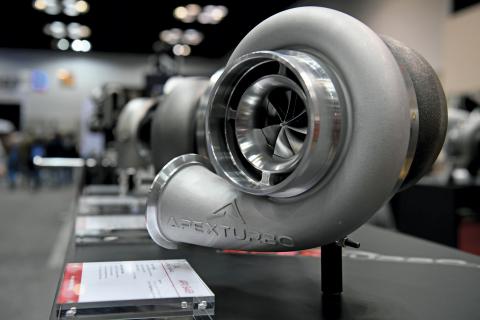
Turbo design is more sophisticated than ever, but so are the rule sets and demands in many racing disciplines. To meet requirements while remaining competitive, racers are turning to custom turbochargers for solutions that are purpose-built for the application.
As increasing numbers of racers embrace turbocharging as their preferred route to big power, turbo manufacturers have been putting in long hours creating bigger, better, and more robust offerings to meet the demand. Advances in compressor housing and wheel designs, material improvements, and expanded product lineups have come not only as a result of larger demand, but also due to the number of companies that are now fighting for a piece of the forced induction pie. As is often the case in the automotive realm, increased competition improves the breed.
“It’s forcing everyone to step up their game,” said Reggie Wynn of Precision Turbo & Engine, Crown Point, Indiana. “The products just keep getting better and better all the time.”
Still, there are situations where an off-the-shelf turbo solution just won’t cut it. As a result, serious competitors across a range of motorsports disciplines are now turning to custom turbochargers as a means of dialing in their setups not only for the demands of their application, but also the specifics of the rule sets in the classes they run in.
A bigger emphasis on aerodynamics has increased flow rates for both the compressor and the turbine, said a source. Those aerodynamic improvements have necessitated evolution in other aspects of turbo design.
Strategic Development
“At this point it’s about really making these designs state of the art,” said Ryan Salenbien of ApexTurbo, Maybee, Michigan. “Right now the bearing packs are improving because the wheel designs are getting so much better, and we’re seeing more high-quality ceramic ball bearing options for CHRAs [center housing rotating assemblies], which is dramatically increasing the longevity of those turbos. And, of course, the geometries of the wheels keep improving. It’s about optimizing all of the surface area that you have to work with in a given bore size for greater output.”
Geoff Raicer of Full-Race Motorsports in Phoenix, Arizona, told us that, when it comes to motorsports-caliber products, recent increases in flow rates for both the compressor and the turbine have come from a bigger engineering emphasis on aerodynamics. “They’ll use a gas stand to run a very hot, high-velocity stream of exhaust gas through the turbine and a butterfly valve on the exhaust outlet to monitor how much air is actually moving through the system at a given restriction.”
Those aerodynamic improvements have necessitated evolution in other aspects of turbo design in turn. “If you’re gunning to be a top performer, there is nothing that’s going to beat today’s high-end ceramic ball bearing with an aluminum cage that’s plated with silver to prevent galling,” he added. “Little tricks like that have changed not only response, but also longevity. The abuse that today’s turbos can take is pretty wild.”
Going Bespoke
These advances in turbo design are pushing up horsepower numbers at all levels of motorsports, but Wynn noted that racers who are competing at the upper levels of a given discipline are still faced with potential compromises if they opt to stick with off-the-shelf solutions.
“If you’re serious about being competitive, it should be a consideration,” he explained. “Unless you’re just going to get some track time and hang out with friends, a custom turbocharger is going to make more sense in almost any situation.”
While custom turbos typically command a 20–30% premium over their standardized counterparts, the ability to tailor various aspects of a turbo’s specifications for a particular application comes with undeniable benefits. In a growing number of popular racing disciplines, going custom is becoming a necessity.
“When someone comes to us for a custom turbo, they usually need to follow some kind of rule or regulation for the class they’re competing in,” said Salenbien. “So it’s not only being customized for the vehicle and use-case, but also the rule set, and an off-the-shelf option isn’t going to give you the best result in a situation like that.”
Raicer pointed out that trying to make an off-the-shelf turbo perform like a custom solution can lead to its own set of challenges, particularly in drag racing applications. “Drag racers tend to over-speed their turbos because most don’t monitor turbo speed. When you over-speed your turbocharger, you’re exceeding the material’s ability to hold itself together. The blades can actually explode off of the wheel, and beyond the negative impact that would have on a racer’s competitiveness, it’s also incredibly dangerous. Fortunately, companies like Garrett and BorgWarner are starting to integrate speed sensors into their designs, and the data can help a racer make these types of decisions.”
Many of the benefits of a custom-spec turbo are fairly obvious. Configuring a turbo to a specific engine combination and priorities is going to deliver performance that’s better suited to the requirements than a more general-purpose product can. In a growing number of race classes, going custom is more or less mandatory if you have your sights on the podium.
Increased competition in the turbocharger market has led to improvements in turbo technology. “It’s forcing everyone to step up their game,” said Reggie Wynn of Precision Turbo & Engine.
“Typically, you’ll see rule sets that limit inducer and exducer diameters,” Salenbien said. “Sometimes it’ll be related to the surge grooves in the compressor covers. If they’re too large, you might end up being disqualified based on a rule set’s requirements. It’s especially prevalent in drag racing. Most organizations have turbo specifications that can be used for a given vehicle weight. In a sport compact class you might be allowed to run a 57-mm compressor wheel for a weight deduction, or maybe you can run a 73.9-mm inducer at different minimum weight. If the rule said 73.9, anyone who is serious about being competitive is going to look for a turbo with a wheel that’s 73.9 mm. You wouldn’t get an off-the-shelf turbo with, say, a 73.6-mm inducer because you’re potentially leaving performance on the table. So unless you find a turbo that’s made specifically for a certain class and happens to be well-suited to your engine combination, you’re going to have to go custom to comply with that rule set while maximizing performance potential.”
With so many drag racing classes having their own specific requirements, finding an eligible off-the-shelf turbo that’s also ideal for a given application is becoming more difficult by the day. “Inducer, exducer, and the turbine wheel size are typically all going to be factors in a rule set where that’s regulated,” said Wynn. “That’s why it’s really hard to find an off-the-shelf turbo that ideally fits an application. It might be the right inducer size, but you could be giving up some performance by not having a larger exducer, for example.”
Custom turbos are also popular in diesel tractor pulling for similar reasons. “All of the classes in pulling have very specific dimensional characteristics for turbochargers,” said Roger Conley of Harts Turbo, Fayette, Missouri. “So for us, work in that segment is constant. Our dyno is running 120 to 150 days a year just doing development work, and most of that is for truck and tractor pulling. We’ll try two different wheels to see how it responds, then one of our engineers will go back to the office, modify the design based on the results, and plug that into the CNC machine. The next morning the wheel is ready to go, so we bolt it up to the turbo and make another rip.”
In other motorsports like rally, road racing, time attack, and drifting—where the rule sets often don’t regulate turbo specifications—the need to go custom tends to come from priorities that are specific to the format of the discipline. “Those racers tend to focus more on ‘time to torque,’” said Raicer. “If you need world-class response and spool, you usually aren’t going to be able to achieve that with an off-the-shelf turbo. These are situations where you’re on and off of the throttle many times over the course of a run, rather than going wide open throttle for a few seconds at a time like you would be in a drag race. Drag racers don’t really need to worry about response and inertia as much because they’re going to be on boost for the entire pass, but when you’re on and off of the throttle and driving for extended amounts of time, response tends to become a higher priority. That response is typically achieved with things like electronic waste gates and smaller turbos that are made out of more exotic materials.”
Getting Dialed In
Those who are considering a step up to a custom turbo will need to have some information at the ready in order to get something that’s really synced to their needs. “Everyone ultimately wants the most power in the shortest amount of time, but the specs really come down to the needs of a particular application,” said Wynn. “The main difference is that the turbocharger is going to be running at longer amounts of time in a drift car than it is in a drag car, so that driver is probably going to need something that’s a little more durable to ensure that it can handle the demands of that type of racing, and they’re probably going to prioritize response over maximum horsepower.”
Competitors across motorsports disciplines are turning to custom turbochargers to dial in their setups not only for the demands of their application, but also the specifics of the rule sets in the classes they run in.
Salenbien suggests that a racer’s engine builder or tuner should be part of the custom turbo conversation, and that it’s important to keep in mind that with a custom turbo, tweaks can be made after the fact when needed. “You have to have a clear understanding of what you’re after, and you need to speak to the right turbo techs in order to get there. But if something doesn’t work the first time out, you can make it work. One of the big benefits that you get with a custom turbo is that it’s upgradable. So if one aspect of the spec doesn’t work, you can make changes to it to get it where you want it to be.”
Custom turbo options tend to cover everything from inducer and exducer sizing and turbine housing design to blade count on the turbine wheel, but it’s important to be aware of how these different options interact with one another. “We can get in the ballpark with the wheel size of it, and then we fine-tune it with the turbine housing,” said Conley. “Changing the sizing of the turbine housing basically changes the rate at which it pinches down the air. So it becomes more restrictive, but it drives the turbocharger harder. If you have a smaller displacement engine, you might use a smaller turbine housing to improve that response and get it to spool up quicker, whereas you might not want to do that with a larger displacement engine that really wants to breathe.”
Custom turbo options tend to cover everything from inducer and exducer sizing to turbine wheel blade count. But, manufacturers should be aware of how these different options interact with one another. “We can get in the ballpark with the wheel size of it, and then we fine-tune it with the turbine housing,” said Roger Conley of Harts Turbo.
Along with a thorough understanding of their class rule set, racers who are looking to move to a custom turbo generally just need information about their application and their goals. Details like the engine’s displacement and typical rpm operating range, the fuel being used, power goals, and whether the setup will utilize additional power adders like nitrous or a water/methanol injection system can help zero in on the turbo specifications that will deliver the right result. “Ultimately there’s no free lunch,” Raicer said. “Everything in turbocharging requires some level of compromise, and it’s up to the person spec’ing the system to create the best balance based on the needs of the application.”
Going Beyond Plug and Play
Although custom turbos can provide racers with a number of benefits over off-the-shelf units, would-be adopters must keep in mind that custom turbos often need custom supporting components. “Most custom turbos are not a direct bolt-on replacement, so there’s going to be some plumbing requirements,” said Salenbien. “And it’s important to make sure you have proper fittings, drains, and so on. You don’t want to cause any premature wear, so you need to make sure you have an adequate oil feed and the correct amount of pressure.”
Proper mounting is also crucial to turbo performance, and that can be trickier when you’re working with turbos of this caliber. “One issue that we see a lot in classes like Pro Mod is that people will tilt the turbo further than 15 degrees,” said Wynn. “When you do that, it causes the oil to want to stay inside the bearing housing because it’s gravity-drained out of the turbocharger, so it just keeps building up more and more, and that can cause oil to leak out of the bearing housing. We tend to see this issue more often at this level because these are physically large turbos—whether it’s a custom unit or something off the shelf—so it’s easier to start running out of real estate in the engine bay.”
A custom turbo should be a consideration for any racer “serious about being competitive,” said Reggie Wynn of Precision Turbo & Engine. “Unless you’re just going to get some track time and hang out with friends, a custom turbocharger is going to make more sense in almost any situation.”
Despite any additional cost and complexity that comes with the move to a custom turbo, Salenbien expects to see continued demand for these offerings over the coming years, particularly at the upper levels of motorsports. “I don’t know if we’ll ever have a situation where there are enough options available on an off-the-shelf product that it will make custom turbos irrelevant. Serious competitors don’t want to compromise on performance or reliability, and you’re always going to need to do something to the turbo in order to really set it up for requirements of a given application.”
As bigger advances are made in turbo design, Conley expects to see those innovations arriving in high-end custom offerings well before they make their way into more mainstream products. “We’re pushing more into boreless technology, where the hub has gone all the way down to the point where you don’t see a shaft coming through with a nut on it, and we’ve seen that there are other manufacturers that are headed in that direction as well. That boreless design creates more surface area for the blade to compress the air, so you’re improving flow on the hot side just by taking that bulky hub and nut out of the equation. Competition in turbo development is really pushing the technology forward. We make something better, then someone else comes back with their own improvements, and we respond in turn. It’s the American way.”
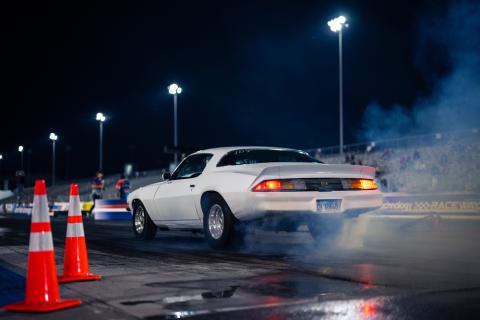
Test-and-tune events at the drag strip offer a ground-level snapshot of the state of the sport.
Healthy numbers of competitors for test-and-tune nights at the drag strip and packed grandstands for ‘run whatcha brung’ events are positive signs for the motorsports industry. The opposite is true as well. If nobody is coming through the gate for practice passes, it’s a bad omen.
Test-and-tune events are an important part of any drag strip’s economic model, but they are also a barometer for the health of motorsports in general. Test and tunes are racing at its most grassroots and are critical for reaching the next generation of young racers. It is the easiest point of entry in all of motorsports, the first place that legions of future racers will experience a car on a race track. Anyone can pull up to the starting line if they have a car capable of passing tech inspection, and practice skills, master techniques, and experience the thrill of driving a car flat-out. Being able to line up against a buddy for an impromptu best two-out-of-three challenge only adds to the fun.
We reached out to tracks with healthy test-and-tune events for insights into what works, who is showing up, and how to reach new drivers. One thing the tracks all had in common was an incredible variety of vehicles that come through the gates for test and tune.
“We get everything from Corvettes, Camaros, and Mustangs to Teslas. I’ve seen Plymouth minivans with turbochargers on them, they come out here,” said Ben Faucette of GALOT Motorsports Park, Dunn, North Carolina. “Some of the stuff you see you might wish had stayed at the house, as far as leaking and that stuff goes. But for the most part it’s okay.”
Irwindale Speedway, in Irwindale, California, is a motorsports complex that includes an eighth-mile drag strip. It too sees a broad spectrum of participants. “We’ve got a Smart Car, an ice cream truck, to full-blown pro street dragsters. It’s literally completely across the board,” said Irwindale’s Tim Huddleston.
Test and tunes at Carolina Dragway are drawing “a lot more late-model Camaros, Mustangs, Challengers, and Chargers, and a younger crowd coming in with that,” said Jimmy Owen. With the influx of late-model cars, he sees “less of the heads-up, all-out race car stuff.”
Cedar Creek Dragway, an eighth-mile track in Kemp, Texas, southeast of Dallas, bills itself as “The #1 Test-N-Tune track” where racers can test anytime the track is open. “We allow anything to go down the track as long as they have a helmet and that kind of stuff. There are some kids that come out with go-karts with their families. That’s something that is low budget, but they can have a good time and be with their family,” said Daniel Hux.
“Some people come out in golf carts,” he continued. “They don’t run fast, but they don’t have to run fast. They’re just going down learning how to push the brake, push the gas pedal, all those fundamentals.”
Modern Muscle
Variety is a given, but there are still some trends at test and tunes that are hard to miss. The late-model muscle car boom has transformed this scene at many tracks and lured a generation eager to find out just how fast their Mustangs, Challengers, and Camaros are. With many of these cars capable of ETs that were A/FX territory in the 1960s, a hassle-free night gathering timeslips is tailor-made for mastering these powerful cars.
Carolina Dragway in Aiken, South Carolina, an NHRA sanctioned quarter-mile track, is one facility that has witnessed the modern muscle wave. “What we’re seeing now is a lot more of your late-model Camaros, Mustangs, Challengers, and Chargers, and a younger crowd coming in with that,” said Jimmy Owen. “That’s where we’re starting to aim our focus, to that crowd. Not that we don’t want the other guys—we do, and we do things for them, too—but we’re starting to see that newer generation come in. That’s the future, and that’s what you’ve got to focus on.
“I’ve seen that the last couple of years. It’s like any other form of racing—bracket racing, heads-up racing, grudge racing, whatever you’re into—it goes through periods of change. The last year or so, we saw some of that changing a little bit with a slowing down of what I would call the traditional grudge crowd. There are a lot more options for those guys to go to this time of year, but even prior to that, this summer we started seeing more of an influx of the later-model cars and less of the heads-up, all-out race car stuff.”
“We’re definitely booming with Fox-body Mustangs, Camaros, street cars,” said Irwindale’s Huddleston. “You can literally go buy a drag race car right off the shelf, straight from the showroom.”
Some tracks attract the late-model muscle car crowd with impromptu events that skirt the line between test and tune and structured classes. “We decided, ‘Okay, we’re going to do a little shootout tonight for late-model, 2008-and-newer street-driven cars. Must drive it through the gate,’” Owen explained. “That seems to attract some of those guys, and we just build on that. You get them in there one time, and they like it, you treat them nice, and they come back with a friend next time.
“It’s like marketing with any other form of racing,” Owen continued. “You’ve got to respect your customer. You have to attract that customer to come in, and you have to treat them nice when they get there so they come back.”
Innovation Situation
Besides running traditional test-and-tune formats, the track representatives we spoke with were also implementing events that, in essence, run parallel to test and tune and bring in different types of newcomers.
“We run probably 100 events a year on our drag strip. We do a run-what-you-brung every single Thursday night, 5–10 p.m.,” Huddleston said. “We have an eighth-mile drag strip and then we have a one-of-a-kind burnout stadium. It’s a 2,000-seat stadium, 140 x 100, and we call it the Burnout Box. You can just go in there and shred tires. That rocks every Thursday night. And then, whether on Saturday or Sunday of the weekend, we do a drag race and a car show. We call them Sunday Fun Days where you just come out and test and tune. We do grudge racing, heads-up match racing, best two-out-of-three. Crazy stuff like that.”
Today, tracks from coast to coast are reporting an incredible variety of cars coming through the gates for test-and-tune sessions. “We allow anything to go down the track as long as they have a helmet and that kind of stuff,” said a source.
The burnout stadium attracts its own audience and delivers a different run-whatcha-brung experience. “It’s a different crowd. The Burnout Box guys come with two or three sets of tires in the back of their truck, and they change out their good tires and put junk tires on the back, and they pretty much hang out on that side of the property. Every now and again you’ll have them cross over, but it’s usually two events going on at the same time,” Huddleston continued. “There’s a lot more spectators than competitors. A lot of music, it’s real music- and atmosphere-driven over at the Burnout Box.”
Besides their regular Thursday night Test n’ Tune and Grudge Race, Carolina Dragway has been hosting a monthly Coffee and Cars meet at the track for several years that expanded into a second Test n’ Tune. “It works out really well. They would go to a parking lot at a shopping center or something like that, and as it got larger, they were taking up more of a footprint in the parking lot, and the stores would run them off,” Owen said. “So they like coming to the race track. The first few we did years ago, they just wanted to do the car show. Well, with a race track, why can’t we go down the race track? Well, you can. So we started opening that up to a Saturday Test n’ Tune and Coffee and Cars car show.”
As with Irwindale’s Burnout Box, the Coffee and Cars event at Carolina Dragway tends to attract a different crowd, more show car oriented than hardcore racer. “We don’t prep the track like you would for the Thursday test and tune,” Owen said.
Cedar Creek Dragway maintains a “family-friendly environment where they can come out and have a good time with their vehicle, whether it be a street vehicle or a race car on a trailer,” said Daniel Hux. Opportunities to make several passes “is the biggest draw.”
“Another thing we’ve done with our street car guys, since Thursday is an odd night for some of these guys, some asked if we could do a Saturday test and tune,” Owen continued. “Normally for Saturdays, we’re either bracket racing or we’ve got some structured event we’re doing. So the off Saturdays that we’ve had, we would just once a month do a Saturday street car test and tune. That’s how we bill it, and that’s what it is. If you want to bring your pro mod in and test it, just know that it’s street car Saturday, and the track is going to be prepped for those guys. On those days we cater to our street car guys and make them feel a little special.”
Business Tuning
For many tracks, test and tune is just one element of a crowded calendar, but for Cedar Creek Dragway it’s the central plank of the business model. “We have our events here and there, but mostly just test and tune,” Hux said. “You can have a big event, but everybody still wants a test and tune. You can put $5,000 or $10,000 out there, and you may bring in people, but you’re still going to have the majority of people watch test and tune or grudge races. We’ve always been known as a test-and-tune track. You can come out there, get going, and figure out how cars work, get familiar with it.”
Hux believes that Cedar Creek Dragway may be the second oldest continuously operating track in Texas, and it has seen plenty of tracks come and go. “They try to do these big money things and guarantee this and that, and they lose a lot of money. It’s a business. People are supposed to have fun, and I’m not saying they don’t at the big-money events, but I think a lot of fun is really missed on that. We have test and tune and people come and cook out. We allow people to cook and grill. Not a lot of tracks do, but we do. It’s a family-friendly environment where they can come out and have a good time with their vehicle, whether it be a street vehicle or a race car on a trailer.”
Properly promoting test-and-tune events “is like marketing with any other form of racing,” said a source. “You’ve got to respect your customer. You have to attract that customer to come in, and you have to treat them nice when they get there so they come back.”
Hux said that a good test-and-tune night will attract 100 to 120 cars, with opportunities for several passes. “That would be the biggest draw, that they are able to get on the track way more than most other places,” he said.
GALOT Motorsports Park draws from Raleigh and smaller towns along the I-95 corridor, and for it as well, a triple-digit number of competitors for test and tune is common. “On a big test-and-tune night, we might have 120 cars and motorcycles running,” Faucette said. “A lot of guys are repeat customers. There are a lot of guys with Hellcats or Mustangs that come out in groups of three or four and run against each other as many times as they can as time permits.”
Although some tracks like Cedar Creek Dragway are content to stay focused on maintaining a healthy test-and-tune crowd, others, like Irwindale, seek to transition them to structured classes. “We push them hard to get into our Summit ET class. That’s huge,” Huddleston said. “We’ve had a lot of our ‘just show up’ test-and-tune people that convert into bracket racers.”
Test and tune has long been an entry point for the beginner and a practice session for the more experienced racer, both of which are vital functions for the health of the sport. “I always press fundamentals,” Hux said. “Learn the car, don’t try to go fast. Understand the car. That’s what we’re there for. And once they do, they’re a much better driver and way safer.”
Another strength of run-whatcha-brung-type events is the lack of pressure on the racer. There aren’t any high stakes involved, no payout to sweat over. Drivers can just practice and have fun. “We’re just laid back, with a laid-back atmosphere. They’re not uptight about anything. They’re just laid back and having a good time,” Hux said.
Sunnen Products Company—the St. Louis, Missouri-based manufacturer of innovative honing solutions—has acquired German distribution partner Hommel Präzision.
“The acquisition of Hommel Präzision GmbH by Sunnen closes an important gap in the European market in [Sunnen’s] efforts to continue to serve the German market with the most extensive sales and technical knowledge available,” according to the company.
The entire Hommel sales and technical team is now part of Sunnen and will continue to support its German customers, with the current communication channels, including contact persons, remaining the same.
The Specialty Equipment Market Association (SEMA) is accepting nominations for its Hall of Fame program, now through March 17, 2023.
The award honors individuals in the automotive aftermarket who have enhanced the stature of the industry. Inductees include visionaries, innovators, and leaders who have positively impacted what is now a $50.9 billion market. Nominees may be business leaders or contributors from any aftermarket segment or niche.
“The SEMA community is filled with men and women whose accomplishments are so great that the entire industry is changed for the better,” said SEMA Project Manager of Recognition Programs Chris Standifer. “The SEMA Hall of Fame honors these individuals for their outstanding contributions. Without them, our industry would be significantly different from what it currently is.”
Criteria for the SEMA Hall of Fame are:
His/her contributions must have extended beyond the local level and reach throughout the national or international level.
The candidate is and/or has been involved in the specialty-equipment automotive industry and/or SEMA for a minimum of 10 (ten) years.
The candidate must have made outstanding contributions toward enhancing technology, professionalism, dignity, and/or general stature and growth of the specialty-equipment automotive industry.
The candidate must have conducted him/herself with a high degree of integrity both within and outside of the specialty-equipment automotive industry.
Candidate must be at least 50 years of age prior to the 2023 SEMA Show, or they may be at any age if deceased as long as the nomination is presented at least one year posthumous.
New Hall of Fame inductees will be announced in May. Nominations can be submitted now at sema.org/hof.
Industry experts reveal when helmets, fire suits, and other pieces of critical protective gear should be replaced. Hint: It doesn’t always align with expiration dates.
Nothing lasts forever, as the old saying goes, and that’s especially true when it comes to driver safety gear. Helmets, fire-retardant clothing, and head-and-neck restraints can all lose their ability to protect the racer—even if they still appear to be in good condition—due to factors that range from simple wear to outright damage. Race sanctioning bodies and safety organizations, including the FIA, SFI, and the Snell Memorial Foundation, set standards for protective equipment and also establish replacement and/or inspection timeframes for certain items.
Determining when to replace safety gear “can be tricky, as they have different levels of protection, and some don’t have required replacement dates,” said Carrie Willhoff of Racechick, Woodland, California. “Many people go to the rulebooks of their sanctioning bodies as a good start, but just because they may not have guidance with replacement dates doesn’t mean they are still good. For example, NHRA doesn’t require recertification on anything below an SFI 3.2A/15 fire suit. Does that mean that the lesser protections will last forever? Absolutely not.”
Helmets
“There are two homologating bodies on helmets—the Snell Memorial Foundation and FIA,” explained Jacob Brown of K1 RaceGear, Carlsbad, California. Each body sets its own helmet ratings periods. “FIA changes ratings whenever it deems necessary, with the last rating change in 2018 on the 8860.” Snell comes out with a new rating every five years. “We are currently in a Snell 2020 cycle, which came out in October of that year, and it will cycle again in October 2025.”
When Snell makes an update, “it makes changes to make the helmet safer, but a helmet is good for 10 years from the issuance of the Snell date,” said Brian Prior of Holley, Bowling Green, Kentucky, which has HANS, RaceQuip, Simpson, and Stilo safety equipment brands under its umbrella. That means today’s Snell 2020 helmets “are actually good until 2030. That’s not saying you won’t want to look at a 2025 helmet if you have the liberty to upgrade and see what the new safety standards and protocols are. If you have the ability, naturally you’ll want to go up to the next Snell cycle.”
A helmet is good for 10 years from the issuance of its Snell date, said Brian Prior with Simpson Performance Products. Because of constantly changing technology and safety standards, he encouraged racers to “go up to the next Snell cycle” sooner “if you have the liberty to upgrade.”
“Standards always change and evolve,” observed Kyle Kietzmann of Bell Racing USA, Miami, Florida. “For example, the FIA 8860-ABP standard has added ballistic protection in the front of the helmet to prevent penetration for open wheel-type forms of racing like F1. There are new standards for safety equipment issued by SFI and FIA every five to 10 years. These standards change over time, providing an opportunity for people to upgrade their equipment to take advantage of the latest advances in technology, materials, and construction techniques.”
Beyond these rules, though, other circumstances play into the timing of a helmet replacement.
“If you have a racing accident and take an impact on the helmet, make sure you do a visual inspection of the helmet to see if there’s any evidence of cracking in the shell or delamination, or any compression of the inner liner and the energy absorbing foam,” Kietzmann said. “If the helmet is damaged, replace it. If you lose consciousness in an accident, we recommend that you replace the helmet even if it appears that there’s no visual issues with the product. That’s one circumstance where the helmet could still be within the proper Snell or FIA date range, but you would want to replace it.”
Off-road racing can be “a very hostile environment in some cases, and the need to replace equipment could be much sooner” than for racers on pavement, said Ben O’Connor of Impact Racing. Manufacturers will inspect helmets to ascertain if the impact from debris was severe enough to have damaged the integrity of the outer shell.
“After any type of impact on a helmet, you would want to get it inspected,” said Prior, which most helmet companies will do free of charge. “We understand that sometimes financially-wise you may have that helmet inspected in hopes that you can reuse it, but ideally after especially a firm impact—a crash, a rollover, something of that nature—you would want to replace it. Once the EPS [expanded polystyrene] liner takes an impact, it’s going to compress to a certain extent.” That liner, he said, is “a large portion of the construction of the helmet—what lies between the driver’s head and the exterior shell of the helmet. That’s where the protection factor lies.”
It may not take what these companies euphemistically call “an event” to prompt a new helmet purchase. “If you have a good quality helmet, and it’s worn 20 times in a year, you look at that helmet and it doesn’t look good anymore,” explained Danilo Oliveira of G-Force Racing Gear, Acworth, Georgia. “The cushions are not good and it’s not even comfortable anymore. After some time, the cushions give up a little bit. So it’s not as tight as it was before. Why are you still wearing it?”
“We recommend replacing a helmet every three to five years,” Kietzmann said, “just because of normal wear and tear. Materials and components can break down over time.”
According to Brown, “the rule of thumb is you usually replace your helmet every two to three years if racing extensively, three to five if not racing on a full-time basis. It’s based on how often the helmet is used, and that’s not taking into account any crashes or drops.”
Environmental factors come into play as well. “In drag racing and in road racing there’s not a lot of wear and tear on a helmet since you’re dealing with a cleaner environment versus off-road,” said Ben O’Connor of Impact Racing, Indianapolis, Indiana. Off-road and dirt oval racing can be “a very hostile environment in some cases, and the need to replace equipment could be much sooner, particularly if there’s damage to the helmet due to rocks, mud, debris, things of that nature. If a rock hit was big enough to take a chip out of the base material of the helmet, you should replace it, or at least send it back to the manufacturer to have it inspected.”
Head-and-Neck Restraints
Head-and-neck restraints are “up for inspection every five years,” O’Connor said. “That’s the SFI recommendation, and most sanctioning bodies have adopted that.” He pointed out that “most devices are carbon-impregnated poly or something of that nature. They’re pretty darn strong and will last for quite a while.” The inspections, then, are to “make sure the tethers, soft goods, and fasteners are in good shape. If you see a tether that’s fraying, get that replaced. That is the lifeblood of the device. You don’t want your tether breaking in an event. Make sure the hardware is in good shape as well.”
The SFI-mandated five-year inspection cycle for head-and-neck restraints is meant to ensure that the tethers, fasteners, and other soft goods are in good shape, our experts said. They are the lifeblood of the device, and racers don’t want them to break in an incident.
“The only things that can be recertified with us are the HANS and hybrid devices,” Prior said. “Those are good for five years, and those can be sent back to Simpson to be recertified.”
Fire-Retardant Clothing
The replacement rules for fire suits aren’t as cut-and-dried as they are for helmets. They vary based on the suit’s level of protection.
SFI-15 and SFI-20 fire suits have to be inspected and retagged after five years. “Some of the things we would look for in those suits are rips, tears, and issues with the stitching,” said O’Connor. “Contamination would be cause for us to not recertify a suit or need to do repairs on the suit before it can be retagged. There’s no limitation on how many times a suit can be retagged by SFI, but we tend to limit that to one recertification. We feel that after 10 years, you really should replace the suit.”
There are no time limitations on the commonly used SFI-1 or SFI-5 suits. The same holds true for fire-retardant shoes and gloves. The decision to replace, then, is based on a number of factors.
“If you are in a fire, the suit needs to be replaced. It’s a one-time-use thing,” emphasized John Gentry of Stroud Safety, Oklahoma City, Oklahoma.
For Willhoff, the number-one deciding factor is fit. “The safest fire suit is one that fits the body well. Any time people gain or lose weight would be a time to determine if your suit still fits well. If you have gained weight, are you still comfortable in the seat with it on, or are you stressing the seams? If you’ve lost weight, a suit that is too bulky or has excess material is a liability, as it can get caught on pedals, roll cages, or any other edge when trying to exit the car in a hurry.
“Any opening on the suit can provide the risk of an air entry between the body and outside, which is a pathway for fire, so pay special attention to the neck opening as well as the cuffs on arms and legs,” she added. “Women shouldn’t wear men’s suits, as oftentimes the neck is too large and the shoulder seams lay lower across the bicep, which limits mobility and range of motion.”
On the subject of openings, “do you see any seams that are unravelling?” Willhoff asked. “If there are any punctures, rips, or tears, the suit should be replaced, as it could provide a pathway of fire to the body.”
“If you do tear a suit, you certainly should get it fixed in a timely manner,” advised Brown. “Send it back to us. That way we’re using the proper fire-retardant thread to put it together.”
At the 2022 PRI Trade Show, longtime helmet maker Bell Racing introduced a line of soft goods, including fire suits, underwear, shoes, and gloves. “For 2023, we are targeting grassroots motorsports with SFI-5 suits,” said Kyle Kietzmann., “For 2024, we’ll be adding the drag racing categories of SFI-15 and 20.”
Chemical exposure, especially to flammable materials, can impact a suit’s flame retardancy. “You see guys who wear them like mechanic’s overalls working on things,” Prior said. “I can understand that when you’re in a time crunch, working between heats. But ideally you want to keep that suit as pristine as possible. They’re going to get dirty. They’re going to get beat up. That’s fine, but when you get into chemicals—oil, fuel, anything like that—you just turned your most important piece of protective equipment into a wick, basically.”
To keep it clean, “we recommend a suit is dry cleaned with non-petroleum-based solvents,” explained Prior. “It’s very important when a racer takes a suit to a dry cleaner to request that it truly be dry cleaned and not laundered.”
The Proban material used in some SFI-1 suits is a “cotton-treated-type layup, and it’s possible under certain circumstances to wash some of that treatment out if you’re not careful about how you clean the garment,” O’Connor said. “Nomex or Aramid-based fabrics are going to have a natural inherent fire resistance to them, so there’s not as much of a concern of washing that treatment out because there’s no treatment on the fabric. However, over time the fabric itself can still break down, and that changes the characteristics of the fabric.”
Fire suit material “will get thin over time,” said Stroud Safety’s Tommy Cunningham. “Areas that you use in a race car—your bendable joints, elbows, knees, waist area where your belts come across, everywhere there’s a constant wear—every time you suit up and strap in, it’s getting a little abrasion. Friction will cause wear faster than normal. If you wear the material thin, or make a hole in spots, there’s less protection in those areas.”
There are no time limits set per SFI for driving shoe replacement, said Impact Racing’s Ben O’Connor, “but if the soles are coming undone or splitting, you should replace the shoes.”
“Replacement should be based on how much the suit is used,” Oliveira said. “The guy who cleans his suit once a month because he’s racing every other week should be looking for a suit sooner than the guy who raced three times a year.”
The Proban or treated FR cotton commonly found in SFI-1 suits “will lose its fire retardancy over time as you continue to wash it, wear it, and move around,” Brown said. Nomex, by comparison, “will break down, the actual fire retardancy will decrease, but it will never go away.” For that reason, Brown recommends Proban or FR cotton suits be replaced “yearly, or at the absolute most every two years if they haven’t been worn that much.”
Annual replacement was the shortest timeframe we heard from any of the representatives. Most recommended suit replacement after anywhere from two to five years, depending on its condition, how often it was worn, and all the other factors mentioned above.
Similar recommendations came up when discussing accessories. “Shoes and gloves should be replaced every two years, unless you wear a hole in them,” Prior said. “Driving shoes are designed for driving, but we wear those things everywhere. That just wears the soles out quicker.”
“I saw a guy, a pro or semi-pro driver, walking on the track with a shoe that was almost falling apart,” Oliveira explained. “I asked him, ‘Why do you still have that shoe?’ He said, ‘I just don’t feel like putting money into shoes. I only have two more races this season.’ I said, ‘Man, you shouldn’t have been wearing this a month ago. You still have two more races? Come on, buy the shoes and wear them next year. You still have next year to race.’ There has to be a balance of common sense and what you’re allowed to wear.”
“Safety comes down to common sense,” Brown added. “You have to take care of yourself more than anything. You can buy the fastest motor, the best tires, the best chassis, but if you get hurt racing, you can’t replace yourself. You’re given one head, one body. We’re always going to do what it takes to go faster, to get that extra tenth, but common sense needs to kick in. You need to spend money on proper safety gear. You need to replace it every so often. You’re getting motors rebuilt every 12 to 15 races, let’s get the suits redone every 40 to 50 races. That’s extreme, but look at the money you’re spending on the car versus what you’re spending to be safe to race. Safety is usually an afterthought, and it shouldn’t be.”
Steering Clear Of Counterfeit Gear
Top quality safety gear is not inexpensive, so it makes sense that a racer on a budget would look for deals when it’s time to add or replace a piece of equipment. A deal that’s too good, though, usually means the gear isn’t what the racer thinks it is.
“Pop-up suit companies selling suits for pennies on the dollar compared to your more reputable brands is a very appealing thing,” admitted Jacob Brown of K1 RaceGear, Carlsbad, California. “People don’t want to spend a lot of money on safety gear, but usually the old adage ‘you get what you pay for’ typically rings true.” A suit selling far below regular market value “usually means the material is not what they say it is. It’s not going to keep you safe in case of an accident.”
“The SFI Foundation and FIA do rigorous testing for the racing safety companies to make sure that the materials hold up to the standards required to have their certification,” noted Carrie Willhoff of Racechick, Woodland, California. Looking for an SFI label or FIA hologram on the gear will usually ensure the racer is getting authentic equipment. But there was a recent spate of SFI labels being counterfeited, and “the embroidered fake SFI labels look pretty darn close to the real thing,” Willhoff said.
To avoid being scammed, racers should do their homework before buying. “Research the company on the SFI Foundation list of approved manufacturers, which can be found on its website (sfifoundation.com), and always buy through the approved manufacturer directly or one of its distributors,” Willhoff said. “I know it’s tempting to get ‘the deal’ on eBay or buying from other channels, but it’s imperative that people know exactly what they are getting by going straight to the approved manufacturer.”
When buying a helmet, “the Snell website (smf.org) has a listing of all helmets that meet its certification,” said Ben O’Connor of Impact Racing, Indianapolis, Indiana. “Look at the Snell decal and make sure it matches the packaging, because it’s labeled inside the helmet as well as on the packaging itself.” If a racer is still in doubt, contact the manufacturer. “There are ways they can identify their helmet, either through the Snell labels or just looking at the product. We would know instantly if we turned the helmet over and looked at the interior, because there are certain pieces of the hardware that are very specific to us.”
The safest thing, O’Connor said, is to “buy direct from the manufacturer or through a well-known dealer. The places to avoid are large e-commerce sites that are open platforms anybody can sell through. If somebody’s counterfeiting something, that’s where you’re going to find it.”
That doesn’t mean Internet retailers like eBay and Amazon aren’t legitimate sources of safety gear, said Danilo Oliveira of G-Force Racing Gear, Acworth, Georgia. “We are on eBay; we are on Amazon. If you want to buy from eBay, buy from official stores that are on eBay, not from any one seller on eBay.”
Determining whether a safety equipment retailer is legitimate “isn’t that hard,” Oliveira said. “Do they have social media? Google can tell you how many reviews they have, how long they’ve been in business. If you look at G-Force, it’s 25-plus years. Look for one of our dealers, like Summit, you’ll see that they sell billions of part numbers.
“The ones who can stop fake products are not the police or the manufacturers, not SFI or FIA,” he added. “We can’t. It’s impossible. The ones who can stop it are the consumers.” —Drew Hardin
As racers gain experience with what the numbers can teach them, system manufacturers are upping their game to provide more information that’s easier to access and interpret.
When we spoke recently with data acquisition and sensor manufacturers about what they had in development for the performance racing industry, we heard several variations of, “I’m not allowed to say anything,” and “I can’t give you any details yet.” It was clear, though, that all of these companies were hard at work on new products they planned to launch within the next year or so. All were responding to what they saw as significant growth potential in the use of these diagnostic tools.
“A lot of cars out there still don’t have any sort of data acquisition,” observed Donny Cummins of Holley Performance Products in Bowling Green, Kentucky, which includes Racepak Data Systems among its brands. “They don’t know how they can benefit from it. Some of them know but are scared of it. Some think it’s out of their budget. I try to find the balance for these guys.”
He also pointed out that some racers are getting data acquisition by default. “The majority of EFI systems out there have data acquisition built into them, so racers switching from carburetors are automatically getting a data logger with their ECUs and being introduced to it. Which is great. I always say to my customers, at the end of the day, no matter what company you end up with, having data in your race car is the most cost-effective and time-effective thing you can ever do. You can diagnose a problem in one or two passes as opposed to taking a whole weekend before you finally find an issue.”
“The reality is, if you’re trying to really fine-tune, you can’t fine-tune without data,” said Matt Parlett of Computech Systems, Charlotte Hall, Maryland. “If you are a weekend bracket racer who just goes out there every once in a while, you’re not going to be worried about data. Once you start taking it seriously and want that extra edge, you can’t go any further without data. It is absolutely flying blind with no clue of what’s happening inside the car.”
When a racer recognizes the importance of data, “they never turn back,” Parlett added. “At that point, every chance they get they’re getting data. It becomes an ever-feeding circle. The more data you get the more you learn, so you want to get more data to learn more. And the more you learn, the more data you want. Ultimately, once you unlock that cycle, you become a better tuner, because each time you go through one of those iterations, and you fine-tune something and get that aspect perfect, your combination gets tighter and tighter.”
On the Horizon
Some of the company reps hesitant to talk in detail about what’s on their drawing boards did give us general outlines of what they are planning.
Computech, which specializes in drag racing data acquisition, is working on a data logger update that will “implement graphing features directly onto the gauge panel,” Parlett said. “When you get done with a pass, all you have to do is swipe up and it will instantly show your last two graphs overlayed on top of each other so you can recognize what was different between this pass and the pass before it.”
Donny Cummins of Holley Performance Products reports a “tremendous amount” of growth potential in the drag racing market, as “I still see a lot of cars at the drag strip that don’t have data acquisition. They don’t know how to benefit from it, and some think it’s out of their budget.”
As part of this update (which will be available as a download from the company’s website, computech.com), the logger will display an after-action report, according to Parlett. “We’ll have a list of what your launch rpm was, what the max EGT was, the average fuel pressure during the run, stuff like that. All of these will have instant overlays with each other so it will instantly compare this run to the last. We’re trying to do it automatically, to get them to see that, right after a run is over, we’ve changed the screen. Once the car’s turned off it will go right to the graphs while they’re still sitting in the car. The graphs will be smack dab in their face showing what’s different. Doing that automatically will help the guy who has a data logger but doesn’t pay attention to the data. It’s hard to ignore it when it’s staring you right in the face on the screen.”
“We’re going to get more modernized,” said Cummins of Racepak’s future offerings. “We’re going to use a lot more technology that’s been around for a while, dealing with storage and mobile devices.” Does that mean better accessibility? “Bingo. Things will be a lot more accessible. We’re looking at different platforms. We’re not going to stray from your standard laptop windows that are in everyone’s trailer. That will always be supported. But we don’t have blinders on. We recognize the need for more wireless technologies, different platforms, and we’ll be going down that path.”
One advantage Racepak has when developing new product is the ability to share resources with fellow Holley brands, Cummins reported. “That opens up a door to get outside the box a little bit. If we don’t know something, maybe that guy from the other company will know. We have something in the works for next year utilizing cool stuff from Holley and bringing it to the Racepak side.”
OEM sensor manufacturer Trensor of Irvine, California, introduced its 3FP brand in the first quarter of 2022 “specifically targeting performance racing,” said Scott Gilman. In terms of future products, the company is looking at segments “that are not highly commoditized or where there’s truly a gap in the market, whether that’s a quality gap, a reliability gap, an availability gap, or whatever it might be.”
Gilman said he can’t “speak specifically to the technology we’re working on in R&D,” but “as a company, something we’re doing at the OE level is consolidating sensor technologies into multi parameter sensors.” These sensors will address circumstances where “our customers are using multiple different sensors to capture the data they need. By consolidating sensor technologies into one, racers can capture pressure and temperature together at the same time in one sensor location, getting two constant data streams or even three constant data streams. So you will see Trensor bring products like this to the market under the 3FP brand in 2023.”
Gilman said Trensor has the ability “to do everything from pressure and temperature sensors to a wide array of sensors and technologies – you name it. So we’re looking to our customers and other partners for feedback. What’s important to them? Where do they need help? It’s a grassroots approach of looking at the market, finding those gaps, and figuring out how can we fill them and do better.”
What’s New Now
When we spoke to Parlett, Computech was about to release a new data logger specifically designed for Junior Dragsters that’s based on its existing drag racing data logger. “With NHRA there are a lot of rules and regulations—because they’re kids and not adults—specifically regarding the data logger and what the driver has access to. We found a way to fit within the rules and give the driver a true gauge panel.” That panel is “almost identical to the same screen I’d have in my big race car,” he explained, “but is limited in terms of sensor capability. According to the rules, we’re only allowed to have four sensors: engine rpm, jackshaft rpm, exhaust temperature, and head temperature.”
Parlett’s son races a Junior Dragster, and he has learned from experience that “one of the most important things is to get the idle temperature correct and get the idle rpm correct before the driver launches. Slight changes in that will make a big difference.” The panel is designed so that the desired launch rpm can be dialed in to display at 12 o’clock and in a green section of the gauge. “If the needle is bouncing around in the green, you know you’re good to go.”
The new data logger “teaches the kids when they’re young how to read data and use this software, so when they get to a big car, they can buy one for their big car and they’ll have the exact same software that they’re already comfortable with. This can take them throughout their entire racing career.”
The 3FP pressure sensors from Trensor are engineered to be robust because dependability is “extremely important to racers,” said Scott Gilman. “It’s critical when they make that pass or run that race that they have reliable data they can look at.”
Joshua Redden of Haltech in Lexington, Kentucky, said the company recently released two new products. He described the Nexus R3 vehicle control unit as “a next generation of the Elite 2500. It’s an engine management unit plus a PDM plus a Wi-Fi module and an integrated wideband controller all in the box.” Haltech also added the PD16 power distribution module to work with Haltech ECUs. “Being a power distribution module, the PD16 gives you a lot of data and diagnostic capabilities on the power usage via your Elite or Nexus ECU.”
Redden said both of these products speak to a broader trend he sees in data acquisition. “What they give you access to is more of what you’re looking for. One of the biggest things we’re starting to notice when it comes to data acquisition is that more people are looking at a vehicle more holistically. They’re not just looking at engine operation, they’re looking at the vehicle as a whole. So you’re seeing a lot more sensor inputs to your recording software—different chassis sensors and G meter and suspension travel, different power distribution channels—to see what the power is doing in the car.”
Computech’s latest data logger, the DataMaxx Jr., is designed specifically for Junior Dragsters. It “teaches kids when they’re young how to read data and use this software,” explained Matt Parlett, so they’ll be comfortable with the system when they move up the racing ranks.
He attributed the shift in thinking to “having the ability with the Nexus R5 and R3 to log at 1,000 hertz. You have a much more granular view of everything. But at the same time, that’s also given you a lot more room to log more data. With the progression of not just ECUs and data logging, but the progression of turbo technology, tire technology, and everything, there’s definitely kind of a resurgence of looking at all of the data, not just engine data. Lap times are included in that. It’s more of a mind shift on the part of the drivers, especially when it comes to drag racing, looking at the whole package and being comfortable with looking at a data system to make sense of it. The more robust your data acquisition is, the better the logging that you keep, the more details you have, the better your program is.”
Redden has seen this holistic approach in action at the drag strip. “I know guys who will make suspension adjustments in the staging lanes because something changed,” he explained. “Something that they saw on the track looked different, or something about the way the engine was running at the time was slightly different from the last pass. They’re saying, ‘Hey, I just saw this, it’s in the data, go make a change,’ and they’ll do it right there in the staging lanes before they roll into the water box.”
Joshua Redden of Haltech has seen a shift in the use of data acquisition. Racers aren’t just looking at engine operation, “they’re looking at the vehicle as a whole.” They are monitoring shock travel sensors (seen here) plus “different chassis sensors and G meters, and different power distribution channels, to see what the power is doing in the car.”
Redden also pointed out that adding new sensors to the Haltech line, including “suspension geometry sensors and laser ride-height sensors, those kinds of advancements and offerings, have opened the door for a lot of data we didn’t have in the past. Now we’re able to live look at suspension height, how much the car has lifted in a turn, or off the line in a drag race, and be able to react to that and program accordingly to that. That’s a major feat.”
“The need for improved technology in sensing products in the past two to three years, as well as drastically increasing reliability for use in today’s engines, has been increasing exponentially,” observed Will Smith of Smith Systems, Brevard, North Carolina. “Customers want products specifically designed for their application—which we specialize in—rather than modifying an existing product to work. Race teams and other end users are wising up to the fact that race engines are very high-stress environments, and experts on these individual products need to weigh in on material selection in order to meet those requirements.”
Accordingly, Smith Systems “is replacing a lot of the standard-built sensors that users have been using for years, and those users are having great experiences with these improved products,” Smith said. “We’re seeing usage on these sensors increasing drastically enough for us to shift some more attention to our racing line of sensors. There seems to be a large need for companies like us to enter the market, as other traditional suppliers have lagged with the use of improved technology and given less attention to the end users for improvements to the products. The minute details in design make a huge difference. Coming from rail, aerospace, and heavy equipment has put us in a good position for leading the drive for these improvements.”
“Minute details in design make a huge difference” in sensor technology, said Will Smith of Smith Systems. “Coming from rail, aerospace, and heavy equipment has put us in a good position for leading the drive for these improvements.” Photo courtesy of Smith Systems Inc.
When it launched its 3FP brand, Trensor came into the racing market with seven new sensor SKUs, “the result of a two-year journey of research and development, consulting with race teams and engineers,” Gilman said. “We took our patented Trensor technology, which is a pressure sensor technology, and deployed that in sensors that have several industry leading features and benefits.”
Among those features is a high level of accuracy, Gilman said, “what we call real-life accuracy. We hold across the entire working temperature range, -40 to 150° Celsius, between 1 and 1.5% accuracy even in the harshest ends of that range. So when racers are looking for that insight, they know within a 1% margin of error that they have their system dialed in. Typically, that is better accuracy than most engine control modules hold themselves.”
Another feature the Trensor sensors offer is “truly atmospherically vented reference,” Gilman said. “When we came to the market, we saw racers were modifying sensors to add vent holes to create an escape path for trapped pressure in the electrical interface, which is created when an electrical connector is plugged into a sensor. This modification lead to increased failure rates, since holes that were intended to be an egress for trapped pressure served equally well as an ingress for moisture and dust.”
The Trensor sensors “have factory molded vents to relieve this trapped pressure. They also automatically calibrate themselves to changing elevation, and this atmospheric reference is protected with a technologically advanced membrane that allows for atmosphere to pass through it but not water or dust, so it protects the circuitry and the sensor cell itself. Take Pikes Peak for example, where racers gain thousands of feet of elevation within 10 minutes, with a competitor’s product they might need to run a separate barometric pressure sensor that would take that elevation change into account and allow for their tune to be adaptive to the changing elevation. Our product allows racers to decomplicate that system architecture and rely on a single device.”
The Trensor sensors are also robust enough to withstand the vibration that occurs “in any violent race application,” Gilman said. Where some engine sensors have to be ported off to the firewall or a cage tube to protect them from vibration, “our technology is validated to more than 40 gs of force on all axial planes. They are designed to be put on your engine. We partnered this year with a Top Fuel drag racing team that had been going through sensors either every race or every few races. The sensors we put on that car at the beginning of the season are the same sensors they ran their last pass with.”
Dependability is “obviously extremely important to racers,” Gilman said. “A lot of these guys are spending anywhere from a few thousand dollars to few hundred thousand dollars per race. It’s critical when they make that pass or run that race that they have reliable data that shows precisely what’s going on with their system. Whether it’s mid-race or during post-race analysis, this technology gives them the insight they need.”
 MEMBERSHIP LOGIN