El Segundo, California-based MotorTrend Group has announced the 2023 HOT ROD Power Tour driven by Continental Tire.
As part of HOT ROD’s 75th anniversary, the tour will visit Georgia, the Carolinas, and Tennessee over five days in June.
Dubbed America’s largest traveling car show, more than 6,000 cars and trucks of all years, makes, and models will be on display for tens of thousands of automotive enthusiasts. The tour will feature over 1,000 miles of driving, with high-octane events such as drag racing, autocross, and live entertainment.
“HOT ROD culture has defined generations of automotive customization and in 2023 we’re going into our biggest year ever for our 75th anniversary,” said MotorTrend Editor-in-Chief John McGann.
2023 HOT ROD Power Tour Locations:
Day 1: Monday, June 12 – Atlanta Motor Speedway, Hampton, Ga.
Day 2: Tuesday, June 13 – South Carolina State Fairgrounds, Columbia, S.C.
Day 3: Wednesday, June 14 – Rockingham Speedway, Rockingham, N.C.
Day 4: Thursday, June 15 -- zMAX Dragway, Concord, N.C.
Day 5: Friday, June 16 – Bristol Motor Speedway, Bristol, Tenn.
More details on MotorTrend’s HOT ROD Drag Week are expected to be announced at a later date.
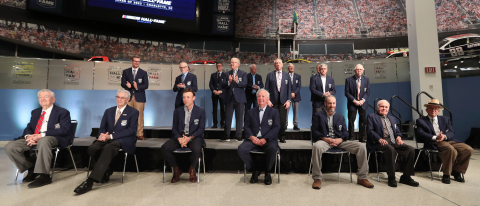
(L-R) NASCAR Hall of Famers (front-row) Bobby Allison, Leonard Wood, Matt Kenseth, Hershel McGriff, Kirk Shelmerdine, Jerry Cook, Jack Roush (back-row) Dale Earnhardt Jr., Mark Martin, Joe Gibbs, Bobby Labonte, Red Farmer, (back-row) Ray Evernham, Dale Jarrett and Ron Hornaday Jr. (Photo by David Jensen/Getty Images)
The NASCAR Hall of Fame—based in Charlotte, North Carolina—has welcomed its class of 2023 with an induction ceremony at the Charlotte Convention Center.
Inductees included 2003 NASCAR Cup Series champion Matt Kenseth; Kirk Shelmerdine, who helped guide Dale Earnhardt Sr. to four Cup titles; and Hershel McGriff, who secured four Cup races in 1954 and returned to NASCAR racing in 2018 at the age of 90.
“I always looked at my career as a ladder,” said Kenseth. “You start at the bottom, and you hope you climb your way to the top. My ladder had hundreds and hundreds of rungs on it, and without any of them—bottom, middle or top, wherever you sit—I wouldn’t be standing here without any of you.
“So, really, from the bottom of my heart, thank you all.”
In addition, NASCAR Vice Chairman Mike Helton was honored with the Landmark Award for Outstanding Contributions to NASCAR, while the late photojournalist T. Taylor Warren was honored with the Squier-Hall Award for NASCAR Media Excellence.
For more information, visit the NASCAR announcement here.
Concord, North Carolina-based Speedway Motorsports has announced several promotions.
Jim Hosfelt was named vice president of Safety and Security at Dover Motor Speedway (Dover, Delaware) and director of Safety and Security for Speedway Motorsports.
In his new role, Hosfelt will continue managing security and public safety efforts for DMS while serving as a security liaison on behalf of all Speedway Motorsports facilities with NASCAR and federal agencies. Hosfelt will be tasked with sharing best practices and finding ways to enhance the fan experience across all Speedway Motorsports venues.
Kenton Nelson, meanwhile, maintains his position as vice president of Events at Texas Motor Speedway (Fort Worth, Texas) and adds director of Events for Speedway Motorsports to his role. Capitalizing on his experience producing IndyCar and NASCAR race events, concerts and car shows, Nelson will support all 11 Speedway Motorsports venues to develop and share best practices for IndyCar, NASCAR, and NHRA events as well as non-traditional consumer events.
Finally, Kyle Nelson was named vice president of Operations at Texas Motor Speedway. He will lead the operations department in preparing and maintaining the 1,000+ acre property to host hundreds of thousands of fans annually for IndyCar, NASCAR, and dirt track races, as well as car shows and special events.
“Our company is proud to recognize them with these well-deserved promotions and we look forward to seeing them excel with in their new roles with additional responsibilities,” Speedway Motorsports Chief Operating Officer Mike Burch said.
Jasper, Indiana-based Meyer Distributing has announced the addition of its Hurricane, Utah cross-dock. The facility will have a direct feed from Meyer’s Kingman, Arizona hub.
“We are always looking at where we can improve delivery times and consistency,” Meyer Distributing Director of Crossdock Operations Alex Blackgrove said. “The Hurricane dock will allow us to deliver daily to the fast-growing region of St. George as well as capture some additional rural markets in Utah.”
Meyer Distributing is an automotive specialty products marketing and distribution company with numerous warehousing facilities. It serves customers nationwide via Meyer Logistics direct shipping.
Tracking legal, legislative, and regulatory developments impacting the racing and performance industry.
PRI’s Washington, DC-based legal and advocacy teams work continuously to protect and support motorsports venues, sanctioning bodies, and businesses around the nation. We are tracking several initiatives this month, including an update on key legislation designed to protect racing businesses, a new law aimed at impeding sales of counterfeit goods, how connections from December’s PRI Show will fuel the industry in 2023, and more.
Update On Status Of RPM Act
The 2021–2022 Congressional session has ended without the passage of the Recognizing the Protection of Motorsports (RPM) Act despite strong Congressional backing and extraordinary support from the racing community.
“We wouldn’t have made it this far without this incredible effort by so many of our members,” said SEMA President and CEO Mike Spagnola. “The RPM Act was one of the most bipartisan bills in the 117th Congress, with over 165 lawmakers co-sponsoring the legislation. SEMA and PRI are leveraging the momentum we built during the 2021–2022 congressional session, assessing the current challenges the industry faces, and will be charting a path forward for the industry’s advocacy efforts at both the federal and state levels.”
SEMA/PRI will continue its advocacy work to bring needed certainty to the racing community and protect a great American pastime and hundreds of thousands of jobs in communities throughout the country. For updates, visit saveourracecars.com.
New Law Takes Aim At Counterfeit Goods
A new law has been passed that will help protect consumers from bad actors peddling counterfeit and stolen goods. The PRI-supported INFORM Consumers Act is critical in helping law enforcement, manufacturers, retailers, and online marketplaces of all sizes shield buyers from unscrupulous merchants selling knock-off and potentially unsafe products.
“PRI celebrates passage of the INFORM Consumers Act, which protects the intellectual property of motorsports parts manufacturers and helps to prevent the sale of stolen and counterfeit products,” said Eric Snyder, PRI’s Senior Director of Federal Government Affairs.
For more information, including key provisions of this new law, contact Snyder at erics@sema.org.
Tracks, Sanctions Strategize At PRI
Motorsports facility owners, event organizers, promoters, and professionals from across the nation gathered at the most recent PRI Trade Show to create dialogue, share information, and make new connections.
“These conversations between tracks and sanctions give racers more consistent and quality racing. We’re moving toward race teams being able to tune to what they ran at the last track or race they attended,” said Kurt Johnson of Petersburg, Indiana-based Total Venue Concepts. “Safety is also paramount. It’s not just a competitive advantage—we’re also providing safer tracks countrywide thanks to the conversations [here].”
During the three-day Show, more than a dozen breakout sessions took place in the TOPS (Track Operators, Promoters, and Sanctions) Workroom & Lounge presented by MyRacePass.com, including a special drag racing day that covered topics on track prep and maintenance and getting the most out of track equipment, plus an all-star panel of promoters discussing what makes an event successful.
“We all have to remember that no matter what type of motorsports you’re into—drag, oval track, road racing, you name it—the track owners and promoters are the baselines for our entire industry,” said Josh Holt, co-owner and co-founder of MyRacePass. “Having a [space] where promoters can ask questions, hang out with their peers, and learn some of the new tricks of the trade is a fantastic addition to the PRI Show.”
The meetings also allowed tracks and promoters to align their goals—and racing schedules—to benefit race teams, fans, and the entire industry.
“Being able to meet in person strengthened our relationships,” said National Speedway Directory’s Timothy Frost, who oversaw roundtables on road course and off-road racing. “Promoters coordinated schedules with other facilities and sanctioning bodies,” which will lead to more opportunities for track time for racers, fuller car counts, and better racing.
“Anytime you have the opportunity to communicate with others, be it your next-door neighbor [track] or somewhere across the country, it can help; it opens the dialogue that helps foster relations,” agreed Joe Skotnicki of Racing Promotion Monthly (RPM).
PRI Rally Raises $40K For Advocacy
Some $40,000 was raised to help elect lawmakers that support motorsports during a fundraising event at the recent PRI Trade Show in Indianapolis. Thousands of industry members took part in the “Save Our Race Cars” rally at Lucas Oil Stadium presented in conjunction with PRI’s Performance Racing Political Action Committee (PAC).
Emceed by Johnny D, “the Motivational Cowboy,” the event featured appearances by members of Discovery Channel’s Street Outlaws, as well as Sage “Donkmaster” Thomas, Brent Leivestad from PFI Speed, and others.
For more information or to help support the Performance Racing PAC, visit performanceracing.com/pac.
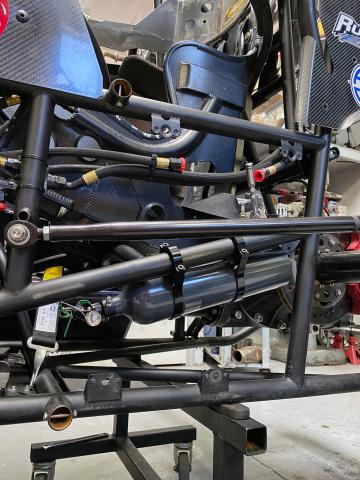
SFI has recently mandated fire suppression systems for sprint cars. Here, Lifeline USA’s automatically activated 5-pound SFI 17.3 system is mounted under the seat in a sprint car.
Determine which type of system to install now before each second of a fire event becomes more and more crucial.
Over the last decade, fire suppression has moved to the forefront of discussion in the racing world. We continue to evolve driver safety in our sport, yet the proximity of a safety response team has too often been the dictating factor in determining our standards.
Rally car teams in more remote environments were the first to develop and require system efficacy. This trend followed with sports cars on 2- to 3-mile road courses. Yet, some notable fires resulting in injury still occurred in half-mile ovals with faster response times. The initial 20 seconds of a fire event, where the fire suppression system is the only responder, is critical.
When we discuss fire protection, we focus on plumbed-in systems. There are two primary deployment methods available: automatic or driver-activated. Driver-activated systems are deployed as a first step in a fire event while the driver is still belted in. Both systems allow drivers to focus on getting out of the vehicle while the fire system fights the fire.
Handheld systems are intended to be supplemental because they require an active user. In rally or off-road, their primary use is to help other competitors. In a significant fire event, the driver needs to be able to focus on extraction.
There are several factors that define the effectiveness and suitability of a fire suppression system. This includes the suppressant type, amount, delivery method, and system design.
For a series with existing fire suppression rules, many of these factors will already be defined. This leaves you with fewer choices to make—so always start by reading the rules, as these factors are all interrelated. Yet, with a proper system design, suppressant type is more often the defining factor.
Types of Fire Suppressants
There are three major classes of fire suppressants: gas, foam, and powder. For most applications, gas agents are the gold standard. They react with the fire three-dimensionally. This means they expand in a volume of space to fight fire. 3M Novec 1230 is the leading modern gas agent, as Halon suppressant has been illegal to manufacture for well over a decade.
Pictured here is an electronically active fire marshal button on the exterior of a race car. A fire suppression system’s activation method is one of several key criteria used in choosing the proper system for a race application.
Novec is non-conductive and non-corrosive. This is critical in vehicles with expensive and advanced electronic systems. It also evaporates with no residue for easy clean-up. Finally, Novec is a super-coolant, which puts it at the forefront of the newest technology for EV and hybrid vehicles. Preventing thermal runaway is critical to fire containment in electric platforms.
Foam is another effective suppressant. It has the benefit of drawing heat out and preventing reignition due to the high volume of water in the foam solution. Yet, it is a two-dimensional agent that must cover and smother the fire with a foam film. Thus, there are efficacy limitations, especially in racing vehicles with larger volume cockpits with more complex contours that are harder to smother with a foam barrier, typically but not limited to production-based cars and trucks.
Finally, powder can be effective for many types of fuels as a suppressant. When mounted in a racing vehicle, however, powder packs down with vibration, making it dense, hard, and difficult to deploy. It takes a very advanced deployment system to both prevent this and deploy in rollover situations. For this reason, powder is often confined to crew or safety team use.
Suppressant Delivery Methods
Suppressant delivery method is no less important than the suppressant itself. It is a factor that differentiates many manufacturers. It isn’t uncommon to have different nozzle designs for gas and foam suppressants, and even specific designs for engine versus cockpit, or SFI versus FIA homologated systems.
For example, nozzle count isn’t defined in FIA homologated systems as it is in their SFI counterparts. They are more of a factor of system design; not “more is better.” Tubing length and diameter, as well as operating pressure, also play a critical role in system design and performance. Installation should follow both your sanctioning body’s rulebook as well as your system instruction manual. This is critical to achieve the intended performance.
Shown here is an example of an electrically activated FIA system typically seen in sports cars and road racing. System installation should follow both the sanctioning body’s rulebook as well as the system’s instruction manual to achieve the intended performance.
Some final factors may also influence your decision on a fire suppression system. They include:
• Vehicle size and interior volume: Larger vehicles with larger cockpit and engine bay volumes such as Trophy Trucks, stock cars, and production sedans typically require more suppressant than small single-seater formula cars.
• Engine bay and cockpit airflow: As more air flows through these areas from a combination of higher speeds and more open design as found in a sprint car cockpit or Ultra4 engine area, suppressant will be diluted when the fire system is deployed while moving, so more is required. Conversely, a closed-cockpit prototype requires much less suppressant to maintain safer levels for the driver inside.
• System size.
• Activation method (mechanical, automatic, electrical, and auto electrical).
• Weight constraints: Weight is often less of a concern for a vehicle adding ballast than those at or over the weight limit, but many still focus on an effective lightweight system to allow more freedom in ballast placement.
• Rulebook requirements.
• Budget.
Once a fire suppression system has been installed, just like any other part on the vehicle it must be properly maintained to remain effective and compliant. Both the SFI and FIA require that fire systems be serviced every two years by an authorized dealer. If you have installed a water-based foam system, ensure that your vehicle isn’t stored in freezing conditions. If so, make sure your manufacturer has incorporated an antifreeze in their suppressant.
Fire protection is a critical component in continuing to make our sport safer and more sustainable. Choosing the correct system for your vehicle and type of racing shouldn’t be daunting, but there are several factors—more than we can even touch on in this article—to consider. If you don’t have a clear answer of what is correct for you, engage with your supplier or manufacturer to ensure you are getting the protection you’re paying for. A fire system spends 99.44% of its life riding around as ballast. When you need it, you’ll be thankful you invested the time to choose the correct one.
James Clay is a professional sports car racer and has been involved in the racing industry since 1997 as the president of BimmerWorld and BimmerWorld Racing. In 2015, James and team expanded their racing industry footprint with the start of Lifeline USA, the American arm of the UK fire suppression manufacturer Lifeline.
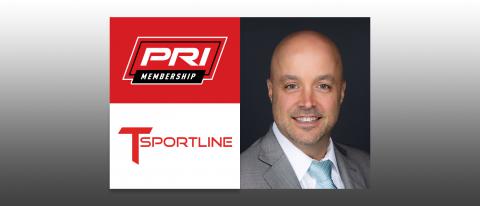
As the performance aftermarket expands from its traditional focus on internal combustion engines to now including vehicles with electric motors, Brian Reese of T Sportline is leading the charge to add performance enhancement options to Tesla owners.
Pushing the performance envelope into EV territory is the focus of this PRI Founding Member.
The North American performance industry started out in the 1940s with components like cast cylinder heads for the flathead Ford V8. It has been evolving continuously ever since. Scores of manufacturers develop speed products for engines that rely on carbon fuels. A few others are pushing performance boundaries into a new dimension by anticipating aftermarket needs for the new generation of electrified vehicles.
Among the leaders of this new wave of aftermarket performance is T Sportline, which advertises itself as the world’s first, and leading, source of tuner components for Tesla vehicles.
Operating from bases in Atlanta, Georgia, and Van Nuys, California, this PRI Founding Member offers a variety of products for these luxury performance EVs, centered on wheel-and-tire packages that address the physical realities of a Tesla’s overall layout and capabilities. Beyond that, T Sportline markets Tesla model-specific exterior dress-up items, interior enhancements, and tools, all aimed at making Teslas tougher.
“We’re primarily Tesla but moving into all types of EVs at this point,” T Sportline CEO Brian Reese explained. “Our company started 13 years ago with a focus on Tesla; we got started before it was even cool to think about electric cars. We have almost 10 years of experience in that space.
“Really, our mission has been similar to the traditional automotive aftermarket for ICE cars,” he added, “in that we wanted to improve the performance and appearance of the vehicles. We have a respectful relationship with Tesla, but they’re mostly focused on delivering cars. We’ve known them since it was just Elon and some guys.”
Like traditional muscle cars, EVs benefit from the lower unsprung weight that a specialty wheel-and-tire combo can deliver, only the engineering parameters are considerably different between the vehicle types. “You have to specify products for use in EVs because the cars are heavier,” Reese explained. “Our load rating for wheels is typically higher than what you’d find in a similarly sized wheel for ICE. We tend to have to make a higher-spec wheel that can survive on a Tesla because of the torque and the weight. You can’t just take your ICE part and say it’s good.”
As such, T Sportline’s business centers on modifying vehicles, with the potential regulatory roadblocks that the notion implies. For that reason, Reese made clear that T Sportline benefits just as strongly from PRI advocacy, particularly at the federal level, as any supplier specializing in internal-combustion power.
“We share, just like people with ICE engines, in preserving the right to modify a car,” he said. “We’re a little different than ICE is. We maybe don’t have the same EPA consideration as an ICE engine, but like anything else, I’m sure there are things waiting down the road for us, such as disposing of batteries, or modifying batteries on these cars, so I think we’re comparing our interests to the ICE world in terms of preserving our rights to race.”
T Sportline, in Reese’s assessment, currently faces operational headwinds that are analogous to those faced by firms developing internal-combustion components.
“We have the same challenges as everyone else,” he said. “It’s difficult to dance around COVID-19 delays and factory slowdowns. We’ve paid a lot on inbound and outbound freight, and for us, the OEMs making new cars for us to modify has been a challenge. There just aren’t as many new cars as there should be.”
Looking ahead, Reese cited the economy as yet another ongoing challenge. “We’re coming off some really good years, but now have interest rates really going up. Hiring people is also difficult, especially to work in the office, not from home. We’re a hands-on business here.”
The long-term outlook is nonetheless exceedingly positive for T Sportline as the acceptability of EVs continues to expand and performance opportunities grow. “We allow customers to personalize, to improve performance, and to support whatever means of activity they want to do,” Reese said. “We do street cars to full-race performance, whatever suits somebody, and it’s good to know that in the land of Tesla, everything is up for performance upgrades in just the same way that we’ve known in the traditional market. Most of it is street, only because it’s relatively new, but NHRA has also created an EV bracket. Tesla has been routinely involved in autocross and road race and has really done quite well. Even in off-roading or overlanding, we’re growing in that category as well.
“What’s different is that the motorsports world needs to evolve around EVs like it did around ICE,” he continued. “You think about drag racing: There’s no such thing as a cubic-inch limit in the land of the EV. There will be some evolution there that I think will come along just fine. The cars perform extremely well. They have a very low center of gravity, you’re never in the wrong gear, and they’re typically all-wheel drive, with great stability management. They make you a better driver.”
Quality learning opportunities at the annual PRI Trade Show cover critical subjects across business, tech, and EV performance—many of which can be put into practice straight away.
Racers should never rest on their laurels. No matter how fast, quick, or reliable the race car is right now, it can always be faster, quicker, more robust. The same holds true with racing and performance businesses, engine builders, and race teams.
Racing has enjoyed a resurgence of late, thanks in large part to post-pandemic, pent-up demand; but the marketplace is constantly shifting, and strategies that worked today may not be enough to ensure success tomorrow.
To keep racing and performance businesses moving forward in 2023, we’ve collected tips, advice, insight, strategies, and other key takeaways from select PRI Education seminars presented at the recent PRI Trade Show in Indianapolis.
Subject-matter experts covered a number of disciplines, from how to make better use of social media to maximizing engine (and EV) performance. We’re sure there’s information here you can use to sharpen your program for the new race season.
Social Media Marketing Tips & Tricks
Social media marketing is one area where many small-business people struggle to keep up. Not only is it hard to create good content and find the time to post it, many people are unsure how to gauge the effectiveness of their efforts.
Sasha Dierker of SRI Performance in Mooresville, North Carolina, offers some tips and tricks for performance and racing businesses, starting with the basics. She defines digital marketing as all the opportunities brands have to interact with consumers online, via email, social media, websites and blogs, display ads, and search engines.
An advantage to posting on social media—Facebook, Twitter, Pinterest, Instagram, LinkedIn, Snapchat, TikTok, and YouTube among the most popular—is that companies can do so for free, whereas display advertising is a pay-to-play environment.
Tools for a digital marketer include conversion funnels, key performance indicators (KPIs), search engine optimization (SEO), Google ads, campaign tracking, retargeting strategies, display ads, social media, newsletters, user experience (UX) and user interface (UI), spreadsheets, WordPress, customer relationship management (CRMs), Google analytics, A/B testing, customer journey mapping, and website optimization.
According to Dierker, a digital marketing plan has seven key parts: an executive summary, KPIs, marketing strategies, objectives, the target audience, competitive analysis, and market analysis.
How can one measure the success of a social media program? First, goals should be very specific, she said, and it’s paramount to know your audience.
KPIs are crucial. Some examples include sales growth, sales per client, profit margins, customer retention, and customer satisfaction. “KPIs should be simple to understand and measure,” Dierker noted. “They should be aligned with your company’s overall strategic goals and objectives. They should be actionable. They should focus on internal factors that are in a business’s goals.”
There are various ways to measure a social media program. Since Dierker uses Facebook extensively, she pays attention to the analytics it offers.
It also helps to schedule posts in advance, and there are several options for software to help. Most of them include analytics that can be valuable. Dierker uses Sprout Social. Other options to consider include Hootsuite, Buffer, and Zoho.
Also of note is Canva, a free-to-use online graphic design tool. Not only will it help to create artwork for posts, but its templates can stimulate creativity. Adobe Photoshop is another option.
Deanna Baldwin of Baldwin Racing Engines in Friedheim, Missouri, and Abby Hohlbein, a USAC D2 midget driver from Cloverdale, Ohio, found the information on Canva helpful.
“Appealing to what people want and watching your analytics were interesting to me,” Hohlbein said. “I use social media mostly to promote my sponsors and to provide videos of our races, because they’re not televised. We use Facebook and Instagram mostly. For the races we use Facebook Live a lot.”
Giving Small Business an Edge
Small businesses have the opportunity to outshine bigger ones if they provide better and more personal customer service, noted retail expert Tom Shay of Profits Plus Solutions, based in Dardanelle, Arkansas. This approach gives them an edge over big businesses that simply track customers’ spending habits but don’t offer a personal touch.
“Today’s customer focuses on availability, convenience, and customer service,” observed Shay.
Tom Shay of Profits Plus Solutions assured small business owners that they can outperform larger companies by providing better and more personal customer service. Nearly two-thirds of customers leave for a competitor, he said, because they think the business doesn’t care.
He advises not spending money to search for new customers if you’re ignoring customers who have done business with you in the past; he notes that 65% of people leave and go somewhere else because they think a business doesn’t care.
In tough economic times it may be tempting to “save” money by not advertising, but Shay advises against it. Instead, he said small business owners should determine their advertising goals and change their messages—and the media they use—frequently.
It’s important to test new ideas, he emphasized. “You have to try new approaches, because challenging times require radical thinking and actions. Listen to your gut feelings,” he said.
Small-business people should calculate what they may lose if a new tactic fails, but also what they’ll gain if it succeeds. If their gut feelings say it could work, try it.
Two of those new tactics could be discontinuing a product, or even firing an employee, which can be hard but necessary. It’s easy to put both off in the day-to-day routine of doing business, but it’s important to take stock of a situation realistically and make necessary changes as soon as possible.
Another change Shay recommends is a shift in focus from a business’s products onto its customers. “Focus on who your customer is and what you can do for them instead of on your products,” he said. “There may be other things you can add to your product line or provide as a service.”
He also advises looking for every possible expense to eliminate, and to understand your financial statements.
“Remember Vivian Greene’s quote: ‘It’s not about waiting for the storm to pass; it’s about learning to dance in the rain,’” he said.
Shay’s advice registered with Saban Bibent, an 18-year-old sprint car driver from Cincinnati, Ohio, who wears most of the hats on his team.
“We’re all so different, and you have to make the best choices for yourself,” he said. “Having good relationships with your customers will differentiate you from the competition that is only doing things online.
“In my case, as a driver, fans don’t just show up,” Bibent added. “You have to give them something, whether it be your time, or something that you support or stand for, before they’re going to want to buy one of your T-shirts, for example.”
Sponsorships in the Digital Age
If social media has changed the small-business person’s daily routine, the digital age has also generated big changes for the people who buy and sell motorsports sponsorships. Stephen D’Hondt of Spire Sports + Entertainment in Cornelius, North Carolina, said the digital age has shifted the balance of power between companies’ marketing decision makers and the sponsorship salesperson.
Today, the entire discussion is different, and the sponsorship salesperson needs to adapt.
Marketing decision makers don’t want to be sold because they’ve already conducted their own research and have a good idea of what they want to sponsor, D’Hondt said. Therefore, the sponsorship salesperson needs to come across as a problem solver instead of a salesperson, and the questions he or she asks often determine his or her success.
Tactics that work include introducing who you are, but asking questions to understand what the company is looking for in a marketing partnership; admitting that you may not be able to help; asking discovery questions in a conversational format, using neutral language; and asking consequence questions to get the prospect to start selling themselves on why they need what you have to offer.
D’Hondt suggests people become fanatical about media and creating content, because the lines between sales and marketing are blurring. “Your digital presence is your presence,” he said. “Actively seek out audiences and meet them where they are spending their time.”
How can sponsorship salespeople best move forward? “Stay close to your points of contact,” he said. “Ask how you can help them through economic cycles. Find efficient ways to deliver incremental value.
“The future of motorsports sponsorship is one of transition, where business models will have to adapt in order to survive,” D’Hondt continued. “Multiple points of value will have to be provided.”
Salespeople should be on the same social media platforms as the brands, he added.
It’s often hard to even determine who a company’s decision makers are. He suggested LinkedIn, SponsorUnited, Winmo, company press releases, and Google searches as ways to find the right contact person.
At-track hospitality is still a key component to sponsorship, D’Hondt said, and the driver is now more important than ever.
“Ask questions about what matters to the company; that’s key,” he stressed.
Christian and Adam Mulloy of Mulloy Motorsports in Lockport, Illinois, a drag racing and motocross team, took it to heart. “We will be more personal and get to know our sponsors and potential sponsors better,” they said.
Women in Motorsports
Being in sponsorship sales is challenging, and so is being a woman in what has traditionally been a man’s sport.
Natalie Decker of Natalie Decker Racing; Michelle Lackey Maynor of Alaska Raceway Park; Kaylynn Simmons of the Parts Plus Top Fuel dragster team; and Dr. Rebecca Starkey of VMP Tuning offered their thoughts and advice under the direction of Jeanette DesJardins of Car Chix.
Work-life balance is a challenge for all of them. “I’m a big proponent of more hours in a day!” said Starkey, who has six children. On a more serious note, she added that she has to prioritize tasks.
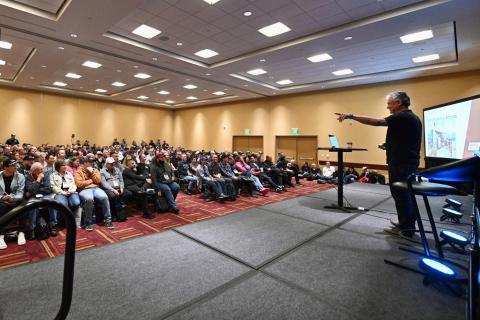
In PRI’s Women in Motorsports seminar, Alaska Raceway Park’s Michelle Lackey Maynor, second from left, advised women who feel too shy to make connections in the industry to “do your research so you can go talk to them and make it happen.”
On the subject of how to handle negative comments on social media, the advice was to ignore it. “I can’t control it, so I’m not going to put my energy into it,” Decker said.
Maynor said one racer at her track uses social media to complain about track prep, but her policy is not to engage in it, and to try not to even read it.
Simmons shares behind-the-scenes information on YouTube, and she’ll respond to educational comments, but tries not to respond to negative ones.
Starkey has separate personal and business social media accounts.
What is one thing women in racing do that hurts their careers?
“They don’t dream big enough,” said Starkey.
“Some constantly try to be tough, and sometimes that blocks people from coming into your life,” noted Simmons.
“Not aligning themselves with good, genuine people who have your best interests at heart,” offered Decker.
One attendee asked for advice on making connections despite being shy.
“Follow people on social media,” suggested Simmons. “It will give you a common ground to talk about when you meet them.”
“Do your research so you can go talk to them and make it happen,” offered Maynor.
“Show up!” added Decker. “You never know who you might meet!”
Among those inspired by these women was Sonya Lortie of K & K Insurance in Fort Wayne, Indiana. “Their perception of being a minority in this industry and their advice about how to handle it was interesting, and I’m sure it will help me.”
“A lot of it was helpful,” agreed Sara Thorpe of Disorganized Grime in Littleton, Colorado. “I’m a drag racer myself, and it was very encouraging. It helps to know you’re not alone. Other women are dealing with some of what I’ve experienced, too.”
The Engine as a System
Engine builders should think about every component in an engine as being part of a system and concentrate on how the components interact with each other, since oftentimes changing one thing will adversely affect other components.
According to Billy Godbold of Godbold Engineering Solutions in Lakeland, Tennessee, “If your valvetrain is out of control, [then] you increase your springs. Then, all of a sudden, you’re doing horrible things to your valvetrain. It becomes a vicious cycle.”
“At the end of the day, we want you to think of the whole [engine] system when you change one component,” said Billy Godbold of Godbold Engineering Solutions, at right, in discussing a holistic approach to tuning and engine components.
Oil analyses and combustion analyses are important tools, added Ben Strader of EFI University in Lake Havasu City, Arizona. “Measure the power in each cylinder and try to get each cylinder to do the best job it can do, instead of doing it exactly like the other cylinders,” he advised.
“You can’t make each cylinder the same; it’s not possible,” Godbold offered. “But you want to make each cylinder do the best job it can do. All the NASCAR guys know this.
“You only have four things you can change,” he continued. “There’s displacement; you can make the engine bigger. You can go to a higher rpm. There’s volumetric efficiency, and BSFC [brake-specific fuel consumption]. Rarely is there one trick part that will make more power. An engine is a series of independent parts. When you consider making a change, you need to think about the trade-off, and determine if that change is worth it.
“Remember that you have eight unequal cylinders,” Godbold said. “At the end of the day, we want you to think of the whole system when you change one component.”
Godbold and Strader’s tips landed with Evan Overturf of Greeley Automotive Machine of Greeley, Colorado. “It’s about balancing all the components, and the valvetrain in particular,” he said.
Performance and the Law
Making horsepower is always important, and so is following the law. Shop owners, tuners, and parts manufacturers know all too well that Environmental Protection Agency (EPA) enforcement of emission levels is on the rise, and fines can be hefty.
Clean performance tuning happens when a shop or tuner can show reasonable basis that they have not grossly increased a vehicle’s emissions through working on that vehicle by installing parts and/or tuning.
It applies to any modern street vehicle that is modified or tuned. It does not apply to race cars.
Bob Morreale of The Tuning School in Odessa, Florida, said that if EPA representatives come knocking on your door tomorrow, you need to be able to show them documentation that you are making a vehicle more compliant, not less.
Morreale offers a few key suggestions for performance shops:
1. Develop consistent packages of already tested and approved parts, and pursue testing using Tuning Labs and/or the SEMA Garage, a testing program that SEMA has developed.
2. Buy parts with EOs—executive orders saying the part complies with emissions requirements—which have already been tested and approved. “Supercharger kits with EOs avoid 100% of your possible issues,” he said.
3. Standardize packages so everything you do isn’t 100% custom. “Bundles will help you be compliant, and you can make more money because you’re minimizing your time,” he said.
Tuners can minimize their exposure to fines by never disabling or deleting oxygen sensors on street cars, or disabling test routines.
“Consider joining Tuning Labs; do your own tuning and testing, or test for others in the area who also need parts or tunes tested for their own protection,” he said.
Morreale suggests parts manufacturers get their products certified through the SEMA Garage, a program located in both Plymouth, Michigan, and in Diamond Bar, California. For large volumes of product, consider getting an EO test procedure at the SEMA Garage as well.
“The future is going to be that everything is going to be EO tested,” he said. “It’s already to the point that the big parts houses don’t want to carry parts that aren’t EO tested because of the liability. EOs are expensive, but SEMA’s certification program costs about $10,000 to $12,000 and takes a lot less time than going the EO route.”
“I’m going to try to use some of his suggestions,” said Zack Remsen, who owns Remtune in Gainesville, Florida. “I’m a small-business man, and I can’t afford a $60,000 piece of testing equipment, but I will look into the suggestion to package different components together that have been tested, and also the SEMA Garage program.”
EV Performance
The EV movement has come a long way in a short time. People like AZN of Street Outlaws; Steve Huff of Huff Motorsports; John Metric of Lonestar EV Performance; and Allen Thomas of the National Electric Drag Racing Association expect this to continue because a certain number of people are always into new technology, and the younger generation cares about sustainability. They all told moderator Alan Reinhart of the NHRA that the number of EVs on the road will drive the EV aftermarket.
This generates immediate opportunities for suppliers.
Steve Huff of Huff Motorsports proposed several ideas for track promoters to improve their services for the growing number of EV racers, including more power outlets in the pits and having chemical fire extinguishers available. “Promoters who fulfill these needs will have an advantage over those who don’t.”
“We have a steep learning curve with all the sensors, but other companies will get involved in the future,” Huff said. “One thing we need right now is domestic manufacturers of batteries, but we’ll get them. The chemistry dictates batteries built to specific needs.”
Huff said the fear level has come down concerning safety, but noted some things track operators could improve in the new year. He said teams often have to bring their own fire extinguishers for chemical fires, and many pit areas need more power outlets. Standardization is also a problem, so most teams have to invest in a lot of adapters and bring generators to the track. Promoters who fulfill these needs will have an advantage over others who don’t.
Getting into EVs requires a big expense up front, but after that the discipline can be done cheaply. And, as far as records go, they predict every one will eventually be broken by an EV.
“We can see the difference in EVs just in the last five years,” said Christopher Cysewski, a student at the University of Northwestern Ohio in Lima, Ohio. “It’s nice to know there is going to be a high-performance sector.”
“Everything that comes out is new,” noted fellow Northwestern Ohio student Collin Peterson. “You have to just dive in and figure it out yourself. We’re all going to have more voltage as things go on.”
“For me, it was great to hear EV and racing together,” said Jake Hawksworth of Hypercraft in Provo, Utah, which manufactures EV powertrains. “It was neat to hear all the positives. It gave us a sense of where the racing industry sees itself in relation to EV. It’s going to be a part of our future.”
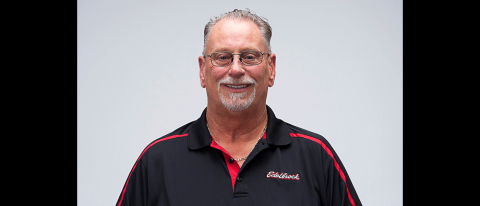
Longtime Edelbrock employee Smitty Smith has passed away. He was 70.
Smith worked for the Olive Branch, Mississippi-based company for 30 years and had been using its products for 50. His primary duty was to help consumers by responding to their inquiries from Edelbrock’s website and through social media.
Before joining Edelbrock, Smith had stints with speed shops and performance parts manufacturers—plus time as a restaurateur. His car roots date back to when his parents raced 1930s Ford Jalopies at Ascot Raceway (near Gardena, California) in the early 1960s.
For more information, visit the Edelbrock commemorative post here.
PerTronix Performance Brands has promoted Jeff Stacy to vice president of sales, where he oversees sales for all brands within the group, including PerTronix Ignition, JBA Performance Exhaust, Doug’s Original Headers, Patriot Exhaust, Compu-Fire, Spyke, Aeromotive Inc., Waterman Racing Components and Taylor Cable Products.
He brings nearly 40 years of automotive industry experience to the position. This includes service as the executive vice president of Aeromotive Inc. and Waterman Racing Components, where he guided the companies’ leaders in formulating and implementing strategic plans and oversaw operations.
Stacy also has worked for Keystone Automotive Operations, Fragola Performance Systems, FK Rod Ends, and R&R Marketing Consultants Inc.
“I am thrilled at the prospect of Jeff bringing all of our brands together, working with his team and Rich Butler at R&R,” said Laurent Potdevin, CEO of PerTronix Performance Brands. “Jeff’s drive, his curiosity, and his dedication to developing his team are exactly what the company needs at a time when we are laser-focused on innovation, supply chain, and customer service excellence to support our entire customer base.”
 MEMBERSHIP LOGIN