Special Report: More Than Just Pretty Faces
Submitted by jeffreyc on Wed, 02/15/2023 - 13:18


These content creators and influencers can also race… and build engines… and fabricate…. discover how they are using their platforms to expand motorsports’ reach in the digital age.

Racing fans of a certain age may remember when media outlets for motorsports content was, shall we say, limited. Fans wanting news, commentary, or behind-the-scenes profiles were limited to obscure cable TV channels, racing-oriented print publications, or the annual network broadcast of the Indianapolis 500. Fans with an interest in more grassroots racing classes were left in the dark unless they attended the races themselves.

That world is now barely a speck in the rearview mirror, and a new generation is at the wheel. 

The case can be made that we are living in a golden age of motorsports content. Thanks to independent creators on social media platforms, there is an almost unending stream of racing coverage, how-to videos, thrilling ride-alongs, and real-time event commentary. Some of it may be forgettable, but a lot of it is genuinely entertaining, informative, and well-made. Many of these social media entrepreneurs have built enormous followings and large fan bases.

The preferred term currently for these story tellers is content creators, and they are also sometimes referred to as influencers, although that term has picked up some baggage in recent years. Whatever they prefer to be called, these independent content creators are increasingly prominent in the motorsports arena.

Follows and Likes

There is more to being a social media star than simply being telegenic and easy on the eyes, although a natural likability definitely helps. The most successful social media influencers often come across as people that would be fun to hang out with.

 But, as with anything, the hard work is what separates the successful from the wannabes. Besides the effort that goes into video production, many of these content creators are very hands-on with the car building and racing aspects of their craft. Some have carved out a living from their various platforms, while others juggle their social media gigs with their day jobs.

2
Skye Romanoff’s exploits in rallycross competition and car building have earned her 100,000 Instagram followers. “There’s not a lot of rally drivers, let alone women rally drivers. I feel like that helps,” she said.

The content creators we spoke with all took different paths to arriving at their current platforms and levels of influence. Some set out from the beginning to make a living at video production and merchandise sales, but for others, the content creation platforms grew organically from a love of racing.

Skye Romanoff is president of the California Rallycross Association, and her exploits in rallycross competition and car building have earned her 100,000 followers on Instagram. She also participated on panel discussions and was a Featured Product Award judge at the 2022 PRI Trade Show. 

“I worked for Subaru in college,” she said. “I was a sales associate at Subaru, and one of the techs there did rallycross regionally in California. He invited me to check it out. He said, ‘Just bring your helmet along, and let’s go out and have a fun day.’ I showed up with a helmet, and I hopped in and out of everyone’s cars and just got hooked.”

For Romanoff, the growth of her Instagram audience caught her by surprise. “I started my Instagram three-and-a-half years ago, and it turned into this. I wasn’t expecting any of it. I just wanted to post fun pictures and then it kind of blew up.” 

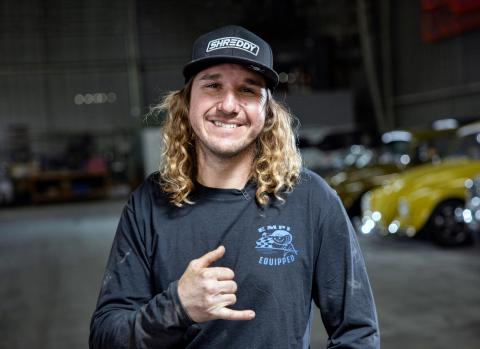
Blake Wilkey produces off-road focused content for his 248,000 followers on Instagram and the 76,000-plus subscribers to his Shreddy Lyfe YouTube channel. He also markets his own Shreddy Lyfe lifestyle merchandise. For him, it was a successful car build that lit the match for his social media platforms. “After building my first Bug called the OG Shark, I had friends that were into media. With it being a very unique build—a 700-hp Bug that would wheelie and take big jumps—it was a no brainer to show the world my creation,” he said. 

The world definitely noticed, to the tune of more than 3-million views on a viral video titled Urban Assault! Sadly for Wilkey, local law enforcement noticed some of the more exuberant displays too, but after paying his debt to society, he bounced back. “Once it gained a lot of traction and people were into it, the ball just kept rolling from there, and doors opened up since it was receiving a ton of exposure.”

David Patterson has built an empire around his That Dude in Blue brand, with 1.23-million subscribers to his YouTube channel, 633,000 followers to his ThatDudeInBlue Facebook page, and merchandising outlets for T-shirts, hoodies, and car care products. For him, video production was the original lure, and the car content came later.

He received a video camera for Christmas in his formative teen years and taught himself how to edit. It was the early days of YouTube, and Patterson got his head turned by Star Wars fan films, which inspired him to learn how to animate videos. His first viral video was a homemade light saber fight.

3
Blake Wilkey grew up racing motocross and saw racing on four wheels as “a good transition for future opportunities. Bugs always drew me in since my mother had a picture of us in a Bug when I was a baby.”

Patterson decided to pursue a career making movies and went to film school. His actual exposure to the film business, however, left him disillusioned. But he was still determined to create content, and fortunately fell in with the car culture in and around Virginia Beach, Virginia. 

“I met a really good community down there, got really into cars. I don’t come from a car family, but I’ve always had a little bit of a bug. At the time, going to these car events, I started watching car content on YouTube. This was very early automotive YouTube,” he said. The often clumsy nature of those early automotive videos inspired him to dive in. “I realized I could totally do that content. I knew I could because I had the skillset for it.”

His breakthrough came as he was about to trade in his 2006 Mustang GT for a 2013 Mustang GT. He decided to do a practice video using his older car. “I ordered a windshield suction cup and did some reading on how to make a car video and just went out there and tried it. I uploaded myself ‘reviewing’ my own car and put it up. In a week it got 25,000–30,000 views, and I decided, ‘I need to be doing this instead.’”

Chelsea VanCleave is steadily building a following on Instagram. She arrived on the social media scene after a lifetime of racing influence, beginning at a young age with Jr. Dragsters. “When I was in my mid-20s, that was when Instagram started to get bigger, and I was building an engine at the time,” she said. “I just started posting little things like progress on my engine, little things I was doing, and that kind of grew a little bit of a following for me. And it’s just progressed.”

Race Days

The content creators in our sample are not just keyboard racers. Most have racing backgrounds, and all of them spend as much time on track as they can. “I grew up racing motocross from the time I was 11 until I was 20 years old,” Wilkey said. “Growing up, I always wanted something with four wheels to race off-road, as well as seeing that as being a good transition for future opportunities. Bugs always drew me in since my mother had a picture of us in a Bug when I was a baby. Since then, I have raced in Polaris UTVs, stock Volkswagen Bugs, in the Class 11 I called the Slug Shark, with my new Trophy Truck Bug named Jaws, a few fun races in Megalodon, as well as partnered up with racers in multiple other classes.”

VanCleave was on track when she was still in elementary school. As a teenager she earned her license in Super Comp Dragster. “I’ve been in drag racing since I was eight,” she said. “I was a fan even way before then. I was a big racing fan growing up, whether it was NASCAR, IndyCar, monster trucks, drag racing, pretty much anything that went fast, as a little kid I thought that was super cool.”

That led her to the nuts-and-bolts side of racing—eventually. “When I was younger, I had no interest in working on cars. I was like, ‘I’m not the mechanic, I’m just the driver.’ And my dad snapped that out of me so quickly.” She later went to school at University of Northwestern Ohio. “I got my Automotive High Performance degree, so I was working on my own stuff, trying to work on race teams.”

4
Chelsea VanCleave began racing in Junior Dragsters. “Pretty much anything that went fast, as a little kid I thought that was super cool,” she said. Her current project is a 2009 Drag Pak Challenger she plans to race in brackets or stock classes.

“Rallycross is my main,” Romanoff said. “We have an event about once a month. The season is generally March to beginning of December. I do track days and time trials in a different car. I work with a group called Lightspeed, and they host events at Laguna Seca, Sonoma, Thunderhill, and Buttonwillow. In exchange for promotions that help them grow, they give me free track days. I’ll also be doing that four or five times a year.”

Patterson has sampled several forms of motorsports, although he never raced in competitive classes. He regularly attends driving schools to keep his skills sharp. “I typically do as many racing schools as I can a year. I do lots of drifting now. I do ice drifting a lot. In two weeks, I’m flying up to Minnesota, and we go on frozen lakes and train that way, which is great for car control skills. The ice drifting has helped me with circuit racing, it’s helped me with drag racing, it’s helped me with autocross, it’s helped with everything. If you get out of control you don’t panic, you just stay relaxed and make sure you’re good.

“I’ve done autocross, basic track days,” he continued. “Road Atlanta is my home track, 15 minutes from my house so I’m there all the time. The most competitive stuff I’ve done is against other YouTubers, which is pretty funny. I did MotorTrend’s Roadkill Nights last year. That was really intense. We only had 23 days to build a car, and I’m pretty sure my hair turned gray from it.”

Hands On

Although it’s possible to run a successful motorsports oriented-platform without do-it-yourself car building skills, that’s the hard way, and our sources had definite mechanical strengths. “I’d say my strengths revolve around creativity and fabrication,” Wilkey said. “I’m kind of a jack of all trades, managing so many hats from fabrication, prep work, activations, media projects, etc. There’s a lot that goes into my program, and I do have a few friends that come and help out from time to time, which I’m thankful for.”

VanCleave likes the V8-building side of the sport. “I really love to build engines. I used to work for BES Racing Engines when I lived in Ohio. I had so much fun building my own engine,” she said. “To build an engine, and to see it on the dyno, to see it pull the power it did…I had pretty low hopes. I wanted a cool bracket engine, and it ended up making 923 hp on the dyno. I felt so successful at that moment in time.”

She has since moved to North Carolina, where her current project is a 2009 Drag Pak Challenger with 6.1 HEMI that she plans to race in brackets or stock classes. “It’s a good project car. It’s not a fixer-upper, it just needs to be completed.” She took it to Bagshaw Hotrod Fabrication locally in North Carolina and had them put a cage in it. “It’s pretty much a full-blown car now. We have the brakes on it, I’ve got wheels and tires.” VanCleave also has a stock 2019 Challenger R/T Scat Pack 1320 that she takes to the local eighth-mile drag strip for occasional passes to stay sharp. 

5
“My strengths revolve around creativity and fabrication,” Blake Wilkey said. “I’m kind of a jack of all trades, managing so many hats from fabrication, prep work, activations, media projects, etc.”

Patterson is not a mechanic by nature, but in building his platforms he has leveraged opportunities to build skills. “On my channel I’ve made it clear that I came from a very non-automotive home,” Patterson said. “It was really tough. When I first did my 2J240, you can just see how awful I am at working on cars. This is 2015 or so. And my commenters are telling me, ‘Hey David, try holding the wrench this way,’ or ‘Try doing it this way.’ And I’m like, ‘Thanks guys, I know you are low-key insulting me, but it’s okay, I’m learning,’” he said with a laugh.

“Cosmetics is probably what I’m best at. When it comes to the fine details, I really enjoy doing subtle cosmetic mods, and paint and body work. That’s what I’m better at. If I had to choose a strength, it’s definitely in the cosmetic or aesthetic avenue. 

“I think that’s the biggest thing in my journey, just to accept what you’re good at,” Patterson continued. “When people are really good at something, I try to highlight their skillset when they do help me.”

Patterson may not be doing all the wrenching, but he has plenty of work to keep him busy maintaining his platforms. “When I meet people, I think the biggest thing they are surprised about is that I still do everything by myself. As a business decision, I will be fully honest, it makes no sense. I really stress myself out. I do all the scheduling. I fly a lot. I flew 165,000 miles last year for content. That means I’m filming, flying, editing, scheduling, talking to companies, talking to people who want their cars filmed, scheduling SEMA or PRI, or wherever we go. It’s really important to have time management when it comes to this.” 

Motivations

Our sources were building social media brands for the love of the content creation, but they also saw it as a way to inspire others, and to build a bridge to an actual racing career.

“Being a woman in this industry, it’s just automatically going to get a little more attention than yet another guy. As bad as that sounds, it’s true,” Romanoff said. “What I try to do for content, I like to show other people—especially other women because I’m a really big promoter of women in this industry—that they can do it as well. So they’re seeing me do a brake job, or I re-do my coilovers and get an alignment, and they see me doing it hands-on personally. Then they feel like they have the capability of doing it themselves. Not only can I do my own work, and I try to promote that, but I also try to show other girls that I’m doing my own work, and I’m going out to the track the next day. So it shows that it’s doable.”

For Patterson, the freedom that comes with being an independent creator is the major draw. “Even after 11 years of doing That Dude in Blue, it’s the one thing that would be extremely hard to give up,” he said. “It’s more stressful work sometimes, but you also don’t give up any control. If you have a creative vision, you just go do it. You don’t have to ask a higher-up; you don’t have to ask a producer or a studio. You just go, ‘All right, I’m going to go film this thing now. We’re going to get it done.’ That was a big problem for me when I did my short stint in the traditional film industry—there was a lot of ‘hurry up and wait.’”

Another motivation we heard expressed was to try to help the motorsports community grow, and these creators are using their influence to move the needle. “A really cool thing, the cars and coffee down here in Atlanta is called Caffeine and Octane. It is massive,” Patterson said. “I’ve collaborated with them quite a bit, and they’ve let me hold my own drift events at a race track down here that they bought. It’s called Caffeine and Octane Lanier Raceway. I had this idea of super affordable drift events for the masses here in the Southeast. It’s one thing to go to a drift event, it’s another thing to feel welcomed by the community. We wanted to have a drift event that any skill level would not be scared to do. There are two separate drift events. They have a drift night every other Friday for $100 a pop to drift for six or seven hours. It’s super affordable when it comes to motorsports.

6
“I like to show other people—especially other women because I’m a really big promoter of women in this industry—that they can do it as well,” Skye Romanoff said. “They see me doing it personally, then they feel like they have the capability of doing it themselves.”

“Lanier has been really fantastic. I think the best thing I’d love to learn right now is to make motorsports—with my platform—even more accessible for more people,” he said. Using his platform, he was able to spur growth quickly for the Friday drift events. Only 15 drivers showed up for the first one, but after Patterson filmed it and showed how fun it was, two months later they had 85 drivers. “We went from 200 spectators to about 1,000 or so. Which is really great because that’s what pays the bills.”

For Romanoff, her position as president of the California Rallycross Association, along with the other board members, represents a new direction, binding together the previous smaller regional organizations.

“Rallycross is definitely a grassroots motorsports community. We wanted to bring everyone together who runs events in California because in order for us to grow, we all need to work together as a team, as a community,” she said. “I know a lot of rallycross people in California, I know all the organizers, so I ended up basically reaching out to all of them saying we should join together. I have sponsors for my events that I host, and I wanted to share all of my sponsor codes with the community.”

Expanding sponsorship opportunities is another key to the sport’s growth. “Diode Dynamics, EBC Brakes, and CoolShirt Systems are not only personal sponsors, but they actually sponsored each of my events in 2022,” she said. “I was able to get thousands of dollars’ worth of product to raffle off to competitors at each event. This is the first time this has been done in the series, and it brings in more people to the events. Also, prizes are raffled off, regardless of podium status, so every driver has a chance in winning. It’s worked out great!”

The next steps might be taking Romanoff nationwide. “Some other people and organizers in other states ended up hearing what I was doing, and they reached out,” she said. “I was on an SCCA town hall meeting, and I mentioned what I was doing, and I had people reach out to me from Nebraska, Detroit, and Texas. We’re actually kind of doing this at a national level and banding together. We’re coming together as one big community to promote our sport.” 

Future Goals

While all of our content creator sources were proud of their accomplishments, they have dreams to climb higher up the racing ladder and continue to build their platforms. “I would really like to expand into rally, drift, or 4x4 extreme crawling scenes,” Wilkey said. “We build everything here in-house, so with that being said, it takes a lot of time and planning to do it right. We definitely have those forms of motorsports on the radar, and whenever we’re around it, we ask questions to expand our knowledge for when we do take the plunge.”

Romanoff likes racing in the dirt and has her sights set on the top levels of the sport. “I really want to get into Trophy Trucks. It’s a dream of mine. I really want to get into driving the trucks in the snow, on the dirt. I think it would be an absolute blast,” she said.

VanCleave’s racing aspirations have navigated a few chicanes along the way, but looking ahead, she has eyes on team ownership and plenty of track time. “I think being a female in racing, in motorsports in general, is big. You have so many strong females in this industry now. It makes a huge difference,” she said. “Long-term, I would love to stay in racing. I never thought, at 30, I would still be involved in racing as much as I am. But I want to own a full-blown race team long-term. I want me and my dad to race with each other, against each other. I want to keep going up.”

Patterson has found his niche, and it’s never dull. “It’s an ever-learning experience. I’m going to accept that my strength is to be in front of a camera and talk about history, talk about cars and how fun they are to drive, and then painstakingly make my way through to not pinching a head gasket.”
March 2023
By
Steve Statham

Industry Insights: Chuck Watson II

Submitted by jeffreyc on Wed, 02/15/2023 - 12:35


Collaborating closely with Ford engineers, Watson Racing has become a preeminent force within the Mustang brand. This second-generation entrepreneur provides a glimpse of what is to come (more electrification) and how he is addressing some of the most critical challenges to motorsports head-on.

Chuck Watson II was born to race and develop performance parts. He’s the second generation of Watson Engineering, which was founded in 1981 by his father Chuck Watson Sr., and ultimately, Watson Racing. Because the family home and shop are close to Dearborn, Michigan, Ford Motor Company and the Mustang were the natural choice for the Watsons. 

The younger Watson started drag racing as soon as he had a driver’s license, and he went into the family business. As a result, he’s been one of the leading aftermarket Mustang developers and builders over the past 40 years. He’s seen the Mustang progress through five generations of the pony car and now looking toward electrification. Since 1987, Watson Engineering has worked with Ford Performance Racing on custom and production parts design. Watson is responsible for development on Ford Performance vehicles including the 2016 Cobra Jet, the Mustang S197 and S550, and the Boss 302 R/S.

Watson Racing is primarily associated with the drag racing world, but it also creates road racing Mustangs for the NASA (National Auto Sport Association) Spec Iron class, has worked with GT World Challenge America racing teams as well, and currently supports racing cars and performance products for GM and Mopar brands as well as Ford. 

The senior Watson passed away in 2021, but not before getting back into racing personally after a long hiatus. To honor his father, Watson II went all-out and won a 2022 NMCA Holley EFI Factory Super Cars championship in the family’s supercharged Cobra Jet. We caught up with Watson II to talk about the future of Mustang racing, electrification, and his father’s legacy. 

2
With its location close to Dearborn, Watson Engineering and Watson Racing have a close relationship with Ford. But Watson Racing “works on all three domestic brands,” said Chuck Watson II. “I don’t want people to think that we’re only Mustangs.” 

PRI: When you started in 1981, it was all Fox Body Mustangs. How has the Mustang business changed over the years?

Watson: You know, for us it really hasn’t changed. We’ve had parts in the Ford Racing catalog all the way to 1981. We’ve been manufacturing Mustang aftermarket parts, and the first couple things they purchased were a set of the shorty headers and the H-pipe that had the catalyst delete. Both of those pieces were ours. There’s a lot of people who probably don’t know that.

PRI: What do you think are some of the greatest challenges to racing today? Then, what do you think we can do as an industry to help overcome those challenges?

Watson: There are two things. Number one, you’ve got electrification, which is coming. That’s obviously a concern. Then the other concern is what’s been happening over the last couple of years with race tracks starting to dwindle away. That’s pretty concerning and scary.

[To reverse that trend] just look at what’s happened this past season. I think the participation numbers were up. I was at a number of races where they had record crowds. So I think that part’s good. The concern is subdivisions and stuff that are moving in next to race tracks. These are tracks that have been there for 50-plus years. They were out in the middle of nowhere, but the next thing you know there are subdivisions going in next door. Look at what’s going on right now with the Freedom Factory down in Bradenton, Florida. They’re going to put up a 4,500-home development right next door to the strip, and that scares me. I love that track, but I don’t know what’s going to happen five years from now. 

I’m located here in Brownstown, Michigan, and Detroit Dragway was literally a thousand feet away. I watched it happen there. It was kind of in the middle of nowhere, and next thing you know, these houses go in, and they built a [golf] driving range across the street. I mean, who builds a driving range across the street from a drag strip? But they did it. And they were successful in shutting the track down. So like I said, that scares me. 

3
“The sheer horsepower numbers that we’re seeing out of these little motors is unheard of,” Chuck Watson II said. “It’s not just us and Ford; everybody’s doing it.” Photo courtesy of Evan J. Smith.

PRI: Ford just revealed the next generation of the Mustang at the Detroit Auto Show, but there’s also the Mustang Mach-E that’s looking like the future of the Mustang. Are you going to pivot your business and work with electrics or stick with what you’ve been doing?

Watson: We’re going to pursue it. We’re going to do both. A lot of the work that we do for Ford is prototype work. So we’re working on things that are two, three years out. That’s the direction that they’re headed in, and we’re going to stay the course and focus on it. Obviously, there’s not a need for exhaust systems and headers and things of that nature, but there are other brackets and other components on the vehicle that we’re very capable of making. We have to put food on the table, so of course we’re going to chase it.

PRI: How do you keep your knowledge current? Presumably, you’re already working with next-generation Mustang? 

Watson: There are some things I can’t speak about, but I’ve got three of them here right now. We’re actively working on some cool projects they’ve got coming down the pipe.

PRI: Do you get a lot of information from Ford engineers, or do they just hand you the car and let you figure it out?

Watson: We collaborate and work hand-in-hand directly with the Ford engineers, which makes it nice. We’re also tied into their design system. So pretty much all of the vehicles that are out there, we have access to them. It’s pretty nice!

PRI: What do you think are the most important innovations in motorsports in the last few years, and what makes them important?

Watson: I think the sheer horsepower numbers that we’re seeing out of these little motors is unheard of. My car is 327 cubic inches, and we’re pushing 1,500 horsepower out of it. It’s not just us and Ford; everybody’s doing it. Everything is behind that, engine design and tuning. 

PRI: Who do you look to for inspiration?

Watson: To this day, I still look to my father. Unfortunately, I lost him in 2021, but there’s not a day goes by that I don’t think about him. That man taught me a lot.

4
In tribute to his late father, Chuck Watson II won the 2022 NMCA Holley EFI Factory Super Cars championship in the family’s supercharged Cobra Jet. “There’s not a day goes by that I don’t think about him. That man taught me a lot,” Watson said. Photo courtesy of Evan J. Smith.

PRI: You won a championship in his honor this year. What’s the story behind that? 

Watson: We raced a lot back in the late 1980s to early 1990s. Then I went to college, started a family, and had small kids. So I just had different priorities. But now that my kids are grown, we got back into it. How we got back into it was that I surprised my father. Behind his back, I cloned him a 2014 Cobra Jet. He had no idea because we were building Cobra Jets at the time. It took me about a year to do it on the down-low. One day he stopped by the shop, and I walked him out and showed him the car. He said, “Wow, this is nice.” He sat in it and started it, and he said it was pretty cool. And I said, “Yeah, this is yours.” He was like, “What?!”

That was the only time I ever stumped him in my life. I thought at that time we were done racing. So I thought he was just going to take it and put it in his collection. But he looked at me and says, “Hell, no!”

He said, “We’re going drag racing.” It’s kind of neat that by doing that, I guess I gave him the bug back, and we’ve been all over it since then. This (past) year I just had all my stars lined up. 

PRI: What do you think is better about racing today than when you started? 

Watson: For me, I think it’s equally exciting today as it was back then. I think today maybe it’s a little bit more exciting just by the numbers. The ETs and the miles per hour that we’re running now, no one would have thought possible in the 1970s or 1980s. I think that amps it up a little bit. For me, it’s just exciting to be at the race track, with what you’re witnessing and the relationships that you create. I’ve got lifelong friends that I would’ve never met if I didn’t go to a race track. So I’m thankful for that.

PRI: Conversely, what if anything is worse today about racing than it was back then? 

Watson: I don’t think anything is worse. The only negative I can think of is just what’s happening today with losing tracks. Back in the 1970s and 1980s, tracks were opening up, and you didn’t hear about tracks closing. No one really seemed to complain about them, where today it just seems there’s more people complaining about noise than there were back then. 

PRI: As you look back on your career to date, what gives you the most pride so far?

Watson: Starting Watson Racing was a pretty cool deal. I started going to the PRI Show when it was still in Orlando. I went for three or four years looking at parts and I thought, “Wow, we could make that.” I would come home and share it with my father, and he said, “We don’t have time for all that.” 

So the next year I got my dad a ticket. We walked into the Show, and we didn’t make it probably 20 feet. I’ll never forget it; he hit me in the shoulder with his hand and said, “Chuck, we can make that, we can make that.” 

I said, “That’s what I’ve been trying to tell you for the past three or four years!” Ultimately that’s really the inspiration for how Watson Racing was created. 

PRI: What do you think we can do, industry-wide, to help carry on the passion for racing to the next generation?

Watson: Boy, that’s a tough question there. I have a brother who doesn’t do what I do. To him a car is just transportation. It’s just something that I had a passion for when I was a little kid, watching my dad do stuff. He used to take us for hot laps around the neighborhood, and my friends would enjoy that, so we had some really good times growing up. I think it’s hard to teach. It’s something that people just have to experience. I’m a little afraid that the youth of today is not as interested as we were back when we were their age.

5
Watson Engineering and Watson Racing employ about 400 people. Chuck Watson II believes the key to managing an organization of that size is “taking care of your people. I feel we are very generous to our people.” 

PRI: How do you market new products and services?

Watson: When Watson Racing was first started, we obviously had a reputation as Watson Engineering. We had a number of racers both in drag racing and in road racing that we sponsored to get our name out there. We did that for a number of years, and we’ve scaled back since then. When we started racing for ourselves again, we took those dollars that we used to use on sponsorships to support what we’re doing on our own.

PRI: Has moving into the Internet age really changed anything for your business? Maybe in the way that you deal with customers or how customers find you?

Watson: It certainly has. We were more of a manufacturing company, but when we moved into racing, we needed a storefront. With Facebook and Twitter and all the social media outlets, of course you’ve got to be tapped into that to keep up with the Joneses.

PRI: Watson Engineering and Watson Racing are not a one-man show. You have about 400 employees now. What do you think are the keys to effective leadership and management of an organization of that size?

Watson: It’s taking care of your people. I feel that we are very generous to our people, and we have a lot of people who have been with us for many years. It’s just about mutual respect. We have phenomenal, talented people. You’ll catch ’em singing out loud, or every now and again I’ll walk out there and see someone dancing or something. It’s just great to see happy employees.

PRI: What do you think is the most important technical development for your business over the last five to 10 years?

Watson: Obviously, it’s the equipment. That is really what makes or breaks you. We’ve got some real state-of-the-art stuff. For example, we have eight three-axis laser cutters. Each has a material tower with a dozen shelves, and you can stack 5,000 pounds of sheetmetal on each shelf. You can put different thicknesses on each shelf. There’s a vacuum conveyor that comes over, picks the sheet up, drops it onto the laser, so there’s already a sheet that’s being cut, and then it reloads another sheet, and then the decks change. So it’s just constantly cutting.

We’ve also got a bunch of CNC machines and mandrel tube benders. So it’s technology that really gets you there. All that is stuff that you used to do by hand. It would take you about an hour to cut something out, and now we can do it in about 12 seconds.

PRI: Are you using 3D printing at all? 

Watson: We use it a little. I bought a prototype machine, and it has come in very handy. We’ve used it for a number of things. I’d say we’re dabbling in it. We’re not neck deep into it yet, but we do have the technology. We also have a laser etching machine. If you look at the 2018 Cobra Jets, on the quarter windows we engraved “Cobra Jet” in their special font. 

PRI: Anything else to say? 

Watson: I do want to make it clear that although we specialize in Mustangs, we work on all three domestic brands. I don’t want people to think that we’re only Mustangs.

March 2023
By
Jeff Zurschmeide

Newly Appointed: Bill Lupinos

Submitted by jeffreyc on Wed, 02/15/2023 - 12:32


The FASTRAK series gets a new VP who loves dirt racing so much that he bought a track in Kentucky.

Bill Lupinos turned a lifetime of dirt racing fandom into a new career when he left a marketing position with PepsiCo after 16 years to buy Richmond Raceway in Richmond, Kentucky, in early 2018. This past December, he added to his racing portfolio by joining FASTRAK Companies International LLC as company vice president. 

Lupinos works remotely from Kentucky and regularly visits the FASTRAK corporate office in Georgia. Meanwhile, Bill, his wife Stacy, and sons Adam and Aaron do everything at the track, from grading to running the concession stand, adding a powerful component to what has traditionally been a family sport. He has also owned and operated a FASTRAK Heart of America Ultimate Super Late Model (USLM) franchise for the last three years, as well as a successful super stock series.

FASTRAK founder and owner Stan Lester will remain involved on a limited basis, consulting for the company and working on additional marketing to increase purses and point funds. Lupinos is optimistic for FASTRAK’s future, and recently shared his thoughts with PRI. 

PRI: You obviously love dirt racing. How did that start for you?

Lupinos: I’ve been a huge dirt racing fan my entire life. I started attending Lebanon Valley Speedway [in West Lebanon, New York] at five years old, since my dad was a scorer. They frequently gave me odd jobs to do as a kid. I then helped with a big block modified team in my teenage years. 

PRI: You come from a solid marketing background. Can you tell us how you got into the racing industry?

Lupinos: When the Chilled Direct Store Delivery division of PepsiCo was being dissolved, I had the choice of early retirement or an unknown position within Pepsi. At the time, I saw on Facebook that Richmond Raceway was for sale. We looked into it, made a visit on our way from Seattle, where we were living at the time, to the 2017 World Finals, and decided to buy it. We closed that December, moved to Kentucky in February 2018, and started racing in April. 

PRI: What do you see as the immediate and long-term marketing needs to fill for FASTRAK Racing?

Lupinos: Communication and availability are huge. Customers need to know you are there for them at any time. I just started in December and do not have any specific plans in place yet. 

PRI: How does your role as track owner help you when negotiating deals and working with other track owners for FASTRAK and the USLM Series?

Lupinos: Knowing the behind-the-scenes operations of a dirt track is a huge benefit for me. I know exactly how easy it is to lose a lot of money on any given night. I can relate to all aspects that go into putting on a race, from concessions to track prep and staffing. Just as at the track, I’ll be watching costs on everything and changing suppliers when needed.

PRI: What’s the biggest challenge facing race tracks and series today? 

Lupinos: The economy, availability of parts and tires, and live streaming. 

PRI: With live streaming an issue, do you have ideas for 2023 to bring more people out to the track, such as special events and promotions or non-race activities?

Lupinos: Yes. We need to make the experience, food, midway activities, and racing all better. That will make more locals want to come.

PRI: What is one recent mistake you learned from?

Lupinos: Paying way too much attention to social media and the hatred many so-called race fans like to post. 

PRI: Have you found a way to balance the need to use social media with the way you deal with haters and trolls?

Lupinos: I use social media to promote, but I’ve stopped using it in a personal way. I don’t read everything that I did before. When it’s a troll on my page, such as the guy telling me I couldn’t run a lemonade stand, I just delete and block instead of arguing. 

[Editor’s note: Lupinos previously turned social media lemons into business lemonade. When he took over Richmond Raceway, some wrote, “Go back to New York. The damn Yankees need to leave.” In response, Lupinos named a late September race “The Damn Yankees 50,” which marked its fourth year in 2022.]

PRI: What is the best piece of advice you have received?

Lupinos: Just be yourself and do you.

PRI: If you could have a conversation with anyone in racing, who would that be and what would you ask?

Lupinos: Tony Stewart. I’d love to know how he makes Eldora Speedway so great.

PRI: Excluding your cellphone/tablet/computer, what’s one thing you can’t live without? 

Lupinos: My family. Richmond Raceway is a 100% family-run facility. The four of us do everything leading up to race day. They have sacrificed a lot for my dream.

Bill Lupinos

TITLE:
Vice President

ORGANIZATION:
FASTRAK Companies International LLC

HOMETOWN:
Richmond, Kentucky

FAST FACT:
Lupinos is currently living at his track, Richmond Raceway. “If I look out my front door, it’s the pit gate.”

March 2023
By
Jim Koscs

Fast Movers

Submitted by jeffreyc on Wed, 02/15/2023 - 12:27


A look at some of the country’s in-demand motorsports products and services by region and racing segment, from coast to coast.

Motorsports retailers and service providers are constantly tracking the hottest parts and trends to give their customers a competitive edge. For the latest on which products and services are moving the retail needle, we present the following sales snapshot from shops across the US.

Atlanta Speedwerks

Atlanta Speedwerks in Gainesville, Georgia, is a road racing retailer that also provides driver coaching, track prep and support, and car building services for customers running in the American Endurance Racing (AER), ChampCar Endurance Series, International Motor Sports Association (IMSA), National Auto Sport Association (NASA), Porsche Club of America (PCA), Sports Car Club of America (SCCA), and World Racing League.

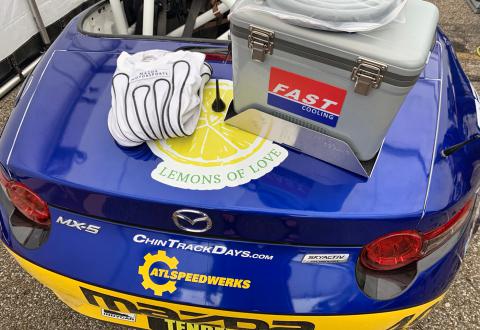
Its fast-moving products include the (appropriately named) F.A.S.T. cool suit shirts designed with more than 50 feet of water tubing for equal cooling zones and maximum coverage, which is ideal for endurance competition. In addition, the company has also been focused on Porsche PDK transmission repair, specifically the transmission position sensor.

“We’re one of only a handful of shops that can repair Porsche transmissions,” said Todd Lamb. “We market [our business] through advertising in the PCA magazine and sponsoring local track day events at Road Atlanta and Atlanta Motorsports Park.” 

Drag Cartel Industries

Drag Cartel Industries in Simi Valley, California, is an import drag race retailer specializing in parts for street weekend warriors. Its popular offerings, including Honda AWD conversion kits and Elite drag race coilovers, were described as “unique to the market, proven on and off the track, and USA-manufactured.” 

2

Its customers, who are located throughout the US and internationally, according to Jeremy Lookofsky, also enjoy its DC-OG Series camshaft combo and Supertech spring combo, which are also included in its street/strip CNC head and camshaft kit. 

Race Part Solutions

Twin turbo customers “love” Race Part Solutions’ billet intake merge, which is an aluminum piece that merges two charge pipes into one without the need for precision cuts and complicated sizing. Designed for any engine combination running twin turbos, they are available in different sizes and configurations. 

3

“[The billet intake merges] take the guesswork out and save a ton of fabrication time, plus they look amazing and are made in-house here in the USA,” said Wade McGowan of the Maysville, Georgia-based company. “We released them last year, and they have been a consistent seller since they hit our shelves. We have sold these all over the world to go on everything from drag cars to street cars, and [even] boats and more.” 

RM Racing Lubricants

When asked what its best moving product was, Richard Matthie of RM Racing Lubricants, with locations in Niagara Falls, New York, and Welland, Ontario, Canada, immediately pointed us to Maxima Racing Oil’s Performance Straight-Weight 50 WT racing oil. 

“We’ve been selling that line for four years now, and it’s extremely popular with our drag racing customers,” Matthie said. “Different from competing products, it has two distinct zinc formulas, the first activated when the racer starts the car. That provides protection when the engine parts are cold. The second formula kicks in at the normal operating temperature, therefore giving engine protection from start to finish. Drag racers like it…and the first zinc formulation makes a big difference.” 

4

In addition, Maxima’s Cool-Aide Concentrate is a hit with its dirt track racing customers, thanks to its cooling properties during multi-lap events. “It gets more popular every year,” Matthie said. 

RM Racing Lubricants’ customers run the gamut of competitors—from all segments of racing—across Canada and the US. Marketing involves word of mouth, social media advertising, and advertisements in print motorsports publications. 

“One other big part of our marketing plan is sponsorships,” Matthie said. “RM sponsors multiple teams and race series, like Ian Hill’s Canada Heads Up Drag Race series.”

March 2023
By
Laura Pitts

‘Street Outlaws: No Prep Kings’ Announces Six Stops On 2023 Tour 

Submitted by laurap on Tue, 02/14/2023 - 18:03
‘Street Outlaws: No Prep Kings’ logo


Pilgrim Studios, the organizers behind Discovery Channel’s “Street Outlaws: No Prep Kings” series, has announced six stops from the 2023 season, which will eventually feature 15 total events, according to published reports. 

“Street Outlaws: No Prep Kings” summons all-star racers from all over the Outlaw family for a true matchup in different cities across the US. 

2023 “Street Outlaws: No Prep Kings” Series Dates
June 2–3; National Trail Raceway; Hebron, Ohio
June 9–10; Virginia Motorsports Park; Petersburg, Virginia
June 16–17; Brainerd Int’l Raceway; Brainerd, Minnesota
June 23–24; Beech Bend Raceway Park; Bowling Green, Kentucky
June 30–July 1; New England Dragway; Epping, New Hampshire

For more information, visit pilgrimmediagroup.com/shows/street-outlaws-no-prep-kings.

February 2023

DEI Adds New VP Of Sales & Marketing 

Submitted by laurap on Tue, 02/14/2023 - 17:20
 Brad Bricker


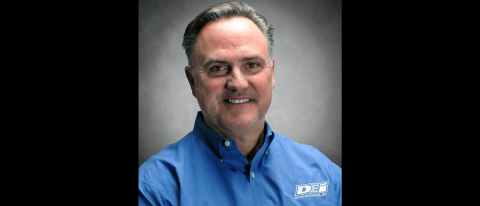
Design Engineering, Inc. (DEI) has announced the addition of Brad Bricker to its sales team as vice president of Sales & Marketing.

In his new position, Bricker will manage the inside sales team focused on DEI’s automotive aftermarket products, as well as work with automotive aftermarket representatives, outside representatives in the RV and Powersports groups, and DEI’s marketing and product development teams. 

He brings nearly 30 years of sales, marketing and management experience for automotive equipment and accessory manufacturers.

“The future at DEI is bright,” said Tom Miller of DEI. “The company remains committed to listening to the needs of our consumers and distributors so we can continue to lead the field in the development, manufacturing, and distribution of quality new products, and adding Bricker to our team will continue DEI in this direction.”

For more information, visit designengineering.com.

February 2023

SEMA Future Leader Network Announces Professional Development Program

Submitted by laurap on Tue, 02/14/2023 - 14:17
FLN PDP images


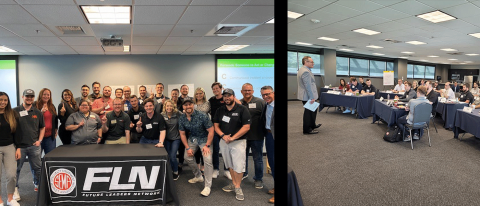
The SEMA Future Leaders Network (FLN) has announced its second annual Professional Development Program (PDP) will take place May 11–12 at the SEMA Garage in Detroit, Michigan. 

Members will be able to participate in one of the world’s top leadership training programs presented by Dale Carnegie, which features allows attendees to:

  • Get to know your teachers and colleagues in an interactive setting with limited attendees.
  • Network with everyone (even direct competitors). Some classmates might have similar challenges and can share advice and solutions. Past participants of the FLN PDP noted that their favorite aspect of the event was networking with others, and many past participants have stayed in touch to this day.
  • Receive a workbook with questions, modules, and activities designed to inspire and challenge participants’ thinking. Attendees can refer to the book after the event and apply it in their daily interactions.


FLN membership is open to anyone the age of 39 and who is employed by a SEMA-member company. In addition, the PDP program is available to a limited number of FLN members at 50% off the regular fee.

For more information and to submit an application, visit sema.org/fln-pdp. 

February 2023

FRAM, Raybestos Parent Company Acquires Towing Brand

Submitted by laurap on Mon, 02/13/2023 - 19:20
FRAM, Raybestos Parent Company Acquires Towing Brand


First Brands—the Rochester, Michigan-based parent company of FRAM, Raybestos, Centric/StopTech, and more automotive manufacturing brands—has acquired a provider of towing and hauling accessories named Horizon Global. Based in Plymouth, Michigan, the company offers several brands, including Draw-Tite, Reese, Bulldog, Fulton, Tekonsha, Witter, and more. 

Horizon Global is now a wholly-owned subsidiary of First Brands, company reps announced. 

For more information, visit firstbrandsgroup.com and horizonglobal.com.

February 2023

BorgWarner Appoints Hau Thai-Tang To Board Of Directors

Submitted by laurap on Mon, 02/13/2023 - 15:33
BorgWarner logo


BorgWarner—the American automotive supplier based in Auburn Hills, Michigan—has announced Hau Thai-Tang has been named to its Board of Directors.

“Hau’s extensive industry experience and his forward-looking perspective around electrification transformation make him a solid complement to our Board,” said Alexis P. Michas, non-executive chairman of the Board of BorgWarner. 

Thai-Tang retired from Ford Motor Company in 2022 as Chief Industrial Platform Officer. He led global research and advanced engineering, product development, design, manufacturing engineering, purchasing, and supply chain teams to deliver a portfolio of digitally connected ICE and BEV vehicles.  

Thai-Tang also led Ford’s product development and purchasing organizations during its launches of the Mustang Mach-E, F-150 Lightning, Bronco, Maverick, and Puma.

For more information, visit borgwarner.com.

February 2023

GRIDLIFE To Join NASCAR, Porsche Carrera Cup For Road America Weekend

Submitted by laurap on Fri, 02/10/2023 - 16:56
GRIDLIFE graphic, Image courtesy of GRIDLIFE 
Image courtesy of GRIDLIFE 

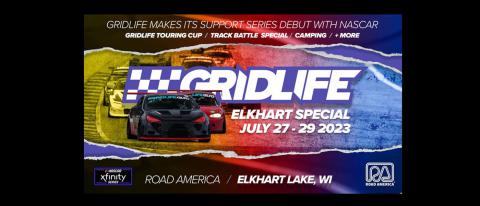
GRIDLIFE has announced it will make its support series debut during NASCAR’s Road America race weekend. The GRIDLIFE Touring Cup (GLTC) racing series and a select group of TrackBattle Time Attack cars will join the NASCAR Xfinity Series in Elkhart Lake, Wisconsin on July 27–29. GRIDLIFE competitors will also share the paddock with Porsche Carrera Cup.

GRIDLIFE is known for its passionate grassroots racing community, and festival-style music events popular with young motorsport fans. The event will mark the series’ first time in a support role for a major North American racing event.

GRIDLIFE Touring Cup (GLTC) is a wheel-to-wheel road racing series that features single-class competition with spectator-friendly 15-minute races. The series allows for a wide variety of makes and models to compete together with rules based on balancing horsepower and weight. 

Fields often exceed 50 cars, according to series officials.

For more information, visit grid.life.

February 2023