From NHRA Pro Stocks To No Prep: SRC Motorsports Drag Race Car Builders

Submitted by laurap on Tue, 02/02/2021 - 14:24


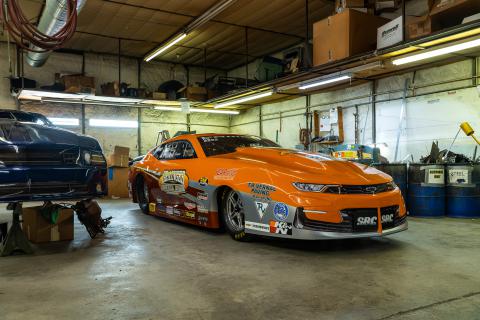
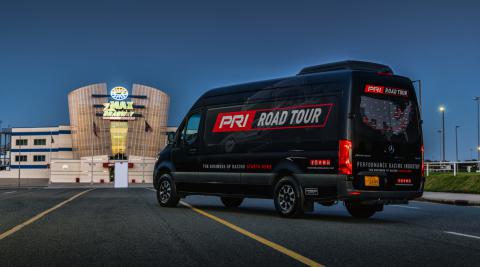
The PRI Road Tour got an exclusive tour inside Wally Stroupe’s race car fabrication facility in North Carolina. 

SRC Motorsports builds everything from NHRA Pro Stock cars to no-prep monsters, including Mike Janis’s all new 2020 Camaro Pro Mod and several high-profile No Prep Street Outlaw style builds. Stroupe is as real as it gets--you don’t want to miss this one.


For more information, visit performanceracing.com/roadtour and srcmotorsports.net.

What Race Seat Do You Trust Your Life To? The Latest From ISP Seats

Submitted by laurap on Tue, 02/02/2021 - 14:17


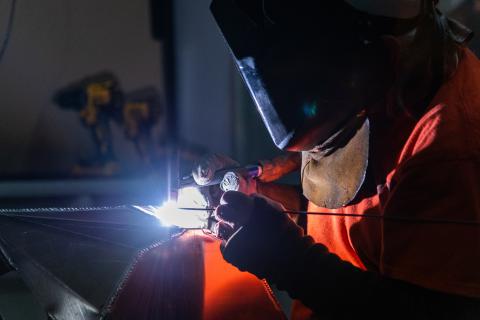
ISP Seats uses American-made materials and builds everything in-house at its Concord, North Carolina facility. At our recent stop with the PRI Road Tour, the company told us they take pride in caring about each customer. "It's not just making a buck, it's making somebody safe." 

Watch to find out more about ISP Seats and how they do things right.


For more information, visit performanceracing.com/roadtour or ispseats.com.

A Rare Look Inside An Incredible Vintage Race Car Collection

Submitted by laurap on Tue, 02/02/2021 - 14:08


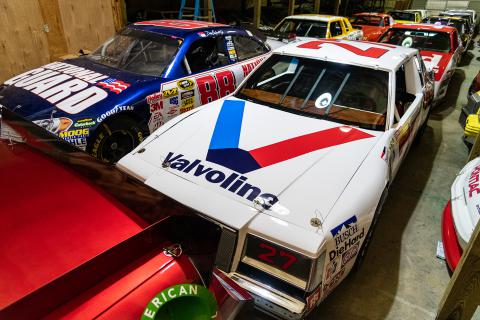
If you like vintage race cars, you’re gonna love this! An incredible look inside Bill Rhine’s amazing barn in North Carolina with an awesome lineup of restored race cars. A real deal Earnhardt Wrangler car, an as-raced A.J. Foyt Camaro, and two Bud cars. Bill Rhine walks Ralph Sheheen of the PRI Road Tour through the collection–truly one for the ages.


For more information, visit performanceracing.com/roadtour or facebook.com/RhineEnterprise.

Race Team Confidential: Team Midwest Miata Parts—Chris Armbruster, Columbus, Ohio

Submitted by danielk on Mon, 02/01/2021 - 18:20


With multiple irons in the fire, this “motley crew” of Miata specialists is looking forward to a full—and successful—competition schedule in 2021.

Team Midwest Miata Parts started out as a father trying to help his son get into racing. Over the years it has blossomed into many friends and business relationships working together, propelling the team to several regional and national championships with NASA Great Lakes. The backbone of the team is Midwest Miata Parts (MWMP), a specialty shop that sells new and used OEM Miata parts.

Darren Fimple runs the team and the company. In addition to technical and parts support, he also provides trackside food and shelter. The current driver lineup with NASA Great Lakes (more than 10 strong) covers HPDE students, ST6/TT6, ST5, B-Spec, and Spec Miata. MWMP also supports a Miata drifter and a pair of Honda drivers.

This year, the team is shifting focus by adding more W2W competition-capable cars to our fleet. They will serve as rentals and backups for our team drivers. MWMP has been breaking down wrecked Miatas for a few years now, so the parts catalog is pretty robust. We are hoping to assemble competitive cars with the best of the best reclaimed parts. 

Our racing season is March to October, but our build season is November to March. This offseason we’ve had several builds to dial in. We have a few engine rebuilds; one 1.6-to-1.8 high-horsepower engine swap; a monster ST5 Miata in partnership with our sister tuner company Tarmac 88; and an ST6-to-Spec Miata conversion. It’s going to be a busy winter in the MWMP shop.

The biggest hurdle we’ve faced as a team is limiting staff on the builds while COVID-19 continues to limit person-to-person contact. We have also been working on a donation build for FORCE Cancer Charity, but again, COVID-19 has been limiting that development and available people to work at one time.

As a team, we’ll swarm the shop for a weekend, three to six people at a time, and we complete a car per weekend for the most part. Each team member has things they specialize in, like extensive Miata knowledge, welding, painting, tuning, car setup, photography, and cooking. To say we are a motley crew is an understatement, but we get results.

Personally, I’m working on a totally new build for 2021. I’m staying in my ’90 Miata, but I’ve built a new zero-mile engine. I’ll be using the highest compression OEM Mazda bottom end with a high-flowing head to support 150–170 horsepower, dependent on 93 octane or E85.

Additionally, I run a small non-profit called RaceCarCamp (RaceCarCamp.com). We aim to put one person on the track each year, fully funded, to learn what race car driving is like. We will go through the participant’s car to refresh the brakes, change the oil, perform all the general track maintenance, and then enroll them in the NASA HPDE 1 program.

I’m looking for a student who lives in the northeast Ohio area, hasn’t ever been on the track before, and knows how to change a tire. We can teach brake bleeding, oil changes, etc. We had hoped to launch in 2020, but COVID-19 pushed our hopes to 2021.

What we’re most optimistic about in 2021 is running a full season. We ran reduced events with NASA Great Lakes in 2020 because the virus was in full swing. We are hopeful, however, that as vaccines deploy and people become more used to masks and hand washing, that we’ll get to run a full season in ’21.

February 2021

eNASCAR iRacing Pro Invitational Series To Return In 2021

Submitted by laurap on Mon, 02/01/2021 - 17:04
eNASCAR iRacing Pro Invitational Series logo


After a historic debut season that set the high watermark in viewership for televised esports programming, the eNASCAR iRacing Pro Invitational Series is set to return in 2021.

NASCAR and iRacing jointly have announced a new-look Pro Invitational that will see NASCAR Cup Series stars compete virtually in a 10-race schedule. The virtual series will complement NASCAR’s real-life racing schedule, offering fans a new mid-week competition featuring NASCAR’s top drivers. 

FOX Sports, which helped NASCAR and iRacing set viewership records with the inaugural Pro Invitational last season, will broadcast the first five races of the series live in primetime on FS1. NBC Sports will air the final five races of the series, with its schedule and details announced later.

With the NASCAR Cup Series set to visit new tracks and new markets in 2021, this year’s Pro Invitational will feature a mix of tracks designed primarily to preview the upcoming weekend’s “real life” race. This feature will be particularly beneficial in giving fans an idea of what to expect as the real-life drivers take on challenging new circuits throughout the season.

“The success of our eNASCAR iRacing Pro Invitational Series was underscored by an industry-wide effort to entertain fans during the early months of the global pandemic,” said Tim Clark, NASCAR’s senior vice president and chief digital officer. “This year, the Pro Invitational will return with a schedule of midweek races that will bridge the gap between our real-world races each weekend.”

The series begins on Wednesday, March 24, and will visit a mix of virtual venues, including Bristol Motor Speedway’s new dirt configuration, fan-favorites such as Talladega Superspeedway and Darlington Raceway, and Austin, Texas’ famed Circuit of The Americas. 

For more information, visit enascar.com/iracing-pro-invitational-series.

February 2021

Cloyes Gear & Products Hires Troy Angst As CFO

Submitted by laurap on Mon, 02/01/2021 - 16:32
​​​​​​​Cloyes Gear & Products Inc. logo


Cloyes Gear & Products Inc., backed by Hidden Harbor Capital Partners, has hired Troy Angst as Chief Financial Officer (CFO. Based in Fort Smith, Arkansas, and founded in 1921, Cloyes designs, develops, manufactures, and distributes timing drive systems and components for replacement applications in the automotive aftermarket and high-performance racing segment.  

Angst brings 30 years of experience to his new position, joining Cloyes most recently from Sharp Tooling Solutions in Romeo, Michigan, where he served as Chief Financial Officer. Before this, Angst served as Chief Financial Officer for Tritec Performance Solutions in Fenton, Michigan.

“We are very excited to have Troy join the team at Cloyes. He is a proven leader and successful CFO with a great track record of success in maximizing operational efficiency and leading both organic and inorganic sales growth,” Cloyes CEO John Hanighen said. “Furthermore, the addition of Troy bolsters the organization’s internal finance and analytics capabilities as we continue to execute against our growth strategy and aggressively capitalize on Cloyes’ premium leadership position within the automotive aftermarket.”

For more information, visit cloyes.com.

February 2021

On The Road With PRI Part 2

Submitted by jeffreyc on Sun, 01/31/2021 - 12:24
PRI Road Tour Part 2


In fall 2020, PRI put some of the world’s best photographers, videographers, and storytellers in a van and sent them on the road to experience the racing industry firsthand. Beginning October 10—fittingly enough at the Indiana Convention Center—it was christened the PRI Road Tour. And over the next 70 days it would make almost 90 stops, log some 8,600 miles, pass through 10 states, and collect tons of never-before-seen footage from an array of motorsports parts manufacturers, distributors, engine builders, fabricators, machinists, tuners, race teams, tracks, and more. “For two-and-a-half months, this team went right to members of the racing community and let them tell their story,” said PRI President Dr. Jamie Meyer. “[We] reached people in a way that no one really ever has.” Since the Tour’s launch, PRI has been sharing videos, photos, and exclusive interviews on our social media platforms, as well as in the January issue of PRI Magazine and online at performanceracing.com. Following is part two of our pictorial showcasing highlights from this one-of-a-kind adventure. And be sure to scan the accompanying QR codes with your mobile device for bonus content online.

Rhine1

Rhine2

Specialty fabrication and restoration shop Rhine Built showed off an impressive lineup of vintage stock cars during our stopover in Denver, North Carolina. View Video


ISP1

During our stop in Concord, North Carolina, the PRI Road Tour got to see how ISP Seats manufactures its race car containment seats and related safety products. View Video


Strope1

Wally Stroupe, who founded SRC Motorsports (originally Stroupe Race Cars) when he was just 16 years old, gave us a behind-the-scenes tour of his Kings Mountain, North Carolina, facility that specializes in custom builds, repairs, and parts. View Video


RacingRadios1

RacingRadios2

In Forest Park, Georgia, Racing Radios gave the PRI Road Tour a look at the intricate workings of racing communications products, including headsets, helmet kits, intercoms, and related accessories. View Video


VengeanceRacing1

VengeanceRacing2

When our crew stopped in, Vengeance Racing’s 12,250-square-foot facility in Cumming, Georgia, had several Corvettes on hand. The company provides late model vehicle performance parts and offers installation, dyno, and tuning services. View Video


Stoptech1

Stoptech2

Our contacts at Compton, California-based StopTech told us their quality policy is based on exceeding customers’ expectations and engineering its brake systems and components to be right the first time. View Video


Papa1

Papa2

The PRI Road Tour dropped in on the Papadakis drifting team based in Carson, California, where we got an up-close look at the cars driven by Ryan Tuerck (pictured) and Fredric Aasbo, who placed third and fourth, respectively, in last year’s Formula Drift championship. View Video


Derale1

Derale2

Derale Performance gave our team a demonstration on how its high-performance cooling products are assembled and finished during our visit to the company’s Los Angeles, California, facility. View Video


Scat1

Scat2

Scat Enterprises’ Tom Lieb recounted his shop’s humble beginnings working with “one part at a time,” during our stopover in Redondo Beach, California. Today, the company manufactures crankshafts, connecting rods, and rod assemblies for a variety of motorsports applications. View Video


Ryan1

Ryan2

The PRI Road Tour got to see how Ryan Beat Motorsports builds its short-course off-road racing vehicles, including its chassis fabrication processes, from the shop’s base of operations in Temecula, California.


Edelbrock1

Edelbrock2

At Edelbrock’s corporate headquarters in Torrance, California—one of its six locations across the US—the PRI team got to observe the manufacturer’s skilled personnel and precision shop machinery in action.


CPCarrillo1

CPCarrillo2

CP-Carrillo told us the company produces almost 5,000 different part numbers for its line of high-performance connecting rods and pistons out of its Irvine, California, facility.


EPMI1

EPMI2

EMPI’s 300,000-square-foot office and warehouse space in Anaheim, California, features product inventory for over 50,000 parts, primarily for Volkswagens.. View Video


RaceTec1

RaceTec2

In Huntington Beach, California, RaceTec’s management team gave the PRI Road Tour an exclusive look at its manufacturing, coating, and inspection processes for motorsports pistons.

February 2021
By
Staff Reports

Ask The Experts: Batteries

Submitted by danielk on Sat, 01/30/2021 - 18:29


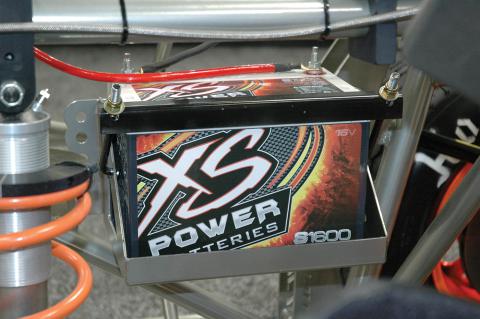
When choosing a battery, racers should consider future modifications and their potential impact on battery performance. As such, the team from XS Power Batteries recommends choosing the largest battery that can comfortably work in a build.

Sizing? Voltage? Charging? Advise customers on the proper selection and care of their race car batteries year-round.

For February’s installment of “Ask the Experts” we caught up with specialists in the battery category to uncover their most frequently asked questions about these unsung heroes of the race track. Contributing to this month’s column are experts from Braille Battery in Sarasota, Florida; Optima Batteries in Milwaukee, Wisconsin; and XS Power Batteries in Knoxville, Tennessee. 

How do I choose the “right” battery?

“First decide what the realistic goals of the build are, both short- and long-term,” said Brady Basner of XS Power Batteries. “Today’s 12-second street car could easily be an eight-second car in the future, and future modifications can have a huge effect on the right battery setup. We always recommend the largest battery that can comfortably work in a build. While a three-pound battery will do the job, a five-pound battery will work longer and allow room for growth.”

Gary Savage of Braille Battery noted that “power, capacity, size, and weight are all connected in any lead battery, so it’s critical to make sure you have enough capacity (not just cranking amps) to do the job.” Lithium batteries, by comparison, “offer the most weight savings, more cranking power, improved electrical performance, and much longer life. It’s typical for a 12- or 16-volt lithium battery weighing around 10 pounds to do the job of a lead/AGM battery weighing 40 to 50 pounds.” But like all parts, “there are economy-, standard- and professional-grade lithium batteries. They are a perfect example of ‘you get what you pay for’ regarding performance, reliability, and life.” 

experts2
When seeking a weight advantage, lithium batteries, are a viable option, plus offering “more cranking power, improved electrical performance, and much longer life,” when compared to lead batteries, reported our source from Braille Batteries. 

Savage also cautioned that “not all lithium batteries can handle ‘total-loss’ applications”—those without an onboard charging system. “Check with the battery manufacturer to ensure a certain model will work for a given application.”

“Race cars without alternators and those using underdrive pulleys should use a battery with enough cranking amps to start the engine, but that are also designed and warrantied for deep-cycle use,” said Optima’s Jim McIlvaine. “Even some race cars with charging systems might be better served with a deep-cycle battery, just in case an alternator or belt fails during a race and electrical demands need to be supplied by the battery.”

Should I use a 16-volt battery?

“The main reason most racers swap to 16 volts is for cranking power,” said XS Power Batteries’ Jed Emert, who drives a dirt late model. “The extra voltage spins the starter and motor over much faster, which allows for easier starting.”

A 16-volt battery can be used in cars with and without onboard charging but has benefits in a total-loss system, Basner said. “For example, on a dirt late model, the biggest draw is typically starting the engine. Once the car is running, the electrical load is minimal.” As the race progresses and the battery discharges, “the ignition system may only be drawing 5 amps, but it requires at least 12 volts. A discharging 12-volt battery may have 50 amps of total capacity left, but voltage may be at 11.5, and the car doesn’t run correctly. In the same scenario, a 16-volt battery may have 20 amps of total capacity left, but voltage is 15.5, so the ignition has the voltage it needs.”

experts3
Racers also can benefit from using a deep-cycle battery, reported our source from Optima Batteries, in case an alternator or belt fails during a race and electrical demands must be supplied by the battery.

While lead batteries drop in voltage as they discharge, “the flat discharge curve of a 16-volt lithium battery allows you to run with or without an alternator,” Savage pointed out. “You can use all of the capacity of a lithium battery and still be at a constant voltage.” 

What’s the best way to take care of a battery?

“We recommend keeping batteries properly maintained with a quality battery maintenance device whenever they are not being used,” McIlvaine said. “While Optima offers both a charger and a maintainer, most chargers on the market will work fine on Optima batteries. We do recommend avoiding ‘gel’ or confusing ‘gel/AGM’ charger settings, as AGM batteries are not gel batteries. Charger settings for gel batteries may not fully charge non-gel batteries and could damage them over time.”

“Customers who have a consistent charging regimen during race season and during the offseason have a far greater rate of success with batteries than those who do not,” said Emert. “When maintained properly, we expect every customer to get several seasons out of a battery.

“During race season, make sure the batteries are fully charged and ready to go the night prior to each race,” Emert continued. “If you are attending an event consisting of several days or numerous heavy pulls on the battery, take the charger with you to the races and charge when you’re able to ensure that you are always using the battery from a 100-percent state of charge.”

During the offseason, “charge the battery every two to three weeks to keep the battery ‘topped off’ and ready to go once race season starts again,” Emert concluded. 

SOURCES

–

Braille Battery 
braillebattery.com

Optima Batteries
optimabatteries.com

XS Power Batteries
4xspower.com

February 2021
By
Drew Hardin

Problem Solvers

Submitted by danielk on Sat, 01/30/2021 - 14:49


Avoid busting knuckles with tools that slip using this creative DIY approach that originated in the Land of the Rising Sun.

Problem: Slippery, uncomfortable hand-tool handles

Solution: Cushioned rubber grips made from bicycle inner tubes

Anyone who’s ever worked on a car knows one of the biggest shortcomings of hand tools—they can get oily, slippery, and harsh on hands in long wrenching sessions. Many racers address these issues by wearing padded mechanic’s gloves, but those have drawbacks, too. They provide limited tactile feedback, they’re too bulky for precision tasks, and they easily get soaked with fluids. 

Faced with these negatives, Roger Maeda of East Brunswick, New Jersey, looked for a simple, effective solution. Maeda races a 1993 Honda Prelude in the SCCA’s Super Touring Under class, and with a lean crew and lots of work to be done before race day, it’s not uncommon for him to spend long hours under the hood. His hands often got irritated. Or worse, they could slip off the tool, setting him up for the dreaded skinned knuckle.

To solve the problem, Maeda adapted a trick he came across in his native land, on the other side of the globe. “I was actually born in Japan, and I moved here when I was five. My in-laws live in an area of Japan called Seki. There are guys there who go around sharpening knives out of the back of a van. One of them said to me, ‘I put this bike inner tube on knife handles to reduce wear and tear on my hands, because I have to sit there and sharpen 30, 40, 50 of these every single day—my hands would get destroyed if I didn’t have something to protect them.’”

problem
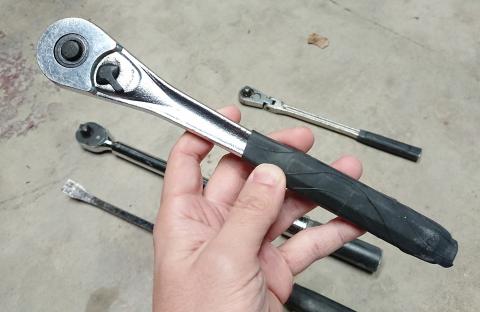
Roger Maeda, a competitor in SCCA’s Super Touring Under class, uses an unusual product to add padding on the handles of his hand tools—bicycle inner tubes. In fact, the handles are actually quite durable, as the ones seen here were applied two years ago.

Inspired by the technique of the Japanese craftsman, Maeda decided to try the idea on his hand tools when he got back home. He was pleased with how well it worked. True to what the man in Seki told him, the simple DIY rubber handles provided the additional grip he needed while cushioning his hands from the abrasive knurling on the tool.

Although it might seem as though the rubber grips would get slick when coated with oil, antifreeze, or other automotive fluids, Maeda found they remain surprisingly grippy. “The reason they specifically use bike tubes is that when they get wet, their texture doesn’t change. I’ve sprayed WD-40 on them; I’ve tried dipping them in water and they’re just fine.”

And the simple rubber tool handles have proved quite durable, even with frequent use. “I have yet to really wear one out. The tools in the photos are ones I did at least two years ago. They’re still like that. And the nice thing about this is that the tubes are cheap. So if they do get ruined for some reason, just take a razor blade, slice off the handle, cut another length of inner tube, and slip it back on.”

Getting the right size of tube is important, according to Maeda. “I like having the grips a little tight, so I use tubes a little smaller than the actual tool grip,” he said. “You may have to experiment a little bit to see what sizes work best. I use a road bike’s standard 700c tubes for most of my regular hand tools. For ratchets and stuff like that, this size works really well. But for the big stuff like my torque wrenches and really big combination wrenches—like, 22 millimeter and up—I use mountain bike tubes.”

Putting the inner tube grip on tools is simple, but there is a trick for making the process go smoother. “When you put them on, they do require a little bit of effort. It helps to roll the tip back a little bit. Then you slide the tool in there and unroll it.” 

Do you have a creative solution to a problem in your business, race car, or shop? We’d love to hear about it. If we like the idea, we may just publish it in an upcoming edition of Problem Solvers. Send your ideas, tips, or suggestions to editorial@performanceracing.com

February 2021
By
David Bellm

Tech Update: Which Bearing Is Best For You?

Submitted by danielk on Sat, 01/30/2021 - 14:43


A clearer understanding of design and construction will help you determine the right part for your application.

Performance engines today produce power levels unimagined even a decade ago. Computer-aided flow design, high-lift cams, and boosts from turbochargers and nitrous oxide systems can yield horsepower ratings well into the four digits. This extreme output puts enormous strain on all engine components, but none more than the bearings. 

A Holistic Approach

The first key to maximizing bearing life in a high-performance environment is to understand the world they live in. Engine bearings in performance engines must be able to survive extreme pressures, temperatures, and loads. And, tolerances on main and connecting rod bearings are among the tightest of any engine components. 

At MAHLE, we’ve developed sophisticated computer simulation software that accounts for the many variables that impact bearing performance: the metallurgy of the block and components, oil flow, temperature, etc. With this tool, we can see how well the bearing will withstand the loads and temperatures, and make changes to improve performance. For example, it helped us determine that the main bearing groove, which feeds oil to the connecting rod bearings, does not need to extend for the full 360 degrees of the bearing shells. In fact, the oil system efficiency can actually be improved by limiting the groove to 180 degrees, or even less. 

This software also helped us identify a problem with aluminum versus cast iron blocks that resulted in failures. It allowed us to design bearings that compensated for the different rates of thermal expansion of the aluminum block and the steel bearing backing to enable the engine to operate reliably at the power levels desired. 

Bearing Materials

For performance applications, tri-metal bearings are usually the preferred choice. A typical tri-metal performance bearing consists of a steel backing, a substrate usually made of bronze (copper/lead), and the overlay, which can be made of several metals. The two basic types of overlays used in performance engine bearings are copper, tin, lead, or lead indium.

Copper, tin, lead overlay have tighter tolerances than standard bearings and more “crush.” The thin nickel layer is a barrier to keep the tin in the overlay from chemically migrating into the substrate. Copper, tin, lead bearings are the choice for most performance applications, especially when frequent rebuilds are not desired, i.e., bracket racers. 

tech1
A typical tri-metal performance bearing consists of a steel backing, a substrate usually made of bronze (copper/lead), and the overlay, which can be made of several metals.  

Lead-indium overlay, by contrast, does not need a nickel barrier since there is no tin to migrate. The indium allows for more conformability, bedability, and higher fatigue resistance. This type of bearing is used in higher-end performance applications, but it does not yield as long a service life as copper, tin, lead overlay bearings. But for NHRA and other competition engines where this is not important, lead-indium bearings are the choice for extremely high-pressure resistance.

Bearing Construction

There are two different types of construction used in performance bearings: cast and sintered. A cast bearing is formed with a steel strip with folded edges. The copper/lead alloy for the substrate is heated to 2,000 degrees Fahrenheit, melted, and then poured into the trough formed by the bent steel. The strip is then quenched in oil. The heating enables the copper to adhere extremely well to the steel backing. As it cools from being superheated, the copper forms vertical columns. This gives cast bearings a substrate with a structural load-carrying capacity of 12,000 PSI.

Sintered bearings also use a strip of steel or aluminum, but instead of high heat, pressure is used to bond the substrate to the backing. A powdered substrate material is dumped on the strip, which then enters a sintering chamber where a series of rollers squeeze the strip and powder together. Only enough heat is applied to allow the particles to stick together. The substrate is not melted, nor is the molecular structure altered. The copper and lead have a random pattern with large globules of lead; there are no columns to give support to the substrate. This is because the copper was not superheated and then quenched. Sintered performance bearings typically have a substrate load-carrying rate of 8,700–10,000 PSI.

tech2
Bearings with a copper, tin, lead overlay, have tighter tolerances than standard bearings and more “crush,” according to our source at MAHLE Aftermarket. These are appropriate for most performance applications, especially when frequent rebuilds are not needed.
tech3
Bearings with a lead-indium overlay, have high-pressure resistance and are suitable in higher-end performance applications where long service life is not important.

The large pockets of lead give the substrate less strength because it compacts under load. There also can be random fractures within the substrate that are not visible and can result in a loss of adhesion, which in turn may allow chunks of bearing material to separate in performance engines, leaving voids and debris going through the bearing.

Overlay Failure

Bearing overlay failure occurs when bearings fatigue and the substrate starts to move and fractures the overlay. This typically can happen more frequently with sintered bearings. That is why the additional substrate strength of cast bearings is important for performance engines.

Bearings used in high-performance racing engines are subject to greater forces than those in production engines. By understanding the extreme conditions bearings experience, and the different types of bearings available, engine builders can make informed decisions as to which may be best for their particular application.

Dan Begle is the Performance Sales Engineer at MAHLE Aftermarket specializing in performance engine parts. He has over four decades of experience in motorsports, including 27 years in the engine shops of several NASCAR teams. 

February 2021
By
Dan Begle