SPECIAL REPORT: FROM ROAD TO TRACK

Submitted by ashtonr on Thu, 02/18/2021 - 11:30


While law enforcement efforts remain mostly punitive, the industry is taking more inclusive steps and providing alternatives to stoplight duels and highway showdowns.

Street racing has been around since the dawn of the automotive era a century ago, but there is reason to be especially focused on deterring the practice today. For one, cars are without a doubt faster now than they were in decades past. Fuel injection and modern computer controls have allowed the building of cars with shocking amounts of horsepower that are still easy to drive on the street.

Even factory stock modern muscle cars are capable of speeds once only attained by race cars. A 2020 Mustang Shelby GT500 with 760 horsepower runs low 11s off the showroom floor, and high 10s with minimal track prep. That’s quicker than a Super Stock Ford Thunderbolt—a factory-built race car—was capable of in 1964. Even a bone stock new Mustang GT will run in the 12s in the quarter-mile, and so it goes with modern versions of the Dodge Challenger and Chevrolet Camaro compared with their counterparts from decades ago.

In 1963, Al Eckstrand won the Stock Eliminator class at the Winternationals in a lightweight Dodge as part of the factory-sponsored Ramcharger team. His ET? 12.44 at 115 mph. That car would lose today in a race with a stock Dodge Challenger R/T Scat Pack, which anyone can purchase for about the average transaction price of a new car in the US. And that’s not even the top of the Challenger lineup.

special1
New, factory-stock cars like the Ford Mustang Cobra Jet perform like radical purpose-built race machines of the past. This creates serious challenges for those who oppose street racing.

Street racing can be a sensitive subject, with allegations of hypocrisy easy to toss around. You don’t have to scratch too deep beneath the surface of any motorsports-related enterprise to uncover people who probably cut their industry teeth at stoplight showdowns. Most have gained wisdom and may regret those youthful mistakes, but it still fits into the backstory of racing.

Also unhelpful is that street racing is often romanticized, as in the influential Fast and Furious movie franchise. But not all of the celebration is fictional. The briefest of searches on YouTube will uncover countless nostalgic reminisces about famous stoplight encounters on Woodward Avenue in Detroit in the 1960s, not to mention grainy footage of early-morning street races that happened just last week.

Indeed, social media has been the proverbial gasoline on the fire when it comes to street racing. “Used to be, when we were all growing up, you only heard of a street race that happened last Friday night. Now, you get to see it live on social media,” said Lonnie Grim of the Professional Drag Racers Association (PDRA), Fredericksburg, Virginia.

special2
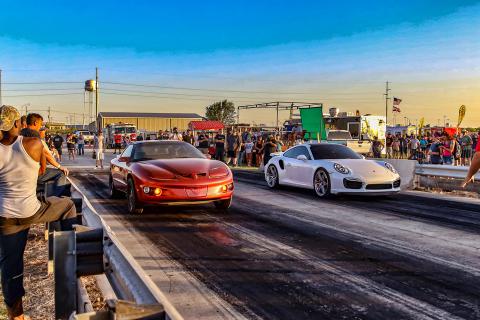
Tracks are now trying to lure participants with events such as the Rumble in the Jungle at Texas Motorplex, which is tailored to the expectations of street racers.

“I’ve been around to a lot of different cities in a lot of different states, and I realize they’ve got that problem in all of them,” said Amar Sood, with Texas Speed Syndicate, a Houston, Texas-based automotive event organizer. “I think any time you have guys and fast cars you’re going to have people out there racing. It’s just the way it is. When we were kids in high school, everyone was doing it. In the 1970s, and ’80s, and the ’90s, any time there’s fast cars and guys, and they get together, they’re going to do it. So I think it’s always going to be a problem. Has it gotten worse? The penalties have gotten worse, I know that. Since the early 2000s, in Houston it went from a Class C misdemeanor to a Class B,” which brings with it a fine up to $2,000, and/or up to 180 days in jail, driver’s license suspension for up to a year, and the driver must complete 10 hours of community service—all with the first conviction.

Certainly, harsher penalties are a trend across the country as municipalities react to street racing in their communities. It’s an important point that a younger generation needs to hear, as getting caught street racing can have life-altering consequences. In December, Greenburgh, New York, became the latest municipality to allow local law enforcement to seize any vehicles caught and convicted of street racing, joining nearby Yonkers. In May, Dallas city council members passed an ordinance allowing police to ticket spectators at illegal street contests, with fines up to $500. In Nashville, Tennessee, in November, police enforcing a street racing initiative impounded five vehicles suspected of racing over the course of a single weekend.

“I went to the drag strip because of street racing,” said PDRA’s Grim. “Stood in front of a judge, was 17 years old, and got the whole talking-to about ‘What are you doing?’ and ‘What decisions are you making? Isn’t there a race track you could do this at?’ Back then it cost a lot of money to stand in front of him and listen to that conversation. It did drive me to the race track. Nowadays? The price of that is a lot higher to have to be in trouble, get caught street racing, potentially losing your car. The fines are very high. There are very few officers in enforcement across the country that want to lend a blind eye. Most of them want to catch street racers—they want to write that ticket and try to curtail that, for public reasons and for safety.

special3
Tucson Dragway’s Beyond 1320 events aim to welcome street racers with a familiar environment—night races, no-prep surfaces, flashlight starts, and unlit pits.

“So we go down the road of how do we provide decent access to the race track, but the biggest thing is, how do we talk to the group and get them interested and gain their interest so that if it’s only Wednesday night or Friday night or Saturday, whatever the day may be, that they could take this activity to the race track, to get them energized to the acceptance of those days that are available,” Grim said.

STREET DIVERSITY

Reaching out and talking to the street race crowd is crucial in curtailing the problem. But to get a handle on street racing, it’s important to understand what’s actually happening out there. Street racing today is not just the age-old stoplight drags down the boulevard. There are different factions and subcultures, and not all of it can truly be classified as “racing,” although as far as most authorities and media are concerned, anyone exhibiting automotive performance on the street is “racing.”

special4
Many street racers prefer airstrips and other physically open spaces, which don’t have retention walls that can damage cars going off track.

“We have a lot of these kids that are going out here and doing donuts in intersections, and the media wants to call that street racing, and obviously it’s not. We’ve really worked hard to get those guys to come to the track,” said Andy Carter of Texas Motorplex in Ennis, south of Dallas.

“I guess it started over in Australia, you’d see all of these souped-up cars just do burnouts and donuts until they blow the tires off of them,” Carter said. “That’s what we’re seeing in Dallas, a lot that’s making the news. And the media, they don’t know any better, they refer to it as street racing. Well, that’s not even close to the same crowd. It is not racing. They’re doing something stupid and it’s dangerous, but I wouldn’t put it in the same group as racing.”

The “stunts” trend of automotive exhibitionism has moved to the front and center of activities that get lumped into the term “street racing.” “We’ve actually seen quite a decline in street racing over the past five to seven years, I would say,” said Ron Mowen with Vengeance Racing, a performance shop in Cumming, Georgia. “It certainly still exists, but not to the level that it did. Normally, whenever you see or hear in the news of street racing episodes, it’s usually misclassified, at least in my area. Of course, you’ve got these idiots who go out and block off intersections and do donuts and act like idiots in their cars, but the racing scene itself has really died out a lot around here.”

Other subcultures go far beyond a simple matter of kids having fun. For some, big money is involved. “On the hardcore side of street racing, and this is still happening to this day, is the betting. Betting, that’s huge. There are people that make a living on betting these races and racing with people, and winning money to buy more stuff for their cars,” said Reggie Wynn with Turbonetics, a manufacturer of turbocharger equipment in Moorpark, California. “Quite honestly, I don’t think these guys really want to be going to a race track. You can’t really be betting like that in public.”

special5
Promoters are finding that events dedicated solely to street racers are less intimidating for those without track experience, such as the World Cup Finals Import vs. Domestic from Miller Brothers Productions.

Going hand-in-hand with recognizing the various subcultures in the street racing scene is understanding why they would avoid the race track in the first place. Reasons vary wildly. “The biggest thing, and it’s counterintuitive, NHRA, IHRA, and tracks are using the same safety requirements that they used 30 years ago for cars that were not nearly as safe as today’s vehicles,” said Vengeance Racing’s Mowen. “To get these cars off the streets, you’re going to have to allow them on the tracks. It’s just that simple. You can’t have a 10-point roll cage in a C7 Z06 Corvette that runs 9.99s, because you can literally do $800 worth of modifications in factory form, and it’s capable of running 9.99s. Nobody’s going to put a 10-point roll cage in their car to do that. So you’re not giving the guy a place to race when you’ve got those safety requirements. It’s not that people aren’t interested in safety, but they’re not interested in cutting up their $80-, $90- or $100,000 car that is a 100% street car, and it doesn’t need that cage because it’s got all the safety integrated into it with the structure, the air bags, the safety restraints and things of that nature. We have to find a way to come to a compromise on newer vehicles.”

For others who avoid the track, they perhaps never grew up in a legitimate racing environment and simply don’t know where to start. “There are a lot of new racers that are particularly scared of coming to an organized event,” said PDRA’s Grim. “They’ve never been there. They don’t know what they’re going to do, they don’t want to look uneducated. So it’s our job, as an event staff, to welcome them, make them feel appreciated—there’s no dumb question—answer any question they have, help them in any way possible.”

SPEED SOLUTIONS

Clearly, there’s no one-size-fits-all solution. Governments will use the brute force of laws and fines that they’ve always wielded, although despite all that there’s no shortage of people willing to take the risk.

For the motorsports industry, as the saying goes, you can probably catch more flies with honey than vinegar. A significant dent has been made in the street racing problem by simply reaching out and inviting them to the track, and adjusting events to align with their interests.

“We started last year working with some of the big grudge promoters who run at the track as well as did some races on the street, and ran a ton of grudge races here last year,” said Carter at Texas Motorplex. “Which was great for us; with COVID you couldn’t do a lot, you couldn’t have a lot of fans. It’s been real successful for us. We tried to work with the Dallas PD a couple times—they want to do stuff. With COVID they’re covered up. I think a lot of what we’ve been able to do with so much of the grudge racing here, which is unusual for a national-event track, not on top of the list of what NHRA wants to see going on at a sanctioned track, but we’re getting them off the street, getting them on a safe surface. And we tech their cars, we check their stuff and make sure they’re safe. We’re not just letting them come out here for ‘anything goes.’ It’s been really, really good for us.”

One of the organizations Texas Motorplex reached out to was Hood 2 Hood Racing (H2HR), a Dallas-based group whose mission statement reads in part, “to reach racers of all ethnicities and racing styles; it creates a diverse and inclusive racing environment that is open to all categories of racing. H2HR is a platform where the world can enjoy head-to-head drag racing in different cities, states and countries.” Hood 2 Hood has since held its annual picnic at the track, with racing and family activities.

Texas Motorplex has a Hot Summer Nights program during the peak of the season when it’s too hot to race while the sun is shining, where the action doesn’t really start until 10 p.m. or so, Carter said. They’ll race until three or four o’clock in the morning, which is when street racers are usually active. Building up trust took time, but persistence paid off for the track. “In 2019, it was probably the first time we really reached out to those guys. We did one grudge race in ’18, and it was a struggle because they didn’t trust us, they weren’t sure what we were doing and how we were going to treat them. Once we had that first new one, we have more cars than we know what to do with every time they show up now.”

Texas Motorplex is also discussing future track improvements, which may include concreting an area of the pits for burnouts, drifting, and donuts, to appeal to that audience, Carter said.

One track that has made noticeable inroads into the street racing problem is Tucson Dragway in Arizona. The track launched a program in 2018, which has since spread across the country, called Beyond 1320. “Guys started coming out to the track and started talking to me about No Prep. I said, ‘No Prep, what do you mean, No Prep?’” said Jim Hughes of Tucson Dragway. “Well then, once they started explaining what they were looking for, I said, ‘Why don’t you just bracket race?’ They said, ‘That’s not what we do. We’re street racers, heads-up, first one to the finish line wins, but we’re always looking for places to race and we’re always getting shut down by the cops.’ So I said, ‘Why not race at a drag strip?’ Once they explained that No Prep is basically an equalizer, you can have 600 horsepower or you can have 1,000 horsepower, and you still have to get down the No Prep, or non-glued, surface.

“I liked the concept, and when they race on the street, it’s not always the fastest car or the most money that wins,” Hughes continued. “They go to a sketchy street surface, and now the whole key is, figure out what you’ve got to do to get your horsepower from point A to point B in a straight line, before the other guy. And No Prep becomes the equalizer.”

Working with the No Prep racers, Hughes selected an area of the track from the finish line to the sand trap for the action. “It’s literally our shutdown area after the quarter-mile finish line, and we call it Beyond 1320. And it took off and they loved it, because we’d shut all the lights off in the pits, we’d have the last bank of lights on the track, we had fire safety, helicopters on stand-by when we can bring them in, and now they had a street racing environment that still had safety equipment. I guess it’s an alternative to street racing.”

The Beyond 1320 events at Tucson Dragway go a long way toward capturing the feel of a street racing atmosphere, right down to the flashlight starts. “Basically, what they do on the street, we do the same thing on the track,” Hughes said. “Or I should say, in the shut-down area. It’s one-eighth mile, we put the little lights out in the center, just like they would on the street. And they’re real, real happy with it.

“So then we’ve got a few other tracks throughout the country that heard about it, and asked us about it, and asked about using the name Beyond 1320, and I said, ‘Sure, let’s grow it nationwide.’ Now you’re getting street racers at least coming to the track. And then they start looking around, ‘What else do you guys do here?’ Some of them have gotten into bracket racing, and some of the bracket racers have gotten into Beyond 1320.”

Not all street racing, of course, is of the standing-start drag racing variety. Texas Speed Syndicate pioneered rolling-start racing at airfields, targeting heavily modified, high-end street cars whose owners aren’t as interested in subjecting their cars to the abuse of constant drag-style launches.

“One of the biggest problems with a closed-course drag strip is the retention walls. Those tracks were all designed for drag racing and to keep spectators safe. That’s why you have retention walls there,” said Sood with Texas Speed Syndicate. “At airfields you don’t have retention walls, so if you spin out, you just slide into the grass and stop. You do that at a track, you’ve just totaled your car. It’s a huge, huge difference. That’s really the big draw. They don’t have the gear for it, the electronics for it there—the physical layout’s not conducive. If you have to abort your run, you have to make a full pass, turn around, come back around. It’s very different than a runway. But mostly it’s just that they’re designed for drag racing. They’re not really designed for what we do. We could have four lanes of people racing on a runway, as opposed to just two on a drag strip.”

For PDRA, the outreach begins at a younger age. “We have a wonderful and huge growing Junior Dragster program, both Top and Pro Junior,” said Grim. Kids can enter Top Jr. Dragster series at ages eight to 12, while Pro Jr. Dragster is open for 13- to 18-year-olds. “Once you get them to the race track, they’re probably not straying from the race track throughout their lives, no matter what car they own, no matter how fast it may be.”

Even in the world of very-high-powered street cars, there’s a surprising number of adults who have never raced on a track. Mowen at Vengeance Racing estimates probably 65% to 70% of his customers are first-timers to a race track.

“We do quite a few things here. Obviously, we modify cars to make them go faster and people want to experience that, they want to utilize it,” Mowen said. “So what we do is we try to attend as many events as we can each year, and we offer track support while we’re at these events to encourage them, so that if they don’t know what they’re doing they can still come out—we’ll teach them, we’ll maintain their car, we’ll work with them. We host track test sessions at our local drag strip, and we take people there that have never experienced it before or want to get into it. We show them how to utilize their car, how to make it perform. And that obviously turns into more business, typically, because then they get the bug and want to start going faster, but it also encourages them to do it in the right place, in the right format.”

When attracting street racers, giving them their own events seems to be an effective strategy.

“Having a night dedicated to street cars guys is good because it pulls them out, where they’re not intimidated by running against the big, fast race cars,” said Jason Miller with Miller Brothers Productions (MBP), which produces Xtreme Dragbike Association, Import vs. Domestic, and Hail Mary Derby events. “It’s kind of like if you’re in a motocross, and they just put the C-guys, the beginners, in with the A-guys, the pro guys, and they get their clocks cleaned, they’re probably not coming back. But when you put somebody in with other vehicles like theirs, they have a little more fun, it creates camaraderie, and eventually those guys go on to put more money in the program, and [they’re] learning more and gravitating up to the next-tier events.”

Events focused on street cars tend to hit the fat part of the target when it comes to street racing. “There are a lot of venues that have created street car classes at drag strips all over the country. A big one that comes to mind is, a guy named Justin Keith and a guy named Chase Lautenbach have created Street Car Takeover,” said Vengeance Racing’s Mowen. “They travel the country, they work with drag strips, I think they host about 20 different events per year all over the country. They are drawing tremendous crowds, and their whole event is based on street cars. You don’t go there and see full-blown race cars, Pro-Mods, things like that. You see Cadillac CTS-Vs, new Mustangs, new Hemis. The faster cars run in the 8s, most of them are high 9- and 10-second and beyond cars. They’re drawing huge crowds and they’re getting these people off the streets. They’re giving cash prizes and treating them like real racers, and the guys absolutely love it and take to it.”

Taking more and bigger bites out of street racing would be a huge win for the motorsports industry, and stakeholders believe the tools are in place to make that happen if the right people can be reached. “I think a lot more tracks need to listen to their customer base on what they’re looking to do and be creative, think outside the box a little bit and welcome these racers to the track,” said Hughes at Tucson Dragway. “Don’t shut them off like they’re underground. It’s just a different style of racing, and that’s okay.”
March 2021
By
STEVE STATHAM

New Management, Weekly Schedule For Utica-Rome Speedway

Submitted by laurap on Wed, 02/17/2021 - 17:20
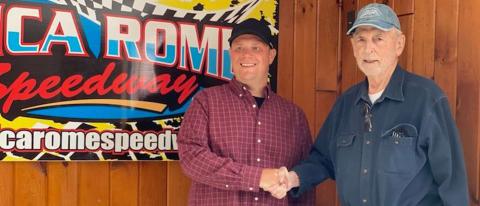
Brett Deyo, left, and Gene Cole, right. Photo courtesy of Utica-Rome Speedway
 

Utica-Rome Speedway, the 1/2-mile clay oval in Vernon, New York, has announced a new management team for the 2021 season.

Officials have announced Gene Cole as the current track owner, taking over for Bill and Kim Shea after six years of ownership. Brett Deyo of BD Motorsports Media LLC will take over as promoter for the facility, which also features a motocross track and adjacent speedway club. 

The track will operate in conjunction with Fonda (New York) Speedway, located approximately one hour east, mirroring rules and pay structures with the Track of Champions also operated by BD Motorsports Media.

The new management team also consists of Jamie and Denise Page, the current general managers at Fonda Speedway and past promoters of I-88 Speedway in Afton, New York. Meanwhile, Chris Moore will relocate to Vernon for race season to serve as the announcer at both Fonda and Utica-Rome.

This season, Utica-Rome will run weekly racing on Friday nights, a change from its typical Sunday night events. The schedule, set to be announced later, will begin in May. Featured divisions include Modifieds, Crate 602 Sportsman, Limited Sportsman, Pro Stocks, and Four Cylinders.

For more information, visit uticaromespeedway.com.

February 2021

G-Force Racing Gear Announces New Director Of Marketing

Submitted by laurap on Wed, 02/17/2021 - 14:42
G-FORCE Racing Gear logo


G-FORCE Racing Gear has announced the hiring of Danilo Oliveira as its new Director of Marketing. The position had been vacant for some time before the change in ownership at the beginning of 2020. 

Oliveira comes with a  background in sales and marketing, having been in the motorsports industry since 2006. He has worked for well-known companies such as OMP Racing and Adidas Motorsport. Based in Miami, Florida, Danilo will also handle the international sales for G-FORCE Racing Gear.

“The G-Force team and I are thrilled to have Danilo joining us. Not only will Mr. Oliveira bring us first-class marketing experience and skills in the racing safety industry, but drives G-Force new product research and development to the next level,” G-FORCE Racing Gear President Harry Zhang said. 

Founded 25 years ago, G-FORCE Racing Gear, based in Acworth, Georgia, manufactures suits, helmets, gloves, shoes, racing harnesses, window nets and restraints, crew gear, flame retardant underwear, and more. With over 150 dealers nationwide, the company also announced plans to expand to other markets in 2021.

For more information, visit gforce.com.

February 2021

Race On Sunday, Refine On Monday

Submitted by danielk on Wed, 02/17/2021 - 11:49


How factory road racing programs continue to drive technological innovation and brand awareness.

In the early days of the automobile, organized motorsports developed largely as a consumer-facing medium that allowed OEMs to showcase the durability of their vehicles. In the decades since, racing has expanded to include a vast array of go-fast machines that often have a tenuous connection to the street-driven vehicles that are currently rolling out of the factory. Purpose-built race cars like those found in Formula One and prototype class racing regularly showcase cutting-edge tech, but how this technology translates to a car company’s road-going fleet can be difficult to identify. 

Production-based race cars on the other hand, not only present a familiar aesthetic, they often prove to be a harbinger of what’s to come, as homologation rules promote development efforts that serve a showroom-based application. With that in mind, we decided to take a closer look at the production-based racing involvement of four major automakers in order to get a better understanding of how motorsports continues to facilitate real-world innovation while also serving to advance the primary goal of these companies—selling cars. 

Porsche North America

Porsche’s motorsports involvement can be traced back to the earliest days of the company as we know it today. As the story goes, Ferry Porsche, the son of company founder Ferdinand Porsche, wasn’t satisfied with the vehicles that were available in post-war Europe and decided to build one of his own. Shortly after the first car was complete, Ferry entered the lightweight, rear-engined 356 prototype into competition to use racing as a test bed for the company’s new high-performance platform. 

“That’s essentially the blueprint for what we’ve done ever since,” said Dr. Daniel Armbruster of Porsche Motorsport North America, in the Los Angeles, California-based office. “The motorsport arm of Porsche is part of the research and development department, and reports to the head of R&D.” 

Today, Porsche is involved at nearly every level of road racing, from track days and other HPDEs with the Porsche Owners Club to LMGTE-Pro and LMGTE-Am class racing in the FIA World Endurance Championship. In between the two extremes is Porsche’s GT Sport program, which ostensibly bridges the divide between customer and “works” motorsports. 

rr2
Porsche has a long tradition of using race cars like these Cayman GT4 Clubsports to promote its products.

It’s here where Porsche campaigns cars like the 911 GT3 R, 911 GT2 RS Clubsport, and Cayman GT4 Clubsport in the IMSA WeatherTech SportsCar Championship and SRO GT World Challenge America. And as Armbruster noted, the connection between Porsche’s race cars and its road-going counterparts couldn’t be more direct. “The 911 GT3 R Hybrid is a great example of this. With this one-off car, we learned how to play with hybrid technology in a performance context, and that development produced the hybrid system that was used in the 918 Spyder.” 

Using a prototype race car to develop the hybrid system for a limited-production hypercar might sound like an outlier case, but he also pointed out that Porsche’s most performance-focused production cars share more than a few ancillary pieces derived from the company’s racing efforts. “Vehicles in Porsche’s GT street cars, like the 911 GT2 and GT3 and Cayman GT4, are developed in the motorsports department—the race cars and the street cars are developed side by side.” 

And the advances made within the motorsports department can also be seen outside of Porsche’s most hardcore street cars as well. “The double wishbone front suspension design that was developed in the top level of 911 racing, with the 911 RSR, can now be found in all 992 generation 911 street cars.”

Yet Porsche’s involvement in racing isn’t strictly an academic endeavor; Armbruster told us that competition is a core component of the company’s philosophy as a brand. “When Porsche wins, vendors win and customers win. But for us, racing is more than just engineering and marketing—the sportsmanship and spirit of how we approach it has helped to create the culture of our brand. So as long as Porsche exists, Porsches will be racing.”

Honda Racing/Acura Motorsports

Soichiro Honda saw the value of racing not only as a crucible for evaluating the durability of emerging technologies, but also as a training ground for his engineers. Honda’s initial motorsports efforts began in motorcycle racing, and before the company ever produced an automobile, the OE had already purchased the land and began development on a test track that’s known today as the Suzuka Circuit road course. 

rr3
Honda is involved in a vast array of racing types, such as this Acura NSX competing in the IMSA WeatherTech SportsCar Championship.

By 1964, Honda was directly involved in F1 racing, and today the company’s technology can be found across a vast swath of motorsports disciplines. The company has a long history as an engine supplier and technical partner for various series, and in 1993, Honda Performance Development (HPD) was established as technical operations hub for Honda’s American motorsports programs. Today, HPD’s support ranges from karting and SCCA club racing all the way up to IMSA and IndyCar through its Commercial and Pinnacle motorsports programs, respectively. 

“Compared to any other automaker, we probably have the biggest motorsport footprint in the world,” said John Whiteman of Honda Performance Development, Santa Clarita, California. “Strictly speaking from a production standpoint, we offer everything from quarter midget and karting engines to turnkey race cars like the Civic Type R TCR and NSX GT3 Evo.”

The Civic Type R TCR currently campaigns in the Michelin Pilot Challenge, while the NSX GT3 Evo runs in the WeatherTech SportsCar Championship, both of which operate under the IMSA banner. “It’s the premier sports car series in North America and includes events like the 24 Hours of Daytona, the 12 Hours of Sebring and Petit Le Mans, so it’s an incredible testing environment for our products,” Whiteman said. 

rr4
Production-based cars like these IMSA Honda Civic TCRs are “an incredible testing environment,” said a company source.

“It’s a place where manufacturers put their best foot forward,” he continued. “IMSA also has marketing appeal in terms of television coverage and things like that, but I think the biggest draw for HPD is simply the opportunity to compete with our best against the best of other manufacturers. For us, it’s about proving out the engineering and the technologies that we offer in our production cars. Racing is often said to improve the breed of the road car, and that’s certainly true at Honda. Because many of the engineers who work at HPD (including our NSX GT3 Evo and Touring Car program engineering leaders) come from Honda R&D, we have a direct link to our road car development teams. For the NSX and Civic specifically, we have shared performance, durability, and usability data from our development and competition with the minor and full-model change engineering teams in North America and Japan.” 

Automobili Lamborghini S.P.A.

Although Lamborghini is a brand that’s always been synonymous with high performance, the company’s production-based racing efforts didn’t begin in earnest until 1996, when Lamborghini established a one-make racing series with the V12-powered Diablo SV-R. 

After the Italian automaker was sold to the Volkswagen Group in 1998, the focus shifted over the next decade toward company growth. But by 2009, Lamborghini was once again competing in a one-make series—this time with the Gallardo—and by 2013, Lamborghini Squadra Corsa was established to support customer racing efforts. “That was a significant step for the company,” said Giorgio Sanna from the Sant’Agata Bolognese, Italy, headquarters. “It was the first customer racing department in the history of Lamborghini with a dedicated staff and a dedicated strategy. It established a long-term plan to invest in motorsport.”

For Lamborghini, the core mission sees a focus on furthering customer racing efforts rather than factory programs. “Our first priority in motorsports is to take care of our sportive customers,” Sanna explained. “We want to offer them a product portfolio and opportunities where they can enjoy our race cars. But, of course, it’s also a big opportunity to develop new technical features that can be transferred to our street-legal cars. In my opinion, the connection between Lamborghini’s race cars and our street cars is the closest in the industry.”

rr5
The one-make Super Trofeo series, shown here, and IMSA competition has helped Lamborghini sell more than 400 race cars in just five years.

Over the past five years, Lamborghini Squadra Corse (the name of the company’s motorsports arm) has sold more than 400 race cars to customers, in turn making the department a noteworthy aspect of the automaker’s business. And that success has led to a factory racing program in IMSA, where the Huracán GT3 has secured three consecutive years of GTD class wins at the 24 Hours of Daytona in the WeatherTech SportsCar Championship series, as well as last season’s overall GTD Michelin Endurance Cup title, among numerous other victories. 

And while these wins certainly bolster the brand’s performance cachet, Sanna said that motorsports development also has a direct correlation to the vehicles that Lamborghini is putting on the road today. “The Huracán Super Trofeo car, for instance, was designed to be rear-wheel drive, and we developed a dedicated rear suspension to support that. A year later, we translated that to the road car as the rear-wheel drive Huracán LP 580-2, which uses the suspension kinematics that we developed on the race car.”

And considering the potency of Lamborghini’s road-going offerings today, the context in which these road cars must provide world-class capability is not so dissimilar from their racing counterparts. “A super sports car of 20 years ago did not take aerodynamics into serious consideration—from a design point of view, the aero was for style. But if you look at the aerodynamic package of the Huracán Super Trofeo EVO, you can see how this has inspired the aero used with the Huracán STO road car to generate improvements in drag resistance while also increasing stability. Today, the performance level that these street-legal cars are capable of demands it.”

General Motors

GM’s involvement in motorsports dates back more than a century, as company founder Louis Chevrolet was a racer before operations at Chevrolet Motor Car Company began in 1911. The company designed and produced racing car parts throughout the 1910s, while Louis himself lined up at the starting grid of the Indianapolis 500 on four separate occasions. Motorsports was a family affair for the Chevrolets, too—Gaston, Louis’ younger brother, won the Indy 500 in 1920.

Chevrolet’s modern factory-level North American road racing efforts began in 1999 when it established an ongoing partnership with Pratt Miller Engineering to develop a Corvette race car that could compete in the Grand-Am and American Le Mans series. Today, both Chevrolet and Cadillac are active competitors in the IMSA WeatherTech SportsCar Championship, while Chevrolet also competes in GT4 and touring car racing in the IMSA Michelin Pilot Challenge. In its debut season, the mid-engine Chevrolet Corvette C8.R won six races and swept the GT Le Mans manufacturers, drivers, and team championships.

rr6
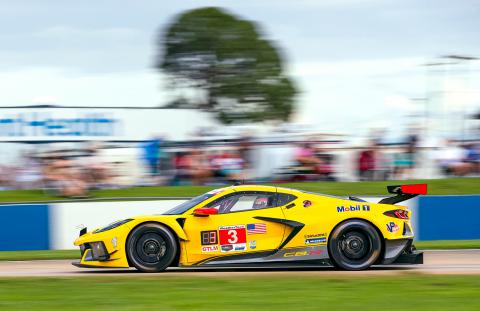
General Motors has raced Corvettes continuously since 1999 to promote the brand, develop engineers, and refine production cars. 

Mark Stielow of General Motors in Detroit, Michigan, said that “cascade engineering” developments from racing have long benefited next-generation production vehicles, and the transfer of technology between race cars and street cars has always been a hallmark of Corvette Racing.

“For instance, pop-up headlights were done away with on C6 generation after Corvette engineers discovered the amount of wind resistance they created on C5-R on the Mulsanne Straight at Le Mans, and the forward-tilting radiator that was introduced for the C7 Stingray used aero and air intake lessons learned from the Corvette C6.R.” 

He noted that lightweight materials in suspension pieces and internal components are often vetted in motorsports before finding their way into production vehicles, along with powertrain technologies and aerodynamic improvements that enhance performance and efficiency. But he also said that GM’s significant involvement in racing isn’t sheerly for the sake of testing tech that’s destined for future production vehicles. 

“It also allows for the development of future engineers who can bring experience from the world of fast-paced motorsport into production roles,” he said. “And there is, of course, a strong marketing element—racing and winning lifts the perception of Chevrolet and its racing brands, and it also has a significant influence on our highly successful performance parts and accessories business.” 

SOURCES

–

General Motors
gm.com

Honda Racing/Acura Motorsports
hpd.honda.com

Lamborghini
lamborghini.com

Porsche Motorsport North America
porsche.com

March 2021
By
Bradley Iger

United Race Parts, Ready to Equip Your Pit Crew

Submitted by danielk on Tue, 02/16/2021 - 18:01


Founded in 2015 in Troutman, North Carolina, United Race Parts brings years of product experience, component development, factory training, and customer experience to every product it builds. Known as “the Pit Equipment Headquarters,” United Race Parts assembles a complete pit-equipment package for its customers by working with suppliers and technical partners. You can find them trackside at IndyCar, NASCAR, and IMSA events as well as in the PRI Trade Show and in PRI Magazine.

URP1

United Race Parts carries some of the best-known names and products with full lines from Dino Paoli, Red Devil, Greaves 3D, and GDS Motorsports. The company is also the only certified service and warranty center for Dino Paoli in North America. With these parts, the company’s technicians provide custom solutions on any type of pit equipment and offer rental packages for the biggest races around the world. United Race Parts has a full inventory of common spare parts, exploded views of all models, and support personnel. For a team on a budget, there is also a full inventory of used equipment.

URP2

Working with local suppliers, United Race Parts provides certified full metallurgical analysis, proprietary body re-finishing, and precision custom machining. Services include full off-season rebuilds, conversions from handed to un-handed, a full report with an analysis sheet on each serial number, and metallurgical analysis. Handle re-finishing is available on request. At the track, United Race Parts personnel can do a quick inspection on vanes and clutch-wear levels, short service work replacing only necessary components, and air-system optimization.

URP3

To learn more about United Race Parts and the services available to race teams, visit unitedraceparts.com

Follow the PRI Road Tour on Instagram, Facebook, LinkedIn, and Twitter.

Expansions Give UMI Motorsports Park a Bright Future

Submitted by danielk on Tue, 02/16/2021 - 17:52


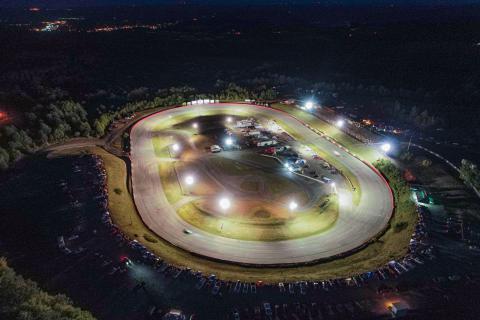
UMI Motorsports Park is an oval track in Clearfield, Pennsylvania, that has been converted to a popular autocross venue. By adding infield paving to utilize some existing connectors, the management team at UMI Motorsports Park has built a versatile, fun, configurable track to test cars and host autocross events.

UMI2

The facility was upgraded in 2020 with the addition of pavement, improved appearance, and increased camping spots. To draw a more diverse crowd, the park added a music stage area and a VIP pavilion for hosting racers, crews, and families.

Situated on 85 acres, the facility was able to remain open during the COVID-19 pandemic while keeping everyone safe. Planned improvements for 2021 include a new press box, additional paving to provide more course layouts, and adding even more powered, leveled, and landscaped camping spots. Organizers plan to host four autocross events in 2021 including Optima's DriveAutoX (details still pending), the UMI Autocross Challenge, the UMI "Top Secret" Event, and UMI's $25,001 King of the Mountain 3.0. 

UMI3

UMI Performance oversees the track, and the company’s vision is to create a family-friendly motorsport entertainment com­plex featuring multiple high-energy events and drawing spectators and racers from across the country. UMI Performance also uses UMI Motorsports Park to test and perfect its Made-in-Pennsylvania line of high-performance suspension and brake components. The company builds parts for modern and classic muscle cars and trucks from Ford and GM dating back to the 1960s and 1970s.

UMI4

To learn more about UMI Motorsports Park and to reserve a camping spot, visit umimotorsportspark.com.

Champion Brands

Submitted by danielk on Tue, 02/16/2021 - 17:45


Champion Brands, LLC, was originally founded as Lowe Oil Co. by Ralph Lowe in 1956. Today, the company is an industry leader in specialty lubricants. Among the range of high-tech lubricants Champion produces, racing oils are part of the driving force of the portfolio. The company also produces and blends more than 300 additional products including fuel, brake fluid, and engine additives and lubricants.

champ1

Champion uses top-tier additives and base stocks to formulate products for improved wear protection, fuel economy, high-temperature stability, long-life protection, improved efficiency, oxidation resistance, reduced evaporation, increased performance, friction reduction and lubricant compatibility across a range of engine-operating conditions and applications.

champ2

The company is headquartered in Clinton, Mo., which is 75 miles southeast of Kansas City, so the central location can serve clients on each coast. The 450,000 square-foot plant accommodates more than 1.7 million gallons of bulk storage with rail siding. The plant has 10 filling lines and blow-molding machines capable of producing HDPE, PVC and PET plastic bottles. Net weight filling lanes cap fill approximately 300 containers per minute. Containers are de-palletized, labeled, filled, sealed, capped, coded, packed and palleted with only three operators. Lines can run metal or plastic containers ranging from 2.4 ounces to 330 gallons.

To learn more about Champion Brands, visit their website: https://www.championbrands.com/

JMS Chip & Performance

Submitted by danielk on Tue, 02/16/2021 - 17:30


JMS Chip & Performance manufactures high-quality automotive electronic components designed to improve a vehicle’s performance. JMS also distributes products for a variety of automotive applications. Founded by hardcore enthusiasts in 1993, JMS has become one of the industry leaders in automotive electronics, nitrous oxide injection, supercharging, turbocharging and custom EFI tuning.


JMS focuses on custom and race-vehicle assembly, custom ECU calibration, electronics design and manufacturing, automotive component sales and distribution and commercial, industrial, municipal and military reliability and maintainability solutions.


The JMS team has years of experience in the automotive aftermarket, powersports and professional racing markets. Its experts specialize in Ford, GM and Dodge powertrain and drivetrain calibration engineering, light-vehicle assembly, turn-key race car production and aftermarket performance component engineering and manufacturing. Its BoostMAX series is a plug and play performance boost for Ford Ecoboost-powered vehicles while PedalMAX is designed to improve throttle response and driving characteristics for a variety of vehicles including side-by-sides. FuelMAX fuel-pump voltage boosters are designed to provide up to an 85% increase in fuel delivery without adversely affecting the OEM fuel pump. FleetMAX is designed for commercial-vehicle fleets and can be used to limit top speed, rate of acceleration and other functions.


Additionally, JMS Chip & Performance has been one of the industry leaders in late-model domestic and import vehicle tuning. JMS brand electronics components are some of the most technologically advanced in the automotive industry and feature innovative engineering, materials and workmanship. The JMS technical center in Lucedale, Miss., is one of North America's premier automotive and motorcycle tuning, manufacturing, and turn-key automobile development facilities, producing numerous custom high-performance vehicles each year. JMS is also a pioneer in domestic vehicle calibrations and highly regarded for its expertise in Ford, GM and Chrysler powertrain and drivetrain systems.


Learn more about JMS Chip and its services at https://www.jmschip.com.


Motion Announces Seven Management Promotions

Submitted by laurap on Tue, 02/16/2021 - 17:18
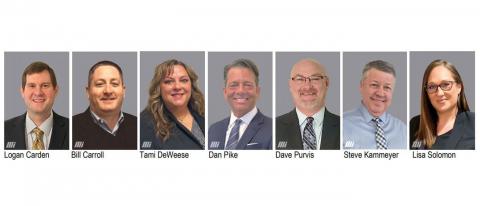
Headshots of Motion's seven recent promotions


Motion—the distributor of maintenance, repair, and operation replacement parts, and a provider of industrial technology solutions—has announced seven recent promotions to key field management positions. 

“We are immensely proud of what these individuals have accomplished to date and are confident that their experience, acumen, and drive will help to take their divisions and the company to a new level,” said Kevin Storer, Executive Vice President Branch Operations–North America and President of Motion Mexico. 

Logan Carden was named vice president of the Nashville Division and will be responsible for overseeing the sales growth initiatives of 20 branches located in parts of Indiana, Tennessee, Kentucky, Mississippi, and Alabama. He will report to Chris Pacer, Vice President Group Executive–Central. 

Bill Carroll was promoted to vice president of the new Philadelphia Division (Pennsylvania, New Jersey, and West Virginia), which was established to serve and further the growth in the East Group’s territory. He will be responsible for overseeing 13 branches’ sales and guiding their market growth and will report to Phil Donnelly, Vice President Group Executive–East. 

Tami DeWeese will assume leadership of the Pacific Northwest Division as its vice president. In her new role, DeWeese will oversee the sales growth, strategy, and operations of 19 branch and shop locations. She will report to Jeremy Barton, Vice President Group Executive–West.

Dan Pike was promoted to vice president of the St. Louis Division and will be responsible for the sales growth and strategic management of 17 branch operations throughout Missouri and Arkansas. He will report to Austin Amos, Senior Vice President Group Executive–Midwest.

Dave Purvis was named vice president of the Midwest Group Area, replacing Pike. Purvis will be responsible for leading the Midwest Group Corporate Accounts Team, which involves managing existing corporate account relationships and driving new growth opportunities. He will also be responsible for providing corporate account partners with Motion’s full offering of services and solutions to reduce these partners’ Total Cost of Ownership. He will report to Austin Amos, Senior Vice President Group Executive–Midwest.

Lisa Solomon was promoted to area vice president for Corporate Accounts, Central Group, and will lead this Group’s Corporate Accounts Team. She will be responsible for enhancing existing national account relationships and driving new growth opportunities throughout the various industry segments within the geographic area. She will report to Chris Pacer, Vice President Group Executive–Central.

For more information, visit motion.com.

February 2021

Seven Indiana Sprint Car Tracks Unite To Modify Hoosier Tire Rule 

Submitted by laurap on Tue, 02/16/2021 - 15:46
Midwest Sprint Car Series (MSCS) logo


To discourage the need for the chemical altering of tires and to keep the competition as equal as possible, seven Indiana sprint car tracks have mutually agreed to modify their respective track tire rules for the 2021 season. 

After careful consideration, the promoters agreed to allow an additional right-rear tire to be used by their 410 non-wing sprint car competitors. The tire choices will be the Hoosier 105/16.0-15 medium or the recently approved Hoosier H15 softer compound tire. 

The group of dirt tracks includes Bloomington Speedway, Gas City I-69 Speedway, Kokomo Speedway, Lawrenceburg Speedway, Lincoln Park Speedway in Putnamville, Paragon Speedway, and Tri-State Speedway in Haubstadt.

The Midwest Sprint Car Series (MSCS) will also adopt the same rule for 2021.

“We feel this is an opportunity for teams to choose a tire that is more suitable for the various track conditions they encounter throughout the season,” said Tom Helfrich, promoter of Tri-State Speedway and president of MSCS. “All seven tracks involved have a little different character to them in regards to track surfaces.”

Kokomo Speedway promoter Reece O’Connor said the group also considered the economic upside to adding the Hoosier H15 as an option. 

“I strongly feel the addition of the H15 is a cost-effective alternative to adding or enhancing the current $3,000-to-$4,000 shock packages many teams are utilizing,” O’Connor said. “This gives the lower-budget teams a better opportunity to compete on a more level playing field.”

Currently, the USAC national midget series offers the same two tire compound choices, while the Hoosier H15 is common in the World of Outlaws and All Star Circuit of Champions competition.

February 2021