Hot Shot’s Secret has announced the title sponsorship of the Hole Shot Diesel Series, a brand new diesel drag racing series based on the West Coast. The region had previously been without a dedicated diesel drag race series due to the closure of the National Hot Rod Diesel Association (NHRDA) two years ago.
“We have been painfully aware during the past few years of how it has been a dried-up desert on the West Coast for some of the best drag racers in the country. With our years of experience with Northwest Dyno Circuit (NWDC), the DPI Expo, and the Ultimate Callout Challenge (UCC), we knew we could put together this new series effortlessly to fill that void,” said James Brendle, the owner of Hot Shot’s Secret Hole Shot Diesel Series.
Organizers target a five- to seven-race season in 2021, with plans to add additional events over the upcoming seasons. The series will be showcased in Arizona, California, Montana, Washington, Idaho, Oregon, and Colorado. Each event will have structured payouts along with a continuing point series for an overall payout at the end of the year.
They also aim to complement the East Coast’s Outlaw Diesel Super Series (ODSS) by limiting the overlap of schedules, incorporating 1/8-mile passes, and running the same classes and rules. The plan is to ultimately develop an East vs. West World Finals diesel drag racing event where top points winners from both series will face off at the end of the season.
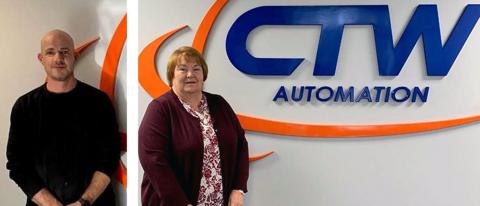
CTW Automation, the provider of test equipment for racing and automotive damper and springs, has announced two new hires to its Lexington, North Carolina, office.
Scott Morin will assist the electrical, mechanical build, and manufacturing departments in his new position. He comes to CTW with years of racing R&D and test team experience, having spent time collecting data and working in a wind tunnel.
Rita Treichler, meantime, has been hired to assist CTW in several capacities, including organizing and handling office projects and answering phone calls. She will also help with marketing, shipping, and more.
CTW has also announced the company will expand its line of rotational dyno (RD) machines and new software.
Here’s what US-based performance suppliers need to know about negotiating agreements with overseas distributors.
Aftermarket companies seeking to sell their products globally most often do so by establishing a network of distributors in overseas markets. While there are additional methods to getting your products to international buyers—including selling online through e-commerce or do-it-for-me (indirect) methods to market, such as working with export management companies, manufacturers’ reps, or US-based warehouse distributors—in this article we’re going to focus on the distributor route.
For that, we’ve asked two international experts from top global specialty-equipment export markets—Australia and Europe (Sweden)—to provide insights and advice on how US-based suppliers can effectively negotiate such agreements.
FIRST STEPS
First, let’s look at some of the earliest steps involved in signing with a distributor. According to Patrick Fazzone with the Washington Global Law Group, which has advised US and Australian companies for the past 25 years on international business, American firms must adequately vet their potential customers even before considering the terms of an agreement.
SEMA heads to Stockholm, Sweden this September, with the aim of introducing US companies to EU trade buyers. Photo courtesy of Lena Peres, Speedgroup.
“You definitely need to do your own due diligence on who you propose to do business with,” he said. “You should keep in mind that Australia is a very small market relative to the United States. People know each other, and you don’t want to have your product associated with someone who is either incapable or maybe has a bad track record. You want to check into the [potential partner] company as an important first step.”
Meantime, Richard Jacobsson of Eversheds Sutherland in Stockholm, Sweden, which specializes in Swedish and European law as it relates to intellectual property rights, marketing, and distribution, cited the importance of getting to know the market and its potential.
Fazzone agreed that it comes back to not only making sure you have the right partner, but also ensuring that you understand what the market looks like so that you can set realistic expectations. Some markets are as big as those in the US—in the European Union (EU), for example—but Australia is not, and you need to manage sales expectations, he said.
WHAT ABOUT EXCLUSIVITY?
One key question that comes up often, Fazzone told us, is what to do about exclusivity. “Australian distributors typically want an exclusive arrangement if they can get it. It might be exclusive to a sector, or to a state or region in Australia—typically the eastern states versus Western Australia.
Australia and the US share a common language, but their culture, geography, and laws differ greatly. Trade experts recommend careful research and realistic expectations.
“That may or may not be realistic, or it may not be something that you, as an exporter, would feel comfortable granting to a distributor,” he continued, “so there may be other types of arrangements that you could enter into—certain performance requirements or sales targets, for example. If they’re achieved, there may be some sort of understanding, either contractually or otherwise, that you won’t direct sell to other customers in their territory or sector.
“The distributor may also want exclusivity but may not be prepared to desist from selling competitive products,” Fazzone added. “In that type of scenario, the question is what do you think you could negotiate with the other party? And how much do you think they’d be prepared to give up to sell your products?”
Sweden has long been a business hub for northern Europe, and its consumers are said to be open-minded about US products. Photo courtesy of Lena Peres, Speedgroup.
One possible approach: Try to focus on an exclusive arrangement that identifies one specific, relatively narrow sector in which their product or other products are not competitive. “If you can come up with a mutual understanding that focuses and confines the areas of an exclusive arrangement,” Fazzone noted, “you might be able to come up with what I would call mutually reciprocal exclusivity.”
Jacobsson agreed, adding that a practical solution could be to try and find areas for which you can have mutual exclusivity. “It could be geographical, or it could be different kinds of distribution mechanisms,” he said. “Maybe you can agree on mutual exclusivity regarding distributing products in physical shops but not for other kinds of distribution. There are many different ways you can do this, and I think it’s very much about bargaining power and about the product you are selling.”
On the issue of agreeing to geographic territory, what if a potential customer wants to have exclusivity in a region, an entire country, or even multiple countries?
“Typically, Australian distributors want large territories, given the limited population in the country,” Fazzone said. Australia is about the same size as the US, but with only 25 million people. “Obviously, it’s an important consideration for distributors to be able to have as much territory as possible if you define it as geographically extensive. But there are various key considerations that you’d want to look at in deciding how much of a territory to agree upon with an Australian distributor.
Questions worth considering, according to Fazzone: How extensive is the network of the distributor? What are their resources, particularly to purchase and resell? What sectors do they service?
US aftermarket suppliers sell products into different sectors and subsectors of the economy, he noted. “To that extent, you obviously have to look very closely at what area or sector a distributor feels it could reasonably service. It’s not unusual to grant separate territories for the eastern states and for Western Australia.”
In addition, distributors oftentimes are reluctant to make a large initial financial investment in a new product, so you may need to accommodate for that. “I think you have to work with them,” Fazzone said. “You certainly want to make sure they have the resources and ability to buy samples for whatever it is that you’re selling and be able to maintain sufficient inventory to market your product appropriately. I think you have to manage your sales expectations in Australia.
“There needs to be some thought in advance to your distribution agreement,” he added. “You want to be sure it addresses these types of issues to try to make sure your sales expectations are aligned with what the distributor can realistically achieve in Australia. Just getting back to the question of territory, for example, the distribution agreement should be clear on the territory or sector into which the distributor will be selling, and the rights and requirements for selling there.”
PERFORMANCE REQUIREMENTS
Any supplier should also take into account performance requirements. “They need to be realistic,” Fazzone told us, “and they usually emerge out of the discussions and negotiations with the distributor. There may be performance requirements not only on sales targets and volume of sales, but also on advertising and marketing efforts and so forth. And, what if the distributor fails to make sales targets, even if they’re realistic?
“The distribution agreement needs to address that,” he continued. “Will there be a loss of exclusivity? Would that be grounds for termination of the relationship? Those are things for which there is broad latitude under Australian law, but the distribution agreement—which is the private law between the exporter and distributor—needs to be specific. The agreement can also make exclusivity conditional. If you achieve a level of mutually agreed-upon sales, you are my exclusive distributor. If you don’t, then I have the right to sell to others in your territory or sector as well.
Good communication is vital in overseas agreements, experts say. Among points to discuss are sales goals, territory size, exclusivity, and intellectual property protection.
Exclusivity is common in many overseas agreements, but you would also never want to agree on exclusivity without an exit strategy. Typically, that would mean including a performance clause. “You could also have a special termination clause allowing the exporter to terminate just the exclusivity clause without terminating the rest of the contract,” Fazzone advised. “The key is to be mutually comfortable and realistic with performance targets. The distributor will always want to ramp up slowly, while the seller wants results. If the contract sets unrealistic targets, the distributor is not going to be able to meet its requirements. That suggests the exporter should have some knowledge about the market and not just rely on the representations or the conversations with the distributor.”
GRAY MARKET/PARALLEL IMPORTS
Both experts noted that parallel imports—obtaining the same product from a different source—are allowed and unavoidable in their markets. Fazzone noted that there’s no prohibition on parallel imports in Australia. Customers there are legally able to access or source products that otherwise are handled through a distributor online.
“They could also potentially source your product from other distributors in other countries or territories, and that does sometimes happen,” he said. “There is, of course, remedy if your goods are being counterfeited and sold in Australia, but the mere sale of parallel imports is permitted under Australian law. One has to remember that the distributor will need to find mechanisms to retain its advantage in an environment where there are gray-market imports. One way, of course, is to be able to offer service, support, manufacturer warranties, and the like.”
Jacobsson noted that US manufacturers must take into account EU laws regarding designating exclusive distributorships in Europe (for example, for limiting distribution to one country). It is not possible to “create a strict geographical division within the EU, so you can never have a distribution contract that achieves a total separation of the EU market into different areas of complete exclusivity. Just like in Australia, parallel imports are not prohibited, and it’s also not possible to prohibit, say, a Swedish distributor from reselling the products to Germany.
“If a US company appoints an exclusive distributor in Sweden and also an exclusive distributor in Germany, you cannot prohibit those distributors from selling their products to each other’s markets,” he said. “What you can do is stipulate that the distributor cannot actively sell into a certain area. If a customer in Germany actively contacts the distributor in Sweden, the Swedish distributor is allowed to sell the products, so you will never be able to create 100% strict borders within the EU internal market because parallel imports are allowed.”
LENGTH OF CONTRACT
Understand, too, that if you want to have a trial basis for a specific period, the distributor will typically want a longer term. The parties normally review performance periodically, and the frequency may need to be drafted into the contract.
Grounds for termination or contract modification also might be provisions that are up for periodic review. The term may not be overly long, but it could be automatically renewable unless terminated by one of the parties. Those are factors that arise in negotiations and are important to address, too.
IP CONSIDERATIONS
The distribution agreement should include a license for the distributor to use the intellectual property (IP) that’s contained within the product being sold to the distributor, Fazzone said. The agreement must specify payment terms, as well as the passage of title and risk of loss.
“The agreement also should specify the governing law,” he added. “Otherwise, other bodies of law could be interpreted into the contract, including the Convention on the International Sale of Goods (CISG). The CISG applies automatically to agreements between the United States and Australia unless expressly waived by the parties.
“Intellectual property laws are, of course, always an important consideration for sellers, as are the licensing laws in Australia, which has a very robust intellectual property law regime,” Fazzone continued. “Australian IP laws are different from the laws in the United States in various respects, and it’s important to understand the differences.”
For example, you must register in Australia if you want patent protection or trademark protection. “You can’t rely on the strength of your US patent rights or your US trademark registration.”
As in Australia, US corporations cannot rely on US trademarks and patent rights when doing business in Sweden or the rest of the EU, according to Jacobsson.
“When entering the EU market, a US corporation needs to assess whether it will be interested in just one or two EU jurisdictions or more jurisdictions,” he said. “If there will never be any ambition to do business in several countries, it may be cost-efficient to simply apply for national IP registrations in the countries in question. However, it will likely be more practical and give more flexibility to start by applying for EU-wide registrations, such as an EU trademark registration. If patent protection is important, it is normally advisable to get help from patent experts based in Munich, which is where both the German and the EU patent offices are located.
“One new and challenging issue following Brexit [Great Britain’s departure from the EU] is that Great Britain most likely will no longer be covered by the EU regulations on IP and related issues,” Jacobsson noted. “But keep in mind that a lot has happened in the last few years when it comes to intellectual property in Europe. You still have the possibility to apply for, say, a national Swedish trademark, but if you apply for a European trademark, you can get a trademark that is valid in 26 or 27 countries.”
DISTRIBUTOR OR COMMERCIAL AGENT?
Once you have identified the buyer and are zeroing in on terms, make sure any contract clearly states that this is a distributor arrangement and not a commercial agent, Jacobsson cautioned. They are not interchangeable, and distributors and commercial agents are treated very differently under European law. In short, a distributor is defined as someone who buys your products and then resells them, while a commercial agent (or manufacturers’ representative) acts as an intermediary and does not buy and sell, but rather facilitates the transaction and gets a commission based on the products sold.
If, by chance, a partnership with a European distributor goes bad, it’s possible that the distributor might claim that it served as your commercial agent (rather than your distributor), at least in Europe. If the contract is vague and the courts agree with that distinction, Jacobsson said, “they will be entitled to a certain minimum termination and statutory termination compensation (up to one year of commission payments). That is something you need to be careful about. But as long as you have a contract saying that you sell the products to the distributor and the distributor resells the products, and it’s the distributor deciding on the pricing and other terms, it will be a distribution and not a commercial agency.” (Unless the actual way of doing business would differ from what is stated in the contract.)
TRADE SECRETS
American companies need to understand that protection of trade secrets in Australia is not as robust as in the United States, Fazzone warned.
“If you have a situation where you’re concerned about reverse engineering and you don’t have a patent, you need to have very strong restrictions in the contract. Australian law will not protect your trade secrets if you don’t restrict their usage contractually,” he noted.
Jacobsson said it’s the same in Sweden.
“When it comes to trade secrets, it’s very difficult to take this kind of matter into a court and be successful, because you have such a heavy burden of proof to demonstrate that the distributor was able to do things because he used your know-how or trade secrets,” he explained.
OPPORTUNITIES
Fazzone said there’s something for almost every US company and exporter in Australia, including small- to medium-size enterprises and sellers of niche products.
“There are great opportunities, because it’s a very sophisticated market and it’s 25 million people,” he said. “For distributors able to handle New Zealand as well, it’s 30 million. But the usual cautionary comment is important: Despite the similarities between Australia and the United States, they are different countries with different cultures, different laws, different backgrounds, and different heritages. As in any overseas market, you still need to do your homework, avoid assumptions based on your US experience or experience in other markets, and seek appropriate advice on how to proceed.”
Jacobsson said that Sweden and the Nordic market may represent only a smaller part of the EU, but the Nordic countries are very much oriented toward international trade.
“They are countries with a history of internationally successful corporations such as Ikea, H&M, and Spotify,” he said. “Companies and consumers are generally open-minded and receptive regarding products and services from US exporters. Sweden, and particularly its largest city and capital, Stockholm, has a long history of being a place where many international corporations have established their headquarters for Northern Europe. Following the collapse of the Soviet Union in 1991, Stockholm developed as a hub for business and investments into the Baltic States [Estonia, Lithuania, and Latvia]. Once a US exporter has established business in one EU-member state, it is easy from a legal point of view to also go to other EU-member states, since most legislation is harmonized within the internal EU market. However, there are still some areas, such as employment, where the law may still be very different from country to country.”
Both experts stressed the need to make sure all parties’ expectations are aligned early on, that sales goals are agreed to, that you adequately support your customer to create a win-win situation while protecting your IP rights, and retain your ability to end or alter a partnership that doesn’t achieve the pre-set performance goals.
SIDEBAR
NORDIC TREK
Aftermarket suppliers are invited to join SEMA for its inaugural SEMA Nordic trip in September 2021. Registration opens this month. The SEMA Business Development Program to Stockholm, Sweden, introduces US manufacturers to trade buyers of racing and performance equipment from throughout the region. Price includes hotel, a tabletop display, meals, and networking events. For more information on the 2021 SEMA Nordic trip, visit sema.org/nordic, or contact SEMA’s Linda Spencer at lindas@sema.org.
Ray Marler, the promoter for I-55 Speedway, was introduced as the Auto Racing Promoter of the Year (ARPY) during the 48th Annual RPM@Daytona Workshops presented at the Daytona Resort & Spa in Daytona Beach, Florida.
Marler represents Region Five, the Great Plains region of RPM balloting.
“This is incredible, to win this,” stated Marler. “I have had many friends win this, and I have been a believer in the RPM Workshops for many years. I have a great wife in Sue, and great partners in Kenny and Ann Schrader, which we all work extremely hard, and to be recognized like this is very humbling. I am grateful for everyone who has helped us get to this point. I-55 has been our lives. We have poured our heart and soul into it, and we hope to carry on the tradition for many years to come.”
Lyle DeVore of Albany-Saratoga won the first-ever ARPY “without Fans” Award, based on promoting his track, Albany-Saratoga Speedway in Eastern New York, without the ability to host fans due to the pandemic. Todd and Elizabeth Thelen, promoters of Slinger (WI) Super Speedway, accepted the RPM Outstanding Event of the Year award.
Additionally, the following regions were also announced. Region One, Eastern Region: Steve O’Neal from Port Royal (PA) Speedway; Region Two, Southeast Region: Al Vardanore from East Bay Raceway Park in Tampa, Fla.; Region Three, Central Region: Tom Helfrich from Tri-State Speedway in Haubstadt, Ind.; Region Four, Northern Region: The Kaufman Family, Cedar Lake Speedway in New Richmond, Wisc.; Region Six; Southwest and Western Region: Steve Beitler from Skagit (WA) Speedway.
Equalizer Systems, the Elkhart, Indiana-based manufacturer of hydraulic and electric lifting and leveling solutions, has announced the promotion of Nick Godfrey to the position of Sales Manager.
Godfrey, previously an outside sales representative for five years, holds over 17 years of experience in the RV industry.
“Nick has done an outstanding job with outside sales–with building customer relations and adding to our customer base. As we see continued growth, I am very excited to see him in his new leadership role as sales manager and what lies ahead for him, his team and our company,” Equalizer Systems Vice President Mike Kimes said.
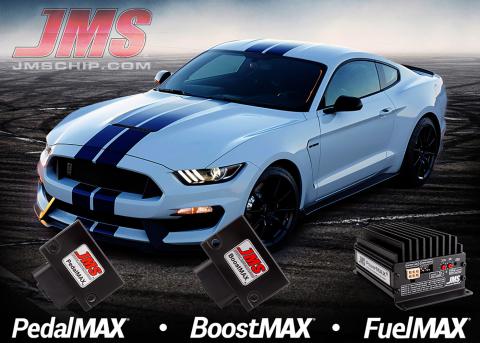
JMS Chipis a manufacturer of high-quality electronic components for the Automotive and Powersports industries. They develop and design products that improve the overall performance, reliability, and safety of the vast majority of modern vehicles on the road today. Led by industry pioneers with decades of experience ranging from manufacturing, aftermarket upfitting, and automotive calibrations software, their electronic components are some of the most technologically advanced in the industry today, utilized by OEM’s and consumers alike. JMS’s top-selling line of products includes PedalMAX®, BoostMAX®and FuelMAX™and many other innovative products.
Improve your vehicle's throttle response and driving characteristics withPedalMAX®. Throttle response and 0-60 acceleration are improved, boosted applications see a big lag reduction, all leading to better initial power, torque, and shifting characteristics. Taking only minutes to install, the unit plugs in-line between your vehicle's pedal position sensor and vehicle harness, utilizing OEM-connectors with a control knob making performance adjustable on-the-fly! Coming in 3 different models, PedalMAX®, PedalMAX® Terrain, and PedalMAX® Extreme to enhance any vehicle on or off-road.
BoostMAX®is a complete plug & play performance solution for 2011+ Ford Ecoboost, allowing you to add additional boost via the control knob to your engine. Easy to install, it plugs in-line using the vehicle's factory wiring connectors and harnesses. BoostMAX® connects to the factory MAP and TIP sensors using OEM-style connectors and is controlled via the accelerator pedal position sensor to allow for on-demand increases in low-end, mid-range, and top-end power and torque. Heighten your driving experience even more by stacking it in-line with the PedalMAX® to improve all-around throttle response while further enhancing low and mid-range torque. Or dial it back down to factory settings to give yourself an edge in low-traction conditions.
The FuelMAX™ fuel pump voltage booster features exclusive digital technology that provides up to an 85% increase in fuel delivery from your factory OEM fuel pump, giving it the highest continuous voltage and amperage output without the need to disassemble the fuel tank or install time-consuming aftermarket fuel pumps. Plug and play installation connects the supplied OE-style harness directly to your fuel pump driver module and activates via the pedal position sensor, minimizing install time and eliminating the need to drill extra holes in the firewall. User-adjustable voltage ramp-in/out rate allows the elimination of fuel pressure spikes for maximum control and customization if desired. These kits feature heavy-duty 10-gauge wiring, industrial-grade heat-sink, proprietary enclosure, and everything else you need for a clean and complete installation. Compatible with all 12-and 16-volt battery systems, plus all aftermarket fuel pumps.
All JMS units are backed by a lifetime warranty and made in the USA from highly durable components.
Keeping with their race roots, JMS also offers drag-style wheels, the Savage and Avenger lines, which every racer needs in their garage. JMS Wheels are engineered to fit specific Ford, Dodge, and GM vehicle applications while accommodating the larger factory or aftermarket braking systems commonly found on the Boss 302, Shelby GT500, and SRT8 Dodge cars. Each vehicle-specific wheel is machined with exact center-bore tolerances and utilizes a 60-degree lug seat for a true OEM fitment. Color-matched lug nuts are included, and they are custom manufactured with a ¾" SAE hex head to prevent damage to the lug opening during the wheel and tire installation and service.
Avenger Series Wheels feature a contemporary five-spoke design, while the Savage Series Wheels feature a modern five-hole drag-style design. Both series wheels are manufactured from single-piece aluminum moldings that offer high-strength yet are lightweight. Each style will be available in the following finishes: Polished Silver, Satin Silver, Chrome Silver, Gloss Black, and Black Chrome. For an ultra-modern look, the wheels are also offered with a diamond or mill cut process before finishing.
All wheels are offered in these common sizes; 15" x 10" & 17" x10" rear wheels, and 17" x 4.5" & 18” x 5” front wheels. Supported vehicle applications include 1994-2021 Ford Mustang, 1994-2002 Chevy Camaro and Pontiac Firebird, and 2006-2021 Dodge Charger and Challenger. Wheel sizes are pre-engineered for fitment on each vehicle based on factory or aftermarket brakes, and the backspace/offset specifications are designed for optimal fitment.
Never one to settle, keep your eyes out for new JMS products releasing in 2021.
A creative approach to revamping an iconic event in the midst of a still-changing business climate.
If you Google “North American International Auto Show” (NAIAS), the first website that comes up is the link for Motor Bella. Click that link and you’ll see the classic NAIAS logo blowing up in a haze of colored smoke.
It’s an apt metaphor for what’s going on with the iconic Detroit show. Faced with the daunting challenges of public safety in the throes of the COVID-19 pandemic, NAIAS officials canceled the show in 2020, with the hopes of resuming the following year. But by December, prospects looked bleak for the 2021 event, too.
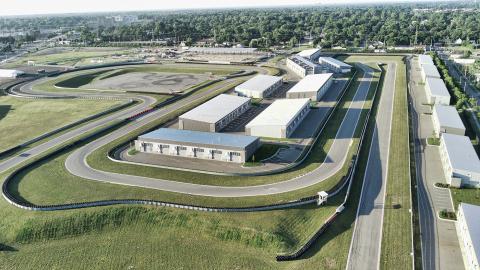
It was time for a different plan. The result is Motor Bella, a multifaceted outdoor automotive event that aims to blend traditional auto show manufacturer displays with on-track exhibitions and performance-driving events. The new show is a collaboration between the Detroit Auto Dealers Association (DADA) and M1 Concourse, a recreational motorsports and automotive-event facility in Pontiac, Michigan, featuring a 1.5-mile performance-driving track.
To learn more about the development of this unique event, we recently spoke to outgoing M1 CEO Jordan Zlotoff (see sidebar on his successor) and Brent Snavely, PR director for Motor Bella and NAIAS.
M1 Concourse’s performance-driving facilities and metro-Detroit location make it well suited to automaker events. Show officials expect Motor Bella to widen NAIAS’s traditional audience.
Planning for Motor Bella began in late 2020, just months prior to its formal announcement in January. But while the show may be new, it’s the product of a partnership that stretches back considerably further.
“We’ve had a relationship with DADA for a number of years,” said Zlotoff. “We’ve been staying in communication and looking for opportunities to partner. We were planning on doing some small events as part of the larger network of events for the North American International Auto Show. In 2020, we were approached by DADA with the idea of doing a full encompassed event here at M1 Concourse, different from the auto show because of concerns they had regarding indoor spaces, COVID safety, and health at the TCF Center in Detroit. Then, the 2020 show was canceled altogether.
“So we were planning for 2021 around the same limited events that we thought were going to take place,” continued Zlotoff. “But then DADA asked if we’d be capable of doing a larger activation at M1 Concourse. The conversation really focused around, ‘Did we have the capability? Did we have the availability in our calendar? Did we want to do it?’ And the answer to all those questions was, of course, ‘Yes.’”
The resulting event is expected to be much like the traditional NAIAS, transposed to a COVID-safer outdoor format. But added to that will be a significant performance-driving element, to take advantage of M1 Concourse’s facilities. “There will be a large number of static displays,” Zlotoff said. “The huge lineup of vehicles from all the different brands will be a big part of the event’s footprint. But we also have an opportunity to do some things on our track and our skid pad. We can do things like drifting, autocross, or other dynamic driving activities. We’re also exploring the potential for having an off-road course.”
With these elements, show officials are hoping to expand their audience beyond the usual auto show crowd. “The auto show in the past was a pretty casual event, attracting average, Metro-Detroit families wearing jeans and sneakers,” said Snavely. “Motor Bella will be a little more enthusiast focused. I think it will be more appealing to people in motorsports as well.”
Along with bringing in new attendees, show officials hope M1 Concourse’s performance driving facilities will also attract automakers that generally don’t participate in NAIAS. “There are a lot of brands, particularly foreign ones, that have not been exhibitors at the show,” noted Zlotoff. “We’d like to showcase their vehicles, technology, and performance in a new light, at a different venue.”
Motor Bella 2021 will be open to the public September 23 through September 26. Media and industry events will be held September 21 through September 23. For more information, visit motorbella.com.
SIDE BAR
McGrane NAMED NEW CEO at M1
Former Laguna Seca Raceway Chief Executive Officer Timothy McGrane was recently named the new CEO at M1 Concourse, replacing Jordan Zlotoff, who had been with M1 since 2015. The remainder of M1’s management team is expected to remain in place, according to officials with the Pontiac, Michigan, motorsports facility.
Zlotoff, who had served as M1’s director of business development and director of operations prior to assuming the role of CEO in March 2019, will stay involved in the family ownership structure at M1 and serve as an informal advisor, officials added.
Meantime, McGrane said he looks forward to “furthering the M1 Concourse mission by growing the experiences for our M1 garage owners and Motorsports Club members, as well as developing new and dynamic event concepts.”
In addition to hosting Motor Bella, as well as the new Woodward Dream Show and American Speed Festival, M1 this year will complete an expansion of its garage community, including 82 new private garages totaling 63,000 square feet. And, a 28,500-square-foot event center and trackside public restaurant are scheduled to open in the fall.
Race Winning Brands (RWB) has announced a new partnership with ASAP TRADING USA, LLC, the sales and marketing agency company with offices in San Diego, California, and Lima, Peru.
ASAP TRADING USA is now the exclusive authorized representative company for three RWB brands, Wiseco, Boostline, and K1, in Mexico, Central America, and South America.
“We at RWB are very excited to have ASAP TRADING USA represent and promote three of our brands,” a company release stated.
ASAP Trading USA was established by Juan-Jose Rebaza to serve the Latin American region. Juan-Jose, who is an avid racing and off-road enthusiast, is based in San Diego. He holds an MBA in marketing and brings over 15 years of logistics and international experience developing business in the US, Latin America, Europe, Australia, and New Zealand.
Veteran short course race series director Lee Perfect and race promoter Dave Cole of Hammerking Productions have announced a new series, the Great American Short Course (GAS), powered by OPTIMA Batteries.
The partnership is designed as a strategic path forward to grow short track racing after the 2020 racing season. GAS begins in 2021 with four events on existing and well-known short course tracks near major metropolitan centers.
“We learned from King of the Hammers that it’s better to have your fans be able to actively participate at the events than just sit there watching, and we aim to provide that opportunity here,” said Cole of Hammerking Productions, which oversees the King of the Hammers event and ULTRA4 Series.
The complete schedule will be announced at a later date. GAS plans to hit two West Coast tracks in the spring, with events tentatively planned for April and May, and two venues in the fall, with dates slated for October and November.
3D Systems has announced a planned expansion of its Rock Hill, South Carolina, location, with plans to add 100,000 square feet to its existing headquarters campus.
The expansion will enable the company to consolidate its materials manufacturing, quality, and logistics operations, with new and expanded materials development laboratories to improve operational efficiencies, accelerate solution development, and reduce time to market.
In addition, the company will expand its customer collaboration and training facilities, as well as its advanced manufacturing capabilities for both metal and polymer components.
“While 3D Systems is a global company, our headquarters in South Carolina has been its center for many years,” 3D Systems President and CEO Dr. Jeffrey Graves said. “Through our restructuring and investment activities, we will bring new jobs to the area over the next five years which will contribute to the economic development of Rock Hill and South Carolina. The combination of state-of-the-art facilities; renowned hardware, materials, and software; and our leadership in application knowledge will be a catalyst for us to take our innovation to new heights – providing additive manufacturing solutions for specific, high-value applications in growing markets.”
The company's 3D printing solutions enable the design and manufacture of parts for a variety of applications, including NASCAR, Formula 1, and more.
 MEMBERSHIP LOGIN