
Race Car Builds: ChampCar Endurance Series and 24 Hours of Lemons
Submitted by danielk on Tue, 02/16/2021 - 14:33


While restricted budgets are the main drivers in these two endurance road racing series, race teams use creative measures to improve performance, though always alongside a strict adherence to safety.

If there were ever two racing series where sophisticated car building knowledge is not required, they are the ChampCar Endurance Series and the 24 Hours of Lemons.

Both feature late model street cars with mostly stock parts. Some are faster than others, but the goal is endurance, not speed.

And both take safety seriously, of course, so things like the roll cage and fuel system will be scrutinized. Otherwise, expect to go road racing without, as ChampCar promotes, the “obscene expense.” 

ChampCar and 24 Hours of Lemons race on the nation’s most prestigious race tracks, from Daytona to Laguna Seca, and yet the sanctioning bodies are adamant about having a good time. 24 Hours of Lemons has a particularly irreverent approach, from the series name, of course, to the title of its races, including the Cain’t Git Bayou 2021 at NOLA Motorsports Park in Louisiana this month.

To learn more, we spoke to a competitor from each series about the story behind their involvement and their cars.

‘Build By Points’
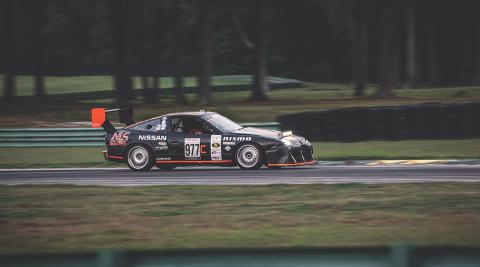
1993 Nissan 240SX 
Series: ChampCar Endurance Series

Clifford Beisler is the crew chief for NLS Racing in Hickory, North Carolina, which competes in ChampCar with a 1993 Nissan 240SX. The selection was based on Beisler’s familiarity with the brand.

The black-and-orange paint scheme is something he always thought was a cool combination. As for the number, 997, it bears zero significance to anything other than it’s one that no one else had, he said, laughing. 

The team name, meanwhile, has a bit of a story behind it. In a conversation about better performance, someone said, “We need to come up with some next level sh–– for this car!” “Solutions” was substituted to create a G-rated version, but the two words are interchangeable depending on the company.

After five years, NLS logged its first two victories in 2020, winning an eight-hour race at Atlanta Motorsports Park and a 14-hour race at Charlotte Motor Speedway. 

“There are not many people who can say that,” Beisler said about taking checkered flags at such legendary tracks.

ChampCar, whose races range from seven to 24 hours, has four classes—A, B, C, and D—based on engine size. NLS races in C class but competes for overall wins, like it captured at Atlanta and Charlotte.

Beisler said he picked the series based on a money-invested-to-track-time ratio: How much does it cost per hour to be on track?

“Nothing beats ChampCar” using that calculation, he said.

He and four partners each spend $2,000 to $3,000 a year on the car. In 2020 that covered seven races. Beisler estimated NLS would spend $700 on tires, $400 on brakes, $250 on fluids, and about $300 for 100 gallons of fuel for a race at Atlanta in February.

rb2
NLS Racing doesn’t skimp on brakes, using $400 Carbotech pads. Front Brembo calipers and rotors are from a 2006 Nissan 350Z.

At the onset, Beisler’s team stripped the 240SX to the frame, removing insulation and other weight and replacing rubber bushings.

“There wasn’t a nut or bolt we didn’t touch,” he said. 

Beisler used a MIG welder to stitch weld where there had been only spot welds. The team bought a tubing bender and purchased roll cage design software to build its own cage.

ChampCar uses a Vehicle Performance Index as the starting point for every car; it’s 350 for Beisler’s Nissan. Teams can add points for engine, transmission, and other parts’ swaps up to 500 without lap penalties.

For the first three years the team ran the 240SX’s factory 2.4-liter KA24DE steel block, aluminum head engine, rated at about 155 horsepower. As handling, speed, and driver ability improved, they went after more power.

NLS used ChampCar’s “swap formula” to gauge its upgrades. 

Stepping up to a VQ30DE V6 from a 1996 Nissan Maxima—costing about $300 or $400—took the horsepower to 190 (and added 55 points). The factory transmission, however, didn’t bolt up to the new motor. A six-speed CD009 from a Nissan 350Z from the early 2000s did (cost: 25 points).

NLS learned early the value of fluids and uses Redline in the entire drivetrain. “That fluid’s expensive for a reason,” Beisler said.

With 70 points to spare, NLS looked at aerodynamics, adding a rear spoiler, front air dam, and front splitter at 10 points each to reach 460, even though they weren’t convinced it would matter.

“But, my goodness, it’s confidence-inducing to the drivers and it’s worth a ton of speed,” he said.

rb3
Chassis reinforcement is a big part of ChampCar prep. NLS Racing used a MIG welder to beef up components throughout the car.

Twenty more points were used on a two-row oil cooler from Setrab, a valuable part for endurance racing. 

An aluminum radiator cost NLS another 10 points, taking their total to 490. The final points were spent on things like strut braces and roll bars beyond what ChampCar requires.

NLS kept its factory gas tank but built and installed a two-liter surge tank in the trunk to help prevent fuel starvation in the corners. 

Fuel consumption is a major consideration in endurance racing, and NLS keeps its horsepower in check to time pit stops for every two hours, which is the maximum stint before a required driver change.

Factory wheel bearings will not last more than a few hours, Beisler said. The fix: grease from Neo Synthetics. It is refreshed in the bearings for each race, and they now last six to eight races. “People swear by it,” Beisler said of the product.

NLS uses Carbotech brake pads that cost $400 for front and rear pads and last about 24 hours of track time. “You need race-specific brake pads,” he said.

NLS got its Brembo calipers and rotors from a 2006 Nissan 350Z. The rear two-piston caliper is stock from a 1990 300ZX. Duct work helps keep the brakes cool.

Also, Beisler’s team welded the rearend gears to lock up the factory differential for better traction.

A contrast to the team’s frugal approach is its $1,000 investment in a data acquisition system from Auto Sport Labs. “I can sit in the pits and watch real-time data as the car goes around the track,” Beisler said.

An especially important measurement is ambient underhood temperature. The team discovered a bag of ice on the intake manifold upped horsepower by 15 in a dyno test, so they’ve run ductwork to cool that area.

As the top teams in racing will profess, everything needs to come together for a successful weekend. And while Beisler has worked on cars his entire life, the biggest challenge of getting into racing is “the amount of redundancy you have to put into everything,” he said.

“It’s not enough to torque every bolt—it needs to be Loctite’d, checked, and double-checked.”

‘A $500 Race Car’ 
1986 BMW 325E
Series: 24 Hours of Lemons

Chris Blizzard and his San Francisco Bay Area team have won four races in the 24 Hours of Lemons over the past 10 years, most recently at California’s Buttonwillow Raceway Park in September. The team has also won a season championship with its 1986 BMW 325E.

The car originally had a Ghostbusters theme, but it’s also been raced in Hello Kitty pink with body parts from other cars grafted onto it. The No. 6 was chosen for its simplicity. 

Blizzard said Lemons participants are friendly and helpful, and don’t take the competition too seriously. “Those who are too serious don’t stick around; there are other places for them to race,” he said.

rb4
Even in the world of grassroots endurance racing, teams evolve. Chris Blizzard began his 24 Hours of Lemons career with a Ghostbusters-themed 1986 BMW 325E, which now sports a cheeky nod to Hello Kitty.

Competitors must acquire and prepare their cars for just $500—though spending on safety equipment, brakes, and tires doesn’t count.

Blizzard paid about $200 for the “empty shell” 325E and a few hundred more for his current motor and associated parts from a 1997 BMW E36.

He keeps the BMW stock-tuned to limit fuel consumption, but—to his point about not taking things too seriously—Blizzard is clueless as to its horsepower.

“Two-hundred something?” he guessed. “The check engine light is on all the time,” he added. Classic Lemons attitude.

Toward better fuel mileage, however, plenty of attention is paid to the fuel system.

rb5
24 Hours of Lemons cars must cost less than $500, not counting brakes, tires, and safety equipment like this Kirkey seat. 

While teams can keep the OEM setup, Blizzard spent several thousand dollars on a custom-built Pyrotect fuel cell, citing the company’s gracious allotment of time and advice. The system includes a Walbro main pump and two Bosch secondary pumps. “It’s by far the most expensive part of the car,” he said. But the team can now use almost “every single drop” from the 24-gallon cell, and refuel quickly, too.

The transmission is stock from an E36, as is the radiator. Less power means less heat, and stability for such parts, Blizzard noted.

The rearend, which also came from a later model BMW, is stock, with a change of fluid each year.

The team had its roll cage built by a professional and selected an aluminum Kirkey seat. They use Safecraft Restraint Systems belts which, among their benefits, allow for faster driver changes, Blizzard said.

For tires, the approach is variable: If Blizzard’s team wants to save money, they’ll use Hankook Ventus RS4 tires that last an entire weekend or longer. For improved performance, they’ll use Bridgestone Potenza RE-71R tires, which wear quicker but “get you a couple seconds a lap,” he said. 

While Blizzard’s car came with 14-inch tires, they fabricated to make room for 17-inchers and a larger brake package, for which they use Raybestos pads.

Utilizing parts from newer model BMWs is key. Wheel bearings from older models, for example, were quickly “destroyed.” The same applies to rear hubs and brakes; the later model parts are typically bigger and stronger. 

“With Lemons, you can cut and paste and organizers are fine,” Blizzard said. 

rb6
A custom built Pyrotect fuel cell cost Chris Blizzard thousands, but it allows him to use “every single drop” of fuel.

Upgrading in the right areas is part of Blizzard’s study of “the constraints”—the big one, fuel. “At some tracks we can do three hours on a tank of fuel. If you show up with a V8 that burns 10 or 11 gallons an hour, you are not able to do three-hour stints. It comes down to the math—how often do you have to come in for fuel?

“One of the reasons we tend to win races these days,” he added, “is the fuel burn tends to match the size and the length of the days perfectly.”

Driver comfort is another key, especially considering there are no restrictions as to how long they can stay on track. “We actually focus pretty aggressively on driver comfort,” Blizzard said. “Our race car has power steering, it has power brakes,” despite their extra weight.

In warmer weather, a cool shirt from Cool Shirt Systems keeps drivers’ core temperatures down “and your brains cool,” Blizzard said. From what were 45-minute stints that left Blizzard exhausted, he can now go three hours and feel relatively fresh. That’s a formula for success in 24 Hours of Lemons.

“The most important thing is just stay out on track,” he said. “Just keep doing laps.” 

 

March 2021
By
Andy Heintzelman

New Racing Venue Still Set To Open In Oahu, Hawaii Despite Legal Hurdles

Submitted by laurap on Tue, 02/16/2021 - 13:31
Rendering of where Circuit Hawaii will be
Circuit Hawaii will be located on a 51-acre site near Kalaeloa Airport. Image courtesy of Circuit Hawaii

PRI-supported resolutions (HCR 132/S.C.R. 224) backing construction of a new race track in Oahu, Hawaii, failed to pass when the Hawaii Legislature adjourned its 2019-2020 session. The resolution laid out the history and local government effort to get a new facility built in Oahu.

“Legislators have pursued this resolution over multiple sessions dating back over three years,” said Christian Robinson with PRI State Government Affairs. “We’ve always received overwhelming support from enthusiasts on the topic. Unfortunately, like with a lot of other state bills, this one was slowed by COVID-19.”

There is still good news for motorsports enthusiasts in the region, as the privately owned Circuit Hawaii is currently under construction. Once completed, the facility will feature a 1/8-mile drag strip, a 1.5-mile road course, and a 1/4-mile dirt track, along with a clubhouse, race control, pits, garages, and event space.

Circuit Hawaii CEO Mike Kitchens provided some background on the initiative that’ll bring racing back to the island, which had been without a dedicated motorsports venue for nearly 15 years. 

“There’s been a lot of attempts to get race tracks open through the city and state. One of the biggest things is the lack of available land and funds, which is why it dies every time,” he said. “This is why Circuit Hawaii, fortunately, went the private route. We aren’t using government money or land, but in return, we can provide something that will help Hawaii economically.”

The facility, which plans to host international events, is on track to open in 2022 and is currently under review by the FIA Commission for Grade 3 designation of its road course. 

For more information, visit circuithawaii.com.

February 2021

BUSINESS PROFILE: EVOLUTION DYNAMICS

Submitted by ashtonr on Mon, 02/15/2021 - 16:09


Kevin Dubois first operated a Mitsubishi Lancer Evolution as a teenager—on a video game. Today, he can barely find room to park all the street and race “Evos” customers bring to his thriving Texas shop.

Customer parking at Evolution Dynamics in Lewisville, Texas, is always full, and you might notice something unusual about the cars: They’re all the same model. Indeed, the business Kevin Dubois started out of his garage some 16 years ago only services the Mitsubishi Lancer Evolution—the turbocharged, all-wheel drive hot rod known affectionally as the “Evo” in racing and enthusiast circles.

The single-model strategy works exceedingly well for Dubois. He and his lone employee, Richard Fielder, an engineer who’s been with him since 2008, worked on about 300 cars in 2020.

“Last year was our busiest ever,” Dubois noted. “We had a 20% increase in sales over 2019.”

“Evo D,” as customers call the shop, is located about 30 miles north of Dallas. It is the go-to place for maintenance, repair, performance mods, and race prep for Evo owners from all over. The shop has built engines for customers from as far away as Alaska and Hawaii, as well as other countries. One car came in from Panama; and recently, Dubois dyno-tuned an Evo in Madagascar, albeit over the Internet via remote desktop.

race1
Evolution Dynamics has built a strong business serving only Mitsubishi Lancer Evolutions. Despite the limited market, 2020 was the company’s busiest year yet.

While some race and performance shops cater to a single model such as the Corvette, Mustang, or Porsche 911, the population of those cars is far greater and covers a longer timespan than the Evo. Mitsubishi imported just 43,000 of the cars, which were known as the Evo VIII (2003–2005), Evo IX (2004–2007), and Evo X (2008–2015) but were not badged as such. Earlier Evo models were not sold in the US.

Dubois estimates that three-quarters of his customers engage in some form of racing or track driving. That seems fitting, since the Evo was the basis for Mitsubishi’s World Rally Championship (WRC) racing platform in the 1990s.

Like millions of teens, Dubois first drove an Evo and its archrival, Subaru’s WRX STI, in the “Gran Turismo” video driving game in the 1990s. The game’s popularity fueled demand for those automakers to finally offer the cars here in the early 2000s. It also introduced this large audience to WRC racing, which bolstered its appeal.

race2
Although the “Evo” was built in relatively small quantities, it has become wildly popular with enthusiasts. Because of that, unmodified Evos are said to be rare.

REPUTATION BUILT ON RACING

Remarkably, Dubois does no marketing or advertising, and his social media strategy is almost nil. Racing, however, was at the core of his promotion in the shop’s earlier years. Among Evo owners, he said drag racing is the most popular application, though many also participate in National Auto Sport Association (NASA) High-Performance Driving Events (HPDE), autocross, and time trials racing. At one point, Dubois sponsored eight NASA cars.

“If you went to a NASA race, any of the Evos there were likely to be one of our cars,” he said. “We could go out there and win. We were competitive with Corvettes and BMWs.”

Evolution Dynamics no longer sponsors race cars, but the previous sponsorships paid dividends. “With the racing, we were basically working on cars for little or no profit, but we gained experience and credibility,” Dubois noted. “We became known as the best in the area. Now we don’t need to advertise. Pretty much everyone on the Evo scene knows about us and what we do.”
In fact, Evo owners know the shop so well that Dubois rarely uses social media, either. “If I get a picture of a cool customer car, I’ll put it on Facebook. That’s really it,” he said.

A look at the shop’s Facebook page in late January showed only one post for the month, and just a few in December. One, a video of an Evo on the dyno, carried the simple caption, “BRaaaaaaaap! 822 whp, 725 ft-lb of torque.” Another touted the new flex fuel kit Evolution Dynamics offers to run Evos on E85 fuel without having to switch engine tunes.

race3
Evolution Dynamics became a viral sensation when a car it built tumbled violently down a mountainside in the 2012 Pikes Peak International Hill Climb. Driver Jeremy Foley and navigator Yuri Kouznetsov walked away from the car. Crediting Kevin Dubois’ emphasis on safety, Kouznetsov had Dubois build another Evo for the 2014 event, pictured here.

STARTED IN HIS GARAGE

Dubois had not planned to work on cars for a living. After earning an engineering degree from Hope College in Holland, Michigan, in 2004, he moved to Texas to take a job with defense contractor Lockheed Martin. With his hiring letter, he secured financing for a new Evo, a car that would ultimately change his chosen career.

In Texas, Dubois used the open-source ECU Flash software on his laptop to street-tune his own car for higher performance, and then began doing the same for other Evo owners. He was soon tuning two to three cars a night out of his garage. He later rented a dynamometer, and ultimately bought one outright.

Forced to stop working out of his garage, Dubois rented a 1,500-square-foot shop space in Lewisville. When his work on Evos turned into a full-time business, he left Lockheed Martin. Over the next 10 years, he moved three more times into increasingly larger spaces. He is now in the process of buying the current building, which comprises two suites in a four-suite industrial condominium.

The shop itself occupies 3,900 square feet, with about a quarter of that for the office and waiting room. There is a climate-controlled engine assembly room and about 900 square feet of storage in a mezzanine. Dubois calls his Dynojet 424x all-wheel drive dynamometer his most valuable piece of equipment.

“We use it several times a week, and rent it one or two times a week,” he said. “Half the people renting my dyno are doing remote tuning. I allow anything but Evos.”

Dubois also rents some space to a tech who works only on the Ford Focus ST and RS performance models. The building’s other two suites are owned by Todd Earsley, Dubois’ partner in the My Shop Assist software that the two developed expressly for performance and race shop management. (See “Business Boosters” article in PRI’s November 2020 issue featuring My Shop Assist.)

RACE TO THE CLOUDS

Evolution Dynamics gained fame in 2012 when Jeremy Foley, with navigator Yuri Kouznetsov, drove Dubois’ own highly modified Evo at the Pikes Peak International Hill Climb and narrowly escaped death in a harrowing rollover crash off the mountainside. Video of the shocking incident circulated widely through conventional and social media.

Kouznetsov suffered a dislocated shoulder in the wreck. He later purchased Foley’s autocross Evo, and in 2014 had Dubois prepare it for a return to Pikes Peak.

“After healing physically and mentally, I still wanted to continue racing,” Kouznetsov told PRI. “I reached out to Kevin with a proposal to finish what we started. My goal was just to finish. When it came time to build the car and the cage, I had full confidence in Kevin to make version two leaps and bounds above what version one was.”

At the 2014 Pikes Peak International Hill Climb, Kouznetsov came in 37th out of 130 finishers, with a time of 11:03.910. He still owns the car, which he occasionally races in time trials.

“Kevin is an engineer and is very diligent in his approach,” Kouznetsov added. “The racer in him wants to shave every second off a lap time that he can. But at the same time, he doesn’t cut corners when it comes to structural design or suspension.”

800 HP FOR THE ASKING

Dubois said purely stock Evos are rare, and that most customers modify their cars in stages. They might start doing track driving events and move to autocross or drag racing with stock engines, and then seek higher performance.

He typically recommends lowering springs and new anti-sway bars as a logical first upgrade. For next steps, Dubois will install coil-overs, swaybars, and bushings. He sends the cars out to shops that do race alignments.

Customer Adam Baltutis followed that path when he bought his Evo in 2012. “When I was researching Evos, I knew Evo D had a great rep in the Evo community,” he said. “I was just 20 minutes from the best Evo shop around.”

Baltutis put hard miles on his Evo as a daily driver for a short period before turning it into a fully race-prepped and caged car for time trials. He took fourth place in the TT3 class at the 2018 NASA Nationals.

All Evos used a 2.0-liter turbocharged four-cylinder engine: the aluminum-block 4B11T in the Evo X and the iron-block 4G63 in the previous models. Stock output ranged from 271 horsepower in the 2003 model to 303 horsepower in the 2015 Evolution Final Edition. Evos can be easily pushed to 400 horsepower with camshaft, turbo, and exhaust mods, however, and Dubois said 500 horsepower is reasonable to achieve with a stock lower end. Beyond that, the customer is limited only by his budget. Drag racing engines go beyond 1,000 horsepower.

EXPERT ON PROBLEM SPOTS

Like many high-performance cars that frequently get pushed to the limit, Evos can break…expensively. Dubois knows and can easily diagnose all common trouble spots, often by sound.

Driveline problems are not unusual. Clutches slip and synchros go bad. The Evo X’s Active Yaw Control pump for rear-wheel torque vectoring commonly fails, and this model’s available dual-clutch automatic transmission also routinely fails under hard use. That’s an $8,000 rebuild that Dubois farms out to a couple of local transmission shops. In addition, the Evo X engine can be damaged by spark plug insulators and electrodes that break and drop into the cylinders.

Despite the Evo being out of production, Dubois feels confident in his business model. After all, many customers are in their late 20s to late 40s.

“People will continue to modify, race, and break them for a long time,” he said, while acknowledging that the parts supply for an out-of-production car could one day become an issue. Currently, he buys all stock parts from Mitsubishi dealerships, preferring the OEM quality. He’s confident the aftermarket can fill any gaps in the future.

Dubois does not rest on his shop’s reputation to maintain momentum, however. His “secret” to ensuring ongoing success is simple: “It’s making sure we do good work. We’re really good at doing things right the first time.”

March 2021
By
JIM KOSCS

CRUNCH TIME

Submitted by jeffreyc on Sun, 02/14/2021 - 09:35
Pistons1


Piston suppliers are innovating product and improving processes while working overtime to keep orders filled and customers up to date.

With so many racing and performance enthusiasts working on projects during the pandemic, piston manufacturers have been busier than at any time in recent memory. While the resulting bottom line may be appealing to management, there are frustrating—and sometimes comical—moments for tech support representatives as the phone lines overflow with unusual requests and tedious (at times) problems to solve.

“Everything, I mean it’s tractors, airplanes, old boats, two-stroke motorcycles—it’s everything, dude,” groaned one rep who didn’t want his perspective to distract from the company’s products. “Since COVID hit, this industry is exploding.”

“It’s kind of crazy,” vented another. “Everything is coming out of the woodwork. I mean, guys are always trying to build some ridiculous thing. I don’t know where half this stuff comes from.”

The downside to all this fresh activity is that many of these resuscitated gearheads have forgotten the basics—and some never knew them in the first place!

“You’ve got everybody’s brother who should not be touching an engine,” the first rep continued, spilling his angst. “Then they’re screaming that the engine smokes and they want you to diagnose it over the phone in 20 minutes. These guys have no idea about piston-to-wall clearance, ring gaps, bearing clearances—and they’ve checked or measured nothing. They watch a YouTube video and believe they’re engine builders. They order .030-over pistons because the guy who sold them the block said it was .030-over when it’s really .038-over. They don’t check anything. It’s unbelievable! These people have never tried rebuilding a lawn-mower engine and now they’re diving into Ferraris and airplanes.”

Okay, support group sharing over—let’s talk about pistons and rings. The challenges of the past 12 months mostly kept this segment of the performance industry busy addressing new applications and keeping the shelves filled with product. While only a handful of companies actually introduced new lines, a number of suppliers continued expanding current applications, while others upgraded existing product with additional features.

Information about manufacturing technology and materials sourcing are generally closely guarded, yet we keep hearing hints of not only improvements in those directions, but also radical innovations that could become mainstream in the near future. Overall, it’s fair to say that strong sales are keeping the piston industry on a solid path of improvement, and OEM and racing technology advancements are enhancing the industry.

“We are adding 21 new numbers for 2021,” observed Brian Adix of Howards Cams, Oshkosh, Wisconsin.

“A lot of piston technology that was originally developed in pro classes is finding its way increasingly into sportsman racing,” added Jack McInnis of PBM-Erson, Louisville, Kentucky. “Weight-reducing innovations, including lighter forgings, shorter pistons, and shorter wrist pins enable higher rpm capability and increased power levels.”

“Surprisingly, the OEMs are more technologically advanced than a lot of race stuff that we do,” said Tony Calvert of CP-Carrillo, Irvine, California. “Granted, certain race teams with budgets will have some out-of-this-world stuff not found anywhere else. But within the trends we see throughout the racing community, the majority of customers are sorting by price and finding what matches their wallet. So, if you put in too much technology, suddenly it is out of what the majority wants to pay for it. We have to find a balance. We always want CP-Carrillo to be the highest technology that you can put in your engine. But at the same time, we also have to make it affordable.”

CP-Carrillo’s newest forging in the market is the SCBX piston for the Subaru EJ257. The boxed-strut underpinnings increase rigidity without loss of stress relief between the pin-boss towers. External struts are added at the edges to allow a 2.250-inch wrist pin, down from the original 2.500-inch to reduce weight. In what is likely an industry first for a shelf piston, the SCBX line will also provide an upgraded coated ring package.

“We’re also incorporating an anodized ring groove into these parts right off the shelf,” added Calvert. “The anodizing of the ring groove has always kind of been reserved for just custom parts due to the cost and the time involved to do it. But with extensive work in the OEM manufacturing that we have had for many years now with different auto and motorcycle manufacturers, it’s given us the technology and the expertise to be able to offer anodized ring grooves on off-the-shelf parts, which is something that no other piston supplier is doing right now.”

Pistons2
Piston and ring manufacturers are busier than ever, balancing pandemic-boosted product demand with ongoing development. Adding to the challenge is the question of affordability: “If you put in too much technology, suddenly it is out of what the majority wants to pay for it,” said our source at CP-Carrillo.

RaceTec Pistons in Huntington Beach, California, has introduced a new line of pistons to fill the gap between its budget-minded AutoTec line and the RaceTec racing series. Initial offerings will be for the small block Chevy, LS, small block Ford, and Gen III Hemi.

“It’s called AutoTec II,” explained Stacey Stone. “We took our existing AutoTec style forging and had it forged in 2618 material. These are designed for mild boost applications. We checked what we had to do as far as clearances and so forth. But it wasn’t like we had to reinvent the wheel. We already knew what we needed to do. We are not going to do any customs off this forging. It’s shelf parts only for the time being.”

The wide variety of aftermarket product for LS engines has prompted MAHLE Motorsport in Fletcher, North Carolina, to design a piston that works with more than one cylinder head.

“The LSX Combo that has a valve-pocket geometry can fit multiple LS cylinder heads,” said Joe Maylish, also noting the company is introducing new or upgraded pistons for the 23-degree SBC, Kaase Boss Nine and 5.7 Hemi-stroker applications. “I think it’s an advantage for racers. We design that LSX Combo line with a 2618 alloy, so it is for high-horsepower applications that are going to involve boost and power adders. So it is definitely focused toward the racer that is working with some different head combinations or wants to try some different things. It makes it more user-friendly. It will come with a 1-mm, 1-mm, 2-mm ring pack and a .927-inch pin.”

Pistons3
As with many other components, pistons and rings have a strong trickle-down factor, with racing’s top ranks pioneering innovations first. As one manufacturer explained, piston technology that was originally developed in pro classes continues to find its way into sportsman racing.

Requests are also picking up for BMW pistons, with nine new offerings released in the past two years. Road racers using the twin-turbo N54 six-cylinder are especially eager to replace pistons. “That one really stands out,” Maylish added. “It comes in a 2618 alloy and a 17.2cc dish or a 21.5cc dish.”

JE Pistons in Cypress, California, scored a big breakthrough a couple of years ago with the release of the Ultra Series Forging, which featured an aligned grain flow to reduce weight while improving strength. Now the company is expanding the product applications and building new forgings to fit a larger range of engines.

“Our Ultra Series Forgings are the only pistons in the industry with aligned grain flow,” said Nick DiBlasi, noting that it took years of trial and error to develop the manufacturing process. “Aligning the grains by a multi-step forging and heat-treating process allows for a stronger grain structure when forged into the piston shape. We see a 20% strength increase when compared to like non-aligned forgings.

“Racers had a fixed weight we needed to meet, yet it needed to handle more power than what was available,” he continued. “In some applications racers would only get 10 passes from traditional forged 2618, and now they are able to run an entire season of racing.”

New crate motors that are stimulating the market are also drawing interest from piston manufacturers. Ford recently introduced a 430-horsepower, 7.3-liter V8 crate engine. Nicknamed “Godzilla,” the engine comes with cast pistons. A leading customer of Ross Racing Pistons is currently dyno’ing the engine to find areas of improvement and also test its failure limits. He sent a cylinder head to the company’s El Segundo, California, shop so Ross could design the crown.

“We digitized the cylinder head and expect him to call us with information needed to build a piston,” said Chris Madsen from Ross. “We will make the piston strong enough to where they can really lean on it and find out how good this motor is. He’s just trying to get ahead of the game so he can sell rotating assemblies.”

Initial plans call for bumping the compression ratio to help “wake up” the engine, and moving to a metric ring set in the range of 1.2, 1.2, 3 mm with a 14- or 15-pound oil ring.

Pistons4
Although more advanced materials are available for pistons, they often pose daunting challenges for manufacturing. In fact, some new alloys can be five times more difficult to machine when compared to traditional materials, according to one source. Shown, a probe is being used to set up a CNC machine. Photo courtesy of Performance Forge.

On the manufacturing side, innovations in forging technology are moving forward, too. At Performance Forge in Montebello, California, modular tooling is helping to reduce costs.

“Without giving away too many trade secrets, it gives us the opportunity to repair a piston punch tool because it’s modular. When a one-piece piston punch starts to break, in some cases it pretty much becomes unsalvageable. We’re able to take modular tooling apart and get to the difficult areas,” explained Wayne Ramay. “We’ve also learned a significant amount about how to build these tools and what materials to use to increase their longevity.”

During the technology’s development, one of the proposed benefits was the flexibility of changing design features more quickly, such as altering just the crown tooling to produce pistons with different compression ratios.

“I thought that was going to be a significant advantage for some of the piston designers to be able to do that. I have not been able to convince any of them that it makes sense for them,” Ramay said. “Technically, it’s still a capability we could do—take the centerpiece out and put a different one in. But nobody has actually taken me up on that.”

Performance Forge also acquired a second infrared oven that heats up the aluminum slugs faster, which improves the forging strength. “The objective is smaller grain size,” Ramay explained. “Without getting too technical, the longer aluminum is exposed to high temperatures, the larger the grains grow, and large grains are not conducive to strength. And so, what used to take me two hours to heat up a piece of aluminum before I could forge it is now 20 minutes with this new oven.”

UEM-Icon/KB Pistons in Carson City, Nevada, is also upgrading its manufacturing processes with a newer way to apply anti-friction coatings. “The process used to be wash them and then apply an anti-scuffing material,” said Marko Glush. “Nowadays, it’s quite complicated and labor intensive. There are different cleansing baths and etching. And also, the coating materials themselves last much longer compared to earlier coatings. And, the new coatings are much safer. The early ones were quite hazardous.”

The company is also seeing a growth spurt in its diesel line. “That market is booming right now, and those guys are running crazy boost numbers,” said Glush. “What they’re finding is that the loads on the ring lands are so severe.”

UEM pioneered the practice of bonding iron inserts into the top ring land of cast aluminum pistons in the 1950s, according to Glush, and now the company has revived that process for its Dualoy line.

“It’s the most challenging piston to make because of that iron insert. It’s very labor intensive and goes through a lot of quality control testing that alpha bond. It has to be 100% or the pistons will separate,” Glush added.

PF_pistons1

PF_pistons2

PF_pistons3

PF_pistons4

PF_pistons5

PF_pistons6

PF_pistons7

PF_pistons8

PF_pistons9

PF_pistons10

PF_pistons11

PF_pistons12

PF_pistons13

PF_pistons14

PF_pistons15

PF_pistons16

Future Expectations

For the immediate future, don’t expect new materials or designs to dominate the headlines. Manufacturers are generally pleased with their alloy suppliers, both 2618 and 4032, but always on the prowl for improvement. 

“We are constantly testing different aluminum alloys for the best strength, longevity, and cost,” said JE’s DiBlasi. “There are many available materials that are very good, however the cost is prohibitive for the general public. Something around 10 times the material cost and roughly five times more difficult to machine.”

Pistons5
Some manufacturers feel there’s a strong advantage in working on OEM projects. “Surprisingly, the OEMs are more technologically advanced than a lot of race stuff that we do,” said our source at CP-Carrillo. This technology transfer is bringing innovations like anodized ring grooves to off-the-shelf aftermarket pistons.

The boxed-strut design will continue to be refined as piston makers strive for the perfect balance between weight savings and strength. And speaking of balance, a new buzzword that’s circulating around more shops nowadays is “dynamic balancing.”

“That’s trying to get the piston balanced on the wrist pin,” explained Madsen. “It’s mostly meant to work with conventional big block Chevrolet cylinder heads. Those pistons have a tendency to want to push to the one side just because of the size of the dome. Some of these domes are .800-inch tall. That’s a lot of weight on one side of the piston and then under the combustion. So, it wants to push that dome, and they have a tendency to scuff on one side.”

Yet another glimpse into the future is coming by way of additive manufacturing or 3D printing. Long used by the aftermarket to print plastic prototype pieces for testing and fitment, 3D printing is now advanced to the point where a number of metallic parts are produced. The process has already shown promise in developing exhaust and cooling products, because very unique and efficient flow paths can be designed. However, with pistons the benefits have yet to be revealed for most types of racing.

“It’s finding the right niche where it’s needed, and that’s still an evolving process,” Calvert said. “The technology we have so far into forging and heat-treating has come so far that the 3D printing way of getting to that same point has to start at ground zero and catch up to even get close to the productivity, strength, weight savings, durability, and just the trustworthiness of the formula that’s already working great.”

RINGS OF DESIRE

Within the past couple of years, perhaps the most important design innovation on any part of the reciprocating assembly has been Total Seal’s gas-ported ring.

“We are doing gas-ported top rings and gas-port second rings,” said Keith Jones of the Phoenix, Arizona-based piston ring manufacturer. “I’m even doing gas-ported Dykes-style rings—which are very common in blown alcohol and turbo cars. There has not been a single test run where there has been a loss of power. It’s always better.”

Of course, piston manufacturers have long offered vertical gas ports on the pistons, but Jones said if they’re not properly placed there can be reversion around the rings.

“That creates a lot of issues on the intake stroke if the rings do not seal properly,” he noted. “By putting the gas ports in the ring, they’re always in the right spot. The other thing, the rings rotate. With the gas-ported piston, especially in alcohol motors where you run a lot of fuel, you will see very high wear lines in the bore. When you look at these, you will see that they lined up with the gas ports. You have these high-pressure points. By putting the gas port in the ring, the ring rotates and you’re getting uniform, even pressure load all around the cylinder.”

PistonsSideBar1
Gas-ported rings are considered one of the most important recent breakthroughs in reciprocating-assembly components. Unlike gas-ported pistons, the ports on rings are said to always be in the right position. “The ring rotates and you’re getting uniform, even pressure load all around the cylinder,” said our source at Total Seal.

Total Seal continues to test different configurations involving the port size, locations and numbers. “We have multiple combinations of sizes, quantity, depth—all depending on the size of the ring. There is a method to the madness,” Jones added.

Piston companies are still offering both vertical and lateral gas ports to customers in addition to suggesting different sizes.

“Ring selection is very much rpm and compression driven. At 9,000 rpm, 1-mm or .7-mm top rings are required along with lateral gas ports. When using nitrous or boost, a steel top ring is preferred, not ductile,” said Jack McInnis of PBM-Erson, Louisville, Kentucky. “Lighter ring packs like the 1-mm and .7-mm top ring sets mean that piston stability is much more critical in order to maintain good ring seal and wear characteristics. This requires a higher degree of precision in manufacturing and measuring equipment to maintain even closer tolerances.”

Meantime, the team at JE Pistons in Cypress, California, is testing new materials and coatings that are “allowing for very high-horsepower numbers with relatively thin rings,” Nick DiBlasi told us. “It was common for many of the blown alcohol engines to use Dykes-style rings, which were almost 2-mm thick. With better material you can handle the same or more power with a 1.5-mm to .064-inch ring.” —Mike Magda

SOURCES
–
Arias Pistons
ariaspistons.com

CP-Carrillo
cp-carrillo.com

Howards Cams
howardscams.com

JE Pistons
jepistons.com

MAHLE Motorsport
mahlemotorsports.com

Manley Performance Products
manleyperformance.com

PBM-Erson
pbm-erson.com

Performance Forge
performance-forge.com

PROFORM
proformparts.com

RaceTec Pistons
racetecpistons.com

Ross Racing Pistons
rosspistons.com

Summit Racing Equipment
summitracing.com

Topline Automotive
toplineauto.com

Total Seal
totalseal.com

Trick Flow Specialties
summitracing.com

UEM-Icon/KB Pistons
uempistons.com

Wiseco Performance Products
wiseco.com

March 2021
By
Mike Magda

quantifying RESULTS

Submitted by ashtonr on Sat, 02/13/2021 - 11:37


Making a compelling case for adding the ultimate diagnostic tool, leading dyno manufacturers explain why “there’s no substitute for testing.”

A dynamometer can be so many things. At the most basic level, it’s a tool to measure power output, either at the crankshaft with an engine dynamometer or at the wheels with a chassis dynamometer. Yet in the right hands and with the right training—and some imagination—it can be so much more: proof of concept; profit center; marketing tool; an insurance policy to keep customers and sponsors happy.

There’s no question that the initial outlay for a dyno is significant. The unit itself can cost in the tens to hundreds of thousands of dollars. Add tens of thousands more for a test cell to safely enclose and ventilate it. A chassis dyno going in the ground requires a pit (and an agreeable landlord). An above-ground dyno needs ramps or a four-post lift for access. Operator training can take anywhere from hours to days, depending on the dyno’s complexity.

dyno1
Dynamometers are a significant investment, but they can yield big dividends in terms of testing, development, and even a shop’s marketing. For engine builders like Baldwin Racing Engines (seen here), a dyno is “almost a necessity,” said our source at SuperFlow. “On the dyno you can see 10ths of a horsepower.”

“But once it’s done, it’s an awesome tool, one that separates the men from the boys in racing,” said Travis Thirkettle of SuperFlow, Sussex, Wisconsin. “There’s no substitute for testing, especially with the way the rules are now at most tracks, where there’s limited practice time or limited passes on the strip. Showing up ready because you’ve done your testing beforehand is a big advantage.

“For engine builders, a dyno is almost a necessity,” he added. “How do you quantify your results? Seat of the pants? I’ve run a lot of races, and at a 600-horsepower level I can’t tell a 25- or 50-horsepower change from the seat. But they make a difference. On the dyno you can see 10ths of a horsepower if necessary.”

FIRST, HOMEWORK

Given the time and expense necessary to purchase and install a dynamometer, as well as the number of different dyno products on the market, it’s important to research the options available.

Dynos are rated by the amount of power (expressed as either torque or horsepower) and speed (either rpm or mph) they can accommodate. Because dyno cost often grows with power capacity, a prospective buyer should honestly evaluate the amount of power customers’ cars are putting out.

dyno2
Above-ground chassis dynos have become increasingly popular due in large part to their ease and speed of setup—just a few hours, according to one source. Above-ground units do, however, require ramps or a four-post lift. Photo courtesy of Dynojet.

“We’re not making less power today than we did yesterday,” noted Thirkettle. “Especially in drag racing and the power-adder world we’re living in now. Seems like everybody is able to produce north of 2,000 horsepower. But the guy who primarily works on dirt late model and sprint car crate motors or street cars doesn’t really need that capacity. That’s why we offer different models.”

A function available on certain chassis dyno models is load control. “A load control dyno allows the operator to perform various load tests such as road simulation, step tests, and custom tests they can configure in the software,” explained Will Fong of Dynojet Research, North Las Vegas, Nevada. The alternative, a non-load inertia dyno, “is meant for performing full-throttle tests to measure maximum horsepower and torque, to confirm that the car is producing the expected power at the wheels at full throttle.”

Dyno models are also differentiated by their method of controlling load and absorbing torque. A dyno with an eddy current brake uses “electromagnetism to create a torque reaction that is resisted,” Fong said. The other method is to use a hydraulic brake to create the resistance. Each has its advantages. 

“Eddy brakes are much faster to control with digital electronics and have higher torque ratings in steady state—several times greater,” said Allison Blackstein of Dynocom Industries, Fort Worth, Texas.

dyno3
Hub dynos like this eddy-current AWD setup also offer advantages in portability and simple setup. “Hub dynos require very little installation—just electrical wiring—compared to other chassis dynos and especially AWD linked dynos, which are much more complex to install,” explained our source at Dynocom. 

On the other hand, Dynapack of Clovis, California, sells “hydraulic load brake dynos,” said Scott Lampkin. “We don’t use eddy current, because eddy current can interfere with electronic controls that are in a lot of electric vehicles these days.” Among Dynapack’s customers are Formula E teams and military clients that are testing electric vehicles. “They can’t have the interference that an eddy current load rate would cause.”

When looking at an engine dynamometer’s software, sensors, and data channels, “be sure to get enough expandability for the future,” said Kevin Gertgen of Performance Trends, Livonia, Michigan. “People call us all the time saying they only need torque, horsepower, and rpm. That only requires two channels for torque and rpm data, as horsepower is calculated from those two channels. But then they may want to add a left and right air/fuel, and there are not enough spare channels.”

dyno4
The test cell is a crucial component for dynamometer facilities, like this one at TrickFlow. “The dyno is just one part of it,” said our source at SuperFlow. “Airflow, exhaust extraction, noise control, a water system for cooling, and the fuel system are all important.”

Gertgen warned, though, that “the more channels and sensors, the more confusing it can be to trace out problems or keep everything running. Most dynos will work well with between 10 to 40 channels. We are very experienced providing guidance to customers to get them the correct system with enough spare channels for the future.”

Specific dynamometer features aside, “functionality, ease of use, and customer support” are the most important considerations when buying a dyno, Fong said. “The dynamometer must be reliable and provide consistent, easily repeatable results,” he explained. “You need reliable data as your starting point to accurately measure any improvements or changes made. Otherwise, you can end up chasing your tail on the dyno.”

“Buyers should understand their customer base and know who is going to be purchasing its services,” added Michael Caldwell of Mustang Dynamometer, Twinsburg, Ohio. “If you have mostly rear-drive American muscle coming through the door, you wouldn’t want an AWD model. A shop that does diesel needs a dyno that’s different from the gas guys, one with a lot of load at low speeds. Buyers should be thinking about return-on-investment and value. This means knowing who is going to be using the machine, so you know which model fits their needs.”

To Blackstein, the two most important considerations for a dyno purchase are “space and budget.” While true for either an engine or chassis dyno, those variables are particularly relevant when considering a chassis dyno, and whether it will be installed in-ground or above it.

Each location has its pros and cons. Some find the in-floor dyno more practical, especially in a smaller shop, as the covered dyno pit provides floor space that can be utilized to park and work on cars when the dyno is not in use. It’s also typically quicker to get a car on and off an in-ground dyno, though lying on the ground to strap it down can be awkward.

But it’s the above-ground dyno that has grown in popularity. “Probably 90% of the dynos we’ve sold in the 2020 calendar year were above ground,” said Caldwell. “The dyno shows up on a flatbed truck, and in four hours you can probably have it unpalletized on your floor, connected to power, and ready to go.”

Getting a car on an above-ground dyno means installing ramps or a four-post lift, depending on the dyno’s height. “But the four-post lift can also be used for non-dyno work,” said Fong.

“It also gives you the flexibility of avoiding what can be fairly expensive construction costs to build a pit,” said Caldwell. “You can pay anywhere from $5,000 to $25,000 for a pit, depending on where you are and how busy the contractors are.”

An above-ground dyno is also much easier to move, should a shop decide to relocate or expand. And it doesn’t leave an empty hole in the building’s floor that a landlord would need to have repaired.

THE HUB DYNO ALTERNATIVE

On the subject of easy-to-move, and to Blackstein’s point about space and budget, is the hub dyno option. This variation of a chassis dyno does not position the vehicle’s tires on rollers, but instead uses adapters to mount the wheel hubs directly to dynamometer pods.

“Dynocom’s patented eddy-current hub dynos are perfect, as they are portable and move around easily,” Blackstein said. “Hub dynos require very little installation—just electrical wiring—compared to other chassis dynos and especially AWD linked dynos, which are much more complex to install.”

“If you have a flat floor, you uncrate a Dynapack hub dyno and it’s ready to run,” said Lampkin. “The whole system runs off a 110 wall outlet. You can even take it to the race track and use it right at the track. Literally, the only thing you need with ours is a set of garden hoses for water cooling because the hydraulic oil in the dyno needs to be cooled by water. And many of our customers don’t even hook up the water until they get above 400 horsepower.”

TEST CELL

When considering a dynamometer installation, the test cell is just as important as the dyno unit itself.

“Whether it’s for a chassis or an engine dyno, most underestimate what is needed for a test room,” said Thirkettle. “The dyno itself is only one piece of the puzzle. It’s not a toaster oven. You don’t just take it out of the box, plug it in, and start making toast. Facility requirements, like airflow, exhaust extraction, noise control, a water system for cooling, and the fuel system, are all important. The dyno is just one part of it. To get superior repeatability and accuracy you need a proper environment for the dyno to be in. It’s only as good as the test cell.”

dyno5
Hub dynos like this hydraulic load brake unit can be portable enough to take to race tracks. “The whole system runs off a 110 wall outlet,” said our source at Dynapack. “Literally, the only thing you need is a set of garden hoses for water cooling.” Our source also noted that water often isn’t used with less than 400 horsepower.

“We look at the test cell from a dyno and engine perspective—what the engine’s going to need to run effectively in the test cell,” said Jason Kardell of Noise Barriers, Elk Grove Village, Illinois, which makes Soundmaster dyno test cells. “We ensure the test cell is not going to be the thing that inhibits your power ratings. Ever been in a test cell where you open the door, and the engine starts running freer? That’s bad airflow design.”

The typical Soundmaster engine test cell “is 12 feet by 16 feet by 8 feet,” Kardell said. “That covers most of your medium- to high-performance dynos. With our silenced ventilation system, you can get from 20,000 to 24,000 cfm through a cell like that.”

Each cell is “custom tailored to the testing application, the types of engines that will be running, the duration of tests, horsepower levels, things like that,” he continued. And all the cell materials are pre-cut to length, “so assembly is very fast. Usually, a crew of about three guys can install most cells in two to three days.”

Kardell acknowledged test cells are less commonly used with chassis dynos. “In a lot of cases we’re the second thought with a chassis dyno. Everybody’s excited to get their chassis dyno, but after they put it in their shop, they’ll get into trouble from the municipality.” Neighbors don’t like the noise, he said. “The shop owners really need to understand their local environment, what’s around them. Test cells are the best solutions for keeping your neighbors happy. We can do the same amount of noise control in one of our test cells as an eight-inch-thick block wall that’s been sand filled.”

POTENTIAL FOR UPGRADES

It’s common for the owner/operator of a new dynamometer to want to upgrade the system after it’s been in operation for a while.

“Once they get it and realize what it can do, their needs change,” said Thirkettle. “We’re only providing the tools. It takes the engine builder to produce the product. As he learns things on the dynamometer, that triggers him to dig further. We have hundreds of data channels already in the system. They just need to add the sensors. That allows them to expand their abilities as they go.”

“What we do is give the customer options,” said Gertgen. “Maybe they can do 80% of what they want with their existing system, but just use it a little smarter. For example, what if you don’t measure turbo exhaust pressure for this next test? Then you can use that pressure sensor for, say, oil pressure somewhere else in the block to solve an oiling issue.”

A shop may want to add sensors to “set it above the competition,” he added. “It could offer measuring blow-by, or airflow and calculate volumetric efficiency, or measure eight individual cylinder A/Fs, or measure spark advance. Offering more services can easily bring in more business, both for the dyno and engine building.”

Installing a dyno can effect changes in the shop’s business model, too, said Caldwell, leading to an eventual dyno upgrade. “The dyno purchase can increase a shop’s visibility. Now they have people stopping in that weren’t before, having heard the dyno was there.”

He shared a story about a customer who bought a 2WD Mustang dyno three years ago, “and he just purchased an AWD upgrade. When he got the dyno, people interested in doing work with him changed. And in the years since he bought the unit, the number of AWD vehicles on the road increased. Having recouped the cost of the original dyno sooner than he thought, doing an AWD upgrade looked like a no-brainer.”

Upgrades can also come directly from the dyno manufacturers. Most of the companies we spoke with use web-based software, so they can push updates and revisions to their customers automatically.

“Dynojet software updates to existing software are included for free,” said Fong. “The only additional purchases are typically data acquisition accessories if they weren’t originally purchased with the dyno.”

At Dynocom, “software updates are continuous,” said Blackstein. The company has also released a new controller platform, the Gen 5, that “offers the ability to datalog right from the vehicle’s ECU, whether it’s OEM or aftermarket,” she said.

OPPORTUNITIES

“There’s no shortage of work right now for most of the shops out there,” Caldwell pointed out. “Most of the dynos we sell are going to people who are tuning street cars. Detroit is making muscle cars again, and a lot of the younger kids are interested in it. Doesn’t matter if you’re into classic muscle car stuff or modern muscle, you’re busy.”

The dyno can also be a marketing tool, Thirkettle said. “It allows shops to show off their engines running on dynos, making lots of noise, with gauges flashing and all that kind of stuff. It helps them sell engines.”

Ultimately, though, a dyno can help win races.

“Richard Childress, Hendrick Motorsports, or KB Racing, they don’t use it to bring in income,” Thirkettle said. “They don’t test anyone else’s stuff. They use it to make themselves faster or to finish races. At a professional level, every single engine that goes on the race track has gone across the dyno. There’s no way in heck they would go out racing without testing them.”

SOURCES

–
Dynapack
dynapack.com

Dynocom Industries
dynocom.net

Dynojet Research
dynojet.com

Mustang Dynamometer
mustangdyne.com

Noise Barriers
noisebarriers.com

Performance Trends
performancetrends.com

SuperFlow
superflow.com
March 2021
By
DREW HARDIN

Stop With StopTech: Inside Centric's Racing Brakes Division

Submitted by laurap on Fri, 02/12/2021 - 17:52


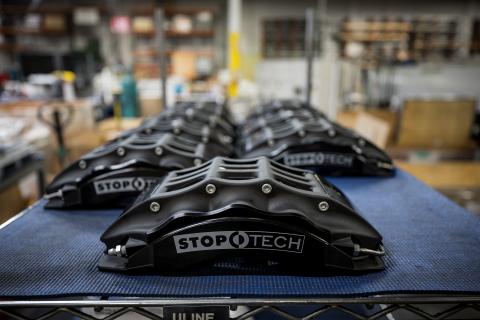
At this PRI Road Tour Stop, we catch up with StopTech, Centric's high performance and racing division. StopTech is one of the leading innovators of world-class brake components and systems for production-based racing cars and high-performance vehicles both on the street and track. See how the company is keeping racers safe with products from brake pad compounds to complete kits.


For more information, visit performanceracing.com/roadtour and stoptech.com. 

Shawn Hillier Talks Papadakis Racing, Drifting, And Winning

Submitted by laurap on Fri, 02/12/2021 - 17:35


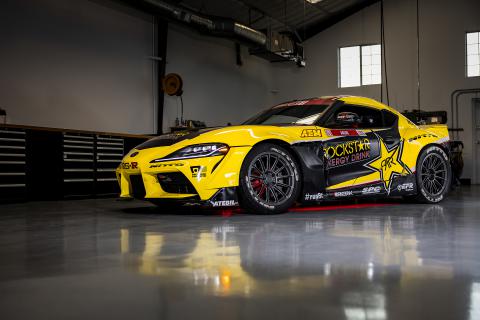
In this PRI Road Tour stop, we drop in with Papadakis Racing's shop lead, Shawn Hillier. His lifelong passion for cars and a long history in the automotive aftermarket has led him to develop an enviable all-around motorsport skill set. A former racing driver, he is also an experienced fabricator and mechanic who has earned three championship titles with Papadakis Racing (2007, 2008, 2015). See what it takes to go fast and win championships.


For more information, visit performanceracing.com/roadtour and papadakisracing.com.

New Promoter For Mobile International Speedway

Submitted by laurap on Fri, 02/12/2021 - 17:06
Mobile International Speedway (MIS) logo


Mobile International Speedway (MIS), located in Irvington, Alabama, will be managed and operated by racing promoter and Houston, Texas, native Gina Schild-Knowles. 

Schild-Knowles has signed a one-year lease agreement with an option to buy the facility. 
 
“I'm excited to be carrying on the tradition of great racing that Miss Ida and Lee Fields built,” Schild-Knowles said. “The plan is to run it as a sister track to Houston Motorsports Park. I feel that if we sanction them identically, it will be a good thing. We want to see MIS and HMP thriving together and to present exciting short track action for race fans on a consistent basis.”   

The facility is owned by Ida Fields, the widow of legendary wrestling champion and short track promoter Lee Fields. The former wrestler-turned-promoter successfully ran the track from 1972 until 1999. Fields passed in 2000 and was inducted into the Alabama Auto Racing Hall of Fame in 2017. 

Walter 'Skip' Wetjen built MIS in 1965. From 1966 to 1968, the track hosted open-wheel racing, highlighted by the World 300 for SuperModifieds. Several of NASCAR's former stars raced and won at MIS, including Red Farmer and Bobby Allison. 

For more information, visit facebook.com/FastestFunAround/.

February 2021

Charlotte Motor Speedway Aims To Provide 1 Million Vaccinations

Submitted by laurap on Fri, 02/12/2021 - 16:54
Photo courtesy of Atrium Health. Healthcare worker and person in car at drive through vaccination site
Photo courtesy of Atrium Health
 

Charlotte Motor Speedway (CMS) will host its second mass vaccination clinic on February 12-14. This event is exclusively for the roughly 16,000 community members who received their initial dose of the COVID-19 vaccine three weeks ago at the speedway. While the first dose gets the body’s immune system ready, the second dose is critical to providing full protection from the COVID-19 virus.

These and an earlier mass vaccination event at Bank of America Stadium are part of a unique public-private partnership that includes Atrium Health, Honeywell, Tepper Sports & Entertainment, and Charlotte Motor Speedway, which announced a plan of distributing one million doses of the vaccine by July 4. With support from the State of North Carolina and Gov. Roy Cooper, the North Carolina Department of Health and Human Services, and local governments, these organizations are working together to administer vaccinations, provide logistics and operations support, and more.

Honeywell has integrated some of its productivity and supply chain automation solutions, usually seen in warehouse and distribution center operations, including solutions that help with data entry, traffic management, and handheld scanners and printers to assist with logistics.

In January, Charlotte Motor Speedway became the first major professional sports venue in North Carolina to open for a mass vaccination event and becomes the first to provide the second dose and full inoculation.

For more information, visit charlottemotorspeedway.com and atriumhealth.org/covid19vaccine.

February 2021

CUTTING EDGE DEVELOPMENTS

Submitted by ashtonr on Fri, 02/12/2021 - 15:54


Keep engine building productivity on pace with these new cutters, tooling, and abrasives solutions.

The year 2020 will certainly go down in history as one with no shortage of challenge and compromise. But folks in the racing industry have always been a resilient bunch. And while much of the year saw teams in a holding pattern rather than out on track, many decided to turn their attention back to the garage to make the best use of the down time.

“Business is up—we’ve been busier than ever, it’s staggering,” said Christine Lowe of Cylinder Head Abrasives, Orangevale, California. “I think people have had more time to port cylinder heads right now. They either couldn’t go racing or chose to take the season off, so they’ve been in the shop putting more development time into the cars and the parts they’re using.”

So with that in mind, we decided to take a closer look at five of the latest products and technologies in machining cutters, tooling, and abrasives to see how innovation continues to point the way toward lower costs, greater efficiency, and better results.

PGE6000 PRECISION ELECTRONIC BORE GAGE
SUNNEN PRODUCTS
ST. LOUIS, MISSOURI

Sunnen is in the midst of a brand refresh of sorts, having launched a new, more comprehensive website (sunnen.com) in 2020; a new e-commerce site is also scheduled to go live later this year. “We’re definitely targeting the engine rebuilder marketplace,” said Tom Dustman. “We look forward to providing access to place direct orders any time, day or night, for our US customers, along with pricing and availability of the products in our catalog.”

cut1
Sunnen’s new precision electronic bore gage aims to increase shop efficiency with available data logging that stores measurements, documents projects, and interfaces with statistical process controls.

Alongside this new online effort, Sunnen is busy developing tools that are designed to yield more accurate measurements—and in turn, more reliable parts production.

The latest is an electronic version of Sunnen’s benchtop PG800 precision bore gage, the PGE6000. “The PGE6000 is a benchtop unit that will allow a machinist to see an electronic display of the actual diameter that’s being measured,” Dustman explained. “It will be available in 110v 60Hz as well as 220v 50Hz single-phase and will offer a diameter range from 0.37 inches up to 1.5 inches. It’s designed to be user-friendly and will withstand variations in shop floor temperature and the vibrations of a typical shop environment.”

“It also allows you to collect data and interface with statistical process controls,” he explained “We’ve been seeing a trend in the industry that’s moving toward documenting high-precision performance measurements, and it’s driven by the end-user who wants to ensure that all of the components on the engine have been produced to an accuracy that’s equal to OEM standards. There’s peace of mind in that. It should also confirm to the machinist and management that the work has been done right—it prevents someone from coming back and claiming there was a quality issue when there wasn’t one.”

Dustman added that the PGE6000 should also be of interest to larger engine shops who are, for instance, producing connecting rods. “They might be doing a ton of rods at once, and they want to make sure every one of them is the same—with this built-in statistical process control, it makes it much easier to confirm that,” he concluded.

BLG-1000 Bucket Lifter Grinder Assembly

cut2
Goodson’s Bucket Lifter Grinder Assembly speeds cam-lash adjustment on multi-valve OHC cylinder heads and can cut assembly time by as much as 1.5 hours, said a company source.

GOODSON TOOLS & SUPPLIES
WINONA, MINNESOTA

“This is, in my opinion, the neatest thing we’ve launched recently,” said David P. Monyhan. “This bucket lifter grinder was designed and patented by an engine builder here in the US. He came to Goodson because of our position in the marketplace and asked us, ‘Hey, do you think this is a good idea that we can run with? If so, I’ll get it patented, but I want you guys to bring it to engine builders worldwide.’ And that’s exactly what we did.”

The BLG-1000 is designed to work with multi-valve overhead cam cylinder heads, which all have a commonality in the bucket lifter, and inside that bucket lifter is a small tab or machining point. “We use a CBN button grinder to actually affect a dimension on that boss and then set the clearance or cam lash, as it were,” Monyhan said. “Once you’ve assembled one of these 20-valve or 30-valve engines, you have to measure cam lash. If cam lash is not correct according to specification, you’ve got to completely disassemble that cylinder head and then you’re left with three choices: tip the edge of the valve, grind the valve face itself, or actually grind or cut the valve seat once again.”

cut3
Cylinder Head Abrasives’ new cartridge rolls use premium ceramic and zirconia grain materials for faster cutting, longer life, and brighter surfaces, according to a company representative.

Monyhan said that by just affecting that same tolerance dimension on the bucket lifter, the BLG-1000 cuts an hour to an hour-and-a-half out of the assembly time on each multi-valve overhead cam cylinder head, saving shops a ton of time (and money) in the process. A micrometer feed shows how much material is being removed, and the included dial indicator and bridge allows the machinist to check their work.

PREMIUM CARTRIDGE ROLLS
CYLINDER HEAD ABRASIVES
ORANGEVALE, CALIFORNIA

Christine Lowe noted that demand for more specialized tools has picked up significantly over the past year. “We have the ability to do short runs of custom product, and there’s definitely been an increase in requests like, ‘Can you make this carbide, or can you make this porting stone with this specific grit?’ Or maybe they need a certain shape and a certain flute count. Folks are getting a little more knowledgeable about what they need and are calling out for specific characteristics that fit their particular application. Those types of orders have gone through the roof recently.”

And as the customer demand becomes more refined, Lowe has sought to expand Cylinder Head Abrasives’ catalog with a wider range of on-the-shelf options to meet those needs in a timely fashion.

cut4
Brush Research Manufacturing’s nylon filament brushes are designed to last longer, increase safety, and cut costs. They also allow deburring of parts still on a machine, noted a company source.

“These brushes work well for OD or face applications for deburring, finishing, and removing rust and corrosion from the outer surface of parts and inside pockets,” said Elysha Cole. “You can use it on aluminum, stainless steel, cast iron—it is very multi-purpose.”

Cole explained that wire brushes are typically used on the outside surfaces of parts, and while that works fairly well, there are some notable drawbacks. “The wire does fatigue eventually, and that can cause it to break off,” she said. “That can get into the components you’re working on and pose a risk to the machinist working on that part. Abrasive nylon is a much more flexible material, so as you use them they abrade down. It’s similar to sandpaper in that way—you can keep using them as it wears without having issues like filament snapping and breaking off.”

That equates to longer brush life and a safer working environment, and with the range of grit levels that BRM offers, machinists can get the specific type of surface finish they’re looking for from a brush design that performs like a wire brush while also decreasing costs. “If you’re deburring, edge break, or removing rust, we have a grit level for that; and if you’re polishing, we have something for that as well.”

The development of Nampower nylon brushes come as part of a response to an industry trend that’s seen shops work toward keeping these processes in-machine whenever possible. “They generally don’t want to move stuff to that secondary, by-hand operation,” Cole added. “Often it’s a situation where the facility doesn’t want to move the part off of the machine and to a different location to deburr it—everyone seems to be moving toward keeping these processes in-house wherever they can.”

EMUGE’S CIRCLE SEGMENT
END MILLS

MSC INDUSTRIAL SUPPLY CO.
MELVILLE, NEW YORK

“At first glance, you may think this is a tapered ball nose end mill, but it’s not,” said Scott Lowe of Emuge’s Circle Segment End Mills for five-axis machining, one of the metalworking and maintenance, repair, and operations (MRO) products and services offered by MSC Industrial Supply Co. that recently caught our eye.

“This end mill design uses a large profile radius, or circle segment, to machine the part,” he continued. “In many cases, it replaces stitch or pencil milling with traditional ball nose end mills when finishing milling part features in five-axis machining.

cut
Emuge’s Circle Segment End Mills have a large-profile radius designed to speed machining without sacrificing component surface finish, according to a representative from MSC Industrial Supply Co. 

“Circle Segment End Mills require the full capabilities of a true five-axis machine where complex toolpaths are generated using the right CAM software (Hypermill and Mastercam, for example).”

These end mills are designed to significantly reduce billet-to-finish part time due to their ability to increase stepover length up to 30 times greater than a traditional ball nose end mill without increasing cusp height.

“This translates to significantly faster machine time without sacrificing component surface finish,” Lowe added. “The large profile radius of the Circle Segment End Mill is held to an extremely tight tolerance of +/- .01 mm (+/- .00039 inch), thereby ensuring that critical features are machined with precision.”

SOURCES

–
Brush Research Manufacturing
brushresearch.com
Cylinder Head Abrasives
ruffstuff.com
Goodson Tools & Supplies
goodson.com
MSC Industrial Supply Co.
mscdirect.com
Rottler
rottlermfg.com
Sunnen Products Company
sunnen.com
March 2021
By
BRADLEY IGER