PRI has filed an amicus brief in a lawsuit between the U.S. Environmental Protection Agency (EPA) and Gear Box Z. Inc. (GBZ), arguing against EPA’s contention that the Clean Air Act (CAA) does not allow a motor vehicle to be converted into a racing vehicle used solely for competition.
The EPA first pursued this controversial interpretation of the CAA as part of a 2015 draft rulemaking, but it quickly withdrew the provision following a huge, PRI-led public outcry. In the GBZ litigation, however, the EPA again maintains that once a vehicle has been certified as a street vehicle, it cannot be converted into a racing vehicle even if that vehicle is trailered to the track and is never driven on public roads.
In its brief, PRI argues that the Clean Air Act does not apply to certified vehicles used exclusively on the track. PRI states that “the agency’s interpretation breaks from the plain language of the CAA, the legislative history, and EPA’s regulations and guidance.” PRI notes that the EPA’s position contradicts its longstanding guidance and regulations and has previously stated that it “has no interest in vehicles that begin their existence as normal, EPA-certified production vehicles used on public roads and are then permanently converted to sanctioned competition-use only vehicles.”
In response to the EPA’s efforts to regulate race parts, members of Congress introduced PRI-sponsored legislation to confirm what had already been understood for the previous 45 years, that the Clean Air Act did not apply to vehicles modified for racing use only. The “Recognizing the Protection of Motorsports Act” (RPM Act) is bi-partisan legislation to clarify that it is legal to make emissions-related changes to a street vehicle for the purpose of converting it into a dedicated racecar. It also confirms that it is legal to produce, market, and install racing equipment. PRI continues to work tirelessly to pass this important legislation to counter EPA overreach.
The GBZ case is before the U.S. District Court for the District of Arizona. The Court has agreed to take up the issue after the EPA has responded to PRI’s amicus brief. PRI will continue to fight the EPA’s flawed interpretation in court while urging the U.S. Congress to end the debate by enacting the RPM Act.
Longtime industry veteran Steve Whipple has joined JEGS as its new director of private label sourcing, where he will work with racing manufacturers to help bring products to market through the JEGS brand.
Based in Delaware, Ohio, JEGS is one of the largest mail order and online high-performance and racing equipment companies in the US.
“What makes our industry so great is that it’s made up of many small companies—many times, though, they are founded by enthusiasts who make great products but aren’t entrepreneurs and don’t know how to get them to market. That’s where I come in,” he said. “JEGS is a great partner for somebody looking to take their product to the next level.”
Whipple comes to JEGS from Edelbrock, where he had served as vice president of sales and marketing since joining the company in 1999. “Edelbrock, of course, is a great brand,” he said, “and I never saw myself leaving there. But sometimes opportunities just come to you. And that’s really what happened here.”
JEGS, which was founded in 1960 by Jeg Coughlin Sr., has grown from a small speed shop into an operation with more than 350 employees, many of whom are based out of the company’s 225,000-square-foot warehouse and corporate headquarters. In his new position, Whipple will work remotely from Orange, California, while visiting the JEGS office in Ohio “about once or twice a month.”
“I’ve known the Coughlin family for almost 25 years now, and I am looking forward to working for a family-owned business again,” he added. “They are all very ingrained in the racing community and invested in the business.”
Whipple noted, too, that his move was unrelated to Edelbrock’s recent announcement that it was moving its main headquarters from Torrance, California, to Olive Branch, Mississippi, with some manufacturing operations shifting to San Jacinto, California.
“I was ready to work partially at San Jacinto, partially out of my home in Orange,” he explained, “but then this opportunity with JEGS came along.”
Prior to Edelbrock, Whipple was a general manager for Nitrous Oxide Systems (NOS), and before that the national sales manager for Super Shops, Inc., an automotive performance center.
Whipple currently serves on SEMA’s Board of Directors, and previously on SEMA’s Motorsports Parts Manufacturers Council (MPMC). He can be reached at 310-863-0569 or steve.whipple@jegs.com.
Meyer Distributing, Inc, the automotive specialty products marketing and distribution provider, has announced the addition of its London, Ontario, Canada location. This is Meyer’s second location in the nation in addition to its Milton, Ontario branch.
“We look forward to another year of servicing our ever-expanding customer base in Canada,” Meyer Canada General Manager John Thompson said. “We’re adding deliveries to increase frequency, expanding our service range, and we also now have a French-speaking sales queue in our Milton salesroom. We thank all of the customers who have helped us make this venture not only possible but successful.”
“Competition—it’s what makes us strive to be better every day,” Meyer CEO Jeff Braun said. “And that’s our goal for the Canada customer base—to give them options and keep the market honest with a capable alternative source. Hopefully, we will see the pandemic in the rear-view mirror soon and resume our expansion plans in Quebec, British Columbia, and Alberta in 2021.”
Michelle Lackey Maynor, courtesy of Alaska Raceway Park, Shiloh Powell Images
Michelle Lackey Maynor has been promoted to president and majority owner of Alaska Raceway Park. Her promotion comes as current owners, Karen and Earl Lackey, transition to advisory roles.
As president, Lackey Maynor will be responsible for all aspects of track operation for the NHRA- and NASCAR-sanctioned motorsports facility. In addition to running day-to-day operations, her duties include facility growth, event management, marketing and promotions, staffing, sponsorships, and community relations.
Lackey Maynor has served as the operations manager of the motorsports facility in Palmer, Alaska, since 2016. She has worked in many different capacities at the track since joining in 1997. A racer herself, she has experience competing in several segments, including drag racing, SCCA events, dirt stock car, and even won the Alaska Raceway Park Open-Air Championship while pregnant with her son, who now races junior dragsters and bandoleros.
In addition to her motorsports background, Lackey Maynor has a degree in Marketing from the University of Alaska. She has owned several successful Alaskan businesses and founded a non-profit organization. Lackey Maynor is also a member of the Butte Community Council and Susitna Rotary.
“Our family has owned Alaska Raceway Park since the late ’90s,” said Lackey Maynor. “This is the job I was meant to do. I’m fortunate to have the opportunity to be able to continue providing a place for motorsports enthusiasts and families for years to come.”
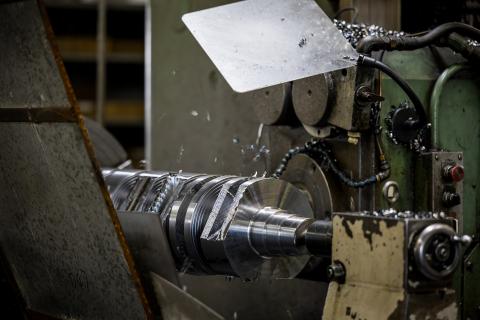
SCAT Crankshafts are machined in-house using premium non-twist single plane 4340 forgings. Precision, durability, and quality are the company’s main focus. With 50 years of perfecting the art, SCAT has tried and tested just about every combination.
In addition to its forged offerings, the SCAT exclusive billet lineup includes 100% in-house design and machining from start to finish using materials including 4340 Billet or EN30b and may be fully customized to your needs. Like its forgings, each crankshaft is skillfully machined, precision finished, ion-nitrided, and heat-treated for superior quality, extreme strength, and durability.
For a stock suit, the driver is looking for the closest match between his or her body size and the sizes offered by the manufacturer. The measurements most commonly taken for stock suits are height, chest, waist, hips, pants inseam, shoulders, and arm length.
Whether stock or custom, it’s important to properly measure for ideal fitment, and size up or down when needed.
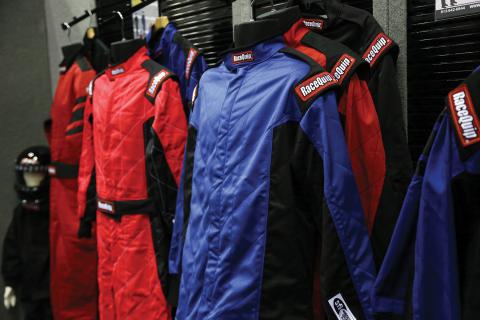
It’s one of the most fundamental elements of safety equipment, and yet when it comes to drivers’ suits, one size definitely does not fit all. For this month’s column, we reached out to the experts at RaceDay Safety in Dallas, Georgia, RaceQuip in Riverview, Florida, and Speedway Motors in Lincoln, Nebraska, in order to learn—and share—how to get a suit to fit right for maximum comfort and safety.
What’s the correct way to measure for a driving suit?
Use a cloth tape measure and don’t measure yourself were the two top tips from every expert we polled. The cloth tape measure better conforms to the shape of the body to give an accurate reading. And many of the dimensions necessary for proper fitment—like leg, arm, and shoulder length—would be impossible for a person to accurately measure themselves.
Measuring techniques are different for a stock suit than for a custom suit. For a stock suit, the driver is looking for the best match between his or her body size and the sizes offered by the manufacturer. The measurements commonly taken for a stock suit are height, chest, waist, hips, pants inseam, shoulders, and arm length.
A custom suit is just that—made from scratch. Measurements of more parts of the body are needed, including torso length and the circumference of the neck, biceps, forearms, thighs, and calves.
When it’s time to measure, “it’s essential that you use the manufacturer’s size chart and their method for measuring,” said RaceQuip’s Roger Mealey. “There’s no standardization of sizes. The measuring methods can vary from one manufacturer to another, so use the method suggested by the suit manufacturer.”
One benefit to purchasing a custom driver’s suit is that it allows the racer to match the suit’s color with the race car color scheme, as well as add sponsor names and logos.
“The number one mistake made when measuring for a race suit is an inaccurate waist measurement,” said Kevin Shaw of RaceDay Safety. “None of us want to admit what our waist size truly is, so the improper measurement is taken around the lower waist instead of the belly area, which is usually quite a few inches larger.”
“The driver uniforms are better if they’re a little loose on the person, so that there’s some air between the uniform and your underwear,” said Greg Nicol of Speedway Motors. When a driver is fitted for a suit at Speedway, “we’ll have them sit in a racing seat down low and at the same angle they’re at in their car to see if the suit bunches up in the crotch or pulls up at the legs. You have to be comfortable.”
“Part of the protection provided by a racing suit is the air gap between you and the suit and between the layers,” Mealey said. “If the suit is too tight, the protection will be diminished. If you are in between sizes, go to the next size up.”
For those having trouble matching their body proportions with a one-piece suit, “you may have to go to a two-piece suit, with a small or a medium bottom and a large top, or vice versa,” Nicol advised. Typically, two-piece suit jackets are long enough that there’s plenty of overlap between the bottom of the jacket and the top of the pants, he said.
The custom suit is another option for a better fit. It also affords the racer the opportunity to match the suit’s color with the car’s, and add sponsor names and logos. But there is a significant price difference between stock and custom suits. “And if you put all the sponsors on and they don’t come back, or you get new sponsors, that can create a conflict of interest, and you can’t use the suit anymore,” Shaw noted.
Is it safe to buy a child a suit that’s a bit large so he or she can grow into it?
“We have no problem with and actually encourage parents to purchase a child’s race suit a size or two larger than the optimum fit,” said Shaw. “The kids are typically not thrilled with having to wear the baggier size suit, but they quickly grow into it, and the parents do not have to buy multiple race suits every season to keep up with the growth.
“However, we strongly discourage this practice with the gloves, shoes, and helmet,” Shaw added. “The gloves and the shoes are the racer’s main connection to the race car, so a sloppy fit can hinder lap times and car control. The helmet must be perfectly fitted to do its job properly.”
ONLINE BONUS
Speedway Motors provides a clear and informative Tech Talk video on how to accurately measure for a stock driver’s suit. Watch Video
RaceDay Safety offers an instructional video from suit manufacturer K1 on how to measure for one of its custom suits. Watch Video
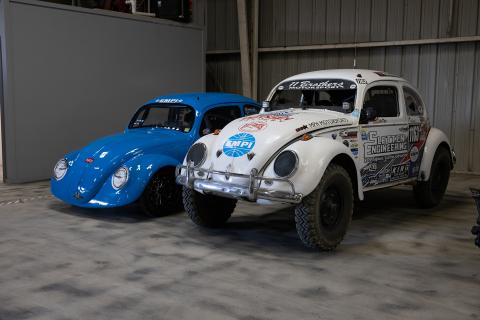
The PRI Road Tour dropped in on EMPI, Inc., a company of automotive professionals based in Anaheim, California. EMPI specializes in the Volkswagen platform and rocks a team of Class 11 VW Beetles.
Check out the EMPI story from Cory Mac, and learn more about in-house racers Blake Wilkey and Cameron Ferre, who dive deep into working with sponsors as self-made racers.
Evolve Transporters, based in Painesville, Ohio, has announced Seth Kimberlin as its new director of partnerships. In his new position, Kimberlin will lead the management, collaboration, growth, and development of relationships with race teams, sponsors, and property partners.
“Seth will play a big role in strengthening the relationships with our partners so they are getting the highest quality all-around service to match our product performance,” Evolve Chief Executive Officer Brad Kossow said. “His experience and demeanor are a perfect match for our culture and the collective passion we share for motorsports.”
Kimberlin brings nine years of motorsports experience to the position, inlcuding his most recent stint at GMR Marketing managing the NASCAR Xfinity & Cup entitlements for Comcast. He also started his career overseeing client service and business development at Kentucky Speedway.
North Carolina Governor Roy Cooper and state health officials have announced a plan to allow outdoor sports venues, including Charlotte Motor Speedway, to host events with fans up to 30% of their capacity.
The announcement paves the way for a limited number of fans to be part of the action when NASCAR returns to the track for the first-ever tripleheader weekend–featuring the North Carolina Education Lottery 200, Alsco Uniforms 300, and the 62nd running of the Coca-Cola 600–at Charlotte Motor Speedway on May 28-30.
“The energy and excitement of our fans are what fuels our sport and everything we do here at America’s Home for Racing,” said Charlotte Motor Speedway Executive Vice President and General Manager Greg Walter. “We’ve been in close contact throughout the pandemic with the governor’s office about how we can safely host race fans, and I cannot overstate how excited we are with today’s news... While the grandstands won’t be full, being able to share this historic event with thousands of fans in person is a big step in the right direction. We hope with continued improvement in pandemic trends by May that we may be able to host even more fans.”
The track will require health and safety protocols similar to those used during its Bank of Ameria ROVAL 400 event last fall, including mask requirements, cashless transactions, and social distancing.
VP Racing Fuels Inc., the provider of performance fuels, lubricants, and additives, has announced motorsports veteran Freddie Turza as its new lubricants sales manager.
“Freddie was the lead engine builder for winning NASCAR teams and is one of the most respected professionals in racing,” VP CEO and President Alan Cerwick said. “With his knowledge of engines, fuels, and lubricants, Freddie is uniquely qualified for both the technical and sales side of his responsibilities in this new role.”
Turza first joined the VP team in 2008 after a career as an engine builder in NASCAR with Richard Childress Racing, Labonte Racing, and as the head of Turza Racing Engines, where he built race-winners for Billy Pauch, Craig VonDohren, and others. At VP, he was instrumental in introducing VP spec fuel to the Super DIRT Car Series, developed a global program with M-Sport, and has worked with OEMs, engine builders, tuners, and racers around the world.
 MEMBERSHIP LOGIN