This farm-raised engineer who steered Cadillac to four Rolex 24 wins now adds Corvette Racing to her impressive portfolio.
Laura Wontrop Klauser already had one of the coolest jobs in racing before it got even cooler. Just before the Rolex 24 at Daytona in January, she moved into GM’s newly created sports car racing program manager position.
Essentially, Klauser expanded her prior role as racing program manager by adding Corvette Racing to a roster that already included the highly successful Cadillac DPi-V.R racing program and Camaro GT4.R program. Cadillac won the Rolex 24 from 2017 through 2020, and both the Manufacturers’ and Drivers’ Championships in 2017 and 2018. (Cadillac finished a close second to Acura in this year’s Rolex 24.)
It’s also worth noting that Klauser reports to Mark Stielow, director of motorsports competition engineering, known by many for his hobby of building a dozen or so knockout Pro Touring classic Camaros.
Growing up, Klauser helped her parents take care of a small farm in Maryland. Her father, an electrician, encouraged her to pursue engineering. She earned a bachelor’s degree in mechanical engineering from Rensselaer Polytechnic Institute in New York, where she worked on the school’s Formula SAE race team.
After joining GM in 2008, she earned a master’s degree in engineering from the University of Michigan and would go on to work on the C7 Corvette program.
PRI recently caught up with Klauser to learn more about her exciting new venture.
PRI: Describe how your duties have changed in this new role.
Klauser: The biggest immediate change is the addition of the Corvette Racing program. Thankfully, we have strong partners and teams for all these programs. Depending on them to keep responsibility for being successful allows me to balance the programs. I am also working closely with Mark Stielow to establish our plan for sports car racing in the future.
PRI: What does this newly created position reveal about GM’s future motorsports plans?
Klauser: We’re working to integrate our motorsports activities more closely with the production engineering side of the house. Technology transfer is key with racing, and we want to make sure we’re taking advantage of every opportunity there. We also want to increase shared learnings across the motorsports programs. That’s why the sports car program manager role was created.
PRI: How does your engineering background make this new position a good fit for you?
Klauser: Being able to “speak engineer” is very important. I am not designing the parts in CAD or running the FEA myself, but I am reviewing the output of these activities and approving it. I am also handling team requests to make changes or address durability concerns on the car. Being able to quickly understand the problem and create the plan to solve it is critical.
PRI: What strengths do you bring to this new role?
Klauser: Fostering relationships is key. I’ve spent the past four years getting to know the IMSA paddock as well as other racing partners with GM. Being able to identify the right people and get them to work well together will bring success both in on-track results and staying on budget.
PRI: What do you see as the biggest challenges ahead?
Klauser: Balancing staying successful today with ensuring success tomorrow. I love the racing we have today, but it’s pretty clear the automotive industry is going through a big shift. We’re going to have to be ready to make some changes to our beloved sport to stay relevant.
PRI: Please share your top strategic goals for the next 12 months.
Klauser: Making sure all three programs—Corvette, Cadillac, and Camaro—are successful. Corvette kicked the year off with a win at the Rolex 24, and Cadillac was fighting for the win down to the last lap. I want to see that great momentum carry forward. Also, finalizing our Sports Car Racing Future Strategy and starting development of those programs.
PRI: What changes will race teams notice—or what do you hope they notice—as a result of your efforts?
Klauser: I hope they are already seeing more opportunities for cross-program collaboration. This was the reason for bringing all the sports car racing programs under one program manager.
PRI: What’s your most gratifying professional accomplishment?
Klauser: Being chosen for this new position. It feels like the reward for all the hard work that went into refining the Cadillac DPi-V.R program and finding success in IMSA with that car.
PRI: How do you inspire or help young women who want to get involved in engineering and/or motorsports?
Klauser: I think being seen in this role is critical. I try to give time whenever I can to talk to groups of young women interested in STEM [science, technology, engineering, and mathematics] education and/or motorsports. Giving them access to ask questions is so important.
PRI: How can this industry attract more young people into motorsports and engineering careers?
Klauser: By exposure. It’s so important for students to do STEM projects as young as possible so they experience what it’s like to be an engineer. We need to get them interested in order for that curiosity to grow. For example, before COVID—and I hope after—the Roar Before The 24 at Daytona each year hosts Boy Scouts and Girl Scouts camping in the infield. They spend the day meeting various people on the race teams and learning about how STEM education applies to racing.
PRI: Who inspires you, and why?
Klauser: Mark Stielow. He’s a living legend at GM, from all the cool assignments he’s had for the company as well as the amazing projects he does personally. Before moving to racing, I was working at the Milford Proving Grounds facility as an NVH engineer, and it was my goal to figure out how to work for or with Mark.
Laura Wontrop Klauser
–
Title:
Sports Car Racing Program Manager
Organization:
General Motors
Hometown:
Detroit, Michigan
Fast Fact:
Klauser lists hobbies as performance driving in a Chevy Cobalt SS Turbo and C6 Grand Sport Corvette at the VIR, Sebring, Mid-Ohio, and Summit Point road courses. She also enjoys bicycling and making “confectionery creations,” and has a personal website called “Cars and Chocolates.”
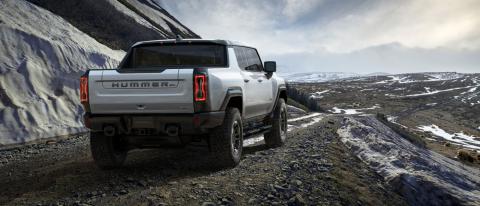
Officials from The Mint 400, dubbed The Great American Off-Road Race, have announced the launch of an all-new electric vehicle (EV) class. The new class comes in response to requests by EV truck makers and owners eager to compete at the storied event.
The new EV Class will be open to all electric vehicle manufacturers, makes, and models initially and will be overseen by Mint 400 Technical Director Bill Savage.
Separate dedicated EV classes based on chassis style and design are already being written for races beyond this year.
“We are the proving ground for new technologies—because we compete in brutal conditions at a pace that destroys anything that isn’t rock solid,” said Mint 400 Co-Owner and CEO Matt Martelli.
“The EV market for the past few decades has been built around featherweight design, but recent improvements in battery technology have changed that. We’re starting to see EV trucks emerge that, (at least on paper), are light enough, strong enough, and have enough range to not only tackle casual off-road use, but in some areas potentially dominate their gasoline-fueled brothers,” Martelli continued. “The proof is in the pudding, though. So, we’re inviting any [and] all EV manufacturers to come prove the endurance and durability of their platforms at The Mint 400.”
The new Mint 400 EV Class will be the first in history for a traditional desert race in America, but not the first in the sport. The ACCIONA 100% EcoPowered vehicle became the only EV vehicle ever to complete the Dakar Rally in 2017. That, in turn, inspired Audi and the GCK e-Blast 1 to prepare EV vehicles to compete at Dakar, and the field is growing each year.
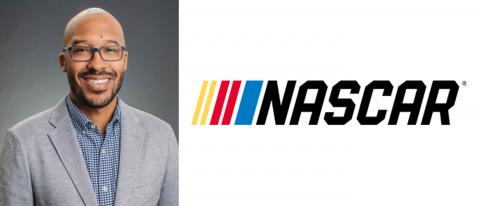
NASCAR has announced that Eric Ryan has been named to the position of Vice President of Communications. Ryan will provide leadership across strategic initiatives, and day-to-day operations of the sanctioning body’s communications and public relations work in his new role.
Based out of the company’s headquarters in Daytona Beach, Florida, Ryan will report to Chief Communications & Social Responsibility Officer Eric Nyquist.
With two decades of communications experience, Ryan has served in leadership roles at the New York Stock Exchange, AT&T, and most recently, at Nike. Working across Fortune 100 companies and some of the world’s most respected brands, Ryan managed teams responsible for integrated internal and external communication initiatives across numerous corporate functions.
Under Ryan’s leadership, NASCAR Communications will continue to drive the passion of loyal fans while supporting efforts to attract younger and more diverse fan audiences.
With the most exciting NASCAR Cup Series race schedule in more than 50 years, new team ownership, and the Next Gen race car planned for 2022, Ryan and his team will continue to focus efforts on promoting the wide array of sport and industry growth storylines.
“NASCAR is at a unique place in its history and it’s the perfect time to bring my passion for strategic communications and storytelling to this amazing sport,” said Ryan. “I’m looking forward to joining this highly talented team and providing leadership that drives innovation and strengthens our position for future growth.”
Three new sprint car series starting up in California and the Southwest promise affordability and ease of entry.
Upended by a stubborn pandemic, and then digging out—quite literally—from nature gone berserk this winter, sprint car tracks and promoters are nonetheless forging ahead with new racing opportunities in 2021.
Affordability is the key for three new series getting off the ground, organizers said, as their approach centers on lowering the cost for veteran drivers to get back on track while also helping to attract new drivers to the sport. Here’s a quick look at what to expect for each.
SO CAL SPORTSMAN SPRINT CAR SERIES: Getting on Track for $15,000
After watching the 410 ranks drop by half since the Great Recession, Don Kazarian, promoter of Perris Auto Speedway in Perris, California, said he wanted to help racers come back affordably and also bring in some first-time competitors. The new So Cal Sportsman Sprint Car Series launching this year is a 360 non-wing dirt series that he said can get racers behind the wheel for about $15,000.
“Our goal isn’t to replace USAC/CRA, but to create new car owners and drivers,” Kazarian told PRI.
He explained that the idea began with conversations he had in 2019 with Cory Kruseman, multiple midget and sprint car champion and founder of the Ventura, California, race driving school that bears his name. They studied other efforts to launch a starter/feeder series and chose to model theirs after the Pace Performance RUSH Racing Series that’s found success at Eastern tracks.
“They encouraged me to use their rules, because they’ve been able to keep costs under control,” Kazarian said. “If I can lean on their experience and history, I’m going to do it.”
He believes the rules are broad enough that a 10- to 15-year-old roller will qualify. Racers will buy the motor directly from Pace (GM engine part number 19258602).
“When you can buy a 350-horsepower engine from air cleaner to headers, bolt it in for less than $8,500, and get at least three years of run time without major work, that’s attractive for someone to get experience in a sprint car,” Kazarian said.
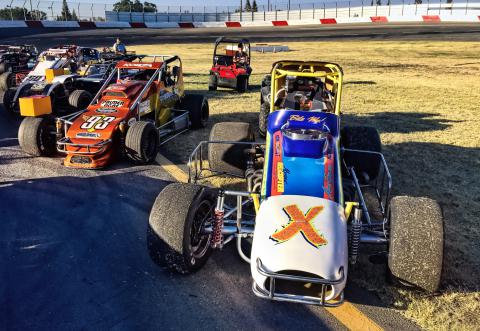
Modeled after the Pace Performance RUSH Racing Series (seen here), the new So Cal Sportsman Sprint Car Series features 360 non-wing sprint cars that will get racers behind the wheel for around $15,000.
The rules call for a spec shock and spec headers. Any eight-inch wide Hoosier front tire is allowed, and So Cal Sportsman Sprint Car Series tires are specified for the rear.
“We want to create a new division of 15 to 25 cars that can put on a good show, and if drivers step up to a next level a few years down the road, it can help secure USAC/CRA for the future,” Kazarian said.
The series is set to kick off at Perris Auto Speedway on May 22.
NCMA CALIFORNIA PAVEMENT SPRINT CAR CHALLENGE SERIES: Calling All 360s
This year, the NCMA launches its all-new California Pavement Sprint Car Challenge Series, with rules opened to allow a wide array of cars and using weight and tire adjustments to balance the competition. NCMA President Denny Burrell expects to draw drivers from different series who just want to get out and race. The first race is planned for May 1 at Madera Speedway.
“We’re a traveling series running at about five tracks in California,” said Burrell, who has announced visits to Stockton 99 Speedway and Shasta Speedway, in addition to Madera. “Our niche was always a spec series with two-barrel 360s. It’s always been very affordable, with the ability to make motors and tires last.”
The NCMA’s new California Pavement Sprint Car Challenge Series, he explained, is designed to give drivers of pavement, dirt, and combo cars a place to campaign their vehicles in one series without having to make a lot of adjustments. There’s no need to build a new motor or make a big investment, he said. Cars can run an iron or aluminum motor, two- or four-barrel carburetor or fuel injection. The series runs on American Racer tires, with prices and rules listed on the NCMA website.
With a focus on balancing out competition, the NCMA California Pavement Sprint Car Challenge Series has opened its rules to allow iron or aluminum motors, and the choice of either two- or four-barrel carburetors or fuel injection.
A two-barrel dirt or combo car will be allowed the lowest weight and softest tire. A two-barrel pavement car requires a bump up in weight and runs a harder tire. And a four-barrel pavement car pushes those adjustments further upward. Injected or aluminum-motor cars will carry the most weight and run the hardest tire.
The NCMA has been advertising the new series at some tracks, as well as its website and Facebook page. Burrell encourages racing businesses to take a look at the series as a good opportunity for local exposure.
“We’re a series for all ages,” he said. “It’s not a high-dollar series. We have a good fan following.”
POWRi DESERT WINGED SPRINT CAR SERIES PRESENTED BY MVT SERVICE: Affordable Wings
Late last year, Performance Open Wheel Racing Incorporated (POWRi) announced plans for its new Desert Winged Sprint Car Series Presented by MVT Services, which promises to be a “racer-focused” series staging two shows per monthly race weekend.
Chad Tenski is the series director and promoter, while racing photographer Adam Mollenkopf serves as race director. Mollenkopf explained that the series fills a niche for winged 360s that has been absent from the region. The pair approached POWRi President Kenny Brown to sanction the series.
“We’re trying to bridge the gap between local racers and national touring series,” Mollenkopf said. “It’s spec-headed 360 to be affordable. We haven’t had a winged 360 series in this area. There’s a POWRi 305 series in southern New Mexico [Vado Speedway Park], and a 360 series at a local track, but nothing for winged 360s in northern and central Colorado.”
Billed as a “racer-focused” series, the POWRi Desert Winged Sprint Car Series Presented by MVT Services will fill a niche for winged 360s that has been absent from the Desert Southwest region.
A key attraction to the series is the two-show format, which will run one weekend per month through October.
Scheduled tracks include Canyon Speedway Park in Arizona; Aztec Speedway and Vado Speedway Park (hosting the first race May 29–30) in New Mexico, and Fairgrounds Speedway in Colorado.
A nightly payout includes $250 to start and $1,500 to win on the first race night, and $300 to start and $2,000 to win on night two. A $20,000 championship fund at the end of the season has payouts to the top 20, including $4,000 to the winner and $3,000 for second.
Mesilla Valley Transportation (MVT) is the series sponsor, and Mollenkopf said several local businesses have also stepped up, wanting to be attached to a regional series. He and Tenski have been working with the tracks to promote the series, along with using social media. Full rules are available on the POWRi website.
“It’s a challenging time to start a new race series, but everyone is super excited,” Mollenkopf said. “Racers are very happy about not towing hundreds of miles just for one show.”
SOURCES
–
NCMA California Pavement Sprint Car Challenge Series ncmasprints.com
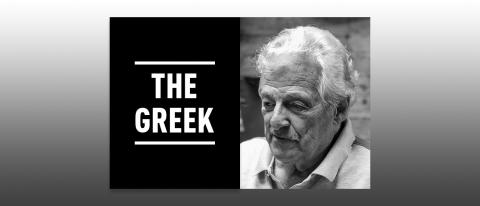
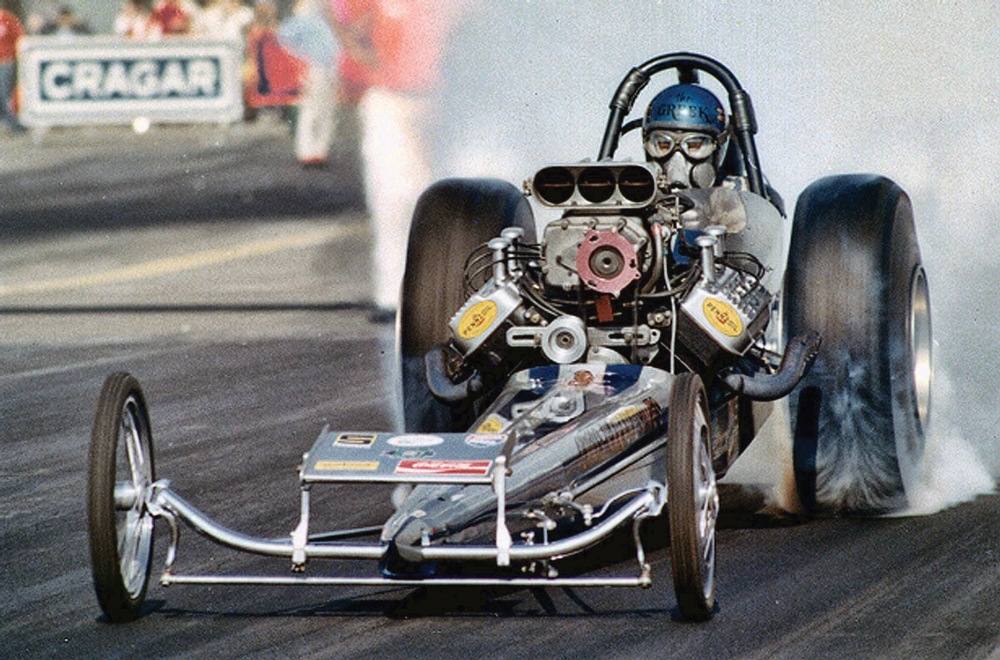
Attributing his longevity in drag racing to the people who supported him, as well as an unwavering work ethic, “The Greek” has taken on a new role in support of his granddaughter’s promising Top Fuel career. Still, even though he’s officially retired, don’t count him out of the driver’s seat just yet.
The legend of Chris Karamesines can be described in two chapters. The first covers his pioneering efforts in the 1950s and 1960s as the sport of drag racing was just putting down roots, when restless souls like Karamesines fashioned hand-built cars and barnstormed throughout America. That led to the second chapter, when Karamesines went on to forge an amazing career of driving Top Fuel dragsters in NHRA competition (and elsewhere) for a stunning seven decades.
There are veteran racers; there are legends; and then there is Karamesines, whose driving career spanned a period that is absolutely unmatched. This past October, Karamesines—revered by the drag racing community as “The Greek”—suited up to race a Top Fuel car at World Wide Technology Raceway in Madison, Illinois, at the age of 88, making it into the first round of eliminations. You heard right: an 88-year-old man still making competitive passes. (It is worth noting that his precise birth year is the subject of lingering debate, with the exact date ranging from 1928 to 1931. He merely smiles and shrugs when asked for confirmation.)
In late 2020, Karamesines announced that he would be stepping aside in 2021 to yield the seat to his granddaughter, Krista Baldwin. It seemed reasonable that an 89-year-old would consider retirement; but he has held such an iconic presence in the sport for so many years that it is difficult to contemplate drag racing without “The Greek” still actively competing.
A native of Chicago, Karamesines began racing in 1951 after returning from service overseas with the US Army. He soon began building dragsters and racing engines as a way to pay the bills and keep himself racing, launching a machine shop and later a speed shop. On April 4, 1960, Karamesines recorded the world’s first unofficial 200-mph quarter-mile pass at Alton, Illinois. Throughout that era, Karamesines—along with good friend Don Garlits—toured extensively while match-racing, though he eventually settled into a long career in “organized” competition.
A measure of Karamesines’ popularity—and respect—was evident in later years when a host of friends and fellow competitors stepped up to offer parts, pieces, and complete cars in order to help prolong his participation. Forrest Lucas of Lucas Oil Products stepped up with a sponsorship deal “for as long as Chris wants to race.” Don Schumacher Racing also provided extensive support to the living legend.
A member of the Motorsports Hall of Fame of America and the International Drag Racing Hall of Fame, Karamesines continues to keep a busy pace. As he recently cleared snow at his Chicago shop, he paused to share some reflections with Industry Insights.
PRI: You’ve had such an amazing, enduring run, Chris, it seems impossible that you’d actually retire. What led to your decision to step away from driving?
Karamesines: My biggest thing was that I wanted to have Krista in the car. That felt like it would be more fun. She’s been waiting to do this, and I’m young enough to keep going for a while. I might jump in the car and make a pass now and then, if I need to.
PRI: How long was the idea of retirement on your mind, the idea of stepping aside so that Krista would have an opportunity?
Karamesines: Once she started thinking about driving alcohol cars, I started thinking about it. I figured it would be nice to step aside and watch her race. She drove the alcohol cars real well, passed with flying colors, and I was happy with that. I am willing to help her out as long as I can, but before long she’ll probably be racing on her own.
The seven-decade career of Chris “The Greek” Karamesines has spanned literally the entire evolution of drag racing, starting with relatively simple front-engine dragsters.
PRI: I’m just going to go ahead and say it: 60-plus years at the wheel of a Top Fuel dragster, that is just amazing. Naturally, all of us want to know your secret to staying so fast for so long.
Karamesines: The biggest thing was that I enjoyed what I was doing. That’s probably the secret. I started racing Top Fuel in 1964, and I’ve been drag racing since 1952. Once I got out of the service, I thought racing would be the best thing for me because I liked going fast. And I just kept following it from there. And the people I met, the things I had to build to keep going, that was interesting.
I got started doing machine work and things, and that got us building motors and stuff. Everywhere I went—California, Florida, everywhere—people were nice to us. They wanted to take us home, they wanted to be with us. It was the people, I think, that kept me going.
PRI: You made your first 200-mph pass on April 24, 1960—said to be the first 200-mph run in drag racing history. When we see pictures of those vintage cars and think about going 200 mph, it definitely does not look comfortable. At the time, did you have any concerns about that kind of speed in those cars?
Karamesines: Back then, when you’re young, you’re not thinking about safety. Nothing scared you, really. You’d get into anything and drive it. As the cars got bigger, there were more things we had to do for safety. NHRA made sure we did what we needed to do. It was fun going fast, and I still enjoy it.
PRI: When you think back to those older cars—the 1950s and 1960s—what comes to mind? Were those cars hard to drive?
Karamesines: Not really. As long as they were put together right. They had their moments, yes. If something broke, or you blew a blower off, stuff like that, that was a problem. But that was part of it. They were built pretty decent for what we were doing.
PRI: Professional drag racing has changed so dramatically since you started. It would be easy to ask what has changed the most, but from your perspective I suspect everything—truly, everything—has changed. Is that true?
Karamesines: You’re right. Everything is different. We could build a car for $200, $500...not much money. You can’t do that anymore. Today, you’re looking at $250,000 to build a car. And it takes more people. Back then you had two people and yourself, and that was the team. Maybe four people total, sometimes. We used to race 50 races a year, exhibition races. California to Maine to Florida, wherever. It was the same with (Don) Garlits—he and I probably did more traveling than anybody back then. And then you had Shirley (Muldowney) and (Connie) Kalitta, but they came a little bit later.
PRI: So naturally, this is the question: Is drag racing better today than in the 1950s? Or any other era?
Karamesines: I think each era is different. We would have 2,000 people in the stands, now you’re looking at 75,000 or 100,000 people. As things go on for the sport, everything grows. And that means it’s different. Better? I don’t know.
PRI: For better or worse…is there an element of those early days that you miss most?
Karamesines: (Laughing.) It’s hard to say what I miss the most. I mean, it was fun for me the whole time. I never had a bad day in drag racing. I’ve enjoyed the people, and that’s what kept me going. Seriously. I don’t care where I went, the people were there for me. If I needed something, they would help me.
PRI: I suspect that your last name has been mispronounced more than any name in racing history. I saw a great story the other day from your friend (Don) Garlits, who first recalled hearing of a racer up in Chicago named “Chris Kerosene” in the 1950s. I’m going to guess that it was just easier to go with “The Greek.”
Karamesines: That was it (laughing). And you’re probably right about my name being mispronounced a lot. In those early years I was teamed up with Bob Schreiber and Don Maynard, and we were using a Chrysler motor they called “the chiseler.” So that’s what we called our car, “The Chizler.” That was easier than using our names. As time went on Maynard died, the other kid found something else to do, and I went off on my own.
Chris Karamesines’ strong work ethic was born out of a deep love for the sport, as well as sheer necessity. “Back then you had two people and yourself, and that was the team,” he said.
PRI: It’s easy for us to look back at those early years and assume they were fun. And I’m sure they were, in many ways. But I also suspect it was tough to make a living at drag racing and keep things together.
Karamesines: Oh yes, it was tough to a certain extent. That’s why I started building motors, to keep myself going. I had a machine shop and I still, up to about 15 years ago, kept the machine shop. And I opened a speed shop as well. It was hard to balance sometimes but I still enjoyed traveling, getting out on the road and going racing.
PRI: You were hesitant to use some of the safety devices that came along in recent years, such as a head-and-neck restraint. When you’ve raced for such a long time, is it hard to adopt some of the newer technologies like that?
Karamesines: The only time I had a problem with things like that was when they asked you to change things when you got to the race track, right there. They should have sent us a letter to tell us what we needed to do at the next race, so we could prepare and make arrangements for the changes. They had a bad habit of waiting until we got to the races to tell us what we needed to change. They’d say, “Oh, just put a tin can around that coupler, that’ll be alright.” Well, that was the wrong thing to tell me. You can’t go to the track and build your car; that’s done in the shop before you hit the road. Today they send a message out in advance, which is the right way to do it.
PRI: Obviously, you’ve followed the career of your granddaughter, Krista Baldwin, from the beginning. As you watched Krista work toward advancing her career, what’s the greatest challenge today for a young person who wants to race?
Karamesines: The finances are the biggest challenge. That, and finding a couple of guys to work on the car and be faithful to it.
PRI: Some things never change, I guess. It always comes down to money and people.
Karamesines: That’s right. Krista, when she was 11 years old, I had her in my race car when we traveled around the country. Her dad (Bobby Baldwin) wanted to drive my car, too. All along, Krista has been right there with us. If you see her drive the car, you can see that. She got that from her dad and me.
Chris Karamesines’ Chicago race shop is the stuff of legend—parts, equipment, engines, and cars—including the iconic Chizler, seen here during a recent (and rare) visit with the PRI Road Tour.
PRI: In the beginning, you were a racer. But fairly quickly you had to become a businessman in order to survive. The racing business has never been easy. What were some of the hard business lessons in those early days?
Karamesines: You’ve got to watch out for some of your friends who are working for you, because they’re the ones who go out the back door with your profits. But other than that, it came down to just loving what I was doing, basically, and having a great time while we were doing it.
PRI: One of the things you are known for is your work ethic. People say they couldn’t keep up with you and that nobody worked harder than you. Where did you get that work ethic?
Karamesines: (Laughing.) Believe me...when people can’t do what you tell ’em, you end up doing it yourself. You hire somebody and you end up doing his work, too. When I got out of the service, I was ready to go to work wherever I could and do what I had to do. And many a racer came to Chicago where we built their motor, put the rearend in their car, and put ’em up overnight. And we’d help them get race dates, things like that. From (Don) Prudhomme to Tommy Ivo, you name it. Guys from California, everywhere. We serviced everybody. And that was a lot of work, yes.
PRI: Is there a key to how you treat sponsors? What’s the advice you would give people on how to work with their sponsors?
Karamesines: It’s hard to answer that now, because everything is changing. Krista is working hard to find the right people to help her. And I can help her, maybe go with her to see the sponsors we’re thinking about. That’s part of the process. And I’ll be one of her sponsors with my parts and things, so we don’t have to spend money on some of the things. But a lot of people have helped me over the years, and the help they gave me was terrific. They stuck with me through thick and thin.
PRI: We’re now seeing electric vehicles in drag racing. What’s your opinion of electric dragsters?
Karamesines: That’s for the young people. If they like cars like that, go for it.
PRI: Your life has been eventful, and the number of people you’ve encountered is really significant. What has brought you the most joy through the years? Survival? Friendship? Competition? What made you the happiest?
Karamesines: Friendship. No doubt about it. The people we met all over the country, that’s the most important thing. People would do anything for us. And it’s hard to find people like that, outside of racing. When things went wrong, people hurried over to help. Lots of people. (Connie) Kalitta, Jim Head, so many people. They’d watch what I was doing, and they knew when I needed something. They worried about the old guy.
“The Greek” retired from driving in late 2020, at the age of 89. He now focuses mainly on helping granddaughter Krista Baldwin, below, launch her Top Fuel driving career.
PRI: And I suspect that made you want to help people in return.
Karamesines: That’s about it. We’ve helped people, too. Bobby Lagana and his family, we helped them when they were getting started. So many people, I can’t remember all the names. Good people.
PRI: Now that you’re officially retired, what does that mean? Will you still run an occasional race? How about some passes in one of your old cars?
Karamesines: When I said I was retired, that didn’t mean I was going to quit drag racing. I’ve still got my two older cars, so I could do different things. I’ve got a twin-engine car, I’ve got stuff that I can go out and enjoy myself, give myself something to do. I’m not a guy who will just sit at home and watch TV.
Although no longer in the Top Fuel driver’s seat, Chris Karamesines stays busy and plans to continue driving other race cars. “I’m not a guy who will just sit at home and watch TV,” he told us.
PRI: Those older cars, from the 1950s and 1960s, they remain very popular with fans. They love it when a guy like “The Greek” comes out and makes a few passes. It’s almost like a fascination with that era. Why are people so interested in those early cars, and early personalities?
Karamesines: Back then, it was different. We were limited as far as the number of places we could go racing. People would come out to the track and once they got to meet us, they would sit right beside our pit and watch us work on the car. Pretty soon they were bringing their kids out with them and would introduce us. “This is Chris Karamesines, and he did this, he did that...” and it never stopped.
PRI: I think that’s good!
Karamesines: It sure was good. That’s where it’s at.
PRI: Normally, Chris, we would wrap this up by wishing you well in the future. But I want to just say thank you. You’ve been a good friend to a countless number of people in the sport for so many years, and you’ve given drag racing everything you’ve got. So on behalf of a lot of people, I say thanks, and I mean it. And thank you for giving us some of your time.
Karamesines: Well, thank you, Dave. I’m happy to have the chance to talk to you.
Our Dinner With ‘The Greek’
“Hey, you want to grab a beer after this?”
Listen…you don’t say no to that offer from a legend like The Greek. Karin knew it, we knew it, and truth be told, he could have asked us to help him move a dead body and we all would have said yes in a heartbeat.
When The Greek says go, you go. And so there we were, waiting in the PRI Road Tour van as Chris locked up his incredible shop, walked slowly to his vintage Jaguar, and pulled out onto the road heading to the bar. He claimed it was just around the corner but…it took a bit longer than we expected to get there. Where was he taking us? Where were we going? How long has The Greek been going to this place?
When we arrived at J.C.’s Pub, it looked like a place where only the locals would go. Concerned, slightly, that our van might not be there when we got out, we looked for a well-lit place to park. The Greek, however, pulled up, jumped out of the Jag, and waltzed inside. Windows down, car unlocked, not a care in the world. You could tell this wasn’t a place where anyone was going to mess with The Greek or his new gang of starry-eyed content creators.
Through the double doors we went, only to be greeted by a literal wall of photos of The Greek. Not “a photo of The Greek on a wall,” but an entire wall dedicated to the man, the myth, the legend himself. We were immediately drawn to different photos: Some of Chris as a 16-year-old boy heading into military service, where he would proudly serve our country during the Nuremberg trials; some as a hair-on-fire maniac doing twin-engine, quarter-mile-long burnouts; some of him with the Chizler—and all with a smile on his face. Each photo another story, each a glimpse into the life of this living legend.
“Hey sir…wait, where did he go?”
Oh, yeah, this is the best part.
You see, The Greek had invited us to dinner, but he wasn’t planning to eat dinner with us. He had his wife and his friends already holding down a corner of the bar…. He was here to hang with them. A weekly tradition for their close-knit group. We had a table—The Greek had seen to that—but there wasn’t a seat for the legend. He had drinks to drink, tales to tell, and friends to laugh with. He wasn’t planning to give that up for anything, especially not for us. Now don’t get me wrong here, The Greek was giving us a once-in-a-lifetime VIP experience. We had a table at his place; we had J.C.’s owner giving us a tour; we had great food, great drinks, and many laughs. We met The Greek’s incredible wife. We met his friends. He came by to check on us, bought us a round, recommended food (of course there is a menu item named after him…), and got us dessert. But he didn’t ever stop being The Greek, and that meant he wasn’t going to miss his weekly hang with his crew. And we respected that. More respect for that than I can probably describe here…but it was as if we were allowed to really see the legend as he really was. No persona, no fake bravado, just a small glimpse into his real life, as it was and as it probably always has been.
It isn’t every day that you’re invited to dine with a man whose career is commemorated on the wall.
And just like the visit to his shop, we were lucky enough to see the real Chris Karamesines. A real-life legend in the flesh, living his life in a way that seemed so ordinary to him (you know, as if mere mortals are building Top Fuel engines in their private little garage and then driving to a restaurant with a shrine in their honor on the wall…) and not caring who saw it.
Chris isn’t like any other person I’ve ever had the pleasure of being around. He is the true embodiment of Racing, with a capital R. From tinkering with tank engines during the war, to being the first dragster to run 200 miles an hour in the quarter, to going 305 mph at 86 years old (!), and every single step in between, The Greek is more than his accomplishments. He is more than the stories, and the championships, and the twin-engine. Chris Karamesines is the dream we all have when we give it all up to get involved with racing. As he says, “It’s been 63 years of fun, and I have loved every minute of it.” Here’s to you, Greek. —Justin Cesler
The National Auto Sport Association (NASA) has announced a new series leader for the New Western Endurance Racing Challenge (WERC) Series. Peter Hopelain replaces longtime series leader Neil Daly, who will remain involved with the series as the WERC team adviser.
Hopelain, a real estate agent based in San Carlos, California, owns the Technik Racing team and is an endurance racer, having competed in the WERC series for years. He also has two third-place finishes and one class win in the 25 Hours of Thunderhill event.
“Neil Daly was instrumental in helping the WERC series grow and prosper, and we’re grateful for the time he devoted to the program’s success,” NASA National Chairman Ryan Flaherty said to NASA Speed News. “Now that he’s decided to move on, we’re looking forward to what Peter Hopelain can deliver for the series.”
Dynabrade Inc. has announced the retirement of President and CEO Hardy Hamann, effective March 31.
“Over the past four decades, I have been able to live The American Dream,” said Harmann. “I was privileged to work for some great companies that allowed me to live in various parts of the USA and make business friends around the world. I feel grateful for the opportunity to finish my career at Dynabrade.”
Hamann had served as the 98th president of the Industrial Supply Manufacturers Association (now part of ISA), representing 550 North American Manufacturers in 2002-‘03.
Dynabrade will announce its new company president at a later date.
Ford takes us behind the scenes for an exclusive look at two new models built for Ultra4 racing.
While most of the motoring public will have to wait until later this summer to get their hands on the Blue Oval’s latest sport-utility, the folks at Ford Performance are already putting the new retro-inspired SUV through its paces in motorsports.
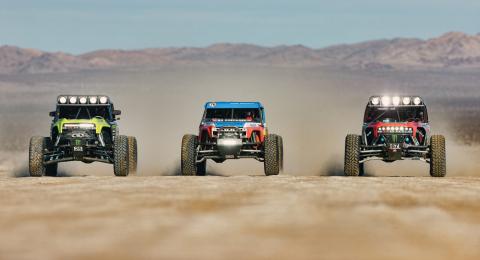
Earlier this year, Ford took the wraps off a pair of new Broncos at the 2021 King of the Hammers (KOH) event in Johnson Valley, California. Although the two machines differ substantially, both were developed with the specific intent to take podiums in Ultra4 Racing events like KOH.
“King of the Hammers is the biggest race of the year for Ultra4 Racing, so it made sense to debut these new trucks there,” said Brian Novak of Ford Performance. “When it comes to off-road racing in the United States, King of the Hammers is kind of a mecca for this crowd. The number of people there that are really passionate about this sort of thing is just incredible, so we wanted to show them what the Bronco can do.”
The new race-ready Broncos were built to compete in two classes—4600 and 4400—and the differences between class rulesets gave way to these two unique animals that will now race under the Bronco banner. As such, we asked Novak to walk us through what each truck brings to the table.
Bronco 4600
4600 is considered a “stock” production class, but the trucks are far from showroom spec. To get the Bronco ready for racing, Ford selected a two-door example outfitted with the 2.7-liter turbocharged V6, 10-speed automatic transmission, and the off-road focused Sasquatch package as a starting point, but Novak said the 4600 modifications work with a two-door, 2.7-liter equipped Bronco of any trim.
“It’s a brand-new platform, so part of this is about showing what it’s capable of, and another part of it is about starting to create a path for that customer who buys a Bronco and wants to go race it. 4600 is a stock class, but the way the class rules are written, you’re allowed to modify the engine and do things like that; you’re required to maintain the core hardware like the block and cylinder heads, but there’s a lot of freedom in there. However, in this case we actually chose to leave the 2.7-liter EcoBoost as-is—we haven’t made any changes to it because we feel we’re in a really good place with the power in terms of competitiveness.”
The suspension is another story, though. “Hammers is probably the most difficult off-road race in the world, especially in the 4600 class,” he explained. “We had 29 entries this year and only one finished in the allotted time. It’s a very, very difficult race, so there are some things we had to do to ensure we’d be able to tackle it.”
Ford developed unique race versions of stock-style suspension components like the control arms and trailing arms that are armored and heat-treated for additional strength and turned to the aftermarket to help develop and produce a number of the supporting parts. Fox supplies the Bronco 4600’s 2.5-inch coilovers while the heavy-duty front portal hubs come from 74 Weld. In the rear, Triton Engineering rear links support a Dynatrac ProRock XD60 axle with an ARB 35-spline locking differential and Spidertrax Spider 9 axle shafts and hubs. Ford Performance also developed unique front and rear modular steel bumpers to support a Warn winch and Rigid LED lighting.
Recaro’s first-ever FIA off-road-certified race shells are also on hand to provide seating inside the Bronco 4600, while its custom roll cage is fabricated by Geiser Brothers in Phoenix, Arizona, who will also serve as the Bronco 4600’s primary builder for the foreseeable future.
“Our team of engineers at Ford Performance has been working really hard on calibrations, the suspension geometry, driveline work, and other aspects of the truck to get it ready, and we teamed up with some really strong partners to help support that effort and deliver the parts.”
Novak told us that the Bronco 4600 racing effort will initially focus on its respective class in the Ultra4 series, where the Bronco teams have collected a formidable lineup of off-road racing veterans that include two-time King of the Hammers champion Loren Healy and Jason Scherer, a three-time champion of the event.
Bronco 4400
While 4600 is a production-based class, 4400 is a no-holds-barred unlimited class. As such, the Bronco 4400 effort is markedly different from that of its 4600-class counterpart and, if we’re honest, largely a modern Bronco in name only.
“With an unlimited rule set like 4400, you can build anything you want in order to make the ultimate rock crawler,” Novak explained. “So we’re talking tube-frame chassis, bypass off-road racing dampers, fully built race motors, and so on. It is a 100% purpose-built racing Bronco.”
And rather than using a modified version of the turbocharged six-cylinder that motivates the Bronco 4400, the teams have opted for more traditional muscle with big-displacement pushrod Ford V8 race motors of their own preference.
“The teams have been taking the lead on the development of the Bronco 4400 trucks—because the rules are unlimited, they’ve each got their own secret sauce,” Novak added. “And that’s what makes 4400 such a cool class to run in. Each team brings their own solution to it, and everybody’s developing down their own path, so it makes for a really good show. And there’s always something to learn. Even something that’s as different from the production truck as the 4400 it can teach us things that help make the 4600 better—or any of our race programs, for that matter.”
The International Hot Rod Association (IHRA), the grassroots drag racing sanctioning body, has announced the 2021 schedule for the IHRA Sportsman Spectacular presented by Hagerty and Moser Engineering. The Sportsman Spectacular series will feature an expanded 15-race schedule with new venues this season.
Top (Box), Mod (No Box / Footbrake), and Junior Dragster competitors who are members of IHRA will have the opportunity to compete for the prestigious IHRA Ironman at each event, as well as the coveted oversized championship checks. IHRA members will also be running for the limited-edition Sportsman Spectacular commemorative medals and round prizes from IHRA sponsors Sunoco Race Fuels, Moser Engineering, and Summit Racing Equipment, in addition to their winnings.
“This season is more about celebrating IHRA’s 50th anniversary so each Sportsman Spectacular host venue will be creating the event that best suits their market, ensuring no two events will be alike,” said IHRA Vice President Skooter Peaco. “We wanted to get to some locations this season that we have not been to as a part of an event to try and reward as many of our IHRA members as possible.”
The IHRA Sportsman Spectacular presented by Hagerty and Moser Engineering will kick off 2021 on March 20, at Edinburg Motorsports Park, Edinburg, Texas.
2021 IHRA Sportsman Spectacular Schedule presented by Hagerty and Moser Engineering
March 22: Edinburg Motorsports Park, Edinburg, Texas
March 27-28: Farmington Dragway, Mocksville, N.C.
June 12-13: Onawa Dragway, Onawa, Iowa
June 19-20: Empire Dragway, Leicester, N.Y.
June 26-27: Mo-Kan Dragway, Asbury, Mo.
July 10: Music City Raceway, Goodlettsville, Tenn.
July 31-Aug 1: Beacon Dragway, Paducah, Ky.
July 31-Aug 2: Grand Bend Motorplex, Grand Bend, On., Canada
August 20-22, Maryland International Raceway, Mechanicsville, Md.
Additional dates will be added to the schedule in the coming weeks.
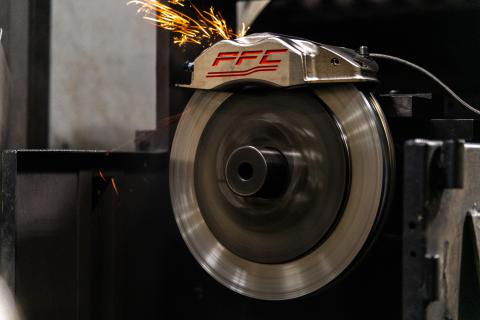
Head inside PFC Brakes’ amazing facility and learn how high-performance rotors, pads, calipers, and related braking accessories are made with “no compromises” in Clover, South Carolina.
PFC has manufactured some of the best dirt, stock car, sports car, open wheel, rally, and street brake systems, and they know what it takes to win.
Hear why PFC Brakes “isn’t just a product, it’s a mentality.”
 MEMBERSHIP LOGIN