
Newly Appointed: Vic Wood

Submitted by jeffreyc on Thu, 09/16/2021 - 14:38


A familiar face in NHRA and World of Outlaws pits, Vic Wood brings decades of experience to Midwest builders in his new role with Race Winning Brands.

As the new regional tech support manager serving Race Winning Brands’ Midwest accounts, Vic Wood is spending plenty of time on the road visiting engine builders, performance shops and distributors. When PRI caught up with Wood, he was driving to his next appointment “in the middle of the cornfields” in Missouri.

Wood’s background makes him an ideal fit for this role. Before leaving his native Australia for the US 20 years ago, he was a drag racer and dirt oval competitor in midgets. His 40-plus years in the automotive aftermarket include stints with Hedman Hedders, Aeromotive, McLeod Industries and Weld Wheels, as well as roles with SEMA and its Industry Councils, including MPMC Chairman. The NHRA, SEMA and MPMC have recognized Wood for his work. 

Talking with PRI, Wood shared his thoughts on the importance of face-to-face meetings in marketing performance parts today.

PRI: What are you most looking forward to in this new role at Race Winning Brands? 

Wood: Meeting the customers and learning the challenges they face. 

PRI: Describe this new role and why it’s important to the racing industry.

Wood: It’s great to have a website with all your products, but it’s another thing for the end user to really understand what a product does and how it can be used for different applications. We constantly see that customers have information overload. For example, many parts these days have new high-performance coatings that can extend their reliability and performance. I need to get into their workplace and understand what they’re doing, to see if we have product that can help or can we develop a product to specifically address their particular need. 

PRI: How does your racing and business background help to serve the businesses and race teams you visit?

Wood: My background gives people some level of confidence in my understanding of the products and the processes engine builders go through to achieve their goals. It gives them confidence that the person they’re talking to has some knowledge of the challenges they’re trying to meet.

PRI: In an age of increasingly digital interaction, why is the face-to-face interaction you will provide to racing businesses and customers so valuable?

Wood: A lot of this work is now done in email or other remote communications, but I still have a lot of faith in face-to-face meetings. It’s a little old-fashioned, but I can really learn about a business by spending time there. 

PRI: What does personal interaction offer that digital can’t match?

Wood: I see many cases where people know our brand names but are not aware of all the products we offer. It’s also good to see what products they are using and trying to expose them to ours. 

PRI: What do you see as the biggest challenges ahead of you?

Wood: It can be a challenge to get someone to try something new. It’s human nature that if something has always worked for you in the past, then you might not want to change. 

PRI: What are your top strategic goals for the next 12 months?

Wood: I want to physically visit as many customers in my territory as I possibly can. I want to establish new relationships and maintain relationships established by previous people. A lot of what I do is simply building relationships.

PRI: What’s your most gratifying professional accomplishment?

Wood: I would say being accepted by crew chiefs in NHRA and World of Outlaws racing. It takes a lot to win their trust. I have a great relationship with Joe Gaerte [in World of Outlaws]. His father, Earl, was one of the great sprint car engine builders. My friendship with the Gaerte family is something I’m proud of.

PRI: Who has been the biggest influence in either your professional or personal life, and why?

Wood: I have a great relationship with former SEMA President Chuck Blum. He had a lot of faith in me to enable me to come from Australia to work for SEMA. Both Chuck and former NHRA and SFI Vice President Carl Olson significantly influenced my career.

PRI: Who inspires you, and why?

Wood: Mike Stewart, a very well-known engine builder in Australia, took me under his wing when I was in my late teens. He taught me a lot and remains probably the best friend I’ve ever had. We maintain our friendship to this day. If I’ve ever made someone proud, I’d want it to be Mike, because of everything he did for me, sometimes without even knowing it.

Over the past five years I have enjoyed a great friendship with Don Schumacher. I hold his friendship and counsel in very high regard. In the early days traveling from Australia to attend SEMA and PRI, I received great advice and oversight from SEMA Hall Of Fame member Dennis Holding and my great mates Rick Rollins and Ron Funfar. Most importantly, my beautiful wife Arlene (herself a former 30-year employee of SEMA) who has been my “rock” over the past 25 years and still inspires me every day.

PRI: What is a recent or past mistake you’ve learned from?

Wood: There have been times in my life where I allowed myself to drift when I would have been better served staying focused on one thing. So, something I’ve learned over the years is to stay focused on what you’re good at. Don’t take a side road.

VIC WOOD

–

Title:
Regional Tech Support Manager

Organization:
Race Winning Brands

Hometown:
Overland Park, Kansas

Fast Fact:
Wood once drove a 245-mph roadster at Bonneville. Today, he enjoys his self-built 1964 Chevy C10 pickup, powered by a supercharged 410-cubic-inch Dart Machinery-equipped engine.
October 2021
By
Jim Koscs

Stop Doing That…Do This Instead: Piston Rings

Submitted by jeffreyc on Thu, 09/16/2021 - 13:03

Engine builders should always verify that rings are available before ordering custom pistons. “Small runs of rings get very expensive,” said our source from Total Seal. “It’s going to cost me as much to make the rings as it was for you to buy the pistons.”

Rings are among the hardest working parts in an engine, but often don’t get the attention they deserve. Here’s what you need to know about modern piston rings direct from those on the front lines.

No matter if the job is done by a seasoned engine builder or a complete novice, small mistakes can have big consequences when it comes to selecting and installing piston rings. After all, the rings have many jobs to do, from maintaining a tight seal under immense pressure to managing heat inside the cylinder to scraping excess oil off the walls and leaving just enough to lubricate the piston on its way up. 

How piston rings work, and how important they are to an engine’s operation, is common, Engine Building 101 knowledge. Yet even in the performance world, misconceptions and outdated information about these key components keep cropping up. We spoke with experts on the subject to find out what builders should be doing to get the most out of their rings. 

Never Assume

This first bit of advice seems like common sense, but time and time again Keith Jones of Total Seal Piston Rings in Phoenix, Arizona, is greeted by horror stories from customers come Monday morning—after the fact when the damage is already done.

“Make me your first call, not your last,” he said. “We can sort all these problems out before you start.”  

There is so much bad information, especially on the Internet, that Jones said when in doubt, consult the manufacturer. 

For example, when using a power adder, do the rings that came with the pistons look too skinny? Give the sales rep a call and double-check that they’re the right ones for the application. 

Jones also strongly recommended checking to make sure rings are available before ordering custom pistons. “Small runs of rings get very expensive,” he said. “It’s going to cost me as much to make the rings as it was for you to buy the pistons.”

Be Open to New Theories and Practices

Don’t take the engine building tips passed down from your granddad as gospel. A lot has changed with piston rings in the past few decades, as Dan Begle of MAHLE Aftermarket in Farmington Hills, Michigan, can attest. 

“Years ago, performance development drove the OEMs, but now it’s the other way around,” he said. “As engines are becoming more efficient and performance-oriented, that technology trickles down to the performance world.” 

stop2
According to our source at MAHLE Aftermarket, thinner modern steel rings can often do the same job, if not better, than a thicker ring of an older design. Pictured here is an older 1/16"—1/16"—3/16" piston/ring stack-up (at left) versus a newer-style 1.0-mm—1.0-mm—3.0-mm stack. “As you can see,” he noted, “there is considerably more piston skirt, which allows [for greater] ability to control the piston.”

With that in mind, thinner modern steel rings can often do the same job, if not better, than a thicker ring of an older design. “You can get by with a thinner ring using a better material,” Begle said, “so you can carry more heat out even with less thickness. You can run a 1 mm ring and pull more heat out than a 1/16th-inch cast ring.” 

But old habits die hard. “There are many people still using late 1990s technology in their engines, which is like choosing a Nokia brick phone when you could have an iPhone,” said Total Seal’s Lake Speed, Jr. “People still buy 5/64th rings, which is like a rotary dial phone!”

Know Your Options

With so many different piston ring base materials and face coatings available, choosing the correct rings for an engine can be an intimidating task. Two materials—ductile iron and cast iron—can be crossed right off the list, as they’re outdated and surpassed by carbon steel rings in their ability to dissipate heat and hold up to high cylinder pressures. 

Another type of ring to eliminate is chromoly, because it doesn’t exist. That persistent misnomer likely originates from a conflation of chrome, a coating once used for performance rings, and moly (short for molybdenum), a coating still used today. Jones cited this common misconception as yet another example of the misinformation that pervades the industry. To this day he encounters customers who insist they have chromoly rings. 

A real coating to consider is chromium nitride (CrN), also known as physical vapor deposition (PVD). It’s a solid choice for top rings as the coating is low-friction, wear-resistant and easy on cylinder walls.  

“Even experienced engine builders can benefit from learning what ring and face coatings are out there,” said Begle. “Technology has changed so much. Just because you ran that ring before doesn’t mean it’s the latest and greatest. There are better options out there.”

Install With Care

Our sources suggest going back to the basics to fine-tune engine-building techniques. Gapping rings, for instance, is an easy-enough procedure, but there’s so much riding on getting it right that it’s worth taking a second look at the process. 

Use a good squaring tool to ensure the ring is square in the bore before measuring the gap. When adjusting it, only file one side of the end gap from outside to inside. “Don’t put big chamfers on them. You’re not trying to put a bevel on it,” said Jones. “Just lightly debur the edge.” 

Begle agreed that slow and precise is the best approach. “Getting the gap symmetrical and parallel in the bore is key,” he said. “People can get overzealous with deburring. When building an engine, you want to be on the cautious side.”  

Another thing to get right is the cylinder hone. “Honing is as important as making the right ring selection,” said Jones. “A ring cannot fix a bad cylinder wall.”

Proper Break-in

One thing Jones sees far too often is people using the wrong lubrication to break in rings. “An engine needs friction to break in,” he said. “You have to make heat and pressure to seat the rings. If you use an oil with a high amount of friction modifiers, you’re over-lubricating.” 

Use a dedicated break-in oil, he advised. This generally means a low- to no-detergent oil with a low total base number (TBN), a measurement of the number of alkaline additives in an oil. Look for additives like moly and calcium in low numbers, as they reduce friction. One additive he recommended is Zinc Dialkyl Dithiophosphate (ZDDP). 

Another pro tip from Jones: “Make sure you get a proper fuel map before you start the engine. A fresh piston and ring package will not tolerate fuel wash. An overly rich fuel mixture will wash the lubrication right off the cylinder walls.” 

SOURCES

–

MAHLE Aftermarket
mahle-aftermarket.com

Total Seal Piston Rings
totalseal.com

October 2021
By
Alex Nishimoto

Make the Case: ICE vs. Electric Motors

Submitted by jeffreyc on Thu, 09/16/2021 - 12:34


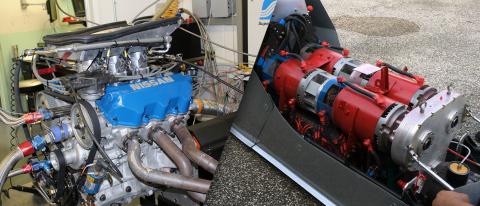
As OEMs continue to invest billions in electric vehicle tech, EV powertrains are becoming a growing presence across various motorsports disciplines. This developing technology has compelling advantages, but where do internal combustion engines still have the upper hand? Our advocates weigh in on the inherent strengths and weakness of each method of propulsion in the context of racing.

INTERNAL COMBUSTION ENGINES ADVOCATE:
ED PINK,
ED PINK'S GARAGE

–

There are a number of different motorsport disciplines where internal combustion engines work very well and EV technology, as it stands today, just isn’t suitable for the format. How would an EV run in an endurance-style road racing event? Even the most advanced EV powertrains that are currently available struggle to deliver their maximum output for more than a few moments at a time. What about recharging the batteries? We still don’t have battery technology that would make sense in longer racing formats, let alone those that require mid-race refueling. 

We also need to think about the emotional elements of racing and how they affect the fans. The fans need the noise. They like the sound of the engines, and without it, interest will drop off significantly. In many ways, it’s a car’s sonic signature. Back in the day, people loved to hear the sound of the Novi V8 when it ran at Indianapolis, and I have no doubt that it drew more spectators to the Speedway when it raced. 

case2

The same goes for the Offy and the Cosworth V8. The spectators connected with the distinctive engine sounds produced by different manufacturers. That’s still true today. Look at all the negative feedback IndyCar received when it switched over to turbocharged engines and the cars suddenly got quieter. If people didn’t care about engine sound, there wouldn’t be aftermarket exhaust systems on all these new cars out on the highway now. 

While an internal combustion engine is more complex than an electric motor, it also provides much more opportunity for innovation in tuning and setup. There are far more variables involved, and that allows people to take a number of different approaches to make their cars more competitive. 

If we look back at the history of internal combustion, these engines started out with massive displacement and relatively little power output. But as time has gone on, the displacements have gotten smaller while the power has gone up. Plus, now we’re seeing more and more use of forced-induction systems. We’re also seeing electric motors serving as supplemental power sources in disciplines like Formula 1, and I think these hybrid systems will continue to see development and more widespread use for a long time to come. 

Electric powertrains will improve and become more useful in a wider range of applications over time, too. But the one thing they’re not going to have is the sound, and that’s going to be a significant obstacle going forward.

ELECTRIC MOTORS ADVOCATE:
JOHN METRIC,
LONESTAR EV PERFORMANCE

–

The first thing to consider is complexity. An electric motor typically has one moving part—the rotor—and two bearings, and that’s a big advantage. An internal combustion engine has valves, springs, pistons, a crank, one or more camshafts, a fueling system, the list goes on. So it stands to reason that an electric motor is going to require less maintenance, and the mean time between failures with electric motors is usually measured in orders of tens of thousands of hours. If the cooling is sufficient, there are only two wear parts in the motor: the front bearing and the back bearing.

Then there’s the safety aspect. Battery fires are still an ongoing concern for some sanctioning bodies, but a damaged battery generally gives a racer much more time to escape the car than, say, a punctured gasoline tank that is spraying fuel onto a red-hot header. With an electric powertrain, it will typically take several minutes for a fire to develop into flames at that level, so safety teams can respond to the incident, extract the driver and possibly take some precautionary measures before anything significant happens. 

case3

Electric motors also develop power very differently than an internal combustion engine does. When we look at a dyno curve for an internal combustion engine’s torque, we focus on the peak numbers. But when we look at an electric motor and an internal combustion engine that make equivalent torque—let’s say 1,000 lb./ft.—the internal combustion engine is only making that number at one specific rpm, whereas the electric motor will typically make that 1,000 lb./ft. from 0 rpm all the way to whatever the motor’s nominal rpm rating is. So if a drag racer bogs at launch and the rpm’s drop, the full torque rating of that motor is still available. I mean, what kind of internal combustion engine can make 1,000 lb./ft. at 1,000 rpm? There just aren’t any. There’s a clear benefit in terms of power delivery. The electric motor is going to have more out of the hole, and it will just keep pulling and pulling.

This certainly has advantages in drag racing, and there are already a number of disciplines where a comparison of raw EV results to ICE results shows where this technology really works. The Pikes Peak hill climb, for instance: For a number of years now, an electric motorcycle has had the overall fastest time for motorcycles, and electric cars have been extremely competitive against the gas-powered cars up there for the past five years or so. An EV prototype built by Volkswagen currently holds the overall lap record. Thinner air doesn’t affect an EV powertrain like it does an internal combustion engine. 

We have to understand that widespread adoption will take some time, though. Back in the 1950s, when drag racing really started to take off, kids were taking cars that were already 20 years old and kind of discarded, and hot rodding them. Right now, it’s tough to take a Tesla that might only be three or four years old and turn it into a race car. But the ‘hack rod’ is coming.

October 2021
By
Bradley Iger

SCCA Adds Two To Solo Program Department

Submitted by laurap on Thu, 09/16/2021 - 12:21
SCCA logo


SCCA’s Solo Program has announced the addition of two national staff personnel to the Solo Department. 

Longtime SCCA employee Rick Myers, who was region services senior manager, will now serve as director of the Solo Department. And longtime SCCA member Brian Mason, who has spent the last several years producing professional autocross events, has been named national Solo Series manager.

Myers will be in charge of executing strategies across the entire Solo Program with a focus on setting seasons up for success and working with regions to ensure they have needed resources from the National Office. Mason will serve as the primary, hands-on producer of National Solo Series events.

“This is a major piece of the puzzle as we look to create a successful structure for the future of Solo Program with focus on Region support and National Series excellence,” said Heyward Wagner, Senior Director of Solo. “Rick Myers has a ton of Club experience when it comes to figuring out how to get the difficult jobs done. And Brian Mason is among the most experienced in the country when it comes to professional autocross event design and deployment.” 

For more information, visit scca.com.

September 2021

NASCAR Announces 2022 NASCAR Cup Series Schedule

Submitted by laurap on Thu, 09/16/2021 - 11:43
NASCAR logo


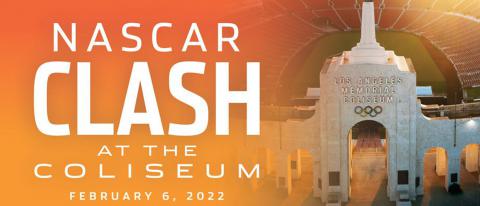
NASCAR has announced the 2022 NASCAR Cup Series schedule. The slate spans 39 total events, including the previously announced Clash, set for  February 6, 2022, at the iconic Los Angeles Memorial Coliseum for the first time in series history.

The NASCAR Cup Series will visit another track for the first time at World Wide Technology Raceway just outside St. Louis, Missouri on June 5.

“As we demonstrated last year, we are committed to creating the most dynamic schedule for our fans, long term,” said Ben Kennedy, NASCAR senior vice president of strategy and innovation. “With the addition of new and unique venues like the Coliseum and World Wide Technology Raceway, each in markets with passionate NASCAR fans, we’re continuing to build on bold changes to deliver the best racing in the world.

In another move, Homestead-Miami Speedway will return to the Playoff schedule. The 1.5-mile destination track will host the second of three Round of 8 races on October 23. In addition, Texas (September 25) and Las Vegas (October 16) will swap dates and lead off the Round of 12 and Round of 8, respectively.

In addition, Kansas will move up in the Playoffs schedule, becoming the second race in the Round of 16 (September 11).

The 2022 season will officially kick off with the Daytona 500 at Daytona International Speedway on Sunday, February 20 live on FOX—an event that will also host the regular season points race debut of the Next Gen race car. The Cup Series will then stop at Auto Club Speedway on February 27—the first time NASCAR will visit the high-speed two-mile oval in nearly two years—followed by Las Vegas Motor Speedway (March 6) and Phoenix Raceway (March 13).

The Bristol Dirt Race returns to the schedule, this time under the lights on Easter Sunday Night (April 17). The NASCAR Cup Series All-Star Race will also return to Texas Motor Speedway (May 22).


2022 NASCAR CUP SERIES SCHEDULE (playoff races in bold)

Date

Race / Track

Sunday, February 6

Clash (L.A. Memorial Coliseum)

Thursday, February 17

Duel at Daytona

Sunday, February 20

DAYTONA 500

Sunday, February 27

Auto Club

Sunday, March 6

Las Vegas

Sunday, March 13

Phoenix

Sunday, March 20

Atlanta

Sunday, March 27

COTA

Sunday, April 3

Richmond

Saturday, April 9

Martinsville

Sunday, April 17

Bristol Dirt

Sunday, April 24

Talladega

Sunday, May 1

Dover

Sunday, May 8

Darlington

Sunday, May 15

Kansas

Sunday, May 22

All-Star (Texas)

Sunday, May 29

Charlotte

Sunday, June 5

World Wide Technology Raceway

Sunday, June 12

Sonoma

Sunday, June 26

Nashville Superspeedway

Sunday, July 3

Road America

Sunday, July 10

Atlanta

Sunday, July 17

New Hampshire

Sunday, July 24

Pocono

Sunday, July 31

Indianapolis Road Course

Sunday, August 7

Michigan

Sunday, August 14

Richmond

Sunday, August 21

Watkins Glen

Saturday, August 27

Daytona

Sunday, September 4

Darlington

Sunday, September 11

Kansas

Saturday, September 17

Bristol

Sunday, September 25

Texas

Sunday, October 2

Talladega

Sunday, October 9

Charlotte Roval

Sunday, October 16

Las Vegas

Sunday, October 23

Homestead-Miami

Sunday, October 30

Martinsville

Sunday, November 6

Phoenix


For more information, visit nascar.com. 

September 2021

10th Annual Race Track Business Conference Set For PRI 2021

Submitted by laurap on Wed, 09/15/2021 - 17:10
 Race Track Business Conference (RTBC) logo


National Speedway Directory has announced that the 2021 Race Track Business Conference (RTBC) will be held on Wednesday, December 8, 2021, as part of the PRI Trade Show’s Race Industry Week leading up to the PRI Show on December 9–11, 2021. 

The RTBC focuses on cutting-edge presentations about the current status of motorsports. It allows attendees to encounter new vendors, learn about innovative products and services for a race track or racing series, gain insight from the experts on the industry's economic challenges, and learn winning strategies from industry leaders.

The 10th annual RTBC will return to in-person instruction following last year’s virtual gathering. The program includes eight sessions and a keynote speaker during the full-day schedule, which begins at 8 a.m. and ends with a network reception beginning at 5:30 p.m.

The following speakers are currently scheduled for the 2021 RTBC:

  • Tom Deery | Ambassador | Performance Racing Industry (PRI)
  • Beth Paretta| President | Peretta Motorsports
  • Cassie Burnside | Account Director – Motorsports | TSMGI
  • Laurie Eberhart | Attorney | Apollo Sports Law Group
  • Michelle Lackey Maynor | President | Alaska Raceway Park
  • Tim McGrane | CEO | M1 Concourse
  • Jason Rittenberry | Chief Operating Officer | Music City Grand Prix
  • John Waraniak | Consultant | Waraniak Consultants


Additional information, topics, and speakers will be announced at a later date. The cost to attend the RTBC is $250. For more information or to register, visit racetrackbusinessconference.com or contact Tim Frost at twfrost@speedwaysonline.com or 847-778-9475.

September 2021

NASCAR Cup Series To Visit Los Angeles In 2022

Submitted by laurap on Wed, 09/15/2021 - 16:59
Image courtesy of NASCAR


NASCAR has announced that the Clash—NASCAR’s prelude event to the Daytona 500—will take place at the iconic Los Angeles Memorial Coliseum on February 6, 2022. The event will be the first NASCAR race held inside the iconic Los Angeles stadium since it opened in 1923.

The Clash at the Coliseum is positioned as a signature event part of the venue’s centennial celebration. It marks the first time NASCAR’s prelude to the Daytona 500 will occur somewhere other than Daytona since it was created in 1979, which will host the regular-season opener two weeks later.

“Los Angeles is synonymous with major sports and entertainment events, so we seized an innovative opportunity to showcase NASCAR at the Los Angeles Memorial Coliseum,” said Ben Kennedy, NASCAR senior vice president of strategy and innovation. “We’re thrilled to have the opportunity to take center stage in this market as we get our 2022 season underway.” 

The traditional Coliseum playing surface will be converted into a quarter-mile, asphalt short track creating a brand-new action-packed event to kick off the season. Drivers will compete for the first time in the new Next Gen cars.

The Clash at the Coliseum will be the first of two visits to Southern California, as NASCAR’s premier series will also visit Auto Club Speedway in 2022.

For more information or to purchase tickets, visit nascar.com/lacoliseum.

September 2021

Editors' Choice

Submitted by jeffreyc on Wed, 09/15/2021 - 15:37


Hundreds of new product announcements cross the desks of PRI editors each month. Following are our top picks for October.

TERMINATOR X HIGH-IMPEDANCE 220 LB./HR. INJECTORS

Holley Performance Products
holley.com

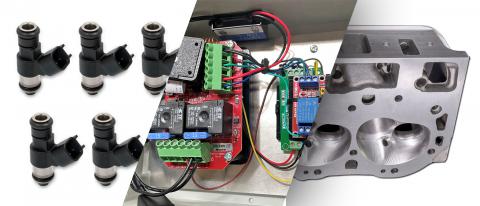
Holley Performance Products has just released an affordable high-impedance fuel injector with a 220 lb./hr. flow rating.

“With the wide range of injector sizes in the Holley Terminator X line, these are the perfect upgrade for enthusiasts who are making more power than stock, are adding forced induction or a dry nitrous shot, and are utilizing an ECU that requires a high-impedance injector,” said Evan Perkins.

The injectors are compatible with Holley’s Terminator X, HP and Dominator ECUs as well as aftermarket and OEM ECUs that have saturated drivers. These PICO/EV6 performance injectors are sold individually or as a set of eight. They come with USCAR connectors and a 40-mm O-ring-to-O-ring length. That makes them compatible with many OEM LS intake manifolds, and they’re easy to install in a Holley EFI Hi-Ram intake using the 300–230 fuel rail adapter kit. For extreme horsepower applications, the injectors are also methanol compatible.

choice1a

choice1b

Featuring a precision-lapped disc valve, brass windings and high-temperature O-rings, the Terminator X injectors provide excellent linearity with no discernible bounce at low pulse widths.

“The downside of an injector that is oversized for an application is poor fuel control at low pulse width conditions,” noted Perkins. “This is called ‘bounce,’ and it is something we have worked hard to eliminate on some of our larger injectors to give enthusiasts more room to grow their engine combinations.” —Mike Magda


PTS-2W WI-FI NOTIFICAITON ALARM

Trailer Alarms
trailer-alarms.com

Trailer Alarms can now connect its highly regarded PTS-2 alarm system to a trailer’s existing Wi-Fi system, thereby saving the owner additional fees that other notification options would charge.

“It will still send the owner a text alert or email,” said Lyle Clark of the New Braunfels, Texas, company, who added that a customer came to him requesting the setup, but it had never been done before. “The biggest challenge was finding a communication device that would connect between our alarm and the Wi-Fi.”

choice2

Clark’s strategy was to use a Raspberry Pi—a mini computer popular with all types of creative projects—as the middleman between the alarm and Wi-Fi. It took literally a worldwide search to find a programmer willing to develop the language that all three components would understand. Following seven months of development and testing, a working unit called the PTS-2W was launched.

A suitable mounting box for all components was found, then the mounts were custom designed and manufactured with a 3D printer. The system still needs to be programmed with the Wi-Fi SSID and contact information for those receiving the alerts.

“The nice thing about the Raspberry Pi is that when the alarm goes off, it will record about 15–20 seconds of video and send that to the owner,” said Clark. “That way they have video evidence or can see if it’s a false alarm.” —Mike Magda


CNC-PORTED IRON CYLINDER HEADS

World Products
worldproducts.net

Iron cylinder heads will always have a place in motorsports, whether the choice is driven by sanctioning body rules, budget constraints or durability requirements. With the release of CNC-ported iron heads for the big and small block Chevrolet from World Products, the same airflow technology that goes into popular aluminum heads is now available to racers.

“These are mostly circle track and pulling applications,” noted Jack McInnis. “Obviously, they’re not limited to those. Off-shore marine is also a good place for them because salt water can play havoc on aluminum.”

choice3

For the big block, Merlin heads are available with 340cc or 365cc intake runners. The smaller offering has a 123cc combustion chamber, while the larger runners flow into a 128cc chamber. Both heads support 2.300/1.880 valves. Airflow numbers for the intake side posted by World show 403 cfm at .800-inch lift on the Merlin 340 and 428 cfm at .900-inch lift on the Merlin 365.

On the small block side, the Sportsman II head features 215cc intake runners and 2.020/1.600 valve sizes. The Motown head comes with 230cc intake runners and a 2.100/1.600 valve package. Both heads have 69cc combustion chambers. On the flow bench, the Sportsman II 215 recorded 289 cfm at .700-inch lift, while the Motown 230 head came in at 318 cfm with .700-inch lift.

World Products partnered with High Velocity Heads to design the ports and manage the CNC operations. —Mike Magda

October 2021

Problem Solvers

Submitted by jeffreyc on Wed, 09/15/2021 - 15:19


When in-person instruction was placed on hold, this welding equipment supplier transitioned to static online presentations, followed by interactive sessions that offer a more effective experience.

THE PROBLEM: How to bridge the gap between in-person and remote training.

THE SOLUTION: Reformatted class structures and better use of technology.

When welding equipment manufacturer Miller Electric in Appleton, Wisconsin, was forced to stop its in-person training programs at the height of the pandemic-caused lockdown in 2020, it developed innovative new ways to engage and interact with participants in remote-learning sessions. 

Miller Electric has an extensive training department, primarily for service technicians and distributor salespeople. Although the classes aren’t intended to teach actual welding skills, they’re highly technical, with the aim of educating their audience on essential principles of welding and welding equipment.

Before the pandemic, 80%–90% of the company’s training was face-to-face. Once the pandemic got into full swing, however, that quickly changed. Miller had to immediately adapt to a new world in which all training was remote.

problem2
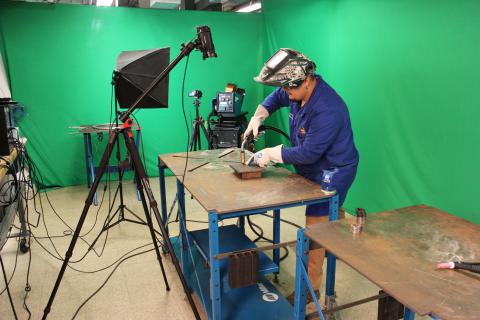
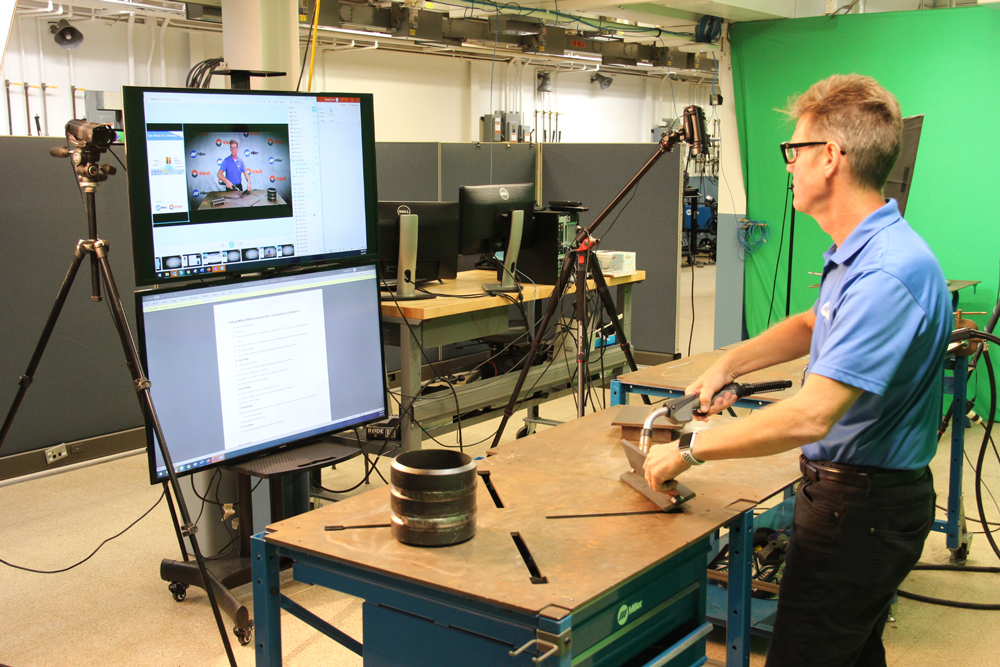
Forced to suspend in-person training programs last year due to the pandemic, Miller Electric transitioned to remote-learning sessions where virtual instructor-led courses provided interaction among participants. 

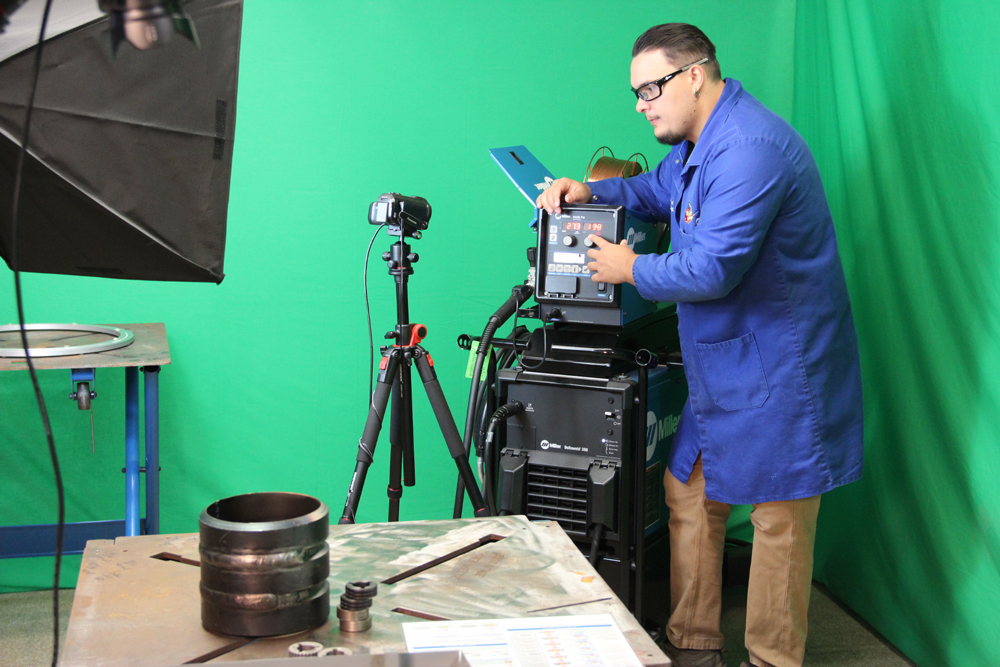
To meet the increased demand for remote instruction, Miller set up training studios in Georgia, Texas, and Ohio, along with three studios at the company’s headquarters in Wisconsin. They primarily use Zoom for training sessions unless a client requires a different platform. 

But as the remote training programs ramped up, the team discovered shortcomings in how they interacted with online students. One of the first shifts made was to change the format of classes. 

“We were mostly doing webinars when the whole stay-at-home order came more than a year ago,” explained John Luck at Miller Electric. “It was PowerPoint training. Later in the year, say around September, we started getting into what we call virtual instructor-led courses. Instead of watching somebody do a slide presentation, they’re seeing a live instructor talk to them. It’s a much more interactive way of doing things.”

At the same time, the Miller team improved the technical aspects of their courses to better demonstrate what’s being taught. Much of this revolved around finding the right camera and microphone setup to bring students the full sensory experience of proper welding techniques. 

“It’s a lot more interesting when you can see what’s going on as something is being welded, versus just a bright light,” said Luck. “But it takes a lot of experimenting—putting a welding lens on a camera, and then getting the right shutter speeds, because there’s a frequency that the arc is running at. We also wanted to give people on the other end some sense of what it sounds like. That’s been a little challenging for us with microphones and noise-cancelling equipment.” 

problem3
Remote training has earned its place as a vital component in Miller Electric’s overall toolbox of training methods. “We’re continuing to invest in our virtual studios,” noted a company source. “We’re looking to add more capabilities as far as better quality, better lighting, better everything to improve that.”

For repair and technician training, the Miller team implemented a unique system that allows instructors to see in real time if the student is performing tasks correctly. Students in these training sessions wear a harness on their chest that holds a camera aimed at the working area in front of them. The camera then interfaces with a computer to send video in real time to the instructor for immediate observation and critique. 

“When we ask a student or technician to show us how to repair something, we can see exactly where their hands are going, what they’re touching or what they’re probing,” said Luck. 

Making all of these changes proved to be challenging at times, but it was well within the grasp of the company’s training staff. “The instructors have a lot of things going on now,” said Luck. “There are various cameras that they’re toggling from one view to the next, collateral that pops up on the screen, poll questions and results, and additional information for students. But everybody has adapted very well to it.”

As the pandemic has eased, demand for Miller’s remote learning programs has dropped somewhat, with many people eager to get back to in-person learning. Nonetheless, Luck feels that remote training will always have a place in the company as a vital component in its overall toolbox of training methods. 

“We think this is going to stick,” said Luck. “We’re continuing to invest in our virtual studios. We’re looking to add more capabilities as far as better quality, better lighting, better everything to improve that.”

SOURCES

–

Miller Electric
millerwelds.com

October 2021
By
David Bellm

Tech Update: Rotors For Track Days

Submitted by jeffreyc on Wed, 09/15/2021 - 14:57


Accounting for heat capacity and thermal stress management, here’s how to select brake components that correspond with different driving styles.

Choosing the correct disc brake setup for a fun day at the track can be confusing and expensive if you use a product that is not fit for the purpose. 

The two most important factors when it comes to disc brake rotors used in extreme applications such as motorsports is heat capacity and thermal stress management. 

Heat-capacity design is a compromise between having enough metal mass in the friction ring to accept and process the kinetic energy transferred into the brake system to decelerate the vehicle and trying to minimize the rotating mass of the wheel assembly (which is unsprung weight). 

Thermal stress management is all about minimizing fatigue to prolong the life of the disc rotor. Regardless of the manufacturer or disc design, gray cast iron will fatigue in motorsports applications. The thermal expansion from heating and contraction when cooling initiates a stress-and-strain cycle that is essentially metal fatigue. It is common practice for professional race teams to discard the disc rotors after a known period, whether it be a certain number of laps or hours in race conditions, to avoid any unpredicted failures due to metal fatigue. 

Rotor Selection

There are several types of rotors used in motorsports. Some drivers like to maintain the factory setup with plain discs, and this is okay. This choice does require more scrutiny in friction material selection to avoid surface glazing and declining friction performance. 

Many brake companies offer disc rotors with slots in them. The purpose of the slots is to evacuate waste material (dust and gas) from the friction surfaces. The slots will ensure consistent friction performance throughout the life of the disc and pad.  

This leaves us with drilled or drilled and slotted discs. 

tech2
Disc Brakes Australia (DBA) manufactures disc rotors with slots, which are designed to evacuate waste material, such as dust and gas, from the friction surfaces. The slots allow for consistent friction performance throughout the life of the disc and pad, according to a company source.

Drilled disc rotors are not recommended for track use of any kind. The drilled holes are focus points where stress and fatigue will accelerate and eventually result in crack formation. Drilled disc rotors have proven to improve braking performance on the street, where normal driving conditions rarely exceed 500 degrees F and stress is not a concern.

In summary, we feel the best choice is slotted rotors wherever possible. All of Disc Brakes Australia’s disc rotors are available in various surface configurations, including slotted. 

Post-production Treatments

There are several post-production treatments or processes applied to disc rotors marketed in the industry, including heat treatment and vibrational stress relieving. Cryogenics is another method of treating the discs post manufacturing. The discs are often sourced direct from an external or unknown manufacturer and processed later by the distributor, who may not have detailed knowledge of the disc rotor’s material properties. The risk of not receiving the desired performance is real. 

tech3
DBA’s 4000 Series and 5000 Series (seen here) disc rotors undergo a thermal stress cycling procedure during the manufacturing process to ensure the metal structure is set for optimal performance out of the box.

DBA’s 4000 Series and 5000 Series disc rotors undergo a thermal stress cycling procedure during the manufacturing process to ensure the metal structure is at its optimum for maximum performance out of the box.

Friction Materials (Brake Pads) 

There are hundreds of different friction materials available for road and track vehicles. Material choice is a personal one, as driving styles differ with confidence and experience. 

It is important to cover some basics when it comes to making the best choice. Many OE friction materials are designed for comfort and moderate performance in normal street applications. Often these are Non-Asbestos Organic (NAO) class pads that are gentle on the rotors and make little noise. These pads are not intended for prolonged high-temperature applications. 

Sintered metal, carbon metallic and semi-metallic pads, as the names suggest, have varying amounts of metal as part of the compound. These pad materials offer a high-friction coefficient and higher temperature resistance. Each of these pads has different performance characteristics, so it pays to do your research.

Final Considerations

Here are some key friction material metrics to focus on:

Initial bite: The friction coefficient upon the first application. 

Peak effectiveness: The point where the material reaches its highest performance. Usually related to temperature.

Release speed: Responsiveness when releasing the pedal.

Modulation: A technique of applying and releasing the brake pedal to effectively decelerate while maintaining maximum control and applying the least amount of stress in the brake system. 

Wear: Wear and tear are critical for product life and cost effectiveness. 

Below are friction material characteristics to consider:

Super Sprints: High initial bite with a peak effectiveness at temperatures of 200 degrees F to 300 degrees F. This may support a late-braking driving style for short sprints. 

Circuit racing 10–15 laps: Moderate initial bite increasing to a peak effectiveness at 550 degrees F to 750 degrees F. This may provide the most effective brake and tire friction at the same time, typically lap number three or four, for strategic, competitive driving. 

Endurance: Moderate initial bite with a very flat peak effectiveness curve from 550 degrees F to 900 degrees F. Typically slightly lower coefficient of friction than the above race pads to ensure longer pad and rotor life. 

Please note: Each person’s driving style is different, and it is the responsibility of the driver to determine which braking products are best suited to their driving behavior. The above information is a guide only to assist the driver in conducting their own research.

Brian Johns is currently Head of Innovation and R&D for DBA. He has spent more than 15 years in various automotive roles across the globe for many of the major OE manufacturers. He also has 20 years of experience in designing and engineering products for defense and high-tech applications, as well as in the consumer sphere.

October 2021
By
Brian Johns