A special PRI-sponsored program at Wisconsin’s Madison International Speedway focuses attention on passing legislation critical to the motorsports industry.
A full night of racing at Madison International Speedway (MIS) took on added importance as fans and competitors were introduced to industry efforts to fight federal policies that threaten the future of motorsports in America.
Through a partnership of MIS and Performance Racing Industry (PRI), the SaveOurRacecars.com Championship Night was staged August 20 at the Oregon, Wisconsin, paved half-mile oval.
“It was highly successful,” reported track owner Gregg McKarns. “A lot of people who enjoy short-track racing were unaware of what’s going on.”
The Save Our Racecars initiative is designed to prevent government overreach targeting auto racing—specifically the Environmental Protection Agency (EPA) promoting a position that prohibits street cars from being converted into race cars. The EPA position also takes direct aim at the sale of aftermarket parts used for those conversions. The EPA claims its authority is drawn from the 50-year-old federal Clean Air Act (CAA); however, it was only in 2015 that officials began interpreting the law to include race car conversions.
PRI, along with SEMA, are working with lawmakers in Washington, DC, to pass the RPM Act, which stands for Recognizing the Protection of Motorsports. The measure (HR 3281) was introduced in the US House of Representatives in May of this year, and within a couple months at least 101 House members from both sides of the aisle had signed on as co-sponsors.
“The EPA’s interpretation of the law threatens race tracks like Madison International Speedway by prohibiting the conversion of street vehicles into vehicles used exclusively for racing,” noted Daniel Ingber, PRI/SEMA’s Vice President, Government and Legal Affairs in Washington, DC. “Congress needs to pass the RPM Act right away so racing enthusiasts nationwide can continue to enjoy motorsports.”
PRI/SEMA has also challenged the EPA in federal court on this question. While the court did not address the issue directly, it did offer positive statements regarding the government’s burden of proof in such cases. Passage of the RPM Act is considered essential to avoiding EPA overreach, and to that end more than 1.35 million letters have been sent to lawmakers urging their support of the measure. Much of this industry backing has been generated by partnerships similar to the PRI-MIS venture.
Raising Awareness
The MIS racing program was an ideal platform for promoting the RPM Act and informing the racers and fans of the PRI/SEMA legislative efforts. The track hosted four classes that night, and three of those divisions involved converted production vehicles.
“These guys are true hobbyists but not necessarily those who would attend PRI,” added McKarns. “Yet, they spend a lot of money in the aftermarket converting street cars into race cars.”
At the entry level, the track hosts 6shooters, a class designed for six-cylinder domestic nameplates. The Bandits are four-cylinder production vehicles, and the MISfitz class is a catch-all division that’s like index racing on the drag strip: The cars can’t lap quicker than 20 seconds.
Fans and competitors at Madison International Speedway in Oregon, Wisconsin, were recently introduced to industry efforts focused on preserving and protecting the future of motorsports in America.
“Probably half that field is production-based,” noted McKarns. “These classes are heavy into wheels, tires, suspension components and, of course, safety gear. There are also some light engine modifications, even though they’re not supposed to.”
Four seasonal champions were crowned that night in front of some 2,500 fans in the stands. The pits were packed with 102 race cars. There were almost 25,000 views on the track’s Facebook page during and just after the event.
“The race was fabulous,” said Tom Deery, an advocacy representative for PRI who worked with MIS to set up the event. “There was some great racing that night, but more importantly, we had a chance to meet and talk to many of the participants who ultimately would be or are affected by the EPA’s overreach. We explained to them the potential of that interference with our business and how it will affect them.”
The PRI-MIS alliance began last year during the COVID-19 pandemic when Dane County officials placed heavy restrictions on outdoor events, a move that affected a total of four area tracks, including a second facility owned by McKarns in nearby Sun Prairie. Despite the lobbying efforts of PRI, racing was shut down in the county until the COVID restrictions were lifted earlier this year.
“Gregg reached out to us as a thank you and asked if we’d be interested in naming one of the races SaveOurRacecars.com Championship night,” recalled Deery. “It was Gregg’s idea, and the origin was probably the work that we did together in 2020 trying to get the tracks open that had COVID restrictions.”
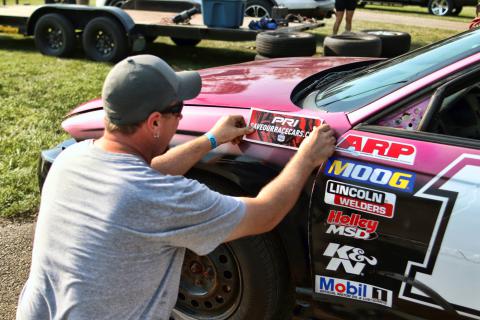
In addition to banners placed strategically at the gates and victory lane, Deery set up a booth to pass out literature and SaveOurRacecars.com decals to the spectators.
“We received handshakes, fist bumps and thank you’s,” said Deery. “We met a lot of people who participated in our letter-writing campaign.”
Deery also spoke at the drivers’ meeting, spending most of the time with racers from the three divisions that will be affected the most by continued EPA actions.
From left, PRI Ambassador Tom Deery and Madison International Speedway owner Gregg McKarns served as key points of contact and information during the recent SaveOurRacecars.com Championship Night.
“They had Super Late Models, but they also had three other classes in which their origins are based on street cars,” said Deery, noting that one of the comments directed at him summed up many of the racers’ feelings: “I had no idea it affected our cars. We’re just the little guys.”
“Now, for the purpose-built race cars, that act doesn’t specifically address their cars,” continued Deery. “Our approach is that, more importantly, it affects the people who manufacture the parts that they use. Whether it’s a company that builds heads or intakes, or ignitions or exhaust systems, each of these steps that EPA takes can impact their business, because they’ve certainly widened their net to include wholesalers, retailers and ultimately the installers. This could seriously affect their business and ultimately affect the purpose-built race car business as well.”
Officials followed the message from MIS by making similar announcements at tracks located in Cedar Rapids, Iowa, and Sun Prairie that weekend.
“We spread the word in the pits, at the tracks and through social media,” added McKarns.
Racer interest in PRI was also quite high, with many asking about the Trade Show’s status and the cost to attend. Some of those in attendance purchased PRI individual and business memberships.
Chief Motorsports’ Steve Dickson, a regular competitor in the Pellitteri Waste Systems Bandits category at MIS, has been racing since the 1980s. “Racing is a release, a stress reliever. I don’t golf, I don’t fish, I don’t hunt; this is what I do,” Dickson said. He also works with the Big 8 Series, the eight-event Late Model tour in Northern Illinois, Minnesota, and Wisconsin.
When Deery asked him if he was aware of the EPA’s potential to target his street-car-converted race vehicle, he was indeed familiar and had a unique perspective on the issue. Formerly serving in roles—tech official, tire seller, and later race director—at Rockford Speedway in Loves Park, Illinois, Dickson is currently Rockton, Illinois’ chief of police. And working in the government, he understands more than most about the delicate and sometimes lengthy process to pass legislation.
The MIS racing program—where three of the four classes featured converted production vehicles—was an ideal platform for promoting the RPM Act and informing racers and fans of PRI/SEMA’s legislative efforts.
“I’ve been in government for many years and understand how laws get created,” he said. “But there’s usually a means to an end, and in almost every case, there’s a law of unintended consequences. Is that what we’re dealing with, or is it a purposeful event meant to destroy part of an industry?
“The EPA is a regulatory agency, and it’s awfully difficult for Congress to oversee those. Basically, they can create their own regulations and fine structure,” he continued. “To me, that’s outside the realm of what we were founded on. We’re supposed to be a nation of laws, and now we’re a country of regulations.”
Dickson understands the importance of making your voice known by asking lawmakers to vote to pass the RPM Act. For those who think one voice doesn’t matter, he believes that it does.
“The people we put into elected offices never hear from us,” he said. “We complain to each other and on social media, but we never contact our elected representatives. They want to hear from us. Send them an email, say whatever your thoughts are, and I guarantee you will get a response 100% of the time.
“So many people say, ‘I’m just one person. It doesn’t matter.’ But send the email. It does make a difference,” added Dickson.
For Ronnie Osborne of Osborne Racing, the RPM Act means everything to his lifestyle. “I don’t know what I would be doing if I wasn’t racing,” he said. “I’ve been going to races for as long as I can remember. My dad, who worked on the safety crew at Madison, has been taking me there since I was a kid. Once I had the time and money, I got my own car for the 6shooters class before moving up to Bandits. My dad’s driving my 6shooter now.”
Osborne drives for and owns the four-car team, which primarily competes at MIS, located about 10 miles from team headquarters in Fitchburg, Wisconsin.
Those on hand for SaveOurRacecars.com Championship Night “learned that PRI is more than just a trade show,” noted PRI Ambassador Tom Deery. “Whether it was the COVID restrictions and now working with the RPM Act—it shows our eyes are on the entire industry.”
“During summer, we’re at the track every Friday, Saturday, and sometimes Sunday and Thursday,” he said. “It started with my family, but the more I’ve raced, the more friends I’ve made. We hang out in the pits and work on our cars together. If somebody has an issue—it doesn’t matter who it is—everybody helps. It’s the atmosphere you like to see: people helping each other out.”
But, as Osborne noted, his summertime racing could be gone for good if the EPA has its way. “As [PRI Track Ambassador] Tom explained it, the EPA’s interpretation doesn’t affect higher-level classes of racing, but affects me, my family and our cars at our local track.
“Local tracks are important,” Osborne continued. “If you look at top-tier drivers like those in NASCAR, IndyCar, wherever, they all had to start somewhere. I don’t know if there would be any NASCAR if it weren’t for grassroots racing. Sure, there are simulators, but those only teach you so much. There’s nothing like the experience of the track.
“This is why we have to get more people into racing. The more people who join racing, the harder it’ll be to cancel it, if you will,” he concluded.
“Certainly, the folks in attendance tonight heard about the RPM Act and SaveOurRacecars.com and what our goals are,” summed up Deery. “From a broader sense, people learned that PRI is more than just a trade show. Whether it was the COVID restrictions or our work with the RPM Act, it shows our eyes are on the entire industry.”
PRI Associate Editor Laura Pitts contributed to this report.
Kyle Tucker’s career path has followed all the twists and turns of the road courses where his companies’ products appear, from racer to engineer to business owner. Here he shares some of his career highlights, from racing in the Baja 1000 to being the only two-time SEMA Battle of the Builders winner.
Kyle Tucker is a good example of how motorsports and performance can have a profound impact on one’s life and direction. A native of Missouri, Tucker was exposed to auto racing at an early age and was immediately smitten with all the elements of motorsports: the sights, the sounds, the sensations. In his teens he raced stock cars and midgets and aspired to become a professional racer.
Fate—and the realities of life—would intervene. With guidance from a caring mentor, well-known Missouri car owner and track promoter Ray Marler, Tucker changed his direction to pursue an engineering degree with the ambition of spending his life working in the performance industry. Upon graduation Tucker relocated to Detroit and joined General Motors as an engineer and test driver, and it appeared his path was set.
Tucker was soon exposed to road racing and autocross, and his destiny was forever altered. He began working on vintage muscle cars—specifically, a 1969 Camaro—and designed and built a number of pieces that dramatically improved the car’s performance. As others took note and wanted to buy his parts, Tucker’s dreams of engineering morphed into company ownership when he launched Detroit Speed and later GearFX. The two companies would grow to become leading entities in the performance marketplace.
After moving his operations to Mooresville, North Carolina, Tucker’s visibility widened when he and his Detroit Speed colleagues captured the inaugural SEMA Battle of the Builders competition in 2014. They claimed the title again in 2018 and remain the only repeat winners of the coveted contest. In 2020, Detroit Speed and GearFX were acquired by Holley Performance Products, but Tucker continues to serve as president of both entities. He is also a member of the BFGoodrich Performance Team and continues to pursue a limited amount of racing competition, including the Baja 1000.
Industry Insights recently visited with Tucker to get his thoughts on his career path and various issues that are impacting the performance industry.
PRI: Let’s begin by talking about the two companies you’ve focused on these past few years: Detroit Speed and GearFX. Give us a quick synopsis of what each does.
Tucker: We built the company around first-generation Camaros and kind of expanded around that. That was the first car I had, and built and designed a lot of parts for, and that’s where it started. I was heavily influenced by the Penske/Donohue era of Trans-Am road racing and loved Camaros. At the time street rods were very popular. I wanted to build a car that was highly detailed but very functional. That was about the time when Pro Touring [began], and as I designed some parts and started building cars, the company was started in 2000 to get some cash flow. Detroit Speed is there to provide modern designs and manufacturing techniques to create parts for older muscle cars, to transform them into a car that is fun and safe and reliable and easy to drive. That goes across many platforms today.
GearFX is kind of a similar mentality to Detroit Speed, and is kind of the upper end for the customers who really appreciate good quality. There are a lot of gear builders who build performance rear gear sets and transmissions, but our goal at GearFX is to, well, it’s kind of like a small block Chevy. You can take parts out of any catalog and build an engine that runs pretty well. But if you size and match and set tolerances, it can run a lot better. That’s what GearFX does. We strive to build an upper-end gear set that is quiet, which is important. Today the lines get very blurry between performance/racing and street car people. People want the performance, but they also expect it to be consistently quiet. I think that is an underserved area of the market. All these race builders building gear sets have not focused as much on the quiet, and that’s what we have strived to do. Even though we still build NASCAR gear sets for teams, it’s that mindset that still goes into a street gear as well.
Detroit Speed founder Kyle Tucker has built an enviable career that combines his engineering background with his love of racing and vintage muscle cars.
PRI: You have an interesting path, from farm kid to college student to aspiring racer to GM employee to company owner. It’s one of those stories where it’s probably unlikely you could have plotted out this path from the beginning.
Tucker: You know, that’s right. It just came about because I’m such an enthusiast for anything that goes fast and has four wheels and tires. It actually goes back a lot to Ray Marler, who is an engineer by trade. When Ken Schrader went down to the Carolinas to race with NASCAR, Ray started getting bored because he didn’t have a Silver Crown car anymore. I was working part-time and was tapped out; I couldn’t afford to build even a competitive go-kart. Ray wanted to buy a car to race locally on Saturday night. He said to me, “I’ll buy it and support it and teach you how to race, but you have to maintain it.” What high school kid who wants to race could turn that down? So we did that and tore up a bunch of his cars, tires and wheels that first year when I was 15. The next year we won a lot of races and kept the car clean, and that was my entire focus.
I wanted to race, and we were getting more and more competitive. I also started driving a midget for a guy in St. Louis, and Ray helped me a little bit with that, too. I’ll never forget, we crashed one night in turn four and were walking back to the pits with my helmet in one hand and the steering wheel in the other—that’s about all that was left of the car—and Ray was walking beside me. He said, “You know Kyle, you’re a smart kid and you’re a pretty good racer, but you might want to rethink this racing thing.” I thought about it for the two hours driving home and figured maybe I should think about things. My mom and dad wanted me to go to school, and I decided if I studied engineering, I could figure out how to make a car go faster. And be a better racer, too.
PRI: When did you become really immersed in the muscle car scene? Was there a moment when you began to feel like there was a place for you in that industry?
Tucker: I grew up in Southern Missouri, and with all the dirt tracks there, you can race three or four nights a week in the summer. That’s all I knew. As I got into engineering school, I couldn’t race dirt tracks as much, and I was fortunate enough to get a college co-op position to help pay for school and get some experience at GM. As I did that and was spending more time in Michigan, there weren’t a lot of dirt tracks up there. I got into a clique of guys who did some local road racing, and I really liked doing some of that. I wanted to learn about it. Because I was at GM and was doing some test driving and working on the testing of vehicles, I got into road racing and autocross. That’s how it started.
In 2014, Kyle Tucker and his company won the inaugural SEMA Battle of the Builders competition with this 1969 Camaro. They won again with a different Camaro in 2018, making them the event’s first repeat winners.
PRI: Leaving GM to strike out on your own must have been a leap of faith, so to speak. Was that how it was? Was there an internal debate on what you wanted to do?
Tucker: It was clear to me that I was getting busier and busier on the side, designing parts and working on people’s cars. And working on my car. I didn’t really think about it being a company, it was kind of a side hustle. I could work on other people’s cars and design a few parts on the side. It quickly took off, and I got to the point where I was busier at home. I started to see the potential, and it was almost like my day job was getting in the way. I wondered if I could make something of it. I was in my late 20s and figured if I was ever going to do something like this, now was the time. My director at the GM Proving Grounds was a car guy, and he knew my situation. We’d always swap car stories. I went in to tell him what was happening and ask for a leave of absence. “I might not come back, but if it doesn’t work out in six months would you give me my job back?” He agreed and offered me a one-year leave. He was confident that I could make it work. I took a year’s leave of absence, and I never went back.
PRI: To transition into that role, it’s one thing to know the engineering, know the cars, even know your market…but running a business is a very different world. Was that part of the educational process, owning your own business?
Tucker: It sure was. As I took my leave of absence, I had a two-car garage at home and later built a slightly larger garage in the backyard and outgrew it. Then I started to get part-time employees and then full-time employees, I think I had two in the backyard with me. I still wasn’t paying myself but was paying my employees. But we kept getting more jobs in, and I quickly realized that I didn’t know anything about business. I’m an engineer and a racer, and it was always the school of hard knocks to learn the business side. If there was anything I did right, I hired people who could take care of that side of the business. I learned from them on the business side, whether it was accounting or marketing or social media. I guess I’ve been blessed that I picked the right people to help me with the things I didn’t know how to do.
PRI: You eventually moved your operations to North Carolina. What led you to make that move?
Tucker: In Detroit at the time, I had moved from the backyard shop because we were out of space. I leased a very small space from Scooter Brothers, who had FAST Fuel Injection in Brighton, Michigan. He leased the whole building and the middle suite was available. In a year I outgrew that space. I kept looking for a space I could buy. I knew [lack of] space was limiting what I could generate in revenue. Detroit was still booming at that time, and I could not afford to buy or lease a bigger space because the market was just too high in commercial real estate.
I had built a couple of cars for a collector in North Carolina, and he told me that Mooresville would be a great place for me. The more I came down to see him to deliver a car, the more I liked North Carolina. It was more like the climate where I grew up in Missouri, more like it than Detroit, for sure. So he took me around Mooresville. His friend had a race shop in Mooresville, and I looked at the building and thought, “Oh my gosh, I can’t afford something like this.” But it would be ideal for my business. So I talked to a banker in Charlotte and scraped together everything I could for a down payment and bought the building. Then we leased it back to the race team that was in the shop at the time. We sold our houses in Michigan, the employees and I, and the next year we moved down to that building. That’s where we still are. I bought some adjoining land and have added on some, but that’s where we’re at.
The launch of Detroit Speed coincided with the rising popularity of Pro Touring cars, providing a healthy market for the company’s robust performance parts.
PRI: The SEMA Battle of the Builders has become a high-profile deal, and you won the first one in 2014 (and again in 2018). How did winning the Battle of the Builders impact you and your company? Was it a milestone?
Tucker: Yes, it definitely helped us. Give credit to SEMA and the people involved who produced that and made it a big deal. It’s really one of the awards, if you’re a car builder, you shoot to win that award. I wouldn’t say that it specifically helped our business from a percentage perspective, but it increased the awareness of our brand. We’ve been fortunate to be more selective the last seven or eight years about who we want to build cars for, but it definitely helped raise our level in terms of the caliber of cars we build and the customers we work for. That was our biggest realization. To be able to win it twice was a really big deal.
PRI: The muscle cars of the 1960s and 1970s, to be honest, weren’t exactly built for things like autocross. But I’m guessing that’s the point: develop pieces that allow a car to perform far beyond what it was designed for. Is that part of what makes autocross so interesting?
Tucker: It is. I feel like, starting with the first-gen Camaro, we would go to a road course to develop and test our parts on a track day or autocross day. I remember being laughed at when I pulled up to the line in a 1969 Camaro. Yes, it’s a ’69 Camaro with bigger brakes and bigger tires, but people still thought it was the ’69 Camaro they knew. When you ended up smoking everybody there, or passing BMWs or Corvettes that you shouldn’t pass, it got everybody’s attention. That’s what drove me, that experience. To be able to prove you could do this with the right parts and the right dedication. That’s part of our key: People can buy our parts and they are very competitive as soon as they put the parts on. They are fully developed and ready to go.
Kyle Tucker is a member of the BFGoodrich Performance Team, which puts him behind the wheel for a number of off-road events, including the Baja 1000.
PRI: Let’s talk about technology in terms of the autocross and muscle car performance industry. What’s on the horizon? Are there technologies coming that are going to reshape that segment?
Tucker: Chassis and suspension technology has always trailed behind tire technology, and tire technology continues to evolve every year, whether it’s circle track racing or road racing or street performance. That’s always been the carrot for somebody like me, someone who races. We have to chase that technology, and I still see that leading the way for people in the chassis and suspension world. Beyond that, I also see things like electronic differentials, electric steering, all of that is OE technology that if you’re paying attention in the aftermarket, is becoming more and more available and user-friendly to put on the older cars. And now we’re talking about electric-powered vehicles.
I think that’s probably the next big thing, electrifying some of these cars. You think about a ’69 Camaro, it’s very mechanical, and it does things that are fun and things that are not so fun. That’s kind of the spirit of the older Camaro. But it’s amazing what you can put into those cars that retain the look of that era yet have a supercar level of performance. What’s coming in the next five years in terms of technology? Traction control, ABS, EV power…all will be available to us.
PRI: Yes, my ’69 Camaro is analog. Definitely not digital.
Tucker: (Laughing.) That’s exactly right.
PRI: I read recently that you expressed some interest in getting involved in land speed racing at Bonneville. Has that interest led to any specific projects at this point?
Tucker: Not yet. But it’s still my interest. George Poteet invited me to come out and hang out with the Speed Demon crew two years ago, and I was supposed to get into the ’Cuda that George built that set all kinds of records. The day before I showed up, they broke both the motors they had, so I didn’t get into the car.
PRI: Is it still on your list?
Tucker: It’s still on the list. It’s kind of like Baja, I’ve loved racing in Baja. Bonneville and Pikes Peak are two things I still want to do.
PRI: It was interesting to discover that you’ve raced the Baja 1000 many times. That is a unique, completely different type of racing. How did that come about?
Tucker: I was really fortunate. If there has been any “break” that I got in my driving career, that was it. Ray Marler and the midget deal, and the BFGoodrich connection were the breaks I got. When we were designing some of our muscle car parts, we were limited on what tires could be used for the suspension we ran. I had a great field marketing manager at BFGoodrich stop by the shop one day. He had heard about our projects and was aware of what we were trying to do performance-wise. He stopped in to look around, and he asked what they could do for us. I described a tire we really needed for this market. Long story short, they ended up making that tire, and it really took off well.
BFGoodrich has what they call “influencers” today, but back then it was called the Performance Team. I was invited to join their Performance Team, which was basically anybody BFGoodrich sponsored and was leading their segment in industry or racing. It was a partnership. I’ve been involved with the Performance Team for over 11 years, and it’s made up of asphalt guys, road racers, rock crawlers, autocross, off-road racers, everything.
BFGoodrich always enters a car in the Baja 1000 and takes a tire that needs to be tested and developed. They get a lot of feedback from the real world of Baja. I was fortunate to be invited to do that one year, and we ended up winning. I was hooked on it, because it was a mix of everything I had learned to do in a car. Growing up on dirt tracks, to controlling the car on gravel and dirt, to autocross. It’s a driving technique where you’re going high-speed on a gravel road, mixed with dirt racing, and slow speed picking through dry creek beds. Your eyes are always scanning way ahead on the track, or up close like you do in autocross. It was a mix of everything I love to do. And I love the endurance aspect, and the competitiveness, the wheel-to-wheel part of it. It checked all the boxes for me, and I still love doing it.
PRI: You did some short track racing in Late Models and midgets. For most people who are involved in racing, they never really get that out of their system. Do you ever still get the urge to go short-track racing?
Tucker: (Laughing.) I sure do. I go to bed almost every night watching streaming of short-track races, or watching sprint cars on YouTube, and that’s probably one of my only regrets: Not getting in a winged sprint car and having a chance to be good at it. I did get in one a couple of times. My employee Andy Stapp got me in one a few years ago just to make some slow hot laps. But it’s something I always wished I would have done. And I can definitely attest that it’s not out of my system. I still love the midgets. But I also know I’m 51 years old and have some responsibilities, and I probably shouldn’t wake up in the hospital on Monday morning wondering what just happened.
PRI: A lot of people in the performance industry express some concern that not enough young people are getting involved in our industry. What’s your take?
Tucker: I think it is a problem. It’s something I believe strongly in and work within our community and with SEMA to do anything I can to help young people get into racing or get into cars. Or just into our industry in general. I see a big gap, even from the employer side. When you and I went to school, we could take shop class and learn to build a little toolbox tray or whatever. They don’t even offer that anymore. College is not for everybody, and it’s hard to hire enough skilled welders, or even entry-level welders today, let alone CNC machinists.
When I was saving up to get a race car, or a street car, you didn’t have to worry about buying a $1,000 phone. I was worried about buying an $800 car of some kind that I could race or fix up. There’s a lot of competition for kids to choose between a phone that has a potential level of infinity in terms of what you can do with it, versus saving up to get into a car when you’re 16.
Detroit Speed and sibling company GearFX were recently acquired by Holley Performance Products. But Kyle Tucker remains president, infusing the brands with his unique passion for performance.
PRI: What’s your take on electric vehicles in the performance segment? Specifically, what do you hear from your customers and colleagues? Many in our industry don’t view EVs as an opportunity, they see them as something to be concerned about. Are EVs an opportunity or a concern?
Tucker: They will definitely be both. For example, Chevrolet is working on taking some of the components from the Bolt EV and trying to make a crate motor concept. It’s not for the do-it-yourself person yet, but I think that will happen. And I hope that the ARPs and Clevites and Eagle rod companies don’t go away. They could only go away if our government basically put a stop to the emissions of some of the aftermarket vehicles. It’s getting tougher and tougher every day to get past that. I really hope within the next 10 to 15 years that does not happen, because I feel like we’ll always have the need for the hot rod Model A to the 1955 Chevrolet to the ’69 Camaro with a small block or big block. And we’ll also have people who want that with electric power. It’s an exciting time to have all those options, but I agree, it’s scary if legislation clamps down and doesn’t allow us to have gas-burning cars.
PRI: Let’s talk about the overall business climate in America. What’s your biggest concern right now for the future of the performance industry?
Tucker: Definitely the two things we mentioned: Bringing enough young people into the industry, and government legislation. If they crack down far enough to not allow us to use non-emission-control vehicles on the street—let alone racing—those are my two biggest concerns right now.
PRI: Your company was recently acquired by a larger entity. How did that process come about?
Tucker: Holley Performance Products purchased Detroit Speed last year, and GearFX as well. They came to us about five years ago, and I said, “No,” and they came to me again last year. I know Tom Tomlinson, their CEO; we’re good car-guy friends. He started calling me, and I said we still aren’t for sale. But maybe we could talk about how we might work together. Tom’s a smart guy, and a smooth guy, and he suggested we just set up a weekly call and start talking. About five or six weeks into those calls we started to talk about a possible transaction, and it just came together and made sense.
For me now, not being the owner and the general manager of two operations, I’m in transition where I’m helping them with some new product engineering and development, and still doing some driving to test development parts. But I’ve also started to work on my personal projects that I had set to the side. Building cars and trucks I’ve wanted to build along the way. Now I have a little more time to do it.
PRI: Kyle, we appreciate you taking some time to talk with us. All of us at PRI wish you and your colleagues the best in the coming months.
Tucker: Thank you, Dave. I’ve enjoyed talking with you.
The International Council of Motorsport Sciences (ICMS) has announced the council is accepting nominations for its Board of Directors.
The ICMS Board of Directors is made up of nine individuals that each serve a three-year term. Every year, there is an opportunity for three ICMS members to be elected to serve on the Board.
Nominees will be considered based on their ability to help advance the mission of ICMS, which is to inform the international motorsports community, different scientific and medical disciplines, designers and constructors, and the general public of the latest innovations and advancements in scientific research on human performance and safety in motorsport.
Interested parties should email Rob Seal, M.D., current Chair of the Board at rseal@ualberta.ca, and Tom Weisenbach, the ICMS Executive Director at tom@theicms.org, with a copy of your resume and the signature of two current members of the ICMS supporting your interest. All interested must notify Dr. Seal and Tom no later than 5 p.m. EST on September 30.
The Executive Committee will review all applicants and, once approved, the individual will be informed and added to the ballot that will be sent to all ICMS members.
John Force Racing has hired Ted Van Zelst as chief commercial officer (COO). In this new role, Van Zelst will be responsible for creating new partnerships, enhancing business-to-business relationships with existing partners, and developing successful activation.
“Having the opportunity to work with John Force Racing, the biggest name in drag racing and one of the biggest names in all of motorsports, is an honor,” said Van Zelst, who will be based out of the Brownsburg, Indiana shop.
Van Zelst joins John Force Racing with 25 years of experience, most recently serving as the president/CEO of Zeker Solutions, a consulting agency. He has also held senior leadership positions with NASCAR, the Detroit Pistons, WWE, and the New York Islanders.
Danny Frye Sr., Jimmy LaManna, Ken Nichols, Fred ”Jiggs” Peters, Lowell Sachs, and Art Shanoian were announced as the latest inductees into the National Midget Auto Racing Hall of Fame. The announcement was made during the USAC National Midget Series event at Angell Park Speedway last weekend.
Frye Sr. was a two-time SLARA Champion who started in the 1940s on the tough Oklahoma-Texas. A great benefactor to midget racing, he helped many up-and-coming young drivers.
LaManna was a three-time Rocky Mountain Midget Racing Association Champion, taking the crown in 1961, 1964, and 1965, driving for Sam Rodriguez and Harry Conklin.
Nichols was the 1973 Bay Cities Racing Association Champion known for his dominance on the pavement. He drove for some of the top owners of his day, Bob Rosen, Lenny Gonsel, Art Shanoian, and the Zarounians.
Peters was the 1961 American Racing Drivers Club (ARDC) Champion. He was known for being one of the best long-distance drivers, twice capturing the Trenton 250-miler and 100-milers at Langhorne and Williams Grove. After retirement from driving, he became an official in the sport and an ambassador with numerous historic racing groups.
Sachs was a six-time driver champion, three of which came with the United Racing Association’s blue circuit in 1962, 1963, and 1964 and three with the United States Racing Club (USRC) in 1967, 1968, and 1970.
Shanoian, the 1973 car owner champion with BCRA, competed across four decades. His orange No. 17 Benson Offy was synonymous with winning. He was also known more as a win chaser than a points chaser. He is already in the BCRA Hall of Fame along with Calistoga and Clovis Speedways Halls of Fame.
The 37th annual Luncheon-Induction Ceremony will be held on Friday, January 14, 2022, in conjunction with the Chili Bowl Nationals in Tulsa, Oklahoma. The event will be held at Fair Meadow Hall on the Tulsa Fairgrounds adjacent to the Expo Center hosting the Chili Bowl. In addition, plaques will be on permanent display in the National Midget Auto Racing Hall of Fame at Angell Park Speedway (Sun Prairie, Wisconsin).
VP Racing Fuels, the provider of performance fuels, lubricants, and additives, has announced the expansion of its product line with Behrent’s Performance Warehouse in Florida, New York.
“Behrent’s Performance has been an amazing partner for VP since 2009,” said Billy Rieck, Business Development Manager for VP Racing Fuels–Northeast. “With the expansion of our product lines at Behrent’s, we look forward to many more years of being a part of their growth.”
Customers may now purchase an expanded selection of VP Racing Fuels, including several grades of motor oils and lubricants, through Behrent’s Performance Warehouse at 38 Meadow Rd., Florida, New York 10921, or behrents.com/brand/vp-racing-fuel.asp.
The NASCAR Hall of Fame and NASCAR have announced the inductees for the Class of 2021, the 12th class inducted into the program since its inception in 2010. The first class with three members instead of five comprises Dale Earnhardt Jr., Red Farmer, and Mike Stefanik (more on the inductees below).
• Dale Earnhardt Jr.: A third-generation NASCAR champion in a family synonymous with the sport, Earnhardt Jr. is among the most popular drivers in NASCAR history. In addition to his 26 Cup Series wins and two Xfinity Series championships, Earnhardt Jr. served as the face of NASCAR for many years with 15 consecutive Most Popular Driver awards.
• Red Farmer: Part of the original Alabama Gang, Farmer’s exact win count is unknown – but it’s more than 700 and counting. Named one of the 50 Greatest Drivers in NASCAR’s first 50 years in 1998, Farmer’s immeasurable passion for the sport has kept him racing for decades, even as he approaches 90 years of age.
• Mike Stefanik: Atop the list of all-time NASCAR championships with nine sit two men: NASCAR Hall of Famer Richie Evans, and Mike Stefanik. In 2003, Stefanik was named one of the Modified Tour’s 10 Greatest Drivers, and he holds the all-time series record in wins, poles, top fives, and top 10s.
The induction of this class brings the Hall’s total number of racing legends to 58. Additionally, Ralph Seagraves will be honored with the Landmark Award for Outstanding Contributions to NASCAR.
The Class of 2021 Induction Ceremony will take place in Charlotte on Friday, January 21, 2022, as part of a three-day special program set for Thursday, January 20 through Saturday, January 22. The Ceremony was originally scheduled for February 5, 2021, but was postponed.
“We are thrilled to celebrate these legends’ significant accomplishments and contributions to NASCAR alongside their families, friends, and fans,” said Winston Kelley, Executive Director of the NASCAR Hall of Fame.
Tickets to the Class of 2021 NASCAR Hall of Fame Induction Weekend events go on sale to the general public on Thursday, October 7 at 10 a.m.
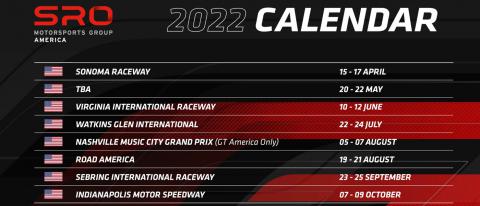
The SRO America Series has finalized its 2022 schedule, which visits some of the most iconic road courses in North America.
In 2022, the Fanatec GT World Challenge America powered by AWS will contest its fourth full season as part of SRO Motorsports Group.
Sonoma Raceway retains its position as season opener, with the opening event set to run on April 15–17. The second round of the campaign is planned for May 20–22, with the location to be confirmed at a later date. Next up, VIRginia International Raceway will stage its annual contest on June 10–12.
Watkins Glen will host its race weekend on July 22–24, moving earlier in the season from its traditional Fall date. The only divergence between the series comes on August 5–7, when GT America powered by AWS breaks rank to join IndyCar on the streets of Nashville, forming part of the Music City Grand Prix.
All four categories will reunite at Road America on August 19–21, while Sebring International Raceway will host the series down in Florida on September 23–25. The season will conclude when Indianapolis Motor Speedway plays host on October 7–9, as a part of the Indianapolis 8 Hour.
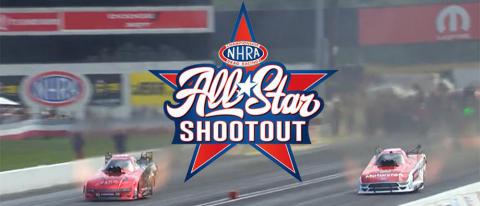
For the first time in four seasons, the NHRA will host a specialty race amongst the stars of the NHRA Camping World Drag Racing Series nitro categories. Fans will be treated to two NHRA Allstar Shootout events in 2022, at the Amalie Motor Oil NHRA Gatornationals, March 10–13, and the prestigious Dodge//SRT NHRA U.S. Nationals, Aug. 31–Sept. 5.
The NHRA Allstar Shootout events will feature competition amongst the top eight NHRA Top Fuel and Funny Car drivers in the world. The shootout will utilize a call out format with the No. 1 seed getting their first choice of opponent.
The first shootout of the season will be the Top Fuel NHRA Allstar Shootout at the 53rd annual Amalie Motor Oil NHRA Gatornationals, in Gainesville on Saturday, March 12. The eight-car field will be set based on a combination of season end and qualifying points at the 2022 Lucas Oil NHRA Winternationals and NHRA Arizona Nationals.
The Funny Car class will have their Funny Car NHRA Allstar Shootout at the 68th Dodge//SRT NHRA U.S. Nationals in Indianapolis on Sunday, September 4. Drivers will gain points towards the shootout from the 2021 Dodge//SRT NHRA US Nationals until the event before the 2022 Indianapolis event.
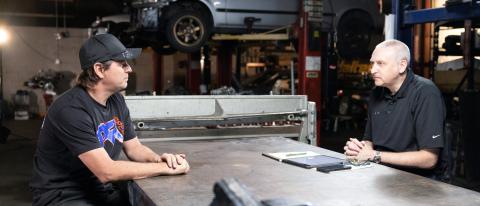
(Left) Brent Leivestad, owner of PFI Speed and Dr. Jamie Meyer, president of PRI (right)
As the Environmental Protection Agency (EPA) targets and increases enforcement against automotive aftermarket companies through its National Compliance Initiative, the federal agency is harming legitimate businesses in the motorsports industry. Despite the EPA’s nonbinding, informational claims that it is not targeting aftermarket companies that produce parts for dedicated race cars, the EPA continues to pursue cases based on supposition, impose inordinate monetary fines, and pursue legal actions to the contrary.
Recently, the EPA issued a fine against PFI Speed, a small speed shop in Colorado, for selling just 37 Hondata S300s over a two-year span. The fine was issued after company owner Brent Leivestad complied with an EPA inquiry for details about the company’s sales. Without any other contact from the EPA, Leivestad was shocked to receive a letter accusing the shop of selling illegal products. The letter included an $18,000 fine that, if not paid within 30 days, could increase to as much as $180,000.
“I was dumbfounded. I couldn’t even believe it,” said Leivestad. “I am a speed shop and sell race parts—I didn’t know that was wrong. I didn’t understand the basis of the EPA’s claim, I didn’t go in front of any trial or talk to anybody from the EPA, and the threat of ‘settle and pay within 30 days or else’ felt like a real shakedown intended to deny my rights.”
To protect the motorsports industry against further EPA overreach, PRI is calling on the racing industry and enthusiasts to unite and urge Congress to pass the Recognizing the Protection of Motorsports (RPM) Act. The bipartisan bill will clarify that it is legal to convert street vehicles into dedicated race cars, and that businesses can legally produce, market, and install racing products.
“There are thousands of legitimate motorsports businesses that are at risk of EPA overreach,” said Dr. Jamie Meyer, Performance Racing Industry (PRI) President. “The EPA is putting these businesses—which are typically small, home grown, less sophisticated shops—in situations where they have to take on the full might of the federal government. The EPA is doing nothing to validate its enforcement efforts, and these small businesses are left with little choice but to comply.”
The EPA, which is responsible for enforcing the Clean Air Act (CAA), a 1970 law that regulates motor vehicles on streets and highways throughout the United States, has been fining businesses such as PFI Speed for producing, selling, and installing race use-only products. The products are often used on vehicles that began as street cars and were subsequently converted into dedicated race cars that are trailered to and from the track, and never driven on streets or highways again.
The CAA only applies to vehicles driven on streets and highways, and the EPA contends that it is not targeting race-only vehicles. However, the EPA has pre-classified many motorsports products as illegal and is issuing fines without investigating the circumstances. Companies selling these products are presumed guilty by the EPA, regardless of the product’s use.
“The RPM Act must be passed into law to provide the racing community with certainty and confidence in the face of EPA threats,” said Meyer. “Without the RPM Act, businesses will shut down and the entire motorsports community will be severely impacted. It’s time for the motorsports community to push back and protect our racing rights.”
Leivestad agreed: “I’ve been doing this for 20-plus years, and it sounds like the EPA is trying to put us out of business. We need to get behind the RPM Act and get it pushed through now, more than ever.” Leivestad shared his full story with Meyer in a 30-minute interview available here: https://youtu.be/lpPgY7S3E2g.
Additional information about the RPM Act, which was recently introduced in the House of Representatives and is expected to be introduced in the Senate soon, can be found at SaveOurRaceCars.com. Motorsports businesses and enthusiasts are encouraged to contact their legislators and urge them to pass the RPM Act to clarify that it is legal to convert street vehicles into dedicated race cars used solely on the track.
 MEMBERSHIP LOGIN