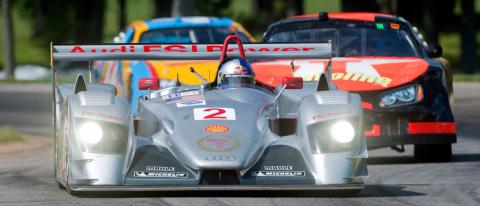
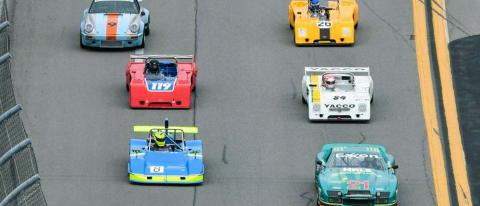
Officials from the Sportscar Vintage Racing Association (SVRA) has announced a 17-race schedule for 2021.
Next year's schedule boasts 17 SpeedTour race weekends, a record number in SVRA’s 42-year history. New to the calendar are Charlotte Motor Speedway, Homestead-Miami Speedway, Brainerd International Raceway, and Utah Motorsports Campus.
The schedule also includes an unprecedented number of West Coast events starting with Auto Club Speedway in February. Returns are also scheduled after a three-year hiatus to Sonoma Raceway, WeatherTech Raceway Laguna Seca, and Portland International Raceway. Most races will be live-streamed on the SVRA app.
The schedule is designed to allow racers a single tow between tracks within the same region on successive weekends. The approach provides SVRA members with a convenient and economical way to plan a vacation road trip over two weekends. "Single Tow" weekends begin in February with Sebring International Raceway and Homestead, in March with Charlotte and Road Atlanta, and then again between Laguna Seca and Sonoma in April.
The Brickyard Invitational, helf since 2014 at Indianapolis Motor Speedway, is "on hold" due to fan attendance uncertainty.
For more information and the complete schedule, visit svra.com.
Officials at the World of Outlaws and The Dirt Track at Charlotte have announced that the Can-Am World Finals, initially scheduled for November 5-7, has been postponed to 2021. However, the two premier dirt racing series will still end the 2020 season at The Dirt Track at Charlotte with a four-day event. The World of Outlaws’ Last Call featuring the World of Outlaws Morton Buildings Late Models is set for November 4-5, and the World of Outlaws NOS Energy Drink Sprint Cars is set for November 6-7.
“Unfortunately, the current restrictions make it impossible to have the world’s three premier racing series in the Pit area together,” said World of Outlaws CEO Brian Carter. “But if any year needs to end with a bang, it’s 2020. As frustrating as 2020 has been, we’re going to end it in spectacular fashion. All dirt roads still lead to Charlotte.”
Due to N.Y. State travel restrictions, the Super DIRTcar Series will not participate.
Limited two-day Late Model and Sprint Car event tickets and Pit Passes will be available on worldofoutlaws.com beginning October 20 at 9 a.m. ET. Single-day passes, if available, will go on sale on October 28.
Current Can-Am World Finals ticket holders will have the first opportunity to secure tickets to the 2021 World Finals or elect to receive a full refund.
A proactive approach has helped these motorsports companies not just survive, but prosper amid the COVID-19 pandemic.
Can the racing industry really enjoy success through a pandemic lockdown? It seemed counter-intuitive and caught us by surprise at first. But the more we spoke with motorsports companies around the country, the more good news we heard—record sales, double-digit growth, etc.
Those anecdotal success stories prompted us to dig deeper and find out what exactly companies were doing to not just keep the doors open and the lights on, but to prosper under these uncertain conditions.
Our first report on these success stories ran in the September 2020 issue. As the trend continued, we reached out to learn more about what measures racing companies were taking and what strategies they were pursuing, believing that their practices could inspire others in the industry. While the companies we spoke with vary in what they offer to the racing community, they all shared a proactive attitude when it came to facing the pandemic’s consequences. What we heard from Bob Scheid of McLeod Racing and FTI Converters in Anaheim, California, was typical of the approach these companies took.
Many performance aftermarket companies, such as McLeod Racing and FTI Converters in Anaheim, California, have done well during the pandemic. But it hasn’t been easy. “At a time when toilet paper is hard to find, imagine getting specialized components,” said a source at McLeod.
“The simple strategy of not letting our foot off the gas and staying proactive in every facet of both of our companies led to increased success during this time,” he explained. “No area of our product mix isn’t seeing double-digit growth. When there is change, there tends to be disruption. We focused everything we did on making sure that we did not have disruptions. We looked to tear down roadblocks and keep our customers supplied with the best quality products, never losing sight of our world-class service.”
CUSTOMERS, FIRST
The suspension of racing during the pandemic’s first few months affected the industry unevenly. Venue operators and those who rely on selling fuel, tires, and other consumables took a hit. Parts manufacturers, on the other hand, saw an increase in demand thanks to what Randy Gillis of Racetec Pistons in Huntington Beach, California, called the “COVID-19 stay-at-home policy.”
Said Gillis, “Those who can’t race yet are working on having their cars better prepared for the day when it does happen. That much-needed time to focus on projects positively impacted our sales across the board. Our workforce has been expanded accordingly to meet these increased demands as we strive to minimize lead times so important in our industry.”
Trevor Hobson of CVF Racing in New Prague, Minnesota, said his company “has seen about the same increase that our industry counterparts have been seeing—around 45% compared to last year at the same time. Customers are now working at home and don’t have a commute, so they’ve put some hours back in their day and spend that time working on projects that have been neglected for a few years—or decades.” Those customers also face “a lack of things to do,” Hobson added. “Concerts and sporting events have been canceled, restaurants were shut down, so customers were taking time and funds that were earmarked for entertainment and putting them toward their car.”
DEALING WITH IT
As a division of an international company, MAHLE Motorsport in Fletcher, North Carolina, first saw reports about the coronavirus back in January, said Joe Maylish. “We started getting feedback from our various entities around the world on how they were dealing with it,” which helped the US division plan accordingly. “Management was really prepared,” he said. “There was no panicking. It was just real steady. ‘This is our plan, get through it week to week.’ That was ultimately the most important thing, to stick to our game plan and produce product.”
Employees who didn’t have to be on site worked from home. (“I can’t even count how many Zoom meetings I’ve had,” Maylish said.) When many returned to work in June, employees found that the MAHLE Motorsport facilities were different. Workers and offices were spread out, and all were supplied with masks and hand sanitizer. “MAHLE’s focus on employee safety and constant discussions on how to operate during the pandemic have led to success in our ability to produce product week in and week out,” Maylish said.
CVF, too, began to monitor the coronavirus situation early, said Hobson, “and in January we began making contingency plans for different scenarios.” Those who could work from home did; those who worked in manufacturing were provided PPE and had staggered shifts.
“All of the measures put into place were successful, and we were able to continue to sell and manufacture items as well as develop new items for the product line.” The “largest hurdle,” Hobson admitted, was “the communication piece. Zoom meetings and Webex conferences are nice, but you’re not able to capture the same creativity and flow as you can with the off-the-cuff conversations that take place in person.”
Although officials at MAHLE Motorsport in Fletcher, North Carolina, saw reports about the coronavirus back in January, “there was no panicking,” said a company source. “That was ultimately the most important thing, to stick to our game plan and produce product.”
Design Engineering Inc. (DEI), located in Avon Lake, Ohio, shut down in the last week of March and the first week of April, reported Tom Miller. “During that time, we took precautionary measures to ensure we followed all the protocols as recommended by local, state, and federal agencies to protect our employees,” he said. By the second week in April, DEI employees were back at work “with the exception of several sales personnel who worked from their home office for six or eight weeks after our two-week shutdown.”
April was “a down month in terms of sales and morale,” Miller admitted, “but once May rolled around we saw an increase in purchase orders and began operating on nearly all cylinders. We were back up to speed in no time, and were able to ship orders on time and, in most cases, shipping orders at a 100% fill rate.”
What helped DEI recover so quickly, Miller said, were the company’s “close and longtime partnerships with our suppliers, and the fact that 99% of the products and materials we offer are manufactured or supplied from businesses here in the US.
“As far as physically packaging DEI products, we didn’t lose a step,” he added. “We have relationships with several outside services to handle our packaging needs, such as Valor Home and a Supportive Employment Service, both located near our Avon Lake facility.”
OUTREACH
McLeod/FTI also moved personnel to work at home, and “we gave them the tools they needed and put a plan in place where communication could actually increase,” Scheid said. “That communication was not only between team members but, even more importantly, with our customers. We got more aggressive with our outreach, speaking to customers and vendors more often. It has been so important to keep our finger on the pulse, to know what the market is doing. While the market has increased, it became harder to get components for what we build. At a time when toilet paper is hard to find, imagine getting specialized components. That’s why we strengthened our relationships with vendors with increased communication.”
MAHLE increased its outreach to customers in a couple of ways. It launched a rebate program for the company’s PowerPak pistons, which ran for a limited time, from May 15 to July 15. “We didn’t take a percentage of sales off our entire line,” Maylish explained. “This was the better option to, number one, promote the brand and, number two, offer an incentive for the customer to purchase the product.”
Maylish credits the sales rep agency Kunzman and Associates for the idea. “Jon and Mike Kunzman suggested we go this route. We looked at it, studied it, discussed it internally, and decided it was the best choice we could make. When we came out on the other end of it, it was perfect. For a lot of our vendors, say Summit Racing, for example, they were able to take the information about the rebate and put it on their website with every component we sell, so it was right in front of that customer. It worked out well from that standpoint.”
The timing, too, was fortuitous. “We actually ran right into the time when people were getting their checks from the government,” Maylish said. “Just everything exploded with the demand across the board for all different kinds of projects.”
MAHLE also created a marketing strategy Maylish described as “being there without being there.”
As he explained, “Right now we’re on a travel restriction. We can’t go and set up a booth at the LS Fest, Hot Rod Power Tour, or other events we’d normally attend. But we have to find ways to still be there. That means we’re doing a social media campaign or placing digital ads on key websites that people will go to during that time. It’s simply about getting our product in front of people and still being part of that conversation. I may not be able to travel to this event, but I can still, in a sense, have a presence there, even if it’s on someone’s phone.”
To offset the effect of “races and events we would normally sponsor that just didn’t happen,” McLeod/FTI “moved to working with our distribution partners on focused marketing programs,” said Scheid. “Getting the word directly to the consumer was vital. We also had to let it be known that we were not only open, but we were running at full capacity. Yes, we had to social distance, wear masks, and do other things that changed the way we worked, but we did not stop working.”
CVF’s management expected to see a downturn during the pandemic, but was pleasantly surprised this wasn’t the case. “Our customers kept themselves busy at home working on their passion,” noted a company source.
CVF also shifted its marketing “to a more web and social-media focus,” Hobson said. “As people were staying at home and not able to go out to movies or restaurants, they spent more time looking at web offerings and social media. We expanded our sales and tech support to include an additional hour each day to offer more support for the West Coast customers.”
DEI, on the other hand, “pretty much stayed on the planned course set in motion before the pandemic hit,” Miller said. “Our plan all along for 2020 was to increase our marketing reach with increased commitments to digital, social media, and cable TV advertising. More than 3,500 of our TV commercials will have aired nationally as well as in selected regions by year’s end. We contracted with several prominent digital support businesses to help boost our social media presence, which is working.”
Despite strong sales for now, motorsports businesses don’t know what the future holds. “We may see a return to more normal growth patterns,” said our source at McLeod Racing, while other sources interviewed for this article expressed similar sentiments, including, “We’re proceeding as if business will continue as it has been.”
HINDSIGHT
With the pandemic’s initial months behind them, we asked our contacts about lessons they learned or things they would have done differently.
“COVID-19 caught everyone off-guard, and Racetec initially prepared for virtually a complete shutdown, figuring many would potentially go into a panic-like mode,” said Gillis. “The exact opposite—thankfully—happened, and sales have been very strong, with double-digit percentage increases every month this year.”
“There was some doubt as we moved people to remote locations that productivity would fall off,” Scheid said. “If there is one thing that I could change it would be not having any doubt that the McLeod and FTI teams would step up to the plate and exceed all expectations for both our companies and our customers. I couldn’t be prouder of both of our teams. I learned that when the going gets tough, our teams don’t get bothered. They pull their belts tight and hit the throttle.”
According to Hobson, management at CVF “expected to see a downturn, and as customers received shelter-in-place restrictions we also expected that to carry over to their spending habits. [But] we were pleasantly surprised to see that this wasn’t the case and that our customers kept themselves busy at home working on their passion. Hindsight is always 20/20, and if we could go back now armed with this knowledge, we probably would have bumped production a little earlier than we did and built in more safety stock from the suppliers that we rely on for things that we don’t manufacture in-house.”
Miller agreed. “Hindsight being what it is, we would have liked the opportunity to order more product and materials from our suppliers and add more inventory and safety stock. But all things considered, we have been very lucky to be in the position we are right now,” he said.
THE FUTURE
When asked about the months ahead, these company reps mixed concern with guarded optimism.
“We’re going into the unknown,” said Maylish. “We don’t know exactly what the pandemic is going to do. All of us hope that cases continue to go down, but we’re also heading into cold and flu season. All we can do, really, is control what we can control. The one positive I feel for the entire industry is that the automobile is still the best way for people to get away, be able to work on a project, enter an event, to participate in a race somewhere. That is the one wonderful bonus in what we’re going through.”
Miller told us the team at DEI believed sales would have crested by July or August, “but that never materialized—business, as we speak, is on the same trajectory as it has been since May,” he noted. “Our typical sales year is cyclical, like most in the performance industry. At least, that is what I have experienced in more than 40 years in this industry. The sales trend usually follows a typical bell curve. We expect a seasonal slowdown, but with this unpredictable year, anything can happen. We’re proceeding as if business will continue as it has been.”
“We understand that the increases realized over the last few weeks are likely an anomaly,” Hobson added. “We have used this time to develop some new items to help increase sales in 2021. Hopefully this pandemic subsides and we can get back to normal and be able to attend events that so many are missing out on.”
Scheid agreed that “this incredible increase our industry has seen may lessen. We may see a return to more normal growth patterns. Our customers may get back to work, and those stimulus checks may stop. We may get back to spending more money on eating out or vacations. We look forward to seeing that for our customers. We also look forward to knowing that the fire in the belly for our cars and racing won’t be short-lived. Our passion for racing has been renewed because we know what it’s like to go without it. That makes me optimistic about 2021.”
Power gains come in a variety of packages, and several of today’s top engine builders reveal the advances that are driving developments into 2021.
Mapping engine technology advances in auto racing used to be as easy as following the horsepower improvements year by year. The days when engine builders made power through traditional methods: more displacement, more boost and, of course, more fuel. They also optimized the engine, picking up small but noticeable gains through friction and weight reduction.
Today’s high-tech environment has led to sophisticated powertrains that comprise electric motors, batteries, and vehicle control units. Engine technology now includes lessons in converting kilowatt-hour into horsepower, so people know what you’re talking about. It’s not just about power—the new generation of engine builder is consumed with recharging time, regen braking, and battery cooling. And, instead of wondering when those new titanium valves are going to arrive, today’s EV engine builder worries about sourcing rare earth magnets.
Engine builders have become increasingly sophisticated, enabling them to reach unprecedented horsepower levels. Several of our sources pointed to improvements in CNC machines, which have led to better quality machining and components.
It’s a much different universe, but aside from EV and hybrids there’s still a need to advance technology for the internal combustion engine that’s used throughout most of racing today. In some classes, the power levels are progressing at neck-snapping rates, and engine combinations that were competitive a couple of years ago are now obsolete.
“I get calls from guys who want to go racing in X275, thinking they’ll need 1,500 horsepower and can do that with a turbo and carburetor,” said Ken McCaul of Borowski Race Engines, Rockdale, Illinois. “I’m saying, ‘Guy, I really hate to wreck your dreams of being competitive in that field. But I can tell you I have customers making twice that with computers that can do all sorts of things on the track.’ In other words, I don’t want him spending a bunch of money, not be competitive, and then be pissed off at me about it.”
Educating customers on the level of competition, especially in unlimited-type classes, is becoming more of an obligation in engine shops. While that might discourage some potential customers, honesty is always the best policy—even when it comes to recognizing the limits of current technology.
“If it’s boosted it’s a little bit easier to make power. I mean, you can damn sure make a lot of power quicker than you find some other,” said Jon Kaase of Jon Kaase Racing Engines, Winder, Georgia. “At a PDRA race in Pro Stock, we’re the only cars on the property that are not enhanced somehow with nitrous, supercharging, or turbocharging. Our cars are pretty quick, but we could work for another 10 years and they might just be a tenth of a second quicker.
“The turbocharged cars or the supercharger and nitrous cars are still in a position of making gains,” Kaase continued. “They’re going to be a little bit quicker all the time with those things. We’ve got to the point where our cars are not a whole lot quicker than they were five or eight years ago, but we’re doing all we can.”
In situations where different types of engines compete in the same class, it’s up to sanctioning bodies to balance the power with weight breaks, boost restrictions, or some other handicap to level the field. But even power enhancements can have limitations.
“What happens with nitrous, you start to approach what I call the saturation point,” cautioned Pat Musi of Pat Musi Racing, Mooresville, North Carolina. “There is a graph we use for 350- to a 960-inch motor of how much you can actually get in that cylinder and be reliable. When you get to a saturation point, the nitrous stays suspended in the plenum. Now, you can go over to a certain point, but that’s where the tuning comes in. If you get over center on the saturation point, then you are done. That’s when you see them blow up.”
The sudden popularity of boosted engines where rules allow is certainly driving much of today’s engine development. Even street cars are running 1,500- to 2,000-horsepower engines—a power level that most racers would have salivated over five years ago. Current engine technology is also manifested in more subtle ways that may not make for exciting social media posts. Ask a dozen engine builders what capabilities they have today that they didn’t have five or seven years ago, and the answer is almost always the same.
“CNC machining continues to get better as the years go on. People get a little more efficient and better equipment, and they get more accurate parts,” said Doug Patton of Pro Line Racing in Ball Ground, Georgia.
“The advancements of CNC, robotics, and automation have helped us produce parts quicker and in larger quantities,” confirmed Mark Mazurowski of Mazworx Racing Engines, Sanford, Florida. “A lot of the products we use in our engine builds, we actually manufacture here, which helps us a lot. If something changes, we can make quick changes and not have to worry about purchasing a large batch.”
Mazworx specializes in Nissan four-cylinder engines that have been out of production for 20 years. Many of the OEM replacement parts are no longer available. “We’re now looking at making our own timing-chain sprockets,” said Mazurowski, adding that his shop already manufactures billet blocks and billet main caps.
Billet cylinder blocks represent one of the more significant tech advancements allowing for more boost and big power numbers, the result of factory blocks no longer being able to support the intense cylinder pressures generated by boosted applications.
“The advent of billet blocks is really key,” said Tony Bischoff of BES Racing Engines, Guilford, Indiana. “Billet aluminum is at least twice as strong as cast aluminum. Three years ago, we might have done one billet block, and now we are building probably five to seven engines a year with a billet block. So that is definitely an area where durability has improved.”
Durability can be as important as power, especially for high-stress applications. “With our [drag racing] base,” said one engine builder, “we try to get 75 to 100 runs out of these engines before they come in for a freshening.”
In fact, durability is another buzzword that comes up often when talking to engine builders. For the high-stress applications that involve boost, customers just want the engines to stay together. Particularly among budget racers and those with naturally aspirated applications, increased lifecycle seems to be a priority, along with enough power to be competitive.
“With our [drag racing] base we try to get 75 to 100 runs out of these engines before they come in for a freshening,” said Phillip Oakley of Oakley Motorsports, Owensboro, Kentucky. “That’s pretty much a full season for these guys. Basically, all they have to do is service the oil, check the valve lash and springs, put fuel in it and go.”
Another measure of improving engine technology is offering horsepower and durability at a lower cost. In the highly competitive Late Model divisions, purpose-built engines can cost upwards of $50,000 to $60,000. Mullins Racing Engines in Mt. Olive, Illinois, has developed a 430 ci LS7 engine for Late Models that costs just under $26,000 with the same power levels and durability.
“We felt like we needed to run with the big boys and needed to add some extra power,” explained Chad Mullins. “We hit on all the critical areas to get extra power and dealt with the best in the world at every opportunity. It came through pistons, manifold work, carb spacer, camshaft design, and piston design. We just took each particular area, figured out who the best we knew of on each area, worked on that part of the engine, and got the extra power we needed. It’s the same lifecycle as the $50,000, $60,000 engine. You’re not giving up anything, except for saving 40% to 50% of your money.”
Not all technology is limited to the track, however. The COVID-19 pandemic has shut down or hamstrung many racing opportunities, and some shops have made up the difference by building high-powered street engines.
“Honestly, this year with the pandemic, I thought we would really fall off hard, but it’s been the street guys keeping us busy. We’ve done quite a lot of street engine builds,” reported John Benshoof of Freedom Racing Engines, Brownsburg, Indiana, which specializes in diesel performance. “We try to incorporate all of the same technology that goes into our 2,000-plus-horsepower builds—we try to utilize that same technology into everyday stuff. So when you can take a valve seat, for instance, and put it in an engine that is going to make 2,500 horsepower, it’ll surely hold up to 800 horsepower.”
Performance diesel technology is likely advancing much faster these days because it lacked the attention that spark engines received over the past century. There’s a lot of innovation and trial-by-error, as witnessed by videos of some spectacular engine explosions found on social media. Yet the consistent winners seem to focus on the basics while keeping an eye on durability, even when working together with other engine builders on a project. Freedom recently built a 6.7-liter Cummins that Scott Birdsall used to shatter a record in his class at Pikes Peak.
“The technology that went into that was basically build an engine that will live,” said Benshoof, noting that Dynomite Diesel developed unique injectors and Jarid Vollmer handled the tuning. “There were some really neat things that went on with that project. On our end, there wasn’t a lot of time to do development, but what we’ve developed over the years is built a recipe for a foundation that will handle that type of abuse—whether it’s a truck going up Pikes Peak or a daily driver.”
Regardless of the application, most engine builders look to the cylinder head to find more power, especially in naturally aspirated uses. CFD analysis is helping some shops design more efficient ports, while others are analyzing different combustion chambers and valve jobs.
“The best cylinder heads make the best motors,” Kaase said. “The rest of the engine is just along for the ride. If you get a decent short block, the rings are okay and the camshaft is somewhat reasonable—the power is in the cylinder head and intake manifold. We’ve pretty much beat on manifolds to the point we can’t get them much better. It really comes back to the heads and chambers. There’s no big computer program for that. It’s just trial-and-error to find something that is better.”
Although power adders tend to get most of the credit for today’s rising horsepower levels, cylinder heads are a key factor as well. “The best cylinder heads make the best motors,” said a source interviewed for this article. Photo courtesy of Pat Musi Racing Engines.
“We’re constantly changing port designs and shapes on the cylinder head,” Bischoff agreed. “We’re finding a little bit, but nothing’s ever huge. In the nitrous world you might think you concentrate more on the exhaust side. I have combinations that run well, including ones where we did the exact opposite and they both run good. With the advent of really big motors, I think our ports are ending up bigger than we ever thought they could be, or should have been, five or six years ago. Naturally, with the advent of better valve springs, rocker arms, and lifters, that all helps you utilize a bigger port.”
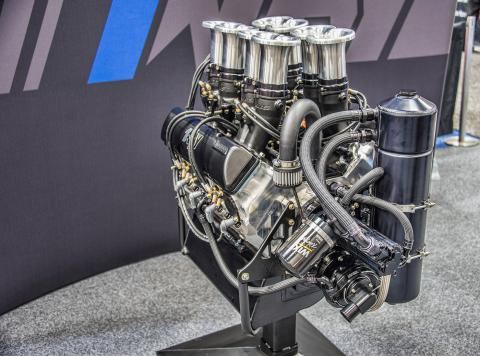
Billet cylinder blocks, like the one on this mega-horsepower unit from Steve Morris Engines, are mandatory with today’s high boost levels. One source claimed that billet aluminum is at least twice as strong as cast aluminum.
From Oakley’s standpoint, “It seems like with cylinder head technology there’s something new every day. Cylinder heads and manifolds have been probably the biggest things that have driven the horsepower increases, along with some of the new cam lobes. Carburetors have also had a big impact. It just depends on what you’re working with.”
Carburetors may seem anachronistic in this new age of computers and fuel injection, but a great deal of the racing community still depends on that simple and easy-to-use method of fuel delivery.
“In my opinion, with EFI there is a huge gain especially in power-adder situations, but a lot of the guys are just scared to death of it,” said Oakley. “It is making its way more and more, but probably only one in 10 are EFI in the sportsman world. In the professional heads-up categories, it’s pretty dominant because of the tuneability. I mean, with my EFI customers I can tune them from my desk.”
“You cannot run a Pro Mod nitrous car without fuel injection,” said Musi, noting that he’s running six stages of nitrous today as opposed to just three stages 10 years ago. “The tunability with nitrous became a big deal. Look, they can still blow them up. It’s like Top Fuel. You give them a window and they are going to push it until they light the fuse and it don’t make it to the other end. What we’ve got is longevity. You’ll never see my cars with the cylinder heads off between rounds. But it’s been a lot of work and trial-and-error. The final component is the tuner.”
“With the electronics nowadays, you’re able to maintain that edge. Back 10 or 20 years ago, it wasn’t easy to ride the edge safely,” said Mazurowski, adding that new computer programs and other advancements continue to improve products before they get to the track. “We have computer simulation, solid modeling, reverse engineering, laser scanning. We can develop a product in the computer, send it to a 3D printer, and verify it before we put it into production.”
TECH FOR SPORTSMAN RACERS
High-line developments are great, but what about new frontiers in engine technology for builders who serve the sportsman racers? Those racing naturally aspirated engines are seeing mostly incremental gains because just about every trick developed by NASCAR and Pro Stock teams has trickled down to the masses. Trade shows, networking, seminars, and cross-pollination of employees has spread the word, and today’s NA engines are more efficient than ever. That leaves boosted engines to lead the way.
“When we first started working with the turbo stuff there was a lot to gain, especially in power management. As the cars have gotten faster, obviously, the amount you are picking up as you go along gets to be less and less,” explained Patton, noting that the improvements have been tremendous with boosted Pro Mod engines. “We bought a dyno in 2011. And at that time, I think the most anyone was advertising for power was in the low 3,000 to 3,200. And that was, say, a 481X or a Hemi with 40 to 45 pounds of boost. That was all anybody had at the time. And now on the hub dyno we have next door, we have seen 5,200 horsepower to the wheels, and that’s a Hemi engine with two big turbos and probably making about 75 pounds of boost.”
Today’s drag cars are making so much power, in fact, that aircraft avionics are necessary to keep them under control.
“We built an engine that incorporated a flight-level indicator out of an airplane. The computer adjusts the boosts to make sure that it keeps the car level,” said McCaul. “We made 3,300 horsepower with a conventional head 427 LS. The heads had water jackets, and we used an iron Dart block with two 83-mm turbos.
The power escalation of recent years doesn’t show any signs of waning, with boosted engines driving much of today’s racing engine development. These gains are also transferring to street engines, which has been a strong market for numerous engine builders this year while race work was temporarily put on hold. Photo courtesy of Borowski Racing Engines.
“But if I showed up to a drag race and I found out that the guy next to me had a mechanism in his car that came out of an airplane, and that it’s managing torque and traction while I’m trying to pedal it at the finish line, then it is just a different level of competition,” continued McCaul. “You just cannot compete with a computer-controlled engine like that when it is making these adjustments faster than you can blink.”
Which brings us to the one constant obstacle to advancing engine technology at the race track: rulebooks. Sanctioning bodies often put some type of limit on practically every engine component, which can be a subtle way of mandating crate engines in some classes. While the motive is understandable—that is, trying to control costs and maintain a level playing field—sometimes the end result is a dose of clever misdirection.
“As far as crates go, we’re the cheater crate capital of the world. We’re well known for that. We advertise it, proud to announce and tell everybody,” boasted Mullins, who won’t reveal his strategy. “It’s engine stuff they can’t see from the valve covers. We pick them up about 80 to 90 horsepower, and how we get there, I can’t tell you. It’s blueprinting, balancing, and then cheating.”
Next-level strategies can help your company better connect with customers and chart a path to success in a quickly evolving marketplace.
The year 2020 has presented more than its fair share of challenges for performance and motorsports retailers, to put it lightly. Those challenges are not insurmountable, as we’ve discovered over the past few months. But “business as usual” isn’t likely to cut it anymore, and some of today’s most sweeping changes in the world of commerce are centered on how businesses connect with their customers.
“Now more than ever, companies need to consider the fact that those customers may not be in the same place they were five years ago—or even a year ago,” said Justin Cesler of Driveline Studios, Detroit, Michigan. “Right now, you can’t just assume that the traditional ways of engaging with those customers at shows and events, and going to the race track regularly, is going to provide you with the means to reach those people.”
As we collectively look to establish a new normal for the industry (and society at large), the ability to adapt to change has taken on a heightened importance. With that in mind, we recently got the low-down from industry experts on the trends that are emerging, along with some insight into business practices that will help retailers attract, retain, and grow their customer bases.
Because consumers now have so many online avenues available to research products and make purchases, businesses need to respond by taking the time to study the different types of visitors that are landing on the company’s website and social media channels. Seen here is Will Farkas, sponsorship and social media coordinator at Design Engineering, Inc.
AN EVOLVING MARKETPLACE
Jason Dodge of BlackTruck Media and Marketing in Grand Rapids, Michigan, noted that more commerce has moved online and is likely to stay there for the foreseeable future, so now is the time for companies to reassess their overall marketing and commerce strategies to ensure that they’re putting their best foot forward. “I think we have to be real with ourselves—we’re in the midst of a global pandemic, and it’s probably not going to go away anytime soon,” he observed. “So, if I were giving advice to a company in the automotive performance and racing market, I would absolutely be looking at the bigger picture of that company’s digital footprint and ask, ‘How healthy is my site? How healthy is my brand?’”
Tara Mello of The Brainzooming Group in Prairie Village, Kansas, pointed out that part of that assessment involves revisiting the core mission statement of the company. “Those tend to be based on a lot of assumptions about what a business is going to be doing. But by now we’ve been forced to pivot for nearly a year, so I think this is a good time to go back and revisit that statement to determine whether or not, overall, that’s still what we’re trying to achieve,” she explained. “You have to make sure that whatever you’re trying to achieve is something that is important and can be achieved regardless of the current business climate.”
And much of that revolves around the various online avenues that consumers use to research products and make purchases. “There’s been a shift in consumer behavior,” said Brian Lewis of Wolfhound Interactive, San Diego, California. “And businesses need to react to that.”
Lewis explained that having a comprehensive understanding of your audience is fundamental if you’re relying on your site for growth. “A lot of companies don’t take the time to really document the different types of visitors or prospects that are landing on their site in terms of their level of knowledge, what their goals are, what concerns they might have, and the overall journey those prospects go through to end up at the site. By understanding your audience at that level, you can start thinking about crafting an online experience that’s built around that information and the intentions of those prospects. That will in turn lead to higher levels of engagement, and a better chance that you’re going to convert that visitor into a lead or a customer.”
COVERING THE DIGITAL BASES
A significant part of the user experience is based simply on presentation. “I think it all starts with figuring out your brand identity and what’s going to be the best way to connect your brand to your customers,” said Cesler.
“So, just like building out a physical store or race program, I think brands that may be new to this space need to sit down and take stock of what assets they have,” he continued. “How does the logo look? What fonts are you using, what’s your color pallet? These are simple branding concepts, but in the digital world they’re even more amplified. There’s no person at the counter interacting with customers—your brand is doing the talking through these digital assets. So to start, you should put some basic brand guidelines together and make sure your website reflects who you are as a company and what you’re doing, and you also want to make sure your email signature lines up with those brand guidelines. Then you can start assessing where your customers are in the digital space and hone in on creating content for those platforms.”
Your site’s performance will also have an impact not only on the user experience, but how search engines rank it in results. “The site should perform like a supercar,” said Dodge. “We know that the speed of the site—how quickly it loads pages and things like that—will have an impact on that. People aren’t going to wait around for a site to load, they’ll just immediately bounce back to Google and visit another site. That behavior is going to be logged by Google, and they’ll remember that the next time someone puts in a similar search query. If they see a person searching for something, clicking on a site, going there, and immediately jumping back out to go to another site—or change their search criteria in general—that means the user is disappointed with the search result that Google is giving. And that’s not what Google wants.”
Dodge also points to another often-overlooked but increasingly vital aspect of website design. “For us, the mobile-first mentality has been around for years,” he said. “Over 60% of searches happen on a mobile device. The final purchase might be happening on a desktop, but the research is often happening on a phone. So brands need to ensure that their mobile experience performs similarly.”
Online platforms are now expected to do the heavy lifting of reaching customers, but that has unique challenges. “It all starts with figuring out your brand identity and what’s going to be the best way to connect your brand to your customers,” said one source. Images courtesy of Modular Motorsports Racing.
It’s similarly important not to ignore other digital platforms, reported Cesler. “I think the easiest two channels to go after in this space are Instagram and Facebook,” he said. “Instagram is going to be a highly visual medium, and a lot of automotive enthusiasts are on Instagram, so that’s a great place to be. Facebook is also a great place to be because it’s the largest platform, and it’s the most embedded in people’s everyday lives.”
But the value of these platforms is highly dependent on the time and effort that companies invest in it. “On Instagram, start looking around and figuring out where your potential customers are,” he said. “Follow pages and hashtags—if you’re a company that makes parts for a race series, follow NHRA, NMCA, or whatever series that may be, and take a look at what they’re producing and what their customers are looking for because there’s going to be a lot of crossover customers. Take note of the hashtags they’re using and add those to your feed. That way you’ll start seeing what your customers are posting and what they’re going to be most likely to engage with as you start posting content.”
Facebook requires a slightly different approach, though. “Organic content on Facebook is very difficult to do well and effectively,” Cesler said. “The way Facebook’s algorithm works isn’t very friendly to brands anymore, so I would look at Facebook as more of an archive of the stuff you’re going to put out there. So I would set up a nice-looking Facebook page with a nice banner and profile image, along with all the latest contact information and operating hours. I’d also post some content to Facebook, but I think brands will quickly see that the reach is very small unless you’re willing to invest in sponsored posts. That’s the other side of that coin—Facebook can be an amazing platform for advertising, but much less so for organic content.”
SENDING THE RIGHT MESSAGE
Mello said that the path to brand growth starts with a mission statement that points the way to a larger marketing strategy. “We have seven words that we talk about as types of effective brand language,” she said. These include:
Simple—Is it easy to understand?
Emotional—Language that creates strong impact by tapping into an appropriate range of experience-based emotions.
Aspirational—Words that convey the hopes and dreams of employees, customers, and other stakeholders interacting with your company.
Unusual—Distinctive words whose less frequent use makes them stick out and become more memorable.
Connectable—These types of words readily pair up with other words, word parts, or phrases to create new and distinctive brand language.
Open—Language that brings depth to the brand because it can mean multiple things or apply in a variety of situations.
Twistable—Words you can use in varied ways and forms.
Successful marketers are learning to dig deeper and pivot effectively in the new consumer landscape they’re facing. This can start with simple brainstorming, said an industry consultant: “You really want involvement from employees at all levels, and if you can, your customers as well.” Photo courtesy of Scat Enterprises.
“The resulting strategy doesn’t have to utilize all seven of these words,” she continued, “but it’s a way to look at brand language as a vehicle to create something that resonates while avoiding jargon that doesn’t really mean much.”
She also suggested brainstorming sessions that aren’t comprised solely of company employees in upper-level positions. “Oftentimes, especially in larger companies of 50 people or more, the folks in management are the only ones having this conversation. But ideally, you really want involvement from employees at all levels, and if you can, your customers as well. Put together a diverse group of people—often, the most creative ideas come from people you would not expect. The people packing up shipments in the warehouse might have a different relationship with the customer, and that can result in a perspective you may not have considered.”
Under-promising and over-delivering is generally good practice as well, she added. “When you’re developing that strategy, go with a base level that you can definitely handle. Don’t go out there and tell all your customers that you’re going to have a new how-to video on YouTube every week if you don’t feel really confident that it is sustainable. Set the timetable for every month, or maybe avoid establishing a timetable at all. You don’t want to create expectations with your customers that you can’t meet—that does not look good for your brand,” Mello concluded.
Lewis cited Maslow’s hierarchy of needs as another guide when developing language and an overall marketing strategy. “The world recently changed, and companies should address their marketing to respond to that effectively,” he said. “This hierarchy addresses what we, as humans, are looking to achieve. At the very bottom of this are the physiological needs, and it works its way up to the top, self-actualization. The basic theory is that you can’t move up a level until the needs at the current level are met. Prior to the pandemic, with a healthy economy, we were generally definitely looking for that self-actualization at the top of the hierarchy. But I think that’s changed a bit—there’s a collective anxiety, so the focus has been less about self-actualization and more about safety and security.”
What that translates to for marketers is an increased emphasis on trust and credibility. “Our collective appetite for taking chances has been reduced significantly because of that anxiety—focus your copy on making people feel good about making that decision,” Lewis continued. “During tough times the film studios like to release ‘feel good’ movies because people are looking for an escape. So in a sense, we want to think about the same things in the marketing approach.”
Dodge cited web analytics as another valuable resource for insight into the behaviors and expectations of the customer. “A Facebook pixel, for instance, will allow you to look at users traveling from your Facebook page to your site and vice versa,” he said. “So that if somebody, say, clicks through from Facebook to your website, you have the ability to see if they filled a contact form out, or bought a product from you, etc. And the other side of it is that if they came to the site but they didn’t buy anything, they go into an audience list, and you can follow up with them through targeted Facebook ads. Those types of things are very cost-effective to do, and the big takeaway there is that this person is already familiar with your brand—you’re not trying to break through that wall to get their attention, you’re just reminding them of the products and services that you have.”
Historic Sportscar Racing (HSR) officials have announced the 2021 event schedule, which again begins and ends at Sebring International Raceway in Sebring, Florida. HSR will also visit Michelin Raceway Road Atlanta, Daytona International Speedway, Watkins Glen International, Road America, and more.
Highlight blockbuster events include the 43rd HSR Mitty at Michelin Raceway Road Atlanta, April 21-25, and the HSR Classics at Daytona, October 27-31, and Sebring, December 1-5, which close out the 2021 calendar.
2021 Historic Sportscar Racing (HSR) Race-Event Schedule (subject to change)
March 31 - April 2: HSR Sebring Spring Fling - Sebring International Raceway, Sebring Florida
April 21 - 25: 43rd HSR Mitty at Michelin Raceway Road Atlanta - Michelin Raceway Road Atlanta, Braselton, Georgia
May 20 - 23: HSR Barber Historics - Barber Motorsports Park, Birmingham, Alabama
June 14 - 18: HSR Ridge Runner Rally - Great Smoky Mountains Road Tour
July 9 - 11: Finger Lakes Invitational - Watkins Glen International
August 6 - 15: Rolex Monterey Motorsports Reunion and Monterey Pre-Reunion - WeatherTech Raceway Laguna Seca
September 17 - 19: VSCDA Elkhart Lake Vintage Festival - Road America
September 23 - 27: HSR Atlanta Fall Historics - Michelin Raceway Road Atlanta, Braselton, Georgia
October 27 - 31: HSR Classic Daytona presented by IMSA and the HSR Daytona Historics - Daytona International Speedway, Daytona Beach, Florida
December 1 - 5: HSR Classic Sebring 12 Hour, Pistons and Props, presented by the Alan Jay Automotive Network, and the HSR Sebring Historic Races - Sebring International Raceway, Sebring, Florida
Five overseas motorsports journalists share which segments of racing—and the parts most widely used in those classes—are generating excitement in their home countries.
We live in a global society. And while COVID-19 has certainly disrupted the cross-border exchange of ideas, products, and personnel, it’s reasonable to believe a return to normal is inevitable.
This notion certainly applies to the motorsports industry, where US-made parts and equipment remain very much in demand worldwide. In fact, whether it’s four-way adjustable drag shocks, welding helmets, torque converters, or billet manifolds, the appetite for innovative new parts, equipment and technology by top manufacturers and service providers is as vibrant as ever.
With that in mind, we recently asked a select group of international motorsports journalists to weigh in on the products that are currently in demand in their local regions in order to provide some insight into the racing disciplines, classes, and larger overall performance trends that are picking up steam outside the US. Following, in their own words, is their feedback, edited lightly for clarity and brevity.
Any enthusiast worth their salt will tell you we’re living in a golden age of performance equipment. As technology improves in leaps and bounds, quality aftermarket gear is becoming more and more advanced and accessible.
Led by trends in the United States, Australia is seeing the astronomical rise of radial tire racing and super-fast “street cars.” Today’s technology allows street-going vehicles to boast performance figures once only reserved for dedicated race vehicles. Events locally like Street Machine’s Drag Challenge, Grudge Kings, and KENDA Tires 660 Drag Radial Series are packed with radial-shod, street-appearing cars that prove today’s modified vehicles are not one-trick ponies, and are equally at home on the street as they are at the race track.
With all that in mind, the following has caught my attention...
First is Hughes Performance’s Pro Series Power Glide 2-Stage Dump Valve. Small-capacity engines with large turbos are a common sight at Australian drag strips. In these combinations, the real struggle starts before the green light as racers battle to get power through the converter and the car on to the two-step. This setup from Hughes Performance addresses that very issue. Not only will this help get the combination set on the start line, but the two-stage arrangement will help during the run, allowing the racer to slip the converter where required down the track. Bravo!
Next is AFCO’s Dominator 4-Way Adjustable Drag Shock, where AFCO has packed all the features of a high-end performance shock absorber into a product that a lot of racers can afford. With small-tire and radial racing all the rage in Australia, I can see racers really getting the best performance from their cars with this product, at a price point that will have them stand up and take notice.
Then it’s a pair of FuelTech ECU units: the FT600 and FTSPARK-8. Marrying the ECU and dash into one unit is absolute genius. With the seemingly endless amount of outputs and inputs available, the FT600 ECU can really do it all. With racers looking to monitor an ever-increasing number of sensors and looking for every pound of weight saving, it will be hard to look past the FT600.
As for the FTSPARK-8, high-boost, methanol-engine packages are all the rage, and for that you need an excellent ignition package. The FTSPARK-8 has got you covered. The fact that this is a simple CAN connection away from the FT series ECUs is great, but being able to use this product with any ECU on the market is a masterstroke from the team at FuelTech.
McLeod Racing’s FTI Performance GS20 Torque Converter is next on the list. Torque converter technology has come ahead in leaps and bounds in the last few years. With McLeod stepping into the ring, racers on a budget will have access to converter technology usually reserved for the bigger-budget operations. I look forward to what McLeod, with their years of experience in manual clutch technology, will bring to the converter world. Exciting times for sure!
Next up is the Plazmaman Big Block Chevy Billet Intake Manifold. I mean, a billet big block inlet manifold—what’s not to love? The turbo revolution is in full swing here in Australia, and this product is on top of most racers’ wish lists. The finish on these manifolds is exquisite—it’s almost a shame to bolt them to an engine. This low-rise manifold with a burst panel neatly incorporated screams that it’s a serious piece of performance gear.
RC Components’ aggressive wheel designs are starting to gain traction here in Australia. And now that RC offers a two-inch backspace, they have opened up to a larger group of customers who don’t wish to modify their car to fit three inches of backspace. Increasingly, we are seeing traditional big tire cars trying their hand at radial racing, where these wheels—the 2.0-inch Offset Rear Race Wheel—are the perfect addition to get those little radials sitting pretty.
Finally, there’s the Turbosmart Gen-V eWG60 Electronic Wastegate. Most “serious” boost controllers are air-over-air. Whilst they work well, there are factors outside of the controller that can let them down—leaking air lines, empty air bottles, or something as simple as forgetting to turn the air bottle on. These can cost you a race. You can reduce all the complication and let your ECU do the work with this electronic wastegate from Turbosmart.
Motorsport in India isn’t as mature as it is in the United States, but there is still a sizeable community that takes part in the various championships that are held across the country. In India, the cars we race are the cars available and popular here, and more often than not, this means cars with small-displacement engines.
Here, I’ll focus mainly on the touring cars and rally cars that run in our national championships, as these are the two series that are extremely popular and also see tuners pushing the envelope with their builds.
Popular cars in the touring car championship include the Honda City, Volkswagen Vento, Honda Jazz, and Suzuki Swift (badged Esteem in India) while the Volkswagen Polo and Mitsubishi Lancer are popular in the rally championship.
When it comes to intakes, BMC and K&N are the most popular choices in both the touring and rally series. And due to a touring car championship rule change last season, which now allows teams to run turbochargers, Garrett turbos have emerged as the most popular choice in the series.
For exhaust systems, there are a number of specialized manufacturers in India that build exhausts to the tuner’s requirements. However, there is a growing market for aftermarket exhausts for road cars with manufacturers like Novitec, Akrapovic, and Remus favored amongst enthusiasts.
ECUs from MoTeC and Haltech are also popular, and they’re often combined with a race dash. India’s own RaceDynamics also makes custom motorsport piggyback ECUs, which are considerably more cost-effective than imported ones. Sequential gearboxes are sourced from Hewland and 3MO.
When it comes to suspension, Reiger suspension is extremely popular in the rally circles, while Bilstein and KW Suspension components are preferred for the touring cars. Safety equipment like seats, harnesses, and suits are generally sourced from Sparco or OMP.
In the realm of tires, the touring cars normally ride on products from the two Indian tire giants—MRF and JK Tyre. For rallying, competitors are free to choose which tires they want to run and generally pick between MRF and JK, though teams occasionally opt for foreign brands like Continental or Yokohama. Hoosier slicks remain popular in drag racing.
Other in-demand racing products include suspension mounts, high-grade engine and gearbox oils from companies like Motul and Castrol, sintered brake pads, wiring harnesses, Quaife limited-slip differentials, and toolcases.
Face masks are pretty big business these days, and so are racing simulators. We recently picked up a new sponsor/supporter in SIMWORX racing simulators; the COVID-19 shutdown was actually a real boost for their company. When the racing industry shut down in Australia, simulator racing became the big filler of time—not only for fans, but also motorsport drivers. In Australia, the Supercars are our top-tier motorsport; they ran a professional eSport series during the initial shutdown that was also televised nationwide.
Our Supercar elite category is up and running again on a very different calendar with back-to-back events, but all national support categories have stopped, as have many of the smaller state and regional events. And since the cars have been in the garages for quite a while, many owners have been focusing on maintenance and upgrades. Given that, I suspect that things like brakes components from AP Racing and RDA Brakes—parts like discs, brake linings, and pads—are important items from the top tier on down.
From there you might be looking at pistons, rods, rings, top-end gear. Some of the top-tier teams manufacture their own or use JE Pistons, who have been tinkering away at small upgrades and improvements in perceived areas of weakness.
Another product that is in great demand would be pedal boxes, from the top tier down through to grassroots racing—PE Racing is the main supplier of these. And in Australia, companies like Revolution Racegear are always popular for race wear like overalls, helmets, boots, along with team apparel for the pits and marketing.
We recently did a story in Velocity Magazine titled “Light at the End of the Tunnel,” where we talked to a few car/team owners about COVID-19 and the effects on their racing programs. One was pessimistic and reported that he had lost a fair portion of his budget with businesses no longer having the cash flow to continue.
The second team owner lost international drivers who can’t travel to Australia when racing resumes, but was optimistic in that he believed people will want to promote their business to generate sales when things improve. He feels there will be new advertisers and sponsors coming into the market. The final team owner had his own business in the building industry and has hardly felt a change in his business income, so he is ready to race whenever he can. Given these points, it stands to reason that drivers and teams may need new race gear and crew clothing to represent new sponsors to the team.
Finally, new products in fuel additives, hoses and linings, and other consumables used in the course of a season are also worth noting. KCK Lubricants is a new Australian supplier of oils and additives, and these guys are working their way into the motorsport industry nicely.
Here in Brazil we have lots of demands when we talk about performance. Because of COVID-19 things are slower right now, but motorsport is starting to come back.
Off-road racing is getting bigger, and top speed competition, like half-mile events held on airstrips, are becoming more frequent. FullPower organizes many of these events at airports, and Brazil has some race tracks that are now holding races without crowds.
Ford Mustangs and Chevrolet Camaros are popular in that realm, and along with V8s, turbodiesel-powered vehicles are gaining some attention in off-road racing. Rally dos Sertões is the most popular rally in South America—it’s like Dakar on a smaller scale. While pickup trucks are commonplace in that event, UTVs from companies like Can Am and Polaris are quickly gaining popularity, and the drivers need parts for them.
And, of course, products like suspension components, lightweight wheels, tires, seats, seat belts, racing suits, helmets, and brakes system parts continue to be in demand across various motorsport disciplines.
Latin America is slowly coming back—not only from COVID-19, but also from government policies that have not worked well in this kind of environment in regards to import duties and customs regulations.
In Perú, [officials] are trying to develop international drivers and race series for karting. Particularly at Kartodromo Santa Rosa, Peruvian karting is running IAME X 30 in its junior categories up to 14 years, [as well as] seniors and masters. It is also run inland in the cities of Cusco and Arequipa, which makes it two Peruvian Karting Championships. Made in France, karts come from Sodi-Kart. They have karts for rent, and also run an international tournament.
Nearby, the Kartodromo La Chutana runs the RMC Rotax Max Challenge with baby, mini, junior, senior, and masters categories. This is the most popular track.
The Peruvian organization FETAME is being formed to educate, train, and develop racing shops with new products like the ones that we see at PRI, focusing largely on software organization and costs areas.
Costs are a huge factor, as it always is in any form of motorsport. An attempt is being made to introduce a category with a four-stroke Honda GX engine that’s prepared in Brazil. Internationally it is run with Briggs & Stratton and endurance. This will bring opportunities for PRI [exhibitors] and others to make their presence felt.
The idea is to expand the base with inexpensive go-karts—$3,000 Briggs & Stratton engines and hard tires that last one or a half-season. Currently, a new race-ready kart built in Lima costs $10,000 and drivers spend $2,000 per race in a six-race season.
At the 2019 PRI Trade Show, we had the opportunity to check out SimCraft, one of the most advanced simulators. In eSports there are three championships. Karlo Carrillo from eSports equipment supplier Achorao.com states that the Playseat Challenge + Logitech G29 wheel and pedals is a popular entry-level setup. 2020 will be up a colossal 50% versus 2019, and keeping that level up post COVID-19 will be the challenge.
Rallying continues to be the fan favorite. Some wealthy drivers are ganging up with N5 FIA Rally that runs in Spain and nearby Argentina. Can-Am in rally and cross country off-road desert 4x4 is a success in the making, with short-course racing coming up like in Baja Mexico. Tubular welding and specs are going to be a target with EV power.
The Lucas Oil Late Model Dirt Series has announced the 2021 schedule with 62 feature events at 32 different venues across 21 states.
The tour will launch with 13 feature events during Georgia-Florida Speedweeks set for four different venues and beginning January 22-23 at Golden Isles Speedway; followed by a January 25-30 feature at East Bay Raceway Park; February 1-2 at Bubba Raceway Park; and February 4- 6 at All-Tech Raceway. In traditional fashion, the 2021 championship battle will conclude October 15-16 at the 41st Annual Dirt Track World Championship at Portsmouth Raceway Park.
A number of increased purses highlight next year's schedule. The richest Crown Jewel events of the tour's program include: Lucas Oil Speedway's Show-Me 100 ($30,000 to win); Smoky Mountain Speedway's Mountain Moonshine Classic ($20,000); I-80 Speedway's Silver Dollar Nationals ($53,000); Florence Speedway's North/South 100 ($50,000); Batesville Motor Speedway's Topless 100 ($40,000); Port Royal Speedway's The Rumble by the River #3 ($30,000); Tyler County Speedway's Hillbilly Hundred ($30,000); Knoxville Raceway's Late Model Nationals ($40,000); Brownstown Speedway's Jackson 100 ($20,000); Pittsburgh's PA Motor Speedway's Pittsburgher 100 ($20,000); and Portsmouth Raceway Park's Dirt Track World Championship ($100,000).
All events will be live-streamed in conjunction with four live races on the MAVTV Motorsports Network. There will be 37 original events televised on MAVTV, three events televised on CBS Sports Network, one event televised on CBS, and 14 events televised on NBC Sports Network.
For more information and the complete schedule, visit lucasdirt.com.
The pandemic has brought fear, uncertainty, and even conflict to the workplace, yet many companies are thriving thanks to strong and steady management.
“The pessimist complains about the wind. The optimist expects it to change. The leader adjusts the sails.”
—John Maxwell, based on a quote from William Arthur Ward
There’s no mistaking that the global COVID-19 pandemic is a different kind of crisis, one that is testing the leadership skills of management, regardless of the company size.
“It’s definitely a challenging time, but this business has always been a challenging one,” reminded Bob Sargent of Track Enterprises, a racing promotion company based in Macon, Illinois. The firm operates a number of dirt-racing facilities in the Midwest and works with numerous sanctioning bodies. “It’s added more responsibilities and workload to what we already had.”
With conflicting medical advice, clashing political parties, and contrasting state/local policies initiated to stem the spread of the virus, leaders are hard pressed to maintain employee morale and adapt where needed to keep the company running. One analogy has likened the current situation to an Indy 500 race.
“The year started off cruising, turning great laps in a finely tuned car. Then COVID hit, and immediately the track turned from a gripping asphalt to gravel,” said Bob Coakley of Upgrade Performance, San Clemente, California. “You’ve got a race car not equipped for this. You have no choice, since you have to finish the race. So, in the middle you make adjustments in order to survive. The leaders and teams that can adapt and deal with adversity will finish.”
“Anybody can be a leader during great times,” added Barry Moltz, a small-business consultant and author based in Chicago, Illinois. “It’s when things get difficult, that’s where it’s hard to lead. And during times of crisis, people are looking to management to lead and give them direction in how to adjust to the new normal.”
Beyond bringing economic uncertainty into the workplace, the pandemic caused a real fear for employees’ lives. Management was fighting the battle on two fronts—keeping the business going and making changes to prevent the virus from infecting workers and customers.
“The biggest thing to overcome was fear,” said Jason Bruce of Holley Performance Products, Bowling Green, Kentucky. “Most people struggle with change, anyway, so this was a very hard lesson. Dealing with people’s fears boils down to stepping up your communication game.”
Holley employs more than 1,500 workers spread out over numerous states. By September, only a handful of employees had tested positive, and all had light or no symptoms. Many of the cases were traced back to households where a health-care worker brought the virus home.
“Early on, our CEO Tom Tomlinson drafted a memo allowing work from home, and senior managers were empowered to make decisions on the fly,” Bruce added. “So, we weren’t hanging things up in committee.”
The racing market is inherently driven by passion, allowing it to rebound faster than many other industries. With precautions in place, numerous tracks have resumed fairly normal operating schedules. “We’re now fully booked through the fall,” said our source at Sonoma Raceway. “The demand is there.”
With Holley based in multiple locations around the country, managers had to deal with different local agencies and abide by rules set up for safety, disinfection, and social distancing.
“Our operations teams made sure that enough supplies were available. They even took care of little things, like getting foot latches for bathroom doors to avoid hand contact,” Bruce said. “These are things I never would have thought about, but our operations group did a really great job.”
Jim Bingham of Winner’s Circle Speed and Custom in Joliet, Illinois, didn’t have a dedicated operations team to guide his workplace response. He brought in a carpenter to build isolation rooms at his stores that allowed his staff to wait on two customers at a time without actually letting them inside the store.
“At first, we thought sales would fall off, but the opposite has happened,” said Bingham. “Business is stronger than ever, and I think it’s because the government dropped $2 trillion into the economy.”
Most segments of the automotive aftermarket are keeping pace with past sales numbers, or improving them. This dynamic follows other industries such as home improvement, which is thriving as stay-at-home orders prompt homeowners to repair or upgrade their residences.
“Everybody was bored sitting home,” explained Chris Holbrook of Holbrook Racing Engines, Livonia, Michigan. “They wanted to get their hot rods running and go racing again.”
Holbrook has just five employees and had to make targeted changes to his operation to keep the shop running. All customers have to make appointments—there are no walk-ins. Hand sanitizer is plentiful around the shop.
Companies with employees in multiple states have had to deal with widely varying local regulations during the pandemic. That’s in addition to the challenges of managing workers’ individual perceptions of the crisis. “The biggest thing to overcome was fear,” said our source at Holley Performance Products.
“In the beginning, everyone was in panic mode,” recalled Holbrook. “Our state shut down quickly. We were down for five weeks. Finally, it was either we figure out a way to go back to work or we won’t have any jobs.”
Holbrook’s shop hasn’t had any COVID-related health issues, and business is strong as previous orders are completed and new ones come in. He said there was no hesitation on the part of the employees returning. But other shops haven’t been as fortunate. One shop in Texas, speaking off the record, had a number of employees fail to return because the government unemployment benefits were so generous that workers simply didn’t feel like working again. Openings for replacements drew only one application until rumors that the benefits would expire circulated. Then the shop received dozens of applications.
In a different twist, some employees chose to stay home not out of laziness, but because they were considered at high risk for the virus. It’s that kind of situation where management has to be considerate. In fact, experts will stress empathy as a necessary leadership quality in a crisis.
“Empathy is very important,” said Christine Corelli, a workshop facilitator and business author based in Chicago. “The employees are looking to upper-level executives, not just managers, to be visible. You have to be transparent, and you have to be totally and completely honest. Sometimes you have to bare your soul about your own concerns.”
“I think most managers think they’re good at communicating, yet many are not,” added Bruce. “When you’re dealing with significant fear from the workers, I know personally my empathy for the staff has grown and so my communication approach has changed. It’s coming more from a position of love than tasks and grind.”
Working with the employees to map out a strategy certainly proved successful at Scat Enterprises in Redondo Beach, California. Tom Lieb leveraged the trust he’d built up with several longtime employees to offer a plan and share that plan with the workforce.
“Everybody has a different management style, and the personality of the company can reflect the personality of the management,” said Lieb. “Personally, I’m a hands-on guy. I’ve never asked anybody to do something I wouldn’t do myself. That gives me somewhat of an advantage with the employees.”
When the virus hit, Lieb pulled his employees together and told them there were choices to be considered, but shutting down the company wasn’t an option. Scat also was tagged by state officials as an essential business, which allowed it to remain open.
“But I told everyone I needed their cooperation,” said Lieb, noting that he had to establish rules on face masks, cleanliness, conduct, and social distancing. “We may have to cut back a little bit, but you need to know that whatever happens I’ve got your back.”
Scat relies on Chinese sources for its raw castings and forgings, which are then machined and heat-treated in the US. Several of his suppliers sent large shipments of masks and hand sanitizer to company facilities.
“It was completely unsolicited,” Lieb added. “There were notes saying that the suppliers knew we were going to need it. They sent it because they were concerned about us. Our business is healthy because we did what we had to do to keep the lights on. We have expenses, and our customers were depending on us. Based on that, the employees knew I was stepping up for them, and they knew they needed to reciprocate.”
Even though California initiated some of the nation’s toughest safety protocols, Sonoma Raceway was able to bounce back from a two-month stretch of cancelations and postponements to resume a fairly normal operating schedule, albeit without spectators.
“We’re now fully booked through the fall,” reported Steve Page. “We’ve been up and running since the second week of June, but purely with participant-only events. The demand is there.”
The track did have to reduce staff in the spring, but getting the employees back to work was not a struggle. “We’ve had very little resistance. Folks are happy to have the track open, [so] putting on a mask is a pretty small sacrifice,” said Page, who will be retiring at year’s end.
Fortunately, sales have stayed constant or improved for many performance aftermarket companies. This is generally attributed to a combination of government stimulus money and stay-at-home orders prompting car enthusiasts to work on their vehicles more. Photo courtesy of AEM Performance Electronics.
Sonoma County health officials established safety guidelines, including masks, social distancing and single passengers. The latter forced the cancelation of some high school learning programs that involved multiple passengers. When the pandemic started spreading and the track was closed beginning in late March, Page put a number of policies in place to keep the facility operational and as many employees as possible on the payroll.
“It was a huge challenge,” he said, noting the facility’s team continued to maintain the track during the down time. “I had a company-wide directive that if you can work at home, you do work at home. Meanwhile, the facility’s team continued to maintain the track. But the office was a ghost town.”
As with many companies across the industry, video conferencing and working from home became the norm.
“Typical call rooms would have been hard to manage with social distancing. We had to turn 180 degrees and allow people to work from home,” said Bruce. “A year ago, we would have said that could never happen, and it ended up working out great. People were able to manage their fears a little better.”
However, that alternative has its own challenges for leadership.
“You have to learn how to make eye contact on video,” said Corelli. “Employees are not used to seclusion.”
“You don’t have the day-to-day personal interaction,” agreed Page. “I don’t think anyone is feeling the sense of camaraderie is near what it would be under normal circumstances. But we push to maintain as much interaction as possible and a sense of common purpose.
“There’s no magic bullet,” he continued. “It’s communicating as often as possible and reminding people that this is an adrenaline-fueled business. If you don’t have the energy of major events and buzz of the crowd, it’s easy to become untethered to the purpose of why you’re here. Myself and management worked to remind everyone what motivates in the first place.”
Mutual trust and clear communication are crucial to navigating the pandemic. And ideally that should start at the top, with leadership by example. “I’ve never asked anybody to do something I wouldn’t do myself,” said our source at Scat Enterprises. “Whatever happens I’ve got your back.”
Working remotely places added pressure on different employee levels, but experts maintain that providing clear direction and demonstrating trust will go far in reaching objectives.
“Distribute the leadership,” advised Moltz. “Not everyone is in one place anymore, so the span of control is harder. If people understand the objectives and you tell them what needs to be done, they can figure out how to do it. If people have more control about how it gets done, there’s more of a chance they actually do it.”
“Give employees expectations,” agreed Bruce, “and more often than not they will work to exceed them.”
“We share a lot of responsibilities, but it still comes back to me and my staff to make sure everything is in place,” countered Sargent.
Even if management sets a strong plan in place and the employees are on board, shops oftentimes are dependent on outside suppliers—many of which may be behind on filling orders due to employee challenges, or because the state has shut them down.
“Where we’ve struggled is getting the parts,” noted Bingham. “Large companies that canceled POs early on are just now trying to get caught up. Our strategy is to have plenty of inventory and employees who know what they’re doing.”
ADDRESSING UNCERTAINTY
This is a crisis that, unfortunately, will continue to throw curveballs at leadership. One-time catastrophes like a fire or destructive weather can be dealt with almost in a routine manner because there’s precedent to help guide decisions and expertise to assist in the recovery. This pandemic, however, feeds off its own uncertainty and can create conflicts that managers never expected.
“There’s very little trust and many mixed messages in the media,” warned Corelli. “If people disagree with a position, or an issue or a political party—instead of respecting another opinion, all of a sudden you are an enemy. Now there’s additional conflict, and leaders have to know how to manage that.”
“In a time when workers are struggling to understand or grasp where things are going, if you don’t provide them with real facts and data, they will always catastrophize the situation and make the absolute worst possible scenario come true,” said Bruce. “So, it’s important to communicate verbally and not through email or some stale memo.”
Moving forward, leaders can be optimists, but they also need to accept and communicate reality.
“I expect the numbers to keep rising until there’s a vaccine,” insisted Bingham.
“The relationship you have with your employees will determine how successful you’ll be,” added Lieb.
The ongoing crisis is peppered with reports of spikes in active cases and fears surrounding large gatherings. Much is still unknown about the coronavirus, and relief in the form of a proven vaccine remains a debate between medical authorities. This continued uncertainty may lead to a possible “psychological hangover,” even when government officials loosen the socializing rules and medical treatments improve.
“Will people still want to gather in very large crowds?” asked Page. “How quickly will they respond and want to come back?”
There are some early indications that the racing market has an advantage over other industries and is rebounding, fueled by its enthusiasm for competition. Getting tracks opened and racers burning rubber or flinging dirt was certainly a big push in generating renewed zeal for speed and interest in the personalities behind the wheel. Membership in that industry is helping leaders motivate employees.
“People are still passionate about their vehicles,” said Coakley. “Keep reminding them of the true north. That’s what it’s all about.”
“The passion for the product and marketplace was never an issue,” summed up Bruce. “We’re just a bunch of crazy car guys.”
To serve his customers, Modern Racing founder Justin Elkes draws on years of IHRA and NHRA Pro Stock experience. “Whether you buy a $100 part from us and need help setting it up, or you spend $100,000 building a car with us, the support after the sale is our big thing.”
From consultations and chassis design to wiring and fabrication, Justin Elkes and his crew based in ‘Race City USA’ provide professionalism and deep industry knowledge to help customers compete and conquer.
Anyone setting up shop in a place nicknamed “Race City USA” must have an edge, something to set it apart from all the other race shops located in Mooresville, North Carolina. For Justin Elkes of Modern Racing, that edge is a deep commitment to customer service.
“Whether you buy a $100 part from us and need help setting it up, or you spend $100,000 building a car with us, the support after the sale is our big thing, what we really pride ourselves on,” Elkes explained.
Several factors contribute to Modern Racing’s delivery of above-and-beyond customer service. Elkes hired a staff of master craftspeople who specialize in tuning, wiring, fabrication, and other skills. Plus, Elkes himself brings years of experience to the business as a tuner, consultant, and crew chief for several successful drag racing teams.
That perspective pays big dividends for Modern Racing’s customers. Elite Motorsports, which campaigned the 2019 NHRA Pro Stock championship-winning car with driver Erica Enders, for example, not only hired Modern Racing for fab work and wiring on a number of its race cars, it also used Elkes as crew chief on the team’s twin-turbo, NHRA-legal Pro Mod car, also driven by Enders.
“I’ve known Justin for quite some time and have had the privilege of not just working with him but racing with him as well,” Enders said. “In addition to being a great tuner—he called the shots on our 261-mph world-record run—he knows his way around a race car and has the ability to manage a team and his employees.”
To Enders, the crew at Modern Racing treats each job as if they were working on their own race car; they take pride in their work. “Justin has put together an incredible group of people,” she said. “They are trustworthy, fair, honest, fun, and their caliber of character far exceeds most in our business. It’s a rare find and something that can’t be bought.”
DRAG RACING ROOTS
Elkes’ performance career has roots in his teenage years, when his stepfather would take him to bracket races in his home state of Florida. He studied mechanical engineering and automotive technology at Florida Atlantic University, and, prior to finishing school, landed a job working with Keith Wilson at Wilson Manifolds in Ft. Lauderdale, Florida. Elkes was a quick study, and he worked his way into a partnership running the business with Wilson. He also served as co-crew chief of the company’s in-house IHRA Pro Stock car, which won three championships racing in the American Drag Racing League (ADRL) Extreme Pro Stock series.
Elkes would take his crew-chief skills to NHRA Pro Stock champions Greg Anderson and Jason Line, and was later recruited by the Al-Anabi race team to work on its ADRL Pro Extreme car. While Elkes was there, the car became first in its class to run in the 3.50s and won two championships. Elkes returned to NHRA racing when Gray Motorsports, then a rookie Pro Stock team, hired him for tuning help. That position would evolve into a role as crew chief for the three-car team, during which time Elkes relocated to Mooresville and developed connections with tuning companies MoTeC and Racepak. Those relationships laid the groundwork for Elkes to strike out on his own and form Modern Racing.
Modern Racing was originally only Justin Elkes, working alone. “I hired my first employee and started doing data systems and wiring harnesses,” he said. “From there, it grew to a fabrication company…. I ended up hiring a full-time fabricator.”
BRICK, MORTAR & BEYOND
At first, Elkes operated Modern Racing by himself, bringing his tuning, electronics, and data-acquisition skills to a number of clients. But, as his new business grew he recognized the need to expand, and he entered the brick-and-mortar world.
“I hired my first employee and started doing data systems and wiring harnesses,” he said. “From there, it grew to a fabrication company. The next thing I knew, there was so much fabrication work getting stacked up that I ended up hiring a full-time fabricator.” With his crew-chief background, he had insight into how cars should be set up or changed. This pushed him to expand his race shop.
Modern Racing is now located in a standalone, 13,000-square-foot building in Mooresville’s Lakeside Business Park. “We have 10 people total,” Elkes said, including a secretary, a full-time parts department employee, four full-time people in the fabrication shop, and a full-time manager of the race-team side of the business. Elkes is proud of the fact that he still has the first employee he ever hired.
The building is divided into sections, each dedicated to one of the company’s specialties. The fabrication area is the largest at 5,000 square feet, while the wiring shop and parts department share an additional 5,000. The dyno room is 2,000 square feet, and there’s a 1,000-square-foot showroom.
Each sector at Modern Racing has its own department head and employees. Everybody specializes in their specific craft, and his team members don’t deviate from their respective trades. The wiring technicians don’t fabricate, and the fabrication technicians don’t wire parts.
“When a project comes in, we truly can send it through the different departments and turnkey it with a specialist in each department,” Elkes explained. Following this business model, they’ve become masters at what they do.
Justin Elkes’ company serves an impressive roster of clients, including Pro Stock standout Jeg Coughlin Jr., seen here. Respect for Elkes extends to legends such as engine builder Pat Musi, who said Modern Racing offers “service, knowledge, the whole deal. They’re always there.”
Complementing the physical location in Mooresville is the online side of the business. An e-commerce portion of the company’s website sells a variety of products, with a focus on motorsports wiring and electronics—connectors, ring terminals, wire—all the tools and supplies a do-it-yourselfer needs to build harnesses. An employee is dedicated to overseeing the site along with Modern Racing’s social media presence.
“We run different ads,” Elkes said of the company’s online marketing. Earlier this year, “we had a 10-percent [off] ad, we do free shipping, and then we do things like look for abandoned shopping carts [when people shop online]. Stuff like that, trying to get people back.”
Modern Racing’s shop is divided into sections, each dedicated to one of the company’s specialties. “When a project comes in, we truly can send it through the different departments and turnkey it with a specialist in each department,” explained Justin Elkes.
VALUABLE INSIGHT
Modern Racing assists a variety of racers, from street cars to karting, drag racing, and more. Premium products are offered, from brands including Holley, Meziere, MSD, Aeromotive, and others. “We’re direct with the main electronic companies and work directly with those companies on a lot of different ventures,” Elkes said.
Additionally, Modern Racing is a Racepak Elite Dealer. Partnered with Racepak since 2004, Elkes has established a close relationship with the brand, which has “really allowed me to have insight on what’s going on,” he said. “We have a lot of depth as far as the knowledge here to be able to do technical support, not just sell the product. I think that’s really what has separated us from a lot of other vendors.”
Elkes’ clientele is impressive: Al-Anabi Performance, Chris McGaha, Musi Racing, KB Racing, Derec Kramer, and PDRA Pro Nitrous record holder Lizzy Musi, to name a few. In addition to its work for Elite Motorsports, both on its Pro Stock championship teams and Pro Mod teams in NHRA, it has worked with countless other professional racers like NHRA driver Alex Laughlin and NASCAR’s Kurt Busch. Among Modern Racing’s team management clients is Steve Matusek, president and founder of Aeromotive in Lenexa, Kansas.
ONE-STOP SHOP
Until very recently, Elkes saw Modern Racing as a professional race team support business, with little focus on hobbyists and other non-professional consumers. Few people beyond the professional ranks know Modern Racing, and catering to the DIY retail customer has put Elkes on a learning curve. He admits it’s been difficult to do the level of work they need to do for the rate at which they need to do it in order to compete with smaller businesses.
To help all racers, professionals and amateur enthusiasts alike, Elkes has worked to make Modern Racing a one-stop shop, offering excellent customer service before the sale, through the sale, and especially after the sale.
“We support our customers in several ways,” he explained. The company’s trackside services trailer attended all of the PDRA [Professional Drag Racers Association, of which Modern Racing is a supporting sponsor] events this season, as well as some others. “Wiring Manager Mitch Jackson and I were on hand at multiple preseason testing sessions. It’s good for our customers, and for our own R&D as well. It allows us to follow our products all the way from an idea, to track use, to the podium.”
As a way to offer even more specialized attention to his customers, Elkes had a hub dyno system installed at Modern Racing in February of this year. With the hub dyno, Elkes and his team can wire race cars, put engines in, set them up, and test all the different electronic systems as if they were racing at the track before the car leaves the shop.
Among Modern Racing’s team-management clients is Steve Matusek, president and founder of Aeromotive. “Justin and Modern Racing are very hands-on,” said Matusek. “They have a very forward-thinking approach, not just for performance, but also for safety.”
‘VERY HANDS-ON’
Aeromotive’s Matusek is among the Modern Racing customers who appreciate the company’s intensive commitment to service. Matusek became aware of Modern Racing when Elkes was the crew chief on a Pro Mod car he was campaigning in tandem with Danny Rowe a few years ago. From then, Matusek learned more about Modern Racing and the shop’s capabilities.
“Justin and Modern Racing are very hands-on,” Matusek said. “They understand what we do. They understand how to tune a car, how to set up a car, how to wire a car, from an applications perspective. They have a very forward-thinking approach, not just for performance, but also for safety.”
That knowledge, paired with understanding what a car does on the track, is important, Matusek added. Applying that know-how to the race car and offering quality products to customers is why he has had a long-standing relationship with Elkes and Modern Racing.
Yet it’s not just knowledge and experience that create a successful entity, Matusek believes. It’s also in how Elkes and company operate in the business environment. He appreciates the detailed, itemized quotes Modern Racing provides for work being done. “Typically, if they quote you something, that’s what they charge you at the end of the project. You don’t have any surprises,” he said. “It’s been a very good experience.”
Legendary engine builder Pat Musi of Pat Musi Racing Engines, also in Mooresville, agreed. Modern Racing offers “service, knowledge, the whole deal,” he said. “They’re always there. The wiring guys, Mitch and James, are always there for us when we need something. [Modern Racing has] great service, which is what we need in this whole community.”
Modern Racing’s approach to quality and professionalism is serious. Whether customers are aspiring racers or championship-winning veterans, the company’s expert craftspeople, exceptional customer service, and robust product and service offerings has clearly set them up for racing success.
 MEMBERSHIP LOGIN