SPECIAL REPORT: SUCCESS STORIES: DECISIVE ACTION
Submitted by ashtonr on Thu, 10/01/2020 - 10:30
Photo courtesy of Energy Suspension

Photo courtesy of Energy Suspension


How two performance manufacturers are meeting the challenges of an unprecedented slowdown, and what your business can take from their experiences.

At the beginning of the coronavirus pandemic in March, there was much concern about the economic ramifications for the performance aftermarket. Ongoing industry research, however, indicates that motorsports manufacturers and retailers have been busy innovating while adapting to and overcoming the challenges presented by these most unusual circumstances. In fact, specialty-equipment suppliers and resellers continue to express general optimism about their prospects going into 2021, according to research by the Specialty Equipment Market Association and others.

Energy Suspension is a case in point. Based in San Clemente, California, the manufacturer of polyurethane suspension and engine mounting components adopted a number of best practices early in the pandemic and is now among those companies reporting impressive growth.

Another is Hot Shot’s Secret, based in Mt. Gilead, Ohio, which specializes in additives, oils and lubricants, and conducts everything from R&D to blending to bottling and packaging in-house. Its products are carried in over 25,000 retail stores nationwide, and sold internationally as well.

As part of our efforts to highlight and share successful business strategies, we recently spoke with Dennis Grau, the national sales and marketing manager for Energy Suspension, and Kyle Fischer, the director of sales for Hot Shot’s Secret. Following are key takeaways from our interviews, edited for clarity and brevity.

PRI: A good number of aftermarket companies are reporting steady and even growing business despite the COVID-19 interruptions. How would you characterize your company’s situation since March?

Dennis Grau, Energy Suspension: Business has been robust, and I don’t know how to say it any other way. We’ve had to add a second production shift. Our sales took a dip in March when COVID-19 was first announced and [the country was] shut down and there was a lot of uncertainty. But ever since April it’s really taken off. We’ve had to add to our customer service team just to meet the demand and the phone calls. It’s all just short of record breaking.

Nobody wants to be in the middle of a pandemic, [but] certainly I believe that this has created a new awakening or renaissance of former pending projects, or just going back to working on our own cars. We don’t sell direct to the consumer—we respect the channels. And just based on customer volume, I believe that the fact that people are working on their vehicles again is a trend that we’re going to enjoy for a while.

Kyle Fischer, Hot Shot’s Secret: The best way to characterize it is that I think we saw the start of the slowdown, if you will, from the consumer side, just like everybody else did at the beginning. We sell basically through three different vehicles: We sell on our website, direct to the public; we’re carried in original brick-and-mortar stores across the nation; and we also have a direct sales department that sells to independent dealers nationwide.

And I think we saw the web sales start to slow down first, which is your biggest indicator from the consumer side. And then we started seeing the retail and our independent dealer site start to slow down a little bit. So we knew that there was a lot of unknown in the marketplace.

At the beginning of all this, it was a scary time. You know, it was something that we had to look out, forecast, and kind of come up with a game plan to go forward.

success1
When Hot Shot’s Secret began manufacturing hand sanitizer to meet a growing need, the original intent wasn’t to offer the product for sale. “It largely was intended just to be a donation thing at first,” said a company source, who added that once word got out about its operations, “calls just kept coming in saying, ‘I’d like to purchase some for my business. I’d like to purchase for my school.’”

PRI: For Hot Shot’s Secret, I suspect now would be the time to talk about how your company responded with the hand sanitizer and anything else that you did.

Fischer: We’re nimble enough that we’re always thinking and evolving. So when this opportunity—well, where most people see a challenge, [we] like to think of it as an opportunity—so we looked at the marketplace and asked how can we supplement our business? What opportunities are out there? How can we help?

And so at the time, there was a huge demand for hand sanitizer. And what we specialize in here is blending, in our chemistry, in our R&D. We have a staff [of experts] here whose job is to formulate chemicals, and those energies are usually spent toward the automotive market. However, you look around and you work with what you have, and we said, “Well, we’ve got plenty of bottling lines here, capabilities of blending and packaging. And at that time, the government put out kind of an all-points bulletin. Any businesses in America that had the capability of blending and bottling and packaging hand sanitizer, the government was creating opportunities and giving approval to help fulfill the demand across America.

So we got the facility approved by the FDA to produce a World Health Organization- and CDC-approved formula of hand sanitizer. And I think we manufactured 300 gallons at first just to put in four-ounce bottles, and we donated all of that to our local hospitals, police, fire, retirement homes, schools, nurseries—places that really needed it. And so it largely was intended just to be a donation thing at first. And it kind of took off from there—word got out that we were manufacturing hand sanitizer here in Mt. Gilead, and calls just kept coming in saying, “I’d like to purchase some for my business. I’d like to purchase for my school.”

At the time we didn’t have it for sale; we had no intentions of going into that industry, if you will. But the phone calls didn’t stop, so we got together and we said it’s an opportunity; we’re fortunate to have the capability to do this, and there’s a large demand, so we can help fulfill a need right now. And, it also is a supplemental revenue right now when we’re looking at a slowdown in our normal revenue stream. So we went ahead and cranked up full production, and we went from a 300-gallon plan to probably millions of gallons at this point now. So it really took off like wildfire to be able to fulfill this incredible demand that we had here in the United States due to the pandemic.

PRI: What about your facilities at Energy Suspension—have you had to change anything in your processes and procedures over the past several months? And how have those changes been received by the employees and staff?

Grau: Yes, we closed for a day to plan. And everybody is taking every precaution that the state requires on social distancing. Every employee has to wear a mask, [use] hand sanitizing stations, and we take everybody’s temperature three times a day, at beginning of shift, then lunch and after lunch.

[And] I think it was well received. I mean, like anyone else, I don’t want to stand in line and have my temperature taken. But we are working, and we’re at full capacity. For the production folks and the hourly employees, there’s as much overtime as they want. So I think it’s a minor inconvenience compared to being able to work.

PRI: Let’s talk about the sales and marketing channels, and some of the other components as well. Would you like to fill us in on those?

Fischer: Sure. This really comes down to just being creative with your business during very tough times…when we have to sit down and create a marketing plan and decide which benefits of this product are the most marketable, if you will. How do we reach the customer? What is the customer looking for?

We had to re-evaluate where the consumer is really at right now. Because when the lockdown hit, now all of a sudden they might be driving 90 percent less than they were, so we can’t market our product the same way. And now some of the benefits of our products, such as increasing fuel economy, miles per gallon—it doesn’t hit home as hard as it does when people are spending a lot of money on fuel.

So we’ve adjusted our marketing to educate. One important thing to get people to understand was that their car is now sitting longer, [so] giving them an education on fuel stabilization. Another would be on the oil side, how oil still gets acidic as it sits. It brings up those types of questions. So we have the same great products we’ve had, but there’s been an alteration in how we position the products and market them to educate not a new consumer, but a new environment that the consumer is in, and having to adjust to how those environmental factors affect our products and how they’re used.

PRI: And in that educating of consumers, how exactly are you guys doing it? Which channels are most effective—web? Print? How are you getting the word out? How are you doing your branding in this climate?

Fischer: Well, we’ve really turned up the wick a lot on digital, [including] social media, [and] even through some email campaigns. We’ve had the greatest reach through digital, and I think this has been seen a lot in the industry, and a lot of our marketing research has shown us that time spent online and your digital reach have gotten a lot further in this environment. Again, because people are at home, they’re in front of their computer, they’re—I hate to put it—bored, and they’re spending longer times online right now.

success2
Officials at Energy Suspension are exploring long-term growth potential and pinpointing where the business can continue to increase its footprint. “Our R&D team is working extra hard to identify new SKUs that we can add to the line,” noted a company contact, “[and] the production team is expanding, and we have a second shift now.”

So when you get a more attentive audience and you know right where they’re at; we re-evaluated our marketing channels and really doubled down a lot on digital to reach that type of audience during this pandemic.

PRI: And of all those digital channels, I’m assuming it’s Facebook and Instagram and all the usual suspects… Which of those channels or which mix has been working best for you?

Fischer: I would say Facebook has been the biggest surprise to me as the most successful. The more attentive that we can have an audience, and the more we can educate an audience, the better for us.

We often look at these marketing channels by reach and how far you can get your message across. We actually try to look at it as how deep we can go with them. I’ll take less eyeballs but a longer ear any day of the week.

Since this has all started, we’ve found that we’re getting more reach on our educational pieces, even through our Facebook videos to our YouTube channel, where we put up a lot of, you know, “sciencey” stuff. It isn’t the real flashy, fun stuff where we have videos of our race cars all the time that people like and share on social media. Instead, it’s actual breakdowns of oil viscosity shearing and how it happens in your motor, and people are really being attentive to it. We’ve seen that really spike up since this pandemic, and I think it’s a byproduct of it.

PRI: That’s an interesting phenomenon that you’re observing, that the type of content that people are consuming, not just the subject matter, but the depth of the content, has changed in this whole thing.

Fischer: Exactly. And we hope it holds. We hope we’ve captured some people that have found a benefit in it. And when we get back to whatever normal will be, [we hope] they will continue to come back for more education.

But we certainly have seen that it’s a benefit to us to be able to deeply tell the science behind our stories. And we found a more attentive audience in the past six months than we have in the past six years.

PRI: In terms of sales and marketing at Energy Suspension, even though you don’t sell direct to consumer, have you had to change your messaging or how you market with your sales channels?

Grau: We haven’t, because I can only assume based on the volume of orders that our customers—at least within our categories—are having similar growth. So we haven’t had to change other than to add people.

But the messaging is the same. Other things we’re doing are a little different because we believe now that people are back turning wrenches on their cars; it isn’t going to be short term. This is going to be a longer-term opportunity. So our R&D team is working extra hard to identify new SKUs that we can add to the line, [and] the production team is expanding, and we have a second shift now. But it’s identifying where we can grow in the marketplace.

PRI: Has anything particularly surprised you as you have adjusted to the changing business climate?

Grau: Certainly the sales growth was not expected, so that was the biggest surprise. But I think that, you know, I spent a lot of years over on the traditional side of the business, and what we’re experiencing now is people are using Energy Suspension parts on general repair. So we’re starting to see some new interest from over on the traditional side of the business with our polyurethane components. So that’s been a really pleasant surprise.

PRI: And for you, Kyle? Are you guys still seeing growth? Where are you right now at this point in the year (late August)?

Fischer: Well, right now we’re absolutely booming, and it has been quite a wild ride. I’ll never forget 2020, I’ll tell you that much. When the hand sanitizer game plan came into play, it really supplemented those first couple of months when, number one, there was a huge need for hand sanitizer, and number two, we had a real slowdown of our oil and additive side of the business.

But by the end of May, and certainly once we were into June, of our three channels, we started seeing numbers going up first in the retail side. That was a good indicator to us, saying, “OK, people are finally getting back out, they’re taking those weekly trips not just to the grocery store, but they’re stopping at the auto parts store and they’re picking up some items.” And this gave us an opportunity. We had a hunch that a lot of people were maybe knocking out some of those automotive projects at home.

Since then we’ve had record high retail sales numbers, higher than our company has ever seen. And I can only credit it to the fact that people are home now using their extra time that they have to pick up some of these automotive projects.

And one more thing to tie it back into how they’re consuming the information: A lot of the educational content we’re putting out is just how-to stuff based on automotive [maintenance and projects]. And we’re hoping we’re smart enough to think that people are consuming that content, then going to the retail store and saying, “You know what, I usually stop by a Jiffy Lube to get my oil changed, but I might change the oil myself. I might add some additive the next time out, or I might try this product.”

Once we really got into July all sides of our business have been really firing [on all cylinders], even our website. Our direct-to-customers is also doing great.

PRI: What are some of the game-changers—things that you started in response to this whole situation that now you’ll probably embrace as a matter of course, moving forward, as part of your business model?

Grau: I think, traditionally, Energy Suspension has been viewed as a classic car line [for those doing] some serious restoration work putting on a body mount. But I think what we’re going to be forced to do is look at new applications, and do a lot more research into replacement rates and percentages of the overall vehicles in operation (VIO), and then see how we can plan our research and development needs accordingly.

What we’re working on right now is a brand-new website that’s going to promote, obviously, our products, but we also want to [educate] our customers on where to buy. We want to reach one step further and come up with a dealer population to help direct consumers. Motor mounts are not something that every DIYer can do, so we want to identify sellers and then drive traffic to them. So the website is our number-one initiative, along with a very robust marketing effort so that we can really drill down and educate the casual enthusiast about our products, and most importantly, the benefits of polyurethane.

Fischer: That is the million-dollar question around here. Regarding the hand sanitizer, we don’t know what the long-term plan is for that. We’re certainly still in the pandemic stage where the demand is there. So we’re going to continue to produce hand sanitizer as long as it’s needed.

Besides the obvious with the hand sanitizer…. I’ll just say that I’m very fortunate to work in a company that’s very creative, never taking anything for granted, always trying to be ahead of the curve. And everybody in this company is encouraged to bring ideas to the table and always try to think of the next thing.

To see that we not only survived, but thrived through this pandemic, it really gives us confidence that we can take on anything. It gives us confidence in [how] we look at problems as challenges and opportunities. I’m sure when the next [challenge] comes, we’ll have the confidence that we’ll make it through and we’ll figure it out.

SOURCES

–
Energy Suspension
energysuspension.com
 
Hot Shot’s Secret
hotshotsecret.com
October 2020
By
MIKE IMLAY

WASTE MANAGEMENT

Submitted by ashtonr on Thu, 10/01/2020 - 09:26


Exploring the many factors that influence a race exhaust system, and how today’s manufacturers are bending the curve.

While many of an automobile’s functions have become more complex—and in some cases computerized—over the years, one component has remained fairly straightforward and not governed by a microchip.

“With the exhaust, the basics have always been the basics,” said Jim Renella of Performance Tube Bending (PTB), Irwindale, California. “Tube diameter, depending on engine size, will always create power.”

What has become more complex are the factors that contribute to a well-performing exhaust system. Circumstances far beyond the simple act of venting waste from internal combustion play a role in the development of these components. In fact, there may be a coming trend of exhaust systems having nothing to do with internal combustion at all. We explore a few of these topics with several companies that specialize in racing exhaust systems and components in the pages that follow.

exhaust1
Sources at Ultimate Headers told us they work with 321 stainless steel, and not just because of its lighter properties. “321 is 50% stronger than 304 at operating temperatures,” said a representative, “so the material doesn’t suffer thermal fatigue or thermal cracking. It is truly the right material for higher horsepower late-model engines.”


NOISE CONTROL

Making power and expelling waste may be an exhaust system’s primary function, but mitigating the engine’s noise is increasingly important.

pf1

pf2

pf3

“Noise ordinances at race tracks are becoming more common,” said Skylar Drake of Holley Performance Products, Bowling Green, Kentucky. “Customers now need a muffler capable of delivering big horsepower and reducing noise.”

exhaust2
Today’s exhaust manufacturers are focused on increasing the efficiency of their parts production, with one source telling us his company has automated several cost-effective procedures for building merge collectors.

“Sound and noise regulations at tracks like Laguna Seca are extremely important and require muffler development,” added Vince Roman of Burns Stainless, Costa Mesa, California. “Right now, a lot of stock street cars with their original mufflers will not pass sound at places like Laguna Seca. Cars like the 911 GT3 require additional muffling besides just the OE systems. We’ve designed an external muffler system for cars like that.”

Noise management isn’t limited to the sound outside the car either, Roman said. “Another issue, whether the cars are used on the street or track, is exhaust system droning,” he added. “Droning is something a lot of customers do not want to put up with. That usually requires considerable R&D per application to develop exhaust systems that won’t drone.”

pf4

pf5

pf6

WEIGHT

“Recently we’ve had more customers trying to lighten things up,” noted Chris Hill of Specialty Products Design (SPD), Rancho Cordova, California. “Lighter means faster. Losing weight means accelerating more quickly. If weight is diminished, it can be added when and where it’s necessary.”

exhaust3
Making power and expelling waste may be an exhaust system’s primary function, but mitigating the engine’s noise is increasingly important. Citing noise ordinances, which are common at race tracks today, a source from Holley Performance Products said, “Customers now need a muffler capable of delivering big horsepower and reducing noise.” Pictured here is Holley’s Flowmaster brand FlowFX muffler.

Hill added, “Exhaust systems are built heavy to last, but 0.065-wall stainless is unnecessary except if you’re looking for absolute longevity.” Among the alternatives he suggested were lighter, 0.035-wall 304/321 stainless, 0.035/0.049 titanium, “and even 625 Inconel is beginning to trend as more popular. But with titanium or 625 Inconel, you better be ready to extend your pocketbook. And there are fewer fabricators capable of working with those materials.”

STRENGTH

Ultimate Headers of Berea, Ohio, also works with 321 stainless, but not because of its weight. “321 is 50% stronger than 304 at operating temperatures,” said Jim Browning, “so the material doesn’t suffer thermal fatigue or thermal cracking. It is truly the right material for higher horsepower late-model engines.”

Currently the company offers 321 stainless exhaust systems for late-model Mustangs and Camaros, “and we’ll shortly be engineering for late-model GM trucks,” Browning said. “We’re going to do C7 Corvettes, C6 Corvettes, maybe C5s. Some of these vehicles have now gone to their second, third, or fourth owner. The cars are more affordable, and the guys buying them want to do modifications and race them. There should still be a pretty strong market for them.”

pf6

pf7

MANUFACTURING & CONSTRUCTION

“It happens all the time,” Renella said of customers who call PTB looking for just one or two tubes. “It’s a priority here to have these pieces in stock. If we get a call for a tube with a 1-inch or 1.5-inch radius, and the customer wants to buy just one, we can sell them just one. We don’t have to set up a run or make them order 25 to pay the setup costs. That makes it super convenient for them and makes it good for us. We have the luxury now that in the warehouse, we stock from 1 inch all the way up to 5 inches in aluminum, steel, and stainless steel. We probably have about two or three or more of each radius of each particular diameter tubing. We’re proud of the variety of bends we stock.”

SPD is also “working hard at becoming more efficient in manufacturing all of our goods,” said Hill. “We have automated several more procedures in building merge collectors that should enable us to build them more cost-effectively. We’re looking for the high price point to diminish by year’s end.”

Burns Stainless utilizes an in-house program “that allows us to design headers for maximum performance based on engine architecture,” Roman said. “We’re well-equipped to design header manifold systems for all types of race engines, usually done on a case-by-case basis. We’ve been using that program for close to 20 years, and it’s pretty remarkable how well it predicts the proper exhaust system design.”

In terms of component construction, mandrel-bent tubes remain a favorite among high-performance exhaust companies for their consistent inside diameters throughout a system’s bends and curves.

“Replacing your setup with mandrel bends reduces performance loss,” said Drake. “In a vehicle that is 13- to 14-feet long or more, this adds up quickly.” Switching to mandrel bends, in addition to upgrading to stainless steel to save weight, “may seem like minor improvements, but if racers and engine builders are willing to swap intake manifolds and cylinder heads for minor gains, why not look toward the exhaust system?”

Popular as it is, mandrel bending may not be the solution for every problem, Browning said. “In some situations, like fitting headers in a tight space, the primary tube and the face of the port may not be square, which makes for poor flow out of the port and into the primary. That can happen because you can’t get a mandrel-bent tube as tight as you need it. We make cast elbows that keep the headers tucked tight to the block, so you have more clearance around the steering shaft and motor mounts. It’s another tool in the tool box we use to design and build the best-fitting headers out there,” he explained.

exhaust4
In order to make the buying experience more convenient for customers who may only want to purchase just one or two tubes, some manufacturers keep a wide variety of bends and diameters in stock. “That makes it super convenient for them and makes it good for us,” one source said.

CRATE ENGINE FITMENT

Speaking of fitments, Browning talked about a challenge Ultimate Headers currently faces in building header systems for customers who want to put GM’s LT crate engines into spec chassis destined for an early muscle car or pickup.

“These new LT engines have a knock sensor on the driver’s side of the engine,” he explained. “In most cases it’s not an issue, but right now I have three LT engines going into spec chassis, and it’s a challenge to get everything to fit and work, between the engine, motor mount, steering shaft, and that knock sensor. The way some of these chassis are being designed and manufactured, they don’t always leave a lot of space for the steering and exhaust to work in unison. They try to get the motor as low as they can for the best handling, but when you try and put all this modern technology into an earlier platform, it makes the header design very tough.”

 A one-size-fits-all approach doesn’t work, either, Browning added. “For example, the motor in a first-generation Camaro sits flatter. It has very little drive angle to it, like one or two degrees. We have another customer building a first-generation Chevelle on a new spec chassis, and he’s at three degrees. In the header design, I have to play with the collector, or the end of the header may be different, to accommodate the different drive angles. If you try to use a header on the wrong car, it’s going to push the header up into the bottom of the floor, or look like it’s going to run up into the bottom of the floor.”

FOUR-DIGIT POWER

“With the shift into adopting power adders, Holley is seeing a lot of customers looking to transfer heat out and away from vital components,” Drake said. “This newfound power also means they are taking their race vehicles to new levels in terms of needing durability and weight savings. In response to this, both Hooker Blackheart and Flowmaster have begun offering stainless components (304 and 409 stainless steel) as well as featuring mandrel bends on their newer bolt-on systems. It’s not uncommon to see vehicles making four-digit power now, and that means your standard 2.5-inch dual exhaust will not cut it anymore.”

EMISSIONS

Emissions compliance is a complex and thorny issue in the exhaust market, with variables that include vehicle regulations that differ from state to state, the growth in popularity of racing modern (and emissions-equipped) muscle cars, and the question of whether a street vehicle that has been modified for race-only use still falls under public-road emissions rules. (See sidebar RPM Act: ‘We Have to be the Squeaky Wheel’ for more on the topic.)

Burns Stainless, which is based in California, has “not done a lot of work” on cars with catalytic converters and emission controls, Roman said. The company did assist in the design of exhaust headers for Porsche 911s customized by Singer, but that system was built to earn an Executive Order (EO) number, indicating it was emissions-legal in California. “The design would have been different from a design intended for complete performance.”

Burns has done header work on older, street/strip cars, “but a lot of the owners of those cars want to have catalytic converters, to have somewhat of a green car,” Roman said. “When you’re used to driving cars with modern emissions, and then you get into a car with no catalysts, you start smelling fumes and things that used to be the norm but are no longer. If people want to use them as a driver, we design and build systems with high-flow cats.”

“If you’re in an area that evaluates emissions, then it is extremely important to focus on items like high-flow catalytic converters,” added Drake. “Flowmaster does offer 3-inch universal converters, but we advise customers to speak with our technical support team to be sure these are legal for their application and area.”

ELECTRIC RACE CARS

“The demise of the internal combustion engine has been greatly exaggerated,” said Roman. But he does see a growth trend in electric race cars. A Burns Stainless customer, the Hancock and Lane drag race team, “did a lot of development work on the eCOPO Camaro,” Roman said, referring to Chevrolet’s electric-powered Stock/Super Stock race car. The team also worked on Ford’s electric drag strip counterpart, the Mustang Cobra Jet 1400.

exhaust6
Several manufacturers we spoke with told us a silver lining of the current pandemic is their strong backlog of orders, since more enthusiasts are staying home and taking advantage of the opportunity to work on their projects.

Another Burns customer, Curtiss Motorcycles, “was formerly known as Confederate motorcycles and built $70,000 to $150,000 V-twin-based motorcycles,” he said. “Now they’ve switched the whole company over to building electric motorcycles. So, it’s definitely a trend. How quickly we’ll have to reinvent ourselves, I’m not quite sure. Obviously, an electric car doesn’t require a conventional exhaust system like we’re used to, but there is heat management that has to be done there.”

COVID-19

The interviews for this story took place in early summer, while the country as a whole—and racing in particular—faced tremendous uncertainty due to the COVID-19 pandemic. Yet our sources were, for the most part, encouraged about their businesses.

“We’ve been good,” said Browning. “Our backlog is very, very strong. I feel that the pandemic has forced people to stay home and work on projects they haven’t worked on in the past, with opportunity and time they didn’t have until now.” Ultimate Headers had to shut down for two weeks “per the state mandate, and the phones were a little quiet, but then they started ringing off the hook. We had a record month in June in both shipments and new orders.”

“Everybody is telling me they have time to work on their project now,” said Renella. “Our business has done very well. We’ve maintained our sales, maintained our customers, and I haven’t laid off any of my workers. We have plenty to do, plenty to catch up on.”

At PTB, Renella has held meetings with the staff “to reinforce the safety of the whole [pandemic] situation.” He did have one employee test positive for the coronavirus. “From day one we had the security protocol in effect—washing hands, keeping the distance, wearing the mask—and we haven’t experienced anybody else getting sick.”

“SPD is a well-established business with many years under our belt,” said Hill. “We are weathering this storm, but like many others, we are struggling to find skilled employees. Nonetheless, our glass is still half-full. We will overcome!”
 

SOURCES

–

Burns Stainless
burnsstainless.com

Design Engineering, Inc. (DEI)
designengineering.com

Granatelli Motor Sports
granatellimotorsports.com

Hedman Hedders
hedman.com

Holley Performance Products
holley.com

Performance Tube Bending
ptbfab.com

PROFORM Parts
proformparts.com

RIPP Superchargers
rippmods.com

Specialty Products Design
spdexhaust.com

Specialty Equipment Market Association (SEMA)
sema.org

Summit Racing Equipment
summitracing.com

Thermo-Tec
thermotec.com

Ultimate Headers
ultimateheaders.com

Woolf Aircraft Products
woolfaircraft.com


SIDEBAR

RPM ACT: ‘WE HAVE TO BE THE SQUEAKY WHEEL’

Given the COVID-19 pandemic, the state of the US economy, the upcoming election, and other matters facing Congress these days, an automotive racing bill may not be top-of-mind among other priorities. That’s exactly why it’s so important for members of the racing industry to contact their elected officials and ask them to support the Recognizing the Protection of Motorsports (RPM) Act.

“We’re confident that we’re in the game,” said Eric Snyder, SEMA’s Director, Congressional Affairs, of the RPM Act’s status. “But we need racing enthusiasts to really get engaged. We have to be the squeaky wheel, reminding our elected officials that this issue matters to a lot of people. Members of Congress need to be reminded that racers and the tens of thousands of people in the industry are paying attention, and they vote.”

The bipartisan RPM Act was drafted in response to a change in emissions enforcement made by the Environmental Protection Agency (EPA) in 2015. Prior to that, the cars, trucks, and motorcycles converted from street use to become dedicated race cars were exempt from emissions regulations put in place by the 1970 Clean Air Act. As such, the parts used in their modification were legal to manufacture, sell, and install.

In 2015, the EPA asserted that converted vehicles must remain emissions-compliant, even though they were no longer driven on public roads. The EPA also contended that it is illegal to sell legitimate racing parts for use on converted motor vehicles, and that installation of the part is an act of tampering.

This has had a chilling effect on the racing parts industry. In just one example, a source contacted for this article, who wished to remain anonymous “to keep out of the EPA’s bulls-eye,” is discontinuing the manufacture and sale of racing exhaust components to focus instead on cat-back exhaust systems for street cars.

The RPM Act, versions of which are currently moving through both the House of Representatives and Senate, protects the right to convert street vehicles into dedicated race cars, and clarifies that it is legal to manufacture, sell, distribute, and install race parts that modify the emissions system of a motor vehicle that is used solely for racing.

The RPM Act provides “long-term assurances to racers who have converted or intend to convert street-legal vehicles into dedicated race cars that the EPA can’t enforce against them for making these modifications,” said Snyder. “It’s also incredibly important to the supply chain that makes racing possible, from manufacturer to distributor, retailer, and installer.”

Being the squeaky wheel means a lot of outreach to members of Congress. “Lawmakers pay attention when they hear from a large number of constituents,” said Snyder. “We’ve found that enthusiast outreach to Congress has been invaluable in getting the RPM Act to the point it’s at and the success the legislation has had.”

It takes just minutes to make your voice heard. A plug-and-play platform on SEMA’s website (sema.org/RPM) generates emailed letters directly to the author’s US Senators and Representative asking for their support of the RPM Act. The body of the letter is already drafted, but it can be personalized should racers and industry members want to add their own comments. PRI readers can help spread the word by including the link on their websites, and engage their customers and followers on social media using the hashtag #SaveOurRacecars.  —Drew Hardin

October 2020
By
DREW HARDIN

POWER PULL

Submitted by ashtonr on Thu, 10/01/2020 - 08:42


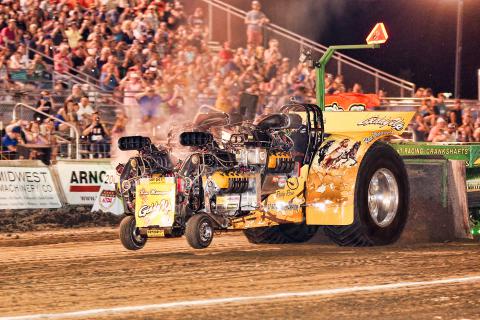
Although events were harnessed this year due to COVID-19, the truck and tractor pulling segment is poised for continued gains thanks to an endless quest for more power and support from grassroots enthusiasts.

Massive horsepower and a growing sense of independence are helping to enhance the character and personality of the extreme motorsport of truck and tractor pulling—even in the current vacuum triggered by the COVID-19 crisis. Always a fan favorite because of the flamboyant body styles, colorful paint schemes, and unlimited classes with radical multi-engine setups, pulling events have been severely curtailed this season, due in large part to many fair circuits being forcibly shut down. Yet, there is unmistakable optimism within the pulling community for next year and beyond.

“We’ve been wiped out from around 70 events to a half-dozen this year,” said Gregg Randall of the National Tractor Pullers Association (NTPA), Columbus, Ohio, who also noted that the 2020 date deposits all rolled over to next year. “If there’s a silver lining to all this, we’re sitting on the contracts. So, we’ve got a full schedule set for next year.”

pulling1
There’s a growing number of dedicated parts now available for the pulling community, as the sport is becoming a major target for manufacturers. “The technology has come to us. It used to be everybody’s stuff was almost hand-me-down from drag racing,” one source said. Photo courtesy of SCS Gearbox.

Other positive factors for the NTPA include more than 15 years running on RFD-TV, which is a popular rural television network and an important selling point when soliciting sponsor support, and growing audiences on the sanctioning body’s live-streaming Internet feeds.

“The county fairs have really slowed up, which definitely hurts the business. But people still have it in their blood,” noted Ryan Salenbien of Salenbien Performance, Maybee, Michigan. “They will come to the dyno more times just to find the extra horsepower. So, when that day comes when everything opens up, they are ready to go. I mean, even if they haven’t got a place to pull, everybody is still striving to find more power.”

MORE HORSEPOWER

When it comes to illustrating the tremendous increase in horsepower delivered by the sport’s main classes, consider this comparison from Randall: “The biggest change in the sport has been the amount of raw horsepower that all the divisions are trying to hook to the ground. Thirty years ago, one competitor had seven engines and a few others had six engines. I’m not sure they could compete with some of the three- and four-engine tractors running today. We’ve got screw superchargers, and we’re hearing that people are making 15,000 horsepower!”

Jerry Lagod of Hypermax Engineering in Gilberts, Illinois, who builds his own engines, agreed with Randall’s assessment: “These engines max out at a little over 5,000 horsepower. But 10 years ago, they were probably somewhere around 2,500 horsepower. They’ve almost doubled in power.”

There are a number of points that help illustrate the sport’s surging autonomy in the motorsports universe. For one, Randall said the most successful events on the NTPA tour are standalones—those that don’t depend on fair crowds or some other headlining event to attract the gate. And that’s a reflection of promoters building a passionate and fully staffed organization behind those events—as compared to a charity group assigning the event’s planning to a volunteer chairman and co-chairman, for example.

Another selling point that’s directly in line with the racing industry is the growth of dedicated parts for pullers.

“The technology has come to us. It used to be everybody’s stuff was almost hand-me-down from drag racing,” said Craig Sage of SCS Gearbox, Bellevue, Ohio. “The guys now are getting the latest and greatest directly from Brad Anderson or Ken Veney. They are not being developed on the drag race side and coming to tractor pulling. It’s like the tractor pulling is more the major target. Some stuff may come from Pro Mod, but it’s more focused on us. I mean, at any given event there may be more blown alcohol motors at a tractor pull than some drag races.”

All that increased power eventually leads to parts failure and even massive destruction. One of the most significant milestones in the annals of pulling came in the early 1980s, when Mike and Chuck Sage developed “quick-change” optional gear sets for tractors that came from the factory with only a single ratio available. The company grew into SCS Gearbox, which now produces all types of race-oriented transmission and driveline products for pullers, monster trucks, and other extreme motorsports. And the key to that parts improvement has come in manufacturing advances.

“The gear technology itself [came] from what my dad started with,” said Craig Sage. “The CNC equipment and advent of CMM to check gear tolerances six and eight decimal places out—yes, that technology has just come a long way.”

Improving on the factory wares has been a driving force for race-parts development since the first automobiles lined up side by side. It’s no different for diesel trucks and tractors that make up a majority of competition at pulling events. First come the requests from racers, then the aftermarket responds.

“We’ve had diesel guys wanting us to make crankshafts for some time,” said Brook Piper of Callies, Fostoria, Ohio. “The demand started with the Duramax world. I hate to say it, but it’s not a matter of ‘if’ but a matter of ‘when’ you’re going to break your crank. These guys all talk, so the Duramax guys were telling the Ford guys how nice our stuff was. So, then they came knocking.”

pulling2
Many of the most successful competitions for major touring series are backed by promoters building passionate and fully staffed event operations. Pictured here is the National Tractor Pulling Championships at Bowling Green, Ohio, where Doug Theobald of Shelbyville, Indiana, claimed the 6,000-lb., twin-engine Light Unlimited division title in “Full-Blown Wicked.” Photo courtesy of Tracy Waters and NTPA.

Callies offers different levels of crankshaft strength. The DuraStar is the entry-level model, followed by the DuraMag and then the Ultra Billet. Success with its crank line also led to new camshafts for the GM product, and connecting rods and cams for Fords.

“The cylinder pressures these guys are seeing are just unreal. We try to use our knowledge that we’ve learned in the Top Fuel world and other places to give them the best product we feel is going to hold up to these kinds of severe beatings,” said Piper, adding that the large diesel-tractor crankshafts are being studied for possible development. “We are starting to look at the size of those cranks. You know, it takes special equipment to do that. I carted two John Deere cranks around this week and I’m guessing that thing was almost four feet long. Right now, we’re just doing a little homework on those, along with the International.”

With diesel engines so prevalent in pulling—both on the track and among fans in the stands—lubrication companies are eager to tap the market.

“We started out with diesel drag racing, and some of the events we sponsored had crossover into truck and tractor pulling,” explained Eric Trimble of Lubrication Specialties, Inc., a company out of Mt. Gilead, Ohio, that markets Hot Shot’s Secret products. “There are multiple events that we sponsor for the sled pulls—some local ones, some more on a national scale; and then this year we stepped that up and became a key sponsor with the NTPA.”

Under normal event circumstances, Hot Shot’s Secret would bring 20 to 40 employees, dealers, distributors, and others to an event. Products and swag would be available for purchase, but the primary goal is to interact with the racers and fans.

“We like to bring a lot of people not only to staff the booth but to mingle with everyone…from tower announcers to pit crews to fans. That is our philosophy when it comes to events,” said Trimble, noting that the company is committed to the market with a three-year sponsorship agreement.

Fuel additives from Hot Shot’s Secret are popular among racers, especially those that provide additional lubricity for injectors and pumps.

“When we work with some of our sponsor drivers in diesel drag racing, it helps us with product research and development because they are pushing it to the limits. And the same thing with these truck and tractor pullers, same concept,” said Trimble.

Schaeffer’s Specialized Lubricants of St. Louis, Missouri, is leveraging its experience serving the heavy-duty and off-highway markets to provide racing products for different disciplines, including diesel truck pullers.

“We’ve grown that business quite a bit in the last few years mainly because pulling is a growing sport,” said Steve Rober. “Naturally, we are really big in the diesel business. We like to feel that our participation is greatly rewarded by the fact that people give us feedback on the products, as well as demonstrating to other people how beneficial they are.

“The good thing about truck pulling is those guys are active on social media, which we like,” Rober continued. “They like to participate in their community, and there is a lot of back and forth. It is very similar to our other racing, except it is just in the diesel truck market, which is basically our favorite place.”

FASS Diesel in Marthasville, Missouri, is also promoting a product generally used by long-haul trucks and off-highway equipment to help keep the fuel consistent for pullers. Known as the Fuel Air Separation System, this product removes dirt and water/air molecules to protect fuel injectors and help maintain a reliable fuel flow.

“It increases lubricity, which will extend the injector life and maximize performance. So you get a better burn, a more complete burn. Your horsepower, your torque, your idle—everything is cleaned up,” said Howie Thompson, noting that FASS features testimonials from truck pullers in its promotional videos. “Semi-trucks, tractors, drag race trucks to everyday drivers can all use it. We’ve achieved great flow rates with it, and we can deliver the amount of fuel those higher-horsepower applications need.”

As for fuel, there isn’t a wide range of grades and additives available for diesel. However, diesel racers are looking for stability and reliability in their fuel—a quality not always found in standard #2 diesel at the truck-stop pumps.

pulling3
One of the most significant changes in the sport of truck and tractor pulling is the sheer amount of power these machines are capable of putting to the ground. “[They] max out at a little over 5,000 horsepower,” one source said. “But 10 years ago, they were probably somewhere around 2,500 horsepower. They’ve almost doubled in power.”

“So, we look at the consistency of the product,” explained Fred Turza of VP Racing Fuels, San Antonio, Texas. “We built a fuel that is consistent each and every time for these guys to utilize. We also created a fuel with an oxygenate to help some with performance. I think our objective was to create a fuel across the board that could be utilized in all different sanctioning bodies. It would be the same all the time.”

Another important factor in the fuel’s development was startup. With so much boost being put through today’s racing diesel engines, a lower compression ratio is often required. That forces the crew to use lots of ether to help get temperature in cylinders when starting engines with mechanical injection pumps.

“It’s always good to make more horsepower and torque, but I think most of the conversations I have had with some of those fellows is that they’re just happy the way the engine feels when it starts up,” said Turza, adding that the company is eyeing opportunities to get further involved with the sport. “I think the sanctioning bodies have done quite a bit for us. Now it’s up to us to move forward to the next step.”

pulling4
A source from Hypermax Engineering—which produces its own pulling engines and support engine components at its facility in Gilberts, Illinois—told us that parts reliability in the sport has vastly improved in the last 15 years or so, and that dependability is still key when developing new components.

Improving startup routines at the track is a focal point for Milwaukee, Wisconsin-based Optima Batteries, too, as many of the bigger tractors carry Optima-brand batteries in their starting carts.

“They will typically use four batteries,” explained Jim McIlvaine. “A good example is Sullivan Pulling. They use four D34 yellow tops in their starting cart. But, for their two-wheel-drive truck they use a single T34.”

Many of the batteries used at pulling tracks aren’t recharged during the run. Instead, they become deeply discharged and then charged back in the pit. For these racers, it’s not so much cranking-amp power, but the ability to deep cycle over and over.

“It is a small enthusiast group in terms of the active participants, but fans of truck and tractor pulling are really loyal and very engaged,” said McIlvaine. “We did a series of videos with our brand ambassadors during the coronavirus lockdown. I mentioned that the response we got on the Sullivan pro-pulling high-performance house call was one of the very best of the two-dozen we did. And that is a testament to their fans and fans of truck and tractor pulling that they are into it.

“We get approached for sponsorship opportunities every day from every kind of motorsports. I think truck and tractor pulling will always be a part of what we do because it checks a lot of boxes for us in terms of the people that are involved in it directly and the people who are fans,” McIlvaine continued. “Any truck and tractor pull that you go to, you go out in the parking lot and you are going to see a bunch of trucks, and most of them will be diesels and most of those trucks will need two batteries. And so it is a big audience for us, and it’s a big customer base.”

Rules don’t change often in truck and tractor pulling, a position that Randall said helps ensure competitors’ continued participation. Safety, however, is one area in which guidelines are reviewed constantly.

Factory bellhousings could never withstand a clutch or torque converter explosion, so Custom Floaters in Brookpark, Ohio, has developed hydro-formed steel housings for popular diesel and blown-alcohol applications.

Citing the company’s complete bellhousing units, which are all SFI-certified, Wade Humrichouser said, “We give you the mid-plate, and the bellhousing can use the stock starter, or stock ring gear. It is 10.75 inches deep, which is deep enough for a five-disc clutch. We send them to a test lab certified by SFI and spin a flywheel that has been crippled and ready to explode between 8,500 and 9,500 rpm. It has to successfully contain the debris in three straight tests.”

GRASSROOTS APPEAL

The popularity of organized regional and national truck and tractor pulling has spawned a grassroots movement throughout much of the Midwest that involves homemade tracks and rented or homemade sleds. It’s called brush pulling.

“A lot of guys that we sell to, I am not always sure where the product is ending up at,” Humrichouser conceded.  “We are pretty big with the brush pullers. They’re not always sanctioned. They’re mostly clubs that put on pulls, but they will go by NTPA guidelines.”

“I think you’ll see a lot more of the brush pulling,” added Kent Crowder of Scheid Diesel, Terre Haute, Indiana. “Pulling in general is becoming more popular.”

Scheid specializes in Cummins diesel products, and its approach to product development is somewhat of a blueprint for building horsepower and solving problems. “The Cummins has been our major achievement. We have billet blocks and build our own cylinder heads. Basically, we build that engine from the ground up pretty much in-house,” said Crowder. “Throughout the years, we kept pushing the Cummins harder and farther. The first major problem was splitting the block down the middle at the deck.”

At first, Scheid designed deck plates and sleeves to help contain cylinder pressure, but that move only drove the weak point lower in the block. “Now that block is actually going to try to separate at the camshaft and come apart in a real ugly manner, destroying a lot of parts. That is where our billet block program came around.”

Turbo boost is now around 140 pounds in the engines that Scheid builds for the Super Stock class, which maxes out at 7,500 pounds vehicle weight on an 18-x-34-inch tire. With that kind of torque, the rest of the drivetrain takes a beating. Again, pullers reach out to specialty manufacturers to develop gear particularly for their sport.

“We turn to Profab Machine [in Baldwin, Wisconsin] for those components, and they have done an excellent job of keeping up with whatever we needed, fixing the next weak point,” Crowder added.

As mentioned earlier, Hypermax also builds its own engines, a derivative of the International 466 family. In addition, the company has designed a unique turbocharger and its own fuel-injection pump.

“The newer fuel injection is all electronic. With a mechanical system, the injection pump dictates what goes on. We still have pressures that exceed 30,000 psi, which is comparable to a constant-pressure pump on an electronic system,” said Lagod, adding that dependability is still key when developing new parts. “Parts reliability has vastly improved in the last 15 years. We always have had a very robust development program, and we would try to find the weak points of the parts here before we sold anything. So, our pumps are all fully developed. We run them on an in-house, high-horsepower fuel-injection bench. We pretty much weeded out the parts that were not robust enough to be able to handle the job.”

Along with designing comprehensive test programs for components, pullers are embracing dyno time to fine-tune their engine programs. Salenbien Performance has two dynos, including one that is rated up to 6,000 horsepower.

“On the dyno, we can see gains of 100, 200 horsepower just by optimizing the engine,” said Salenbien. “I have had a lot of instances where a customer goes to a pull and they’re happy with the way the truck runs. They just do okay. But when they come to our shop, we test it, figure things out, and we get more power. Then they go back to the track and go from taking sixth place to first place. They are more competitive, and happier.”

“More competitive” is certainly a fair analysis of truck and tractor pulling today, and it’s taken no less than a global pandemic to dampen the merry spirits of pullers and fans. Yet this loyal, resourceful group of racers will find a way to enjoy their sport.

“It’s definitely slowed because of our current state, but still in certain areas they do a lot of brush pulling. A bunch of people get together and throw on a pull basically just to pull against each other without a lot of spectators,” said Salenbien. “It is just one of those things—people are hungry for the sport, hungry for the power!”             

SOURCES
–

Callies
callies.com

Custom Floaters
customfloaters.com

FASS Diesel Fuel Systems
fassride.com

Hypermax Engineering
gohypermax.com

Hot Shot’s Secret
hotshotsecret.com

NTPA
ntpapull.com

Optima Batteries
optimabatteries.com

Salenbien Performance
salenbienperformance.com

Schaeffer Manufacturing
schaefferoil.com

Scheid Diesel Service
scheiddiesel.com

SCS Gearbox
scsgearbox.com

VP Racing Fuels
vpracingfuels.com
October 2020
By
MIKE MAGDA

Tech Support: Fuel System Components

Submitted by ashtonr on Thu, 10/01/2020 - 07:01


It takes a village of parts to build a winning system, and today’s aftermarket tech reps are equipped to provide the clearest path toward optimizing all products involved.

The impact of fuel injection, both electronic and mechanical, was never more apparent than in August on the Bonneville Salt Flats, where 72-year-old George Poteet and his Speed Demon streamliner jolted the AA/BFS land-speed record from 417.020 mph up to 470.015 mph, posting an astounding final exit speed of 481.576 mph. That’s the fastest any piston-engine, wheel-driven vehicle has ever been recorded on land.

Powering the Speed Demon is a twin-turbo 557-cubic-inch big block Chevy engine that pumps out more than 3,000 horsepower with around 30 pounds of boost. Built by Kenny Duttweiler, the engine features a unique hybrid fuel system with 16 electronic injectors and eight mechanical injectors to feed methanol into the cylinders. And it’s a thirsty motor!

“Coming out of mile five, 11.5 gallons of fuel per minute were flowing to the engine,” said Shane Tecklenburg, who helped tune the fuel-injection system and noted that the car even needed a compound approach to the fuel-pump strategy. “There was an Aeromotive electric pump to start the engine, and then a Waterman cable-driven mechanical pump takes over for the run.”

Basically, the electronic injectors are used for startup and low speeds. Based on rpm, throttle position and boost, the mechanical system will kick in and match a certain flow. At the same time, the electronic injectors will subtract its fuel delivery by an equal amount so that the mixture is never deviated during the transition. Now the team has “controllable and tunable overhead” to make adjustments with the electronic system as the speed continues to increase.

The brain of any EFI system—that is, the ECU—usually gets most of the headlines when reviewing an electronic-based fuel-delivery setup. However, supporting equipment is absolutely critical to achieving optimum performance.

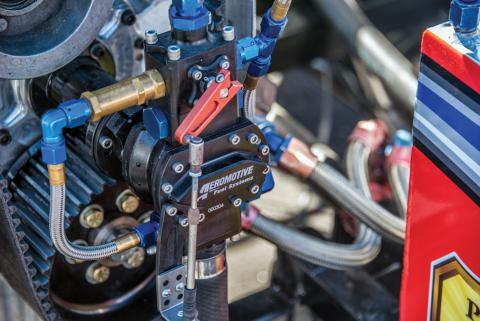
“We look at what’s required in terms of flow and pressure, and we produce a fuel pump to meet those requirements,” explained Brett Clow of Aeromotive, Lenexa, Kansas. “With that done, the rest of the fuel system is dictated by that fuel pump. How big do the lines and fittings need to be? How much flow do the pre- and post-pump filters have to handle? And then we look at the regulator. People ask why we have so many regulators. It’s because we have so many pumps.”

Matching components to build a winning fuel system certainly takes a team effort, especially with so many new features being built into today’s sophisticated systems.

“At the racer level, the ECU controls spark, fuel, [and] boost, and supports other strategies in the background,” said Sam Chaysavang of AEM Performance Electronics, Hawthorne, California. “There’s still development in adding more features and support for new products and strategies.”

That means more complex systems are on the horizon for racers not bound by rules that choke innovation. Selecting the ECU is most likely the fun part of the build, but then working with manufacturers and their tech reps becomes essential when selecting all the supporting equipment.

“We had a customer who wanted to convert his Harley EVO to fuel injection,” Clow recalled. “Without carbs, he was able to put a lot more air into the engine, and we had to match it with fuel. The challenge was packaging—where to fit everything from adapting a -8 AN fitting at the fuel tank, to supporting an external fuel pump and finding the smallest regulator.”

With those thoughts in mind, we set out to discover what questions tech departments of fuel components suppliers (with an emphasis on the supporting equipment needed to build a performance fuel system) have spent the most time answering. This Q&A sampling by no means addresses the gamut of fuel-system challenges, but it does underscore the need to work closely with aftermarket tech reps to build the right system for each application.

Does increasing system fuel pressure increase injector flow?

We still have to be mindful of the maximum pressure an injector is rated for, but yes, increasing fuel pressure can increase the flow of a fuel injector. Our Holley EFI injectors are rated at 43 psi, but some customers choose to run their system pressure (regulator) at 60 psi. How do you calculate the new flow? We need to find the square root of the difference in pressure, then multiply that value by the flow of our injector.

As an example, let’s use our 48 lb/hr injector (48 lb/hr @ 43). The square root of (60/43) is about 1.181, multiplied by the previous rated flow of 48 gives us a new rated flow of 56.7 lb/hr (@ 60 psi). A simple adjustment could help a customer hold off on upgrading injectors for a time. —Holley Performance Products (Bowling Green, Kentucky)

fuel1
Matching components to build a winning fuel system certainly takes a team effort, especially with so many new features being built into today’s sophisticated systems. Which is why it’s vital that builders work with manufacturers and their tech reps when selecting supporting equipment.

Can I use leaded racing fuel with my EFI system?

Leaded racing fuels will ruin the oxygen sensor, so it is not recommended for use in closed-loop EFI applications where real-time fuel adjustments are made based on data from the O2 sensor.

Another key point with a racing application is that there needs to be 18-plus inches of exhaust pipe from where the oxygen sensor is placed. This means that an open header is not a good location, unless you have a very long collector.

Lastly, when it comes to a speed-density system like FiTech, the EFI needs to read engine vacuum to determine the load on the motor. If the race engine has a large cam with lots of duration and valve overlap, this will cause tuning issues. A good rule of thumb is that the EFI needs a minimum of four to six inches of engine-produced vacuum at idle for the system to operate. This would also require additional tuning on engines with cams this large. —FiTech (Riverside, California)

My pressure is too low. How can I tell if the fuel-pressure regulator is malfunctioning?

While we speculate that mechanics like to blame the regulator right away—because it’s responsible for controlling pressure, right? The truth is, almost never is the component itself at fault.

The best approach to diagnosing a pressure problem is to consider the regulator as a relief valve, since that’s what it is. Once the pump is able to deliver enough flow rate to begin pressurization, until the pressure rises up to the set pressure, the regulator remains closed and [is] not allowing fuel to be returned back to the tank. Once the fuel pressure gets to the setting level, only then does it allow fuel to return back to the tank to control the pressure. Most of the time when the pressure is too low, it is because of the fuel pump or a fuel-pump installation error. —Fuelab (Collinsville, Illinois

fuel2
Increasing system fuel pressure can increase injector flow, as our source from Holley Performance Products points out. “Our Holley EFI injectors are rated at 43 psi, but some customers choose to run their system pressure (regulator) at 60 psi. A simple adjustment could help a customer hold off on upgrading injectors for a time,” the source explained.

What is ‘Pulse Width Modulation’ and how is it beneficial?

With more advanced engine management systems available, customers are starting to learn more about PWM, or Pulse Width Modulation. We’re starting to see more people programming their ECUs to control the fuel pump, and the method of control is PWM. Although analog control is available and analog signals are easier to understand, more of the high-level ECUs on the market now have PWM outputs to control devices, such as our fuel pumps.

Think of PWM versus analog as the difference between FM radio and AM radio. FM radio signals are a lot clearer. A 12-volt pump can generate “dirty electrical noise,” and a PWM signal is unaffected by this noise.

Now tuners can set up the fuel pump to run on demand. The ECU already knows exactly how much fuel the engine needs at any one time—and it can use those parameters to control the fuel pump directly. With high-flow systems, there is heat buildup because you’re moving so much fuel. For these high-powered vehicles to run on the street, you don’t want to tax the electrical system and put all that energy into the fuel system. It can overheat and ruin the fuel pump, leaving you stranded. With the ECU controlling the fuel pump, you can now sit in traffic and not worry about the fuel system overheating. —Fuelab

fuel3
To find which size injector is best for an application, builders first need to determine estimated flywheel horsepower, whether the engine is boosted or naturally aspirated (N/A), and the type of fuel used. Then, “we can use a basic formula to determine the flow rate required by your engine,” said our source from FAST.

What size injector should I use for my application?

This is possibly the most-asked question regarding EFI, and certainly one of the most important. Key information is required before making this decision, including estimated flywheel horsepower, whether the engine is boosted or naturally aspirated (N/A), and the type of fuel. Now we can use a basic formula to determine the flow rate required by your engine.

First, take your target horsepower and multiply by: 0.5 for N/A; 0.6 for supercharged; 0.65 for turbocharged. Take that number and divide by the number of cylinders. Now, divide that number by .9. This represents a 90% duty cycle and will give you the lb/hr rating you’ll need for each injector using gasoline.

If you use an aftermarket fuel, then apply the following correction factors: Q16 x 1.09; E85 x 1.35; E98 x 1.40; Methanol x 2.00.

Here’s an example using this formula: 650 horsepower naturally aspirated V8; 650 x 0.5 = 325; 325/8 = 40.625; 40.625/0.9 = 45.1 lb/hr for gasoline or 60.9 lb/hr for E85.

If the formula results in a number that is not on a size chart for the brand of injector you’re considering, then the general rule is to round up to the next largest size. —FAST (Memphis, Tennessee)

What micron filter should I use to protect my EFI injectors running gasoline, and what if I switch to E85?

EFI injectors, all makes of pressure relief valves, and Lucas mechanical metering units need three-micron protection. However, three-micron filters plug up too quickly. Most racers use 10-micron, which is too coarse. We made this a new element for NASCAR Cup cars with a 10-micron premium paper top layer to take out 95% of the dirt, then added a three-micron precision fiberglass lower layer.

For reference, 25.4 micron equals .001-inch, so 10 micron will equal about .00039-inch, and three micron is .00012-inch.

—Kinsler Fuel Injection (Troy, Michigan)

I’m transplanting an EFI engine with a returnless fuel rail into a street rod. The fuel rail has a single line connection. Do I need a bypass regulator? How should it be plumbed? Can I mount the regulator back at the tank or should it be near the engine?

Yes, a bypass regulator with return line must still be used. Locating the regulator in the rear of the car can be done, but everything works better with the regulator as close to the fuel rail inlet as possible.

In order to use the returnless fuel rail that came on the engine from the factory, the bypass regulator must be located before the fuel rail. Since the stock returnless rails have only one connection point—that is, the inlet—an adapter fitting for the AN line is required. Aeromotive offers a number of OEM to AN adapters to help with this.

For optimum performance, including from the sharpest throttle response to the best hot start-up, your bypass regulator should be located in the engine compartment, as close to the fuel rail inlet as possible; and the return line will be the full length of the car.

Aeromotive EFI regulators P/N 13303 and 13138 are popular for returnless engine transplants. And be careful using a factory style filter-regulator if your fuel pump flows more than 200 liters per hour (LPH). —Aeromotive

fuel4
Our source from Aeromotive told us that in order to find the proper fuel pump, the company will determine what’s required in terms of fuel flow and pressure. “With that done, the rest of the fuel system is dictated by that fuel pump,” he said. “How big do the lines and fittings need to be? How much flow do the pre- and post-pump filters have to handle?”

I want to use a dual-stage fuel system in my turbocharged drag car to eliminate the need for an intercooler. I want to run on high-octane fuel in vacuum and as boost pressure increases blend methanol for effective octane increase and cooling in the cylinders. What is the best way to achieve this using a standalone?

To achieve this, you need a standalone system equipped with enough injector outputs and capable of multi-stage injector control. The vehicle would also be fitted with two completely separate fuel systems capable of supplying the volumes needed for the application. Depending on the EFI system, the strategies may vary, but with our Infinity EMS you would need to characterize and input the primary and secondary fuel system flow characteristics as well as the fuel’s properties like stoichiometric ratio and specific gravity for each fuel so the system can properly calculate the injection pulse required to achieve a user-defined lambda target table. Since this system is a volumetric efficiency-based airflow model, you’d only need to define at which point the system transitions from one fuel system to the other. We also need to define how that transition happens using the multi-stage fuel system control features. The injection pulses per each fuel system is then calculated for a seamless transition.  —AEM Performance Electronics

What’s the correct pump for my truck?

It’s not a question that can be easily answered. It all depends on the individual application. Obviously, we need to know the year and model, then it depends on what’s been done to the truck. Basically, we work off the current horsepower and what may be planned for the future. For example, at 600 horsepower, a 100-gallon-per-hour pump would be plenty. If under 900 horsepower, then step up to 165 gph. We also have 215 and 290 gph pumps for even higher horsepower applications. Then there’s a choice between the Titanium Signature Series with dual filters and FASS air separation, or the fully adjustable Signature Series. —FASS Diesel Fuel Systems (Marthasville, Missouri)

SOURCES

–
AEM Performance Electronics
aempower.com

Aeromotive
aeromotiveinc.com

FASS Diesel Fuel Systems
fassride.com

FAST
fuelairspark.com

FiTech
fitechefi.com

Fuelab
fuelab.com

Holley Performance Products
holley.com

Kinsler Fuel Injection
kinsler.com
October 2020
By
MIKE MAGDA

THE SCIENCE OF SPONSORSHIPS

Submitted by ashtonr on Thu, 10/01/2020 - 06:54


Transform a partner agreement into a relationship that benefits all parties.

As the industry seeks to make headway in the era of COVID-19, sponsorship agreements continue to play a pivotal role in the overall health of motorsports—perhaps now more than ever before. Whether we’re talking about grassroots circle track events or top-level open wheel competition, racing ultimately requires a way to make the math work.

“It’s the lifeblood of motorsport, and it always has been,” said Todd Stonis of Sport Dimensions, Denver, Colorado. “Without it, you’re not on track. And I think because of that, the relationship between sponsors and the teams runs even deeper here than it does in other sports. For motorsports, it’s part of the DNA.”

It’s a simple concept: Sponsorships help bridge the budget gap for teams while providing effective marketing for brands that want to get the word out about their products. But a fruitful partnership is comprised of more than just statistics, a payout, and a signature on the dotted line—it’s a lasting relationship that ideally provides tangible benefits for all parties involved. And as we discovered during our discussions with industry experts, there’s often a lot more to that than initially meets the eye.

marketing1
Because of the vital role sponsorship plays in racing, “the relationship between sponsors and the teams runs even deeper here than it does in other sports,” one of our sources noted. “For motorsports, it’s part of the DNA.”

FOUNDATION OF SUCCESS

As Jackie Ressa of Contingency Connection’s grassroots Racer Rewards program in Kingsport, Tennessee, explained, the roots of an effective sponsorship agreement are usually established before ink is ever set to paper. “The goal is to put together something that’s truly beneficial for all parties involved. That’s the path to a long-term agreement. It has to be something that fosters the same level of commitment from everyone. You should never ask for more than you’re willing to give yourself, whether that’s time, energy, effort, or anything else. And that applies to both sides of the equation.”

That’s particularly important in agreements where racing products play a role. “It needs to be a two-way street, where the teams want to take a product on that’s going to help them succeed,” said Tom Bogner of Lucas Oil Products, Corona, California. “If they’re going to make a move from one brand’s product to another’s, they want to make sure it’s the superior option—something that’s going to help them win even more. That means that these companies have to make sure they’re keeping up with everyone else in that market so that those teams want to take that product on.”

marketing2
The basic concept behind sponsorship agreements is simple: Teams help promote a product or brand in a way that goes above and beyond what companies are able to accomplish on their own; and the companies, in turn, help bridge teams’ funding gaps. 

Stonis noted that, for endemic brands, motorsports is often a proving ground where product performance can prove crucial to the life expectancy of an agreement. “Maybe in lieu of cash, the sponsor is providing intellectual property or engineering support, and working with the team to elevate their competitiveness with that product. If it enhances their performance, it gives you as a sponsor great stories that you can tell, and anything that provides a team with an advantage is going to be appreciated. Technical support is very valuable, especially to smaller teams that are working with limited resources,” he explained.

That support can also help cement lasting agreements at the upper end of the motorsports spectrum as well. “A great example of that is our affiliation with Richard Childress Racing,” Bogner said. “That partnership brings a lot of value to them and they know it. In the past, they’ve sent Cup engines to us so we would be able to test a sample before we shipped something to them. These days they’re doing the dyno testing on their end, and then they’ll send us back photos of camshafts and any other critical areas after the teardown so we can evaluate how those specialized formulas are performing and make adjustments as needed.”

In other situations, starting off on the right foot can be as simple as a clear statement of what’s being brought to the table. “An agreement should have a detailed list of benefits, something that explains exactly what you’re getting,” said Eric Zimmerman of Finish Line Motorsports Marketing, Scottsdale, Arizona. “At our company, we have an art department that will create a rendering of the race car that shows exactly how it will look on the track with the sponsor’s branding on it, along with the team shirts, the banner on the pit wall, and so on. And on the team’s side of the agreement, the expectations don’t necessarily have to be a check. Depending on the type of company they’re working with, it could be lodging, food for the crew—something that would otherwise be an expense for the team anyway. That can prove to be very important for them.”

Ressa also said that it can take some time to see an impact once an agreement has been set in motion, and sponsors can set themselves up for failure if they expect too much too soon. “I don’t think generalities are wise—you need to be as specific as possible about what you expect and when you expect it,” she explained. “But the timeframe also has to be realistic—I’ve seen sponsors get involved with racers and/or race-marketing programs, and give them maybe one season to impact business. That might not be enough—I think that it’s typically the second year where they start to really see results. You’re promoting an idea, and often educating, the first year, and you reap the benefits the second year.”

DERIVING VALUE

Motorsports industry veteran Alex Striler, a PRI Trade Show Speaker on sponsorships and author of Motorsports Marketing & Sponsorships, says there are two key types of assets that a team or property can offer sponsors, both of which should be taken into consideration.

“Tangible assets are easily measured and can therefore be quantified to come up with a fair relative value,” he explained. “Those are things like logos on the race car, fire suits, helmets, crew uniforms and caps, website, hauler or semi, posters, hero cards, and that sort of thing. Intangible assets are not easily quantified, yet they can increase value significantly, like the team or driver’s reputation, series prestige, networking opportunities, and positioning alongside strong brands and powerful partners. Think of intangibles as the sponsorship equivalent to the location factor in real estate. Personalities like John Force, Ken Block, and Travis Pastrana can create massive intangible value for their sponsors—even when they’re not racing—because they have such strong and loyal fan followings.”

He added that teams should approach sponsorship agreements with creativity if they want to forge a long-term partnership. “The press is always looking for an interesting story. If you’re not giving them news through wins, give them something else to report. Effective sponsorships are unique. Companies aren’t paying teams and properties to do what they can do on their own. Add value to brands by giving companies content, assets, and opportunities that their marketing team doesn’t have access to or isn’t already doing. If the media doesn’t report on your performance at the track, create your own media to showcase your partners,” Striler explained.

For sponsors, a partnership’s worth can be measured in a variety of ways that don’t necessarily translate to a spreadsheet. “Staying in regular communication about the goals and objectives you have as a sponsor, and making sure that those align with what the team’s assets can provide, is very important,” Stonis said.

“You want to avoid going back to an agreement and looking at every line,” he continued. “It should be a broader relationship—the agreement is the foundation, not the bible. It’s important to consider what your objectives are and understand what that team is able to provide to you. I think the ultimate goal is to engage your audience in an emotional way that you can’t do otherwise. It’s essentially an extension of your brand through these personalities that can bring excitement to your product.”

marketing3
Before pursuing a sponsorship, companies should verify that potential partners reflect their core principles: “Do your homework,” said one insider. “[M]ake sure the company, or team, or track closely aligns with the image and values that you want to portray.”  

And, Zimmerman also reminded us that the traditional metrics are as relevant as ever. “Sponsors keep track of things like the number of minutes of television coverage your car received during a race and how many times a team sponsor was mentioned on the radio,” he said. “Even a crash can have positive value—that can be several minutes of TV coverage, and that’s worth a lot of money to a sponsor. And, of course, the competitiveness of the car is huge—in NASCAR, if your team is running in the top 10 you receive about 50% of the television coverage for the race. That’s an invaluable amount of exposure.”

BEST PRACTICES

As with any partnership, the ability to trust who you’re doing business with is intrinsically tied to the success of the agreement.

“Do your homework—make sure the company, or team, or track closely aligns with the image and values that you want to portray,” said Ressa. “And I think it’s important to look at a sponsorship agreement as a complete marketing mix, so that includes social media and any other mediums that allow you to make a personal connection with potential customers.”

Consistency is also very important, and that’s a two-way street as well. “I see some manufacturers who get in a program for a year and then get out, and repeat that over the course of several seasons,” she added. “I think there’s something to be said for being a sponsor that racers and tracks can count on if companies want their programs to succeed.”

marketing4
On-track success is a powerful selling point for racers, and experts urge teams and drivers to make the most out of their trips to the winner’s circle. “Whenever you step on the podium, make the brand a winner, too.” Photo courtesy of NASCAR.

Stonis said that maintaining a strong focus on the core objectives outlined in the agreement will help keep things from veering off course. “It doesn’t help anyone if the team has one measure of success and the sponsor has a totally different one. Understand the objectives and have them in writing. That way, when the reviews come up you’ll all be looking at the same scoreboard.”

Striler pointed out that while sponsorship brings with it significant risk, there are ways to mitigate it. “Every year new series emerge while others disappear. GRC, Lucas Oil Drag Boat Racing Series, and CORR all collapsed when fans, teams, and sponsors thought they were going strong. When marketing directors make significant investments in teams or series that don’t perform, they put their careers on the line. That’s why it is often easier for a team in a big series to get a large sponsorship than a team in a small series to get anything—the risk-reward tradeoff might not be there for the person making the decision to spend money. You need to minimize this risk to maximize their investment in your team.”

He suggested an ongoing, proactive effort by teams and drivers to connect the brand to the team’s successes as an effective way to do that. “Whenever you step on the podium, make the brand a winner, too. A good way to do this is by telling stories that include sponsors, so people will remember them—have a few good ones ready for every potential interview.”

And that should be part of a larger overall mindset on behalf of a team or individual that focuses on leveraging their visibility to promote a sponsor’s product in ways that the company cannot.

“Marketing directors and brands will pay for your ability to generate more sales in markets where they don’t have better alternatives,” Striler added. “Brands don’t care how much your engines, tires, and travel costs are, they care how much their investment in your team will increase sales more and better than using the same funds to buy advertising. No smart brand will spend $100,000 to sponsor you for the potential to get 15 seconds on television if they can purchase a 30-second commercial spot on the same show for $1,000. The price of your sponsorship must be more attractive to them than the opportunity cost of doing something else. Show sponsors the value you can provide with everything you do.”

Bogner concurred. “It’s like, ‘prove it to me.’ I don’t need racers looking for shortcuts, I need people who can show me a big reason to go back the next year, and multiple years after that.”               

SOURCES

–

Alex Striler
alexstriler.com

Contingency Connection
contingencyconnection.com

Finish Line Motorsports Marketing
finishlinemotorsportsmarketing.com

Lucas Oil Products
lucasoil.com

Sport Dimensions
sd.team
October 2020
By
BRADLEY IGER

STORAGE AT YOUR SERVICE

Submitted by ashtonr on Thu, 10/01/2020 - 05:10


The options for tool boxes, pit carts, and work stations are nearly unlimited, providing innovative solutions for race teams and businesses alike.

Just as a race car driver needs a cockpit optimized for the grueling competition of a race, every mechanic, technician, and crew member needs a viable work station to keep those cars humming. Pit carts, tool boxes, and work stations will deliver maximum efficiency when optimized for the job at hand, and fortunately, there are a lot of options for doing just that. 

Many racers will find it easy to order what they need ready-to-go from a website or catalog, as most manufacturers of shelving and tool boxes offer almost countless configurations as part of regular inventory. But not everything can be bought off-the-shelf. Ready-made products may be plentiful, but the unique needs of racers are likewise astronomical in number. Sometimes only custom options will deliver the required storage. How to navigate all the off-the-shelf or custom options is one of the challenges for any race team.

Not surprisingly, a number of different factors go into making those decisions.

“I always encourage people to get a notepad and a chair and go take 30 minutes and just make a list of what all you’re going to put in that space,” said Brian Hope of TechnoCraft, Mt. Pleasant, Tennessee. “And then break it down; there’s a lot of excitement about a new project, and I try to get people to slow down and think this through for a minute. Think about everything that needs to go in, whether it’s in your trailer or your shop or whatever. Think about even the small stuff [like] jack stands or notebooks. Everything that needs to go in there, think about where it’s going to go. And then we can help you design a space for that instead of you just trying to buy what we have available on our basic website.”

“It ultimately boils down to efficiency versus budget,” noted Nate Birkenmeier of CTech Manufacturing, Weston, Wisconsin. “It’s our job to make sure that no matter what, race teams are getting the best storage solution possible for their budget. Because every team operates a little differently behind the scenes, most pit storage solutions have some level of customization to match the team’s organizational and operational practices. Just as race teams are looking to squeeze every fraction of performance out of their race car, the same can be said about storage solutions in pit lane, trailer, and garage applications.”

box1
Tool box and pit cart manufacturers are tasked with getting racing teams the best storage solution possible for their budget. “Because every team operates a little differently behind the scenes, most pit storage solutions have some level of customization,” our source from CTech Manufacturing said.

The Internet age has delivered a number of new tools to help race teams construct the work spaces they need. “We have a layout app that’s on the Beta website, where they can take a look at their workspace and arrange it so that it’s efficient,” said Randy Booth of Beta Tools, Winter Springs, Florida. “Sometimes it depends on where lifts are in there, but it always really starts off with, first of all, what available space do you have? The second thing we look at is, what type of professional are they serving?

Being able to move things around on a computer screen before ordering eliminates much of the guesswork from outfitting a shop or garage. “With our brand new online cabinet store and configurator, it’s never been easier to plan your next cabinet or closet system,” said CTech’s Birkenmeier. “Customers can select individual cabinet modules and customize them to match their storage needs. Dimensions, powder coat color, opening configurations, and other options are all customizable, and ordering is painless.”

CUSTOM SYSTEMS

For some of the companies we spoke with, getting customers to purchase custom storage solutions requires breaking down the mindset that assumes options are limited to what’s shown in the catalog. “They see our website, they see that we have standard sizes, and they call and they ask about a standard size. So then I start asking questions,” said TechnoCraft’s Hope. “‘What do you need?’ Because we build everything to order, so if you tell me more about what you need, you may be buying something that you think that’s just what we make, and you don’t understand that we’ll make you what you need.

“There’s no rule that says all the doors have to be the same size,” Hope continued. “If you need one door bigger than the other door, a lot of people are conditioned that, if I have an eight-foot base, all three doors are the same size. Or if I have a six-foot base, they’re all the same size. Well, we can make doors larger or smaller. We have that capability to be flexible. But people are conditioned to read what’s available in a catalog and then just order that and kind of suffer through what their need is.”

Since many manufacturers of pit carts, tool boxes and work stations have racing backgrounds themselves, they understand how easily the requirements of motorsports can push someone into custom applications. Ricky Sanders of Pitboxes.com in Stockbridge, Georgia, raced for many years in the NASCAR sportsman series and learned firsthand the value of having a mobile tool box on pneumatic tires. When he started showing up at the track with his own creations, fellow racers came to him and asked that he build similar carts for them.

box2
The Internet age has delivered a number of new tools to help race teams construct their ideal work station setups. “We have a layout app where [buyers] can take a look at their workspace and arrange it so that it’s efficient,” said our source from Beta Tools.

“Pretty much everything has come from my background as far as being circle track and currently road racing-type stuff, and then feedback we’d get from some of our customers that are in different applications such as drag racing, some of the stuff that I haven’t been personally involved in,” Sanders said. “We take their feedback and develop special stuff that fits that application better. A lot of times if it’s popular enough, we turn it into a standard product for other people.”

“Adjusting size to meet spatial constraints is common, but the devil is in the details,” explained CTech’s Birkenmeier. “Teams are often looking to integrate technology and appliances, store very specific tools and equipment, and even outfit workspaces tailored to support various team member roles. The limit to custom features is nearly infinite, and we’ve had to engineer some extremely unique features in the past.”

Each form of racing comes with its own special sets of requirements. “The more specific things that need to be installed inside a cabinet, or if there’s equipment they need to roll away under things, that’s when we can purpose-build a cabinet or cart with that particular thing in mind and make it as functional as possible,” said Tristan Riley of Moduline, Brockton, Massachusetts.

Race teams would do well to understand that there are few custom-feature requests that tool box and storage cabinet makers haven’t already encountered, and come up with unique solutions. “With the circle track stuff it’s been a seat-top-type deal, where they can put their electronics and sit up on top of the box,” Sanders said. “On the drag racing side, we’ve done special mounts for their special jacks that go under the car.”

For Bear Pit Carts in Saint-Sauveur, Quebec, Canada, accommodating the variety of tire needs in racing has driven a lot of custom business. “It could be adjustable tire racks, which I do on my carts. A lot of them have them now, depending on the width of the tire, the type of tires, the location, it could be a little bit more one side, or a little higher, there a lot of little things,” said Richard Labrie.

“You could have wiring and plumbing for air,” Labrie added. “Let’s say you have bottles. I offer an air reel option, so you have an enclosed air reel in one of the cabinets that you can pull the hose from the outside. We’ve got electricity, so you have inlets and outlets for electricity. With all the phone devices and tablets, you need those USB plugs.”

There are other reasons besides specialized tools that a team or shop might need a custom cart—marketing and promotion. “Most of the time we have something that does fit their application,” Sanders said. “But if there is a unique situation where they need specific sizes to fit certain tools or something like that, we can, of course, custom make them. Then for display purposes for companies to take to trade shows, that kind of deal. Most of those are usually custom made to showcase their product the way they want to showcase.”

Ordering custom, of course, requires teams to be diligent about planning ahead. Lead times for custom orders can vary from company to company, and depending on seasonal demand. “We go anywhere from four weeks to 10 weeks depending on the time of year,” said TechnoCraft’s Hope. Lead times will be longer in winter, he added, since racers are taking care of offseason tasks.

box3
At Stockbridge, Georgia-based Pitboxes.com, “pretty much everything has come from my background as far as being circle track and currently road racing-type stuff,” said the company’s founder, “and then feedback we’d get from some of our customers that are in different applications.”

OFF-THE-SHELF

The two strongest arguments in favor of buying ready-made components are saving time and saving money.

Even so, buying off-the-shelf storage and work station components requires planning and research. “Re-organizing can be a difficult and overwhelming process if not handled correctly,” Birkenmeier said. “CTech can offer a few tips from experience: Knowing exactly what items you need to store is critical. We often recommend that teams approach organizing their storage unit based on how often certain items are used. The items that you use most often should be the easiest to access, typically via a drawer. Reserve bulk cabinet storage for things that aren’t used as often such as spare parts, boxes, and other large items. This is also a great time to make a wish list of additional storage needs that may be needed in the future.”

It’s also smart to think about organizing not just by individual items, but by looking at it from a systems perspective. “Do you want to systematically set it up based upon components of the car you might be working on, whether it’s the front end of the car, whether it’s an engine repair, or an engine breakdown?” said Beta Tools’ Booth. “You can set tool boxes up based on what that mechanic’s specialty is.”

box4
Knowing exactly which items you need to store is critical, as pit cart manufacturers are able to provide nearly unlimited setups and solutions—whether custom or off-the-shelf—for any number of applications.

Other choices involve materials, and the strength/weight trade-offs between steel and aluminum. “We have a lot of customers in the performance racing industry that love our products. What I hear from them the most is that they are looking for a product that will withstand the abuse they throw at it every day,” said Cody Freeze of Badass Workbench, Kearney, Nebraska. “They say, ‘Finally, someone is building a heavy-duty workbench.’ And, it’s made in the USA, which is important to a lot of these people.” He also cited the patented swivel drawers, which appeal to buyers.

NEW FEATURES

At first glance, it might seem like cabinets and tool boxes would be one of the more stable, unchanging outposts in the motorsports market. But advancing technology and an evolving racing landscape are driving innovations and trends in the storage and work station market.

“We’re currently doing some new NASCAR garage boxes,” said Sanders at Pitboxes.com. “The trend I’m seeing there is downsizing from the huge garage boxes—not the pit road boxes, but the ones they use in the garage before the race. Most of that is getting downsized. Even before the COVID deal hit, the new car that’s coming to the Cup series, they don’t need the huge tool boxes with all the tools because the car is so spec, they’re limited to what they can do at the race track anyway. And, of course, now we’re in a weird period where they’re not even practicing, so for the most part they don’t even need a garage box, because they show up, unload, and get it on the race track. So when that practice deal comes back these new boxes will have more electronics in them and less tool space, because the cars are going more similar to the IMSA stuff, where there are a lot of computer-controlled items on the car. With a lot of spec items you don’t have to take as much stuff with you.”

Mobility is another driver of innovation in shop storage. “In the garage, many racers and hobbyists are now looking for the ability to change their shop layout on the fly,” said CTech’s Birkenmeier. “Meaning entire cabinet units are being built on casters, and custom caster cart tool boxes are being manufactured to ensure that the customer can change the way their garage/shop space works if need be.”

“The biggest thing that we’ve seen recently is that people are looking to outfit cargo vans a lot more,” said Moduline’s Riley. “A lot of teams are buying them as support vehicles, or general team vehicles. They’re really versatile and just effective vehicles to have, and there are a lot of ways to outfit.”

At Bear Pit Carts, Labrie is seeing more racers looking for carts that won’t be impeded by less-than-optimal lighting at night races. “Lately, a lot of the racers are racing at night. Obviously, lighting is a problem at most places, decent lighting when you’re in the pits,” Labrie said, and Bear has developed options to address the problem. “Under the top of the cart they have an LED light bar that lights the tool box and two of the shelves. As an option I could do both sides. It provides decent light in that.”

box5
Some of the newest products from today’s top manufacturers were developed to promote a sanitary workspace. In May, for example, CTech Manufacturing released its first non-storage product: a sneeze guard for work stations. “The biggest impact that it’s had so far is helping our local road racing circuit, Road America, open its doors to fans,” a company source said.

Organizing strategies is another area where tool box development continues to evolve, and methods that were once on the very high end of the scale are becoming more mainstream. “What we’re seeing a massive surge in, and what we see consistently, is the organizational structure of the box, how they want to organize their tools,” said Beta Pit Tools’ Booth.

“And specifically, to that, what most of the higher-end professionals are going to is a foam cut-out that fits in the drawer that matches the size and length of the tool, so that it fits down in this little foam insert,” he continued. “The advantage to that is, number one, when it’s laid out efficiently you typically can get more tools in the box, and you’re not digging through a bunch of wrenches to get one. You know exactly where it’s at and it should be in its place.” Also, after the work day is done, it’s an easy check to open every drawer and see if anything is missing, he said.

The big driver in adaptation and innovation in motorsports in 2020 was, of course, the global pandemic. Going forward, an automotive workspace will include a lot more than just work benches, cabinets, and drawers. Many of the newest products from the manufacturers we spoke with were developed to ensure a sanitary work station.

New from TechnoCraft is a hands-free, standalone handwash sink. Hope explained, “Of course, it’s a result of the COVID pandemic. It’s foot operated, water pump, everything’s self-contained. It’s got a hands-free soap dispenser, hands-free paper towel dispenser, hands-free sanitizer. So it’s for industrial workshops, for convention centers, for movie production. We do a lot of cabinets for movie production, and they requested it to be on sets.”

In May, CTech released a new sneeze guard for work stations that will have wide applications in the motorsports arena. “Our sneeze guard represents the first non-storage product we’ve ever manufactured,” said Birkenmeier. “The biggest impact that it’s had so far is helping our local road racing circuit, Road America, open its doors to fans. With many racing series still operating on no-fan or limited-fan attendance rules, Road America has been able to host SCCA, IndyCar, and SVRA vintage events with virtually no fan limitations thanks in part to our sneeze guards being deployed at all high-contact areas. Any race shop or team looking to protect their staff and fans or customers can incorporate these adjustable sneeze guards into their space.”

Whether by ordering custom or off-the-shelf, there’s a solution for any racing-oriented work station. Even when a global pandemic throws a wrench into everyone’s plans.

SOURCES

–

Badass Workbench
badassworkbench.us

Bear Pit Carts
facebook.com/bearpitboxes

Beta Tools
beta-tools.com

CTech Manufacturing
ctechmanufacturing.com

Moduline
modulinecabinets.com

Pitboxes.com
pitboxes.com

TechnoCraft
trailercabinets.com
October 2020
By
STEVE STATHAM

5 Reasons Why The Youth Karting Market Is Evergreen

Submitted by danielk on Thu, 10/01/2020 - 04:41


Those who offer expert guidance and product knowledge are often rewarded with loyal customers and word-of-mouth referrals.

If you look at the motorsports backgrounds of the drivers on any current Formula One grid, one thing you’ll discover is that the vast majority of them got their first taste of wheel-to-wheel racing at the helm of a kart. Karting may not garner the same level of notoriety that some other four-wheeled racing disciplines enjoy, but it serves as a crucial entry point into motorsports for many fledgling racers. Whether the end goal is a career in racing or simply to mix it up in a highly competitive field, karting’s unique attributes make it an attractive option for drivers both young and old, especially during times of financial tumult.

“While it fluctuates a bit, just like any other kind of motorsport, we’ve seen growth in the karting market over the past few years,” said Brad Zoeller of TS Racing, Bushnell, Florida. “The thing about karting is, while it’s not totally recession-proof, it’s not as affected by the economy as something like SCCA racing.”

kart2
Track support is significant in karting, especially for any newcomers who may not be familiar with setups. “With a race car, you might be able to do two turns of a shock and not notice much of a difference. You make a 16th of an inch of change on a kart and it’s a whole new machine. So having someone at the track is very important,” one source said. Photo courtesy of Kart Carolina.

Denis Cammerato Jr. of Kart Carolina in Charlotte, North Carolina, noted that the rise in popularity isn’t exclusively driven by interest in Formula-style racing formats. “There are a lot of NASCAR teams here in the Charlotte area, and I think that influence trickles down to the karters, especially on the youth side. I’d say probably 85% of my clients are under 14 years old. And if you go out to the track, you’ll see a lot of NASCAR drivers’ kids out there racing.”

He added that the gateway into competitive karting is as accessible as any prospective racer could hope for. “Indoor tracks like K1 Speed are generally open to the public and provide kids with a chance to get excited about racing,” Cammerato said. “We also have a facility here called Victory Lane Karting, which has youth leagues, and I’ve been seeing a lot more kids transitioning to outdoor competitive karting through programs like those.”

The appeal of karting for young racers and their parents runs deeper than that, though. Following are five key factors that continue to play a role in the youth karting market’s enduring viability. 

1. The Fundamentals

Though karts may look like simple machines, their behaviors provide new racers with a wealth of knowledge about performance driving. “Many F1 drivers end up going back to karting to train,” Zoeller said. “Michael Schumacher has always said that a kart is the closest thing you can get to a Formula One car in terms of power-to-weight. A modern-day Formula car also doesn’t really have much in the way of suspension travel, so there’s a number of important similarities. Karts allow you to learn how to manage that power-to-weight ratio as well as all of the key aspects of vehicle dynamics—oversteer, understeer, weight transfer, and so on. And the setup is super critical as well.”

The responsiveness of karts communicates important information to young drivers, too. “The general feel of a kart is very immediate,” said Eric Gunderson of Point Karting, Boulder, Colorado. “So you learn the principles with lower horsepower, and the lessons change as you move up the ranks to more powerful engines. From a driving standpoint, the things that someone learns in a kart will prepare them to excel if they choose to transition to some other form of motorsports.”

Cammerato cited other fundamental lessons that come into play as well. “With newer racers, the focus is on teaching them how to drive,” he explained. “But with customers who keep returning for coaching and training, the focus starts to shift toward teaching them how to race—learning how to draft, when to make a pass, when to be patient, etc. Those are things that can really translate into any form of wheel-to-wheel competition.”

2. The Costs

Like all forms of racing, karting does require some financial commitment in order to get started. But when compared to virtually any other wheel-to-wheel discipline, karting’s budget-friendly accessibility is unbeatable. “It doesn’t matter the size of the budget, or where you come from—everyone has a chance to be competitive,” said Christopher Dionisi of XRM Racing, Mesa, Arizona. 

“Safety-wise, to get started you’re generally going to need a DOT or Snell-rated helmet, a neck brace, a rib protector, an abrasion-resistant suit, and gloves,” he continued. “Depending on what you choose, that all can range from $500 to $800. And the cost of the chassis is going to vary depending on what class you want to run in.”

kart3
Compared to other wheel-to-wheel disciplines, karting provides unbeatable budget-friendly accessibility. While safety gear can range from $500 to $800, and new karts generally cost around $4,000, there are additional options for tighter budgets.

While new karts for young racers generally cost around $4,000, there are other options for teams looking to get started on tighter budgets. “We always suggest folks look at buying used equipment to start out,” Zoeller said. “That will allow a racer to get a feel for it and figure out what they like and what they don’t before making a bigger commitment.” 

And although there are plenty of resources for teams that need to resell gear as racers grow out of equipment or move to a different class, Cammerato said that the modularity of kart designs provides racers with a clear upgrade path, rather than simply having to replace their equipment entirely every few years. 

“I work mainly with a four-stroke program, which run at slightly lower speeds than two-stroke karts,” he explained. “With that motor, the kids karts have a special coil that you run, and you swap that out when your racer is ready to move up to the Cadet classes, which is ages seven to 12. At that point you’re really just changing out a little slide in the carburetor as you move up, which is about $20. You can essentially use that motor from seven years old and on with no limit—you just need to change out the chassis as you grow.”

He noted that there’s a robust online community for those racing two-stroke karts as well. “That’s a bit of a different motor setup, and there’s a lot of forums, Facebook groups, and online marketplaces that are dedicated to buying and selling pre-owned chassis, motors, accessories, and so on. So for people who’re just getting into the sport, they have a lot of options to keep costs down, and you can minimize the expense of upgrading along the way by selling off that equipment as you move up,” Cammerato added.

Outfits like Kart Carolina also provide arrive-and-drive programs that offer would-be competitors with essentially everything they need to simply show up at an event and race. The packages include a race-prepped kart, fuel, tires, kart setup and tuning, along with all the safety gear and registration costs for one flat fee. 

Meanwhile, Point Karting’s Try Karting program allows newcomers to familiarize themselves with race-level karts without jumping directly into competition. “We bring out a fully prepped go kart—very similar to what you would drive in an actual race event—and we spend the day working with the driver getting laps in,” said Gunderson. “I try to use this program as an introduction to the sport—it allows people to decide whether or not karting is for them.”

So while karting requires investment, there are a number of different ways to approach these expenses, both during initial stages of gauging a driver’s interest and aptitude for the discipline, and also when racers are ready to start running competitively. 

3. The Training

The World Karting Association (WKA) and the International Kart Federation (IKF) are generally considered the most well-established sanctioning bodies for karting in North America. Both focus on fostering fair competition and safe racing, but it’s worth noting that a comprehensive training program isn’t part of either sanctioning bodies’ requirements to race.

kart4
Karting provides the potential for life-long customers—and then some. “For resellers, there’s not only opportunity for a longer relationship with specific customers, there’s also the potential for multiple customers within the same point of contact,” one source said. “You have the kids that want to race, their siblings, and [you] also have the parents who may decide to get involved as well.”

“You basically fill out some paperwork, and then you spend some time in the classroom learning things like what the different flags mean on-track,” said Dionisi. “After you pass the written exam, they put a rookie sticker on your helmet to give other racers a heads up, and you’re pretty much good to go.” 

And because of this approach, the onus for proper training here in the United States is really on the local karting organizations and the racers’ families. “It’s pretty rare that a formal certification process is required to compete,” Gunderson said.

Instead, tracks and companies like Karting Carolina offer supplemental coaching to get drivers up to speed. “We really try to emphasize track days and practice sessions to get their lap times up,” Cammerato said. “What we’ve noticed is that, during race days, some of the really, really new racers might get black flagged because they’re not running at a similar pace with the rest of the field. That’s especially important with the younger kids who’re still learning how to pass and work with slower traffic.”

4. The Progression

Whether the objective is to move up the ranks within karting or transition into a different aspect of motorsports, karting provides a ladder system that gives competitors targets to aim for throughout their racing careers, and in turn the potential for life-long customers to those who work with them throughout that progression.

“The skillsets that you develop in karting help these racers learn how to adapt—how to drive different types of karts, and how to transition into different types of vehicles,” said Gunderson. “And for resellers, there’s not only opportunity for a longer relationship with specific customers, there’s also the potential for multiple customers within the same point of contact. You have the kids that want to race, their siblings, and [you] also have the parents who may decide to get involved as well.”

kart5
Though karts may look like simple machines, they provide new racers with a wealth of knowledge about performance driving. “Learning how to draft, when to make a pass, when to be patient, etc., those are things that can really translate into any form of wheel-to-wheel competition,” said a source. Pictured here is the South Garda Karting circuit in Italy. Photo courtesy of XRM Racing.

But Zoeller noted that the progression system is not as clearly defined in the United States as it is in Europe. “The path over there is basically karting, to Formula Three, to Formula One. It’s a much tighter system. In the US, we have so many different avenues to take, it can be hard for kids to reach the top levels of racing because they’re not sure which direction to go.” 

And that presents another opportunity for those with more expertise, and a better understanding of particular drivers’ strengths and weaknesses, to help guide those racers toward their goals—whether that’s circuit road racing, NASCAR, or something else. 

5. The Support

Because youth karting takes on a bit more of a DIY vibe in the United States than it does overseas, there’s a need for experienced assistance in various aspects of the discipline, and that has fostered a tight-knit community that appreciates direct involvement from those who support it. 

“Word of mouth is a big deal,” said Dionisi. “Oftentimes, existing customers will bring new customers your way if they know they can rely on you.”

And a significant part of that comes from having a regular presence at events. “Track support is a big part of our company,” said Zoeller. “We’re there supporting tire customers because we’re a tire importer, or engine customers from the engine shop, or just supporting racers by way of the parts trailer—and that’s what these customers really need. When the new guy goes to the track, it can be somewhat overwhelming, especially when it comes to setups. With a race car, you might be able to do two turns of a shock and not notice much of a difference out on track. You make a 16th of an inch of change on a kart and it’s a whole new machine. So having someone there at the track is very important.”

Gunderson agreed that a hands-on approach is one of the keys to success in this market. “Few resellers in this market take the time to give potential customers important options and information,” he said, “and that communicates to those customers that they have to do a lot of this work on their own—that they have to really, really want to be in this sport to find a way to make it happen. So, as a reseller, if you can find ways to inform and be attentive to the needs of your customers, it will make a very big difference.”   


SOURCES

–
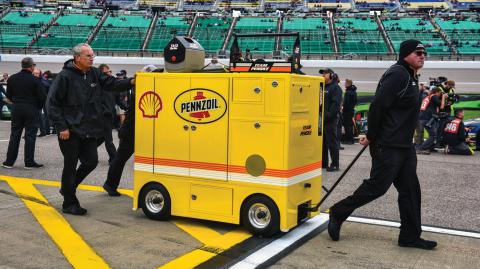
Kart Carolina
kartcarolina.com

Point Karting
pointkarting.com

TS Racing
tsracing.com

XRM Racing
xrmracing.com

October 2020
By
Bradley Iger

INDUSTRY INSIGHTS: JORDAN ZLOTOFF

Submitted by ashtonr on Thu, 10/01/2020 - 04:00


Referring to his facility as a “motorsports playground,” the chief executive of M1 Concourse in the Detroit metro area has discovered a winning business model in services for a customer base steeped in American car culture.

Since the earliest days of the motor vehicle, our nation’s car culture has drawn countless numbers of Americans together to share their love of all things automotive. A modern-day expression of this passion has been the birth of “garage communities,” offering high-end garage space as well as social interaction to gearheads of all ages.

M1 Concourse has taken this concept of garage communities to unmatched levels. The 87-acre Pontiac, Michigan, facility has developed a cutting-edge selection of private garages, a motorsports club, and well-appointed corporate events, all of which are surrounded by a 1.5-mile performance road course. Located along historic Woodward Avenue in the Detroit suburb, M1 is perfectly positioned to capture and cultivate the century-old car culture of the Motor City.

This month, PRI visits with M1 Concourse CEO Jordan Zlotoff, who has been with the facility since its groundbreaking in 2014. A Michigan native and MBA candidate at the University of Michigan’s Ross School of Business, Zlotoff’s fresh thinking and passion for motorsports are evident at every turn.

M1 Concourse is a “motorsports playground” located on the former site of a General Motors factory in Pontiac, Michigan. The facility features a 1.5-mile performance track and is home to the world’s largest private garage community, with 173 completely finished individual garage units. M1 Concourse includes a master-deeded condo community, allowing individuals to purchase garages to store their cars and present the ultimate private entertainment suite. M1 Motorsports Club boasts 150 members and offers private driving activities and programs for corporate partners and individuals and “team building” events for various organizations. The facility is located adjacent to Detroit’s historic Woodward Avenue, and has become a key part of the annual Woodward Dream Cruise, one of the largest performance-themed gatherings in the world. The newest project for Zlotoff and his associates is the American Festival of Speed—modeled after the Goodwood Festival of Speed in the UK—which will debut in fall 2021.

PRI: I’m curious about the origins of your facility. How did the initial concept of the M1 Concourse come about?

Zlotoff: The original concept for M1 Concourse was to build a private garage community. This concept has been tried and tested around the country and has been successful in various forms—such as five to 10 acres—and basically includes car storage in a specific community and area for that purpose. Probably the most successful of these has been AutoMotorPlex outside of Minneapolis. The idea for a multi-purpose facility at M1 that included a track and the possibility for public and corporate events really came about when we discovered the piece of land that we have here. It was really just by circumstance that we happened to find 87 acres in Oakland County that was undeveloped, and that the city of Pontiac was willing to work with us on our intended use for the land.

The whole model of private motorsports facilities is a very difficult one economically. Most of these facilities are located very far outside the metropolitan area. So if you look at places like The Thermal Club, Spring Mountain, Autobahn—these are all outstanding facilities but difficult to get to. Our property is very close to the communities of Metro Detroit, which has the largest population of collector car and automotive enthusiasts in the world. We have over 60,000 classic, exotic, and muscle cars registered in the Detroit area. It’s five times bigger than the next biggest market, which is Los Angeles. We realized that we had a special opportunity to build something that was more than just car condos. It was an opportunity to build the track and build a successful Track Club and Motorsports Club, as well as the private and public event activations as well.

insights1
M1 Concourse is located on the former site of a General Motors factory in Pontiac, Michigan. “Our property is very close to Metro Detroit, which has the largest population of collector car and automotive enthusiasts in the world,” CEO Jordan Zlotoff said, noting that over 60,000 classic, exotic, and muscle cars are registered in the area.

PRI: When you connect with someone with a performance car, is there a goal or a thought to help that person become involved in motorsports competition?

Zlotoff: Not always. Most of our Motorsports Club members—I would say over 90%—have not raced in an SCCA event and likely won’t. They are typically successful individuals with a high-performance vehicle, and they want to learn how to drive it well and see what it’s capable of, and understand how to operate it correctly and push it to the limits of its performance in a safe fashion. Sometimes that leads them to getting into racing, whether that’s SCCA or NASA or other racing leagues or circuits. But not always.

Much of what we do at M1 is recreational performance driving. Most of our folks don’t come from that background and most won’t get into that type of activity, but we all want to understand the mechanics of how to drive our car well and make it perform well. So we go through a lot of the same educational programming, but just because of our audience they may not necessarily get into racing.

PRI: You’ve made good use of social media to reach your audience. Can you give us some specific tips on how social media can be effective for a motorsports venue?

Zlotoff: I can offer a couple of things but by no means am I a social media expert. I would say the number one thing is to have excellent content. We’re very fortunate to have a lot of that here at M1, and if you follow our social media feed you’ll see amazing pictures of the inside of incredible garages that have been beautifully designed and decorated. Photos like that on our social media feed get a lot of attention. We attract large crowds, which are obviously great to capture videos and photos of, but we also have very rare, exotic, and unique cars. That sort of content, and making things engaging for the viewership—whether it’s posing questions, or asking for comments or insights about certain things—has been effective. Which car would you want to drive on the track? How would you build a garage? What would you want to do at M1? Content that people can engage with is important.

Also, you need to be consistent. Whether it’s every day, every other day, whatever—but constantly posting fresh content is very important. We happen to have a great photographer and social media manager on staff, and that’s been a big part of cultivating a large following.

PRI: The concept of private garages is interesting, but I can definitely see a practical side to this, because many of us who have a performance car are limited on garage space at home. Do you hear that from your participants, the practicality of all of this?

insights2
M1 Concourse has taken the concept of high-end garage space to unmatched levels. “I think we’ve developed the gold standard and benchmark in garage communities,” CEO Jordan Zlotoff said, “and I’m happy to share many of our best practices with other operators. But the way we built our garage community, I think, has been truly first class.”

Zlotoff: All the time! (Laughing.) That might not be the biggest reason, but it’s very common. Many folks are looking to buy a garage because they’ve run out of room at their home residence. They could get a spot at a U-Haul storage facility, or they could potentially build a car barn or a pole barn. Most of our clientele live in suburbs, where it would not be possible to build a big addition to their house or build a car barn on their property. The idea of being able to have the storage here and being a part of a community of other people that have like-minded interests is the big selling point. It’s not only the storage element, but it’s about being part of a community of shared enthusiasts. That’s really the attraction. We have plenty of folks who have been collecting cars, and maybe they have a six- or eight-car garage. They want to downsize their house because the kids have left, but they’re stuck there because they need a place to store their cars. So we provide an easy solution for that.

PRI: You’ve developed fleet partnerships with manufacturers such as Dodge and Lexus. How do you develop and cultivate those partnerships?

Zlotoff: That definitely takes time to develop, but we think we offer a really strong value proposition for all of the different brands, which is high amounts of visibility from the right audience. We have the right individuals—whether it’s our Motorsports Club members, our garage owners, or our corporate partners—coming through M1 on a very frequent basis. We have a little over 150,000 visitors to M1 Concourse each year, and virtually all of them are automotive enthusiasts. Not only do we have a lot of eyeballs, but we have the right eyeballs at M1. We’re a venue where different automotive brands want to place their product because they know the right people are seeing them.

Those relationships take time to develop, and it’s obviously all about networking and building the bridges with the right people at each of the brands. We’ve had a great relationship so far with Lexus, Dodge, and Mazda, and we’re looking forward to bringing on a few other partners in the upcoming year as well.

PRI: Do you get interest, Jordan, from motorsports teams interested in track rental for testing? Do you do much of that?

Zlotoff: We do it on occasion, and it’s not completely outside our ballpark. But it’s a little less frequent, partly because we’re a little more of an expensive venue to rent than some other tracks that might be farther away, or tracks that might be a little more racing-oriented. We are a true hospitality facility, and we’re doing VIP events, team-building events, marketing, and testing for the OEMs or journalists. So it tends to lend itself less to folks who are purely interested in the racing scene.

insights3
M1 Motorsports Club boasts 150 members and offers private driving activities and programs. “Much of what we do is recreational performance driving,” CEO Jordan Zlotoff told us. “We all want to understand the mechanics of how to drive our car well and make it perform well. So we go through a lot of the same educational programming.”

PRI: There are various garage communities throughout the country, but one thing that sets M1 Concourse apart is the racing course, and your hospitality operations. Is there another facility like yours in the country?

Zlotoff: There are others that are similar, but I would say that none are exactly like ours that incorporate the same level of public involvement, corporate involvement, private garage owners, and private track club. If you look at other facilities like Monticello in New York or the APEX Track in the southwest, there are some similarities in that they have private track clubs and they have a performance road course. Some facilities around the country are starting to build garages. But none have all three or four elements totally mixed together. None have the same scale that we do in terms of number of garages, the number of public events, and the number of corporate events. We are truly unique in that respect, and a lot of that is really just our good fortune in being able to have this location. We’re close to a metropolitan area, and also being in the Motor City with the Big Three OEMs here, and obviously all of our gearhead and motorsports enthusiasts living so close.

PRI: What’s the greatest challenge for M1 Concourse? I’m thinking of elements such as marketing, logistics, finance, etc.

insights4
Although not a traditional ticket-selling motorsports venue, M1 Concourse hosts several events on its 1.5-mile road course throughout the year. The facility’s newest project is the American Festival of Speed—modeled after the Goodwood Festival of Speed in the UK—which is set to debut in fall 2021.

Zlotoff: The biggest hurdle for us is where to focus all of our attention, because there are so many directions we could go. There isn’t a playbook that we can just pick up and say, “Okay, we’re going to do ‘X’,” and then execute it and it’s been done 10 times before at these other cities or regions. There are certain elements of our business that have been done before, but not altogether. And we also have a finite piece of land, with these 87 acres. Other facilities might have several hundred acres and they have more flexibility. But what we build here and focus our resources on, it impacts the type of events, activities, and programming we want to have. Because there are so many different directions you can take things, finding the one that makes the most sense for our customers and our clients and make a successful business is probably the most difficult thing.

PRI: M1 Concourse is in a unique category, different than a traditional, ticket-selling motorsports venue. Are there things you study when you look at other venues in your category? Are there things you’re seeing them do that you can apply to your venue?

Zlotoff: There are things, absolutely. The idea of a private motorsports club is not new. I think that’s been around for 15 years or maybe more. Some of the other venues that exist across the country have really honed their models in terms of what do members really want, what services are being provided, and different pricing structures. Those are things where we want to use [as] best practices and incorporate here. We’ve definitely learned lessons from other venue operators and owners, and we have a strong collaboration with the other owners across the country. We don’t see ourselves as being in competition, because so much of our customer base is local to our specific market. We’ve shared a lot of our best practices in terms of building the garages, activating for public events, and bringing on corporate partners. We’ve definitely learned a lot from other venues in terms of how they run their motorsports clubs and private track clubs, and what amenities they might offer. Different tiers or structures to their clubs, guest privileges, all those types of things. We’ve learned, not exclusively, but many things from those different facilities.

PRI: Along the same lines, are there ideas you’ve cultivated at your facility that you feel could be used at other venues?

Zlotoff: I think we’ve developed the gold standard and benchmark in garage communities. I don’t say that to boast. I’ve just seen enough press surrounding M1 and other venues that have tried to copy our model, and I’m happy to share many of our best practices with other operators and owners. But the way we built our garage community, I think, has been truly first class. Like I mentioned, we have the largest community in the world in terms of number of garages sold here, in square footage of garages sold, and I think that’s something we’ve done very well and executed very well. But a lot of it was good fortune, just being in the Detroit area. So we’re frequently asked what types of building construction we use, how large to make the units, what types of features to include. We’ve learned a lot of lessons along the way, but that’s probably the thing we’re asked about the most.

PRI: We’ll wrap things up with this, Jordan. What’s next for your facility? What ideas and projects do you foresee developing over the next couple of years?

Zlotoff: The next big chapter for us is the development of our conference center and restaurant. Right now, the public is only able to access our facility during specific public events and car shows, so having a restaurant on-site will allow the public to come in seven days a week to view track activity. They can enjoy food and drink here at M1. And also, the very large events we’re now planning through the Pontiac Motorsports Exposition, including the American Festival of Speed, are going to be enormous public attractions not only locally but nationally as well. So we’re looking forward to developing those events, and continuing with our garage construction.

PRI: Very good. Thank you, Jordan, for sharing this time with us. We wish you and everyone at M1 Concourse much success in the coming months.

Zlotoff: Thank you, Dave. And thank you to our friends at PRI.

October 2020
By
DAVE ARGABRIGHT

RACING BUSINESS PROFILE: WILLIAMS PRECISION ENGINES

Submitted by ashtonr on Thu, 10/01/2020 - 03:17


Diversity spells success for this Indiana engine builder, whose customers compete in modifieds, sprints, stock cars, and more across the US and halfway around the world.

Roger A. Williams has competed in a number of racing classes through the years in and around his home state of Indiana. His first experience was in dirt go-karts, and he later spent 10 years racing modifieds on the clay at Lawrenceburg. He went 150 mph on speedways at Kentucky, Rockingham, and Iowa as part of the Frank Kimmel Street Stock Nationals, which led to his current fixation of asphalt stock cars on the high banks of Salem Speedway.

Beyond his experience behind the wheel, he owns the No. 32 E3 Spark Plugs/Lucas Oil-sponsored USAC Silver Crown team.

Williams, however, isn’t a full-time racer. He’s an engine builder. But there is a definite correlation between his range on the track and the diversity of Williams Precision Engines (WPE).

“Some shops fall into a trap—they do one thing and don’t take care of enough other stuff,” Williams said. “Then, when the rug gets pulled out from under them, they have nothing to rely on.”

For example, he’s witnessed the UMP modifieds go from his No. 1 clientele to an afterthought, while a seemingly niche market like tractor pulling is a current money-maker. “It’s not a business you want to ignore,” Williams said of this lucrative segment.

And that’s been his mantra since he founded WPE 30 years ago, where he’s developed “a little touch of experience in a lot of things.”

williams1
Williams Precision Engines works out of a 40-by-200-foot facility loaded with a parts showroom and enough equipment to do nearly everything in-house. “Buy good equipment. It doesn’t have to be new,” said Roger Williams. Pictured here is Jon Steed, machinist and engine block specialist.

Founded in 1990 in the heart of circle track country in St. Paul, Indiana, less than an hour from Indianapolis, WPE produces 40 to 50 new and refreshed engines each year for a variety of dirt and asphalt customers, and even the Super Saloons class in New Zealand. Williams has made his bones building sprint car engines, but also counts bracket drag racers, mud racers, and street rod owners as customers.

His three-man shop includes himself, machinist and cylinder head specialist Jim Byrd, and machinist and block specialist Jon Steed. They work out of a 40-by-200-foot facility that’s loaded with a parts showroom and enough equipment—including a dyno—to do virtually everything in-house except crank grinding.

A “team atmosphere” has helped WPE win dozens of track championships and hundreds of feature events across various forms of motorsports.

GEARHEAD

A proud “gearhead,” Williams was influenced by a shop teacher who talked him into attending Lincoln Tech after high school.

His first job was at a shop owned by John Mattingly, who built cars for and raced in what was then the NASCAR Busch Grand National series in the 1970s. That experience linked engine work and racing. “I guess hanging around him a little bit got my gears working,” said Williams.

His next gig was at the Zimmerman Bros. Speed Shop in Greensburg, a job he took for less money because he wanted to “learn the trade” of cylinder head work. During that time, he bought a kart and enjoyed his entry into circle track racing. He noted there was a young parts helper at Zimmerman’s at the time who he sometimes battled on the track. “You might know him—Tony Stewart,” Williams added, laughing.

williams2
Founded in 1990 and located about an hour outside of Indianapolis, in the heart of circle track country, Williams Precision Engines produces 40 to 50 new and refreshed engines each year for a variety of dirt and asphalt customers.

Working on engines—and listening to them turn 10,000 rpm on the dyno at Zimmerman’s—further convinced Williams that engine work was in his blood.

Though he enjoyed his time behind the wheel, he decided he’d stay connected to racing through his engine building business. By about age 25, he established WPE.

He took on cylinder head work from auto dealerships and machine shops, and began to buy equipment for head work. Two babies and a bout of appendicitis—with no health insurance—forced Williams back into a factory maintenance job for a year; and he would do engine work at night. But he persevered.

“If you want to do something bad enough, you double up and do it,” he said.

IN-HOUSE

A Stuska dyno was one of Williams’ first investments. He’s on his second dyno now, a DTS he bought about eight years ago, shortly before the company was bought by SuperFlow. He recently spent $20,000 for an electronics conversion.

“The dyno is pretty expensive, but I don’t know how to produce a proven, quality product without it,” Williams said. “The dyno’s nothing more than a tool; you’ve got to learn how to use the tool properly.”

Some customers like to review dyno statistics, but most “just want to know that I say it’s good” and can hit the track without further tuning, Williams said.

williams3
In a typical race season, Roger Williams can be found interacting with customers at the track, whether that means a quick visit in the pits or helping to diagnose a problem, a role he takes seriously. “You’ve got to treat them like they’re the boss,” said Williams, pictured here, at left, with driver Frankie Kimmel.

While he purchased his dynos new, Williams said he looks for used equipment, and praises the relationship he has with Joe Baker from Joe Baker Equipment Sales in Cincinnati, Ohio. Among his more recent purchases is a Comec boring mill—a display model he bought a few years ago at the PRI Trade Show.

He also has a Sunnen rod hone, a Sioux valve grinder, a T&S seat-and-guide machine, and a Turner Technologies balancing machine. “Buy good equipment” at the right price, he advised. “It doesn’t have to be new.”

Williams has been doing most work in-house from the early days of his business. “It’s all about quality control,” he said. “If you farm stuff out, you don’t have near the quality control.”

Williams paused, though, recognizing there are a dozen engine builders who farm out their work to WPE. So why do they trust him? “I try to keep the quality level high,” he said. “I don’t do anything different to someone else’s stuff that I wouldn’t do to stuff we’re assembling.”

DOWN UNDER

Williams recognizes that diversity is a double-edged sword. “It’s hard to stay really productive…when you’re really diverse. I am probably sacrificing income because of not being able to turn stuff as quickly,” he said. “But I think I’m securing longevity and stability in the business, because if one thing falls off, the next thing is going to pick up.”

Besides, he said, at its core, a race engine is a race engine. “I’m not building them much different if I was building a drag race motor or something like [a UMP modified]. It’s just a small block Chevy built within class rules.”

Diversity is also represented geographically for Williams, including through his sales in New Zealand. Williams said his first customer there, Mick Quinn, found him online. “He came to me just wanting a little better engine combo,” he said. “I built one for him, and he went out and won some races and said how much faster he was,” Williams said. “Other folks noticed it and my phone started ringing.”

Most of his customers in New Zealand race Super Saloons, which look like a combination of a dirt late model and modified, and have performance characteristics that vary, Williams said. “Some run open tube rears like sprint cars,” he said. “Some have injectors, but it’s mostly single carbs.”

Williams’ experience with dirt modifieds—hooking up eight-inch tires spun by big horsepower—has been beneficial in helping his New Zealand-based customers, many of whom now agree that 700 horsepower is better than 800.

“I always worked with the idea that it wasn’t the need for more horsepower, it was the need to get driveable horsepower,” he said. “I’ve worked on cam profiles and cylinder head runners and stuff to develop that even with my own mod.”

Williams said his New Zealand customers generally handle shipping and customs issues, particularly paperwork. “For the most part we just have to deliver to a terminal or load a truck when it shows up,” he said. “I’m not sure I would be interested in that business if I had to take care of all that stuff.”

One customer flies to Indiana yearly, rents a U-Haul, drives to California, and loads his purchases into a shipping container.

The New Zealand market is just one example of growth, Williams said. For WPE, it’s meant more new builds than rebuilds.

williams4
Roger Williams takes pride in the diversity of his shop’s engines, which cover everything from drag racers and street rods to circle track classes on dirt and pavement, including modifieds, street stocks, and sprint cars, pictured here. 

DIVERSITY

Joss Moffatt, a 410 non-wing sprint car racer from nearby Columbus, Indiana, sees value in WPE’s diversity, too.

“He learns things from all sides of the world, even drag racing, that can apply, like reliability,” Moffatt said about Williams. “It broadens his horizon and helps him learn how to help us as customers.”

Moffatt relates it to a racer competing at different tracks. “If I race at one track all the time, I’m not going to learn. I’m better overall because I learn from other competitors, I learn other tricks,” he said.

Moffatt called Williams “a phenomenal engine builder,” but don’t be fooled, he said. “He is a racer, he’s a full-blown racer,” and understands the predicaments his customers face.

In fact, Williams once helped one of Moffatt’s friends with engine trouble at 2 in the morning. Then there was the time Moffatt blew a head gasket in an All Star Circuit of Champions race and wanted to get the engine repaired in time for a World of Outlaws show that same weekend. He called Williams, who told Moffatt to come over to his shop.

“He took time out of his schedule after hours to get this done,” Moffatt said, “and he didn’t really charge me for it, either.”

Helping Williams’ cause is his reasonable pricing, Moffatt said. “I’m friends with a lot of people in the racing industry,” he said. “He is probably one of the least expensive guys overall and gives you the best bang for your buck.”

Danny Sams Jr. along with his son Danny III behind the wheel were directed to WPE four years ago for their first 360 sprint car engine, having been told “it’s the best money you can spend.” They found that to be true.

“We got a crazy amount of races out of it,” some 55 to 60, the elder Sams said.

For 2020 they are running a 360 sprint car in the Lucas Oil ASCS National Tour with new team ownership partners Steve and Karen LaMountain. The LaMountains had their own deep connections in racing and studied their engine builder options when they came on board. It didn’t take long, however, for them to agree to stick with WPE.

“‘He’s the guy we want in our corner,’” Sams recalled Steve LaMountain saying.

For Sams, the fact that WPE handles all but crank grinding in-house is important; he takes solace in knowing his engines aren’t being moved from shop to shop.

Sams said his son, having raced with some other engines, likes strapping into a car with WPE power. “He said on the top end they just scream,” he said.

MORE BUSINESS

During a normal race season, Williams can be found at a race track most weekends taking care of customers, whether through a quick visit to their trailers or to help diagnose a problem. He takes the role seriously. “You’ve got to treat them like they’re the boss,” he said.

And despite his diverse background, he knows he can’t stop learning. Among his goals is to improve his knowledge of EFI as it continues to find use in more racing classes. “You’ve got to stay ahead, keep your ears open, and learn as much as you can,” he said.

“If you want to be in this business,” he continued. “you have to have attention to detail, be honest and—hard as it is—suck it up when someone’s giving you a rough time.”

And, yes, there’s diversity. Williams’ time behind the wheel of a variety of race cars and his willingness to take on virtually any engine project have paid dividends.

“Every class I get involved in personally I pick up a lot of clientele,” he said. “Of course, if I’m driving it myself, I’m really involved trying to make a better piece, and that always turns into more business.”        


SIDEBARS     

‘STEAL THEM FROM SOMEONE ELSE’

Roger A. Williams knows the difficulty of finding quality employees in today’s tight labor market, particularly for a technical job.

“I tried three different guys who didn’t work out to find the fourth who did,” Williams, the owner of Williams Precision Engines, St. Paul, Indiana, said of a recent hiring that took two years. “It’s really rough.”

He said training from even the best technical school doesn’t equal the experience needed for a job in precision engine building, so he advises young machinists and engine builders to “do it for free” if necessary to gain experience.

As to his advice for shop owners facing a hiring challenge, Williams said: “I hate to say it, but you’ve got to be willing to pay enough to steal them from someone else.”         —Andy Heintzelman              
 

A BRONCO, A ROCKER, AND THE POWER OF RERUNS

Williams Precision Engines (WPE) was featured in an episode of Stacey David’s “Gearz” in 2013, where the subject of the rebuild was the Zebra Bronco owned by legendary rocker Ted Nugent. WPE owner Roger A. Williams’ crew rebuilt the 351 Windsor and dyno’d it at their shop in St. Paul, Indiana.

Though it’s been seven years, that show still generates business, Williams said. “Every time that reruns, someone with a Bronco calls me,” he said, laughing.

In fact, a stock 351 for a West Coast Bronco customer was in the shop when he related the story earlier this year. “Like there isn’t a shop from here to California,” Williams joked. —Andy Heintzelman

October 2020
By
ANDY HEINTZELMAN

Sponsor Spotlight: ARP & LUCAS OIL LATE MODEL DIRT SERIES

Submitted by ashtonr on Thu, 10/01/2020 - 03:00


With its fasteners found throughout the race car, a prolific manufacturer has solidified its commitment to open-competition engine building as an official series partner and title sponsor of the prestigious Engine Builders Challenge.

As director of sales and new products for premium fastener manufacturer ARP in Ventura, California, Chris Raschke knows more than a little about holding things together. So when Raschke said that Lucas Oil Motorsports “has held this whole thing together”—and by “this whole thing,” he means “racing”—well, you just have to listen.

“I don’t think you could give anyone in the industry more credit than them,” Raschke continued. “If it weren’t for Forrest Lucas, a lot of people would not be racing anymore. There are a lot of people who would not have jobs and would not be in the business—and a lot of things would not be happening in professional motorsports.”

So it’s hardly surprising that on March 20 of this year, ARP (Automotive Racing Products) signed on as an official partner of the Lucas Oil Late Model Dirt Series, and as title sponsor of the series’ Engine Builders Challenge.

The two organizations already shared history. ARP has sponsored the Lucas Oil Pro Pulling League since 2018. “The diesel market is such a good part of our business that we felt we definitely needed to give back,” said Raschke.

“They’ve been a good partner for several years,” added Wayne Castleberry, who heads corporate motorsports sales and marketing for Lucas Oil Motorsports, Corona, California. “And so this past winter we talked about expanding their presence into the Late Model Series. A lot of their fasteners are used in Late Model engines from Clements, Durham, Pro Power, and other top builders.”

To learn more about the union, PRI spoke with both Raschke and Castleberry in early June.

PRI: Who approached whom about expanding ARP’s sponsorship into the dirt late model arena?

Chris Raschke, ARP: We approached them. Lucas is a real low-pressure deal. But with the things Wayne wanted to do, we felt it was a good time to expand the program, and we saw a good avenue open to do that. And it’s always been seamless dealing with them on the Pro Pulling side.

PRI: So this was a good time to expand? Why?

Wayne Castleberry, Lucas Oil Motorsports: Because they have been very satisfied with their return on investment, and because of the marketing strength that we bring to the table, with our TV network and such, they felt like it would be a good opportunity to expand their partnership. They are very interested in the TV side and have put together some really cool commercials that we are airing on MAVTV.

Raschke: A lot of print publications have closed down, and we wanted to stay in touch with our customers. And Lucas reaches out to so many people. [Their racers] make a point of finding out who the sponsors are. If I go to an event, anyone who walks up to me thanks me. So I am confident they are going to give us a good bang for our bucks.

PRI: Why did you choose the Engine Builders Challenge, particularly?

Raschke: That’s pretty easy. All the engines are held together by nuts and bolts.

Castleberry: ARP is going to present the award for ARP Engine Builder of the Year at our end-of-the-year banquet, along with a nice cash bonus. And at every race, we designate the ARP Engine Builder of the Race. So it will be a great opportunity to continue to build their brand in the Super Late Model engine industry. It’s also part of our program to strengthen open-competition engine building, and to sustain the open-engine platform that we stand for in Super Late Model racing.

PRI: Aren’t there ARP fasteners in the chassis, too?

Raschke: You can find ARP in the differential, the transmission, the clutch area, the wheel studs. There’s a possibility we’re not in those areas in some of the cars, but we’re in every engine, I guarantee that. We’ve worked long and hard to make sure we have offerings for all the different applications, not just one particular engine combination.

PRI: Would it be fair to say that one of your expectations is feedback from racers and engine builders?

Raschke: Definitely. You have to have that relationship with the customer, and this is a great way to do it. Being involved in a series puts you on the front line. We’re not only showing our appreciation for racers, we’re making sure we have the correct product, that functions in the sport the way we say it does, and the way that the customer needs it to function.

spotlight1
Through its sponsorship with the Lucas Oil Late Model Dirt Series, fastener manufacturer ARP hopes to gain feedback directly from racers and engine builders. “You have to have that relationship with the customer, and this is a great way to do it,” ARP’s Chris Raschke said. Pictured here is driver Stormy Scott in the winner’s circle.

PRI: What does it mean to be an “Official Partner” of the Lucas Oil Late Model Dirt Series?

Castleberry: Sponsorship dollars determine whether a company is a Contingency Sponsor, Associate Sponsor, or Official Partner. As an Official Partner, ARP will receive additional benefits and entitlements, especially on the television side. And then we have certain tools in place, measurements and data analytics, that we can show ARP at the end of the year: How many of their commercials aired; how many times their banners or stickers were seen; how many times their name was mentioned in our TV broadcasts. We work with media marketing specialists Joyce Julius & Associates, who have developed a formula that yields an actual value of their television exposure. But with all of our partners, our measure of success is the feedback we receive from them: Are they satisfied with what they received from us? Our goal is always to exceed the benefits outlined in the contract, to go above and beyond, and to show them more value than we did the year before.

PRI: But what about Lucas Oil? What are your long-term goals and expectations for this relationship?

Castleberry: Obviously the marketing dollars help keep the series healthy. But in addition to that, with a great, international company like ARP, having that partnership brings credibility to what we are doing as a motorsport entity. When other companies in the industry see that a manufacturer as big as ARP sees value and benefit in their association with us, those other companies want to become sponsors as well—all because of the credibility that ARP brings to the table.

PRI: How has the pandemic affected the program?

Raschke: Here we are in our first year, and we’ve had a lot of hiccups—not because of Lucas, but because of things going on in the world today. Everything is up in the air. So I’m not going to tell you we plan on a big return this year. It’s a bad situation for everybody, but we’re not going to change our participation based on that. We’re all looking forward to getting back to racing. And we expect to come out with a bang.

Castleberry: [This year] we will still complete 50-plus events, barring weather cancelations or any other closures. Obviously, we’re in unique times, and we have to take each event case-by-case. We need approvals from state and local officials, health officials....

And in the meantime, to replace the events that have been canceled, we’ve used social media to promote our partners. We’ve shared their social media pages to give them extra value and keep them in the forefront.

PRI: How will other stakeholders benefit from this sponsorship?

Raschke: Any time you put money into the sport, that’s going to benefit everybody. These guys are struggling; there are race tracks that might not even race this year. And I know some companies have canceled their deals with people. But we’re in this for the long haul. We want to make sure that these people are going to be there when we need them.

So we’re here to support the racers and the tracks—and to keep this whole thing going.       

October 2020
By
JOHN F. KATZ