RACING BUSINESS PROFILE: FRYECO FABRICATION
Submitted by ashtonr on Thu, 10/01/2020 - 02:00

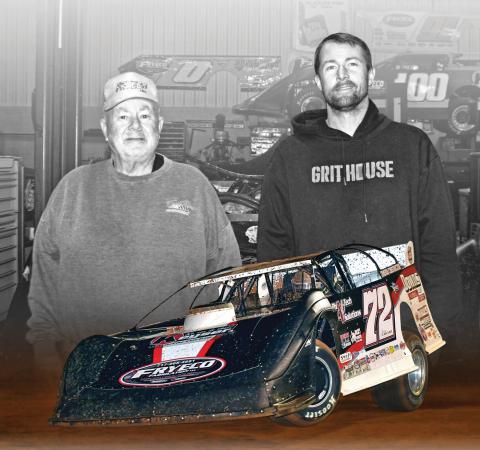
Ronald Frye, at left, and Coleby Frye
 

Diverse services, quality fabrication, and loyal customer relationships on and off the track have turned a small shop into an integral part of the Pennsylvania racing community.

Fryeco Fabrication was founded in the 1990s by Ronald Frye, a logger and auto recycler who turned a home shop into a racing business as a way to reduce the cost of running his own Late Models. At first, the business sold sheets of aluminum and tin, pop rivets, oil pans, Pro Shocks shock absorbers, and parts for Warrior chassis. Fryeco also did a steady business hand-cutting body panels to build and repair local race cars.

Fryeco’s fortunes would change, however, when Frye’s son, Coleby, first sat in the cockpit of a dirt late model built on a Rocket chassis. Coleby recognized the business potential in the chassis’ design, and that notion helped turn his father’s shop into an Eastern Pennsylvania success story. Fryeco Fabrication has since diversified and grown into an integral part of the local racing community, due in large part to Coleby’s skill as a fabricator, his awareness of trends in dirt late model racing, and his ability to effectively serve his customer base.

And, those customers just may find themselves locked in battle with him at area dirt tracks. Coleby was the 2019 Super Late Model champion at Selinsgrove Speedway, a half-mile clay oval in Selinsgrove, north of Fryeco’s location in Dover. In 19 years of racing at local tracks, he had earned 55 feature wins at press time.

SUCCESSFUL LAUNCH

Before that pivotal day with the Rocket chassis, Coleby Frye was working toward running the family business. He’d earned a Bachelor of Science degree in welding and fabrication engineering, and then perfected those skills after graduation working for a company that completed precision metal pieces to fulfill government contracts. He returned home to work at Fryeco as his father began the transition into retirement.

What Frye saw in the Rocket chassis was a characteristic that is a cornerstone of efficient automotive manufacturing: standard parts that can be used on chassis from different model years. He convinced his father that they would see substantial savings by not having to re-inventory parts for each new design of other brands’ chassis. That savings would allow Fryeco to grow in other areas.

Rocket Chassis, based in Shinnston, West Virginia, is “very good at keeping a consistent platform,” Frye explained. “For example, the upper A-arms haven’t changed in nearly 15 years. Consistency made it easier for us to stock all the Rocket parts.”

Fryeco became Rocket’s Eastern Pennsylvania dealer in 2002, and ever since “we’ve gotten lots of brand support from them and stayed busy servicing Rocket cars.”

Fryeco built a 60- by 80-foot shop in 2004 to handle the increase in business that came from the affiliation with Rocket. There, frames are repaired and components replaced from an inventory of Rocket parts. Customers often stop in to purchase parts they need when doing their own maintenance or repair, saving shipping costs.

Fryeco supports Rocket’s customers throughout its business area of Eastern Pennsylvania as well as the bordering states of Maryland, New Jersey, and New York. Customers who want to purchase a Rocket chassis usually will consult with Frye, who then calls in the order to Rocket.

“We have individual local track setup guides for Rocket chassis,” he explained. “We start with the base information from Rocket and fine-tune that with the information we gather from racing our Rocket cars at those tracks. We physically help our customers set up their cars.”

Frye’s talents are respected not only by his customers, but at Rocket Chassis as well. “His biggest attribute is that he is not afraid to get into anything on a race car,” said Rocket’s Steve Baker. “He’s so versatile that we tried to get him to work for us a few years back.”

GROWING THE BUSINESS

Bringing Rocket Chassis into the fold was one of many moves Coleby Frye has made to grow the family business. One of the first things he did when heading the operation was to order a CNC router and vacuum table.

“It used to take an hour to fabricate one side of a race car body,” Frye said. “Now we can fabricate two sides in the same amount of time. The CNC machine completes the cutting without any errors. It repeats the process to make every panel exactly the same, right up to the rivet holes. We don’t have to drill to mate panels. Not only are there no mistakes, there is less waste of material and a big savings in time.”

Fryeco customers “knew the quality of the panels we made for years,” Frye said. “Now word has spread that the way we make them is even more precise. We’re even making panels for other dealers.”

Frye also was able to take his experience tuning shock absorbers and turn it into another growth opportunity for Fryeco. He learned to perfect his car’s shock performance after a trip to the Integra shock facility at Keyser Manufacturing in Coopersville, Michigan.

“My car was performing really well, and other racers noticed,” he said. “I began helping them, and their cars performed better. I suddenly had a regional following just by word of mouth. The shock business is a performance-dependent business. We had the performance, and other racers noticed.”

business1
A Super Late Model champion himself, Coleby Frye has a unique awareness of trends in dirt late model racing, which has helped Fryeco Fabrication solidify its position as an integral part of the local racing community. Frye is pictured here, welding a chassis.

That regional following enabled Frye to start Superfly Performance Shocks, which does shock valving and rebuilding for dirt late models, modifieds, street stocks, sprint cars, and micro sprints. The shop also sells and services Integra, Penske, and FK shocks. World of Outlaws sprint car drivers Brent Marks, Brock Zearfoss, and the late Greg Hodnett have won on Superfly shocks.

To keep up with the latest in shock absorber technology, Frye talks to the manufacturers whose shocks he services to discuss the parts and design innovations being used by top dirt late model competitors. His recent focus has been on slip bands—a piston band, smaller than the slot in a shock piston, that allows the piston to move inside the shock before dampening fluid arrives, creating an instant change in direction.

“Shock absorbers are an open field for creativity,” Frye said. “You can build what you want, using different internal parts to make them perform for individual needs. The optimal setup is different for everyone. The job of a shock builder is to help drivers get the feel out of their car’s suspension that they require. We’ve had great success doing just that.”

“Coleby is a hands-on racer and great communicator with a loyal following,” said Keyser Manufacturing’s Anna Daugherty. “He knows what works well, whether it’s shocks or suspension components. If he has any ideas on how we can do things better, he shares them with us. Our line of communication with Fryeco is always open.”

FABRICATION & CUSTOM WORK

Frye recognized another diversification opportunity when customers would share stories about their expensive brake rotors cracking.

“This is a blue-collar racing region,” he said. “Having high-end rotors that break doesn’t sit well with customers. So, we made our own design. We built a better rotor, tested it on two cars for a season, and we sell it for half the cost of the expensive brands. The customers love them.”

That season of testing showed Frye how to modify Fryeco’s half-inch forged-steel, CNC-machined rotors with slots for cooling and holes drilled for weight reduction without compromising the rotor’s integrity. Frye jokes that he made them “too good.” They don’t crack in normal use, and customers are using them for two or more seasons.

business2
When Coleby Frye took over Fryeco Fabrication from his father, Ronald, one of the first things he did was order a CNC router and vacuum table. “It used to take an hour to fabricate one side of a race car body,” Frye said. “Now we can fabricate two sides in the same amount of time…. Not only are there no mistakes, there is less waste of material and a big savings in time.”

Frye made use of his welding and fabrication education to expand the company into making innovative birdcage components, A-frames, and spindles for its customers. A 60- x 20-foot welding shop was added to Fryeco’s main building for fabrication and chassis repair.

Today, the fabrication facility handles a wide variety of tasks. Bodywork makes up 40 percent of Fryeco’s business, with the shock valving and rebuilding service recently growing to nearly 40 percent. Repairing race car chassis and hauler frames accounts for the remaining 20 percent.

Fryeco also does custom fabrication, work that remains cloaked in secrecy at the shop. Frye promises his customers he won’t reveal to others what he is building for them.

“The customers want to try their different ideas, things that they feel will make their cars faster, and we build those parts for them,” he said. “I see it as R&D work and not production.” Without giving too much away, Frye described the custom projects as things like altering the degrees of inclination of spindles, the offset of the ball joints in A-frames, or mounting points in birdcages.

“The important thing is to keep a secret. I build the parts, and I don’t tell anyone. It’s custom work and it’s confidential. What works for one racer may not work for another, anyhow.”

Frye understands that being profitable as a fabricator makes him dependent upon raw materials.

“I am loyal to my suppliers, but I do believe in price shopping to get the best possible deal,” he said. “Raw material drops in price with quantity. The trick is to order materials in the right quantities to get your finances and pricing right. Planning ahead to have raw materials shipped in one load will save money in the long run. You have to balance shipping costs with the projected need of the material over time.”

In addition to the fabrication, repair, and service work, there’s a retail element to Fryeco’s business. A speed shop stocks parts from Winters Performance Products, Sweet Manufacturing, Howe Racing Enterprises, Wilwood, and Keyser Manufacturing. Fryeco is also a Hoosier tire dealer.

COMMUNITY INVOLVEMENT

Frye is a constant presence in the local racing community, as he believes face-to-face service and hands-on experience benefit his company.

“We’re at the track, and that is important to our business,” he said. “We’re handling tires, making track setup decisions, doing race adjustments, and making shock-change suggestions for our customers.”

Dirt late model driver Jason Covert of York Haven, Pennsylvania, has raced Frye door-to-door for two decades. He’s thankful he befriended Frye.

“I don’t associate with people I don’t respect,” Covert said. “Racing is a dog-eat-dog environment, but at the end of the day, it takes help to be a great racer. Coleby is educated in a wide variety of racing skills. To find a guy like that is a big deal. He can talk about any subject and have a good discussion with you. In the end, you walk away a better racer.”

The racing community also needs tracks for racers to race on, and promoters to put on the show. Frye is aware of the importance of both.

Two seasons ago, once-struggling Clinton County Motor Speedway in Mill Hall, Pennsylvania, was being re-born. Though three-and-a-half hours away from his shop, Frye recognized the importance of the track to local racers. He sponsors events there with money and contingencies.

At his local track, BAPS Motor Speedway in York Haven, Frye traded a Fryeco advertising banner for welding needed at the track. He repaired forks on the track’s skid loader and welded grandstand railings.

“Even if you have a successful racing business, you should continue to support your local tracks in any way you can,” he said. “Our customers need those tracks, and you need your customers.”

There are Fryeco decals on nearly half the field of cars at tracks in its business region. Frye rewards those drivers with incentives such as discounts on parts in addition to his never-ending advice for better performance.

business3
In addition to his skills as a fabricator, Coleby Frye, pictured here, is an accomplished racer, having earned the 2019 super late model championship at nearby Selinsgrove Speedway alongside more than 50 feature wins over a driving career spanning two decades. “Coleby is educated in a wide variety of racing skills,” noted a fellow driver. “To find a guy like that is a big deal. He can talk about any subject and have a good discussion with you.”

PROFIT AFTER GROWTH

Frye is cautious about growth and analyzes the complexities of his business before decisions are made.

“Do you make more money if you do more work?” he asked. “The oval racing market isn’t big enough for us to grow and grow. You hit a business peak, and then, what are you trying to do? If our peak is 150 to 200 repeat customers in our business area, and I serve them all well, isn’t that just where Fryeco should be? That’s about where we are at. If we grow, there has to be profit after growth.”

A half-dozen part-time employees make up Fryeco’s current workforce. They are machinists, welders, and construction workers who have the skills necessary to bolt parts together, cut and notch materials, and weld. Most come from the skilled blue-collar workforce in the York-Harrisburg market.

“We will eventually need to hire full-time workers if we are to grow,” Frye admitted. “But you have to make a conscious business decision. Are you going to perform twice as much work and only make the same profit? That can be the case when you figure the costs of insurance, taxes, and even the wear and tear on equipment from adding a full-time employee.”

Frye’s calculated growth for Fryeco is now focused on the hottest trending divisions in dirt racing—E-Mods, sport mods, or B-Mods—the affordable divisions that have seen numbers growing exponentially in the last few seasons.

“Realizing our next stage and being on top of it is the challenge,” Frye said. “We’re planning to build a few of those Mod chassis this season and go from there. That may be our direction for growth.”

business4
Despite his shop’s success, Coleby Frye has taken a cautious approach to growth for Fryeco Fabrication. “If our peak is 150 to 200 repeat customers in our business area, and I serve them all well,” he said, “isn’t that just where Fryeco should be? That’s about where we are at.”

That plan had to navigate a major bump in the road at the start of the 2020 season, as race schedules hit the wall with cancelations because of COVID-19. Frye sees the pandemic’s effects on the economy as Fryeco’s biggest challenge.

“Racing is a hobby. The kind of racing we do is for average people,” he said. “People will quit racing when they don’t have money. If there is no money and no racing, no one will need parts or cars repaired. COVID-19 will affect the customer being able to afford racing in the future.”

While hoping for the best outcome after the season’s delay, Frye will make sure Fryeco survives and wins.

“The future can be bright,” he said. “We are not afraid to fabricate other items to get us through this.” During the hiatus in the racing season earlier this year, Fryeco’s CNC router was cutting wooden cabinet doors.

“In the past, we’ve outsourced work to other small businesses, and now they are outsourcing work to us,” Frye said. “It’s a matter of survival.”
October 2020
By
MIKE ADASKAVEG, EDITED BY DREW HARDIN

BETTER BUSINESS: WHY PEER EXECUTIVE GROUPS OFFER EXCELLENT THERAPY

Submitted by ashtonr on Thu, 10/01/2020 - 02:00


If there’s one thing that every business owner needs, it’s therapy. No, not necessarily the kind of therapy where you’re lying on a couch and opening your soul to a mental health professional (although that’s also not a bad thing to do once in a while). I’m talking about a different kind of therapy. The kind of therapy that can only be administered by other business owners.

That’s because the people who own and run businesses have a unique set of challenges. We’re the ones taking risks. We’re the ones who have to seemingly know everything. We’re the ones who make the final decisions. We are sometimes faced with working long hours, ignoring our families, and sweating out cash flow. We deal with people who don’t show up for work, don’t deliver as promised, and don’t pay us when they say they’re going to pay us. I don’t care if you’re running a race car building operation, a parts distribution business, or an engine design firm, you’ve got these problems.

These are the kinds of issues that only other business owners understand, which is why they’re most qualified to help. It’s also why there’s been such an enormous growth in peer executive groups over the past few years.

If you’re interested in joining a peer executive group, then you’ve got many choices. You can enlist with Vistage, Entrepreneurs’ Organization, YPO, and Peer Executive Groups. Those are some of the leading names. However, you may belong to an industry association or chamber of commerce that offers their own groups. Or, you can form your own group informally.

Most of these groups work the same way. They are not online, although some offer online functions. You get together with about five to 10 other business owners who are in your local area and who do not compete with each other. You sign non-disclosure documents. Then...you talk.

You talk about your challenges. You listen to others in the group talk about their challenges. You share and discuss business problems like how much to pay a new salesperson, where to find good people, what email system is best, and where to find a good accountant. But it’s not all business. You may also share some of the types of personal trials that affect all business owners—balancing work with family, hiring or not hiring a relative, how to distribute income to family members, how to alleviate conflict with your partners, what’s the best way to prepare your business for a sale?

“For me, it’s like an outside advisory board that has no personal agenda, other than to help the other members,” said David Keiser, an owner and vice president at Tioga Pipe, a family-owned distributor in Philadelphia, Pennsylvania, that counts many of its customers in the auto industry. “My group members are smart people who listen, get to know you and your business, and that’s a tremendous thing.” Keiser has belonged to his executive group for more than two decades.

You’ll find that no one has the right answers. Or the wrong answers. What they will have is experience, and most importantly empathy. They’ll be happy to share their problems, because their problems are your problems. You’ll get advice from others who are in similar situations as you, and that advice will help you not only make better decisions, but also help deal with the challenges of running a business.

“There is no ‘school’ on how to be, perform, or act as a president of a company,” Keiser said. “But there are few issues that, at a presidential level group, someone hasn’t experienced or seen in some fashion or permutation, whether it be hiring, interviewing, termination, growth initiatives, strategy, culture, selling, financial decision-making, etc.”

Just know...peer executive groups aren’t cheap. Some of the more established organizations can charge anywhere from $10,000–$25,000 per year to be a member. And that’s only half the cost. The other half is paid for through time. You’ve got to commit. You’ve got to go to and host meetings. You’ve got to do the assignments and be available if someone in your group needs help. You’ll need to participate online, on conference calls, and through email. To succeed with a peer executive group—just like anything else in life—you’ll have to work at it.

Oh, and one other big thing….

“You have to be willing to listen,” said Dan Crowley, president of Bethlehem, Pennsylvania-based Peer Executive Groups. “Our groups become quite intimate with each other, sharing family matters and key employee concerns. It is taken quite seriously, but what is discussed at a meeting stays at the meeting.”

Crowley subscribes to the philosophy that successful business owners never do it alone, and that to succeed you need to “surround yourself with smart, experienced people, and then act on their advice.”

Keiser’s group, for example, meets almost a dozen times a year and consists of other business owners, CEOs, and senior managers at companies all around his community—manufacturers, distributors, and service providers. Again, no competitors. Keiser, like so many others I know, has found that members don’t need to be in the piping distribution (or automotive or performance aftermarket) industry to have the same problems he has.

But here’s the good news: I know many dozens of business owners who belong to peer executive groups, and I’ve never heard a complaint. Across the board, these people have found their groups to be of great benefit to them and their companies. The handful that haven’t seen that benefit will usually be quick to admit that they themselves haven’t made enough of an investment. Considering the travel that I do, this is the main reason why I haven’t joined a group. I wouldn’t want to let my fellow members down when I regularly miss meetings.

The bottom line: If you can afford the time and investment to join a peer executive group, then you should seriously consider it. We all need therapy. It’s a matter of finding the right therapists.

Gene Marks is president of The Marks Group, a Philadelphia-based consulting firm specializing in sales and marketing technologies. He appears regularly on Fox News, MSNBC and CNBC discussing matters affecting the business community. Marks also writes weekly for The Guardian, The Hill, The Philadelphia Inquirer, Forbes, Inc. Magazine and Entrepreneur Magazine.

October 2020
By
GENE MARKS

KNOW YOUR ADVOCATES

Submitted by danielk on Wed, 09/30/2020 - 12:37

For years it’s been said that members of Congress are less popular than traffic jams. Know what else ranks higher than your public servants in DC, according to published reports? Root canals. And cockroaches.

But getting hung up on whether we’d prefer politicians over oral surgery isn’t really the point here.

What is worth noting is that while many lawmakers can be hard to stomach at times, a number of them actually think and talk—and more importantly, act—in a way that benefits folks like you and me. Which is to say that not all members of Congress are created equal; same goes for those at the state and local levels.

So while it may be easy to dismiss this group outright, or paint them all in broad, mostly negative strokes, the fact is that a handful do understand and support the issues that matter most to our industry.

Take state Senator Mark Maynard, Republican from West Virginia, who in 2018 started a campaign to bring both drift and rally events to his state’s roadways. Two years earlier, Maynard, a former crew member on Jim Head’s NHRA Nitro Funny Car team (2006–2010), had sponsored a bill that allowed local governments to sanction road racing on public streets and thoroughfares. His legislation passed, and since then Maynard has remained a champion of all things high-performance. So much so, in fact, that two years ago he was named the first-ever winner of SEMA’s prestigious Stephen B. McDonald Legislator of the Year award, named in honor of the association’s late VP of Government Affairs, himself a tireless industry advocate.

On the federal side, you’ve got people like Florida Rep. Bill Posey. The longtime GOP congressman actually grew up racing midgets in and around the Los Angeles area before moving to the Sunshine State. As co-chair of the bipartisan Congressional Automotive Performance and Motorsports Caucus, Posey also has been a powerful proponent of the RPM Act, a SEMA-backed bill clarifying that it is legal to modify and convert production cars, trucks, and motorcycles into dedicated race vehicles.

And yes, this industry has allies on both sides of the aisle. Democrats that are considered strong supporters of motorsports businesses and organizations include: New York Rep. Anthony Brindisi, whose upstate district is home to Afton Motorsports Park, Five Mile Point Speedway, and the famed Utica-Rome Speedway; Rep. Raul Ruiz of California, another former pit crew member (for his dad’s Southern California midget team) and his party’s lead sponsor on the RPM Act; and Rep. Kurt Schrader, whose home state of Oregon is the birthplace of the annual Gambler 500, an off-road rally and cleanup adventure designed to test the limits of cheap or outlandish vehicles. Think 24 Hours of Lemons on a three-day poker run. Also a member of the Congressional Automotive Performance and Motorsports Caucus, Schrader speaks fondly of his 2014 midnight-blue Shelby Cobra with aftermarket tires and under-the-hood modifications.

For more information about who’s fighting on the industry’s behalf, I invite you to read our exclusive election report beginning on page 34. Authored by Eric Snyder of the PRI/SEMA legislative affairs team in DC, it provides a helpful guide on what’s at stake in November, as well as several lawmakers who should be considered key allies at a time when motorsports professionals could no doubt use all the friends we can get.


October 2020
By
Dan Schechner

Last Call For 2020 COPO Camaro 

Submitted by laurap on Tue, 09/29/2020 - 11:37


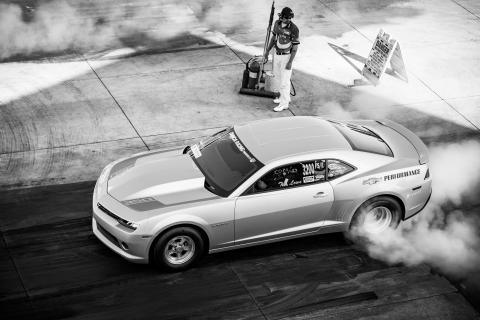
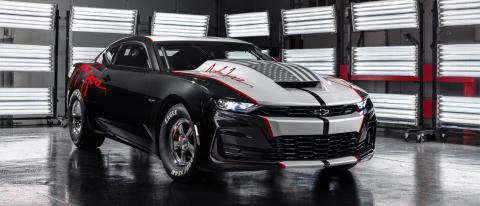
Chevrolet Performance has announced the "last call" for the track-use-only 2020 COPO Camaro handcrafted by GM engineers. 

For the first time in history, orders for the 2020 COPO Camaro will be on a first-come, first-served basis until all 69 units have been sold. This means no random selections are required, and buyers can become a part of the COPO family just by submitting a custom order (while supplies last).

The deadline for submissions is November 30, 2020. 

To place an order, contact chevrolet.performance@gm.com or call the COPO Build Center at 248-628-5556. For more information, visit chevrolet.com/performance-parts/copo-camaro.

September 2020

New PRI Feature: Ask The Experts

Submitted by laurap on Tue, 09/29/2020 - 11:00
PRI Magazine


Any topic, any type of racing... it’s all fair game for this new PRI feature!

Here’s how it works: We’ve assembled the industry’s brightest and most knowledgeable manufacturers, engine builders, suspension specialists, machinists, small business experts, and more to answer YOUR questions on, well, pretty much anything motorsports-related.

Just email your question to editorial@performanceracing.com (subject line: “Ask the Experts”) and we’ll get one or more of our expert sources to provide you with a detailed response. Feel free to include your name and business...but if you’d rather not that’s ok, too.

The most informative Q&A’s will be featured in PRI Magazine, as well as on our website and social media pages. The best submission will also win an exclusive PRI-branded hat.

So, whether it’s parts-related, or a tuning issue, a plumbing problem, or something else entirely, let PRI’s network of expert sources get you the answers you need!

Send all questions to: editorial@performanceracing.com

Charlotte To Host Fans For Bank Of America ROVAL 400

Submitted by laurap on Mon, 09/28/2020 - 17:53
Bank of America ROVAL 400 logo


Charlotte Motor Speedway will be able to host fans for the Bank of America ROVAL 400 on Sunday, October 11, as well as for the Drive for the Cure 250 presented by BlueCross BlueShield of North Carolina NASCAR Xfinity Series race and IMSA WeatherTech SportsCars GT Championship Series on Saturday, October 10.

North Carolina Gov. Roy Cooper and state health officials have announced that outdoor sports venues with a capacity of more than 10,000 can host events with fans up to seven percent of their capacity, beginning October 2. 

Race weekend fan protocols will include mandatory temperature checks at entry gates, contactless ticketing, socially distanced grandstand seating, and cashless souvenir and concession purchases. Fans and staff will also be required to wear approved face coverings at all times, except while eating and drinking. Limited grandstand seating will be in groups of up to six people socially distant from any other group.

For more information or to purchase tickets, visit charlottemotorspeedway.com.

September 2020

General Motors Announces Leadership For Technical Center

Submitted by laurap on Mon, 09/28/2020 - 17:22
General Motors logo


General Motors has announced the leadership for its new Concord, North Carolina-based performance and racing technical center. 

Dr. Eric Warren of Richard Childress Racing (RCR) was named the director of NASCAR operations. In this position, he will be responsible for competition duties in the sport “as well as expanding the involvement of GM’s product development resources in the technical strategy for the Chevrolet race teams,” GM said in a statement. 

Warren has been part of the RCR team since 2012 and was promoted to Chief Technology Officer in 2017.

Mark Stielow was also announced as the new Director of Motorsports Competition Engineering, where he will be responsible for the overall engineering and technical director for NASCAR, IMSA, NHRA, and IndyCar operations.  

The 75,000-square-foot facility is expected to open later this year and will focus on “transferring knowledge and resources from the racing programs to core vehicle engineering.” Aero development, an advanced new driver-in-the-loop simulator, and more are also planned.

For more information, visit gm.com.

September 2020

California Governor Signs Order to Phase Out New Gas-Powered Cars by 2035

Submitted by ashtonr on Mon, 09/28/2020 - 10:44


California Governor Gavin Newsom has issued a controversial Executive Order this week instructing the California Air Resources Board (CARB) to draft regulations requiring that all new cars and passenger trucks sold in the state be zero-emissions by 2035.

Once drafted, CARB’s proposed regulations will be subject to a lengthy regulatory process, including legal, economic, and environmental analyses, public comment, and hearings. The Governor’s order is also expected to face numerous legal challenges from opponents.

“SEMA is deeply disappointed in Governor Newsom’s decision to escalate his ongoing feud with the Trump Administration at the expense of the consumer and California’s small businesses,” said Daniel Ingber, SEMA vice president of government and legal affairs. “SEMA will work with the industry and enthusiasts in opposing the Governor’s proposal on all fronts.”

According to the California Energy Commission, zero-emission vehicles (ZEVs) currently make up approximately 2% of the over 28-million vehicles in use in the Golden State. It is estimated that at least 8% of California’s new vehicle sales will be ZEVs and plug-in hybrids by 2025.

California’s ZEV program falls within the state’s greenhouse gas rule that is being challenged in court by the Trump Administration. The federal government is seeking to withdraw EPA recognition of the California rule under the Clean Air Act because it effectively establishes fuel economy standards, which are the sole jurisdiction of the federal government. The Supreme Court could eventually decide the challenge.

September 2020

NMCA All-American Nationals Returns to Summit Motorsports Park in 2021

Submitted by ashtonr on Thu, 09/24/2020 - 10:48


The NMCA Muscle Car Nationals has announced the NMCA All-American Nationals is returning to Summit Motorsports Park (Norwalk, Ohio) in 2021 with a five-year contract extension. The national event moves back to its regular weekend of August 26-29, 2021.

The NMCA All-American Nationals is one of the biggest stops on the NMCA tour and was moved to an alternate location in 2020 due to the COVID-19 pandemic. The event will also include the Chevrolet Performance COPO Camaro Shootout Presented by COPO Parts Direct and the Ford Performance Cobra Jet Showdown Presented by Watson Racing. In addition to factory drag racing shootouts there are other unique features like specialty street car categories for Dodge//Mopar Gen III Hemi Shootouts and TorqStorm Superchargers True Street.

“Our racers, sponsors, and fans enjoy going to Summit Motorsports Park, one of the premier drag race facilities in the world where the Bader family offers its guests outstanding customer service. We were thankful to find a temporary home for the All-American Nationals, however, we’re happy to bring it back to Summit Motorsports Park,” said Rollie Miller, General Manager and National Event Director at NMCA Muscle Car Nationals. 

The NMCA Muscle Car Nationals begins its season in March at Bradenton Motorsports Park. For more information, visit www.NMCAdigital.com

September 2020

Lubrication Specialties Inc. Promotes Kyle Fischer to Director of Branding & Promotions

Submitted by ashtonr on Wed, 09/23/2020 - 16:09


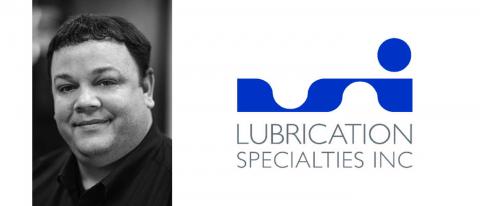
Lubrication Specialties Inc. (LSI) President Brett Tennar has announced the promotion of Kyle Fischer to Director of Branding & Promotions. Fischer joined LSI in 2017 as the Director of Marketing followed by a promotion in 2019 to Director of Sales.

Throughout his tenure, Fischer has played a critical role in the Hot Shot's Secret brand in the performance aftermarket. As Director of Branding & Promotions, an all-new position, Fischer will be responsible for working closely with the Director of Marketing and Director of Sales to develop positioning for Hot Shot’s Secret branded products for each market. He will also coordinate and implement promotional activities to select targeted audiences that ensure a consistent brand image. He will have input on all advertising buys, content, social media, race events, brand ambassadors, product content, promotions, and trade show activity, and will work closely with the company’s key leadership to increase brand awareness and product sales in the United States and abroad.

“Kyle is the person on the ground that connects with the racers and the main liaison with the R&D department in the development of new problem-specific products. He has been integrally involved in marketing from day one of his employment and each year has taken on more responsibilities serving most recently as Director of Sales,” Tennar said. “However, it is his integral hands-on experience with the motorsports market, from diesel, off-road to drag racing and tractor pulling that he has demonstrated that he has a unique skill set to assist in brand growth and expanding the company’s overall footprint. In every position to date, Kyle has excelled and we feel he is the right person to lead this important company division.”

Fischer has twenty plus years’ experience in marketing, sales and management positions, and B.S. degrees in both Marketing and Business Administration from Franklin University.

For more information about Hot Shot’s Secret, visit hotshotsecret.com.

September 2020