The brand was born in the mid-1980s, when professional race engine builders approached Vibratech TVD, parent company to Fluidampr, with the challenge to apply durable, industry-proven viscous damper technology to motorsports.
Racing demands a quality crankshaft damper that can protect engines across a broad RPM range. It needs to perform when you add horsepower and increase the temperatures under the hood. Racing pushes innovation in the design and manufacturing process. These advancements are passed on to the parent company, Vibratech TVD, and applied to exotic automotive, marine performance, and defense industry OEM applications.
Vibratech TVD is where science happens. Automotive performance powertrain engineers, production engine builders, and aftermarket performance kit manufacturers have an experienced partner through Fluidampr to develop and integrate turn-key torsional dampers with exceptional quality.
Fluidampr is the Official Damper of the Ultimate Callout Challenge and has been involved with PRI for over 30 years. Learn more at fluidampr.com.
Buffalo Turbine
A key element that happens behind the scenes for races big and small, is ensuring that the race tracks are completely free from debris and related hazards. That’s where Buffalo Turbine comes in.
The Official Track Blower of NHRA and Official Debris Blower of IHRA, the company has also entered into track maintenance at NASCAR, using the large turbine blower power they’re known for. Founded in 1945 and completely manufactured in the USA, Buffalo Turbine is based in Springfield, New York. Learn more at buffaloturbine.com.
–
Buffalo Turbine and Fluidampr are product divisions of Horschel Brothers Precision (HBP). Learn more at hbpllc.com.
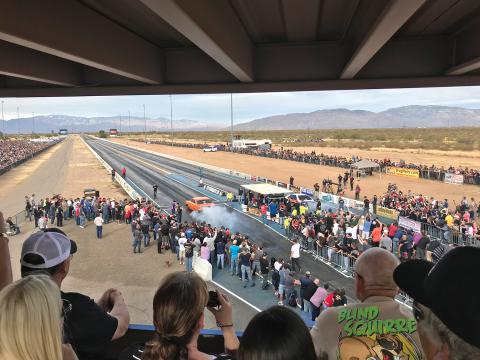
The team at Arizona’s Tucson Dragway, at left, keeps close tabs on the number of classes it runs. A simplified structure and working relationships with its racers gives them the opportunity to run competitively with minimal hassle and expense, according to Matt DeYoung.
Sage advice for race track promoters and managers ahead of the 2021 racing season.
The offseason is an opportunity to reassess. For race teams that could equate to a thorough teardown of the car in pursuit of more performance, or perhaps a chance to eliminate nagging reliability issues. Drivers might use the time to work on their technique or focus on other aspects of their program that have been neglected. Ultimately, that downtime is an opportunity to identify ways to enhance their program so they can come out swinging next year.
Track operators and promoters typically use those winter months similarly, as it gives them a chance to reflect on the previous race season and determine where tweaks can be made to increase car counts and put fans in the stands. But change isn’t always a good thing, and some common missteps leading into a new season can actually have the opposite effect.
“One mistake I see people making a lot is running too many divisions,” said Steve O’Neal of Pennsylvania’s Port Royal Speedway. “Maybe they had a season where some divisions weren’t really strong, so next year they decide they need to add more divisions to try to get more cars out there. I don’t think that approach works very often, and they’d actually be better off focusing on figuring out why the divisions they already have aren’t getting enough cars. So maybe instead of adding something, you actually drop something that isn’t performing well and consolidate.”
Matt DeYoung of Tucson Dragway in Tucson, Arizona, said that rather than creating classes to fit every car, organizers should consider simplifying the structure and work with racers directly to determine where they can run competitively with minimal hassle and expense. “Of course, we want as many people to come out and race as possible. But you don’t want to have a whole bunch of classes and only five cars running per class, so we generally don’t think that promoters should be building classes around a handful of cars. The successful series all take the time to work directly with racers to figure out how to fit their cars into a class, and the teams appreciate it because they know exactly what they need to do to be eligible to run where they want to.”
O’Neal also explained that when it comes to series growth, patience is a fundamental element of success. “My theory is that if you take the time to grow your divisions, you’re going to get people in the gate. Some promoters try to get too big too fast. When it comes to finances and logistics, you have to be in a situation where a bad weather day or something like that doesn’t have the potential to ruin your whole season or put you out of business. You have to grow into it.”
Steve O’Neal of Pennsylvania’s Port Royal Speedway believes ongoing communication with racers is essential. “You’ve got to be approachable and at least listen to what they have to say,” he explained. “A lot of great ideas that we use today came directly from racers or promoters.” In addition, O’Neal personally congratulates each race winner at the dirt oval, as seen here.
And he added that organizers should also take a similar approach with rule sets. “If you start changing too many rules too quickly, you can get into trouble really fast,” O’Neal said. “Those changes always cost money, and that can be frustrating for the teams involved. So, if you’ve got a good set of rules already established, make sure that a change really needs to be made before you do anything.”
Tucson Dragway owner Jim Hughes pointed out that frequent rule changes can also reflect poorly on a series. “It can have a negative connotation—people may perceive that the series is disorganized, or that you’re showing favoritism to some of the racers.”
DeYoung advised that, above all, organizers need to stay consistent. “For example, the folks who run Street Car Takeover and Import Faceoff always want to be here in the third weekend of March,” he explained. “Not only does that help the track with consistency, it helps competitors remember when they’re going to be in those regions for these races. The promoters that keep trying different months for their events each season seem to forget that people generally do not like it when things change all the time, and they tend to not be as successful.”
And those changes also increase the likelihood for scheduling conflicts, added Hughes. “It’s important for these promoters to work together to make sure that they don’t put the same type of races on top of each other at tracks that might only be a hundred miles from one another,” he said. “That’s why we try to keep a master schedule of what everybody on the West Coast and in the Midwest is running—that way we don’t bring in a promoter and give a date that may conflict with what one of our other promoters is doing nearby.”
O’Neal noted that ongoing communication with racers is essential. “The competitors are the ones who’re putting on the show for you. You’re going to get some people that you might not want to listen to, but you can’t do that with everybody—you’ve got to be approachable and at least listen to what they have to say,” he explained. “A lot of great ideas that we use today came directly from racers or promoters. If you don’t give them that chance to talk, you may miss out on something important.”
This veteran motorsports insurance specialist joins USAC at a critical time for the Speedway, Indiana-based sanctioning body.
Having recently joined the United States Auto Club (USAC) as its new risk and compliance manager, Laura Hauenstein brings to the job 20 years of motorsports insurance experience, along with the recognition and respect of racers. In her new role, Hauenstein is charged with overseeing risk management at the series, track, and participant levels for USAC’s expanding portfolio of series.
Her appointment comes at a critical time for motorsports insurance, as all stakeholders are grappling with implementing state-issued COVID-19 protocols. She’s got the experience, including several years working with USAC on the insurance side, where she has worn multiple hats as an agent and broker for a number of different carriers.
Among her accomplishments, she collaborated with a key carrier to build one of the largest insurance programs in US motorsports. By developing a groundbreaking approach to underwriting, and functioning as an underwriter with line of authority, Hauenstein also helped to transform how motorsports insurance policies are structured.
PRI recently connected with Laura Hauenstein to learn more about her vision and goals at USAC.
PRI: How did you get involved with the racing industry?
Hauenstein: While in the insurance industry, I insured a few trucking companies that sponsored racing. Through those clients and invitations to the track, I became involved in the motorsports side. Racers at short tracks got to know me. Many admitted that they would actually hide in their trailers from a broker they did not like to deal with. People would ask me all the time if I could help them, and they promised not to hide from me!
PRI: Why is this position a good fit for you?
Hauenstein: I’ve worked with [USAC CEO] Kevin Miller and his team for years on the insurance and risk management side. It’s been amazing and fun to watch USAC’s growth as it formed strategic partnerships to ensure ongoing success in the sport. Everyone on the USAC team is truly dedicated to their work and improving the world of racing.
PRI: How are you planning to improve the organization or its processes?
Hauenstein: My goal is to review contracts and have input on keeping all parties clear on obligations so that the CEO can do what he does best. I want to grow the organization and give opportunity to all racers, versus getting bogged down in the paperwork and back office work. I want to ensure that races move forward with racers knowing how the process works and that USAC is looking out for them.
PRI: What do you see as the biggest challenges ahead of you?
Hauenstein: COVID-19 is obviously a major challenge. We need to help tracks to keep participants and spectators in compliance with social distance rules while continuing to foster the enjoyment that motorsports offers.
PRI: How, specifically, will COVID-19 impact your efforts at USAC?
Hauenstein: COVID-19 could have little impact if all affiliates involved with USAC will continue to learn and follow CDC guidelines. USAC’s leadership team wants nothing more than to keep all participants and spectators safe and in compliance so that the continuation of racing is a non-issue.
PRI: Could you outline your top strategic goals for the next 12 months?
Hauenstein: I’ll be spending time with each division of USAC, learning where they could use my help making processes as smooth as possible with regard to getting on track. I’ll be talking to members to clarify anything that might be confusing and addressing processes that could be improved upon in relation to safety or insurance.
PRI: What changes will members or business partners notice, or what do you hope they notice, as a result of your efforts?
Hauenstein: They’ll notice a direct line of communication to move paperwork for events through, as well as a better understanding of how claims are handled and why different information is necessary to make the handling quicker. I want them to see how USAC’s insurance works in relation to their own.
PRI: What’s your most gratifying professional accomplishment so far?
Hauenstein: Earning the trust of someone like Kevin Miller to appoint me to the USAC leadership team.
PRI: Who inspires you, and why?
Hauenstein: Professionally, Ruthie Culbertson, vice president of business development and marketing at Experiential Events Group: She’s a ball of energy who knows how to plow through anything needed in the motorsports world and just get it done!
Also Robert Lutz, president/CEO of NASCAR Racing Experience and Mario Andretti Racing Experience: He has an amazing ability to turn whatever he touches in the world of racing into gold.
Personally, I’d like to mention my Uncle Charles Priest. He was married to my Mother’s sister Mary. When my Mom failed at being a mom, Aunt Mary and Uncle Charlie took over and helped five kids have an anchor in life. Not once did he utter a bad word about anyone, and he is 86. He just lost the love of his life after 64.5 years together and still worries about everyone else and not himself. Uncle Charlie doesn’t have an enemy in the world and would do anything for anyone. I think that is where I learned to do for others as much as I could, without expectation of return.
PRI: What can you not live without, and why?
Hauenstein: Good friends. Whether in business or outside of business, they keep you going when you need that friendly lift-up on a bad day. I’ve made many awesome friendships in my years of insuring motorsports.
–
Laura Hauenstein
Title:
Risk and Compliance Manager
Organization:
United States Auto Club (USAC)
Hometown:
Pleasant Lake, Michigan
Fast Fact:
“I spend my off hours rescuing horses, focusing on the American Mustang. My organization is Reality’s Chance Rescue & Sanctuary in Michigan.”
Crate Racin’ USA has announced the 2021 EZGO $100,000 Challenge schedule of events for the Newsome Raceway Parts Crate Racin’ USA Dirt Late Model Series at the CARS Racing Show.
The nine-race series will feature one $20,000-to-win event and eight $10,000-to-win races from Crate Racin’ USA’s Winter Shootout Series and National Touring Series and includes visits to Georgia, South Carolina, Louisiana, Tennessee, and Alabama.
The EZGO $100,000 Challenge Series begins on January 1-2, with the $10,000-to-win New Year’s Battlefield Bash at Cochran Motor Speedway in Cochran, Georgia. The series will wrap up November 19-20, for the second annual $10,000-To-Win Deep South 100 at Deep South Speedway in Loxley, Alabama.
The points leader will receive a $5,000 bonus at the conclusion of the season.
For the complete schedule, visit the Crate Racin’ USA website here. For more information, visit crateracinusa.com.
PerTronix Performance Brands houses automotive aftermarket top shelf manufacturers of performance products. From ignition products to exhaust systems for hot rods, custom and muscle cars, to trucks and motorcycles, PerTronix Performance Brands industry savvy and expertise provide spark, horsepower, sound, and unrivaled performance for nostalgic and modern enthusiasts alike. PerTronix Performance Brands include PerTronix Ignition products, JBA Performance Exhaust, Doug’s Original Headers, Patriot Exhaust, Compu-Fire, and Spyke.
PerTronix Ignition Products PerTronix manufactures maintenance-free aftermarket ignition products for enthusiasts who want to upgrade the spark in their system resulting in a noticeable gain in horsepower.
JBA Performance Exhaust JBA manufactures exhaust systems for the performance enthusiast and is acclaimed for the CAT4ward design, which produces noticeable power gains. JBA is a leader in environmental consciousness owning more CARB E.O.'s than any other exhaust manufacturer.
Doug’s Original Headers Doug's Original Headers are a fixture in the automotive aftermarket, pioneering quality performance products for decades. Doug's Headers prides themselves on superior design detail resulting in a hassle-free installation for most applications.
Patriot Exhaust Patriot manufactures top quality exhaust systems for the street rod, custom and muscle car aficionado. Developed by enthusiasts, Patriot drives the product line with an eye on quality and a mindfulness for value.
Compu-Fire Compu-Fire provides stock replacement ignition modules and starters for both VW and motorcycle applications. Compu-Fire is all about high performance, quality, and longevity.
Spyke Spyke starters and charging systems are the go-to brand for the garage builder who loves to get his hands dirty. A host of options at desirable price points keep spike riding out ahead of the competition.
Camshaft grinders are busier than ever, but there’s still time for new ideas and clever tricks.
There’s a talented and winning engine builder in the dirt track and sprint car community who’s always willing to “try something different,” even when the numbers appear dubious. But this flexibility is likely one of the keys to his success.
“This customer did not expect much with the cam change because the specs were too close,” recalled Billy Godbold of COMP Cams, Memphis, Tennessee, adding that he had suggested the engine builder replace a “state-of-the-art” camshaft profile with COMP’s new Low Shock Technology (LST). “The cool part about this case was not what it did on the dyno, but what he saw on the track.”
The race team built two engines to conduct extensive A-B-A testing at the track.
“As we are finding in almost every case with these profiles, the biggest gain was how the reshaped overlap triangle improves transient response, both during high engine acceleration and during rapid throttle changes,” explained Godbold. “By building two identical engines—with the only difference being the new Low Shock lobes on one—both the driver and the stopwatch could clearly tell which cam was on the track. On these short dirt tracks, making a change that the driver feels and the time verifies is a pretty amazing improvement.”
COMP’s Low Shock Technology is a lobe-design strategy that is gentler on the valve spring and thereby reduces unwanted harmonics in the valvetrain. It’s almost the flip side of very aggressive design strategies that have been popular throughout the industry. Yet, this game plan has generated hundreds of new grinds for the COMP brand.
“We started with the new Low Shock profiles in just the professional classes, but today there are full offerings across street performance, street/strip, road race, and circle track, including both flat tappet and roller,” added Godbold. “To give some perspective of just how many new designs we had to make, the drag race list alone is approaching 650-plus lines deep, so there have been literally thousands of new Low Shock Technology profiles added to our lobe library over the past 24 months for everything from as small as a go-kart engine to as large as an industrial diesel engine.”
STAYING BUSY
Despite scattered slowdowns in the racing market, leading cam grinders throughout are showing little work stoppage as customer demand is holding steady, if not increasing.
“We’re absolutely swamped,” said Cale Risinger of Melling Performance, Jackson, Michigan. “It’s a good problem to have.”
“We’re just trying to keep up,” agreed Brook Piper of Callies Performance Products, Fostoria, Ohio.
“We’ve been so covered up with what we’re already doing, we haven’t had a lot of extra time for development,” said Russ Yoder of Erson Cams, Louisville, Kentucky. “It’s a bit of running joke. We’re wondering where all these cams are going because we’ve been busier than normal all summer long,” he added when interviewed last fall.
Most cam companies that deal directly with engine builders and teams have been buoyed by the growth in popularity of certain racing segments. And with every new cylinder head or larger turbo that hits the market to serve those classes, cam grinders digest all that data to suggest a lobe profile that takes advantage of the new hardware.
Camshafts have always been a key to greater power, and manufacturer development is more intense than ever. Today’s computer-controlled, boosted engines have created new requirements for cams. “There has to be a wide range of tuning on the cam, especially when using boost,” reported one source.
“We’re doing a lot of street outlaw and Pro Mod stuff,” said Nolan Jamora of Isky Racing Cams, Gardena, California. “Definitely you see more R&D and dyno’ing. Guys like Pat Musi and Steve Morris are continuously doing new stuff to keep up front. I mean, in [NASCAR] Cup racing you don’t have engine builders doing their own thing like the old days. You’re definitely seeing more development in drag racing.”
Massive boost is driving the outlaw drag racers these days, and engine builders aren’t afraid of more duration and wider lobe centers.
“Also, looking at the fuel flow and what the droplets are doing,” continued Jamora, “it’s a big difference from what it was before. The engines have to be tunable. It may be 70 degrees when they start racing, and by the time they finish it might be 30 degrees. So, there has to be a wide range of tuning on the cam, especially when using boost. It really helps to have a cam that is good between a wide power range and not just one particular rpm or one particular fuel flow, which it kind of was in the old days.”
One of the cam specs that came up often during discussions with cam grinders across the country was lobe separation. It appears the numbers are getting wider as engine builders look for more finite control of the combustion. Some non-boosted engines are going as wide as 121 degrees, while boosted engines are regularly running 118 degrees.
“That would be the norm now,” said Jamora. “There is nothing lower anymore with all the boost they’re putting in.”
This trend has also prompted serious technical theory discussions among racers and cam grinders.
“Racers, enthusiasts, and even many well-known engine builders have some misconception in regards to the effects of lobe separation angles on a given camshaft’s performance characteristics,” said Steve Balusik of Cam Motion, Baton Rouge, Louisiana. “To clear up these misconceptions, we encourage engine builders to look at ‘valve events’ as their primary consideration instead of lobe separation angles.” (For more detail, see the sidebar below.)
Although cam development still centers on increased performance, longevity is also an important issue in drag racing’s top ranks. Heat-treating is a vital part of these gains. “We’ve doubled the core life in Top Fuel engines,” noted our source at Callies Performance Products.
“It’s all about where you open the valve,” confirmed John Partridge of Bullet Racing Cams, Olive Branch, Mississippi. “In a boosted engine, you’ve got to open the valve early enough to get the cylinder filled. You’re trying to stuff 10 pounds into a five-pound bag. You’ve got to get the valve open at the right time to make all that happen. With nitrous, you don’t have to open quite as early. But what’s more critical is the exhaust side. You have to have that pullover effect to keep the thing from burning itself up.”
Over at Callies, the emphasis is on developing cam cores that leading cam grinders purchase for finishing, including massive 70-mm tool steel cores for Pro Mod engines. Also, 11,000-horsepower engines are drawing attention as suppliers help the nitro drag-race teams improve durability.
“We’re doing more Top Fuel cores,” said Piper. “At one time 18 to 20 passes was considered really good for a camshaft. It’s safe to say we’ve doubled the core life in Top Fuel engines. Making them faster, that’s our biggest problem.”
The company has also developed camshafts for the Ford 7.3-liter Godzilla truck engine, and there is growing demand for Powerstroke diesel products, too. Callies recently acquired a Spintron to help advance development projects.
“We’ve got an R&D lab set up and will be doing camshaft testing at our facility,” added Piper. “And we’re working with a Top Fuel team on valvetrain testing.”
Drag racing continues to drive new products at Crower, especially when engineers can take advantage of stronger alloys to keep up with cylinder head development.
“The materials have gotten better. We’re using 8620 steel billet. And the lifters have gotten better,” noted Guy Aguayo of the San Diego, California-based company. “We’re getting up to one-inch lift on sportsman cams these days. There are cylinder heads that flow big numbers, so you work the lift up to where the big numbers are.”
Crower is also seeing growing numbers of Top Sportsman and Top Dragster engines running ProChargers or nitrous, and even the Stock classes are looking for more power.
“We have cams that can help in a certain direction,” said Aguayo, adding that flat-tappet camshafts are still in demand. “There are X amount of flat-tappet cams that we carry. Some have been around for 15 to 20 years and they still work for those applications.”
It’s the same at Erson, where drag racers are calling in search of recommendations. “I’m assuming much of that is tied to the street outlaw trend,” said Yoder. “I guess everyone has been home working on their hot rods and doing projects that they’ve put off.”
Yoder said production has been slowed at times due to a shortage of iron cores sourced in the US. “I understand the problem is getting materials to make the cores,” noted Yoder. “There are only two that make the OE-style cores, and we’re basically buying all we can from either one. With steel cores, there are four or five more vendors to work with.”
Melling recently acquired Performance Springs UK Ltd., a valve-spring company in the United Kingdom, and that move has opened up more possibilities for the cam designers. “It’s got us to look at the cam programs, realizing we don’t have to source springs to do what we want to,” said Risinger, adding that new LS cams designed for street performance are in development. “Also looking at the 4.6-liter Ford. We really need to catch up with the late-model Hemi and Ford modular engines. That’s going to be the focus for us next year, along with the LS.”
Like many segments of the performance aftermarket, cam manufacturers are enjoying strong demand for their products. “We’re wondering where all these cams are going because we’ve been busier than normal,” said our source at Erson Cams. “I guess everyone has been home working on their hot rods.”
Racers have long looked to camshafts for a competitive edge. Lobe profiles are one of the most closely guarded secrets, although some say it’s very easy to reverse engineer a camshaft. Still, debating camshaft designs and even firing orders—which the cam controls—is one of the more popular exercises at the track or in the garage. When sanctioning bodies try to limit cam development, so-called “cheater cams” start making their way to market.
“We do a lot of cheater stuff,” boasted Partridge. “The reason is, there’s a demand for it. If there’s a class that has XYZ rules, we’re going to push those rules as far as we can. For example, if there’s a .450-inch maximum valve-lift rule, we increase the amount of area across the top of the lobe. Basically, we hold the valve open longer and now the motor thinks it’s got .500-inch lift.”
Perhaps the one engine component that drives camshaft development is the cylinder head, and they can be quirky at times.
Being able to manufacture the full range of valvetrain components allows greater freedom and efficiency in cam development. “It’s got us to look at the cam programs, realizing we don’t have to source springs to do what we want to,” said our source at Melling.
“Understanding the valvetrain ‘system stiffness’ for each new cylinder head and rocker configuration is always a challenge,” said Godbold. “Even with the same head, there can be multiple different rocker systems and valvetrain mass combinations that require quite different approaches. Even with similar engines, you have to understand how the different build and application constraints will change what will be the best camshaft for your unique needs.”
“You definitely see [cylinder head development] in combustion chambers and how they’re directing flow and swirl with changes in the shape. We’re still finding new cylinder heads all the time,” added Jamora. “You definitely have to keep up, and it’s more of a partnership thing now. Before, they would just say this is what I got. Now you’re more involved from the start.”
Increased duration and wider lobe centers are among the top camshaft design trends now. But camshaft development is a constant evolution, as new designs are built to meet the demands of today’s racers and engine builders.
Finally, racers and enthusiasts love to talk about extremes in camshaft development. Think about it: There are now racing camshafts with 80-mm bearing journals. That’s larger than many crankshaft main journals! Advances in lifter design, pushrod stiffness, rocker-arm geometry, and valve-spring strength have certainly allowed cam designers to try more aggressive lobe profiles, and total valve lift is sometimes a bragging point in the pits. Talk of Pro Stock or Pro Mod engines running over 1.3-inch of valve lift is not uncommon.
“Where the valve spring can accommodate the requirement, lift over diameter (L/D) ratios are commonly 45–50 percent for most race camshafts on the intake side, especially those incorporating 50-plus degree seat angles,” said Godbold. “For a 45-degree seat, L/D closer to 40 percent is common. With that in mind, you can quickly see how something rather large that Sonny Leonard would build should be well over 1.3-inch valve lift (0.700-inch or greater lobe lift with 1.9:1 or higher rocker ratio), but a large ship engine we could consult on might be over 2-inch valve lift.”
Sidebar: The Main Event
The term “valve events” as noted by Steven Balusik of Cam Motion, Baton Rouge, Louisiana, refers to the timing of when the intake and exhaust valves open and close as measured in degrees of crankshaft rotation at a certain amount of lobe lift.
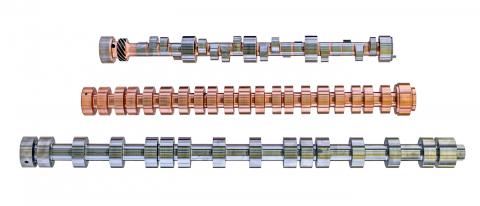
In the accompanying illustration, there are three cams—each with 280 degrees intake duration and 290 degrees exhaust duration measured at .050-inch lift at the lifter. The first cam has a 112-degree lobe separation angle (LSA), the second has a 114-degree LSA, and the third has a 116-degree LSA (all are circled in green in the illustration). And all three versions have four degrees of advance ground into camshaft.
“As mentioned, all three camshafts have the same intake and exhaust duration, yet all three camshaft examples have different valve events—that is, the timing of the opening and closing of the intake and exhaust valves,” explained Balusik. “The only thing that was changed was the lobe separation angle. The point is that when you change the LSA of a given camshaft, you change all four valve events. This is important because all four valve events have their own unique effect on engine performance. As you will likely agree, changing four things at once is not a very concise way to optimize.
“We recommend that you look at each valve event specifically and consider their corresponding effect on engine performance,” he added. “Choose your valve events based on their desired effect on engine performance and let the LSA fall where it may.”
Today’s carbs have come a long way from yesterday’s ‘calibrated gas leakers,’ resulting in a rebirth for these core engine components.
Even though it was invented more than 100 years ago, the carburetor is currently undergoing a revival of sorts. Consider Holley Performance Products: While its current new-product development is focused primarily on EFI systems, the Bowling Green, Kentucky-based company still produces on the order of 600 carbs per day, according to Holley’s Laura Shehan.
Joe Hilerio of BLP Racing Products in Orlando, Florida, told us his company has seen “steady growth” for the past five years, with 2020 being “the best year yet, despite COVID.”
Dan VanderLey said VDL Fuel Systems in Mooresville, North Carolina, also enjoyed record sales last summer, the pandemic notwithstanding. “Year-to-date we’re even with last year, and last year was a very good year,” he said in October 2020.
What’s fueling (pun intended) this demand? The reasons vary from rulebooks to checkbooks, but a lot of it has to do with a carburetor’s relative simplicity.
“A carburetor is a really simple mechanical device that works in conjunction with immutable physical laws that have been in place since the beginning of time,” said Dave Braswell of Braswell Carburetion, Tucson, Arizona.
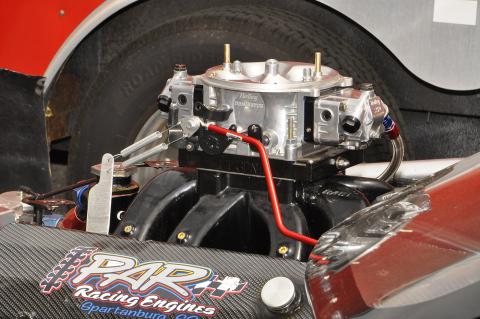
Although EFI gets more headlines nowadays, carburetors remain a viable choice for racers—Holley produces more than 600 carbs a day, according to a company source. Among the reasons for this popularity are their relative simplicity and low cost.
That mechanical simplicity has convinced some racers to give up their EFI systems. As Trevor Wiggins of Get ’M Garage in Alvaton, Kentucky, put it, “Racers want to race. They don’t always want to tune. I was an EFI guy through and through, but I found myself tuning more than I was able to go race. My customers were the same way. They’d call me and say, ‘Can you just get me a carburetor? I know I’m going to get to race if I go carbureted.’ There’s nothing wrong with fuel injection. I’m a big fan and play with it quite a bit. But carbs are here to stay for racers who just want to go race.”
Because a carburetor is mechanical and not electrical, Hilerio noted, “if something goes down at the track it’s a lot easier to find a float, or a needle and seat, or a squirter, or whatever you need to repair your carburetor than it is to find some sort of sensor or even determine what the issue is on your injector unit.”
“If it’s all about raw power, the carburetor is still the way to go,” reported one source. Not surprisingly, this edge often proves to be more important to racers than the flexibility and low-speed drivability of EFI systems.
Cost is a factor, too, he added. “The carburetor is still a lot less expensive [than EFI] in the long term. By the time you get your injection, your different fuel pump, in some cases a different tank, all the different sensors and so forth, you have a $10,000 endeavor, compared to a $1,000 carburetor,” said Hilerio.
“Carburetors, time and again, have been proven to make more power than EFI systems,” said Jeff Harris of AED Performance, Richmond, Virginia. “If it’s all about raw power, the carburetor is still the way to go.”
MARKET GROWTH
For many of these companies, the growth of dirt track racing, and crate engine classes in particular, have spurred demand for carburetors.
“Circle track and dirt are the main types of carburetors we sell,” said VanderLey. “We have a good spread of everything from the 500-cfm two-barrel to custom big-bore carburetors for the big block dirt modifieds in the Northeast and the dirt late models that make 850 and 900 horsepower.”
Carburetors are sensitive to a variety of factors, making carb choice and tuning all the more important for achieving peak performance. “Cam design, intake manifold, timing, fuel, fuel pressure—all of that is what’s going to make the carb happy or not happy,” said our source at VDL Fuel Systems.
VanderLey said crate engine racing “has been our biggest growth area, not so much because we’ve brought in more or new racers as much as it is the rules changed. A class that previously was running what we’d call a rules engine, that rule has changed to a crate engine. The carburetor rule changed along with it, therefore there was a new market.”
Crate motor carburetors have been Braswell Carburetion’s “biggest growth area. Because of that, we concentrated our development work on them for the last two to three years,” Braswell said. “We now have five carburetors for the 602 and 604 motors. They are specifically sized and calibrated for gasoline/110, CHP, E85, ethanol, and methanol.”
AED, too, has seen gains in its dirt oval business. “The super late model stuff is always fun to build because it’s kind of wide open—no rules, big power,” Harris said. “But the crate stuff, when you get something that’s power limited, any improvement over that is just amplified. If something makes 800 horsepower, an extra 5 or 10 horsepower is good, but it’s not a make-or-break thing. If something makes 350 horses, an extra 10 is a big deal, especially when everybody else has to run the same engine technology.”
At BLP, “our biggest sellers are our billet Dominators,” said Hilerio. “In circle track, our 600 billet is a big seller for the crate motor applications; and our BX45, a 4500-designed billet Dominator, seems to be the biggest ticket in the drag race market. I think our biggest growth has been in the drag race market, with the advent of the no-prep races, grudge races, even some of the bracket races.”
“Large-horsepower, big-cubic-inch, single- and dual-carb setups are in high demand, including blow-through carburetors and grudge race/nitrous combinations, what we like to call our maximum horsepower seekers,” said Wiggins. “Horsepower, technology, and cubic inches seem to increase each year, and everyone is looking for that best quality advantage.”
MISCONCEPTIONS
Despite—or maybe because of—the carburetor’s long history with performance engines, there are still knowledge gaps in terms of how to effectively use them.
“One of the biggest problems I’ve found is that people are trying to do things with carburetors the same way they were doing them 50 to 60 years ago,” Braswell said. “In the last 20 to 30 years, carburetors have evolved so much. Motors and carburetors are totally different now. Back in the 1960s, if you turned 6,000 rpm with a motor you were in the Twilight Zone. Now, with most motors, 6,000 is below peak torque. Just because they’re pushrod/overhead valve motors doesn’t mean anything is even close to the same. Carburetors are highly developed now to match the requirements of modern racing engines.”
“Engine builders are pretty knowledgeable and have a good idea of what they’re trying to accomplish,” Hilerio said. In his experience, problems with carburetors can arise with the end user. “It’s the people who maybe just bought a car and are learning about it. They don’t know how to determine where the issue is. Obviously, the carburetor is the first thing they can see, the first thing they can touch, and usually it gets 90 percent of the blame.”
Shehan agreed. “I’ve seen many a situation where the carburetor is blamed and often subsequently replaced due to poor performance,” she said. “However, swapping a carburetor will not cure a vacuum leak or issues with ignition and/or timing, and may only band-aid the problem.”
Critical to carburetor performance is proper fuel pressure, Shehan added. “Having a gauge near your carburetor is priceless. Fluctuations in pressure, or pressures that are too high or too low, will seriously impact carburetor—and engine, and vehicle—performance.”
“I’ve said it so many times it’ll probably be on my tombstone: ‘What’s your fuel pressure?’” VanderLey said. “Fuel pressure is the lifeblood of the carburetor. It means everything. If I know [fuel pressure] is okay, then I know the fuel system is working correctly and that the carburetor is going to react correctly.”
SUCCESSFUL SIZING
“Carburetor sizing is the most common thing people get wrong,” claimed Harris. “Bigger is not always better. And the engine itself is only part of the equation when considering what size carburetor would be best for each customer.”
Experts say a balanced approach works best when choosing carburetors. “We’ve seen [racers] going too big with the carburetor, then they go too big with the whole combo—large intake, large cams, large heads—and now everything seems sluggish,” observed our source at AED Performance.
As an example, Harris described building “two mirror-image engines, exactly alike in every way. You put one of them in a 6,500-pound, four-wheel-drive truck that you’re going to street drive, and you put the other in an 1,800-pound dragster with a trans brake. The carburetors for those engines will be completely different. In that big truck, it doesn’t matter how much power it makes at 6,500 rpm if you accelerate the thing from 800 leaving a stoplight. With a trans brake dragster, it doesn’t matter how it drives at 1,000 rpm. It needs to accelerate from 5,000 to 7,000, hit the next gear and do the same thing. Given those two scenarios, those two carburetors are completely different pieces. They’re machined differently, they’re sized differently, and they’re tuned differently, even though the engines were exactly the same.”
To Harris, “getting the throttle bore to venturi ratio and getting the right booster selection are critical to making a car accelerate.” And acceleration is the “key to success. Whether it’s 60-foot times in a drag race setup or restarts or off-corner speed in an oval track or road race setup. Getting this thing to pick up speed and accelerate is where the technology in the carburetors will shine. Acceleration can be the difference between a win or a second-place finish.”
When most people discuss carburetor size, the measurement usually cited is cfm. Braswell instead sizes his carburetors by venturi diameter and throttle bore diameter. “I go off absolute dimensions,” he said. “If you need a carburetor that flows more, then we adjust the size of the venturi and the throttle bore when possible.”
Still, Braswell does build carburetors that comply with rulebooks that specify their size by cfm. “There are a lot of sanctioning bodies that mandate 750 cfm, so we have a carburetor we call a Spec 750. It fits all of the 750-cfm gauges, but I’d be embarrassed if it didn’t flow well over 800 cfm.”
New technologies are accelerating carburetor development. “Whatever you can imagine, you can build,” said our source at Get ’M Garage. “We can design a part, 3D print it, make any adjustments, and perfect it before ever moving to the CNC machine.”
Size also comes into play when customers are chasing a big dyno number, Hilerio said. “We’ve seen them going too big with the carburetor, then they go too big with the whole combo—large intake, large cams, large heads—and now everything seems sluggish. They don’t have any velocity built into their program. They are looking for a dyno number at peak torque or horsepower as opposed to what’s under the curve.”
“Ultimately, the carburetor reacts to what the engine does to the booster signal, to the vacuum,” VanderLey said. “It’s dependent on all that stuff: cam design, intake manifold, timing, fuel, fuel pressure—all of that is what’s going to make the carb happy or not happy.”
Yet there is another side to the size coin, Wiggins pointed out. “A single-carbureted big block Chevrolet today can make 1,300 to 1,500 horsepower. You can’t put a small carburetor on that. It needs a lot of air. If you put a 1,200- or 1,250-cfm type of carburetor on that type of motor, you’re basically restrictor-plating that motor. You have to match the cfm to the engine application and the horsepower.”
And to the fuel. “There are a lot of different things we would do to a carburetor depending on the fuel the customer was using to make sure they’re getting optimal performance,” said Hilerio. “For instance, if a guy is running C16 versus Q16, our main wells would be a little larger, our main well outlets would be a little larger, our booster holes would be larger, as would our booster feed. Yes, they could jet it down if they decide to run C16 at a different race. Is it going to run optimal? Not according to us and the performance quality we want.”
For those who want to switch between gas and alcohol, “I would caution that converting a carburetor to methanol or E85 isn’t merely a metering block change,” said Shehan. “The entire fuel delivery circuit should be properly sized and tuned to not only deliver the proper amount of fuel, but to also discharge it in a manner that atomizes appropriately for peak performance.”
CUSTOM UNITS
The sophistication of today’s manufacturing equipment gives carburetor manufacturers freedom to design and build truly custom carburetors for each individual engine.
“With the technology available with CNC machines now, we have so much more control over the end product that we build,” Harris said. “We’re able to basically start from scratch and build however we want. Not just larger throttle bores but venturi size, the shape of the venturi, the bore centers between the butterflies themselves—all that stuff is up for grabs. And that’s only half of the equation. We also have the capabilities of making better and better metering blocks. As the carburetor gets bigger and needs to flow more air, metering blocks and the technology for those must follow suit. You’re still always chasing an air/fuel ratio. If one side of the equation gets bigger, the other side has to follow.”
Even a large-scale manufacturer like Holley has used CNC machining for “custom porting opportunities in the main body,” said Shehan, “both in the initial air entry as well as in the transition through the venturi of the carburetor, like in the Gen III Dominators. And while all our carburetor castings are CNC machined, CNC capabilities have also allowed quick changes in the design and development of the billet metering blocks for custom racing applications as well as various fuel blends.”
“The engineering level today is unbelievable compared to 30 years ago, even 10 years ago,” Wiggins said. “3D printing has also changed how we machine and test things. We can design a part, 3D print it, make any adjustments, and perfect it before ever moving to the CNC machine. Whatever you can imagine, you can build.”
An accomplished racer before destiny intervened, this budding entrepreneur with a familiar surname dishes on social media, the fender vs. open wheel debate, life lessons, and much more.
From the time of his birth, Kevin Swindell seemed destined for a future in motorsports. A third-generation racer, he watched his father Sammy Swindell rise to become one of the greatest sprint car drivers in history, and as a teen Kevin began forging his own path as a professional driver. He was quickly successful, winning with the World of Outlaws sprint car series at age 17. Swindell also won the vaunted Chili Bowl Midget Nationals four consecutive times from 2010 to 2013, becoming the only driver in history to do so.
Swindell’s destiny took a dramatic turn in 2015 when he suffered a spinal injury in a racing crash. Undeterred, he redirected his motorsports passion into a new role as a team owner. Three years ago, Swindell and his wife Jordan took the concept of racing apparel to a new level with the launch of Swindell SpeedLab, a consumer-oriented brand of apparel and merchandise. Capitalizing on the power of social media, SpeedLab has been an interesting example of how to successfully combine the traditional aspects of a racing team with merchandising and marketing.
SpeedLab continues to campaign a sprint car with various series, and Kevin’s father Sammy wheeled the car through the majority of this past season. Kevin Swindell recently sat down with Industry Insights to share his thoughts on transitioning from driver to business owner, the state of short track racing, what comes with a famous last name, and the advice he’d give his younger self.
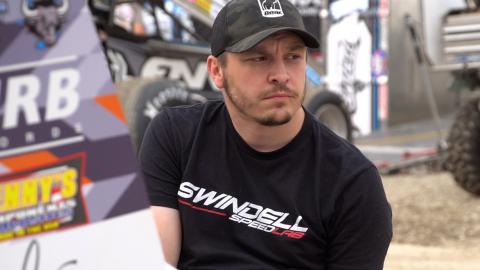
Third-generation racer Kevin Swindell had a bright future as a driver when a spinal injury derailed his career. Undaunted, he channeled his energy into being a team owner. Then, he and his wife Jordan launched the apparel and merchandise brand Swindell SpeedLab.
PRI: Running a business is a very different thing than driving a race car. What did you have to learn to do differently when you launched SpeedLab and were tasked with growing a business?
Swindell: Literally, I had to learn how to run a business. I knew nothing on that side of things. I spent the first 25 years of my life nailed down to the idea that I was going to be a race car driver, and nothing else. I finished high school and I didn’t go down any paths toward business, or running a business. So it was definitely a learning curve to understand how a business flows, dealing with manufacturers and learning the wholesale side of things, getting your pricing right, logistics on shipping, those kinds of things. Luckily my wife has a college degree and worked in management, so she had a mindset for management where I didn’t. I just tried to focus on the creative side of things, and bring in partners for the race team, and collaborate on the merchandise.
Probably the hardest part of all of this was changing my sleep schedule from that of a race driver to that of a businessman. (Laughing.)
PRI: You’ve embraced various digital tools to promote your brand. Social media, YouTube, etc. What’s the key to developing a message and getting it out effectively?
Swindell: The key is having fun with it. And being yourself, as much as anything. So much of what we see today is so scripted, and it feels forced. For us, we never wanted to ram products down your throat. We didn’t want it to be just “buy, buy, buy.” We wanted to show you cool stuff, and if you like it, you can go through the steps to purchase it. People like to see behind the scenes, and they like real people and they don’t want things to be scripted. People also want to be part of something, so making them feel included is important. When you buy something from SpeedLab we want you to feel like you’re part of the family.
PRI: Social media is obviously very effective, but it also has a dimension that isn’t always enjoyable. How do you deal with people who are, let’s just say, not supportive? There is a level of nastiness out there, how do you navigate that?
Swindell: (Laughing.) I think our initial reaction is to always argue with people in those cases. But I finally realized that you never get anywhere with that. If someone got a reaction from you, that’s all they wanted. I started going down the path that if I didn’t reply, nobody else liked it or replied to it or retweeted it, then I win. That was the route I decided to take. Once guys (make nasty comments) once or twice and get no response and nobody else backs them up on what they’re saying, they kind of give up. And I take pride in the fact that I’ve never blocked anybody on anything. I’ve always stood behind whatever opinion I might have, and never ran from anybody else’s opinion, either.
PRI: You have an open wheel background, and your team campaigns an open wheel car, so it would make sense that most of your customers are open wheel fans. We tend to segment racing fans by each niche: NASCAR, IndyCar, sprint cars, dirt late models, and so forth. As a business, how do you effectively cross over into different segments?
Swindell: Oh, yes, there is a silly war between the fender people of the world per se, and the open wheel side of things. I think that’s silly because I’ve always been just a race fan. When I’m at home on the weekend, I watch modified races, Late Model races, and sprint car races. Even within sprint car racing, the battle is between winged racing and non-wing racing, and I don’t understand that either. Why not like it all? It’s very segmented.
We obviously have a good footing on the sprint car side of things, but we’ve tried to branch out. We want to be friendly to other segments, and we took the T-shirt trailer to Cherokee Speedway (in Gaffney, South Carolina) recently for some Late Model races and did really well. So we’re pro-race car, and it doesn’t matter to us which type. That’s a big thing for us and we keep trying to find ways to keep growing.
PRI: Beyond taking the T-shirt trailer, how else can we build those bridges? If I am a Late Model racer, or a drag racer, how would you convince me that I should become an ambassador or advocate for sprint cars?
Swindell: Honestly, I don’t know. The only real trick is just being there, going to other events and trying to branch out. Ideally, we’d see more drivers cross over from one area to another, but that’s a tough challenge. With stock cars or sprint cars, the cars are so hard to drive and hard to learn that you can’t just have a “celebrity” driver come in and bring new fans with them. If you put someone into a sprint car who has never driven that type of car, for example, he’s probably going to be terrible. You can’t just grab somebody from another world and have them bring their fan base.
But social media has been important in people crossing over. You see sprint car people following stock car people who follow drag racing people. That’s opened a lot of eyes and raised a lot of awareness. And I don’t really understand that whole divide, and why stock car fans would argue with sprint car people on which type of car is superior. They both have things that make them cool, in my opinion. I just appreciate good racing and I try to be inclusive to all types of racing.
Kevin Swindell campaigns a sprint car under the Swindell SpeedLab name, with his father Sammy, at far left, doing most of the driving for the 2020 season. Despite his sprint car heritage, Kevin wants the SpeedLab brand to cross all types of racing. “We’re pro-race car, and it doesn’t matter to us which type,” he said.
PRI: You’ve grown up around racing. That gave you a large network of friends and potential business leads. How much does that help you promote SpeedLab and connect with racing people?
Swindell: The social media audience was huge, and trying to grow all that and being able to put it in front of so many people right off the bat, that was big. And the Swindell name was also a big help. Yes, it definitely helps you get into places. I’ve always felt like when I was first starting, that was both a blessing and a curse. The name would get you in the door easier, and there were things that were simpler to accomplish. At the same time, you faced a preconceived idea that there was no way the next generation was nearly as good as the previous, and they’re only there because the equipment, and this and that. But overall, yes, having an existing fan base was big for us. It definitely didn’t hurt. There’s not a lot of negative on the business side of things.
PRI: That’s an interesting statement about the blessing and curse of a famous last name. How were you able to turn that into a positive, or flip it to your advantage? How did you distinguish yourself as a new generation?
Swindell: I’m not sure I was able to do that. Early on I spent a lot of time, honestly, trying to figure out how to remove the Swindell name from the discussion, and that’s part of the birth of the SpeedLab brand. I didn’t want to make it about me, or dad, or anything else. I wanted it to stand on its own. As we talked to people, I realized the Swindell name was a draw and it could help us. What I really learned was that both brands are helpful. There was an original fan base my dad and I both built. We definitely ran into people who were “anti” because of my name, and we just tried to ignore that element. We just wanted to try to be who we were, and over time I think people finally gave up trying to compare me to my dad.
PRI: Despite the costs, despite the challenges, from all indications short track racing is pretty healthy in terms of car count, etc. What’s your view of the state of racing at the short track level?
Swindell: It looks good. It’s good that a lot of these race tracks are investing back into their facilities. Places like Port Royal and Eldora, they just keep getting nicer every year. They are trying to make the fan experience better. Car quality feels like it’s getting better; there is more parity in the winners. Which I think is really good for the overall viewership of the sport. You always want to be the guy who wins every race, but having multiple winners and different guys winning every night is really good for us. Things are healthy right now and they continue to grow. We definitely put a better product on the track right now than many of the major series. You always bring somebody over from a NASCAR race and they’re like, “Wow, this is cool!” But it’s hard to get them nailed in and drawn in to our sport. We’re doing a better job of that, making the (video) streaming better and more accessible to people, and getting more people to watch from home. Especially this year when people couldn’t go to the race track as much. Putting our sport in front of more and more people should get them to the race track when things go back to normal, and that’s huge. We’ve shortened up our programs, which is also good, and getting people out of the track and home before 10 or 11 o’clock is huge as well.
PRI: What do racers today struggle with the most? Is it understanding the technical side? The business side? Marketing and promotion? Honing their skills? Or is it something else?
Swindell: I think a lot of people underestimate the little costs involved in racing. Depreciation, things like that. You look at what it costs to buy something, but you don’t realize what it costs to abuse it over a period of time. That’s for sure true on the race car side. And there is a big-picture issue of thinking of your team as a business and making decisions that make business sense. People always bug me about why we didn’t run this race or that race, and the reasoning is because it doesn’t make sense financially to run that event. People don’t realize that it doesn’t pay enough to just show up. It almost makes sense if you win, but if you win a $10,000 race and you add in your costs, there isn’t a lot of win there. It comes down to what the stickers on the car pay you, not necessarily the purse.
PRI: Along that same line, with a race team or with a business, there is an old adage that a person doesn’t really understand the financial details of an entity until they’ve run that entity themselves. Paid the bills, handled the invoices, generated the revenue. Would you agree?
Swindell: Yes, absolutely. This is all rainbows and fairy tales if you’re not worried about making a profit. If you’re involved in a business as a hobby, it’s a lot of fun. But when you start stressing over the financial pieces, it’s not fun. It’s tough to come out ahead in any business unless you find some good people to help out along the way. That takes a lot of the stress away.
PRI: If you had the power to change one thing in racing today, what would it be? What issue would you love to see addressed?
Swindell: There are a lot of little safety things I’d like to change. But I don’t know of one glaring thing that is a huge issue for us. I wish we had a better situation to be prepared for fire. I think a lot of race tracks aren’t prepared, and you run into a lot of empty fire extinguishers or guys not set up properly, or people who think they are ready to handle a situation when they aren’t.
I kind of wish we could try a Supercross style of format for our events. Get a lot of the early race stuff done in an afternoon setting, and have people allowed to roam around between the day show and the night show. Show up for your main event and your feature and speed the shows up—that would improve our fan experience a little bit. I think there are some ways that if we could package our events into less time with more excitement, we could really take that next step.
PRI: We’ll wrap it up with this, Kevin. What life advice would you give your younger self—say, a pre-teen or teenaged Kevin Swindell? What insight would you have shared with yourself back then? What would you say to that 15- or 16-year-old Kevin if you could?
Swindell: Oh, man. If I could go back, I’d try to think a little less that it was “me against the world.” A lot of time I think I was put in a corner a little bit because of my last name, and I was ready to fight for my right to be there and not just because of my name. But that’s a good question. Some of the time back there, I feel like I shot myself in the foot because I thought my ability to drive a race car was going to be enough. As sad as it is, at some point that’s not what completely mattered. There was a window, and I came along a little bit late for that window. So I would tell myself to do a better job chasing money and building relationships because those are the things that will advance your career, and not just being able to drive a race car.
PRI: This has been interesting, Kevin. Thank you for giving us some time. And good luck with your team and your business in the months to come.
Harts Diesel and Machine, known for its line of high-performance diesel parts, is expanding with the formation of Harts Turbo, a division focused on street/strip applications. Roger Conley will lead the new division as Director of Business Development.
Conley is a 30-year veteran in the high-performance aftermarket.
“I am excited to work with the Hart family as we are developing and manufacturing products to fit a dynamic performance segment,” said Conley. “The Hart’s were first introduced to the gasoline drag racing market when they worked with several high-profile racers competing on Discovery Channel’s ‘Street Outlaws’ television series. They have been hooked on this segment ever since, opening a pathway to this new-to-them marketplace.”
Conley’s role will include product development, inventory management, and distribution.
Harts Diesel and Machine is known in the diesel market as the provider of turbochargers, injectors, and fuel pumps for various applications, including agriculture, drag racing, and tractor-pulling.
Vortech Superchargers recently released the new Ford 5.0L & 5.8L V-30 Supercharger Mounting Brackets & Cog Drive Assemblies. The company has now made it easy for Small Block Ford owners to make serious power with a bolt-on kit using the potent V-30 Series Supercharger with new Mounting Brackets and Cog Drive components. The V-30 Centrifugal Supercharger combines advanced technology and race-proven performance and is specifically designed for modified engines with extreme boost demands.
Available for Ford 5.0L & 5.8L engines, the Vortech Superchargers V-30 94A kit will transform your SB Ford into a serious performer at the drag strip. Mounting Brackets and Cog Drive assemblies are also available separately.
5.0L & 5.8L V-30 Mounting Brackets Assembly - Features Include:
Driver side mount
Dual ½” Billet plate mount configuration
Includes plate/idler spacers and all necessary hardware
Flanged 3.6” idler for use with up to 50mm wide belts
Belt length will vary depending on engine deck height and pulley ratio
5.0L & 5.8L V-30 Cog Drive Assembly - Features Include:
Hard Anodized Billet Aluminum Pulleys
Accepts up to 50mm wide Gates GT belts
Designed for use with 4FP016-041- 5.0L Accessory Drive Adapter and 4MA018-XXX- Series
Universal Crank Pulleys and 2G034-XXX-Series Supercharger Pulleys
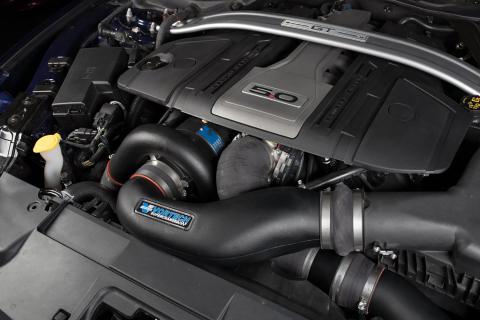
Vortech Superchargers also released the 2020 Ford 5.0L Mustang GT Supercharger System, which carries on with their line of Centrifugal Superchargers. Adding another 50 State Legal complete system for the 2020 Ford 5.0L Mustang GT. Utilizing the venerable V-3 JT-Trim supercharger and an air to air charge cooler, the complete system can boost your stock 5.0 GT to 692HP and 584 LB/FT Torque with 7.5 to 8.5 PSI using CA 91 Octane fuel.
From complete 50-State emissions-legal systems to highly modified Coyote engine Tuner kits, Vortech has over 30 years’ experience building well engineered, efficient and reliable Superchargers.
2020 Ford 5.0L Mustang GT SC System Features Include:
V-3 JT-Trim Supercharger with 3.60” Drive Pulley
Supplied Livernois Programmer (5A003-150) re-flashes the ECM with a Safe, Custom Vortech Tune using 91 Octane Fuel
Air Inlet Assembly includes: High Flow Roto Molded Ducting, OEM replacement K&N Panel Filter, Silicone Sleeves and Reducers and Stainless-Steel Clamps
Discharge Components includes: Welded Air to Air Charge Cooler, Vortech Maxflow Race Blow Off Valve with Filter, Mandrel Bent Aluminum Charge Tubes, Silicone Sleeves & Stainless-Steel Clamps.
Billet Aluminum and Steel Supercharger Mounting Bracket Assembly includes: idlers, drive belt and high-grade hardware
Fuel System Upgrades includes: Fuel Rail Spacers, High Flow Fuel Injectors and Fuel Pump Voltage
 MEMBERSHIP LOGIN