The history of Vision Wheel begins in 1976, when Roger and Deanie Minor launched a retail tire and wheel store in Decatur, Alabama after Roger was laid off from his factory job. As Minor Tire & Wheel gained a foothold, eventually building and moving to a larger location on Highway 31, they began to stock wheels and sell them to other smaller retailers in the southeastern United States, creating the Vision Wheel distribution business. Minor Tire & Wheel continued to grow over the next two decades, adding employees, until establishing Vision Wheel, Inc. as a separate business entity in 1995.
Two years later, after wheel sales continued to grow at a steady pace, Vision Wheel made the step into manufacturing its own wheels, first in Decatur, and then in China through a new joint venture. Abandoning the two-piece wheel design as the market shifted, Vision Wheels were soon exclusively produced with a one-piece cast aluminum design. Five years later, Vision Global Technology, Inc. was established in China to provide engineering and quality systems support in Asia for companies from the United States and Europe, with BMW Germany as their first customer.
The expansion of the company only continued from there on all fronts. Vision Global Technology added new products from refrigerants to brake system components to its product line, while Minor Tire & Wheel continues to operate successfully today. Vision Wheel has seen the creation of a number of new distribution centers across North America, beginning with one in California’s Inland Empire and later adding further distribution centers in Indiana, Texas, North Carolina, Georgia, and Florida. The California distribution center later moved from Cucamonga to a 100,000 square foot location in Corona. The brand’s corporate office was opened in 2006 in its hometown of Decatur, and features its own 200,000 square foot warehouse.
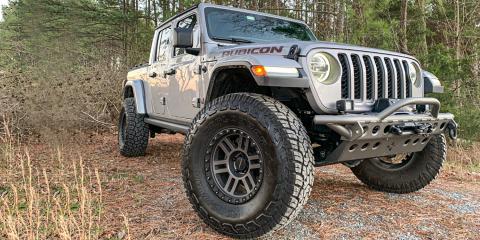
The modern line of Vision Wheels spans just about any car, truck, or all-terrain vehicle imaginable. From cutting-edge street designs sure to make any car pop to race-tested and proven beadlock wheels relied upon by some of the world’s most talented racers, Vision’s four decades of history in the wheel business have led to the creation of eye-catching designs that hold tough on durability. From legendary off-road racers like Rob MacCachren and Johnny Greaves, to the current generation of stars like Keegan Kincaid, CJ Greaves, and Jason Scherer, Vision’s lineup of drivers runs coast to coast, taking home tons of hardware along the way.
Vision Wheel’s continued forward-thinking principles have also culminated in the launch of the Vision It app, which uses augmented reality to let you see your new Vision Wheels on your vehicle. Designed for both iOS and Android, the app features hundreds of wheel designs sure to fit any vehicle, and even allows users to find a local dealer to take their wheels home.
With more than 40 years of experience in the tire and wheel industry, Vision Wheel only continues to grow and expand its fleet of high-profile wheel designs and distribution network with dealers across America and beyond. For more information on Vision Wheel, visit www.visionwheel.com.
Performance Open Wheel Racing Incorporated (POWRi) has announced it will sanction the POWRi Lucas Oil Outlaw Midget Series.
The POWRi Lucas Oil Outlaw Midget Series will primarily run in Florida and Mississippi, with series officials planning on visits to Alabama, Georgia, Tennessee, and Louisiana as the series grows.
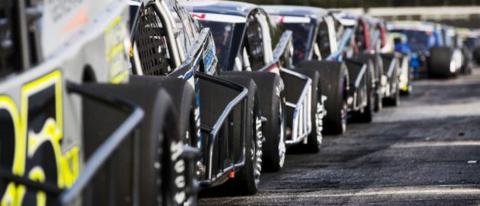
Employing economy-based midgets that utilize a stock production long block engine, the D-2 midget series originated in 2019 as part of a four-race schedule. The series grew to a dozen events in a 2020 shortened season while gaining entries since the inception.
“...joining POWRi felt like the best way to help grow even-more while keeping the driver’s interest first,” Outlaw Midget Series Director Shane Reavis said. “We have a ton of racing in the area from go-karts, stock cars, late models, and wing sprints. Now those drivers looking to move up from go-karts or competitors trying a new class have an affordable alternative.”
Now racing under the POWRi brand, the Outlaw Midget Series is planning for fifteen events in the upcoming season with added incentives on the line through the season points championship.
NASCAR has announced the 2021 NASCAR Whelen Modified Tour calendar, which includes 14 races across six states from Maine to Virginia.
The schedule is a mix of historic staples, the return of a pair of tracks, and an inaugural trip to an upstate New York venue.
The 2021 season will open at Martinsville Speedway on Thursday, April 8, as part of the NASCAR Cup Series weekend. It will conclude with the traditional Fall Final race weekend at Connecticut’s Stafford Motor Speedway.
The NASCAR Whelen Modified Tour will also race on the national series weekends at Virginia’s Richmond Raceway on September 10 and New Hampshire Motor Speedway on July 17.
Stafford, which has hosted 132 races since the tour began in 1985, will have three dates, including the season races of the season as part of its annual Spring Sizzler weekend.
In addition to the tour’s first race at New York International Raceway in Lancaster, New York, on July 31, upstate New York will see a pair of races at Oswego Speedway — on June 12 and September 4.
For the complete schedule, including lap amount and track size, visit here. For more information, visit nascar.com.
Ongoing developments in data acquisition and sensor technology are making it easier than ever to pinpoint where gains can be found.
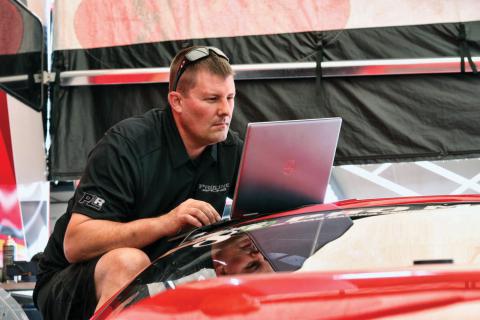
Although performance telemetry might seem like a mere novelty in street-driven cars, it has become an essential tool in motorsports. As teams search for ways to shave off tenths wherever they can, data acquisition not only provides information about a driver’s technique but also how the vehicle’s setup is reacting to those inputs, and what that translates to in terms of performance on a given course.
Data acquisition systems have become increasingly sophisticated over the years, and the ability to pinpoint where gains can be found has become more identifiable in turn. But as Matt Parlett of Computech Systems in Charlotte Hall, Maryland, explained, some have been slow to adopt these modern methods of race program improvement. “You can’t put together a race car without understanding how to make things work, so all of these folks are comfortable with connecting a wire from one place to another and crimping a terminal on it—that’s easy for them,” he said. “The biggest hang-up we see is the fear of computers, and a resistance to learning to use the software effectively.”
Tim Michaliszyn of Performance Electronics in Cincinnati, Ohio, told us that when it comes to tuning, old habits can be hard to break. “Some people are resistant to use data acquisition, or really anything that isn’t 100% mechanical—there’s almost a bit of fear of having to use computers in order to use this information,” he explained. “They’ve done something a certain way for a long time and they’ve never questioned that, or looked for new ways to improve their techniques.”
But these systems have also become notably more refined and user-friendly in recent years, and the tide is starting to shift as a result. “With the technology continuing to advance across the board, the end user is becoming more aware that he or she really needs a data acquisition system to log a certain set of features,” said Roger Conley of Racepak Data Systems, part of Holley Performance Products, Bowling Green, Kentucky. “And people are less intimidated by it now—they’re definitely embracing it now more than ever before. In the past, data acquisition was like voodoo, and a lot of people had it because their engine builder or someone else told them they had to have it. Today, there are more people who’re willing to spend the money because they have a better understanding of the benefits and they’re willing to open their mind to it.”
And as data acquisition continues to evolve, the capabilities of these systems—and the methods available to acquire and interpret various types of data—is expanding on several different fronts.
Data acquisition has moved from exotic, top-tier technology to being a staple of teams large and small. Much of this broad acceptance is due to new ways of visualizing data. “Right now, the products that seem to be in highest demand are the logging systems that also capture video,” said our source at Racelogic.
LATEST AND GREATEST
Michaliszyn said that ongoing improvements in core technology continue to guide the path toward greater capability. “Much of it comes down to processing power and storage capacity, which translates to how much you’re capable of recording and how fast you’re able to record it,” he explained. “Better processing translates to faster sampling rates, and that gives you more information. If something goes wrong for a fraction of a second you can actually view that data, whereas you might have missed that with an older system.”
The enhanced computational horsepower has also opened up the door to new ways of visualizing that data as well. “Right now, the products that seem to be in highest demand are the logging systems that also capture video,” said Paul Ferreira of Racelogic, Buckingham, United Kingdom. “These systems can synchronize the data and the footage, and that makes it much easier to understand the data that the system is providing. Before this technology was available, the driver would have to press a button on the steering wheel that would put a marker in the data logger so they could look at it later—that’s no longer needed now. Back then you’d have all sorts of squiggly lines and an engineer interpreting that raw data, and then a driver providing feedback on how the car felt and what it was doing at that moment. With video they can look directly underneath that footage and point to the related data. Issues are much easier to identify this way, and it starts to make the ‘data acquisition guy’ more and more redundant.”
It also can provide a better understanding of what is causing a given issue, Ferreira added. “You typically want one feed of the front of the car and another of the driver so you can see exactly what the driver was doing at that specific moment,” he said. “So our flagship system right now is a dual high-definition camera system, but a four-camera high-definition system is currently in development, and that’s going to provide a clear visual representation of all the driver’s inputs with the associated data. A standard system might tell you what the steering angle is at any given time, but without that video you don’t know if the driver was hesitating because he was moving one hand back and forth between the steering wheel and the shifter, or something along those lines. Those are the kinds of things that raw data doesn’t get.”
REDUCING COMPLEXITY
Considering the technological obstacles faced by some users, as earlier noted by Parlett and Michaliszyn, it should come as no surprise that substantial efforts have been made by system developers to simplify these data acquisition products and improve their overall ease-of-use.
“Our V-Net systems use CAN (Controller Area Network) bus technology for all the sensors,” Conley said. “That technology gives us the ability to daisy chain multiple sensors off of one cable, and they all communicate over one network. That tremendously reduces the amount of copper wiring needed in the vehicle, which saves weight and makes wiring the system much more straight-forward. And because it is CAN bus, the modules connected to the sensors are ‘smart’ in that they have microprocessors in them, so they’re virtually plug-and-play. Once they’re hooked up and connected to the data logger, you fire up the laptop and tell it to read what’s there, and it just populates and formats it for you automatically.”
That design not only means the wiring is less likely to be scored or otherwise damaged and provide inaccurate readings, it also translates to greater compatibility with other electronically controlled components. “The ability to adapt to different EFI systems has been a popular trend over the past few years,” he added. “That communication allows the logger to collect data directly from them, whether that’s a Holley EFI product or another brand. That reduces complexity as well—you don’t have to have multiple throttle position sensors or what have you; we can just read what’s already on the car.”
These simplification efforts have also expanded the ways in which end users can access that data as well. “One of the key improvements we’ve recently seen is in the realm of wireless technology, and the ability to view this information over Bluetooth,” said Michaliszyn. “These days everyone has a smartphone in their pocket, so instead of having to connect a laptop and pull up a data log, you can just use an app on your mobile device. That can help keep costs down and prove to be far more convenient—not just for data acquisition, but also for system configuration.”
Experts note that a data acquisition system is only as good as its installation. “It’s not about mounting these sensors in the most convenient place—it’s about putting them in the most ideal place for the sensor to get an accurate reading,” said our source at Smith Systems.
The software itself may be the most crucial component, though—after all, data isn’t worth much if it can’t be used effectively. “The biggest thing is being able to use the software to its full potential,” said Parlett. “So for us, a big part of the focus on the software side is streamlining processes, keeping things organized, and making the data easier to digest. The software is the thing you’re pounding on every day—if the user isn’t comfortable with it and it’s not easy to use, they’re not going to end up using the product.”
And for Computech, that translates to a software interface that’s designed to be adaptable to a user’s preference. “For instance, you can have a view that will show you your rpm at the top and your temperatures below, or in the Pressures view it would show you your rpm’s at the top and your pressures below. Instead of getting overwhelmed by looking at all these different types of data simultaneously on one screen, it allows [you] to take in each element one at a time if you prefer to view it that way,” added Parlett.
GETTING YOUR MONEY’S WORTH
In order to get the most out of a data acquisition system, you must first ensure the system is bringing in accurate data, and Conley told us that much of this depends on the condition of the vehicle itself.
“I often come across people who’re downloading their data, reading it, and then go try to make tuning changes to the car without first evaluating the health of the car,” he said. “So I’ll look at that data and ask, ‘Why is your battery voltage four volts lower than it’s supposed to be?’ Because they’re not performance-related sensors, folks tend to overlook things like that. You have to use it as a diagnostic tool first and foremost, then move on to performance tuning.”
Comprehensive data acquisition systems give teams more nuanced insight. “A standard system might tell you what the steering angle is at any given time, but without that video you don’t know if the driver was hesitating,” said our source at Racelogic. “Those are the kinds of things that raw data doesn’t get.”
He said that in situations where the user is working on the car at the track, it can be very easy to get tunnel vision while troubleshooting. “I’ll be on the phone working with a customer who’s having a problem with the data logger that’s doing all this unusual stuff, and one of the first things I’ll ask is if the car is running okay,” Conley explained. “Nine times out of 10 they’ll tell me that the car is running poorly. So here we are, trying to fix the data logger, but what we really have is a car problem. If you fix the car problem first, you may find that the data logger problem just resolves itself. It’s very easy to go down a rabbit hole like that, especially if you’re at an event and you’ve got three or four other guys with you who all think they know what’s wrong and none of them have the same advice.”
Jeff McCants of Smith Systems in Brevard, North Carolina, said that with crankshaft and driveshaft data, the setup and installation of the sensors can be a factor as well. “What we often find is that the tip of the sensor may not be appropriately positioned with the gear or magnet that it’s taking a reading from,” he explained. “It’s crucial that it’s aligned properly to get accurate data—you want to make sure you’re looking directly at your target. You also want to make sure that your air gap, or the distance between the tip of the sensor and that target, is exactly what it needs to be based on the product’s instructions. It’s not about mounting these sensors in the most convenient place—it’s about putting them in the most ideal place for the sensor to get an accurate reading.”
Data acquisition systems increasingly allow users to access information from mobile devices, thereby widening their appeal. “These days everyone has a smartphone in their pocket,” said our source at Performance Electronics. “That can help keep costs down and prove to be far more convenient.”
Michaliszyn emphasized that these factors can affect not only a sensor’s accuracy, but its longevity as well. “It’s important to make sure the installation is done right because, when it’s done improperly, it can shorten the lifespan of the sensor. In the case of pressure transducers like an oil pressure sensor, a lot of times we’ll see those sensors fail prematurely due to engine vibration, whereas just using a remote-mount kit or an external block with that sensor element would extend the life of the sensor significantly.”
Regardless of the type of data acquisition system being used, the car needs to be in good working order before trying to analyze anything. “You have to use it as a diagnostic tool first and foremost, then move on to performance tuning,” said our source at Racepak Data Systems.
But Parlett noted that simply leveraging educational resources can prevent problems before they ever happen. “If there’s one piece of advice I’d give to someone installing a data logger, it wouldn’t be about the installation—most of these folks have that part covered. It’s about not being afraid to spend a half-hour watching a few different videos that will allow you to get the most out of the system. A lot of times a customer will call us really frustrated and then they’ll watch our video tutorials. Later on, that same customer will call us back and say something like, ‘Hey, everything’s working great now and I’m overlaying runs—what does this little spike mean?’ And that’s always a good feeling, because you know they’ve now got the confidence to use the product to its maximum [potential].”
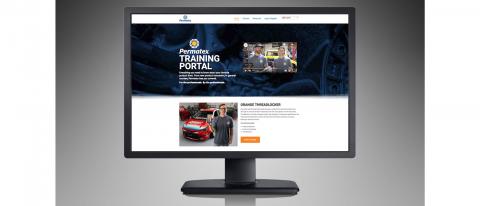
Permatex, the provider of chemical technology for automotive maintenance and repair, has recently launched a new online training portal designed to educate professional automotive technicians on the company’s core and new product lines.
The training management system currently offers three initial courses covering Permatex Orange Threadlockers, Permatex Red High Temperature Gasket Makers, and Permatex Epoxies. Each lesson provides product details and application information, along with FAQs and a quiz.
“As Permatex develops new technologies to address specific customer pain points, we want to keep users up to speed on these industry developments and how to effectively leverage these new products to complete their job. This training portal will provide the resources we need to educate service professionals and give retail sales personnel the knowledge needed to help educate end-users on these products,” Permatex Marketing Manager Ashley Khan said.
Permatex has plans to expand the platform—available on both mobile and desktop—with information on the entirety of its product lines. The portal allows users to track progress and also features downloadable sales materials.
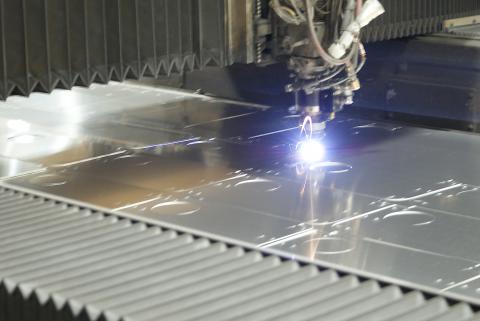
For well over a decade, Hepfner Racing Products (HRP) has been an industry leader in innovative designs and manufacturing technology for the performance racing industry. HRP is directly involved with nearly every type of racing, with manufacturing, sales and design work for sprint cars, midgets, modifieds, late models, NASCAR, Indy Car, SCCA, NHRA, karting, road racing, off-road and more.
Their continued success as a manufacturer is due in part to their strong team of individuals who have the competitive drive to win. This spirit allows them to bring their customers the absolute best in innovation, technology, pricing, and customer service.
Hepfner Racing Products is a sister company to Streeter Super Stands, under the parent company of Glenn Hepfner Incorporated. Their products are made in the USA at their 80,000 square foot facility in Hartford, Wisconsin and are available direct or through their valued dealer network.
To learn more and view the variety of different products produced by HRP, visit http://www.hrpracing.com/
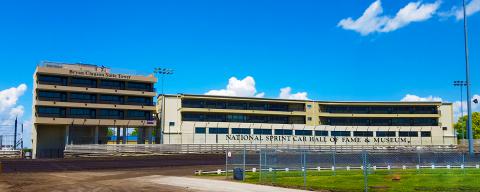
The National Sprint Car Hall of Fame and Museum is the only museum in the world dedicated to the history of sprint car racing. Open seven days a week, 362 days a year, the museum offers visitors a look back at the history and tradition of sprint car racing. Although inductions to the Hall began in 1990, inductees go back over a century with names like Arthur and Louis Chevrolet, and August and Fred Duesenberg to name a few – iconic individuals in the automotive and racing industries. This is a testament to their mission of “Promoting the Future by Preserving the past.”
Located in Knoxville, Iowa, the Museum is also home to the Knoxville Nationals at Knoxville Raceway. The annual championship race is where the greatest sprint car racers come to compete, and race fans from across the country gather for this major motorsport event. The 60th annual Knoxville Nationals is scheduled for August 11-14, 2021.
The National Sprint Car Hall of Fame and Museum also features rotating exhibits throughout the year, like the “Salute to Champion Greg Hodnett” exhibit which ran until October 1, 2020. Featuring six of the race cars that Greg Hodnett drove during his illustrious career, the exhibit also featured many of the engineering tools that Hodnett used to help innovate sprint car racing. In addition, the exhibit included Greg’s driver uniforms, helmets and memorabilia loaned to the museum by his wife Sherry, and many racing friends. During the display, the museum also featured 11 Knoxville Nationals winning race cars from over the years.
Learn more about the National Sprint Car Hall of Fame and Museum and their latest featured exhibits by visiting www.sprintcarhof.com/
Meyer Distributing, the provider of automotive specialty products marketing and distribution, has announced a new cross-dock location in San Diego, California.
The facility will have a direct, next-day feed from Meyer’s Kingman, Arizona distribution hub, which houses one of the largest inventories of automotive accessories and RV parts in the region.
“We were servicing the Southwest with 50,000-square-feet in Ontario, California, since we entered the market with our first customers in 2013. We are thrilled now to move to Kingman, Arizona, into 250,000-square-feet expandable in three more phases to 1,000,000-square-feet,” Meyer Distributing CEO Jeff Braun said. “Between the facility and inventory, we’ll have $60 million of investment in the region with next day service to New Mexico, Arizona, California, Nevada, and Utah.”
The San Diego location will be fully operational on January 1, 2021, according to the company.
The Indy Autonomous Challenge will bring together collegiate teams worldwide to run autonomous race cars around the Indianapolis Motor Speedway’s (IMS) famed 2.5-mile oval.
The challenge, set for October 21-23, will feature a series of events with teams addressing topics such as artificial intelligence, sensors, data science, and more. Events include themed "hackathons," research papers, simulation races, and more.
Teams are made up of students and faculty and are tasked with writing business plans and raise funds for their individual teams. Nearly 30 entities are currently set to compete, with several actively seeking collaborations from industry members.
One team includes Purdue Motorsports, which partnered with the US Military Academy at West Point to form Black & Gold Autonomous Racing.
“They, as well as all the other teams, are working on issues of how does an autonomous race car pass another race car, speed up, slow down if there is a caution or stop if a race is red-flagged, or even pull into the pits and exit safely to get back onto the track,” said Danny White, manager of Purdue Motorsports and managing director of the evGrand Prix. “These are really complicated tasks that we take for granted.”
Wood Brothers Racing has been named the 2020 recipient of the FIA Founding Members Club Heritage Cup for its accomplishments across seven decades. The award is presented to an individual, institution, entity, or object to recognize exceptional or outstanding achievement within or contribution to the historic vehicle world.
“It truly is an honor to win this award,” said Eddie Wood, Wood Brothers Racing president and co-owner, and son of team founder Glen Wood. “The fact that it’s a worldwide honor makes it even more special. We’re mainly known in American motorsports, but this is much bigger than that.”
Beyond countless trophies and accolades, innovations including the modern pit stop continue to define the Wood’s legacy in racing series across the globe.
Glen also lent his expertise to the Ford factory team at Le Mans in 1966 when the GT40 Mark II teams swept the top three finishing positions in the iconic 24-hour event. The team’s affiliation with Ford Motor Company continues to this day.
Ten NASCAR Hall of Famers have taken the wheel for the team (Glen Wood, Curtis Turner, Junior Johnson, Joe Weatherly, Fred Lorenzen, Cale Yarborough, David Pearson, Buddy Baker, Dale Jarrett, and Bill Elliott) as well as some of the biggest names in open wheel racing – A.J. Foyt, Dan Gurney, and Parnelli Jones.
 MEMBERSHIP LOGIN