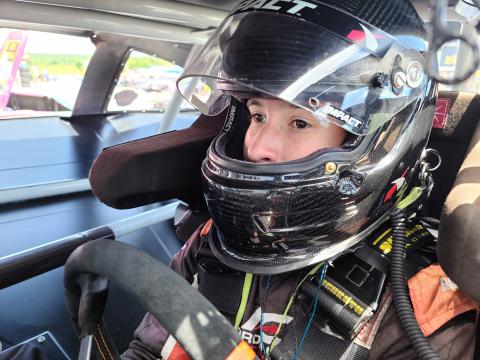
Officials have released the 2021 schedules for the West and East ARCA Menards Series. The 2021 season will mark the two series' second year on the ARCA Menards platform.
The ARCA Menards Series West will mark the series’ 67th running season with a nine-race schedule featuring third-mile bullrings, one-mile ovals, and road courses.
The West schedule will begin in March at Phoenix Raceway in Avondale, Arizona, with a combination race with the ARCA Menards Series. The West championship will be crowned back at Phoenix as part of the NASCAR Championship Weekend.
For the complete ARCA Menards Series West 2021 schedule, visit the ARCA website here.
The 2021 ARCA Menards Series East schedule will feature eight races over eight premier short tracks. The season will begin with a pair of Florida events in February and crown the East champion at Bristol Motor Speedway. The trip to “Thunder Valley” will be the third consecutive race run as a combination event ARCA Menards Series to close the East Series season.
For the complete ARCA Menards Series East 2021 schedule, visit the ARCA website here.
Superstar Racing Experience (SRX) and CBS Sports have announced the full 2021 schedule for the new six-race, short-track series set to debut on June 12 at Stafford Motor Speedway in Stafford Springs, Connecticut.
After the inaugural race at Stafford, SRX will head to Knoxville Raceway in Iowa on June 19 before visiting Tony Stewart’s Eldora Speedway in Ohio the following week. In Indiana, Lucas Oil Raceway will kick off the holiday weekend in early July, before a race at Slinger Speedway in Wisconsin. The inaugural season’s final and championship race will take place at the Nashville Fairgrounds Speedway on July 17.
“With a six-week, back-to-back schedule that crosses America, visiting some of the most historic and challenging short tracks in auto racing, the SRX series will be a must-watch, and I am so excited to see these legends on the track,” said Ray Evernham, SRX Co-Founder.
“Our goal in crafting the inaugural SRX schedule was to feature tracks that are challenging, unique, and have a strong motorsports history. This six-race series does just that,” said Stewart, SRX driver, and co-founder.
Races will air on six consecutive Saturday nights at 8 p.m. EST on CBS Television Network and CBS All-Access throughout the Summer of 2021.
June 12, 8 PM, ET – Stafford Motor Speedway (Stafford Springs, Conn.)
June 19, 8 PM, ET – Knoxville Raceway (Knoxville, Iowa)
June 26, 8 PM, ET – Eldora Speedway (New Weston, Ohio)
July 3, 8 PM, ET – Lucas Oil Raceway (Brownsburg, Ind.)
July 10, 8 PM, ET – Slinger Speedway (Slinger, Wis.)
July 17, 8 PM, ET – Nashville Fairgrounds Speedway (Nashville, Tenn.)
Porsche AG will develop an LMDh prototype that can compete in both the IMSA WeatherTech SportsCar Championship and FIA World Endurance Championship (WEC) beginning in 2023.
Porsche Motorsport becomes the first manufacturer to confirm its intent to enter the hybrid prototype category. The LMDh was announced in 2020 as a shared platform between IMSA and the Automobile Club de l’Ouest (ACO), allowing it to compete in some of the world’s greatest endurance races, including the Rolex 24 At Daytona, 24 Hours of Le Mans, and Mobil 1 Twelve Hours of Sebring.
“The new LMDh category allows us to fight for overall victories with a hybrid system at the Le Mans, Daytona, and Sebring classics–without breaking the bank. The project is extremely attractive for Porsche. Endurance racing is part of our brand’s DNA,” said Oliver Blume, CEO at Porsche AG in Stuttgart, Germany.
The LMDh is based on a cost-capped car and will have the same spine (the complete car without bodywork, engine, or hybrid system) as the next generation of the Le Mans Prototype 2 (LMP2). The LMDh chassis will be built by one of four approved constructors – Dallara, Ligier, Multimatic, or ORECA. Each competing automobile manufacturer may develop its own branded engine and stylized bodywork.
Bosch, Williams Advanced Engineering, and Xtrac will provide the spec hybrid powertrain system for all LMDh cars. Each LMDh vehicle will have a combined power output of more than 670 horsepower (500 kilowatts).
For more information, visit the Porsche website here.
Williams Racing has announced the appointment of Jost Capito as its new Chief Executive Officer. He will officially join the Formula 1 team on February 1.
Capito has enjoyed a wide and varied career spanning over four decades in the automotive and motorsports industries. Reporting to Williams Chairman Matthew Savage, Capito will be responsible for the day-to-day running of the company.
“We are excited to welcome Jost Capito as the new CEO of Williams Racing. He is an experienced and competitive individual who has built winning teams and is a winner in his own right. He understands the Williams heritage and will work well with the team in pursuit of our objective to return to the front of the grid,” Savage said.
After beginning his motorsports career as a driver in the mid-1970s, Capito held positions with BMW M GmbH, Porsche to manage its racing programs, and Sauber Petronas Engineering’s executive committee. He subsequently joined Ford in 2001, where he was Ford Europe’s Motorsport Director. In this role, Jost helped to win the WRC manufacturers’ titles in both 2006 and 2007.
In 2012 Jost joined Volkswagen as Motorsport Director, and, after a brief stint at McLaren, was chosen to lead Volkswagen R GmbH, the department in charge of the company’s performance cars.
As part of the announcement, Williams Racing has also confirmed that Simon Roberts will officially take on Team Principal’s role, reporting to Jost.
California has recently announced a package of assistance for small businesses and non-profits impacted by COVID-19, including $500 million in grants. Grants range from $5,000 to $25,000.
“Small business owners and our non-profits serve as the economic heart of every California community,” said Governor Newsom. “This grant program isn’t the end; it’s the beginning. It’s a bridge to help the millions of Californians, whose dreams and livelihoods are now on the line, as we work with the State Legislature to create additional support.”
Grants will not be issued on a first-come, first-served basis but will be awarded after the close of each application round. This first round of applications ends January 8, 2021, at 11:59 p.m. PST. Details for the second round will be announced shortly.
The program will prioritize distribution based on priority key factors, including the following:
Geographic distribution based on COVID-19 health and safety restrictions following California’s Blueprint for a Safer Economy, county status, and the new Regional Stay-at-Home Order, which can be found at covid19.ca.gov
Industry sectors most impacted by the pandemic
Underserved small business groups served by the State-supported network of small business centers (i.e., businesses majority-owned and run on a daily basis by women, minorities/persons of color, veterans, and businesses located in low-to-moderate income and rural communities)
For more information, including eligibility and required documents, visit careliefgrant.com.
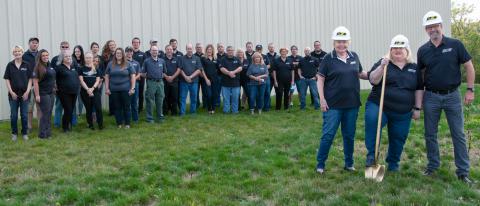
Design Engineering Inc. has announced the company is entering Phase Two of a long-term, three-phase expansion project that will increase capacity at its Avon Lake, Ohio headquarters.
“This expansion will allow DEI to expand our manufacturing, assembly, and warehouse capabilities, and grow our R&D department,” DEI VP of Operations Dave Ramirez said. “With this second addition, the added space will allow us to consolidate remote facilities all under one roof.”
Phase One occurred in 2013 when DEI completed a 12,000-square-foot addition that more than doubled its prior warehouse space. Phase Two will add approximately 10,000 additional square feet to the current facility, bringing the total square footage to 35,000.
The additional space will allow DEI—which celebrated its 25th anniversary in 2020—to continue to build on its lineup of heat and sound control products for the automotive, racing, powersports, 12-volt audio, industrial, marine, and related markets.
A new water jet cutter, other new equipment, and process improvements will also enhance manufacturing and R&D.
The Timken Company, a provider of engineered bearings and power transmission products, has acquired Aurora Bearing Company's assets. Aurora manufactures rod ends and plain spherical bearings.
"Aurora builds on our global leadership position in engineered bearings by increasing our product breadth, which will help us serve the bearing space more completely," said Christopher A. Coughlin, Timken executive vice president and group president. "The Aurora product line and market mix complement our portfolio very well."
Privately owned and operated since its founding in 1971, Aurora currently employs approximately 220 people, with its headquarters, manufacturing, and research and development operations based in Montgomery, Illinois. Its sales are expected to be around $30 million in 2020.
In an industry first, PRI in mid-October set out on a groundbreaking cross-country campaign to gather and share content from dozens of racing and performance businesses. Dubbed “The PRI Road Tour,” the effort took the PRI team directly to the doorsteps of manufacturers, wholesalers, retailers, race teams, race tracks, and more over a two-month span. The team’s fully wrapped van, further customized by our friends at Vision Wheel, began at the Indiana Convention Center in downtown Indianapolis, then followed a multi-state trail through Michigan, Ohio, North Carolina, South Carolina, Georgia, Texas, and ultimately PRI headquarters in Southern California. “If the industry can’t come to the PRI Trade Show in Indianapolis, then PRI is coming to the industry,” declared PRI President Dr. Jamie Meyer. Over the course of our journey the PRI team managed to capture and share video, photos, and exclusive interviews highlighting the industry’s newest products, vehicles, races, and developments, a selection of which appears in the pages that follow—part one of a two-part pictorial from the Tour. Part two will be featured in the February 2021 issue of PRI Magazine, as well as online at performanceracing.com and on our social media pages throughout the year.
One of the PRI Road Tour’s first stops was the headquarters of Chip Ganassi Racing in Indianapolis, Indiana, where we visited with officials from the championship-winning race team and learned more about its operations.
During our visit with Chris “The Greek” Karamesines, the legendary drag racer gave us a rare look into his Chicago, Illinois, shop. Ageless at 89, The Greek is still competing, building engines, and maintaining race cars.
Management at Powermaster Performance opened the doors to their West Chicago, Illinois, manufacturing facility, where they produce high torque starters, performance alternators, and the PowerGEN, a replacement generator for motorsports applications.
The PRI Road Tour got a behind-the-scenes look at how Trick Flow Specialties of Tallmadge, Ohio, manufactures its high-performance cylinder heads, among other components.
When we visited Jackson, Michigan-based Paul’s High Performance, the company’s namesake showed us several of his current projects, including the first running Ford 7.3L crate engine in a Mustang.
The ROUSH Automotive Collection in Livonia, Michigan, includes a wide assortment of vehicles, including its WorkHorse 3 prototype Ford GT used to prototype and validate GTs.
Our contacts at CORSA Performance in Berea, Ohio, told us their goal is to build the ultimate driver exhaust system for motorsports customers by perfecting the science of sound.
The PRI Road Tour paid a visit to PIT Instruction & Training in Mooresville, North Carolina, where our staff got to see students in action as part of its pit instruction and training courses, in addition to welding workshops, welder testing, and more.
While there’s no clear consensus over how young is too young, stakeholders agree the industry is trending toward more junior competitors in full-size race cars. Here’s how it’s happening.
The definition of “young” is a swiftly moving target, especially in racing.
Consider Jeff Gordon. As he climbed the racing ranks, Gordon was viewed as the fresh-faced wunderkind, the young sensation who was breaking barriers. He started racing quarter midgets when he was five years old. He was driving sprint cars in independent bullrings at 14. And at 16, he became the youngest driver to ever be issued a USAC sprint car license. He landed a seat in NASCAR’s Grand National series at 19 and was Rookie of the Year at 20. Gordon won his first NASCAR Cup Series race at the age of 22.
Jeff Gordon might be considered something of a late bloomer today. It seems that every year, a new “youngest driver to…” record is being set somewhere in motorsports. Colton Herta became the youngest driver to win an IndyCar race in 2019, when he took the checkered flag at Circuit of The Americas at the ripe old age of 18 years, 359 days. Also in 2019, Sam Mayer won the K&N Pro Series East championship at 16 years, 3 months, becoming the youngest NASCAR series champion. In September 2020, he won his first NASCAR Gander RV and Outdoors Truck series race at the age of 17, and then won the Bush’s Beans ARCA Menard’s Series race a few hours later.
Young drivers are increasingly making their mark in all forms of motorsports. But some in the industry question the prudence of this trend. “We’re seeing 12- and 13-year-olds in high-end race cars. Is that right? I don’t know,” said our source at Kirkey Racing Fabrication. Photo courtesy of SPEARS Southwest Tour.
But those examples actually represent the older end of the spectrum. All up and down the motorsports ranks, kids not yet old enough to possess a driver’s license are zipping up their driver suits and breaking into full-size race car series, some with great success. In October, Katie Hettinger of Michigan became the first female to win a series championship in the Champion Racing Association, capturing the Jr. Late Model Division at the age of 13. Hunter Yeany won the 2020 F4 championship after racking up eight wins, becoming the youngest ever FIA F4 champion at 15.
This drift to younger drivers hasn’t happened overnight. It is being aided by recent rule changes in the sport that allow for younger drivers. In 2007, NASCAR dropped the minimum age for the regional touring series from 18 to 16. Young drivers made an immediate impact, with Joey Logano winning the Busch East Series that year at the age of 17. In 2011, the sanctioning body lowered the age limit to 15. The following year, NASCAR lowered the minimum age in the Camping World Truck Series from 18 to 16 on all tracks except the superspeedways. NASCAR’s minimum age to race at one of its sanctioned regional tracks is currently only 14.
Of course, the ever-dropping age of participants in elite youth sports is not limited to racing. For some time now, in sports from volleyball to tennis to soccer, younger kids are being put on the select league/travel league track. For most of those sports, however, there is the lure of a college scholarship waiting at the end; and making a mistake on the court has no chance of resulting in a fiery crash.
All of which begs the question: How young is too young? There is no widespread agreement, but opinions can run strong. Tony Stewart, three-time NASCAR Cup Series champion, has unreservedly spoken out on the subject, stating that the push to showcase the hottest new teenager is a mistake, and results in far more deserving older drivers who’ve paid their dues getting passed by, while doing nothing to attract a larger fan base.
“When I watched, I watched because they were heroic to me. The drivers were heroic, what they were doing was heroic,” Stewart said in an interview with NBC Sports and USA Today’s For The Win in 2019. “Now, you’ve got guys that their mom has to drive them to the race shop because they’re not 16 and don’t have their driver’s license yet, but they’re driving a full-size race car.”
And there’s more at stake than whether fans and sponsors are satisfied. The dangers of racing are real, as anyone who has strapped on a helmet knows. A bad crash can be particularly tragic for someone just starting out in life. The short film “A Prayer for Joshua Jackson” recounts the heart-wrenching recovery of a young man after being involved in a sprint car wreck in New Mexico in 2015 at the age of 17. Keir Millar, a Ninja Kart champion at the age of 10, was killed in a Ministox crash in Scotland at the age of 11 back in 2015.
Yet despite the risks, it is undeniable that more young drivers are breaking into the professional ranks, and their parents, fans, and sponsors are largely supportive; others are somewhere on the fence about it.
“It’s up,” said Doug Young at Kirkey Racing Fabrication, Rooseveltown, New York, specialists in racing seats and related gear. “We probably notice it more because we’re not too enthused about it. We kind of have the view that if you’re going to put a kid in a big car, we would like him or her to be 16 years old. But we’re seeing 12- and 13-year-olds in high-end race cars. Is that right? I don’t know.”
Young cited opportunities for kids in classes like micros, for example, as viable alternatives: “It’s probably a good learning ground and it’s not as dangerous, they’re not going as fast,” he noted. “That’s probably good. But these young kids in full-out dirt late models…. I don’t know. I guess you have to be smarter than us to figure out whether that’s a good thing or not.”
Many sanctioning bodies have lowered their age minimums, oftentimes well below legal driving age. This has paved the way for drivers like Joey Iest, shown here, who began his career in quarter midgets at age nine before progressing to stock cars several years later. Photo courtesy of SPEARS Southwest Tour.
“Over the years it has grown, and at least as far as what we’ve done, we’ve tried to grow with the process as well,” offered Jeff Ladd with Sports Insurance Specialists, Fort Wayne, Indiana. “We try to monitor seat time; we try to get a resume for any minor that wants to jump up a class.”
WHERE’S THE LINE?
Most of the major sanctioning bodies and big tracks do have a set minimum age in the rulebook. And much of that is driven by limits established by insurance companies.
“It’s 14. What we’re told by insurance companies out here in this part of the state is that you have to be at least 14 to run on a half-mile or bigger track,” said Larry Collins with the SPEARS Southwest Tour, a Late Model series based in Bakersfield, California. “The series itself, we run about half the races on a half-mile track, so that doesn’t give us the green light to bring in kids any younger than that.”
Across the country in Carnesville, Georgia, the minimum age for FASTRAK 604 Late Models is currently 14. “That is actually set by our insurance liabilities,” noted DJ Irvine of the FASTRAK Racing Series.
Even so, FASTRAK has its eye on developing younger talent. “Last year we launched a FASTRAK Future Stars Tour,” he said. The minimum age is 12, and the drivers have to prove certain competencies. “That one had a driver’s test where they had to take a couple of laps, and then we also had them demonstrate they were able to get out of the car in less than 60 seconds—in case it was on fire. We had them come through the pits, come to a stop, unbuckle their seatbelts, and we timed them getting out of the car.”
Even with some hard age limits in place, those hoping to cross those barriers still have to get some experience, and there are many talented and determined drivers finding ways around the age limits set by the larger sanctioning bodies.
“There’s always exceptions,” Irvine said. “Back when I was general manager at Kentucky Lake Motor Speedway, we had Tyler Clem get out there in a 604. He came up and raced with us, and I believe at the time he was only 12. And he was competitive—you couldn’t tell that a 12-year-old was driving the car.”
There are pathways for those below the age limits, but younger drivers should expect extra scrutiny. “We like to see seat time if it is somebody who is 12, 13, 14, 15 years old,” said Sports Insurance Specialists’ Ladd. “We have a couple of different processes. We like to see seat time—we like to see a resume and get that on file and make sure that they have had adequate seat time. The second thing is, if it’s a short track, we go to our promoter or owner. We actually ask them to have them out for a tune and test day. Maybe they can monitor them out there by themselves, just to see how they can handle the car.”
Ladd said Sports Insurance Specialists also works with sanctioning bodies to determine appropriate ages. “Our policy, we don’t have that (age) exclusion. But again, we take parameters to make sure they’ve had seat time,” he said. “We insure several sanctioning bodies, World Racing Group included, which includes the World of Outlaws. No kids are obviously getting into those types of sprint cars that are inexperienced, or quite frankly, young. That’s a professional series out there. We rely on the sanctioning bodies pretty heavily, too, to monitor this with their rules.
“We typically look at any professional racing series, back to the World of Outlaws series, or any kind of stock car series, ARCA, whatever it might be that’s kind of a minor league professional level—we like to see them age 16 or above. At least have a driver’s license to be at that point,” Ladd continued. “But again, to get to that level they’re going to have experience, right? It’s just getting that and documenting it. Now, if it’s a pure stock-type car, we like to see age 14; we will go down to like 12, but again, that’s heavily reliant on experience, resume, all that type of stuff and getting that documented.”
WELCOME TO THE BIG LEAGUES
It’s probably fair to argue that this current youth movement wouldn’t be happening if a good many teen drivers weren’t breaking through and having some success. Those young drivers who persevere and thrive are impressive individuals.
Timmy “Mini” Tyrrell had arguably the biggest impact on motorsports’ youth movement when he strapped into a Late Model at just nine years old. But the young racer quickly proved he was up to the challenge. “In his first year he finished second in the championship points,” said his father, Timmy.
One of the most extreme examples of a young driver is Timmy “Mini” Tyrrell of Virginia. He started racing karts at age four, moving on as he got older through Champ Karts, and then Arena Car racing, which takes place on a banked track inside an indoor hockey rink.
His step up into Late Models was not exactly accidental, but one of those instances where “want-to” and “chance” meet. A family friend of the Tyrrells had three Late Model cars that he would lease out to drivers. One day, at the age of 9, Mini asked when he was going to get to drive one of those Late Models. He was told by the owner, half-jokingly, that if he got a seat built he could drive.
And so he did.
Mini had developed a relationship with Butler Built from the seats they’d built for him in other series, and they knew him and took him seriously. Mini’s dad, also named Timmy, was a little bit blindsided by the development.
“I got a phone call from him one day, he was at Butler Built, and he said, ‘Dad, I’m here picking up my seat for the Late Model and I need you to pay for this,’” Timmy recalled. “And I said, ‘Excuse me?’ And he said, ‘Yeah, Sam told me if I got a seat built, I could drive the Late Model.’”
It took more than just a seat to fit Mini in the Late Model. “It needed a lower bar moved up to get the steering wheel high enough for him, because the seat had to be modified so drastically that they had to move the A-pillar forward—the bottom box that he sat on was the equivalent of a milk crate,” Timmy Tyrrell said. “And then from the rear bar forward it was, I think, 30 inches of extensions and back bracing that had to be made, plus some pedal extensions, etc.”
Mini made the most of his opportunities. When he took his first test of the car at Shenandoah Speedway his lap times were consistent with a top-five qualifying time, Tyrrell said. He was allowed to race, but his family started him at the back of the field, letting him work his way up, and then fall back again as cautions came out.
“After his fifth race in the Late Model we started unleashing him where he qualified,” Tyrrell said. “And in his first year he finished second in the championship points. In his first year he won two Late Model races. They were not by mistake—they were because he raced through the field and won the races out of 18 cars. And he won two races at age 10.”
Mini is 16 now, with many more achievements, including the CARS Tour Rookie of the Year title in 2019. Even so, getting to the professional ranks so young, driving a full-size race car, is one thing, but being accepted is another.
At age 11 his family took Mini to run the Spooktacular at Southern National Motorsports Park in North Carolina, a big race. “We had people there bitching, saying ‘I’m not racing against an 11-year-old’ to the promoter. The promoter was like, ‘Look, if you don’t like it because he’s beating you, why don’t you just go on home.’ And they learned to deal with him,” Tyrrell said. “He kept his nose clean, he raced, he raced hard. Did different competitors give him a hard time? Absolutely. Did I have to deal with negative comments to his mother and I that we were putting him in danger, that we’re bad parents? All of that stuff, yeah. It was like an everyday comment.”
How these racers are perceived and treated runs the gamut. Most people we spoke with for this article did not report an unfriendly atmosphere for the younger drivers—like 15-year-old Jake Garcia, another rising star from Georgia. His first Pro Late Model race came on his 13th birthday. And in March 2020, he won the Alabama 200 at Montgomery Motor Speedway.
“I think at first there were probably a few doubters out there who didn’t know anything about me, or if I was good or not,” Garcia said. “After my first few races I think they kind of figured me out. It’s definitely been welcoming. They like to talk to me and just talk about the race and that sort of thing. It definitely hasn’t been too hard in that aspect.”
“A lot of times the older drivers are really complimentary on how well the kids are doing,” said Irvine with FASTRAK. “I haven’t seen any kids out there over their heads, so to speak.”
SPEARS Southwest Tour’s Collins told us that “most of the young drivers that have stepped into our series have got plenty of experience behind them. They are typically associated with a well-established team, so they’re handled well; they’re not pushed.
Teen drivers like 15-year-old Jake Garcia compete against veteran racers, whose attitudes vary considerably. But, like most things in motorsports, success brings respect. “I think at first there were probably a few doubters out there who didn’t know anything about me, or if I was good or not,” said Garcia.
“To date, as long as we’ve been doing this, we have not had any negative feedback from any of our drivers about a young driver coming in and not behaving himself,” he added.
That said, Collins isn’t actively courting this demographic. “There’s really not a need, as far as we’re concerned, to get anyone younger into our series,” he noted. “We’re pretty good on car count for each event. It’s not for any other reason than there’s opportunities for kids in this part of the country to get experience and not have to jump right into a series like ours. It’s a pretty big jump when the kids do come into our series, so I think there’s no reason to rush and allow them to come into here at any younger of an age.”
Wilwood Disc Brakes in Camarillo, California, has associations with a number of racers, including Garcia. According to Dave Brzozowski, it may not even be the youngsters themselves that present challenges.
“I think the stigma is out there from some of the older-school people that some of the young kids don’t belong in something like this,” he said. “But as we all know, times have changed. I think if there’s anything, you hear some horror stories about certain ones—I’ve never had any issues, but it could be the dads. It’s no different than soccer or baseball, right? You get parents which could potentially be more of the distraction.”
As young drivers increasingly populate race grids, the question remains about the safety aspects of allowing teens and pre-teens to race full-size cars. Much of it still comes down to parents’ decisions. “The number one thing is to surround the young child with good people and good role models,” said Timmy Tyrrell, whose teenage son, pictured above, races Late Models.
THROUGH YOUNG EYES
Besides the novelty of backing a young driver, sponsors and racing organizations note other positives. For one, they often see things with fresh perspectives. Brzozowski said he receives helpful testing feedback from Garcia. “A lot of these young guys have no preconceived notions when they get into stuff. They don’t know really what to expect,” he said. “So sometimes it’s really neat to get involved with these people, because they’re not, I don’t want to say misleading, but they don’t get led down a path, and get this thing with a stigma in their mind. They’re young, they’re a sponge.
“They’re very open, and they’re very appreciative, because they know that nowadays the racing side of things isn’t like it used to be,” Brzozowski continued. “It’s a very professional sport now, whether you’re dealing with a sponsor or a supporter like us, or you’re trying to get the big sponsor. You have to learn at an early age the right things to say, the do’s and the don’ts. It’s just a whole new evolution.”
Mini Tyrrell has leveraged his unique story and racing success into raising money for charitable causes like the Jeff Gordon Children’s Foundation, Friends of Jaclyn Foundation Racing, and his own foundation, Mini’s Mission “Burn Rubber to Help Another.” He has raised $475,000 to date for these charities, and often visits sick children in the hospital who can relate to someone their own age. “His association with Jeff Gordon gave him, I would say, credibility, because he was so focused on pediatric cancer research and helping people,” said Timmy Tyrrell. “It was very different when you had a little kid—not just little in size but in age, too—show up to make somebody feel good, and he unloads his race car and starts showing them that. The kids were drawn to him, the fans were drawn to him, and everybody wanted to talk to him. And he really was a good public speaker.”
BEEN THERE, DONE THAT
Putting younger teens and pre-teens in full-size race cars remains controversial, but it’s undeniably a trend. For those contemplating following the same path, some veterans of the experience can offer been-there insight.
“Everybody has his opinion on how to do this and how to do that, but the number one thing is to surround the young child with good people and good role models,” Timmy Tyrrell said. “I believe I have surrounded my son throughout coming up with phenomenal people.”
As with other youth sports, parents need to understand that burnout is a real possibility. “If I was an outsider looking in, I’ve known personally, even family-wise, very young racers that have had a bright future, they get completely burned out at an early age because they’re almost being forced in a direction,” said Wilwood’s Brzozowski. “They enjoy it, but then it becomes unenjoyable. There’s a line there. A kid still has to be a kid or a young man. He has to grow. If you’re a parent and you’re living your life through him, I’ve seen a lot of those that completely backfire.”
Timmy Tyrrell recalls something of a bandwagon effect once word of Mini’s achievements spread, with mixed results. “Other people, who should not have been putting their kids in that situation, were trying to get their kids doing the same thing we were doing,” he said. “And fathers trying to live through their kids and pushing their kids and such, I could see it on these kids’ faces that they didn’t want to be there. They wanted to be playing baseball or something, or they were just scared of it.”
Tyrell told us he guards against burnout for Mini by encouraging other activities. Mini is an avid fisherman, he said, and also plays hockey. As with other aspects of younger drivers racing, though, perspectives are all over the map.
Garcia said he doesn’t do anything in particular to ward off burnout. “I like to go every weekend and that’s probably the most fun thing I do,” he claimed. “I don’t think I’ll ever get burned out on it. It’s the highlight of my week every week—going to the race track and getting to race.”
Young racing dreamers and their families also need to be prepared for the financial burden. “The biggest reason you don’t race every weekend, at least ours is, because you can’t afford it!” Timmy Tyrrell said. “And I’m not embarrassed to tell somebody that because it’s very, very expensive. When you’re buying two sets of tires, maybe three sets of tires a weekend, and these CARS Tour races, we can come out of there with five or six sets of tires…. At that level, you don’t go at it to compete against Dale Jr.’s team and not have full-time people working on the cars, because you’re never going to be successful.”
Understanding the insurance implications involved is another aspect of financial planning. Ladd from Sports Insurance Specialists pointed to a product called CompetitiveAdvantageProgram.com or CAP. “What that is,” he said, “is a high-limit medical product that they can buy, and they become a member of CAP. [It] follows them no matter where they race or what type of racing they do, as far as auto racing. It’s a high-limit medical product where if they were to get injured, it’s a little bit of a buffer because it’s a high limit, so maybe that keeps the liability lawsuit away. We recommend them to buy CAP as an additional buffer.”
Ladd also stressed that parents should scrutinize every waiver signed, especially at smaller independent tracks where young drivers might get a chance to compete. “Make sure that that track has adequate insurance,” he said. “Just for example, the CAP has a $15,000 deductible. Now that can be satisfied if the track carries at least $15,000 in participant accident. Now, many tracks do, they carry that and more. But some don’t. Some of the really small tracks, there could be a gap there. It never hurts to ask the promoter or owner what kind of limits they have, to make sure you understand, and the waiver that you’re signing.”
Away from those weighty concerns, though, young drivers are in it for the same reasons as older drivers—the joy of driving a fast car, and the thrill of competition. But they definitely bring their own perspective to the sport.
“I got my learner’s permit back in March, so I get my driver’s license in March of 2021,” Jake Garcia said. “It was definitely wild at first. It’s a lot different. Every week I go and I drive around professional drivers. Then you get on the road and you’re not sure what to expect with some of these people. You definitely have to be more vigilant in watching the people around you. It’s nowhere near as stressful or anything. But it was cool to finally drive on the road,” he said. “That weekend I drove from my house to Montgomery, and won the Alabama 200 that week. Got some experience on and off the race track.”
So back to the question of how young is too young? There may be no clear answer, really. But if current trends continue it’s a safe bet the matter will be with us for some time to come.
Nobody likes change, but everyone wants improvement. You may have heard a version of this before (I definitely borrowed it from somewhere). So it’s not an original thought. But it does help frame up where this industry—and PRI in particular—stands to start the new year.
Though the last 10 months felt like an uppercut to the underwear for some, including many race tracks, retail shops, and other consumer-facing businesses, for others the disruption of this previous calendar year brought with it the opportunity to change, to evolve, and yes, even improve. For example, some suppliers (Holley Performance Products, BMR Suspension, etc.) doubled down on winning strategies by continuing to introduce new products at a rapid clip, while companies like Impact Racing and Fleece Performance Engineering identified a need and began producing personal protective equipment (PPE) for frontline workers. To these folks, and many more, we tip our cap.
Here at PRI, we faced existential questions of our own—particularly last fall, when it became clear that our signature event, the PRI Trade Show, couldn’t take place as planned. What were we going to do? Should we go virtual? Maybe shift operations to all-digital? Or pack up the tent altogether and focus on 2021?
The solution came from a simple question: “If we can’t bring the industry to PRI, why not bring PRI to the industry?” And with that, the PRI Road Tour was born. In just a few weeks, Trade Show Director Karin Davidson had marshaled her troops and put together a first-of-its-kind program that would take a van-load of world-class content creators to dozens of racing and performance businesses for an all-out blitz across the US.
The Tour, which started in Indianapolis and ran from early October to mid-December, covered some 4,300 miles across 10 states, finally reaching the finish line at PRI headquarters in Southern California. Besides consuming a year’s worth of Mountain Dew and Flamin’ Hot Cheetos, our team captured hundreds of hours of top-quality video and collected enough high-resolution photography to crash a mid-sized tech company’s server room. Simply put, we saw—and documented—a lot of really amazing stuff. Much of it we’ve been sharing across our social channels. And we’ll continue to do so well into the new year, both online and in these pages.
Which brings us to our latest evolution: this all-new version of PRI Magazine!
In short, we’ve elevated the publication to reflect best-in-class content with an entirely fresh look and feel. Senior Art Director Danny Kim and his team have taken modern design cues and reimagined the product, bringing a new level of excitement and engagement to you, the reader.
On the editorial side, we’ll continue to deliver unparalleled coverage of the motorsports industry, as we have for 35 years. But we’ve also added a number of new items to the menu. Innovative columns like Ask the Experts, Make the Case, Problem Solvers, and Stop Doing That…Do This Instead will provide clever strategies and smart solutions for racing entrepreneurs of all types. Exclusive features and special reports will dive deeper than ever into issues that matter most to you and your business. Product reviews will go beyond the hype to describe real features and benefits. And the list goes on.
In addition, we’ve incorporated interactive elements into certain stories in the form of QR codes—just point your phone for an enhanced digital experience.
So whether it’s in print, online, or through some other means that Elon Musk hasn’t invented yet, we hope you continue enjoying PRI. And we certainly look forward to educating, informing, and entertaining you in the months and years ahead.
 MEMBERSHIP LOGIN