Advocacy Corner

Submitted by jeffreyc on Fri, 05/12/2023 - 11:48


Tracking legal, legislative, and regulatory developments impacting the racing and performance industry.

PRI’s Washington, DC-based legal and advocacy teams work continuously to protect and support motorsports venues, sanctioning bodies, and businesses around the nation. We are tracking two vital initiatives this month, including a response to the US Environmental Protection Agency’s (EPA) new emissions standards, and a proposed sales tax credit for California manufacturers.

EPA’s New Emissions Standards & Impact On Small Business

The EPA has proposed new federal emissions standards intended to dramatically increase sales of electric vehicles (EVs), which would be achieved by reducing multi-pollutant emissions from new light-duty and medium-duty (8,501 to 14,000 lbs.) vehicles for model years 2027 to 2032. 

The EPA maintains its proposal would reduce average fleet GHG levels by 56%, resulting in an industry-wide target for light-duty vehicles of 82 grams per mile of CO2. As a result, the Biden Administration and the EPA estimate that, by 2032, two out of three new vehicles sold in the US would be EVs under its proposed standards. In addition, the proposed standards eliminate an exemption provided to low-volume car manufacturers (those that produce fewer than 5,000 vehicles a year) and lowers the allowable emissions from internal combustion engine (ICE)-powered vehicles over the course of five years by about 13% each year.

PRI and SEMA have significant concerns about the proposed rule. The proposal, as drafted, is essentially the knock-out punch to the ICE technologies upon which the racing industry has built its foundation. The proposal is not technology-neutral, as the EPA and White House suggest. Ultimately, if these regulations are implemented, it will likely lead to more government subsidies (such as tax breaks, funding, and incentives) for large automakers to manufacture EVs, and for consumers to purchase them.

“Government policies should support the work of small business innovators—those that employ millions of Americans—by letting the market and innovation drive solutions to the environmental challenges we all seek to solve. Given the subsidies in place for EV purchases and production, EVs are the de facto choice to achieve climate goals. Other options, such as hydrogen, new synthetic fuels, and multiple renewables, do not enjoy a level playing field of subsidies,” said Karen Bailey-Chapman, senior vice president, PRI and SEMA Public & Government Affairs. “A dozen states have recently introduced or passed legislation or resolutions affirming support for the internal combustion engine and for government to remain technology-neutral in the debate to reduce automotive emissions. The federal government should follow the states’ lead.”

Small businesses will be most vulnerable to the disruptions caused by a seismic shift to battery-electric vehicles. According to the most recent Census Bureau tally of the almost 1,200 auto engine and transmission parts suppliers in the US, more than 60% had 20 or fewer employees. These companies often make specialized components, operate on tight margins, and rely on long-term contracts.  

“Large automakers are losing billions a year in their electric-vehicle programs, despite the massive financial infusion of taxpayer dollars they receive from the government and subsidies to purchase EVs. If the large manufacturers are struggling, how are small businesses expected to survive?” said Bailey-Chapman.

PRI will update readers on how to file public comments through our action centers when available. For the latest information, visit performanceracing.com. To submit specific questions or comments, contact Eric Snyder at erics@sema.org.

Voice Your Support: CA Manufacturing Equipment Sales Tax Credit

California Assembly Member Tim Grayson (D-Concord) has reintroduced PRI- and SEMA-supported legislation (AB 52) that would provide businesses with a state tax credit equal to what they pay in local sales tax for qualified manufacturing equipment. If enacted, AB 52 would effectively eliminate the sales tax on most manufacturing equipment purchases. 

Manufacturing is a vital industry in California, accounting for over 10% of the state’s GDP and employing nearly 8% of the state’s workforce. A total of 38 states already offer sales tax exemptions on manufacturing equipment and R&D, and by failing to do the same, California risks losing businesses to these states that can provide a more attractive business environment. Alternatively, providing incentives for manufacturing and R&D can help the state attract new businesses and create additional jobs.   
2
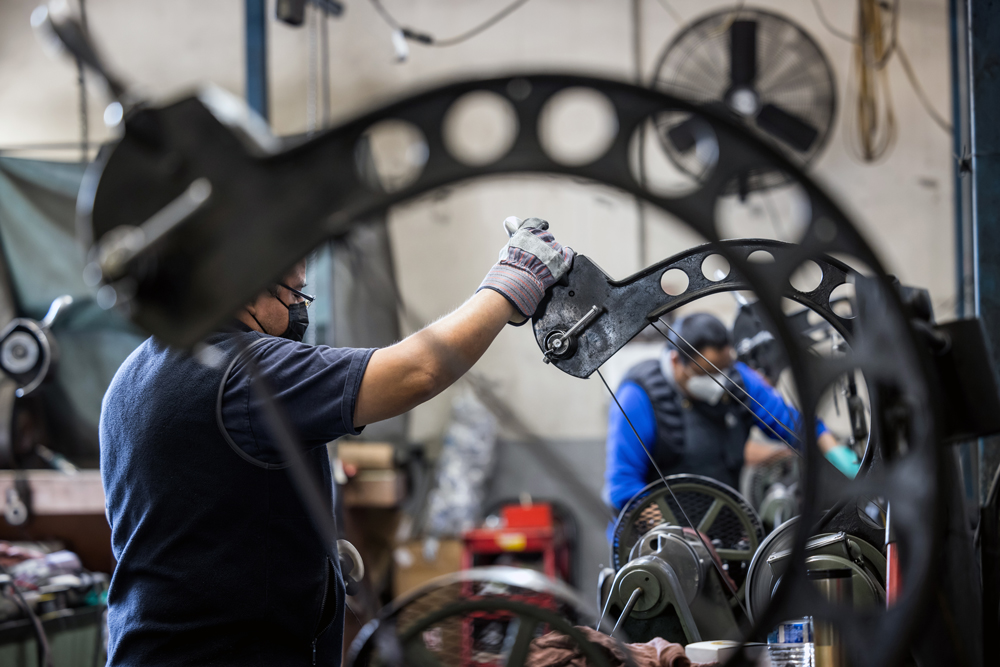
Scat Crankshafts in Redondo Beach, California

At press time, the California Legislature had heard testimony from Assembly Member Grayson and key stakeholders, including members from a coalition of California manufacturers. 

The bill was set to be voted on May 1. PRI will continue to update readers on the bill’s status. For the latest available information, visit performanceracing.com. For specific questions or comments, contact Christian Robinson at christianr@sema.org.
June 2023
By
Laura Pitts

Industry Insights: Larry Chen

Submitted by jeffreyc on Fri, 05/12/2023 - 11:40


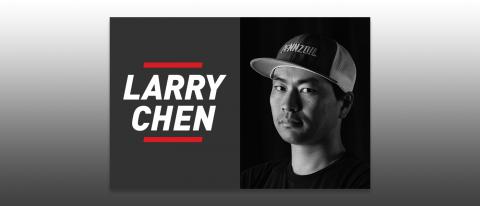
Photographer, content creator, and ambassador for the industry, this Los Angeles-based phenom’s impact on motorsports and the automotive community goes beyond his captivating images, which earned him the title “car culture’s most influential photographer.”

Making a living as a photographer is never easy, and it’s extremely challenging if your specialty is motorsports and automotive. Most publications and teams have limited budgets, and there are always plenty of aspiring photographers who want a chance to show what they can do. To make it in this business, you have to have something special. 

Larry Chen has that special talent and technical skill behind the camera. Based in Los Angeles, California, he’s been called “Car culture’s most influential photographer,” and he received the inaugural SEMA Automotive Influencer of the Year award at the SEMA Industry Awards Banquet during the 2022 SEMA Show. He has more than 830,000 followers on Instagram, and he works for some of the top teams in drifting, rally, and off-road racing, as well as doing general automotive photography. Anyone with an interest in cars and racing has seen and appreciated his work, even if they didn’t know it was his. We caught up with Chen recently to ask how he keeps himself at the top of his game. 

PRI: Photography is a really tough profession. How did you get into this line of work? 

Chen: It wasn’t an easy path. People ask me this question multiple times a day because for whatever reason, I guess it looks pretty glamorous from the outside! But they don’t realize the effort and the time and the years it took to get to this point. I started in 2004. I decided to start going to races and car culture events to just put my name out there and get photography done. It’s just been kind of a slow progress since then.

PRI: Was there a particular race car or event that inspired you to start shooting motorsports?

Chen: What really kicked it off for me was going to track days and playing with my car. That was the big thing that got me into it. It really started with a love for driving.

2
“Do whatever you can to be in front of the cool action,” Larry Chen advised up-and-coming photographers. “When you’re sitting on the couch at home thinking about what you can shoot, you’re not out shooting.”

PRI: If you had the opportunity to write a letter to your younger self back in 2004, knowing what you know now, what would you say to that young man about succeeding as a photographer?

Chen: It’s tough to say because I definitely never intended on it getting to this point! I never thought it was possible. I just knew that I enjoyed doing it back then, and I still enjoy doing it now. It’s just been such a tough journey to get to this point, but I would talk about all the hours that I’ve put in, all the sacrifices that I’ve made. I still have that spark from back then, and that’s why it’s been good.

PRI: You talk about it being tough. Can you elaborate on what was tough?

Chen: It’s a lot of stuff that you don’t see on camera. I’ve been talking about my story a lot recently, whether on a podcast, or magazine interviews like this one, or on my own blog, my YouTube channel, and Hoonigan’s YouTube channel. It’s lack of sleep, lack of time with family, lack of time for anything! It’s the crazy traveling schedule and crazy conditions that we have to work with. We work in freezing cold or crazy hot. It doesn’t matter because racing happens in any condition. I’ve shot in ice storms, snowstorms, sandstorms, negative 20-degree weather. And we’ve shot in 110-, 115-degree weather. It is really, really tough. The elements come into play, but then it’s also dealing with clients and chasing payment and finding the jobs to begin with. It is so crazy. If you’re coming out of high school or college, you can’t just say, “Hey, I’m gonna become an automotive photographer.” It’s a really niche thing, and it’s a small group of us that somehow make it work, and it is worth it because it is our passion, without a doubt.

PRI: Is there any special advice that you give to people just starting out in the business?

Chen: It’s all the simple things and some of the things that people don’t really think about for whatever reason: Show up early, stay late. That’s a big thing when it comes to photography. If you’re there earlier than other photographers, you can get better shots. Then when it comes to meeting people, just be on time and be easy to work with. Don’t be a jerk because nobody wants to work with a jerk. Everybody wants to work with somebody that they like. That’s half of it for us. 

Then, we spend so much time with our clients and with directors and producers. We live together sometimes for weeks at a time. So you have to try not to get on each other’s nerves. That’s so much of the battle of being able to work as a team, especially because it’s not like a normal office environment where you are in your own cubicle. Being easy to work with seems like it’s pretty hard for a lot of people. Another thing is to do whatever you can to be in front of the cool action, because when you’re sitting on the couch at home thinking about what you can shoot, you’re not out shooting and that’s a problem.

3
On location, a key to success is “being able to work as a team, especially because it’s not like a normal office environment,” said Larry Chen. “Everybody wants to work with somebody that they like.” 

PRI: How does your photography directly or indirectly benefit the motorsports industry?

Chen: It’s about elevating a certain series or a certain type of racing. There’s a time and a place for a well-shot cell phone video or cell phone photo, but if there’s a new build, or a new race car, or a race that’s happening, you want to have your product, vehicle, race car, race series shown in its best possible light. You want it to look as good as possible and look as amazing and cool and crazy or dangerous or whatever. You want to convey whatever you’re trying to convey. You don’t want it to look bad and out of focus with the color wrong and small on the screen. You want it to be a good representation of what your product looks like in person. That’s where we come in, to show how awesome this stuff is. It’s because not everybody can travel to every single race, but they still want to see, and they want to know the story. That’s what we’re out there to do: tell the story in the best way possible.

PRI: Tell me something about a content creator like yourself that just about nobody knows.

Chen: I really, really try to always pull my weight, and it’s never just the “one and done” for me when it comes to these clients. I try to make sure they’ll call me back for the next thing that they have going on. I think that’s one of the big reasons why we’re able to survive. The stuff that they don’t see, I don’t think it really matters. It’s more about what they do see and what the end product is, and what we’re able to do to help them. I think that’s what matters.

PRI: So much is crowdsourced now, and quality often suffers as people send pictures that are just “good enough.” Do you think there’s a future for your business model?

Chen: I don’t see motorsports and car culture going downhill. It’s the biggest it’s ever been, and it’s not going to slow down anytime soon. From what I can tell, racing is also the biggest it’s ever been. There are just so many things that are going on that are elevating the whole industry. Part of it is the fact that it’s easily accessible on the media side. When I was growing up, even though there was all this racing that was happening all over the world, I just couldn’t see any of it. But now it’s so easy to see all this awesome content, and the appetite for good content is the biggest it’s ever been. So I don’t see a problem at all. 

4
Automotive photography “can look pretty glamorous from the outside,” Larry Chen said, “but they don’t realize the effort and the time and the years it took to get to this point.”

PRI: Are there any major challenges that you can see coming up in your business?

Chen: The problem that we are running into is that there’s just so much to do in the industry, and there are so many events going on every single weekend. It’s really hard for us to choose what to do because there are multiple series happening every weekend, and even new series coming out, and new events, and new car culture happenings. There’s just so much to shoot, and we always have to be careful to pick the right ones, or pick the ones that are interesting to us, or those that want to have us. It’s a good problem to have, but it still is a problem.

PRI: It sounds like you’re saying that there’s room for new photographers who want to come up and learn the craft?

Chen: One hundred percent. There is so much. There’s a lack of talent and a lack of good videographers and photographers, and even a lack of people that I would want to hire to help us. I don’t know why, and maybe part of it is because they see the glamorous side of it, but they don’t see the sacrifice and the hours and the lifestyle that we live. Maybe doing this is a casual thing for a lot of people, and that’s fine. You can be a casual content creator, but if you want to do it full-time every single day, that’s a different level. 

PRI: Do you have anyone to acknowledge for giving you a big break or great advice?

Chen: There are too many to name! Off the top of my head, the general manager of PRI, Jim Liaw, was very instrumental in allowing me to practice my craft at Formula Drift for many years. He was a big, big help. And then a lot of people that I started with, back around 2004 to 2006, are the same people that I’m working with today. But now they’re working at Toyota, they’re working at Nissan, and they’re working at Ford. We’ve all grown up together, and we all still want to work together.

PRI: Was there ever a time when you were discouraged and thought, you know, this is never going to work? If so, how did you get through that time?

Chen: I run into that pretty much all the time! We’re always on the edge when it comes to a lot of things that we’re shooting, and a lot of projects that we’re working on. Some of them just don’t work out, and we have to pivot and make it work somehow. But that’s kind of the fun part of it. It’s the problem-solving that my team and I are constantly working through. After all these years of shooting, and all of the experience, you would think that we would’ve run into so many of these scenarios, but there are always new things that we’re learning about cars and car culture every single day.

5
“There’s a time and a place for a well-shot cell phone photo, but if there’s a new build, or a new race car, you want to have it shown in its best possible light,” Larry Chen said. “That’s where we come in, to show how awesome this stuff is.”

PRI: Is there one aspect of photography that has been lost over the years that you would love to bring back? 

Chen: The film era. I look at some of the shots that people created with film, and it blows my mind because I know as a photographer how hard it was to capture this kind of shot. It’s extraordinary, but most people won’t understand that it’s lost. I have quite the collection of film cameras, and I’ve shot a lot of motorsports and car culture with film. But as time has gone on, I find that it’s a lot more fun for me to shoot film of my family and my friends. It’s more of a hobby than what I would use as a tool, but really what’s lost when I look at those old shots is the skill. It has gotten a lot easier. But it still doesn’t distract from the fact that those existed back then.

PRI: Is there anything else to say about your business and what you do?

Chen: One of the things I say is that it doesn’t make sense why it exists, but somehow it works. This has been such a crazy journey, being able to go to all these events and travel all over the world. I’ve been to 50 countries on other people’s dimes, and I got to meet all these people and have friends all over the world. I got to experience all these car culture moments. It’s incredible. 

So much of that comes from the fact that car culture is in our souls and in our blood. It’s a worldwide phenomenon. There are so many people who are into racing cars and this culture. The root of it obviously comes from transportation. We just like to move around. So it’s only natural for us to love these objects that are machines, but they convey so much emotion, and they’re beautiful, and they’re also ugly, and they’re powerful. There’s just so many aspects to it that are complicated. I’m just lucky to be a part of it, to capture this small moment in time when cars are this way. 

June 2023
By
Jeff Zurschmeide

Newly Appointed: Matt Patrick

Submitted by jeffreyc on Fri, 05/12/2023 - 11:28


DeatschWerks’ new technical director began his career at an iconic performance industry giant, honing his expertise across the spectrum of aftermarket products and systems

For Matt Patrick, the decision to leave his position as vice president of product development for Edelbrock Group to join fuel system manufacturer DeatschWerks in January of this year was laced with emotion. He’d joined COMP Cams 26 years ago with an Automotive Engineering Technology degree from Minnesota State University at Mankato and was there when private equity firm Industrial Opportunity Partners, owner of Edelbrock LLC, acquired COMP Performance Group in 2020. 

Patrick’s journey in the high-performance industry began during childhood. “I was into cars, and I had an engineering mind,” he explained. “My parents gave me things to help encourage that. They bought me a LEGO set, and the next thing you know, I’m mounting electric motors to LEGO dragsters and figuring out how to hook up my toy train transformers to them.”

Born and raised in Edina, Minnesota, Patrick recalled getting hooked on truck and tractor pulling after first seeing it at the Metrodome in Minneapolis. At 14, he attended his first NHRA national event in Brainerd. “That became my passion, although I have an appreciation for all motorsports,” he said.

PRI: If you were to pick one, what would be the most important tech innovation you’ve seen in this field in the last 20 years?

Patrick: Without question, it’s been easy-to-use, stand-alone fuel injection systems. Everything about precision fuel control and what EFI stand-alones have done has brought the greatest of performance gains and fundamentally helped the industry grow.

PRI: How have the positions you’ve held throughout your career thus far prepared you for this role?

Patrick: One of the COMP Group companies was FAST, which was EFI systems. I also was a product manager and engineer at Zex Nitrous Systems. So, for virtually my whole career, I’ve been designing around fuel systems and hardware.

PRI: You hold some patents, if I’m not mistaken. What would you say is the most important one?

Patrick: The one I’m most proud of was the Zex Perimeter Plate nitrous oxide system, where it injects the nitrous from points around the perimeter of the plate, as opposed to a spray bar in the center. Billy Godbold, a cam designer and a brilliant mind, co-developed it. 

PRI: How would you describe your approach to innovating? 

Patrick: I’m more of a designer than an engineer. I’d always struggled with math, to be honest. When I was younger, I thought that was a weakness. I later realized it was really a strength, because it forced me to build relationships with people who were extremely good at math. I found I got better designs collaborating with smart, creative people. 

PRI: What inspires your best ideas?

Patrick: When I recognize there’s a need in the market, that begins the process of thinking, “How can I best help performance enthusiasts get the solution to this problem?” You start floating ideas on finding that solution, and then you collaborate with others. That’s when the fun creative process begins.

PRI: What key value do you bring to your new role at DeatschWerks?

Patrick: I would say it’s two things. The first is a comfort with creating different product lines. Working for COMP Performance Group, we had a full spectrum of products—fuel injection, valvetrain, cylinder heads, intake manifolds, nitrous, and a tool division. We had to go into new markets, analyze them, understand them, and create relevant products for each. That’s how I’ve worked for many years.

The second one is my experience building teams of talented people who work well together. 

PRI: Who has inspired you, professionally or personally?

Patrick: In many ways, the leadership of COMP made me who I am today. I got hired out of school at 24 years old. It was only later that I fully appreciated the iconic owners we had with Scooter Brothers and Ron Coleman. They have been amazing mentors.

PRI: Is there any mistake or misstep you’ve made that you feel you’ve learned from, or that has helped shape who you are?

Patrick: Early on, I thought that the ideas and the products—‘making a better mousetrap’—was all that mattered. I later learned that focusing on building strong relationships, and building teams of people that complement each other, that’s where the magic happens. 

PRI: Is that the kind of advice you might give to budding engineers?

Patrick: I would. And I would add work ethic to that. That’s something that I give credit to the COMP Group leadership. They put in the work and never gave up. Every single one of us can control how much work we want to put into something. I would tell young people that if you outwork the competition, you’re going to win. 

PRI: Aside from your cell phone, tablet, or computer, what’s one thing you can’t live without?

Patrick: Fundamental to who I am as a person is my relationship with Jesus Christ. It’s the center of my life, and everything flows from that.

PRI: Do you have any cars that you’ve built, or is there a dream car that you’d like to put in the garage?

Patrick: I’ve built and raced cars over the years. I bought a 2005 Mustang GT new off the showroom floor. It was my daily driver for about 100,000 miles, and then it became the toy. I built my own turbo system for it and modified the whole car. It makes about 700 horsepower. For dream cars, I think an Audi R8 would be my ultimate daily driver, and a 1963 Pro Mod Vette would be an awesome race car to have.

Matt Patrick

TITLE:
Technical Director

ORGANIZATION:
DeatschWerks

HOMETOWN:
Oklahoma City, Oklahoma

FAST FACT:
Matt Patrick picked up a new hobby during the COVID-19 pandemic: making pizza. “I’ve developed my own perfect pizza. I make my own dough and sauce from scratch. And, as an extension of my first job at age 15, I also started making bagels at home.”

June 2023
By
Jim Koscs

Editors’ Choice

Submitted by jeffreyc on Fri, 05/12/2023 - 10:44


Hundreds of new product announcements cross the desks of PRI editors each month. Following are our top picks for June.

Flex Era 1
KC HiLiTES

kchilites.com

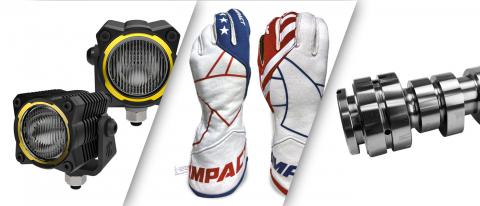
Suitable for Baja racers, rock crawlers, and UTV riders, the new KC Flex Era 1 lights can be utilized for rear-, side- or forward-facing coverage.

“There are a lot of applications, depending on if you’re an Ultra4 racer, or even a rock crawler, where you can set the light on the steering knuckle,” said Randy Wimenta of KC HiLiTES, Williams, Arizona. 

Contained in a compact, 2.7-inch-diameter package, the Flex Era 1 features dual power modes: one for full, high-power output and the other illuminates an eclipse amber backlight.

Users no longer have to guess which beam pattern is best suited for their needs. Each set comes as a master kit with two lights, three beam-pattern lenses, spare O-rings, covers, and all mounting and wiring hardware. 

The lights are designed asymmetrically to ensure easy mounting in tight locations, and the mounting brackets feature adjustable depth, width, and height orientation.

“They’re small enough to use anywhere on the vehicle, and you can use them on UTVs as a forward- or backward-facing light,” added Wimenta.

The machined accent bezels are standard in gold on each FE1 light; however, KC offers red, blue, or gloss black finishes, as well. The lights have a 2,430-lumen rating. —Mike Magda

1


Alpha Patriot Racing Glove
Impact

impactraceproducts.com

Boasting a vibrant red, white, and blue design, the new Alpha Patriot glove from Impact in Indianapolis, Indiana, is also designed for racer comfort using some unique technology. The construction eliminates troublesome seams and fabric bunching from the palm area using a parabolic pattern and a single-piece palm. There’s also an elastic zig-zag gauntlet closure to ensure the gloves stay in place.

“The use of pre-curved, external stitching combined with silicon embossed palms and fingers make the glove exceptionally comfortable to wear with outstanding grip for a maximum driver/vehicle interface,” said Ben O’Connor. “A better interface equates to more control, which is a benefit to driving performance and safety.”

The glove is approved for any class that requires SFI 3.3/5 specifications. It’s available in small, medium, large, and extra-large. Suggested retail price is just under $205.

“We have noticed a considerable interest in patriotism in motorsports over the last few years. We have seen it at the races, and on the custom suit side of the business,” added O’Connor. “We also work with several Lucas Oil sponsored athletes, and their brand colors are also red, white, and blue. So it was only natural for us as a US manufacturer to offer a red, white, and blue themed glove.” —Mike Magda

2


Ford Godzilla Camshafts
COMP Cams

compcams.com

As Ford’s newest pushrod V8, the 7.3-liter Godzilla engine is drawing considerable attention with engine swappers, racers, and even performance-minded truck enthusiasts. To address a wide variety of power needs, COMP Cams in Olive Branch, Mississippi, has developed three new camshafts for the engine.

“The Godzilla offers Super Duty owners a significant amount of performance and drivability as a truck engine. We wanted to be able to help out that customer immediately, while the engine-swap community builds momentum,” said Chris Potter.

The Stage 1 camshaft uses the factory cam phaser, and with optimized ECU tuning an increase of 60 horsepower and 15 lb-ft torque was observed. A Stage 2 cam was teamed with an Edelbrock XTS sheetmetal intake. This combo required a phaser limiter, and there was an increase of more than 75 horsepower over stock. Neither camshaft requires changing the stock valve springs.

The Stage 3 camshaft requires a valve-spring kit and phaser limiter, but power picked up nearly 100 horsepower and 25 lb-ft of torque over stock. 

“The Stage 3 is made for engine swaps into lighter vehicles and those seeking maximum horsepower while still utilizing the phaser with a limiter,” said Potter. “This cam will provide the most average horsepower over a 2,000-rpm range from 4,700 to 6,700 rpm, ideal for WOT performance and shift recovery as it goes down the track.” —Mike Magda

3


C3 Corvette T-5 Tremec PerfectFit Kit
Silver Sport Transmissions

shiftsst.com

Vintage C3 Corvette owners looking to upgrade their transmission to run an occasional autocross or weekend drags should consider the new T-5 Tremec PerfectFit Kit from Silver Sport Transmissions (SST) in Rockford, Tennessee, to complete the swap.

Designed for 1968–1979 Corvettes, the kit allows for the installation of a Tremec T-5 transmission that was popular in Fox body Mustangs and other performance models. The T-5, however, had only one shifter position, a 10-spline input shaft and Ford bellhousing bolt pattern—so it wasn’t much of an option for any other model.

SST then developed a Tremec T-5 with the Corvette STX shifter and a transmission perch plate to rest the tranny on the stock crossmember. The SST kit works so well that the factory console can be retained.

“The Tremec T-5 has a 300 lb-ft torque capacity and is capable of shifts up to 6,700 rpm,” said Misty McComas. “This is the little brother of the Tremec transmission line. It’s better to use the TKX 5-speed or Magnum 6-speed for drag racing and road racing. They’re all available with PerfectFit Kits and maintain the factory console look of your C3 Corvette.”

The TKX has a 600 lb-ft torque capacity and is capable of shifts up to 7,500 rpm. The Magnum is rated at 700 lb-ft with shifts up to 7,800 rpm. —Mike Magda

4


EcoGen Renewable Fuel
VP Racing

vpracingfuels.com

VP Racing in San Antonio, Texas, is accelerating its renewable fuel initiative by launching EcoGen, a renewable non-alcohol alternative to ethanol- and butanol-based fuels found at the pump.

“There is an ever-increasing demand for renewable fuels in the transportation market to help reduce greenhouse gas (GHG) emissions, and this is rolling into the racing world,” said Mark Walls. “Ethanol-free EcoGen fuels are offered with up to 10% renewable content, which enables a 30% greater GHG reduction than standard E10 pump gasoline.”

VP has experience in developing more than 80 race fuels, and EcoGen will be a high-octane, cleaner-burning fuel. The fuel can be used in high-performance cars and motorcycles, boats, powersports vehicles, and small engines such as lawn equipment. 

“This fuel can be a drop-in replacement for any racing class that uses pump-gas-like fuels, up to 95 octane (AKI),” added Walls. “Many different race series are starting to consider and/or require renewable content to be a part of their race fuel. For marine and small-engine applications, EcoGen does not have the detrimental effects that can be seen with ethanol fuels. In most cases, users will not need to change their setup. This fuel will have a similar oxygen content and burning characteristics as E10 pump gasoline. Additionally, it typically has better material compatibility than pump gasoline.” —Mike Magda

5


Viper Youth Racing Helmet
Simpson Racing

simpsonraceproducts.com

Getting young racers interested in competition is a goal of many parents, but keeping them safe is a priority once they go to the track. Simpson Racing in New Braunfels, Texas, just released a youth version of its Viper helmet line that is approved for many types of youth racing.

“The Simpson Viper youth helmet is certified to the SFI 24.1 youth helmet standard,” said Gary Peters. “It has a wide eye port, which allows the child to concentrate on what is out in front.”

The helmet is available in four sizes: small (56 cm), XS (54 cm), 2XS (53 cm), and 3XS (52 cm). Starting with a properly sized shell, the helmet features removable cheek pads and crown padding.

“They can be replaced as the child grows to achieve optimum fit,” added Peters.

The helmet comes with one clear face shield installed, and others may be purchased separately. It’s also equipped with the necessary hardware that makes it ready for head restraints.

“It comes in weighing no more than 1,200 grams,” said Peters. —Mike Magda

6


Pro-Stock Performance Valve Springs
Elgin Industries

elginind.com

The new Elgin Pro-Stock valve springs for LS engines are optimized to work with the company’s Sloppy Stage 2 hydraulic cams.

“The springs maintain stable harmonics matched through their advertised lift cycle. Combine this with super finishing and the result is four times longer lifespan plus higher lift capacity than standard springs,” said Rick Simko. 

The springs are designed with beehive and conical geometries, which helps reduce dynamic surges. They also feature a micro-engineered surface finish and a proprietary heat-treat process to improve strength and durability.

“The new RV-126918 valve springs are micro-peened in a proprietary process that results in a perfect finish, which is critical for performance springs,” said Simko. “This micro-finishing technology is highly sophisticated, which is why the springs are shipped in special packaging to prevent springs from rubbing against one another during shipping.”

Five different part numbers have different sizes and spring rates that range from 103 to 127 pounds on the seat and 275 to 370 pounds open.

“Feedback has been extremely positive from racers who are looking for parts that deliver proven performance gains on a tight budget. These springs are matched to street, short-track, and bracket-racing applications,” added Simko. —Mike Magda

7

June 2023
By
PRI Staff

Stop Doing That…Do This Instead: Sensor Placement

Submitted by jeffreyc on Fri, 05/12/2023 - 09:12

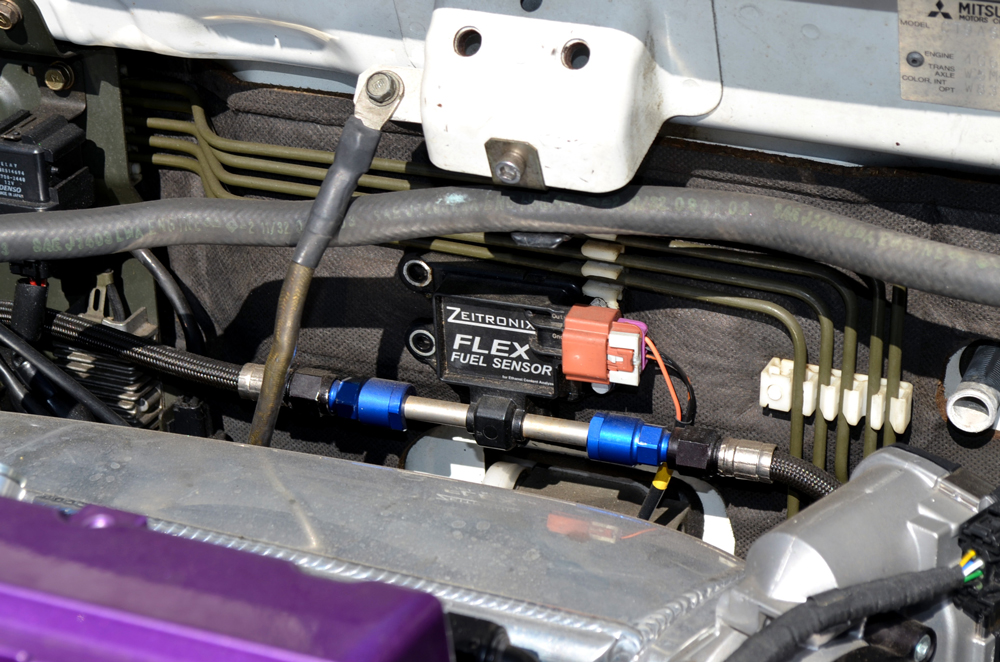
Exposure to heat can affect sensor operation, which is why Chris Johnson of JMS Chip advises maintaining “a foot of distance between any heat source and a sensor.” If that’s not possible, “that’s where I would build shields,” with sleeves on the wiring to the sensor and a wrap around the heat source.

Taking a calculated approach to installation can improve these components’ longevity and yield more reliable data.

Data acquisition has become an indispensable resource across myriad different motorsports disciplines. Whether it’s the driveshaft speed and shock position of a drag car, or the steering angle and throttle position of a sports racer, this technology can provide a wealth of information to help dial in a setup or identify potential issues. But to get the most out of it, the data needs to be as reliable as possible, and much of that comes down to how and where the system’s sensors are installed on the car. 

As Scott Gilman of Trensor, LLC in Irvine, California, pointed out, there’s no universal rule of thumb to sensor placement and installation, so it’s important to start with a product that’s purpose-built for the application. “One of the most common mistakes we see from racers is that they’ll place several engine-related sensors in a box that is mounted nowhere near that engine, and they’ll have tubes or braided lines going from that box over to the engine.”

Gilman said that this is typically done because the sensors that are being used aren’t designed to withstand the amount of vibration that they’d be subjected to if they were mounted directly on the engine. Rather than seeking out the appropriate sensors for the application, some will attempt to address the problem by placing the sensors in a spot that isolates them from those vibrations, but doing so can introduce other problems. 

“By moving the sensor away from the source, the lines are allowing for pressure drop, and they can also act as a heat exchanger,” he added. “That means that the sensor isn’t getting an accurate picture of what’s going on.”

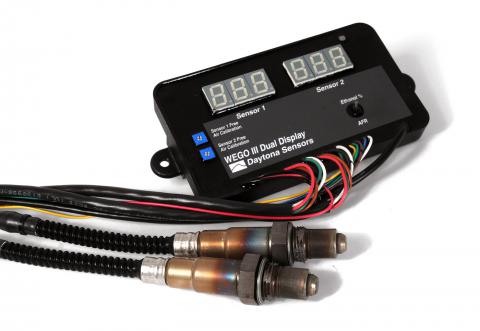
Chris Johnson of JMS Chip in Lucedale, Mississippi, said that the orientation of a wideband O2 sensor can have a significant effect on its longevity and accuracy. “We often see people mounting these in the 4 o’clock to 8 o’clock position (with ‘straight up’ being at the 12 o’clock position). That’s a problem because water will start to puddle up on the sensor whenever the engine isn’t running, and that will be detrimental to the life of the sensor.”

2
Data acquisition has become an indispensable resource for racers to help dial in a setup or identify potential problem areas. But the data needs to be reliable, and the key to making that possible is proper sensor installation. 

He also told us that excessive exposure to oil and antifreeze will damage wideband O2 sensors, and many times they’ll provide false readings before failing entirely. Ideally, these sensors should be oriented in a position between 10 o’clock and 2 o’clock in order to minimize the potential for water to collect in the sensor. Johnson added that the sensors should also be located somewhere that’s relatively easy to access. 

“When you crank an engine for the first time, you’re probably going to want what I call ‘startup sensors’ in there because those sensors will likely be exposed to oil, water, and other contaminants during that initial startup. If you want data that’s as accurate as possible, those sensors need to come out once the engine is warmed up and replaced by sensors that are known to be good,” Johnson said. 

Gilman said that upward orientation can benefit sensor longevity in other ways, too. “If you know a sensor is going to get a lot of gravel and other debris kicked up on it, you want to avoid mounting it in a downward orientation in order to minimize the chances of the sensor taking a direct impact.”

He also cited inadequate wiring lengths as another common issue. “Strain relieving is hugely important in racing applications. For instance, if you have a sensor that’s mounted to an engine and a wire harness that is mounted to a tube chassis, you have to consider the fact that those two things are vibrating and moving in different axial planes. The engine may be shaking side to side, whereas that chassis may be flexing up and down. We often see frayed or broken wires, pin damage, and other wear at sensor connection points because the length of wire being used is too short, and that can cause the signal to drop out intermittently.” 

To avoid the problem, the wire should be long enough so that it can’t be pulled taut by the movement of components that can happen at speed. The amount needed can vary significantly based on the situation, but Gilman advised that 5 to 7 inches of extra wire would likely be appropriate in most cases.

Exposure to heat is also a vital consideration when installing sensors. “It’s a big concern—I would want to see a foot of distance between any heat source and a sensor,” Johnson stressed. “But there are situations where that may not be possible, so that’s where you would build shields. I typically won’t wrap the sensor itself because you want to be able to get to the connector, but I’ll sleeve the wiring going to it, and also wrap the heat source.”

Sources

JMS Chip
jmschip.com

Trensor
trensor.com

June 2023

Ask the Experts: Oxygenated Fuels

Submitted by jeffreyc on Fri, 05/12/2023 - 09:04

Oxygenated fuels can really help “the circle track racer or road racer where there’s a lot of rapid acceleration and deceleration,” said one of our sources. “That’s where the benefit of the fuel’s low- to mid-range torque improvement is key.” 

Why it’s important to understand the benefits, and limitations, of using fuel with a higher oxygen content.

Introducing more air into the combustion process is a sure-fire (pun intended) way to increase power. Getting that extra air into the combustion chamber can take many forms, from air/fuel mapping to forced induction or nitrous oxide injection. 

Another means is through the use of fuel with a higher oxygen content than conventional race gas. 

Oxygenated Fuel

We have the US Environmental Protection Agency (EPA) to thank for pioneering the use of gasoline with extra oxygen content. As Ron Finney of Renegade Race Fuel in Bowling Green, Kentucky, explained, oxygenated fuels “were developed and used by the EPA to lean the air/fuel mixture to try to reduce hydrocarbon emissions. People figured out that with more oxygen in the fuel, you can burn more fuel in a given period of time. It doesn’t require as much outside air, so you can burn more of it and make more power.” 

“The oxygenates used in fuels are mainly ether or alcohol-based molecular compounds that carry an oxygen molecule,” explained Freddie Turza of VP Racing Fuels, San Antonio, Texas. “This enhances combustion and can assist the engine to become more efficient. Most of them also raise the octane value, the number value that relates to the resistance to detonation. Oxygenated fuel can aid in complete combustion and less disturbance in the flame propagation in the combustion chamber.”

Because the oxygenates “dramatically change the Stoichiometric value of the fuel,” Turza said, more of it has to be burned to make this additional power. “Also, this changes the BTU value. In most cases it lowers the energy of the fuel, requiring more to meet the same energy value of the previous fuel.” 

That means fuel systems need modification to run oxygenated fuels, including “greater output fuel pumps, injectors compatible with some of the oxygenates, or increased size in carburetor jets,” Turza said. 

Both Finney and Turza pointed out that the oxygenated compounds in these fuels can be hard on fuel system components. “There are stories out there about some company’s fuels that eat up the float bowls, eat up the jets, degrade the fuel system hoses, pumps, and everything else,” Finney said. “That’s just a product of putting too much oxygenate in the fuel. When done properly, there are things you blend in the fuel to mitigate that so there really are no negative effects to the engine.” 

A bigger downside, Finney believes, is that oxygenated fuels “have a shorter shelf life than a typical, non-oxygenated fuel product. For an automotive race fuel that’s 5% oxygen, we say a year or a year and a half is a good shelf life.” The fuel will still work beyond that period, he added, “just not at the level it was when it was still new.”

That level—the amount of additional power produced by oxygenated fuel—can be misunderstood, Finney said. “Oxygenated fuels really tend to help the midrange, the acceleration of the engine. Everybody gets on a dyno looking for peak numbers, and if that’s all they’re looking at, they may feel the 15 or 20 horsepower isn’t really worth it for the cost of the fuel. But they totally forget to look at the dyno curve and how much torque increased in the midrange, how much acceleration increased. What moves a vehicle around a track or down a drag strip is that acceleration. We try to get engine builders and racers to look at the whole dyno curve before they make the decision whether it’s worth it or not.”

Ethanol

Another way to introduce more oxygen into the combustion process is through the use of an ethanol fuel blend, such as E85. “Ethanol has some incredible benefits to it, especially from a performance standpoint,” said Ian Lehn of BOOSTane, Cincinnati, Ohio. “But we want to manage expectations, so racers understand the world they’re stepping into and what they need to be conscious of.”

Among the benefits racers get from using E85 is its latent heat of evaporation, Lehn said. “It’s like a chemical intercooler. As ethanol is sprayed in an engine, it’s cooling down the charge temperature. When you can cool down your intake temperatures, you can run a more aggressive tune and get more power out. Also, ethanol has a higher effective octane to the fuel itself, though people more often than not overestimate what they think the octane of ethanol is. If someone made 500 horsepower on 103- or 104-octane race gas, and made almost 500 horsepower on E85, they think it must be 103 or 104 octane. Not quite. There are other benefits in E85 that help it achieve the performance that mimics higher octane fuel.”

2
The hydroscopic nature of ethanol—it will absorb water out of the atmosphere—means racers shouldn’t leave it in the engine for extended periods of time or risk damage to fuel system components, said BOOSTane’s Ian Lehn. Carburetors, especially, can “get beat up by ethanol fuels,” he said. 

E85 at the pump usually costs about 30% less per gallon than gasoline. “But ethanol fuel is also 30% less efficient from a brake specific fuel consumption standpoint,” Lehn said, “so that 30% drop in efficiency requires more fuel to be used. Usually the first step in going toward an ethanol system is to upgrade the injectors. You have to have the capability of spraying a whole lot more fuel in the system reliably to make the whole thing work.”

Lehn also noted that ethanol is “hydroscopic. It has a natural affinity to absorb water out of the atmosphere, so racers must be careful leaving fuel for any extended period of time because it will start to phase separate and pull water into the fuel and fuel system.” That can leave deposits on carburetor components, clog fuel injectors, “and have corrosive effects on rubber fuel lines and any type of soft valves and seats,” he said. 

“These are really two different fuels,” Lehn said of E85 and oxygenated fuels. “E85 is predominantly an alcohol-based fuel, while anything under 50% is predominantly gasoline.” The choice, then, comes down to “how you’re trying to benefit from the fuel. You’re either tuning entirely around ethanol or alcohol, or you’re trying to get the benefits that alcohol provides an oxygenated fuel in terms of burn rate and flame propagation.” Whether a racer chooses an oxygenated fuel or an ethanol-based fuel, “any system should be optimized to exactly what the fuel is.”

June 2023
By
Drew Hardin

SCCA Announces '23 Runoffs Schedule, Bonus Class

Submitted by laurap on Thu, 05/11/2023 - 19:27
SCCA logo


The Sports Car Club of America (SCCA) has announced the 2023 installment of the SCCA National Championship Runoffs will take place September 23-October 3, at VIRginia International Raceway in Alton, Virginia. 

The event is currently slated to include three days of testing (September 23-25) and three days of qualifying sessions (September 26-28). These will be followed by three days of racing (September 29-October 1).

And organizers have also announced the SCCA Runoffs will act as the championship season finale for the Spec MX-5 Challenge (SMX), often featured at SCCA Road Racing weekends. SMX will feature a single qualifying session, with two races during the Runoffs weekend. 

For more information, visit the SCCA announcement here or visit scca.com. 

May 2023

NASCAR Announces Pinty's Series Promotions

Submitted by laurap on Thu, 05/11/2023 - 19:12
NASCAR Pinty's Series logo


NASCAR has announced the promotion of Doug Gonder to series director of the NASCAR Pinty's Series. He previously served as assistant series director under Cherie Putnam, who retired at the end of last season.

Gonder, a London, Ontario native, first joined NASCAR as an official in 2012, focusing on technical inspection, including pit road, templates, car and engine. He was promoted to assistant series director in 2022. Before joining NASCAR, Gonder worked as an official in the ARCA Menards Series and at Delaware Speedway, where he started his career as a race official in 2005.

In addition, NASCAR also announced the 2023 series competition leadership structure. Longtime series official Sam Putnam has been promoted to technical director. Mike Hennink, who has been with the series since its inception, will serve as supervisor of officials. Rob Sharpe returns as race director, a position he's held since 2019. And, Stephanie Azevedo returns for her sixth season as series coordinator.

For more information, visit nascar.ca.

May 2023

Mastercam's CNC Software Appoints New Marketing Director

Submitted by laurap on Wed, 05/10/2023 - 16:53
Mastercam logo

CNC Software--the developers of Tolland, Connecticut-based Mastercam--has announced that Liz  Shovlin is its new marketing director. Shovlin will lead efforts to support the brand's ongoing market expansion and further develop the company's position as one of the global leaders in manufacturing technology.

Shovlin has a wealth of sales and marketing experience, first starting her career working with a Mastercam Reseller. She has held positions in many different industries with a specialization in strategic direction, digital marketing and channel management.

"As we continue to grow our brand and presence, we are thrilled to have Liz join our ever-expanding team. She comes to us with a solid background in creating marketing, product and manufacturing strategies that will help benefit CNC Software worldwide," said Mastercam Chief Market Officer Sandy Moffat. 

Shovlin is based in Greater Philadelphia.

For more information, visit mastercam.com. 

Liz


May 2023

Sunnen Named Official Honing Equipment Partner of Cup Series' Hendrick Motorsports

Submitted by laurap on Tue, 05/09/2023 - 17:50
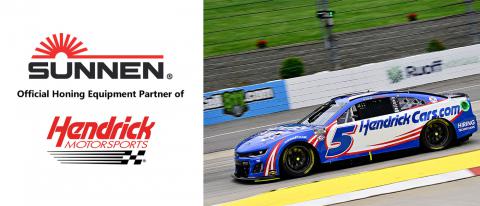
Sunnen logo, Hendrick Motorsports logo, Hendrick Motorsports Cup Series car on track


Hendrick Motorsports has named St. Louis, Missouri-based Sunnen Products Company its Official Honing Equipment Partner while the team pursues its record-extending 15th NASCAR Cup Series championship. 

The partnership puts the new Sunnen SV-series honing machine--the next generation of the Cylinder King honing machines--in the Hendrick Motorsports engine operation alongside numerous other Sunnen honing and engine-building machines. Hendrick Motorsports fields four full-time Chevrolet teams in the elite NASCAR Cup Series with drivers Kyle Larson, Chase Elliott, William Byron and Alex Bowman.

According to Hendrick Motorsports, Sunnen's state-of-the-art technology will allow it to produce the highest quality and most consistent cylinder bores in its history. The Sunnen partnership will also help improve performance on the track and deliver the most consistent engine package possible to Hendrick Motorsports' teams and external customers, the organization said.

"We are thrilled to be contributing to the continued success of this championship racing team," said Sunnen CEO and President Chris Miltenberger. "This partnership is further evidence of Sunnen's commitment to delivering the highest levels of precision and versatility to our customers."

For more information, visit sunnen.com.

May 2023