Jasper, Indiana-based Meyer Distributing has opened a new cross-dock in Savannah, Georgia.
The cross-dock will have a direct feed from Meyer Distributing's Orlando, Florida, distribution hub, which houses an inventory of automotive accessories, off-road parts and RV products.
"The Savannah, Georgia, dock will significantly improve deliveries to coastal Georgia," said Jeff Braun, CEO of Meyer Distributing. "The Carolina and Georgia coasts have long been underserviced markets by Meyer, but with the addition of Savannah, Columbia, South Carolina, and Goldsboro, North Carolina, cross-docks, we're now well positioned to provide top-notch delivery service and frequency to the customer base."
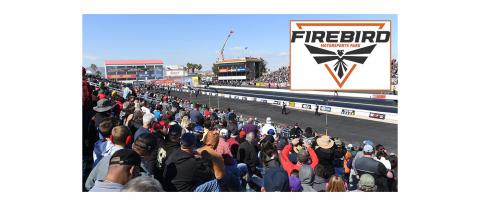
The NHRA will return to Phoenix for the 2024 NHRA Mission Foods Drag Racing Series season for the Arizona Nationals next year at the recently renamed Firebird Motorsports Park. The NHRA had previously announced that the Chandler, Arizona, facility would close after the 2023 event.
The new moniker refers to the original Firebird International Raceway, the name of the track when it opened 40 years ago, according to the NHRA.
"It's with tremendous excitement that we announce the NHRA's return to Phoenix and Firebird Motorsports Park in 2024," NHRA President Glen Cromwell said. "Our fans have packed that facility for nearly 40 years, and it was truly incredible to see the fans' outpouring of support to help continue racing at the historic track. We're thrilled to work with the Gila River Indian Community, and all of our race teams, fans and partners look forward to a terrific event at Firebird Motorsports Park in 2024."
The Top Fuel, Funny Car and Pro Stock categories are expected to appear at the 2024 NHRA Arizona Nationals, scheduled for April 5-7, 2024.
The UTV World Championship will expand from one to three races as part of the newly formed UNLTD Off-Road Racing Championship Series.
The three-part series schedule includes the Parker 400 in Parker, Arizona, the Mint 400 in Las Vegas, Nevada, and the California 300 in Barstow, California.
The series also invites UTV manufacturers to compete in the UNLTD Off-Road Racing UTV World Championship Manufacturers Cup, which will assign points to manufacturers based on in-race performances from affiliated race teams.
"The UTV platform has evolved quickly to become one of the most capable off-road vehicle platforms on the planet. It’s time we had a challenge that truly puts them to the test," said UNLTD Off-Road Racing CEO Matt Martelli. "Less than 50% of the competitors will likely finish all 1100 miles of the UTV World Championship Series. To get a podium will mean you are among the best in the world, but to win this championship will mean you are the best UTV racer on the planet with the most capable vehicle and team. This is by far the most challenging race series for UTVs ever created."
In a significant victory for consumer freedom, the Ohio General Assembly has passed PRI- and SEMA-supported legislation ensuring Ohioans, not the government, decide which vehicles best suit their needs. The bill, H.B. 201, prohibits any state or local government entity from restricting the use or sale of motor vehicles based on their power source, including internal combustion engines (ICE).
Following its passage through the legislature, H.B. 201 now awaits the crucial decision of Governor Mike DeWine, who can sign it into law or issue a veto. This bill represents a significant step forward for proponents of consumer choice, who believe individuals should have the right to select the vehicle that best fits their lifestyle and budget, regardless of its fuel type. Click here to send a letter to Governor DeWine requesting his support for the bill.
"PRI strongly applauds the Ohio General Assembly for taking a stand for consumer choice in the automotive marketplace," said Christian Robinson, SEMA and PRI senior director of state government affairs and grassroots. "Consumers deserve the freedom to choose the vehicle that meets their individual needs, and H.B. 201 ensures just that."
The bill's passage comes at a pivotal time in the automotive industry, with rapid advancements in alternative fuel technologies alongside ongoing concerns about affordability and infrastructure readiness. H.B. 201 safeguards the diversity of options available to Ohioans, allowing them to choose vehicles that align with their budget, driving habits and personal preferences.
For more information, contact Kiley Chapley at kileyc@sema.org.
PRI Membership allows the racing community to showcase its passion and pride for the industry. By uniting motorsports professionals, PRI is actively addressing challenges and needs, such as providing support for race tracks to prevent them from closing, advocating for the racing community against current legal threats and providing educational programs that help businesses and racers succeed.
An active PRI Membership is required to attend the PRI Show, so if you were at this year's event in Indianapolis, you can access your deals and discounts on the PRI Member portal.
HOW TO ACCESS THE PRI MEMBERSHIP PORTAL
The PRI Member Portal on performanceracing.com makes it easier than ever for PRI Individual and PRI Business members to take advantage of exclusive opportunities. The custom dashboard shows PRI members the latest benefits, discounts and deals courtesy of PRI partners--all in just a few clicks.
Here's how to access the PRI Member Portal in three easy steps:
Atlanta Motorsports Park (AMP) received the 2023 Outstanding Facility Award, presented by SPEED SPORT, at the Race Track Owner's Conference held in conjunction with the PRI Show.
The accolade recognizes AMP's commitment to excellence and innovation in the high-performance driving and racing industry, setting a high benchmark for facilities worldwide, AMP representatives said.
"For 90 years, SPEED SPORT has been chronicling the greatest stories in motorsports from the world's greatest tracks," said Joe Tripp, CEO of SPEED SPORT. "Atlanta Motorsports Park certainly deserves a place amongst the best. The 'Outstanding Facility of the Year' award is our way of celebrating these amazing venues and the outstanding contribution they make to our sport."
Build your social media campaign with these quick and easy steps.
Building a social media campaign offers a multitude of benefits and can help leverage a company’s online platforms to meet specific goals. However, it may be challenging to strategize a campaign if you don’t have prior experience with social media marketing. Here are some steps to help build a successful social media campaign.
First, identify the campaign goals. If the objective is to promote a race, for example, the goals might be to build anticipation and excitement for that event, sell tickets, promote the unique features of the track, etc. If the intention is to introduce a new product, the goals could be to expand brand awareness and generate product sales. Other initiatives could include more audience engagement, increased follower growth, generating leads, driving traffic to the website, providing education on relevant topics, and much more.
Once the campaign goals are determined, it’s important to decide which social media platforms to utilize. Each platform reaches a different demographic and has varying engagement rates. Figure out who your customer base is, as well as if you want to reach a new audience. That will help you decide which social networks to use.
Facebook is one of the original social media platforms, so it is one of the biggest in terms of users and spans a large demographic, but it reaches more of the older generation compared to other platforms. Instagram caters to a slightly younger crowd and focuses on visuals, and more recently has put a bigger emphasis on short-form video. TikTok is strictly short-form video, and its users are primarily the younger generation. LinkedIn is designed as a professional networking platform, while X (formerly known as Twitter) is used as a microblogging platform for news updates, opinions, etc. Additional social media platforms exist, so consider exploring YouTube, Pinterest, BeReal, Reddit, SnapChat, Twitch, and others.
Once you understand your audience and choose the appropriate platforms, then you must decide which types of content to create and build out a calendar. This can include short-form video, long-form video, imagery, graphics, and more. Then set a posting frequency, which can be daily, a certain number of posts per week, or a monthly cadence. Consistency is key when it comes to social media, so schedule accordingly. Furthermore, different platforms may require different types of content and posting frequencies.
You will then need to think of content ideas you want to create prior, during, and to conclude the campaign. For instance, to promote an upcoming race, you may want to make countdown graphics to bring excitement to the event. Additionally, you could highlight several of the drivers who will be racing, which could include testimonial videos that attest to an entertaining event. Showcase everything the event has to offer beyond the race itself. During the event, give some behind-the-scenes peeks as well as action on the track. After the race, thank the fans and drivers for participating. Different content ideas would be used for other goals, like a product launch. Content should be catered to the campaign goals and objectives.
Once the content and calendar are discussed and finalized, then decide which hashtags to use for the campaign. Utilize generic hashtags to reach a wider audience, and also create your own hashtags that pertain to the campaign in order to reach a more targeted audience. Encourage others to use your unique hashtags.
By implementing a well-planned social media campaign, you can generate buzz about whatever you’re promoting and contribute to its success.
Tracking legal, legislative, and regulatory developments impacting the racing and performance industry.
PRI’s Washington, DC-based legal and advocacy teams work continuously to protect and support motorsports venues, sanctioning bodies, and businesses around the nation. We are tracking several initiatives this month, including new economic data regarding motorsports’ positive impact on both national and local economies, as well as information about how PRI Members can get in contact with a member of Congress.
SEMA Report Finds Automotive Aftermarket Industry Provides Boost to National Economy
The “SEMA Economic Impact Report”—conducted by John Dunham & Associates and based on 2023 US economy data—has found that the automotive aftermarket industry supports more than 1.3 million American jobs, generating more than $104 billion worth of wages and benefits annually. It also accounts for more than $40 billion in taxes—including $24 billion in federal taxes and $16 billion in state and local taxes—which support the development of critical national and local infrastructure. In total, the study finds that the automotive aftermarket industry contributes more than $336 billion annually to the American economy.
“The Economic Impact Report reinforces the importance of the motorsports parts industry as one of the key drivers of the specialty automotive aftermarket,” said Eric Snyder, PRI Senior Director of Federal Government Affairs. “This report also confirms the industry is strong and growing in spite of macroeconomic factors that impact the US economy at large.”
Advocating for the Industry: PRI Will Help You Meet with Members of Congress
Whether in Washington, DC, or state capitals around the country, public policy battles are won by organized interests that have built relationships with lawmakers.
Providing lawmakers with a tour of your business is one of the best ways to educate them on the things that matter most to your company. These visits help develop meaningful relationships with lawmakers, while also helping them better understand the motorsports industry so they can advocate for policies that defend and grow it.
“It’s important that you know your lawmakers, but it’s even more important that they know you,” Snyder said. “PRI encourages motorsports parts businesses to host their lawmakers. These firsthand experiences are a great way to develop a meaningful relationship with your lawmakers and ensure they think of your business and the industry at large when making policy decisions that impact racing and the motorsports parts businesses.”
If you would like to get to know your members of Congress, PRI staff can help. The first step in developing a relationship with your lawmakers is to introduce yourself and invite them to your business. PRI staff will draft an invitation, send it to your lawmakers, and manage the day-of logistics for the event. PRI also encourages you to attend the SEMA-PRI Washington Rally in Washington, DC, on May 8 and 9, 2024.
To host your member of Congress or for information on the 2024 Washington Rally, contact Tiffany Cipoletti in PRI’s government affairs office at tiffanyc@sema.org.
IMS Economic Report Showcases Motorsports’ Significant Impact on Local Economies
Researchers at the Indiana University Public Policy Institute found that Indianapolis Motor Speedway (IMS) contributes $1.058 billion to the Indiana economy, with more than half that total—$566.4 million—attributed to the Month of May and the world-famous Indianapolis 500. The 2023 study addressed the direct and indirect economic contributions made by IMS between June 1, 2022, and May 31, 2023.
The last economic impact study was conducted in 2013 and determined that IMS generated more than $510 million annually to the Indiana economy at that time. Over the last decade, growth has been influenced by additional motorsports events and activities, as well as increased attendance at marquee events. The growth of race teams and motorsports-related businesses in the area also contributed to the increased impact.
“IMS’s growth over the last 10 years is remarkable and speaks to the strength of racing,” said Snyder. “Indiana University’s report shows that racing at the Brickyard has nearly doubled in the last decade. It’s important that other race tracks conduct economic reports to help provide a clear picture surrounding the strength of motorsports.”
The future of the motorsports industry depends on our ability to demonstrate the positive economic impact that racing provides to local economies. Economic reports, such as this one from IMS, are one of the most effective ways to convey that message and defend against efforts to close tracks.
“It’s valuable for race tracks to conduct economic impact reports, which help to demonstrate their importance to their local community,” said Snyder. “One of the best ways for race tracks to fend off efforts from the government to close down a race track is to educate local officials on why the track is vital to the area in terms of providing jobs and a sense of community.”
For assistance with commissioning an economic report for your track or business, contact PRI’s Washington, DC, office at san@sema.org.
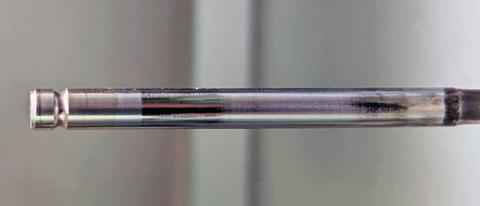
This kind of valve wear is common in street and race engines due to the fact that this part of the valve is one of the least lubricated areas of the whole engine. The situation is worse in a race engine, as higher loads and increased engine speeds can sometimes break the oil film, causing metal-to-metal contact.
High rpm, elevated exhaust temperatures and other operating conditions a race engine experiences can lead to premature valve wear. Here are some typical valve wear problem areas and their root causes.
In the race engine world, valve wear issues may not always be fully understood. Most wear patterns are typical for any kind of engine valve, but due to the higher rpm, high-power density, higher exhaust temperatures, and bigger loads that race valves are subjected to, they can be found more often in race engines than those on the street.
Abnormal wear is only the initial step of what could be a more serious valve failure. That’s why it is so important to check your valves after each race (or several races, depending on the class or engine usage).
The forces acting on valvetrain components, due to camshaft push and inertia forces, are loads transmitted to small contact surfaces. Even though we see a whole valve stem or a whole valve seat, the contact surface between the mating parts is usually a thin line, or a very small area. As a result, the materials must resist compressive stresses.
Below are some typical race engine valve wear examples. Note that different sections of the valve usually show very different wear patterns.
Valve Stem Wear
This is perhaps the most common valve wear seen in any street or pure racing engine. This valve area is one of the less lubricated areas of the whole engine because the valve guide/valve stem clearance is very low, and emissions regulations have led to less oil flowing down the guide to the combustion chamber. This situation is even worse in race valve applications due to the higher loads and increased engine speeds that sometimes break the oil film, allowing direct metal-to-metal contact.
There are several possible root causes for these wear patterns. Among them is valve stem-to-guide clearance that’s too small at assembly. This is usually an exhaust valve issue because they run much hotter than the intake valves, which leads to stem thermal expansion.
The side loads present in a typical pushrod or finger-follower stem valve can create wear, mainly when higher lifts are used that create loads at the tip that push the valve sideways against the guide, creating a localized contact area of higher stress.
Bad valve guide concentricity with the seat insert can also cause wear, as it generates high side loads due to misalignment. At high rpm this misalignment is often the root cause of broken valve stems due to the repeated bending of the head.
Oil starvation due to low oil pressure could create valve stem wear patterns, as could a lack of material compatibility between the valve stem material (or coating) and the valve guide. The scuffing that can result, if not found in time, leads to galling, with guide material adhering to the stem. This could cause a sticking valve inside.
Valve Tip Surface Wear
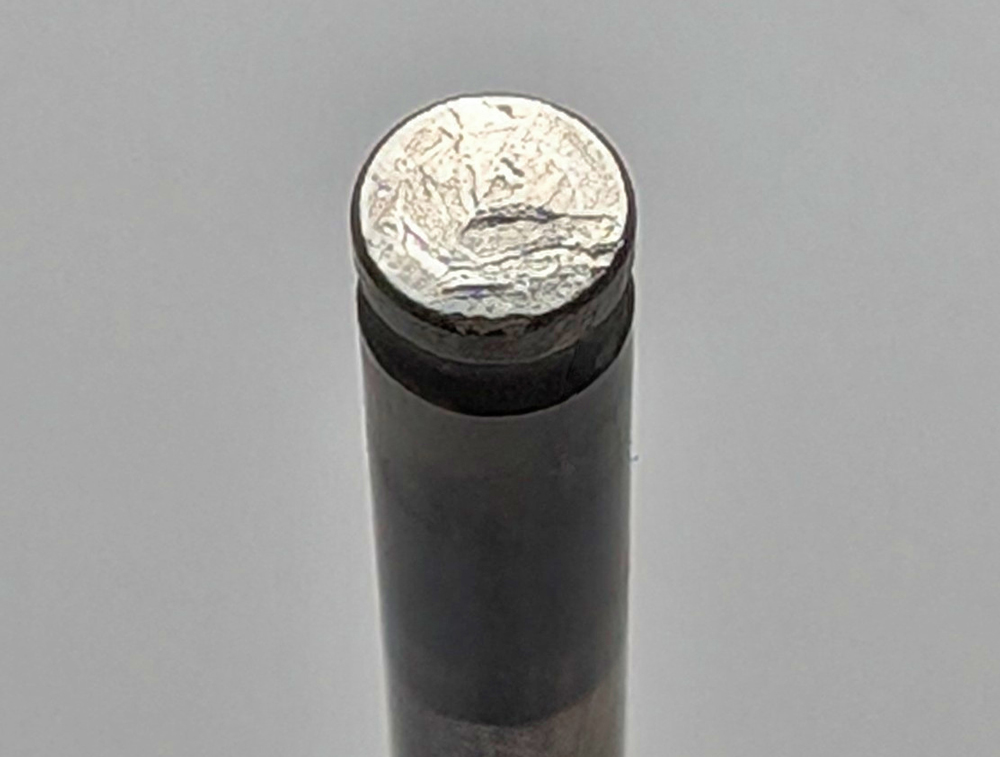
In most of the racing engines we work with, increasing rpm and aggressive camshaft profiles create heavily loaded zones at the valve’s tip surface, with high concentrated contact stresses and impact loads at the opening side of the cam profile. Voids may occur at the surface, and cracks can further propagate in the material. Pitting is also found at the tip surface as a result of the same mechanism.
Sometimes, when the rocker arm radius has been modified or is too small, the contact zone at the tip is so small that the concentrated load raises the working stress beyond the material yield stress, creating a void or a big depression.
Increased engine speeds and aggressive cam profiles create heavy loads on the valve tip surface, which can lead to voids, cracks, and pitting.
If these wear patterns are found, check with the valve supplier for the appropriate engine application regarding engine rpm, valve lift, and tip protection. (In some cases, hardened lash caps are recommended.)
Excessive valve lash is another possible source for “tip hammering” that usually leads to tip wear and deformation.
Bad rocker arm geometry, especially with higher valve lifts, sometimes extends the roller or rocker arm tip path across the valve tip, overpassing the border and pushing against the valve tip chamfer, rounding and deforming it, and creating a lateral load on the stem end.
Also check for weakened or inappropriate valve springs, or engine over-revs due to a too-short final gear ratio for a particular track. With rev limiters so popular in today’s racing engines, if the on-and-off “hammering” is allowed along a long straight, it could damage a valve tip, not to mention the valve seat suffering.
Another pattern of tip wear is usually found when valves don’t rotate. When the rocker arm works on the same back-and-forth path, it creates a visible wear line. This path is not detrimental as long as it stays only “visible,” but it could become a problem if the rubbing action creates wear or a channel on the tip. (A similar “path” is often seen at the lifters when they don’t rotate, very likely causing cam wear.)
Valve Groove Wear
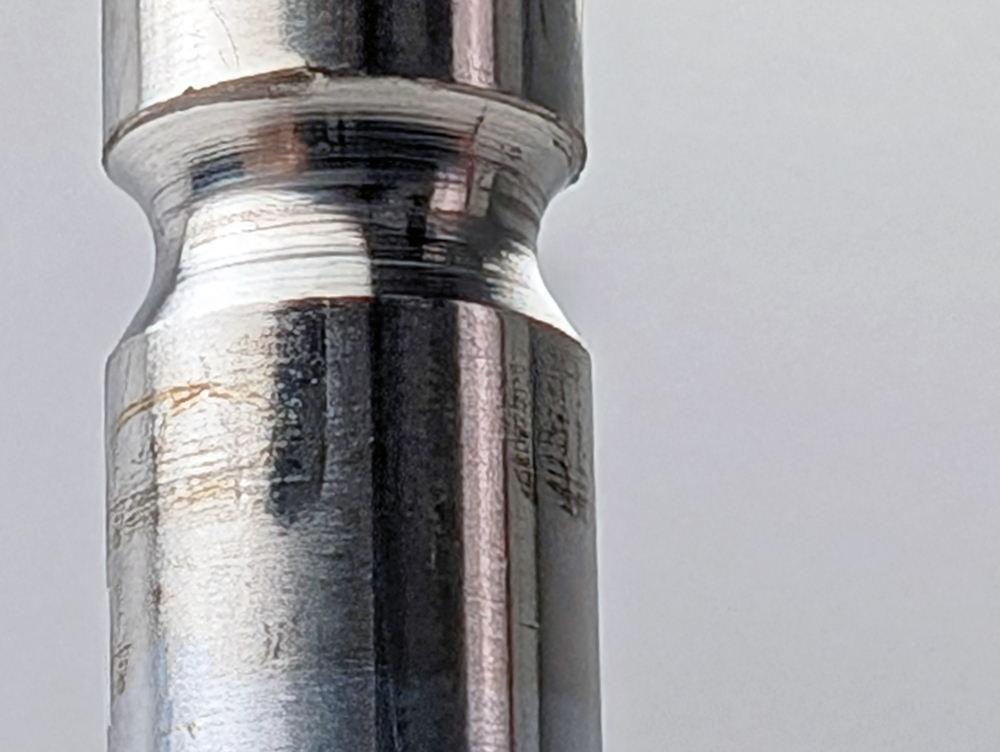
This is usually an overlooked area that did not receive enough attention after cylinder head disassembly. Marks and scratches inside the grooves are indications of locks touching inside the lock’s inside diameter, not matching properly and creating a complex stress condition that would lead to accelerated wear or breakage at the inside diameter of the groove.
Another wear source at the groove area is also found in over-revved engines, because the abnormal and repeated impacts at high rpm produce high frequency vibrations that loosen or break the locks, allowing relative motion, tilting retainers, and eventually lost retention, with the valve falling inside the chamber.
Marks and scratches inside the valve grooves indicate the locks are touching inside the lock’s inside diameter, creating a complex stress condition that would lead to accelerated wear or breakage at the inside diameter of the groove.
Valves with multiple round grooves are allowed to rotate inside the locks to enhance valve rotation. If the valve at the groove area is not hardened enough, or made from a softer material than the locks, the rotation will increase the wear rate inside the grooves.
Valve Seat Surface Wear
The seating surface area is the most complex zone regarding valve and valve seat insert durability. Temperatures here can reach 1,800–1,900 degrees F, mainly due to the popularity of turbo or supercharged applications, aggressive fuels, impact loads at high rpm, and so on.
Things get worse with the trend toward lighter valves in an effort to reduce valvetrain inertia forces as a means to increase rpm and power. The heads of these lighter valves can be more flexible under high-combustion pressures, resulting in a sliding motion at seating.
Combined with valve rotation and the other factors we’ve mentioned, each case must be carefully studied, and all mating parts thoroughly inspected, to understand why unusual or premature wear patterns could have happened.
The most common reason for valve seat wear in racing valves is excessive mechanical loads, meaning seating velocities that are too high due to camshafts that are too aggressive for the springs being used (or weakened springs), engine over-revs during some period of time, or a badly machined camshaft with chatter marks that create high frequency vibrations. In many cases you’ll find a somewhat “rounded” seat surface due to the repeated pounding of the valve against the valve seat insert.
Seat wear can also be due to bad alignment between the guide centerline and valve stem due to a lack of concentricity during head machining and guide installation. This forces the valve to work crossed, increasing the contact loads on a sector of the seat surface. The higher contact stresses, in connection with high exhaust temperatures, weaken the valve material, producing loss of material and the formation of voids. The valve’s rotation quickly advances the wear around the whole seat circumference.
Another cause is a lack of tribologic compatibility between the valve seat and valve seat insert materials for the fuel being used and combustion temperatures. When very high temperatures are present, we need to use valves with higher temperature resistance (like Inconel, or in extreme cases adding PTA Stellite welded to the seats), as in many heavy-duty diesel engines. This material has a higher hardness at high temperatures than regular steels or titanium.
It’s common to see intake valve seat wear when the air filter is not fitted, or fitted improperly, or is too dirty or blocked to function properly, allowing hard particles and fine dust to enter the intake runners and get trapped between the valve and valve seat insert. With some valve rotation, this condition quickly wears out the surface, scratching it and even polishing it, but several thousandths deep.
We at Supertech are ready to help our customers find out what could have gone wrong in any race-oriented engine valve wear issue.
CEO Willy Tagliavini founded Supertech Performance in 1999. Tagliavini earned his mechanical engineering degree from the University of Buenos Aires in Argentina. Supertech specializes in high-performance racing valves and engine components.
Our sources prefer a fixed-mounted seat and accommodate drivers of varying heights with seat inserts. “The tallest driver is essentially sitting in the shell of the seat, the medium-sized driver uses the factory padding, and the smallest driver can use a pour-in insert to make it work,” said OG Racing’s TJ Huston.
Efficiency plays a crucial role in endurance racing formats, and streamlining the driver swap process is one of the easiest ways to improve a team’s competitiveness.
Success in endurance racing requires more than just outright speed. While most motorsports disciplines require effective teamwork on some level, it’s a fundamental component of this format both in the pits and out on the race track. That circumstance brings some interesting strategic elements into the mix.
“In this type of racing, the driver swaps are just as important as tire changes—if not more so,” said TJ Huston of OG Racing in Sterling, Virginia. “That’s because there is so much opportunity to lose time during a driver change. It’s very easy for folks to get flustered, and then suddenly there’s too many people doing too many things, and confusion sets in. This is an aspect of endurance racing where a team can win or lose a race.”
As Zachary Schucker of HMS Motorsport in Mooresville, North Carolina, pointed out, even minor deficiencies here can have a significant effect on the end result. “With some series, you might do more than a dozen driver changes throughout the duration of a race. A small issue might cost you 10 or 20 seconds, but that starts to add up very quickly. Even if the race you’re competing in has minimum pit stop times, the quicker you can do your driver change, the quicker you can have someone available to look over the car, make a repair, do a tire swap, and things like that.”
He also noted that problems can arise while doing driver changes during night stints due to limited visibility, so he recommends teams keep a magnetically mounted light at the ready.
“If you’re racing with a car that has a metal roof, that can be really handy. It’s something you can quickly put there to make it easier to see what you’re doing without it occupying your hands. Headlamps can be useful for that, too, but if you’re going over the wall during a hot stop and you have to have a helmet on, that’s not going to work.”
While it can be tempting to use locking connectors for communications and other accessories, Huston said that using a standard IMSA or NASCAR-style connector is a better option.
Tying surgical tubing to the racing harnesses helps keep them properly situated during a driver change, TJ Huston of OG Racing said. Each goes its separate way upon disconnect, and “the team knows exactly where each belt is when they go to connect them up again for the next driver.”
“There’s lot of aviation stuff out there, and some of it locks together, but that type of design just ends up being a pain to deal with during the race,” he explained. “The IMSA connector is basically considered the industry standard, and the NASCAR-style connector also works really well. The main thing is just making sure that everyone on the team is using the same type. I’ve seen plenty of situations where someone hops in the car and the team suddenly discovers that he doesn’t have the right connector. The next thing you know they’re hanging a dry erase board out over the pit to try to communicate.”
Huston said that since a driver’s movement in the car is often limited by safety equipment, most of the work of disconnecting various items should be done by a driver valet. “As soon as the car is at a stop, grab the cam lock and pop the harnesses. Ideally, the driver isn’t going to be doing much from there—they should just be chilling out while the driver valet is handling everything else. If you have a driver and a driver valet both trying to manipulate things at the same time, it’s really easy to cause confusion.”
He also advised using surgical tubing to keep the racing harnesses properly situated after they’ve been disconnected. “Surgical tubing is your best friend for driver changes in an endurance car,” Huston explained. “A lot of endurance-style harnesses have loops on them; you put the harnesses on, tighten them down, and then you have someone take that surgical tubing and tie it to those loops and then off to different parts of the roll cage or the seat. That way the moment the driver hits that cam lock to disconnect the harnesses, they all go their own separate ways without the driver having to do anything. Then the team knows exactly where each belt is when they go to connect them up again for the next driver.”
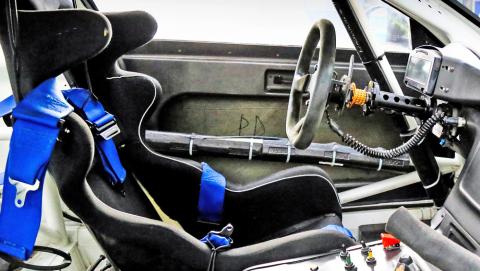
Although FIA- and SFI-approved seat sliders are available, both Schucker and Huston told us that they prefer to address variations in driver heights by using inserts with a fixed-mounted seat. “For me, it’s a safety thing,” said Schucker. “Sliders are now much stronger than they used to be, but it’s just another potential failure point.”
To accommodate all the drivers on a team with a fixed seat mount, Huston said that the best approach is to mount the seat in the ideal position for the medium-sized person in the driver lineup and go from there. “In most cases the tallest driver is essentially sitting in the shell of the seat, the medium-sized driver uses the factory padding, and the smallest driver can use a pour-in insert to make it work.”
He also said that using a high-quality, quick-release steering wheel and a window net with a good latch design will make it easier to perform quick driver swaps, but practicing the process is ultimately the most important part. “You might feel kind of silly working on driver changes in the paddock all night, but I promise you that it’s going to make a difference on race day.”
 MEMBERSHIP LOGIN




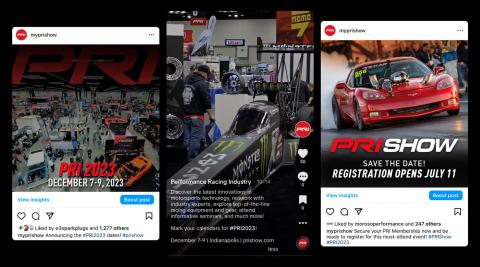
 Once you understand your audience and choose the appropriate platforms, then you must decide which types of content to create and build out a calendar. This can include short-form video, long-form video, imagery, graphics, and more. Then set a posting frequency, which can be daily, a certain number of posts per week, or a monthly cadence. Consistency is key when it comes to social media, so schedule accordingly. Furthermore, different platforms may require different types of content and posting frequencies.