Specialty Products Company (SPC) of Longmont, Colorado, has announced the acquisition of Peterson Fluid Systems’ assets and team based in Henderson, Colorado. As the designer and manufacturer of performance oiling and fluid system components, the Peterson brand offers oil pumps, tanks, filters, and associated plumbing along with fittings and accessories for circle track, drag, rally, and related motorsports applications.
“Becoming a part of Specialty Products is a perfect fit for Peterson’s family of products, team, and customers, allowing the team to expand R&D and manufacturing capabilities,” Peterson Fluid Systems President Cathy Morten said.
SPC is the designer and manufacturer of wheel alignment products and supplies both traditional and performance distributors with a broad range of products for passenger car, light truck, heavy-duty, off-road, and racing.
For many, it’s a rite of passage; for others it’s a bucket-list item.
Going on 33 years, the annual PRI Trade Show has evolved from modest beginnings—Louisville, KY: 169 exhibitors, 238 total booths—to become the global epicenter of new racing technology, business, education, and solutions. Upwards of 1,100 motorsports parts manufacturers and service providers now regularly occupy the Indiana Convention Center and Lucas Oil Stadium for three days of nonstop activity that includes product introductions, equipment demonstrations, industry announcements, and much more.
Racing and performance professionals have made PRI a can’t-miss event. And the team here works our tails off year-round to produce a Show that delivers great value, in an environment where it doesn’t matter the size or nature of your operation—from a two-person engine shop to multi-car teams at the highest levels of competition, all can benefit from this vibrant, innovative marketplace.
Which brings us to PRI 2020. Set for December 10–12, this year’s edition is going to look a little different. How different? Those details are still being hammered out. But I can tell you that our Trade Show department, led by Director Karin Davidson, is working closely with industry experts and health officials to develop a plan that’ll allow us to host the safest, most productive event possible.
Our goal has always been to help manufacturers showcase new and race-winning products, to connect businesses with one another, and to facilitate the exchange of ideas and expertise. As the world—and this industry—adjusts to the COVID-19 pandemic, our mission won’t change; we’ll just have to take certain precautions to minimize the risks while still allowing exhibitors and buyers to conduct business.
Speaking of which, we’re happy to report that PRI booth reservations have remained strong right up through our initial floor plan plotting. In fact, by the time you read this you’ll be able to see an early layout of this year’s Show. You will notice, too, that much of the Show floor looks very much the same as last year’s, and the years before that.
You’ll see over 1,000 exhibitors—including dozens of first-timers—who have already committed to display; you’ll see our trailer exhibits on the field at Lucas Oil Stadium, and our Featured Products Showcase just off the South endzone; and you’ll see our world-famous Machinery Row, right in its familiar location along the west end of the Convention Center’s Yellow Hall. For more on what’s in store for the Row, have a look at our special preview article, product spotlight, and exhibitor listing beginning on page 12 of this issue.
In the weeks and months ahead we’ll be continuing to provide the latest PRI Show information and updates through our digital channels, which include regular email announcements, a weekly eNewsletter, our social media pages, and a totally revamped website at performanceracing.com. Clean, easy to navigate, and highly intuitive, the new site came online just last month. We hope you find it user-friendly, as it will become another tool to help keep you educated and informed on the Show, as well as what’s happening throughout the motorsports industry.
Until next time…. Stay tuned, stay safe, and stay positive. And as always, don’t hesitate to reach out if you have any questions, concerns, or feedback. That’s why we’re here.
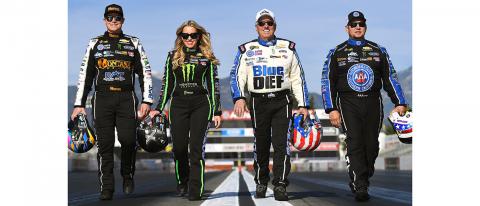
John Force Racing will not take part in the remainder of the NHRA Mello Yello Drag Racing Series' 2020 season, but will return to full-time competition next year, according to a statement by John Force.
Sixteen-time Funny Car world champion Force had previously sidelined his four-car team for the restart of the Mello Yello Drag Racing Series season during the coronavirus pandemic.
Part of Force's statement is below. For the complete statement, visit here.
“In our contracts with sponsors, we have guarantees. They get social media, certain number of races, certain number of race days, activation at races and other commitments. No matter how I looked at it I couldn’t deliver on those commitments. It just wasn’t fair to them,” Force said. “The impact of not being able to deliver on these commitments makes sitting out the rest of the 2020 season the right thing to do. No matter how I looked at it, no matter how much I personally invested, I couldn’t make it.
“...I’m going to prepare to come back next year stronger than ever... We will continue to support all our sponsors, doing their promotions as planned and stay relevant on social media for the fans; we are going to continue to build race cars, as we always have, build engines, mount bodies, parts and do everything we can because we are open for business in Indy and California,” concluded Force.
After more than 15 years of outfitting race teams with high-performance parts, Don Schumacher Motorsports Precision Manufacturing (DSM) has announced it is expanding into the automotive, defense, equipment/manufacturing, and aerospace industries.
DSM was founded in 2005 as a specialty parts manufacturer and R&D center for Don Schumacher Racing’s (DSR) fleet of championship-winning NHRA race cars, and has since grown to become one of the leading parts suppliers for race teams competing across multiple motorsports industries. Among its most high-profile projects are the DSM engine block and cylinder head assembly, utilized across the DSR teams, and a collaboration with Mopar, SRT, and BES Racing Engines to offer a variety of parts and components for the Mopar Dodge Challenger Drag Pak race car.
DSM is also heavily involved in the NHRA’s Factory Stock Showdown Series, offering on-site parts support to Drag Pak owners, and was instrumental in Leah Pruett’s 2018 Factory Stock Showdown Series title campaign.
“We originally launched DSM as the manufacturing arm of DSR so we could guarantee quality-control by producing key engine components in-house. Other teams took notice and before long, we were producing parts for them, too. We’re thrilled to now be able to offer that same level of high-precision manufacturing and customer service to organizations that operate outside of the motorsports realm,” DSM Vice President Chad Osier said.
DSM is ISO 9001: 2015, ITAR, NISPOM Certified.
RFQs and project requests should be sent to RFQ@ds-mfg.com. For more information, visit dsmpm.com.
Centerforce, the manufacturer of performance clutches and flywheels for classic and late model cars and trucks, has announced Harold Menke as its new director of sales, bringing nearly three decades of sales experience to the Centerforce sales department.
Menke will work to expand Centerforce’s sales, drawing upon his expertise and strong relationships in the automotive aftermarket. Having worked for various auto parts manufacturers, Menke will utilize his experience to develop key sales strategies and explore new markets as well as strengthen current ones.
“We are really thrilled to bring Harold on board,” said Centerforce General Manager Bryan Wilson. “We believe he has the skills and experience we need to improve communication with our customers while also finding new and exciting opportunities for Centerforce Clutches in the market.”
Menke brings over 29 years of experience in the automotive aftermarket, specializing in sales through traditional warehouse distributors, retail chains, specialty accounts, performance specialists, and export customers. Menke holds a BA in International Marketing from Eastern Michigan University and joins Centerforce following 10 years at brake component manufacturer Centric Parts.
The U.S. Motorsports Association (USMA) announced the official formation of the Drag Racing Leadership Team (DRLT), a group of drag strip owners and leaders across the US committed to working on current and future issues related to the sport.
The team was initially brought together to focus on the COVID-19 crisis and the restart of racing, which remains a primary objective of the DRLT. Bill Bader Jr. of Summit Motorsports Park has been named the DRLT Chairman and Steve Earwood of Rockingham Dragway will serve as DRLT Co-Chairman.
“The Drag Racing Leadership Team brings together drag racing’s top talent, experience, and most passionate advocates. Getting together is crucial as we are able to inspire, network and learn from each other,” said Bill Bader Jr., President of Summit Motorsports Park and Chairman of the DRLT. “Collectively, we can take unified action in the best interest of our sport and our racing facilities.”
The DRLT, which currently consists of 11 tracks, also announced plans to bring the group to 25 member facilities. The group will meet regularly via conference calls, with an in-person meeting set to be determined at a later date.
Members of the DRLT Include:
· Summit Motorsports Park, Bill Bader Jr., Chairman
· Rockingham Dragway, Steve Earwood, Co-Chairman
· Houston Raceway, Seth Angel, Founding Member
· Bandimere Speedway, John Bandimere III, Founding Member
· Gateway Motorsports Park, Chris Blair, Founding Member
· Famoso Raceway, Blake Bowser, Founding Member
· Bristol Motor Speedway, Brandon Cross, Founding Member
· Firebird Raceway, Scott/Brad New, Founding Members
· Virginia Motorsports Park, Tommy Franklin, Founding Member
· US 131 Motorsports Park, Jason Peterson, Founding Member
· Tulsa Raceway Park, Keith Haney/Todd Martin, Founding Members
“The ONE and Only” event at Knoxville Raceway, set for Aug. 13-15 and headlined by the World of Outlaws NOS Energy Drink Sprint Car Series, will feature a unique format and more than $400,000 in prize winnings.
The format places importance on Thursday’s and Friday’s $10,000-to-win events with points accumulated from results throughout the two nights determining drivers’ starting positions for Saturday’s $50,000-to-win Brownells Capitani Classic presented by Great Southern Bank.
“This event is like none other and it’s the richest three-day race this season, so since it’s ‘The ONE and Only’ it calls for a special format,” World of Outlaws CEO Brian Carter said. “This was put together by our World of Outlaws officials with input from our teams, as well. It’s truly everybody coming together to make this week spectacular for the competitors and fans alike.”
Remaining ticket packages for the front and back grandstands are going quick and can be purchased here. All three nights will also be featured live on DIRTVision for those with a Fast Pass Subscrption.
Industry insiders share actionable strategies to help retailers and racers lower delivery costs without sacrificing efficiency, security, or service.
Ask different players in the motorsports arena about shipping concerns, and you’ll hear different takes on what’s most important for each. However, the common thread, not surprisingly, is cost.
“Just two years ago, you wanted to be competitive with customer service, inventory, and price. You didn’t really think about shipping,” said Pancho Lawler of Pancho’s Racing Products, Hanover, Pennsylvania. “Over the past year, the cost of shipping has become just as important as the price and availability of the parts. It’s just another part of the puzzle that you have to watch.”
Indeed, both UPS and FedEx raised package rates by nearly 5% for 2020, and increased special handling fees for certain packaging as well. While numerous discount programs still apply, including a UPS program included with membership in SEMA, it’s still a hefty additional cost to either absorb or mitigate.
Speaking with retail and wholesale operations, as well as racers and shippers, reveals numerous actionable strategies for markedly reducing shipping costs while ensuring customer satisfaction and loyalty.
Buying Direct: Not Necessarily the Best Deal
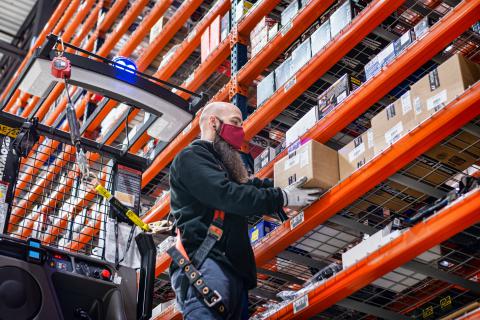
For retailers, the actual location of where their inventory is ordered from can have a dramatic effect on shipping costs, according to Daryl Sampson of Turn 14 Distribution, Horsham, Pennsylvania, with additional warehouse operations in Nevada and Texas. “Among the best ways to reduce shipping costs is to buy through a wholesale distributor rather than directly through a manufacturer,” he explained. “Distributors ship in much higher volumes. Freight rates that we negotiate with carriers will definitely be cheaper than for most manufacturers.”
Sampson explained that some smaller shops are instead ordering direct in the belief that it automatically means lower cost. “We call that ‘direct-itis’ in our industry,” he said. “The shop owner feels that going direct gives the best possible price and service, but that is not always true. We show them that we can offer the items for less. They can buy more and save on shipping.”
For customers who need something quickly that is not in stock, Turn 14 offers the option to drop-ship, but then the customer pays for shipping. “Some manufacturers will allow us to ship on our account numbers, which would be typically cheaper than drop-shipping to a customer,” he added.
CHANGE TIME, LOCATION TO SAVE
Some of the easiest ways to reduce shipping costs are also everyday strategies for making shipping more reliable, explained Gordon Steffens of Performance Plus Global Logistics in St. Charles, Missouri. The company ships engines for numerous major builders through its Enginesovernight.com division.
“We deal with all size accounts and customers,” Steffens said. “We work with Cup and NHRA teams, road racers, spec Miata racers, weekend racers—the entire gamut.”
His first piece of advice is to choose a carrier carefully. A carrier suited for bulk items like roofing shingles is not the best choice to handle high-value engines or other items.
“We’ve developed a network of carriers that support our performance customers and have created a best-practices program for that,” he said.
Not surprisingly, one of the easiest ways to reduce shipping costs is to avoid expedited shipments whenever possible. “We always ask customers if they need an item right away,” said Steffens, explaining that two-day shipping added 40% to the cost, while overnight service doubles it. “We can put it on a palette with an A carrier and get it there in four days, or maybe three days with an LTL (less-than-load) carrier.”
One of the best ways to reduce shipping costs is to purchase through a warehouse distributor. “Distributors ship in much higher volumes. Freight rates that we negotiate will definitely be cheaper than for most manufacturers,” one WD told us. Photo courtesy of Speedway Motors.
Location matters—a lot. Steffens pointed out that race team operations are often headquartered on the same property as the team owner’s home. The US Postal Service and other carriers and freight companies consider such a location residential, and shipping to it (or from it) can raise rates by some 25%.
As an alternative, Steffens suggested instead shipping to a verified business address, or a terminal. In the latter case, you will have to retrieve the cargo. When shipping an engine, having a forklift or a truck with a lift gate available can also eliminate an extra lift gate service charge from freight carriers.
Thinking Inside, Outside the Box
Distributors and shippers have long been adapting to packaging challenges to minimize their own costs and maximize customer value. Kansas City, Missouri-based Sterling Bearing, a member of the Engine Parts Group, applies a number of packaging measures that are common among the group’s members. The parent company distributes brand-name internal engine parts and markets its own parts under the Engine Pro name, selling exclusively to engine builders, machine shops and jobbers.
Scribner Plastics draws on four decades of development experience in the construction of its shipping containers—an evolution heavily influenced by the Rancho Cordova, California-based company’s own in-house racing team.
“Careful packaging techniques, prepaid master engine kits, a freight policy, core returns via UPS or via outside salesmen, and double-checking shipments to ensure accuracy are applicable to all of our Engine Pro distributors,” said Steve Rich of Sterling Bearing.
Rich shared the following processes that he believed could help others: “We have a custom box made to ship small bulk promotional orders of paint or oil. One custom box holds two cases of oil or five cases of paint. We offer a special shipping discount on these combo orders.”
To address the fees added by UPS and FedEx for non-corrugated cardboard packaging (and “cylindrical” items), Sterling created a custom box to ship its five-gallon pail of EPG honing oil and sell it to customers for $5.99. “It protects the oil and saves our customers $9,” said Rich.
Consolidating packages for customers who order throughout the day, Rich explained, “Our regular customers’ orders are held until late in the afternoon in an effort to combine orders into one package. When we finalize an order at the UPS station, we check for open orders. Our employees will occasionally find two boxes on the conveyor belt for the same customer, break them down, and re-box into a single package to save the customer money.”
Sterling’s Master Kit boxes are designed with a cut-down crease. When packaging parts, the company packs the box tightly, using as little packing as possible, and then cuts the box down to size. “This is time consuming, but it saves the customer money on dimensional weight, and it protects the parts better than adding extra packing,” said Rich. “When we have to add packing, we use Kraft paper. It takes a little longer than using peanuts but saves a big mess at the customer’s business.”
MOVING THE HEAVY STUFF FOR LESS
Shipping high-value engines or engine parts requires appropriate packaging. Steffens cited Performance Plus Global Logistics’ work with a composite expert to make custom, reusable crates for Steve Dinan, who is well-known for high-performance Audi, BMW and Mercedes-Benz vehicles, most recently through his CARBAHN Autoworks.
Steffens also suggested using specialty reusable engine crates from Scribner Plastics. Molded from durable polyethylene, they can be more cost-effective versus building wood crates.
“Our containers see money savings through re-usage,” said Chris Scribner of Scribner Plastics, Rancho Cordova, California. “Customers have seen dozens of shipping cycles with them.”
Scribner said the company draws on 40 years of development experience and evolution influenced by its own in-house racing team. And so, the company knows the value of avoiding shipping damage. Their engine containers, for example, feature forklift and pallet jack slots for easier handling, and the secure nut-and-bolt enclosure ensures safe handling.
Critically, proper packaging for high-value items is essential for insurance purposes. “We won’t insure it if it’s not crated,” said Steffens. He explained that Performance Plus offers an affordable All-Risk Insurance program for expensive racing items, such as a $40,000 race engine. He advised against relying on standard carrier insurance, which might reimburse just 10 cents per pound of a damaged item.
WATCH YOUR WEIGHT
When shipping an engine or other heavy item, a quick cost savings can come from simply stating its weight accurately, Steffens explained. “A lot of businesses don’t have scales, and so they’ll put down an approximate weight for an engine. That’s a bad idea. Carriers have scales at all terminals and will charge an extra $50–$100 for a re-weigh.”
Significantly understating weight is a red flag for a re-weigh that he has seen often, such as indicating 300 pounds for a 450- to 500-pound iron small block Chevy.
Businesses can order the same kinds of parts from multiple manufacturers through a WD, thereby consolidating shipping charges. “And you can negotiate a shipping rate with your sales rep, because you’re buying in bulk,” our source from Turn 14 Distribution noted.
“We have matrixes showing weights for common engines—Ford, Chevy, Mopar, small and big block, iron and aluminum,” he said. “When we see it come through, we’ll often suggest a different weight.”
Another red flag is a “00” number that states an engine weight as an even 400 or 500 pounds, for example. That will trigger a re-weigh, because it suggests the customer did not know the true weight. Steffens noted using a number like 418 or 516 cuts re-weighs by 70%.
BUY MORE THINGS, TRY NEW THINGS
More cost savings can be found in expanding your list of suppliers, Sampson of Turn 14 told us. “Some businesses are ordering a particular part from only one manufacturer,” he said. “From a distributor, you could buy the same kinds of parts from, say, five different manufacturers. You consolidate to one shipping charge instead of five different charges, and you can negotiate a shipping rate with your sales rep, because you’re buying in bulk.”
Another savings on shipping comes from ordering high-use items for stock, thereby paying for shipping less often.
Sampson cautioned that trying to negotiate lower rates with shippers does not always bear fruit. “Negotiation with a carrier is a protracted experience,” he explained. “You can’t just call FedEx and ask them to reduce cost by 5%. When we do negotiations, that’s a long-term thing we take on with a carrier.”
Look for Pre-Paid Shipping
Sterling Bearing (and other Engine Parts Group members) uses pre-paid shipping to soften the impact of cost on customers. For example, Master Kits are available with prepaid shipping (allowing for a couple of deletions), including drop ships, transfers, and whatever it takes to fill the kit (within reason). Freight policy is effective for volume customers, where the company offers prepaid shipping on volume orders by customer with a range between $100–$300.
The company includes a prepaid shipping tag with remanufactured cylinder heads and crankshafts, which require a core return. “Even if the part is drop-shipped from the supplier directly to the customer, we email a pre-paid return tag,” said Rich.
Finally, Rich advised not sacrificing quality control in the quest for shipping savings. “Shipping mistakes are costly,” he said. “At least two people are involved in every order we pull and pack. Another person checks every packing slip prior to packing. The employee who packs the box is ultimately responsible and includes his name on the ‘packed by’ sticker placed in every shipment. We have a separate phone number and email address for customers to record or email comments about their shipments.”
Free Shipping: Is It A Must?
A consumer mindset accustomed to getting “free shipping” from Amazon and other online B2C retailers has helped bring similar expectations to the B2B realm. This is, of course, not a cost-reduction measure so much as a customer attraction and loyalty strategy.
On the inbound distributor’s side, Turn 14 Distribution does what it can to reduce or eliminate shipping costs, which in turn keeps prices down. “If we’re dealing with a partner with free freight for a certain volume of orders, we will place orders for that number to get the free freight,” Sampson said.
He added that Turn 14 customers can take advantage of free shipping in numerous instances. “For a lot of brands we distribute, we offer free shipping all year,” Sampson said. “That’s built in to the cost of doing business with those particular lines. Look at items that offer free shipping. Try something that you haven’t used before.”
From a retailer’s perspective, “free” is definitely the buzzword for shipping. Lawler said customers now expect this perk. “We saw a spike when we offered free shipping with $99-and-over orders,” he said. “We did some 20% off promos that worked, but free shipping worked better. It is more easily perceived and understood by customers. It is one of those competitive things that you have to do right now.”
Lawler acknowledged that “free” can come at a cost to the retailer. “Whether or not it hurts the bottom line depends on how you look at it,” he said. “If you make the sale, there’s more chance of having contact with that customer in the future.”
He approaches shipping cost reduction from several angles, including using drop-shipping from the manufacturer or warehouse when it makes the most sense for the customer. “Even though I’m a brick-and-mortar store, if I am shipping it from a manufacturer or a warehouse to my own business, I might as well ship it to the customer so I don’t charge myself,” he said.
When shipping from the store, he uses the US Postal Service for its $5.95 box rate whenever possible. “If you go to FedEx or UPS, it might be $12–$15. Charging that difference might mean the customer doesn’t return.”
Pancho’s added a personal touch for local customers. “Pretty much within an hour of here, we’ll deliver for free,” Lawler said. “That also gives me a chance to meet and talk to the customer to find out what their needs are.”
Meanwhile, Lawler is also seeking ways to lower shipping costs that he pays to manufacturers. “If I’m buying $30,000 a year from a manufacturer, I would ask, ‘Why aren’t you shipping for free?’ There are plenty of manufacturers out there. You’ll see retailers shopping around just like consumers do.”
A useful benefit to SEMA membership is a UPS discount shipping program. The savings can be substantial, including at least 75% for heavyweight freight shipments (over 150 pounds) with UPS LTL Freight; 50% off Domestic Next Day/Deferred; 30% off UPS Ground (commercial or residential); and 10% off UPS Next Day Air Early.
When you call to enroll (800-636-2377) or self-enroll online (sema.org/ups), UPS will look at what discounts you might already have applied to your account so you can see which offers the better deal.
In addition, exports get a 50% discount, and imports receive a 40% cost reduction. SEMA members using the program can also earn free UPS Smart Pickup service for a year, as well as a 17% discount on insurance for small package shipments through UPS Capital Protection. —Jim Koscs
PACKAGING MAKES ALL THE DIFFERENCE
From small parts to engines, a big bang-for-the buck in shipping cost reduction may be found in the packaging. Of course, proper packaging is also critical for protecting cargo and preventing unhappy customers.
Both UPS and FedEx raised their additional handling charges for weight, size, and packaging this year, so keep these figures in mind:
Domestic packages with an actual weight greater than 50 pounds will have $24 added to the cost. (The threshold was 70 pounds last year.)
A $15 charge is applied if the package’s longest side exceeds 48 inches, or second longest side is over 30 inches.
You’ll pay more to ship packages that are not contained by corrugated cardboard: $13 for FedEx and $14.25 for UPS.
Both will also charge extra for “cylindrical-like” items, which includes buckets, cans, and barrels, among others.
You’ll also be charged extra for packages routed through a carrier’s irregular sorting process to avoid getting tangled in the company’s machinery.
See the UPS and FedEx websites or talk to your reps for more details.
Jefferson County Public Health has approved Bandimere Speedway's plan to resume racing with specific guidelines in place, including wearing face coverings and social distancing.
“Always follow all local and state requirements regarding use of masks and social distancing,” officials said in a track statement. “We will be watched closely to make sure we are following all state and local Public Health Orders, so we need your help so we can continue racing this season. If you leave your pit area, or have someone who is not in your immediate family, have your mask on.”
Track officials are also encouraging teams to purchase tech cards and crew passes online to reduce touchpoints. Pits will require 20 feet of space, and will be limited to racers and crew members only.
Bandimere Speedway's upcoming schedule is below.
Aug. 29 - Swap Meets/Jr. Drags
Sept. 4-6 - Bracketnationals
Sept. 11-12 - Main Event 2020
Sept. 18 - Grudge Night
Sept. 19 - Footbrake Nationals
With live racing relegated to the sidelines for much of spring, interest in eSports—and especially iRacing—skyrocketed. Here, the company’s executive VP/executive producer explains how they dealt with an influx of both users and viewers, how they decide which race tracks to feature on the platform, and what they expect once competitive motorsports returns to normal.
Few companies could imagine a scenario where, almost instantly, their product is catapulted into the limelight and exposed to a worldwide audience. It’s almost the stuff of a Hollywood movie, only in this case it actually happened. Earlier this year, with the arrival of the COVID-19 crisis and virtually all forms of motorsports halted, that was the situation for iRacing. Their platform of digital motorsports simulation was viewed by millions on network television, while tens of thousands of new customers flocked to the platform to enjoy the sport while living under stay-at-home orders.
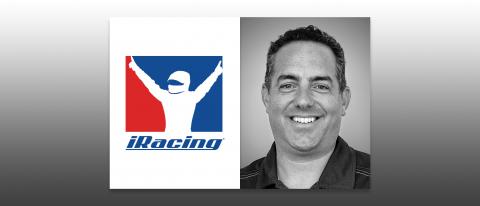
Steve Myers spent the past 20 years preparing for such a moment. The executive vice president and executive producer of iRacing has devoted his professional life to the development and growth of eSports competition.
iRacing, headquartered in Chelmsford, Massachusetts, is the brainchild of former Papyrus Racing Games founder Dave Kaemmer and John Henry, principal owner of the Boston Red Sox and Roush Fenway Racing. Papyrus was the predecessor of iRacing, which was formed in 2004. Myers was the first employee of the fledgling company, and he has been hands-on with every aspect of the development of the company’s digital product.
The events of the past few months were certainly a most unique series of circumstances, and an experience that will surely shape the future of eSports—and iRacing—for years to come. In the midst of the experience, Myers took the time to talk with PRI Magazine.
PRI: iRacing was in a unique position with the arrival of the COVID-19 crisis. Was it a challenge to ramp up and seize the opportunity of the moment?
Myers: To be honest, it wasn’t, because we were prepared. We started the company in 2004, and the service has been operating since 2008, and we’ve been doing eSports broadcasts for over a decade with NASCAR. From that perspective, it wasn’t difficult because we already had the relationships, we already had the content, and a lot of the drivers were already competing on the service. So the real difficulty was in working out the logistics and technical aspects of getting our broadcast room working with the FOX broadcast room.
PRI: Tell us about iRacing. How would you describe it to someone who is new to eSports?
Myers: Our goal was to create the most authentic racing simulation that a person could buy and use in their home. On top of that, we wanted to create the virtual sport of SIM racing. Now that word is called “eSports.” We had this vision in 2004 of what this would be, and in a lot of ways the world kind of shifted to where we were. You go to our website at iracing.com and sign up for a membership, download the software, and within 20 minutes you are on the computer racing people from 160 countries around the world. It’s a 24-7, 365-days-a-year environment. Racing is going on 24 hours a day, and there are usually between 8,000 and 15,000 people online at any given time who are racing.
PRI: We’ve seen some of the sophisticated rigs used in iRacing, but is that level of equipment necessary? Can a person be competitive without it?
Myers: Yes. It’s funny, Timmy Hill was one of the breakout stars of the recent iRacing Pro Invitational, and Timmy just has a 12-year-old (steering) wheel that’s strapped to his desk with a single monitor. You absolutely do not need a rig to enjoy iRacing. Most people have a computer in their home already that can run the software. The biggest expense is spending around $300 on a wheel-and-pedal set, which is pretty straightforward.
iRacing’s Steve Myers told us it typically takes four months to add a new track to the platform, a process that involves laser scanning the surface and taking “thousands of photos.” Dirt facilities also require data on how much heat and rubber go into the tracks.
PRI: As we’ve seen all along in racing for the past hundred years, competition obviously makes things more intense. But I would think one of the joys iRacing tries to promote is the simple fun of competing with people in an enjoyable environment.
Myers: You know, one of the interesting things that’s come from professional racers when they tried iRacing for the first time was that they felt more nervous than they felt in their actual race car. You’re doing something outside your comfort zone. iRacing kind of takes away some of the senses these guys have always used while driving their race car, and it’s made it fun to watch them adapt and get that competitive spirit. Toward the end, they were taking it pretty seriously and really competing because they were taking pride in looking at their results every week.
PRI: The gaming platform was once a matter of a $50 software purchase. We’ve seen the platform shift to a subscription model, which is how iRacing operates. What drove the shift to the new model?
Myers: As much as motorsports is a popular form of entertainment, it’s still in some sense a niche market in the video game world. We had to create a premium product that maybe costs a little bit more than a traditional product—but the subscription model allows us to continue to develop our products and to provide new content and features in a way that no other business has ever done. We don’t have a publisher; we’re self-financed and we do all of this ourselves. Once you buy a piece of content, as long as you have an active membership it’s always there. For instance, with some of these cars we’ve made five or six rounds of improvement to the product from the time it was originally released. So yes, it’s a different model than the traditional boxed-product model, but over an extended period of time the costs will start to even out. And you’re not forced to buy a new product that’s been developed. We’ve tried to make it so that everyone has something they can do, and it’s not a ridiculous amount of money they have to spend to do it.
PRI: Give us an idea of iRacing as a company. What staff does it take to do the development, the administration, the maintenance, all of those things?
Myers: We’ve just reached about 60 employees. It’s funny, the last six or seven weeks our business has exploded to the point where we had to hire customer service people, another finance person, another HR person, some tech support people. We’ve been so busy and our service has so dramatically exploded over these last six weeks that we needed help. From a technical side, there are probably 25 to 30 technical people doing the website and the SIM software. There are probably another five people dealing with the operations, keeping our websites up and database services. And the rest are production staff and marketing people.
Steve Myers of iRacing noted that despite motorsports’ popularity, “it’s still in some sense a niche market in the video game world. We had to create a premium product that maybe costs a little bit more than a traditional product....”
PRI: From the business side, how do you determine which race tracks to feature on your platform?
Myers: It’s a combination of things. We look at what is popular, and what our customers want. That’s kind of the beauty of having a membership-based product; our customers vote with their dollars and give us feedback. So we try to listen, first and foremost. We also have larger business objectives; dirt racing, for instance. That project started with us designing a track surface model, where we’re tracking how much heat and rubber is going into a track during a race so that the lines of the track change based on what is changing in the track. That was the first step in being able to create dirt tracks. That allowed us to do the World of Outlaws stuff and the Lucas Oil Off Road stuff.
Sometimes we have a vision for future stuff we want to develop, and we want it to benefit many areas of our service. We try to look at projects that allow us to make a bigger picture without over-saturating the racing in a particular category. We want to add content within existing series, but it’s also the “wow” factor. What’s the greatest new thing that’s coming out? That’s usually what our customers want.
PRI: What’s the timeframe typically needed to develop a new facility and bring it online?
Myers: Once we sign an agreement with a track or a car manufacturer, we go on-site and laser scan the track and take thousands and thousands of photographs. That takes anywhere from a couple of days to two weeks. Once we collect that data it takes us roughly four months from start to finish to get the track developed and built. Something very large, such as Nürburgring, will take longer because of the sheer size. And it’s the same with a car; it takes about four months to develop the model and the sound and physics of that particular car. The artwork is what takes the longest to create in any of these projects.
PRI: One of the elements I’m guessing you need to navigate is the use of sponsor and team logos and designs. What is involved in working with trademarked images and logos?
Myers: The good news is that we’re not recreating real-world series, because we treat iRacing essentially as its own sanctioning body. We are the sanctioning body for the digital SIM racing in our service. We develop a relationship and a partnership with the series that we create virtual eSports series within our world. So we’re not typically worried about going and getting Denny Hamlin’s FedEx Toyota paint scheme licensed to put into our product, for example. If we do that, it’s usually as a thank-you and we’re not paying for it as part of a business relationship. Particularly on the car side of things. If there has been a team that has been very helpful to us in collecting data needed to build the cars, usually as a thank-you we will put their paint scheme into our paint kit. But for the most part, once we’ve done an agreement with the track or a manufacturer we’re just worried about the trademark and the brand associated with that property.
After tracks were shuttered in mid-March, iRacing saw a steep increase not only in users, but also among fans, including for its NASCAR eSports series. “The viewers for that series have tripled over the past two months, and that’s a sign…that the content is really great entertainment,” Steve Myers said.
When we build a race track, we capture the billboards and the signage exactly as it was the day we went there to take photographs. In a way, we’re providing a service back to those properties because they can then generate revenue off the signage on the track, or showing how a longtime sponsor is getting the extra benefit on a platform that is being exposed to close to 200,000 people around the world. I like to joke that some of these tracks have billboards with mom-and-pop businesses, and you can look closely at the billboard (in our platform) and see the phone number for a local pizza place. If you call that number, the pizza place is actually going to answer the phone. So that’s one unique and cool aspect to what we’re doing.
PRI: You’ve developed a wide array of racing competitions. Short track, NASCAR, IndyCar, off-road, road racing, sports cars. What type of racing has been most popular so far among users?
Myers: You know, it changes all the time. Often, it’s just based on what’s popular right now. At the present the NASCAR stuff is huge, but so is the sports car stuff and the road racing stuff in Europe. It’s regional in some ways; in North America the NASCAR racing is the clear leader in terms of what’s popular. Ironically, the most popular racing series we have on our service is the MX-5 Cup series. That’s the entry-level racing series, and it also happens to be a really fun car to drive and race with other people.
One of the beauties when we developed our service was that we learned the model on what not to do. For example, it’s not a good idea to create an authentic racing simulation and immediately have people jump right into a NASCAR Cup car. There is a reason why there are only a handful of people who are really skilled at it, because it’s very difficult to drive one of those cars. So we put you in a street stock, and a Legends car, and then an MX-5 Cup car, because we want to teach you and let you have a chance to become comfortable with racing. Like the real world, it helps users learn the product and learn to race with other people.
What’s different about racing and racing games in particular is that if you’re playing Call of Duty or one of the first-person shooter games, if you stink at the game it just affects you. You just keep getting killed by some 13-year-old kid who is talking junk to you. But in racing, if I’m with 20 other people on the race track and I’m terrible at it, I ruin the experience for them. So we try to keep track of everything you do in these races and use that data as your gateway to being able to compete with higher level vehicles and other people.
PRI: I must say, it was an amazing turn to see iRacing make the transition to a live national TV audience with hundreds of thousands of viewers. The exposure for your product, Steve, was immeasurable. That had to be a thrill for you and your staff.
Myers: Yes, (although) it has been tough a little bit in that you don’t want a pandemic to be the reason why your company is elevated to a higher level of popularity. But we worked really hard to be able to capitalize on this moment, and from that respect we were proud of what we accomplished. When we were in the middle of all this it was hard to see the big picture; you’re going day-to-day just trying to get the next TV show scripted out and make it happen. So now that we’ve had a little chance to kind of breathe and look at what we’ve done, the thing I’m most happy about is the people who never thought they would watch a video game on television, seeing them post positive comments on social media about how spending a couple of hours watching with their family gave them some enjoyment. That is the thing I’m most proud of and most happy about. We will never forget that feeling and the experience we had these past few weeks.
PRI: Let’s talk about your customers for a moment. Do you have any data that tells you the average age of your customers? My guess is that it would skew fairly young.
Myers: It’s interesting, these last six weeks have changed that a little bit. It would be hard to provide an accurate answer until we’ve had an opportunity down the road to take another look at that. Before, we actually skewed a little bit older, more toward the late 20s and early 30s and above. You have to put some time and effort to get better at our product, and I think maybe younger customers don’t yet have the patience to sit down and work at it. But I don’t think there’s any question that our numbers have skewed a little younger these past few weeks.
Now a top official at iRacing, Steve Myers’ passion for motorsports dates back to early childhood. “I loved racing since I was a little kid,” he told us. “My dad was into cars, and he kind of got me into the love of cars as well. We went to IndyCar races and Formula One races and NASCAR races….” Myers is pictured here, at center, with Dale Earnhardt Jr., at left, and Steve Letarte.
PRI: iRacing surpassed 100,000 members just a few months before the COVID-19 crisis hit. What has been the impact of your membership thus far this year? Can you share some membership numbers?
Myers: Today we will surpass 175,000 active customers; before the pandemic we were probably around 115,000. To gain 60,000 members in six weeks was a massive jump in our customer base. That’s great from our perspective because it isn’t just going to help us this year; once these people come in and enjoy it, they’ll get their friends to join. This has been an opportunity we believe will set us up for a decade of success. Which is a dream come true, because we started this company in 2004 with the grand idea and bold plans, but there was a lot of risk. But to the credit of Dave (Kaemmer) and John (Henry), they took the gamble and invested in this. We feel very secure about our future at this point.
PRI: How can you maintain this positive momentum once racing gets back to normal?
Myers: Well, let’s be honest. It would be pretty hard to replicate being on national TV when there is nothing else that’s on television and have over a million people tune in. It will be impossible to replicate that. But I think we’ve proven there is an appetite for people to want content like this. My hope is that once life gets back to normal we can revisit something like a Wednesday night FOX show where we’re showing our different content. There are some cool and unique things we can do with that show, and I think we can continue to do fun things in the future.
This has also helped elevate our NASCAR eSports series. The viewers for that series have tripled over the past two months, and that’s a sign people are aware of what we’re doing and that the content is really great entertainment. That part will continue to grow, and ultimately that series at the end of this year will have six races on NBCSN, with the final six races (culminating in the winner) taking home $100,000 with over $300,000 in prize money. We have the Porsche series that we’re doing the same thing, focused on the European market. We’ll be giving out over $1 million in prize money this year in our eSports, and I think that series will grow because of the success we’ve had in growing our membership and the attention we have generated.
PRI: How did you get involved in iRacing? Tell us a little bit about your background.
Myers: I loved racing since I was a little kid. My dad was into cars, and he kind of got me into the love of cars as well. We went to IndyCar races and Formula One races and NASCAR races, and I got into SIM racing when I was 18, 19 years old. And I got into the Papyrus games. One day I picked up the box for one of the games—I think it was the Grand Prix Legends game—and saw the address for (Papyrus) on the box. I grew up in Massachusetts, and Dave, I was amazed to see that Papyrus was located literally in the town next to where I grew up! I had that moment of like, “This is what I want to do the rest of my life.” I quit my job—I was a project manager for a company doing trade shows—and took a certificate program to show that I could use a computer and got a job doing tech support at a software company in Boston. I started sending my resume to Papyrus, and after eight months of sending them my resume every week touting my background in racing, I think they finally called me in for an interview because they were sick of getting my resume every week. They offered me a software testing job, which is basically an entry-level job in software development. That was in 2000, and through the years I was promoted, and we started iRacing in 2004. I was the first employee Dave and John hired, and we hired the staff and built the company up from there.
PRI: Steve, I know it’s been a whirlwind time for you and everyone at iRacing. I appreciate you giving us a few minutes during this busy time.
 MEMBERSHIP LOGIN