NASCAR has announced two key executive leadership moves, promoting Steve O’Donnell to chief operating officer and returning Ben Kennedy to the Competition team where he will assume a key leadership position as senior vice president, Racing Development & Strategy.
As COO, O’Donnell will continue to provide oversight of all NASCAR Competition and Racing Operations, while adding Track Operations and Strategic Development to his purview. With these added duties, all NASCAR-owned track properties, track presidents and respective events fall under O’Donnell’s responsibilities.
In returning to NASCAR’s Competition team, Kennedy will maintain oversight of the national series schedule development, while assuming immediate oversight of Racing Operations, Track Services/Transportation/Officiating, Industry Relations and the NASCAR Touring & Weekly Series. He will work with O’Donnell in managing the areas of at-track competition and racing innovation.
Looking for a competitive edge? Look no further than Grand Bending’s custom and high-performance exhaust systems manufactured to your design.
Custom Build from Grand Bending
Ready to increase your car’s horsepower and speed? Then it’s time to update your exhaust system. Grand Bending’s dedicated team has worked hard to create the highest-quality bends and components for custom and high-performance exhaust systems for race cars—plus car and truck restyling and restorations—for over 20 years. Grand Bending’s CNC bending and fabrication capabilities enable it to provide components of various configurations to meet even the most specific requirements. Product offerings include short bends ranging in size from 1 1/2" OD through 5" OD and in bend radii from 2 1/2" through 7 3/4".
All bends and components are proudly crafted in the USA
The tubing material used in your exhaust system can make a difference in weight and speed, which is why Grand Bending offers an array of materials, including aluminized and galvanized carbon steel, carbon steel, aluminum, and stainless steel. Grand Bending also maintains a large inventory of straight sections of all these materials to satisfy your tubing and pipe requirements. Capabilities include compound bends, welded fabrications, expansion, swaging, and beading.
Custom Build from Grand Bending
Grand Bending’s dedicated and knowledgeable team works with warehouse distributors, retailers, and individual race teams. If you’re looking for a serious advantage over your competition, you won't find a team more focused on seeing you get that “W” than the one at Grand Bending.
Custom Build from Grand Bending
Need more info? Visit GrandBending.com, call or email one of our friendly sales representatives today (contact info below).
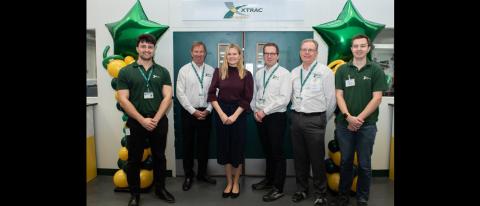
Transmission technology specialist Xtrac, based in Berkshire, United Kingdom, has launched a dedicated apprenticeship facility at its global headquarters in Thatcham.
The Xtrac Academy will provide hands-on manufacturing and computer-aided engineering skills training focusing on Xtrac’s products.
“The investment into the Xtrac Academy is part of Xtrac’s ongoing business expansion, which has also provided additional state-of-art test facilities and increased the capacity of the factory to meet growing global demand,” the company stated in a release.
The company will continue to work with Newbury College (UK) to offer apprenticeships in advanced manufacturing.
Problems arising from system design, parts selection, and inexperience can lead to performance left on the table—or even the failure of critical components. Here are some of the most common trouble spots seen by turbocharging experts and how they can be resolved.
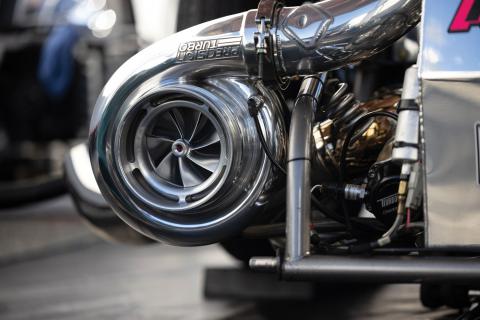
Whether the weapon of choice is a high-winding four pot or a big displacement V8, turbocharging has become the name of the game when it comes to making big power. Turbo technology has come a long way in recent years and its popularity has increased in turn, but that doesn’t mean it’s foolproof.
“It can be trickier to work with versus a supercharger, for instance,” said Reggie Wynn of Precision Turbo & Engine, Hebron, Indiana. “There are more things that can go wrong along the way, but they’re generally simple issues that can be easily corrected. But without knowing what those are when going into it, it might not be so simple.”
Those issues can be exacerbated by factors that have nothing to do with what’s under the hood. “Sometimes it’s just pride,” Wynn said. “Some people don’t want to ask for help, or they’re not willing to heed advice from people who’ve done it before. They might have a lot of experience with other types of engine combinations and assume that what works in one situation will apply to another, but that’s not always the case.”
Ernie Munoz of Comp Turbo Technology in Pomona, California, pointed out that turbocharging is a very different game when compared to other power adders, and some folks might not know what they’re getting into initially. “People get fixated on the horsepower numbers or displacement, but there are a lot of other variables that need to be considered when putting a turbo system together that can affect what kind of power it makes and how reliable it’s going to be.”
Performance and reliability are the core goals of just about any combination built for competition, and the inherently complex nature of turbocharging means that small problems can have a significant impact on both. Yet as the experts attest, most problems stem from common mistakes that can be easily avoided—provided the racer knows what to look out for.
1. WASTEGATES SHOULDN'T BE AN AFTERTHOUGHT
“From a boost control standpoint, the location and proper mounting of the wastegates is key,” said Marty Staggs of Turbosmart, Ontario, California. “All of the wastegate manufacturers provide diagrams and guidance on this, but it often gets overlooked when people are building their headers or designing their systems. A lot of times it’s the last thing that gets taken into consideration, so folks will just try to stuff them into any spot where they’ll fit. Folks need to take into account the size and location of the wastegates when they’re building that system, because otherwise they’ll get bit. They should be mounted in the flow path because we need to control that exhaust drive pressure. If the gates aren’t installed properly, they will have a hard time controlling the boost.”
Turbochargers are a proven way to achieve spectacular performance, but racers need to consider variables that can affect power and reliability, noted our source at Comp Turbo Technology.
2. AREA OVER RADIUS SIZING
“If the A/R [area/radius] is too tight, it’s going to over-spin the turbo, and that causes a lot of failures,” said Deena Salenbien of Apex Turbo, Maybee, Michigan. “When it comes to the turbine housing, it’s one of the few aspects of the design where the builder has to make a choice. The tighter the A/R—or the smaller the number—the smaller the opening into the turbine housing is, and the quicker the turbo will spool up. But the larger that area is, the more top-end power it will make because it’ll flow more air through the scroll of the turbine housing. An A/R that’s too tight runs the risk of spinning up the turbo beyond its operating range, and that can potentially damage the turbine or the bearings. In a racing application, where low-rpm engine response isn’t a big concern, loosening up the A/R provides some headroom to get a reliable sense of the turbo’s desired rpm range. Then tighten up the A/R from there if necessary.”
Wynn agreed that a less restrictive housing is ultimately a safer bet. “A compressor cover that’s too small will kill the turbo sooner. Keep over-speeding a turbo, and at some point, it’s going to fail,” he explained. “Make sure that the compressor housing is the right size to match the compressor wheel size. If someone is stuck between two different sizes, I would recommend going with the larger housing. A lot of people will go with the smaller one because of packaging concerns, but the restriction can potentially affect the turbo’s longevity.”
3. FOREIGN OBJECTS
“If the turbo isn’t shielded in some way, that risks causing damage every time the car is run,” explained Munoz. “That turbo is spinning very quickly, so it’s like a jet engine that will just pull in any kind of debris that it comes across.”
Salenbien said problems that can crop up from debris entering the turbo system aren’t always immediately obvious. “That could be a foreign object from the road surface, or it could be a situation where something like a valve seat comes loose and goes through the turbine side,” she said. “If that causes a chip, or a blade comes off, it’s going to cause an imbalance and that will eventually lead to a bearing failure. It might not show up right away, but in a short amount of time they’re going to start seeing a lot of issues. It’s probably the biggest reason that turbos come in for repair. Those types of problems can be tough to detect right away, though, so it’s important to pull the downpipe off and inspect the turbo regularly. Just spinning it isn’t going to indicate whether or not something is damaged.”
A turbocharger’s area/radius (A/R) strongly influences spool-up time, overall power production, and longevity of the turbo, explained our source at Apex Turbo.
Wynn said that the best way to avoid foreign object damage is to run a filter or guard of some kind, but he noted that this approach comes with its own compromises. “A filter will protect the turbo against a lot of that, but a lot of racers won’t use them because they don’t look as nice aesthetically, they restrict airflow to a degree, and they take up more space,” he explained. “But if debris gets into the compressor side of the turbo, it’s just a matter of time before that turbo is toast.”
For those who want to make sure their turbos can live long and healthy lives in racing environments, Munoz recommends dialing in the system with a filter on right from the get-go. “Get a filter that’s going to have very high-rpm flow so it can actually hold up in that environment. Otherwise, it becomes a very big restriction. And it would be a good idea to do dyno sessions with the filter on if the plan is to run one,” he advised.
Many racers mount turbos based on space considerations, rather than what’s optimal for the unit itself. This can cause improper oiling and other problems for the turbocharger.
4. IMPROPER OILING
“One of the biggest problems I see is with turbos smoking, and that generally happens because of improper oil draining or scavenging,” said Staggs. “The oil backs up into the turbo, and that’s not good for the system’s efficiency or longevity. In those situations, it often ends up pumping oil into the intake, so that can cause problems there as well. Proper draining of the turbo and scavenging of that oil line is critical.”
Wynn said that the issue is often caused by mistakes in the design of the plumbing. “I see a lot of folks using too small of a drain line to go back into the engine, and that will cause smoking. You need to use a -10 or larger, depending on the size of your turbo. But the biggest no-no I see in this realm is 90-degree fittings. With that oil being gravity-fed out of the turbo, any abrupt change in direction of the flow is going to cause the oil to back up into the turbocharger. It’s better to use two 45-degree fittings to achieve the same goal instead.”
Munoz noted that low-mounted turbo systems can see other oiling challenges, too. “Best practice is to mount the turbocharger above the oil pan so it can drain properly and avoid leaking issues,” he said. “Some folks chose to mount them really low in the car and run a scavenge pump system to compensate for it, but that can cause serious problems. That pump is trying to replicate gravity drain, and any time it doesn’t pull fast enough, it risks causing damage. That’s why we recommend air-cooled or oil-less turbochargers in those situations to avoid the issue entirely.”
5. BIGGER ISN'T ALWAYS BETTER
“If what’s needed is good response across the rpm range, going with one huge turbo is not going to be the best option,” said Wynn. “When the turbo is too large, it’s going to take a long time for it to spool up and make power. That might work in certain racing applications, but if the engine is going to operate in a wide rpm range, the better choice is often running two smaller turbos with more boost rather than one bigger one with less boost. But for someone working on a budget and who needs to stick with a single turbo, sizing it to their needs is going to produce better results than just buying the biggest one they can afford.”
Turbocharging can be “trickier to work with versus a supercharger,” noted our source at Precision Turbo & Engine. “But they’re generally simple issues that can be easily corrected.”
6. AIMING FOR 1:1
“Typically, the best horsepower results we see happen when the inlet pressures and outlet pressures get close to being the same value,” stated Salenbien. “That can be tough to achieve because of the differences in wheel sizes or the rule restrictions in certain race classes. Racers who run similar sizes for the compressor and turbine will probably never see a 1:1 ratio like that, either. They’re always going to see way more turbine pressure than compressor pressure in that situation because the turbine’s too small to be able to achieve those kinds of numbers. But to really optimize the system, 1:1 is the target. It could take some trial and error along the way with turbine housing sizes, wheel sizes, and the engine combination itself. Cylinder head flow and camshaft profiles can change that dramatically.”
7. BUILD STRATEGICALLY
“There is a lot of, ‘monkey see, monkey do’ going on out there,” explained Turbosmart’s Staggs. “People see someone else’s turbo setup and assume that it is going to yield the same results for them. But this is not a situation where one size fits all. The system should really be built around what the specific goals are. Just swinging for the fences is not going to provide optimal results. The application, the engine combination, the fuel used—all of these elements factor into how a turbo system should be built to maximize results. Usable power is the real goal here. Four-thousand horsepower isn’t worth much if it can’t be controlled, so the setup needs to be manageable under the specific circumstances in which the car is used. Given what’s available today, we’re seeing more and more people who are interested in actually turning down the power to make it more controllable. The guy who is focused on making as much horsepower as possible isn’t going to go rounds. The guy to worry about is the one who is dialing it in to be manageable.”
Salenbien said the engine combination itself is a crucial component in that equation. “Turbo systems take a lot of unfair blame because they’re an easy target when the combination isn’t doing what someone wants it to do. But the cylinder head design, the camshaft, the fuel delivery—all of it factors into the end result,” he explained. “Racers need to open up a line of communication between their engine builder, their tuner, and their turbocharger manufacturer together to make sure that the build will make not only the performance needed to win, but also the longevity.”
SHOW PIECES
While race product innovation is a 24/7/365 endeavor, no event captures the sum total of these developments quite like the annual PRI Trade Show. Each December, this marketplace of motorsports brings tens of thousands of buyers to the Indiana Convention Center and Lucas Oil Stadium in downtown Indianapolis to survey the latest go-fast parts and discover solutions to help unlock their race programs’ performance potential. Front and center at our most recent Show were some dazzling displays of turbo-equipped engines designed to elevate both horsepower and pulses. Here’s a closer look at three builds from the Show floor that we found particularly eye-catching.
MOUNTAIN MACHINE
Mountain Machine owner and engine builder Steve Ortner combined an H1 Hummer with a turbocharged 6.7L, 1,500-horsepower Cummins engine that has a highly modified 12-valve cylinder head and a pair of ApexTurbos. The manifold charger is an 88-mm s400 and the big turbo is a custom 110/114 charger with Apex’s patented billet center section with triple ball bearings and billet wheel. The rest of the engine features a Hamilton wet race block, Wagler rods, Diamond billet pistons, Farrell Diesel Service 14-mm pump, a competition Fluidampr damper, and several billet parts from Mountain Machine’s shop. This truck is primarily run at the Silver Lake Sand Dunes in Mears, Michigan. The custom cut paddles from Duneland Off-Road Center on the Raceline wheels helps it fly through the sand.
CIVETTE LSX
The Civette LSx, owned by Renegade Racing’s Thomas West, is a 2,200+ horsepower rear-wheel drive LS-swapped 1996 Honda Civic with a Corvette C5 drivetrain. It features twin Precision Turbo & Engine 76/78 ball bearing turbos with dual wastegates and dual blow-off valves as well as a Nitrous Outlet direct port nitrous system. The entire turbo kit was custom made for the one-of-a-kind car. Top End Fabrication built nearly the whole car, including the chassis, turbo kit, fuel system, etc., and Tommy’s Auto Machine & Parts built the engine. The driveline, including the transmission and clutch, was built by Tick Performance while Scott Bowen from In Tune Motor Sports tuned the Civette. West races in Stick Shift Outlaw.
BLUE TURD
Zach Wright’s 1995 Ford Taurus SHO features a custom billet block V6 from Bullet Race Engineering that’s based off the original Taurus SHO engine. The car has a chassis built by Bill Draghis’ Chassisworks, is wired by Ryno Wiring Solutions, and tuned by FuelTech with jazTUNING. It makes 1,400 horsepower with a Precision Turbo & Engine 7285 turbocharger (but will soon have the new 7685). Wright mounted the turbo all the way forward, literally sticking out of the front bumper, for a weight ballast. He’s using all the weight and leverage he can to plant the power through the front tires. Blue Turd competes in XFWD (Xtreme Front Wheel Drive), which is open to front wheel drive imports only.
Performance Racing Industry (PRI) is elevating its advocacy efforts by kicking off its third annual tour around the country, starting at the Progressive American Flat Track at Volusia Speedway Park in DeLeon Springs, Florida, on March 11. During the 2022 Road Tour, PRI’s leading content-creation team will travel the country to visit businesses, race tracks, events, and industry icons, generating videos and sharing stories about what the industry can do to help build, promote, and protect motorsports.
“Advocacy is a top priority for PRI, and it’s important for the industry. That’s why we’re emphasizing this throughout the Road Tour this year,” said Dr. Jamie Meyer, PRI President. “After seeing the great success of the Road Tour and what it can do, we will now make that same sort of impact to help with our year-round advocacy efforts.”
Now in its third year, the PRI Road Tour has captivated more than 64 million viewers with unique and never-before-seen footage of motorsports businesses and racing competition. This year’s program is expected to build on those results with a greater focus and emphasis on legislative advocacy—including the RPM Act, the importance of PRI Membership, industry education, and more.
“The PRI Road Tour allows us to showcase the importance of the racing industry and inform the motorsports community about how they can support the industry they love,” said Meyer. “This year’s exclusive coverage will showcase how their participation will create a unified voice for the industry.”
ExxonMobil, VMP Performance, Titan Motorsports, and SAM Tech will be among the team’s early stops as the PRI Road Tour begins its yearlong trek across the country. Sponsors of the 2022 PRI Road Tour, as of today, include Mobil 1, BBS of America, DeatschWerks, Red Line Oil, FiTech EFI, Hawk Performance, Raybestos Powertrain, Callies Performance, Five Star Race Car Bodies, Briggs and Stratton, Jesel, and Mass Traction.
PRI’s comprehensive advocacy efforts include a Membership Program (performanceracing.com/membership) designed to formally unite and protect racing, and the world’s premier auto racing trade show, the PRI Trade Show (PRI2022.com). Coverage of these programs and racing industry news are showcased on PRI’s website, social platforms, weekly eNewsletter, and leading monthly publication, PRI Magazine.
“We call on the entire racing community—business owners, track operators, racers, and fans—to join us in representing and fighting for the racing industry,” said Meyer. “Our industry currently faces many challenges, and it’s imperative that we unite to protect it.”
PNC Bank and Chip Ganassi Racing (CGR) have announced the launch of Women In Motorsports Powered by PNC Bank with Chip Ganassi Racing, a new campaign to drive awareness and support for gender equality and economic inclusion for women in the workforce.
Announced on International Women’s Day on March 8, the initiative includes a video content series showcasing female industry leaders and an internship designed to accelerate career pathways in motorsports for women.
The campaign will highlight women in the CGR organization who have excelled in motorsports, including IMSA engineer Danielle Shepherd, IndyCar engineer Angela Ashmore, and IndyCar mechanic Anna Chatten.
Additionally, the inaugural Women In Motorsports internship program will engage a select group of female college students in on-site learning and career-development experiences during the 2022 NTT IndyCar Series season. The internship is open to eligible women attending a university, college, or other higher education institution in the US and includes a paid stipend and academic credit where applicable. The application portal closes at 5 p.m. ET, March 22.
The Melrose-Mindoro School Board has announced Melrose-Mindoro High School is the first school in Wisconsin to offer auto racing as a letterable sport for students.
The announcement follows the formation of the High School Racing Association (HSRA), a combined effort between La Crosse Fairgrounds Speedway (West Salem, Wisconsin), Madison International Speedway (Oregon, Wisconsin), and Tomah-Sparta Speedway (Tomah, Wisconsin). The group’s goal is to provide young adults with an economical way to enter stock car racing and keep younger generations interested in the sport.
In order for students competing in the HSRA division to have the opportunity to receive a letter from the school district, they must be in good academic standing, race in a minimum of four HSRA events at an HSRA-sanctioned race track and they must show good sportsmanship at all times. Athletic Director Heather Young will serve as the HSRA adviser at Melrose-Mindoro.
“This is a huge step forward for the High School Racing Association series,” said HSRA Director Jonathan Eckelberg. “The race tracks currently participating in HSRA are eager to grow the sport by getting young talent interested and involved. I am having many conversations with local high schools and hope other districts will see the value in allowing their student race car drivers to letter as well.”
The HSRA features American Production six-cylinder sedans with various safety enhancements. Students entering their freshman year of high school (minimum age of 14), current high school students, as well as those just graduating from high school (maximum age of 19), are eligible to compete.
Driven Lighting Group—the supplier of aftermarket automotive lighting products and online retailer—has announced Brett E. Lauter as president of the company based in Atlanta, Georgia. He joins Matt Kossoff, Chris Nelson, Jeremie Baker, and Jiten Patel on the company’s executive team.
Lauter previously served as CEO of Bestop Morris, overseeing the Morris 4x4 Center.
“Having Brett join our team in this position of leadership is exciting because we get to leverage his years of experience with other large and respected companies,” said Chris Nelson, CMO of Driven Lighting Group. “His areas of expertise directly correlate to our existing business model and what we’re trying to build tomorrow. As a leading eCommerce company in the automotive lighting space, it’s important to us to build the best online programs and platform possible.”
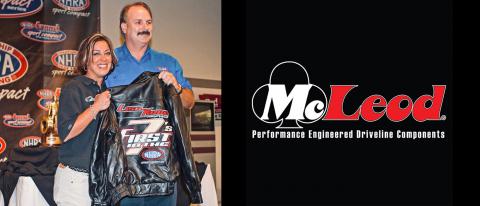
McLeod Racing has announced sport compact driver Lisa Kubo as its new director of Sport Compact Sales.
Kubo is a professional drag racer of 12 years and the first sport compact FWD driver to break into the seven-second zone. She will help grow and strengthen the McLeod Tuner Series line in her new position.
“To join the team that Paul Lee has assembled is a true honor,” Kubo said.
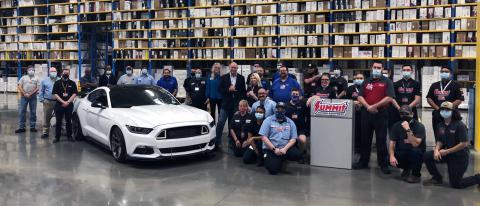
U.S. Representative Jake Ellzey (R-TX), who won a July 2021 special election to represent Texas’ 6th Congressional District in Congress, recently visited Summit Racing Equipment in Arlington, Texas, for a tour of its retail superstore, order fulfillment center, and distribution center, which totals nearly one million square feet.
Summit Racing has come a long way from its humble beginnings. The company was founded in Northeast Ohio by a young engineer who owned a big block powered ’67 Corvette Roadster and had a knack for getting performance parts at a good price. It didn’t take long for his fellow drag racers to start inquiring about deals on hop-up parts out of which a side business was born. Summit Racing’s first “store” was located in the basement of a donut shop in Stow, Ohio, although the company moved to its first true store, a 1,500 square feet location in Cuyahoga Falls, Ohio, in 1969.
Today, Summit Racing is one of the biggest names in the industry, as the company calls itself the world’s largest direct marketer of performance automotive parts and accessories. While Summit Racing is headquartered in Tallmadge, Ohio, the company has three other facilities, including locations in Sparks, Nevada (opened in 1998); McDonough, Georgia (opened in 2006); and Arlington (opened in 2017), their largest facility. Each location features a destination retail superstore, an order fulfillment center, a customer support center team, and passionate enthusiasts about their customers’ projects.
Rep. Ellzey’s visit to Summit Racing provided the Congressman a chance to learn more about the specialty automotive aftermarket and the industry’s role in Texas’ 6th Congressional District, which is located both to the south and west of Dallas and includes parts of Fort Worth and Arlington. While touring the superstore, the Congressman spoke fondly of the ’67 Mustang he once owned and aspires to one day restore a vintage Ford truck that’s been in his family for over 40 years.
“The tour of Summit racing was nothing short of remarkable,” said Rep. Ellzey, “You all have a tremendous facility, but what was most impressive was all of the employees. The afternoon I spent there, I could tell that everyone cared about their job, each other, and the customer. I am glad that Summit Racing is in our district. It is something we can all be proud of, and I look forward to rebuilding my ’79 F-150 with a little bit of help.”
Rep. Ellzey grew up in Perryton, Texas, and he maintains that he wanted to be a fighter pilot since the age of seven when his father took him on his first plane ride. The Congressman is a graduate of the U.S. Naval Academy, and throughout his 20-year Naval career, Rep. Ellzey flew H-60 helicopters, F-14 Tomcats, F/A-18 Hornets, and Super Hornets in defense of our Nation. A survivor of 830 carrier landings, he served a tour embedded with Navy SEALs and called in air support in 2006 in Anbar province, Iraq. After retiring from the military, he was a private pilot, civilian contractor, and worked as a White House under President George W. Bush. Rep. Ellzey also founded and ran a public speaking and executive coaching firm and was appointed by then-Gov. Rick Perry to serve as a commissioner of the Texas Veterans Commission, serving from 2012 until 2018. Rep. Ellzey was elected to the Texas State Legislature in 2020 before winning a seat in the U.S. House of Representatives just nine months later.
Rep. Ellzey currently serves as a member of the U.S. House Committees on Veterans’ Affairs and Science, Space, and Technology. The Congressman’s top priorities include supporting military veterans and our armed forces, protecting private property rights, stopping proposed high-speed rail in Texas, and reducing federal spending and debt reduction. Upon learning about the Recognizing the Protection of Motorsports Act (RPM Act), Congressman Ellzey agreed to cosponsor the bill and is passionate about enacting the bill into law given the importance of the issue to his constituents.
“We appreciate the opportunity to showcase our enthusiast-based company culture and our outstanding team at Summit Racing Equipment, especially in support of initiatives that protect our industry,” said Dave Ritchey, Summit Racing’s Manager of Phone Sales. “Thank you to SEMA/PRI for organizing and participating in the meeting, and to Rep. Ellzey for taking the time to visit and get to know our company, and for reinforcing his support of the RPM Act. Supporting this bill helps protect the livelihood of our company and employees, our business partners, and race tracks throughout the country.”
For more information on planning your own Congressional District site visit, please contact Eric Snyder at erics@sema.org.
 MEMBERSHIP LOGIN