‘SAVE OUR RACECARS NIGHT’ AT WENATCHEE VALLEY’S (WA) SUPER OVAL

Submitted by laurap on Mon, 03/21/2022 - 13:45
‘SAVE OUR RACECARS NIGHT’ ATWENATCHEE VALLEY’S (WA) SUPER OVAL


Who: PRI

What: “Save Our Racecars” Night 

When: Saturday, April 16, 2022

Where: Wenatchee Valley’s Super Oval in East Wenatchee, Washington

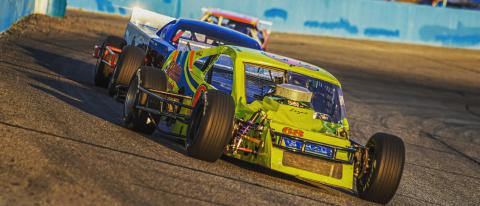
Why: Support motorsports and help “save our racecars” during this event, which will feature Rockstar Energy B-Mods, Plumb Perfect Roadrunners, and Johnson Electric Bump 2 Pass classes, plus a fireworks show. Learn about PRI membership and the vital RPM Act.

Tickets: myracepass.com/events/391575/tickets/

Wenatchee Valley's Super Oval


March 2022

Editors’ Choice

Submitted by johnc on Mon, 03/21/2022 - 13:29
image 1


Hundreds of new product announcements cross the desks of PRI editors each month. Following are our top picks for April.


Ndurance Expanded Performance Oil Rings

Total Seal
totalseal.com

image 2image 3

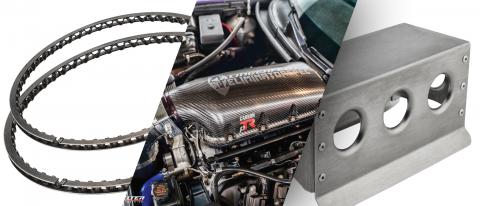
Designed specifically for turbocharged and high-boost engines, the new Ndurance expanded performance oil rings from Total Seal offer not only higher tension for better oil control but will also retain that tension for a longer time.

The key is a special process that incorporates a gas-nitriding heat-treatment of the steel expander. This changes the metallurgy, grain structure, and color of the steel.

“An expander ring can lose spring rate over time,” said Lake Speed Jr. “By nitriding, it doesn’t lose that rate.”

The nitride hardening process integrates onto the surface of the expander to form the nitride layer.

“We’re already using nitriding in other parts of the engine, including the valve springs to keep them from losing spring rate,” noted Speed. “By applying that same technology to the expander, we can build an oil ring with higher tension, and it won’t lose that tension over time. The result is better oil control.”

Another benefit is reducing mass. A 2-mm oil ring may normally offer 10 pounds of tension. With nitriding, that rate will increase 3 or 4 pounds and equal a normal 3-mm ring.

“Now it has the same tension as a 3-mm but the same weight and size as a 2-mm,” added Speed. —Mike Magda


Eliminator Spec Motors

Lingenfelter Performance Engineering
lingenfelter.com

image 4

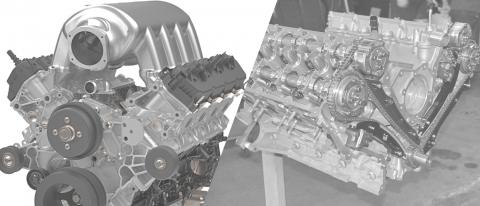
Different power levels are being offered in the Eliminator Spec engine program at Lingenfelter Performance Engineering.

“The Eliminator Spec motor package works three ways,” explained Mark Rapson. “The S Spec is designed to run on pump gas and is street oriented. The R Spec is designed for higher compression and for race fuel or E85. The X Spec is more of an R&D program; that is, anything we’re working on that can’t be put in a category.”

Lingenfelter has already scored a major success with an Eliminator R Spec engine built for Jake Rozelle’s C5 Z06 Corvette that won the 2021 Optima Ultimate Street Car Invitational. The 454-ci LS7 makes more than 800 horsepower.

“That was a 13.5:1 compression engine with one of our Eliminator cams that is not sold separately,” noted Rapson.

An example of an X Spec engine is a 1,200-horsepower supercharged LS engine built for a ZL1 Camaro test bed at Lingenfelter. It measures 866 lb./ft. of peak torque.

“We did that program to see how far we could take the engine without modifying anything on the car,” said Rapson.

The core of the program is the Lingenfelter blueprinted and CNC-machined block. Internal components from the aftermarket are subsequently manufactured to a Lingenfelter specification. —Mike Magda


Fabricated Race Car Center Console

Speedway Motors
speedwaymotors.com

image 5

Speedway Motors makes building a race car a little easier with a fabricated center console.

“It can secure critical switches, toggles, push buttons, and brake-bias knobs within easy reach,” said Kelsey Bugjo.

Constructed from dimple-die-punched 14-gauge aluminum, the piece is lightweight, yet strong enough to support race gear needed by the driver. Angled flanges allow mounting directly onto transmission tunnels inside the driver’s cabin. The kit includes 10-32 button-head screws and nylon lock-nut fasteners, and it’s available in a bare finish or with a black powder-coat finish.

“This unit is designed to keep all wiring neatly tucked away under the console,” added Bugjo.

The overall height is just over 5 inches. The surface plate is 10.25 x 5.64 inches. Switches, lights, etc. can be mounted directly on the top surface by drilling the appropriate size hole. For an even cleaner install, premade switch panels that are available from Speedway Motors can be mounted by cutting a clearance hole and screwing or riveting it in place.

Car builders can also make the console easy to remove by using quarter-turn fasteners and springs to mount the console to the tunnel. —Mike Magda


LS3 Flat-top Trans-Am TA2 PowerPak Plus Piston Set

MAHLE Motorsport
us.mahle.com/en/motorsports/

image 6

The PowerPak Plus piston line from MAHLE Motorsport now includes the LS3 flat-top pistons homologated for TA2 Trans-Am applications.

The pistons are available in three bore sizes: 4.065-, 4.070-, and 4.075-inch diameter. Incremental bore sizes are available by special order.

“These pistons come from the same motorsports facility that produces parts for all the high-end race teams,” said Joe Maylish. “Engine builders like these kits because they come with everything: pistons, rings, wrist pins, and clips. And they’re all designed to work with each other.”

The PowerPak Plus pistons are forged from 2618 aluminum alloy and feature a hard-anodized top ring groove, should the engine builder add nitrous or boost to a particular application. Other advanced features include slipper-skirt style design, phosphate crown and ring groove coating, horizontal gas ports, and Grafal anti-friction skirt coating.

These pistons come with a .945-inch diameter wrist pin and a 1.0-, 1.0-, 2.0-mm file-fit performance ring set. The compression height is 1.330 inch. Weight ranges from 513 up to 517 grams, depending on the bore size.

With a 70cc combustion chamber and .051-inch gasket, these pistons provide a 10.7:1 compression ratio. The sets are designed for Trans-Am racing applications and meet the requirements and specs of sanctioning bodies in which it will compete. —Mike Magda


Sensor Covers

Design Engineering, Inc.
designengineering.com

image 7

Excessive heat is a demon that can reduce the performance of, if not damage, numerous parts in a race car. Delicate sensors and wire connections are often at risk due to their locations near turbo and exhaust heat. Protecting these sensors from heat will help ensure more accurate readings.

A new protective cover from Design Engineering, Inc. (DEI) helps provide double protection with an innovative overlaying combination arrangement.

“This cover works with any type of sensor on the engine,” said Mike Buca. “We have two sizes that will nest together. It was something that we first saw on a production application. There was a sensor close to the turbo that had a cover shield.”

Constructed from an aluminized insulation, the covers come in 25- and 32-mm sizes that have slit openings on one end. The larger end slips over the sensor, or the 32-mm cover can double over the 25-mm cover.

These thermal covers are also effective at protecting sensitive parts from moisture and dirt. They’re lightweight and easy to install. There’s also a large 62-mm version for bigger components.

“It’s not a high-dollar piece,” noted Buca. “But if you melt a connector, that can end your day racing.” —Mike Magda


Four-Stage Dry-Sump System for SBC

Aviaid
aviaid.com

image 8

Aviaid offers different small block Chevrolet four-stage dry-sump oil systems that give car builders the option of mounting the kit on either the left or right side of the engine. This option allows more flexibility in packaging the engine with regards to steering gear or other tight-fitting equipment.

“We don’t just build the pump, we build a package around the pump that will bolt on an engine for particular applications,” said John Schwarz. “Remember, everything we’re putting on is actually foreign to the engine compartment—the pump, the drive, the tank. So we can build for passenger- or driver-side mount.”

The kit includes a three-pickup, 5-inch-deep oil pan with windage screen, a four-stage pump with AN-12 fittings, 1-inch wide belt drive, and remote filter with billet adapter. The oil reservoir size is determined by the application.

“We want engine builders to know that we can sell them everything they need when a customer said he wants a dry sump on his engine and they’ve never done one,” explained Schwarz. “The engine builder doesn’t have to pick the parts. We do that.”

Alternative pumps and pans are available; plus, the tanks and breathers are sold separately. —Mike Magda

 

April 2022

Dave Cole Sells Ultra4, Retains King Of The Hammers

Submitted by laurap on Mon, 03/21/2022 - 13:28
Ultra4 Racing logo

King of the Hammers (KOH) co-founder Dave Cole has sold the Ultra4 Regional Series to Jason and Gayla Robinett, owners of MidAmerica Outdoors, a riding and racing park in Jay, Oklahoma. 

Cole will retain ownership of Hammerking Productions, which includes King of the Hammers, Ultra4 Europe, and Great American Shortcourse. 

“This is a transitional process as we separate assets and they take ownership of the Ultra4 brand and the Ultra4 Racing TV channel on Vimeo,” Cole stated in an open letter. “I am excited to see what the Robinett’s and their team can bring to the series. They have incredible plans for the future and have already built a world-class facility in Oklahoma.” 

“KOH will always be the first race of the Ultra4 Series and KOH Racers will continue to qualify at Ultra4 Races. I am restructuring Hammerking Productions around King of the Hammers and a new project, UltraTours, that allows me to spend a lot more time wheeling,” Cole said.

For more information, visit ultra4racing.com.

March 2022

Make The Case: Godzilla vs. Coyote

Submitted by johnc on Mon, 03/21/2022 - 12:39
image 1


With an all-aluminum, dual-overhead cam design and decades of development behind its modular architecture, the Coyote has been the Ford V8 of choice for performance applications for some time now. But with compact packaging, big displacement, and the ability to make a ton of power without much fuss, the Godzilla V8 offers compelling advantages of its own.


image 2
Godzilla Engine Advocate: Jason Youd, Mast Motorsports

The iron-block, 7.3-liter OHV Godzilla V8 was developed by Ford to replace the 6.8-liter modular V10 as the base engine in its Super Duty pickups. While it’s a purpose-built truck motor, it’s factory rated at 430 horsepower and 475 pound-feet of torque in stock form, and it doesn’t take much to get a lot more out of it.

Since this engine was just introduced in 2020, the aftermarket support for it is still very limited. The bigger players in the aftermarket haven’t really started making parts for these engines yet. But we got our hands on one back in February 2020, and in the time since we’ve created our own camshafts, valve springs, intakes, and other components for it. We also failed the engine on the dyno three different times, and those failures allowed us to find weaknesses and design parts to address those problems.

Compared to a Coyote V8, the Godzilla V8 has some very clear advantages in a motorsport application. The first one is cost: This engine is roughly one-third the cost of a Coyote engine. It’s also smaller than a Coyote engine in terms of packaging, and the torque output is higher in factory form. And with very minor changes, the Godzilla engine is capable of making 650 horsepower on the dyno naturally aspirated. We’re talking about modifications that can be done for less than 10 grand. And we just made 1,100 with our supercharged combination a few weeks ago. It doesn’t really take much to wake these engines up.

Since there’s only one camshaft involved, goals can be achieved a lot faster and for less money than with a Coyote. Here we’re dealing with one camshaft instead of four, the parts are generally cheaper, and the Godzilla cylinder head design offers a significant airflow advantage. It’s a truck engine, so it’s set up for low-end torque, and that makes it a good option for off-road racing and disciplines like that. The all-aluminum Coyote has some advantages in disciplines like road racing and drifting because of its lighter weight, but with the right combination of parts, the Godzilla V8 can be dialed in for just about anything.

Because it has an iron block, and the design lends itself to low-end response, I think the Godzilla V8 is particularly well suited to drag racing. It can handle a lot of boost, and the bottom end is very stout. And because it’s dimensionally smaller than the Coyote, it’s also a good option for swap applications. It’s slightly taller in factory specification compared to the Coyote, but the factory intake manifold is the main issue here, and low-profile performance intakes for this engine are already on the market.

Since the Godzilla is still so new, there are still a few important things that the aftermarket hasn’t produced but are definitely needed—engine bearings, for instance. It’s just a matter of time before we start seeing aluminum blocks and aftermarket cylinder heads, although those are probably still a few years away. While I doubt the Godzilla V8 will end up replacing the Coyote in performance and racing applications, I do think it could eventually supplant older Ford pushrod V8s like the 351 and 460.

image 3
Coyote V8 Advocate: Michael Rauscher, L&M Engines

The cylinder head and camshaft setup of the Coyote V8 is magic. It provides great airflow while also meeting the emissions and fuel economy targets that Ford needs to achieve in its production vehicles.

Three-hundred-and-two cubic inches isn’t a huge amount of displacement, but Ford designed the engine to rev really high and make a lot of torque at the top end, and that’s why it works really well in performance applications.

With the twin-cam setup, we’re able to change camshaft timing at will, and to get the Brake Mean Effective Pressure up, they increased the static compression ratio to 11:1. But because we’re able to modify the intake and exhaust valve timing, the effective compression ratio could be 5, or 6, or 7:1, and that eliminates a lot of the problems that high compression motors have with today’s fuel. At higher rpm’s we have less cycle time, so we can move the cams around for more efficient cylinder fill and see more of that 11:1 ratio.

Initially everyone was afraid of having four chains and four cams because it wasn’t what they were used to with pushrod engines. But the design is actually very straightforward and relatively simple, and eventually the market caught on to that. The Coyote has a cylinder head and valvetrain design that’s better suited to high rpm applications than pushrod engines like the Godzilla are, so it’s really going to shine in disciplines like road racing and autocross, formats where you really need those revs. DOHC is the best setup for that; the engines being used in IndyCar and series like that all use multiple-cam engines, and it’s been that way for a long time.

Meanwhile, the Godzilla engine was designed for the requirements of a truck, so that means low speed, high torque. That doesn’t mean that people can’t make a hot rod engine out of it, but it’s going to be beyond the pocketbook of the average builder. Unless we get to a point where there’s millions of units out there, which seems doubtful given the direction that the industry is headed in, I think aftermarket support for the Godzilla is going to continue to be very limited. That means a lot of custom work for racers in order to get them where they need to be, and that typically isn’t cheap.

From a general performance perspective, the Coyote is a superior design. When you start factoring in the costs involved and realize that the Godzilla engine is also going to be more expensive to build, the choice seems obvious to me.

April 2022
By
Bradley Iger

Stop Doing That…Do This Instead: Hiring Practices

Submitted by johnc on Mon, 03/21/2022 - 11:56
image 1

Experts warn against hiring to fill a position without considering whether the candidate is a good cultural fit. “If they don’t really care about motorsport, the chances are they aren’t going to stay for very long,” said our source. “It’s all about being comfortable in the company that you work in.”

Looking to fill that open position with just the right person? Determine the best fit for both company and prospective employee with these useful strategies.

Whether it’s a football team driving from the two-minute warning, a group of physicians performing critical thoracic surgery, or an entrepreneur trying to launch a new product or organize a race team, the proper personnel are an essential element of any successful endeavor. When it comes to picking people, leaders sometimes get things seriously wrong, with potentially punishing consequences. Here’s a hard and fast rule: No one can succeed in any initiative—ever—without the right staff. Getting it wrong involves a litany of mistakes that no one wants to repeat.

“The first problem is when people just hire anyone to fill a position or a seat,” said Chicago, Illinois-based management consultant Barry Moltz, who has been a breakout speaker on hiring practices at both the PRI and SEMA shows. “They’re too quick to hire because they just want someone in there doing the job. They don’t thoroughly vet them. The second problem is when people hire only for skills, not for cultural fit. And the third one is, they don’t give the person any training when they get to the job.”

What’s cultural fit? It’s an assessment of whether a new hire is going to mesh smoothly with the new employer and co-workers. One immediate consideration, as Moltz expressed it, is whether the new hire shares the same burning passion for racing as everybody else in the company. “If they don’t really care about motorsport, the chances are they aren’t going to stay for very long.”

In Moltz’s estimation, put yourself in the position of the new hire: Everybody’s amped about winning races except you. Would you stick around?

“It’s all about being comfortable in the company that you work in,” he explained. “Employees don’t leave companies. They leave other people. It’s like hiring someone to work with the NFL. On Monday, everyone’s going to come in and talk about the games. If you don’t watch the games and don’t care about them, you’re going to feel left out. When I had my own company, I only hired people who were interested in that industry. I had a great saleswoman who didn’t last long because she couldn’t connect with the people around her.”

image 2
One hiring consultant advises clients to post live recruiting videos to social media showing existing employees enjoying the workplace. “You’re killing two birds,” he explained. “One is, look at the cool work that we’re doing for our customers, and you’re also speaking to potential employees, showing them your current employee who’s having fun and making a difference in the world.”

The flip side of this scenario involves due diligence on making sure the prospective employee is right for the company. But post-COVID-19, with firms of every description struggling to hire and retain personnel, prolonging the evaluation process can mean a candidate could jump elsewhere before the evaluation is complete. Part of the reason may be that human resources hasn’t explained why the firm is worth joining. That’s a corollary to what Lancaster, Pennsylvania, hiring consultant Ed Krow stressed while speaking about employee retention at the PRI Trade Show last year.

“You can get a job anywhere today. Candidates want to know what kind of work experience they’re going to have with you,” Krow emphasized. “If you look at companies today, they tailor everything in their social media toward the customer—how great is our product or service. What they’re not harnessing through social media is what it’s like to work there, what kind of candidate gets behind those cool products and services. What I’m working on with my clients is to have them using their social media accounts and have their marketing team do the same things they do to engage customers to instead engage potential employees. That’s next-level recruiting. Once they see the light, it becomes part of how they recruit.”

To Krow, at least, blaming COVID-19 and staffing shortages for hiring issues misses the problem, and solution, entirely. “Most companies that are actively recruiting, and telling their stories, are having success drawing the types of people to them that they need to run their business,” he explained. “It’s because they can tell their story better than their competition.”

Krow advises his clients to make live recruiting videos for social media, wherein existing employees explain why they love their jobs, and about the enjoyable tasks they do. “You’re killing two birds,” he said. “One is, look at the cool work that we’re doing for our customers, and you’re also speaking to potential employees, showing them your current employee who’s having fun and making a difference in the world. That’s what recruits want to see.”

One wound employers commonly inflict on themselves is what Krow calls the we’ll-get-back-to-you blunder. “That candidate is going to be employed and gone by the time you call him back,” he warned. “I tell my clients, you love this guy, and I know you’ve got other interviews scheduled, but you need to tell him—within the next week—here’s what’s going to happen. You’re bringing him back and you’ll have an offer within a week. Tell him that. If he doesn’t feel the love,
you’re going to lose him. Organizations have to understand that right now, this is a seller’s market.

“Given the numbers in our population and baby boomers retiring, I don’t see this talent shortage going away anytime soon,” Krow said. “If we have the opportunities, we can draw the right people who want to work.”

SOURCES

Ed Krow
edkrow.com

Barry Moltz
barrymoltz.com

April 2022
By
Jim Donnelly

Ask the Experts: Online Selling

Submitted by johnc on Mon, 03/21/2022 - 10:47
image 1

Establishing a web-based sales portal can either be outsourced or done in-house. Our source from Vivid Racing opted for the latter, citing “amazing tools on the market that make setting up an online store very easy.”


While e-commerce can be a highly profitable sales stream, key factors must be considered before expanding into motorsports’ virtual marketplace.

“Now is a great time to enter the booming world of aftermarket vehicle parts,” said Dan Mermelstein of Vivid Racing, Gilbert, Arizona, when asked how to advise a race-oriented business that’s considering going into online retail. “The amount of data, technology, and distribution is at a great place compared to 15 years ago.”

That said, he and other experienced online sellers we spoke with believe there are some essential best practices to put in place when entering—or expanding your presence in—the virtual marketplace.

Outsource or In-House?

Mermelstein said initially setting up the sales portal is best done in-house. “If a company hires someone, they won’t know the important stuff in the weeds and will already be behind the profit curve,” he explained. “Better to invest their time to learn and understand the systems, which will help in their long-term growth.”

He pointed at “amazing tools on the market that make setting up an online store very easy. Someone who can download a template, write some good content, and work with Excel data is 10 steps ahead of many others. Platforms like Shopify, BigCommerce, and WooCommerce are out there. Great CRM [customer relationship management] tools that offer desk ticket support, live chat, and even accounting, such as Zoho.com, are a great all-in-one solution.”

Not every business has that kind of in-house resource. Joe Francis of Day Motor Sports in Tyler, Texas, was faced with rebuilding his company’s website when the business changed hands about 10 years ago. He admitted he “had no knowledge of websites, and we didn’t have the manpower or anyone who could do that for us at that time.”

What followed was three to four years of struggling with out-of-state web developers who over-promised and under-delivered. Compounding the problem was the fact that during the handoff from one web team to the next, “they turned off our website, and we lost everything,” Francis said, “Google rankings, everything. When we finally turned the new website on, we were at the bottom of everything. We had to hire companies to get our rankings up. It’s very important to be at the top of that [web search] page.”

image 2
While our contact at Vivid Racing was optimistic that supply-chain shortages would ease in 2022, he still advised that “the more a company can drop-ship and hold less inventory, the freer it may feel to work on marketing and customer service.”

Ultimately, Francis hired a web developer that was not only local, making collaboration easier, but also one with deep experience in online commerce. Now, Day Motor Sports has an employee whose full-time job is keeping the website—and Google rankings—up to date.

“Look for someone who’s built a site comparable to what you want to do,” Francis advised. “See what they’ve done, check out other websites they’ve built, and talk to the companies they built websites for to make sure they’re happy with their service.”

Inventory vs. Drop-ship

Supply-chain troubles have made it difficult to get parts of all kinds. “Anything steel is really hard to get,” Francis said, noting particular shortages of engine and suspension parts, and even wheels. “In different times a company could have something drop-shipped. Now it’s so hard to get parts, they better have them in their own shop.”

Mermelstein was more optimistic, acknowledging that while “2020–2021 was hit hard with supply chain issues, most see this getting corrected in 2022. With that being said, the more a company can drop-ship and hold less inventory, the freer it may feel to work on marketing and customer service. If that company is platform-focused, such as only on Ford Mustangs, it may want to stock hot movers. But if it is trying to sell everything, it should have good inventory reports from vendors, so it knows how to service customers on ETAs.”

Do’s and Don’ts

When asked if there was one thing a business should not do when selling online, Francis returned to the parts availability issue. “Don’t put something on the website that isn’t in inventory or can’t be kept in inventory. That seems to be the number-one complaint we get: ‘I ordered it, and you don’t have it.’”

“When selling online, do not break MAP [minimum advertised price] policies,” added Mermelstein. “Nearly all vendors have this set up and policed. Consumer confidence goes across the industry, so if one company acts like a fly-by-night, customers will feel many others are like that, too.”

When asked what a company should do, Mermelstein said, “Buy from the Vividracing.com wholesale team, of course!” But he also advised, at the start of the process, carefully considering “what kind of shop will it be? Will it sell everything or be platform-focused? This is an important decision in picking the company name and domain. The last thing a company wants to do is choose something like BigBlockPerformance.com and then later go into selling UTV parts.”

“The website has to be phone-friendly,” Francis said. “Young kids don’t want to talk to anybody. They just want to place an order on the computer or the phone and be done with it.” Even people who come into Day Motor Sports’ retail store “will sit at our counter and look at our website—or other people’s websites—on their phone and say, ‘This is what I gotta have.’”

Francis’ last piece of advice is one that transcends the online space. “We pride ourselves in taking care of our customers and standing behind our products. Even though they’re ordering online, we still
have to do customer service, making sure they get their parts and get them in a timely manner.”

SOURCES

Day Motor Sports
daymotorsports.com

Vivid Racing
vividracing.com

April 2022
By
Drew Hardin

FROM THE PRESIDENT

Submitted by johnc on Mon, 03/21/2022 - 09:31
Image 1


TECHNOLOGY DRIVES US

Like most of you, I grew up on fast street cars that slowly became drag-dedicated race cars. As a kid in the late-1980s, there was a lot of great Detroit iron to choose from as the muscle car resurgence was in full swing. In fact, when I graduated high school in 1987, you could choose from V8-powered pony cars from Ford, Chevy, or Pontiac; a V8 Corvette; a couple surprising turbo-4 Mopars; or a turbocharged V6 Buick that was faster than all of them. It was a magical time for a small-town kid hooked on the excitement of going fast and beating the guy in the other lane.

Those cars, and the legions of fans that they fostered, spurred the imagination of an awaiting aftermarket. Fuel injection and overdrive transmissions were the stuff of lunar landers, but you guy/gals figured them out quickly. Aftermarket superchargers, as well as some aspiring turbocharger bolt-on kits coupled with bigger fuel injectors, and even aftermarket piggy-back computers, started to make a real impact. By the mid-1990s, modifying modern cars was common—simple really—and it wasn’t a matter of imagination, but more the size of your wallet that drove the competition.

Most interesting to me was that Detroit was clearly paying attention to what you were doing. Cars like the 5.0 Mustang that were once a great foundation for aftermarket modification became the car that Ford Performance started offering parts for…from the factory. When the 2003 SVT Cobra came out, it changed everything. A factory supercharged DOHC V8 that made 390 hp (with loads more potential) showed us the way. The Shelby GT500s that followed only added to the capabilities. Meanwhile, Chevrolet was continuing to ramp up the Corvette and Camaro. By 2014, they came equipped with supercharged LS engines, huge brakes, amazing magnetic ride suspension, and a sleek design. But perhaps it is Dodge and their SRT team who have had the biggest impact in Detroit. Yes, they literally put a Hellcat into everything. These traditional hemi-headed wonders come with a big 2.4-liter supercharger (or bigger), and with at least 707 horsepower, they have inspired an entire new generation of Mopar fans around the world. Buying a stock 10-second car just isn’t a big deal anymore.

Smart aftermarket companies have become suppliers for OEMs that allowed them to sell their hot rod parts right back to the factory. As the aftermarket has evolved, so has the performance of new cars. It’s a wonderful relationship that has allowed the new car buyer to enjoy a performance level unimaginable in 1987.

Of course, I must mention the legions of foreign vehicle performance addicts that have joined in. When Honda-powered street cars (like the ones built by my friends at PFI Speed) run in the 8s, you need to pay attention. Not to mention this upstart American car company based in Texas called Tesla that makes battery-powered luxury cars. Their Plaid, which routinely runs 9.2s in completely stock trim, is the fastest car in a straight line ever produced.

So, why have I spent this time with you walking through the last 40 years of high-performance street cars? Because the NHRA just did something that is going to completely change our market—and your business if you are in this game. As I write this in early March, NHRA has moved to dramatically change the safety equipment requirements of 2008-later vehicles. Relying largely on the incredible safety equipment that comes standard in these new vehicles, NHRA is going to allow these new cars to run as fast as 9.0/150 without the installation of a roll bar or roll cage. The details are spelled out in this issue’s Industry News section, but the key point is captured in this quote from NHRA National Tech Director Lonnie Grim: “Each year, automotive manufacturers continue to push the limits of performance by building production vehicles that are quicker and faster than the previous year’s models. At NHRA, we very much support their commitment to performance and recognize that there is still a very large market for performance cars. At the same time, we acknowledge that NHRA needs to keep pace with the current trends, which is why we’ve announced these rules adjustments.”

As a drag racer, I always knew that those safety rules were there for a reason. But as a race promoter, I knew that I was losing maybe twice the car count because no one wants to cut up a new car and run bars through it. Plus, I think this will result in a much safer racing industry. You don’t need to test that fast Corvette on the street now. Just take it to your local NHRA track to make those test hits.

This rule change will dramatically open the market to drag strips, to promoters, to parts manufacturers, and our entire industry. NMCA and NMRA have already wisely adjusted to this new rule change, designing classes specifically for fast street cars. Guess I better get to work on my Z06…

April 2022
By
Dr. Jamie Meyer

FROM THE EDITOR

Submitted by johnc on Mon, 03/21/2022 - 09:26


Here’s what I think about this edition’s special section on cutting-edge developments in race safety:

I think this issue of PRI Magazine provides some of the most in-depth, informative, and downright fascinating reporting we’ve ever done on the subject of safety in motorsports. Simply put, our series of articles on the latest advances in driver, vehicle, and race track protection are a must-read for anyone in the business of racing. The piece titled “Safety Engineers” by writer Drew Hardin reveals how companies like Bell Racing are developing purpose-built helmets for different applications, each with unique airflow management systems. “Models from five or 10 years ago don’t have many of those features, or the helmets were more generic and less specific,” Bell’s Kyle Kietzmann told us. Among other eye-openers is Stroud Safety’s new SFI 20 boot, which debuted at the 2021 PRI Trade Show and, with a nod toward the emerging EV race market, comes standard with an electrical charge resistance—in addition to heat and chemical protection—in the sole.

On the vehicle side, safety product manufacturers continue to scrutinize every inch of the car to determine where and how upgrades can be made without sacrificing driver comfort or performance. The team at RaceQuip, for example, recently found “a composite matrix fiber-reinforced polymer that allows us to build very strong, yet lightweight and affordable seats,” according to Patrick Utt, who added that the discovery led to their launching five new models within the last 12 months. It hardly stops there, though, as safety belts and harnesses, fire suppression systems, fuel cells, and even steering wheels have benefited from a greater understanding of how different components perform under impact.

Speaking of which, our “Special Report: Follow the Science” by writer Steve Statham offers a comprehensive and insightful look at the work being done—much of it behind the scenes—by top-tier medical professionals on behalf of racers and teams across the competition spectrum. From nutrition and sleep requirements to the proper level of hydration for drivers and crew members, Statham’s piece uncovers how relatively new revelations about biometrics and how the body works are reducing driver fatigue, dehydration, and more. Driving much of this research is a marked shift in perception about racers: “When I started this, race car drivers were not even considered athletes. They just thought they sat there and drove their car around the race track and nothing much happened,” explained Michigan State University professor Dr. David Ferguson. “[But] we now know that they are considered athletes. Their cardio-respiratory fitness is pretty much equal to an elite triathlete. The G-forces they’re going to experience are quite massive—actually, every race car driver would qualify for the Apollo space program for the amount of G-forces they can handle.” Heady stuff…. And there’s a lot more where that came from, so we invite you to dig into our safety coverage, beginning with Statham’s report on page 34, and give some thought, as we did, on where these developments, and evolving technologies, could lead our sport in the years to come.

April 2022
By
Dan Schechner

NASCAR, Hendrick Motorsports Announce Le Mans Entry

Submitted by laurap on Fri, 03/18/2022 - 18:20

NASCAR and Hendrick Motorsports have announced their intention to compete in the 24 Hours of Le Mans as the special Garage 56 entry in 2023. The entry will be a modified version of the Next Gen Chevrolet Camaro ZL1 race car and is a collaboration of NASCAR, Hendrick Motorsports, Chevrolet, IMSA, and Goodyear.  
 
“From the early days of NASCAR, it was important to my father (Bill France Sr.) that we played a visible role in international motorsports, and there is no bigger stage than the 24 Hours of Le Mans,” said Jim France, NASCAR Chairman and CEO. “In partnering with Hendrick Motorsports, Chevrolet and Goodyear, we have the winningest team, manufacturer, and tire in NASCAR history. We look forward to showcasing the technology in the Next Gen car and putting forward a competitive entry in the historic race.” 
 
Further details, including technical elements of the car and the team’s driver lineup, will be announced at a later date. 
 
For more information, visit nascar.com or hendrickmotorsports.com. 
  

March 2022

DEVCOM GVSC Invites Racing Businesses To Industry Day Event

Submitted by laurap on Fri, 03/18/2022 - 18:02
DEVCOM logo


The US Army DEVCOM Ground Vehicle Systems Center (GVSC) in Warren, Michigan, has invited racing businesses to learn more about contract opportunities at its Industry Days event on April 18–20. Virtual and in-person attendance, both free of charge, is available.  

The event will feature a keynote address from the director of DEVCOM Ground Vehicle Systems Center and briefings on funded and future projects, including power and energy, mobility, survivability, robotics, autonomy, vehicle electronics, and architecture. 

An opportunity for one-on-one meetings with DEVCOM Ground Vehicle Systems Center leads is available on a first-come, first-served basis. 

In-person events will be held at the John Lewis Conference Center at Macomb College (14500 E. 112 Mile Road, Warren, MI 48088).

For more information, visit here.

March 2022