Eldora Speedway—the 1/2-mile clay dirt oval in Rossburg, Ohio, owned by three-time NASCAR Cup Series champion Tony Stewart—has named veteran motorsports executive Jerry Gappens as its new general manager. Gappens succeeds Roger Slack, who has decided to “take a sabbatical from the industry.”
Gappens comes to Eldora from Indiana’s Gas City I-69 Speedway, where he has been the promotor of the 1/4-mile dirt oval since 2018. Prior, Gappens spent 23 years with Speedway Motorsports as executive vice president and general manager of New Hampshire Motor Speedway in Loudon, New Hampshire, from 2008 through 2015, and senior vice president of events and marketing of Charlotte (North Carolina) Motor Speedway from 1993 to 2007.
“Jerry Gappens brings a ton of experience to Eldora Speedway that will allow us to deliver the best fan experience possible, as well as the best experience for all the racers who compete at our track,” said Stewart, who purchased the track from Earl Baltes in 2004. “Jerry knows grassroots racing from being at Gas City, and he also knows how to put on big events from his time at New Hampshire and Charlotte.”
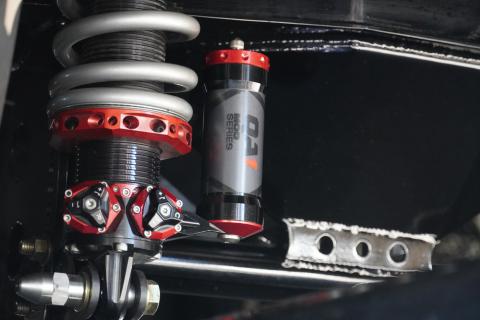
Suspension experts consistently stress the importance of having a baseline shock setting, and to fine-tune adjustments in basic, definable steps. “Simply guessing is not a tuning strategy,” said our source at QA1.
These components allow for fine-tuning to achieve that perfect suspension balance. But an incorrect tune can lead to frustration and a back-of-the-pack finish.
Depending on the brand and model, an adjustable shock absorber offers multiple settings to twist and click into place. That means a racer has multiple opportunities to dial in the shock right, or right out of contention, and still have three wheels left to set up. Adjustable shocks are a crucial element of race car tuning, which means that disciplined, evidence-based scrutiny is absolutely essential when choosing the settings. Forgetting about old shocks is part of that process.
“Probably the first thing we run into when a customer’s putting new shocks on the car is that they tend to want to measure their old shocks with the compressed and extended lengths, and give us those measurements, which is not the way we choose shocks,” said Steve Smith of QA1, Lakeville, Minnesota. “We choose shocks based on the length of the shock at the desired ride height. They may have chosen a ride height that only gives them a limited amount of travel between fully bottomed out and fully topped out, which is likely causing the harsh ride they’re experiencing.”
Another issue arises when racers try to save money by buying cheaper shocks, which Smith said usually means fewer adjustment options. To properly dial in a race car, a racer needs the maximum amount of adjustability, which means selecting a double-adjustable shock, tunable on both the compression and rebound sides.
In all cases, the experts we interviewed stressed that it’s important to have a baseline shock setting—often defined in the setup sheets that come with the component—and to fine-tune adjustments in basic, definable steps. “Simply guessing is not a tuning strategy,” Smith emphasized. “Ideally, we make adjustments based on video, in slow motion, like a car leaving the line at a drag strip. It’s very hard to remember the split second when the car left from the driver’s seat.”
Another common mistake heard on technical support lines goes like this: “My buddy’s car has compression set at this, and rebound set at that, and he’s doing great, and I’m not.” Trying to mimic another car’s settings without knowing its ride height, weight distribution, and many other variables on a completely different car is, basically, guesswork.
Shocks also won’t correct a setup mistake involving a different component. In oval track racing, teams will typically run a differently valved shock at each corner. To get them to work in concert, “use the data you have, from your car,” Smith said, not somebody else’s. And don’t just rely on the “bumper test,” as it’s popularly called, to determine if things are going properly.
Penske Racing Shocks in Reading, Pennsylvania, offers not just a wide array of shocks for applications ranging from Formula 1 to local racing, but also dynos and testing equipment. Aaron Lambert said, “I like to tell customers that even though it’s an adjustable shock, you never want to run it full stiff. If you go stiffer and it feels better, that’s a good thing, but take it a step further and have the shock dyno’d.”
The team at Penske Racing Shocks often must redirect racers who put too much weight behind what their competitors may be running. “In dirt racing, there’s a lot of chatter in the pits about what spring loads or shock build you should run,” our contact explained. “We see a lot of drivers and teams try to tune the car around that.”
One common problem the team at Penske spots in pit areas is me-tooism. “In dirt racing, there’s a lot of chatter in the pits about what spring loads or shock build you should run. We see a lot of drivers and teams try to tune the car around that,” Lambert explained. “Also, a lot of dirt racers run bump stops because they don’t have the equipment to test their shocks. They think they’re one click off when, in reality, they’re 20 clicks off. It’s a whole-of-team, whole-of-car approach, and it has to be done at each corner. The better teams stay in their lane and focus on what they’re doing.”
Jeff Ryan of JRi Shocks in Mooresville, North Carolina, noted his firm’s broad selection of shock and adjustment options. “We try to make it as easy as possible with the instruction sheet. The biggest mistake is people losing track of where they set the shock at, and we always have a datum point that starts from zero, which is usually a full-firm or full-soft setting. Very often, even at a very high level, we see people turning the knobs the wrong way, thinking they’re stiffening it when they’re really loosening it. Then they start chasing their anti-roll bar positions, going in circles. Always record what you put down. We don’t put in too many adjustment tips, because in all the years I’ve been doing this, I still know that every driver’s different.”
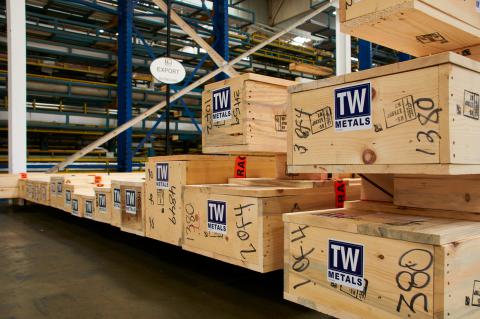
As one of only two “metals prime vendors” in the world, TW Metals supplies more than 300 agencies—including the US Navy, Air Force, and Marines—with different maintenance, repair and overhaul materials.
Partnering with defense agencies can be complex, but the right approach could help your company earn a portion of the
$345 billion in government contracts devoted to small businesses.
The numbers are compelling: “The government will spend $1.5 trillion this year, and by law, it’s mandated that 23% of that has to be spent with small business,” said Bob Mraz of TW Metals, Exton, Pennsylvania. That 23% works out to roughly $345 billion. And motorsports companies could be earning a portion of those government contracts.
Some already are. Security sensitivities and non-disclosure agreements make it difficult to get details in many cases, but businesses in the racing and performance industry, including several large race teams, have robust government and military contracts.
TW Metals, for example, is a “metals prime vendor,” Mraz said, “one of only two in the world. We supply more than 300 agencies, including the Army Corps of Engineers, Navy, Air Force, and Marines, with the materials they need for maintenance, repair, and overhaul.”
“A lot of motorsports groups are now supplying parts to the military and aerospace,” added David Adams of Calico Coatings, Denver, North Carolina. “In fact, some of the largest teams are heavily involved with them. They have machining centers stilling idle, so engaging these industries has been an excellent way for them to fill the void in production.”
According to Calico Coatings’ website, among the services it provides to the military are coatings for ejection seat parts in Air Force T-38 fighter jet trainers.
Mraz believes that “almost anything the PRI constituents do, whether it’s building chassis, doing heat-treating, repairing engines, refurbishing clutches, the government wants it. They are constantly searching for businesses to spend money with.”
Those who attended the 2021 PRI Trade Show may have seen some of that outreach in a seminar, “Army Ground Systems: Overview & How to Do Them,” put on by Thomas Vern of the US Army DEVCOM Ground Vehicle Systems Center (GVSC) in Warren, Michigan. “We figured there’d be some fertile ground there,” said Vern, whose introduction to PRI came through David Miller of the North Carolina Motorsports Association. “We do want to engage that industry a little more, to see if we can start generating some momentum.”
Specific Requirements
Building a relationship with the military does have its challenges. “Dealing with the defense industry is completely different from general industries,” said Adams. “It requires a lot of research because they don’t advertise or promote themselves like most companies. You’re going to go through a lot of websites and a little detective work before successfully reaching the right company and the right contact.”
Our source at Calico Coatings, whose engine bearing coatings are shown here, told us that defense agencies are “constantly searching for businesses to spend money with…. Whether it’s building chassis, doing heat-treating, repairing engines, refurbishing clutches—the government wants it.”
“It can be a tough space,” Vern admitted. “We speak our own language. We have very rigid contract mechanisms. This is not doing business on a handshake deal. It is very different from a lot of work that small businesses do.”
The key to successfully doing business with the military, Mraz said, “is to be visible and available.” And the first step in being visible to the government is to register for a Commercial and Government Entity (CAGE) code, which can be done at sam.gov or through the Defense Logistics Agency’s CAGE Program Office (cage.dla.mil).
“When registering, there are hundreds of classifications,” Mraz said. “Pick the ones you’re interested in and the ones you think explain who your company is to the tens of thousands of government buyers all over the world.” Registering that CAGE code with the Small Business Administration “can greatly mathematically increase [your] chances of seeing opportunities and winning opportunities,” he added. “Now you’re in the game.”
Before a company starts the search for potential opportunities, “it should understand that we’re a very large organization,” Vern said. “When talking about the Department of Defense, they would potentially be doing business with all of the services—Army, Navy, Marines, Air Force, Coast Guard, and even Space Force.”
While each branch is different, “we do have some common structures,” Vern noted. Those include science and technology organizations, “which are looking at how to develop new capabilities for our warfighters.” Acquisition organizations “work to procure and upgrade existing equipment such as the JLTV [Joint Light Tactical Vehicle]. Most of the acquisition contracts are going to flow through very large contractors, such as Oshkosh Corporation or General Dynamics Land Systems. Small businesses can partner with those large companies primarily through their own acquisition organizations and their own purchasing arms.” A third group, sustainment organizations, “are focused on sustaining existing equipment, such as a Humvee. Those contracts are often small and typically have a mandate to work with small businesses to the extent that they can. TACOM [US Army Tank-Automotive & Armaments Command] has a small business office to help with onboarding and help succeed in the spare parts contract world.”
(Per its website, TACOM “manages the Army’s ground equipment supply chain, which constitutes about 60% of the Army’s total equipment. If a soldier drives it, shoots it, wears it, or eats it, we sustain it.”)
Motorsports suppliers interested in starting a relationship with the military should understand that “we’re a very large organization,” noted our contact with the U.S. Army DEVCOM Ground Vehicle Systems Center (GVSC). “When talking about the Department of Defense, they would potentially be doing business with all of the services—Army, Navy, Marines, Air Force, Coast Guard, and even Space Force.” Photo courtesy of Randl Besse, Rock Island Arsenal.
Key Strategies
Two key strategies can help a company navigate this sometimes-confusing system, Vern said. One is to attend Industry Day events, “which are held at least once a year by most of the major organizations. We use these events to communicate our needs and opportunities to contract. This will show a company where we’re spending money, and it provides a chance for new industry partners to introduce themselves.” (GVSC held its most recent Industry Days April 18–20 in Warren, Michigan, with the option to attend in-person or virtually.)
Vern’s other recommendation is for a company to “find partners they can work with as they join the defense contracting ecosystem. Teams are usually more successful. Government contracting can become second nature, as obviously many companies get good at working with the government. However, it is very different, and a partner can help a newcomer learn.” Industry Day events are a good place to network with potential partners, he said, as are similar events put on by state governments, such as Michigan’s Defense Exposition (MDEX).
“Almost every state has an office to help businesses join the Department of Defense supply business,” he added.
One takeaway Vern had from the PRI Show was that “the capabilities I saw on display fit more broadly than just ground vehicles. In fact, they may not fit ground vehicles particularly well at all. We tend to be heavy and have a lot of high-load components. The lightest vehicle is the Humvee, which is more than two tons. A lot of our components tend to be bigger and heavier than what the racing industry is used to.”
Instead, motorsports companies may want to consider opportunities working with “robotic vehicles, which tend to be lighter, or the unmanned air vehicles (UAVs) and support equipment for the UAVs, or watercraft and undersea remote vehicles. And just general aerospace, especially aerospace ground support equipment. Those are all significant components of the industry that they may match up to that have nothing to do with wheels or tires.”
In that regard, Vern encouraged racing and performance businesses to “back up and look at what expertise they really bring, what they’re good at outside of wheeled vehicles. They might find a better match in a different space that gives them some different work to do.”
Fans are rallying to save Palm Beach Int’l Raceway (PBIR). The IHRA-sanctioned drag strip and road course in Jupiter, Florida, formerly known as Moroso Motorsports Park, has reportedly been sold to a buyer that wants to convert it from a motorsports facility to an industrial park.
Racers, enthusiasts, and fans have formed a campaign to help stop the sale. The effort is documented on savepalmbeachraceway.com, which offers testimonial support from big names in the industry, including McLaren Racing CEO Zak Brown, NASCAR Team Co-Owner Armando Christian Perez (Pitbull), IndyCar champion Danny Sullivan, Motorsports Hall of Fame of America inductee Tommy Kendall, plus John Oates of Hall & Oates and former St. Louis Cardinal Rick Ankiel.
Palm Beach County Sheriff Ric Bradshaw also said, “If this race track is lost, it means we could see an increase in drag racing, motorcycle racing, and reckless driving on our neighborhood streets and highways, which could lead to senseless fatalities. As Sheriff of Palm Beach County, it is prudent that this facility stays a raceway, so these thrill-seekers have someplace to go beside our public streets.”
The website directs fans to sign a petition with 14,000 signatures to date. The website also points users to contact Palm Beach County commissioners to voice their support.
Save Palm Beach Raceway is operated by Al Guibord, Barry Lederman, and 1985 Indy 500 champion Sullivan.
PBIR first opened in 1964 and was owned by Joe Bucheck Jr. and his brother Edward. The track held its first race in March 1965, with around 10,000 spectators for its sports car race. In addition, several IndyCar Series teams use the track for winter testing, as do several sports car teams from the Rolex Sports Car Series, including Riviera Beach-based Orbit Racing.
Today, the track is owned by IRG Sports + Entertainment, which is based in West Palm Beach, Florida, and also owns Memphis International Raceway (MIR) in Millington, Tennesse; Maryland International Raceway (MDIR) in Mechanicsville, Maryland; and Cordova International Raceway (CIR) in Cordova, Illinois; three sanctioning bodies: International Hot Rod Association (IHRA), IHRA Australia, and International Roll Racing Association (IRRA); as well as the Bertil Roos Racing School, Hooked On Driving Southeast Region (HOD) and Palm Beach Driving Club (PBDC).
The last event on the track schedule for 2022 is the Pro Hydro Clean Last Lap At PBIR on Saturday, April 23.
The Goodyear Tire & Rubber Company has announced a multi-year, multi-million-dollar program to develop a domestic source of natural rubber from a specific species of dandelion. Goodyear will work with Ohio-based Farmed Materials and is supported by the U.S. Department of Defense (DoD), the Air Force Research Lab (AFRL), and BioMADE.
The program will build on research that analyzed more than 2,500 species of plants but found only a few with properties suitable for use in tires. Taraxacum kok-saghyz, a species of dandelion known as TK, has proven to be a valuable alternative to natural rubber trees.
While rubber trees typically take seven years to produce the latex needed for rubber production, dandelions can be harvested every six months. TK dandelions are also resilient and can grow in more temperate climates, such as Ohio.
“If additional testing provides promising results, Goodyear sees potential for the application of TK rubber to be used in all tire applications,” a company release stated.
Goodyear stated that more than 90% of the world’s natural rubber is made from latex derived from rubber trees and is primarily sourced from tropical locations outside the US today.
The International Hot Rod Association (IHRA), based in West Palm Beach, Florida, has renewed its partnership with US 131 Motorsports Park, the 1/4-mile drag strip in Martin, Michigan.
“The Fastest Track in Michigan” celebrates its 60th anniversary in 2022 and is operated by Jason Peterson. It is known for the US 131 Northern Nationals (formerly IHRA Northern Nationals) and the IHRA Division 5 (Thunder) Summit Team Finals. Dom Lagana’s Top Fuel car also clocked a record speed of 338.35 mph at the track in 2017.
The Sports Car Club of America (SCCA) has announced the ninth annual Wendi Allen Scholarship Fund recipients. Named and established by the family of Wendi Allen, the scholarship honors the multi-time Solo National Champion who supported SCCA’s autocross community.
Maia Kirk (Cal Club region), Layne Lindemann (Atlanta region), and Chelsea Tattershall (Colorado region) will each receive a $1,500 scholarship to assist with travel to Tire Rack National Solo events and the Tire Rack SCCA Solo National Championships. Additionally, all will receive free entries to any Tire Rack National Solo events throughout the 2022 season.
“We would like to congratulate this year’s recipients, and we look forward to seeing how each of you takes full advantage of what the Wendi Allen Scholarship offers. Our hope is to continue to honor Wendi Allen and the love she had for the SCCA Solo Community,” said Tara Johns, Chair of the Wendi Allen Scholarship Fund Committee.
A committee of champion women autocrossers selected the winners from a host of submissions.
The annual scholarship is supported by Mazda Motorsports and the SCCA Foundation.
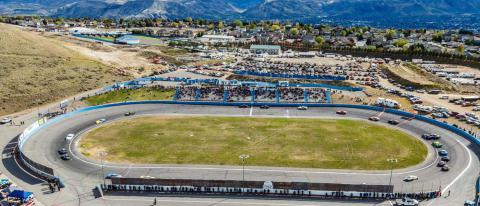
Due to weather, officials with Wenatchee Valley’s Super Oval in East Wenatchee, Washington, have postponed its season-opening “Save Our Racecars Night” race. Initially scheduled for Saturday, April 16, the PRI-supported event will now take place Saturday, June 4.
Known as “the fastest quarter-mile in the Northwest,” Wenatchee Valley’s Super Oval will host four classes of racing—Rockstar Energy B-Mods, Plumb Perfect Roadrunners, WMRA Midgets, and Northwest Vintage Modifieds—along with a fireworks show.
The Save Our Racecars Night will help build grassroots support for the Recognizing the Protection of Motorsports (RPM) Act 2021 (H.R.3281/S.2736), a bipartisan bill in the U.S. Congress that protects Americans’ right to convert street vehicles into dedicated race cars. The bill clarifies that it is legal to make emissions-related changes to a street vehicle to convert it into a dedicated race car and protects the racing industry’s ability to produce, market, and install parts and equipment that enable racers to compete.
In addition, former NASCAR Whelen All-American Series driver Jerrod Sessler—who is running for Congress in Washington’s 4th District and is an avid advocate for motorsports—will serve as master of ceremonies.
Tickets for Save Our Racecars Night will be available at a later date. In related news, the track will now host its season opener on Saturday, April 23, with B-Mods, Tri-State Hobbies/Thunders, Tri-State Minis, Roadrunners, and Pro 4 Trucks. The Bump 2 Pass class initially slated for April 16 has been moved to July 9.
Autograph, the Web3 brand co-founded by Tom Brady, has announced a deal with Penske Entertainment and Team Penske to leverage three globally relevant racing brands: the NTT IndyCar Series; the Indianapolis Motor Speedway (IMS); and Team Penske, with more than 600 race wins, including 18 Indy 500 victories and three Daytona 500 wins.
The multi-year partnership will see an NFT collection drop in conjunction with the 106th Running of the Indianapolis 500 presented by Gainbridge on Sunday, May 29, on NBC.
“The convergence of sports and technology provides us many unique opportunities, including this new opportunity with NFTs and digital collectibles. We believe Autograph is the perfect partner, and I can’t wait to reward our fans with unique opportunities to get closer to the sport through this new innovative relationship,” said Jonathan Gibson, executive vice president of Penske Corp.
PFC Brakes, the women-owned brakes manufacturer based in Clover, South Carolina, has announced the promotion of Luis Maurel to the role of director of global motorsports.
Maurel will manage the company’s race department and help expand into sports cars and other professional motorsports segments across the world, the company stated. He will also manage PFC Brakes’ involvement as providers for series, including the NTT IndyCar Series, Superstar Racing Experience (SRX), and Renault Sport Series.
Maurel began with PFC Brakes as motorsport sales manager for Europe and Asia in 2019. Prior, he worked with PJH Brands (PJ1 and VHT) and Galfer Auto. He was also an avid motorbike racer, capturing several titles throughout Europe.
 MEMBERSHIP LOGIN